← Sunday Sitdown with Willie Geist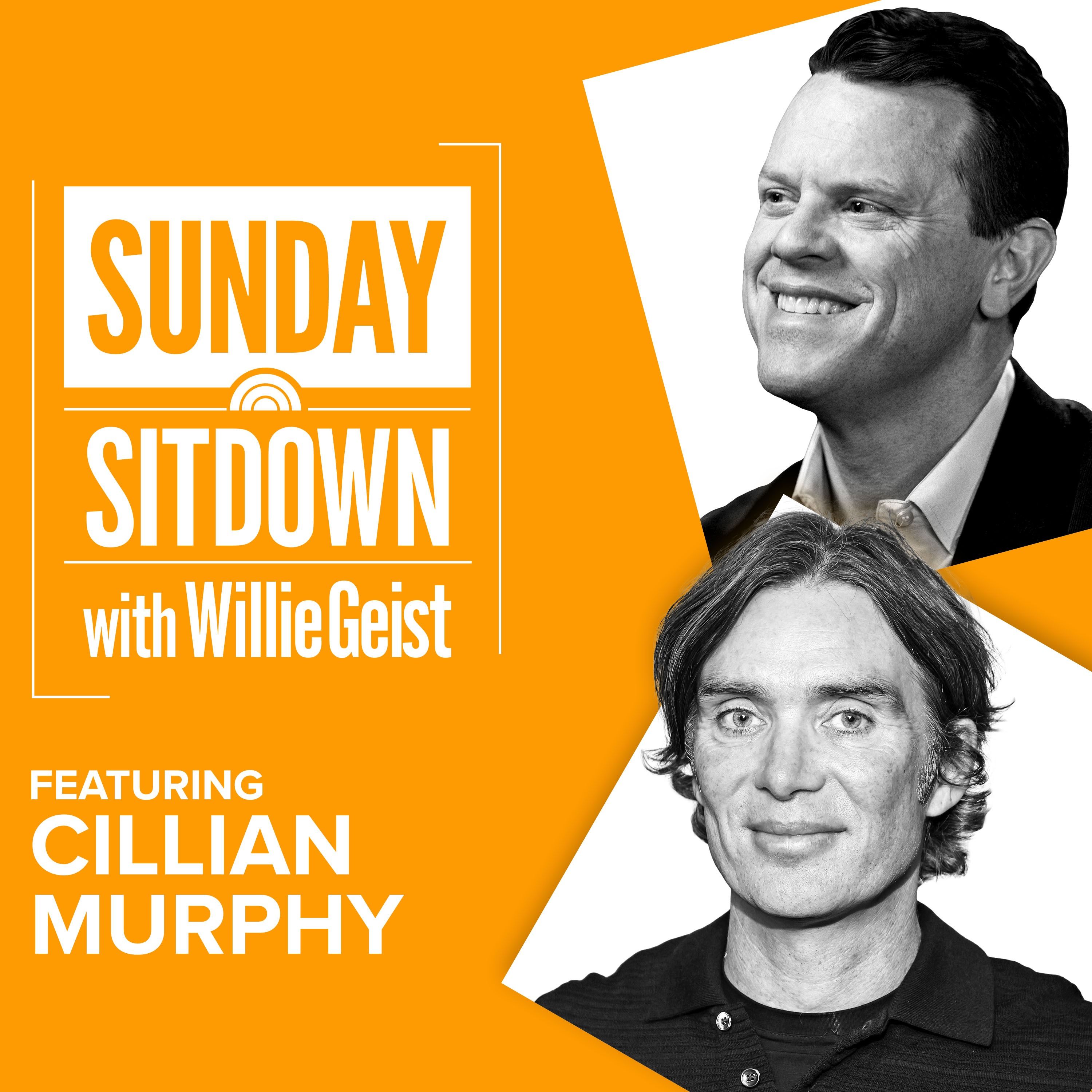
Sunday Sitdown with Willie Geist
Cillian Murphy on ‘Steve,’ Life After ‘Oppenheimer,’ and the ‘Peaky Blinders’ Movie
00:39:12
Known for his early roles in Disco Pigs and Peaky Blinders, Cillian Murphy’s career reached new heights with his Oscar-winning performance in Oppenheimer, a script he calls one of the greatest things he’s ever read. Murphy sits down with Willie Geist to reflect on the cultural phenomenon of Oppenheimer, including his surprise that its complex structure and themes connected with such a massive audience and how Christopher Nolan’s bold decision to write the script in the first person shaped his performance. He also opens up about his latest project, Steve, a heartfelt story of a teacher fighting to hold his school together while grappling with his own struggles mirrored by the challenges of one of his students, as well as what fans can expect from the upcoming Peaky Blinders movie.
Loading summary
Transcript192 lines
- [00:00]
Cillian Murphy
I won't let my moderate to severe plaque psoriasis symptoms define me.
- [00:03]
Tremfya Advertisement Voice
Emerge as you in two clinical studies, Trimfaia gusoquumab taken by injection provided 90% clear skin at 16 weeks in 7 out of 10 adults with moderate to severe plaque psoriasis. In a study, nearly 7 out of 10 patients with 90% clearer skin at 16 weeks were still clearer at 5 years. At 1 year and thereafter, patients and healthcare providers knew that Tremphya was being used. This may have increased results. Results may vary.
- [00:27]
Tremfya Safety Information Voice
Serious allergic reactions may occur. Tremphye may increase your risk of infections and lower your ability to fight. Fight them. Before treatment, your doctor should check you for infections and tuberculosis. Tell your doctor if you have an infection or symptoms of infection, including fever, sweats, chills, muscle aches or cough. Tell your doctor if you had a vaccine or plan to emerge.
- [00:46]
Tremfya Advertisement Voice
As you learn more about Tremphya, including important safety information@tremphya.com or call 1-877-578-3527. See our ad in Food and Wine magazine for patients prescribed Tremphaya. Cost support may be available.
- [01:02]
Cillian Murphy
Try Angel Soft for your tushy. It's made by Angels Soft and strong. Budget friendly. The choice is simple. Pick up a pack today. Angel Soft Soft and strong Simple.
- [01:23]
Willie Geist
Hey guys, Willie Geist here with another episode of the Sunday Sit down podcast. My thanks as always for clicking and listening along. Got a great one for you this week with a cab. Academy Award winner Cillian Murphy. You probably know him best as the lead in the 2023 blockbuster Oppenheimer, in which he played J. Robert Oppenheimer, the father of the atomic bomb. Of course, that movie made like a billion dollars at the box office. Was paired, you'll remember that summer with the Barbie movie the Barbenheimer Phenomenon. He starred in that film that won an armful of Academy Awards, including Best Picture, Best Director for Christopher Nolan and Best Actor for Cillian Murphy. Killian and Christopher Nolan have been working together for 20 years on the Batman movies on Inception. They have this really cool professional partnership. He's from Ireland. He doesn't do a lot of interviews. Kind of a mild mannered guy. Absolutely unimpressed and not caught up with the Hollywood thing. Doesn't live anywhere near Los Angeles. You'll hear him talk about how little things change for him after the Academy Award. He just likes to do good work and live his life quietly and we kind of get into why he thinks that's actually so important. So I won't go through his whole IMDb page with you because we talk about it, but kind of had his breakout with 28 days later, more than 20 years ago. Such a fascinating guy. Now sitting down with me to talk about his new Netflix film called Steve that has people talking about Academy Awards again. He is Steve in this movie. It's a story of a dedicated but troubled himself reform school teacher in the United Kingdom back in the 90s. Him sort of managing this group of boys while going through his own stuff as well follows him through this frenetic day in his own life. It's an incredible, beautiful movie and his first since Oppenheimer. Couldn't be more different, smaller little ensemble cast. He's the star, a little bit different than Oppenheimer. So I'll get out of the way, let you sit back, relax and enjoy my conversation right now with Oscar winner Cillian Murphy on the Sunday Sit down podcast. Gillian, great to see you. Thank you for doing this. Pleasure. Hope you feel at least somewhat at home in our surroundings here. A touch.
- [03:37]
Cillian Murphy
It's a lovely place. Yeah, it's beautiful. Beautiful, yeah.
- [03:42]
Willie Geist
I'm so happy to be talking to you about your film, Steve, which I was just telling you I watched and then today watched parts of a few more times because they were so beautifully written and acted. And I think probably good to start by just setting the scene for people about who Steve is, where he finds himself. Better to hear from you than from me. So how do you describe it to people?
- [04:05]
Cillian Murphy
Well, the. How it came about as a film is because I'm very good friends with the writer of the novella shy Max Porter. We've made two pieces work together and this is the third piece. And we stay in touch all the time. We're just talking. He's three boys. I have two boys. We talk a lot about the boys, we talk a lot about art, we talk a lot about politics and we, we have a lot of. We joke around as well. It's not all pretentious. And anyway, I had read this novel when he sent it to me as a proof copy and I read it and I had no intention or no ambition to make a movie out of it because it felt kind of unfilmable to me because it's all written in the point of view of the. The young kid shy and it's like an internal monologue and it's first person and. But then Max had this idea of like kind of spinning the story on its axis and telling it through the, through the eyes of the headmaster of the school who appears in the novel very Briefly, as a minor, minor character, and having the two stories overlapping over the course of one day. So it all takes place in 1996 in this school, reform school in the UK, and it's the story of this teacher, Steve, who I play, trying to desperately keep this thing going. And it's the worst day you could possibly imagine for him, where everything seems to just be collapsing around him, and then it precipitates this kind of, I guess, kind of breakdown for him, while simultaneously this kid that he's trying to reach is also really, really struggling. But, like, hopefully it's very funny and engaging and not, you know, all doom and gloom, but it does kind of like. It is kind of, I think, poking at some pretty big themes, hopefully.
- [06:11]
Willie Geist
Absolutely. I mean, a lot that's happening in our society as we speak. It doesn't have to be 1996.
- [06:15]
Cillian Murphy
Yeah.
- [06:16]
Willie Geist
Young boys, as you know and I know, with the son of my own. So I. I'm just curious, when you. You read this novel, you see it one way, through the eyes of Shai.
- [06:26]
Cillian Murphy
Yeah.
- [06:26]
Willie Geist
Was it Max's idea or yours to. To shift that lens and put it through the eyes of the teacher instead?
- [06:35]
Cillian Murphy
That was Max.
- [06:35]
Willie Geist
That was Max.
- [06:36]
Cillian Murphy
Yeah. And I think when he was writing the novel, he had written this whole segment about Steve that he decided not to put into the novella because it's a very short little book, but incredibly powerful. And so we had this document that existed. So then when he went back to write the script, he had all this material to draw.
- [06:55]
Willie Geist
You know, it's such a celebration, too, and an affirmation of teachers and people who give everything for often other people's children and see light and hope in places that others haven't seen. And some of these kids, particularly at this reform school, and your parents are teachers, your family are teachers, going to aunts and uncles and everything else. So what did you draw on for this character?
- [07:20]
Cillian Murphy
Yeah, so both my teachers are retired teachers, and my dad, in fact, kind of became an inspector of schools, so he would go in and inspect teachers. I had all the education, and, you know, my grandfather was a headmaster. And I think when I was growing up, I didn't pay any attention to it, really, other than the fact that I would get extra lessons at home from my mum and dad after school as well, which I was not a fan of. More school, more school. But as I've gotten older, I kind of look back in it and I. And I really admired them for, like, both working and then coming home after standing up in front of a class of 35 teenagers, each with their own individual issue. I mean, Main street mainstream school, but, like, each with their own individual issues and everything. And trying to kind of wrestle control of that class and then coming home and having to look after four of us and, like, cook dinner and then do all of the mark and exam papers and all of that, and then get up and do it again. And like, it's. It's. It's a lot of work and a lot of commitment, and it. I think it takes a lot from teachers. And then, of course, I was in school and probably was the easiest kid in the world to teach. And then I also had a very important teacher when I was in secondary high school, an English teacher who really unlocked literature and poetry and theater for. For me. So I kind of felt like I had just through my formative years, kind of experienced every angle of it, really. This is a more extreme version because these kids are all struggling. They all have issues. They're all excluded from school. They're potentially violent. They could be in prison if they weren't in school here. So it's. You're turning up the. The kind of dramatic tone in the piece because it's set in a. In this sort of a school. Everything is very charged. But I did feel like there wasn't a huge amount of research I needed to do.
- [09:35]
Willie Geist
Steve loves these boys.
- [09:37]
Cillian Murphy
Yeah.
- [09:38]
Willie Geist
It comes across in the way he talks to them, the way he soothes them, the way he talks about them to other people.
- [09:44]
Cillian Murphy
Yeah.
- [09:45]
Willie Geist
Where do you think for him? And I guess you could say the same of all teachers that love comes from when he's not always. Certainly in this case, getting it back. Yeah, he's not getting rich off the job. None of those things. What is that bond, as you see it, between Steve and those boys?
- [10:01]
Cillian Murphy
I mean, I think that's the big question as to why teachers keep doing what they do. Because it's a very selfless job and you're giving so much. And as we all know, it's. It's underpaid. They're undervalued. Like in Ireland, for example, like, on a teacher salary, you cannot afford to live in. In or around the two major cities like Dublin and Cork. It's impossible. So there's a teacher shortage in Ireland because they can't afford to buy houses, you know. But that aside, to answer your question, I think it's probably because there are times when you really, really connect with a kid and you can really, really help a kid, and you can see over time the improvement that happens when you have that connection or you re. You reach a kid who. Who then stops being just a sort of a someone on the roll call or a statistic or a quote unquote problem or whatever it is, or you see some kid that has a particular sort of gift that hasn't been identified. And so I think all of that, but I don't know if there's one particular answer. I'm not a teacher. I knew very early it was going to be one. But I do think it's that thing that when it works, it must be so satisfying because I do. I think it's vocational. I think it's like a calling, you know?
- [11:40]
Willie Geist
Yes. And what's beautiful about Steve, too is he really loves each of these boys and it reveals itself without giving too much away. And this final monologue that we were discussing earlier where you can. We don't actually see his face, but you can hear in his voice a smile.
- [11:55]
Cillian Murphy
Yeah.
- [11:55]
Willie Geist
And a love. And he's describing each boy what makes him great and trying to teach them that there's something else out there. Just hang in for. Hang in. And there's something else out there. He loves all these boys.
- [12:07]
Cillian Murphy
He really does.
- [12:08]
Willie Geist
Sincerely.
- [12:09]
Cillian Murphy
Yeah. And it's a very, very non judgmental.
- [12:12]
Willie Geist
Yes.
- [12:12]
Cillian Murphy
Very compassionate approach to, to kind of education. And that's, I think, certainly what. I think that's what Max believes in. Because Max is one of these writers who doesn't just write the book and then like, you know, sit back and wait for the royalties to come in. Like, he goes, he goes and works with these kids and he goes into prisons and he mentors kids. Like, he really, he really acts on his beliefs, you know, on his value. So a lot of this, the philosophy of it, is coming from Max.
- [12:44]
Willie Geist
Hey, guys, thanks for listening to the Sunday Sit down podcast. Stick around to hear more from Killian Murphy right after the break.
- [12:51]
Cillian Murphy
I won't let my moderate to severe plaque psoriasis symptoms define me emerge as you.
- [12:56]
Tremfya Advertisement Voice
In two clinical studies, Trimfaia guselkumab taken by injection provided 90% clear skin at 16 weeks in 7 out of 10 adults with moderate to severe plaque psoriasis. In a study, nearly 7 out of 10 patients with 90% clearer skin at 16 weeks were still clearer at 5 years. At 1 year and thereafter, patients and healthcare providers knew that tremphya was being used. This may have increased results. Results may vary.
- [13:18]
Tremfya Safety Information Voice
Serious allergic reactions may occur. Tremphya may increase your risk of infections and lower your ability to fight them. Before treatment, your doctor should check you for infections and tuberculosis. Tell your doctor if you have an infection or symptoms of infection, including fever, sweats, chills, muscle aches or cough. Tell your doctor if you had a vaccine or plan.
- [13:38]
Tremfya Advertisement Voice
Learn more about Tremphya, including important safety information@tremphya.com or call 1-877-578-3527. See our ad in Food and Wine magazine for patients prescribed Tremphaya, cost support may be available.
- [13:53]
Willie Geist
This episode is supported by FX's the Lowdown, starring Ethan Hawke. Allow us to introduce you to Lee Raybon, a quirky journalist, rare bookstore owner, slash unofficial truth seeker who is always on the tail of his latest conspiracy. This time, his most recent expose puts him head to head with a powerful family that rules Tulsa. Meaning only one. He must be onto something big. FX is the Lowdown. All new Tuesdays on FX stream on Hulu.
- [14:22]
Cillian Murphy
Hey, guys.
- [14:23]
Willie Geist
Finding the perfect gift for the food lover in your life is easy thanks to Goldbelly. Goldbelly ships America's most iconic foods straight from world famous restaurants right to your door. So if you want to treat someone to Joe's Stone Crab from Miami, Franklin BBQ from Texas, or desserts from famous foodies like Garten or Martha Stewart, Goldbelly has you covered. Just go to goldbelly.com and for a limited time, get 20% off your first order with promo code gift. That's promo code gift. Welcome back. Now more of my conversation with Killian Murphy. The film is frenetic, I think it's fair to say. I mean, it just grabs a hold of you at the beginning and for 90 minutes, doesn't really let you go.
- [15:03]
Cillian Murphy
Yeah.
- [15:04]
Willie Geist
What was that like for you as an actor? I know you shot it in a, for you, a fairly limited amount of time. A month or so, maybe a little less.
- [15:12]
Cillian Murphy
Yeah.
- [15:12]
Willie Geist
And in order you just went through and told the story. Yeah. Which is unique for people who don't know how movies are made. So what was this experience like for you? Maybe different from other films you've done.
- [15:23]
Cillian Murphy
The, the shooting in sequence, chronologic chronologically was massive. That, that was something that I was very. I've only ever once done that. I did it on a Ken Loach film. It's Ken Loach who was like master filmmaker and I feel deeply privileged to have worked with him like 20 years ago. And he had a massive impact on me as a, as a, as an actor and a person, in fact. But he insists upon shooting in order always because he sometimes works a lot with non professional actors. And anyway, he believes that if you're gonna kind of live the story, you should live it in sequence as best as you possibly can. And we were more or less in one location. So from the very beginning, we began to block out the schedule so we could do. And then, because there was a lot of kids that hadn't really worked before, we could do it that way. So for me, it was amazing because you start off on day one, which. The day one was like, you know, meeting Shy and going into the school and seeing that this. This documentary crew was there that he had forgotten about. So anyway, where you're accumulating the emotional information experience as you go. Yeah, it was. It was kind of exhausting and. And I wanted to go into it, like, in a more reactive way. So I didn't really plan anything in terms of how there was no accent required. There's no real massive physical transformation required or anything like that. It was just trying to be in the moment, experiencing it as the character would experience. And Tim Mulants, who I've worked with several times, would. Would, like, keep the. The pressure on all the time. And sometimes he would, like, have stuff happen in camera that we weren't expecting. And the whole thing was to portray a character who has a deficit of time and a deficit of sleep and a deficit of energy and a deficit of resources and is just, like, you know, constantly trying to catch up. But at the same time, he's, as you say, he's a really, really good teacher and he really believes in the thing, but he's just behind the curve. Constantly and constantly exhausted.
- [17:40]
Willie Geist
And he's got his own life at home as well. As we learned later, it's not just these boys. He's got his own girls at home. Yeah, it's the balance of that.
- [17:47]
Cillian Murphy
Yeah. I remember when I read the script, because that was obviously new from the novel. When he. When I read that bit about, he returned so many two little girls of his own, you know, that. That brought home that thing that of my parents going back to the four of us that you have to continue then. Yeah. When you get home and he's just worked a whole night. And so, like, we watched it in the cinema with audiences. When he come home and they see the kids, you just hear this gasp.
- [18:15]
Willie Geist
Yes.
- [18:15]
Cillian Murphy
Because they can't believe that he's. And we're very keen to, like, not have a wedding band or not have any communication with the family throughout the day. So he manages to compartmentalize his work from his, you know, personal life, which a lot of People do because they. They just can't keep both going at the same time.
- [18:33]
Willie Geist
And you can almost see him. He opens that door. Summon the energy. Okay.
- [18:37]
Cillian Murphy
Yeah.
- [18:37]
Willie Geist
Yes. I owe them as much as I'm giving.
- [18:39]
Cillian Murphy
Yeah.
- [18:40]
Willie Geist
At work. It's a beautiful. That's a beautiful moment in the film. You mentioned the young actors you work with. Boy, are they extraordinary, these young men, most of whom I don't think most people will recognize. These are some of them new actors.
- [18:52]
Cillian Murphy
Yeah.
- [18:54]
Willie Geist
Amazing. Were you astounded by how. How good they were?
- [18:57]
Cillian Murphy
Absolutely in awe of them. And I remember going, because Tim and Max did workshops with the boys for about two weeks before we began shooting, like, on site in the school. And I was there for that. And I just sit in and sometimes participate, but they were mostly just, like, workshopping. And it was. You start to go, oh, these guys are just gonna blow me off the screen. I'm gonna have to step up here. Because all of that energy and, like, hunger and dedication to it, you know, that you have to try and sustain over a career, which is. Is the hardest part in some ways, to kind of keep that love for it going, you know, but they have it. And Jay, like Kurgo, who plays shy, just a magnificent actor and just magnetic on screen. But when we. You get in a room with them on that energy, it was kind of infectious. Yeah.
- [19:51]
Willie Geist
And they're all. I mean, I'm sure they were in their private moments, but they stood toe to toe with you. I mean, I'm sure they were as nervous as you were. Oh, Killian Murphy.
- [19:59]
Cillian Murphy
They didn't. I didn't feel it.
- [20:01]
Willie Geist
They didn't give that away.
- [20:03]
Cillian Murphy
No, they were. And they became a real unit, like a real gang, because I think. Because they're shooting it chronologically, and now they're still like a real gang and everything. So we were very lucky. But that's a credit to Tim Nealance, and he gave them all their own real backstory. They all knew exactly why they were there. They all knew their position in this sort of hierarchy of the group. And they all had their different sort of cliques that they were in. So everybody. They weren't just turning up and saying their lines. They had a whole sort of. You know, they had a whole world that they had created for themselves within the dynamic of the school.
- [20:42]
Willie Geist
You've done the biggest imaginable movies, you know, all the Christopher Nolan and Oppenheimer. And I think this was right after you'd finished all the press and the awards season for Oppenheimer. Was that a bit of was Steve a bit. I don't want to say the word breather because it's certainly not a breather. But was it a nice change of pace coming out of the hysteria, frankly, around Oppenheimer?
- [21:05]
Cillian Murphy
These things are really never planned. You know, a lot of people ask me that question, I think. Oh, you strategically go from a big studio film to a little. I mean, it's still a studio film, but it's just, I suppose a smaller. If you measure it by budget or. But certainly not for me in terms of what it's trying to say or its ambition. But no, it. It. There we'd been working on the script. I was working on the script kind of as we went along when I was doing all that stuff with Chris and the cast. And. And then when I finished, pretty much went straight into it. I think that was my kind of coping mechanism to go straight back to work, which is probably not the most healthy.
- [21:44]
Willie Geist
Well, it's worked out. It's a brilliant film. It really is. I can't wait to the reviews.
- [21:49]
Cillian Murphy
I'm.
- [21:49]
Willie Geist
I bet you don't read reviews, but.
- [21:51]
Cillian Murphy
Oh, I read them all on this one. This one. Because I'm a producer on it. Like it's. You kind of have to.
- [21:56]
Willie Geist
Oh, you have then.
- [21:57]
Cillian Murphy
Yeah.
- [21:58]
Willie Geist
So you've seen the feedback is good.
- [22:00]
Cillian Murphy
Yeah, yeah, yeah. It's been really, really positive and we're really, really chuffed and that. But, you know, we've shown it to teachers, groups and carers and young adults in these situations. They. They. We've had the, the most amazing responses and that is kind of worth more than any.
- [22:17]
Willie Geist
Yeah.
- [22:18]
Cillian Murphy
Fancy review. Yeah. Really? Right.
- [22:20]
Willie Geist
Yeah. You. You mentioned the, the. Your English teacher who introduced you to literature.
- [22:25]
Cillian Murphy
Bill Wall is his name. Bill Wall, yeah.
- [22:27]
Willie Geist
And your parents obviously, being educators as well, growing up in County Cork.
- [22:32]
Cillian Murphy
Yeah.
- [22:33]
Willie Geist
At what point along the way, Killian, did you start to see performance as something viable for you or something that you enjoy? Because I know, like, you grew up in the sort of a sports focused culture like a lot of American kids.
- [22:46]
Cillian Murphy
Yeah.
- [22:46]
Willie Geist
Who find themselves. Wait a minute, I'm not good at this thing with the ball. What else is out there for me?
- [22:52]
Cillian Murphy
Yeah.
- [22:52]
Willie Geist
So was that something performance that maybe your teacher or someone else helped you latch onto as another way as a young boy?
- [23:01]
Cillian Murphy
It was a kind of. It was. For me, it was really, really clear from a young age. Like I felt. It sounds cliche, but you hear people say, but it's the truth. I felt very safe and comfortable on a stage from a very young age. And I was always getting up and doing little shows. For me, it was always music. I was playing music from a very young age and laser focused on making music and being in a band and being a musician and having a career as a musician. And then there was a point actually, in 1996 where that kind of dream died.
- [23:40]
Willie Geist
This is the sons of Mr. Green Jeans.
- [23:42]
Cillian Murphy
Yeah.
- [23:44]
Willie Geist
But you got a record deal, didn't you?
- [23:45]
Cillian Murphy
Or all four for one. I offered a record deal.
- [23:47]
Willie Geist
Right. And why didn't you take it?
- [23:49]
Cillian Murphy
Well, my brother is in the band and he was very young, and our parents just vetoed us for him.
- [23:55]
Willie Geist
Right.
- [23:55]
Cillian Murphy
And this is. Right. You know, in retrospect, it was probably the right. This very. It's a cruel, cruel industry, as we know. And it didn't happen, but it, like, it made me kind of have to pivot to theater because I needed. I wanted to be performing. So then that performance Gene, just came out in a different way in theater. So, you know, I wouldn't change it, like.
- [24:24]
Willie Geist
So what was the leap for you from that stage with music to the stage with theater? What triggered your. Your interest and said, oh, I could do that. It's different from music, obviously, but it's standing on a stage and performing. What was that leap for you? When did that happen?
- [24:40]
Cillian Murphy
I. When I was about 17, I went to. I'd never been to the theater. Like, when I was about 17, I went to a production of a stage production of A Clockwork Orange in a nightclub in Cork City, where I'm from, and it was this promenade version, and it was incredibly dangerous and sexy and, like, all the drugs were, like, on stills and there was, like, techno music and dry ice. And I. It was the most incredible thing I'd ever seen in my life. And it was. It was produced by this company called Kirk Durka in Cork City. And then when I left school, I just basically went and knocked on the door and, you know, just really pestered them in pubs and stuff to give me an audition for a play. And that was how it happened, and.
- [25:33]
Willie Geist
That'S how it started.
- [25:34]
Cillian Murphy
That's amazing.
- [25:35]
Willie Geist
You mentioned that month, I think, was August of 96, when you get the record deal.
- [25:39]
Cillian Murphy
Yeah.
- [25:40]
Willie Geist
You fail your law exams. Apologies for bringing that up, but I did. You met your future wife.
- [25:45]
Cillian Murphy
Yeah.
- [25:46]
Willie Geist
And then you auditioned for, really, your first role in Disco Pigs and get it.
- [25:51]
Cillian Murphy
Oh, yeah.
- [25:52]
Willie Geist
So everything that really has guided your life since then happened in the space of a few weeks, which is kind of extraordinary. Disco Pigs was your launch, fair to say?
- [26:03]
Cillian Murphy
Yeah, yeah, sure, yeah.
- [26:05]
Willie Geist
As a play and then a touring production and then a film?
- [26:08]
Cillian Murphy
Yeah.
- [26:09]
Willie Geist
Was that the moment once you landed that you said, this is it for me, this is the life. I want to be an actor.
- [26:16]
Cillian Murphy
Yeah, I think so. I think so. The play started off like as a two week run in Cork City in a tiny, tiny little venue. And immediately it was a kind of sensation and then we, like. So I'd never done a professional piece of theater before and then all of a sudden this thing was touring around and so it was the luckiest possible break you could have as a, as an actor, like your first ever gig, like. And so I was delighted myself and I went, I might as well give this a go. I really didn't know how long it would take or how long it would last and. But we toured that for 18 months and then I, then I just. Then I was unemployed for about a year, I think. But I was kind of into that too. I dropped out of school. I was kind of into that.
- [27:05]
Willie Geist
This was after the touring and before the film.
- [27:07]
Cillian Murphy
Yeah. Or then I did more, more plays. Yeah. But like I decided then that it was the. I was into that. The thing about it was because as an actor you're, you know, you're autonomous, right. You, like, you make your own decisions on your own. When you're being in a band is five guys and you're trying to. Everyone has to make. It's a, it's a democracy and, and it, you know, it's, it's difficult and whereas I love the freedom just going, this is what I want to do, I'm going to do this. And off I went.
- [27:39]
Willie Geist
And how was the leap for you from the stage to films? Because not terribly long after the Disco Pigs movie comes 28 days later.
- [27:46]
Cillian Murphy
Yeah.
- [27:47]
Willie Geist
And all the other films that kind of started to roll up into Batman Begins with Christopher Nolan in 2005. Did you enjoy the film production? Because some stage actors like that live audience better and that experience of it. How did you adjust to being in these big movies off the stage?
- [28:06]
Cillian Murphy
Well, I, it was very gradual really, because I got like, I did a lot of theater and then I did short films and then I did like a little part and in some Irish films then a slightly bigger part. So it wasn't, it was very like the graph was quite even and I think it would have been terrifying if I was ricocheted into like a big huge movie. And then it, and then it kind of. The movie with Danny, 28 Days later was the first time that a film really got recognized. And then Chris Nolan saw that movie and. And then it. But then, you know, it was a small part about. A really nice part about the villain, but, you know, it was Christian Bale's movie. And so it was. It was kind of gradual, which I'm really happy about that the whole thing happened in an incremental way rather than a terrifyingly sort of quick way.
- [29:02]
Willie Geist
You know, it did start one of your beautiful partnerships and film with Christopher Nolan, though, Inception. And through the other Batman films, obviously through Oppenheimer, we know as fans of his, as viewers, what a Christopher Nolan movie looks like from the outside. But as an actor, what is that experience? Like, why is it unique? And why do you keep coming back for more to work with him?
- [29:25]
Cillian Murphy
Well, the thing that. When I remember going on to the Batman set the very first time, and, you know, I was used to making these smaller independent films, and even like 28 days later, we. We shot on, like, domestic cameras, and it was very guerrilla style and very low budget. And then I go into Batman Begins and there's these huge, vast sets. But when we got down to the work, it was just me and the other actor and one camera and Chris right by the camera and no video village, no monitors. And so it felt like independent filmmaking. And because his focus is completely on the performance, all the films that he's made are performance driven, and he can do scale like nobody else and set pieces like nobody else. But the care and attention that he puts on the performances, I think are what set it apart. And he's an extraordinary director of. Of actors. So that was shocking to me to. To realize, oh, it's the same. What he's prioritizing is the same as what you get on it. A smaller independent film. He's just using his resources in a different way.
- [30:41]
Willie Geist
Yeah.
- [30:41]
Cillian Murphy
You know what I mean?
- [30:42]
Willie Geist
That's such an interesting way to think about it, because I think people look sometimes at the spectacle of the film, but it really is about what's happening between the actors, always with Chris.
- [30:50]
Cillian Murphy
And. And so I learned, like, so much so quickly from working with him.
- [30:57]
Willie Geist
Yeah, I mean, he's.
- [30:59]
Cillian Murphy
It's.
- [30:59]
Willie Geist
It's fun to watch you guys work together. And I've heard you say before, and you can correct me if I'm wrong, but when he says, I'm working on a project, I'd like you to be in it, you sort of just say, yes, send along the script anyway, but I'm gonna do it.
- [31:12]
Cillian Murphy
Oh, always. I mean, I always just say. I mean, who wouldn't say yes? To work with, you mean any actor on the planet, you know, would want to work with, With Chris. And when I first, like I was bizarrely. He asked me to audition for Batman. For Batman. Like, that was my first encounter with him. And all I wanted to do was to just get in a room and say that I had a screen test and then it turned into this other thing, you know. But he's. No, he's, I mean, he's a generational talent. I mean he's one of the, the greats that we'll speak of for generations, I think, to come. And I can't wait for the new one.
- [31:49]
Willie Geist
I know you're excited to see it.
- [31:51]
Cillian Murphy
Yeah, yeah, yeah.
- [31:53]
Willie Geist
It's always an event, isn't it?
- [31:54]
Cillian Murphy
Oh, it's going to be a huge. This one's going to be particularly big, I imagine.
- [31:58]
Willie Geist
And what, no phone call on this one or.
- [32:00]
Cillian Murphy
No. Which is fun, you know, it's very like. And, and it, that, that's fine, you know, because I remember like going to see Interstellar. Yeah. And it's a much purer pleasure to go and watch one of his films.
- [32:16]
Willie Geist
I bet.
- [32:16]
Cillian Murphy
When you don't have to look at yourself.
- [32:20]
Willie Geist
Don't love seeing yourself on film, do you?
- [32:22]
Cillian Murphy
No, but like are getting better at it, particularly when you're producing stuff. You have to watch it a gazillion times. So you learn a bit of objectivity, I think.
- [32:31]
Willie Geist
Stick around for more of my conversation with Cillian Murphy right after a quick break.
- [32:36]
Cillian Murphy
This is a vacation with Chase Sapphire Reserve. The Butler, the spa. This is the edit a collection of handpicked luxury hotels and a $500 edit credit. Chase Sapphire Reserve now even more rewarding. Learn more@chase.com Sapphire Reserve cards issued by JPMorgan Chase bank and a member FDIC subject to credit approval.
- [32:51]
Tremfya Advertisement Voice
Our state has changed a lot in the last 140 years. We know because Multicare has been here guided by a single making our communities healthier that comes from making courageous decisions, partnering with local communities to grow programs and services and expanding healthcare access to those who need it most. Together, we're building a healthier future. Learn more@mycare.org.
- [33:22]
Cillian Murphy
I won't let my moderate to severe plaque psoriasis symptoms define me.
- [33:25]
Tremfya Advertisement Voice
Emerge as you. In two clinical studies, Trimfia guselkumab taken by injection provided 90% clearer skin at 16 weeks in 7 out of 10 adults with moderate to severe plaque psoriasis. In a study, nearly 7 out of 10 patients with 90% clearer skin at 16 weeks were still clearer at 5 years, at 1 year and thereafter, patients and healthcare providers knew that Tremphya was being used. This may have increased results. Results may vary.
- [33:49]
Tremfya Safety Information Voice
Serious allergic reactions may occur. Tremphya may increase your risk of infections and lower your ability to fight them. Before treatment, your doctor should check you for infections and tuberculosis. Tell your doctor if you have an infection or symptoms of infection, including fever, sweats, chills, muscle aches or cough. Tell your doctor if you had a vaccine or plan to emerge.
- [34:08]
Tremfya Advertisement Voice
As you learn more about Tremphya, including important safety information@tremphya.com or call 1-877-578-3527. See our ad in Food and Wine magazine. For patients prescribed trust support may be available.
- [34:26]
Willie Geist
Welcome back now to the rest of my conversation with Killian Murphy. When you guys were making Oppenheimer, did you have a sense that this was something special? Not just because it was a Christopher Nolan movie with an extraordinary cast, but did it feel like something even bigger than other films you've done before?
- [34:48]
Cillian Murphy
I remember thinking when I read the script that I was one of the greatest things I had ever read. He wrote the script in the first person. You know, we've talked, I talked about this when we were promoting it, but I never encountered that before. And I knew that again, that sort of the themes of the script were pretty huge. But at the same time, we did think, or certainly I thought, you know, this is, I don't know if it's instantly accessible because it is quite involved, quite a, you know, structurally complex film about physicists and, you know, the atomic bomb. I don't know if that's everyone's cup of tea, but like some people are definitely going to go for it. But then it just turned into this absolute phenomenon and none of us anticipated that.
- [35:45]
Willie Geist
I don't think, how do you explain it other than it being a great film, but to be up against a billion dollars at the box office and the Academy Award for yourself and others around the movie, how do you explain the phenomenon that that film became?
- [35:59]
Cillian Murphy
I really do not know. I don't know if anyone really does. But I think what, what, what always what I've always admired about Chris and Emma and the films that they make is that they never, they always presuppose a level of intelligence with their audience. They never ever patronize or talk down to their audience with their films. And they're, they are, you need to work at the films, but the reward you get from working at the films is so huge. And I think that it just Proves time and time again with their films that audiences are up for that. They're really up for the challenge of something very complex and rewarding and meaningful and. And now, like you say, they've become these event. Event movies. But it's. It's just so refreshing to me that audiences are so smart and we must never forget that. I think as storytellers.
- [36:57]
Willie Geist
Yeah, right.
- [36:58]
Cillian Murphy
Don't.
- [36:58]
Willie Geist
Don't undersell them. Never.
- [37:00]
Cillian Murphy
Yeah.
- [37:01]
Willie Geist
They want that. They keep showing it, I think.
- [37:03]
Cillian Murphy
And I don't know about you, like, but, like when you read a novel or you watch it, I love having to put the effort in. Yes. You know, it's. When it's passive for it kind of. It's not for me that when you have to, like, work.
- [37:17]
Willie Geist
Yes.
- [37:17]
Cillian Murphy
And you get something back from your own input, that's to me, the most rewarding way of experiencing art, you know.
- [37:24]
Willie Geist
And questioning things that maybe you believed before and grappling with them after the movie. Put the book down.
- [37:30]
Cillian Murphy
That's it. And like. And it. And it being provocative and, you know, asking questions but not necessarily giving the answers.
- [37:36]
Willie Geist
Right, right.
- [37:36]
Cillian Murphy
That's the stuff that I love.
- [37:37]
Willie Geist
Well, it certainly did that. Winning the Academy Award for you, obviously a great achievement.
- [37:44]
Cillian Murphy
Yeah.
- [37:45]
Willie Geist
Did it change anything for you professionally to say Academy Award winner Cillian Murphy?
- [37:52]
Cillian Murphy
Yeah, I don't know if I have enough distance on it yet to be able to give an answer to that sort of personally in my personal life in that. Anyway, that's why I said professional. I'm sure at home it was, oh, who cares? Yeah. But if it helps get these sorts of stories over the line or helps get them financed, then I'm definitely going to take full advantage of that. And. But I'm not really. I'm not really sure I have enough perspective.
- [38:23]
Willie Geist
Yeah.
- [38:24]
Cillian Murphy
Or I'm not really sure I'm canny enough about the business to be able to sort of use it to my advantage. But I just. Because. And the other thing is that, like, next year. I've been acting for 30 years and I think your. Your instincts or your taste are so well established and formed at this stage. You know what I mean? That you're just going to continue doing. Right. What you've always been attracted to. It's not going to. I'm not going to take a massive swerve in terms of the work that I want to do. It'll be the same that has been since I was, you know, a young actor, because they're the types of stories I've always wanted to Tell.
- [38:59]
Willie Geist
But maybe the clout you earn with the Academy Award allows you to just get all those made through your production company. Right. And not that you didn't have already, but it's a nice little extra nudge. Perhaps.
- [39:08]
Cillian Murphy
Perhaps. Yeah. Perhaps I'm not. Again, it's difficult for me to judge that. Yeah.
- [39:12]
Willie Geist
One of the things I admire about you, Killian, is your complete disinterest in being a celebrity or a movie star and that you're an actor and you want to be known for your work. You've pulled that off, which is to say people don't know much about you or hopefully they don't follow you around and all that stuff.
- [39:30]
Cillian Murphy
Yeah.
- [39:31]
Willie Geist
Why is that so important to you as an actor?
- [39:37]
Cillian Murphy
Well, there, I've always felt that if you want to try and inhabit somebody convincingly, that it seems sensible that there wouldn't be too much that people wouldn't have an oppression of you as an individual that would in some way inhibit your ability to do that. That's kind of what I've always felt. And so therefore. And I like the transformative nature of acting, so if you can kind of keep that as a background, then I think it allows you more freedom as a performer, you know?
- [40:16]
Willie Geist
Right. People don't look on the screen and see, oh, that's the guy from.
- [40:20]
Cillian Murphy
That's the guy from. From, you know, whatever it is. Yeah. And I like to kind of like, do the work, do the. Do the promotion as best I can and then like, retreat.
- [40:30]
Willie Geist
Yes, I get it.
- [40:31]
Cillian Murphy
And, and, and I. And I think also the best research you can do as an actor is to just like, live. Live your life rather than this stuff, which isn't real life, you know? Yeah. So I feel like that's where you learn and then you can come back having lived more life and hopefully put it into the character. Right.
- [40:50]
Willie Geist
So you don't retreat behind your walls because you've become this other thing and you can't be out in the world observing and learning and.
- [40:57]
Cillian Murphy
Yeah. You know, you just are living and being with people and experiencing life and engaging and then that whatever you've accumulated in. In between projects, you bring that back in. You know what I mean? Yeah.
- [41:08]
Willie Geist
Yeah. Before I let you go, Killian, I have to ask you about the Peaky. The Peaky Blinders movie.
- [41:13]
Cillian Murphy
Oh, yeah.
- [41:15]
Willie Geist
What should fans expect? Do we know anything about this yet? I know you're not going to give away the plot or anything, but how excited are you to be back with the character?
- [41:23]
Cillian Murphy
Well, like, it's. I wanted to get it right. You know, I really, really wanted to get it right because It's. We made six series. Six series. And that's 36 hours of TV all written by Steven Knight. And I feel like we did pulled off the thing of like each series, in my opinion, becoming like richer and deeper as it progressed, which I think is a hard thing to do from long, a long running returning series. And so therefore I wanted to film to like top it and match it. And. And I feel like we did that and we got this amazing script, we have an amazing director, Tom Harper, and I really had my fan goggles, if that's the right expression, on the whole time, as I produced that as well. And so trying to be sure that it was satisfying to the fans who have made this show what it is. They really kind of. They like that show got no real push right from the beginning. You know, it just was word of mouth and people dressing up and people loving the music. And then it was self sort of generated by the fans. So I wanted it to be a good movie first and foremost. But secondly, that the fans felt like they had got something they deserved.
- [42:42]
Willie Geist
How gratifying that it was not the product of some big marketing campaign, but just word of mouth, people talking on social media. Have you seen the show? It was a real organic sort of groundswell. Well, that made that series what it was, right?
- [42:56]
Cillian Murphy
And it's rare. And people go, why? What was it about it? And again, you just don't know. It's some weird alchemy of various elements that made it what it is. Primarily, I think it's the writing, you know, that is. Was very original, but again, you just never know what clicks and what doesn't, so.
- [43:16]
Willie Geist
Well, we can't wait to see it. Congratulations in advance and really congratulations on Steve. It's a beautiful. It's a beautiful film that's heartbreaking a lot of ways, but also in the end I feel like gives you hope.
- [43:28]
Cillian Murphy
I think so.
- [43:29]
Willie Geist
You know, I really do.
- [43:30]
Cillian Murphy
That was our. That was our ambition anyway, so.
- [43:32]
Willie Geist
Well, thank you. It's a pleasure. Nice talking to you. Thanks.
- [43:35]
Cillian Murphy
Thanks, man.
- [43:40]
Willie Geist
My big thanks to Killian for a great conversation. His film Steve is streaming now on Netflix. And my thanks to all of you for. For listening again this week. If you want to hear more of these conversations with my guests every week, be sure to click follow so you never miss an episode. And don't forget to tune in to Sunday Today over on NBC. That's every weekend to see these interviews in real living color. I'm Willie Geist. We'll see you right back here next week on the Sunday Sit Down Podcast.
- [44:17]
Cillian Murphy
I won't let my moderate to severe plaque psoriasis symptoms define me Emerge as.
- [44:21]
Tremfya Advertisement Voice
You in two clinical studies, Trimfaia guselkumab taken by injection provided 90% clearer skin at 16 weeks in 7 out of 10 adults with moderate to severe plaque psoriasis. In a study, nearly 7 out of 10 patients with 90% clearer skin at 16 weeks were still clearer at 5 years. At 1 year and thereafter, patients and healthcare providers knew that Tremphya was being used. This may have increased results. Results may vary.
- [44:43]
Tremfya Safety Information Voice
Serious allergic reactions may occur. Tremphya may increase your risk of infections and lower your ability to fight them. Before treatment, your doctor should check you for infections and tuberculosis. Tell your doctor if you have an infection or symptoms of infection, including fever, sweats, chills, muscle aches or cough. Tell your doctor if you had a vaccine or plan to emerge.
- [45:02]
Tremfya Advertisement Voice
As you learn more about Tremphya, including important safety information, at tremphya.com or call 1-877-578-3527. See our ad in Food and Wine magazine. For patients prescribed Tremphia, cough support may be available.