← Sunday Sitdown with Willie Geist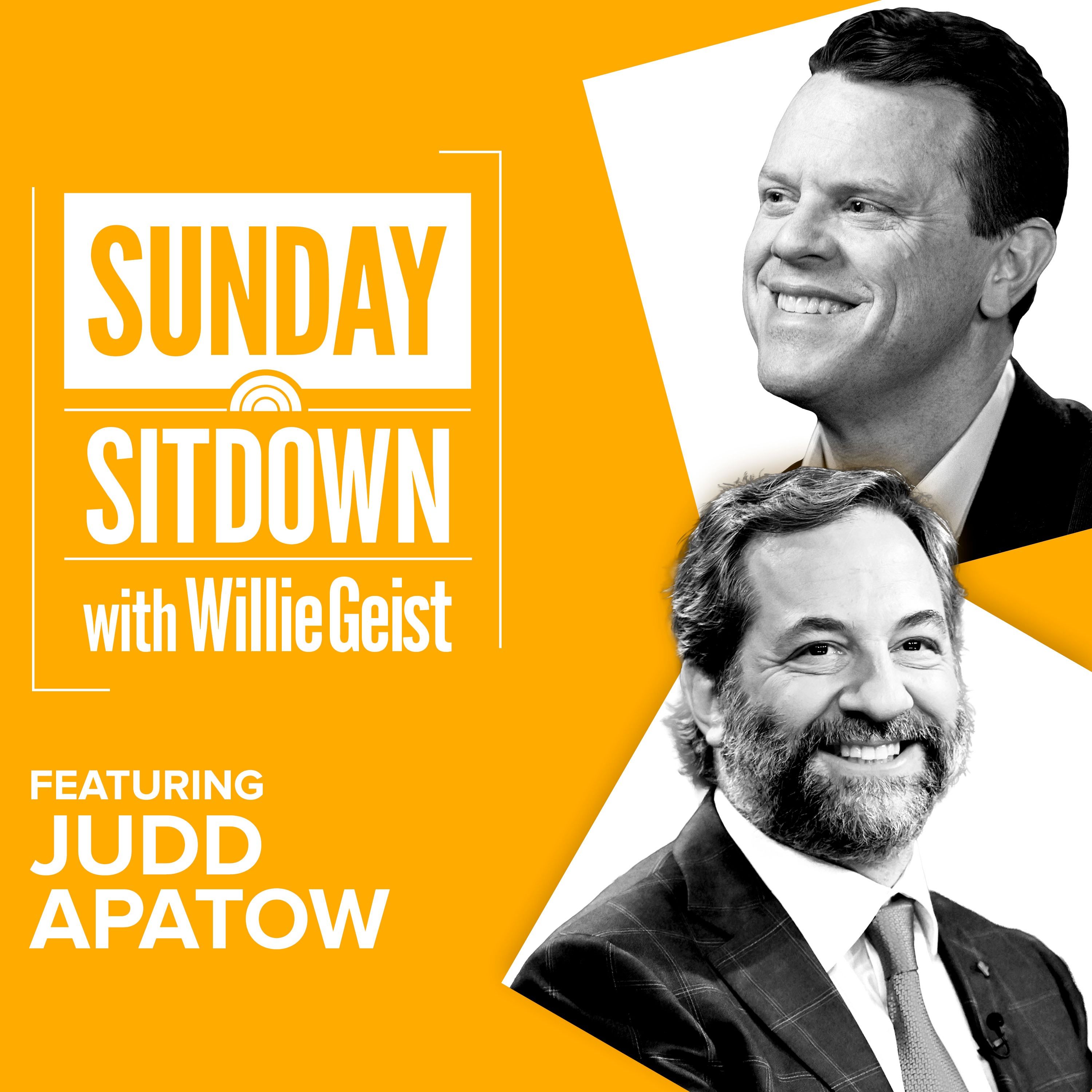
Sunday Sitdown with Willie Geist
Judd Apatow on Comedy Legends, Cult Classics, and the Secret Sauce Behind His Movies
00:48:55
From a Long Island teen interviewing his comedy heroes on a high school radio station to the producer, director, and writer behind The 40-Year-Old Virgin, Anchorman, Trainwreck, and more, Judd Apatow is a modern-day comedy icon. He sits down with Willie Geist at New York’s Gotham Comedy Club to trace his rise to fame, from the tough early years and the mentorship of Garry Shandling to how the cancellation of Freaks and Geeks ultimately helped launch a generation of stars. Apatow also talks about his new scrapbook-style book Comedy Nerd, his love of stand-up, and his deep dive into documentaries, including new films on Mel Brooks and Norm Macdonald. Along the way, he reflects on how setbacks shaped his success, and the persistence that’s kept him creating for more than two decades.
Loading summary
Transcript251 lines
- [00:00]
Dr. Sanjay Gupta
Hey there, it's Dr. Sanjay Gupta with some exciting news to share. CNN is now streaming. That means you can read, watch and stream everything in one subscription. You can watch news live 24 7. You can also explore catch up videos and explainer videos. And you can also watch the library of CNN's originals, including my latest documentary, it doesn't have to Hurt. Just go to CNN.com AllAccess I won't let my moderate to severe plaque psoriasis symptoms define me.
- [00:33]
Tremphya Advertisement Voice
Emerge as you in two clinical studies, Trimfia gusoquumab taken by injection provided 90% clearer skin at 16 weeks in 7 out of 10 adults with moderate to severe plaque psoriasis. In a study, nearly 7 out of 10 patients with 90% clearer skin at 16 weeks were still clearer at 5 years. At 1 year and thereafter, patients and healthcare providers knew that Tremphya was being used. This may have increased results. Results may vary.
- [00:57]
Tremphya Safety Information Voice
Serious allergic react may occur. Tremphylla may increase your risk of infections and lower your ability to fight them. Before treatment, your doctor should check you for infections and tuberculosis. Tell your doctor if you have an infection or symptoms of infection, including fever, sweats, chills, muscle aches or cough. Tell your doctor if you had a vaccine or plan to emerge.
- [01:16]
Tremphya Advertisement Voice
As you learn more about Tremphya, including important safety information@tremphya.com or call 1-877-5783-5276. Our ad in Food and Wine magazine for patients prescribed Tremphia cost support may be available.
- [01:37]
Willie Geist
Hey guys, Willie Geist here with another episode of the Sunday Sit Down Podcast. My thanks as always for clicking and listening along. Very excited to bring you my conversation this week with the hilarious Judd Apatow. The man needs no introduction, going back to the Ben Stiller show, back to the Larry Sanders show with Garry Shandling, back to Freaks and Geeks. You know the resume. Judd has been either the writer, producer or director of so many of our favorite comedies of the last several decades. The list is long. The first film he directed was the 40 year old virgin. You go through to Knocked Up, Super Bad, Forgetting Sarah Marshall, Funny People, Bridesmaids, Anchorman. The list is long. I bet you've got a favorite among those. He grew up on Long island, obsessed with comedy from a very young age, and he's written a book now called Comedy Nerd. It's really a scrapbook. It takes from his childhood up to current day and just documents every interaction he had with comedy. As a kid he would, you know, write letters to famous comedians and get their autographs on headshots. Those are all in the book. He tell the story about why they loved him. He famously, in high school, growing up on New York's Long island, had a radio show where at 16 years old, he audaciously approached the biggest stars in comedy and would go interview them. They said yes, and they'd be on this teenagers radio show. He was obsessed with what was funny and how you made people laugh and made a career about it. So this book, Comedy Nerd, gets to all of it. And it's really, when you think about it, a walkthrough comedy of the last 40 years because he's been involved in so much of it. Such a funny guy. So much to say about comedy back then and comedy now and advice for people coming up in the business now. Judd and I got together at the Gotham Comedy Club in New York City, a place where he has performed many times as a standup, has fond memories being in that room. He did his first standup gig when he was 17 years old on Long island and still gets out there today. So sit back, relax, and enjoy Judd Apatow right now on the Sunday Sit down podcast.
- [03:45]
Interviewer
Jud, thanks for doing this.
- [03:47]
Judd Apatow
It's good to be here. Good to be back.
- [03:48]
Willie Geist
You're back.
- [03:49]
Judd Apatow
We did this once before, you remember, in another era. I probably had dark.
- [03:53]
Interviewer
You did have dark hair. I actually watched it this morning. It was 2017. We're at the Comedy Cellar, where you also perform stand up many times. This time we're here at Gotham, a place where you performed when you were young and perform now.
- [04:06]
Judd Apatow
I do perform.
- [04:07]
Interviewer
What does this place conjure for you when you walk in here?
- [04:10]
Judd Apatow
This is a great club. This is really one of the great clubs. So before I did my special for Netflix, I came here and practiced the hour and, yeah, I love this place. Covid was ending. I saw Jerry Seinfeld here do his first set after not being on stage for a long time.
- [04:28]
Interviewer
Wow. What was that like?
- [04:29]
Judd Apatow
It was great. It was great to see him. Rusty. Yeah.
- [04:31]
Tremphya Detailed Information Voice
Yeah.
- [04:31]
Judd Apatow
Because he's just the best of all time. And just to know, yeah, he's got to work to get back in rhythm. And it was really fun. It was fun. People were so happy to, you know, just to be back in club, let.
- [04:42]
Interviewer
Alone to see Jerry Seinfeld. So how young were you? Do you remember when you first started performing here? Like, what era was this?
- [04:48]
Judd Apatow
Well, I started performing here in 2003.
- [04:51]
Interviewer
Okay.
- [04:51]
Judd Apatow
So recently, yeah, I did stand up from the time I was 17 to 24, and then I started up again 11 years ago, and it's really fun. I don't think I was very good at the beginning. I think when I was a kid, I was just kind of an idiot. I mean, I would get on the TV shows and I had an okay career. But I look back now and I think you had literally nothing to say. I mean, all my jokes were like, you know, isn't it weird when one of your nostrils is clogged and then suddenly it switches to the other? That was as deep as it got. Did you get a reaction from that.
- [05:26]
Interviewer
One or was it.
- [05:27]
Judd Apatow
They loved it. They loved it. They loved talking about congestion. It's a great comedy topic on Long Island. Yeah. But I had nothing to say. So it's more fun now because I have some life experience.
- [05:37]
Interviewer
So you were 17 years old when you did your first stand up comedy senior at Syosset High School on Rhode Island? I believe it was Chuckles in Mineola.
- [05:45]
Judd Apatow
That's right. Do I have that right? Yes. Joe Bolster was the host. My first open mic nights.
- [05:50]
Interviewer
What gave you the courage as a high school kid to get up on a stage and do stand up?
- [05:54]
Judd Apatow
I mean, it's wild that I worked up the courage to do it, because there's nothing scarier than, like, talking to a group of adult strangers. Because also, you're a child. So it's not just like you're performing for people, you're performing for adult people.
- [06:06]
Interviewer
Right.
- [06:06]
Judd Apatow
And I mean, I thought about doing it, you know, almost my entire childhood. And just. And the jokes were so bad. And I would bomb, and it was painful, but I had interviewed all these comedians from my high school radio station. They all said, you're gonna bomb. And so when I bombed, I thought, this is great. I'm in it. And I had this joke I would do at the end of my act, and I would say, you know, the great Jerry Lewis said, you learn nothing about how to be funny by getting laughs. You only learn by not getting laughs. So thank you for giving me a college education tonight. That's a good line. Then I'd get a big laugh and I'd get off, and then I'd go, I can't. I think that set went well, but it was the only laugh that I got.
- [06:48]
Interviewer
But that's part of the process, right?
- [06:50]
Judd Apatow
You're literally building it, like, line by line. And I get two jokes at work, and I get three jokes at work.
- [06:55]
Interviewer
So that and so much more. Going back even further is in this incredible scrapbook yearbook. It's a collection of all the things you've gathered over a life in comedy called Comedy Nerd. And it goes back to the beginning of your passion as a kid. It seems to me, reading this, there was almost nothing else for you.
- [07:15]
Judd Apatow
That's right.
- [07:16]
Interviewer
In terms of like looking at the future anyway, of like, I'm going to be in comedy. It's just a question of how I get there.
- [07:22]
Judd Apatow
Yes.
- [07:22]
Interviewer
Do you remember when or how that was sparked in you as a kid?
- [07:26]
Judd Apatow
I mean, some of it was. My grandfather was a jazz producer who worked with like Dizzy Gillespie and Charlie Parker. And he also was friends with Tony Fields, the comedian who was like a Joan Rivers type comedian. And then I would hear like, oh, he was at a party with Bob Newhart. And so there was something exotic happening and he was kind of a hustler and a cool guy. And so show business seemed interesting to me. And Tony Fields was so funny, but she was a self deprecating female comedian and people adored her. So on some level I thought, oh, what a cool job. And then also comedians broke down, like, what's fair, what's unfair in a way that no one else did. So I would listen to George Carlin or Richard Pryor records or Lenny Bruce records even. And it was like, I mean, it was like religion. Like it was, oh, here's a way of looking and analyzing the world. And I loved like the Marx Brothers because I just love that they like attacked the bullies and they attacked the socialites and they were funnier than everyone. But they'd have to run away. They were always running away after saying the funniest thing. And there must have been something about the rebellion or the anger of it that I was connecting to.
- [08:44]
Interviewer
The way you tell it in the book, you kind of get home from school at 3 o', clock, get yourself in front of the TV and basically watch comedy through Letterman, which I think.
- [08:54]
Judd Apatow
It'S like 1:30 in the morning, right.
- [08:56]
Interviewer
In those years he was out at.
- [08:57]
Judd Apatow
12:30, like a lot of days straight through and also watching the news. So I would watch Mike Douglas, I'd watch Dinah Shore, and then I would watch like Sue Simmons and Jack Cafferty on live at 5. And then I would watch the national news and then I would watch all the sitcoms and then Carson and then Letterman.
- [09:16]
Interviewer
And what did your parents think as they were watching this? Their child getting home from school and watching 12 hours of television?
- [09:22]
Judd Apatow
Well, they were concerned enough that they bought me a motorcycle, right. So they basically bought me a death machine to get me out of the house. They got me a KX80, a Kawasaki.
- [09:33]
Interviewer
Wow.
- [09:34]
Judd Apatow
Because some of my friends were into dirt bikes, and they bought me one just so I would leave the house. And then we'd be, like, running from the police and riding our dirt bikes. They'd be building a new building, and there'd be dirt everywhere. And we would go there and get chased. It was so dangerous. Then one day, I flipped over the handlebars and I hit my head. And I was like, yeah, I'm not gonna do this anymore. I'm getting back to the Mike Douglas show.
- [10:02]
Interviewer
Where I belong.
- [10:03]
Judd Apatow
This is my people here.
- [10:06]
Interviewer
I'm curious, though. Like, I was a huge fan, too, snl. I'm sure we shared a lot of things we grew up on together. When the idea of fandom becomes an idea of, I'm gonna do this with my life. I'm gonna someday step through the TV and be a part of whatever that world is. When did you start thinking that way?
- [10:26]
Judd Apatow
I don't know. I started, like, recording Saturday Night Live with a tape recorder. This is before vhs.
- [10:33]
Interviewer
Oh, just the audio.
- [10:34]
Judd Apatow
Just the audio. And I would transcribe it and try to understand how it worked. And then there was a book. It was like a Saturday Night Live scrapbook that was like this. And it had all the sketches, and you could read them and see the people working behind the scenes. And I thought I could maybe be in that world somewhere. Cause it seemed fun, right? Like, they were like a group, and they were friends. Like, how do I have a group of friends like that? And I didn't know what I would do. I love stand up. I'm sure in the back of my head, I'm like, how can you become Bill Murray? You know? Like, I would never admit it to anybody, but, like, that would be, like, the best life if you could be, like, the guy in stripes, right? Or something like that. And then I was just trying to figure out how to get near it. Like, how could I talk to any of these people? And my parents got divorced, and my mom got a job at a comedy club, seating people. And I always thought that she only took the job because she thought I would like it. Because I was like, how much? How much is she getting paid to seat people at a comedy club for a couple hours, you know, on the weekends in 1984, that it must have been something that she, on some level, consciously or unconsciously, thought, judd's supposed to see this. And so one summer, I just went to every show all summer and got to meet some of the comics.
- [11:56]
Willie Geist
Wow.
- [11:56]
Judd Apatow
And then decided to really get more serious. So then I got a job as a busboy in a dishwasher at Eastside Comedy Club. And Rosie o' Donnell was just starting and Eddie Murphy was still coming in. He was 21.
- [12:09]
Interviewer
Wow.
- [12:10]
Judd Apatow
And I would watch the shows and dream of doing it, still never tell anyone. And then I started interviewing comedians from my high school radio station. And then I could finally go, how do you do it? And I could just sit for an hour and go, how do you write a joke? And people would tell me. And they were helpful. They were all really helpful. And it was like Shandling and Seinfeld and Leno and Sandra Bernhardt and people like that.
- [12:33]
Interviewer
Now. That's the amazing thing. I mean, that radio show is legendary at this point. 88.5 WKWZ.
- [12:39]
Judd Apatow
Yes.
- [12:39]
Interviewer
Did I have it right?
- [12:40]
Judd Apatow
That's right.
- [12:40]
Interviewer
Syasset High School. You say in the book that the signal didn't quite make it out of the parking lot.
- [12:44]
Judd Apatow
I know you would never hear of anyone who heard any of it, but.
- [12:49]
Interviewer
The idea that you as a 16 year old kid could write to Steve Allen or Jerry Seinfeld and they would come and do the interview seems like preposterous to most of us. So what was your pitch to them? Why would they come to see you?
- [13:02]
Judd Apatow
Well, usually I had to go see them. And I wouldn't say it was a high school radio station. I would just say it was a radio station.
- [13:08]
Interviewer
There you go.
- [13:08]
Judd Apatow
And then I would just show up looking like a child and then they would tolerate coming to sit with me. But I was so passionate about it that I'm sure it was fun for them. But in the years before the Internet and before podcasts, I don't think people wanted to talk to comedians that often in that way. There weren't a lot of places where a comedian would talk for an hour seriously about their craft, especially comedians who were working clubs.
- [13:31]
Interviewer
Right.
- [13:31]
Judd Apatow
So I think it was fun for people to kick it around because it just wasn't something that they did often.
- [13:36]
Interviewer
You were kind of a podcast 30 years before its time.
- [13:39]
Judd Apatow
I literally was like, I was trying to invent the podcast.
- [13:41]
Interviewer
Yeah.
- [13:42]
Judd Apatow
I was like, where can I get an hour and a half interview with Jay Leno? It does not exist. I must do it myself.
- [13:50]
Interviewer
Felt like a small audience for that. But you found it, you got it.
- [13:53]
Judd Apatow
Exactly.
- [13:54]
Interviewer
This book is so full of just gems. And you go read through this and you just can't believe, first of all, you kept it all. You knew where it was to organize it into a book.
- [14:05]
Judd Apatow
Yeah.
- [14:06]
Interviewer
So were you. You've said you're sort of. There was a mania to the way you treated comedy and kept things. So what made you think this was the time to sort of go up in the attic, get it all and put it into a book?
- [14:18]
Judd Apatow
I guess I must have thought, the world is changing so fast with streaming and how we're processing entertainment that in some ways it's an end of an era. You know, comedy continues. I continue to make things. But it does feel like there was a movement that could be discussed. And it was. We could take this moment to go, look what happened. Isn't it crazy? We got to do all this stuff and, you know, people really liked it and we did it for a long time. And then, you know, people go on and do all sorts of other things, but this felt like of a piece.
- [14:54]
Interviewer
Did you have to go clean out a storage facility or something?
- [14:57]
Judd Apatow
Seven storage facilities.
- [14:58]
Willie Geist
Seven.
- [14:58]
Judd Apatow
Yeah. I mean, so, I mean, when I was a kid, I would get like an autograph bat from Dave Kingman from the Mets, and I would, like, wrap it in a towel and treat it like the Holy Grail. You know, my Phil Collins autograph poster would just be locked up, you know, so. Right.
- [15:13]
Interviewer
And you're not going to throw that away. It's got to go somewhere.
- [15:15]
Judd Apatow
I still have my Al Jarou autographed record. I've got my Patrick Simmons signing, my Doobie Brothers Creatives, and I'm so glad I have it. I mean, even as a kid, I'm like, these are the most important items on the earth. Of course.
- [15:29]
Interviewer
Yeah.
- [15:29]
Judd Apatow
And so it's funny making the book because it proved the hoarding was worth it. It was.
- [15:34]
Interviewer
It paid off. She had to convince Leslie, trust me.
- [15:36]
Judd Apatow
On this, someday I'm not being crazy. Someday this will raise money for fire aid, because we give all the money to, you know, people who were affected by the fires in Altadena in the Pacific palisades. And to 826, this tutoring and literacy center that Dave Eggers started, and they're around the country. So, yeah, it was worth it.
- [16:01]
Interviewer
I love that you're doing that. There's a really moving photograph right in the front of the house where you raised the girls, where you don't live now, but a very significant place to you. And then the after the fire, it's really just the brick steps going up. That must have been tough to see.
- [16:15]
Judd Apatow
Yeah. Oh, yeah. It took me half a year to go even look at it. And it's not just the house, it's just the entire community. So my dentist office burned down. My doctor's office burned down. Where the kids at dance classes burned down. The Starbucks burned down. The pizza place burned down. Like, there's just nothing from that period of their lives, their childhood, that exists.
- [16:41]
Interviewer
Good for you. For donating all the proceeds here. The autographs you mentioned you have. There's a bunch of them in here. And this I was saying to you earlier when we talked, it's kind of from a different era of our era, where I would, like, write to the Yankees and say, could I have Dave Winfield's autograph, please? And then he'd send back a picture of himself. But you have an amazing collection. Was that a thing you did? You would just write to people?
- [17:03]
Judd Apatow
I would just sit there all night just because there were these books that had, like, the address for NBC and abc. And you could just write Carol Burnett and Mel Brooks and Johnny Carson, and you'd see who sends things back. And some people clearly signed it. Other people auto penned it. Sometimes you get a letter saying Mr. Carson does not have time to respond.
- [17:24]
Interviewer
They took the time to write a letter, but he couldn't respond.
- [17:27]
Judd Apatow
And some of them were clearly just like photocopies, but some of them were kind of incredible. Like, Andy Kaufman sent me a signed photo, and it said, you know, to Judd, thank you very much. Here is an autograph. Andy Kaufman. And then I turned it over, and on the back of the 8 by 10, he wrote the same thing, but just longer.
- [17:49]
Interviewer
Oh, wow.
- [17:50]
Judd Apatow
Like, I'm so glad that you asked for the autograph. And here is the autograph. And I just thought it was just so bizarre. He signed both sides of the photo. And when things like that would happen, I was just in heaven as a kid.
- [18:03]
Interviewer
Kind of what you would hope for when you write to Andy Kaufman. Something a little offbeat that he sent back to you.
- [18:08]
Judd Apatow
I got a postcard from Gilda Radner.
- [18:10]
Interviewer
Oh, no way.
- [18:11]
Judd Apatow
And it was clearly like, she probably would sit there and sign them. Like, some of you could tell it was a secretary. You know, you got a Bob Hope. I don't know if Bob Hope's doing it or not, but you got a Gilda Radner. You thought, yeah, that looks like what you would probably do. Yeah, that's so close. And be excited to do that. Yeah.
- [18:26]
Interviewer
Bob Hope's secretary says a stamp and.
- [18:28]
Judd Apatow
Just moves them through.
- [18:29]
Willie Geist
Right.
- [18:29]
Interviewer
Stamping them out. The Steve Martin story in the book about trying to track down his autograph, you kind of went with a more hands on approach there.
- [18:38]
Judd Apatow
Yeah. Well, I knew where he lived, so I always was trying to drive by his house. So I was, like, 11 years old. 11 or 12. And anywhere we went, when I would visit my grandmother in California, I would go, just make sure you take Bedford. And then just one day, he was there, and I asked him for his autograph. And like a normal person, he said, no, because, you know, if someone knocked on my door asking for an autograph, I would. You know, security would be involved, you know. And so he said, no, I can't sign autographs at my house. And I said, well, will you sign it in the streets? And he said, no, I'm so sorry. And then I wrote him this, like, letter. Trying to be funny, but, like, a mean letter. Yeah, yeah.
- [19:21]
Interviewer
It's a little confrontational.
- [19:24]
Judd Apatow
I mean, I wish I had it, because it's probably different than I remember it. But it said something like, you're the funniest man in the world, but you treat your fans like garbage. And if you don't send me an apology, I will send your address to Homes of the Stars, and you'll have tour buses passing by 24 hours a day. And then I put the letter in his mailbox. No stamp, which is extra stalkery, because I was like a little Long island rat. I was like an obnoxious Bowery boy at that time. And. And then six months later, I got this book. It was Cruel Shoes, this amazing collection of funny short stories he had written. And he wrote in it, you know, to Judd, I'm sorry. I didn't realize I was speaking to the Judd Apatow. And he underlined the. And I thought I made him laugh.
- [20:13]
Willie Geist
Yeah.
- [20:14]
Judd Apatow
Like, he wouldn't have done that. Like, we traded a joke.
- [20:17]
Interviewer
Yeah.
- [20:18]
Judd Apatow
And maybe he did that 50 times a day to all sorts of people just being funny, writing things. But to me on Long island, who'd never really met anybody, and he was the person I looked up to more than anyone in the world, it almost felt like, oh, you could enter this world.
- [20:37]
Interviewer
Right?
- [20:38]
Judd Apatow
Like, he gave me, like, you're okay. And it probably gave me some confidence to believe I should keep my obsession going.
- [20:46]
Interviewer
Yeah, that's so cool. Like an acknowledgement you can play on the field with us.
- [20:49]
Judd Apatow
Yeah.
- [20:49]
Interviewer
I saw what you wrote. It was pretty good.
- [20:51]
Judd Apatow
Yeah.
- [20:51]
Interviewer
I took the time to send you.
- [20:53]
Judd Apatow
Back, even though I was the biggest in the world.
- [20:57]
Willie Geist
It was a bit, though.
- [20:58]
Judd Apatow
It was a bit. It was a bit. There may have been other jokes in there that, like, those are the only jokes I remember from that, like, in my mind, I could see the letter and it was like a page and a half, but I only really remember, like, three sentences of it.
- [21:09]
Interviewer
Yeah, it might have been a little darker than we. Than we're laying. You go to school at usc. We talked earlier about the Dating Game, which is the reason you effectively dropped out of college because of your success on the Dating Game.
- [21:24]
Judd Apatow
Well, I ran out of money. I couldn't afford tuition. And I was kind of getting depressed because everyone at school was so much more talented than me. And I was 18 years old, a sophomore. I'm in class with people who are kind of geniuses. Like Matt Reeves, the director was in my class, and his movies were incredible. And my movies were so terrible. And I was just. And so I went on the Dating Game and won. And the trip was to Acapulco, and it was during finals. And I thought, you know, I'm not going to keep going to this school. I'm going to Acapulco. So I quit college to go to Acapulco.
- [21:58]
Interviewer
Did you go with the woman?
- [22:00]
Judd Apatow
Like, I went with her and the chaperone.
- [22:01]
Interviewer
Oh, there's a chaperone.
- [22:02]
Judd Apatow
Okay. And it wasn't romantic at all. The first day I sat outside with, like, no sunblock, and I got, like, really burned to the point where I couldn't go outside the next day. It was the ultimate nerd date. I'm sure she was like, who is this?
- [22:19]
Interviewer
So no follow up to that trip?
- [22:21]
Judd Apatow
No follow up. But I've looked up her Instagram. Her life is very good. Everything really did work out for her. She's skiing. She's having a great time.
- [22:29]
Interviewer
I love how you gave up everything to go to Acapulco and get sunburned and just wipe it all away.
- [22:34]
Judd Apatow
Yeah. Yeah.
- [22:35]
Willie Geist
Hey, guys, thanks for listening to the Sunday Sit down podcast. Stick around to hear more from Judd Apatow right after the break.
- [22:43]
Judd Apatow
Hey there.
- [22:43]
Dr. Sanjay Gupta
It's Dr. Sanjay Gupta with some exciting news to share. CNN is now streaming. That means you can read, watch, and stream everything in one subscription. You can watch news live 24. 7. You can also explore, catch up videos and explainer videos. And you can also watch the library of CNN's originals, including my latest documentary. It doesn't have to hurt. Just go to CNN.com AllAccess we're interrupting.
- [23:14]
Tremphya Advertisement Voice
This podcast to ask you a very important question. Have you had your Hershey's? When you need to brighten up your day, put a smile on your face with the classic creamy texture and pure milk chocolate flavor of Hershey's Milk Chocolate. Whether you're eating it on the go, breaking off a few pieces for s' mores night, or just treating yourself to something sweet, Hershey's Milk Chocolate checks all the boxes. Shop for Hershey's Milk Chocolate now at a store near you found wherever candy is sold.
- [23:41]
Tremphya Detailed Information Voice
For adults with Crohn's disease or ulcerative colitis symptoms, every choice matters. Tremphya offers self injection or intravenous infusion from the start. Tremphya is administered as injections under the skin or infusions through a vein every four weeks, followed by injections under the skin every four or eight weeks. If your doctor decides that you can self inject Tremphya, proper training is required. Tremphya is a prescription medicine used to treat adults with moderately to severely active Crohn's disease and adults with moderately to severely active ulcerative colitis. Serious allergic reactions and increased risk of infections and liver problems may occur. Before treatment, your doctor should check you for infections and tuberculosis. Tell your doctor if you have an infection, flu like symptoms or if you need a vaccine. Explore what's possible. Ask your doctor about Tremphaya today. Call 1-800-526-7736 to learn more or visit tremphyaradio.com.
- [24:42]
Willie Geist
Welcome back. Now more of my conversation with Judd Apatow.
- [24:46]
Interviewer
So what was your first taste of success? That's what I'm curious about. When you're out in LA and you're kind of poking around. Yeah, was it the Ben Stiller show or was it Larry Sanders or when did you feel like I'm starting to get my foothold here?
- [25:00]
Judd Apatow
The first thing was that I wrote jokes for the Grammys for Garry Shandling and I looked up to him as one of the great comedians and comedy writers of all time. So the fact that he would want me to be part of his joke writing process as a really young kid was a bit mind blowing at like 22 or something like that. Just that he thought I was funny enough to be in the space with him and that probably changed everything. And then he was a mentor to me and just being with him, he would learn how to write. And then we did the Ben Stiller pilot for a sketch show and Gary agreed to be on the first episode and he did another episode when we got picked up and then when we got canceled he said why don't you work on my show now and hired me at the Larry Sanders show. And then he said do you want to run it? And so the Last season I co ran it with Adam Resnick and then he said, you want to direct one? And so it's like at every stage he would bring me to the next level in a way. When you look back, it's just remarkable. He was just the kindest guy, just really good person to me. And it was. I don't know if it was like a brotherly relationship or parental type thing, but he really couldn't have come through for me more.
- [26:22]
Interviewer
And that gives you confidence, doesn't it? If he thinks I can do it, I can. Maybe you didn't even think you could do all these things he was asking you to do, right?
- [26:29]
Judd Apatow
Oh, yeah, absolutely. Because I knew how high his standards were. And so if he thought, oh, I can write at all, at any level there with him. But we always got along with the jokes. I don't know if we had similar moms or something, but I always felt like when I pitched him an idea or a joke, I was always in the neighborhood. He could always fix it and make it better. But I think we thought the same way. We were neurotic in a similar way. And so it just worked and made him comfortable. There were certainly writers who were way better than me crafting the show, but there's something about my understanding of his personality and what he was going through in his head that made him comfortable to riff.
- [27:11]
Interviewer
Yeah. You know, on the show, he's so funny. You go back and watch the Larry Sanders Show, I mean, it's an all timer. It's just so funny. You write a lot in the book about sort of the Freaks and Geeks era and you show the launch of that and you're often credited with starting careers, you know, Jonah and Seth and James Franco. The list is long. Freaks and Geeks again, a little bit like the Ben Stiller show, only people don't realize lasted one year.
- [27:40]
Judd Apatow
Yeah, well, less than a season.
- [27:41]
Interviewer
Less than a season.
- [27:42]
Judd Apatow
18 episodes.
- [27:43]
Interviewer
And now is looked back on as this classic, this cult classic.
- [27:46]
Judd Apatow
Yeah.
- [27:47]
Interviewer
So is there any point when you're working on these shows that you believe are good and later will become viewed that way that you're like, what the heck? I'm making these good shows I think are good and the network's just not getting it. Was that frustrating at all or did you just.
- [28:01]
Judd Apatow
Completely out of my mind. Yeah, I was out of my mind because I knew what was happening. It felt like. It felt like someone was. I mean, not to exaggerate, but I will. It's like if the beatles were making Sgt. Pepper and then someone just kept coming in, giving them terrible notes. You know, lose the trumpets. You have to play it backwards. And then finally, like, nah, we don't like this. Stop making it. And to me, as a child of divorce, it was just so brutal because I really felt like, oh, this is a family. We're all in perfect sync, and it's just getting better and better. And then there's this entity that's like, stop. Like, we don't get it. We don't want it. I just couldn't believe that it could even happen. And my back went out. I'm, like, on Vicodin. I'm editing all the shows. We're not even on the air. I'm, like, finishing the shows. I don't even know if they're gonna air, ever be seen again. Then I had to have a back surgery. I'd be, like, half crying on the phone with the executives. I always thought when they canceled the show, they canceled on speakerphone. And they're all just laughing. There's, like, a whole group of executives laughing while I'm crying. I wrote a long article about it for the LA Times. I mean, I'm obsessed about it.
- [29:17]
Interviewer
Yes.
- [29:18]
Judd Apatow
Because it just seemed so wrong. And I also thought, God, everyone here is so talented and they have so much in them. We have to find a way to keep doing it together. And so we did Undeclared afterwards. And a lot of the cast was involved and the crew, and then made all these movies together because it was. I don't know. I mean, it might have been mental illness is the truth, you know? Like, I do look back and go, like, that is just a crazy thing to be so mad that you just go, we will prove them wrong. You know? But I believed in everybody and I loved everybody. And it was fun to go, oh, you don't think that person could be the lead of the movie? Watch what they do. And then they all would come through. They were brilliant. And they would write their own movies and then direct their own movies. And so, you know, there's some, like, Michael Jordanesque rage. You know, how Michael Jordan would look for someone to be pissed at, to play better? It might have been some elements of, like, needing that anger to get the energy to make stuff.
- [30:22]
Interviewer
But I totally get that, which is, I understand comedy. These people are funny. This show is good. And you don't know comedy. And you're telling me it's not good like this. You know, that needs.
- [30:31]
Judd Apatow
Yeah. Which is always hard because comedy's subjective. So anytime you talk about it. It sucks anyway. Any conversation about what's funny is the worst conversation of your life. Cause you just don't know. Right? Like, you have no idea. Like, why is it funny? Cameron Diaz's hair is up. And something about Mar. I don't know. You want to write a term paper about it? It's all instinct. And even when you're good at it, sometimes you are completely wrong. So you will tell people, like, this is funny. And then every once in a while, you are proven to be completely wrong. But you've been telling them it's gonna be funny for two years. Yes.
- [31:03]
Interviewer
Right, right.
- [31:04]
Judd Apatow
Because no one bats a thousand.
- [31:06]
Interviewer
Yeah.
- [31:07]
Judd Apatow
But you have to be passionate, and you have to make your case.
- [31:10]
Interviewer
And how gratifying to see all these people in those shows, in those movies, go on to become massive stars and carry their own films and series and how versatile they are. You were right about them in.
- [31:22]
Judd Apatow
I mean, I see Seth make this incredible show. The studio and him and Evan winning all these Emmys. And my friends Pete Hike and Alex Gregory, who worked at the Larry Sanders show when I was there, and they wrote the episode, which was the first one I ever directed. They created the show with them. And it's remarkable. It's just fun to see how it all spreads out. It's really amazing. And I think I remember seeing Seth on a tape when he was 16 years old and going, that kid seems interesting, what's going on there? And you never would imagine the depth of what he could do. And that was true of a lot of people. Jason Segel creates his own TV shows. Everyone has had these careers where they also have been written and directed. And it hasn't even been limited to just acting.
- [32:17]
Interviewer
You have a way of doing that, you know, whether it's like Pete Davidson, King of Staten island, or Amy with Trainwreck. What is it you think you see or you're looking for in someone that maybe other people didn't quite see that, like. No, that person can carry a movie and do something different than what you know them for, whether it's SNL and Pete's case or Stand up in Amy's case. What do you see in people like that?
- [32:45]
Judd Apatow
Certain people have a story. Pete and Amy had really interesting stories. Kumail Nanjiani and Emily had an amazing story. I look at it like it is a comedy nerd thing. I look at it like a fan. When I was a kid, I was very aware of Andy Kaufman, and Andy Kaufman would be on Saturday Night Live and talk shows. And then one day I heard, like, he's going to be on Taxi, this TV show, Taxi. And then I'd watch Taxi. So I was tracking them, like someone might track athletes. And so when I meet people, it's really as simple as, you know, I heard Amy on Howard Stern. She was just talking about her life and her dad and their struggles because he has Ms. And she just told these really hilarious but also heartbreaking stories. And I thought, oh, these are movies. This is something I wish existed. Like, I wish there was an Amy Schumer movie about this. And that's when I try to get involved, because as a fan, I just want to see it. Like, oh, I want to see the Kamal and Emily movie, right? And I think if I'm not involved, I don't know if it'll happen. So if I get. The only way I'll get to see it is if I, like, try to figure out how to support them.
- [34:01]
Interviewer
And you're doing it with Nikki Glaser now. I saw, too. Like, it's kind of a similar idea, right?
- [34:06]
Judd Apatow
And it's really fun to work with people on their first movie or their first screenplay because they care so much, right? And, you know, when people are writing their 40th screenplay, I mean, I wish I could say it's the same, but it's not, right? And you really work harder than you'll ever work in your entire life when you're trying to kick down the door.
- [34:23]
Interviewer
So if you can identify the Judd Apatow secret sauce, if you'll forgive the expression of when I see a movie, I know it's your movie. I know it's gonna be good and funny and smart. What is that sauce, if you can describe it? What's different about what you do than other people do?
- [34:43]
Judd Apatow
I don't think it's so much different. I'm just trying to do it well in my own version of how other people have done it. Well, so the people I look up to are James Brooks and Nicole Holof center and Cameron Crowe and Barry Levinson, Elaine May and so Albert Brooks. There are certain people that have done things really well, and I think, oh, there's a way to do this. Human comedy about life is just hard. You don't even need a big villain or a crazy thing to happen. Sometimes, just like getting someone pregnant is enough, sometimes just trying to get along with someone is enough. Because a lot of times life is the villain. You don't need a villain. Just like getting through the day trying to figure out how to not be crazy, how to Connect with people. And to do that in a funny, compassionate way. I try to make it hopeful. Sometimes when I sit with a new writer, we'll try to figure out, like, what is their problem and what would have to happen to you for you to get over this. So if you're stuck in a rut, usually you hit bottom. And what would that bottom be that would make you have to adjust and learn the lesson. Like Adam Sandler in Funny People. He gets a comedian who gets sick and gets all this wisdom when he thinks he's gonna die. But then he gets better and all the wisdom disappears and he's a jerk again. Those types of stories, how do you get to a saner place?
- [36:17]
Interviewer
One of the most fun parts of this book is seeing famous movies, how different they were before they became famous movies. Thinking about some of the scripts that you include in here, and one of them is Anchorman.
- [36:28]
Judd Apatow
Yes, yes.
- [36:29]
Interviewer
And part of the script that's in here does not resemble the movie that we all love. What was the original idea?
- [36:36]
Judd Apatow
Will Varrell and Adam McKay wrote An Anchorman script that was about a group of anchor people, and they're all going to an Anchorman convention, and they're all on the same plane, and while in midair, their wing hits the wing of another plane, which is like a FedEx plane filled with chimpanzees and Chinese throwing stars. And so they crash into a mountain and, like a snowy mountain. And it's like the movie alive. And it becomes about them trying to survive. And slowly they wonder if they need to eat each other. And every once in a while, they're getting attacked by monkeys with throwing stars. And it was so funny. And they hadn't been able to get anyone to make it. And they brought me in at some point and they wrote a new script which was what became Anchorman. And those characters were really funny in almost any situation. And finally, after years, because it was hard to get people to believe that would work, they let them make the.
- [37:46]
Interviewer
Movie because even the new version that you helped them with was a hard sell. But then Spielberg stepped in. You write in the book.
- [37:54]
Judd Apatow
Yeah. Because for all these comedic actors, there were moments where people didn't know if they could be the lead. You know, can be the lead. I remember being in a meeting at Fox, and Jim Carrey was on In Living Color, and we said, you know, we should make movies with Jim Carrey. And they were like, yeah, no, we don't think he's a lead. You know, so there would be these, like, gatekeepers who Were just wrong. Like, and have been proven really wrong. And then Will was in this movie that Todd Phillips made Old School and was hysterical.
- [38:23]
Willie Geist
Yes.
- [38:24]
Judd Apatow
But DreamWorks had just put us in turnaround, which means they weren't going to make it. And then Universal was saying, I think we would make Anchorman. And then one day in a meeting, Steven Spielberg said, old School's a big hit. What else do we have with Will Ferrell? We should do something else with him. And they're like, well, we just put in a turnaround. And he's like, we'll get it back. And he was able to get Universal to get it back to them. And so he was the reason why Adam and Will were allowed to make Anchorman.
- [38:55]
Interviewer
So without Spielberg, there's no Anchorman.
- [38:57]
Judd Apatow
Well. Or different Anchorman. A very different anchorman.
- [39:00]
Interviewer
So when you're producing a movie like that or you're directing and writing a scene like the anchor fight.
- [39:06]
Judd Apatow
Yeah.
- [39:07]
Interviewer
You sit down, somebody's written that is the room like, yes, this is gonna be so great. And how can we, like, build it up and make it even more absurd just to get at the comedy process? How you guys come up with stuff like that?
- [39:22]
Judd Apatow
Well, I mean, Will and Adam were magic together. Nobody has ever been funnier writing together. They had a real vision for these types of movies. And, you know, I was certainly just on the side trying to, like, fill logic holes maybe, you know, like, how can we make this make some kind of sense or have some emotion in it? Because it was always insanely funny. So something like that. There's a lot of talk of an anchorman fight and that they get in a little fight, and just as a producer, I'm just like, what if it really just went, like, crazy? And it was a really big fight? That's all producing is you say one sentence, and every once in a while, someone listens, and then they come up with this magical thing.
- [40:06]
Interviewer
Bringing in npr.
- [40:08]
Willie Geist
Yeah.
- [40:08]
Judd Apatow
Sometimes as a producer, all I do is. I think that could be longer. I did a punch up on Happy Gilm and Tim Hurley, and Adam, who wrote it, had a scene where he gets in a fist fight at a pro, Like a celebrity golf match where he's with Ed McMahon is how it was written. And it was just like, one sentence in the script. And so as a producer, I was just like, I think that could be really long. Maybe you want to show the whole fight, and that's it. You don't think of anything. But if that was in the movie, maybe could be expanded.
- [40:43]
Interviewer
Right. And that became the Bob Barker fight.
- [40:45]
Judd Apatow
And then they got Bob Barker iconic to do it. Yeah.
- [40:49]
Willie Geist
Stick around for more of my conversation with Judd Apatow right after a quick break.
- [40:56]
Dr. Sanjay Gupta
Hey there, it's Dr. Sanjay Gupta with some exciting news to share. CNN is now streaming. That means you can read, watch and stream everything in one subscription. You can watch News Live 24.
- [41:08]
Judd Apatow
7.
- [41:09]
Dr. Sanjay Gupta
You can also explore catch up videos and explainer videos. And you can also watch the library of CNN's originals, including my latest documentary, it doesn't have to Hurt. Just go to CNN.com AllAccess.
- [41:26]
Tremphya Detailed Information Voice
For adults with Crohn's disease or ulcerative colitis symptoms, every choice matters. Tremphya offers self injection or intravenous infusion from the start. Tremphya is administered as injections under the skin or infusions through a vein every four weeks, followed by injections under the skin every four or eight weeks. If your doctor decides that you can self inject Tremphya, proper training is required. Tremphya is a prescription medicine used to treat adults with moderately to severely active Crohn's disease and adults with moderately to severely active ulcerative colitis. Serious allergic reactions and increased risk of infections and liver problems may occur. Before treatment, your doctor should check you for infections and tuberculosis. Tell your doctor if you have an infection, flu like symptoms or if you need a vaccine. Explore what's possible. Ask your doctor about tremphya today. Call 1-800-526-7736 to learn more or visit.
- [42:23]
Tremphya Advertisement Voice
Tremphyaradio.Com we're interrupting this podcast to ask you a very important question. Have you had your Hershey's? When you need to brighten up your day, put a smile on your face with the classic creamy texture and pure milk chocolate flavor of Hershey's Milk Chocolate. Whether you're eating it on the go, breaking off a few pieces for s' mores night, or just treating yourself to something sweet, Hershey's Milk Chocolate checks all the boxes. Shop for Hershey's Milk Chocolate now at a store near you found wherever candy is sold.
- [42:55]
Willie Geist
Welcome back now to the rest of my conversation with Judd Apatow.
- [42:59]
Interviewer
So when you actually went through all this and you sat down to write this book, is it amazing to you? Do you allow yourself this everything you've accomplished since you were the little kid washing the dishes at the comedy club on Long island that you're now this guy who is one of the most influential voices ever in comedy? Do you reflect on that how far you've come?
- [43:20]
Judd Apatow
I tried to I mean, both the healthy and unhealthy part of it is it never, ever, I never feel that good. Which is the fuel to continue to go. So even with a book like that, where I can turn the pages and go, oh, look at all these things we did, my insecurity always wins out. You always feel like a fraud and a jerk, which is completely necessary because I think if I did appreciate it, I would just take a nap and just go fishing for the rest of my life.
- [43:49]
Interviewer
Right? I did it. It's over.
- [43:50]
Judd Apatow
I always feel the needs have something to prove, you know? So, like, these days, like, people aren't going to comedies. Well, I'm gonna try to figure out how to get them to go to comedies, right? I'm not gonna give up. Even if people aren't going to the theaters now, I'm gonna figure out the one that will make you go to the theater. And that's fun. You always wanna feel like an underdog, right in it. But I also look at it and go, it also feels like a manic episode. Like a really damaged young man who worked way too hard to prove something to somebody and. And he really needs professional help.
- [44:19]
Interviewer
But look where it got you. It worked out.
- [44:21]
Judd Apatow
It did. And that's the thing. You do have to be a little crazy, especially when you're young, to believe that anything will happen. Because when we were young, we thought we would do well. We didn't know how, but we thought it. And now I look back and just go, we were just so delusional. But I think that's, like, in your DNA, just as, like a hunter gatherer, to believe in yourself. Because we should not have believed in ourselves. We were not good, right? You know, like, it took a long time to figure it out. But you do have to have that.
- [44:49]
Interviewer
Energy, that unearned swagger that you had as a kid.
- [44:52]
Judd Apatow
You gotta be a cocky nerd. You gotta be a cocky nerd to do any of this.
- [44:55]
Interviewer
One of the things that keeps you humble, I understand, is your daughters who are in the business don't really watch your stuff or give you really any chance.
- [45:04]
Judd Apatow
Not religiously. Not religiously. Like, I'll do a whole series. I'm like, you ever see that show? I saw a couple. Like, nothing you do ever really impresses your kids. That's true. The best you could do is, like, my kids, you know, would show no interest in anything I ever did. Even the stuff that they're in, right? And then they'll have, like, a sleepover with a couple of friends. They're like 14, and I'll just go in and say goodnight. And they're just like, watching the 40 year old virgin. I'm like, what are you doing watching 40 year old Virginia? How's it you like it? It's funny. That's like the most you'll get. That's a grand slam home run.
- [45:42]
Interviewer
That's the biggest compliment you'll ever get. And you were saying you don't stop and watch your stuff either. Is that true? For the most part.
- [45:50]
Judd Apatow
Not really on purpose. I just. I don't know. I know people who are like, I'd never want to watch my stuff.
- [45:56]
Willie Geist
Right.
- [45:57]
Judd Apatow
It's not conscious. It makes me uncomfortable. Even things I know are great. I'm just like, okay, let's watch. And then usually I will like it. Like, I just saw the 40 year old virgin with an audience of a thousand people, and I hadn't seen it in 20 years.
- [46:11]
Interviewer
Wow.
- [46:12]
Judd Apatow
And I got to watch it. Like, I had not been a part of it because I forgot all of it. I forgot, like, literally 80% of the jokes. So I was like, really having real laughs at it. And it was very cool.
- [46:24]
Interviewer
And that was the first movie you directed.
- [46:26]
Judd Apatow
Yeah.
- [46:26]
Interviewer
So that was a special one.
- [46:28]
Judd Apatow
Yes. And we all, you know, we improvised so much, we overshot every scene. Like, we can't fail. So if there's like the poker game scene where they figure out he's a virgin, like, we're just shooting it for like 10 hours of improv. Just so when I get to editing, I don't go, oh, no, I don't have anything strong enough. So we were all like, in a panic. Steve, you know, this is a huge break for Steve. He had never been the lead in a movie, and he would say, I'm just gonna be nice to our casting director, so if the movie bombs, she'll still use me. You know, like, that's what it felt like. This is like our shot.
- [47:05]
Interviewer
That was another example of you spotting in Anchorman, noticing, boy, Steve Carell's really funny. Kind of had your eye on him. Will was the guy, and saying, hey, let's do something together. And it became the 40 year old virgin. You have those instincts, it seems.
- [47:19]
Judd Apatow
Well, just as a fan, I mean. But if you were on the set of Anchorman and you were just watching the shoot, there was no one there who wasn't like, steve Carell is the funniest guy ever. I mean, he was destroying. And the whole cast was like, what Steve is doing as Brick Tamlin was making everyone laugh. So hard. So just one day I'm like, do you have any ideas for yourself as a lead? And then one day he told me about the sketch he worked on once about a guy who is at a poker game and they're all talking dirty about sex and it's clear he's lying and hasn't had sex. And I thought, sadly, I understand. I know how to develop that.
- [48:04]
Interviewer
Relatable. Relatable. More recent years, you've done a lot of really good documentary work all over the place too. Comedy, but sports, politics, a little bit. What do you love about making those films?
- [48:15]
Judd Apatow
I'm just such a fan of documentaries. And I connected with this amazing director, Michael Bonfiglio. He was directing an episode of Iconoclast about me and Lena Dunham. And I just noticed that he was an amazing director. And so we Connected and did 1 for 30 for 30 about Dwight Gooden and Darryl Strawberry. Doc and Darryl, and then did one about the Avett Brothers. And so then recently there's some comedy ones about Chandling and Don Rickles and Bob Newhart and Carlin. And we just finished Mel Brooks, which will be on HBO in January. It's called mel Brooks, the 99 year old man. And it was amazing because I got to spend 10 hours interviewing Mel. He's, you know, he's 99 and so, you know, he can talk about World War II and the Depression and how the world has changed. And it's a very intimate look at his life in addition to his amazing work.
- [49:08]
Interviewer
And I love that you pull someone like him into modern popular culture with your film because there's a whole generation that doesn't fully appreciate how funny and irreverent and groundbreaking someone like Mel Brooks is.
- [49:19]
Judd Apatow
And some of his stuff, people say, could you do it today? Because he was so bold that people are more scared now. He did movies about racism. He was attacking power, he was attacking fascism and Nazis. And so in a lot of ways, his voice is more important than ever.
- [49:36]
Interviewer
Blazing Saddles was the first comedy my dad showed me.
- [49:39]
Judd Apatow
Yeah. Yeah.
- [49:40]
Interviewer
And I've watched it a million times. And today you watch it. I don't.
- [49:43]
Judd Apatow
Could you pull that off today? He would try that, wouldn't he? Oh, yeah. I mean, you could do anything if your heart's in the right place.
- [49:50]
Interviewer
And how about Norm? Our beloved Norm MacDonald.
- [49:53]
Judd Apatow
That's right. Yeah. I used to write jokes with Norm MacDonald for Roseanne, for her act. So before we got Saturday Night Live, she hired us and we would go to her house on Sundays and sit at her breakfast table and write Roseanne jokes.
- [50:08]
Tremphya Detailed Information Voice
Wow.
- [50:09]
Judd Apatow
So we've been working on a documentary about him that is influenced by the idea that people go online and they watch all the clips of him. They go down the rabbit hole of Norm.
- [50:19]
Interviewer
Yeah, I do that a lot with Norm. What is it about him for you? Is it the fearlessness? Is it the delivery? What made him so great?
- [50:28]
Judd Apatow
I mean, he just honestly was so funny and had such a unique approach and he was daring. He would do, you know, if a joke didn't work, he would slow down like everyone else speeds up and tries to get to the and he would just like sit in it. Someone said to me that he had said that he wasn't having a relationship with the audience, he was having a relationship with the joke. So he's loving the joke and you could jump on or not jump on, but he's getting a kick out of.
- [51:01]
Interviewer
Doing it and wasn't bothered by the fact that no one was laughing. Almost like reveling in it in some strange way.
- [51:07]
Judd Apatow
Yeah, I mean, I'm sure it wasn't fun a lot of the time, but it was a provocation if a crowd wasn't getting things because that's what it's like to be a comedian. Some nights the whole thing just works and other nights the crowd's a little weird. And some comedians just work hard in that moment. Like, how do I get them? And then other comedians are like, oh, now I'm gonna take you on a different kind of ride if you're gonna be like that.
- [51:30]
Interviewer
It wasn't afraid to go on a late night show. You watch those clips on Conan until like a six minute joke.
- [51:35]
Judd Apatow
Yeah.
- [51:36]
Interviewer
With kind of a corny payoff. But the journey was the joke.
- [51:40]
Judd Apatow
Absolutely.
- [51:41]
Interviewer
So funny. I love him. I can't wait.
- [51:43]
Judd Apatow
When's the norm one? In the spring.
- [51:46]
Interviewer
Spring. Okay, before I let you go, I'm thinking about the 16 year old kid you on Long island and now that you are the guy that a 16 year old kid would want to talk to about comedy.
- [51:59]
Willie Geist
Right.
- [51:59]
Interviewer
All this accomplishment you've had, all these movies, you've made these classics. So what is your advice to young people getting into comedy? People who come to you in LA or up at a club in New York and say, how do I do the thing you did the way you were asking Jerry Seinfeld, what do you say to them?
- [52:16]
Judd Apatow
Well, I mean, part of like what I would say is part of how I built the book, which is I put all the failures in there also. So all the pilots that weren't picked up, everything that was a bomb. And I talk about how that happened. How did things fall apart? What's it like when they work? What's it like when they don't work? Because you just have to love it so much that you have thick skin, especially in this era. You have to really experiment and put yourself out there and be willing to take all the slings and arrows as you're learning your craft because it's much worse now. When we were young, no one was paying attention to us so we could go to comedy clubs for years and no one would talk about what we were doing. So you have to really be strong and find your voice and not give up. I always say if you give up, it's not going to work. So the key is not quitting.
- [53:09]
Interviewer
Just hang in there. Hang in there. It's good advice. And the last real question is, did you ever get around to listening to the New Testament as voiced by Johnny Cash?
- [53:19]
Judd Apatow
I listened to a little of it. A little of it.
- [53:21]
Interviewer
How is it?
- [53:22]
Judd Apatow
Scared me a little bit. It scared me a little bit, but I'm going to finish it.
- [53:28]
Interviewer
Judd, thanks, man.
- [53:28]
Judd Apatow
Thank you.
- [53:29]
Interviewer
Love the book. Great talking to you.
- [53:30]
Judd Apatow
Thanks.
- [53:34]
Willie Geist
My big thanks to Judd for a great conversation. His new book, Comedy Nerd A Lifelong Obsession in Stories and Pictures, available now wherever you get your books. And we should point out, proceeds from this book go to organization benefiting people still recovering from those terrible wildfires of earlier this year. My thanks to all of you for listening again this week. If you want to hear our conversations with my guests every week, be sure to click follow so you never miss an episode. And don't forget to tune in to Sunday Today every weekend on NBC to see these interviews with your own two eyes. I'm Willie Geist. We'll see you right back here next week on the Sunday Sit down podcast.
- [54:21]
Judd Apatow
I won't let my moderate to severe plaque psoriasis symptoms define me emerge as.
- [54:25]
Tremphya Advertisement Voice
You in two clinical studies, Trimfia gusulcomab taken by injection provided 90% clearer skin at 16 weeks in 7 out of 10 adults with moderate to severe plaque psoriasis. In a study, nearly 7 out of 10 patients with 90% clearer skin at 16 weeks were still clearer at 5 years. At 1 year and thereafter, patients and healthcare providers knew that tremphya was being used. This may have increased results. Results may vary.
- [54:47]
Tremphya Safety Information Voice
Serious allergic reactions may occur. Tremphya may increase your risk of infections and lower your ability to fight them. Before treatment, your doctor should check you for infections and tuberculosis Tell your doctor if you have an infection or symptoms of infection, including fever, sweats, chills, muscle aches or cough. Tell your doctor if you had a vaccine or plan to emerge.
- [55:06]
Tremphya Advertisement Voice
As you learn more about Tremphya, including important safety information, at tremphya.com or call 1-877-578-3527. See our ad in Food and Wine magazine for patients prescribed Tremphaya, cost support may be.