← Sunday Sitdown with Willie Geist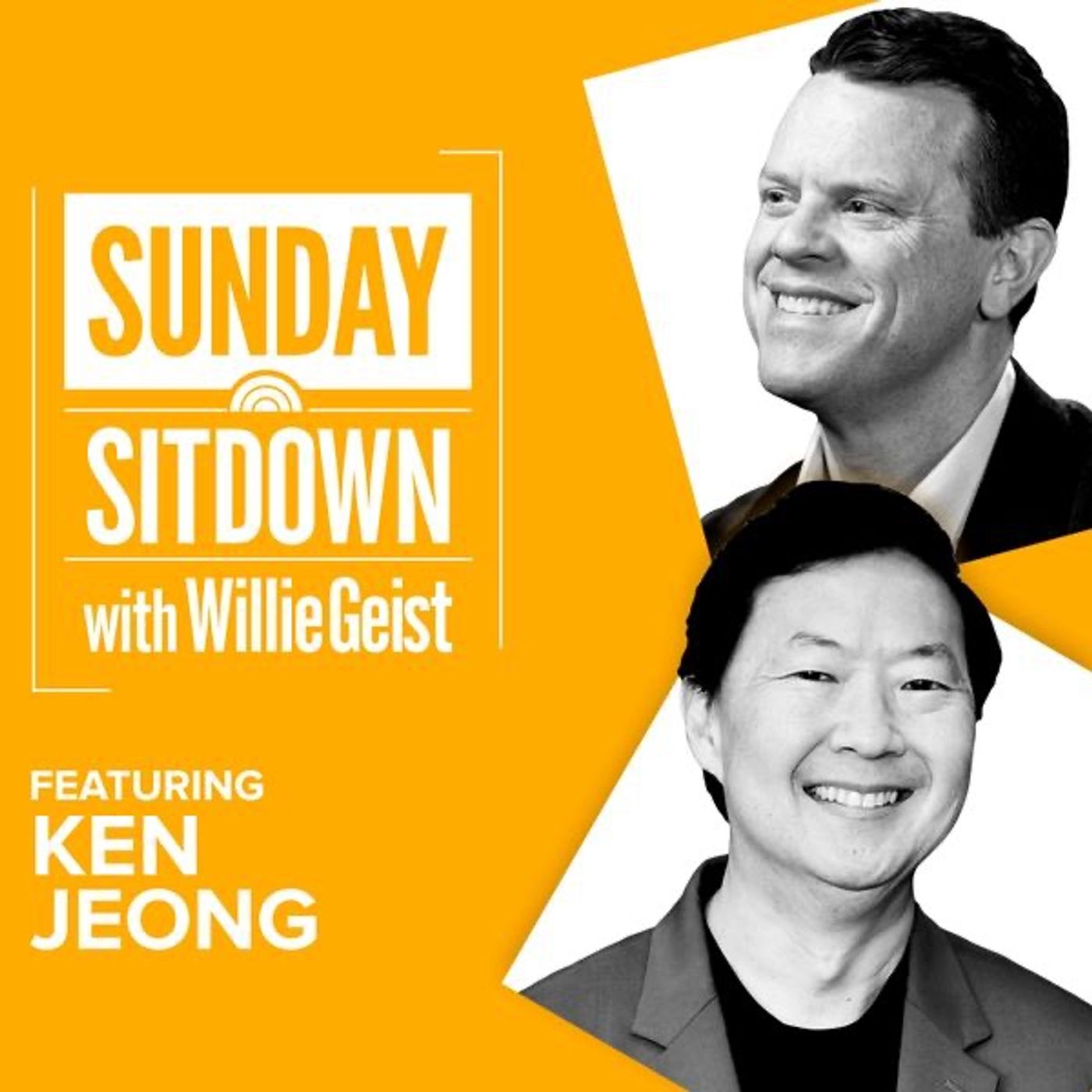
Sunday Sitdown with Willie Geist
Ken Jeong on Reinventing Himself and Trusting His Instincts (January 2026)
00:59:47
Ken Jeong is an actor and comedian who has built an illustrious career spanning film, television, and stand-up, from The Hangover and Community to 14 seasons on The Masked Singer. Jeong sits down with Willie Geist to discuss his evolution from practicing physician to comedian, how finding success later in life has shaped his perspective, and why ensemble work has played such a central role in his career. Plus, he reflects on the support of his family, the importance of projects like KPop Demon Hunters and Crazy Rich Asians in his career and how he’s learned to take his work seriously without taking himself too seriously. (Original broadcast date January 11, 2026.)
Loading summary
Transcript261 lines
- [00:00]
Ken Jeong
If you, your parent or spouse served in the military, you could join our family. Our members saved an average of $70 a month on auto insurance when they switched. Tap the banner or visit usaa.com join today to check your eligibility restrictions apply.
- [00:15]
Commercial Announcer
Watch Disclosure Day at home now with exclusive bonus features. If you found out we weren't alone, if someone showed you, proved it to you, would that frighten you? Well, now the truth belongs to 7 billion people. It in an original event film directed by Steven Spielberg from a screenplay by David Koepp starring Emily Blunt, Josh o', Connor, Colin Firth, Eve Hewson and Colman Domingo. Find Disclosure Day on major digital platforms now with no subscription required. Also in theaters.
- [00:52]
Willie Geist
Hey guys, Willie Geist here with another
- [00:54]
Podcast Host
episode of the Sunday Sit down podcast. My thanks as always for clicking and listening along. I've got a great one for you this week, I don't mind saying, with the hilarious Ken Jeong, he's got one of the most unusual, improbable, extraordinary stories in all of Hollywood. As you may know, Ken was a practicing doctor. He went to Duke University, he went to University of North Carolina Medical school, did his residency in New Orleans, moved to Los Angeles where he worked as a doctor for seven years before going to an audition for for a movie called Knocked Up. Judd Apatow, the director of that 2007 movie, wanted an actual doctor who happened to also be funny to play the part that Ken Jong got that kind of introduced him into the world of real show business. He'd been dabbling in it. He'd been interested in it. He'd been doing standup comedy on the side while he was a doctor. But that role in Knocked up launched him. A couple of years later, he shows up in the Hangover as Leslie Chow. And who could forget that role? Unforgettable. We talk a lot about that. We talk about his building through community, that great TV show on NBC. Also getting his own sitcom, Dr. Ken. He's done so much, including the Masked Singer. A new season now 14 seasons in for Ken Jeong and that show since it premiered in 2019, as a panelist there. And and also how about this? He was in K Pop Demon Hunters, the Netflix cultural phenomenon, the animated show, the animated movie where he plays Bobby, the K Pop band's manager. I just have to say, a great guy to begin with. I think the fact that he didn't really launch his Hollywood career Till he was 40, he's 56 now, has a lot to do with his humility and his gratitude and his I Can't believe I get to do this with all of my friends kind of thing. So naturally funny. Of course, you know that. You've seen. Seen it. He went to Duke. As I mentioned, he is a crazy Duke fan in basketball. A crazy college basketball fan. So as we start this interview at a really cool venue in Brooklyn called the Red Pavilion to talk about everything he's done and his story, I decided to get my teary Barbara Walters crying moment right out of the gate by bringing up the 1990 NCAA National Championship game in which the Duke Blue Devils were beaten by UNLV by 30 points. It was Ken's senior year in college and remains quite painful for Ken. So now sit back, relax, and enjoy my conversation right now with Ken Jeong on the Sunday Sit down podcast.
- [03:41]
Willie Geist
Ken, it's great to see you, man. Thanks for doing this.
- [03:43]
Ken Jeong
Thank you for having me. It's an honor.
- [03:45]
Willie Geist
So the obvious first topic is the 1990 NCAA championship game. Duke comes in underdog against one of the great teams in NCAA history, the Running Rebels, Larry Johnson, Stacy Ogman, those guys. Bobby Hurley has a stomach flu, as I remember.
- [04:01]
Ken Jeong
Oh, no. This interview's over. We can talk about anything else except the 1990. I'll see you guys. Carrie. Mommy. Mother. Mother.
- [04:12]
Podcast Host
We got our cry.
- [04:13]
Willie Geist
We got our cry. Now we can move on.
- [04:14]
Ken Jeong
He brought up. He brought up the finals. He brought up the finals. And you said he would not bring up the finals.
- [04:22]
Willie Geist
Just screaming at Kelly.
- [04:24]
Ken Jeong
It was a 30 point loss. And this is all off the record, please, because we won't use any of this footage. Just please say I was mad and I didn't cry.
- [04:38]
Willie Geist
This is the real Ken Jeong. This is what we bring.
- [04:44]
Podcast Host
It's.
- [04:45]
Ken Jeong
And scene.
- [04:47]
Willie Geist
See? Well, I took, I guess, SOB right
- [04:49]
Podcast Host
out of the gate.
- [04:51]
Willie Geist
You can use it later for an unrelated topic.
- [04:53]
Ken Jeong
Yes, yes, yes. This is how I conduct myself every morning. With a cry and a glass of water and two cameras.
- [05:02]
Willie Geist
No. So for people just joining us, which makes sense, we've been talking about college basketball for about 30 minutes. You went to Duke.
- [05:08]
Ken Jeong
Yes.
- [05:09]
Willie Geist
You like, you got there right on the. Right on the precipice of when it all blew up.
- [05:13]
Ken Jeong
I prepped them.
- [05:13]
Willie Geist
Yeah, exactly.
- [05:15]
Ken Jeong
I nurture them. I cultivated them.
- [05:16]
Willie Geist
Yes.
- [05:17]
Ken Jeong
Coach K will not give me credit. And that's fine.
- [05:20]
Willie Geist
Yeah.
- [05:20]
Ken Jeong
That's how real heroes conduct themselves in anonymity. And no one will ever know.
- [05:26]
Willie Geist
That's right.
- [05:26]
Ken Jeong
Yeah.
- [05:27]
Willie Geist
Blend into the public.
- [05:28]
Ken Jeong
Blend into the public. As if I never had anything to do with their success.
- [05:33]
Willie Geist
More on Duke later. Big, big Part of your story. We don't have to talk about the hoops, although I know we both like to. Oh, yes, maybe rather. But let's jump right into the masked singer season 14, which I couldn't believe.
- [05:46]
Ken Jeong
Crazy.
- [05:46]
Willie Geist
When you hear 14 years of a show, how does that sound to you?
- [05:50]
Ken Jeong
It just. It is the gift that keeps on giving it to me. Fourteen, I mean, that's longer than I have been. Than I was a doctor. You know, it's. It's like longer than I've done any other job in history. And it actually breaks all the rules of kind of why I quit my medical job to do acting and to do, you know, spending six years on Community, having two seasons of my own sitcom. And, you know, it's all about precision, about doing things as best as you can. Even on the Hangover movies, just trying to do things as best as you can. And whereas a masked singer. I'm not a recording artist. I'm not a singer. I'm not. I have nothing to do with the music business. And it is from a guy considered to be one of the smartest people in the business. Because of my medical background, it is so fitting that I am the dumbest person on that show, has no reason being on that show, and I get paid to have a good time. People see kind of how I really am in terms of just having fun, and I. I may take my job seriously, but I never take myself seriously. And I think this show kind of shows that, and it is so much fun. I basically just get paid to watch amazing singers. It's the ultimate music appreciation class.
- [07:23]
Willie Geist
It is.
- [07:23]
Ken Jeong
That's the way I compartmentalize it.
- [07:25]
Willie Geist
Given everything you just said about not knowing a lot about music, maybe this wasn't like the format you'd seen yourself in.
- [07:30]
Ken Jeong
Never.
- [07:31]
Willie Geist
What did you think when this first came to? You want you to be a panelist on a show about people singing in costume?
- [07:37]
Ken Jeong
Oh, yeah. I was. I was. It was my mom who actually convinced me to do the show because the Masked singer actually originated in Korea. I'm of Korean descent, and when I was offered to be a panelist, I was kind of reluctant about it. And my mom was. Even though she lives in the state, she watches Korean television on satellite. And she was like. She had followed the Masked Singer for years, and she said, you have to take the job. It'll be a game changer. And she would send me clips on YouTube. And I was like, oh, okay, I get that. I think I can. I can do that. And it was honestly because of my mom that that was the tipping point of like, okay, I'll do this. And little did we know. I thought maybe it'd be a one off. You do it for a few seasons, have fun. But yeah, now here I am talking to you, you know, finishing up my 14th season. It's kind of crazy. It's funny when you say it out loud. I can't. Sometimes when you're in the moment, you don't think. I don't think of my career in life like that. But yeah, it's just. That's just crazy. It's so surreal and it's wonderful and we, we still have a lot to go. I think this season was the most fun because we, we really got to now, now they're. I'm doing some cold opens where they will leverage my lack of music ability and sing. So I did an opening number where I'm singing the theme song from Teenage Mutant Ninja Turtles and just doing, having. And like last season I did a Shrek tribute where I dressed up as Lord Farquaad and sang that Smash Mouth song.
- [09:17]
Willie Geist
So.
- [09:18]
Ken Jeong
And that went viral. So it's kind of funny how it's evolved where in many ways it's just. It's like a variety show disguised as a game show. So I actually think Masked Singer is our flagship variety show. There's a little bit of everything there. So. And it's been so much fun and I'm just having fun again. Just being, I'd say, the dumbest character on network TV right now.
- [09:45]
Willie Geist
Well, you're very charming while you're dumb. I have to say that.
- [09:47]
Ken Jeong
Yes, thank you. And that's on the record.
- [09:50]
Willie Geist
Your mom has good instincts, by the way.
- [09:52]
Podcast Host
She was right.
- [09:52]
Ken Jeong
She gave me a second. She gave me a second chapter of my career. She really did.
- [09:56]
Willie Geist
I assume she took the standard 10% for.
- [10:00]
Ken Jeong
Oh, again, let's just not talk about that.
- [10:03]
Willie Geist
Boy, I've done it again. Oh, no. Oh no. Oh no.
- [10:08]
Ken Jeong
First of all, duke loses her 30 points and then my mom. Mom's gonna see this.
- [10:15]
Willie Geist
This is our most explosive and emotional interview yet.
- [10:18]
Ken Jeong
Look. Okay, now that we've ripped the lid open. Lack of composition for my mother. I don't see her complaining much. Where I gave her that 30 buck check this Christmas.
- [10:30]
Willie Geist
She wasn't complaining then Gave her some back end. Some $30 back end.
- [10:34]
Ken Jeong
$30 back end.
- [10:38]
Willie Geist
Oh, you're sweet mother. He's joking.
- [10:39]
Ken Jeong
I think.
- [10:40]
Willie Geist
Yeah, we hope so. How do you can explain the phenomenon that the show has become? What is it? If you last 14 seasons by definition, you're successful and in this case a phenomenon. It goes viral, as you said, all the time. What is it about this show that people love so much?
- [10:59]
Ken Jeong
I think it's family. I think it's just families watch it for an escape. I think that you have, I don't know. And it's with kind of, you know, obviously you have these amazing Emmy Award winning costume designers that. That's been really the trademark of the show. It's really the contestants that inhabit the show. And I think to me it's. It's just this wonderful. It's sesame street with the 90s background track. You know, at times, you know, it really is a lovely escape and it kind of dovetails in many ways with K Pop Demon Hunters, where I think that I don't know if I would be a part of that particular project if it wasn't for kind of my success on the Masked Singer. And it kind of, to me, it dovetails very well in terms of kind of just offering this musical escape. And I think that I see artistically the through line, but I don't think I would have certain opportunities that I'm enjoying right now if it wasn't for the Masked Singer. So, so very grateful. And I just have. I think people see us all having fun and I think that, I think that. I think that's the main. And it helps me as a performer when I'm doing my other projects of. Sometimes I'm so intense and I, you know, it's my kind of my medical Korean background where I just want to do everything the right way. And it's. The Masked Singer reminds me, it's like it doesn't have to be perfect, you know, my guess, like I never guess anyone right on the show, you know, And I, and I, and I enjoy. I have fun not being perfect. And I think to me it's a good reminder in life actually. Just you don't have to be perfect to be content, fulfilled, successful. To me it's like just to have feeling fulfilled in other ways is very important. Seeing the big picture and being happy with who you are, you know. And I know it's so. It has had some existential. It's very surreal to say, you know, it has had some existential, like, I don't know, learning points for me just being on the show, it's just to not. It's okay take your job seriously, but not to take yourself seriously.
- [13:15]
Willie Geist
So you mentioned rarely getting it right. Yeah, I watch the show and I watch you, but also everyone else on the show. And I say, I have no clue who that is. And they give you a little clue sometimes, which helps steer you in the right direction. So when you're sitting there and you just hear a voice that you don't recognize, where do you begin the process of guessing?
- [13:36]
Ken Jeong
That's where the comedy comes in.
- [13:37]
Podcast Host
You know,
- [13:40]
Ken Jeong
I will just do my best, enlightened idiot kind of point of view and say, I know exactly who that is. So if I say that, I have no idea. And I'm panicking deep down inside.
- [13:51]
Willie Geist
Buying some time.
- [13:52]
Ken Jeong
Yeah, buying some time. And I will. I've been known to confabulate. And I. So one of my. One of my favorite moments, I think the third season, I had no idea who this contestant was. And Nick Cannon kept grilling me. And, yeah, it was the mouse. And I kept saying it was Tina Turner. And I was putting all the clues together and. And I did kind of think Tina Turner. But everyone just started laughing and the audience started booing and I started doubling down more. This is definitely Tina Turner. And I was starting making. I was starting to make stuff up. And I was like, no, we're dear friends, you know, rest in peace. I'd never met her. And I said, and this is back when she was alive. And I said, no, we're really good friends. And we're at the clues of wine and cheese. We're at a wine and cheese party together. And Nick was calling me out like, how are you at a wine? I was like, yeah, I was her plus one. He goes, and where was it at? And I was like, costco. He goes, where? Yeah, the Costco in Sherman Oaks. It was a grand opening. Why would Tina Turner. Why would Tina Turner be your plus one out of Costco in Sherman Oaks? I was like, Cause she wasn't a member, Nick. So it just. I just remember, became this whole thing.
- [15:03]
Willie Geist
She needed you to get in.
- [15:04]
Podcast Host
Yeah. Yeah.
- [15:06]
Willie Geist
It's like an improv game.
- [15:07]
Ken Jeong
It was an improv game. So that's exactly how I view Messinger. For me, these are all just. The clues are bullet points for some improv and to have fun.
- [15:16]
Willie Geist
Yeah.
- [15:17]
Ken Jeong
I think it's kind of my recipe, really.
- [15:18]
Willie Geist
Not to bring it up, but I think your batting average is, like, not great. Right. It's like 20 something out of 200.
- [15:26]
Ken Jeong
It's so bad.
- [15:27]
Willie Geist
But in fairness, it's hard.
- [15:28]
Ken Jeong
It is no idea who's under the mask. It is a hard idea. Yeah.
- [15:32]
Willie Geist
I never know.
- [15:33]
Ken Jeong
And one of my most embarrassing. It really sucks when they're legit friends. Of yours. The first season we had, it was. Margaret Cho was on the show, and all the clues were designed for me to know. And even I believe in character. She said, you know, and this clue's for you, Ken. And I'm like. And so I'm trying to play it off, and I just was paralyzed with thought. I had no idea who it was. And when it was Margaret Cho, when she revealed, I mean, there was a real moment. She was like, I just. I'm disappointed.
- [16:08]
Willie Geist
Thought we were friends.
- [16:09]
Ken Jeong
Yeah, yeah, yeah. And so every time I see her, there's still that, because she is an icon. She is one of my role models. She's one of the reasons why I got into comedy. She was just one of my comedy heroes. She's a pioneer in Asian American comedy. But every time I see her now, it's just that little bit of awkwardness. Just that dis. Like, I've let Mother down.
- [16:33]
Willie Geist
I mean, I think you're forgiven. She was under a cuff.
- [16:36]
Ken Jeong
Yeah, she was under a cuff.
- [16:38]
Willie Geist
This season, for people excited and getting ready to watch, there is a literal dovetailing that you mentioned of K Pop Demon Hunters. Without giving away too much, I think the Masked Singer. But that's a cool element. Right out of the gate in the first episode.
- [16:51]
Ken Jeong
Yes. No, it's. It's. It's out there right now. They have. Yeah. We're able to sing golden and. And to be. To have that as part of kind of our lexicon. I don't know that. I think to me, that's the biggest moment we've ever had on the show. To have something and not because I was involved in it, I was a small part of it, but just to have. It's the perfect marriage for two properties with Masked singer, K Pop Demon Hunters. It makes sense. And then it was surreal for me to kind of be actually part of the group singing it now, where I had the fortune to be at the Macy's Thanksgiving Day parade last Thanksgiving, and introducing E.J. reami and Audrey Nuna. Like the real Hunt tricks and singing Golden. So there are so many moments of surrealism that I experienced that day. I got kind of emotional. I had dressed up in my bobby outfit, and I don't know, it was very. It was maybe my favorite day on the Masked Singer. Just kind of blending those two things together. It was really, really special and wonderful. And again, just. It's an embarrassment of riches.
- [18:12]
Willie Geist
It's a cool colliding of your world. I mean, while we're talking about it, can you believe how huge K Pop Demon Hunters became. I mean, it feels like it just grew and grew and grew over this last year, and it's just an utter phenomenon. The singles from the soundtrack go to number one in the Billboard charts. All that was around that. When you were making it, did you feel like it was something special?
- [18:36]
Ken Jeong
I had no idea. I mean, I'm just an actor in a recording booth, just there for a couple of days. I was not even privy to the music. I loved the script, I love the animatics. But once I was there at the premiere and just heard the music and it just all was like, this is. This is a cultural masterpiece. And again, just the way it organically became the biggest title ever on Netflix. You can't predict those moments, but. And again, just. And when I look at it personally, I've been so beyond blessed to be a part of all kind of zeitgeisty projects like. Like the Hangover and like Community. That was very special to me. And Crazy Rich Asians. You know, this is yet another project that I'm just privileged to be a small part of that I'm where you're happier for the cast and crew than you are for yourself. Because like Maggie and Chris, the filmmakers, the directors of this, I mean, they've worked for seven long years on this project. And EJ wrote not only golden, but several of the Sound of the songs on the soundtrack. And you. Once.
- [20:00]
Commercial Announcer
You.
- [20:00]
Ken Jeong
Once. I got to know everybody, you know, and their journey, it's so fulfilling. And I'm so. I really am like the manager, you know, just the loving manager that I. That is really art imitating life. Like, I love my girls, you know, I'm just so happy for them. And just to see all the critical success that they're having and the acclaim as well as the commercial success, it's almost like I take myself out of it and I'm just so happy for them. So every time I see them, it's just the biggest smile. And I don't know, the older I get in this business, I think it's wonderful to see people who you love and respect. Really. I don't know, it's just as fulfilling in many ways as it is just to be a part of it. It really is.
- [20:51]
Willie Geist
And you have been a part of so many of those incredible ensembles that you just kind of rattled up, just like all star crews, movies and TV shows. And you're always a highlight, I have to say. A lot of people say that.
- [21:03]
Ken Jeong
Thank you.
- [21:04]
Willie Geist
The scene, Thriller himself.
- [21:06]
Ken Jeong
Check the gate.
- [21:07]
Willie Geist
That's it. We're good.
- [21:09]
Podcast Host
Hey, guys, thanks for listening to the Sunday sit Down podcast. Stick around to hear more from Ken Jeong right after the break.
- [21:17]
Travel Narrator
It's me, your sense of adventure calling. I'm not just calling, I'm insisting. Insisting you stop daydreaming and start planning to get you and me out there. Out to southwest Idaho during secret season September through November, when leaves are turning and harvests are bursting. Wine trails, hot springs, fall hikes, farm to table. That's the draw. The only thing missing, the crowds. Start in Boise, then explore beyond the city. Let's Visit Idaho. Visit SouthwestIdaho.org watch Disclosure Day at home
- [21:48]
Commercial Announcer
now with exclusive bonus features. If you found out we weren't alone, if someone showed you, proved it to you, would that frighten you? Well, now the truth belongs to 7 billion people in an original event film directed by Steven Spielberg from a screenplay by David Koepp, starring Emily Blunt, Josh o', Connor, Colin Firth, Eve Hewson and Colman Domingo. Find Disclosure Day on major digital platforms now with no subscription required. Also in theaters.
- [22:20]
Willie Geist
It's a cold day here in Alaska, but there's one animal seemingly unaffected. Bright eyed and determined enters the husky. Observe as they go up the mountain,
- [22:32]
Ken Jeong
guided by pure instinct. They are truly amazing masters of this wilderness.
- [22:38]
Willie Geist
But even these amazing pets can't sign up for Lemonade Pet insurance. You can sign up now@lemonade.com Amazing.
- [22:52]
Podcast Host
Welcome back. Now more of my conversation with Ken Jeong.
- [22:56]
Willie Geist
But you also happen to have, I think, one of the most extraordinary stories in all of show business, given that you were a legit medical doctor, a practicing doctor. There wasn't like, oh, I took a
- [23:08]
Ken Jeong
class, a bio class in college.
- [23:10]
Willie Geist
It was like you went from being a doctor. So I want to just go back a little bit to you growing up in Greensboro.
- [23:16]
Ken Jeong
Yes.
- [23:16]
Willie Geist
You had the idea of being a doctor. That was sort of a vision, probably in your family.
- [23:20]
Ken Jeong
Yep.
- [23:21]
Willie Geist
But it sounds like as driven as you were and maybe as your parents were. There was humor, there was comedy in the house.
- [23:29]
Ken Jeong
Yes. It came from my dad. My dad, he was a professor of economics at North Carolina A and T State university in Greensboro, N.C. was like over 34 years. And so I actually, my dad, well, he made me audit one of his statistic classes when I was a kid. Just wanted me just like sit and enjoy the magic, I guess. And he, he was working the room like a comic. And he was just so engaging and so funny. And I get my comedy from my dad, clearly. And so, and I grew up loving Eddie Murphy, like Letterman. Those are just huge, towering world figures, you know, in my, in my worldview. So even as a kid, I was just, I just loved to laugh, but I was not. I was never like the class clown or anything like that. And I just, that really happened at college at Duke, where I took my first acting class. And I, Everyone was always like, yeah, you love comedy, you know, maybe you should try, you know, you always got that kind of thing. And. And then I took my first acting class, spring semester, sophomore year at Duke, and I was just hooked. This was like, oh, this is, this is my calling. And comedy acting. And we would do like freeze tag and improv acting. But I just, it just, it just one of those things that just was instant and you just felt like you were born to do, but it was hard. And I always joked that I was Korean into staying pre med. You know, it was the 80s and, you know, I could say that and it was true at that time, but that's not the case. It was me. I did not think that a person with my look could necessarily succeed. This is like 88, 89. And, you know, so. And also not just beyond ethnicity. I didn't know if I had. I just, I didn't know if I would have the maturity, the emotional maturity to handle this. And my dad did pose that question, was like, you know, it's not. I believe in your talent, you know, but this is not a show business, is not a meritocracy, you know, so it's not based on that. And can you handle that? And so I definitely had to come to Jesus talk with my dad. And I was like, you know, and I said, I don't think I could. I never even left North Carolina. I don't think I'd ever been to Los Angeles, you know, at that time. So I didn't know if I had the kind of, the maturity to, to succeed. And. But again, things happen in life. I got into med school and I, you know, everything went according to plan, but I just couldn't shake off the acting bug, the comedy bug. So I would do stand up comedy because I couldn't, I couldn't do theater anymore and I didn't have the bandwidth to do it. But I found doing stand up comedy, I would just do it once every couple of months during med school and I would just go on open mics or occasionally I'd go on the road and be an opening act for somebody. And I just kind of kept it up, you know, and, and, and actually I, I would, I would Compartmentalize what I would do. And I was like, oh, this is my golf. This is my hobby. And so it's. I don't know if I'm going to do this for a living, but it makes me happy. So I just want to continue to do stuff that makes me happy. And. And it was in my residency, which I did in New Orleans at Ochsner Foundation Hospital. And that really gave me kind of the. The key to kind of blend both worlds, because my director of my residency, he became my mentor, and he's a very enlightened person. He was a prominent nephrologist, but also on the board of Jazz Fest. And he loved what I was doing. He was like. He goes, you know, you will be a better doctor because of the bedside manner that you've attained from your comedy, but you can also, if you choose to go this path, you could be a better comedian because of your medical background, and we would allow you to do that as well. And that blew my mind because I didn't think anyone would invest in me. Well, what if I decided to leave medicine? He was like, I'm cool with that. And not a lot of programs would support that mentality. But he did. Ironically, he kept me in medicine for much longer because he really gave me a balanced worldview of what life is all about. And it was because of him, actually, I stayed. There were times I wanted to quit, and there were times I wanted to do and just quit early. But it was because of him I stayed. And I practiced for seven years in LA at Kaiser Permanente. And I met my wife, who's also a physician and still practices part time. And so medicine's a big part of my worldview. And I think having the stamina to follow through with something as difficult as that has definitely given me stamina. Now here we are, like, 14 seasons later on a show, and. And me being in the business for as long as I have now, you know, I think it's given me. It's given me some indirect lessons and indirect benefits that I never thought I would get anywhere else. And I think it does come from my medical background.
- [29:02]
Willie Geist
You know, your jump to comedy is all the more extraordinary given how much you invested in medicine. I mean, you graduated high school and you're 16, I think.
- [29:10]
Ken Jeong
Yes.
- [29:11]
Willie Geist
You're the 1986 Greensboro Youth of the Year. Take a bow.
- [29:16]
Ken Jeong
Actually, my parents will love that you said that that matters more to them than anything I do now. I suspect it really does, that my parents will get a kick out of it.
- [29:27]
Willie Geist
Congratulations again. On that. Coming up on the 40th anniversary.
- [29:33]
Ken Jeong
That's what I would tell my dad. You know, we were pinning this not to massing, we're pinning it to the 40th anniversary of youth of the Year. Yeah, I got a plaque from Mayor John Forbas. It was amazing.
- [29:43]
Willie Geist
So we had to get it in. We had to get it in.
- [29:48]
Ken Jeong
That's amazing.
- [29:51]
Willie Geist
So you got that plaque. That's huge. Go through Duke, you go through med school, you go through your residency. And then as you said, when you moved to la, it wasn't like, I'm in show business. You worked for seven years as a physician. So when is the moment of I'm out of medicine, I'm into comedy. When did you make that decision and that commitment?
- [30:10]
Ken Jeong
Yep, it was I. When I worked at Kaiser, I was also doing stand up comedy at the Improv and Laugh Factory and open mics. I was just kind of. So during the day I'd be in the clinic and at night I just would just compete for stage time. And then got an agent and I started auditioning. And it led to my first movie, which was Knocked up, directed by Judd Apatow and playing a physician. And he was looking for someone with a comedy background and someone with a medical background. And it was really serendipitous. And I mean, it was a long process where you audition and then 90% of the time you don't get the part. And that's the name of the game. And so I remember putting myself on tape and just kind of forgot about it. And a couple months later, I was invited to a table read. And it turned out, I remember specifically Seth Rogen had said, like Evan Goldberg, his partner, and I watched your audition reel, you know, we really believed you're a burned out doctor. And I was saying, without any irony or without doing it, I said, because I am, you know. And I had one of those magical moments where I was very fortunate. I had had a great table read. And it was almost like being at the free throw line. It's like, you know, or it's like Leitner in 92 with the shot. And I was able to have maybe my one and only clutch moment, that it just happened at the right place at the right time on this table read. And I do remember Judd Apatow saying, fantastic job. And I did have a feeling I'd get the pardon. A few days later I got the. And you know, it really just it that was. But I still have my medical day job. And so I shot it on a vacation Day because I, yeah, it was only like, you know, it was really a small part. And because I, even then I was very practical, I didn't necessarily think that, oh, this is going, I was mature enough to think, oh, this is not going to, it's not like my world's going to change overnight, you know. And so I, I, it was that emotional maturity I think I attained being a physician and saying, just because you get a part in a movie, you know, it doesn't mean it as long as. And my dad, I had given credit, taught me that. He was like, if you're going to go into acting, which he gave me his full support. If you're going to go and act and do it because you love it. Don't do it because you're famous, you want to be rich, you want any of that stuff, just do it because you love it. And, and you have to have. And I, I think in my 30s, which is when I shot that movie. God, I actually, it's about almost going on 20 years since I shot that movie.
- [32:55]
Willie Geist
Yeah, yeah.
- [32:57]
Ken Jeong
In 06. I think summer of 06 is when I shot that movie. And it really was the game changer. And it was my wife who encouraged me to quit my job and do it full time. And I was nervous telling my dad. And my dad was like, look, if you. And to his everlasting credit, he said, you always need the support of your family to make a watershed decision like this. And if you had, and your wife is now your family, if you have her blessing, you have my blessing. And then so I was able to go into show business full time, guilt free and debt and emotionally debt free. I had no issues. So once the hangover happened, I was able to have a very healthy mindset. And it wasn't like revenge success. See, dad, it wasn't like that. See, you know, you know, like, I think Jimmy Kimmel was the first talk show I went on. When the hangover happened. It wasn't like, hey, how does it feel to be famous? I don't know, dad, how does it feel? You know, didn't have any of those. Told ya. Didn't have any of those hangups. And I think psychologically just having that was very important to me. And you know, and I think to have that kind of mindset of no psychological debt was really important to me.
- [34:14]
Willie Geist
And I'm sure having the validation of Judd Apatow, Seth Rogen, Jason Segel, all those guys saying, you're funny, that'll push you down the road, that that was
- [34:22]
Ken Jeong
being you're coronated by kings.
- [34:24]
Willie Geist
Yeah, they.
- [34:25]
Ken Jeong
I mean, they're just to have their approval. I mean, it's still. It still matters to me. And it gave me the. It gave me the confidence and. And Judd had said, like, you. You are my discovery, and I will. I will put you in. In all my movies. And then he knew I quit my day job, and he gave me day player roles in Pineapple Express, like stepbrothers, just like one line roles. And he'd helped me out so greatly. He gave me roles in a couple of movies that eventually I think were either recast or I was doing so many Judd movies at once, I couldn't do them all. And I still got paid for it. And I've never told anyone that. Still got paid for that day. And he. At least five Apatow projects. He took care of me. And he does this with every. That's why people love him so much, because he took care of me. And I remember after the Hangover, I saw him at an Emmy party and he said, are you doing the sequel? And I said, yeah. And he said, great. I don't have to worry about you anymore. Just walks away. Those are really, like, really. I get choked up thinking about it.
- [35:36]
Willie Geist
That's really cool. And there are a lot of people in Hollywood who have similar versions of that story with him.
- [35:41]
Ken Jeong
I think absolutely everyone who's worked with Judd at that level has a similar story.
- [35:46]
Willie Geist
I think the way you put it is Knocked up opened the door for your career. Hangover just blew it open.
- [35:52]
Ken Jeong
Yeah.
- [35:54]
Willie Geist
That phenomenon we talked about, K Pop Demon Hunters, but long before that, this phenomenon of the biggest movie in the country, the biggest movie in the world, one of the funniest movies of all time. People still go back and quote it and watch it, especially your lines. What was that experience for you? Being relatively unknown actor and then being this international star?
- [36:15]
Ken Jeong
It gave me a career. It's literally the reason why I'm talking to you right now. I'm not here. If it wasn't for the Hangover, it just was. Looking back, it was. I was already happy, you know, with the way my career was going already and for it to happen. I. I don't know if I. It was so intense. Overnight success, you know, and I'm sure. I'm sure all the guys have told you that, you know, have said that and have felt that it just. It changed my life from black and white to Technicolor. It just. I remember going to. We live in LA and we go to a sushi Me and my wife went to a sushi restaurant where we always go for the past, I don't know, five years prior to the hangover. And then going like, right after the hangover's released, everyone's just staring at me and just everything. It's like, oh, okay. I guess everything's changed.
- [37:13]
Willie Geist
Right. Quickly too, I imagine.
- [37:16]
Ken Jeong
Quickly.
- [37:16]
Willie Geist
Yeah.
- [37:17]
Ken Jeong
Yeah. Even though I had quietly done this maybe for seven years in LA or just, you know, doing standup, but. And Jim Carrey's right, it does take you 10 years to be this overnight success. But once you are that overnight success, it's intense. And it was. I don't know, it was for a person like me who didn't even think that they would even be able to have a shot at doing it full time. I was actually very happy and grateful. So for me, and I think it helped that I wasn't the lead. I was able to, like, you had Bradley, Ed and Zach and Todd. Those were the starting five. I was like, they always put me in a position to succeed. So I was really kind of like the guy off the bench that could shoot the three. I know we're doing a lot of basketball. I was like Mr. Reliable. I was always that guy that, you know, Lakers speak. I was Michael Cooper, whatever. I just come off the bench.
- [38:14]
Willie Geist
Good reference.
- [38:15]
Ken Jeong
Yeah. Just always reliable and always put in a position to succeed. They would emphasize my strengths, hide my flaws, and I would just like, you know, I was just always. Just golden. I was always just that guy. And so I was always protected. And I think that actually helped me psychologically that A. I got my fame later in life. Cause Hangover came out when I was 40 and then. So being famous at 40 is healthy, healthier.
- [38:40]
Willie Geist
You're an adult.
- [38:41]
Ken Jeong
You're an adult. And also, I think the fact that I was protected in many ways, I was kind of the grateful bench player. And I'm not saying that to demean myself or anything. It just. But I think it's a healthy thing and I think that it's allowed me to find my own voice and find my own kind of niche and diversifying into other projects like Masked Singer and like K Pop Demon Hunters and like other things that I do that aren't necessarily in movies that I've been able to find and continue to kind of find my own voice.
- [39:15]
Willie Geist
I was watching some scenes again this morning, and the trunk scene remains one of the most outrageous things I've ever seen in a movie. And correct me if I'm wrong, but wasn't the nudity Your idea. That was your idea. Like, it wasn't scripted that way.
- [39:32]
Ken Jeong
No, it was not.
- [39:33]
Willie Geist
You're like, I think Chow should be totally new.
- [39:36]
Ken Jeong
Yep, it was. He was supposed to have pants, supposed to have slacks. And I had this idea. And at that time I was only known for Knocked up and playing a doctor and then reading the script and being a fan of old school. That was Todd Phillips previous movie. You know, it was just. He's just so good at building suspense and tension and chaos. He's the best arbiter of chaos in a comedy movie. And so you had Mike Tyson, you had a tiger. What could be? How can you top that? And I was like, oh, the dude from Knocked up just jumped out of a trunk naked. And it was something that I was just so locked into character. Anyone who knows me, I don't. I'm not an exhibitionist. I don't like, I've been asked on countless movies and award shows, hey, will you be naked in this movie? Like, absolutely not.
- [40:34]
Willie Geist
Right? That was a one time thing.
- [40:35]
Ken Jeong
One time thing or a hangover thing. Maybe in sequels. But I'll like, I cannot. I will never do that ever again. And it's because at that time I did feel like this was right for the movie. It was right for my character and I had given it a lot of thought and I felt like this was the right and do I have the balls, no pun intended, to do it. And I did. And it was nerve wracking. But I did talked to my wife about it and she did say, and I talk about it in my stand up special. It was true. She said, this will be the feel good movie of the summer because every guy will go home feeling good about themselves. She's actually said that. And not to bring it down at all, but it was. My wife was going through. She's a breast cancer survivor and cancer free since. Since almost going on 18 years now. And she. I think what made it even more dramatic was I almost didn't do the Hangover when it was. Well, I had auditioned and when it was offered because Tran was. She just got diagnosed and going through chemotherapy at that time. And it was. But she was. Her tumor levels had had diminished down to normal levels after the first dose of chemo and talking it over with everybody on the medical team and with my wife and also shout out to my mother in law as well who was helping out. They were all like, our twin girls are one year old at the time. And I didn't have a job and I just quit my Medical job. And they were like, you should do the movie. It's just a couple of. Again, it was only like a two day roll, like knocked up. It wasn't that large a part. And so, and I give Scott Budnick, one of the producers, all the credit. He and Todd and the studio, they flew me out just to do my scenes and flew me right back to be with Tran and be back with her during her chemo. So I, I didn't miss a beat. In many ways, I just went out shot. So ironically, in the Hangover, Mr. Chow's known, you know, whenever I go to Vegas now, I'm always known as Mr. Chow. But while filming the movie, I was only there for two days.
- [43:13]
Willie Geist
I didn't realize that you're so prominent in my memory of vision of that movie.
- [43:17]
Ken Jeong
And that was Todd being gracious and generous and the movie being as impactful as it is. But it wasn't. Yeah, I was not there most of the time. And it was again one of those. Now revisiting it all these years later, I'm just, yeah, it's like a dream. I mean, it really is. And yeah, when I say it out loud, I still can't believe that any of that happened. But again, just having that support system of those guys. Even the Hangover and I did a movie with Bradley Cooper prior to that. So he and Todd Phillips had known about Tran's situation. And Todd had said like every day I was on set, only those few days he was like, yeah, just always ask how Tran was doing. And he comes from a family of like, I think his sister's a pediatric oncologist. So, like, you know, are you okay? So I don't know. Just in many ways I view maybe the raunchiest, dirtiest movie I've ever been a part of. Like the most warm set behind the scenes. Everyone's, you know, and subsequently in the sequels, like, and Tran would come on set like she, like in Hangover 2, she came to Thailand with me and it was so emotional for me because she got to enjoy it and be there with me. And it was so. Again, it's funny, it's ironic to say how again, the dirtiest movie of all time was so warm and wonderful to me and my wife behind the scenes. I can't even repay them enough. So even if the Hangar wasn't the success that it was, I think in many ways Mr. Chow was such a therapeutic character and I was making choices that I wouldn't necessarily make right now. Being naked in movies and doing things like, because I think I was going through a time where, you know, I was like, just, life is short, and you just gotta. Just whatever your instinct is, you just gotta go for it. Just gotta go for it. Take that three. You know, take that shot. Don't be afraid and be fearless. I'm not always. To be honest, I'm not always like that. And to this day. But I think for that moment, I
- [45:32]
Willie Geist
was, you know, gave your wife a laugh with the nudity when she needed it.
- [45:40]
Ken Jeong
And it was masking the pain with a laugh. Masking the pain with a laugh. And it's funny. I'm Korean and she's Vietnamese. And so there was so much nonsense in Mr. Chow, I would literally just speak gibberish in Vietnamese to make her laugh and just to see if it would make the cut. I didn't tell anybody. So when we're releasing, like, Mike Epps, you know, and I'm like, you know, I was like, got chick. And it sounds like, release the hostage, you know, and in Vietnamese, it means chicken die. It was just such a weird. I would just say all these random phrases, and I would say. I was like, ah, ga mang. And then Todd kept thinking I was saying, come on. I love how you say come on. Like, come on, let's go. And is thank you in Vietnamese. So there's all these little Easter eggs in the movie that make me and Tran laugh.
- [46:32]
Willie Geist
Wow, that's amazing.
- [46:32]
Ken Jeong
So there are at least three Vietnamese phrases. Now, the first one.
- [46:35]
Podcast Host
Stick around for more of my conversation with Ken Jeong, right after a quick break.
- [46:41]
Travel Narrator
Psst. It's me. Your sense of adventure calling. I'm not just calling, I'm insisting. Insisting you stop daydreaming and start planning to get you and me out there. Out to southwest Idaho during secret season September through November, when leaves are turning and harvests are bursting. Wine trails, hot springs, fall hikes, farm to table. That's the draw. The only thing missing, the crowds. Start in Boise, then explore beyond the city. Let's Visit Idaho. Visit SouthwestIdaho.org
- [47:15]
Ken Jeong
Good morning, students. Soccer teaches us teamwork, leadership, geometry, art, physics, and a lifetime of lessons we can take with us long after we leave the field. That's why bank of America and US Soccer are committed to helping bring soccer to every school. Soccer is officially in session. Raise your hand to help bring soccer to schools@bofa.com socceratschools soccer.
- [47:42]
Travel Narrator
So good.
- [47:43]
Willie Geist
So good.
- [47:44]
Commercial Announcer
New summer arrivals are at Nordstrom Rack stores.
- [47:47]
Ken Jeong
Now get ready to save big with
- [47:49]
Commercial Announcer
up to 60% off brands like Rag and Bone, Levi's, Adidas and free people. Join the Nordy Club to unlock exclusive discounts. Shop new arrivals first and more. Plus, buy online and pick up at your favorite rack store for free. Great brands, great prices. That's why you rack.
- [48:14]
Podcast Host
Welcome back now to the rest of my conversation with Ken Jeong.
- [48:18]
Willie Geist
I think I know the answer to this, but what's the line from the hangover you hear the most from people on the street? Is it Toodaloo?
- [48:26]
Ken Jeong
It's Toodaloo. Yeah, It's Toodaloo. It's happened to me. I was at an ATM one day and this guy in a convertible just stops and just stares at me. And the light is green. And when Leica is green, he goes
- [48:45]
Commercial Announcer
to the loo, mother
- [48:48]
Ken Jeong
just drives away. So it just didn't say anything else? Didn't say I was a fan.
- [48:55]
Willie Geist
You're like, there's my legacy.
- [48:56]
Ken Jeong
That's my legacy. Yeah. And. But no, for me just to. I don't know, it's just for people to know that about me and to smile, you know, it just. I don't know, it's a gift. It's a gift. It's just a gift. And you know, you. You want to do as best as you can to service that. And again, we're all human. We're not perfect. But there is a part of me always that I recognize that's such a gift, man. And I'll never. If that's what I'm known for for the rest of my life, it's just. What a great thing to be known for.
- [49:40]
Willie Geist
Yeah, not bad, not bad. Another gift we were talking about earlier is Community, which has been this kind of cult favorite for a long time. And I feel like during COVID it became something else. Like a whole nother wave or another generation. Yeah. Got it and experienced it. That thing, that's another one that just keeps growing with time.
- [49:57]
Ken Jeong
Well, it's my kids favorite thing I've ever been on. And the fact that they like Dan Harmon's writing, he's like a poet. I mean, he has a lyricism to it. There's a lyricism to his writing. And there's certain writers in this business too, that, you know, like Aaron Sorkin has a distinct style. You know, Wes Anderson has a distinct style. Like Dan Harmon has a distinct cadence and style. Like, oh, okay, I know this was. I know this draft was, was written by Harmon himself. You just, you just knew his wordplay. Such a wordsmith. And like I said, there's a lyricism and this Happened. This was great for me as an actor because it happened to me at the same time. I was doing the Hangover sequels and Hangover was kind of like. We were like, in basketball terms, the ball is a spotlight. But we're kind of improvising our own plays because we know the system so well. That's part of our system, is to improvise television, scripted television, Community, we're on a tighter schedule. It's not like that. So it's more like, hey, you gotta play. You gotta play in a great Popovich system.
- [51:07]
Willie Geist
Yeah, Run the offense.
- [51:08]
Ken Jeong
You have to run the offense. Doesn't matter. Great, you're talented. Great. Run the offense. You're not talented.
- [51:12]
Commercial Announcer
Great.
- [51:12]
Ken Jeong
Run the offense. It doesn't matter. Run the offense. And so if Hangover made me famous, Community made me a better actor because I started out improvising a lot on Community and everyone, including Harmon, is later told me, what the hell was that? And then you realize, oh, you're a genius. Why didn't you tell me? And then you realize that it just trusts the words trust, trust the environment. And just if you trust that environment, great things happen. So it, it gave me another. I don't know, it just gave me another skill set. So by the time I had my own sitcom, Dr. Ken, I was, I was comfortable improvising. I was comfortable just going, just sticking to script, you know, and I think having that well rounded game, I think Community gave me that well rounded game because. And then you got to rub elbows with the most talented people I've worked with over a long period of time. Where you work, you know, Donald Glover, Jim Rash, Academy Award winner Jim Rash, Dan, the Russo brothers, you know, everybody. Ludwig Gorenza, who is the Oscar winning composer of Oppenheimer and Black Panther, all came from Community. Wild. Yeah, it's wild. I mean, certainly you had Joe McHale, who I learned nothing from and never will. It's on the record. Willie asked me.
- [52:37]
Willie Geist
Wow.
- [52:37]
Ken Jeong
I didn't offer that.
- [52:38]
Willie Geist
So staring down the barrel on the camera for that one.
- [52:41]
Ken Jeong
Just, just Joel McHale, which, I don't know, just some things you have to suffer through. You know what I mean?
- [52:46]
Podcast Host
Wow.
- [52:46]
Willie Geist
Yeah, like I was gonna something.
- [52:48]
Ken Jeong
My back hurt from carrying him from six seasons. And possibly a movie.
- [52:52]
Willie Geist
It's getting weird.
- [52:53]
Ken Jeong
I mean, I wouldn't have brought it up if Willie hadn't asked me that question.
- [52:56]
Willie Geist
You say possibly a movie.
- [52:57]
Ken Jeong
Possi.
- [52:58]
Willie Geist
Are we doing the movie?
- [52:59]
Ken Jeong
I'm all, come on, gotta do it. We gotta do a movie. I mean, it would. It literally is getting everyone's schedule aligned.
- [53:08]
Willie Geist
Yeah.
- [53:09]
Ken Jeong
Like especially Donald. And I have to admit, especially Joel. Joel's so busy, you know, he may or may not be. He may or may not be my best friend in the world and who I love dearly. He may or may not be that person.
- [53:23]
Willie Geist
Right.
- [53:24]
Ken Jeong
I don't know. Sunday, today. I don't know. But there's our promo. Yeah, there's our promo. Why are we talking about Joel McHale on my segment? Why are you making me talk about Joel McHale on my segment, Willie?
- [53:37]
Willie Geist
Guys. Well, I was going to ask you about Animal Control, where you're back together with Joel, but I don't dare bring it up. Do I dare bring it up?
- [53:44]
Ken Jeong
He brought up Duke. Now what brought up my mom. And he brought up Joel McHale on two different projects. It is Joel again. Community was like college, where you make lifelong friends. And Joel. I'm actually closer with Joel. Some people you're closer with after college than you are during college, and he's one of them. We've always been friends, even during Community, but we have so much in common. Like, we're just best friends. I mean, and we could be in another profession, and we would just. We just. I don't know. And it was actually during the pandemic, too. We. We got even closer, and it was him. We did a podcast called the Darkest Timeline Podcast. That was all his idea. And he wanted. He goes, we gotta do a podcast. And for years, I was like, I'm busy, you know, so, you know, using that excuse. And so when the. When the lockdown happened, he goes, hey, what are you doing? Call me now you do a podcast. And so we did it. And it was all Joel's concept of having. Talking about issues at that time, like Covid, based on my experience as a physician. And then we would interview friends and namely friends from Community, and we got everybody together, do a table read. And it just became.
- [55:04]
Willie Geist
Yeah, people ate it up.
- [55:05]
Ken Jeong
People ate it up. And it happened. Riding on the coattails of the success of Community, on Netflix, and on various streaming outlets that actually led to a deal to do a movie. So I give Joel immense credit, and now he is hugely successful on his great show, Animal Control. It's only because of the supporting cast.
- [55:26]
Willie Geist
That's right.
- [55:27]
Ken Jeong
They carry Joel.
- [55:28]
Willie Geist
Right.
- [55:28]
Ken Jeong
I mean, the supporting cast is outstanding. Joel is just there, and it is so. Wow.
- [55:36]
Willie Geist
It's going all in so much.
- [55:38]
Ken Jeong
It is so much fun. Again, I'm just getting paid to hang out with Joel. It is working with a brother again, like basketball. He can read my mind where I'm gonna go comedically. I can read his mind. So to have that shorthand and I play his boss on the show. And it is just. It's just not work. It's literally not work because we do bits all the time for free without a camera, and we're like, always, like, ragging on each other, so we just get to do it in front of a camera. Now it's just, again, just. I don't know, it's just playing hoops with an old friend. It's just so easy and again, so happy again. I'm so happy for that cast. It's a great show, great people, and it is. Honestly, it's evolved to be one of my favorite shows to watch on television. I really. It's a great supporting cast. I mean, you know, Joel's just there,
- [56:39]
Willie Geist
but again, Joel's just there. Joel's just there, but you were sincere almost. And then it fell apart right at the end.
- [56:46]
Ken Jeong
Well, I'm just upset we have to talk about Joel so much on my segment. So upset.
- [56:52]
Willie Geist
Oh, it's a great show. In the new season. I got to watch a couple episodes.
- [56:54]
Ken Jeong
Yeah, right.
- [56:55]
Willie Geist
Very funny.
- [56:55]
Ken Jeong
It's so funny. It's so good.
- [56:57]
Willie Geist
Yeah, yeah.
- [56:57]
Ken Jeong
And occasionally, you know, sometimes Joel is funny on the show. Sometimes a broken clock is right twice a day.
- [57:04]
Willie Geist
Well, you don't miss a chance, do you?
- [57:06]
Ken Jeong
Just because when you interview Joel, it's going to be even harsher. And I'll be on the set directing it.
- [57:13]
Willie Geist
Great to see you, Ken. Thank you so much.
- [57:15]
Ken Jeong
So much fun. Thank you so much.
- [57:17]
Willie Geist
Made you cry twice.
- [57:19]
Ken Jeong
Look at you. Oh, my goodness.
- [57:22]
Willie Geist
Barbara Walters.
- [57:22]
Commercial Announcer
Yeah, Barbara.
- [57:23]
Ken Jeong
Chopping onions off camera and I'm crying. Look at you, man. All those. All those techniques. You're like the Larry Bird of making people crying.
- [57:30]
Willie Geist
That was Barbara Walter's trick, too. Talk about the 1990 Duke. The Barbra Streisand.
- [57:36]
Podcast Host
Just after our sit down conversation, Ken and I hopped up on the stage at Red Pavilion to talk about his early days of standup.
- [57:46]
Willie Geist
This will take you back to your early days of standup? Maybe.
- [57:48]
Ken Jeong
Yes.
- [57:50]
Willie Geist
Do you remember the first time you got on a stage or what?
- [57:53]
Ken Jeong
Yes. It was during med school. 30. Oh, God, 35 years ago an open mic at a bar called the Berkeley Cafe. It was in Raleigh, North Carolina. And out of sheer panic, I brought, I think, 18 people to laugh at my jokes, and I still didn't do very well.
- [58:16]
Willie Geist
Oh, even your friends were like, no,
- [58:19]
Ken Jeong
no, even my friends. I should have brought. I should have just left it to the drunks that were there at the bar. I think they were laughing more. It was, it was very, it was very painful. Stand up. I'll be honest, stand up is still the most difficult thing I have ever attempted to do in the arts. Cause you're by yourself. I think when I think I'm at my best where I'm part of an ensemble, I think I've made my success being a part of ensembles like Hangover Community, K Pop, Demon Hunters, Masked Singer. But doing this by yourself, it's terrifying. I'm sure it's terrifying. And even while doing my Netflix special, I had not done stand up for, I think nine years. And I just remember feverishly going to open my. I just did everything I could to just kind of get back in the head space. I was as a standup and, you know, it's very tough and literally a shout out to every single person that does stand up because it's so much harder than what anyone ever thinks. It's. Mistakes are made, things are said. You're workshopping jokes, you're workshopping stuff in real time, in public, in front of an audience. Like Seinfeld's always said, it's like going to work in your underwear. You're trying out different clothes at the same time. And it's so difficult. It's a miracle one can have a cohesive 10 minute set, you know, in much less an hour. It's, it's, it's very, very hard. And, and for me, it was at least some people, it comes exceptionally easy. And that's why, you know, I don't do it as, as much, to be brutally honest.
- [60:01]
Willie Geist
It can feel lonely up here. Can it?
- [60:02]
Ken Jeong
Yeah.
- [60:03]
Willie Geist
Especially if, you know, you don't have them out of the gate. Oh, I have 10 more minutes of this.
- [60:06]
Commercial Announcer
Yes.
- [60:07]
Willie Geist
Like this is going to be long.
- [60:08]
Ken Jeong
Yes. I mean, it's one thing. And I've experienced that a lot now, like the few times I've done stand up since. It's exactly like Jerry Seinfeld's movie comedian sums it up. If you're famous, you have that few moments to grace, but after five minutes you're like, if you're not. Okay, man, get off the stage, please. Okay. It just, in many ways, there's nothing more democratic than you have to earn it, no matter who you are. And there's something to be said about that.
- [60:38]
Willie Geist
I think when Jerry was on this show, interviewed him at the Beacon, and I asked him that question about the crowd's all there to see You. They love you. He said, you come out, you get a big ovation. First couple minutes. That's for the past. Thank you for doing Seinfeld and now show me what you got today. And like you say, if it's not good, they're not gonna laugh.
- [60:57]
Ken Jeong
I recently did a gig in Philly last month. It was a gig I couldn't legally get out of. And. I was so stressed out, I made sure that all my jokes that were. It was really, really, really hard. And Philly is not a giving crowd necessarily. And so for me to come out unscathed, you know, was like the ultimate compliment.
- [61:30]
Willie Geist
It's a win.
- [61:31]
Ken Jeong
It was a win because I took it seriously. I was stressed out about it more than. I was stressed out more about that than doing, like, mass singer or movies or things like that. That can be demanding roles. You know, I did a drama recently, like my. And it was. I was the lead of this drama, and I don't normally do dramas. And I was doing standup in Bensalen, Pennsylvania, was more terrifying because I just wanted to do right by them.
- [62:00]
Willie Geist
And it's just you up there.
- [62:01]
Ken Jeong
It's just me up there.
- [62:02]
Travel Narrator
Yeah.
- [62:02]
Podcast Host
Nowhere to hide.
- [62:02]
Ken Jeong
Nowhere to hide.
- [62:03]
Willie Geist
But it went well.
- [62:04]
Ken Jeong
It went well.
- [62:05]
Podcast Host
Good.
- [62:05]
Ken Jeong
I'm alive here still. I survived and able to talk to you about it now. So I think that's the big win.
- [62:10]
Willie Geist
Philly will let you know.
- [62:11]
Ken Jeong
Philly will let you know. And I think you know, but that's the beauty of standup. The crowd will let you know, and you want to be around, you know, you've achieved success. I'm not talking about me, but someone like Seinfeld has achieved success. When you can do it with people, that will let you know. That is the ultimate sign. And it's not just about hooting and hollering and getting innovation by your echo chamber of fans, necessarily, but if it's by people that you're like, impress me. Oh, okay. You did okay.
- [62:38]
Willie Geist
Yeah.
- [62:39]
Ken Jeong
That, to me, is a compliment.
- [62:40]
Willie Geist
Good.
- [62:40]
Commercial Announcer
Good.
- [62:41]
Ken Jeong
Absolutely.
- [62:41]
Willie Geist
All right, so just give us your best 15 minutes. We'll be right here, guys.
- [62:46]
Ken Jeong
We'll be right back.
- [62:52]
Podcast Host
Brilliant.
- [62:52]
Willie Geist
Thank you.
- [62:53]
Ken Jeong
What an ad lib. I was a little slow at the beginning when I said we, but when I said back, it killed it.
- [62:57]
Willie Geist
Oh, they loved it. That's great.
- [63:05]
Podcast Host
My big thanks again to Ken for a great conversation. My thanks to all of you for listening again this week. If you want to hear more of our conversations with my guests every week, be sure to click follow so you never miss an episode. And don't forget to tune in to Sunday Today every weekend on NPR BC to see these interviews with your own two eyes. I'm Willie Geist. We'll see you right back here next week on the Sunday Sit Down Podcast.
- [63:38]
Ken Jeong
Yeah, Maxing is so maxing right now, bro. Get ready for spicy chicken maxing because Carl's Jr. Is saving you big with a 5.99 maxed out double stack Double stack Double stack spicy chicken sandwich. Seriously, just five 99 double stack spicy chicken Some axe. This is unreal value in the bromosphere. The new Spicy Chicken Max Wallet Friendly Max Tasty only at Carl's jr. Available for limited time at participating restaurants, taxon included. Not valid for use within a combo or a combination with any other offer.
- [64:07]
Travel Narrator
Discount.