← Sunday Sitdown with Willie Geist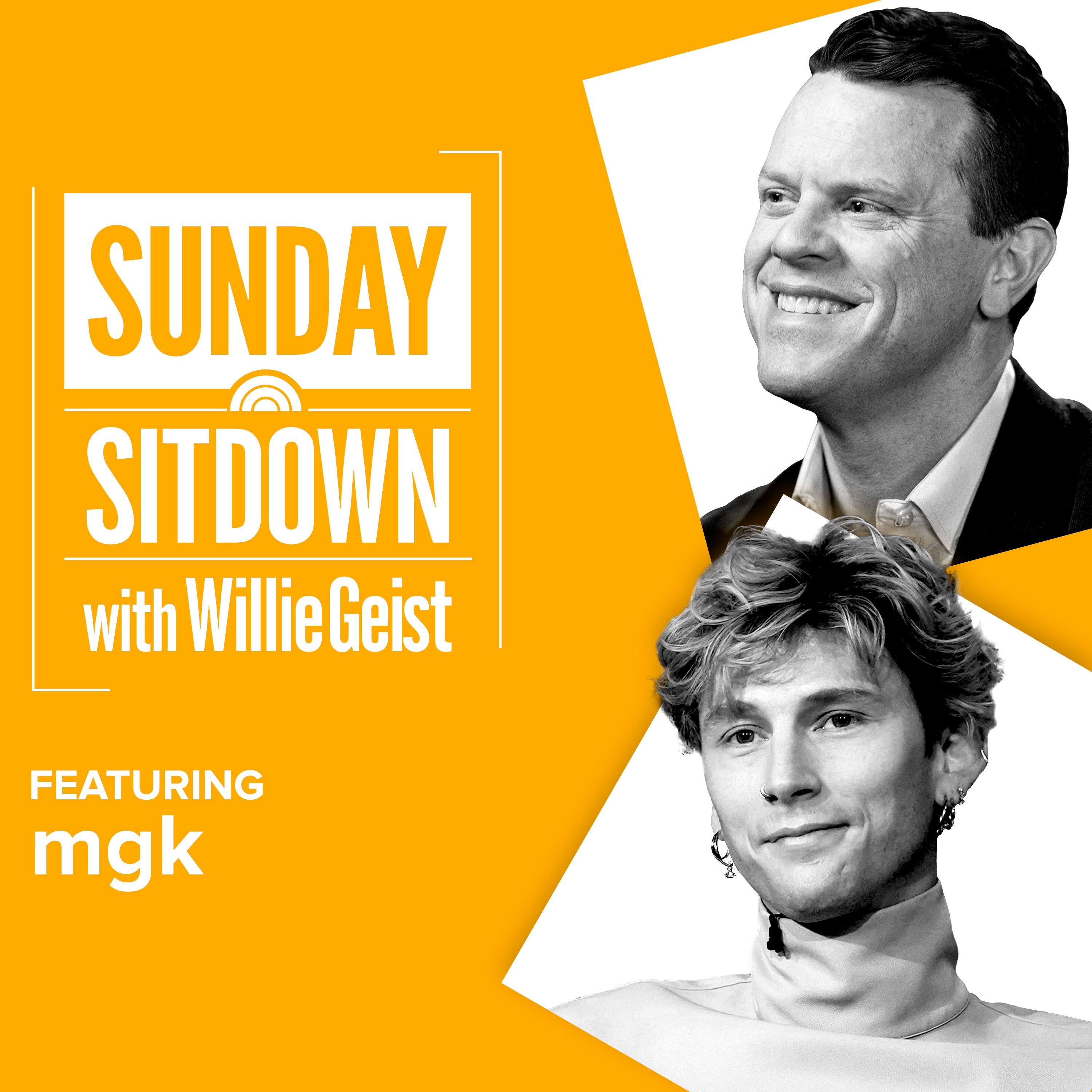
Sunday Sitdown with Willie Geist
Machine Gun Kelly on His Evolution From Rap to Punk Rock (October 2021)
01:05:50
Machine Gun Kelly has built a career on defying expectations, first breaking out as a Cleveland rapper, then reinventing himself as a punk rock star. In this chat from October 2021, MGK opens up to Willie about his musical evolution, his high-profile relationship with Megan Fox, and how music has carried him through fame, anxiety, substance abuse, and loss.
Loading summary
Transcript141 lines
- [00:00]
Commercial Narrator
In the fight against Alzheimer's, now matters more than ever. Because now we have treatments. Treatments that could change everything. But now is no time to stop. Now we've got momentum, so now we use it. Now we seize the moment. Now we turn the tide. Now we make a difference and make some noise. Now is the time to get up, get out and join the movement at the Alzheimer's Association Walk to End Alzheimer's, held in over 600 communities nationwide. And we need you with us because now is the time for hope. Join the fight@alz.org walk some days call for sleek and straight, others for slouchy and relaxed. Whatever your vibe, Old Navy has the denim fits to match from extra high rise to barrel. It's not just a mood, it's a whole style range. And with jeans Starting at just $22, you can collect them all snatched waist go extra high rise straight lived in staple vintage slim, low slung and laid back, slouchy wide. You've got range. Your denim drawer should too. Premium fabric deluxe details your perfect pair or weights. Shop in store or online@oldnavy.
- [01:02]
Willie Geist
Hey guys, Willie Geist here with another episode of the Sunday Sit down podcast. My thanks as always for clicking and listening along. Today we revisit one of our favorite conversations with music superstar Machine Gun Kelly. He and I got together last year. At the time he was out on tour in support of his platinum selling album Tickets to My Downfall, which sort of announced his arrival as a pop punk force. The album debuted at number one on the Billboard chart. He previously had had four or five rap albums that were well received, but this was a big crossover and made him the star he's become since then. Another album is out that debuted at number one called Mainstream Sellout. He's currently out on tour in support of that album. When MGK and I got together, he wasn't in a great mood, as we'll come across in the interview. He'd had a show the night before he didn't love. He was just in a mood. But over the course of a long conversation, he and I worked through some stuff and got to a good place I think. So please enjoy once again right now on the Sunday Sit down podcast. Machine Gun Kelly. You said that on stage last night when you were put on that show and giving off all that energy and that vibe to your fans who were giving it right back to you. You said at one point, I've got so much going on in my mind right now. What did you mean when you said that?
- [02:23]
Machine Gun Kelly
I think I'M just losing my footing on how to be human. I'm so work obsessed, and I'm so busy trying to block out my demons with jobs that I'm getting sick of, like, wearing a smile because I just don't have anything behind the smile anymore. It's like becoming hollow. Hmm. And it's just like a. It's like a hologram. It's not real. Like, the smile is becoming not real anymore. So I'm just trying to figure out how to, like. And I hope you keep this section on here. It's just. It's weird to me that I can't come in and have a morning where I'm overwhelmed with happiness, with sadness and all those things, and that I can't just come in front of cameras and be human. Because when I just tried to be, and I was just kind of like, being my actual self and not smiling and giving you the answers you want, I was offered the option to stop and take a break or go for a walk. And it's like, why? Why do I have to be what you want?
- [03:42]
Willie Geist
You don't at all.
- [03:43]
Machine Gun Kelly
But that was what was insinuated, right? So, like, why I would love for people to see how artists are actually what the expectations are, because, like, I do always put that smile on. And for once I was like, you know what? I'm gonna, like, bring how I actually feel, not just in music, because I've said it in music a million times and people don't seem to ever hear it. But it's funny that, like, when I can wear my actual self on my sleeve, that that's not acceptable. And we have to take a break until I can muster enough to, like, fake an answer that everyone wants.
- [04:24]
Willie Geist
I'm sorry, Colson, that you misread that. That wasn't my intention at all. I'm incredibly interested in your story. I'm a fan of your music. And that's all I want to tell that full story. And that's what. What we're gonna do.
- [04:34]
Machine Gun Kelly
Then put the real stuff in there.
- [04:36]
Willie Geist
You will. You will see it. You will see it when you say it's putting that smile on and having to go out and do that and how difficult that is. I think some people would see that and go, man, this guy's on top of the world. He's got a platinum seller, number one album, all these things. And yet, as you say, that's all right there beneath the surface, and it's in your music. So what do you say to people who are like, he's killing it right now. He's having his time. He's having his moment. Where do those demons that you talk about, where do they come from?
- [05:10]
Machine Gun Kelly
I think that's kind of between me and my head. I need to work out with myself. But what I do enjoy about this is being able to smile genuinely in those times, like when we won that VMA or when we go out and we close the show when we weren't even supposed to close the show. And the night just took a whirlwind of its own and blessed us with that moment. Like, those smiles, those are the real ones, I think when it's for the people, I'm, like, very authentic in my gratefulness. And when I'm in this room and I'm seeing so many people communicate behind that camera, like, freaking out because I'm not. I don't know, like, why does everyone keep moving back there and, like, doing, like, why, why, why? Why am I just not. Why is what's happening not okay? I'm just giving a. I'm just giving a very genuine interview. Right? So, like, when I see everyone, like, freaking out and being like, what's happening? I'm like, I'm just being human, right?
- [06:25]
Willie Geist
Yeah.
- [06:28]
Machine Gun Kelly
To me, it would be a lot cornier if I came and I was like, Ronald McDonald in here, just smiling and dancing around for no reason. If that's not how I'm. I'm just hyper focused. I'm not anywhere near done with the goals that I set out to do. I have yet to hear the public media, like, the mainstream media, acknowledge my songwriting, acknowledge the musicianship, acknowledge the catalog. Like, I hear. I hear tabloid headlines that are like, they. They fall short in exciting me because I'm like, nothing matters but the music.
- [07:22]
Willie Geist
And that's why I'm here today. To be clear, I want to talk about your music. That's why I was right there on the rail for your show last night, because I'm. Because you are a great musician, and you have made this incredible leap from hip hop to, oh, my gosh, he tries punk, and it's the number one album.
- [07:37]
Machine Gun Kelly
I don't try punk. I am pumped and I do pump. I don't try.
- [07:47]
Willie Geist
So what was that decision like for you, Colson, when you went in January of last year to that record label and said, I'm making a punk album.
- [07:57]
Machine Gun Kelly
It was already written. The resurgence had to happen at some point. Like, music lost the music. There was no more instruments and music. It became synthesized, it became digital, it became electronic. Like, to see a Stage with no musical instruments or even to see award shows have instruments that aren't plugged in. Do y' all know that? Do y' all know that your favorite artists go out there and play to play, and it's not live. Like, their instruments aren't live. Do you know that? Have the list come out in these award shows of who the actual musicians that played live are. I encourage. It needed rawness again. It needed somebody to be like, I'll make a mistake and mess up or not mess up. And you can at least just hear my personality and the playing of however I was feeling that night. I'll do that in front of millions of people. Even if, like, somewhere between whatever year and now, that rawness and authenticity got lost. Like, I don't have a problem being that, though. So it was. I had always given off that energy that I was willing to be the risk taker, that I was willing to. That I always wanted to be responsible for some wave. Something that, like, people remember, I was there when that happened, or I remember when that happened, or I remember when I first heard this or when I first saw this. And in my career, I've been fortunate enough to do that numerous times from the beginning of my career to the. To the. To a couple times in between and. And to right now. And to be honest, like, right now feels like the start. But, yeah, I mean, I'm kind of here to put a distinct separation between what's polished and what's actual. What's. What's real, what, like, and to bring feel back. Everything's so numb because it's so perfect that when it's perfect, it doesn't make you uncomfortable. And if you aren't uncomfortable, then you can't have a feeling. You just sit in the. In the. Everything's okay. And when everything's okay, you're bored. Boredom isn't music to me. Music is expressed excitement. Music is unpredictable.
- [11:10]
Willie Geist
That's the word that came to mind. A little bit scary maybe, too.
- [11:13]
Machine Gun Kelly
Yeah.
- [11:13]
Willie Geist
Was it nice to prove a bunch of people wrong when you put out tickets? To my downfall, when they said, wait a minute, he's a rapper, what's he up to now? And to put out an album that good, that had that much success, continues to have that much success. Did that feel good to be able to say, I took this leap and it worked, and to prove some people wrong?
- [11:33]
Machine Gun Kelly
Absolutely.
- [11:37]
Willie Geist
I think I know the answer. But was there any hesitation or any fear about going and playing punk?
- [11:44]
Machine Gun Kelly
Not one. Not one. It actually strikes me as odd that People even associate that as a transition with me, as if I didn't come out with with a 6 inch Mohawk on my first album, as if I didn't have guitar based music on all of my albums. As if I wasn't on warped tour for three years. From Ernie Ball stages playing at 12:30 begging for people to stop and watch our show to the next year where we were closing by the end of the tour and all the bands would come and watch our show. I'm not new here. I'm not new to this. True to this.
- [12:33]
Willie Geist
What's interesting is there's so many people in this country and around the world who maybe came to you from tickets to my Downfall and don't realize the level of success you had with four previous albums that all were not only charted really well but were highly regarded in the music world that you did have this entire life before. Has it been cool for you to sort of open that door to a new group of fans, younger fans, their parents, you know what I mean? Like, yeah, there's a whole new universe to you now.
- [13:04]
Machine Gun Kelly
Yeah, it's really cool. I love like seeing all these new hands raise up when I ask, like how many is how many people? Is it their first time seeing Machine Gun Kelly live tonight? And then just see like 10,000 hands go up and 5,000 hands already be like, nah, I've been here before to see it grow like that is so exciting and so anti what we've seen happen in most people's careers, which is like, I'll be going on my sixth album with Born With Horns after Tickets, which was my fifth album. And it seems like it's fresher than ever to people and more of a trending topic than ever. When usually this would be when I'm most uninterested in somebody's artistry now because I feel like they've told me everything. But I feel like I held back everything. I feel like I held back for you ever who I actually was. Like there was always my. I was always bearing it all, but I just hadn't removed certain subconscious layers to realize I hadn't even. It's like an iceberg, you know, you just see the tip and then like below the water is miles and miles of that iceberg. But you only are seeing that. And I was too. I was only seeing the top of what was coming above the surface. You know, I was too scared to go underneath and see what was really in there because I had covered it up because as a kid I was scared. So my reaction Was to black it out and to build this exterior shield, create a character and then go from there. So yeah, I mean, as I like I learn more about myself through reaching. Like. Yeah, yeah.
- [15:35]
Willie Geist
Like I. Yeah, well, I mean it's all in there. Listen to the album. There's love and there's deep pain and there's loss. With your father, with lonely. I mean, you definitely swam down and sort of investigated the depths of that iceberg.
- [15:50]
Machine Gun Kelly
No, actually tickets was just me sticking my head in the water. I didn't actually even swim down yet. The swimming down came after that album released and I like had affirmation that touching on what I saw when I poked my head under the water was okay. And then I was like, oh, maybe I should swim deeper. So I'm born with horns. It gets deeper, but still keeping the. Still keeping the melody, still keeping the ability to have the 6 year old and the 60 year old be able to vibe to it.
- [16:32]
Willie Geist
Yeah.
- [16:33]
Machine Gun Kelly
And be able to have all the angst and the drama and the. And the things that a 16 year old would like, you know, the 16 year old with all the energy in the world to be like, I can pick the world up and smash it right now. Like I have. It's all in there. Like it feels like I got struck by lightning or something during that tickets album.
- [17:05]
Willie Geist
Yeah.
- [17:06]
Machine Gun Kelly
Something happened to me. I haven't been the same since. I've realized something about myself that is. Actually, it's dangerous.
- [17:19]
Willie Geist
Dangerous how?
- [17:21]
Machine Gun Kelly
To you. To you. Because I'm not scared anymore. There's no. There's nothing holding me back from being my. My true self. And my true self is. It can't be. The silence can't be restrained. A force. It's like a hurricane. Can't stop that. It just goes until it feels like stopping. And I don't feel like stopping anytime soon, so.
- [18:06]
Willie Geist
So does that mean the new album is going to sound and feel a lot different than Tickets? Will you build on tickets? Is it going to a different place entirely or for your fans who can't wait to. We've heard Paper Cuts, of course.
- [18:21]
Machine Gun Kelly
It feels more guitar heavy for sure.
- [18:23]
Willie Geist
Yeah.
- [18:24]
Machine Gun Kelly
Lyrically definitely goes deeper, but I never like to do anything the same. Every album is a juxtaposition of the last album. So I went and studied tickets and I heard the bright sound that it had. And for this album I just turned the lights off.
- [18:46]
Willie Geist
So it will be different. Do you have any sense for how soon we might get to hear.
- [18:54]
Machine Gun Kelly
Feels like the tickets to my Downfall era deserves this tour, which takes us to the end of the year. But I almost feel like the second you open your eyes and it's 2022 that you'll have something to listen to as well. And usually when people say that, they mean like spring, but I'm talking about right when you open your eyes in.
- [19:22]
Willie Geist
This 2022, the New Year's Day gift.
- [19:26]
Machine Gun Kelly
Another thing to fill your other senses. Not taste. I was talking about this sense. Unless born with horns, comes with like an awesome like tray of food.
- [19:42]
Willie Geist
Now that that's next level, you can taste the album.
- [19:48]
Machine Gun Kelly
That's actually sick. That's so hard. Instead of streaming, everyone just eats the music. That's tight. That's a new creation I'll work on. That'll be like my 2040 project.
- [20:03]
Willie Geist
If anybody can do it, I think it's you. You'll pull it off.
- [20:06]
Machine Gun Kelly
When Wonka was doing the Everlasting Gobstopper or something like, I'll think of some way to as soon as you chew it, you're like, what?
- [20:21]
Willie Geist
This is gonna happen? We're gonna watch for this.
- [20:23]
Machine Gun Kelly
That'll be cool.
- [20:24]
Willie Geist
Hey guys, thanks for listening to the Sunday Sit down podcast. Stick around to hear more from Machine Gun Kelly right after the break.
- [20:31]
Commercial Narrator
Whirlpool presents Ickx. He got new shoes with toes.
- [20:35]
Machine Gun Kelly
Ew.
- [20:36]
Commercial Narrator
You owned a race car that was also a bed.
- [20:39]
Machine Gun Kelly
He smelled really familiar. Like my dad.
- [20:43]
Commercial Narrator
After he washed his clothes, he left them in the washer too long. Laundry can be a major ick, but your front load washer doesn't have to be the Whirlpool front load washer with a fresh flow vent system. It's a trio of features that help keep your clothes and washer fresh, even if those clothes are tie dye. Whirlpool Everyday care Some days call for sleek and straight, others for slouchy and relaxed. Whatever your vibe, Old Navy has the denim fits to match. From extra high rise to barrel. It's not just a mood, it's a whole style range. And with jeans Starting at just $22, you can collect them all snatched waist go extra high rise, straight lived in staple vintage slim, low slung and laid back, slouchy, wide. You've got range. Your denim drawer should too. Premium fabric deluxe details your perfect pair or weights. Shop in store or online@oldnavy.com Nothing brings us together like Eglund's best eggs.
- [21:34]
Machine Gun Kelly
Always so fresh and delicious.
- [21:36]
Commercial Narrator
Plus superior nutrition. Like 6 times more vitamin D, 10 times more vitamin E, and 25% less saturated fat compared to ordinary eggs. For us, it's eggs any style, as long as they're the best.
- [21:48]
Machine Gun Kelly
Eglund's best. Better taste, better nutrition, better eggs.
- [21:52]
Commercial Narrator
Visit eglinsbest.com to learn more.
- [21:58]
Willie Geist
Welcome back to the Sunday Sit Down Podcast. Now more of my conversation with Machine Gun Kelly. You were talking a little bit about your childhood, and I'm curious who you think you are speaking to and singing to when you write the songs you write. You had a quote I read that really moved me and stayed with me where you said something along the lines of, I'm one of the kids who didn't have signatures in his yearbook. People didn't sign my yearbook. Like, I wasn't cool. I didn't know what to hang onto. And then here comes music and now I've got something. And I feel like, man, there are so many kids like that who see you and hear you and feel you. And they go, yes, he speaks my language. Is that who you're talking to?
- [22:39]
Machine Gun Kelly
In some ways, that's who I empathize with. That's who I find a commonality with. But I just realized that over time, by only choosing to speak for people who outwardly don't feel cool, I'm also alienating the people that we may think are just so cool, who inside are so insecure and are just like, dude, I just want, I just wanted to, I just wanted to be cool, like, with, with you. Because you don't know how many people and artists in general that I've written off or that have written me off. And in one conversation, usually drunk, were like, oh, man, I just had it all wrong. Dude, I'm so sorry. I thought this. No way. Because I thought this. And we just judge each other and it's so whack because it takes, it takes away the opportunity to have great art. Like, I always hated the fact that even dating way back to the prehistoric age when the Beatles and the Rolling Stones were out, like, I wish that they had did music together. You know, you wish, you wish there wasn't these third parties in between making each other stay away. So, I mean, I'm kind of just making music for, for, for any. I'm just making music. I'm just making music. I'm like, I don't want to put a label on for who? Because you would. I'm. I'm constantly surprised, surprised at who comes up to me and is like, dude, like this weekend, you know, just being like, paper Cuts. I love that song. Or like looking to the side stage and being like, oh my God, look at Lil Nas going off over there to this. To. To this song. Yeah.
- [24:43]
Willie Geist
Like, and he was.
- [24:45]
Machine Gun Kelly
Yeah, so those. Those preconceived notions of, well, I'm making this song for. And I'm. But at being parallel with this opinion of me also being like, I make music for. Or excuse me, I just said that. But me. Me at the same time going, you know, I don't like elitism or I don't like to be, you know, for like, you know, pop punk gatekeepers to be like, well, this is acceptable. Like, these bands are cool. These bands are not sellouts. It's just like, it's all so against each other. Like, they all don't make any sense. Like, the only thing that makes sense is to just make music and people that. You can't tell people that they can't like it because they are not what I think are the people that should like it. Right. You know what I mean? Like, at the show last night, there's world champion tennis players, skateboarders, and like Olympic skateboarders. There's kids who probably go to private school. There's kids who probably took a train. There is kids who took a train from middle of nowhere, New Jersey. There's kids from the Bronx. There's kids from Brooklyn. There's like, it's just a melting pot of people who come together for music. Like the religion of music. So I don't feel like it's cool of me to say who I'm making music for, because I don't know, I'm just making music. It's on the sound waves. And to resonate with whoever's frequency is operating on that level of what I'm making.
- [26:34]
Willie Geist
And what you've proven is it doesn't have to fit into a genre box.
- [26:37]
Machine Gun Kelly
You can do a no, that narrative gotta stop. Like, people have to stop with this weird genre divide. It's like it. We look at all these other aspects in life. Religion, color, science, all these things. It's just like, dude, just let things be what they are. Naturally there is. There shouldn't be division between anything. There should just be individuality like that. It should be like self division with choices that you make that should be the only thing that you latch onto. Not like a grand opinion tyrannized by one person who's also just a person telling you, like, this is how you should feel. We should all just like. Like, everyone just wants to love, right? Or be loved. And sometimes music can. Might be the only thing you can feel that way about. You know this. If you're if you're me growing up. That was what I. That was the voice I listened to. It was just what, like, what my body felt when I heard certain music. Have you ever cried to a song?
- [28:14]
Willie Geist
Oh, yeah.
- [28:15]
Machine Gun Kelly
Okay, then that is.
- [28:16]
Willie Geist
Oh, that.
- [28:17]
Machine Gun Kelly
Then you know that that's pure. There is no, like, no one could tell you cry when you hear this song. That was just something that it did naturally. So it's weird that now it's like, I think people are just bored. God, how bored do you have to be to be like, man, you should only do this music, right? You can only do this music. What you can do is shut the up. What I can do is whatever I want because I have that. I have that power that I think I've answered. This answer has been 30 minutes.
- [29:14]
Willie Geist
No, it's great because. No, but you're right, because the fans anymore, and you correct me if I'm wrong, aren't listening to a gatekeeper. They're not reading a review on a website. Oh, yes, maybe they're right. I shouldn't like this song that Machine Gun Kelly has out. They hear your music, they like it, they relate to it. It moves them in some way. And that's it, right? They're not looking at genre boxes and deciding whether or not they're okay to listen to the music.
- [29:37]
Machine Gun Kelly
They shouldn't. But there are still those who, like, take the time to do the genre boxers and do the headlines and do the reviews instead of coming from a place of like, what do you feel, though? I was even reading one this morning that I was just like. I was just uninspired by the. I was reading it and I was like, this is why rock journalism, music journalism, it's like, it's such a broken record of anyone who's not of the same age or in the same generation as you, you'll. You'll call legends or icons or whatever. And then anyone who is right here with you, you have to, like, speak down on. Or you have to, like, say, oh, well, it's not what this was. You don't know what that was. Because when I'm looking at these magazine articles in the 70s or 80s reviewing albums that now we classify as the greatest albums of all time, they were giving them, like, two stars and being like, these guys suck. They. This dude's a poser. This. This. These people can't. I don't like the way they sound. Da da da da. And then because those are people that are of the same age, same insecurities, don't like that this person's doing this. They don't have horse blinders on. So they're only looking at those people's lives, not appreciating their own lives and being like, you know what? I actually had a great night of music listening. You know what I mean? Unless someone blatantly comes out of nowhere and is like, I hate you all, this concert sucks. I'm not playing the concert. That's something that you can be like, yeah, you're kind of not cool. But, like, it's so weird that you have to die or be of a different age bracket to have people really not be scared to tell you their true opinions. How many people in 2001 were like, man, I don't listen to green day or blink 182, dude, that's mainstream pop punk. And then you play the songs. They know every word, you liars. You. They. It's like the most. It's the weird guilty pleasure of being like, I can't say that, right? I'm into this, but, like, I'm into this, but, like, I'm not saying it, though. And then 20 years later, everyone. Those same people come out and are like, dude, they're the goats, man. Like, this is my favorite stuff. Like, I'm just a fan of not having to get gray hair on my head before people start to be like. And I'm not talking about. I'm not talking about the. The people. Because the people spoke already. The people let it be known. That's why the industry. That's why. That's why my guitar was even allowed on stage at the VMAs, right? Because the people were like, you know what we want? And if we don't get that, we're. We're. We're making an issue out of it. So, like, this needs to happen. And there it's. It's undeniable. A category that's been out of the picture for 20 years. Since the Nirvana, since the Green Day. They had to put that on. It wasn't even on air last year. The one I want. That's the alternative. Yeah, it was. That was one of the biggest clips of the night, and it wasn't even on air. But that clip of that win and, like, how odd it was that that is. You had that. That got moved and put on air after 21 years, I guess. Yeah, because of the people. But what I'm asking is, as media, to finally have courage and, like, have courage to say what it actually is. Like, the resurgence happened because of an unexpected and unpredictable A bold reason. And a big part of that reason is because of this person in an orange peach, whatever suit right now. And it's okay to admit that it's all right. I'm going to die one day. And it's okay to like say congratulations while I'm still here. And it's okay to not think of me as this like over confident, intimidating presence that way that I constantly hear people judge me as because people think like I have it so together that they don't need to help me through my issues or that they don't need to be there for me because they're like, oh, he got it. Look how he like carries himself. Insecurity runs through my bones like blood. And confidence runs through the back backstage before and after show constantly. I constantly critique myself. That's not a day I don't wake up and miss the mirror every time because I don't want to look at what's going on. I'm not talking about physically, I'm talking about in every aspect. You know what I mean? My gut is constantly filled with anxiety. My chest can't breathe. My therapist says I have an issue with breathing. I can't stop fidgeting. I fidget all the time. Like there isn't one bit of this that I just like breeze through and I'm just like, I've never ever once been asked, am I good? People just assume, am I good? People ask me if my, if my friends are good and they miss the messenger to go ask. And I'll be like, okay, are you all good, bud? Yeah, he's all good. I'm not. But I'll just go talk to myself or go write it more in music and you'll just miss it more and more again. I took a song out of the set list for this tour. It's my first like sold out tour. First time going in front of crowds where the whole towns are like shut down because of the concert going on. Right? Like we tried to postmate food. The postmate wrote back, it's a two hour delivery time. The spot was 15 minutes away. Wow. It was like the highways are clogged up because of a Machine Gun Kelly concert. And I waited for that for a really long time. Planned out this whole set and I got on stage and the last song of the set was also the last song on my album. And I performed it one night. Felt really uncomfortable doing the song because it was essentially something that I wrote as like a goodbye to my daughter at a time when I felt on a night in particular, at a. At a spot that I frequented where I felt like my heart palpitating. I felt like. I felt like I was overdosing. I felt like I was kind of, like, checking out. My body was shutting down, and I was writing a note, like, I have to send this. Like, if this. This. If this is it, like, this has to be the last thing that, like, she has to know this. Right. And later in the studio, we ended up turning it into, you know, it into a song. And I had just sent it to her without any plans of it ever coming out. Right. And then I was encouraged to put it out. I put it out, but performing it, I pulled it out of the set. Like, the second night. In the middle of the song, I just stopped, and I was like, this will be the last time you hear this song in concert. I just want to respect the energy of this song and what it was intended for and not, like, turn it into a show because it came from a real place and it isn't a show. So.
- [38:27]
Willie Geist
Does that happen to you often when you've written a song in a moment, maybe reacting to something that's happening in that moment, and then your life is so different by the time you get out on the stage that it feels like. You say it just doesn't feel right to be singing it because it belonged to that moment and doesn't belong on that stage.
- [38:45]
Machine Gun Kelly
No, because most of the time, my whole career, I have no problem putting on that smile that we talked about.
- [38:49]
Willie Geist
Yeah.
- [38:53]
Machine Gun Kelly
Like, I've been frustrated for years about certain stuff where I've been like, don't you hear me crying out in this song right here? Don't you hear that? Like, everything's not all right? Don't you hear. It's like, don't you hear that you miss. You miss it every time when it comes to how I'm. How I'm portrayed in the. In the mainstream media. Like, they don't want me to be an underdog. They don't want me to be rooted for. They don't want me to be coveted or beloved. Like, they want me to be hated and villainized and scrutinized and ostracized so badly. And I don't understand it because I'm a kid who came from nothing, out of the middle of a town that wasn't known for anything other than sports and steel and crime. And I came in with no guidance, no real sense. And I'm just, like, I'm just trying. Every day I wake up, I just try. I never Once came out and been like, I know what I'm doing, and if I have, then that was a lie. It was just me having to, like, have my own back because it felt like only my fans were that guidance or were the people that have my back. But fans don't write the narrative. Until recently, when the fans began taking control of the Internet, that was like the wild, wild west. That's where we were allowed to be cowboys and take our guns out and be like, nah, like, you aren't the sheriff anymore. This is our town. The outlaws, like, run it now. That's why tickets to my downfall achieve what it achieved. That's why even the week of. I remember we were going up against a group that had, like, a Marvel collab come out. Marvel is like, the biggest universe of fans you can get. And everyone was like, oh, my God, now we're not going to get the number one. They got this Marvel color. And I'm like, just watch, dude. Like, heart and, like, word of mouth. Like, the people are going to take this. Like, no one can beat when something real comes along. Like the. The. The. The machine can't win up against the people. And that number one was so much more than a spot on a billboard. It was like a statement. Every machine, right, Like, a statement to every artist, too, who might be out there, like, wanting to give up. If their first album didn't hit or their second album didn't hit or their third album, they aren't getting a Grammy nomination or their fourth album, they aren't getting a VMA nomination or their fifth album. If they make it there, if they. If. If they have the courage to stick it out for this marathon, you know, like, that is a statement of hope. That's a statement of build it and they will come. Because, like, the people showed up and they need to know that they're responsible for something, like, really saving my life. Because I can close my eyes whenever it's time to close them for good and be like, I felt like I finally, like, meant something, you know, I finally, like, did something. I gave people eras and moments. And I think now I just want to. I want the art to proceed the. The celebrity, right? Like, I just want the art to be in front of the face, which is hard, right? Super hard, dude. Super hard. Yeah. It's like, why I understand Kanye and putting that mask on, because then all you can do is hear the music. Because you. My friend, who is now a friend, but I remember he was just. He was telling me, yeah, man, I never really listened to your music. I just. I always just hated your face. And then he listened to my. But.
- [44:05]
Willie Geist
But he.
- [44:05]
Machine Gun Kelly
He, he. That comment followed, who is this? And I was like, oh, this is my new. This is my new song. He was like, whoa, dude, this is really good. There was a song called 530666. He's like, this is you. I was like, yeah. He's like, dang, that's crazy, man. I never listened to music. I just never really liked you. I never really liked looking at you.
- [44:25]
Willie Geist
But in a blind test of your music, he's like, yeah, I like that guy.
- [44:28]
Machine Gun Kelly
How about that?
- [44:29]
Willie Geist
Yeah, but that's the dilemma, right? The bigger you get, the more popular your music is, the more people want to chase you around and take your picture and know about your personal life and talk about Megan and everything else. So how do you begin to.
- [44:44]
Machine Gun Kelly
I would want to talk about Megan, too. So I don't blame anybody for that. We can't.
- [44:52]
Willie Geist
It's hard not to, right?
- [44:54]
Machine Gun Kelly
That's not something I'll ever fault someone for.
- [44:57]
Willie Geist
When you're writing tickets to my downfall, the irony, and you've spoken about this, is you're writing about your downfall, and yet on the back end of it, it becomes this incredible rocket ship for you, and you fall in love while you're writing the album. You lose your dad near the end of the process. Do you see that Irony of. Okay, I'm writing about the end here and actually, no. This is sort of a rebirth or a new beginning as it turned out to. Or does it even feel that way? Does it feel that right, Like a rebirth or.
- [45:36]
Machine Gun Kelly
Yeah, absolutely. Feels like a rebirth.
- [45:38]
Willie Geist
Yeah.
- [45:38]
Machine Gun Kelly
That's why I came out of the grave on the VMAs. I wasn't dying. I was reborn. That's why the saint was behind me. It is a rebirth. Do I feel the irony of the title change? Of the title being taken to my downfall? Absolutely. I knew it when I. I was. I knew it when I was sitting at a table with two other people high out of my mind. And the statement, I'm selling tickets to my downfall and everyone's buying was spoken. And I was like, that's it. That's it. Like, I'd never attached myself to something more in my life, you know? And I just. I'm a bed it all on the table guy. So that was what it was. I knew the. I knew how people could take that and make the biggest story of me failing if I. If I did so. And I also knew the reward of if they Turn that card over and we're playing blackjack and I get 21 what those winnings would look like. So if you want to, if you want an actual smile, I will smile right now because the winnings of that risk, we're very good.
- [47:22]
Willie Geist
Yeah, I think you hit blackjack.
- [47:25]
Machine Gun Kelly
Yeah. Winner, winner, chicken dinner.
- [47:29]
Willie Geist
Stick around for more of my conversation with Machine Gun Kelly, including how his upbringing shaped his music. That's after a quick break.
- [47:37]
Commercial Narrator
Some days call for sleek and straight, others for slouchy and relaxed. Whatever your vibe, Old Navy has the denim fits to match from extra high rise to barre. Just a mood. It's a whole style range and with jeans Starting at just $22, you can collect them all. Snatched waist go extra high rise, straight lived in staple vintage slim, low slung and laid back, slouchy, wide. You've got range. Your denim drawer should too. Premium fabric deluxe details your perfect pair or weights. Shop in store or online@oldnavy.com we're interrupting this podcast to ask you a very important question. Have you had your Hershey's? When you need to brighten up your day, put a smile on your face with the classic creamy texture and pure milk chocolate flavor of Hershey's milk chocolate. Whether you're eating it on the go, breaking off a few pieces for s' mores night, or just treating yourself to something sweet, Hershey's milk Chocolate checks all the boxes. Shop for Hershey's milk Chocolate now at a store near you found. Wherever Candy is sold, McCormack knows unbeatable flavor starts with the right spices. It's why we created Flavour Sealed. So anytime you peel back the seal of McCormick herbs and spices, you can be confident they will pack the same amount of flavor as the day they were packed. The kind of flavor that brings out the best of your favorite recipes and keeps everyone coming back for seconds or maybe even thirds. McCormick flavor sealed for unbeatable flavor.
- [49:05]
Willie Geist
Welcome back. Now more of my conversation with Machine Gun Kelly. I'm interested in. You were talking about your childhood, your influences because you're talking about kids looking at you and connecting with you with your father. You didn't have a lot of guidance at home, as you just said. So who were those people on the radio? Who were those people on tv? What pulled you up and said, try music? Maybe music is the way.
- [49:33]
Machine Gun Kelly
My house was very I lived with my aunt. I lived in her basement. It was very quiet and when it wasn't quiet, I didn't like what I was hearing. It was very like scary to a Kid, I actually just saw child videos of me for the first time. Like, videos of me as a. As a three year old for the first time. And I couldn't believe that the innocence of that kid turned into this guy. But I just put on headphones and what I was listening to and what I was seeing on TV became the new voices that I was okay hearing. But I mean, I. I've never really said this, but it, it should be said. Like the people who I'm still with now and all those people in the streets who, you know, dude, gang members, like, people who would be labeled by this midtown Manhattan society as people that I shouldn't or that wouldn't be protective of something so good. I saw the opposite. I watched them see something in me and protect it and help me, you know, be a ladder for me to get to this level. And I just think we miss a lot of the beauty in this country of what, of what is actually going on when humans, like, have a connection to something, right? Like, I think we just, we label everything really wrong. Because I actually think the people that I was supposed to look up to didn't do the right job and actually put me down and suppressed my dreams. And all the people that you're not supposed to be around were the ones that really lifted me up and like, filled my heart with love and gave me a protection that a family couldn't. And so.
- [52:36]
Willie Geist
That.
- [52:38]
Machine Gun Kelly
I owe them like that. Whenever they see me, they always say, don't stop. Don't let nobody get in the way of this. Like, they would have given up and have given up their own lives just to see me attain something that we all thought was impossible. But we knew that this was a vessel that could actually work. Like, we all saw it early on. So it was actually very unconventional how, how and who. My upbringing was kind of formed and.
- [53:28]
Willie Geist
Created because those guys could have written you off. Like, who's this kid who wants to be a rapper? Right?
- [53:33]
Machine Gun Kelly
For sure.
- [53:33]
Willie Geist
But they open their arms to you for sure.
- [53:36]
Machine Gun Kelly
For sure. So. And the streets educated me a lot. A lot. It gave me the real education that I needed and it showed me how to be a man. It showed me how to feed my daughter when I had no means of doing so. Showed me how to believe in myself. And it protected me along the way because it was a lot of wars to get here. It was a lot of fights to get here. Physically and mentally. It was a lot that the cameras will never pick up on.
- [54:21]
Willie Geist
People talk about different turning points in your career. They might Say, meeting Travis backstage way back in Cincinnati.
- [54:30]
Machine Gun Kelly
I think it was Cleveland, but hilarious. That was wild to think about.
- [54:37]
Willie Geist
They talk about when Diddy saw you, signed you to Bad Boy. Talk about when you won Amateur night at the Apollo. Did any of those nights stick out to you as, okay, this is someone telling me I can be who I think I can be. I can actually do this. Or maybe all of them.
- [54:57]
Machine Gun Kelly
Sure, all of them played a big part subconsciously. I still think it took a lot longer until I felt okay with myself. Right? Like, but that Apollo Night, like, getting that first check from music, even if it was $45, which it was, that was my first rap check. It was like. And being the first. Right. The first rapper to do it, like, that was. That was. Felt like they gave me a key or something. And all I had to do was just find the right door that it fit in. But before, I was kind of just. I didn't have any tools. I didn't know what doors. I just. I was just kind of like, I want to get in. And then that first check kind of gave me that key. And then it also helped me because it was like, I never cashed that check. I always just saved it. And then I don't think I've cashed a check since. Cause I never once, like, have looked or cared about money until I realized that old team members stole all of it. And I realized, better start looking at it. I probably should have looked at it, but, you know, it's always been about, like, the art to me and the music and the memories and the experiences. Because that is more liquid than cash is to me. That's more like, I can think back really quick and have a memory and feel warm. Like, oh, okay. Cash is just like, I don't feel like that. You know what I mean? It doesn't do anything.
- [57:02]
Willie Geist
Like, it's a nice little knot, though.
- [57:04]
Machine Gun Kelly
That's.
- [57:13]
Willie Geist
So, as you say, you've been, like, portrayed as hard living guy punk. Do you feel yourself growing, changing as you head into this new album? Just personally, I mean, I mean, you've said the music is going to have a different feel. Do you feel yourself? I don't know if growing up is the right term, but just changing and evolving.
- [57:36]
Machine Gun Kelly
I. I don't ever want to grow up. You don't seem grown up to me. You seem like. I feel like grown up is a. Is an alias for no energy. Right? It's just. It means that you're like a stale loaf of bread. Like, you. You. You know what I mean? Like you're you, you, you're smiley, you're vibrant, you know, like that's if I become a stale loaf of bread, you can just take me off the shelf. So growing up does not interest me. Maturing and becoming a better me is absolutely first on my agenda because that ends up coming out on my fans and my relationship and my daughter and my friendship. And I always want that to be exceeding what it was the day before and the day before that. Like, I always want people to feel the love grow off of me constantly. I just want to be comfortable taking layers off that I keep putting in front of myself. It's like when I walked in at the beginning of this interview and I was like, I don't want to be here because I feel lost today. It's okay to be lost.
- [59:22]
Willie Geist
Yeah.
- [59:25]
Machine Gun Kelly
Because there are some days I wake up and I know exactly where I am, but I can't hide it anymore because then I, I watched myself where I can go and watch interviews and I'm like, who is that? Where are you? Like, I am you and I don't know you. What planet are you on, dude? Like, what dimension me is this? I don't understand this. How hard do you have to like act like you're not here? Because I know you and I don't know you.
- [60:17]
Willie Geist
Cuz he had the mask on, the guy you were looking at, I mean.
- [60:21]
Machine Gun Kelly
He had a iron man suit on. He was a mask, a suit, shield, sword, a centaur, tar centaur. I don't know. Yeah, I mean there was like 8 million things where I'm just like, where are you, dude? Yeah, come out. Yeah, God damn.
- [60:50]
Willie Geist
Well, I want to say that I'm grateful, first of all, that you're telling me this, that you came and sat and did lose the mask and we could have a conversation and I, obviously at the beginning of our interview, I meant absolutely no disrespect. I wanted to give you time if you needed that. And I misread your cadence and your vibe. But I am honestly so grateful that you would sit on a day when you feel lost, as you said, and would just open it up to me. So thank you for that.
- [61:17]
Machine Gun Kelly
No, I mean, I want to, I want to thank you for not being a person to shun me, for having a human moment.
- [61:31]
Willie Geist
Yeah.
- [61:32]
Machine Gun Kelly
And I like obviously was blessed by you coming to the show and you having such positive things to say. Say when you came in and knowing that your 12 year old and 14 year old were at the show and were at the show and got to see me do what I love to do, even if there was lightning, sound difficulties, people not showing up. So all the things. The fact that they didn't care about any of that at all. Amazing. But, yeah, I think. I think you're just the first one to interact with me since I've made that decision. Decision. I think you're the first one that I've interacted with since I've decided to make that decision consciously to just be how I am. Like, I, I. There's nothing more I hate than looking at something I've done, and I'm like. Like everything was wrong that day, and I lied to everybody and, and to myself by, by even showing up there or. I was not worried about what was going on internally, you know, so just. You don't have to keep any of this. Obviously, this is just me talking to you.
- [63:16]
Willie Geist
Yeah. No, but I'm grateful because it's not easy to sit down and strip it all away and just be real. So thank you for that. Thank you.
- [63:24]
Machine Gun Kelly
I mean, I also, I guess I. A really important part to me is to make sure that the people who see me that have known me know how appreciative and, and gracious I am. So I hope that there are parts of this interview that are light and it's just not a bunch of.
- [63:44]
Willie Geist
Yeah.
- [63:47]
Machine Gun Kelly
So, I mean, if you feel like you got that, then obviously I'm willing to.
- [63:52]
Willie Geist
It's the full picture, man.
- [63:53]
Machine Gun Kelly
Call it a day. But if you want to keep going, if you feel like, you know, I definitely want people to see me beaming in a moment like this. Right. Because it is something I, you know, look back at hindsight and be like, what a time. I guess I'll always just have those fears of those times being in the. In the past or something, you know?
- [64:26]
Willie Geist
Yeah.
- [64:29]
Machine Gun Kelly
But that's what drives me to be like, I can't soak in the moment. I have to just creating. I have to just keep creating more.
- [64:40]
Willie Geist
But it must feel pretty damn good to stand on a stage with rain coming down, hold your pink microphone out that way, have an entire crowd sing every word of a song you sat in a room and wrote by yourself.
- [64:53]
Machine Gun Kelly
Yeah, I'll rock with that. That's cool. Definitely. That's. That's like. I could cry thinking about that, man. I was like a decade in, two years ago, three years ago, four years ago, not being sure if I was doing the right, you know, doing the right things. If I was, I didn't know where it was leading to and for it to culminate. In these moments of sold out shows and crowds singing, like everywhere, dude. The fact that we have a 32 song set list. People sing all 32 sides.
- [65:39]
Willie Geist
They are. I saw it last night.
- [65:42]
Machine Gun Kelly
I felt it last night. I felt it last night. Cause I had friends come to the show and I was like, damn. I know my friends are thinking it was like that part of the show when I dropped. I think I'm okay. Right after another song that everyone had just sang. And I was positive that everyone was like, all right, well, he gassed out all the hits, so there's like nothing. I don't know where it could go from here. And then all of a sudden, watch me take a good thing and mess it all up in one night. And the whole crowd just erupts and starts singing every word. And they were like, another one. And then like, that's over. And then, you know, they're like, okay, all right, well that, that's got to be the last, like, sing along one. And then like, you know, Bloody Valentine or like just. Dude, it was. It is a trip. Because I loved going to concerts. And when you watch an act that you kind of are like, you're. You're super familiar with, but like, when they're playing, they're playing songs and you're just like, dude, I forgot how many of these songs I know.
- [66:45]
Willie Geist
Yeah.
- [66:47]
Machine Gun Kelly
How did you make so many songs that I know? You know, like, that's. That's been the dream, dude. Cause you understand when I started touring, they knew half a song. It was like they knew like one song, right? Or there was a whole tour where I just had to pitch. You had to pitch, like the song, right? Like when Wild Boy first came out, I had to just pitch how wild I was. I would stop the show and I wouldn't perform. I would take my pants off and just be in boxers and I wouldn't perform until someone else threw their pants on stage and I would put their pants on and do the song. Because it was like, it took that much to sell the song at that point. It was just that, like, new and that much to prove that and wanting to be that memorable where you're like, no, no, no, we're not just gonna do some songs and, like, give you the option to forget me. You're gonna remember how crazy this night was.
- [67:55]
Willie Geist
Yeah.
- [67:55]
Machine Gun Kelly
And then after I got tired of being crazy on stage, I wanted to be prolific on stage. And after that, I wanted to be musical on stage and then to be able to just stand there and not have to, like, cut myself open with a broken bottle and have all these other factors come before the music. And for me to just be able to stand there and be like, and this next song is called and and it plays and everyone sings it. That was like, that was always the dream. So I'm living the dream right now.
- [68:42]
Willie Geist
And then how about the ultimate rock star moment at the end when they turn off the electricity on you and.
- [68:47]
Machine Gun Kelly
You didn't even need sound and you didn't need it for them to sing the song.
- [68:51]
Willie Geist
You sang it to them and they came back. I mean, come on.
- [68:54]
Machine Gun Kelly
Yeah. That was great, man. The lightning couldn't stop the show. Well, it did stop the show, but it didn't make us. Not really.
- [68:59]
Willie Geist
Yeah, not really.
- [69:00]
Machine Gun Kelly
That's cool.
- [69:01]
Willie Geist
Well, I know you got a show to get to tonight. I'm so grateful for the time today.
- [69:04]
Machine Gun Kelly
Thanks a lot.
- [69:05]
Willie Geist
Congratulations. You touched a lot of people, people you probably don't even know you touched. And your music means a lot to so many.
- [69:11]
Machine Gun Kelly
Thank you so much.
- [69:12]
Willie Geist
Thank you, man.
- [69:12]
Machine Gun Kelly
Thanks a lot. Thanks.
- [69:14]
Willie Geist
My big thanks again to machine gun Kelly Colson for that open and honest conversation. And my thanks to all of you for listening again this week. If you want to hear more of our conversations with my guests every week, be sure to click follow so you never miss an episode. And don't forget to tune in to Sunday Today every weekend on NBC. I'm Willie Geist. We'll see you right back here next week on the Sunday sit down podcast.
- [69:43]
Commercial Narrator
Some days call for sleek and straight, others for slouchy and relaxed. Whatever your vibe, Old Navy has the denim fits to match. From extra high rise to barrel. It's not just a mood, it's a whole style range. And with jeans Starting at just $22, you can collect them all. Snatched waist go extra high rise straight lived in staple vintage slim, low slung and laid back slouchy wide. You've got range. Your denim drawer should too. Premium fabric deluxe details your perfect pair or weights. Shop in store or online@oldnavy.com.