← Sunday Sitdown with Willie Geist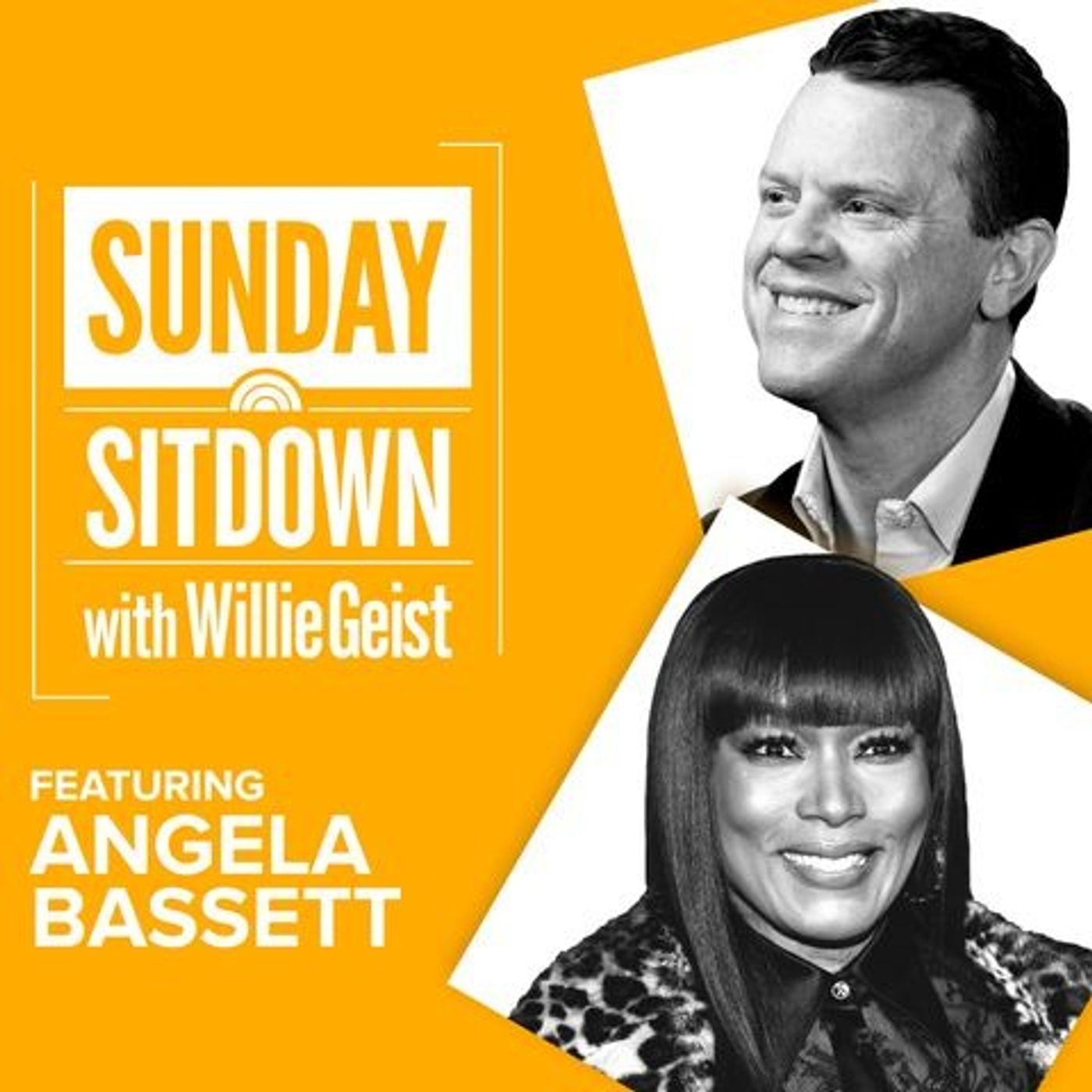
Sunday Sitdown with Willie Geist
MARVEL STARS: Angela Bassett on ‘Zero Day’ and Honoring Chadwick Boseman
00:39:36
Angela Bassett is an Emmy and Golden Globe-winning actress known for her role as Queen Ramonda in Marvel’s "Black Panther" films. In this conversation from March 2025, Bassett joins Willie Geist to discuss playing the president of the United States opposite Robert De Niro in Netflix’s “Zero Day,” her decades-long career, and the impact of portraying powerful women on screen. Plus, she reflects on her time starring alongside the late Chadwick Boseman in the Marvel Cinematic Universe.
Loading summary
Transcript144 lines
- [00:00]
A
The McDonald's Snack Wrap is back. You brought it back. Ranch snack wrap. Spicy snack wrap. You broke the Internet for a snack? Snack wrap is back. Ba ba ba ba ba.
- [00:15]
B
Marshall's buyers are hustling hard to get amazing new gifts into stores right up to the last minute. Like a designer perfume for that friend who never RSVP'd wishlist topping toys for her kids who came too. Belgian chocolates for the neighbor. A cozy scarf for your boss and a wool jacket for your husband that you definitely did not almost forget. Marshalls. We get the deals, you give the good stuff even at the last minute. Find a Marshalls near you.
- [00:51]
C
Hey guys, Willie Geist here with another episode of the Sunday Sit down podcast. My thanks as always for clicking and and listening along. I am so excited to bring you my conversation today with one of my favorite actresses and one of the most accomplished actresses in all of Hollywood. She is the great Angela Bassett. She's starring as the President of the United States in the buzzed about new Netflix series Zero Day which stars Robert Dairo. It follows the aftermath of a massive devastating cyber attack in the United States and what would happen if something like that took place now. So she plays president of the United States when this happens and she calls in a former president of the United States, Robert De Niro, to lead the investigation. Super gripping six part series. De Niro's first ever series that he's participated in. Great cast. Jesse Plemons is in it. Connie Britton's in it. Has a really, really good cast and a great kind of gripping storyline. So we get into that and we get into her backstory. She was raised in St. Petersburg, Florida. Superstar, straight A student, student government, drama club cheerleader. She did it all went on to Yale where she got her undergraduate degree and then her master's in fine arts from the famed School of Drama where she also by the way met her husband, the actor Courtney B. Vance. Started on the stages of New York before moving west to Hollywood. My favorite movie of all time, or maybe one of them is Boyz n the Hood. She played the mother of Trey, who's played by Cuba Gooding Jr. In the movie. I loved her in that so much is the first time I noticed her and she says it was really her first big role and then they started to come from that breakout is 1993. She plays Tina Turner in what's Love Got to Do With It. But interesting to hear discussed that that didn't necessarily open all the doors of Hollywood for her despite the fact she won a Golden Globe and was nominated for an Oscar. You'll hear her talk about it. There just weren't parts for people like her and she gets into that. And then comes Stella, Got Her Groove Back and movies that sort of she plugged into had massive success and then her career went off from there. Obviously we got to talk about her playing Queen Ramonda in Black Panther and we talk about the late Chadwick Boseman, what that was like for her as well. You remember she was nominated for an Academy Award a couple of years ago for the sequel of Black Panther. So so much to talk about with really just so smart and so wise and so great. Excited to bring you my conversation right now with Angela Bassett on the Sunday Sit down podcast. It's so nice to meet you, Angela. I'm such a huge fan of yours. I was just telling you, going back to Boyz n the hood in 91 all the way to this incredible new series. So thank you for doing this.
- [03:45]
A
Thank you. You're welcome.
- [03:46]
C
So let's start at the end of that timeline with this unbelievable new Netflix series called Zero Day which centers around a cyber attack in the United States. You play the President of the United States in. When you heard the premise and you heard Robert De Niro is in it, was it an easy yes for you?
- [04:07]
A
Absolutely. You know, it's an offer I absolutely could not, could not say no to. And as well the director Leslie Linker Glatter who's, you know, we know her work from Homeland and other things and she's at work with her years ago as well on a show called er.
- [04:24]
C
Yes, I've heard of it.
- [04:25]
A
Yes. So she's wonderful. Get an opportunity to work with her with Robert with on this incredibly well written six part series as President. Oh my.
- [04:38]
C
So what do you think when they say and you're going to be President of the United States?
- [04:42]
A
Oh Lord. Well, this is a role I've never done taken on before. You think it would be easy, but not quite. It's just, it just felt like this fine line that you have to walk of, you know, of being calm, of not in the face of not knowing a lot of needing great deal of counsel. I mean, because you have to keep others, you know, instill confidence in others that will make it through whatever the catastrophe or the danger is.
- [05:08]
C
You've played so many powerful, authoritative women, whether it's a queen or the head of the CIA or the director of the Secret Service. Is that a kind of role that you like to step into?
- [05:21]
A
You know, it just at some point began to happen that I guess I come across as, you know, someone with authority or assurance or presence, you know, or ground. And it began to happen. And sometimes these roles, you know, early on when it started, sometimes there's not a lot of their backstory, their history. Do they have a family, do they have children, where go to school, you know, you know, what are the issues that they're dealing with. But I was, you know, to be able to. You want to put someone in there that is like, oh, there's something going on behind the eyes. There is a life. She knows more than I know. So it's sort of like it's unstable, scripted or unwritten. But we as the audience have to feel that, yes, you know, there's. There's more to her than just the words she's saying right now.
- [06:15]
C
You can see the humanity in her as the. As the show plays out. So I mentioned that this is about a cyber attack. Without giving too much away.
- [06:23]
A
Cyber attack that takes place across the whole of the. Of the nation of the United states simultaneously for 60, you know, for a straight hour, causes so much death, you know, so many fatalities, so much chaos, mayhem. There's uncertainty. And then on the phone, there's a message that everyone receives that's mysterious and it's sort of foreboding as well, because now we know that it's intentional. I mean, we really. We're being told that, yes, you were targeted. Absolutely.
- [06:57]
C
Part of the reason I think it works too, and it's so unsettling is because it does feel like something, I hate to say that could happen. Right. I mean, there's some. We hear about cyber attacks and all the ways that cyber is being used in terms of warfare, do you think, as you.
- [07:15]
A
A lot of time in the Situation Room, I guess, right.
- [07:18]
C
As you read this script, did you sort of consider the real world implications of our lives being so connected to tech?
- [07:25]
A
I would for a moment, and then I get a lot of anxiety in my solar plexus. But, yeah, especially as we sat around during the read through and we're talking about it and our writers, Nora Oppenheim and Eric Newman are very smart guys. I mean, at least they present it to you with a bit of a wink, a smile and an assurance. But it's like at some point for me, it was like, okay, stop. Sure, I'm going to get up. I'm going to leave right now.
- [07:55]
C
Yeah, it just doesn't seem that outlandish. I can see where we could get to this terrifying place.
- [08:01]
A
You have so much dependence yes. You know, on our own technology.
- [08:05]
C
I'm curious, given all the amazing jobs you've had and the movies you've done and your successful TV series, do you like this format which is six episodes? It's a series, but it has a cinematic quality. It feels like six movies. Do you like, enjoy this?
- [08:22]
A
I was talking to one of the, to the, one of our cast members last night was saying it's almost too beautiful and big and cinematic a story for my little television. So I was happy to be able to see it on as big a screen as possible. It is. And I like having the opportunity over the course of six episodes to really unpack the story slowly. Nothing's rushed because sometimes, you know, if you're within okay in the first act, this has to happen second act, third resolve for that conclusion, you know, so it takes us time, takes more time to unpack and get to know the characters. And there's so many, many interesting characters, you know, within the series. And they all have their, their motives and their intentions and their, their story. So you're like, do I follow this guy? Yeah, yeah, he's my guy. Wait a minute. But they're all making great and you know, great substantial points that make sense.
- [09:20]
C
Yeah.
- [09:21]
A
Until they don't.
- [09:22]
C
Right, right. It all fits into that matrix. You have worked with Robert before, but what was it like at this stage of both of your careers? Just such well regarded actors. What was it like to work with him?
- [09:35]
A
Oh, it was wonderful. You know, still a little bit of nerves because the legend and the man. Exactly. But he was just as generous on screen, off screen, warm, engaging, curious, you know, in terms of, you know, working on the scene, working through the scene. But it was, it was amazing. And you know, so I've, I've come along since then being the young actor 25 years ago. You know, I've been making my little steps on this journey. So it was great to meet as sitting and former president was like, whoo.
- [10:13]
C
And he has said such great things about working with you too, which must be so gratifying.
- [10:18]
A
It is.
- [10:18]
C
To have reached that point where he's honored to be sharing scenes with you as well.
- [10:22]
A
You know, told him yesterday. Thanks, thanks for bringing me along in this journey because I worked with him once. I mean, that's a dream come true. Right. For any of us actors, but twice.
- [10:33]
C
To get to do it again.
- [10:34]
A
Yeah, yeah. A bit of favor is the.
- [10:38]
C
You mentioned you like the format. I think De Niro said this project was like swimming the English Channel, which is, it was a Big achievement. But it is like kind of six movies and he's used to just doing his film and that's it.
- [10:51]
A
Yeah, this is his first.
- [10:53]
C
Grueling in some way. And were you able to help them through it or share any advice?
- [10:58]
A
You know, I think Leslie, our director and, you know, everyone, the whole crew, we, we really took our time with it. You know, I do a 18 episode series and we really go at it. At it. Maybe we get, you know, four days Thanksgiving off, a little bit of Christmas, but we continually go at it and sometimes if it's. If it's all you, and some episodes are, you know, you know, demand my character to be there every day. You feel it in your bones by the end of seven days. But we really took our time with this and didn't rush it to that degree, but over, over six months. So I guess it was like six separate movies for him. No matter what I'm trying to say, you know, we brought it easy.
- [11:42]
C
But no, you're like, come work on a weekly show. I'll show you what grueling looks like. Is it gratifying, Angela, to hear these early reviews of the series that people who have had the chance to see it say, this is one of the best shows to come along in a long time? That's gotta feel great.
- [11:59]
A
It really is. It really is. I've gotten a chance to, you know, talk with some people who've seen a number of the episodes and just their, you know, excitement, exuberance and it's. And curiosity and no, I don't want to give it away, but, you know, I had such fear and anxiety and, you know, the head's going back to see that response. You don't get that, you know, you don't get that often. So.
- [12:21]
C
Well, you all were nice enough to give me a sneak peek and I made it through four episodes and there are six. And I have to say, I don't want to. I love my daughter, but I was like, oh, do I have to go to her basketball game? I really would like to finish this show. I did go to the basketball game, so I have two waiting for me on the other side of this. So congratulations on it.
- [12:38]
A
Thank you.
- [12:39]
C
Hey, guys, thanks for listening to the Sunday Sit down podcast. Stick around to hear more from Angela Bassett right after the break.
- [12:48]
A
My friend's periods are all over the place. Her doctor says it's normal, but she's having trouble getting pregnant and her period app isn't helping. So I told her, to get pregnant in 2026, you need Mira. They call it the baby making machine because you can conceive 10 times faster. I got her one. And Mira found her ovulation in 16 minutes. Tracking four hormones like a lab unwrap fertility clarity. Now get 17% off Mira for Christmas@miracare.com the McDonald's snack wrap is back. You brought it back. Ranch snack wrap, Spicy snack wrap. You broke the Internet for a snack?
- [13:26]
C
Snack wrap is back.
- [13:29]
A
Ba da ba ba ba.
- [13:31]
B
Marshall's buyers are hustling hard to get amazing new gifts into stores right up to the last minute. Like a designer perfume for that friend who never RSVP'd wishlist topping toys for her kids who came too. Belgian chocolates for the neighbor. A cozy scarf for your boss and a wool jacket for your husband that you definitely did not almost forget. Marshalls, we get the deals. You gift the good stuff even at the last minute. Find a Marshalls near you.
- [14:02]
C
Welcome back. Now more of my conversation with Angela Bassett. Wanted to ask you also, just people love you so much about like the foundation and the roots of your acting career, which is you were born in New York, didn't live here very long, moved to North Carolina for a short spell, then to Florida. So at what point, Angela, does performance and acting come into your life?
- [14:27]
A
Oh, yeah, as a little 15 year old girl who was writing in her diary every day, you know, attempting to express herself because no one understands, especially parents. We know that you and parents, teachers, you know, whatever's going on in the world. And I had an opportunity through this program that I was involved in to go to the theater, to the Oslo Theater in Sarasota, Florida, to the Kennedy center, when we would have our, you know, when they had the national meetings of this group called Upward Bound. And it was there that I sat in the audience and saw this phenomenal performance of Mice and Men. And I was so moved by it at the end that I was literally the only person sitting in the theater weeping, crying as the ushers are cleaning up programs. And I was like, I feel terrible. If I could make people feel as bad as I am right now, how would that be? And so returned home and just started trying to do that. What I saw, you know, recreate what I saw on the stage. And, you know, my school had a drama program that didn't do any theater, any drama, any plays. We didn't have, I guess, the structure to do it. But I said, well, we can do scenes, right? Maybe everyone just go and find a scene and we're supposed to string it together and we can Have a night of something. And I went to my great grandmother and borrowed one of her dresses, and I did a Raisin in the sun, you know, mama. And the audience, you know, applause and oohs and ahs. It was like. It sort of scares you for a moment, like. And I, I said, well, let me continue. I felt so. I was nerve wracked, but it felt great at the end when you heard the applause. And I, I kept at it, even going on to college. And. And I remember one of my, my teachers said, oh, you got it to Yale, Angela. They're really known, but the theater programs. And I had no idea. But he didn't mean undergrad, because that theater studies program literally began the day I stepped on the stairs.
- [16:39]
C
Is that right?
- [16:40]
A
Is that right? It was the graduate school. So I had my eye on there because I just wanted to get all the technique that I could, because I knew nothing except how I felt when I watched theater or when I'm on the stage.
- [16:54]
C
You're a star high school student, right? I mean, you're in theater, in the choir, but also student government, the cheerleader and all that.
- [17:01]
A
One of those people, all of that, right?
- [17:04]
C
No, but it's so interesting. I mean, you got into it, attended Yale without theater in the back of your mind. So that was just purely academic for you. And then almost accidentally. That's right.
- [17:13]
A
I just happened to be in the right place. Wow.
- [17:16]
C
Wow.
- [17:16]
A
Yeah.
- [17:17]
C
And so what did you find up there that really allowed you to sort of elevate your interest and love for production and theater and the things that lead you here?
- [17:26]
A
It was just an exciting. It was just an exciting moment and time. I was an undergrad, and they have the, you know, different houses, and each house had its own little. On stage, you know, a little stage. So you had all of this opportunity, and there were other students who were like theater geeks. You found a tribe, and it's like, these are some interesting people, and they have fun and I have fun with them. And, you know, and who knows? I was able to soak up a lot of that. They've been doing it much longer than I had. But also, when it was time to apply to graduate school, a wonderful, wonderful man, Lloyd Richards, who directed the fertly directed Raising it in the sun on Broadway, first African American play on Broadway by Lorraine Hansberry, was the director of the school, became the director of the school, and I was a part of his first class. And so he was always such a, you know, a point of inspiration for me, even just walking by his plate glass window, seeing him behind the desk, because I was too nervous to say, hi, Louie, like everyone else who's like Mr. Richards or hello or nothing. But he was such a supporter of mine, and I just found such inspiration in the history. As I began to learn the history of theater and acting, just got more involved in it.
- [18:48]
C
It's funny, almost every successful performer I talk to has someone like that in their story, which is a teacher, whether it was in third grade or in college, who says, hang on a second, you're really good at this. Keep going. So I love hearing those stories. So when you get out of Yale.
- [19:04]
A
And he would say, angela, don't wave the rubber chicken. It's like, oh. Oh, I think, yeah.
- [19:11]
C
What did you take that to mean?
- [19:13]
A
Well, you know, you can't. They're, you know, in the course of acting, acting a scene, sometimes you can telegraph what you're feeling.
- [19:22]
C
Right.
- [19:23]
A
Basically overactive.
- [19:26]
C
Good advice.
- [19:27]
A
Yes. And that's all he would say. He would say things like that. That's the way he would direct. And you would have to take it in and consider it. It's not going to lay it all out. You know, you finish a scene, you say, so what'd you think? And you would have to think. And maybe sometimes you'd be more critical of yourself than someone telling you what they saw or did not see.
- [19:50]
C
Right.
- [19:50]
A
You could. You were. I guess, in a way, you know, it's. It's really sinking in what you did, because you have to express it or find it. You rarely said, oh, it's perfect.
- [20:04]
C
Yeah.
- [20:04]
A
You never said that.
- [20:05]
C
Right.
- [20:05]
A
Because it never is.
- [20:07]
C
Right.
- [20:07]
A
It's always striving.
- [20:09]
C
Right. Get better every time out. Right.
- [20:12]
A
You know what I know.
- [20:13]
C
Yeah. Yeah, that's right. I mean, the early years of after school, coming to New York and going out to LA a little bit, you know, for people who see you now, they know it wasn't all red carpets and glamour at the beginning. It's a grind. Right. So were you ever discovered in New.
- [20:31]
A
York in those early years? Stand outside of the theaters, you know, you wait for people to come out, they drop a program, you get the program. You go in. You don't know what the first act was, but that second act, everybody's on fire. So, you know, that's how you use those saw theater in those days called Second acting.
- [20:49]
C
Right.
- [20:49]
A
Enjoyed that.
- [20:50]
C
Good tip.
- [20:51]
A
Yeah. But you're in New York. You're doing, I would call it off off Broadway. No. Pay showcase. You know, you were almost in New Jersey. You were so Far off Broadway, on the Avenues. But it was, you know, you're doing We's Antigone. You know, it's. It's thrilling. You know, it's thrilling. You do it anywhere. You do it. You do it for free. You hope not for long, but in those early days, you. $12, you were like, you know, sure, yeah, you're doing it. Subway tokens, gas.
- [21:22]
C
Yeah. So what was the first job, Angela, where you felt like, okay, maybe not I've made it yet, but this is going to be my career.
- [21:31]
A
You know, it's funny. Every job felt like I made it. If you were a cat, Even if it was off off Broadway, no pay showcase. But as Antigone and Antigone, I made it some. You know, I got cast in that role. So it's wonderful. It's work every day. Exciting work with. With exciting collaborators and creative people. Wherever it was, you know, whether it was uptown in the church basement at the Y, a little theater way on 12th Avenue. Every job, every role, every opportunity, you know, to work, to work at the craft, to develop a character, it just. Just opened my eyes and my heart even more.
- [22:22]
C
And then Hollywood calls with a movie.
- [22:24]
A
Well, Hollywood. Hollywood didn't call.
- [22:26]
C
No.
- [22:28]
A
Someone called go and knock on. You know, you were.
- [22:31]
C
You called Hollywood.
- [22:31]
A
Yeah, it was during that time where it seemed like a lot of actors in New York, they were heading out, heading west, going to Hollywood. And a lot of. And some actors say, well, I'm not going to Hollywood. They're going to have to come and find me. And I thought, well, they don't know I'm here. And by the time the role that I would be offered is, you know, is up on the boards, they can cast it with someone that's already in Hollywood. So I've got to go. I've got to go to them, introduce myself. And that's what I decided to do. Okay. Had a great apartment, you know, rent control apartment. It was hard to come. $215, you know, you weren't trying to lose that. You're trying to hang on to that. But sometimes you can't hang onto something that's. And yet go for something that's better. You gotta let that go so that you'll be available for the next opportunity. So I went out there, I went out there, I said, okay, six months. I'm gonna give it six months. This pilot season where all the new shows, and maybe I'll get lucky with one of them. Well, they canceled pilot season that year. Oh, you know, there's always sometimes you know, strikes and moments occur, so timing is everything. But I did stick around for six months and began to, to guest, you know, get, you know, generate some excitement, a new face, new energy, I think, coming into the room that they hadn't seen. And I was fortunate enough to get some of these, you know, get, get my share of some of these jobs. And six months, my six month period came up and I remember calling my, my great uncle in New York and Uncle Charles and I said, I mean, I'm working. I mean, each week I get a new guest star. There are only three stations, so there's a finite number. It's going to run out at some point. We didn't have, we didn't have all this Netflix, Hulu have all the opportunity that we have now to catch the middle of everything. But I said, it's, it's six months. I got to come back to my, my apartment, my, everything. He said, like Lloyd Richards, you know, those succinct phrases. He said, baby, don't get off a winning horse. I said, got it hung up and I've been there 30 something years.
- [24:51]
C
So he gets an assist for all that's happened since then. You did the work.
- [24:55]
A
My dear uncle, don't get off a winning horse.
- [24:57]
C
That is a great line.
- [24:58]
A
I was, yeah, I gotta come back to my apartment, my life, I'm from New York. Yeah.
- [25:03]
C
And he was right.
- [25:04]
A
And he was absolutely right.
- [25:05]
C
He was right. So Boys n the Hood comes along soon after that, a couple years later, when John Singleton puts that together, it's, let's see, Boys in the hood came out 91.
- [25:15]
A
91, okay. I went to LA in 88. Okay, October 10, 1988. I don't remember many dates, but for some reason I remember that one. It was monumental. So I go there, like I said, I'm doing lots of, you know, day player here, a guest spot here, small role there, but no film. And I get a call finally because at that time we were actors for segment. If you were a television actor, you're doing television and you know, casting for films, they sort of wouldn't see you, see you, take you that seriously for that. I guess they, you know, familiarity breeds what you're too familiar. I don't know the thinking. But I wonder if that played something into if you could see someone every week if you wanted to really go out to the theater and paid to see them. But a young director, John singleton, who was 19, just recently out of USC with this fabulous script, Boys in the Hood, he did see me. You didn't have those preconceived notions about actors doing this, that and the other. And so I went in and the rapport was immediate and warm. And he said, you remind me of my mother. We talked about poets that we. That we enjoyed in common. He was just a thoughtful, warm soul, funny guy. And you felt. I felt very maternal toward him in a way. Well, yeah, toward you as well.
- [26:51]
C
But for a 19 year old to put together a cast as you and Laurence Fishburne and Ice Cube and Cuba Gooding Jr. That's gone on to become this classic.
- [27:00]
A
Neil and Tyra Farrell. Exactly.
- [27:02]
C
Exact. Incredible group that he assembled and made that movie. I think it's fair to say, and you'll correct me if I'm wrong, that what's Love Got to do with it was the. She's here now.
- [27:13]
A
Right. Because up to that point, if I was in something, I would go to Kinko's. We don't have Kinko's anymore, do we? Go to Kinko's. Get a cardboard. Hi, family. Hi, friends. I'm gonna be on cbs, abc, NBC, on this night at this time in this show, I would cut it in fours and then I put your. And a stamp and I mail it. Mail it out to my friends so they wouldn't miss it.
- [27:40]
C
Right.
- [27:41]
A
And maybe I should do that today. And people would. So if you knew me and I'd sent you a, you know, little, you know, mailer, then you. Then you knew me. But you couldn't put the. I would think the name with the face. But When Once Love Happened, you know, before then. But you look a little familiar. Do you. But when Once Love Happened, it's sort of, of. It changed everything.
- [28:06]
C
Yeah, because you're a leading actor and it was such a powerful performance. People said, who was that? Right.
- [28:12]
A
If you didn't know me, you certainly knew her. Yeah, people knew her. All kinds of people knew her and were interested in her as a performer, had seen her. And here's a story about her life. And this is the life. It was so different from what anyone could have expected. So it really was quite a breakthrough and a seminal moment for me, for my career, for the culture, for people who were experiencing those same sort of things in their life. And it was, could have for many a turning point, a wake up call, you know, an opportunity to say, no, this is what I want. So it was sort of all came together.
- [28:58]
C
Stick around for more of my conversation with Angela Bassett. Right, after a quick break, the McDonald's.
- [29:05]
A
Snack wrap is back. You brought it back Ranch Snack Wrap, Spicy snack wrap. You broke the Internet for a snack? Snack Wrap is back.
- [29:19]
B
We're interrupting this podcast to ask you a very important question.
- [29:23]
A
Have you had your Hershey's? When you need to brighten up your.
- [29:26]
B
Day, put a smile on your face.
- [29:27]
A
With the classic creamy texture and pure milk chocolate flavor of Hershey's Milk Chocolate. Whether you're eating it on the go, breaking off a few pieces for s' mores night, or just treating yourself to something sweet, Hershey's Milk Chocolate checks all the boxes. Shop for Hershey's Milk Chocolate now at a store near you found wherever candy is sold. Streaming is changing the way we watch live sports and your Internet connection can be the difference between catching the game, winning touchdown as it happens or hearing about it from your neighbor's cheers. That's why Comcast is building the network of the future. Using cutting edge AI and edge computing technology, we're bringing fans closer to the action in stunning high definition with ultra low latency. It's not just fast, it's game changing. Learn more@comcastcorporation.com sports.
- [30:16]
C
Welcome back now to the rest of my conversation with Angela Bassett. It was a breakthrough. Obviously you get the awards and the recognition that you deserved for it. But I was interested to read that you said it wasn't like the phone was ringing off the hook after that necessarily. In other words, you would have thought like the world is yours after a performance like that. But that wasn't necessarily the case, is that right?
- [30:38]
A
Not necessarily. You know, because also you, you have to think or remember that during that time what stories were being told and did those stories include, you know, a brown skinned girl or a woman, young woman at that time was cast and going to be colorblind. You know, certainly an actor can do a role, but those, if I'm a part of a family, you know, there's other considerations, you know, and it's it. But then a tide began to turn and we began to have a lot of stories, whether it was Tina, then it was Rosa Parks or Coretta Scott Kingle, incredible women or even the Jacksons. So families where, yes, they needed a mother, they needed a mother, they needed someone who looked like me. So timing is everything. And stories, diverse stories were beginning to be told. And I was born at the right time to be available for those.
- [31:42]
C
And among those was this explosion of successful movies like How Stella Got Her Groove Back and movies that you starred in with ensemble.
- [31:49]
A
That's certain books were, yeah, Terry McMillan came on the scene with Waiting to Exhale. And How Stella Got Her Groove Back, Invisible Ax. And so, you know, you're looking. That's what you need. A great script and a lot of times from great books. So that was. I remember riding on the subway in New York City and literally seeing everyone with her book, waiting to excel, reading her book. I said, that's going to be. That's going to be successful. I think that one's going to work.
- [32:19]
C
Did that feel to you, like, finally, like, here are the roles that we've been waiting for. And gratifying that they were so successful.
- [32:27]
A
Here's the opportunity. Here's the opportunity. You don't know if it's going to be successful or not. You certainly go in with that idea, with that plan, but it takes so many moving parts. It's amazing that any film works. You know, it's like this big, organized, exciting chaos. But, yeah, great care, great people doing what they do in their lane.
- [32:53]
C
I promise I'm not walking through every move in your career. You're like, what time is it? But I do want to ask you about Black Panther and Wakanda Forever and talk about movies that cut across lines. If you make $1.3 billion with an opening movie that's different than people have.
- [33:14]
A
Seen, you've done something, they can't say. What used to be said a long time ago that movies about. About black characters don't translate across seas, you know, internationally, it was like, you make 1.3 billion. I think somebody's watching you. Yes. Yeah, you got a lot of eyes. So that's satisfying to see just through the journey, you know? Okay. You know, movies don't translate about black to Europe. And I feel like someone from the 1800s who lived to the 1900s, 100 years and is like, oh, I've seen five presidents. Oh, I remember we didn't have refrigeration. You know, we salted our pork, you know. Oh, how times have changed. Yeah, they. They do change. And it was. It was great. It's been rewarding to be. Be around during. During that change. The stories are vast. Stories are diverse because to me, even doing this, people are interesting. You know, people are interesting where they come from, why they end up, how they end up, how they do, why they think, the way they think, why they fight, the way they fight, and they love the way they love. You know, it's all about illuminating this human experience that we're having.
- [34:37]
C
What was it like to be in the middle of that phenomenon as it grew and grew and grew? You knew you'd done something special, but it just became a thing unto itself. Not just here around the world. People fell in love with it.
- [34:50]
A
It was a thing unto itself. That was literally the first time I've gotten stuck on the computer looking at, you know, fans of the series and their reaction, and they would literally cry, fall off chairs with just a little bit of information with the trailer. When the trailer came out. This is not the movie. The trailers coming out, they would run into walls in their bedrooms. They were. Men would cry, weep. It was like, what is going on here? Oh, something big's about to happen, you know. But they were. They were fans of Marvel, fans of, you know, Black Panther. And to see that fans for a long time. And so to hear someone 4 years old to 94, literally, when I would go to church and little ladies would come up to me and say, I love that Black Panther. I love that movie. It was, I mean, just. Just a vast audience. You know, when we talk about our demographics. Oh, sure, 14 to this. That, you know, we try. We try to make sense of it, but sometimes you can't make sense of magic.
- [35:58]
C
Sometimes the movie is so good, it blows through demographics when it's 4 to 94.
- [36:02]
A
That's right.
- [36:02]
C
I had. Chadwick was on the show with me in the middle of all that. I think he just gotten off a plane from Seoul with all of you on a press tour, and he just sat down and. And I felt like I was seated with him in the middle of this thing that was changing his life. Obviously, I, along with just about everybody else, didn't know what else he was going through at the time. When you look back on working with him in one of his final performances, what does it conjure for you?
- [36:32]
A
I'm so blessed that I got an opportunity to meet him and to work with him. He is such a soulful human being, so caring and so wise, so in tune with who he is and so grateful for others. He was just as warm as you can imagine. I felt motherly toward him.
- [36:58]
C
There's a theme here. You feel motherly.
- [37:00]
A
Yes, I want to take care. But he reminded me. It was interesting. He reminded me at the opening, you know, at the party, the premiere, the party afterwards, that I was like, okay, bye, Chadwick. I'm about to leave now. He said, I just wanted to tell you when you got your honorary doctorate at Howard, which is where he went to undergrad, went to school. He said, I was your escort that weekend, during part of that weekend. And I hadn't recalled that at all. I hadn't recalled that that was first honorary doctorate I got. It was a school that I in, in high school. I thought it was my number one. This is where I'm going to go. I'd heard about the history of it and I wanted to go there. I had go, um, you know, but I had choose, chosen to go, go somewhere else. That gave me more scholarship, which I needed, my mother needed, but I hadn't remembered that or I, well, I didn't know it. You know, there's so much going on, you know, okay, this student's going to take you here and there. And I say, and here we sat. Look at you. We have sat for months next to each other in the makeup trailer. And you never mentioned that. While we're doing the work. While we're doing the work. But now that we're at this point where we can celebrate, then, then he brings it up and I thought, that's so thoughtful because so many people would have done that so much earlier.
- [38:33]
C
It would have led with that.
- [38:34]
A
Yes. Yeah, yeah. No, it's like, let's speak. Hello, let's work.
- [38:42]
C
And what a moment for him to have escorted you around not that long ago and now he's co starring with you in this massive movie.
- [38:49]
A
It sort of reminded me of years ago, I, when I was in la, I got in this. Well, I wasn't in LA then. I was touring with a play called Joe Turner's Come and Gone in San Diego at the Old Globe Theater. Got a call, oh, there's a movie. You know, this roles that they're casting in la. Oh, my God. So I, I go up. It's during slavery time. I gu me a big skirt and I go, I'm sitting on the ground. I mean, I'm, I'm, I'm in the moment in the. Everyone else is sitting there like, you know, today's person. But I'm like, oh, somebody from, you know, 1600s. And. But I remember I got the part, I got the role. We were on location. Donald Sutherland was cast in it, Natasha Richardson, Tony Todd, and my shero, Cicely Tyson. So I'm gonna meet her for the first, for the first time. You know, we have these people that we look up to who admire, who inspire us. And she certainly was that one for me, as you can imagine. And I just thought, we're all waiting and she's about to arrive. And they said, oh, yes, Ms. Tyson is coming down the hallway now. And we're at the table with everyone else. And it was just like, no, it's gotta be different. I walk out, I walk outside the door, and I watch her walk down the hall. And she gets there and I extend my hand and say, hello, Ms. Tyson, I'm Angela Bass. It's a pleasure to meet you. And she said, thank you, darling. And then we go in the room and all that, all that nervousness, all of that is gone because it's time to work. And any of that other stuff, we can do that later. But first things first, right?
- [40:34]
C
The work that served you well over the years. Do the work.
- [40:37]
A
He reminded me of me.
- [40:38]
C
Yeah, right, right. Came all the way back around.
- [40:41]
A
He's my brother.
- [40:43]
C
So with everything you've accomplished in your career, everything we've been talking about here this morning, do you allow yourself moments to stop and think about where you came from? The little girl singing into her hairbrush in the mirror or seeing of mice and men on stage and dreaming that it would be so amazing just to be on any stage? Do you have these pinch me moments?
- [41:03]
A
I do every day. Every day that I show up at set and look around at all the wonderful people, I get an opportunity to meet and to work with those who've championed me and brought me along to play play with them. I do. I think it's important to remember where you came from. It really fosters a sense of gratitude and I think that's an important character to be grateful for your experiences, for the highlights, for the lessons learned, for the missteps, because in those you learn as well. But it's been wonderful because we all have something to contribute and to it. If you can remain grateful, you can appreciate what others have to tribute.
- [41:54]
C
Well, you've contributed a lot, so you really have. Thank you, Angela. It's such a pleasure to meet you and talk to you.
- [42:00]
A
Thank you. Thank you, thank you.
- [42:04]
C
My big thanks again to Angela for a great conversation. You can stream Zero day now on Netflix. And my thanks to all of you for listening again this week. If you want to hear these conversations with my guests every week, be sure to click follow so you never miss an episode. And of course, don't forget to tune in to Sunday Today every weekend on NBC to see these interviews with your own two eyes. I'm Willie Geist. We'll see you right back here next week on the Sunday sit down podcast.
- [42:44]
A
The McDonald's Snack Wrap is back. You brought it back. Ranch snack wrap.
- [42:49]
C
Spicy snack wrap wrap.
- [42:51]
A
You broke the Internet for a snack?
- [42:55]
C
Snack wrap is back.