← Sunday Sitdown with Willie Geist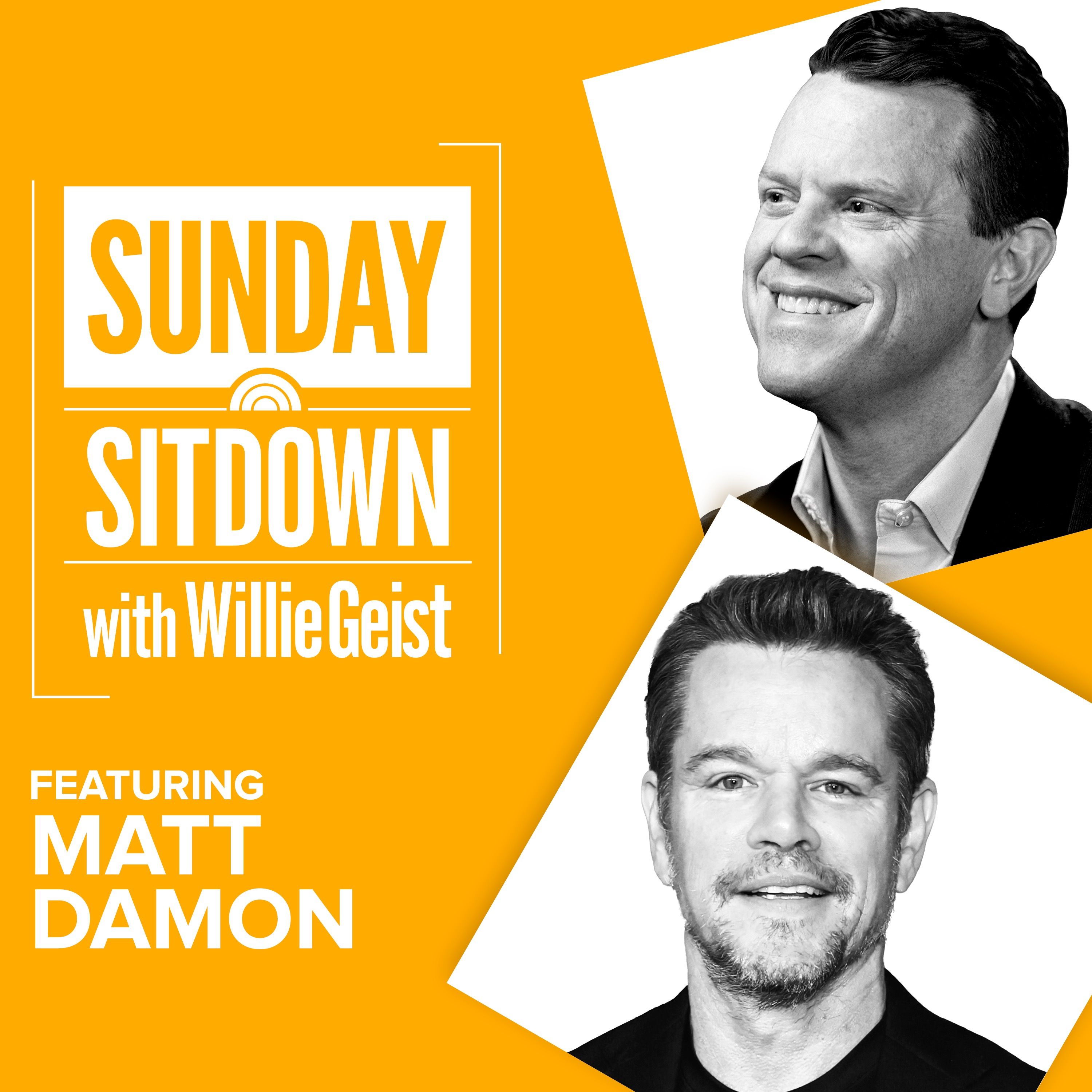
Sunday Sitdown with Willie Geist
Matt Damon on The Odyssey and Working with Christopher Nolan
00:44:19
Matt Damon says playing Odysseus in the new movie The Odyssey was like nothing he has ever done before. Damon is working again with famed Director Christopher Nolan after the Oscar-winning blockbusters Interstellar and Oppenheimer. Damon got together with Willie Geist to discuss the challenges of shooting this movie fully in IMAX, traveling to several remote locations and enduring the elements to tell Homer’s epic saga.
Loading summary
Transcript163 lines
- [00:00]
Chase Sapphire Business Advertiser
When you own your own business, you own every decision.
- [00:03]
Matt Damon
Catch the red eye or take the 6am Make a new hire or promote internally. Celebrate a win with the toast at the gate or unwind at the lounge.
- [00:12]
Commercial Announcer
Big props to this team.
- [00:14]
Chase Sapphire Business Advertiser
Some decisions are a win win like earning eight times points on Chase Travel, Chase Sapphire reserved for business the business card that gives back all you put in. Visit chase.com ReserveBusiness to learn more. Cards issued by JP Morgan Chase Bank. Any member FDIC subject to credit approval terms apply.
- [00:31]
Kiana (Shopify Testimonial)
I'm Kiana and I leveled up my business with Shopify. Once I figured out that Shopify was a thing, I never turned back. I can create a site with my eyes closed. Shopify thinks ahead of us, you know, and it thinks about the customer more than anything. Every day I'm thinking about some other new business, but Shopify is doing it to me because it's so easy to use. It's like I can't stop. I'm addicted.
- [00:56]
Willie Geist (Host)
Start your free trial@shopify.com foreign. Hey guys, Willie Geist here with another episode of the Sunday Sit down podcast. My thanks as always for clicking and listening along. I am very excited to bring you my conversation this week with one of the biggest stars in all of Hollywood and the star in particular of the movie that everyone is talking about right now, the Odyssey, directed by Christopher Nolan. Matt Damon plays Odysseus, the lead character in the story, of course, 3,000 year old epic poem by Homer about a man's journey home from the Trojan War. It takes him 10 years to get back. He's the king of Ithaca. He goes, wins the Trojan War, the Trojan horse, all that stuff, you know, that's in the movie. And then it's this wild perilous journey to get back over 10 years while his wife Penelope, played by Anne Hathaway in the movie, waits for him. And he has a young son played by Tom Holland who he doesn't really know because he was a baby when he left. So it's just an extraordinary film. I'll let Matt tell you about it to the extent he can before it comes out. Christopher Nolan has a very specific way of doing things. You know all his movies. Matt Damon worked with him just a few years ago on Oppenheimer and before that on Interstellar. Just so you know, when, when Matt says Nolan films everything in camera, it means if you're seeing on the screen, it means they filmed. It means no special effects, no green screen. They actually shot it. And when you see this movie you'll be astounded that none of it is a special effect. Whether these fight scenes on the high seas or these giants that appear and all the things that come in, it's just an extraordinary piece of filmmaking. And Matt talks about it being the most difficult but also the most gratifying film role of his career. He thinks it's the capstone, as he called it, the best thing he's done or ever will do. And said he kind of felt nostalgic while filming it because it's the way movies used to be made and he worries won't be made that way going forward. We also talk a little bit about his life and how he's managed this 30 years since he kind of came on the scene in Courage under and people said, oh, who's that guy? He's good. And then the next year, Goodwill Hunting comes out, wins the Academy Award with his buddy Ben affleck. Talk about water.org his organization and artist Equity, which is the kind of innovative production company he and Ben established to share the wealth better on the set with people behind the scenes as well. So you don't need any more introduction for Matt Damon. You know him, he truly is, and I will just say this on a personal note, the reputation he has is absolutely true. One of the kindest, most generous, friendly guys you'll ever meet of any stature, but certainly of a star of his stature, shakes everybody's hand in the room six round and talks. We shot it at this beautiful Indian restaurant in New York City called Lucifer. The family who owns the restaurant was there. He spent time with them. Just a great guy. It is a big, beautiful, ornate restaurant, so you might hear us comment on that at the top. All right, let me get out of the way, sit back, relax, and enjoy Matt Damon right now on the Sunday Sit podcast.
- [04:06]
Willie Geist (Interviewer)
Great to see you, Matt. Thanks for doing this.
- [04:07]
Matt Damon
Thank you for having me.
- [04:08]
Willie Geist (Interviewer)
We have an understated setting. I love it, man. Right.
- [04:11]
Matt Damon (continued, casual)
It's very.
- [04:13]
Matt Damon
Yeah, it's, it's. It actually feels like some of the restaurants we. We passed through on the Odyssey, you know, it actually feels kind of Moroccan here.
- [04:24]
Willie Geist (Interviewer)
It does, right? It's got some Odyssey energy to it, for sure. I have to start with congratulations on this project, truly, because as someone who sat and watched it at imax, which is how everyone will see it, I was just in awe, honestly, of not just the spectacle, but of the performances and the storytelling and the ability of Christopher Nolan to take this epic and capture the essence of it in a two and a half hour movie. I have to imagine for you, despite everything you've done over these last 35 years or so, it had to be a unique standalone experience.
- [04:58]
Matt Damon
Oh, yeah, yeah, yeah. Definitely the hardest movie I've ever done. Just because it was so ambitious. Just because what he was trying to do, I mean, Obviously it's a 3,000 year old story. You know, it's a great story, which is why it's, it's survived and why every generation retells it, why we all keep reading it and. But Chris just, you know, he does everything in camera. You know, there's no, there's no green screen, there's no. And so that to me, when I, you know, that's what makes it the story is an ambitious story to tell, but the way he wants to tell it is, you know, was incredibly ambitious. And he shot it all in IMAX and that had never been done. And we didn't even know if we were going to be able to physically do it. So he didn't announce that. It just. I heard about it in pre production and I knew we were going to make the attempt. And as we went, you know, and the weeks would go by, it started to become kind of clear that like, oh man, we might be able to do this. And so every shot you see in that movie, you know, if there are ships in the background, there are really ships that are. You know, the amount of coordination that it took to do this and how hard it was to get each one of those shots, it felt more like an expedition than a movie, you know, because it really, it really required everybody to be just working harder than they'd ever worked just put. Everybody was just pushed to kind of the limit of what they could do. And to be a part of that was really cool.
- [06:39]
Willie Geist (Interviewer)
And you had some sense of what it meant to work with Christopher Nolan, obviously done a couple movies, had just come off Oppenheimer, which is this major hit, but he was pretty upfront, it sounds like from the first meeting that this is going to be very hard.
- [06:52]
Matt Damon
Oh, yeah, yeah.
- [06:52]
Willie Geist (Interviewer)
What did you take that to mean?
- [06:54]
Matt Damon
Well, he said it to me. He was like, he said this movie is going to be hard. It was the first time we sat down, you know, I'd read the script and it was our very kind of first meeting where, you know, you just try to level set, you try to troubleshoot. Okay. You know, I've been given this role, which is the greatest role I've ever been offered. And it's, it's so. And we're six months out, so you just start kind of trying to figure out what your approach is going to be and. And. And try to get all those conversations out of the way through. Through a series of conversations over those months before you go. Because you don't want to be surprised. You know, you're always surprised when you're making a movie, but you want to. You want to. You want to kind of remove any and anything you can ahead of time. And. And at the end of this kind of initial meeting, he. He just. He looked at me and he goes, this movie's gonna be hard. And I looked at him like, I've made, I don't know, 80 movies. And I'm like, yeah. I mean. And he goes, no, he goes, this movie is gonna be really hard. And it was that kind of, okay, all right, I gotcha. You know, like. And he, to his credit, was not lying. I mean, it was. It was. And it was really hard for everybody. And I'm not the only person who was a repeat Chris Nolan kind of customer. You know, that entire crew was comprised of people who'd worked with him many times. And. And. And that was the cool thing. The first AD said it to me. Maybe halfway through the shoot. We were. We were. We were there watching the crew do something incredible. I can't even remember what it was. And I was just. I guess he caught me just gawking. I was just, you know, watching the, you know, the grips build some platform off the side of a mountain, you know, And. And Nilo, our first AD came up and sidled up next to me, and he said, you know, the thing is, it's funny when you think every single person here could be working on an easier movie for more money. And the second he said it, I knew, you know, it was true. Like, they. Everybody there was there you know, for the love of the game. Everybody there was there because they were getting pushed harder than they'd ever been pushed because they wanted to be a part of that. Because these experiences don't come along. You know, it felt like making a David Lean movie because in a sense, it was. It was making a movie the way David Lean and one of his film crews would have had to make it. Cause Chris doesn't use any of the, you know, any green screen or any. Except for the fact that we were shooting on a format that wasn't available to David Lean, and we were the first ones to do a whole film that way.
- [09:39]
Willie Geist (Interviewer)
You say, matt, it's the most difficult movie you've ever made. Just as a practical question, what does that mean physically for you? I mean, the locations were all over the place. They were difficult to get to. What was so difficult about it for you?
- [09:52]
Matt Damon
Well, there just the, the, the, the prep and all the stuff that I had to do just as a guy in his 50s, that. That was its own challenge. That that was my own kind of cross the bear get into. Away from everybody. Yeah, that was just something among other things. Yeah, exactly. But, but, but the. Where we shot the locations were. Were. Were really hard to reach. Each one kind of posed a different challenge. Like, you know, we were on a beach in Essaouara in Morocco, and, and, and with everything that entails, you know, with the giant horse. But, you know, we were inside the. You know, we were in Iceland on a. You know, you know, on the. Trying to get to these places, and these are places on. I, I've never been to, and they're spectacular as. As they kind of need to be for this movie to work. But the, you know, we're shooting on top of a mountain. We're shooting on boats. I don't know if, you know, in, in. In movies, it's a very known thing. You're not supposed to shoot on the, on the water. It's. It's very hard to do. It slows everything down. But, you know, a good chunk of this movie is on the water with everything that that means the weather, whatever you encounter, you're kind of out in. And you're all kind of stuck out there. And so, you know, there's a lot of physical discomfort and, and, but the, the beauty of it is you look around and everybody is going through it with you. And, and that, that feeling of. Of the teamwork it took to, to, to kind of marshal everything and to coordinate all of that, every single department, you know, you, you had. You'd have, you know, 15 elements working in a shot, and if one of them was wrong, you had to try again. And so when you would get each shot and, and just watching the, the crew that he has is, is. It's just. As somebody who's been doing this a long time, it's just an awesome experience how good they are, how serious they are and how hard they push. And that's kind of what was required to make each shot, you know, of which there are thousands strung together to make the Odyssey.
- [12:05]
Willie Geist (Interviewer)
I'm curious as an actor, when you hear the idea first from Chris, I want you to play Odysseus, and your mind goes back to high school literature or college literature, wherever you're reading Homer and you think wow. How do I capture in a film the essence of this foundational piece of literature and put this character up on screen? What is your process like pulling from that epic poem and making it a movie character?
- [12:33]
Matt Damon
I'll tell you, it really helped that he gave me the job because that fact gave me a lot of confidence that I could do it. If I'd gone to him and said, hey, I have a great idea, I want to play Odysseus, I wouldn't have. My mindset would have been a lot different. And he. That really did mean a lot to me that he gave me the role. And the other thing about Chris, that I think. He's a phenomenal writer. And I've done three movies with him now, so I've read kind of closely read three of his screenplays. And I think he's such a spectacular director that that overshadows his writing. But when you have a document that's that well written and that you can return to as an actor, that gives you a lot of, a lot of, a lot of confidence, you know, and you don't, you don't play the whole movie in one scene. You know, you kind of analyze what each scene is about and then, you know, you go there and leave yourself open to what's going to happen. But knowing that he's directing, so you have a set of eyes on you that are very in touch with what the story is and what it needs to be. And that gives you a freedom to kind of bring what you're gonna bring and know that you're in good hands.
- [13:56]
Willie Geist (Interviewer)
Given the fact that you've done the three movies with Nolan, you have this unique window into what makes him great. And one of the things that jumps out to me is the attention to detail, to put it mildly while shooting. But even after, when you see that behind the scenes footage of hand splicing the IMAX phone, 70 millimeter together, color correcting every frame of a movie that's almost three hours long, I mean, he goes to incredible lengths to get exactly the film he wants.
- [14:27]
Matt Damon
Here's an example. A costume fitting. Usually you'll have one or two costume fittings for a film. I can't think of how many. I had eight or 10. But Chris was in every fitting. I mean, starting at the very beginning, just when Ellen was, you know, he and Ellen, Ellen Mirajnik, who's one of the great costume designers who's ever lived, she's just phenomenal. I've worked with her a number of times. And you know, Ellen, you know If I'm running the Odysseus department, you know, my job is Odysseus. And I mean, she's running, you know, the, you know, wardrobe and what he's going to look like and her attention to detail married to his attention to detail and that collaboration, you know, but he's sitting there in each of these, you know, hour two hour, three hour sessions where we're discussing every little bit of detail and, and, and that's across this entire movie that is so much bigger than just my character. It's across every detail. You know, the number of decisions that you have to make in that job is, is, is mind boggling. I mean, directing is by far the hardest job on set. Which incidentally, when you're out there kind of in the middle of a storm and you're soaked and you're cold and you're like, man, I'm in discomfort right now. It is helpful to turn and see the person with the harder job and more pressure and more responsibility right next to you, looking like a drowned rat, just as cold, just as wet and never complaining.
- [16:04]
Willie Geist (Interviewer)
I mean, the scene I think you're talking about, without giving away too much, but people know the story is when you're lashed to the mast.
- [16:11]
Matt Damon
Oh, that's just one of them. We were wet. We were. There was a day we were shooting a scene where we had to be rowing in the rain. And so Scott Fisher had this, he's our effect. Scott comes in with this boat that had fire hoses rigged off it. And you'd see this boat coming, you'd go, oh, Scott's coming with the boat. And like, and you know, everyone on the fire hose boat, you can tell they've got a bit of a smile on their face. But Scott's trying to get the rain, so they're fire hosing up in the air to try to get the rain, but there's a ton of wind out there. Like we're out on the ocean and Chris finally just ran up. Next thing he goes, hit me. And he's got on the walkie talkie. Hit me, Scott, hit me. And the whole crew looks at each other and they go, all right, here we go. They roll the camera and, and, and these guys just open up and this wall of water just comes on all of us. I mean, it's not just the actors, you know what I mean? The crew's right there, right?
- [17:06]
Matt Damon (continued, casual)
They're, they're in just.
- [17:08]
Matt Damon
And that, you know, that's what kind of, you know, and that was just a Tuesday, you know, on the Odyssey. But it was, it was, it was very funny to see Chris calling an
- [17:17]
Willie Geist (Interviewer)
airstrike on himself and Chris doing what he has you doing, right? There's an expectation that he will do all the things and go to the places that you have to go.
- [17:26]
Matt Damon
He'll never ask you to do something he wouldn't do. And, and he's never, he's never removed from the crew. He's right in the middle all the time.
- [17:33]
Willie Geist (Host)
Hey guys, thanks for listening to the Sunday Sit down podcast. Stick around to hear more from Matt Damon right after the break.
- [17:41]
Chase Sapphire Business Advertiser
USAA knows dynamic duos can save the day like superheroes and sidekicks or auto and home insurance. With usaa, you can bundle your auto and home and save up to 10%. Tap the banner to learn more and get a'@usaa.com bundle restrictions apply.
- [17:56]
Commercial Announcer
Now is your time to get into a new Dr. Horton home by taking advantage of its national red tag sales event going on right now through second. Stop by any of its participating communities and find select red tag homes at incredible pricing. So whether you're buying your first home or looking for an upgrade, you don't want to miss the red tag sales event going on right now. Discover the Dr. Horton Difference at Dr. Horton.com Dr. Horton America's Builder and Equal Housing opportunity builder.
- [18:26]
Matt Damon (continued, casual)
So good, so good, so good.
- [18:29]
Nordstrom Rack Advertiser
New summer arrivals are at Nordstrom Rack stores. Now get ready to save big with up to 60% off brands like Rag and Bump, Levi's, Adidas and free people. Join the Nordy Club to unlock exclusive discounts. Shop new arrivals first and more. Plus buy online and pick up at your favorite Rack store for free. Great brands, great prices. That's why you rack.
- [18:58]
Willie Geist (Host)
Welcome back. Now more of my conversation with Matt Damon.
- [19:02]
Willie Geist (Interviewer)
Talking about imax watching some of the behind the scenes footage. First of all, the cameras look like something from 50 years ago, right? I know they were very loud, so they devised this box, even quiet so it wouldn't hear it in the dialogue.
- [19:16]
Willie Geist (Host)
How does the fact of shooting an
- [19:18]
Willie Geist (Interviewer)
IMAX change the experience for you as an actor?
- [19:21]
Matt Damon
It's more technically challenging for a few reasons. One, they did invent this blimp that went around the camera to deaden the sound and that was really the, the leap forward because, you know, the other times I've worked with Chris, we shoot on imax, but an IMAX camera is really loud. It sounds like a blender because the film is so big that the motor required to pull it through past the shutter is loud. And so you could do landscape shots and kind of bigger things. But if we were trying to shoot this scene of us just talking, you wouldn't have been able to do it with an IMAX camera. They'd swap it out for a Super 65, which behaves more like a regular film camera. Chris told me that they'd invented this blimp, and I was worried about the eyelines because it pushes your face from the lens so much that. That. That it wouldn't look right if you were shooting a scene with two people talking to each other. But Chris said no. They developed a mirror system so you could look in this mirror which went off that mirror, which brought your eyeline closer to the lens. I'm like, this is. This is nuts. Like, it's amazing if we can do this. But again, we didn't know if we could do it. We didn't know technically how it would work. So that system ended up working out perfectly. The other technical challenges with IMAX are that a regular roll of film, standard 35, takes about 11 minutes per magazine. So you load it, you've got 11 minutes to film IMAX. This goes through in two and a half minutes. And so if you're doing a scene that lasts more than two and a half minutes, you have to stop in the middle and freeze. And they have to reload the camera, which takes about five minutes. And then we'd go back a few lines and pick the scene up and go through. So there were scenes that we had in the movie, like, you know, that could be up to, say, seven minutes. And it would take three reloads just to get through the scene. And so that would. That process would end up taking about 30 minutes just to do a take. And then we go, okay. And we'd kind of do some notes. We'd figure out what we liked and what we didn't like, and then we'd go back and start again. And so it was more. More painstaking of a process and more technically challenging because you're looking into these mirrors. But. But we knew that the. That the. What we were getting, like, you know, that that format is so beautiful. It's so incredible. And. And it was so. It was so unique that we were. We were doing it, that. That.
- [21:51]
Matt Damon (continued, casual)
But so.
- [21:52]
Matt Damon
But all the actors were up for it. And it felt. It really felt like. It reminded me of when I started making movies. Like the first time I got on a film set and it was like, wow, these cameras are big. Like, oh, the concentration it takes to do scenes where there's. Oh, there's a whole. There's 50 people right next to you, and there's this giant camera there, and there's a boom mic over your head. And it's just. It's a lot to take on, but it's kind of like driving a car. Like the first time you drive a car and you realize how powerful it is and, oh, my gosh, the brakes here. But after a while, you know, you can, you know, you don't really think about it. And so the technical side of film acting is kind of like that. So this was like. I spoke to a lot of the other actors about this. Was like kind of returning to your first time behind the wheel.
- [22:41]
Willie Geist (Interviewer)
Yeah. I've heard you talk about the nostalgia of this movie, which is so cool to hear, not just because it was that way, but because it's unlikely, unless Chris does something else down the road, that anyone else is going to do it this way going forward.
- [22:54]
Matt Damon (continued, casual)
Right.
- [22:55]
Matt Damon
Yeah.
- [22:56]
Matt Damon (continued, casual)
Yeah.
- [22:56]
Matt Damon
And what are the chances there would be a role, you know, like this for someone like me? It really was the greatest opportunity I've ever had in my career. It was. You know, I also think about, you know, Chris tends to work with people he's worked with before, and just in the kind of my category of, you know, actor, he. He could have gone to Christian or Tom Hardy or Leo or McConaughey or John David or Rob Pattinson or Killian. Like, there is Hugh Jackman. It's like a murderer's row of great actors.
- [23:34]
Commercial Announcer
Right.
- [23:34]
Matt Damon
And all of them would have been great. And so the fact that it came my way like that, you know, you get one of those in your career, and I just count myself lucky I got this one.
- [23:47]
Willie Geist (Interviewer)
You talk about the cast, which is incredible. Talk about a murderer's row with you and Anne Hathaway and Tom Holland and Robert Pattinson and Lupita Nyong' O and John Leguizamo. I could go on forever. But one of the cool things that I've heard you say that comes across is like, there was no star treatment in this movie. Just because there couldn't be.
- [24:06]
Matt Damon
There never is with Chris. No, there never is. I mean, it's. And look, I've worked with a lot of great directors and, and, and usually that. That is the case. I mean, you. The. All of the momentum is around the camera. You know, it's. That's why we're there. We're not. There's no, it's not about ego. And it, like, what a waste of time. And, and, and, and I, I'VE always said that the one common thread between all of these great directors that I've worked with because. Because everybody does it a little differently. Directing is almost a reflection of who you are. The one common thread is that they're collaborative and that they really listen because their allegiance is to the thing they're making. And a good idea can come from anywhere. And they're very, very open to where a good idea might. You know, the ideas are floating around and it might not be them that has it. It might be the prop guy might have the good idea. And you really need to be aware of that. And so any of that ego stuff. Ego is just the enemy of collaborative work. You know, creative work just gets in the way. And so anytime. I'm always kind of amazed and bemused when I hear about Hissy Fitz or, you know, that kind of stuff, that the stories I would grow up hearing about actors misbehaving, I just. I. It does. It's such a waste of time and such an enemy to the thing that you're trying to do.
- [25:35]
Willie Geist (Interviewer)
It's interesting to hear Chris talk about. In some ways, the process is the opposite of what people think. He's not handing down a decree to you guys.
- [25:43]
Matt Damon
Not at all.
- [25:44]
Willie Geist (Interviewer)
He's telling you, okay, here's Odysseus. Go learn everything about him and come back and play him and I'll learn from you.
- [25:50]
Matt Damon (continued, casual)
Yeah.
- [25:51]
Matt Damon
In fact, he'll get grumpy if I. You know, there's that whole technical side of acting I was talking about. You know, sometimes you're privy to these conversations between a director and a cinematographer, and you're like, oh, wait, no, no, I can step over into this. You know, you need this light. I can step over and he'll just. Don't change anything you're doing. You know, don't, don't. He doesn't want you to think about the technical side. He goes, I will capture it. So he's really. He collects all the elements that he needs for a shot and then he discovers the story as you would if you were making an independent film. It's. It's really incredible the way he does it. And because I believe that's how he thinks. You know, that's how you get something that is as real as it can be, is if you don't. You don't prescribe anything. You know, people. People know what the scene is, but it's like you. You believe in who you've cast and you let them follow their instincts and the truth will out.
- [26:59]
Willie Geist (Interviewer)
I'm curious what you thought the first time you saw it, hopefully in an IMAX theater.
- [27:04]
Matt Damon
Yeah.
- [27:05]
Willie Geist (Interviewer)
Having been in the middle of it for all those months to see it all put together, what was that feeling?
- [27:10]
Matt Damon
It was jarring because I hadn't, because I hadn't seen anything. Cause the actors don't watch the dailies. You know what I mean? So it was like, I mean, it was jarring and wonderful way. It was like completely overwhelming. And I, I, I don't think I've ever had higher hopes for something because I don't, because, because of what it took to make it. And, and I, I don't think I could talk after I saw it. I really, I was just speechless because again, like, it felt, felt like an expedition, but I got to relive it and it was by the end just like, my God, we did that. And, and I said to the, to, to the crew at the end that I, and, and, and it's just still the truth. I, I've never been more proud to be a part of a team like that because every single person had to, had to give everything they had that just couldn't have worked any other way. And they did, and they did. And it was like energizing to be pushed to that point and turn and in any direction you looked, see somebody else and like, get more, you know, find these energy reserves because you're seeing what they're doing, you know, and, and, and every day on the movie was like that. We'd get to the Friday night and, and you just know it was Friday. I mean, people were just gassed, you know, and the weekends were just, Everybody just went home and went to sleep.
- [28:46]
Willie Geist (Interviewer)
I love hearing Robert Pattinson was talking about, he first got there to the hotel and he's like, oh, this is great, this hotel, all that. And then he'd see the crew and you guys coming wander in, like they've just come back from war or something.
- [28:57]
Matt Damon
Yeah, it was, that's as hard as you can work making a movie, you know, across the board.
- [29:03]
Willie Geist (Interviewer)
Well, it pays off, man. It's amazing. I had the same feeling. I was totally in awe. And then you walk out into like the daylight of New York from the theater and you're just, it's dis, disorienting because you've been placed into this other, other time and what a great thing.
- [29:15]
Matt Damon
That's what movies are supposed to do, you know?
- [29:16]
Willie Geist (Interviewer)
Totally.
- [29:18]
Matt Damon
Yeah.
- [29:18]
Willie Geist (Interviewer)
When you talk about the nostalgia of this, I was thinking that 30 years ago, right now, Courage Under Fire was about to come out so almost to the week. July, summer of 96. And that's the first movie, I think, where a lot of people and critics were like, oh, who's that guy? He's very good in this. When you sit here now with the role of a lifetime, as you say, and you think about that 30 year arc, looking back, can you believe where you've landed?
- [29:47]
Matt Damon
No, honestly, I felt so like, the gratitude. I felt like this film felt like a capstone. You know what I mean? What else does a person deserve in their life? You know what I mean? I've been so lucky. I, I've, I've, I've, I've been just an incredibly lucky man and, and, and, and worked with incredible people. I, I have not had a bad working experience. You know, I, I hear stories of people who have them and, and I just, I've, you know, even the movies that didn't work, I know, I know why I made them. I know what I was thinking and, and, and I learned a lot the entire time and along the way. So, so no, I, I, that, and that's how I felt on the set every day of this movie. It was a really joyful experience to, to, to be with this group and do this. Yeah.
- [30:52]
Willie Geist (Interviewer)
I think people look at the way you've also navigated your career, and I'm sure you'd say there were a couple misses here and there, but they're few and far between. I mean, from Courage Under Fire, next year, Good Will Hunting comes out, and then you go on this incredible run of, you know, Saving Private Ryan and rounders and talented Mr. Ripley and then into Ocean's Eleven. Did I skip a couple?
- [31:13]
Matt Damon
No, I'm just saying the directors that, I'm just thinking every one of these movies that you're mentioning, I'm just thinking of the directors. It's, it's, you know, it's a director's medium. And I've been very lucky to be partnered with these incredible directors.
- [31:27]
Willie Geist (Interviewer)
Has there been a philosophy for you though? Is it working with great directors?
- [31:31]
Matt Damon
Yeah, it's absolutely been, you know, most people go script and then, and I think as a writer, I always, that would have been my bias, but pretty quickly I pivoted to the script is very important, don't get me wrong. But in the kind of the hierarchical, you know, in the pecking order, the director is the most important element to anything.
- [31:56]
Willie Geist (Interviewer)
You've also navigated this life over the last 30 years admirably. I mean, you've had a rock solid family life and a marriage and kids. And I'm curious if that's been a conscious thing for you to sort of just let the work speak for itself and not.
- [32:13]
Matt Damon
I just let my wife do every. Do all the work in the marriage and I just check out. Yeah, no, no, I just mean to
- [32:20]
Willie Geist (Interviewer)
not be in the tabloids and all the things that can come with this job.
- [32:25]
Matt Damon
It's not. You know, I feel like, you know, talk about gratitude and luck. I mean, I think that I know people who are in the tabloids who would prefer not to be in the tabloids. You know what I mean? I don't think it's always your choice. I think I was just boring enough that they ignored me, which is great. And I don't want to poke the bear. So I've been, I think, also very lucky in that regard. But I have, you know, a number of friends who. Who've had that element has, you know, been. Been a little more pronounced in their lives, and it's. It's not a choice.
- [33:03]
Willie Geist (Interviewer)
Yeah.
- [33:05]
Matt Damon
Yes. Granted, I don't court it, but I have friends who. I don't feel courted either. And. And they're in the crosshairs, and it
- [33:12]
Matt Damon (continued, casual)
kind of is what it is.
- [33:13]
Willie Geist (Interviewer)
Yeah. And it allows me to. Or a viewer to see you as the character on screen and not this other character off the screen.
- [33:19]
Matt Damon
Well, that's an interesting development. Yeah. Is social media and the generation of actors behind me and what they feel is their need professionally to have a profile, you know, that just didn't exist when I started out. And so I've never really engaged with that. But I understand when I talk to them, you know, they're like. And I do know that at that studio level, those conversations happen. Well, how many followers does he or you have? And, you know, that is anathema to the whole idea of. Or, you know, it's the way I was brought up. The generation I was brought up in was the less, you know about the actor, the better.
- [34:00]
Willie Geist (Interviewer)
Exactly.
- [34:01]
Matt Damon
But it's kind of done a 180 at this point.
- [34:05]
Nordstrom Rack Advertiser
Yeah.
- [34:05]
Willie Geist (Interviewer)
Aren't you glad we came up when we did? And that wasn't even an option or a concern. Yeah.
- [34:10]
Matt Damon
For a whole host of reasons. Yeah.
- [34:12]
Willie Geist (Interviewer)
Yeah, yeah. I mean, you see it in your kids, too, I'm sure, For sure.
- [34:15]
Willie Geist (Host)
Stick around for more of my conversation with Matt Damon right after a quick break.
- [34:21]
Commercial Announcer
Now is your time to get into a new Dr. Horton home by taking advantage of its national red tag sales event going on right now through Sunday, August 2nd. Stop by any of its participating communities and find select red tag homes at incredible pricing. So whether you're buying your first home or looking for an upgrade, you don't want to miss the red tag sales event going on right now. Discover the Dr. Horton Difference at Dr. Horton.com Dr. Horton America's Builder and equal housing opportunity builder.
- [34:52]
Tina Anderson (Just Thrive Probiotic)
Struggling with bloat or indigestion? You're not alone. Two out of three Americans suffer from poor gut health. I'm Tina Anderson, co founder of Just Thrive Probiotic. As a mom of three, when no probiotic solved my family's tummy troubles, I created my own. Just Thrive Probiotic is the only probiotic that arrives 100% alive in your gut, supporting five star digestion immunity and better sleep. We even have a formula for pets use code serious for 20% off@justthrivehealth.com serious
- [35:22]
Serena Williams (RO Advertiser)
I'm Serena Williams and I'm healthier on RO. I've lost 34 pounds in a year. With GLP1's diet and exercise on RO you can access GLP1 options including the first FDA approved GLP1 pill for weight loss. Go to Rourney to see if you qualify. 14 to 20% average weight loss in one year in non diabetics with obesity or overweight with a weight related medical condition versus 2.2% to 3.1% in placebo ART RX only to stay informed about serious side effects go to RO Co Safety.
- [35:53]
Willie Geist (Host)
Welcome back now to the rest of my conversation with Matt Damon.
- [35:58]
Willie Geist (Interviewer)
I want to talk about a couple other things. Artist, equity, your and Ben production company. Last time we got together three years ago for Oppenheimer it was just getting up and running. Has it been over these last, I guess almost four years now what you'd hoped it would be?
- [36:15]
Matt Damon
Yeah, it's been very, it's been very hard. It's been really rewarding. Like we're, we're, we're poised now to do exactly what we, we, we set the company up for. You know, we kind of, we kind of brute forced it the first few years just Ben and I doing movies for the company. But we really built it so that we could, so that we could facilitate like great films for you know, people in our community. Like starting with people we know to come and bring stuff and, and have great experiences. I mean every director so far who's done a movie for us said it was the best experience they've had in their career. And, and so that's that, you know, that feels great. We've also been able to, you know, to change the economics and change them for our crew and so we know, work out bonus structures. So if the film is successful, you know, it's not just what we call the above the line, you know, the, you know, people like me, but also below the line, kind of the more blue collar side of our business that makes sure that those people, you know, see a benefit to the film, you know, if the film does well, because their work is critical and integral to that. And that's just something we've always believed. So that's been wonderful to codify that and see it come to fruition.
- [37:43]
Willie Geist (Interviewer)
And for people watching or listening who don't know about your production company, the idea is you watched Hollywood for 30 years or so and said, okay, here's what's wrong about this or unfair about this maybe and try to design a place where you could spread the wealth of success.
- [37:58]
Matt Damon
And. Yes. And that we actually contend that you can, you know, you can, we can make better movies that way and that the people who make your movie successful are everybody who worked on it. So we did that movie the Rip, you know, and we actually just. The bonuses, we hit the targets. We had agreed upon targets with Netflix. The movie was a big hit for them. We hit these bonuses and the money actually just went out last week, which is great to get, you know, to hear from, you know, crew members and, and also it's great to not say the check's in the mail. Exactly.
- [38:36]
Matt Damon (continued, casual)
It's great, it's great when the check
- [38:38]
Matt Damon
actually hits the mailbox and it's, it's meaningful for, for everybody. And then also, you know, they, they, they, they, it's not just somebody saying, hey, thanks for your work on the movie. You know, you really made a big contribution here. It's a, it's a way to, to, you know, have their, have their bank account know that too.
- [38:58]
Willie Geist (Interviewer)
And hopefully its success becomes a model and other places go, oh, that can work for everybody.
- [39:03]
Matt Damon
That would be the, that would, that, that would be the hope.
- [39:05]
Willie Geist (Interviewer)
Yeah.
- [39:06]
Matt Damon
You know, so, so we're, we're, we're still, you know, in our first few years of the company, but it's going really well. Couldn't, couldn't really be going better. But, but I feel right now we're at this stage where it's like we've, we've built the Formula one engine. You know what I mean? We've got it and it's been tested and, and now we're ready to go start the season.
- [39:26]
Willie Geist (Interviewer)
Could you make a film a big scale?
- [39:29]
Matt Damon (continued, casual)
Oh, yeah.
- [39:29]
Willie Geist (Interviewer)
Yeah, like that. Yeah, yeah. I mean, same concept, bigger movie.
- [39:33]
Matt Damon
Yeah, yeah, yeah. It's.
- [39:35]
Matt Damon (continued, casual)
It's.
- [39:35]
Matt Damon
We're not. We can make a movie at any scale, just like anybody else. Yeah, yeah.
- [39:40]
Willie Geist (Interviewer)
You've been making news lately as a rapper.
- [39:42]
Matt Damon
Yes.
- [39:43]
Willie Geist (Interviewer)
Named Nomad.
- [39:45]
Matt Damon (continued, casual)
Yeah.
- [39:46]
Willie Geist (Interviewer)
For a good cause.
- [39:47]
Matt Damon
I'll try anything to get attention for water.org but. Yeah, but we launched this Get Blue initiative. And so if you see anything that says Get Blue on it anywhere, just know that part of the proceeds of that will go to water.org so Starbucks is doing a Get Blue Matcha. They're also doing their blue coconut refresher. Some of the proceeds of those drinks, if you get them, go to water.org and the work that we do to provide access to clean water and sanitation.
- [40:18]
Willie Geist (Interviewer)
Clean water and sanitation, which, as you've pointed out many times, has been available to most of the world for generations.
- [40:25]
Matt Damon (continued, casual)
Sure.
- [40:25]
Willie Geist (Interviewer)
So incredibly frustrating that it's not in places that still need it.
- [40:29]
Matt Damon
Yeah, it's beyond frustrating. I mean, it's still a million kids a year who are dying because of this. Kids under the age of five, totally unnecessarily for something we solved for ourselves 100 years ago. And it doesn't have to be that way. There are solutions. We've already reached 92 million people, but there are 2 billion people that we have to reach. So we have a lot of work cut out for us, but it's going really well. That work has started to scale. To put it in perspective, we reached our first million people in 2012, and now we're reaching a million people every six weeks.
- [41:04]
Matt Damon (continued, casual)
Wow.
- [41:07]
Matt Damon
So that part's really exciting. But again, there's a long way to go.
- [41:12]
Willie Geist (Interviewer)
Knowing a little bit about you, it seems to me that this is as gratifying in many ways as a successful movie, which is to say, using your fame and your platform in all these ways that help other people.
- [41:24]
Matt Damon
Yeah, of course. And this is actually life or death, so it's extremely important. And the problem is incredibly complex, but it's solvable. So it's been a very interesting thing to engage with. I've been doing it for 20 years. And the method that my partner Gary came up with, and, you know, to put it in perspective, we do it through micro loaning. It would have taken 600 years to reach the number of people that we've reached if we had stuck to just drilling wells. So there are these, you know, innovations we've made, and there are others out there. There are ways to. To attack this problem that can really Solve it in our lifetime. And that's what we're committed to doing. Well, good on you, man.
- [42:07]
Willie Geist (Interviewer)
You've made a huge difference. And you've made an incredible once in a lifetime movie in the Odyssey. Congrats.
- [42:13]
Matt Damon
I didn't do it alone.
- [42:16]
Willie Geist (Interviewer)
Had a little help.
- [42:16]
Matt Damon (continued, casual)
Had a little help.
- [42:17]
Matt Damon
All right, thanks. Great to see you, Willie.
- [42:19]
Willie Geist (Interviewer)
Thanks.
- [42:19]
Matt Damon
Thank you.
- [42:20]
Willie Geist (Host)
After our sit down conversation, Matt and I hopped up from the table and went for a little walk around the block to talk about some of the other highlights in his career.
- [42:29]
Willie Geist (Interviewer)
So before a big movie comes out, which is almost all of your movies, do you feel like anxiety, anticipation? Can't wait for people to see it? What's that feeling?
- [42:39]
Matt Damon (continued, casual)
Well, normally you feel like a sense of peace. There's nothing you can do.
- [42:45]
Matt Damon
Yeah, right, right.
- [42:46]
Willie Geist (Host)
It's locked.
- [42:47]
Matt Damon (continued, casual)
It's locked. But with this one, I just know what it took to do it. And so I've really been excited about it coming out and excited for everyone who worked on it. Felt like an achievement, you know?
- [43:04]
Willie Geist (Interviewer)
Yeah.
- [43:07]
Matt Damon (continued, casual)
And so I'm really excited for people to see it and also just to know with every shot that, you know, we did that, like it's. Yeah. If you see it on screen, it happened. And that's a fun thing, I think, for an audience. It's how I used to feel when I'd go to the movies as a kid. You know, that feeling of being transported to these other places and. And with all the tricks that were kind of in our repertoire. So I'm excited for people to finally see it.
- [43:43]
Willie Geist (Interviewer)
This is gonna rank high in the pantheon of Matt Damon movies. If a guy right now were to go by on a bicycle and yell a movie line at you, is there one or two that happens most frequently?
- [43:56]
Matt Damon (continued, casual)
Well, yeah. So there's definitely Team America, World Police.
- [44:00]
Willie Geist (Interviewer)
Oh, yes, I get that.
- [44:02]
Matt Damon (continued, casual)
I love it. But a movie I wasn't even in. I did a cameo in a movie called Euro Trip where I lip synced a song called Scotty Doesn't Know. And I get that a lot of young people will scream out, scotty doesn't know. Sometimes it's. That might be obscure for some. For some of your viewers, but it's one I do get sometimes.
- [44:21]
Willie Geist (Interviewer)
Isn't that funny? It's not born or oceans.
- [44:22]
Matt Damon (continued, casual)
It's those more obscure. No, the real one I get the most is how do you like them apples? I still get, you know, which is great is, you know, Ben and I wrote that 30 years ago, and it's still hanging around. So that's a nice Thing holds up.
- [44:35]
Willie Geist (Interviewer)
And the way you slap the napkin on the window punctuated it nicely.
- [44:38]
Matt Damon (continued, casual)
Yeah, yeah, yeah. Louis CK Did a really funny bit in his standup about it. Just abusing me about that.
- [44:48]
Willie Geist (Interviewer)
There's been some talk of Another Ocean's Movie.
- [44:51]
Matt Damon (continued, casual)
Yes.
- [44:52]
Willie Geist (Host)
Think that's real talk?
- [44:53]
Matt Damon (continued, casual)
Yeah, it's always real talk. I mean, Another Ocean's, another Jason Bourne movie. I love those movies. I love making them. And, you know, and I'd love to do it again. It's just you have to follow the kind of requisite steps and make sure you get the right director, the right script. There'd be no worse feeling than to. Than to do it. And for people to kind of be disappointed. It's like the kind of thing you think you want it until it happens. So unless everybody feels we can really do something that. That sits with the other ones and deserves to kind of be with them, then the juice isn't worth the squeeze, you know?
- [45:37]
Commercial Announcer
Yeah.
- [45:38]
Willie Geist (Interviewer)
Yeah. One of the other cool things about your career, Matt, is the steps into 30 Rock or will and Grace or being such a good host of snl. Is that fun for you to kind of play almost against character of like.
- [45:54]
Matt Damon (continued, casual)
Yeah, yeah, yeah, yeah. And I also just kind of made the decision, like, right when I became famous a long time ago that to not try to micromanage an image, like, it would just be a waste of time and energy. And it's more fun to just kind of send it up and, you know, not take that side of it too seriously. And it's allowed me to do a lot of really fun things and not be too precious, you know, and nowhere
- [46:21]
Willie Geist (Interviewer)
are you less precious than all the Kimmel bits you've done, including recently with the trophy.
- [46:26]
Matt Damon (continued, casual)
He is a horrible, horrible person, I think, and I'm glad you brought him up, because I like the chance to let the world know. That's probably him on the motorcycle ruining the sound shot.
- [46:39]
Willie Geist (Interviewer)
Yeah.
- [46:40]
Matt Damon (continued, casual)
Heard me talking smack about him and. Yeah. No, truly terrible, terrible guy. And not very funny. So I. You know, the fact that I've been trying to get on the show for 20 years and he won't let me. I mean, he's just. He's just such an. But I'll get. One of these days. I feel like the Trojan horse should count.
- [47:02]
Matt Damon
Yeah, you were on.
- [47:03]
Matt Damon (continued, casual)
I mean, I technically made it on the show, so. Yeah, I. I still have some other moves up my sleeve.
- [47:10]
Willie Geist (Interviewer)
I really put that one on a tee for you, didn't I? Just. Thanks.
- [47:14]
Matt Damon (continued, casual)
Any chance I get. Yeah.
- [47:16]
Willie Geist (Interviewer)
Thank you so much.
- [47:17]
Matt Damon
Thanks, Billy.
- [47:22]
Willie Geist (Host)
My huge thanks to Matt Damon for the time and such a thoughtful conversation. You can see the Odyssey in theaters in IMAX Everywhere beginning on July 17th. And my thanks to all of you for listening again this week. If you want to hear more of my conversations with our guests guests every week, be sure to click follow so you never miss an episode. And don't forget to tune in to Sunday Today every weekend on NBC to see these interviews with your own two eyes. I'm Willie Geist. We'll see you right back here next week on the Sunday Sit Down Podcast.
- [48:04]
Commercial Announcer
Now is your time to get into a new Dr. Horton home by taking advantage of its national red tag sales event going on right now through Sunday, August 2nd. Stop by any of its participating communities and find select red tag homes at incredible pricing. So whether you're buying your first home or looking for an upgrade, you don't want to miss the red tag sales event going on right now. Discover the Dr. Horton Difference at Dr. Horton.com Dr. Horton America's Builder and Equal Housing Opportunity Builder.