← Sunday Sitdown with Willie Geist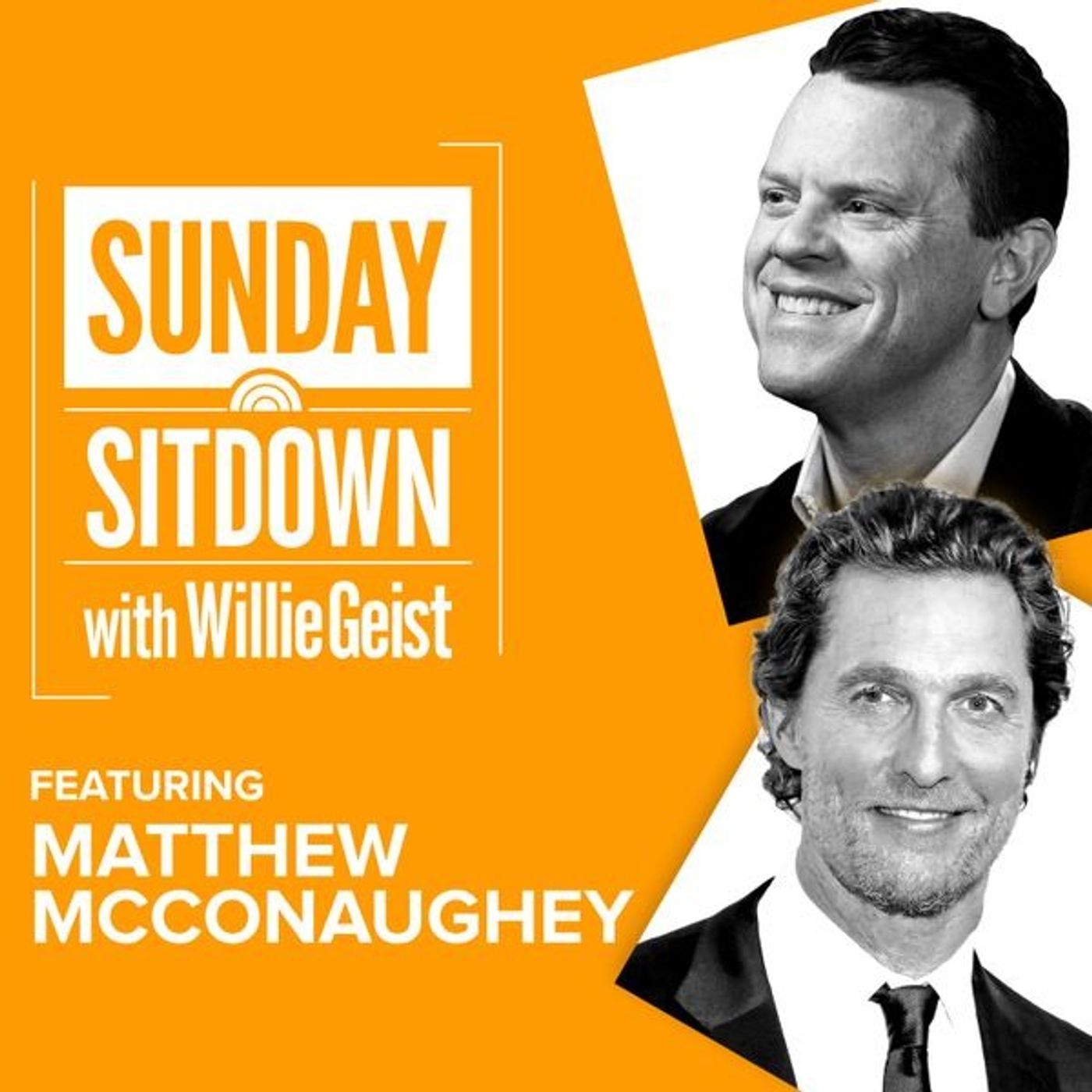
Sunday Sitdown with Willie Geist
Matthew McConaughey on Acting With His Family and Lessons That Last
00:41:48
Over the past three decades, Matthew McConaughey has starred in more than 50 films, won an Academy Award for Dallas Buyers Club, delivered an Emmy-nominated performance in True Detective and topped bestseller lists with his memoir, Greenlights, but he’s still chasing something more meaningful. In his latest project, The Lost Bus, he tells the gripping true story of a school bus driver who risked everything to save 23 children during the 2018 Camp Fire, California’s deadliest wildfire. McConaughey sits down with Willie Geist to reflect on acting alongside his teenage son Levi and his 93-year-old mother in the film and how the project deepened his perspective on fatherhood, legacy, and what really matters. He also discusses his new book Poems & Prayers, the power of belief in a cynical world, and why risk-taking has defined his career.
Loading summary
Transcript120 lines
- [00:01]
Venmo Advertiser
Get in the game with the College Branded Venmo Debit Card. Wreck your team with every tap and earn up to 5% cash back with Venmo Stash, a new rewards program from Venmo. No monthly fee, no minimum balance, just school pride and spending power. Get in the game and sign up for the Venmo debit card@venmo.com collegecard the Venmo MasterCard is issued by the Bancorp Bank NA Select Schools available Venmo Stash terms and exclusions apply at Venmo me stash terms max $100 cash back per
- [00:29]
Matthew McConaughey
month
- [00:32]
TurboTax/Credit Karma Advertiser
not sure how to tackle your taxes? Are you sweating the small print? You may be experiencing FOMO, the fear of messing up the answer using TurboTax on Intuit credit Karma. They help you get your biggest refund and then we help you do more with it with a personalized plan designed to help you hit your money goals. It's time to take your taxes to the max. Start filing today in the Credit Karma app.
- [01:06]
Willie Geist
Hey guys, Willie Geist here with another episode of the Sunday Sit down podcast. My thanks as always for clicking and listening along. It is always a good day when I can tell you I have a conversation with Academy award winner Matthew McConaughey. This is the third time he's been on our show. The first time was back in 2020, right at the height of COVID when he came out with his memoir GRE Green Lights, which went on to sit on the New York Times bestseller list for almost two years. Incredible. Now he's out with another book called Poems and Prayers, which kind of gets at a conversation around the soul of who we are, who we want to be right now, how divided we may feel, but the common ground that Matthew sees and the kind of the way out of this predicament we find ourselves in.
- [01:53]
Interviewer
It's a.
- [01:54]
Willie Geist
It's a really good conversation about staying engaged, staying hopeful, staying optimistic and kind getting together on some things in the way that only Matthew McConaughey can describe. That's a great part of the conversation. The other part is about his new film. It's called the Lost Bus on Apple tv. Plus, it is a movie based on a true story around the 2018 Campfire, which was California's largest ever wildfire. And it focuses on the story of a real life school bus driver in Paradise, California, the town that was devastated by the wildfire. His name is Kevin McKay. He was picked up the dispatch go pick up a group of kids who were stranded at their school. Basically go save their lives. He made the decision to answer that call, went and picked up these kids, and then spends an entire day driving around trying to get away from these flames, trying to find a way to safety for all these kids, along with a teacher on the bus played by America Ferreira. It is a harrowing movie and, and when you think that it was based on a true story, it's all the more incredible. So he's great in that we talk about his career. Of course, you know it by now. In 93, he starts with Dazed and Confused. All right, all right, all right. And all of that and the rest is history. Has a great run of romantic comedies before kind of taking a couple of years away from the spotlight to sort of, I don't know, think about who he wanted to be in Hollywood, rebrand a little bit and come back as a dramatic actor and have this great, great run. You think about True Detective and Interstellar and then the movie for which he won The Academy awarded 2013 movie called Dallas Buyers Club. He's had a great career. Now he's got this other side of himself that's an author, he's a thinker. People have wanted him to run for office. And I think that all comes through in our conversation. So sit back, relax, and enjoy. Right now, Matthew McConaughey on the Sunday Sit down podcast.
- [03:56]
Interviewer
Matthew, thanks for doing this. Good to see you again.
- [03:58]
Matthew McConaughey
Good to see you again.
- [03:58]
Interviewer
Got so much to talk to you about. We can wait. Texas football can come at the end if you want. We'll hang on to that one. But I have to start with the movie the Lost Bus, which I was just telling you I finished like an hour ago. So I'm still, still absorbing it all.
- [04:12]
Willie Geist
Yeah, I'm shaking it out a little bit. People remember the campfire.
- [04:16]
Interviewer
November 2018. The worst wildfire in the history of California consumed the town of Paradise. But this is a very specific story that most people didn't know. So who is your character and what happens if you can just set the scene?
- [04:30]
Matthew McConaughey
So there was a, a lot of heroes that day. There were a lot of people who didn't plan on being heroes that acted heroically. Jamie Lee Curtis heard this story on NPR called, Jason Bloom produced. They got a script together, went to Paul Greengrass. He came to me with this. There was a story that we tell of a man who had come home in our story because his father died, couldn't take care of his mom as a widow, reconcile a relationship with his son from a previous marriage, takes a part time job as a school bus Driver in town takes the kids to school that day. About to go pick them up in the afternoon, drop them off. The fires are coming over the canyon. They'd done that many times before. Wasn't a big deal. All of a sudden, boom. The first responders who went up there to put the fire out noticed that the fire had jumped the canyon. Whoa. Mandatory evacuation of paradise. First responders are coming back to get back in town to put the fire out while you've got a mandatory evacuation. Not a good combination. Outgoing incoming traffic. At the time of the mandatory evacuation, this. This guy that I play that we're telling the story about is headed home in the bus to go pick get his mom and son because they can't drive. Either one of them wants to go save them. And just as he makes that decision to do that, it comes through bus Dispatch. I've got 23 kids stranded on the east side of town. Is anybody over there with an empty bus? Well, guess who's got an empty bus. This guy Kevin. So what do you do? What's the choice you make? This man chose to go pick up the kids. When he got there, he picked them up in the bus. And also the teacher, Mary lwig, who's played by America Ferrer, aboards the bus. And this is the story of the next six to eight hours of their life and what happens. And that's the story we chose to tell as you. You saw it. It's a. It's part horror movie.
- [06:26]
Interviewer
Yeah.
- [06:27]
Matthew McConaughey
I think it's the best fire movie I've ever seen. And I've seen the fire. Such a predator in this thing. Makes you want to almost run from it. And you're in your. And you're in your seat in the theater. It's a big, beautiful, epic, you know, action film. And at the heart of it, it's a great human drama about these two people with these 23 kids on the bus. Yeah.
- [06:52]
Interviewer
So to be clear for the audience, in case I wasn't. This is a true story. Yeah, this is something.
- [06:56]
Matthew McConaughey
This is based on a true story. This. This happened. We told based on the facts of this true story.
- [07:02]
Interviewer
And you got a chance to talk to Kevin, spend some time around him.
- [07:05]
Matthew McConaughey
Yeah.
- [07:06]
Interviewer
Hear about what he went through that day, but also where he was in his life in that time. What were those conversations like with him?
- [07:13]
Matthew McConaughey
So I think the. The most important ones for me is I sat with him and he retold me the day a couple of times, and he would have specific points where I. He'd have to catch his breath. Like when he noticed that this is not just a regular fire that's coming across canyon. This looks different. It looks worse. Oh, Beep. Oh, I got to take things into my own hand, so to speak. When he made. And how he made the decision to go get those kids and how almost utilitarian is my job. Simple. A job we gotta give almost more credit because that's not a dry sort of platitude answer. A lot of people on that day did heroic things. And a lot of people do heroic things in life when they go. It was my duty. That's what I was supposed to do. He wasn't looking to be a hero that day. Mary Luckwood wasn't looking to be a hero. First responders are heroic in that they get called when there's a crisis and they go out to try and abate it. These. A lot of people in life like Kevin and Mary in this story, we're not looking to be a hero. We're not trained to be a hero. They found themselves in a circumstance and they chose to run towards the crisis instead of away from it. And, you know, that's a heroic act. Listen him tell those stories. The fear of not having any communication, cell service. The cell towers are burned down. Dispatch. There's no cb, whatever, radio service. You couldn't talk. You couldn't. There's no communication with the outside world. He didn't know if his mom was okay, his son was okay. Didn't know. Flying in the dark. He didn't know if the nectar he was driving over had worse fires than the ones he was leaving from. So the improvisation that he pulled, the fear of the unknown, the anger he had, the frustration, the sense of, what else can I do? Is this it? Listen to him retell those stories. Informed a lot of sort of where I was and what I did with the performance.
- [09:21]
Interviewer
What did you pick up in terms of his reaction to the fact that there's a movie being made about his experience that day and he's being played by Matthew McConaughey.
- [09:31]
Matthew McConaughey
You know, after the first sort of giggles and jokes about who to thunk they make a movie about and picked up my particular story and that you're playing me. After we got past that, it was very much after 20 seconds. He's honored. Probably a little wary at the beginning, as anyone rightfully is. If someone's coming to tell a story based on your life of that day and talk about a personal story, that's your personal story. So you don't want to probably. I'M supposing there's some feeling of like, I don't want to feel trespassed upon in the wrong way.
- [10:06]
Interviewer
Yeah.
- [10:08]
Matthew McConaughey
But that was never the intent. I think that was Jamie Lee who, you know, who found this story and went to him and the real life Mary Ludwig talk about the story we wanted to tell about how it wasn't going to be a biography, it wasn't a documentary on what they did that day, but it was going to capture the spirit me based on their experience that day. We were never set out to do a gotcha or to tell aversion that would be inappropriate or irresponsible to what they did. And they understood that, believe that. And that's true. So, you know, he saw the film. I talked to him after, after the premiere in Toronto and he seemed, you know, honored by it and looking at it with level head. It'll be interesting. Talk to him in a year after people see the film and talk about it, go, hey, you're Kevin.
- [10:53]
Interviewer
Right.
- [10:54]
Matthew McConaughey
What does that become, you know, when all of a sudden strangers are coming up to you that you don't know, but they know you.
- [11:00]
Interviewer
Right.
- [11:01]
Matthew McConaughey
That'll be interesting to see.
- [11:02]
Interviewer
And he's gone on and become a teacher and continued his care for children.
- [11:05]
Matthew McConaughey
Great relationship, the son.
- [11:07]
Interviewer
Yeah.
- [11:08]
Matthew McConaughey
Yeah.
- [11:08]
Interviewer
So this movie, in terms of being an action thriller movie, you're driving through what feels like a maze of fire. Your character is. And just looking for an exit. And every once in a while you go through a fence or something, you go, this is it. More fire.
- [11:21]
Matthew McConaughey
Yeah.
- [11:22]
Interviewer
I just cannot imagine he had to be brave up there. But the terror he was feeling, knowing not only his life was at risk, but he's got those 22 kids back there too.
- [11:32]
Matthew McConaughey
Yeah. And how many times it looked like a dead end? How many times it looked like, ah, this is the escape route. We'll be fine. Once we get to this point that. No to find out the fires had already spread there as well. And then you get towards, you know, what part of the story where it's on all four sides and it appears to be an absolute dead end. Unless you can fly, which they can.
- [11:57]
Interviewer
Yeah.
- [11:58]
Matthew McConaughey
Heat exhaustion. Fire there, Fire there. Fire there. Fire behind us. Let's just sit here, hope, pray. Maybe the winds change, maybe rains, I don't know. And then what do you do? In this story, this was. If you want to get through hell, sometimes you gotta drive right down the throat of the dragon, not wait on it, not be passive at all, but that, you know, to be on death's doorstep like that. But to look that dragon in the eye and go, we're gonna find out.
- [12:39]
Interviewer
Yeah.
- [12:40]
Matthew McConaughey
Because it was that, that, that was a dead end road. Yeah. So I'm gonna go out raging and see what happens.
- [12:47]
Interviewer
There are a couple moments in there that look and feel maybe like resignation but just for a minute. And he's kind of stealing himself.
- [12:53]
Matthew McConaughey
Yeah.
- [12:54]
Interviewer
To get back after that dragon. Yeah.
- [12:56]
Matthew McConaughey
And because logically, I mean he, I'm sure he did have some resignation along the way and I know he did. The way I portrayed him at places where it's all for not done all I can. There's not another exit. We can't dig a hole. We can't fly and 4 dimensionally 360 we are surrounded. Go where Maybe the best thing is to sit here. The fires aren't here yet, but they're right over there coming over the hill. Which they find out.
- [13:33]
Interviewer
Yeah.
- [13:35]
Willie Geist
Hey guys, thanks for listening to the Sunday Sit down podcast. Stick around to hear more from Matthew McConaughey right after the break.
- [13:44]
Venmo Advertiser
Get in the game with the College Branded Venmo Debit Card Wreck your team with every tap and earn up to 5% cash back with Venmo Stash, a new rewards program from Venmo. No monthly fee, no minimum balance, just school pride and spending power. Get in the game and sign up for the Venmo debit card@venmo.com collegecard the Venmo MasterCard is issued by the Bancorp Bank NA Select Schools available Venmo Stash terms and exclusions apply at venmo me stashterms max $100 cash back per month.
- [14:13]
Indeed Advertiser
Hiring isn't just filling a role. It's about finding people who can drive results. Indeed Sponsored Jobs helps you match with the right candidates faster. Target candidates by skills, certifications or location. Join the 3.3 million employers worldwide that use Indeed to connect with quality talent that that fits their needs. And listeners of this show will get a $75 sponsored job credit to help get your job the premium status it deserves. Indeed.com podcast terms and conditions apply. Hiring do it the Right Way with Indeed Bob Evans.
- [14:44]
Bob Evans Advertiser
Creamy Mac and cheese and buttery mashed potatoes are made for those Easter moments you just can't plan for. Like realizing that Easter egg hunting really builds up an appetite. Or that time when the neighbors burnt their their entire holiday meal and you invited them over. So this Easter, when there is no plan, say hello to Plan B O B from Bob Evans. Because when you bring out the Bob, you'll Always have something delicious on the table, no matter what the Easter Bunny brings. When you need quick and easy comfort, bring out the Bob. Available now in your refrigerated section.
- [15:15]
Willie Geist
Welcome back. Now more of my conversation with Matthew McConaughey.
- [15:20]
Interviewer
One of the beautiful parts about this story, because there is a father son dynamic to it, is that your own son, Levi, is your son in the film. What was that like for you? Not just to have your son in a film, but also to have that powerful and relationship that's full of strife and trying to find it again together? What was that like?
- [15:45]
Matthew McConaughey
Well, it was unemotionally very professional. At the same time, there was an extra sort of soul to it for me. One in that the relationship we have in the film is not good at all. Very different than thankful to say, than our relationship in real life. And I've since talked to and talked to him beforehand. Levi and I talked about it about how. No, go all the way there with how much you despise and hate who I am as your father in the movie, because we have such a good bond in real life. You can go. He felt like he had the, the, the. The freedom to go there and not be like, wait, I can't go to that space. You know, it was able to go because our relationship is so healthy in real life. Look, did a lot of those scenes for me, choosing to go back and pick up mom and Kevin. A lot of quite a few scenes in there where I was, you know, our embrace at the end, coming together, where. Yeah, I was thinking about what if I was in that circumstance, want to get back to my own children and then to have them right over there on, on set. They were there, you know, I didn't need a photograph. They were there to think about the pain of leaving. What if the last time you left your child, you were in a big row, you're in a fight, you went out at each other and, you know, that may be the last time you see him. The regret of that, the will to survive even more. So you don't end it like that. The pain of. But that is how it probably it ends. All that played in and you know, it was, it felt very professional doing it with him though. He, I gotta say, once he, once he got the part and I talked to him about it, I said, look, you know, I can help coach you, I can help teach you what I can. I go. But once we show up on the day, once you show up on the day, you gotta own your man. I'm not there As a safety net. And he showed up. I remember how he got in the car that morning. I almost had a little shoulder closed to me looking out the window. I was like, okay, there we go. That's what I wanted to see. Yeah. He was not looking at me to go, no last minute check ins. No like, hey, is it okay? How'd I do? He worked with the director and I sat back as a proud dad going, there we go.
- [18:33]
Interviewer
So is he off and running? So you want to do what dad does?
- [18:36]
Matthew McConaughey
So far he's leaning into it.
- [18:38]
Interviewer
Yeah.
- [18:39]
Matthew McConaughey
He got another role, way of the warrior kid that'll be at next year. A really nice role in that I went with him for six weeks, stayed in hotel rooms together and drove to work together to work and from work. And he enjoyed it and he did good. And he's looking at this as, you know, right now part of the journey that he. A really cool part of the journey that he has in his life. Will it be something that he ends up pursuing, you know, as a full on profession? I don't know. I'm not putting that pressure on him either way. But he's off to a great start. He's in the door. He's in the door and that's such a hard part in this business to get in the door. And you know, to the. As far as nepotism goes, for me, that's as command I always say, you know, don't you ever feel entitled? We'll help you get in some doors, but once you're in the door, you got to handle your stuff. That's why when he got the. When he read for this role in Lost Bus, I sent it to the cash and director, I said, I think it's good enough for a call back. And she said, I think it's good enough to send to the director. And I went, great. And then I went, oh, but pull his last name. He get it or he doesn't get it. But even, especially if he got it, I don't want him ever thinking did the last name. And I don't want his last name helping him get the job. Right. And especially I don't want him ever thinking in the back of his mind, did I get that? Maybe partially because that's why we didn't name him Matthew so it wouldn't be Matthew junior. That's a lot. We named him Levi, which is another name for Matthew. But anyway, and then the director saw it and said, that's the kid. So he got it on his own merit and he's in the door and he enjoys it. He's still learning about it. I try to do my best, teach and coach him. Probably overcoached him a couple times.
- [20:19]
Interviewer
Oh yeah, we do that.
- [20:19]
Matthew McConaughey
As dad, I'm probably sure I'm put him in a scene or two where I'm like, I think I gave him too much to think about. Damn it.
- [20:26]
Interviewer
You know, somebody go, he's good, he
- [20:28]
Matthew McConaughey
can do it, go.
- [20:29]
Interviewer
Yeah. And your mom is in it too. As your mom, she was great.
- [20:33]
Matthew McConaughey
Monomack93 wow. She can find energy, especially if she going to be in front of a camera. She Paul was looking for or he had cast the mother but the scenes didn't work and they needed to be rewritten. And he said, you know, I think I want to recast. He says, what about your mom? I was like, well, it's a good idea but let me, let me get her in front of camera on. He was like, okay. So I said, mom, send me a minute tape on why you love being a mother. Well, she sent me an eight minute tape and I showed it to Paul and he was like, that's perfect, that's your mom. I said, well, she just took a fall at my older brother's house and broke her tailbone. So she's in a wheelchair. He was like, well that's even better for the role. So she came, moved out there with us in New Mexico. We were shooting, went to work, got to be a diva, played a role.
- [21:20]
Interviewer
She got her own trailer, the whole thing.
- [21:22]
Matthew McConaughey
Oh yeah. I sat back, man, there was like it was her show. You know what?
- [21:29]
Interviewer
I didn't know that was your mom going in. Yeah, she was a natural, I thought. I mean she played it really well. Yeah, how much fun little family reunion on the set.
- [21:36]
Matthew McConaughey
I was told, and I don't know if this is true, maybe we can fact check it that it hasn't been three generations in a scene like that together since the Douglas family. Oh, wow. So it's something that is really cool, but it's going to be cooler over time because it's going to outlive us, you know what I mean? And it's there. So look and there's pictures of me. We got to go to Toronto Film Festival and premiere the thing. And to have my mom here and my son here and be in the middle as a bridge with those generations doing something that became a career for me that 1992, I didn't know if it was going to be a weekend hobby that turned out to be a career very Cool.
- [22:14]
Interviewer
Very cool. Very cool. This lost bus is your Latest. Over like 15 years now. I think we can stop calling it the McConaissance. That's an old story. I think you are this guy now. You've done all these incredible dramatic roles, won the Academy Award for Dallas Buyers Club. And as a lot of people know, this was very intentional that you kind of stopped down, took a break for a couple years, left la, moved to Texas. Just kind of checked in and asked what you wanted out of this deal and what Hollywood expected you to be given your success. Now, 15 years later with that decision, what do you think is the lesson in that for other people?
- [22:51]
Matthew McConaughey
Yeah. Success, profit, quantity, quality. Success. Measurable in the head up to the numbers. It's usually quantity. Profit usually measured here, heart and soul. And that's the measure, quality. I was successful, but I didn't feel like I was making a profit. I was doing work. I was a king of rom coms, Loved. I liked doing them, but they weren't. Something was keeping me up at night going. I wish my work could be as vital as my life feels right now. I wish I could feel as much in my work. Can it challenge the feelings that I'm getting in my life at that time? Camille and I are in love. She's pregnant. So I'm turned on. Life is. Life's on fire, right, dad to be. And my work felt like I could do that. That role tomorrow. I was like, that's okay, but I want to. I'd like to find roles. I'm like, that scares the you know what out of me. I don't know how I'm going to do it, but I can't wait to find out. Those were dramas. Those were not getting offered to me, so I was succeeding. Made all the sense. My brothers were even like, when I took the time off, they're like, what is your major malfunction, little brother? You making good money, man. You're doing. What are you doing? But in the dark of night in here, I was still saying, ah, something's not complete, something's not as full. Tank's not as full in here as I want it to be. So I took the risk trying to succeed and profit, you know, to match quantity of success with the quality of success that gave me value. And that's what. That's the risk I took. And those roles came, and that's exactly what I felt. I started to feel a success with profit.
- [24:47]
Interviewer
I love what you say. You go away just long enough to where Hollywood thought, oh, Matthew McConaughey that's a new good idea.
- [24:54]
Matthew McConaughey
It became a guy. I think I gained some anonymity. Yeah. It was almost two years that I was out, and I didn't want to be out two years. Trust me, I was waiting for just an offer and I'll take a pay cut just to get in some of those dramas I wanted to do, they were not offering them. So after 20 months of not being in the theater, in a rom com, of not being in your living room, of not also, I think seeing me on the beach shirtless.
- [25:18]
Interviewer
Yeah.
- [25:18]
Matthew McConaughey
Which kind of look like the sister of the rom com. It's like, oh, the day life and the. And the. And what I've seen on screen, they're very similar. You didn't see any of that. So where was I? I think turning down the $14.5 million offer was a big thing too, because that let some people know, oh, he's not bluffing. And when you got someone that you know they're not bluffing, you start to go, what are they doing over there? They're not just receiving. They got a plan. They're playing offense. You turned on 14, five and he ain't worked in two years. I know the guy would like the money. He said, no. What's he up to? I think that became. I became more interesting with the time away. 20 minutes. It also. 20 months. It also became, you know, it would be a new novel, original idea for a Lincoln Lawyer or Killer Joe, a mud. A Magic Mike, a Dallas Buyers Club, a true detective that run of Wolf of Wall street. Hey, Matthew McConaughey. So it was an unbranding, unbranding phase before I rebranded.
- [26:25]
Interviewer
And it was a little risky because there's a chance Hollywood never would let
- [26:28]
Matthew McConaughey
you out of your lane. Right. They weren't. And I thought I was. I was shaking hands with the fact that I had written a one way ticket out of Hollywood and I was looking at other vocations. I thought about going back to law school. I thought about becoming a teacher, thought about becoming a wildlife guide. Because I was like, you rolled the dice. And Hollywood said, no, thanks, we're not playing, playing with you anymore. So I was like, I didn't regret if I was gonna have to do that. That's the one thing the going back, I was never going to go back and do. I would, I. I had written. I would written my own non negotiable contract with myself and Camilla. And I had, you know, he's like, that's the decision. We're sticking to it, no matter how long it takes, even if it takes so long that we got to find something else to do in life.
- [27:24]
Interviewer
And here you are, given all the success you've had since then, including Green Lights and your new book, Poems and Prayers, which kind of continues this idea that you started in Green Lights, which is like mining your old journals from your teenage years and creating some new thoughts and wisdom as well. What will people find in this book that's a little different maybe from Green Lights or is a continuation of that?
- [27:50]
Matthew McConaughey
So our Green Lights was. Had a lot of stories and chronology of my life, wins, losses, etc. This is more. When I say Poems and Prayers, this is isn't as much stories, it's ways of approaching, ways of stirring up and reviving belief in ourselves, which I believe is in short supply. And I hear from a lot of people that for them it's in short supply as well. I wrote this book because belief was getting in short supply for me. I was starting to doubt more than I was comfortable with. I was starting to look down my nose and get a little cynical. I was starting to look around at the way of the world and starting to go, maybe this is just how it is. And that scared me. And then it pissed me off. I said, no, I'm not ready to wave the white flag and let doubt win in me. And I noticed that a lot of people were saying the same thing and I was like, oh, that math would not add up. If we let doubt win, we're all going to lose. So I don't necessarily think that we as a people are desiring properly. I don't think we're perceiving properly. I don't necessarily think we're understanding properly. I don't think we're going after the right things. So therefore we're not behaving properly. We need belief. It's in short supply. And whether that's in God, whether that's in your kids, your future, your better self, whatever that is, we need more of it. We need to double down on it. And if you don't know where to find it, ask yourself the question, who or what would you die for? That'll lead you to what you should probably be believing in more, what you should probably double down on more, what you should probably start living more for. And we're gonna have to. We're gonna have to find that each of us individually and enough of us do that. I think collectively we can move forward. Can't let the doubt win, because if it does, yeah, I pretty sure we all lose.
- [29:49]
Willie Geist
Stick around for more of my conversation with Matthew McConaughey right after a quick break.
- [29:57]
Redfin Advertiser
There's a difference between liking a house and actually getting it. Redfin is built to close that gap. Redfin agents close twice as many deals as other agents, so when you find a home you love, you're not a step behind when it's time to make an offer. That means less watching great homes disappear and more zeroing in on the one you'll actually end up calling home. Redfin helps turn saved listings into real addresses. Get started@redfin.com own the dream
- [30:27]
Venmo Advertiser
get in the game with the college branded Venmo debit card Rep your team with every tap and earn up to 5% cash back with Venmo Stash, a new rewards program from Venmo. No monthly fee, no minimum balance, just school pride and spending power. Get in the game and sign up for the Venmo debit card@venmo.com collegecard.com. the Venmo MasterCard is issued by the Bancorp Bank N.A. select schools available Venmo stash terms and exclusions apply at venmo me stash terms max $100 cash back per month lifelock
- [30:57]
Matthew McConaughey
how can I help?
- [30:58]
Venmo Advertiser
The IRS said I filed my return, but I haven't.
- [31:01]
Willie Geist
One in four tax paying Americans has paid the price of identity fraud.
- [31:04]
Redfin Advertiser
What do I do?
- [31:05]
Matthew McConaughey
My refund though. I'm freaking out. Don't worry, I can fix this.
- [31:08]
Willie Geist
LifeLock fixes identity theft guaranteed and gets your money back with up to $3 million in coverage.
- [31:13]
Venmo Advertiser
I'm so relieved.
- [31:15]
Willie Geist
No problem.
- [31:15]
Matthew McConaughey
I'll be with you every step of the way.
- [31:17]
Willie Geist
One in four was a fraud paying American. Not anymore. Save up to 40% your first year. Visit lifelock.com Special offer terms apply welcome back now to the rest of my conversation with Matthew McConaughey.
- [31:33]
Interviewer
How do you fight that cynicism? And I ask you because so many people feel that way. I hear it all the time. Maybe this is just the way it is. But we've got political leaders telling us the other side is the enemy. We've got social media algorithms reinforcing our beliefs. All that. How do you punch through that?
- [31:49]
Matthew McConaughey
Well, you got to keep fighting that. I think we have to not not concede and not let our every time we say, oh, this is just how it is, which is an extremely to be nationalistic for a second, extremely un American way to think. Because the idea of America is about the continual pursuit even though we may never arrive at the right equality or the Right. Justice or fairness, we mean it. But to continually pursue, to never say just how it is. America's a verb, you know the spirit of it too. And so but us each individually, no matter what country you're from, we, you become a cynic. Early death. It means you quit to some extent. It means you quit if you quit believing and you start going ah, hey, cynics are clever. They get people to giggle at the cocktail party, but they quit. They actually, they're actually, actually quitters. It's easy to be cynical, it's easy to be snark, it's easy to be clever, it's easy to say ah, it's all for not just the way it is.
- [33:01]
Interviewer
And now you don't even have to say it. You can just post it and walk away from it.
- [33:05]
Matthew McConaughey
I was talking with somebody yesterday and we got a, you know this idea that people and his, his, his, his line was I think people are, are out to try and misunderstand each other. I found that really interesting. They're out to seek contrast before comparison. They're out to go. Well, not really what you said. I'm just already looking for an answer that can argue that I'm not even before I'm even listening to what you're saying. I'm always look because then if I do that I feel like I had an individual answer. I was original. It wasn't that cool, wasn't that clever, wasn't that edgy. That's short term thinking. That's like cheering when your opponent misses more than you cheer for when your own team makes. It's like, come on, we got to have more confidence I think more belief than that in ourselves to not seek to be the contrary and the cynic all the time. Which it's a default place to go. And I think it's kind of chicken and we're all buying into it. It's being sold us at every turn. I understand why we feel that way. I'm not preaching to say I don't understand why you feel that way. I get it. Turn on the news, check out the algorithm. It's built to do that. You know, it reinvents itself with instead of. But I believe there is and should be and can be a coalition, an expectation of how we're supposed to rules of engagement with ourselves and each other. I don't believe that you can just say the ethics are whatever the winner did. Wait a minute. Can we check first to see if the winner moved the goal post or lied, cheat and stole before they got There because. And when we're being told no, it doesn't matter as long as they win, they get to the front of the line. Now, hang on a minute, Bull. Now let's go a step further. Some of the people who are saying that are also saying, oh, and by the way, if you do follow the rules, you a sucker. Bull. Hang on a minute, man. There's understandings, there's truths and traditions that we have to maintain. There's new ideas that we need to adapt to as well. That's true progress. Progress isn't saying yes to every damn new idea and forget everything in the past. It's also not saying I'm going to be a dinosaur, just how we did in the past. I don't want, I don't want any change. That's not progress either. So the progress is the combination of the two. But there has to be, I believe it's not asking too much to have bring in an ethical, moral bottom line to some things that can stand, that we can trust in things that have worked in business, in relationships that have worked in the past, that will continue no matter what changes, no matter what AI does, no matter what the algorithm says, no matter what some of our leaders do and tell us, telling us to divide. There are some things that we can contain a sort of moral and ethical baseline that is not asking too much to expect from, from each of us. And if you don't want that, if you want to be a nihilist, if you want to say, ah, it's all for nothing, I don't care, I'm going to be a tyrant. But you know what? Go your own way then. But we're not, it's not the armies of us don't need to accept falling in line with that being just how it is or that that's okay. And that's on you and me individually in the damn mirror first. That doesn't need to be policed by anybody else. I think it should be policed on the outside more. But that needs to be policed on our own. If we believe more in what we personally value, we will police ourselves on those. Because you realize you don't really win that way. Yeah, not the long game.
- [36:47]
Interviewer
When you say the armies of us, I think that's key.
- [36:50]
Matthew McConaughey
Yeah.
- [36:51]
Interviewer
Because the extreme voices on both sides of this thing are the loudest ones. They got the most attention. So it's easy for someone just living in our culture to assume, oh, that's the way we are, we don't like each other. I just Reject that out of hand. And I think in your books you speak to that, you say, hang on a second. Of course there are always pirates on either side of the ship, but we're in this thing together. Let's figure it out.
- [37:14]
Matthew McConaughey
Yeah, we gotta. And I think to, to get it back. You and I were talking, I think it was offline before we started recording, but I think it's going to be a punk rock rebellion and not a Kumbaya Namaste. Let's be peaceful and see what happens. I think it's gonna take some rage on the part of believers, whether again God or self or better self or each other. Take grabbing the mic back. And they're not going to get it back. The extremes, the pirates on the starboard and the other side aren't going to say, oh yeah, here, just waiting for you to ask. No, gonna have to fight to get it back.
- [37:52]
Interviewer
Yeah, I mean, I, and I was saying to you before we started, I feel like you are a great voice for that because what we do in our culture now is dismiss somebody because we find something about them. He or she's in that party or he or she holds that belief. They'll find things you've said over time and maybe try to stick that to you. But generally speaking, they can't paint you with a brush and dismiss you that easily. So I think, personally, I think even in a different, arguably more important way than politicians, for you to come through and say all this, people sit up and listen and I think that matters. Do you sense that? I don't want to call it responsibility, but the people are leaning in and listening.
- [38:31]
Matthew McConaughey
I, Yeah, I, I sense it to an extent. I hope so. And look, I want to say so I don't come across as being preachy when I say we. I'm including me stuff I'm talking about. I'm not making straight A's in all these classes. This is to myself. I'm trying to call myself out too, and I'm trying to shake hands with the fact that, yeah, good, it is a process. All of us are working and we need to keep working. It does take. It's going to take some sweat equity individually for all of it. It's going to. Not one of our leaders can do anything unless we get off our own porch. So we can't sit back and rely on fate. Can't sit back and rely on our leaders in position to do that for us. We got to put our own hands on the wheel and that can be overwhelming. What do you mean? Trying to change what? No, don't try and change the world. Look in the mirror. Just start with the choices you're making. They're a lot more fun to do have than mandates anyway. Choices you know and understand and believe that better choices for yourself, truer choices for yourself today do have a compounding interest and give you more ROI down the road. I think it's part of that's the main thing, is just trusting that there's a bigger payoff and having a little bit of delayed gratification and going, oh, if I do this, oh, that's going to make my relationship healthier with my wife. If I do this, that makes me a better boss, a better employee. There's so many things to just trust. If we could just trust a little further that we will reap more rewards. Now, if you're religious, you believe in God and you're trying to live in a way that you think how you live today will have, may have something to do with where you go. That's another delayed gratification to believe in reason. If you're not religious, I do say, hey, fine, there's great ethics in the text of the Bible. They're in the Quran, they're in many different religious books and teachings. There are places to go. Use those. Don't be mad at the author just because it's the author. Pick out the stuff that you go, that's good, that actually works. That pays me back. And whether that's a philosophy you have again, if you're not a tyrant, you're not a n. Double down on that philosophy, man. Whether it's science, double down on that, that science. So it's a. Yeah, I think we've got a call to action in front of us and I know we can do it. We've gotta not concede to go it's just the way it is and not let ourself off the hook either. We gotta counsel ourselves and administer ourselves, referee ourselves in kind. And that if we do it well, pays us back as well as the most amount of people. That's the sweet spot.
- [41:27]
Interviewer
All this raises the questions you've been asked about running for governor and all that stuff. You said, no, I've got kids. Yeah, I want to be there, which I sympathize with very well. Do you see some other role for you down the road or you think this is the best lane for you
- [41:40]
Matthew McConaughey
to be in right now? This is that I think this is the best lane. But I, but I'm, I'm open to that. Where I Can be most useful where my voice and understanding can be most useful as it is. Where and what I can learn. Maybe I'll find an avenue. I don't even know yet. Maybe, you know, leadership down the road in another category. Maybe in political category. I don't know. Can be. Oh, I see that, Lane. I can be useful there. You know, politics is not my. The way I speak, the way I come about things. It doesn't. It's not really political speak. Right.
- [42:14]
Interviewer
That might be an advantage now.
- [42:16]
Matthew McConaughey
It might be. Yeah, it might be. I'm trying to speak. I think what I hopefully is above politics, probably more centered, too. And if that. That to go back to answering the question you were talking about earlier, talking about, it's going to take a rebellion. You know, somebody told me, oh, ain't nothing on the, you know, middle of the road. Ain't nothing on those yellow lines but dead armadillos. Like, that's funny.
- [42:43]
Interviewer
But it's a good line.
- [42:45]
Matthew McConaughey
Okay. On the fence. No, it's not on the fence. It's actually a strategic position to be able to go left and right when you need to go right. It's like playing free safety. It's an aggressive, really aggressive position. And if we start looking at that, then we have an offensive mindset, then we have an affirmative mindset, not a defensive mindset. And it's not going, I'm a little this or a little this. Damn. That's not what I'm. That's not what I'm saying. It's not middle of the fiddle being about nothing. We talk about it in there, but there's a difference between a nice guy and a good man. Good man has ideals, and if those are tested, good man's not going to be a nice guy. I'm not saying this, and like I said, it's going to take some sweat equity. And I think it's more of a punk rock rebellion than it is a peaceful, easy place in the middle where you go both ways. That's not what I'm talking about.
- [43:31]
Interviewer
Well, keep at it. We need. We need your voice in the conversation. A lot of that comes through in the book. So congrats on the book. Congrats on the film. And speaking of free safety, before I let you go, how are we feeling about the horns right now?
- [43:43]
Matthew McConaughey
Come on, Horns. We're. We're not off to the fastest start that we expected or hoped for. We went down to Ohio State, got beat by good Ohio State team. I thought we were going to win that game. And then we've won the next two games. We got a W. Let's be happy about that. Did we Are we performing to the is our offense performing to where we had hoped it? Not yet. I believe we will. I don't have any worries about our quarterback and arch at all. Guys got incredible ability and he's got great character and he'll. He'll see through this and see what BS not to worry about. And he'll start playing ball as himself and it'll in the end we can find her. We can find that rhythm. Just don't have a rhythm down in offense yet. And that'll happen. And part of that's about part of the passing game is balance with the rhythm on the running game. You know, that'll open things up. So I'm excited about where we're going.
- [44:31]
Interviewer
Sometimes it takes time to give the guy a couple games to get rolling a little bit.
- [44:35]
Matthew McConaughey
Yeah.
- [44:35]
Interviewer
And then we'll see you on November 1st when the Commodore has come into Austin.
- [44:39]
Matthew McConaughey
The Commodore could be a big one.
- [44:41]
Interviewer
Who would have thought?
- [44:42]
Matthew McConaughey
Commodores are no longer what they call them in the se the door. They come the doormat. No, they're not.
- [44:47]
Interviewer
No, sir.
- [44:47]
Matthew McConaughey
They just swinging out of South Carolina, drubbing the Gamecocks at home. Yes. Now it sure is. Congrats.
- [44:56]
Interviewer
Great to see you, man.
- [44:57]
Matthew McConaughey
You too.
- [44:57]
Interviewer
Thanks for doing.
- [45:02]
Willie Geist
My big thanks again to Matthew for a great conversation. Always enjoy sitting down with him. The Lost Bus is streaming now on Apple TV plus and his book Poems and Prayers is available wherever you get your books. And my thanks to all of you for listening again this week. If you want to hear more of these conversations with our guests every week, be sure to click follow so you never miss an episode. And don't to forget, forget to tune in to Sunday Today every weekend on NBC to see these interviews in living color. I'm Willie Geist. We'll see you right back here next week on the Sunday Sit down podcast.
- [45:50]
Venmo Advertiser
Get in the game with the college branded Venmo Debit card. Wreck your team with every tap and earn up to 5% cash back with Venmo Stash, a new rewards program from Venmo. No monthly fee, no minimum balance, just school pride and spending power. Get in the game and sign up for the Venmo debit card@venmo.com collegecard the Venmo MasterCard is issued by the Bancorp Bank N.A. select schools available. Venmo stash terms and exclusions apply at venmo me max $100 cash back per month.