← Sunday Sitdown with Willie Geist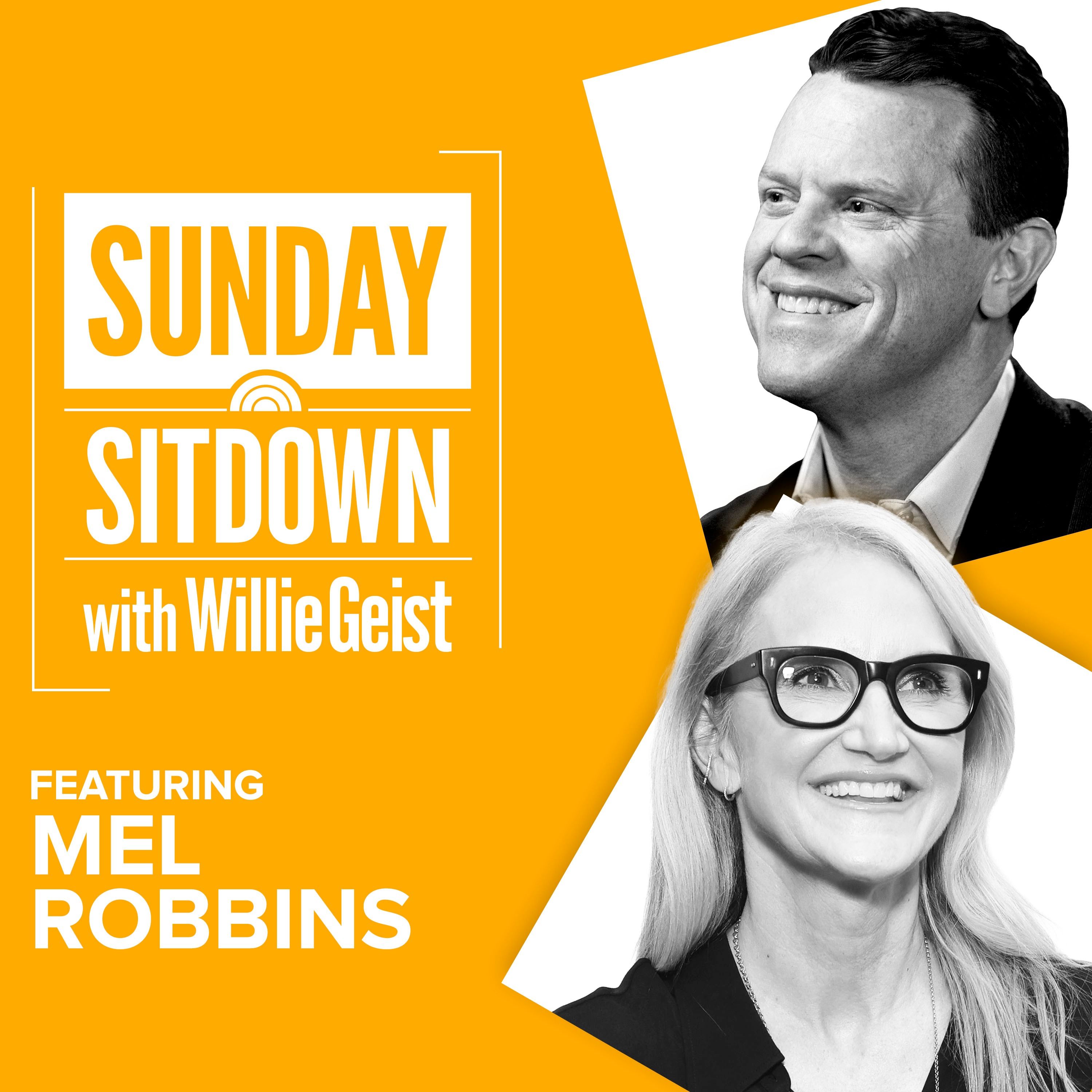
Sunday Sitdown with Willie Geist
Mel Robbins on Letting Go and Changing Your Life
00:53:05
Mel Robbins is a New York Times bestselling author, entrepreneur, and Golden Globe nominated podcast host behind The Let Them Theory and The Five Second Rule, two frameworks that have empowered people around the world. Robbins sits down with Willie Geist to break down why other people are the biggest source of stress, how letting go of control creates freedom, and why real change starts with your response, not your circumstances. Plus, she reflects on nearly losing everything, the snowy morning that changed her life forever, and how a single decision set her on an entirely new path.
Loading summary
Transcript174 lines
- [00:02]
Mel Robbins
Mazda Once you discover the Mazda CX5 Mazda, it doesn't take long to get it. With standard all wheel drive, a premium interior and advanced safety features, it's an SUV that gives you more at every turn. It will have you saying Mazda. The Mazda CX5, it's made to move you.
- [00:20]
Willie Geist
Every Mazda SUV offers you an elevated driving experience and refined performance. Discover it at your local Mazda dealer today.
- [00:30]
Mel Robbins
At Nature's Bounty, the belief is simple. You already have a brilliant body. Supplements just help support your journey. For over 50 years, nature's bounty has offered vitamins and supplements to help you eat, sleep, thrive, repeat. From magnesium glycinate for heart and muscle support to hair growth capsules for fuller, thicker hair and probiotics. With 20 billion live cultures for digestion, Nature's Bounty. It's in your nature to thrive. Learn more@naturesbounty.com these statements have not been evaluated by the Food and Drug Administration. These products are not intended to diagnose, treat, cure or prevent any disease.
- [01:00]
Willie Geist
Foreign. Hey guys, Willie Geist here with another episode of the Sunday Sit Down Podcast. My thanks as always for clicking and listening along. I am thrilled to bring you my conversation this week with one of the most popular podcasters on planet Earth and simply one of the most influential voices in the country right now. She is Mad Mel Robbins of Let Them Theory fame. Her book the Let Them Theory was the number one best selling nonfiction book of 2025. Her podcast, the Mel Robbins Podcast ranked only behind Joe Rogan and Theo Vaughn in the world in most popular podcasts this year. She's now marking the one year anniversary of that book, the Let Them Theory. She also was just nominated for a Golden Globe Award. That's right I said a Golden Globe award for for Best Podcast of the Year. Her personal story is fascinating. I'll let her tell you. Started off as a lawyer. Thought that's who she wanted to be. Then with her family and her husband kind of hit rock bottom. Was finding a way to drag herself out of bed and found her way to having these ideas and these motivational thoughts to get people going again who needed some help through started doing a little speaking. It got popular. Her TED Talk online caught fire. One thing led to another and really just in the last couple years she has blown up with this kind of empire around podcasting and books and speaking and everything else. High energy, really smart, really charismatic. I think you'll enjoy the conversation, hearing about her journey and also how you can apply a lot of what she says to your life. So I'M not going to sit here and explain the let them theory. Why don't we have Mel Robbins do that? So sit back, relax, and enjoy a Sunday sit down conversation with Mel Robbins. Mel, thank you for doing this.
- [02:55]
Mel Robbins
Well, thank you for inviting me.
- [02:57]
Willie Geist
I'm so happy to sit down with you, especially at this moment. First of all, Golden Globe nominee.
- [03:03]
Mel Robbins
I know.
- [03:04]
Willie Geist
I mean, you're up there with like movie stars and TV stars.
- [03:07]
Mel Robbins
There's a lot of famous people that go to this. It's unbelievable.
- [03:10]
Willie Geist
Including you, by the way. A lot of them are gonna be excited to see you. What was your reaction when you got that news?
- [03:16]
Mel Robbins
I. Well, it was 8:30 in the morning and everybody that was up in southern Vermont with us was gathered around, including our two dogs. And as we were watching and going, okay. And then all of a sudden they say, best podcast. Cause this is the first year they're giving a Golden Globe for best podcast. I'm like, oh my God, here it is. And then as they announced Dax, I'm like, okay, I know Dax. Go Dax. Go Dax. And now I'm thinking, how are they? What order is this in? And then they go, Alex. And I'm like, okay, come on, Alex. You know you're doing it. Go Alex. And then they go, Amy. And I'm like, go, Amy. And then I'm thinking, oh, God, we're not gonna get it. They're gonna say smart. They're gonna say somebody else. And then they said our name. And it was this surreal moment where I just had never imagined three years ago, on my 54th birthday, when we launched this podcast from the floor of my closet. It was never even something that I had my sights on because this award didn't exist. And that's not the reason why I started the podcast anyway. And so I think the thing that's surreal is to see that a show that has a mission of empowering people to feel better, to do better, to create a better life, that that show is being recognized at this moment in history. It is so humbling. And it makes me feel really proud of the work that we're doing and the impact that we're making. And that 140 journalists, or you know, not 140, that 400 journalists that cover culture and film and television around the world would see our show and recognize the production value and honor it with being a nominee. So I'm humbled and I'm also excited because I think an award like this and being nominated for something like this brings more attention and if more Listeners find it. They can find episodes with world renowned researchers that will help them create a better life. And they can give those episodes like a gift to the people they care about to help them do so too. So that's also a really incredible thing.
- [05:26]
Willie Geist
Now, are you gonna be all in? You're gonna be on the red carpet.
- [05:29]
Mel Robbins
I've never walked a red carpet.
- [05:30]
Willie Geist
In your face, asking who you're wearing.
- [05:32]
Mel Robbins
I should ask you for advice. I've never been on a red carpet. I live in Vermont. I know Birkenstocks are not appropriate for the red carpet. But aside from that, I'm having flashbacks to being at the Natick Mall outside of Boston. One of our daughters scream crying in the dressing room because we cannot find a prom dress. And I just feel a little bit like that. Cause I'm the kind of gal that wears Carhartts and sweatpants. And it's not in my nature to be putting on a dress. So I'm like, do I wear pants? What do I do? I don't know what I'm gonna do.
- [06:07]
Willie Geist
You could make a statement. Little Patagonia, some Birkenstocks, full Vermont experience.
- [06:13]
Mel Robbins
Somehow I feel like that's probably not the statement I want to make, but I don't know. This is an area where I need help, so I'm taking suggestions.
- [06:23]
Willie Geist
I say bring a little Burlington to Hollywood.
- [06:25]
Mel Robbins
Okay.
- [06:25]
Willie Geist
I think they could use it, you know, to take it down a little bit. This nomination, though, is appropriate because it punctuates this just extraordinary year you've had with this book. The Let Them Theory, the best selling nonfiction book of the year, sold more than a million copies in the first month.
- [06:43]
Mel Robbins
Oh, in the first month.
- [06:43]
Willie Geist
In the first month. And then up to 9 million by the end of the year. You go on this incredible tour. People getting let them tattooed, like all over the place. Are you. Because you do move fast. Are you the kind of person who's able to stop right now at the end of the year and look back and say, my gosh, look what we accomplished.
- [07:03]
Mel Robbins
One thing I'm really proud of myself is that I have stopped every single day and looked around and said, can you believe what. This is Unbelievable. And I have worked very hard to not miss this moment, because I know it's a moment and it may have lasted a year, but there are so many moments in my life where I was so anxiety ridden or stressed out or just wanting to, like, make something that I missed the magic in the everyday. And so I am awestruck. I am proud, and I'm also very clear that while my daughter and I wrote an absolutely excellent and helpful book, I am the villain. The book is hilarious and deep and profound and useful. And the research is so rich and relatable. We did that. But there is something that is divinely orchestrated by a phenomenon this big that is helping people at this moment in time. And I'm very clear it's not just me.
- [08:19]
Willie Geist
Are you able to identify why it has connected the way it is? It's one thing for a book to work with some people and resonate, but this is resonating around the world. What is it?
- [08:28]
Mel Robbins
I think there's a number of factors. Number one, the book is ultimately a tool, right? So the let them theory is four words, let them and let me. Those are tools you can use. And there are lots of extraordinary books that are about concepts, they're about the what or the why. This is a how book. And information only gets you so far in life. At some point, you have to know how to apply that information at a moment in history, a moment in time in your life where you're stressed out, you're overwhelmed. And so the fact that it's a tool and it's a how is one of the secrets. Second, this theory takes care of the number one cause of stress in your life, which is other people, because they are so annoying. Oh, my God. From the slow walkers to the closed cockers, to the drivers, to the Zoom calls at 5 o' clock on a Friday, who is doing that? Like, to people's moods and expectations, to the headlines, to the scary things, the people in your life who are struggling, the bills you can't pay, the things in life that are so unfair. At the heart of all your stress, there is usually another person. And so when you say let them, it immediately has this extraordinary effect of separating you from this thing out there that is causing frustration, hurt, stress, angst in here. And that brings me to the third reason. This book is about universal truths about life that have been around since the beginning of time. Stoicism, Buddhism, the Serenity Prayer. If you've read Viktor Frankl's Man Search for Meaning, the entire thesis of that book is what's happening out there is not where your power is, it's your response to it. And so as you read it, you're reading these universal truths and you're going, oh, I know this. I know. Like my grandmother used to say, my mother's version of this is pull up your big girl panties and deal with it. You know? And so you are being Reminded of what you know to be true. And so it's universal but deeply personal. And then finally, it is so simple. You can teach this to your kids. And simplicity is key, because if you can't remember something, you can't use it. And so it's spread around the world. Cause, you know, people pick up this book. Cause, you know, you pick it up. It's kind of like a Trojan horse. You see, Let them somewhere. And other people are annoying. So you're like, let me pick up this book because I hate other people. Yeah, let them. Let them, let them, let them. And then you're like, oh, wait a minute. The let me part. Let me figure out what I want, and let me take responsibility. You know what? My mother needs this. My sister. My husband needs this. I'm so sick of trying to change you. I'm just gonna let Mel Robbins have you.
- [11:11]
Willie Geist
I've had that speech, by the way.
- [11:13]
Mel Robbins
Yes.
- [11:13]
Willie Geist
Across the other side of the bed. Read this, please.
- [11:16]
Mel Robbins
Yes. And what the beautiful thing is. And I don't know if you've experienced this in your marriage, but my husband and I are. We're gonna be celebrating our 30th wedding anniversary this year.
- [11:27]
Willie Geist
Congratulations.
- [11:28]
Mel Robbins
Thank you. When I think about the amount of stuff that anybody goes through in their marriage, the fact that any of us make it for a long period of time is something to be very proud of.
- [11:39]
Willie Geist
Yeah.
- [11:39]
Mel Robbins
And I feel, having learned the lessons in this book the hard way and having used this theory now for about three years, I am in a second marriage with the same person. And it's not because he changed. It's because I did. I learned how judgmental I was. I learned how my expectations created resistance and friction in my relationships. And I realized the hard way that it's through accepting somebody as they are and as they're not that you create this space where you can really have an opportunity to connect with somebody. Because in a relationship, you get to be right or you get to be connected. You can't do those two things at the same time. And I love that. While people buy this because we hate other people and they're very annoying and they're stressing us out, and we want to take back control of our time and energy. What you discover when you really lean into Let them and let me. Is the simple tools that help you create better relationships with people that you really love and how to separate yourself and your energy and time from people that are very stressful and immature.
- [12:56]
Willie Geist
For the scant few people left on the planet who don't know what let them means? Just in a nutshell for people watching. How do you describe the theory?
- [13:04]
Mel Robbins
Sure, it's very simple. The fastest way to lower your stress and feel more power and peace in your life is to let other people be who they are. Just let them. Let them think what they think, let them do what they do. Let them expect what they expect, feel what they feel, because you cannot change another human being. Human beings only change when they're ready to change for themselves. So letting other people be who they are and not making it your job to be their parent or to change them frees up all this time and energy you didn't realize you were wasting working against the rules of life. And the rules of life are this. You can't control what's happening out there. You can't. And a fundamental law about life is if you want control, the fastest way to gain control is to give it up. And you have to give up this obsession with making people be who you want them to be. And when you take a step back, this is the let me part. And you really just see people for who they are and who they're not. And then you take a step back and say, okay, well, what do I actually want and what are my values and how do I want to show up? You will be shocked at how much more peace you feel. You'll be shocked at how much more time you have. You'll be shocked at the space that opens up. Like, this has been insanely effective in my relationship with my adult daughters. Any mother, daughter, and any husband of a mother and daughter situation will tell you the friction between mothers and daughters. The I love you, love you, I hate you. You know, like, that kind of thing. There are people in your life that you want to be closer to, and there's like this mismatch where you just like, have you ever gone to, like, a family thing or. And you're like, why can we only get along for a couple hours? Like, why does the same stuff keep coming up? And it's because we go into situations with people that we love and we want them to be different and they're doing the same thing. And that's what's causing this friction. If you have challenging people in your life, instead of bracing and wishing they weren't narcissistic, just let them be narcissistic. They've been this way their whole life. Let them. And now instead of worrying about it or wishing or hoping or any of this, just pull the power back and go. Let me just check in with myself. Do I value family enough to still make an attempt here? And if I do, let me go in with my eyes wide open. Let me remind myself I get to decide what conversations I'm a part of. I get to decide how long I stay. If they start pouting or, you know, playing passive aggressive or make it all about them, let them. Because I'm an adult, I don't have to participate in this. And I don't even have to do it in a bossy way. Cause I see what's happening.
- [15:49]
Willie Geist
It is very liberating. I will say there's like our culture has created some virtue in being a control freak. Like I control everything. And you obviously can't do that. So letting other people be who they are helps release that. Hey guys, thanks for listening to the Sunday Sit down podcast. Stick around to hear more from Mel Robbins right after the break.
- [16:14]
Mel Robbins
Choose to lean into it. Every Mazda is engineered give you effortless control.
- [16:22]
Willie Geist
Awake up.
- [16:25]
Commercial Narrator
Did you know 39% of teen drivers admit to texting while driving? Even scarier, those who text are more likely to speed and run red lights. Shockingly, 94% know it's dangerous, but do it anyway. As a parent, you can't always be in the car, but you can stay connected to their safety with Greenlight Infinity's driving reports. Monitor their driving habits, see if they're using their phone, speeding, and more. These reports provide real data for meaningful conversations about safety. Plus, with weekly updates, you can track their progress over time. Help keep your teens safe. Sign up for Greenlight Infinity@Greenlight.com podcast hi DSW Earth, place of the humble. Brag here. The shoes are so good.
- [17:00]
Mel Robbins
No one would ever know how little.
- [17:01]
Commercial Narrator
You paid if you didn't go telling everyone that is. And with never ending options for every.
- [17:06]
Mel Robbins
Style, mood and occasion, all at really great prices, we'll definitely give you something to brag about.
- [17:11]
Commercial Narrator
So go ahead, stock up on fresh sneakers from your favorite brands or try.
- [17:15]
Mel Robbins
Those boots you always secretly knew you could pull off.
- [17:17]
Commercial Narrator
Find the shoes that get you at prices that get your budget at DSW stores or@dsw.com Let us surprise you.
- [17:27]
Willie Geist
Welcome back. Now more of my conversation with Mel Robbins. Where is and you write about this for you the line though because you're very clear that if somebody's in serious trouble or they're gonna hurt themselves, whatever that is, that's not let them.
- [17:41]
Mel Robbins
Oh no.
- [17:41]
Willie Geist
So but that you're very clear about that.
- [17:43]
Mel Robbins
Well, go ahead.
- [17:44]
Willie Geist
I was just gonna say but I'm glad you brought up Your kids, your daughter, who you wrote the book with, who's in her. I have kids too. As a parent, Let them can be very difficult because you feel you've lived some life and you know better and you know that's a mistake that's gonna take them down a road. It's gonna take them a long time to recover from it. Or just a bad idea.
- [18:04]
Mel Robbins
Yeah.
- [18:05]
Willie Geist
So where's the line for you as a parent and let them.
- [18:08]
Mel Robbins
Well, I think when they're little, like, you gotta have much bigger guardrails. And I also wanna be very clear. There's 57 world renowned experts that we interviewed for this book that are cited and one of them is Dr. Stuart Ablon from Mass General Brigham Hospital, who is the director of Think Kids. He's a child psychologist who actually wrote a 20 page free download in the back all about how to apply this with parenting. So here's the question with the let them theory. Worrying about your kids is a beautiful thing. Wanting them to thrive and feel motivated. Beautiful thing. Wanting them not to make the boneheaded mistakes that you and I made back when there was not social media so it won't be held over their head for their whole. That is a beautiful thing. It's not a question of whether or not you should worry. It's not a question of whether or not your advice is actually correct. The question is, do you want to be effective in how you're guiding your kids? Because the research is very clear and we write about it extensively in this book. Once your kids hit 16, they have a biological imperative to separate from you. They need to feel in control of themselves. Their friends are more important than you are, period. It's not my opinion. This is biology and this is neuroscience. And so the question becomes, do you want to be effective in getting the advice through? Do you want to stay connected with your kids knowing that their brains are far from developed and they are going to make a lot of mistakes? And so Dr. Stuart Ablon tweaks the let them theory a little bit to say as a parent, you want to be with them. Your kids have to feel like they're in charge and that you're not going to step in and bigfoot everything they're doing and embarrass them with school. If you do that, they stop talking to you. And so what you end up doing is you use this strategy, which instead of being a know it all look, and I got to be honest, I did not do this. As a parent. I learn everything by making the mistakes. My son Oakley. Dyslexia, terrible at school, completely unmotivated. Cause he had bounced from one school to another. So he's in high school, and I hear him upstairs like, you know how they play the video games? You're like, what are they doing up there? I don't know, but I know he's not studying. So then I clobber up the stairs, swing the door open, I'm like, hey, buddy, you gotta like, get on the books, dude, you're not doing well in school. Let's freeze the frame right here. You think he doesn't know that to do better in school that he should study? Of course he knows. The reason why he doesn't study is he's not good at it. Which means he's not motivated to do it. And why is he playing video games? He's so good at it. And so the question becomes, how do I change my interaction so that I'm more effective? When I say, let him play video games, what I'm actually doing is I'm cueing myself. I can't control the fact that he's playing video games because it's already happening. Now let me take a step back and instead of being all stressed out and worried and emotional and a micromanager, let me take a beat and let me ask myself, what would be an effective way to support him in understanding why this is important? And when you take a moment and you become more strategic, then you can use the tools. And the tools are simple. You gotta first apologize for being a know it all. And this goes with the spouse that you've been secretly hinting about losing weight or getting a different job. Apologize for nagging them. Because here's the dynamic that Dr. K, Harvard trained psychiatrist explained in this book. It was life changing. Our brains are wired to move toward what's easy. Now, that's why you're playing video games. That's why you're eating chips on the couch. That's why you're not working on your resume. It's easy to do those things. In order to change something, a human being has to decide to do something that feels hard. Now let's layer in a truth about all of us. Every one of us has a fundamental need to feel in control. It's part of the survival mechanism. It's not going anywhere. It's why we worry. It's why we want to change people. Because when Oakley's up there playing video games, it makes me feel out of control. Because now I think he's going to fail in life.
- [22:32]
Willie Geist
I'm smiling because I can identify so closely with this.
- [22:35]
Mel Robbins
Go ahead. Yeah, right. Here's the mistake I make. Oakley needs to feel in control of his life too. I then cross a line and go try to change him, which triggers his need to be in control of himself. So instead of doing what I wanna do, which is motivate him and encourage him, I've done the opposite. I've triggered the mechanism in his brain that's like, to stay in control, I now am gonna push against you. And so if you're in a loop with anyone in your life, whether it's your parents who won't take better care of themselves, or it's your spouse who isn't motivated to learn AI and is complaining about how it's gonna wipe out his job or whatever, it's your kids who you think are just doing dumb things that kids always do. You're right to worry. That's a good thing. But I want you to use tools like let them and let me to be more effective at influencing them. Because again, let's come back to a fundamental rule. People only change when they're ready to change for themselves. They're not gonna change for you. And one of the hardest things about the let them theory is that when you have somebody in your life who is struggling with addiction or struggling with a mental illness or is dealing with depression, or they're feeling so discouraged, it is so challenging to watch somebody that you love not heal or do better on your timeline. And in order to be somebody that's effective in supporting somebody and finding the internal resources, you have to understand the research shows that being the support for that person versus the bulldozer is the way. And so what does that mean? That means that if somebody's addicted, when you say let them, it doesn't mean, oh, let them just, you know, waste their. No, let them. As you saying, okay, it's not that I'm allowing this. I'm recognizing this, and I'm recognizing when that person choose to heal is their timeline, not mine. One of the hardest things to understand, that person's mentally ill. I wish they weren't. I wish I could do something. No amount of love is gonna change this. When I say let them, I'm not abandoning them. I'm recognizing them, and I'm recognizing the situation and the reality instead of the fantasy that I wish was happening. And then you go to the let me part. Maybe let me means you are holding an intervention. You are paying for rehabilitation. But the thing is, is that if you've done that three times and they're not ready to heal. Then the let me part starts to become, hey, I want you to know I love you, but I will not participate in this anymore. The second you're ready to do the work, I am here. And so, again, it's universal rules that have been around since the beginning of time, applied in four words in modern life, that become super personal to you based on the day, based on the history, based on what your goals and values are. And I think that's why this is so important. And so, you know, you said, when don't you use it? Well, you know, I want you to step in. I want you to have the kind of values, to be the kind of person that if somebody's getting discriminated against or hurt, that you step in and that if somebody's doing something dangerous, you stop them. But most people don't do that in front of you.
- [26:06]
Willie Geist
This is such an important example, because I think everyone has someone in their life that they're going through this with in some way, someone who's struggling. And I think there's an element of guilt people feel by letting them, letting that other person wait, I'm his or her closest friend. I'm supposed to be the one who's always here for you. But this is not working for me and it's not working for you. So what's the point, in your view in that relationship when it is time to let them and not feel that guilt?
- [26:34]
Mel Robbins
Well, let's unpack that, because, again, it's personal. I can't give a prescription, but these are tools to help you wrestle with these feelings. And what you're kind of slicing and dicing using let them and let me is you are constantly having to remind yourself what is actually in my control here. And what another person does or doesn't do is never in your control. What another person believes or feels, not in your control. Another person's timeline, not in your control. And so when you say let them, you're giving somebody the dignity of their own experience, while also giving you the dignity and permission to live your own experience. If you value being a good friend and you have a friend that's struggling or who can't show up or who's draining your energy, and you start saying, let them, you're not allowing disrespect. You're recognizing it when you say, let me, you now have to ask yourself, based on who I am, how much time and energy do I want to put into this? And here's what this is Helping people do. It's helping people to not just slide into not talking to somebody. It's helping people find the tools to address it. It's helping people to be able to speak up and say, hey, I love you. And this really concerns me. And it's draining me to continue to support you and not see you take any steps. And I gotta take a step back. But I am here if you need somebody, if that's what you want to do. Now let's talk about the guilt and the grief, because I think what you're really feeling is grief. I don't think you. I think the guilt is guilt. There's two kinds of guilt. There is destructive guilt, where you. Something's going on in your life, a relationship that you're stepping back from makes you feel guilty. Destructive guilt is when you say, I'm a bad person, I'm a bad friend. Right?
- [28:32]
Willie Geist
Yeah.
- [28:33]
Mel Robbins
Productive guilt is when you say, this situation feels bad. It's not about me, it's about the situation. And that's why I kind of want to bring in grief. Because the reason why a friend distances themself isn't because they want to.
- [28:47]
Willie Geist
That's right.
- [28:47]
Mel Robbins
You feel guilty because you want the relationship to work. And you've tried all these things and it's just not working. And so you're wishing it would work. And I want you to recognize that's a beautiful thing. And it is sad when somebody can't show up the way you need them to. It is sad when somebody's struggling with mental illness or somebody in your family's so challenging and you just wish you could all get along. Why do we have to be so challenging? And then when you say, let them, you start to see the person with a little bit more acceptance and compassion. You lower your bracing and your resentment, and then you just start to ask yourself, what am I gonna choose to do here? What feels good for me?
- [29:32]
Willie Geist
I could talk to you about these scenarios all day, but I wanna talk about you also, and your story, because it's important. It informs all of this. I think people who've just maybe discovered you this year and they see on Instagram or thinking, who is she? Like, where does she come from? How does she know all this stuff? And when you go. When you go back to North Muskegon.
- [29:51]
Mel Robbins
Yeah.
- [29:51]
Willie Geist
And see that you were president of your senior class and most likely to succeed, and you're obviously smart and charismatic and all those things, you go to law school, become a public defender here in New York for a very prominent group and you get the biggest firm job. You had all these things rolling, right?
- [30:10]
Mel Robbins
Yeah.
- [30:11]
Willie Geist
And then it kind of hits a wall for you. Is that fair to say?
- [30:14]
Mel Robbins
Yeah.
- [30:15]
Willie Geist
What was that wall? Because on paper, you go, oh, she's doing great.
- [30:18]
Mel Robbins
Yes. Well, the first wall was working for the big law firm in Boston and hating my job. So, you know, the only thing you need to change your life is the realization that how your life feels right now does not work for you. That's all you need. That's it. And for me. Have you ever. I don't. I shouldn't say this on camera, since I don't know if you want to say this on camera, but I think most people have had the experience driving to work, and you're like, I hate my Life.
- [30:40]
Willie Geist
Oh, yeah.
- [30:41]
Mel Robbins
69% of people in the United States would quit their job today if they could. They don't like it.
- [30:46]
Willie Geist
To be clear. Not right now.
- [30:47]
Mel Robbins
Yes. See, there we go.
- [30:48]
Willie Geist
But previously.
- [30:49]
Mel Robbins
Yes, but. So if you have that feeling, I want you to hear something loud and clear. You're not stuck. Those feelings are telling you that you're not in a place that you're meant to be. And you have within your brain and your body the ability to figure out how to get yourself in a different place over time. So the first wall that I hit was, I hate my life. I hate my job. And I got pregnant. I went on maternity leave. And this was the thing I said, this is so motivational. You ready? There's no way I'm going back to that job in four months. And my husband looked at me and said, okay, great. We have a mortgage. We now have a child. You're crazy. And we need money. So if you can find a job in exactly 12 weeks that pays you $65,000, you can quit your job. Otherwise, you're going back to that place you hate. Negative motivation is an amazing thing. Do not discount the power of desperation. And maybe, just maybe, you've gotten used to things being miserable. And maybe, just maybe, if you got a little bit more desperate, you would get the mojo to figure out something that feels better. And you deserve to. And so I just started scrambling, and that led to my next job, which was in 1999 in the first dot com bubble in a tech startup doing content marketing before social. And this was the beginning of what you see now, which is most people don't realize I'm not really a podcast host or an author. I run a media company. Like, I understand the difference between Apple and Spotify and YouTube. I'm so interested in technology. We were investing in AI two years ago because my entire podcast is evergreen and most social media platforms are search engines. And so I wanted to figure out two years ago how to have our YouTube clips talk to the generative search models. Because if somebody's looking for help around mindset or they're looking for research around hormones or metabolism, or they want help around grief, I want our content to be found because it's free access to these world renowned experts. And so when I look backwards, even though my career looks like an ABBA cover band, more costume changes than anybody can count. I was gathering all of these random skill sets to prepare me clearly for what's happening now.
- [33:11]
Willie Geist
But there was some desperation.
- [33:12]
Mel Robbins
Oh my God.
- [33:13]
Willie Geist
As you say, yes.
- [33:14]
Mel Robbins
That wasn't even the big part. The big part was that my husband went into the restaurant business. And the first location small pizza joint outside of Boston did great. And like complete idiots, we cashed out our life savings, 401k, kids, college savings. We took out a home equity line, got every credit card we could. I mean, what could possibly go wrong in the restaurant business? Everything can go wrong.
- [33:36]
Willie Geist
Yeah.
- [33:37]
Mel Robbins
And we found ourselves. I was 41. Three kids under the age of 10. Friends and family had invested in the business. We found ourselves $800,000 in debt. I lost my job. The bills started piling up on the counter. I didn't even open them for six months. I remember the day I called the town hall and pulled our kids out of town soccer because we couldn't afford the one 25 bucks. I remember like not leaving the house cause I didn't have the money that week to put gas in the tank. And I also remember the tremendous pressure of holding up a front that everything was okay because we were trying desperately, or Chris and his partner were to figure this out. And this was 2008. And we weren't the only people going through a very difficult time. That's when the housing market turned upside down here in the United States. And that period in my life, I became somebody I didn't recognize. I could barely get out of bed. I was constantly screaming at Chris. I told myself a lie. And the lie was it was too late. I would never fix this. We would never pay off this debt. My life would never be okay again. The problems were too big. I was too small. This was all his fault. And I was so angry and scared. And this is one of the fundamental things that I talk about in my work. Knowing what to do isn't enough. You have to know how to make yourself do it when you're anxious, when you're afraid, when you're discouraged. Because the truth is, you can figure it out over time. There is information that can help you, but information is useless if you do not use it. And so what changed my life 16 years ago? A Tuesday morning in February, 17 miles out of Boston, Massachusetts, I woke up on a Snowy Day with $800,000 in debt. The alarm rang. I immediately thought, I gotta get out of bed. I then saw this thing for the first time. I noticed that as soon as I started thinking about how I felt about getting out of bed, I didn't want to. That within five seconds of going, do I want to get out of bed? It's dark, it's cold. I hate my life. I hate my husband. I started reaching for the snooze button. And that morning, I just counted backwards, 5, 4, 3, 2, 1. And I stood up, and I was inspired to count backwards, 5, 4, 3, 2, 1. Because I had seen a rocket ship launch the night before while I was drinking bourbon in front of the tv. And I was like, you know, maybe if I launch myself out of bed, I wouldn't be in bed when that depression, you know, pins me like a gravity blanket. And that first morning, 5, 4, 3, 2, 1, that I got out of bed when that alarm rang, it felt like a victory. Because it was the first morning in almost nine months that the anxiety, the hangover, the anger, the just despair didn't win. And it opened up this small door. And I'll tell you, after the next three years, all I did was count. Five, four, three, two, one. Five, four, three, Two, one. Pick up the phone, tell your friends the truth. Five, four, three, 2, one. Call your parents, ask your house, look for a job. Five, 31, go for a walk. And one action at a time. My life changed. And that's important because there is no secret. There's no pill, there's no trick. You have to force yourself to do the things you don't feel like doing. I mean, just consider that if you just did what you don't feel like doing, you'd have everything you've ever wanted. In a couple years, you'd be in better shape. You'd pay off your bills or at least start chipping away at them. Because it took me about seven years to pay all that off. And that's pretty remarkable, that I paid it off. Even in that amount of time, you could improve your marriage. You could work on your goals. Like, it's just like, if you ever look Backwards at your life. If you ever see a photo of yourself and you're like, oh, my God. Oh, yeah, what was I thinking?
- [37:35]
Willie Geist
Who doesn't? Yeah.
- [37:36]
Mel Robbins
Well, that's evidence that you can change and become a different person. Imagine if you can take that skill of looking backwards and going, oh, I see how all the mistakes and everything led here. Imagine if you can develop this mindset where standing in the worst moments of your life, and it may be right now as you're watching this or listening to this, you could actually stand in this moment and go, I choose to believe that at some point in the future, I will look back on this moment and go, oh, I now get that this was leading me somewhere else. Not that you deserve this moment, but that it's part of something that's leading you somewhere that is yours to figure out. You can do that with your mindset. You can. Through your attitude and your actions, you can change your life over time, period.
- [38:26]
Willie Geist
But at the end of the day, it's up to you. One of the things you talk about.
- [38:29]
Mel Robbins
Yes, no one's coming. Who the hell else is going to do it?
- [38:33]
Willie Geist
There's an old quote that I think about all the time, and you really have driven home, which is, when you grow up, you always think there's a cavalry coming. When you're a kid or even in your 20s, somebody's going to fix this for you. And then one day you realize you are the cavalry. Yes, no one's doing that for you.
- [38:48]
Mel Robbins
No one.
- [38:49]
Willie Geist
And that's part of your message.
- [38:50]
Mel Robbins
No one is doing it for you. But there are little angels along the way. If you're willing to wake up and say, I am going to change the settings in my mind. And I'm going to start to tell myself that through my attitudes and my actions, I can make this better. That over time, I can change my job, I can change my health, I can change my relationships. And you start to realize you're right, that the person you've been waiting for the entire time is you, is you. And I think we just all go through this. You have to go through pain, you have to go through heartache, and it's not fair. It's not like a lot of things that are gonna happen to you. You don't deserve it, and I do not. I hate that saying everything happens for a reason. It's such horse. I know I'm not allowed to say that, but I hate it and here's why. There are horrible things that happen to people for no reason at all. Yeah, the opportunity of your life is when that happens to you. You lose somebody you love, you are discriminated against, something horrible happens to you. The opportunity is to say, how can I find a reason to go on? How can I take this thing that's happened and ask myself, and now what am I going to do? How am I going to lift myself up? How am I going to find a reason to feel optimistic, to keep going? How am I going to learn something so that this doesn't take me away from me? I think you find the reason as you move forward in your life.
- [40:29]
Willie Geist
Stick around for more of my conversation with Mel Robbins, right after a quick break.
- [40:35]
Commercial Narrator
Did you know 39% of teen drivers admit to texting while driving? Even scarier, those who text are more likely to speed and run red lights. Shockingly, 94% know it's dangerous, but do it anyway. As a parent, you can't always be in the car, but you can stay connected to their safety with Greenlight Infinity's driving reports. Monitor their driving habits, see if they're using their phone, speeding and more. These reports provide real data for meaningful conversations about safety. Plus, with weekly updates, you can track their progress over time. Help keep your teens safe. Sign up for Greenlight Infinity@Greenlight.com podcast Peacock.
- [41:07]
Willie Geist
Brings the thrills of Jurassic World Rebirth.
- [41:10]
Mel Robbins
Home.
- [41:12]
Willie Geist
Survival is a long shot.
- [41:14]
Mel Robbins
That's kind of our specialty.
- [41:16]
Willie Geist
Experience the adventure, open you good with heights. Doc of the most colossal film of the year, the largest terrorist war.
- [41:24]
Mel Robbins
You don't see that every day. Let's go.
- [41:31]
Willie Geist
Jurassic World Rebirth. Rated PG13. Streaming now only on Peacock. My name is Andrew Goldman. No story I've encountered in my 30 years as a journalist has gripped me by the throat quite like the murder of Martha Moxley and conviction of Michael Skeget. I thought I understood the case. It was a decades long story about the powerful and the privileged seemingly getting away with murder. But I discovered a much darker, more shocking tale than I ever could have guessed. They put a sign around my neck.
- [42:01]
Mel Robbins
That said, hi, my name is Michael Skakel and I'm a murderer.
- [42:05]
Willie Geist
He's been talked about a lot, but he's never spoken. Up until now.
- [42:09]
Mel Robbins
It was like the worst nightmare ever.
- [42:13]
Willie Geist
Dead certain. The Martha Moxley Murder. Listen now, wherever you get your podcasts. Welcome back now to the rest of my conversation with Mel Robbins. So there's a long way from counting down, getting yourself out of bed to becoming Mel Robbins number one author podcaster on the planet. Is it true? Do I have the story right that the kind of the first glimmer of what this could be for you was that invitation to go speak in San Francisco.
- [42:41]
Mel Robbins
Yes.
- [42:42]
Willie Geist
And you had no idea what you were getting into, but it turned out you're pretty good at it.
- [42:45]
Mel Robbins
Yeah. Well, what ha. You know, I think my success. I'm the person that gets into the good party. Cause I know the person washing dishes by the back door. Like, I feel like my whole life is that Looney Tunes bit where Daffy Duck is it Daffy Duck that goes in sleepwalking and just you're like, oh my God, you're gonna fall. And it's like, boom. Another one. Three years after I got out of bed on that February morning, a friend calls and says, hey, a buddy of mine's putting on an event in San Francisco. And I'm like, ann? She said, well, they're looking for somebody to speak about career change. And I thought of you. And I'm like, that's not a compliment, but why are you thinking of me? And she said, well, they're offering two free plane tickets and two nights at the St. Regis. And I said, well, that sounds like a vacation. I mean, when you have liens on your house, you're not going anywhere. So we get on the plane and then it dawns on me. I've never given a speech on a stage in my life. What ended up happening is I get on that stage, I've never told a single person but my husband about the five second rule. Never. Because I don't know why it works. I get on that stage, I have a panic attack. If you look at my neck a minute in, I have these blotchy neck rashes that people get when they drink too much. At minute 19, I forget how to end it. I gulp and I say, oh, there's this thing I do. I explain the 5 second rule, and then I give up my email address and I walk off that stage. When I watch that TEDx talk now, which has like 34 million views or something, I don't even remember being on that stage. I really don't. A year goes by, nothing happens. I go back to my life. I'm working a couple jobs, I'm trying to pay our bills. Chris is out of the restaurant business and somebody puts it online. Another year goes by, I don't even know it's online. And it starts going viral and people start to write to me at that email address. I finally had to write to Ted and say, could you take the email address out of it? Because so many people were reaching out and People were reaching out with stories like, I've lost £100, I'm able to stay sober. I didn't jump off a bridge. I counted 5, 4, 3, 2, 1, and asked for help. And I was so moved by people's stories. And I felt this responsibility that if I put something out into the world, I need to understand why this thing works. And so I started researching habits and mindset and all kinds of ways that people change their behavior simply to answer emails at night after I put the kids to bed, because I wanted to understand why it worked. And it was so fulfilling to know I wasn't the only one that had been struggling. And these simple little things actually work. And so that was kind of the beginning of it. And it's why I'm so laser focused on just helping a person who wakes up somewhere around the world and wants to feel a little better and do a little better. Most people don't wake up and go, I want to make a billion dollars. Most people wake up and say, I'd like to have a better job. I wish I had a better relationship with my kids. I wish I took better care of myself. I wish I felt like I was a little bit more in control of my time. I wish I didn't spend six hours a night just mindlessly scrolling on social media. I don't know how to stop. And so I'm talking to that person who has no time but who wants to feel better and do better, and they want it for their families and they're making time to listen to a podcast or to read a book that helps them tap back into that sense of encouragement and hope. I am so laser focused on helping someone tap into that sense of encouragement that is missing when life gets challenging. Because, you know, back when I was really struggling and I've struggled since then. But when you're struggling in life or one of your kids or your parents are struggling, you think you're the only one. And one of the beauties about the world that we live in is it's now not embarrassing to go into a bookstore and buy a self help book. You can listen to a podcast privately. And nobody knows that you're trying to get help with your narcissistic sister. Like, you can invest time into bettering yourself. And you are the single best project you could ever work on. And so I love that what I'm able to do. And I've. And it began with the emails and it began with being a public defender that I am able to use my brain and technology to simplify the wisdom and the research and the resources that are out there for all of us, that we deserve to help you tap into the potential inside you to be more fulfilled, to surprise yourself, to have greater meaning and connection in your life. And, you know, you and I, we're not old, but, you know, I'm 57. I'm your elder.
- [47:38]
Willie Geist
I'm right there with you.
- [47:38]
Mel Robbins
Though it's gone like that.
- [47:40]
Willie Geist
That.
- [47:41]
Mel Robbins
It's gone like that. There is an invisible clock that is ticking. And if you are watching this or you are listening to this, it is not too late. Do not lie to yourself. There is time to change your life for the better. There is time to make amends. There is time to spend time with the people that you care about and not blame how busy you are with work for the reason why you're letting years slip by.
- [48:06]
Willie Geist
Do you think about where you'd be, Mel, right now if you hadn't made that speech, answered those emails and gone on this trajectory you're on right now? What would you be doing? Would you go back to the law? What life would you have? Do you know?
- [48:18]
Mel Robbins
No, because I do think about it. Because I think you're one decision away from a different life. And a lot of us are sitting around trying to think about what it is, the decisions in front of you. Like, just do the next right thing that the person that you'd like to be does. Get out of bed, put the booze down if that's something that's in your way. Exercise a little more, reach out to friends, lean in and learn. AI if that's what scares you, work on your resume, work on your skills. Invest in yourself. The work is stupid and grueling and boring, but the payoff is incredible. For me, if I hadn't gotten out of bed on that Tuesday morning, I'd probably be divorced. Because who would stay married to an angry like me? I mean, honestly, like, who needs that? He was trying. It's not like he wanted to fail. And I think we forget this about people. I choose to believe as a human being that everybody wants to thrive. And I also choose to see challenging people as people who are missing foundational skills. It's not their ability to change. It's that there's skills in their way, whether it's emotional management or lack of resources or things that have been done to them in their life that are standing in the way. But I choose to believe everybody wants to thrive. They do. They're doing the best that they can with the resources and the Life experiences that they have. And for me, if I hadn't gotten out of bed on that morning, I would have spiraled into a more angry person. I would have blamed the world. It would have torn my family apart. I'd probably be. I don't know, an alcoholic. God knows what I'd be doing for a living, because I had felt that I had screwed up my life so badly that I couldn't interview to be a lawyer that. Who's gonna take legal advice from somebody whose life looked as bad as mine did behind closed doors? And so I think a lot of people get to that point where you think it's too late or you think there's no hope. You're wrong. You're wrong. You can turn this around, but you're not gonna turn it around laying in bed, hitting the snooze button or pouring your sorrows into a bottle of bourbon. You're not gonna do it by hostility towards the people around you that are just doing the best that they can.
- [50:41]
Willie Geist
Let them.
- [50:41]
Mel Robbins
Let them, Let them, Let them. Let them. Helps you with your anger too, because you don't realize how much you're holding. Whether it's resentment or blame or it is judgment. And when you start to say, let them, you realize how much you've been carrying that hasn't been yours to carry. And then the let me part's the part nobody likes because that's the part where you take responsibility. And let's look at the word responsibility. Responsibility is the ability to respond wherever it is that you are in life right now, whether it's amazing or horrific. You have the ability to respond differently. And when you respond differently, your life turns out differently. That was pretty good.
- [51:23]
Willie Geist
That was very good. Get that in a book. Get that in a book. Well, congratulations on a year of this phenomenal book.
- [51:31]
Mel Robbins
Thank you.
- [51:31]
Willie Geist
On all the success you've had and all the people you've helped, more importantly. And on the Golden Globe nomination. I can't wait to see the Burkes on the red carpet.
- [51:40]
Mel Robbins
They're gonna be bedazzled. Somebody get out the glue gun. Call. Let's see.
- [51:44]
Willie Geist
Yeah, like, really nice perks.
- [51:46]
Mel Robbins
Yes. Maybe I'll wear some. Some mittens that I've knit full.
- [51:50]
Willie Geist
Vermont.
- [51:51]
Mel Robbins
Yes, exactly.
- [51:52]
Willie Geist
Thank you, Mel. What a pleasure to talk to you. Thank you.
- [51:54]
Mel Robbins
Oh, you're welcome.
- [51:55]
Willie Geist
Thank you so much.
- [51:56]
Mel Robbins
That was really fun. Tell your wife I said thank you for shoving the let them theory at you.
- [52:00]
Willie Geist
Oh, for sure.
- [52:01]
Mel Robbins
She's the reason why I'm here.
- [52:03]
Willie Geist
And I'm telling you she has applied this to a very important relationship in her life.
- [52:08]
Mel Robbins
Amazing.
- [52:09]
Willie Geist
So that's really important. So thanks for that.
- [52:11]
Mel Robbins
You're welcome.
- [52:12]
Willie Geist
After our conversation, Mel and I threw on our winter coats and went for a little stroll. We surprised her by taking her to one of her first apartments in New York City, where she first lived with her future husband. Now, Mel, is this block feeling familiar to you at all?
- [52:29]
Mel Robbins
I. I am like. I cannot. I'm like. Part of me is so excited. I'm also a little mad that you survived. This is what. Where I used to live with my husband.
- [52:39]
Willie Geist
We're talking.
- [52:40]
Mel Robbins
Oh, my God. 1995, we moved in here to 143 on 20. Oh, my God. Right on time. I used to live here.
- [52:48]
Willie Geist
Oh, yeah.
- [52:49]
Mel Robbins
Yeah. How are you? What floor do you live on?
- [52:52]
Willie Geist
I don't live on any floor. I work in the basement. Oh, well, nice to see you.
- [52:56]
Mel Robbins
The second floor right there was your. That's yours? Yeah, that was ours right up there.
- [53:00]
Willie Geist
So your newlyweds in there?
- [53:02]
Mel Robbins
Oh, no, we were just dating. Are you kidding? The second I met him on our second date. Third date. Sorry. Third date. On our third date, we went out to dinner downtown and we closed down the restaurant. They were putting up the chairs, kind of like, can you get out of here? And Chris didn't get down on a knee, but he said, I want to.
- [53:23]
Willie Geist
Marry you on the third date.
- [53:25]
Mel Robbins
Yes. I said, you do? He said, yes. He goes, I'm going to spend the rest of my life with you. And I said, I'm going to spend the rest of my life with. We're getting married. I said, let's do it.
- [53:32]
Willie Geist
That's incredible.
- [53:33]
Mel Robbins
Yeah. And then we moved in together, and, you know, we didn't get married till two years later, but that was that. He asked me on his. On our third date.
- [53:40]
Willie Geist
You made quite an impression. Only took three days.
- [53:42]
Mel Robbins
And I was like, yes. Oh, my God, yes.
- [53:45]
Willie Geist
And 143 is the name of your studio.
- [53:47]
Mel Robbins
It is.
- [53:47]
Willie Geist
Because of this.
- [53:48]
Mel Robbins
Well, because of this. And I don't know if your middle school is like this, but in middle school, to say I love you to somebody you didn't want, that passed in a Note. You did 1, 4, 3. Because I, 4 letters, love you. Three letters.
- [54:03]
Willie Geist
I did not.
- [54:04]
Mel Robbins
143 is code. Middle school code for I love you.
- [54:07]
Willie Geist
I never got that note passed to me. Sadly.
- [54:09]
Mel Robbins
Well, sadly.
- [54:11]
Willie Geist
This is so cool, huh?
- [54:13]
Mel Robbins
Boy. Oh, my God. And when he finally had the ring, you guys. Okay, so when Chris finally had the ring, he just all of a Sudden was like, what am I waiting for? He had always envisioned that we were going to do, like, a mountaintop or something. And he gets this epiphany. He's like, I'm just going to propose. And so he goes to the Empire State Building and buys a ring. And his credit card doesn't work, so he has to call his brother to get the money to buy me, like, a little diamond eternity van. And then as he's walking down here, he is stopping at payphones to call my dad. And he can't reach my dad. And so he leaves a message on the home answering machine. Bob, I hope you don't mind, but I'm going to ask Mel. I have to do it. I don't know why I'm sitting here inside. It's just like a random Wednesday. And he walks in. He said, I just got a call from the landlord and there's something on the roof. And I'm like, okay. And he said, there's something we're supposed to go up and look at. And I'm like, why do I have to. So I'm like, being grouchy. So we get up there and I'm yelling at him to prop the door open because they don't want to get stuck up there. Like in Hangover in Las Vegas, which wasn't even out yet, but. And then he gets down on this disgusting, tar, dirty, pigeon, pooped roof. And I'm looking around like, why are we up here? And I'm like, what are you doing? And he's like, will you marry me? And I'm like, I thought we were. Yes. Yes. For real. Do you ever. And he had a ring. And that was it.
- [55:54]
Willie Geist
Yes. But let's get off this roof.
- [55:55]
Mel Robbins
Yeah. And let's get off this roof. So that's the story.
- [55:57]
Willie Geist
This is a very special place. It is very special.
- [56:00]
Mel Robbins
Very special place. Right up there. We got engaged. Wow.
- [56:04]
Willie Geist
And just the way you remember it, right?
- [56:05]
Mel Robbins
Yes. I have never told anybody that story.
- [56:08]
Willie Geist
Really?
- [56:08]
Mel Robbins
Yes.
- [56:09]
Willie Geist
Thank you for sharing that. You're the first. You're welcome for sharing that.
- [56:11]
Mel Robbins
You're welcome. You bring that out in people. It's like a confessional.
- [56:17]
Willie Geist
Thanks, Mel.
- [56:19]
Mel Robbins
Oh, you're the best.
- [56:20]
Willie Geist
That was so fun.
- [56:21]
Mel Robbins
Yes. Thank you.
- [56:27]
Willie Geist
My big thanks to Mel for a great conversation. You can get the let them theory wherever you pick up your books and of course, listen to the Mel Robbins podcast wherever you get those. My big thanks to all of you as well for listening again this week. If you want to hear my conversations with our guests every week. Be sure to click follow so you never miss an episode. And don't forget to tune in to Sunday Today every weekend on NBC to see these interviews with your own two eyes. I'm Willie Geist. We'll see you right back here next week on the Sunday Sit down podcast Cast.
- [57:08]
Mel Robbins
Choose to lean into it. Every Mazda is engineered to give you effortless control.
- [57:17]
Willie Geist
Awake up.