← Sunday Sitdown with Willie Geist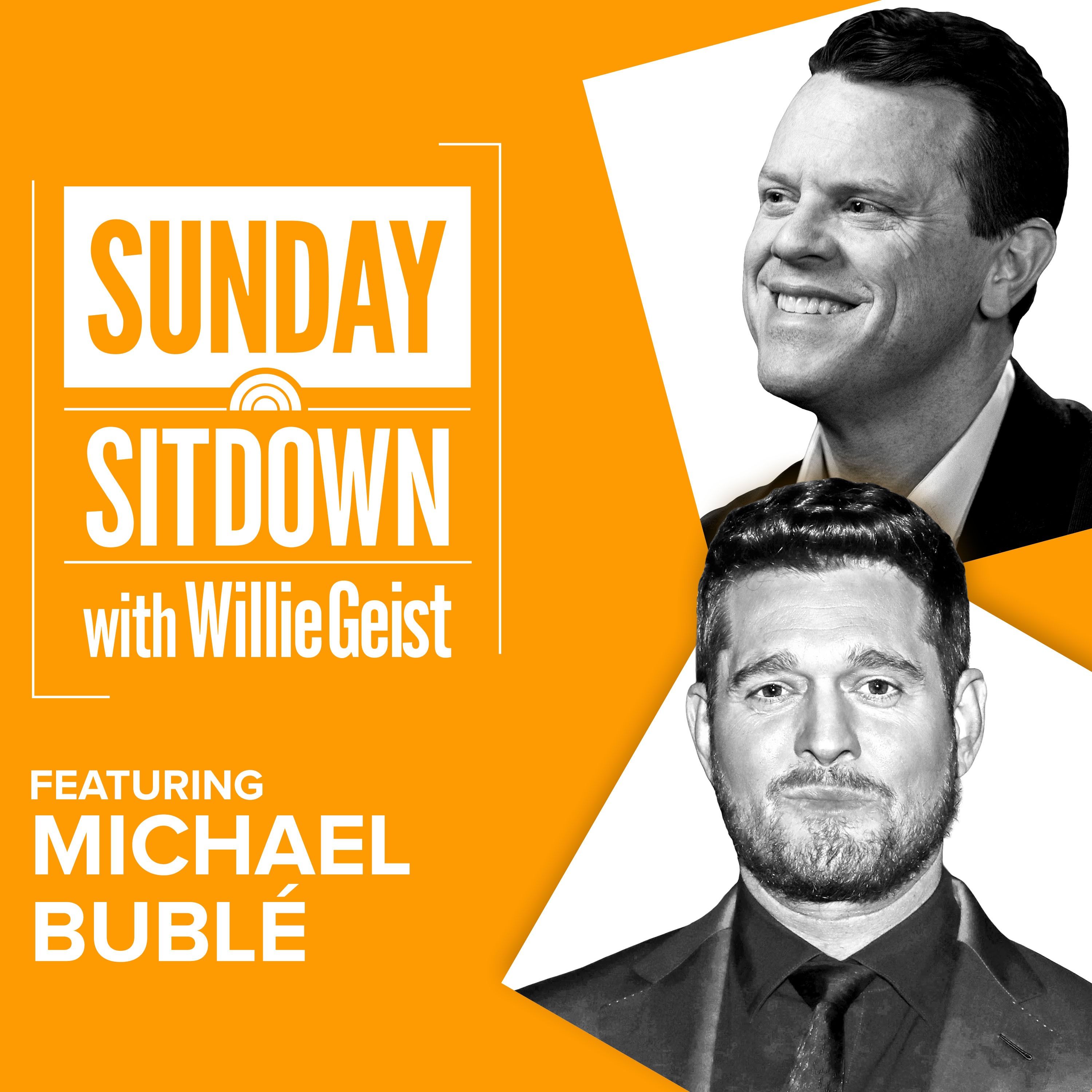
Sunday Sitdown with Willie Geist
Michael Bublé on His Rise From Fishing Boats to Fame and a Lifetime of Joy
00:47:07
Two decades after his breakout album It’s Time, five-time Grammy Award winner Michael Bublé sits down with Willie Geist at New York’s Blue Note Jazz Club to reflect on his journey from Canadian fishing boats to global fame. Bublé opens up about the grandfather who introduced him to Frank Sinatra, Louis Armstrong and Ella Fitzgerald, the early gigs that shaped his craft, and the moment that changed everything in his career. He also talks about his love for Christmas music, the perspective he gained after his son’s illness, and his return as a coach on NBC’s The Voice, where he’s chasing his third straight win.
Loading summary
Transcript192 lines
- [00:00]
Jenny Slate
Our state has changed a lot in the last 140 years. We know because Multicare has been here guided by a single making our communities healthier. That comes from making courageous decisions, partnering with local communities to grow programs and services, and expanding healthcare access to those who need it most. Together, we're building a healthier future. Learn more@ multicare.org the biggest homeowner mistakes do it yourself lumberjack. Better leave it to the pros doing your own electrical work. The results could be shocking. But letting just anyone replace your windows? Biggest mistake ever. Be a happy homeowner and leave window replacement to the best the certified master installers at Renewal by Andersen For a limited time, buy one window or door and get the second 40% off plus $200 off your entire purchase with special financing. Minimum purchase of Visit renewalbyanderson.com today for this great offer.
- [01:08]
Willie Geist
Hey guys, Willie Geist here with another episode of the Sunday Sit down podcast. My thanks as always for clicking and listening along. Very excited to bring you my conversation this week with one of the biggest stars in all of music. He's won five Grammys and sold some 75 million albums. His name is Michael Buble. Right now he is a coach on NBC's the Voice for a third season. For him, in fact, he won the first two seasons. Going for the three peat, Michael and I got together at the Blue Note New York, this iconic famous cafe where so many great artists have performed. And in fact, as you hear in a second, was the first time Michael ever played a paying gig, first time he ever got paid. He started singing at about 16. His family realized he had this beautiful voice. He started doing club gigs. His grandfather was a plumber. Grandfather would say, I will fix your plumbing. I will unclog the toilet if you let my grandson get on stage. How amazing is that? So he kind of toiled for a long time. 16 years old, moved around the clubs. He grew up in the Vancouver area, Burnaby, British Columbia. Then he moved to Toronto, was trying to find his footing and ultimately made his way to this gig in New York. So it was really special and cool to be in that room. We're sitting at a little table like you can imagine, a little jazz club, the stage right above us with a piano, the standup bass, the drums, all the things you'd love to see in a jazz club. And it was nice for him to be there and kind of reminisce and think about what it meant for him and his career to get to play the Blue Note. Something you probably don't know about Michael Buble. He grew up in a very blue collar family. His dad was a fisherman. Would go out for months at a time. He actually, starting at the age of 14, would go out and fish on those boats. He'd spend his summers chasing Alaska salmon up to Alaska. So music came to him through his grandfather, though, introduced him to jazz. So you say, why does a kid who kind of grew up in the 80s, why is he so into Louis Armstrong and Ella Fitzgerald and Frank Sinatra? You'll hear his grandfather would put these records on. So as he says, you know, he also loved the Beastie Boys and Guns N Roses and all the things that kids love, but he really had an ear and a love for jazz. So it's been an incredible rise for him. He will tell you all about it. Through his career, he's got some really fascinating thoughts about the state of the music business. What needs to change to encourage young people to get in the business, which is very hard to make money and make a living in. Now we'll talk about fantasy football. I'll tell you what, he's in like seven leagues. He says it's his first love, including music. So just a great, wide ranging conversation with the talented and charismatic Michael Buble right now on the Sunday Sit down podcast.
- [03:57]
Interviewer
Thanks for doing this, Michael.
- [03:58]
Michael Buble
It's great to see you. It's great to see you too, man. Two long lost brothers working for NBC.
- [04:04]
Interviewer
Forever working for NBC. Talking mostly about our fantasy football team.
- [04:08]
Willie Geist
If we're being honest.
- [04:09]
Michael Buble
Yes, that was the pre interview. It was 20 minutes of how we both got screwed last night.
- [04:13]
Interviewer
Forgive me for saying it, but you are a maniac with fantasy football.
- [04:16]
Michael Buble
I know.
- [04:17]
Interviewer
How many teams?
- [04:17]
Michael Buble
There's eight. There's around eight teams. Eight.
- [04:19]
Interviewer
Yeah.
- [04:20]
Michael Buble
That's just the football. We're not even talking hockey because there's about four different hockey teams too.
- [04:25]
Interviewer
When do you actually make music? Is the question in between all the teams?
- [04:28]
Michael Buble
Oh, that's a really good question. You know, it's funny, as I was saying to you, it's not a joke. I love music. It's like my passion. But followed very closely by fantasy sports, fantasy football play. I love sports. My wife just thinks it's like, what else is on television, Right. It's just like I was in heaven, by the way, last night. There was baseball, there was football, there was hockey.
- [04:50]
Willie Geist
Oh, yeah.
- [04:51]
Michael Buble
Oh, God. It was a good night.
- [04:52]
Interviewer
And the Blue Jays, no less. Canada's team, I mean, come on. It was all happening.
- [04:55]
Michael Buble
Yes. And then on the other side, Shohei Ohtani using my song as his walk up song. I mean, dude, I cannot lose. I cannot lose. No matter what happens, I'm gonna win.
- [05:04]
Interviewer
Okay, I have to ask you about the walk up music because I think the fans were surprised. The announcers were surprised. How shocked were you to hear that Ohtani uses yours song?
- [05:12]
Michael Buble
A couple years ago, I was shocked when I found out that he had started doing it. What was really cute is that the coach of the Dodgers was nice enough to introduce me to show hands. So I got to meet him and I said to him, like, I said like, why did you choose my song? And very quickly he just turned to his wife and it was his wife that chose it. I'll take it.
- [05:33]
Willie Geist
Oh, is that right?
- [05:34]
Michael Buble
Oh, yeah, she was the one. She thought it was a great song, great vibe and that, you know. So I just think how cool to be the smallest part of something that's such a rich cultural story is a great part of history. Even just being a small part of it is just such a cool thing.
- [05:53]
Interviewer
And it's clearly working for him if you watch him at the plate.
- [05:56]
Michael Buble
I know. Yeah.
- [05:57]
Interviewer
Buble needs to be on more people's playlist as they walk up to the plate. Michael, let's talk about this room, why we're here. This is such a special place for you. The Blue Note in New York City.
- [06:09]
Michael Buble
Yeah.
- [06:10]
Interviewer
In the early days of your career, this was a big marker for you to play this room.
- [06:15]
Michael Buble
Yeah. And what's cool is as we sit here, the Blue Note is still just a really relevant and culturally relevant place, you know, for not only the up and comers, but for literally the. The greatest of all time to come and play. And so we're sitting in a room that has so much history and has been filled with greatness. And for me, it was a big part of my story because I had played for night, you know, many years in nightclubs. I started when I was 16, 17, working through Vancouver in the Pacific Northwest. And my grandfather was a plumber and he would do free plumbing if these guys would me get up on stage with them. And after 10 years of working and going up and down the coast and going to Toronto and moving and playing in little clubs in Toronto, I finally got signed. And then part of the. I guess part of the marketing exercise was, all right, let's start putting the kid in these little rooms. And, you know, and I think the difference about this for me was was this was the first time people had paid to see me now. They had come to the clubs. I'D put a lot of people in clubs, but they had come to have a few drinks, to mingle, to meet somebody. And I remember coming here for the first time, and I make an analogy, and a lot of my analogies will have sports, but there was a hockey player named Pavel Bureau who played for the Canucks. They call him the Russian Rocket. And I remember watching him in practice, they used to tie a parachute to him, and he would rip around the ice, and this parachute would. Would sort of stop him, and it would just. It was great because that training was just incredible. You know, obviously, you know, he'd get into a game and he'd just be flying. And I felt like for so many years, I. I lived with that parachute strapped to my back. That was me showing up and doing all these gigs, and no one came there to see me. And I learned how to work a room. I learned my craft. I learned how to be a better musician. I learned how to listen. I learned how to lead. I learned how to follow. And then one day they put me here, and it was like someone pulled the parachute off, and I felt like I could fly. I felt like, wow, now this. I can do this, you know, And I had a big start here. It was a big part of my life here.
- [08:34]
Interviewer
So by the time you got here, though, Michael, for 12 years, you'd been working from 16. This wasn't an overnight thing at all. You had it down. So this must have felt, as you say, with that parachute off. Yeah, I'm ready for this.
- [08:46]
Michael Buble
Oh, I was. I was ready to go. And you know what's funny, too, is very much like I talk about, a lot of my friends are standups and comedians. And what I think people will never realize is that every gig is a little bit of growth. You know, every gig, you add a little. Another little piece to your set, another little thing, a shtick that works, a setup to a song, or even how you sing the song, or an idea in sort of reimagining or reinterpreting what you're doing or even writing a song, and you just keep putting these little pieces together. And over all those years, you build up a set. You know what I mean? And then when you show up and you're at the blue note for the first time, people are blown away. They're blown away by, wow, this dude. Wow, this dude is smooth. This dude is in control, man. He. It's like, effortless. Well, if it looks effortless, usually, I think in any business, it's because you have put in so much Time in really perfecting it. You know what I mean? Just really putting in the work and being ready. And I think. I think it helped me to be really ready. And I think, you know, as a performer, I think it's huge. If somebody can look like they're just. They're doing it, you know, they're just doing it. It's all improv, but it's not. It's thousands of hours that you put together, you know, for. In that moment when the person yell something at you, you know, you've heard it 300 times now to the audience, they think this is the first time. But when you call back, you know what I mean? Not only do you know to call back, but you know to repeat what they said into the microphone so that now you've invited your audience in to understanding what they've yelled at you. And now if you don't know what you're going to say, it gives you a little time. But if you do and you're quick, well, now you look like a genius. You look like you're, you know, you just so. So when I'm on the voice or I'm talking to my niece who wants to be a singer, the number one lesson is preparedness. Be prepared. Be over prepared. Do your homework. Study. Know the words, know what you're going to say. Put a set list together, and I want you to at least have an idea from between song two and three and that thing where they're gonna vamp on whatever song it is at 4, you know exactly how you're gonna introduce it. You know the names of your musicians, you know the room you're in, you know a little anecdotal story. And that preparedness makes you great. I think it does in any business.
- [11:31]
Interviewer
I was gonna say that applies anywhere. I tell my kids that all the time, too. It also strips away anxiety, right, because you go, I'm ready.
- [11:38]
Michael Buble
Yeah.
- [11:38]
Interviewer
Whatever happens, I'm going to be ready for it.
- [11:40]
Michael Buble
I bet you a billion bucks you were listening to my music in a car this morning.
- [11:42]
Interviewer
Damn right I was.
- [11:44]
Michael Buble
Thank you. Thank you for the streams, all of it. That was 1.2 cents. I made this point.
- [11:50]
Interviewer
That's a whole other conversation about the music industry. Your 1.2 cents. You were telling me a funny story before we started about that first show here. And as you said, first time people had really paid to see you. And you're walking down the street out here and what did you see?
- [12:05]
Michael Buble
Well, I actually, you know, it's funny, I was thinking about it just now I actually told the story when I was on stage here. It's one of the first things I said. So I had come, I had done the rehearsal here, it was about 2 o'. Clock. My band set up and we did the rehearsals. All good. I walked out those front doors and I was dumbfounded because there was a lineup of people from right there, I mean, way down the street a couple hundred feet. And I just couldn't believe that they were there for me. And so I remember that I walked down the line and I got to the very end of the line and there was a very sweet little old lady and sitting at the end of the line and I said, oh my gosh. I said, you know, you're waiting for me. You've been waiting for how long? I said, wow, I can't believe that you're waiting for me. And she said, yeah, we're waiting for you and you better be good. And I was like, I'm in New York. It's happened. If you can make it here.
- [13:07]
Interviewer
No free pass for you, kid.
- [13:08]
Michael Buble
No free pass.
- [13:09]
Interviewer
This is your initiation into New York City.
- [13:11]
Michael Buble
Yeah, I tried to make that so you didn't have to beat me.
- [13:13]
Interviewer
That was. This is a television professional self self beeping. Amazing.
- [13:19]
Michael Buble
Very self aware beeping.
- [13:21]
Interviewer
I'm thinking about you at 16 and how you got to that point where you started. Because I don't know if everybody realizes because you were polished and elegant, that you come from like fishing people.
- [13:32]
Michael Buble
Yeah.
- [13:33]
Interviewer
You know, like you really do. And you were working on boats when you were a teenager, going out chasing salmon, up to Alaska and all that with your dad. So what were those early years of your life like? Hockey, fishing and music comes in, how.
- [13:47]
Michael Buble
And when, you know, I don't think my story is that dissimilar from many of my heroes. I think if we look at Tony Bennett or you look at Frank Sinatra or you look at Dean Martin, like a lot of these people, you know, obviously came up from, you know, these families of Italian extraction, very blue collar, you know, My dad was a fisherman. His father was a fisherman. His father had immigrated from Italy as a shipbuilder. So I just assumed that would probably be my life, you know, hard work, good work, honest work, and I thought that's what I'd do and. But I loved music. My grandfather was a plumber for 50 years and my joy was to sit on a carpet with him and he would just pull out. And I told him early on I was about 12 years old, maybe even earlier, God, maybe 9, 10. I heard a song by somebody named Vic Dana. He had a record, this guy, Vic Dana. It had to be you was the record. And I was so into it that I would like draw. I would, you know, I would write out the lyrics and he said, like, oh, you like that, sunshine? He called me sunshine. You like that, sunshine? I said, oh, I love that. And he'd say, if you like that, you know, let grandpa come and show you his. And so we would sit on the carpet cross legged and my grandpa would take record after record. And it was, today we're going to listen. It's going to be all the Mills Brothers today. And tomorrow's gonna be Sarah Vaughan. And on Thursday, if you want to come over after school, we'll do Ella and then Louie and then we'll get to Dean and we'll get to Darren and we'll get to Frank. And I just, I just couldn't download enough of that information. As I got older, more and more, and as I got, you know, I'd be on the fishing boat and I'd be in the galley doing dishes and where I'd be working the drum. And it was just constant, constant. If I wasn't singing it, if I wasn't, If I wasn't studying it, I was making believe that I was doing it. I was, you know, it was just, God, constant. I mean, constant. Every, every time I was in the car, every time I was in the skiff rowing that thing to the beach, it was me fantasizing about who I was going to be and singing this stuff. And I knew I could sing it, I had a good voice. Nobody knew that at the time, but I knew I had. And not just a good voice, but I knew I had that for whatever reason, you know, that kind of voice. I remember sitting in the back seat Christmas Eve and Maybe I was 13, and all the kids coming from grandma Grandpa's and we were singing, I think it was da da da da, I'm dreaming White Christmas with every Christmas card I write. And then all of a sudden I went, may your days be merry and bright. And it was, you know, the whole car going, what the hell? And I've told this story a million times, but it's the truth. It was like, ah, he's my, you know, my voice got deeper and that's how it sounded. And I loved, like we were just talking earlier about I love the Beastie Boys and I love Brian. I loved all of the 80s stuff and I love rock a lot. I loved early rap and stuff and hip hop. But my voice just sounded like my voice. And. And then what was cool was that it made me feel, like, special. I felt like, wow. I like something that other people don't. This is my thing. You know, everybody's got their thing. This is my thing. And I just got deeper and deeper and deeper. And then my Uncle Kelly bought me an amp and a mic, and my grandparents bought me these tracks of Dean Martin and Frank stuff and Ella stuff. And. And I just said, this is what I'm going to do. And then I would go fishing in the summers, and then in the winter, I would go sing at the clubs. And then one time, finally I turned about 20, my mom said to me, don't. I think. I don't think you should go on the ship this. This year. I think you should stay. I think you should just work the clubs and see if you can work the clubs this winter. And so it became a family business. So I played some theaters, and my parents said, I mean, I don't think if my cousins and uncles and aunts and friends and school teachers, if they weren't at those theaters or those clubs, there would have been nobody there. So, you know, success has a million mothers and fathers.
- [18:39]
Interviewer
I just love the idea that in the age of Michael Jackson and Madonna, you're listening to the Mills Brothers on a turntable.
- [18:45]
Michael Buble
Yeah.
- [18:45]
Interviewer
It's incredible.
- [18:45]
Michael Buble
Yeah. And even weird. Weird. This is weird for me, but it's the truth. I wasn't. It surprised me that more people weren't listening. Do you know what I mean? Like, I would be in the car and I'd be listening to some fat, swinging groove, you know, listening to Louis Armstrong, Just. Just a. Just a beat that was fatter than any Dr. Dre drop. And I remember thinking, I can't be the only one. Like, literally, like, I. I can't be the only one that hears how good this is. Like, people gotta know how good this is, right? This wasn't some kind of a fluke or something. Like, this music is killer. And to this day, it's like when people go like, wow, so what was a kid listening? It's like, no, I like Guns N Roses and I liked all those bands at the time and Bon Jovi and I like Run DMC or whatever. But, like, how could you not listen to Mel Torme or Bobby Darin or Sam Cooke and not go, this is the. I know, we have to cut that. I'm really sorry.
- [19:51]
Interviewer
No, that's staying in.
- [19:52]
Willie Geist
Hey, guys, thanks for listening to the Sunday Sit down podcast. Stick around to hear more from Michael Buble right after the break.
- [20:00]
Jenny Slate
Our state has changed a lot in the last 140 years. We know because MultiCare has been here guided by a single making our communities healthier. That comes from making courageous decisions, partnering with local communities to grow programs and services, and expanding healthcare access to those who need it most. Together, we're building a healthier future. Learn more@ multicare.org hi, I'm Jenny Slate, and believe it or not, someone is allowing us to have a podcast.
- [20:36]
Willie Geist
I'm Gabe Liedman.
- [20:37]
Michael Buble
I'm Max Silvestri. And we've been friends. We've been friends for 20 years. And we like to reach out to kind of get advice on how to live our lives.
- [20:44]
Willie Geist
It's called I need you guys.
- [20:46]
Michael Buble
Should I give my baby fresh vegetables?
- [20:49]
Jenny Slate
Can I drink the water at the hospital?
- [20:51]
Willie Geist
My landlord plays the trombone and I can't ask him to stop.
- [20:55]
Jenny Slate
You should make sure that you subscribe so that you never miss an episode.
- [20:59]
Michael Buble
I need to go.
- [21:10]
Jenny Slate
This holiday. Give the gift that says, let's cancel plans and just lounge. Meundies has dropped their new holiday collection, and it's made for maximum cozy. We're talking soft as snow, ultra modal fabric, festive prints, and loungewear so comfy your couch might get jealous. Onesies, hoodies, joggers, even delightfully quirky holiday designs. You're welcome. Knock out all your holiday gifting needs with deals up to 60% off@meundies.com sxm Enter promo code sxm that's meundies.com sxm code sxm.
- [21:42]
Willie Geist
Welcome back. Now more of my conversation with Michael Buble.
- [21:46]
Interviewer
So now, Michael, you're going through. You're playing the clubs, you see your family. You're the only ones in many of these crowds. At what point do you realize, I can make a life out of this? I can make a living singing. Was there a moment it clicked for you?
- [22:00]
Michael Buble
I think I. I was so stupid that I figured. I figured that before I ever made any money.
- [22:06]
Interviewer
Like, this is it.
- [22:06]
Michael Buble
Oh, dude. I was doing. I mean, and at that point, I was doing clubs, I was doing. I ended up doing Broadway shows as part of a. As a. You know, as part of the troupe. I was doing. I was doing. I was singing in malls. I was singing in cruise ships. I was doing. I used to work for a lady named Alexis at a place called Balloon Action. Ooh, yeah.
- [22:32]
Interviewer
Did you make the.
- [22:33]
Michael Buble
No. But I would show up at your birthday. Go. Happy birthday to you, Willie. Happy bir. 20 bucks. And I would do my thing. I would do anything. I figured, weirdly, I was. You know, I had that, you know, thing that we have when we're young, which was the belief that it's gonna happen. Somebody's gonna see this, Somebody's gonna get this. I'm good at this. I can go on stage and I can break a room. Like, I'm a good entertainer. I'm a good singer. Surely it's just a matter of time. But, of course, even me, even in that naivety, I did get to a point where at, like, 25, 26, I went, oh, maybe not. Maybe they're not going to see this. I remember because I was in Toronto, I'd run out of money, and I was like, okay, so sometimes God has a plan, and his plan maybe wasn't for this to happen for me, for whatever reason. And I knew one day I wanted to get married and have kids and all that. And I thought, okay, you know what? Maybe it's. Maybe my plan isn't this. Maybe my plan is. I had many friends that were great journalists, and I was like, maybe I'll go back to Vancouver and I'll get into journalism or go to bcit, and if I can't be the one that they're talking about in the story, maybe I'll be the one to tell the story. Like, I love this stuff. You know, I want to. I want to express myself. I'm. You know, I want to build. You know, I'm curious. And I. And I'm, you know, I just. I'm creative. And. So, okay, maybe I. Maybe I won't be the singer actor guy. Maybe I'll be the storyteller, and I'll be a great journalist. And so I was very close to going back, and I got a gig. And that gig would take me into meeting the prime minister of my country and his wife. And the wife said, you need to come and sing at my daughter's wedding. We love you. You're a great young singer. And David Foster, the producer, will be there. And I was like, okay, here's another. Here's another. You know, here's a shot. This may be the shot, by the way. I've had a zillion of those this may be the shot shots, you know, but that was the shot that ended up really being the first sort of break.
- [25:03]
Interviewer
And That's, I think, 25 years ago. The Mulroney wedding.
- [25:07]
Michael Buble
That's right. And, Caroline, I love you, Caroline, wherever you are.
- [25:10]
Interviewer
And you meet David there.
- [25:11]
Michael Buble
I meet David there.
- [25:12]
Interviewer
And you're kind of off to the races from that point.
- [25:14]
Michael Buble
Well, it's not as simple as that, but yes, for all intents and purposes, yeah. I meet Paul Anka, you know, get me into Warner Brothers. We ended up making the record. You know, it's funny, though, you know, I made that first record, and there was a girl who still works with me, and her job was to guesstimate and budget with how many records she thought I would sell in my career. So the budget that she gave, I believe, is between 50 and $150,000 for the life of my career. And the supposed record sales at that point that she thought I would do was between 50 and 100,000 copies. And you know what I mean? And it was like, we did better than that, you know?
- [26:04]
Interviewer
Little bit.
- [26:05]
Michael Buble
Little bit. But then I said to her, cause, by the way, she works with me now. She's worked with me for the last 17 years at my management company. And I remember I said to her, like, I said, hey, you know, what the hell your job was to be the one to. And you thought that's what it was gonna be like in the life of my career. She said, chicken, your first single was Spider Man. What did you think I was gonna think? So she probably wasn't wrong. I think I was like, the underdog. Always. Always, like, even when I got signed, it was like, still, yeah, we'll sign and we'll see. We have at that time, I remember it was like, we got Peter Sincati, Harry Connick, and we got Jamie Cullen. We got, you know, there was Amy Winautz. There's all these people, and, you know, one of them will stick, you know, probably not him. He's cheesy.
- [26:55]
Interviewer
She was off by, think 75 million.
- [26:58]
Michael Buble
Albums, something like that.
- [26:59]
Interviewer
Something in the neighborhood of 75 million.
- [27:00]
Michael Buble
Not that we're count.
- [27:02]
Interviewer
No, I counted. You can shrug and play dumb, but it's 75. Yeah. So we're marking 20 years since its time. Right. There's this new deluxe edition of the album that just came out a few days ago, I think. Is that a cool moment right now to look back? Wow, that was 20 years ago that things really started to blow up for me.
- [27:24]
Michael Buble
Yeah. And it's very sentimental for me. And I look back and, oh, man, I'm proud. I'm proud of the work we did. But I look back and I think about all those guys, my heroes, you know, Tommy Lipoom and Phil Ramone and Al Schmidt and Bill Holmes. I can just keep going down a list of Producers, writers, arrangers, orchestrators. And so many are gone, so many are. We've lost them. And so many friends, publicists, workmates, and so much love. So many people that loved me. There's no reason for them. There's nothing. They got back from it. They just loved me. They loved me, and they saw a good kid who they believed in, and then they just went kind of above and beyond for me. And so I look back, it's hard not to get sentimental as I think about my life now as I got this beautiful family and four kids, and I'm safe and I'm comfortable, and I so love what I do, and I still love who I do it for. And it's hard not to get emotional when you look back and think about all those people, all of those people from my own mom and dad and my grandma and grandpa, who I miss every day. Those millions of moments. My first manager, Bev, you know, Bruce Allen, my manager. Like, I look back and I go, wow, look what we did. You know, and it's still, hey, I got a while to go. But it's impossible not to look at a record like that and go, wow, like I'm Senor Mellow. I call David Foster. I'm glad I do. I call these people and tell them, you know, how I feel about them and tell them how much I appreciate them. And I never thought it could be so comfy, you know, even this. Even just sitting with you, you know, like, how nice and free and how lucky I am, you know, I wish that for every kid that loves music that they could come and, you know, do what they love to do and have a place like this to do it. Because that's something that we don't have so much anymore, and it's just getting harder. So some point. Some point, dude, you know, you said we weren't going to talk about the business or whatever, but we got, you know, at some point, our music business, we have to figure it out and we have to stand together and protect the musicians. Because it feels like not to take a shot at doing this right now in this interview, that is obviously not about this, but everybody's making money in our business except the musicians. I'm not talking about me. I do just fine. But at some point, all of us musicians, all of us, from the guy that's playing the Blue Note for the first time to Taylor Swift, we all got to stand up together and say, hey, we need to have each other's backs and we need to figure this out. Because the way it's going right now is not working.
- [30:19]
Interviewer
And I don't think people watching at home understand that. They assume you make music, you make a bunch of money, you got a great, comfortable life, but you guys have to be out on the road touring to make the kind of money.
- [30:31]
Michael Buble
You can't even tour, man. I mean, I can't. I mean, listen, I'm not putting myself in that thing. I'm just saying that I'm still in touch every single day with blue collar men and women who love music and are incredible musicians. And they can't afford to go on the road. They cannot afford. They're not getting. There's no share in what they get when their music is played. You know, streaming isn't enough. The touring is so expensive, and there are not a lot of places for them to go. So I don't know. I just think that my kids love music, Lily. Like, love it. And I'd love for them to one day have a chance to go make a living doing it, whether that's as a. As a writer or a producer or an engineer. And the way it's going right now, there's not a lot protecting them. So I'm hoping that artists, somebody way more brave and cool, you know, stands up and says, come on, I have an idea. You know, let's do this. And I'll come. I'll be right there with.
- [31:27]
Willie Geist
Yeah.
- [31:27]
Interviewer
I have a son who's a musician, too, and I have the same thought. I'm like, I want him to chase that. I want to pursue it, but I also want to be able to pay the rent and live.
- [31:35]
Michael Buble
Yeah. As he should be. Especially if he's creating something that's beautiful and makes the world a better place and there's, you know, it's worthy. There used to be a time when you could. And we need that time back.
- [31:49]
Interviewer
Are you hopeful that it will change that? The problem is big enough and there are enough people who are impacted by it that people are compelled to do.
- [31:57]
Michael Buble
Seriously. I know this sounds nuts, but I'm hoping if I just say something and if I'm just. At least, if I just talk and if I have a chance to talk, I use the privilege to talk with you and that other musicians might talk together and that you'll get people within the industry who are powerful and. And maybe they have kids that are musicians, too, and maybe their conscience tells them there has to be a way for us to share. There's enough for everyone. I mean, look, if we want to talk about people listening to music, More people are listening to music now than ever.
- [32:37]
Interviewer
That's the irony, right? There's so much out there that we all have access to.
- [32:42]
Michael Buble
I just think some people and companies are just making too much and the pie should be split a little bit better, I'm guessing.
- [32:48]
Interviewer
Well said. Well said. Get that message out.
- [32:51]
Michael Buble
Yeah.
- [32:52]
Willie Geist
Stick around for more of my conversation with Michael Buble, right after a quick break.
- [32:57]
Jenny Slate
Hi, I'm Jenny Slate, and believe it or not, someone is allowing us to have a podcast.
- [33:03]
Willie Geist
I'm Gabe Liedman.
- [33:04]
Michael Buble
I'm Max Silvestri, and we've been friends for 20 years, and we like to reach out to kind of get advice on how to live our lives.
- [33:11]
Willie Geist
It's called I need you guys. Should I give my baby fresh vegetables?
- [33:15]
Jenny Slate
Can I drink the water at the hospital?
- [33:17]
Willie Geist
My landlord plays the trombone and I can't ask him to stop.
- [33:21]
Jenny Slate
You should make sure that you subscribe so that you never miss an episode.
- [33:26]
Michael Buble
I need you guys.
- [33:36]
Jenny Slate
I'm Dr. Sarah Rahal, the founder and CEO of Armra. I developed armor Colostrum because I know your body was designed to thrive. It's your natural state, your birthright, and you can reclaim it. Colostrum is the first nutrition we receive in life with every essential nutrient our bodies need. It's nature's original blueprint for health. After a devastating health crisis almost took my life, I made it my mission to harness this power. Using proprietary technology, AMRA captures over 400 bioactive nutrients in every scoop, delivering over 1000 benefits that transform your health at its foundation. Whether for gut health, metabolism, skin, hair immunity, mood, energy, fitness, recovery, I invite you to join this collective revival of health and discover radical transformation for yourself. Visit armour.com that's armra.com and enter code culture30 for 30% off your first subscription order. The statement has not been evaluated by the Food and Drug Administration. This product is not intended to diagnose, treat, cure or prevent any disease.
- [34:36]
Willie Geist
Is it just me, or has watching TV gotten way too complicated? There's a million different services and just too many bills to keep track of. Thankfully, there's Philo a better way to TV. For as low as 33 bucks a month, I get the channels I love. MTV, BET, Food Network, you name it, plus everything that AMC has to offer. And guess what? They've added access to hbo, Max Basic with ads, plan and Discovery plus so I can enjoy all the best TV with one subscription. There are no contracts, no surprise fees, just one low price. And their DVR is awesome, too. I can save everything I love on Philo for up to a year and skip the ads when I rewatch them. A total game changer. I signed up directly at Philo tv. That's P H I L O tv so I could lock in the best price around. Philo's the easiest decision I've ever made. Now the hard one is trying to decide what to binge next. Welcome back now to the rest of my conversation with Michael Buble.
- [35:42]
Interviewer
Wanna ask you about your role in Christmas music.
- [35:46]
Michael Buble
Sure.
- [35:46]
Interviewer
I love Christmas music because you are at the point now where it's just the way it's. Yes, it's Frank and Bing Crosby and all those guys, but you're. You're right there with it, which is a sort of a nice add on to everything else you've done in your career.
- [35:59]
Michael Buble
Yeah.
- [36:00]
Interviewer
When did that switch flip for you?
- [36:03]
Michael Buble
Oh, God. You know, it's funny, man. I've always loved Christmas music. And not just the music, but I love the holiday. I love the. I'm very sentimental about the feeling about that time of the year where people are a little kinder and warmer and nicer. For me, you know, I grew up very Catholic, so Bing Crosby was playing through the house a lot. So it was very personal for me. And there was the feeling, the smell, the, you know, of, of. Of that music in the air. And that time was really just magical for me. And so it's funny when, when I made that first record, when I made the Christmas album, I remember being so sure about it and I was in, weirdly, I was in a recording studio and David was working with Whitney Houston. And I think it was her and her daughter I was on the phone with. And they said, what are you doing? What are you making? And, oh, you're making a Christmas record. And I remember, I said, no, no, I'm making the Christmas record. And I was so sure that I was putting so much love. Like, I know it's gonna sound weird, man, but I think when people make those albums, yeah, they're doing it. Cause they love it. But there's always this peace of them where as they're making the record, they're also very self aware, critically what it's going to be like.
- [37:35]
Interviewer
Right?
- [37:36]
Michael Buble
You know, and let's, you know, okay, we'll do this, but you know, shouldn't be. I never once thought like, is this cheesy or is this too much? Is it too schmaltzy? Is it too warm? Is it. I like was 1000% in. I loved the whole thing. I loved the spirit, I loved the music. And there was never one time where me and the collaborators ever went like, hey, like, I wonder if people will think this is cool or not. It was like, no, you know, the opposite. It was like, this is so uncool that it's so cool. And I'm gonna get so deep with you because I haven't said this a lot.
- [38:16]
Interviewer
Yeah.
- [38:16]
Michael Buble
But there was a time years ago now where my manager used to get mad because the phone would ring, and it would just, like, Valentine's Day would come, and, like, two months to Valentine's Day, it was like they wanted me everywhere. And then Mother's Day. And my manager would be like, yo, he's not just for Valentine's Day. Hey, he's not just, you know, Mother's Day. I remember these two. These commercials where they was, Michael Buble, make your Mother's Day. And I was like, God, this is so cheesy. Like, you know, I'm more than just this thing. And then. And then the whole Christmas thing kind of happened, and the record went crazy and all that. And then all of a sudden, it was, you know, Christmas. And so I remember we kept getting calls, and, okay, it's October. And you started to get the calls, you know, from every artist and every, you know, hey, would you come and do my. And I remember that I was feeling like, okay, I don't want to be known as that thing. And, you know, I'm more than Mother's Day or Valentine's Day or Christmas. And then my son got diagnosed with cancer, and it was Halloween Day, And I don't know why, but I had the clearest epiphany that day. And I remember sitting in this. This white room in Chla. And I remember thinking, why did I ever worry about anything else? And I remember thinking, not only are you an idiot for ever having an insecurity in how you were being seen or the fact that I just thought, oh, my God, man, you are connected to the most beautiful, this spiritual, wonderful, light thing, and that's what you're worried about. And I thought. I remember I sat. My wife was on the bed next to me, and I said, you know, Lou, never again. I said, lou, I'm so lucky. I am so lucky that when the world has opened up their lives and their doors at this time, that they let me in. Like, what was I thinking, Babe? How lucky are we? How lucky am I? And from that day on, I never felt the same about it again. I just. I can tell you, man, if you were with me and we were Drinking and hanging. I was giving you. You put a true sermon. I am so happy, you know, to be part of something so beautiful, you know, And I'll be gone, man. Long gone. And weirdly, that'll be the legacy, you know.
- [41:12]
Interviewer
Thank you for sharing that. That is. That is beautiful. And I hope, you know, you are the accompaniment, your voice to these moments. We all have this warmth and the fire in the fireplace and everybody's home and we're joyful.
- [41:27]
Michael Buble
And it's getting deeper, too, because, you know, like the other night I did a thing for the Rockefeller, you know, and I was out there and I was singing it, and I just watched. Just watched everybody sing with me. And I was like, oh, my God, this is so cool. I feel like it's weird. It's like being invited into the coziest of living rooms, you know?
- [41:47]
Interviewer
Yeah.
- [41:47]
Michael Buble
And just to get to be that guy and that voice for people is pretty awesome.
- [41:51]
Interviewer
It's almost like when that goes on, that music.
- [41:53]
Willie Geist
Okay.
- [41:53]
Interviewer
It's Christmas.
- [41:54]
Michael Buble
Yeah.
- [41:55]
Interviewer
We're home.
- [41:56]
Michael Buble
Yeah. My daughter's home. I mean, no joke. I know. Joke. My kids get to sleep with us on the weekends. And like two days ago, and it's just. I said this the other day, but it's the truth. And I said. And I went, good morning. And my kids went, good morning. And I said, 68. And my son Noah said, what's 68? I said, 68 days till Santa Claus is coming. And my wife just looks up and goes like, loser.
- [42:22]
Interviewer
You're like buddy the elf or something, dude.
- [42:24]
Michael Buble
I'm like, I love it. I love. And it's like. It's the anticipation. It's not the day. It's like, oh, yeah. All the coming up to it and the singing and the decorating and the cookies and all this stuff is amazing.
- [42:35]
Interviewer
It's the best, best time of year. And you're the soundtrack to it.
- [42:38]
Michael Buble
I'll take it.
- [42:39]
Interviewer
Let's talk voice.
- [42:40]
Michael Buble
Yeah, sure.
- [42:42]
Interviewer
Your third season, you're going for a three peat here. You won your first two seasons, which is incredible.
- [42:47]
Michael Buble
Incredible.
- [42:48]
Interviewer
How's the team looking for this season?
- [42:49]
Michael Buble
My team is incred. It's so good like this. The talent level on this series is even better than it was. I don't know how that's possible. It's going to be way harder this year, you know, because I think everyone has a few people on the team that are so fabulous. Like, Snoop has a guy named Ralph, and I shouldn't single anybody out, but, dude, I call him Wreck it Ralph because this dude is so, like, Snoop could win in a second. Reba has a couple that are like so good. Shoo ins. Niall, he's got a young guy that's amazing. And then he's got this group, they're called Deck of Hearts, but I like to change their name often if I like write them, if I message them, I like to call them Deck of Farts just because I think it sounds better. They're so good. And by the way, Niall. Yeah. Like, if I want to beat now or Snoop or we're going to have to hire one of those call centers, you know what I mean?
- [43:51]
Interviewer
It's almost unfair.
- [43:52]
Michael Buble
Literally. We're going to have to just start calling and just have like automated people, just automated phones and AI just voting for us.
- [43:58]
Interviewer
Just spam, spam.
- [43:59]
Michael Buble
Oh my God, it's. He is just beloved and he deserves it. Like he's. I'm, you know, it's weird. It's like I want to like, fangirl, you know, for all of them. So. Dude, it's the best man, Carson Daly. And you know what? I tried to talk about him on the Today show when I went there because honestly, it's all from the top down. Him and Audrey, the producer and Kira are class acts for 26 seasons or however long it's been. 16 years, 15 years that it's been on. They are so cautious and careful and so irreverent with how. Excuse me, not irreverent. They're so reverential about how they treat the artists. Like even the first day I joined, I remember saying, oh, okay, so when did the contestants come? And they said, oh no, they're not contestants. And I was like, what do you mean? And Carson said, no, man, they're artists. They're called artists. And I was so happy. I was like, oh, so this is how, this is how you treat them?
- [45:06]
Interviewer
And, and you're not a judge, you're a coach.
- [45:08]
Michael Buble
Not a judge, you're a coach. And so there was a real sense of family. And the first day we ever had our meeting, it was the first season with Snoop, with me and Gwen Stefani and, and Reba. And the producer sat us down and you'll appreciate this producer sat us down at our little pre meeting thing and she said, this is your show. She said, you're the producers of the show. You will decide what the vibe is. You know, it's up to you. And all of us, I think were so like minded and liked each other genuinely so much that we went, oh, wow, you know, the World is crazy. The world is in a dark place, and we have a chance to make this a really, you know, something that's really special and warm and. And it just sort of went on like that, you know, the next season, I had Kelsey Ballerini, who was amazing, and Adam Levine, who turned out to be one of my best. Like, I drive him nuts. John Legend, who's just smart, you know, well spoken, highly intelligent, musician and human being. And I realized, like, we were all family. It was a family, you know, it's the reason I came back the third time. So it's gotten even better. I don't know if I'm gonna win, but I'm gonna vote for myself as much as possible.
- [46:24]
Interviewer
But you're up against that One Direction Army.
- [46:26]
Michael Buble
Honestly, there's a couple times that I have thought, not that I would do it, but, you know, remember that time in the Olympics when the girl hit the other girl?
- [46:37]
Interviewer
Tanya Harding?
- [46:38]
Michael Buble
Yeah. I thought about doing that to Niall a few times.
- [46:41]
Interviewer
You take him out not.
- [46:44]
Michael Buble
But maybe a knee. We don't know. Maybe you can't walk for a little while. Can't golf.
- [46:50]
Interviewer
They're gonna use this at your trial.
- [46:55]
Michael Buble
The worst thing is I've said this to him out loud. Out loud. I've said, like, I'm gonna hit you with a pipe for sure.
- [47:04]
Interviewer
That's part of the beauty as a viewer of that show is you get these four coaches and you're like, how do these people go together? How does Snoop fit with Reba and Michael Buble? And then it just works.
- [47:15]
Michael Buble
Oh, dude, we die laughing too. It's funny too. Cause people don't know Snoop, but this guy's such a beaut, man. He's cry. He cries more than Reba. You know, he said he loves them. And, like, you know what's funny? After that first season, people, he'll never say this to you, but he hired them like they work for him or they. He or they. One of the kid, Jeremy Belo, I know because he just put out a single on Death Row. And by the way, my guy that won 26, I just paid for his. He's putting out his record. It's released in a couple weeks. And Adam, David is the other kid that won for me, and he's coming up on the rear. So we keep it together and we keep the family together. And so. And Reba's the same. And John, it's like, even John Legend.
- [48:05]
Interviewer
Yeah.
- [48:05]
Michael Buble
I was like, I had a person on my 2017, and John had been keeping in touch with this girl's dad who was a contestant years before. And it was cool because I was like, you want to like these people, but you don't know. Are they just like celebrity weirdos? You know what I mean? And then it was like, oh, no, they're actually real people who actually hang out and are good to these kids, you know?
- [48:33]
Interviewer
And that gets at something. I think people wonder also, which is, all right. These famous singers, they drop in, they do the thing, and then they walk away. And if you talk to Carson, he's like, no, dude. Like, when they sign up, they are in. And you have these relationships with the artists that extend well beyond the show even.
- [48:50]
Michael Buble
Well, Carson now is the Mr. Man. You know what he has on the show now. They did a thing this year where. So they had this thing. The kid came out and auditioned, and we didn't turn our chair.
- [49:00]
Interviewer
Yeah.
- [49:01]
Michael Buble
And nothing. You know, we turn around, say to the kids, sorry, you know, next time you. No. We all heard no's. And then we turned back around and then another audition, and now Reba turned. It was the same kid, and it was called the Carson callback.
- [49:17]
Interviewer
Oh, yes. Yes.
- [49:18]
Michael Buble
So, yeah, Carson. Now Carson has all this power.
- [49:21]
Interviewer
Oh, yeah.
- [49:23]
Michael Buble
And the kid's crushing it. The kid could win the whole thing. His name is Ryan. But now you can see Carson, you know. You know, and the puppet master. The puppet master, Carson Daly. Yeah. I told Carson I wish that they would next season. They come back with something called Picard Carson kickoff, where he just. Just boots one of the coaches. It is the Carson kickoff. Go. I should be sitting in your seat making the decision.
- [49:48]
Interviewer
He's got, like, the Dr. Evil ejector seat. The person just disappears.
- [49:52]
Michael Buble
Yes. Where did Michael Booboo. It's so much fun, man. This show is so stupid. It's so stupid. It's like I never expected it to be that. That warm and that. That sweet and, like. But again, it starts at the top. Audrey, Kira, the. You know, the producers and Carson, they're just great men.
- [50:12]
Interviewer
It's great. This season is going to be a lot of fun. Last thing, and then I'll let you go. We both had a big birthday this year.
- [50:19]
Michael Buble
Yes.
- [50:19]
Interviewer
We were talking a little bit about what that meant.
- [50:21]
Michael Buble
Yeah.
- [50:22]
Interviewer
I feel like the voice, your beautiful family, the grammys, the albums. 20 years looking back at its time. It is a moment for reflection, isn't it?
- [50:33]
Michael Buble
Yeah.
- [50:34]
Interviewer
What are you thinking right now in this milestone moment in your life?
- [50:39]
Michael Buble
Honestly? That we are so young. Seriously, look at us. We're so young, man. We're young. We got beautiful kids. We're happy. You know, we look amazing. We're so humble. I'm not joking. It's like we are. We're so young, and we feel there's so much more. You know, there's another 30, 40 years of us walking.
- [51:10]
Interviewer
We hope.
- [51:11]
Michael Buble
We hope. No, just that I really think that my epiphany was, man, enjoy every second. You know, it's going fast, but. And I've been so lucky. So I'm just going to keep enjoying every second of it and just being in the moment whenever I can. I tell my kids all the time, we can't fix the past, guys. We can't go back. We have no idea what's about to happen in the future. But we have right now. We have right now. That's something we talk about all the time. So I'm trying to follow my own advice.
- [51:41]
Interviewer
Amen to that.
- [51:42]
Michael Buble
Amen. Thank you.
- [51:43]
Interviewer
Great to talk to you, man.
- [51:44]
Michael Buble
Pleasure, man.
- [51:44]
Interviewer
So much fun. Thank you.
- [51:45]
Michael Buble
Thank you.
- [51:50]
Willie Geist
My big thanks to Michael for a great conversation. The Voice airs Mondays at 8pm Eastern on NBC and streams the next day on Peacock. And my thanks to all of you for listening again this week. If you want to hear all of our conversations with my guests every week, be sure to click follow so you never miss an episode. And don't forget to tune in to Sunday Today every weekend on NBC to see these interviews with your own two eyes. I'm Willie Geist. We'll see you right back here next week on the Sunday sit down podcast.
- [52:27]
Jenny Slate
Hi, I'm Jenny Slate, and believe it or not, someone is allowing us to have a podcast.
- [52:32]
Willie Geist
I'm Gabe Wiedman.
- [52:34]
Michael Buble
I'm Max Silvestri, and we've been friends for 20 years, and we like to reach out to kind of get advice on how to live our lives.
- [52:41]
Willie Geist
It's called I need you guys.
- [52:42]
Michael Buble
Should I give my baby fresh vegetables?
- [52:45]
Jenny Slate
Can I drink the water at the hospital?
- [52:47]
Willie Geist
My landlord plays the trombone and I can't ask him to stop.
- [52:51]
Jenny Slate
You should make sure that you subscribe so that you never miss an episode.
- [52:55]
Michael Buble
I need you guys.