← Sunday Sitdown with Willie Geist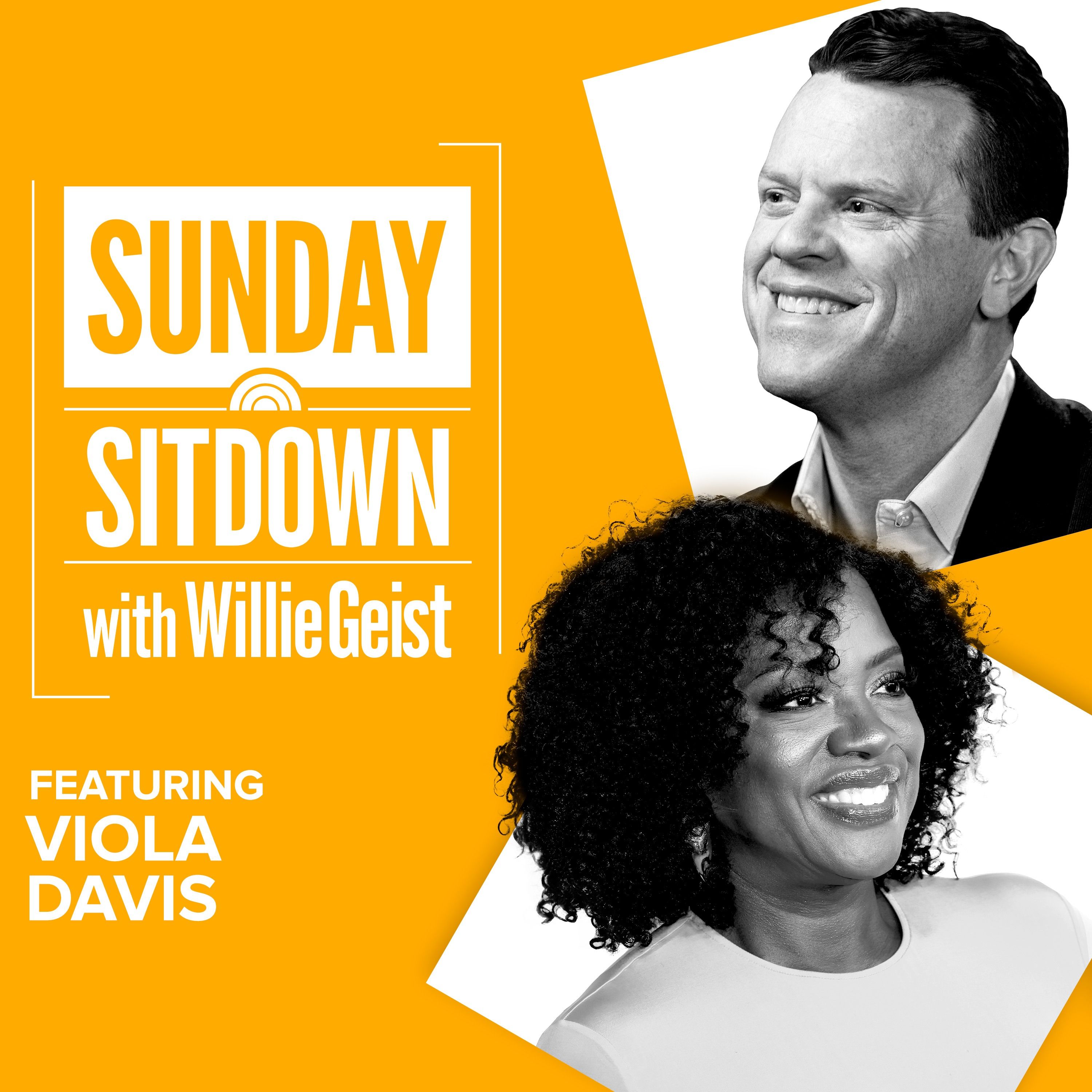
Sunday Sitdown with Willie Geist
NAACP IMAGE AWARD NOMINEES: Viola Davis on Strength, Survival and Success (May 2019)
00:43:55
Viola Davis is an Oscar-winning actress who is nominated for Outstanding Actress in a Limited Television Series, Special, or Movie at this year’s NAACP Image Awards. In this conversation from May 2019, Davis opens up to Willie Geist about growing up in poverty, finding her way out through acting and her work on the documentary "A Touch of Sugar."
Loading summary
Transcript121 lines
- [00:00]
A
With Plan B emergency contraception, we're in control of our future. It's backup birth control you take after unprotected sex that helps prevent pregnancy before it starts. It works by temporarily delaying ovulation and it won't impact your future fertility. Plan B is available in all 50 US states at all major retailers near you, with no ID, prescription or age requirement needed. Together we got this. Follow Plan B on Insta at Plan B one step to Learn More Use as directed Sometimes you want the full cocktail experience and the freedom to say yes to more the next day. That's where Ritual Zero Proof comes in. These high quality alcohol alternatives are crafted to bring the bite, flavor and vibe of real spirits without the alcohol. Mix an Agave spirit margarita, pour in a paratif spritz or sub in whatever fits your go to each one swaps in ounce for ounce, zero proof and low to no calories. More flavor, more moments. No trade offs. Ditch the rules. Keep find yours@ritual0proof.com hey guys, Willie Geist
- [00:59]
B
here with another episode of the Sunday Sit down podcast. My thanks as always for clicking and listening along. My guest this week is a Hollywood powerhouse. She is the Oscar, Tony Emmy and Golden Globe winning actress Viola Davis. We walk through not just an extraordinary career but an extraordinary life. She was born a on a former plantation in a one room shack in South Carolina, moved as an infant up to Central Falls, Rhode island with her family where she lived in destitute poverty roaches in the house. You'll hear all about it, counting only on her school lunch for a meal every day. To rise from that place to where she is now is an incredible story and you're going to hear every bit of it. She went to the Juilliard School. She went on, became a Tony winning actress on Broadway and then worked her way onto Hollywood's A list with breakout roles in the Help and then an Oscar winning performance alongside Denzel Washington in Fences. Not to mention a starring role in a hit TV show that earned her an Emmy. How to Get Away With Murder Interesting to hear Viola talk about fame. Still kind of uncomfortable with it. Knows how fleeting it is and talks about giving back and doing the important things with her platform. Among them her latest project, a documentary called A Touch of Sugar. It's about the diabetes crisis in our country. She was diagnosed with pre diabetes a few ago and it runs in her family. Using the platform to talk about an epidemic in this country. A powerful conversation. Viola Davis, I have to say, sucks you in. She speaks so passionately and powerfully she is inspirational. And she's here now on the Sunday Sit down podcast. Thank you, Viola. Again, this is sort of an interview series we're conducting. We started at 30 Rock, then we move here. Yeah, and we'll do another one somewhere downtown later today.
- [02:52]
A
Awesome.
- [02:52]
B
Keep talking. I have to say, I didn't know this about you. The diabetes that's in your family and it has touched your life enough that you wanted to be the voice of this documentary film.
- [03:04]
A
I did want to be the voice, because if you know the 30 million adults that have type 2 diabetes, the 84 million that have pre diabetes. And then I think about how my family has been affected by my two sisters, my aunt who succumbed to the disease after two amputations, my grandmother. It's an epidemic, obviously, and it seems like it's almost everyone's story. And when it becomes everyone's story, but then no one really talks about it, then I always feel like someone needs to blow the lid off of it and get it out into the public eye. That's why I'm narrating this film. That's why I wanted to be a part of it. There is something about the aloneness of anything that someone is suffering from that I feel is my sort of mission in life.
- [04:00]
B
And then it came knocking on your door as well, about a year and a half ago when you got word
- [04:05]
A
I had pre diabetes, you know, and I went in for a hormone test and then my doctor took the A1C test, which is comprehensive test that measures your average glucose in the last two, three months. So you take that test four times a year. I didn't know anything about that. And then she told me the results and I had to go to work. I was going to how to get away with Murder. And I remember it just leveled me. It just stopped me. I didn't know what to do. It's like, what can I do? I exercise, I eat right. It's almost like waiting for this sort of silent, I don't know, army to come and decimate you and you're not armed. And so I just felt like, what do I just become hyper vigilant? It doesn't mean that I have to develop type 2 diabetes, but what do I have to do to change my lifestyle, which is already good, to something that's better in a busy. With a busy schedule? And that's the thing. How do you manage and live with this disease? How do you do it?
- [05:16]
B
And what do you say to people who are living with this disease in terms of hope? Because the numbers are staggering. One in ten adults in this country live with it and many, many more like you are pre diabetic. Is there more research being done? Is there something on the horizon that you can point to and say, we're working on this?
- [05:35]
A
Well, listen, I hope that there are more drugs on the horizons or something that can be done. I'm sure that there are. My sisters are always conversing with each other every single day about something that can be done. And everyone's diabetes is different. Some are diet and are weight related. Some are genetic. There are some things that you can do to manage the disease. There is a website that Merck created, a touchofshugarfilm.com but that's what I'm doing. I exercise, I think about my carb count. I'm hypervigilant. But I do have the genetic factor there. Right? You know, that's what I can. That's what I say.
- [06:26]
B
And it's all there in the title. A touch of Sugar. Some people may not be familiar with that term, but you talk about it growing up as just an accepted part of life. She's got a touch of sugar. He's got a touch of sugar.
- [06:37]
A
Absolutely. Because I was born in St. Matthew, South Carolina, literally Singleton Plantation. And everybody who got a diabetes diagnosis, it was called sugar such and such, got the sugar. Aunt Bezi, you know, she got the sugar. And it was almost sometimes said in silence, you know, almost like something you should be ashamed of. And just the reference to it as diabetes shows the lack of education in what it is, where it came from, how to manage it. And of course, the staple of African American Hispanic communities really have high numbers of diabetes. The staple of our diet, cornbread, rice. I remember we used to make sugar candy when we were kids. You know how you make sugar candy with Crisco and sugar. You put it in a frying pan and you heat it up and then you take the heat off and you wait for it to just harden. And that was sugar candy. You know, you ate corn starch out of the box. That's a big thing. You know, down south, nobody ever knew that those factors could absolutely be the cause and the root diabetes. It was what you did, it was what you knew. Those foods were very cheap, very accessible, and so there it goes.
- [08:00]
B
Well, now you've gotten to a root of the problem, which is poverty, which is access to good food, which is access to food, to fruit and vegetables and eating well and education about the importance of that. That obviously is a much bigger problem to tackle. But also a piece of the problem that you can speak to because as you said, it was part of how you grew up.
- [08:21]
A
Once again, it was. I mean, and I always say I grew up po, which is a rung lower than poor, you know, and. But it's. I'm one of the 46 million people in this country who live in poverty. That's what, 24, $25,000 a year if you have two kids or more. And that's before taxes.
- [08:42]
B
Yeah.
- [08:43]
A
And I just. You have access to nothing. You have access to nothing. You know, it's what you call even food deserts. You know, there are no Whole Foods in poor communities. There's barely a Ralph's or Vons, you
- [09:01]
B
know,
- [09:03]
A
so that's something that needs to be addressed. It's just something that no one talks about. I can't tell you how many speaking gigs that I've done around the country. And when I mention poverty and I mention just the everyday of poverty that I don't. Can't tell you how many people say no one ever talks about that. There is a shame attached to it. When my mom, when we were young, we grew up on public assistance. And one of the things that my mom did, she really wanted a different life for us. And so she really was involved in welfare reform. And one of the things that she really, really fought for was a health clinic in the city of Central Falls, Blackstone Valley Community Action Health Clinic. She fought for it, her and a bunch of other poor women who were living on public assistance, because otherwise, you know, you sort of had to wait for any disease to get completely out of control, to walk to Memorial Hospital and sit in the ER for five, six hours before you got treated. And so we had that little health clinic there which didn't provide much, but what it was was a source of information. I sat there as an 8, 9 year old and I was taught about nutrition. And so it was good for me. But the level to which she had to fight for that is the sort of warriors we need within those impoverished communities or people who are outside those communities who see the issue, who see the problem and take it upon themselves. You need the same warrior spirit on the outside of the diabetes epidemic as you need from the inside. And what I mean by that is, even with my pre diabetes diagnosis, with my two sisters in diabetes, you got to be a warrior with your health. The self care aspect of it is so enormous in terms of just managing it, understanding it, understanding the root causes of your diet, you just gotta tackle it, you know, and that's how we have to be about the poverty crisis. Also, you see it as important. What can you do? How can you stand in the gap?
- [11:22]
B
And there are people who will say, yes, but how can I worry about having a good diet when I don't even have a diet to begin with? I mean, you've talked about the school lunch being sometimes the only meal you would ever have in a day, or the best meal for sure, that you had during the day. So I think for some people, getting a meal is the goal. Getting a healthy meal might be a nice bonus if you can get there. We've got to be able to provide good food for people where they need it, in schools and other places. And there are steps being taken along the way.
- [11:52]
A
Yes, backpack programs. I certainly have worked with many programs. Hunger is, you know, they're out there. And people who understand that a lot of those foods that are provided in schools have a high sugar content, all of those things. But in impoverished communities, certainly, you know, here's the thing. We gotta care about each other. You know, I'm sorry to sound kumbaya and to make it like a grand sweeping statement, but the people who have and the people who get to a position where they have the resources need to reach back. I know that when I was a kid, we had so many different programs that helped me even to just get an education. I mean, beyond the health clinic that provided a lot of information, there were some in the city, they still Upward bound preparatory enrollment programs. There are things that you can do, outreach, things that people in power that have some semblance of anything that can throw someone a rope. Certainly this is what the documentary is all about. They've set up the website. You know, my husband always says, you got to plant the seed. You don't know how it's going to grow, but you have to plan it. And I know that when I was six years old, I was always begging from the inside for help. It was like a begging for help. And I think that people who have not. There is always sort of a silent begging for help and hope. If you see it, if you then address it, if you have the power
- [13:43]
B
to do that and you're doing that and your journey.
- [13:46]
A
I'm doing that with as much as I can do in any number of ways, certainly with this documentary and narrating it and getting the message out there and not stigmatizing something that is affecting, like you said, one out of 10 people. But I've done it in other aspects too. And I will tell you that it does make a difference.
- [14:11]
B
Your journey to be in a position to help the way you do help, not just on this, but on hunger, is an extraordinary one. When people hear your story, as you said, born on a plantation in South Carolina.
- [14:21]
A
Yeah.
- [14:21]
B
Growing up. And as you've said, abject poverty in Rhode Island. What was your childhood like? What was it like to be a little girl, the way you grew up?
- [14:30]
A
Well, it was like everyone's childhood filled with happy memories and, you know, going to the reservoir and, you know, playing with my sisters and bicycles and all of that. And it was also filled with the darkness of, when you're poor, you have bad housing. You just do. Nobody regulates housing for poor people. They just don't. So we lived in condemned buildings, certainly apartments infested with rats, never having a phone, bad plumbing, filling the bucket full of water, pouring the water in the toilet in order to flush it. Certainly the clothing, shoes were always too tight because we bought everything from Salvation army, called it St. Vincent DePaul. And, you know, just the stigma of poverty, the feeling on the outside, the feeling invisible, the lack of access, which is why I talk about it all the time. And it's uncomfortable for me. It really is. It's uncomfortable for me to talk about it, but I always find that once you blow the lid off of anything and once you tell the truth, it becomes a domino effect, and it gives people permission to tell their truth, and then it gives another person and another person and another person. And soon what it becomes is a revolution. A revolution. And it becomes the norm, and it destigmatizes it. And then once you destigmatize it, then you have to address it in a small way. I say what I say a lot of times because it's a little narcissism in me that I. It's a demand for people to see me. You see me because I didn't have the power to do that as a kid. And I feel that way about all things. That people are suffering in silence with is I want them to be seen and heard. I hate when people are not seen and heard, because I think the next step is, metaphorically speaking, a death. And I think that that's happening in the world too much. I think that we're seeing the side effects of that too much, even in our zeitgeist now.
- [17:06]
B
And you're in the unique position to have lived it. So when you talk about poverty, you know, from whence it comes. I mean, you've been there. You said it makes you uncomfortable to talk about it is that because it reminds you of those times or what's uncomfortable when you talk about poverty, not enough people.
- [17:23]
A
You go online is, you know, anyone on their Instagram or Twitter page talking about their poverty or they're talking about this, you know, great, I don't know, Alexander McQueen jacket that they just bought or the new diet that they're on and how they have tight abs and how they're an extraordinary mom and they can juggle being, you know, a CEO of a company, being a mom, being a wife, and then making homemade meals. Everything is about winning.
- [17:52]
B
Yeah.
- [17:53]
A
And everything is about conquering, and everything is about a great result. Nobody wants to talk about the other. Okay. There is no romance and sexiness involved with poverty. There is no romance and sexiness involved with being invisible and not having access to health care, to housing, to fresh foods. There's no swagger to it. And that's hard. You know, it's. Brene Brown says to own your story. Either you own your story or you stand outside of it hustling for your worth. I'm not hustling for my worth anymore. I feel very much like I was born worthy. But I know that now. And that's why it does make me feel comfortable, because I understand how I'm gonna be seen with it. But the other part of it is just a demand. Yeah.
- [19:00]
B
Given where you came from, given all you went through as a child, where does your light come from? Where did you say I can grow up and be an Oscar winning actor? When did you start to see yourself that way? That I can step out of this childhood into something bigger and better for myself. What gave you that hope?
- [19:19]
A
You know what? I don't know if I always saw it. I'm just going to be honest with you. I think I believed it a huge amount of time in my life. But seeing a physical manifestation of what you want to be, a mentor, as Joseph Campbell says in the Journey of a Hero, when you have your call to adventure and you're catapulted out of your ordinary life where you don't fit in and a mentor enters your path. Someone who's. Who's. Who's seen the road, who's paved the way, and they come and they show you the path. That was Ms. Tyson. That was my sister Diane. That was someone who teaches you how to master a skill, teaches you how to fail, how to succeed, and someone who just likes you, simply likes you. That's what helped me. Now I have to tell you, there's a cap on awards There's a cap on cuteness and, I don't know, being on people's most beautiful list. There's a cap to it. If someone tells you there's not a cap to it, they're lying.
- [20:30]
B
What do you mean when you say that?
- [20:30]
A
There's a cap to greatness, There's a cap to fame. We've seen 50 million documentaries of people who just destroyed their lives, who were on top of their game. Because the truth of the matter is, is that everyone fights for success because they feel like once you hit it, you've got it. You've got the elixir. That is the magic elixir that Joseph Campbell talks about. Right. That is not the elixir. The elixir is living a life of significance. The elixir is living a life that is bigger than you. That's what it is. And if you're not doing that, then you're not doing anything. Nothing. That message needs to be pounded in people. And I think that probably you will see less of even what I'm talking about now, which is people living with a disease where a lot of people are not throwing them a rope. It needs to be part of, like a sort of normalized conversation. Even when we're. We're talking to our kids.
- [21:34]
B
Yeah.
- [21:35]
A
You know, instead of saying, we want you next to your ace pre med, become a lawyer. What about living a life that's meaningful, like Irvin Yalom says, the great existentialist psychologist who says, I will not truly be dead until the last person who has a memory of me dies. You know, we want that to be hundreds of years from now. We want people to benefit from our legacy, whatever legacy you have hundreds of years from now. And that's not just a cute face.
- [22:12]
B
It's not trophies on a shelf. Right.
- [22:15]
A
Absolutely. We live in a very resourceful country. It's a very wealthy country. I think that we can come up with a solution in terms of how to help people who are suffering, even in terms of health.
- [22:31]
B
That's very well said. But I do want to ask you about those trophies on your shelf, if that's okay.
- [22:35]
A
That's all right.
- [22:37]
B
So when I'm curious, when you. Your first acting gig, when did you even get into that? When did you know that was a possibility coming from where you came from? Oh, I could do this.
- [22:46]
A
Ms. Tyson changed the game for me because she looked like me. She looked like my mom. I started acting when I basically was 8 or 9. My sisters and I, because we wanted something to do, we would write Skits. We'd write huge skits. And we would have rehearsals, we would have rewrites, we would have a wardrobe budget. And then I started acting, really acting in high school, in drama competitions, Rhode Island Drama Festival. I got a scholarship when I was 14 to Young People's School of the Performing Arts. I had to travel three hours one way just to get to the school. And once again, everyone who went to the school, they were coming up in Peugeots and Saab's and BMWs. I was coming on foot, but proud to be there. And I always say that I'm an og because people ask me that question. When did you get started? I have done so many plays, so many productions in church basements and basketball courts, off Broadway, on Broadway, regional theater. I've worked with everyone. I loved the work. I loved paying my dues. I just thought it was such an awesome thing for people to say, so, Viola, so what do you do to actually say, I'm an actor? I thought that it was awesome. And like anything, it led to Juilliard, it led to getting an agent. It just created a domino effect, and it brought me to Hollywood, and here I am.
- [24:23]
B
It's funny, almost every actor I've ever spoken to and talked about their career say people see the end product, which is me standing on a stage with a statue in my hand, and they don't know the 20, 25 years that led up to that. Nobody knows the truth of Broadway.
- [24:39]
A
Nobody knows the truth of anything.
- [24:41]
B
You know?
- [24:41]
A
They really don't.
- [24:42]
B
You were born with a statue in your hand. There was a little work that came before it. Yeah.
- [24:46]
A
And they also kind of think you're just kind of stroking the statue every day.
- [24:50]
B
Right.
- [24:51]
A
You know, I don't look at the statues.
- [24:54]
B
So what was the most exciting when you get out of Juilliard and you get onto Broadway and you're nominated for Tony pretty quickly in that time afterward, what was the most exciting first day for you on Broadway? Was it walking out onto the stage and saying, here I am?
- [25:09]
A
I can tell you exactly what it was. Opening night of Seven Guitars on Broadway. When I think about everything, I believed that being an actor was, that was it walking into your dressing room and floor to ceiling flowers, all the camera crew outside the theater working with August Wilson, my mom and dad being in the audience and my dad crying during the curtain call. The cameras, you know, everybody taking pictures and, you know, movie cameras were there and my father standing up, crying, clapping. He didn't know what to do. He was shaking my mom. It was Everything that I thought being an actor was, it was the work and the joy of the work. It was the smell of the theater. It was the working with the great playwright August Wilson, the great director Lloyd Richards, great actors. I was like, I'm it. This is it. I've arrived. I don't need anything else in my life. You know, I wish I were back there because now I know more. I know I'm 53. I'm like, really, Viola? You really thought that was it, right?
- [26:29]
B
But that's the journey, right? You feel like you've reached the mountaintop and then, oh, there are more mountains after that. You've reached a point you always dreamed of getting. And then you win a Tony for King Headley. Then you win another Tony for Fences, and now you're sort of like the queen of Broadway for that time. Yeah, well, I mean, that must have been an extraordinary thing for somebody who was playing church basements to start her career.
- [26:53]
A
It was an extraordinary thing, you know, to dream the biggest dream you can possibly imagine in your life and having no kind of foresight of how that was going to happen. And then all of a sudden it happens. You sort of hit it. It's sort of like magic. And it speaks to the power of belief and hope and hard work. But life doesn't end there. I always say the three most important words that happens, especially after you have big old trophy in your hand or anything. The three most important words are and now what? And now what? What's the next thing? What's the next chapter? Denzel always says. Denzel has the best quotes, by the way. I don't mean to out them, but Denzel, I'm outing you. He says, there's no U haul in the back of a hearse. You sort of can't take it with you. And once you hit it, that's what you realize. It's like, oh, my God. Oh, I gotta won an Oscar. Your heart is palpitating. And then you go home and then you sit down and then it's the next day and it's like, and now what? What's the next page? And that's sort of where I'm at right now.
- [28:20]
B
What was it like to jump into movies from the stage? Given the fact that you built your whole career on stage work, what did a movie set feel like to you when you first started doing it?
- [28:31]
A
Like speaking another language? Like speaking Mandarin. I'd speak Mandarin in the movie. Once I. And they cut it out. I'm so glad they did it. It was so Hard. It took me two months to learn one sentence. That's what it was like.
- [28:43]
B
And they cut it.
- [28:43]
A
It was like learning Mandarin. It was a black hat. And I thought I was so good. I would go to my friends who were Chinese and say, I'm gonna say something to you. And they would say, what? But it was like speaking. It's just a completely different world. And it's completely different world. I mean, I always say all you have to do in a movie is sustain a performance for 30 seconds. That's it. That's as long as a take lasts. So you got 30 seconds. All right? When you're on stage, you can have a 12 page scene and there are no edit buttons, there are no cuts. And that's just one scene. I've done plays where I've done them for a year, six, seven months. And you're on stage the entire time. Thirty seconds to sustain a performance. So it was much different. And you're acting opposite someone like Meryl Streep. So you're standing there going, I'm good. I'm really good. I'm good. I know that this is Meryl Streep, but I'm Viola Davis. I'm good. And then you're acting opposite her and you're thinking, oh, my God, it's Meryl Streep. Oh, my God, it's Meryl Streep. Oh, my God, it's Meryl Streep. And it's like, cut, cut by. Okay, let's do it again. You're not in the scene, but. And the other part of movies, it's very difficult. Is so much of what we do in movies and TV sex appeal, Right? How cute you are. Do we like you? What's your Q rating? You know, I'm not good. I'm not so good at that.
- [30:22]
B
I think you are. You may not know it. People seem to like you, Viola.
- [30:26]
A
Well, I'm glad people like me. But, you know, to actually manufacture that is very, very difficult. I'm just about just telling the story, you know, doing the work. I love the work. Love it.
- [30:40]
B
When you get nominated for an Oscar for one scene in Doubt, were you surprised by that nomination? Because that felt like a lot of people, including Meryl Streep, by the way, as the beginning of something. When she famously said, get her a movie.
- [30:54]
A
Yeah.
- [30:54]
B
Was that a surprise to be nominated for that? Yeah,
- [31:00]
A
all of it is a surprise to me. Every bit of it is a surprise. You know, when I, when I got the role, I thought that was the reward and award I didn't see beyond that, you know, so. And then being at the Oscars and the red carpet, I remember my first red carpet. I had a panic attack. It's one of the one or two panic attacks I've ever had in my entire life. I would not recommend any. I wouldn't even wish that upon my worst enemy. I don't have a lot of enemies, but I would not wish that upon anybody.
- [31:38]
B
You had it on the red carpet?
- [31:39]
A
Oh, yeah, I had on a red carpet.
- [31:40]
B
And what did that mean? What happened?
- [31:43]
A
Besides shaking uncontrollably? You mean besides hyperventilating? Besides a very beautiful woman named Meryl Streep who told me the day before, viola, listen, I can't be at that award show, but if I win, can you accept the award for me? And I said, oh, my God, yes. Yes, I'll do that. And then I got there, I was like, what did I just promise?
- [32:09]
B
Oh, my God.
- [32:11]
A
That led to the panic attack along with the red carpet, you know? And, you know, I didn't want to say, meryl, I'll kill you because I love her too much. But, oh, my God.
- [32:22]
B
And you got through it. I don't think anybody noticed. You survived it pretty well. I know you say winning an Oscar isn't the end of the world, and what's next? But to have Oscar winner in front of your name every time someone says it does mean something. You're in a club with Meryl Streep and some of your other idols and now people who are friends of yours. What does it mean to be in that sort of elite club? You may not think of it that way, but people on the outside certainly do. Has it changed your life? I know it's changed your career, I'm sure, but does it change your life to be Oscar winner Viola Davis?
- [32:58]
A
Yeah, it's changed my life to be Oscar winner, to be on a TV show. The TV show really transformed my life even more than the Oscar. Tell you the truth, everything is. Yeah, all of it has the money, all of it. I remember someone saying, you know, Viola, you're not poor anymore. I was like, I'm not.
- [33:20]
B
You didn't know what to do with that information.
- [33:22]
A
All of it is. But I'm. Yeah, it's totally. But I'll tell you what, it's probably more of a transformation to people who observe my life than me being in it. Me being in it. I don't know the Viola that you talk about. I don't. I'm aware that you know it, but in My everyday, when I have my wrap over my head and I'm running around with my daughter and we're going to Ralph's or Von's and I'm cooking. I'm Viola, I'm me. And you know, in terms of me getting through my everyday life and certainly living a meaningful life, it doesn't play a role. Except for the power of influence, which is what I'm doing here. The power of influence is awesome, I will say that. The power to literally stand up on the stage and have people listen to you when you're coming from a past, when no one saw you, no one listened to you. So it's like now, what do you want to say? What do you want to do?
- [34:34]
B
You know? Well, it helps that you have such a presence too. A lot of people have the platform, but they can't deliver it. I would argue the way you deliver it. Have you always had this presence about you? You speak almost poetically and I mean, it's not everybody who can pull that off. Is that part of being an actor? Being comfortable on a stage?
- [34:54]
A
Well. Well, comfort is like a dirty word for an actor. You know that they tell you not to work for comfort, to be uncomfortable because you're in the moment, you're alive and all of that.
- [35:06]
B
But you're not afraid of the spotlight in the stage, clearly.
- [35:09]
A
Well, sometimes I am, really, But I'm used to it. I'm used to the spotlight. I guess I'm used to the camera being placed on me. Yeah, I am.
- [35:23]
B
Thank you for listening to the Sunday sit down podcast. Stick around to hear more from Oscar winner Viola Davis, including what her younger self would think of the woman she sees now.
- [35:34]
A
Glow up Season is officially in full swing.
- [35:36]
B
Oh, girl, what now?
- [35:37]
A
You know the new year calls for some new tru and this year I'm refreshing my closet with their all new stitch denim standout sweat sets and outerwear that keeps me hot for real.
- [35:48]
B
Damn, you're right. My T shirt rotation needs a pick me up.
- [35:51]
A
Upgrade your wardrobe and your confidence all
- [35:54]
B
in one stop Shop the latest@true religion.com
- [35:57]
A
youm have a vision for your business.
- [35:59]
B
Your priority might be to expand facilities
- [36:02]
A
or bring in the best talent. At Sentry Insurance, we listen, learn and work to understand your business and your plans to help protect your new locations as your business evolves and your vision comes true. Sentry right by you. Property and casualty coverages and render written
- [36:17]
B
and safety services are provided by a
- [36:19]
A
member of the Sentry Insurance group, Stevens Point, Wisconsin. For a complete listing of companies visit sentry.com policies, coverages, benefits and discounts are not available on all state. See policy for complete coverage details. For my family, I'm always at my best. That's why I also want the best in my kitchen. And that means only Eglins Best eggs. They're always so fresh tasting and delicious with 6 times more vitamin D, 10 times more vitamin E, and 25% less saturated fat than ordinary eggs. So why give your family less when they can have the best Egglands best better taste, better nutrition, better eggs. For added convenience, look for our hard cooked peeled eggs.
- [36:58]
B
Welcome back to the Sunday Sit Down Podcast. Now more of my conversation with Viola Davis. Do you have moments? Do you ever stop in your life and look back at the little girl in Rhode island and look at your life and go, I don't know how I got here. Thank God I did. But I don't know how I got
- [37:15]
A
here all the time, every single day. You know, when I think about her a lot too. First of all, it's every day when I open my refrigerator, when I flush my toilet, when I could put a robe on, when I have hot running water, when I know that there's no lead in the paint in my house, when I could get in the car and I can go somewhere and not walk. She is with me every day to understand that every little thing in my life is to be celebrated, okay? But I always say I always want to heal her because she was always so sort of traumatized. I grew up in dysfunction. My father, who I loved more than anything, was an alcoholic. It's just a byproduct a lot of times of poverty that I always want to heal her. I always want to reach back and go, you know what? Everyone I see in my life, I, I'm going to remember you. I'm going to listen to people, I'm going to love people. Because it's like healing my, the little girl. But it's like someone just recently said, can you allow the little girl, that little girl who survived, who was pretty tough, can you allow her to be so excited at the 53 year old she gets to become? Can you allow her to hug you and just squeal? And that took me a long time to do that, but I finally did it because I think that there's a grace and a gratefulness that needs to come and a joy that needs to come with celebrating the fruits of your labor that I had not allowed myself to do. Because I think that's also something that comes from poverty is survivor's Guilt is the making it out when you see other people who are still in the hole. So I'm allowing her to sort of hug me and squeal. And I do things like this that feed my soul a touch of sugar. Because I love my sisters who are here in New York with me, and I want them to live. Yeah, I'm reconciling my childhood.
- [39:50]
B
But as you say, it took you a while to get there. You weren't comfortable with your success and your fame and people like me telling you how great you are.
- [39:58]
A
Yeah.
- [39:58]
B
What. What was the tipping point for you? How did you get there to say, you know what? It's okay that I am where I am?
- [40:05]
A
Well, you know what? A friend of mine said this once. I mean, besides a lot of therapy, but a friend of mine said this once. She said, you know what, Viola? When I tell my story, a lot of times I stand outside of it and I think to myself, wow, you are awesome. That is such an unbelievable testimony, you know? Then you begin to see how God worked miracles in your life. And then I started really listening to my story and understood how sort of awesome it was. Incredible. I just thought, you just work hard and you get out. That's it. There's nothing incredible about it. So the more I've told my story, the more I have embraced it. But I gotta keep telling it and not live outside of it. Like Brene Brown says, you know, Joseph Campbell says that when you go and you're going out there to that call of. To adventure, and you're going out there to find that elixir that answer to your life, that you got to go into that inner cave and you got to go in there and slay those dragons. And I find that when I went into those innermost caves or that innermost cave, that the dragon I needed to slay was me. That sort of hurt and that pain of sort of railing at God, like, why do I have to be the kid that's growing up poor and filthy houses and blah, blah, blah, blah, blah, blah, blah. And why do I have to. That anger, that sort of pain and all of that, of that. That innermost cave and slay her and understand that I'm still alive. I have the power of influence that God has always been with me. Upward Bound Program, preparatory enrollment program. Teachers have been awesome. Great actors like Cicely Tyson, Meryl Streep, people like my sister. The ropes that have been thrown at me, that's what I found in the innermost cave. And then, you know, I Nickled back after I found that answer. To sort of give that elixir to people who are still there. That there is a way to live a life of significance and reconcile where you are now. That there's a way out and there's a way to make your life meaningful.
- [42:40]
B
Forget Brene Brown. I'm following you through the wall. You're. You got to get you on the.
- [42:45]
A
Brene. I'm sorry, but I think you take it over. She's awesome.
- [42:50]
B
I would be derelict in my duty if I didn't ask you if there's going to be more of the show you mentioned.
- [42:56]
A
How do you deal with murder? Yeah, that's for ABC to decide. I think that Anneliese Keating has more in her. That's what I think. I sort of. I'm seeing something.
- [43:09]
B
Is that a suspicion or something? You don't.
- [43:11]
A
It's a suspicion.
- [43:12]
B
A hope that there'll be more.
- [43:14]
A
I need for Annaliese to have some laughs. I really do. I need. You know, it's just like me, people think that I'm not fun. I am so much fun. If you come to my house, I'm telling you, we have, me and my husband, we have great parties, you know, But I need for her to have some laughs.
- [43:30]
B
Let's give her another season to laugh. Okay. She doesn't get enough for that. Yeah. I also want to ask you about work you do with your husband and your production company.
- [43:37]
A
Yes.
- [43:37]
B
And we were just talking briefly about the Emanuel documentary that you're executive producing with Steph Curry Boy. I've only seen the trailer, but it looks incredibly moving.
- [43:49]
A
Absolutely.
- [43:50]
B
It looks like something you all did the right way. Why was that a project you wanted to take on?
- [43:54]
A
Well, we met the victims of the AME Church in Charleston when I was. I had to present them with the award at the Glamour magazine event. And then we spoke to them afterwards at the party, really sat down with them. And you know, the big thing with them is they said, we're not going to live in hate. We're going to live in forgiveness. What struck me is forgiveness is a journey. But I just didn't want people to forget that story. I didn't want people to forget that tragedy. You know, so often with the number of tragedies that happen in this country, it's amazing how you have to keep reminding people of it. They remember it for a while. It's on the news, it's trending. And then because of the 24 hour news cycle, within seconds, it's forgotten again. I didn't want people to forget. I felt like I owed it to them, you know, the pain that they still go through with losing their loved ones, a son, a mom. I didn't want people to forget that. And how awesome it is, like I told you before, to use whatever power I have as a source of influence. And so when it came to us as a producing project, we wanted to do that. We just felt like we had to.
- [45:26]
B
It looks fabulous. I applaud everything you're doing with this platform, especially on diabetes. I told you, my father has diabetes, so it means a lot that you've given your time to this. Thank you so much.
- [45:36]
A
Thank you.
- [45:37]
B
Really enjoyed talking to you. Thank you.
- [45:38]
A
Nice talking to you too.
- [45:39]
B
My thanks again to the great Viola Davis for a great conversation. Loves spending time with her. You can learn more about her new doctor documentary at a touchofshugarfilm.com as usual. As always, my thanks to all of you for listening along to the Sunday Sit down podcast this week to hear more of the full length conversations with all of my guests. Be sure to click subscribe so you never miss an episode. And don't forget to tune in to Sunday Today every weekend on NBC. I'm Willie Geist. I'll see you right back here next week on the Sunday Sit down podcast. You tell yourself no one wants your college era band tees, but on Depop people are searching for exactly what you've got.
- [46:24]
A
You once paid a small fortune for
- [46:26]
B
them at merch stands. Now a teenager who calls them vintage will offer that same small fortune back. Sell them easily on Depop. Just snap a few photos and we'll
- [46:36]
A
take care of the rest.
- [46:37]
B
Who knew your questionable music taste for
- [46:39]
A
will be a money making machine.
- [46:41]
B
Your style can make you cash.
- [46:43]
A
Start selling on Depop where taste recognizes taste.