← Sunday Sitdown with Willie Geist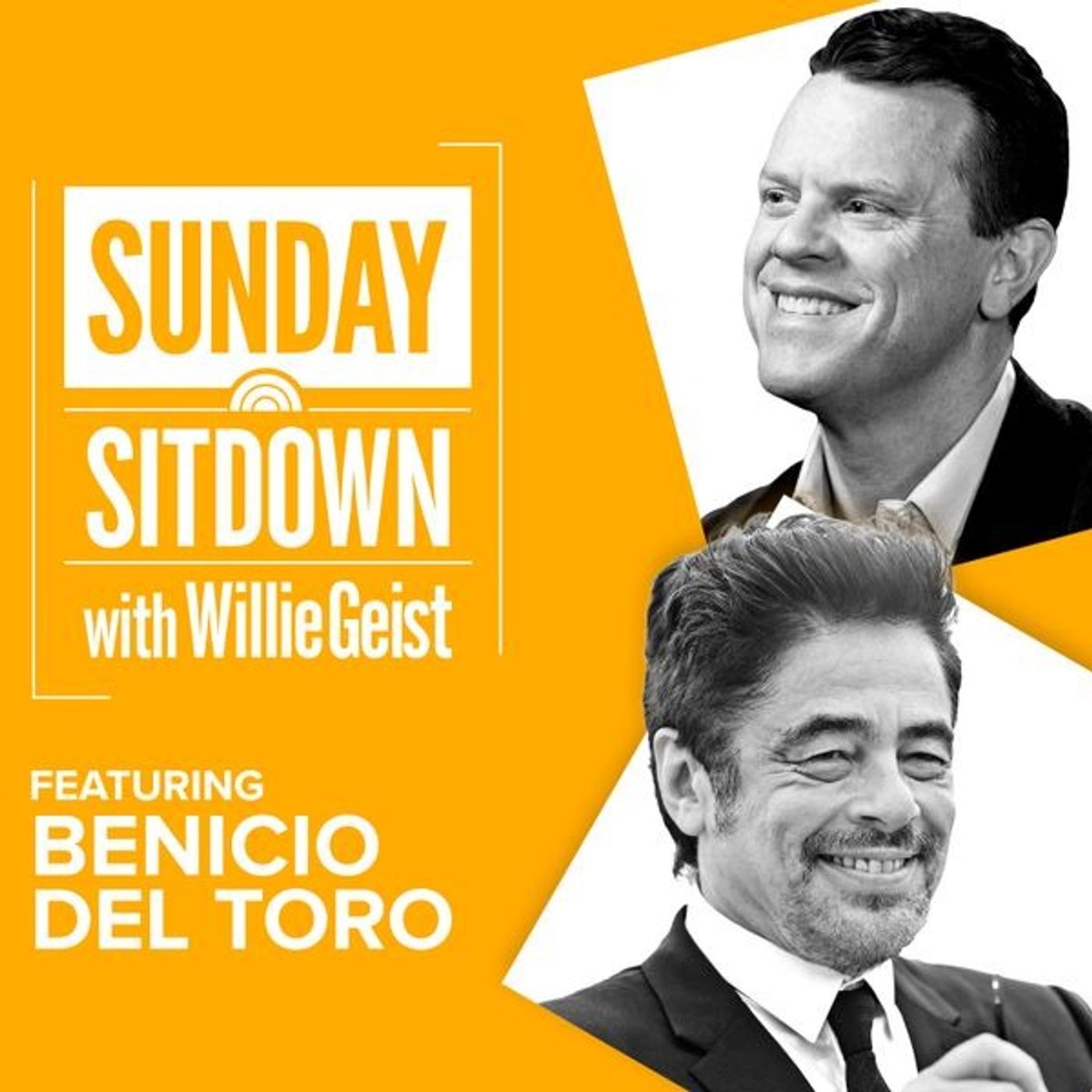
Sunday Sitdown with Willie Geist
OSCAR NOMINEES: Benicio Del Toro on His First Oscar and His Hollywood Journey (June 2025)
00:41:27
Benicio Del Toro is an Academy Award-winning actor and current nominee for Best Actor in a Supporting Role for his performance in "One Battle After Another." In this conversation from June 2025, Del Toro joins Willie Geist to discuss leading director Wes Anderson’s film "The Phoenician Scheme" and how winning his first Oscar reshaped his life and career. Plus, he reflects on growing up in Puerto Rico and the first role that made him feel he had truly arrived in Hollywood.
Loading summary
Transcript210 lines
- [00:01]
A
Bowser is back.
- [00:06]
B
Everyone calm down. The Super Mario Brothers can take care of the kingdom. Let's go on April 1st.
- [00:14]
C
Toad, pack our things.
- [00:17]
A
The Galaxy Whoa is waiting. Who is this? Yoshi? So some cool dinosaur just shows up and he's now part of the group code. Cool. The Super Mario Galaxy movie. Pretty pg. Only Peter's hero first. Get tickets Now.
- [00:31]
C
This episode is brought to you by Nordstrom. Spring calls for a wardrobe refresh, and Nordstrom has the best styles of the season. From dresses and denim to standout tops and accessories. Find the trends and essentials that feel right for you. Discover new arrivals from the brands you love, like Waif, Princess Polly, Mango, Adidas, and free people. Plus free shipping and returns and free styling appointments. Make everything so easy. Shop in stores@nordstrom.com or download the Nordstrom app.
- [01:06]
B
Hey, guys, Willie Geist here with another episode of the Sunday Sit down podcast. My thanks as always for clicking and listening along. Got a great one for you this week with an Academy award winner. Yes, Mr. Benicio Del Toro. He's had an incredible career and an incredible life story that you probably don't know that much about. I was excited to sit down with him because he's starring. He's the lead in the new Wes Anderson movie, the Phoenician Scheme. If you love Wes Anderson, you are going to absolutely be thrilled by this movie because it gets back to kind of the royal Tenenbaum vibe of Wes Anderson. All his movies are great in some way, but the story of this one centers around a man named Zsaza Korda who has a little royal Tenenbaum in him, in that he's very flawed, he's very wealthy, and in this case, there's an assassination attempt against him about every 15 minutes of the movie as he tries to figure out this scheme and reconcile with his family. It's really, really great. And a big leading role for Benicio Del Toro. He absolutely nails it. You know, he won an Oscar for his performance in Traffic. He was in 21 grams, fear and Loathing in Las Vegas, Snatch. The list goes on and on and on. He's had an incredible career. He grew up in a neighborhood of San Juan, Puerto Rico. Mother died when he was very young. When he's 13 years old, he moves up to rural Pennsylvania. His family moves up that way. He goes to a boarding school that' kind of halfway between Philly and Pittsburgh, a great school. Jimmy Stewart went there, by the way. The great legend of Hollywood. Now, another legend of Hollywood, Benicio Del Toro. But he talks about how difficult that was and trying to find his people as an athlete. He didn't even find the theater and the stage or acting at all until he went to college, and he was off to the races from there. I think you'll really enjoy sitting and spending some time with a guy that you probably love on the screen, but don't hear a lot from or about behind the scenes. So sit, relax, and enjoy. Right now, my conversation with Benicio Del Toro on the Sunday Sit down podcast. Benicio, great to see you.
- [03:12]
A
Thank you. Willie.
- [03:13]
B
Thanks for doing this.
- [03:14]
A
Thank you.
- [03:15]
B
I just finished watching the Phoenician Scheme. It is vintage Wes Anderson. One of his best, I would say, as a fan of his work. How do you describe sort of the scheme and the caper that we go on here in this film?
- [03:33]
A
Well, I think. I think we follow this character, Shahjah Korda, and that's the character I play, and we follow him through this journey that is really anchor on a relationship between father and daughter. And he's neglected that relationship, and now he's. He's maybe subconsciously looking for a second chance. And then there is this whole journey with all kinds of obstacles, but is that relationship. I think that's the heart of it, you know, that gets that character to go to. To evolve, you know, to have a great arc. He becomes. He's a ruthless businessman, and at the end, he's a different type of human being. He's still the same, but he's. He's probably a better version of himself.
- [04:29]
B
I think Wes Anderson fans will see some royal Tenenbaum in Zsa Zsa, which is sort of a rascal, maybe a rascal, ruthless, all the things you said. But then at the end, you kind of fall in love with him. Yes. Is that fair to say?
- [04:43]
A
Yeah. Yeah. And I think it's like. I think maybe the movie says something like, you know, people. People can change. You know, not everybody changes, but I think people can change, you know, and
- [04:57]
B
he definitely does over the course of this. It's. It's also just so much fun. I mean, you're surviving an assassination plot about every 15 minutes.
- [05:04]
A
Right.
- [05:05]
B
Just very casually, too. You just kind of look down and move on with your day.
- [05:09]
A
Yeah.
- [05:09]
B
Survive a plane crash. Move on with your day. Get caught in quicksand. Just keep going. Move on with your day. The amazing thing about this is that Wes Anderson wrote this part for you, and you can help me fill in the blanks on the story. But I think it started four years ago at Cannes, where you've just come back from. You were there promoting the French Dispatch.
- [05:28]
A
That's right.
- [05:28]
B
And he may have leaned over and said, I've got something for you.
- [05:31]
A
Well, he said, you know, I want you to be part of my next film. He never put it like that. He never said, I'm writing something for you. That would have scared the hell out of me. It still scared the hell out of me when I read the script, because I thought it was fantastic. And it was a lot of. A lot of heavy lifting, you know, because it. I'm in it quite a bit. But, you know, when you get a Wes Anderson movie, you get Wes Anderson calling you and offering you any part, but in this case, a hell of a part, because it's full of contradictions. It. It has a hell of an arc. It's. It's like. It's like getting a motivational pill. You just motivated, you know, I mean, I was trying to think, what is it that it did to me? When Wes called me and I knew I was going to do this movie and I was up, I was ready. I was like, I was really excited. And it's like, you're really motivated. And. And that's. That's. I think that summarizes for me what it feels like to work for Wes Anderson, because, you know, you're in the hands of. Of a master.
- [06:42]
B
And the way he tells it, it was very collaborative. It wasn't. We wrote a film. Go read these lines, Benicio. It was, who should this character be? What should he be like? Did it feel that way to you?
- [06:53]
A
Yes, yes. We. We talked a lot about it. We, you know, we had many, many, many, many questions. You know, you saw the film, and there was a moment in which I'm meeting my daughter for the first time, and I'm telling her that I want her to be the heir to my estate. And I' giving her a lot of details. And then in the background is Michael Cera playing Bjorn, a tutor. And I remember saying to Wes, Wes, I don't know if Zsa Zsa would be saying all this, giving all this information to his daughter in front of a stranger. And he said, well, maybe you're right. And then he goes, we'll polygraph him. And I go, okay, well, that'll work. And then he comes up with this, the lie detector, which is a little pocket polygraph, goes on his finger. It goes on his finger. And it was like, okay, that works. So that's. You collaborate like that, but it's. Everything is within that Wes Anderson imagination,
- [07:53]
B
you know, that's a great scene. The three of you are sitting at a table having lunch.
- [07:56]
A
Yes, yes.
- [07:57]
B
The lie detector comes out and then a dropper goes in the wine, it's poisoned. And they take it away from you, all very casually.
- [08:04]
A
Casually. And you're doing it fast. You can't be slow. With Wes, everything was done really fast, you know.
- [08:14]
B
And how does it change your approach, Benicio, when you are. You're the leading man, this is. It's a great cast, and we'll talk about some of them in a minute, but it's kind of your movie. You are Zsa Zsa. You're front and center. When you approach a film that way, it must be a totally different experience for you.
- [08:31]
A
It is a different experience, but I approach it the same way. I think that I would approach any character I do. You know, you just try to be honest, try to understand where you're coming from, what you want, where you're going. You know, those are like essential things for, for, for doing, for acting in any, any movie. The thing is, the experience is different because Wes has blocked it. It's an independent movie and mo. It doesn't look, look, look it. You know, it's just really like, it's layered and everything is on the screen. So by, by doing the. When you're, like, going through it, you have to, like. He's blocked it, you know, so he's. He's decided where you're gonna stand many times. And so. But within that, you have to bring yourself to it, you know, so there, there's, there's room for wiggling, there's room for doing your thing within his, you know, patterns that he's created because he's. That, that camera is already set. When you get to the set. Kind of like you.
- [09:53]
B
Yeah, that's right.
- [09:54]
A
You know, like the cameras walk in and go walk in, and it's already set. Yeah, yeah.
- [09:58]
B
I mean, and you. There's no questioning who directed this film from the first frame of the film. Right. You know, immediately in that plane. This is a Wes Anderson movie. And then even the title sequence, which I thought was so cool, shot from above. You're in a bathtub, smoking a cigar, recovering from yet another assassination attempt.
- [10:16]
A
I'm reading, I'm. I'm drinking, I'm. I'm thinking, I'm getting medicine, I'm eating. But this is really funny about that scene because I show. That was one of the first thing scenes we shot. And I sit there and I'm in the bathtub, and Wes comes up to Me and goes, we're gonna shoot it in slow motion. And I go, okay, very good. And he goes, but I need you to act really fast. I go, wes, if you're shooting it in slow motion and we're acting fast, doesn't that cancel the slow motion? Doesn't it means like, hey, let's do it in real time.
- [10:52]
B
Fair question.
- [10:52]
A
He goes, no, it's gonna be different. So. And he wanted to do one take. That what you see is one take. And we maybe got like three. But in order to get that whole choreograph, you know, all the nurses coming in and out at the right time, getting the injection, eating, turning the page, reading, smoking, that all, maybe we did like 30 takes, you know, Is that right? And then we managed to get a couple, you know, so. And that's what you see as one of the takes.
- [11:21]
B
It's very precise, right?
- [11:22]
A
Precise. It's beautiful, really. And it's not exactly real time. It's, it's, it's different. It's not slow motion and it's not real time. It's just something unique. You know, that's fascinating. And that's when. That's one of the things that you, you know, when you work with Wes, you trust them. Yeah, you learn quick to trust them.
- [11:42]
B
I mean, I know as a, as a fan and a viewer of a Wes Anderson film, what it is and what it looks like. I'm curious as an actor, how you describe to people the Wes Anderson experience. Because you've worked with almost everybody. You worked with incredible directors who all have their own style. But how do you describe being inside the world of Wes Anderson?
- [12:04]
A
Well, I think there's two answers to that. Acting, it. It's the same for every. I got to avoid the camera. I gotta be in the moment. You know, Wes wants you to be as honest as you can be like any other director. It's the experiences. The experience that it's different is when you see it, right? Because I feel more than any other movie, I've never done a 3D movie. And I think Wes Anderson movies, when I see them and I've been in two, they feel like they're 3D. Like they're almost tactile media. You almost can touch it like a pop up book in some ways. And also the humor and the heart. He has a great balance of. And there's violence in his films. You know, there's a fight sequence that I have with Benedict Cumberbatch that is a funny fight sequence. And so I think that it's it's when you. When I watch it that I feel like, oh, that was in that world, you know? But while I'm doing it, I'm just trying to get my lines out there right and make sure that. That they land well.
- [13:25]
B
They do. Landon, did you like the comedic element of this? I was. Before we started reciting back to you some of my favorite lines. Just that deadpan.
- [13:33]
A
Thank you, Willie. But I just. I just, you know, one thing we did, it was Wes never says. Never said to me, I need you to be funny. I want you to be real. And if. If you're real, the joke will happen. And if they laugh, good. If not, you know, maybe they'll. They'll laugh the second time they see the movie or the third time. But if they don't, you don't. We don't go for the laugh. You know, we weren't going for the laugh. You know, maybe there was an element with the fight sequence. Maybe we were going a little bit bigger with it, the fight sequence. But still, he wanted, you know, Benedict and myself to be really in there, feeling it like the characters would. Would, you know, so if I'm funny, it's. I have, you know, I just. I'm trying to be telling the truth. And it's just. I'm glad that I made you, that I tickled you.
- [14:36]
B
Oh, yeah. Well, there's one line I think that captures Zsa Zsa perfectly, where your daughter says something to you like, I'm appealing to your conscience here, and you quickly say, I don't have one. And that was it. That's who he is.
- [14:47]
A
Yeah.
- [14:47]
B
Yeah. That's a ridiculous idea.
- [14:50]
A
They're great lines.
- [14:51]
B
Great lines.
- [14:51]
A
They're great lines. They're great lines. They're great lines.
- [14:53]
B
Hey, guys, thanks for listening to the Sunday Sit down podcast. Stick around to hear more from Benicio Del Toro right after the break.
- [15:02]
C
Get in the game with the college branded Venmo debit card. Wreck your team with every tap and earn up to 5% cash back with Venmo Stash, a new rewards program from Venmo. No monthly fee, no minimum balance, just school pride and spending power. Get in the game and sign up for the Venmo debit card@venmo.com collegecard. The Venmo MasterCard is issued by the Vancouver Bank NA Select Schools available Venmo Stash terms and exclusions apply at venmo me stashterms max $100 cash back per month at Nature's Bounty. The belief is simple. You already have A brilliant body. Supplements just help support your journey. For over 50 years, nature's bounty has offered vitamins and supplements to help you eat, sleep, thrive.
- [15:41]
A
Repeat.
- [15:42]
C
From magnesium glycinate for heart and muscle support to hair growth capsules for fuller, thicker hair and probiotics. With 20 billion live cultures for digestion, Nature's Bounty. It's in your nature to thrive. Learn more@naturesbounty.com these statements have not been evaluated by the Food and Drug Administration. These products are not intended to diagnose, treat, cure, or prevent any disease.
- [16:01]
A
Bowser is back.
- [16:07]
B
Everyone calm down. The Super Mario Brothers can take care of the kingdom. Let's go on April 1st.
- [16:15]
C
Toad pack our things.
- [16:17]
A
The galaxy. Whoa. Is waiting. Who is this? Yoshi? So some cool dinosaur just shows up and he's now part of the group? Cool. The Super Mario Galaxy Movie PG Only Peter's hero first get tickets.
- [16:31]
B
Now. Welcome back. Now more of my conversation with Benicio Del Toro. So let's talk a little bit about the cast. And I have to start with Mia, who plays your daughter. I confess, watching the film, I thought, she looks familiar, but I don't quite know. Where do I know her from? And so after I watched it, I went and looked. Oh, she's relatively new to the business. That's Kate Winslet's daughter, but she stands alone. I mean, obviously she's got some good genetics, but she is an amazing performer.
- [17:00]
A
Oh, she's great. She's strong.
- [17:02]
B
Yeah.
- [17:04]
A
She also has those big eyes, big Bette Davis eyes. You know, she's. And she says a lot with them. And, you know, she nailed the audition, you know, because I flew to London with. With Wes to audition her, and she was the top contender. And. And I do remember that, you know, we were doing a scene, and then we finished, and I locked eyes with her, and she locked eyes with me, and she didn't blink. And then we went on. And then I remember telling Wes, you know, I think that's exactly what Zsa Zsa needs. You know, he needs that. And I think that's what he would recognize in his daughter, that she would be strong enough to be the one that would carry the torch of the family fortune, whatever. And that strength was extremely prepared. Never complained. We had long hours, you know. Yeah, she's a talent.
- [18:08]
B
She's really good. Bright future ahead. And the entire cast. I mean, you mentioned Benedict Cumberbatch and Michael Sarah. Scarlett Johansson is in it. I don't want to give away too much because some of them are just such beautiful Easter Eggs. Just going to say Hanks and Cranston and a basketball game. Yeah, I'm just going to. I'll leave it there. People have to watch.
- [18:27]
A
Yeah.
- [18:27]
B
To know. But how fun to play with that group of actors.
- [18:31]
A
Oh, yeah. I mean, I'm a fan, you know, I think that as I became an actor, I started my first. I was a fan before I became an actor. So working with Tom Hanks and, you know, Bryan Cranston right there, you know, Tom Hanks is like, legend. You know, Jimmy Stewart of our. Of our generation, of our, you know, of our times, you know, it's like a legend, you know, so it was really nice to see him, and also very nice to see how generous, you know, these actors are.
- [19:04]
B
Right.
- [19:04]
A
You know, Bryan Cranston as well. You know, just generous and willing to be there and help you out, to be the best you can be.
- [19:15]
B
It says a lot about Wes, too, I guess, that they're willing to. Actors of that caliber just drop in for a couple of days. Right.
- [19:22]
A
And some of them drop in for just a cameo that doesn't even say anything. I mean, Marie Abrams is sitting right there.
- [19:29]
B
You know, Bill Murray.
- [19:32]
A
Bill Murray. I mean, come on. It doesn't get better than that. I have a funny story about Bill Murray. So he plays God in the film. You've seen it. And there's these dream sequences, and so he shows up. I've never. I thought I'd seen it all, but I've never seen an actor walk in with his own soundtrack. Oh, he walks in with a boombox, but Bluetooth nowadays, cranking. I think it was Eric Clapton. And he walks on the set with that hairdo, and he's just saying hello to people. And I'm going, wow. I thought I saw everything, but I've never seen this. And he's cranking it. And from the corner of the set, Wes yells, bill.
- [20:18]
B
Bill.
- [20:19]
A
Classical music only. Classical music only. Bill goes like this. And it goes into Beethoven or Bar Talk or whatever and just sat there. It was. It was. It was really like. That's incredible. It's one of those things that you go. Just go like, okay. I'll never forget that.
- [20:38]
B
Right. And that's Bill Murray. So he gets. He can pull that off.
- [20:41]
A
Yeah.
- [20:41]
B
And for a visual for people watching, he's dressed as God in a robe. The beard, the hair, the whole thing with the boombox. It's perfect, isn't it?
- [20:49]
A
Yes.
- [20:49]
B
We were just talking about how you came back from Cannes a few days ago. Great reception. Huge ovation. The reviews have been great for the film and for you specifically.
- [21:00]
A
Well, thank you.
- [21:00]
B
Is it fun?
- [21:01]
A
I don't read that stuff.
- [21:02]
B
Well, they're good. I'll just leave it.
- [21:03]
A
Okay, good.
- [21:03]
B
There.
- [21:03]
A
Yeah, yeah, let's leave it there.
- [21:05]
B
It's. You've had a lot of success in your career, and you've won an Oscar and been nominated for. For awards up and down. It's got to be a lot of fun to be in a film that has this kind of energy around it that people are excited to see the next Wes Anderson movie. And, oh, by the way, Benicio del Toro is the guy in the movie.
- [21:23]
A
Well, I don't see it like that, but I'll take it. But, you know. Yes, it is. I. I think I've been watching movies now for a long time because. And I just don't watch my. I don't watch my movies, but I watch old movies and I've been watching movies and I feel with this one, as when I look at it and I've watched it maybe three times, that it will. It has legs.
- [21:48]
B
Yeah.
- [21:49]
A
You know, that it will travel in time. And I've been in a couple of those that I think it travel in time, that some of them didn't find an audience at the beginning, but little by little it did find an audience. And I think most, if not all of Wes Anderson movies have legs. So, you know, I think all of them do, but this one is no different.
- [22:11]
B
Yeah, it definitely fits into the canon of Rushmore and Royal Tenenbaums and all of the classics.
- [22:16]
A
Yes, yes. And it does have. The dream sequences are great and it just. And it's just. Just original, unpredictable, you know, great cast, you know, and, you know, and the music is different for this one. He just.
- [22:31]
B
He.
- [22:31]
A
Classical music only.
- [22:33]
B
Yeah, yeah, yeah, right.
- [22:34]
A
Yeah.
- [22:35]
B
The message.
- [22:35]
A
A little bit of jazz. A little bit of jazz.
- [22:37]
B
Yeah, that's right. That's right. Well, congratulations, man. It's really, really great. I loved it.
- [22:41]
A
Thank you.
- [22:42]
B
That people are going to love it.
- [22:43]
A
Thank you.
- [22:44]
B
We were talking a little bit before we started about Puerto Rico, growing up there. So I want to figure out how you became an actor. A little bit. It wasn't there at the beginning. You're an athlete growing up, Right. A neighborhood of San Juan. What was your childhood like? What kind of kid were you?
- [23:02]
A
Hmm. I don't know. It's.
- [23:04]
B
It's.
- [23:04]
A
You know, I bet people have different opinions of who. How. How I was as a kid. I was. I think I was distracted and I had a lot of energy and Found basketball. Probably my godmother had a lot to do with that. She. I remember she took me to the ymca and I. And there was a kid by himself practicing. And the all YMCA in Puerto Rico was one beautiful building. It was built in the 20s and it was just like, had one of those old basketball courts. Would wood, you know. Yeah.
- [23:41]
B
You know, like the parquet floor. Yes, yes.
- [23:44]
A
And it's not there anymore. It's sad, but. But I remember seeing this kid shooting hoops by. By himself. He was a little bit older. And I remember going, like, I want to do that.
- [23:54]
B
Yeah.
- [23:55]
A
I want to finish school and come shoot the ball. You know, I usually finish school and when I was forced to go to a tutor, you know, so. But, you know, Puerto Rico was, you know, was great. I mean, I, you know, it was fun growing up. And then I didn't. I, you know, I left Puerto Rico when I was 13. I went to a prep school in Pennsylvania called the Mercersburg Academy. And I, and we talked about this, the fact that I played basketball, I immediately had a group appears. I, I found friends quick. And that's, that's one of the things that. There's a lot of things you can learn about sports was. That's one of the things, you know, you find you. You're included. And so I, I was immediately. I, I found friends. And, and, and then. So I did four years there. And then as I was coming to my graduation, I, I just didn't know what, What I could do. I mean, my dad is a lawyer, my, My mom was a lawyer, my grandfather was a lawyer, my godmother was a lawyer. So they all went like, you know, you, you should be a lawyer or a professional. Right. And then I just decided to take this acting class and I kind of said, I like this. I did it when I went to college on my freshman year at UCSD in San Diego, California. And I decided to be. To do the acting thing. And it was, it was like. Because there was a logic to it. I mean, I felt like you could really study it. When I saw actors when I was growing up that I liked, whether it was Tom Cruise or Richard Gere or Eddie Murphy, I just felt like they were just writing it as they went around and did it, you know, and then taking an acting class, I realized, oh, wow, you can study this, and there's a lot of pieces to it. And so. And that's how I decided to become an actor, which didn't sit too well with my, My folks.
- [26:20]
B
Yeah, I'm sure.
- [26:21]
A
Yeah.
- [26:22]
B
Your mom passed away when you were nine years old, when you were still in Puerto Rico. The impact of that on you as a child is obvious. It's devastating. But did that contribute to your move to the United States at all or was that unrelated?
- [26:38]
A
Well, it did in a way because she, she, that was her father. Father had gone to, to, to school in the States, a high school in the States.
- [26:46]
B
Okay.
- [26:48]
A
So that was something she, she wished, you know, so it did happen, you know, so, you know, she's pulling the strings. She's been pulling the strings and, you know, she's still pulling the strings. So. Yeah, but yeah, it was a, that's a, that's a hell of a bang, you know, hell of, hell of a blow.
- [27:05]
B
Yeah.
- [27:06]
A
For any, any human being. So, yeah, so that, that was early on. But I, you know, it did have an influence in the decision of going to, to school where I went to school.
- [27:22]
B
That's a hell of an adjustment for a 13 year old who's still trying to figure out who he is anyway.
- [27:27]
A
Right.
- [27:27]
B
To be uprooted from Puerto Rico and move to kind of rural Pennsylvania. Right.
- [27:32]
A
But, yeah, but you know what, when I got there, everyone, when I looked around to the other kids, everyone was like, what am I doing here?
- [27:43]
B
How interesting.
- [27:44]
A
Everyone was alone. You know, it's so it. You didn't feel you were the only
- [27:51]
B
one alone, you know, united in your loneliness.
- [27:54]
A
United in your loneliness. Yeah. So we were, I think every kid that was there for the first time was like, there were no clicks. Except you. You, you had to find it there. Whether it was, you know, some kids went into, you know, the theater club or, or other kind of club. The clubs or other sports. And I, you know, I had the basketball click.
- [28:17]
B
You mentioned Jimmy Stewart a minute ago. I was doing a little homework about Mercersburg. He went to Mercersburg.
- [28:23]
A
That's so crazy.
- [28:23]
B
Is that unbelievable?
- [28:24]
A
Unbelievable.
- [28:25]
B
Believable. Jimmy Stewart and Benicio Del Toro went to the same high school.
- [28:29]
A
Yes. I mean, it's crazy. It's crazy, you know, and just. But Jimmy Stewart is Jimmy Stewart.
- [28:35]
B
He is just so, you know, on the Wikipedia page, you're listed above him.
- [28:39]
A
Just.
- [28:40]
B
Yeah, I just. Yeah, you should know that.
- [28:43]
A
Okay.
- [28:43]
B
Well, yeah, it might be alphabetical.
- [28:49]
A
It is, it is, it is.
- [28:50]
B
The D comes before you. Yes.
- [28:52]
A
Yeah.
- [28:53]
B
Stick around for more of my conversation with Benicio Del Toro, right after a quick break.
- [28:59]
C
If you, your parent or spouse served in the military, you could join our family. Our members saved an average of $70 a month on auto insurance when they switched Tap the banner or visit usaa.com join today to check your eligibility restrictions apply.
- [29:14]
A
Bowser is back.
- [29:20]
B
Everyone calm down. The Super Mario Brothers can take care of the kingdom. Let's go on April 1st.
- [29:28]
C
Toad pack our things.
- [29:30]
A
The Galaxy Whoa is waiting. Who is this? Yoshi? So some cool dinosaur just shows up and he's now part of the group. Cool. The Super Mario Galaxy Movie. Pretty pg. Only theaters here. Go first. Get tickets now. Ever walk past a place for rent and wish you could just take a peek inside, Maybe even explore the layout? Envision the natural light streaming through the windows or plan where your vinyl record collection would go. At apartments.com you can.
- [29:58]
B
With tools like their 3D virtual tours,
- [30:01]
A
you can see the exact unit you could be living in. Really envision yourself in your new home with Apartments.com, the place to find a place.
- [30:12]
B
Welcome back now to the rest of my conversation with Benicio Del Toro. So UCSD is where you catch the bug. That's great. You go, okay, this is something I can do. And then the connection to get to New York in Stella Adler, that's a big leap too, is it not, to commit to that?
- [30:29]
A
Well, yeah. I come to New York, I lived here for a little bit, and I said, I. My folks say, you want to be an actor, you're on your own, baby. And I said, okay. But I started to have my. My doubts, and I waved the flag. I surrender. I will go back to college. Because they were. They were saying, if you don't finish school, we're not gonna.
- [30:59]
B
You're on your own.
- [30:59]
A
You're on your own. So I waved the flag and I went to California and I. My brother was going to ucla, and I stopped in LA and I went to see an agent. And she said, you know, you should go back to college. When you finish college, come and see me. And then she said, by the way, they're giving a scholarship at the Stella Adler Conservatory. I didn't know who Stella Adler was, and if you want, I can call and I can get you an audition. And I said, okay, what do I have to lose? And I did the audition and I got the scholarship for two years. And that really kind of like that suddenly was like, wait, I'm not the one who's saying, I can do this. Someone else is saying, you should do this. And, you know, now I work and, you know, and I get movies and I work with incredible actors and incredible directors. But there was a period there where I was being rejected every day. But when I look back and I Look at that. The fact that I was going to Stella Adler, it gave me some kind of cushion in a way that, you know, at least I got this place where I can really explore and learn. And, you know, it's one hell of a technique and it's one hell of a. Of a school, really. I'm still, as I progress as an actor, as a human being, I still keep learning or understanding things she said, you know, it's, it's, it's pretty amazing that I guess that's. I'm always a student. I think that this, you know, I think that that's part of being taught by a great teacher is that you, you keep learning as you get older and you're ready now to understand things that she probably talked about.
- [32:58]
B
And so she planted a seed.
- [33:00]
A
Yes.
- [33:01]
B
Later, years later, that's what that meant. Yeah. It's interesting. Almost every successful actor I talked to, like yourself, has that story of they started out rejection, rejection, rejection, and for some reason they just kept at it. And I don't know if you feel like you had a plan B or you ever had a moment where you said, I don't know if I can do this. Maybe I should go to law school and listen to my dad.
- [33:25]
A
I just couldn't go to law school. I wasn't a reader. I mean, you have to read. I became a reader later. But, but I, you know. Yeah, I, I think that, I think that for me, I was. I like the process, you know, I'm kind of like, I like the process. I don't, I don't. I'm not looking at the result as much.
- [33:48]
B
Yeah.
- [33:49]
A
And I think those rejections, you know, trust me, I thought I'd nail some auditions there. And they were going, I know. And I could have sworn I nailed it. And I was going to get the part, you know, but there were a couple casting directors that were. That also embraced me and kind of like pushed me for parts, you know.
- [34:08]
B
What felt like the big break to you? A lot of people point to the usual suspects in 95 as the time, bigger audience said, who's that guy? He's good.
- [34:18]
A
I think the industry more so with that film. But before that, I. I got a James Bond movie.
- [34:23]
B
Yeah.
- [34:23]
A
Early on.
- [34:24]
B
Yeah.
- [34:25]
A
And that was huge. Yeah. I mean, like, like, I want to be in a James Bond movie. I was like, you know, I called my dad, I called everybody. But what happened is I did that movie and then I didn't work again for a year and a half. You know, the movie came out, you know, Everybody thought, oh, then now you're gonna be right. You think as an actor, you think, like, you get a job and that you're gonna work again. Well, no, not really. That's interesting. You can get a job and then sit for a while, and that's when you can get really cold feet and start second guessing yourself. And so I think that. I think that that was a big moment. And I remember I Bought a suitcase. I remember that. But, you know, just, just that movie was also. Because I grew up watching James Bond movies. And, you know, I knew there were. There were friends of mine from high school or in Puerto Rico, they wanted the movie theaters and they couldn't believe it. It was. How did that happen? You know, it's like really weird, you know, like, I didn't know you were acting. I didn't know you could be in the movie. Yeah. So. But. But that was. That was. That was a moment there.
- [35:37]
B
That's huge.
- [35:38]
A
There were a couple, but there was a. It was. It wasn't up and down for a while, you know, until the Usual Suspects was kind of like. Also, the Usual Suspects was a hell of a script by Chris McQuarrie, a hell of a director. Brian Singer, hell of a cast.
- [35:53]
B
Yeah.
- [35:54]
A
And the movie was a success.
- [35:55]
B
Yeah.
- [35:57]
A
And I learned there that you're only as good as your movie too, you know, so, you know, it does help to be in a film that is good. Yeah.
- [36:08]
B
And then comes the fan. Now you're in a movie with De Niro, then Fear and Loathing, where you were incredible in that. In that movie. When I look back on that, my gosh, that performance was.
- [36:20]
A
Yeah. Well, also great material. One or S. Thompson's book, and it was really. We follow the book, pretty good on the. On the. On the script. Johnny Depp, Terry Gilliam. That's one of those movies that when it came out, it just. It found an audience later.
- [36:39]
B
Yeah, right.
- [36:40]
A
Yeah.
- [36:41]
B
Felt like a cult thing for a while. Yeah. Yeah. And then, of course, I have to imagine a lot changes for you with traffic when you win an Academy Award. Is it true that that changes things for you? Do you feel that business, business wise?
- [36:57]
A
Yeah, it does. Yeah, it does. Now you can, you know, I'm gonna fly first class. Yeah, there's a little bit of that, but yeah, it does change a little bit, but I think more on the business side, you know, my. My manager, my agent, you know, have maybe leverage now. And it also changed at home a little bit, you know, and suddenly it's like, oh, I always knew he was going to be. Of course. I saw it since he was 6. Oh, yeah. You should have seen him when he played Cowboys and Indians.
- [37:34]
B
Right, right.
- [37:35]
A
So good. So there's a. There's that. But. But in the end, it's, It's. You also have to, like, be, you know, take your time with it because you can really get sucked into all that hoopla being. And it's. It's really. It's an honor to be in that list. But, you know, you also, like, don't believe it 100. You know, you just. You just look forward, you know, did
- [38:08]
B
you feel like more scripts were coming into you after that and therefore you had to be even a little more selective because people wanted to do all kinds of crazy things.
- [38:15]
A
Yes. Yeah.
- [38:17]
B
So you turn.
- [38:18]
A
Turn down a few things. Turn down a few things. And then also it gives you leverage to instigate stories that you might want to be a part of or you want to, you know. You know, be involved from the beginning. You know, filmmakers might reach out to you because. Because your value goes up, you know, so you might be able to. Your participation in a movie might give that movie that green light. So people invest in it, you know.
- [38:50]
B
Right, right. Yeah. You get another Academy Award nomination. And then, I don't know, I'm just fascinated by all the choices you made. Like, you don't have very many misses. They're all good movies, even if you're not the lead in them. They're all just considered really strong movies. So what do you want to script comes across your desk? What is your process like, especially at this point in your career when you kind of do anything? You've done Marvel, you've done Star wars, you know, you've done it all. What is your sort of editing process to say, yeah, I'll do that?
- [39:23]
A
Well, the first thing is who's directing it. Yeah, you know, that's. And then let's say it's someone that you haven't seen or someone new. Then it's like, what's the story? If. And then you can tell from the script, you know, if it's original and predictable, you know, who. Who's in the cast, if there's anyone attached to it that also has an influence. And then, you know, I got. I got really good people that I pay them a percentage to also bounce stuff off, you know, like, you know, hey, what do you think about this? Is this a good, good thing? Should we do this now? So, you know, I got a manager that I've been with since the beginning of Time and, you know, I trust his opinion. So all these things come. There is a combination of all these things. But I think the first thing is who. Who's making the film. Yeah, that's. That's going to be like. That's going to be the. The.
- [40:30]
B
The.
- [40:31]
A
The key to open. Perhaps. Perhaps exploring the character. Yeah.
- [40:36]
B
And you've worked with so many of the great directors.
- [40:39]
A
Yeah.
- [40:40]
B
I have to imagine, as a guy who struggled in those early days of his career that you were just describing, trying to figure out how you get through these auditions and you get little parts here and there. Do you ever stop at this point in your career, in your life and go, wow, I can't believe how far I've come from those days to get to work with Wes Anderson. And he effectively wrote a part for me in his movie. Do you reflect?
- [41:03]
A
You're forcing me. I gotta. I gotta take another drink of this vodka because it is.
- [41:09]
B
People should know. That's 100.
- [41:12]
A
Yeah, I guess you do. It's kind of scary. You get Vertigo. I can get Vertigo. Looking back, I've been really lucky. I've worked with the bastos, some of the best. And I've even worked with directors that. That I didn't do a film that I. We got involved in things. So I've learned a lot. You know, Willie, maybe the thing that. That. That happens inevitably is that you start learning. One thing I like to do is give young filmmakers a chance. So now I'm in a position where I can try a filmmaker that maybe has not done something, but you can see there's something in. In their story or the way they pitch a movie to you. There's a passion. Something like that. So I like to be able. There's many actors that I admire that have done that, you know, like Jack Nicholson, you know, they. They just went in and did they help young filmmakers? So I like to do that. And then the other thing that happens is that I've gone to an incredible school. I'm also kind of like maybe thinking maybe I should get behind the camera at some point and try that. You know, so that's inevitable. You know, I mean, you know, because I've been around, you know, like you said, you know, an incredible. I've been to an incredible young university of filmmakers.
- [42:39]
B
Yeah.
- [42:40]
A
And. And. And actors and all kinds of departments really, that are like that. I've learned a lot from, you know, I mean, in Wes's movie, there is like the wardrobe, which also helps the story immensely. Is Melina Cannonero, who. She's won four Oscars. She worked with Stanley Kubrick. So, you know, I've, there's, I've been, you know, you're forcing me to look back now. I might not be able to get to shut my mouth.
- [43:14]
B
Well, you turned it to looking forward and you suggested you might do some directing. Is that something imminent, you think, or is that down the road?
- [43:21]
A
It's down the road, yeah. But, but, you know, I, I think about it. I think about it. Maybe, you know, tell a story, you know, the way I kind of look at things, you know, maybe do something in Puerto Rico.
- [43:35]
B
Absolutely.
- [43:37]
A
Maybe you can come in and.
- [43:40]
B
Yeah, you were thinking of my cow. I just cast myself in. You're like, no, you can do craft services.
- [43:47]
A
That's fine.
- [43:49]
B
Let's end. That's a great place to end on, on Puerto Rico, a place I love that you're from. I've been going for 35 years. Got married there. And you've done so much good work there. Not just after hurricanes, but always.
- [44:01]
A
Yeah.
- [44:02]
B
What a cool position to be in that you have a platform to do those things and to give back to the place that made you effectively. It's got to feel good.
- [44:11]
A
Yes, yes. I mean, you want to always want to do more, you know, but yes. And I'm, you know. Yeah. It's an honor. It's, it's, it's who I am, you know, it's just, it's my blood, DNA, everything. Yeah.
- [44:26]
B
Well, I look forward to our shoot.
- [44:28]
A
Yeah.
- [44:28]
B
I'll give you some dates available. Okay. Okay.
- [44:30]
A
Okay.
- [44:30]
B
Thanks, Benicio. Thank you.
- [44:31]
A
You got it. He said it.
- [44:34]
B
My big thanks to Benicio for a great conversation. You can see Wes Anderson's new film the Phoenician Scheme, starring Benicio, in theaters now. And my thanks as always to all of you for listening again this week. If you want to hear more of my conversations with our guests every week, be sure to click follow so you never miss an episode. And don't forget to tune in to Sunday Today every weekend on NBC to see these interviews with your own two eyes. I'm Willie Geist. We'll see you right back here next week on the Sunday Sit Down Podcast.
- [45:09]
A
To realize the future America needs, we understand what's needed from us to face each other threat head on. We've earned our place in the fight for our nation's future. We are Marines.
- [45:23]
B
We were made for this.