← Sunday Sitdown with Willie Geist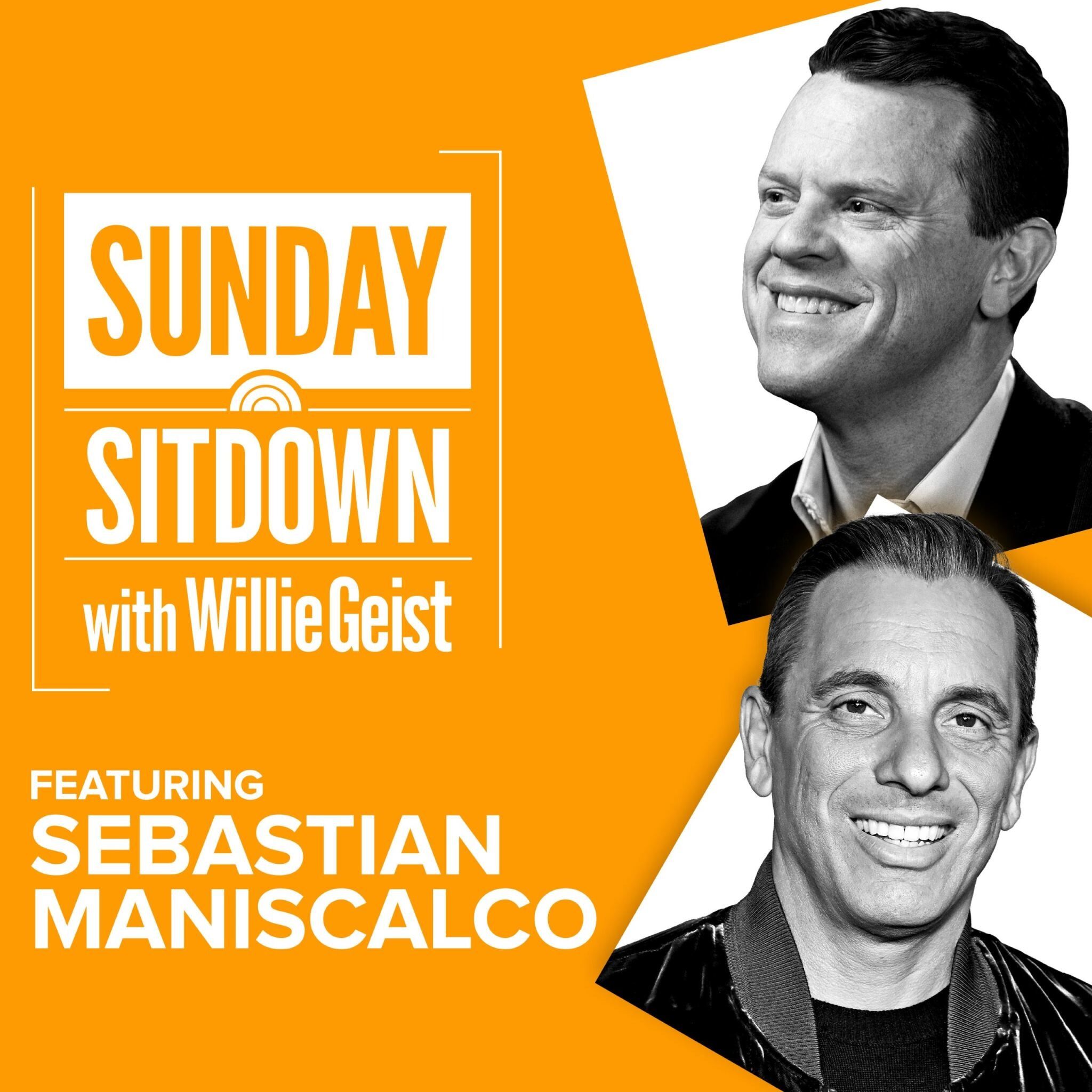
Sunday Sitdown with Willie Geist
STAND-UP GREATS: Sebastian Maniscalco on His Slow-Burn Rise and Working With Robert De Niro
00:46:50
Sebastian Maniscalco is a stand-up comedian and actor whose family-driven humor and razor-sharp delivery have made him one of the most recognizable voices in comedy. In this sitdown from December 2022, Sebastian talks with Willie Geist about the real-life moments that inspire his act, his stand-up special “Is It Me?” and the surreal experience of watching Robert De Niro portray his father in “About My Father.” Plus, he reflects on his long climb from open mics to arena tours, the influences that shaped his point of view, and why family remains at the center of everything he does.
Loading summary
Transcript162 lines
- [00:00]
Chase Sapphire Reserve Announcer
A Sapphire Reserve story from the foster sisters.
- [00:02]
Erin or Erin's Friend
We went to Rome. Me, Erin and her boyfriend. The entire time. I think that my boyfriend is going to propose to me. I knew he wasn't. Anyway, we booked this beautiful hotel with the edit through Chase Travel. Then later at a romantic dinner. No proposal. And his card was not accepted. I pay with my sapphire reserve. The three time points on dining made up for the whole, you know, no proposal thing.
- [00:19]
Chase Sapphire Reserve Announcer
Yeah, for you get $500 credit for the edit. A collection of luxury hotels with Chase Sapphire Reserve now even more rewarding. See More rewards@chase.com Reserve IT cards issued by JPMorgan Chase Bank North America member FDIC subject to credit approval terms apply.
- [00:30]
Sebastian Maniscalco
Here's a quick podcast for all you true crime fans. The Case of the Missing Reeses. It was me at the store with my mouth motive. Um, they're Reese's. What was I gonna do? Stop myself? Tune in next time to see if I do it again. Spoiler I will. Wow. That had everything Reese' Suspense Reese's.
- [01:02]
Willie Geist
Hey guys, Willie Geist here with another episode of the Sunday Sit down podcast. My thanks as always for clicking and listening along. Got a really fun one for you today with one of the biggest stars in all of comedy. His name is Sebastian Maniscalco. The guy sells out Madison Square Garden. He does five night runs at Radio City Music Hall. He set a record for the biggest attendance ever at the United center in his hometown of Chicago. He he's out now with his sixth Netflix special. This one is called Is It Me? And for this one, he takes his act to Vegas. If you don't know, Sebastian, I think you're really going to enjoy it and probably go to YouTube after you hear this conversation and watch a bunch of his stuff. He's from Chicago. His father is an Italian immigrant from Sicily. His mother is Italian American. All of that informs so much of his comedy. It's about nostalgia. It's about family. It's about little things that we all experience in our lives and he has mined and put his finger on. Great guy. We got together at Gotham Comedy Club in New York City, which is one of the places where he kind of got going in New York. He moved to LA when he was in his 20s, started working at the Four Seasons in Beverly Hills as a waiter because he figured if he went to a nice place, he'd be rubbing elbows, maybe serving coffee to some of the people he looked up to some of the big stars in comedy. And he just, he grinds and he grinds and he grinds and he works his way up, gets on a comedy tour with Vince Vaughn, gets his own Netflix special. All these steps in the road that got him to this place of now. These crazy popular Netflix specials. Huge audiences he takes with him wherever he goes. And all these sold out runs at arenas. Really great story of a guy who worked his way from Chicago to the top and just a funny and good dude. I think you're going to enjoy our conversation right now on the Sunday sit Down podcast with Sebastian Maniscalco.
- [03:01]
Interviewer
Thanks for doing this, Sebastian.
- [03:02]
Sebastian Maniscalco
Thanks for having me. Appreciate it.
- [03:04]
Interviewer
What does it feel like to be in this room where you kind of made your name, your home away from home in New York?
- [03:10]
Sebastian Maniscalco
Yeah. So Gotham Comedy Club, I think I started here in 2009, 2010.
- [03:17]
Interviewer
Okay.
- [03:18]
Sebastian Maniscalco
Not started comedy, but this is the first place I started comedy in New York. Started comedy in 1998. But to be here is bringing back some memories. I remember doing 14 shows in one week here, come on night, Monday through Sunday. And after that, we said, I think it's time to move on to the theater. So, yeah, a lot of fond memories. Actually right where we're sitting or actually right here. Little. Little tidbit. The movie, the Irishman, they made this room, the Copacabana. So the scene in the Irishman where Don Rickles is performing on stage and I have an altercation with Joe Pesci that was filmed right in this area.
- [04:05]
Interviewer
That's incredible. And De Niro kind of steps in.
- [04:08]
Sebastian Maniscalco
Yeah. Tells you to calm down. Yeah.
- [04:10]
Interviewer
More on De Niro in a minute. What do you love about rooms like this? Because I know as a fan of comedy, I love coming through the door and sitting at one of these little tables and getting the food and just being wide open to whatever's about to happen on stage.
- [04:24]
Sebastian Maniscalco
Yeah.
- [04:24]
Interviewer
But what do these comedy clubs feel like to you as a comedian? Not the arenas and the theaters that you do now, but like these room.
- [04:31]
Sebastian Maniscalco
This is it. This is where comedy should be enjoyed. You know, I mean, you're feet away from the performer and, you know, you can see all the nuances of what he or she is doing. It's tight. Everybody's kind of tightly packed in. So for me, I love coming to a comedy club specifically to work out some material. You kind of see what's good, what's not. I mean, it's hard to do that in a theater or arena. I mean, you got to bring your A game. But comedy club is kind of the gym. It's where it all kind of happens.
- [05:01]
Interviewer
Is it me? Amazing. New Netflix special out today, by the way.
- [05:05]
Sebastian Maniscalco
Out today, out today.
- [05:07]
Interviewer
Did you do some of that for that special? Did you get back to clubs like this, smaller rooms, and figure it out?
- [05:12]
Sebastian Maniscalco
Well, I was supposed to do that special prior to Covid. So I had that material and then Covid happened and I started getting more material. So that material was pretty much worked out in the comedy club in New York, or, sorry, in Los Angeles at the Comedy Store. And then as I went on the road, I like to kind of put new bits in here and there and whatnot. I get bored with saying the same thing.
- [05:36]
Interviewer
So I was gonna ask you that. Is that it's like, you know, the Rolling Stones go out and they're gonna play Sympathy for the Devil and Jumpin, Jack Flash, and they just do it for 50 years. You're not like that, of course, but do you ever go out and go, I don't know if I can do this material again tonight. I wanna ad lib something or mix something new in show to show.
- [05:56]
Sebastian Maniscalco
Sometimes I'll get to a bit and I'm like, the trick is you have to say it like it's the first time you're telling the story. So to have that energy and that commitment, you really gotta hone in on the act. But, yes, I'd be lying to you if I said I get to a bit and I'm like, ah, I gotta plow through this. But I always like to kind of challenge myself and write new material, try new things out, because that's the way you kind of grow as a comedian. You can't consistently do the same thing over and over again. Especially if people are gonna come see you paid top dollar and then come back in 18 months, you better have some new stuff.
- [06:35]
Interviewer
Right? Right. Yeah. You can't be going through the motions, which you never do. It never shows. If you're going ugh with the bit.
- [06:41]
Sebastian Maniscalco
Hopefully not.
- [06:42]
Interviewer
So you're getting ready for. Is it me? Pre pandemic. This is your sixth special. How do you know when you're ready for a special? Like, I've got enough new stuff. I got my actual. It's time to go up with something again.
- [06:56]
Sebastian Maniscalco
I generally do it based on if I have material that is pretty much strong throughout. The trick is you don't want to do a joke and the next joke not be as good as the joke before. You don't want to have these dips. It's very hard to be consistent throughout, but that's what I tried to achieve. So once I feel like I have That I feel like, okay, let's. The trick is to get the special and how excited I am about the material all coming to the actual shoot date, which I think we achieved here. But yeah, it's basically. Does it work? Is it great? And where are we gonna film this?
- [07:41]
Interviewer
And is it me? Has a decidedly Vegas theme to it. And not just Vegas, but, like, Rat Packy old Vegas. Tell me about the idea behind that, the concept.
- [07:51]
Sebastian Maniscalco
Yeah. So what I wanted to do was do a throwback to, like, the Rat Pack. And in doing so, I dressed up in a tuxedo. I kind of made the set look a little 1950s, 1960s Las Vegas. I asked the audience to dress up in formal wear, which about 25 of them did.
- [08:15]
Interviewer
That's a great moment, by the way. I don't want to give it away. Yeah, they panned the crowd.
- [08:19]
Sebastian Maniscalco
Yeah, they panned well, a little. We kept the first three rows open to bring people down who dressed for the occasion. So it looked like the whole room was dressed. But if you look deep in the back, there's people in billabong shorts and.
- [08:35]
Interviewer
Sandals just off the slot floor.
- [08:39]
Sebastian Maniscalco
Yeah, I don't know. I always heard about Las Vegas through my parents eyes because they did their hunting honeymoon there, and they're like, man, you should have seen it back in the day. Dean Martin would come out and he would deal blackjack, and everybody was dressed up. So I'm like, oh, I want to kind of revisit that era. And I've always been one of these, like, old souls where I wish I was born maybe in another time, because I feel like I'd fit in more back maybe with the Rat Pack than I do with. With people nowadays.
- [09:19]
Interviewer
It definitely has the feel, the tux and the room kind of feels that way. Right. You guys did a good job recreating that.
- [09:25]
Sebastian Maniscalco
Thank you.
- [09:26]
Interviewer
And so you obviously, as you always do, you kind of mine your observations, but also your family for material. You start off with a hilarious bit about your wife going on a date night. We get to your father, we get to your kids. How does your family feel about being the source of so much material for your standup?
- [09:46]
Sebastian Maniscalco
My mother generally never makes it into the act, and she's highly disappointed that she's not represented in my comedy.
- [09:59]
Interviewer
So that's not by request. She doesn't ask to be left out. She's. It's the other thing.
- [10:04]
Sebastian Maniscalco
Yeah.
- [10:04]
Interviewer
She wants the opposite.
- [10:05]
Sebastian Maniscalco
She's like, where? Where am I? People think I'm dead, you know, so my mom wants in, and my dad wants more of him. Because my dad has taken this. My success in comedy, and parlayed it into his own life. Often I'll get a call going, I need pickets for the guy who's gonna do my roof. And I go for what? He's like, he's giving me a deal, but I need tickets from you. So basically, I've been paying for my dad's remodel through tickets.
- [10:47]
Interviewer
So it's indirect, but you're still paying. Yeah, yeah.
- [10:52]
Chase Sapphire Reserve Announcer
He.
- [10:53]
Sebastian Maniscalco
He's such a character. He's, you know, he's from the. From Sicily. Came here when he was 15 years old, and he's always got something going on at the house where I'm like, okay, I could pull that and use that as a. As a seed right now. I just talked to him last night, and he said that he hired painters to come in and paint his house, but he thinks what they're going to do is put a cheaper paint in the. In the bucket that he picked out. So he thinks they got buckets laying around and they're gonna put cheap paint in those buckets. And it's like, what kind of mindset is this? So he having that immigrant mentality and always, always good for material.
- [11:45]
Interviewer
Oh, my God, that's so funny. He's come up on stage with you occasionally, right?
- [11:49]
Sebastian Maniscalco
Yeah, yeah.
- [11:51]
Interviewer
He likes the spotlight. Is it fair to say?
- [11:52]
Sebastian Maniscalco
He loves the spotlight. He actually gets upset if he walks into a restaurant and gives the name and they don't know he is. So we've created a monster in Chicago.
- [12:07]
Podcast Listener or Guest
You.
- [12:08]
Interviewer
You get so in the act, too. You talk a lot about family, and you kind of go at PC culture a little bit. What did you want to say about this moment in time, which actually the title of the piece gets at that, and I think you're right that most people share that with you a little bit. Is it me or.
- [12:25]
Sebastian Maniscalco
Right.
- [12:25]
Interviewer
There's something going on out here.
- [12:27]
Sebastian Maniscalco
Yeah.
- [12:27]
Interviewer
Yeah. So what did you want to say about the culture right now?
- [12:30]
Sebastian Maniscalco
Yeah, I'm just. I've always been a person who kind of puts a mirror to what the time frame we're in, you know, whatever we're going through. I necessarily don't touch, like, political topics. It's just more of, like. Like you said, is it me or is that guy. Da, da, da. Whatever it is. And what I wanted to do is poke a little fun at the environment, the culture, and kind of tap dance that line. I'm not looking to offend anybody. I'm just looking to have comedy Used to be. We all used to laugh at other people and ourselves. Not in a harsh, demeaning way, but, you know, I grew up with, like, I still get ripped to shreds when I go home. You know, like, my buddies will rip me to shreds. It's not like I'm going home crying about it. It's all in good fun. And that's what comedy is supposed to be. And as soon as you start editing your comedy and not doing what you think is funny, you might as well not be doing it because it's not going to be enjoyable. I think there's a small portion of society that gets bent out of shape, and those people tend to be the loudest voices. And I talk to people all the time and people are like, yeah, no, I feel the same way you do. And I just think that's a silent majority that has a lot going on with their life and, and are not necessarily complaining about everything that they see.
- [14:00]
Interviewer
I totally agree with you. And it's a point I've made. I work in political media, so on cable news, the people who are watching our show or who are then tweeting about our show are the most fervent passionate. But in the larger scheme of things, it's a very small slice. So the extremes that get amplified to your point, I don't think represent what's going on in the rest of the country. And in some way, some of the stuff you do in is it me sort of opens the door and gives permission, right? People go, oh, yeah, the thing he's saying, that's what we're all saying too, right? And so I think you've always talked about relatable comedy. It's not just family stuff, but it's also like, what's going on in the culture. It's a shared experience.
- [14:41]
Sebastian Maniscalco
It is a shared experience. And also what I try to do in this special is point out specific times where the audience might feel offended. I actually tell them, you might, you might get a little bent out here. Which, you know, I think once I do that in my live shows, people feel a little bit more relaxed and enjoy the comedy more rather than being pent up and tight. It's a shame that people haven't been able to really enjoy comedy for what it is and take it seriously. And these people that are tweeting and I did a joke about this a long time ago about, you go to a restaurant, you don't like the food. People write like a nine page essay on Yelp about their experience. Those People got nothing to do. So, yeah, I don't know. I just. I think it's turning around, though, hopefully.
- [15:38]
Interviewer
And you upset the Yelp reviewers and you're just fine with that. Yeah. Talk about a tiny sliver of the population. The thing I think what you said and you've said before, you're right about too, is in terms of not doing politics, is your hour is a break from the thing that we are just pounded with from all sides for 10 years now, or whatever it's been. Is that something you're conscious of? Like, I just want to take people away and let's find something we share in life.
- [16:05]
Sebastian Maniscalco
Yeah, I think that is definitely calculated. I don't want to touch politics. I'm not really into politics myself. Ye. I watch it from afar, but it's not like I'm diving into, you know, and maybe I should. I don't know, like, when I vote and there's like a referendum or this and that and the other thing, I'm like, what is. You know, like, it's not like I'm looking at this stuff in detail and maybe, Maybe I should. But when it comes to stand up, I don't think people want to come out and hear someone bash one side of the aisle. They want to come out and, like you say, detached, been bombarded with this stuff on the iPhone, the TV, your laptop. You want to get away, maybe escape and maybe forget about what's happening on the outside. So hopefully when people come to my show, they kind of just say, okay, this is going to be an hour and a half of just stuff that I could relate to in my own life, whether it be parenting, dating, going out to dinner, the alarm going off in the house, whatever it might be, and just enjoy yourself.
- [17:12]
Willie Geist
Hey, guys, thanks for listening to the Sunday Sit down podcast. Stick around to hear more from Sebastian Maniscalco. Right after the break, we went to Rome.
- [17:20]
Erin or Erin's Friend
I thought that my boyfriend was going to propose to me. He wasn't. I did use my sapphire reserve for the flight. So the points did make up for the whole no proposal.
- [17:26]
Chase Sapphire Reserve Announcer
Earn 8 times points when booking through Chase Travel with Chase Sapphire Reserve. Now even more rewarding. See more rewards@chase.com reserve@cards issued by JP Morgan. Chase Bank North America member FDIC.
- [17:33]
Venmo Stash Advertiser
Subject to credit approval terms apply with Venmo Stache. A taco in one hand and ordering a ride in the other means you're stacking cash back.
- [17:42]
Sebastian Maniscalco
Nice.
- [17:42]
Venmo Stash Advertiser
Get up to 5% cash back with Venmo Stash on your favorite brands when you pay with your Venmo debit card. From takeout to ride shares, entertainment, and more, pick a bundle with your go tos and start earning cash back at those brands. Earn more cash when you do more with Stash. Venmo stash terms and exclusions apply. Max $100 cash back per month. See terms at Venmo Me Stashterms.
- [18:05]
Erin or Erin's Friend
Hey, weirdos. I'm Alaina. And I'm Ash. And we are the hosts and of Morbid Podcast. Each week we dive into the dark and fascinating world of true crime, spooky history, and the unexplained. From infamous killers and unsolved mysteries to haunted places and strange legends. We cover it all with research, empathy, humor, and a few creative expletives. It's smart, it's spooky, and it's just the right amount of weird. Two new episodes drop every week, and there's even a bonus once a month. Find us wherever you listen to podcasts.
- [18:38]
Podcast Listener or Guest
Yay.
- [18:39]
Interviewer
Woo. Welcome back.
- [18:50]
Willie Geist
Now more my conversation with Sebastian Maniscalco.
- [18:54]
Interviewer
The thing you're gonna get tweets about this time is your stance on Hamilton, which is not a popular stance. I don't want to give away the joke because people got to go watch the special, but you're in trouble with the Hamilton people.
- [19:05]
Sebastian Maniscalco
You know what? I don't think I am. I don't think I am. I've talked to a lot of people about Hamilton, and listen, I'm sure it's a fantastic, fantastic play. I just didn't understand it, and I kind of referenced that in the special.
- [19:20]
Interviewer
Yeah, you turn it back to yourself. So you sort of insulate yourself from a little of the criticism. Yeah. So you talked about your dad. You talked about growing up in Chicago. Your dad's a immigrant from Sicily, came here when he was 15. I think your mother's from Chicago, but from Italian family as well. So where does the, where does the comedy start for you as a young guy coming up in Chicago? Where do you start to feel like, oh, I'm looking at that thing. That's funny. And now I'm giving my take on it. People are responding in some way. What did you feel like was the birth of your sense of humor, if you can remember it?
- [19:54]
Sebastian Maniscalco
Yeah. So it was going to school, not being the class clown, kind of observing what's going on at school, coming home and talking about it at the kitchen table. This is when families actually used to bond over food and dinner, which is kind of a thing of the past. I mean, everybody's so busy and now the iPad and this and that and the other thing. We used to be a family, used to sit there, and I used to sit there with my parents for two hours. I was never this guy that was like, I don't like my parents. I was like, hey, I love my parents. I love talking to them. My dad and mom and my sister, all funny. We would have a great time sitting around the kitchen table, just. Just sharing stories. So that was the first time I felt like, oh, I have a natural knack of telling stories and giving it a beginning, a middle and the end. And then also just playing, like, with my buddies. We play basketball and I'd get fouled, but instead of, you know, yelling about a foul, I would do some, like, weird fall and then pop back up and the guys would laugh. So I always enjoyed making people smile. And I knew at a young age that I wanted to get into standoff just because I always watched stand up. Growing up on HBO or what have you had the specials like, oh, man, this is great. I was going to comedy clubs when I was 16. The rest of the school was going to the basketball game on Friday night. Me and my girlfriend, she had a hookup at a comedy club in Rosemont, Illinois. And we snuck through the back. We sat in the back of the comedy club and I was. I was drinking alcohol. I was just drinking water and, like, mesmerized. Like, how do these guys memorize all this stuff? So always fascinated with comedy at a young age. Knew I was gonna get into it. But being a kid from the northwest suburbs of Chicago back then, I thought, like, Hollywood was on just another planet. Like, where do these people come from? But I graduated Northern Illinois University, which we talked about. The Kalb, baby, the Kalb Husky. And then shortly after moved out to Los Angeles.
- [22:03]
Interviewer
So when did you first get up on a stage? So you're watching that as a 16 year old thinking, I can do that, or like, that looks too scary.
- [22:10]
Sebastian Maniscalco
I was watching that comedy as an eight year old going, how do I do that? And the first time I did it was at Northern. I won a contest to open up for the national headliner who was coming to the school. So I went up. It was a primarily black room. Could we say that?
- [22:30]
Interviewer
Good check in?
- [22:31]
Podcast Listener or Guest
Yeah.
- [22:34]
Sebastian Maniscalco
And they were screaming Sandman while I was up there. Which at the time, I didn't know what the heck was going on. And later found out that that's what they say at Showtime at the Apollo when the act sucks. Sandman is the guy that comes out with the hook. So.
- [22:51]
Interviewer
Wow.
- [22:52]
Sebastian Maniscalco
But even though that happened, I felt at home on stage. I like, I know I'm going to do this. This was an awful experience for me, but it took about two years for me to get back up on stage again. I just knew that's where I needed to be.
- [23:08]
Interviewer
What did your parents think during this time when you said, this is what I'm going to do, I'm going to move to la. Your dad, being an immigrant from this country, started his own business, worked his way up, supported his family. Did he think this is a good idea or did he think, I don't know about this. I don't know if this is a way to make a living.
- [23:26]
Sebastian Maniscalco
Yeah. So my parents were extremely supportive, which generally isn't the case. Again, I'm talking 23, 24 years ago. The arts were something that was. My mother was always like, what are you gonna do for health insurance? You know, health insurance was like, I don't know, it was like the thing coming out of, like, college, you gotta get health insurance or what are you gonna do? My mom was concerned with the instability of the entertainment industry, however, extremely supportive in what I wanted to do. So when I sat them down, I said, I'm gonna move to Los Angeles. I didn't get any pushback. I got, you know, hey, from my dad and mom, if this is what you wanna do, go out and chase your dreams and, you know, we're here for you. And that was nice to have that support back home because a lot of people tell their parents, although nowadays it seems like a viable option, this entertainment business, you know, like now, apparently being an influencer is something that you could go into, which I don't necessarily get. I know, I know. It's a new, newer thing.
- [24:40]
Interviewer
Just hold a purse on Instagram.
- [24:42]
Sebastian Maniscalco
Yeah.
- [24:42]
Interviewer
You made it.
- [24:43]
Sebastian Maniscalco
Yeah, I don't. I don't know, it's just. It's like, oh, you know, I watched this girl do makeup and, you know, she's. She's making a living with all power to her. But it wasn't as easy to get into this business 25 years ago.
- [24:57]
Willie Geist
Yeah.
- [24:58]
Interviewer
When you said Hollywood was on a different planet, I totally know what you meant. Like, those guys who were doing it, they live somewhere else and you'd never get there. But I think now you're right. Young people, why just hop on Instagram or get on TikTok and I got a career going.
- [25:10]
Sebastian Maniscalco
Yeah.
- [25:11]
Interviewer
So when you get out to la, what are those early days like as you're fighting to get on stages Fighting to make a living, which is sort of the beginning of the road to places like this.
- [25:21]
Sebastian Maniscalco
Yeah. So in 98, I moved out there. I started working at the Four Seasons Hotel as a waiter to make money. I wasn't one of these couch hoppers. I was never one of these guys that wanted to burden other people. Hey, you mind if I sleep on your couch while I get my my feet wet and stand up? I came out with 10 grand, all right? Nice little nest egg. And I wanted to get a job at a nice place. So Four Seasons was a really nice place and I started working there. And then I took a comedy class because I didn't know anything about stand up as far as, you know, how it's done or whatnot. So I took a class and felt very comfortable in the class. It was a six month class. @ the end of the class, you had a performance that you had to do. So that's how I got my feet wet. And then I started doing, you know, like open mic nights. Anywhere that they would have comedy, I would go and do it and I would want to get up as much as I possibly could in one night. Because I knew this was a repetition thing. You needed to do it over and over and over and over again. Not only to work out material, but you also get a lot of experience up there dealing with crowd or heckling or. You know, one time I was on stage and it was in Las Vegas and a cat ran up the drapes. There was a loose cat in the casino and it ran up the drapes. And you know, it's just like stuff like that that happens in the moment and then how you react to that is all foundation on how it all kind of blossoms later on. Like now when I get up there, I'm ready for anything that's gonna happen. One guy wanted to fight me one night. He took his shirt off in the front row. He's like, you wanna go? I'm like, wow.
- [27:04]
Interviewer
Why did he want to fight? You did prove something to his girlfriend.
- [27:07]
Sebastian Maniscalco
I said something to his girlfriend. But it was all in good fun. But again, a lot of people, you don't know, a lot of people are drunk at a comedy club or on other things or you don't know what you're talking into. And this guy wanted to go. So, yeah, all that is good battle, you know, battle tested stuff. So when you go up at the Madison Square Garden, you are, you know, primed and ready for anything.
- [27:35]
Interviewer
Any moments along that road where guys are challenging in fights and cats are running up the curtains. Where you go? I don't know. I don't know if this is gonna work out. Maybe I should go back home and find a job with health insurance. Or were you always just focused on this dream?
- [27:50]
Sebastian Maniscalco
Yeah, I think the latter. It was comedy or that's it. You know, it's just. It was at one point I called home and I said, I don't know why I'm not getting further along here. I got the material. I'm doing really well in the comedy clubs. I wasn't making a living yet. That was the only time I was like a speed bump, where I was. Not that I wanted to quit. It was just a. A lot of frustration. When is this gonna happen? Just anything give me, you know, just. I want to. I want to work as a stand up. That was the goal when I came out to Los Angeles. I want to do this for a living. I had no intentions of, you know, you know, doing big rooms or anything. I just like, I thought I would just do stand up comedy and pay the bills and have a nice little living. That's all I wanted out of this. And it's kind of ballooned past anything I could ever imagine.
- [28:46]
Interviewer
Kind of ballooned. Put it mildly. A little bit. A little bit was one of those big breaks. The Wild West Comedy Tour with Vince Vaughn in 05, who you'd met, I guess, and bonded over some Chicago stuff.
- [28:58]
Sebastian Maniscalco
Right.
- [28:58]
Interviewer
Was that a huge moment for you to be on that tour?
- [29:01]
Sebastian Maniscalco
Yeah, that was a. You know, Vince Vaughn took four of his favorite comedians out on a bus. We did 30 cities and 30 nights. Kind of validated me as, you know, oh, this guy, Vince Vaughn likes him. He must be funny. So, yeah, that was a stepping stone to headlining comedy clubs because up until that point, 1998 to 2005, I was just kicking around, working out my act. Then he picks me up to do this thing and from there started doing weekends at comedy club. And you know, what I was making back then, I mean, was $1,000 a weekend, you know, or $1,500, you know, there was no draw. I didn't have a draw. You would just come. They would either give the tickets away and hopefully they would make it up on the food and beverage. So. And I was happy doing that. I was like, well, man, I'm living the dream here. I'm coming into Dallas this weekend. I'm doing six shows and doing radio in the morning, getting people. I would stand outside and shake people's hands, take pictures. I had a DVD at the time. I would sign the DVD and sell the DVD and all that. You know, the next time I came to Dallas, you know, double, double. The people came because they told a friend or whatnot. So I did that for 10, 12 years, just kicking around the comedy clubs year after year after year. And then eventually, you know, it grew to a point where we graduated.
- [30:34]
Interviewer
It's so important to hear that part of the story, because to a lot of people, oh, he just popped up on my YouTube or my Netflix and a fully formed comedian. But there's 20 years of work to get up to that. To get up to that moment. In those. The specials I mentioned, you've done six of them. Do you remember when they offered you the first one and how major that was to say, oh, this is just me. I'm gonna broaden my audience now.
- [30:58]
Sebastian Maniscalco
Yeah. So the first one, ironically enough, happened through me. Waiting tables at the Four Seasons. There was a gentleman that used to come in there, work for Budweiser. Budweiser at the time was gonna start a channel. It's called Bud tv. They were looking for content. So through my relationship with that gentleman, I then made my first comedy special. They financed it and put it on Bud tv. And I was like, wow. It came out of me serving the guy chicken satays every time he came in to town.
- [31:32]
Interviewer
Literally, it was that. And he said, what do you do for a living?
- [31:34]
Sebastian Maniscalco
He said, I'm a comedian. Yeah, comedian. And then the next time you come in, how's comedy going? Eh, it's going good. And then, you know, over time, you'd go, we're starting this thing, you know, you want to do a special? I'm like, yeah. They had money to burn and they financed the special. So, yeah, I mean, that special didn't, you know, kick me into the stratosphere at all. It's just been one of these things that's been a slow burn for me. A lot of different things have built the foundation to where I am. It wasn't like one thing that put me on the map, you know, like, some people blow up because they have a hit movie or a hit TV show. For me, it was just stand up, stand up, stand up. No tv, no film, just basically all on the shoulders of comedy.
- [32:18]
Interviewer
You were smart to pick that hotel, too. You had some people at those tables who might be able to help you out.
- [32:22]
Sebastian Maniscalco
You never know. You never know who you're going to meet. You know, you got. Although I was not the best server. Okay. In hindsight, looking back at that, I could have been a Hell of a lot better than what I was doing at the time. It just my passion did not. It wasn't in food and beverage, it was in stand up. But now when I go out to a restaurant and I see a great waiter, I go, I could have been better.
- [32:49]
Interviewer
Oh, so you have some regrets about you?
- [32:50]
Sebastian Maniscalco
I have regrets the way I used to approach a table. Yeah, we had a contest one night. This is how bored I was at work one night I said, I think I could get through a full service without talking to the couple. Cause it was at a bar, right. So I would come up to the table and just, you know, present myself. And they'd go, I have a martini and I have a wine. And then I would go back and I did the whole service without talking to the guests. Which is not something that I would recommend.
- [33:24]
Interviewer
But that's an impressive performance unto itself.
- [33:26]
Sebastian Maniscalco
Yeah, no, it's tough to be silent.
- [33:29]
Interviewer
I think part of the slow burn you're talking about too was people sending clips of you around. I remember when I got the clip of the company bit and talk about relatable. I remember I immediately sent that to my dad and around. Because that's how we are now. We used to have company and in our house, when the doorbell rings, everybody hits the floor, just like you said. Yeah. And that bit, I think, I don't know if you feel this way too, just for whatever reason, because you've done a lot of funny bits like it. But that one grabbed a lot of people, didn't it?
- [33:58]
Sebastian Maniscalco
I didn't even know it was happening because I didn't even post that video. Somebody else posted it. And then I started to see a little spike in popularity, not only on my social media, but I would go to the show and see, oh wow, he sold out tonight. And why. But yeah, that is a multi generational bit. I think people in their 80s relate to it and people who are eight years old relate to it and everybody in between. And I didn't know at the time that that was gonna be such a big hit. But now, kinda looking back on that, it hits a lot of different points for a lot of different people and a lot of different age groups. I always like to refer to nostalgia in my bits because I'll go, this is the way it used to be, this is the way it is now. So the people back then could relate to it, people now could relate to it. And it's nice juxtaposition of two different situations. So, yeah, it's kind of been my bread and butter.
- [35:01]
Interviewer
It Says a lot about us that resonated so much that everyone in the country was like, yes, we all hide on the floor when the doorbell ringing.
- [35:08]
Sebastian Maniscalco
Everybody's hitting the deck.
- [35:10]
Interviewer
But part of what makes that bit great is your physical comedy too, which is part of what you're known for. You know, you got. You're turning around all the kids like you're, you know, leading them into battle or something. Get on the floor and do all that. Where does that part of your comedy come from? Is that, am I seeing bits of your dad again when you do that? The faces, the gestures, all that stuff.
- [35:31]
Sebastian Maniscalco
You know, that happened over time. It's not like I started doing stand up and that was what I was doing. That kind of came from an evolution of trying things out on stage and see what was working. I used to do this bit about Ross for Less where I used to throw the stuff across the store. And I noticed people really enjoyed when I got physical because on first look, my. My look doesn't look like I'm gonna be, like, a goofy guy. Looks like I'm gonna collect money from your family. So. So when I do something physical or do a weird face, I think it's kind of the antithesis of what you might expect coming out of a guy like. Like myself. So I noticed that people were gravitating towards that. You don't want to do too much of it because then you become like, all right, what are you doing? But a big influence on me with the physicality was John Ritter watching Three's Company. Always used to watch John Ritter, and I used to watch it, like, game tape. He used to just. I remember he was on a hammock one time and he fell off the hammock and he popped up and just the face alone. I died laughing. Didn't say a word. It was just like, oh, wow. I really know what he's thinking through his expressions. And sometimes that's all it really takes is an expression or a look on stage and people will start laughing. Basically, use everything that you got up there to make people laugh. That's why I move around a lot. I mean, and today you go to a comedy club, people are looking at their phone. You gotta light yourself on fire up there for these people to pay attention. So I try to give them a lot to look at.
- [37:11]
Interviewer
You definitely do that. You definitely do that.
- [37:14]
Willie Geist
Stick around for more of my conversation with Sebastian Maniscalco, right after a quick break.
- [37:19]
Chase Sapphire Reserve Announcer
This is the exclusive table with the View. This is your name on the list. This is three times points on dining with Chase Sapphire Reserve and a $300 dining credit Chase Sapphire Reserve. Now even more rewarding.
- [37:29]
Learn more@chase.com Sapphire Reserve cards issued by JP Morgan Chase bank and a member FDIC subject to credit approval.
- [37:34]
Podcast Listener or Guest
Hey everybody, Ted Danson here to tell you about my podcast with my longtime friend and sometimes co host Woody Harrelson. It's called Where Everybody Knows your Name and we're back for another season. I'm so excited to be joined this season by friends like John Mulaney, David Spade, Sarah Silverman, Ed Helms, and many more. You don't want to miss it. Listen to Where Everybody Knows yous Name with me, Ted Danson and Woody Harrelson sometimes wherever you get your podcasts, if.
- [38:04]
Erin or Erin's Friend
You'Re looking for new ways to get ahead, then you're our kind of person. We're Udemy and we help learners like you upskill in AI, productivity, leadership and management and more. Learn at your own pace from real world experts. You can also prep for certifications that show employers what, you know, upskill for the career you want@udemy.com now back to your regularly scheduled listening.
- [38:35]
Willie Geist
Welcome back now to the rest of my conversation with Sebastian Maniscalco.
- [38:41]
Interviewer
So as the slow burn's going along, what's the moment where you go, okay, I'm onto something special here. I mean, in 2019, you sell out four nights up the street at the Garden. Then you do the same thing in Boston, then you do the same thing in Chicago. In your home city are runs like that and you see sold out tonight. Sebastian Maniscalco, do you just stop and go, wow, I did it or wow, I can't believe I did it.
- [39:07]
Sebastian Maniscalco
I wish I would have done it because when I'm in it, I'm not thinking that, okay? And I and I want to be a little bit more present and smell the roses because I think with me, I got caught up and going, okay, we did the Garden. Now what am I selling out? What's next? You know, and not really enjoying the success. I felt that before the pandemic, right before the pandemic. And then it was all taken away from me. And I go, I should have enjoyed it because I didn't think this was coming back. You know me, I'm thinking, I always think negative. I go, that's it, it's over. No more live entertainment the rest of my life. You know, like, I didn't know the COVID Nobody knew this pandemic. We staying inside the rest of our lives. So I thought the Career's done. It's over. And then coming back out of the pandemic, having a greater appreciation for the opportunity to go up night in and night out and perform and really kind of relishing in. Wow, this is really cool. Really, really did something cool here. Rather than blowing by it and just thinking it's another gig. I can't say I expected it to happen, but I expect a lot out of myself. And I feel sometimes if I feel like I've reached some type of success and I can't relax, because if I relax, I'm not gonna be able to sustain it, which you have to have a little bit of that. I just think I had a little too much of that, and now I'm enjoying it a little bit more. And now that my kids are getting older and they're able to kind of see what, you know, my daughter just figured out kind of, oh, you go on stage and you make people laugh. And I'm trying to instill that in my kids of, like, you know, this is totally going off topic, but I didn't grow up like, my kids are growing up, and I want to keep that hunger, that drive in them that I had. They're gonna have it a little bit easier than I did. A lot easier. But my challenge now, more so than any standup, is, like, instilling that drive in my kids, too, excel at whatever they want to do.
- [41:27]
Interviewer
So they have started to recognize at least your oldest, your daughter. Okay, I kind of get what you do up there. They're too young to fully appreciate what's going on when you leave the house. Yeah, she's starting to see it a little bit or hear about it from friends or how does that work?
- [41:41]
Sebastian Maniscalco
I saw it. We were shopping at a grocery store, and someone said, hey, I really like what you do. I said, oh, thank you. Take a picture. And my daughter was there, and she goes, why do people always come up to you? And I said, oh, Daddy just makes them laugh, and they enjoy laughing. So there's, like, little hints of, like, oh, she's starting to kind of. They came to a show at the Red Rocks in Colorado. My son really didn't know what was going on, but my daughter was like, oh, you know, Daddy's up there being a goofball, making people laugh. So now that they're kind of getting familiar with it, I think it's nice to share it with them.
- [42:21]
Interviewer
It's a hard thing to explain to a kid, too, because to them, you're the guy, as you say in your act lying on the floor, playing with them just out of necessity.
- [42:30]
Sebastian Maniscalco
Yeah, yeah. Daddy's tired.
- [42:33]
Interviewer
Daddy's always tired.
- [42:34]
Sebastian Maniscalco
Yeah.
- [42:35]
Interviewer
And then your life, as you step out of the garden and there's 20,000 people in the room, that's a hard thing for a kid to put together.
- [42:43]
Sebastian Maniscalco
Yeah. I don't think they understand it quite yet, but once they do, I think it's going to be another level of enjoyment for me.
- [42:50]
Interviewer
So the other thing that's happened for you is this incredible career off stages like this, where you're in Green Book, which wins the Academy Award for Best Actor. You do all these movies, you've got your own TV show, your empire has grown, you got some really cool stuff coming up on the horizon. Do you enjoy that in a different way than you do being up on stage? Is it scary because it's something different and new? I mean, you're acting across from some of the best on Earth. In Robert De Niro, for example. Yeah.
- [43:23]
Sebastian Maniscalco
Do I enjoy it as much as stand up? No.
- [43:26]
Interviewer
But is it. Is it exhilarating in a different way? Because it's scary.
- [43:31]
Willie Geist
It's scary.
- [43:31]
Sebastian Maniscalco
The word, then it's. When I'm doing movies, I'm not at the point of enjoyment as I am with stand up, because I haven't done it enough to have that confidence I do on stage. So when I go on stage, we could get the crew together right now and go on stage and I could. We'll have a ball. I'll make them all laugh. If we're gonna do a scene, I'm sweating. So with these movies, when I'm in these scenes, I am nervous and hoping they go well, because, listen, when you're doing a scene, especially in a comedy, and there's 60 people on set and I'm doing Supposed to Be Funny, and nobody's laughing because they can't or whatnot, it's difficult for a comedian not to hear the validation of the performance. So it's a little. I'm getting used to it.
- [44:35]
Interviewer
You didn't start with little independent movies. As you said, you're gonna fight with Joe Pesci and then De Niro's in the scene with you. Like you started in the accelerated class.
- [44:45]
Sebastian Maniscalco
Yeah. I told my management, my agents, I said, listen, I don't do any movie unless it's a potential Oscar winner. No, for me, these movies were a blessing in disguise because maybe it was better for me to start with these people, the best in the business, to give me the confidence moving forward that I know I could hold my own with these people. And whatever happens after this, it's not like it's cake, but at least I've known I've been with the best and I could accomplish this. So that was good. But anytime I'm in a TV series or a movie, just know that there's a lot of work that went into that. Plus I'm not eating for a couple of nights.
- [45:36]
Interviewer
It's that the gut's churning.
- [45:38]
Sebastian Maniscalco
Yeah. I ain't sleeping.
- [45:39]
Interviewer
The butterflies are there. I think we can talk about it. But the trailer, I just got to look at something truly incredible, which is an autobiographical movie in which Robert De Niro plays your father.
- [45:53]
Sebastian Maniscalco
Yeah.
- [45:54]
Interviewer
How did that come about? You had a good experience with De Niro. And he said, yeah, I liked working with him.
- [45:59]
Sebastian Maniscalco
Yeah. So on the Irishman, obviously I work with Robert De Niro, but it's not like I became friendly with him and the Irishman. It's not like they yelled, cut. And me and De Niro were in the corner going, so you can open up another Nobu. It was, you know, cut. And he went to his chair and I went to. To mine, so. But he ended up coming to Radio City Music hall to see me perform. Came backstage and, you know, we chatted a little bit back there. And then in the. In the meantime, I was writing this movie with Austin Earl. I co wrote the movie. It's autobiographical. It's basically a love letter to my father. It's a comedy. And then we got it into Dairo's hands and, you know, didn't think, you know, anything of it. And then he came back, said he really enjoyed it and wanted to do a table read with a bunch of actors to hear it out loud. We did the table read and next thing you know, we're in Alabama, Mobile, Alabama, for seven weeks. And De Niro is playing my dad. Now, De Niro, being the actor that he is, he wanted to get to know my father. Now when I called my dad, I said, listen, De Niro wants you to come to Oklahoma where he's shooting a movie and he wants to, like, study you. Now, my dad is a beautician and he has clients. So my dad's like, well, how much they paying? And I go, what? He goes, why? I got dye jobs and perms on the book. And if I leave, then I only lose money. Worry about the money. You know, De Niro's calling, you gotta go. You know. So he spent three days with De Niro in Oklahoma. And, you know, De Niro's asking How do you wear your hat when you smoke a cigar? You know, how do you hold. You know, he's getting my dad. You know, my dad's calling me going, this guy's working me to dental.
- [47:59]
Willie Geist
Jeez.
- [47:59]
Sebastian Maniscalco
I thought I was gonna come down for a couple hours. I'm in his room for nine hours. So not only that, but on this set, De Niro wanted my father there. There's a scene in the movie where De Niro, my dad, used to own hair salons. So there's a scene where De Niro's doing a dye job and he wanted to know how to put the foil on the hair and all that stuff. You know, this guy. Don't miss anything. So my dad is sitting there teaching De Niro how to put the foil on. And I'm looking at this going, here's a guy. I had a poster on my wall growing up in Casino, used to, you know, be on my bedroom wall. I mean, whoever thought that my dad would be on set with Robert De Niro, who was playing it just didn't compute to me. It was one of those scenarios where I was really blown away. And it was a great experience to work with him. And I showed the movie to my father. He cried. And because my dad's my biggest fan and my biggest critic. So he would have. I think he would have told me if he thought it sucked. But I think it was. I think it was heavy for him to see just because, you know, his life is being depicted in a movie.
- [49:20]
Interviewer
Which, I mean, think about that. A guy who comes over from Sicily as a teenager, now there's a movie about him. Maybe the most famous actor in America is playing him.
- [49:28]
Sebastian Maniscalco
Yeah, it's crazy.
- [49:29]
Interviewer
You can never think that make any sense.
- [49:32]
Sebastian Maniscalco
I would have never thought when I moved to LA March 3, 1998, that we would have a movie coming out in 2022 with Robert de Niro. You're getting this. So. Yeah, it's crazy.
- [49:48]
Interviewer
You're still coming to terms with it, I can see.
- [49:50]
Sebastian Maniscalco
Yeah, yeah, it's. It's. It's. It's unbelievable.
- [49:53]
Interviewer
Well, the congratulations and everything, man. It's really been fun to watch your rise, and I know there's a lot more ahead. Thanks for doing this.
- [49:59]
Sebastian Maniscalco
Thank you. Thanks for having me. Appreciate it.
- [50:01]
Willie Geist
My big thanks again to Sebastian for a great conversation. You can check out his special, is It Me? Streaming now on Netflix. My big thanks as always to all of you for listening this week. If you want to hear all of our conversations with our guests, each and every week. Be sure to click follow so you.
- [50:18]
Interviewer
Never miss an episode.
- [50:19]
Willie Geist
And don't forget to tune in to Sunday Today every weekend on NBC. I'm Willie Geist.
- [50:25]
Interviewer
We'll see you right back here next.
- [50:26]
Willie Geist
Week on the Sunday Sit down podcast.
- [50:34]
Chase Sapphire Reserve Announcer
This is the exclusive table with the View. This is your name on the list. This is three times points on dining with Chase Sapphire reserve and a $300 dining credit chase Sapphire Reserve now even more rewarding.
- [50:45]
Learn more@chase.com Sapphire Reserve cards issued by JPMorgan Chase bank and a member FDIC, subject to credit approval.