← Sunday Sitdown with Willie Geist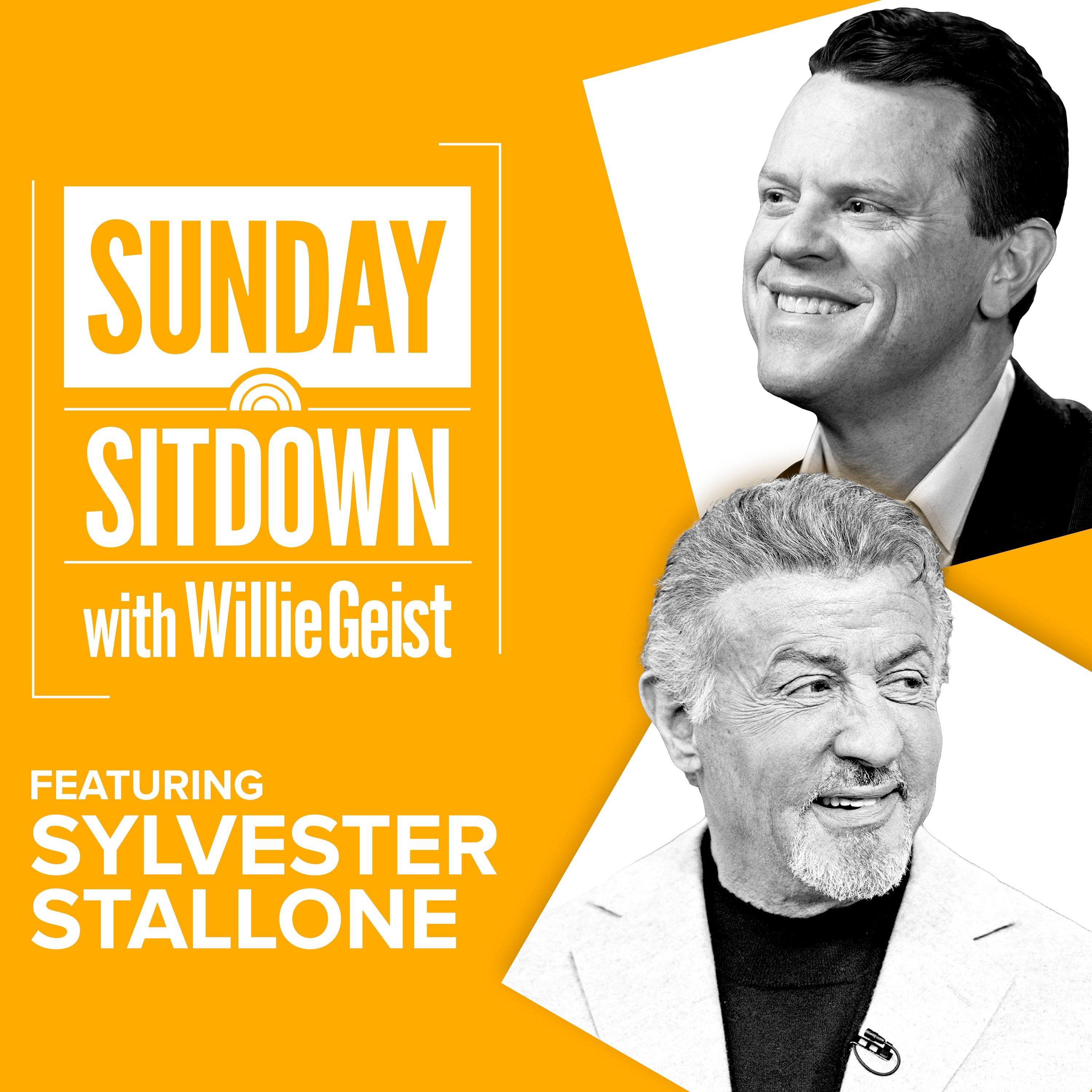
Sunday Sitdown with Willie Geist
Sylvester Stallone on "Tulsa King," "Rocky" and a Lifetime of Fighting Back
00:49:25
From Rocky to Rambo to his latest hit Tulsa King, Sylvester Stallone has spent decades defying the odds. Long before Hollywood stardom, he was a struggling actor in a New York apartment, writing the script for Rocky that would change his life. In this Sitdown, Stallone reflects on the hardships that fueled his drive, why he refused to let anyone else play Rocky, and how receiving the Kennedy Center Honors has impacted his perspective on legacy.
Loading summary
Transcript223 lines
- [00:00]
Sylvester Stallone
The future of Downton Abbey is now in Mary's hands.
- [00:04]
Downton Abbey Advertiser
It's the grand finale we've been waiting for. See it on the biggest screen possible.
- [00:09]
Sylvester Stallone
It will be a sensation with scandalous.
- [00:12]
Downton Abbey Advertiser
Twists and shocking revelations.
- [00:14]
Sylvester Stallone
Should wives have secrets from their husbands?
- [00:15]
Interviewer (Willie Geist's co-host or guest interviewer)
Definitely, but not the other way around.
- [00:17]
Downton Abbey Advertiser
The best is yet to come, so.
- [00:19]
Sylvester Stallone
Off we go for our next adventure. I like the sound of that.
- [00:23]
Downton Abbey Advertiser
Downton Abbey, the grand finale. Gritty PG Parental guidance suggested only in theater september twelveth. Get tickets now.
- [00:30]
Almond Joy Advertiser / Greenlight Infinity Advertiser
This episode is brought to you by Almond Joy. With its perfect blend of real creamy coconut, rich chocolatey taste and a satisfying almond crunch, Almond Joy is the taste that simply takes you away. Blissful tropical flavors will have you feeling sunny vibes and ocean breezes in every bite. Almond Joy is the ticket to a sweet, indulgent, laid back escape, one you'll want to return to again and again. Grab the creamy coconut and chocolatey crunch of Almond Joy today and taste paradise.
- [01:00]
Sylvester Stallone
Foreign.
- [01:08]
Willie Geist
Hey guys, Willie Geist here with another episode of the Sunday Sit down podcast. My thanks as always for clicking and listening along. Got a great one for you this week with an honest to goodness American icon, Sylvester Stallone. Yeah, we got Rocky, guys. We got Rambo, guys. We got the man who stars in the hit Paramount plus series Tulsa King. In that series, Stallone plays a disgraced kind of exiled New York mobster who was once a big shot in the New York mob, goes to jail for 25 years and when he gets out, the mob bosses say, we're sending you to Tulsa, Oklahoma to run a new operation out there. And that's where the series picks up. The most popular, most streamed thing on Paramount. Really good series hints, dare I say, of the Sopranos in terms of his portrayal of a mob boss, not sort of the cliched version of a thuggy old mob boss. So great part for him and his first time in a scripted series, of course, after a legendary movie career that began with Rocky, the 1976 blockbuster and critical hit nominated for 10 Academy Awards, it won Best Picture in 1977. Famously, Stallone wrote that movie alone, living in New York, kind of based on the underdog Rocky Marciano real life story, but so much more than that. Set in Philadelphia where he lived for a time in real life, he wrote it himself, took it around to studios who said, we love the story. We don't love the idea of you unknown actor playing the lead role. They wanted famous people in it. They wanted Redford or Newman or someone like that to play the lead role. He was Offered tons of money for the script, but he insisted on being the star. He hung in there and hung in there until he found a deal that paid him much, much, much less money to star in it. The rest is history. He's gone on to all the big movies he has made, and now, later this year, after 50 years, will be honored with a Kennedy Center Honors. So a lot to talk to him about. He was nice enough to invite us to his home, where he spends the summer out on New York's Long Island. As you can imagine, a beautiful place. We sat out on his back porch on a beautiful late summer afternoon. Nice breeze blowing through just a gorgeous spot. Couldn't have been more gracious, more welcoming, and more fun to talk to. Honestly, a guy who's done and seen it all in Hollywood, in show business, and has it all in really good perspective. So let me step out of the way so you can sit back, relax now and listen to Sylvester Stallone on the Sunday Sit down podcast.
- [03:43]
Interviewer (Willie Geist's co-host or guest interviewer)
Sly, it's great to see you. Thanks for having us.
- [03:45]
Sylvester Stallone
Oh, thank you, Willie. My pleasure. It's the first interview here, so welcome.
- [03:50]
Interviewer (Willie Geist's co-host or guest interviewer)
You look very summery, very rested, very.
- [03:52]
Sylvester Stallone
Happy, young and springtime dory.
- [03:56]
Interviewer (Willie Geist's co-host or guest interviewer)
Rocky made it to the Hamptons, and.
- [03:57]
Sylvester Stallone
Good for him, you know, Rocky made it to the Hamptons. Now, if that isn't a dichotomy, I don't know what is. My God.
- [04:04]
Interviewer (Willie Geist's co-host or guest interviewer)
Might be Rocky4 after he's made it, you know, in the house and the Ferraris and all that stuff. We'll talk about Rocky in a minute, but we got to start with Tulsa King. Congratulations on season three, massive hit series, the number one show on Paramount plus, thank you. It's their most successful thing they've ever done. So where do we find as we enter season three? Where is Dwight and that kind of rag pack?
- [04:28]
Sylvester Stallone
Bunch buddies. Bunch. I thought he's reached a certain level. He's now making money this and that, but he's got ambition. And all of a sudden, an opportunity presents himself in the world of liquor distributorship, you know, owning a distillery. So now he's into something where he could become really formidable in the world of business. But that also comes with a lot of enemies and a lot of jealousy, because if this works, we're talking hundreds, millions of dollars. So that's the premise. And then what makes it interesting is all the ancillary enemies that are coming from all sides that want a piece, and then the FBI gets involved. So it's going to be an interesting premise.
- [05:19]
Interviewer (Willie Geist's co-host or guest interviewer)
Yeah, I mean, I was thinking about this character, we were talking a minute of Dwight, who is from the New York mob.
- [05:26]
Sylvester Stallone
Right.
- [05:27]
Interviewer (Willie Geist's co-host or guest interviewer)
But he's not this sort of stereotypical cliche guy. I'm saying there's more Tony Soprano than some of the other guys, sort of. What do you love about playing that character?
- [05:36]
Sylvester Stallone
I love it because it's very close to my nature. And I thought, why? Because I have kind of an. An offbeat sense of humor. And I thought, I've never seen that in a gangster. Gangster always stern and unforgiving and inflexible. And Tony Soprano was perfect. I mean, he really nailed it in a way that I. For literally, Willie, for. For many years, they were never going to do another gangster show. It's like, they're like. With Westerns. Okay. After John Wayne, we're after Clint Eastwood. That's the end of Westerns. I went, wow. Well, that was the same way with gangsters, but with Taylor Sheridan coming up with this premise of taking a fish out of water. A guy that's basically being banished to the west in the desert where he knows no one, and you have to start your life at 75 from scratch. That's interesting. Yeah.
- [06:28]
Interviewer (Willie Geist's co-host or guest interviewer)
We should say for people, the few people who haven't seen the show.
- [06:31]
Sylvester Stallone
Yeah.
- [06:31]
Interviewer (Willie Geist's co-host or guest interviewer)
Basically, you get out of jail after 25 years, you grow up and come up in the New York Mafia, and then the boss sends you to Tulsa, Oklahoma.
- [06:39]
Sylvester Stallone
Yeah, exactly.
- [06:40]
Interviewer (Willie Geist's co-host or guest interviewer)
And you're kind of dropped out of the sky and said, make us some money.
- [06:43]
Sylvester Stallone
Like. Like Napoleon on Elba. Like, they sent me there basically, to die. To go away. Go away, fly, get out of here. Yeah.
- [06:52]
Interviewer (Willie Geist's co-host or guest interviewer)
They put you into exile, like.
- [06:54]
Sylvester Stallone
Like Napoleon.
- [06:55]
Interviewer (Willie Geist's co-host or guest interviewer)
You mentioned Taylor Sheridan.
- [06:56]
Sylvester Stallone
Yeah.
- [06:57]
Interviewer (Willie Geist's co-host or guest interviewer)
People know Yellowstone and then World and all the shows he's created. This is your first scripted series, Right. TV or streaming.
- [07:06]
Sylvester Stallone
Right.
- [07:06]
Interviewer (Willie Geist's co-host or guest interviewer)
What did it take to bring you in from the movies you've done for your entire career and say, you know what? This is the time to do a series.
- [07:14]
Sylvester Stallone
I've always wanted to do this character, and at my age, the opportunities were. You know, it's like diminishing returns. So when Taylor presented this, it was an interesting concept, and then he was nice enough to let us work back and forth. I knew him when he liked riding horses. I knew him way before he became a writer. That was interesting. He was just. I wanted him actually to work with me on Rocky. I've Rambo 4.
- [07:41]
Interviewer (Willie Geist's co-host or guest interviewer)
Oh, really?
- [07:42]
Sylvester Stallone
I promise.
- [07:43]
Interviewer (Willie Geist's co-host or guest interviewer)
You known him that long?
- [07:44]
Sylvester Stallone
Yes. And he goes, well, I'm writing this thing called Sicario. And I went, oh, okay. I had no idea that he was a writer. And, well, the rest is history. But that's how far back we go. So he remembered that. And when he presented the idea, I go, it's great. Can we add this and add this and take this away and maybe add a little humor? So we just mixed it up, because the original concept, he was pretty hard. Criminal. Yeah. And I thought, we gotta give him sort of a sense of humor and sort of a sense of pathos. Like he's lost everything. His wife, his family. So the audience could go, oh, I can understand that. So he was very human.
- [08:25]
Interviewer (Willie Geist's co-host or guest interviewer)
What is the Taylor Sheridan thing? If you can articulate. It's like working with any great director or creator. There's something. When I see it, I think I know that it's a Taylor Sheridan.
- [08:35]
Sylvester Stallone
He goes right down the middle. You know, you have this elitist. And then you have a really base kind of writing, like blue, yellow, off, sexual, whatever you want to call it. He's in, like, the Middle Earth that has been forgotten for a long time, you know, and he just. It's been so long. I. I think it's only been from the 60s and in the 50s when all these shows, all these Westerns, and it appealed to a certain kind of mentality. Just, wow, it's Americana, sort of relatable. It's good old soap opera. You know, it kind of. It's easy to follow that kind of thing. And it wasn't. There wasn't a lot of message in it. It was just people behaving like people. And it just. You know, it's timing. It's always timely. You know, I mean, it's just. People have been kind of removed from that sort of writing and acting and certainly that visual, like the West. He brought the Western back, and you can see there was a great hunger for that. And then it actually appealed to the east and west coast, too. So it became a massive hit. But that's. That's where he. If you notice everything that's been successful, he goes right for the Middle Earth. Yeah.
- [09:49]
Interviewer (Willie Geist's co-host or guest interviewer)
And it doesn't.
- [09:49]
Sylvester Stallone
Nothing in New York, nothing in California.
- [09:52]
Interviewer (Willie Geist's co-host or guest interviewer)
Doesn't hurt to have a Sly Stallone or a Kevin Costner. Harrison Ford track stars, right?
- [09:57]
Sylvester Stallone
Yeah. He's very smart that way, too, because he finds people that have been around a long time and they're kind of identified with that character. It wasn't as though he took me and says, okay, you're gonna be a librarian. That's not gonna work. I think you're kind of a thug. So they're perfect casting.
- [10:16]
Interviewer (Willie Geist's co-host or guest interviewer)
You also write on this show. You wrote the first episode of this new season. I know. You spend your days here writing at your desk.
- [10:26]
Sylvester Stallone
What torture.
- [10:27]
Interviewer (Willie Geist's co-host or guest interviewer)
What do you love about it?
- [10:28]
Sylvester Stallone
I don't know about anything about it. I really don't. If you notice, every writer looks like Igor. I've never seen, like, hey, Tom Brady. A writer. No, you don't see that. You see that little creepy guy with, you know, his forehead's back here, thick glasses, unshaven, cigarette burns. That's the writer. You know, look at it like Simon Rusky is the classic look of a writer. Yeah. Like one eye here. It's torture. See, I get up and I really feel like I'm nauseous. Your head is spinning. Well, you know, you write. Yeah. You go into a fog. So it's very difficult to have any sort of normal relationship where the writer. They're freaky. They're like brain dead cats. You just don't know what they're going to do.
- [11:18]
Interviewer (Willie Geist's co-host or guest interviewer)
And you say this from a place of love because you can relate.
- [11:21]
Sylvester Stallone
I live it. This is my world. And I go, I look at writing and I want to eat the script. I go, ah, you know, because it doesn't stop Taylor or any writer yourself. When you're on the case, it's 24 7, you're laying in bed, you get up, where's my pencil? God. I got an idea. Your wife is trying to explain to her that, you know, like, she liked to go and to get something, you know, something really important. Let's go shopping. And you're thinking, God, if this person cuts that person's head off in that scene, so in other words, you're somewhere else. Yeah. And it's a terrible thing. It really is horrible. If you could choose any profession in the arts, be a painter, you know what I mean?
- [12:02]
Interviewer (Willie Geist's co-host or guest interviewer)
Which you do as well.
- [12:03]
Sylvester Stallone
Yes. Yeah, exactly. He's slopping around. See, writing is, I guess, for lack of a term, linguistical math is very precise. It's not typing, it's not chatter, like we're conversing. Writing is very specific, good writing. And that's why you go, oh, God, that's memorable. That's memorable. Conversation is not memorable. It's just, look how much we're speaking now. This would have been about 45 pages already in a script.
- [12:35]
Interviewer (Willie Geist's co-host or guest interviewer)
So what do you love about it then, despite everything you just said? Is it seeing the final product?
- [12:39]
Sylvester Stallone
It's a goddamn thing that's like. It just keeps pulling you back in. Because when you read Someone else's writing, you go, okay, that fits that person. But if it doesn't quite fit me, so you try to design it for. It kind of like, diminishes your flaws. The speech pattern is better. I cannot handle that word with four syllables. I'm going to go with this one. So you tailor it so when I do my dialogue, it's very specific to me. And sometimes I'll juxtaposition words and actually, do, you know, all these mala props everywhere? But that's part of the kind of my linguistics to speak like that. And I find that to be a challenge. That's my gift at writing, specifically, scholastically. I was an abomination, really, in English, and my writing was brought before the class, like, this is how not to write. This is what an idiot writes like. But I understood dialogue. Yeah, I really understood that. And it's just. It's the only thing I really did understand. That's why I did so poorly in school.
- [13:50]
Interviewer (Willie Geist's co-host or guest interviewer)
I actually think you have a theory that you are an underrated writer because you are so associated with action movies and Rocky and Rambo and all that stuff. But if you look back at your career, the writing you've done, obviously Rocky stands out among all of them, but it's kind of half of who you are. You're a writer, and then you go out and perform, right?
- [14:10]
Sylvester Stallone
That's true. I mean, I've done. I probably would have done 42 scripts. 43. It's a lot of scripts. So when you do a rewrite, basically, you're doing a page one. It's a whole new script. But because of Writers Guild rules, you know, everyone's name has to be on it. So it's. It's been incredibly strenuous. I always pray. God, I wish someone would drop the Godfather script in front of me. Just doesn't happen. I have never been lucky like that at all.
- [14:38]
Interviewer (Willie Geist's co-host or guest interviewer)
You got to make your own luck.
- [14:39]
Sylvester Stallone
You gotta make your own luck. And, you know, I try to pass that on. I think it's so important. I'm constantly surprised that more actors haven't ventured into other aspects of the creative process, like writing, producing, directing, and. Because I find it so gratifying when you move outside of your safe zone. But it's also incredibly strenuous. I mean, you show me a happy director, and I'll show you a liar. You know, basically, it's a lot of work. Even though you love it, it's just. It's like the end of your private life. It's just your life is now your reality is a fantasy world. And when you come back to this reality, you're not as gratified. He's like, oh, I want to get back on the movie set where I control everything. It's a very addicting situation, I'm sure.
- [15:36]
Interviewer (Willie Geist's co-host or guest interviewer)
And you've had it for 50 years almost.
- [15:38]
Sylvester Stallone
And I don't want to go there anymore. I'll never direct again.
- [15:40]
Interviewer (Willie Geist's co-host or guest interviewer)
Yeah, that's it.
- [15:41]
Sylvester Stallone
That's. Oh, yeah. I just. Why don't I just take a bullwhip and beat myself with it and just cut to the chase? Jesus, it's torture.
- [15:51]
Interviewer (Willie Geist's co-host or guest interviewer)
You're painting quite a picture of the movie business between the writers and the director.
- [15:56]
Sylvester Stallone
My profession sucks, folks. Okay? You're guaranteed 96% unemployment. Welcome.
- [16:06]
Interviewer (Willie Geist's co-host or guest interviewer)
Don't do it, kids.
- [16:07]
Sylvester Stallone
Don't do it.
- [16:08]
Willie Geist
Hey, guys, thanks for listening to the Sunday Sit down podcast. Stick around to hear more from Sylvester Stallone right after the break.
- [16:16]
Sylvester Stallone
Imagine relying on a dozen different software programs to run your business, none of which are connected, and each one more expensive and more complicated than the last. It can be pretty.
- [16:27]
Willie Geist
Now imagine Odoo.
- [16:28]
Sylvester Stallone
Odoo has all the programs you'll ever need and are all connected on one platform. Doesn't Odoo sound amazing?
- [16:36]
Willie Geist
Let Odoo harmonize your business with simple, efficient software that can handle everything for.
- [16:41]
Sylvester Stallone
A fraction of the price. Sign up today@odoo.com that's o d o o dot com. The future of Downton Abbey is now in Mary's hands.
- [16:51]
Downton Abbey Advertiser
It's the grand finale we've been waiting for. See it on the biggest screen possible.
- [16:56]
Sylvester Stallone
It will be a sincere sensation with.
- [16:58]
Downton Abbey Advertiser
Scandalous twists and shocking revelations.
- [17:01]
Sylvester Stallone
Should wives have secrets from their husbands?
- [17:03]
Interviewer (Willie Geist's co-host or guest interviewer)
Definitely. But not the other way around.
- [17:04]
Downton Abbey Advertiser
The best is yet to come.
- [17:06]
Sylvester Stallone
So off we go for our next adventure. I like the sound of that.
- [17:10]
Downton Abbey Advertiser
Downton Abbey, the grand finale. Gritty PG. Parental guidance suggested only in theater September 12th. Get tickets now.
- [17:18]
Sylvester Stallone
New one a day kids Multi with iron gummies.
- [17:20]
Downton Abbey Advertiser
Make getting your kids iron easier, even.
- [17:22]
Sylvester Stallone
If they're the world's best negotiator.
- [17:25]
Almond Joy Advertiser / Greenlight Infinity Advertiser
Eric, finish all your broccoli.
- [17:27]
Sylvester Stallone
One broccoli.
- [17:28]
Almond Joy Advertiser / Greenlight Infinity Advertiser
Four broccoli.
- [17:30]
Downton Abbey Advertiser
Two broccoli.
- [17:31]
Almond Joy Advertiser / Greenlight Infinity Advertiser
No Eric.
- [17:32]
Sylvester Stallone
Okay, three broccoli and one brussels sprout. Final offer.
- [17:37]
Downton Abbey Advertiser
With two thirds of their recommended daily iron.
- [17:40]
Sylvester Stallone
New one a day kids make mealtime drama a little easier.
- [17:43]
Willie Geist
Click to shop now.
- [17:48]
Sylvester Stallone
Welcome back.
- [17:48]
Willie Geist
Now more of my conversation with Sylvester Stallone.
- [17:52]
Interviewer (Willie Geist's co-host or guest interviewer)
I was talking about all the stars that Taylor Sheridan attracts. Sam Jackson comes in this season. What's it like working with Sam, he.
- [17:59]
Sylvester Stallone
Comes into the show and, you know, he's just a star. And it's interesting. You work with actors and then there's stars. So as soon as he comes on and we saved him for the last couple of episodes. Tremendous elevation. It's like football. You know, you have a great quarter, but then you get the best receiver in the world. You're okay. Now it's on. It's. It's going to be really special. So he's. He comes on. He's an affiliate of mine. First he shows up, he wants to murder me like twice in one day. I go, let's. Let's try to bury this hatchet. And we become comrades because we've known each other for a long time. And then I think the eventual plans is for him to have his own show.
- [18:43]
Interviewer (Willie Geist's co-host or guest interviewer)
Yeah.
- [18:43]
Sylvester Stallone
And become like the king of nola.
- [18:45]
Interviewer (Willie Geist's co-host or guest interviewer)
New Orleans.
- [18:46]
Sylvester Stallone
I know, yeah. Yeah.
- [18:47]
Interviewer (Willie Geist's co-host or guest interviewer)
It's just keep.
- [18:48]
Sylvester Stallone
It's just a natural thing. I mean, Taylor Sheridan, we could do King of la. I mean, there's. Because each region has a whole different mechanism and, and life of its own. Like New Orleans and Tulsa, you get like Jupiter and Mars. Yeah. Not even in the same solar system.
- [19:06]
Interviewer (Willie Geist's co-host or guest interviewer)
And the fish out of water element of Tulsa really works.
- [19:10]
Sylvester Stallone
Right.
- [19:10]
Interviewer (Willie Geist's co-host or guest interviewer)
New York and Tulsa. Speaking of stars in the show, your daughter working with your daughter.
- [19:16]
Sylvester Stallone
No. What is that? Like Gary, Scarlett, why don't you try this? Why don't you mind your own business?
- [19:25]
Interviewer (Willie Geist's co-host or guest interviewer)
Is that the dynamic even on set?
- [19:27]
Sylvester Stallone
No, I'm money trucking. She's fantastic. But being a parent, you realize you're the dumbest person in your life. You're like, you don't know it. It's really quite remarkable. But the guy with a leaf blower tells us. Yeah, he makes sense. Right? It's just. And I was the same way. You always seem to find your. Your knowledge from other people because the proximity of the parents. You know what I mean? It's just the way I was. So.
- [19:55]
Interviewer (Willie Geist's co-host or guest interviewer)
Yeah.
- [19:56]
Sylvester Stallone
And that's why peer pressure is so overwhelming, because you get your information from your friends who are also struggling to figure it out. Right. So. But no, she. She's great. And she's been doing this for God. She's doing. She's doing impressions of me, which is pretty frightening at about 4 years old. Like, get over here. Like pounding the death guy. Am I that bad? Worse.
- [20:24]
Interviewer (Willie Geist's co-host or guest interviewer)
Did she have the Stallone snarl? Kind of the whole thing.
- [20:27]
Sylvester Stallone
If I. Oh, I wish I could show it to you. Wow. Am I that creepy?
- [20:36]
Interviewer (Willie Geist's co-host or guest interviewer)
It's a wake up call, right?
- [20:37]
Sylvester Stallone
It is.
- [20:37]
Interviewer (Willie Geist's co-host or guest interviewer)
Is that me?
- [20:38]
Sylvester Stallone
That's me, yeah. You know, out of the mouth of babes comes truth. Always there it was. Yeah.
- [20:43]
Interviewer (Willie Geist's co-host or guest interviewer)
Well, that's got to be so cool. I've got a daughter, too. That's amazing.
- [20:47]
Sylvester Stallone
How old's your daughter? She.
- [20:49]
Interviewer (Willie Geist's co-host or guest interviewer)
I dropped her at college five days ago.
- [20:51]
Sylvester Stallone
Okay. So, you know, she's talking about.
- [20:53]
Interviewer (Willie Geist's co-host or guest interviewer)
She's launched.
- [20:54]
Sylvester Stallone
I know. She's killer, right? It is.
- [20:56]
Interviewer (Willie Geist's co-host or guest interviewer)
But also, I'm excited for, you know, she's in a good place, she's happy.
- [21:00]
Sylvester Stallone
Yeah.
- [21:01]
Interviewer (Willie Geist's co-host or guest interviewer)
I'm already getting the videos of how much fun she.
- [21:04]
Sylvester Stallone
I'm good. Good.
- [21:05]
Interviewer (Willie Geist's co-host or guest interviewer)
We'll see if that lasts. As the house starts to feel a little empty, you know?
- [21:09]
Sylvester Stallone
I know.
- [21:10]
Interviewer (Willie Geist's co-host or guest interviewer)
Yeah. There's a missing. We had four of us. One of the wheels is off the car now. So we're trying to figure out, the three of us, how it works.
- [21:16]
Sylvester Stallone
Right. When the kids leave, here's the key to happiness. Buy kavapoos. We have three kava poos, and they're now our adopted hairy children. It's like, yes, my child has four legs. They crawled in a mustache. That's the new family. Okay.
- [21:35]
Interviewer (Willie Geist's co-host or guest interviewer)
We have one golden doodle, and I think we need to add one just to fill that void. Right. We start with two, and then you just keep going.
- [21:42]
Sylvester Stallone
You get the big one, the two midgets. They're great. Good advice.
- [21:46]
Interviewer (Willie Geist's co-host or guest interviewer)
I'll pass it on to my wife. Well, congratulations on Tulsa King.
- [21:50]
Sylvester Stallone
Great show. Thank you.
- [21:51]
Interviewer (Willie Geist's co-host or guest interviewer)
People love it. Since we're in New York, I want to just go briefly back to your beginnings, because I think a lot of people sort of pick up your story with Rocky in 76. But your life, to me, is so interesting. Born in New York City, you're in and out of schools. Your family situation's complicated. You moved to Maryland, then you're back to Philly.
- [22:12]
Sylvester Stallone
Yeah.
- [22:12]
Interviewer (Willie Geist's co-host or guest interviewer)
How did all that sort of hardship mold you and form the guy you became?
- [22:18]
Sylvester Stallone
It's interesting you bring that up, because I'm doing a book with Harper Collins. Because when you really think back, I think back, how did Rocky ever get made? I mean. And then I realized perhaps all this confusion and chaos and turmoil. My. My life, which it really was, reads like a bad novel. So I made it a novel that I. I try to rationalize it instead of feeling sorry for myself. I said, maybe all this hardship and extraordinary chaos prepared me for what was coming, which is an unbelievable, difficult voyage to get this film made when you are nobody. And, you know, you and I describe arriving in New York when I Came back to New York, you know, you have maybe 400. You don't know one person, and you're in a city of 7 million at the time. And I go, wow, that, that. Why wasn't I scared at that time? Because that's a frightening concept. Because to me, the worst malady in the world is loneliness. It is like. And you have nobody to talk to. No one to share your fears with. Nothing. No one to imbue you with confidence, like, you can do it. No, nothing. So you talk to yourself. And I realized you, I think all the, all the embattlement of my, my upbringing, it was tumultuous, to say the least, prepared me for it. And so I'm really very. It's almost have this real, like, Let me see this. What is the word I'm looking for? It's like having your worst enemy go over a cliff in your brand new Ferrari. It's like I have such mixed feelings about my past. Like, was it good or did that really help me? Did it not? And that's what the book is about because it's, it's been an extraordinary ride. Yeah. Yeah.
- [24:28]
Interviewer (Willie Geist's co-host or guest interviewer)
And the good feelings come later, when you have some perspective, but in the moment, you're not seeing that.
- [24:34]
Sylvester Stallone
But there's also this incredible sense of emptiness because why couldn't it been, you know, like, a pleasant upbringing? Why, why did it have to be so dark? Dark? That kind of a thing. And with my kids I try to avoid. My wife is like, she's godsend, and we've had a really wonderful life, but that wasn't the case. But would I have been here if it was a pleasant, like the, the Waltons. It was like a. Hi, Pop. Hey, Good night, sweetie. Good night, son. Like, ow. That kind of a thing.
- [25:11]
Interviewer (Willie Geist's co-host or guest interviewer)
The Waltons. You were not.
- [25:13]
Sylvester Stallone
No, no. I was like the Mansons. It's like, you know, like what?
- [25:20]
Interviewer (Willie Geist's co-host or guest interviewer)
So where does the love of performance and acting come in? In the middle of all that chaos? How do you find that that's something that gives you joy?
- [25:29]
Sylvester Stallone
That that was my relief. I, I didn't have friends. I, I, I just didn't know how to make friends. I was always a little off center. And what appealed to me was true fantasy. Like, I, I was always looking for a real male role model, and I couldn't find it. It certainly wasn't around the house, and it wasn't until I went to the movie theater. But I was never into, like, real serious actors. I was into escapism, 7th Voyager, Sinbad, Hercules, these kinds of Things. I think that everyone, you know, everyone on the planet has such a distinctive DNA and characteristics. I mean, it's not just their fingerprints that are different. They'll never be another you as exact. You never be another me. I mean, they'll be similar, but not. And it's remarkable, even in the same family, you have five distinctly different children. You go, how is that possible? It's just the way I was made, that I was into escapism and self expression and I would be in front of a mirror, you know, miming, doing, mimicking all my life. And I never, never fit in. And I realized that when around third or fourth grade. My father was a beautician, so he had these capes that he put around women. And I took one, I dyed it blue and I wrote a backward S on it. And I had a pair of like Speedos and my skinny leg. My legs look like two strings hanging from my waist. They're just thin. And I went to school dressed in Superboy under my clothes. And then when I was exposed, like, teacher, you know, we have Superboy in the class. And they maybe not put. And they actually put like a dunce cap. They really. Yeah, I wore a dunce cap. Yeah, they actually did. You know, in 1956, there was. Yeah, but I almost enjoyed. Wasn't as though I took it like, oh, wow, I'm really weird. I went, wow, everyone's looking at me like, hey, showbiz. Like, I was. I was a classroom dunce, but I just didn't fit in. And so I was always being ostracized like that. And that sense of being alone is the key to my success. I was able to be alone. Well, I'll tell you the truth. When I went to New York when I was 23, and like I said, I knew nobody in four and a half years, I never went to one restaurant, I never went to a club, I didn't have friends, I never went to a party, a bar, nothing. I went one time, it was New Year's Eve, 1970. I went to Times Square alone and I looked around. Every one of these people wants to be somebody. You better go home and start working. Wow. Hard, because this is your competition. Like, I just looked around, so I never. I never saw so much humanity in one spot. And I realized this is the competition. So the more you hit it, the more you grind, the more you sacrifice any kind of outside stimulus and you really focus on that one monotonous chore. It is monotonous. That's the only way you can Actually say on your deathbed at the end, okay, I didn't make it, but, God, I gave it everything I had. And I think that's one of the biggest frustrations of the human race, is people never got the opportunity to compete. Yeah. You know what I mean? It's one thing. All right. If I fail, I'll give you one little story. It was interesting. Jerry Cooney, remember the fighter? Well, there was the toughest guy in Boston. He was the Hell's angel. Big guy, almost 300 pounds. And he comes into the gym because I think I had the potential to be a champion, too. Two, and Cooney looks at me, get into the ring and rang the bell. The fight was about 11 seconds, including the count. It was, how long did it take Cooney to walk to the middle of the ring and hit him? One shot. And the guy, when he came out of this fog, goes, thank you. Now, I know I made the right decision to be a Hell's angel because I never would have made it as a fighter. And. But see, that's what I mean. There's so many people that will never know if they had it because the opportunity is not there, and that leads to such frustration. I could have been a singer. I could have been this, I could have been that. And it leads to just, you know, a sense of loss. Yeah. So I think it's like a blessing when you're. When your expectations are pretty simple. Yeah, I don't mind. I'm working with the other guys on the conveyor belt, and it's like, I'm happy. They're my friends. And then you have people maybe like yourself, like me, that don't know how to do that. They just have these unex thermos. They're just this. What would I say? I'm trying to go after something that is really so unrealistic.
- [31:05]
Interviewer (Willie Geist's co-host or guest interviewer)
Right.
- [31:07]
Sylvester Stallone
That the opportunity, the chances of me making it with those kinds of aspirations were forget a million to one. It's like, yeah, well, like, in New York, it's seven million to one or more. Yeah. So I. I just don't know. We're getting back to your question. If it's my upbringing that prepared me for this isolation for years and years, but it finally paid off when the time came, you know, you're prepared. I understood how, like, rejection. I became imperfect. I became like marble. I just went crack and went. Because I expected rejection. I didn't expect acceptance was like, what? Yeah, you like me? What are you nuts? You know, it's like, I'm so used to rejection. Because we are in the rejection business. Know that you're not in the. You're in the no business. No, not today. No. You're not the right type. No. You're too taut, you're too short, you're too this, you're too that. You slur no. Your eyes do. I expect no. Don't disappoint me and say yes.
- [32:16]
Interviewer (Willie Geist's co-host or guest interviewer)
And during this time, I didn't. That's so fascinating, the loneliness aspect.
- [32:20]
Sylvester Stallone
Oh, big time.
- [32:21]
Interviewer (Willie Geist's co-host or guest interviewer)
But also, you're working in a movie theater. I think you're cleaning the lion cages at the Central Park Zoo.
- [32:26]
Willie Geist
Is that true?
- [32:27]
Sylvester Stallone
That's true. I got the job literally in five minutes. Nobody wanted that job. Like, I go, can I get a uniform? Because my clothes are putrid? Wow.
- [32:38]
Interviewer (Willie Geist's co-host or guest interviewer)
So that's. So that's your life, and yet you still have this dream of being an actor. And exactly what you just described tells the whole story of how Rocky came to be, which is, I'm alone. I'm gonna lock myself in a room. You famously paint the windows so there's no distraction. Block everything out.
- [32:56]
Sylvester Stallone
No. No phone, Nothing. Nothing.
- [32:58]
Interviewer (Willie Geist's co-host or guest interviewer)
And you write the script for Rocky. What inspired you to do that? Why was that the story that was going to.
- [33:05]
Sylvester Stallone
Because, you know, after a while, you realize what. You're perceived a certain way by people. I was always perceived as a troublemaker or an outlier that I just didn't fit in. I was the kind of guy, no matter what, if I. When I was younger, I would go to a school dance, someone. We go, what are you looking at? What are you saying? And wham. Every time. I've actually had situations when I was on a bus and I'm sitting in the last seat on a bus. I remember I was in New York, and the guy pulled the bus over. It was like, two in the morning. It was me, the driver, the driver and me. And he literally pulled it over in 33rd Street. He goes, come on, get out. You want to do this? I go, what do you. He goes, why are you looking at me in the rearview mirror? I said, I'm at the back of the bus. It's a mile to the front. Yet that. You know, there's always this situation where I can't even tell you how many times it was. I just didn't fit in. I. I don't know if I didn't want to fit in or some vibe I was giving off. I just knew I. I just had a different. Yeah. Way of. Of living in society. I didn't mind being alone. Because I knew if the more I spent time talking, the more you're giving away your. Your currency. And you only have so much in time as your currency. And I didn't want to spend it, like, over here and over there, this and that. I don't know where I got that from, but it paid off.
- [34:46]
Interviewer (Willie Geist's co-host or guest interviewer)
And you say, I'm going to control.
- [34:47]
Willie Geist
My own destiny here.
- [34:48]
Interviewer (Willie Geist's co-host or guest interviewer)
I'm going to. I want to dictate the terms of this. I'm writing the script.
- [34:52]
Sylvester Stallone
Getting back to your question. So I'm perceived as kind of the troublemaker or the thug. Everything I'm cast in, I'm beating up Woody Allen, I'm beating up Drax, Lemon, David Carradine. I'm always that guy, but I don't see myself that way. I want. Oh, I kind of like. I'm like Ferdinand the Bull. I'm not really that guy. And. But that's the way you perceive. So after going through, you know, hundreds of rejections, I go, maybe that's what it is. I'm going to write a story about that kind of guy. But he has goldfish, he has turtles. He's a nice guy. He can't even do his job properly. You know, he is a loan shark collector, you know, Poor guy. He just was terrible at being mean. Yeah. And I felt that way. So it came very easy. The hard thing was finding a format no one cares about. An actor's dilemma. It's just not relatable. Yeah, a fighter is. And everyone knows, like, oh, yeah, the bully kind of guy. Okay, be the. Be the perceived bully. But also boxing. There's two things that I think are just genetically implanted in us. Racing and fighting. We're fighting for the moment. We're fighting to pay our taxes, failing to raise our children, fighting to, you know, appease the boss. And everybody's a race. Race for time. Get here. Just, you know, it's just. They race turtles, they raise raindrops, horses, everything butterflies. But, you know, so I thought if I do fighting, it's very relatable because everyone can sort of relate to that, even if they're blue collar, white collar people. So. Wow. Then I needed a prototype. Everyone thinks it was Chuck Wepner. It wasn't. I used Chuck Wepner because it was current. Right. And he knocked Ali down, but it was Rocky Marciano. We were the same size Italian. He was £186. I was, you know, so it was believable. Yeah. That was my prototype. And I thought, okay, this will work. Boxing, relatability the tough guy. But he's really kind of soft and gentle inside. And the most important thing is he realizes he's a loser. He accepts it. I'm a bum. So when they ask him, hey, you want to fight the champion? Nah, I'm really not that good. I'm a Hammond egg. It'd be bad fight. What character have you ever seen say that? Yeah. You know what I mean? Yeah. And then when I said when I wrote it at the end for him to lose because he won. Everyone has a different standard. You don't have to be the first one over the finish line. It's where your goal is. I want to be at least fourth. Then you won. If fourth was your goal, so be it. Rocky knew he'll never be Apollo Creed. So I just want to be standing. And subliminally, everyone wants to be standing on their own two feet at the end of their life, saying, I did the best damn thing I could. And that's. That's what the metaphor was.
- [38:20]
Willie Geist
Stick around for more of my conversation with Sylvester Stallone. Right after a quick break.
- [38:27]
Sylvester Stallone
A real Etsy buyer review for handmade home decor by a real Etsy seller. I could not be happier about the quality or the wonderful personal message supplied with it, describing its journey into existence. Discover original items created by real people.
- [38:42]
Downton Abbey Advertiser
And loved by real people just like you.
- [38:45]
Sylvester Stallone
Special starts on Etsy Shop the Etsy app. The future of Downton Abbey is now in Mary's hands.
- [38:55]
Downton Abbey Advertiser
It's the grand finale we've been waiting for. See it on the biggest screen possible.
- [38:59]
Sylvester Stallone
It will be a sensation with scandalous.
- [39:02]
Downton Abbey Advertiser
Twists and shocking revelations.
- [39:04]
Sylvester Stallone
Should wives have secrets from their husbands?
- [39:06]
Interviewer (Willie Geist's co-host or guest interviewer)
Definitely. But not the other way around.
- [39:08]
Downton Abbey Advertiser
The best is yet to come.
- [39:09]
Sylvester Stallone
So off we go for our next adventure. I like the sound of that.
- [39:14]
Downton Abbey Advertiser
Downton Abbey, the grand finale. Gritty PG parental guidance suggested only in theater September 12th. Get tickets now.
- [39:21]
Sylvester Stallone
Ondeck is built to back small businesses like yours.
- [39:24]
Interviewer (Willie Geist's co-host or guest interviewer)
Whether you're buying equipment, expanding your team, or bridging cash flow gaps, Ondeck's loans.
- [39:30]
Sylvester Stallone
Up to $250,000, help make it happen fast. Rated A by the Better Business Bureau and earning thousands of five star trustpilot.
- [39:37]
Interviewer (Willie Geist's co-host or guest interviewer)
Reviews, Ondeck delivers funding you can count on.
- [39:40]
Sylvester Stallone
Apply in minutes@ondeck.com depending on certain loan attributes. Your business loan may be issued by Ondeck or Celtic Bank.
- [39:46]
Interviewer (Willie Geist's co-host or guest interviewer)
Ondeck does not lend to North Dakota.
- [39:48]
Sylvester Stallone
All loans and amounts subject lender approval. Welcome back.
- [39:53]
Willie Geist
Now to the rest of my conversation with Sylvester Stallone.
- [39:57]
Interviewer (Willie Geist's co-host or guest interviewer)
How did you. Given where you were in Life and some of the struggles you were having. How did you have the. The guts, I guess, to turn down money for a studio to take it and cast, I don't know, Robert Redford or somebody else in the role? Why was it so important to you to hang on to it and that you be in the movie?
- [40:19]
Sylvester Stallone
Well, superficially, it's like temporary insanity. But I had almost mastered the art of poverty. I knew what it was like. I wasn't afraid of it. But I just. I said, this is the crossroad. You're never going to have a part like this. This, you wrote this, you bled for this. This is basically you Sly. If you get rid of this, yes, you'll have 360 grand, which was worth a lot more back then. But that will go. Eventually that will be gone. And you will be the most bitter human being because the entire thing was not about selling out. It was about integrity. So I said, you know, I'm gonna put it on one big roll because I'm never gonna find this again. I'm always gonna be the third guy through the door. Always a thug, always the mug, always the dumb guy. And I said, if I let this go, I'm letting my life go because I'm never gonna find this again. Never. Because I know what I was offered. And it was just. Just blind faith.
- [41:40]
Interviewer (Willie Geist's co-host or guest interviewer)
But you knew somewhere in your gut it had to be this way, right?
- [41:45]
Sylvester Stallone
I had that, yes. There was a real long shot. I mean, I don't know why, when people say, like, what's the secret? It's. I'm not a big believer in miracles, but it was a miracle today and for to be a nobody. And then I didn't understand the politics at the time either. I literally had never voted. I didn't understand. And every film was politically oriented, you know, like all the President's Men, Taxi Driver Bound for Glory, you know, all these. And Rocky, it was just, you know, it was totally like an innocent thing. Yeah. You know what I mean? It wasn't trying to make a statement, per se. So that's what I'm saying. It just. It would never happen today. Never. Rocky would never be made today.
- [42:41]
Interviewer (Willie Geist's co-host or guest interviewer)
No, sadly, we had Matt Damon on the show a couple years ago. I don't know if you've heard this from him or other people, but he said in our interview when he and Ben Affleck wrote Good Will Hunting, they wanted to be in it, but nobody knew who they were.
- [42:55]
Sylvester Stallone
Right.
- [42:55]
Interviewer (Willie Geist's co-host or guest interviewer)
And every studio they went into, they wanted Brad Pitt and Leonardo DiCaprio and they, Ben Affleck and Matt Damon, before they went into every meeting, looked at each other and they go, Stallone, Stallone. And that, that's why they said he did it, we can do it. And that was their thing. And that's why Good Will Hunting became the launching pad for both of their careers because of you. He told me that.
- [43:24]
Sylvester Stallone
Thank you. Wow.
- [43:25]
Interviewer (Willie Geist's co-host or guest interviewer)
So that's their rallying cry. Was Stallone and just look at each other. Stallone.
- [43:29]
Sylvester Stallone
That's so cool. Yeah.
- [43:30]
Interviewer (Willie Geist's co-host or guest interviewer)
So they followed your, followed your lead.
- [43:31]
Sylvester Stallone
Thank you guys. Appreciate it. Yeah, you know, I don't know what it is. Well, it was just, you know, I, I just, I don't know, it's just maybe the way I, I'm built, I, I don't give up. You know what I mean? It's just. But more importantly, I realized I was never going to make it as an actress. I could see that was just the thug and that's why I pivoted to writing. So that failure was really an opportunity of something. If you said, Sylvester Stallone's gonna be a writing, he said, no, a writer. He said, no, no, no. You mean like a house painter? And I said, no, a writer. Really? No. But it was just being isolated. I would spend so much time educating myself how to write. I go to the library, I read. I can't even tell you how many original writings from Longfellow and Emerson and Cotton Mather and Poe. I would go to the basement in the library and they had the actual writings, like the actual parchment, the paper. And that would blow my mind. I'm in a room with 52 million books. So what is your excuse? You know, you better like if they can do it. 52 million books. So I'd always be criticizing myself and say, you come on lousy, lazy. Oh, you know, in the mirror, because I had no one to talk to, I was constantly be doing this self abrasive analysis. Oh yeah.
- [45:09]
Interviewer (Willie Geist's co-host or guest interviewer)
So given the isolation, the loneliness you're describing, I cannot imagine what it was like to have Rocky become the hit. It was more than $200 million at the box office. To have all the Oscar nominations and wins best Picture. All of a sudden you literally are one of the most famous people in the world. How did you deal with that level of celebrity? And let's go make another one. Let's go do Rambo and all the things that happened from there. How did you flip that switch from becoming a guy alone in New York for almost five years to one of the most famous people in the world?
- [45:41]
Sylvester Stallone
It was a catastrophic change, I'll say that. And I don't think I handled it as well as I should have because there was a sense of I told you so. And that came out. And I think it kind of alienated me with, you know, some of the press and things. And I totally understand it when I go back and I read some of the interviews and this was petulance. That's all it was. It was me getting back at my, you know, childhood, saying, I told you so, I told you that kind of thing. I'm not the dumbest guy. And unfortunately, I was relating that kind of angst to strangers. And they're going, whoa, you should be dancing up and down and flying, you know, firing off rockets. What is your anger here? And it took me a while, 70 years to figure that out. That. Okay, now I get it. It's a minor miracle. It's a privilege. And when you realize there's not that much light at the end of the tunnel, your days are pretty valuable and numbered. That's when you really take, you know what? I love this, and I love my children, I love my wife. You know, it's not going to be here forever. Everything else is really trite. Yeah. You know what I mean? It was just to be perturbed of, you know, that old thing. Don't let the small bother you. Well, I let it bother me. You know, criticism, this and that. You know, you take, like when you read your first review and he goes, stallone's career is stranger than crib death. Wow. Oh, yeah. Arse. Oh, yeah. It was like, that's tough. The newest actor to crawl from underneath Brando's trench coat. I mean, the fact that I can.
- [47:41]
Interviewer (Willie Geist's co-host or guest interviewer)
Still remember, I was gonna say memorize these.
- [47:43]
Sylvester Stallone
That's. It's really. And what is that? What I. It's really quite fascinating. You can get all these accolades, but one biting review or slanderous statement, and I go, what is that? Is that because you had so much of that your whole life and it just. It triggers you? Is that what it is? Because words, you know, words don't mean anything unless they're true. I used to believe that. That's bs. They hurt. They're bullets. Yeah, they really are.
- [48:20]
Interviewer (Willie Geist's co-host or guest interviewer)
The modern version of that is social media. You post something, you have a thousand flattering comments, and you find the one. One you suck, and you go, I want to go find that.
- [48:30]
Sylvester Stallone
Oh, blocked out. Yeah.
- [48:31]
Interviewer (Willie Geist's co-host or guest interviewer)
Why doesn't he. What did I do wrong to that?
- [48:33]
Sylvester Stallone
Yeah. You know, why don't you say that to My face. I know, I know, I know, I know. But I think that's. That's the sense. I don't know if it's everybody, but I know in the artistic world, it's devastating because I think most actors, because they're going to hate me for this, are not complete individuals. And that's not a negative. Is what I'm saying, is they have this void inside, and. And the acting fills that void. It's like, okay, I have my character, but I feel more at home sometimes playing someone else. That's when I really shine. That's what I live for, because I have, you know, certain accidents, sorrow inside. And, you know, there's a. My life wasn't so full fulfilled, but when I'm acting, I'm getting the love of strangers. You're getting adulation. And then one bastard like rains on your parade. It's. It's devastating, and it's just a phenomenon that comes from your childhood.
- [49:40]
Interviewer (Willie Geist's co-host or guest interviewer)
Yeah.
- [49:41]
Sylvester Stallone
You weren't imbued with all this sort of your parents that, you know, have thick skin and you're great. You're wonderful. In the matter what you try. I'm with you. I love you. I'll be with. No. So it kind of brings you back down to what you used to be or where you came from. That's what it is for me. I don't know if it's for anyone else.
- [50:03]
Interviewer (Willie Geist's co-host or guest interviewer)
Always proving somebody wrong.
- [50:04]
Sylvester Stallone
Oh, I'm telling you, before I let.
- [50:07]
Interviewer (Willie Geist's co-host or guest interviewer)
You go, Sly, I've got to congratulate you on the Kennedy Center Honors.
- [50:10]
Sylvester Stallone
Oh, wow. Yeah, I know.
- [50:12]
Interviewer (Willie Geist's co-host or guest interviewer)
What was that phone call like?
- [50:14]
Sylvester Stallone
That was from him himself. Yeah, and I thought it was an impersonate. I go, come on, is this my brother? You know, kind of thing? You know, and. Oh, my God, I thought that was never gonna happen. You know, you just put that, like, oscar, never gonna happen. So I. I kind of disassociate myself from it. I don't put that on my bucket list. I got. So. I was startled. Really was. Now what do I do? Do I have to dance? What do I do?
- [50:49]
Interviewer (Willie Geist's co-host or guest interviewer)
Yeah, I can't wait to watch the ceremony. Does it get you thinking about legacy? Is it a moment for you to think about your career and how far you've come from those lonely days in New York City?
- [50:59]
Sylvester Stallone
Yeah, it does. It does. But I really think, you know, I. I don't think a lot of artists dwell on what they've done. It's like, what's next? What's next? I want to be relevant. I want to be loved. I need something else. And when those opportunities diminish. That's why I said an artist dies twice, and the second time's the easy one. When you have this, nobody wants you anymore. That's devastating. And it's not right because a lot of the actors, I got better as I got older, you know, and then just when you really have developed, you have all this wealth of living life. Next. But that's just a general. What would you say? The. The next generation has to be defined by who they like. They're not going to like your music. They're not going to like your clothes. It's just the way it is. That's progress. Sad but true.
- [52:03]
Interviewer (Willie Geist's co-host or guest interviewer)
And yet here you are, still the number one show.
- [52:08]
Sylvester Stallone
I'm a vowel. You know what I mean? A, E, I, O, U, and sometimes Y. That's me. I'm just a Val.
- [52:17]
Interviewer (Willie Geist's co-host or guest interviewer)
Well, it's working for you.
- [52:19]
Sylvester Stallone
Thank you.
- [52:19]
Interviewer (Willie Geist's co-host or guest interviewer)
Sly. Thanks for having us.
- [52:20]
Sylvester Stallone
Thank you, buddy. Appreciate it. What a pleasure to talk to you. Thank you. Ciao.
- [52:27]
Willie Geist
My big thanks again to Sylvester Stallone for a great conversation and for opening his home to us.
- [52:33]
Interviewer (Willie Geist's co-host or guest interviewer)
It was a great day.
- [52:34]
Willie Geist
You can check out Tulsa King, streaming on Paramount. Season three debuts on September 21st. And my thanks to all of you for listening again this week. If you want to hear my conversations with our guests every week, be sure to click follow so you never miss an episode. And don't forget to tune in to Sunday Today every weekend on NBC to see these interviews with your own two eyes. I'm Willie Geist. We'll see you right back here next week on the Sunday Sit down podcast.
- [53:20]
Almond Joy Advertiser / Greenlight Infinity Advertiser
Did you know 39% of teen drivers admit to texting while driving? Even scarier, those who text are more likely to speed and run red lights. Shockingly, 94% know it's dangerous, but do it anyway. As a parent, you can't always be in the car, but you can stay connected to their safety with Greenlight Infinity's driving reports. Monitor their driving habits, see if they're using their phone, speeding and more. These reports provide real data for meaningful conversations about safety. Plus, with weekly updates, you can track their progress over time. Help keep your teens safe. Sign up for Greenlight infinity@Greenlight.com podcast.