← Sunday Sitdown with Willie Geist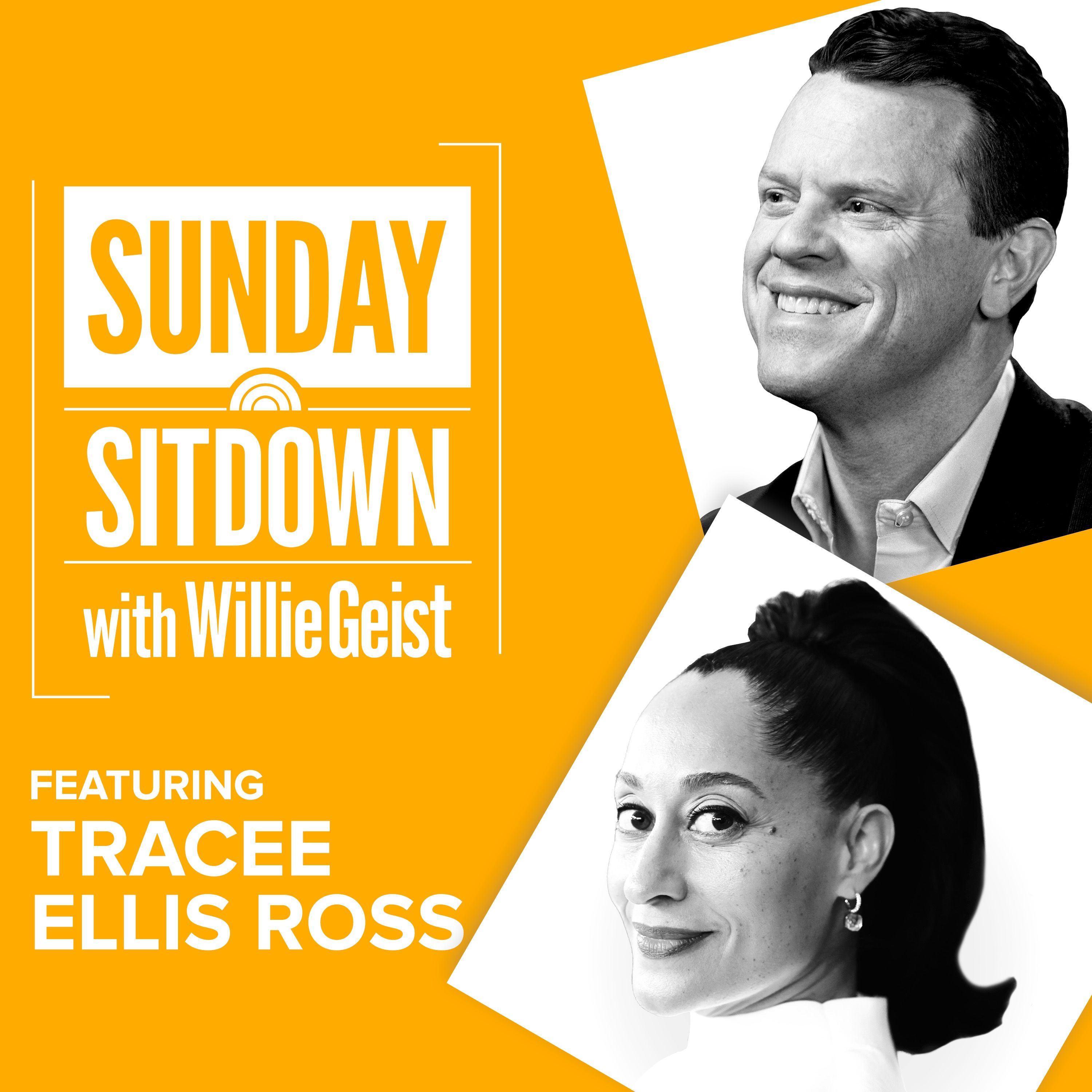
Sunday Sitdown with Willie Geist
Tracee Ellis Ross on Broadway Debut and Solo Traveling
01:00:27
Tracee Ellis Ross had her breakout television role in Girlfriends 25 years ago. Since then, she has starred in Black-ish and created a haircare brand called Pattern Beauty. The Golden Globe winner got together with Willie Geist in the New York City apartment building she grew up in to discuss her Broadway debut in the Tony-nominated show Every Brilliant Thing and the new season of the Roku show Solo Traveling with Tracee Ellis Ross and why she always follows the Mantra “B.I.A” or Bring It All when she packs.
Loading summary
Transcript396 lines
- [00:01]
Tracee Ellis Ross
With VRBoCare, help is always ready before, during and after your stay. We've planned for the plot twists, so support is always available because a great trip starts with peace of mind.
- [00:15]
Progressive Insurance Announcer
Ever notice how life's best stories don't happen in your living room? They happen on the open road, out on the water, or parked under the stars. At Progressive, they get that you want to focus on the experience, not worry about the what ifs. That's why they offer quality insurance designed for your ride, whether That's a boat, RV or motorcycle adventure with confidence. Visit progressive.com and see how easy it is to protect your favorite way to get away. Progressive Casualty Insurance Company and affiliates not available in dc. Prices vary based on how you buy.
- [00:51]
Willie Geist
Hey guys, Willie Geist here with another episode of the Sunday Sit down podcast. My thanks as always for clicking and listening along. I am truly excited to bring in my conversation with one of my favorite people, honestly, that I ever get to sit down with. Her name is Tracy Ellis Ross. You know her and love her from things like Girlfriends and from Blackish, of course. And now she's in season two of her Emmy nominated show Solo traveling with Tracee Ellis Ross. It appears on Roku. She's this season going to Thailand, she's going to Australia, going to Switzerland, doing exactly what the title suggests, traveling the world by herself. From the packing to the traveling to the seeing the sights, the eating alone. What does all that look like? She says she's been doing that since her twenties, traveling by herself. She knows other people who do it, people who are thinking about doing it. And this is kind of an introduction into her life on the road. A big hit in season one. As I say. Now she's into season two. She also, as we sat down, was just coming off literally two days earlier. The solo play, as they call them now, or one woman play, one person play called Every Brilliant Thing. She did a five week run, 40 shows of that, standing on stage alone for about 90 minutes. The play performed before her by Daniel Radcliffe, Harry Potter and Mariska Hargitay. Olivia Benson. Big shoes to fill and she was awesome. Called it the experience of her life. So as we sit down, she's just kind of taking a deep breath and exhaling from that run of doing eight shows a week and now contemplating her next move. I should point out that we are sitting down together inside a hotel room at the Sherry Netherland Hotel. It's an iconic New York building on Fifth Avenue right at the bottom of the park at 59th, where believe it or not, as A young girl, Tracee Ellis Ross, lived on the 31st floor. Her mother, of course, Diana Ross, she was there filming the Wiz. They lived there for several years and brought the girls with her, including Tracy. So a bit of a homecoming for Tracee Ellis Ross as we get together to talk about solo traveling with Tracee Ellis Ross, about her run on every brilliant thing about Pattern Beauty, the hair care brand for curly, textured and coily hair that she founded and is the CEO of that has really taken off a lot going on. Such a smart, charming, funny person to be with. I hope you enjoy it as much as I did here now. Tracy Ellis Ross on the Sunday Sit down podcast.
- [03:18]
Interviewer (likely Willie Geist or a co-host)
So happy to see you, Tracy.
- [03:19]
Tracee Ellis Ross
I'm so happy to see you.
- [03:20]
Interviewer (likely Willie Geist or a co-host)
I feel like we've already had an entire interview, but.
- [03:22]
Tracee Ellis Ross
We did.
- [03:23]
Interviewer (likely Willie Geist or a co-host)
But, you know, there's more to talk about.
- [03:25]
Tracee Ellis Ross
There's always more to talk about.
- [03:28]
Interviewer (likely Willie Geist or a co-host)
Can we start by talking about where we are right now?
- [03:30]
Tracee Ellis Ross
Yes. Can we, please?
- [03:32]
Interviewer (likely Willie Geist or a co-host)
So we were talking to you and your team about what would be a cool place, and you brought up where we are right now.
- [03:37]
Tracee Ellis Ross
Yes.
- [03:37]
Willie Geist
So we're Sherry Netherland.
- [03:38]
Tracee Ellis Ross
We're at the Sherry Netherlands Hotel, which is where when me and my family, like, I moved my family when my mom and her three girls moved to New York in 1979, this is where we lived. So I grew up here from 79 until I don't know when my mom sold the apartment, but we lived here until I moved. We moved to Paris and Switzerland, and then we still had this as our apartment in New York, but we moved into a place in Connecticut. And I grew up here. I did. And when we came, when I walked in, I mean, when I start driving down fifth from about 64th, because I went to Dalton, this was a regular walk down 5th. My whole body sensorially is like, you're home. And the staff that's here in this building, usually the hotel world in New York takes care of their team really well, but they're mostly people who've been here forever. And George, the elevator operator, has been here 45 years. And I recognized him, and he recognized me, and he brought me in the elevator for many, many years of my childhood. It was Ernie at the door. Victor was also an elevator operator for years until he retired. So it was Victor, George, Ernesto, who was Ernie at the door, and Frank,
- [05:06]
Interviewer (likely Willie Geist or a co-host)
the four of them, and George. You came up, you said, I just saw George from my childhood. I met George on the way up, not realizing he'd been there as long as you had lived here. It's just incredible.
- [05:17]
Tracee Ellis Ross
It's incredible. It's a testament to the building. It's a testament to how they take care of their people. And yeah, he'll probably be here until he decides to retire, but so amazing to see him. So sweet.
- [05:32]
Interviewer (likely Willie Geist or a co-host)
And you feel it all when you walk in the lobby, you get that rush.
- [05:35]
Tracee Ellis Ross
It's just like you're. It's. It's a. You know. In solo travel season two, Solo traveling season two, I went back to my boarding school and I hadn't been back in 40 years. And it was like walking into a time machine. I have been back here since then numerous times. It's still like walking into a time machine. The elevator is exactly the same. The little, little stool that's in the corner, exactly the same. I mean, as I said that I had like multiple memories. I just had the mem of when I had lice. That's right.
- [06:07]
Willie Geist
That's the first thing that came to mind.
- [06:08]
Tracee Ellis Ross
That's the first thing that came to mind because I was sitting in that thing and I was like, I want
- [06:12]
Interviewer (likely Willie Geist or a co-host)
to wear my animals.
- [06:13]
Tracee Ellis Ross
And I was like dying and they were getting me. Except trying to get upstairs from school so that we could get my hair washed with that lice shampoo. But yeah.
- [06:22]
Interviewer (likely Willie Geist or a co-host)
Yeah, amazing.
- [06:23]
Tracee Ellis Ross
I mean, just the memories and the thoughts of this building and being in this for so long. You know the story. Eloise, of course, right there. And the pigeon that came from the Sharon Netherlands. I thought it came from my bathroom window. It was definitely Eloise. It was the pigeon that came from my window to go to Eloise.
- [06:42]
Interviewer (likely Willie Geist or a co-host)
And you were kind of your own version of Eloise.
- [06:44]
Tracee Ellis Ross
Absolutely.
- [06:44]
Interviewer (likely Willie Geist or a co-host)
Cute little girl here at this beautiful building.
- [06:47]
Tracee Ellis Ross
Yes. So cool.
- [06:48]
Progressive Insurance Announcer
Yes.
- [06:48]
Tracee Ellis Ross
A little snotty glasses wearing like crazy haired little girl with my sisters. Yeah. Rhonda, Tracy and Chutney.
- [06:57]
Interviewer (likely Willie Geist or a co-host)
Well, thanks for sharing it with us. It's so cool to be here with you.
- [06:59]
Tracee Ellis Ross
It's very cool. What a nice way to start an interview.
- [07:01]
Interviewer (likely Willie Geist or a co-host)
There's a theme to our conversation, which is solo. We're talking about solo traveling in a second. But I've got to start with the solo play.
- [07:08]
Tracee Ellis Ross
Yes.
- [07:08]
Interviewer (likely Willie Geist or a co-host)
You finished about 36 hours ago.
- [07:11]
Tracee Ellis Ross
36 hours.
- [07:11]
Interviewer (likely Willie Geist or a co-host)
Something like that.
- [07:12]
Tracee Ellis Ross
Yeah. It's a miracle that I can speak words.
- [07:15]
Interviewer (likely Willie Geist or a co-host)
You're doing great so far. We'll see how it goes.
- [07:17]
Tracee Ellis Ross
I'll let you know. But you did or you let me know?
- [07:20]
Interviewer (likely Willie Geist or a co-host)
Yeah, I'll give you a little. Okay, wrap it up. You did 40 shows standing on stage by yourself for people who didn't get a chance to see it during your run. What was the experience like for you?
- [07:32]
Tracee Ellis Ross
I'm still processing what it was like, but it was one of the most life changing, extraordinary experiences of my life, my career, the whole thing. There's things you dream of doing that you think conceptually I'm capable of, but you don't know until you get into it. I think it's hilarious that I decided to make my Broadway debut with a Tony nominated solo play. The thing to know about the play though is it's not a solo act. It's unlike any play I've ever seen in my life. It is a play and a story about mental health. But it is told through this magical, beautiful list of both ordinary and extraordinary things that make life worth living. Brilliant things. And the person, the actor who plays it can be any gender, any race, any age. You don't have a name, you're the narrator. And you do it in participation with the audience. And the way that I like to explain that is it's not a free for all. It's not a concert, it's not a stand up show. I'm telling a story and I can do it with everyone. And people are given cards and they say what is on the card? When I say the number that corresponds in the list. And then there's also five audience members that during the pre show we choose with consent. People are willing participants and they play certain parts of the story because there's certain parts of the story that come to life better with someone. And so it was a magical experience that both used my craft and my skill and my discipline as an actor. For my many years of being an actor. I started as a theater actor and then also my improv ability. Because every show is different because the people that are playing those roles do different things, say different things. And then it's still my job to keep the story moving on course with the lines that come next. And then also the sort of athleticism of being on stage for an hour and a half on my own and sort of conducting the room from a metaphysical place, honestly. Cause it's not like I'm conducting an orchestra. It's, you know, and in the pre show, one of the things that I would do, cause I was in the audience when we'd open the doors, as I start scanning for those audience members that are willing. And in that moment, what I do is really anchor the space as a warm and safe space where we can all flourish. And that to me was the most life changing part of it, because that is the metaphor for life, is that when we do it together, we can all flourish. And the same thing I say to everybody in those moments is, everything works when you're kind in life and also in the play.
- [10:30]
Interviewer (likely Willie Geist or a co-host)
As you said, this was your Broadway debut. Dove in head first. I was joking with you before. A lot of actors from screen, they'll take a supporting role, or they'll just kind of feel their way around and see what the experience is like. Was there any apprehension about diving in the way you did when you got this? No.
- [10:49]
Tracee Ellis Ross
I'm one of those people who likes to. I mean, I said this metaphor before, but, like, it's like, I'm a BASE jumper. I'm one of those people that, like, as I'm jumping, I'm like, wait, I think there might have been stairs. Like, is there an elevator I could have taken? I don't know that I needed to jump off the cliff quite like that as I'm sliding the stairs. Exactly. I mean, you know, the nice part is that if we use the metaphor of a BASE jumper, my parachute is the discipline and the repetition and the craft of what I do as an actor. And when you do that, the rigor of what it takes in rehearsal, the fear is there. It remains. There's no way it's not going to. It is like jumping off a cliff. But I get to remember that I can trust the terrain, that I actually know what I'm doing. I know the story. I know where my feet are. And so it started for me about two and a half weeks before rehearsal. I really, in a very concentrated way, started learning the material. And there's a really wonderful, fun way that I do that. I don't learn lines and memorize. I actually create the story. So what I end up doing is not searching for words of lines, but I remember experiences that my imagination has created. So I started. I stopped social media about, I don't know, maybe three weeks before rehearsal. No more reading books, because I needed my imagination. Boredom is incredibly important when I'm building a role because it allows my subconscious to sort of fill in the blanks and connect pieces. And by the time I got to rehearsal here in New York, I was off book and felt really, I would say, about 80% comfortable with the language of the material. And then became the rigor. And that's when I felt like swallowing a whale. I kid you not. I was just like, what's happening? And then you just dive in. And because of the nature of the play, we started bringing an audience at the beginning of the second week, started with 15 people that I didn't know in the rehearsal space. Then 40 by the time I got to the theater for dress rehearsal, it was 150, then 400 people. And then all of a sudden you're like, here we go.
- [13:12]
George (Elevator Operator)
Yeah.
- [13:14]
Interviewer (likely Willie Geist or a co-host)
And there's something about, I find maybe you do too, about a challenge where when you succeed at it, as you did clearly with this play, you teach yourself something about yourself. You learn, oh, I can do that. And maybe I can do other things too. Do you have that feeling right now on the other side of it?
- [13:32]
Tracee Ellis Ross
I do. I'm not totally clear on what those things are. I actually feel excited to see who I am on the other side of this because I definitely felt something major happen. I felt there were younger parts of me that honestly got healed, which was really interesting. I think that from this vantage point, 36 hours later, maybe it's more than that. What is it, like two days?
- [13:58]
Interviewer (likely Willie Geist or a co-host)
About 36?
- [14:00]
Tracee Ellis Ross
Yeah, I'm still sleeping. It's just so, you know, I learned that even when, you know, when you're afraid, you leave your body, there's like a sense of disassociation. I learned that even when I leave my body, I can still be with myself lovingly. That I don't. That the beat up that I have spent so many years doing that, like sort of that fear of. As I referenced that scene in Game of Thrones when the mother is walking through the town square and everyone's saying, shame, shame, shame. That's the nightmare of what you imagine is on the other side of the fear. Right? But to discover that even in those moments of even on stage, in front of everyone having to go, I'm lost for a moment. But to stay with myself, to stay with myself lovingly, with grace and with professionalism just was a visceral, sort of somatic learning that, like, I don't know that you can learn without being in that fire, you know, I also think one of the other things I really genuinely learned is people are so good. People are so good at their core. They're so kind. They want. We all want each other to succeed in the most of it. You know, what I would say to the other people in that moment who had willingly decided to participate with me was the kindness is the thing that works. You don't have to perform, which is also what I told myself. You don't have to perform. You just need to be of service to the story. And I won't let you fall. And you won't let me fall. We're going to do it together. And that is, I mean, couldn't be a bigger sort of life lesson. You know, people are out there rooting for you. Truly. I mean, not everywhere. Okay. I'm not a crazy person. All right. We know there's stuff happening, but on the most part, people are there rooting for you. And also to think of the world that way makes that be true.
- [16:19]
Interviewer (likely Willie Geist or a co-host)
Right?
- [16:20]
Tracee Ellis Ross
Yeah.
- [16:20]
Interviewer (likely Willie Geist or a co-host)
And you got to see it up
- [16:21]
Tracee Ellis Ross
close with us and experience it.
- [16:23]
Interviewer (likely Willie Geist or a co-host)
When you and I last talked on this show, it was 2017.
- [16:27]
Tracee Ellis Ross
Geez Louise.
- [16:28]
Interviewer (likely Willie Geist or a co-host)
I know. I couldn't believe that either. I thought it was like four years ago. No, it was 2017.
- [16:32]
Dave Farenthal (New York Times Reporter)
Wow.
- [16:32]
Interviewer (likely Willie Geist or a co-host)
You said in that interview we're talking about what you might do next, and you just kind of off the top of your head said, I think I might want to do a one woman show. That's wonderful. You kind of put it out there. And I'm not suggesting we take credit for it. I'm suggesting it was on your mind at the time.
- [16:49]
Tracee Ellis Ross
So here's what's interesting. For my 40th birthday, I'm 53 now, I rented a theater in New York and LA, and I invited people to a birthday party and they thought they were coming for a birthday party and they had to watch me perform. And I. That's right. That's exactly right. And I did a one person show. I did my one person show. I told where it was at the time and it didn't. Nothing happened with it since then. I couldn't have dreamt this up better.
- [17:18]
Interviewer (likely Willie Geist or a co-host)
Wow.
- [17:19]
Tracee Ellis Ross
I didn't go looking for this. It came looking for me. And that in and of itself was a good life lesson for me and in this chapter of my life, for that to come looking for me and for it to feel so divine and so home. So like home. And for me to have such an extraordinary experience just feels like. Thank you for reminding me that that was on my mind and that was in my consciousness pulling me here.
- [17:48]
Willie Geist
Hey, guys, thanks for listening to the Sunday Sit down podcast. Stick around to hear more from Tracee Ellis Ross right after the break.
- [17:56]
Progressive Insurance Announcer
Every day as a small business owner feels like solving a puzzle. One moment you're cruising along, and the next there's a shipping snag that has you scrambling. But here's a surprise you will like with progressive, small business owners save 10% or more on their commercial auto insurance when they pay in full. So go ahead, surprise yourself. Get a quote in as little as 8 minutes@progressivecommercial.com, progressive Casualty Insurance Company and affiliates. Discounts not available in all states or situations.
- [18:22]
Dave Farenthal (New York Times Reporter)
Normally in these ads, you'd expect someone like me to ask you to buy something. But I want to ask you to do something different. I'm Dave Farenthal and I'm a reporter for the New York Times. I'm an investigative reporter, which means that I follow the money inside of government and outside of government. The point of my job is to find things people are trying to hide. It involves talking to lots of people. It involves looking through lots and lots of documents. And if there weren't folks like me to go beyond the surface to understand who was really shaping what the government does, the public will be left in the dark about what the government's doing with your tax money, what the government's doing to youth through regulations and spending. If you're like me and you think this kind of journalism is important, seek out a news source that does firsthand fact based reporting. If that's the New York Times, thank you. If that's your local paper, that's great too, because where you get your information matters.
- [19:14]
AT&T Business Wireless Announcer
Not every sale happens at the register. Before AT&T business Wireless checking out customers on our mobile POS systems took too long. Basically a staring contest where everyone loses. It's crazy what people will say during an awkward silence. Now transactions are done before the silence takes hold. That means I can focus on the task at hand and make an extra sail or two. Sometimes I do miss the bonding time.
- [19:38]
Willie Geist
Sometimes AT&T business Wireless connecting changes everything. Welcome back. Now more of my conversation with Tracee Ellis Ross.
- [19:51]
Interviewer (likely Willie Geist or a co-host)
Every actor I talk to who does screen work and comes to Broadway talks about the community of being on Broadway and how almost that is as great as the show itself or the play itself.
- [20:04]
Tracee Ellis Ross
Did you feel that for real? Let me say their names. Janae. Fatih. Laura. Mandy. Ricky, Matt, Maddie. This group of people second to none, the theater community is. They're spectacular humans. They will not let you fall. They taught me so much. They held my hand in the dark spaces and kept turning on the lights. They kept looking at me in the moments when I was like, I can't. I don't know if I can do this.
- [20:40]
Interviewer (likely Willie Geist or a co-host)
I'm lost.
- [20:41]
Tracee Ellis Ross
And with the expression, the loving, steady eyes of. Of, you've got this. You've got this. We're right here. And you know this show. The stage managers and the associate directors who help cast in the beginning of the show, they sit on the stage with me and so they're in view. They're calling the show In View. They make it look easy and they are doing God's work. They are making things happen that you think are just happening. But it's somebody conducting from there. It is so. They're such beautiful human beings that I will miss the most.
- [21:15]
Interviewer (likely Willie Geist or a co-host)
Which raises the question, will I be back?
- [21:18]
Tracee Ellis Ross
Absolutely. You have to, don't you have I have to. Absolutely.
- [21:22]
Interviewer (likely Willie Geist or a co-host)
Are we already thinking about what that could look like?
- [21:24]
Tracee Ellis Ross
Is it a play?
- [21:25]
Interviewer (likely Willie Geist or a co-host)
Is it a musical?
- [21:26]
Tracee Ellis Ross
We are thinking of all of it. We are thinking of all of it. And yes, I will be back. There is no question. There is no. I have been called home, Willy. I have been called back to the stage, even though I'd never been there.
- [21:42]
Interviewer (likely Willie Geist or a co-host)
You've really changed since you came to
- [21:44]
George (Elevator Operator)
Broadway, don't you think?
- [21:45]
Tracee Ellis Ross
I think now I just. Right now I only speak like this. Only from the deepest diaphragm register. Yes, I will be back. Does this sound like my voice? Is it weird?
- [21:56]
Interviewer (likely Willie Geist or a co-host)
That was perfect. It's great. It's incredible. I suspect they're given the reception of your performance that you will be asked back. So I can't wait to see what that looks like.
- [22:09]
Tracee Ellis Ross
I can't wait to see what it looks like.
- [22:11]
Interviewer (likely Willie Geist or a co-host)
There was another cool full circle moment when on opening night of the play, your girlfriend's cast.
- [22:17]
Tracee Ellis Ross
Yes.
- [22:17]
Interviewer (likely Willie Geist or a co-host)
Came back. So it was like, here are these mile markers in your career, in life, that had to be cool.
- [22:23]
Tracee Ellis Ross
Yeah. I mean, that was wonderful that they were there. I will say this. Anyone who comes to a play, I just thank you. You know what I mean? Because it's not easy to make the plan to come. You don't know what you're getting into. Sometimes you're like, oh, God, why am I here? You know what I mean?
- [22:38]
Interviewer (likely Willie Geist or a co-host)
Like, you just don't know.
- [22:39]
Tracee Ellis Ross
And so I really. Everyone who bought a ticket and all of my friends that bought tickets and came, and my family, like all of my siblings, my parents came, my cousins came. Almost all my best friends came. I mean, I had, you know, my sister came three times. Like, that is an extraordinary thing.
- [22:59]
Interviewer (likely Willie Geist or a co-host)
And what did they say? What are your parents who've seen you do? A million things, but not that. What did they say afterwards?
- [23:05]
Tracee Ellis Ross
I don't even know if I could articulate the. I don't even know. I mean, yes, I know, but they were proud. They were really proud. You know, I mean, I think. I think it's the most spectacular thing I've done. Not because necessarily of the, like, the result of it, but the. What I've done what they Saw me, witnessed me, sort of watched me do and face, you know, I mean, I was a very shy little girl singing on stage. Being on stage has always been scary for me. I stepped through into a different place when I did the high note and I sang on stage. And I sing in the middle of. In the middle of every brilliant thing I sing. And it wasn't scary because it was a part of this larger thing that I was doing that had purpose and meaning for me.
- [24:02]
Interviewer (likely Willie Geist or a co-host)
Well, we can't wait to see what you do next.
- [24:03]
Tracee Ellis Ross
Me too.
- [24:04]
Interviewer (likely Willie Geist or a co-host)
We know it's coming.
- [24:05]
Tracee Ellis Ross
I mean, we will see. I'll wave at you from the stage, Willie.
- [24:09]
Interviewer (likely Willie Geist or a co-host)
But only that.
- [24:10]
Tracee Ellis Ross
But only then.
- [24:11]
Interviewer (likely Willie Geist or a co-host)
Only this close.
- [24:12]
Tracee Ellis Ross
Only.
- [24:13]
George (Elevator Operator)
Only.
- [24:13]
Tracee Ellis Ross
This is the closest we'll ever be. I mean, by the way, the other thing about every brilliant thing is, you know, there was no curtain. There was no backstage. There was no like, even my prep before I start the show is on stage. So all of those things, you know. But next time there'll be a curtain. Maybe not. I don't know.
- [24:31]
Interviewer (likely Willie Geist or a co-host)
No, there's gonna be a curtain.
- [24:33]
George (Elevator Operator)
I don't know.
- [24:33]
Interviewer (likely Willie Geist or a co-host)
The applause.
- [24:34]
Tracee Ellis Ross
I don't know.
- [24:34]
Interviewer (likely Willie Geist or a co-host)
First appear.
- [24:35]
Tracee Ellis Ross
Listen, I got.
- [24:36]
Interviewer (likely Willie Geist or a co-host)
I'm sure you did.
- [24:37]
Tracee Ellis Ross
Yeah, I got a standing. I got a standing ovation before I started.
- [24:40]
Interviewer (likely Willie Geist or a co-host)
Of course you did.
- [24:41]
Tracee Ellis Ross
It was very weird. I was like, on the closing night when that happened, I wept. I wept like a baby. And I was like, now we gotta do the. What is. I gotta focus. I'm like, pull it together, girl.
- [24:52]
Interviewer (likely Willie Geist or a co-host)
Lock in, Tracy.
- [24:53]
Tracee Ellis Ross
I was like, lock in, honey. We've got a show to do.
- [24:59]
Interviewer (likely Willie Geist or a co-host)
Let's talk about the other solo in your life. Let's do it solo. Traveling with Tracee Ellis Ross. Season one, a massive hit for Roku. The most watched thing unscripted they've ever had in all their years. Another hit here in season two.
- [25:12]
Tracee Ellis Ross
And then I got an Emmy nomination for the show right before season two, which is crazy. So well timed.
- [25:18]
Interviewer (likely Willie Geist or a co-host)
Emmy nominated and well deserved and such a fun, cool, interesting show. But I feel, like, different also from some of the other, forgive the term, like celebrity travel shows. You see, it's very. I don't know, it feels more personal. It feels like we're there with you throughout the process. It's not just all the glitzy parts is what I mean. So how did this idea come up for you?
- [25:41]
Tracee Ellis Ross
It came up because it's something that I do since I was 24, 25. I took my first solo trip. I do it often, and one of the things I noticed is culturally Societally, there's not a lot of examples of women, black women, but people, human beings, thriving in the experience of their own delight, sort of enjoying their own company and being responsible for their own happiness. And seeing it. I see it in my life everywhere. But in the media, I don't see a lot of reflections of that. And there's also so much to be said. I feel like there's a lot between the cat ladies, that stereotype of, you know, the single spinster cat lady, and Joan of Arc, right? There's these many, many examples of what it looks like to be a human that is living outside of the cultural norm and choosing their own happiness and being responsible for that. So can you be yourself by yourself out in the world? That doesn't have to be luxurious vacations. It can just be the choices you make in your own life. And it's not just for single people. It's for everybody to sort of own what it is that lights your fire, that makes your heart sing, that moves you forward. Where are the places in your life that you can choose those things and discover those things for yourself and make space for them and make time for them, whether it's a moment in the park on a Sunday or having that little piece of chocolate quietly by yourself, or the ritual of your coffee in the morning in that quiet space and time. And so the show is a reflection of that. It sort of came out of that. It came out of my own experience. The truth is, it came out of me coming home from one of my solo summer trips that I always take. And the guy that met me at the airport said, carl, I can't wait. Every year we wait for you to come home from your summer vacation so we can see all your photos and all your outfits. I was like, are you joking? He said, that is an event. I was like, what? He's like, an event. And I got in the car and I called my manager, and I was like, is there any world where we could actually create a show that is a reflection of what it is that I do on these solo vacations? Not easy to create a solo vacation to film. Like, how do you create that intimacy? And that was something that we worked hard on. And part of what we do is I shoot most of it on my phone. The majority of the show is shot on my phone. We do things that I would actually do on my own. It's a very small crew. We do. I do my best as a producer of the show to really as best as we can have the crew just be Witnessing me versus manipulating moments for me. Like, I'm like, just let me be in the environment that I would be in and you are a fly on the wall so that I can continue just doing what I would do. Obviously, it's a little different, but the inner monologue I try and share on
- [28:46]
Interviewer (likely Willie Geist or a co-host)
my phone, and that comes across really well. For example, when you're packing for these trips.
- [28:51]
AT&T Business Wireless Announcer
Yes.
- [28:52]
Tracee Ellis Ross
By the way, there's no one. There's no crew there.
- [28:54]
Interviewer (likely Willie Geist or a co-host)
No, it comes across. There's just like a phone on the floor. Sometimes you're on the floor.
- [28:59]
Tracee Ellis Ross
Yes, that's exactly right.
- [29:01]
Interviewer (likely Willie Geist or a co-host)
Thinking through the outfits, Bia.
- [29:03]
Willie Geist
Bring it all.
- [29:04]
Tracee Ellis Ross
Bring it all.
- [29:05]
Interviewer (likely Willie Geist or a co-host)
Which we could talk about. That's a lot.
- [29:07]
Tracee Ellis Ross
It's ridiculous, but it's okay. You know what I mean? Know yourself.
- [29:10]
Interviewer (likely Willie Geist or a co-host)
Know yourself.
- [29:10]
Tracee Ellis Ross
You know what I mean? Know yourself.
- [29:12]
Interviewer (likely Willie Geist or a co-host)
Know what you need, because those are hard decisions, too. Oh, I might need these shoes.
- [29:16]
Tracee Ellis Ross
Well, see my home. Exactly. And I say, pack for beauty and disaster. Now, don't get me wrong. The places that I was going, I'm not going, like, on a camping trip where I have eight bags. You know what I mean?
- [29:26]
George (Elevator Operator)
Right.
- [29:26]
Tracee Ellis Ross
But if you're going to Staad to ski. Do you know what I mean? And you know, you're gonna be on camera.
- [29:32]
George (Elevator Operator)
Bring it.
- [29:34]
Tracee Ellis Ross
And you know, and then I also have to. For disaster. Like, you just don't know. You gotta have your things. Especially in the climate we're in. You might get stuck somewhere. You know what I mean? And I don't mean the temperature. I mean, like, the airplanes might not be able to fly that day.
- [29:47]
Interviewer (likely Willie Geist or a co-host)
Right. And then what? Then you need your seven steamer trunks to get on the Queen Mary 2.
- [29:51]
Tracee Ellis Ross
Of course, I do think sometimes that I'm like, in the original Sabrina movie and, like, packing for, like, something different. And there's gonna be, like, people like, I don't know. And then I'm like, I can't roll all these.
- [30:03]
Interviewer (likely Willie Geist or a co-host)
Anyway, you're a good packer. It's a lot.
- [30:05]
Tracee Ellis Ross
I'm a good packer.
- [30:05]
Interviewer (likely Willie Geist or a co-host)
I'm a good packer.
- [30:06]
Tracee Ellis Ross
But, yes, it is the intimacy of what that is, and that is what I'm sharing. And I think the show is less a travel show and more a solo show. That's why it's called Solo Traveling with Tracy as opposed to traveling solo, because I am really exploring the inner landscape of what that experience is and learning how to. And. Yeah. And the second season was wonderful. We went to Thailand. I went to Thailand. I went to Australia. I was with the elephants in Thailand, I was surfing, sort of kind of in Australia. I tried it. And then I went home to Switzerland to my boarding school and visited Instaad and Hall, where I went to boarding school when I was 13.
- [30:52]
Interviewer (likely Willie Geist or a co-host)
That was a very moving scene in the show. Not unlike walking in here today, probably into that lobby. But it'd been 40 years, I think you said, since you'd been there, and it looked from your reaction like almost nothing had changed.
- [31:04]
Tracee Ellis Ross
No, it's crazy. Well, you know, in Switzerland, like, those buildings like this, you know, they've been around forever. Those beautiful buildings built so beautifully. And so, yeah, the campus, there's a lot of new buildings, but the buildings that were there when I was there are exactly the same. The doorknobs are the same, the whole thing. And so it was like walking into a time machine and felt. I felt really moved by it. Like, I was moved to tears numerous times, revisiting those feelings of being away from home and the anxiety that I had around that and also the deep gratitude I have for that experience that my mother gave me and my sisters. And to live. To be living with other kids from all walks of all places in the world, and sort of us being in this experience together, it was really moving to go back.
- [31:56]
Interviewer (likely Willie Geist or a co-host)
Do you do the thing in that moment that I do sometimes, which is, what would that young girl think about the woman? I think that was all she has accomplished since then.
- [32:05]
Tracee Ellis Ross
I think it was a combination of looking in both directions.
- [32:08]
Interviewer (likely Willie Geist or a co-host)
Yeah.
- [32:09]
Tracee Ellis Ross
And that's, I think, what brought the tears looking in both directions was. And to be somewhere where the environment feels exactly the same. It's like you're having kind of this, like, energetic, like, whoa, whoa, whoa, whoa, whoa. It, to me, is exactly what I would imagine a time machine would feel like. So it was like the little girl looking at me and me looking at the little girl, and this combination of, like, whoa, look what I've done. Look how afraid I was. And I didn't know what. It's just fascinating. And I think that phone call that happened that I talk about was like, a really pivotal moment in my journey that led me towards building patterns, really feeling, calling my mom, genuinely, like, calling my mom and being like, I don't know what to do with my hair. It's dead. Like, I had fried it within an inch of its life. And it was that thing where, you know, like, that flat iron that. Or like, the heat on your hair where you start to see it singe. Like, my hair was just so dead. And I was like, I'm In Switzerland. My mom's not here, and I don't know what to do with my hair. And the journey from there to healing my hair, learning my hair, and is what led me towards pattern.
- [33:28]
Interviewer (likely Willie Geist or a co-host)
That's crazy, isn't it? When you think about like that arc crazy.
- [33:32]
Tracee Ellis Ross
If you had told that little girl she was gonna start a hair company that was gonna be an 11, have 11 retail partners and be a multimillion dollar business, that I was the founder, CEO and like, that I run and. And like, she would have been like, okay, okay, where's mom? You know what I mean? Like, okay, can we buy those superga sneakers?
- [33:54]
Interviewer (likely Willie Geist or a co-host)
Like, that has to be so gratifying, though, to have something that you felt, a need you saw, to have all these women say, oh, I need that too, or I've been missing that too. And for you to fill that void effectively with pattern. Right?
- [34:10]
Dave Farenthal (New York Times Reporter)
Yeah.
- [34:10]
Tracee Ellis Ross
I feel like that's been short of every brilliant thing. And debuting on Broadway, one of the most fulfilling of a purpose of my life. Truly building pattern and sort of being an active space to love and celebrate textured hair and black beauty feels so important to me. And something I It's the celebration of that is so important. You know, part of what was in the building of pattern was wanting to change the paradigm around how textured hair and black people are marketed to that marketing in and of itself is based on you have a problem, and in order to solve that problem, you need to buy this product. As a shopper, I disagree. I feel like I spend the most I want the most when I feel good about myself, when I feel empowered and celebrated in who I am, not shamed for who I am. And so I wanted to build a company that not only celebrated the beauty and the power of blackness and textured hair, but also that marketed to that those masses of people from a place of celebration. And so that's what I built. You know, I wanted to build a different kind of beauty company that was really based in love. And so. And to be seven years in and feel like, wow, that's what I made.
- [35:56]
Interviewer (likely Willie Geist or a co-host)
You've done it in a relatively short period of time. You founded it in 2019. I know you've been planning it long for that.
- [36:00]
Tracee Ellis Ross
It was about 10 years in the making. A lot of no's, a lot of people not understanding why an actor had anything to offer in that community. And part of on the shelves of beauty, part of that dispelling that myth for me was around so many of us with textured hair have become our own best Experts in our bathrooms. And through sort of storytelling, we have shared what works, that many stylists knew how to straighten our hair and knew how to do those things, but not to give us our natural hair, natural texture in its purest form. And so, you know, the company has evolved in that we exceed the needs of the curly, coily and tight textured community. And so. And we offer super hydration. So anyone who needs hydration for their hair is welcome to buy the products. That's what we offer. But at the same time, there is. There's so much possibility in terms of. Of what you can do with your texture. And that's what Pattern offers. And, you know, now we have body care and hydration that goes on the skin as well.
- [37:15]
Interviewer (likely Willie Geist or a co-host)
Got it all.
- [37:16]
Tracee Ellis Ross
Yeah. But I mean, it's. I think more than that for me, what it's about is continuing that purpose of exceeding the needs and celebrating texture and black beauty at its core. That's really what the brand is and
- [37:38]
Interviewer (likely Willie Geist or a co-host)
a joy for you probably, to be able to use your platform to do that, to work hard to succeed at your job and then have the platform to do what you're doing.
- [37:45]
Tracee Ellis Ross
Yeah, I mean, it's, you know, solo traveling pattern. Every brilliant thing, like every choice I make is centered through that of me. And what it really is is the message of. Of. I want you to feel safe in your skin. I want you to feel safe enough to live out loud and be who you are. And whatever version of that I can do in all of these different spaces of expression that I have access to, that is what I want. I want you to remember how amazing you are so that you can go do the thing that you are meant to do in your life, the purpose that you are to meant put on this planet to do the same way I am doing my version, you know, of flying with my feet on the ground. I want you, all of us, to have that space. And if in any way I can join the chorus of other people that are doing that as well, then I feel like it's all worth it.
- [38:47]
Willie Geist
Stick around for more of my conversation with Tracee Ellis Ross right after a quick break.
- [38:53]
Progressive Insurance Announcer
What would you do if you could get more. More dinner parties with friends, more GE for your GarageBand, more places to discover? What would you do if you could get more at Shell this summer with the Phil Lucky Sweepstakes? Stop by Shell, scan the QR code at the pump, and enter for a chance to win $100,000 or free fuel for a year, no purchase necessary. Ends 11:59pm Central Time August 28. Open to USDC residents 21. Visit Shell US Phil lucky for rules and entry details. Support for this podcast comes from Progressive, America's number one boat insurer. We've all made mistakes on the water, but there's one mistake you shouldn't being uninsured. With Progressive Boat Insurance you can choose coverage for most mistakes you or other boaters could make, helping you float carefree all season long. Quote Today Progressive Casualty Insurance Company and affiliates number one rating based on 2024 filings with state departments of insurance.
- [39:48]
Julian Barnes (New York Times Reporter)
Normally in these ads you expect somebody to ask you to buy something. But this is something different. I'm Julian Barnes and I'm a reporter for the New York Times. I'm a national security reporter and that means I'm reporting on military operations. These are fast paced, quickly moving situations. What exactly is happening on the ground is often shrouded in mystery, but we turn to trusted sources, satellite imagery and expertise built up over years in order to ferret out the facts that wouldn't otherwise come to light. I'm here to ask you to seek out a news source that does firsthand fact based reporting. If it's your local paper, great. If it's the Times, thank you. Because where you go, for your information, matters.
- [40:43]
Willie Geist
Welcome back now to the rest of my conversation with Tracee Ellis Ross.
- [40:48]
Interviewer (likely Willie Geist or a co-host)
So with all that in mind with solo traveling, what would you say to someone who's watching this going, gosh, I don't know traveling to Australia by myself like it feels like, what do I do when I eat? All the things you think. What would you say to somebody?
- [41:01]
Tracee Ellis Ross
I think what I would say is if you're interested in solo traveling and you are anxious about the idea of it as a concept, start with going to dinner on a weeknight, right when the restaurant's open by yourself, bring a book and see if you can sit with how uncomfortable that feels. If you can graduate past that, you can move to a Friday night night at 8 o' clock by yourself, see how that feels and then maybe tack some time onto a trip that you already have to spend a couple of days on your own, go somewhere you've gone that you know and try it out. But the truth is the invitation is not about solo travel. The invitation is to ask yourself the question and let it be a metaphor for your own life of what is it that you are calling to do and what is it? And how can you enjoy and take responsibility for your own happiness in the smallest ways, in the biggest ways. But start with the things that feel feasible for you and take that little stretch as opposed to going into making a leap that actually might create more fear or anxiety.
- [42:09]
Interviewer (likely Willie Geist or a co-host)
Well, I was gonna ask you about that. So at dinner, the move is bring a book, not the phone.
- [42:14]
Tracee Ellis Ross
Try with a book. There's something really important about the. Like I said it even in terms of what I was doing in preparation for the play. Letting yourself be bored, letting yourself wander, letting yourself, your imagination move. Those are muscles that we're losing as humans. And they are the things that.
- [42:41]
Julian Barnes (New York Times Reporter)
That.
- [42:42]
Tracee Ellis Ross
They are the bridge to a robust life. They are the things that make relationships and communicating, being able to communicate what's inside your soul, new ideas, new thoughts, solutions. They all come from using that muscle of discovery of. I mean, there's a line. I mean, it's so cheesy. But I just came off the show. I can't help it. There's a section in the dad scene where imagination is what makes life worth living, because that's where mystery, curiosity, creativity, conversation, discovery. And without those things, if you know everything, then there's no imagination. And in order to live in the present, you need to be able to imagine a future that's better than the past past, which is such a great line and so true.
- [43:40]
Interviewer (likely Willie Geist or a co-host)
Still off book.
- [43:40]
Tracee Ellis Ross
Very nice. I'm still off book. Yeah. Isn't it amazing? And then the last is that hope. That's what hope is, you know, And I think that. ChatGPT Claude, all these things, answering all the questions for us. Sometimes when you take the time to ponder, there's this great expression, awareness, acceptance, action. If you jump from awareness to action, you miss that beautiful step of awareness, of discovering for yourself. What does it look like for you? Is there a new idea in there? Is there an idea that is maybe not even the one you had thought of that might be the right action to take? And I think that so much culturally, we are losing that ability. And I think that the metaphor for solo travel is really about that. It's about asking yourself those questions and having that kind of curiosity in your own life. Life that allows you the space to actually build and discover a life that is yours.
- [44:35]
Interviewer (likely Willie Geist or a co-host)
This series is a great case for doing all of those things. So congratulations. Another hit season.
- [44:41]
Tracee Ellis Ross
Oh, well, we hope so.
- [44:42]
Interviewer (likely Willie Geist or a co-host)
You know, as we talk about the long list of your achievements, I was just looking. It's been four years since Blackish.
- [44:49]
Tracee Ellis Ross
Oh, wow.
- [44:49]
Interviewer (likely Willie Geist or a co-host)
Went off the air. I know. Luckily, it's still.
- [44:52]
Tracee Ellis Ross
It's four years.
- [44:53]
Interviewer (likely Willie Geist or a co-host)
Yeah. 2022.
- [44:56]
Tracee Ellis Ross
Marcus and Marseille came to the show, too.
- [44:58]
Interviewer (likely Willie Geist or a co-host)
Oh, they Did.
- [44:59]
Tracee Ellis Ross
Yeah.
- [45:00]
Interviewer (likely Willie Geist or a co-host)
See, that's your family, your community. With four years of distance now, are you able to kind of put in perspective why that show became what it did, why it had such a cultural impact in the way only a handful of shows do?
- [45:16]
Tracee Ellis Ross
Yeah, I mean, I think. I think it came along. Right. I don't think actually it would be able to get on the air right now, Really. I don't.
- [45:25]
Interviewer (likely Willie Geist or a co-host)
Because.
- [45:29]
Tracee Ellis Ross
Because of the climate of what we're in, I don't think those stories are being told right now. I think tv. The landscape of television has really changed. I think entertainment has changed. How we receive entertainment has changed. I think the industry is fighting to understand how to stay relevant in a culture where the cord has been cut and everything is streaming and there's so much. But I think this show's impact was a couple of things. From my perspective, seeing a thriving married couple that love each other and also like each other was good for everyone's nervous system.
- [46:21]
George (Elevator Operator)
Seeing
- [46:24]
Tracee Ellis Ross
black people be professional and loving or have these big professions is what I mean, not professional. And then the subject matter of what we were addressing, what we were looking at, you know, what I felt like Black Ish did, was take things off the wall that we all live with, that we don't always talk about. And we put them in the middle of kitchen floor, and we watched how this family would trip over them, unpack them, explain them to each other and learn from them. And that's what the show did. And it did it beautifully. You know, we did it through generation. There were Pops and Ruby, then there were Dre and I, and then the kids. So it was three generations that were looking at these things that we all deal with culturally, racially, and we unpacked them really beautifully. You know, I also have to say, from my character's position, seeing a woman on TV that was playing a wife, but that whose life was not told as in context of my husband, was incredibly important. It was something I fought for. It was something I worked towards. And I think that in the canon of television, that is not what the wife role on a sitcom is. And so I think I brought something that was incredibly important. It's not that it hasn't been done before. It's been done, but it doesn't happen enough. And it certainly doesn't happen through the beingness of a black woman. And so I felt really grateful to have lent that to television and given it. And, you know, the other thing is, like, I think about this often at this age. It's hard at this age. Not to constantly kind of take stock and look at what's happened before. 16 years of my life. 8 years on girlfriends and 8 years on blackish. 16 years of my life on television, in people's lives, playing roles and women that I feel incredibly proud to have played that I think have added something to the world in terms of the canon of television. So it's something. To me, 16 years is no joke.
- [48:53]
Interviewer (likely Willie Geist or a co-host)
Yeah.
- [48:54]
Tracee Ellis Ross
I'm like 170 some odd episodes for both shows. Wow. Wow.
- [49:00]
Interviewer (likely Willie Geist or a co-host)
That's what success looks like to get eight seasons of a show. That resonates in that way.
- [49:04]
Tracee Ellis Ross
Yeah. I don't know if I ever looked at it as successful, but it's definitely what my career gave me. And did you see my brain started to glitch, the fatigue. I'm like, it's the fucking.
- [49:17]
Interviewer (likely Willie Geist or a co-host)
We're hitting the wall.
- [49:18]
Tracee Ellis Ross
The battery died. I'm like, get out the paddles. Exactly.
- [49:23]
Progressive Insurance Announcer
I'm back.
- [49:24]
Tracee Ellis Ross
Okay. Yeah. I mean, it's so interesting. I don't know that I ever frame things in that way, but I guess
- [49:34]
Interviewer (likely Willie Geist or a co-host)
so, you know, I mean, kind of objectively successful.
- [49:37]
AT&T Business Wireless Announcer
Yeah.
- [49:38]
Tracee Ellis Ross
I mean, I think the ones that's crazy for me is like, on Girlfriends, I've never been to the Emmys. We had never been to the Emmys. I could barely get on a talk show. People just were not checking for the cast of Girlfriends. TV was in a different place. The industry was much more segregated, and that just didn't happen. So when black ish came. I remember the first time I went to the Emmys. Anthony was nominated that first year. I've now, I think, think it's eight. How many Emmy nominations? I have nine NAACP awards, maybe 10. I'm not sure. An actual Golden Globe. I think four or five Emmy nominations. That for me, because of where my career was with Girlfriends and that stuff wasn't accessible in any way. Those things, I'm like, whoa.
- [50:29]
Interviewer (likely Willie Geist or a co-host)
Right?
- [50:30]
Tracee Ellis Ross
Like that makes me go like, whoa. Because they, like, feel felt so out of reach, you know? So, I mean, and now I was like the marquee person on a Broadway stage. Like, just my name was up there. Like, what? I feel like throwing something at someone.
- [50:44]
Interviewer (likely Willie Geist or a co-host)
I know. You've come a long way, right? I mean, all those steps. You get a seat at the table. You're invited to the Emmys. You're star Black ish now on Broadway. So we know about Broadway dreams. You got a lot of Runway ahead of you.
- [50:58]
Tracee Ellis Ross
There's so many.
- [50:58]
Interviewer (likely Willie Geist or a co-host)
It feels like you're just kind of getting going.
- [51:00]
Tracee Ellis Ross
Right.
- [51:01]
Interviewer (likely Willie Geist or a co-host)
What else? Thank you what else is stirring? What else is in your mind right now?
- [51:05]
Tracee Ellis Ross
Honestly, I really would love to get back on television in the right way. I really loved. I love playing a role for an extended period of time. I do not think that I will do a 24 episode season again. I think that was grueling. But I would love to do that. I really would. I love the medium of television. I'd love to do more film. I'd love to write a book. I'd love to. I mean, there's all the things I just. It's so weird to be 53. Like 53 from 24 seasons seemed like, you know. Oh, yeah, I remember 53.
- [51:37]
Interviewer (likely Willie Geist or a co-host)
It's over.
- [51:38]
Tracee Ellis Ross
You're done, babe. Get in the canoe and go off to pasture. If you get in a canoe, you don't go off pasture.
- [51:44]
Interviewer (likely Willie Geist or a co-host)
We got the point. Yeah.
- [51:45]
AT&T Business Wireless Announcer
Okay.
- [51:45]
Interviewer (likely Willie Geist or a co-host)
It's fine. We're mixing great.
- [51:47]
Tracee Ellis Ross
That was really not good.
- [51:49]
Interviewer (likely Willie Geist or a co-host)
Anyway, we're just pushing you down the river, Correct?
- [51:52]
Willie Geist
Yeah.
- [51:52]
Tracee Ellis Ross
Okay.
- [51:53]
Interviewer (likely Willie Geist or a co-host)
Kind of like something.
- [51:54]
Tracee Ellis Ross
But then you get here. I get to 50, 53. I'm about to be 54 in October, and I was like, this feels great.
- [52:01]
Interviewer (likely Willie Geist or a co-host)
Yeah.
- [52:02]
Tracee Ellis Ross
I wouldn't go back if you paid me.
- [52:04]
Interviewer (likely Willie Geist or a co-host)
Right.
- [52:04]
Tracee Ellis Ross
I would not. I really would not. And so I don't know. And then that's the thing. Like, even every brilliant thing, when I say, like, it came and found me. What a delight. I mean, it was a dazzling experience at 53 to just try do something completely new. Like, dazzling. Like, I felt like I wanted to look at little me and be like. Like, look at what we're capable of. How incredible. You know? So who knows? I don't know.
- [52:33]
Interviewer (likely Willie Geist or a co-host)
And that kind of stuff makes you wonder, well, what's around the next corner? Right. And you just keep walking and see what's there.
- [52:39]
Tracee Ellis Ross
And it's really kind of nice that you can't see around the corner.
- [52:42]
Interviewer (likely Willie Geist or a co-host)
It is.
- [52:42]
Tracee Ellis Ross
And trusting that, like, things are conspiring for your good. It's good. Yeah.
- [52:48]
Interviewer (likely Willie Geist or a co-host)
Well, I hope so. I hope they don't put you in a canoe and put you out to pasture.
- [52:51]
George (Elevator Operator)
I don't.
- [52:51]
Tracee Ellis Ross
I don't really like canoes.
- [52:53]
Interviewer (likely Willie Geist or a co-host)
And it would run into the ground.
- [52:55]
Tracee Ellis Ross
Do you know what I mean?
- [52:55]
Interviewer (likely Willie Geist or a co-host)
Yeah.
- [52:56]
Tracee Ellis Ross
I mean, I think I don't want to get in a canoe. I don't think I'm. I'm the. I think it's not good use of me to row a canoe, you know,
- [53:05]
Interviewer (likely Willie Geist or a co-host)
Next travel show, they're gonna put you in a canoe.
- [53:06]
Tracee Ellis Ross
Not getting in a canoe. I'm not gonna get A. And by the way, let's just name it here. I'm also never gonna BASE jump. Okay.
- [53:13]
Interviewer (likely Willie Geist or a co-host)
Okay. That's important.
- [53:15]
Tracee Ellis Ross
Let's just say it now, because we
- [53:16]
Interviewer (likely Willie Geist or a co-host)
started the interview with a BASE jump.
- [53:18]
Tracee Ellis Ross
And I just want to bring it back just so for clarity, for the universe. Since things come to me, I just want to be clear. BASE jumping is not gonna happen.
- [53:27]
Interviewer (likely Willie Geist or a co-host)
If that's around the next corner, you're gonna keep walking.
- [53:29]
Tracee Ellis Ross
It's a no. Do you know what I mean? And I understand that no's a complete sentence. That's a no.
- [53:34]
Interviewer (likely Willie Geist or a co-host)
Tracy, congratulations on everything. So happy to see you.
- [53:37]
Tracee Ellis Ross
So happy to see you always.
- [53:39]
Interviewer (likely Willie Geist or a co-host)
Thank you.
- [53:39]
Willie Geist
After our conversation in the hotel room there at the Sherry Netherland, we hopped up, rode down the elevator, and I got a tour of the lobby, of what it was like walking up the sidewalk of fifth Avenue as a little girl in. And an introduction to George, who is still the elevator operator. He's been there for 46 years, was running the elevators when Tracy was a little girl. She was overcome with emotion when we arrived at first, and she first saw that he was still there. She remembers everybody who worked in the building. So a little tour of the lobby and a trip down memory lane with Tracee Ellis Ross.
- [54:16]
Tracee Ellis Ross
So in this lobby, I've always had, you know, delusions of grandeur. And I always. When I was a kid, I wanted to be a grownup. And so I had this book that was a really fat book from the library about horses. I never read it, but I would sit on that couch over there, and I would flip through it as if I was just, you know, don't mind me. I'm just in the lobby reading.
- [54:43]
Interviewer (likely Willie Geist or a co-host)
Oh, wow. Feeling sophisticated.
- [54:46]
Tracee Ellis Ross
Exactly. Exactly. And that's what women do. They read books in the library. From the library in the lobby.
- [54:53]
Interviewer (likely Willie Geist or a co-host)
You're flipping photographs of horses.
- [54:56]
Tracee Ellis Ross
No, it was actually a book you should read, but I wasn't reading it now. I read books, but I was just pretending. I would look at it long enough to think that's how long that page would have taken to read.
- [55:07]
AT&T Business Wireless Announcer
Flip.
- [55:08]
Tracee Ellis Ross
Yeah.
- [55:08]
Interviewer (likely Willie Geist or a co-host)
And how old would you be at that point?
- [55:10]
Tracee Ellis Ross
I think it was like eight.
- [55:11]
Willie Geist
Yeah.
- [55:11]
Tracee Ellis Ross
And then I also made a keychain. I didn't need a key. We. The elevator would come off on our floor, but I. I made a keychain with hairpins.
- [55:23]
Interviewer (likely Willie Geist or a co-host)
Oh.
- [55:23]
Tracee Ellis Ross
And I hooked them on the thing so they would jingle. And I had my. My keys and my book.
- [55:31]
Interviewer (likely Willie Geist or a co-host)
You were such a grown up, right?
- [55:34]
Tracee Ellis Ross
Yes. Yes. And then I would get on the elevator later and you would see and I would see. Yeah. There he is. George. There's George.
- [55:42]
Interviewer (likely Willie Geist or a co-host)
This is George. I mean, come on.
- [55:44]
Tracee Ellis Ross
So, George, it was Victor, you, Ernie and Frank. George has been here for 45 years.
- [55:56]
Interviewer (likely Willie Geist or a co-host)
Is that right, George? 45 years.
- [55:57]
George (Elevator Operator)
45.
- [55:58]
Interviewer (likely Willie Geist or a co-host)
Do you remember little Tracy running through these halls in your elevator?
- [56:01]
George (Elevator Operator)
I do, yeah, I do.
- [56:04]
Interviewer (likely Willie Geist or a co-host)
And he's not saying a word.
- [56:06]
Tracee Ellis Ross
It's probably for the best.
- [56:07]
Interviewer (likely Willie Geist or a co-host)
The NDA still holds.
- [56:10]
Tracee Ellis Ross
That's hilarious. It's so wonderful to see you.
- [56:13]
George (Elevator Operator)
It's wonderful too.
- [56:14]
Tracee Ellis Ross
Yeah. Do you think you'll be here till you decide to stop working?
- [56:18]
George (Elevator Operator)
Yeah.
- [56:19]
Tracee Ellis Ross
I mean, you're not going anywhere at this point.
- [56:21]
George (Elevator Operator)
Just take it day by day.
- [56:22]
Tracee Ellis Ross
Take it day by day.
- [56:23]
Interviewer (likely Willie Geist or a co-host)
Well, Tracy speech remembers everything, including the bench.
- [56:27]
Tracee Ellis Ross
Yes.
- [56:27]
Interviewer (likely Willie Geist or a co-host)
Feels like the same.
- [56:28]
Tracee Ellis Ross
It's the same. The only thing they've done different, George, is this screen that's on here.
- [56:33]
George (Elevator Operator)
Yeah, yeah.
- [56:34]
Tracee Ellis Ross
So cuz you guys used to have to do it automatically.
- [56:36]
George (Elevator Operator)
Yeah, exactly.
- [56:37]
Tracee Ellis Ross
So this is a lot easier to navigate now.
- [56:40]
George (Elevator Operator)
Exactly.
- [56:41]
Tracee Ellis Ross
But they kept everything else the same because we used to. If you come back in, you'll see but that we used to follow the numbers up there as opposed to over here. There were two little things up there. Exactly.
- [56:52]
Interviewer (likely Willie Geist or a co-host)
She caused any trouble. I'm going to get something out of you, George.
- [56:55]
George (Elevator Operator)
Nothing.
- [56:55]
Progressive Insurance Announcer
Nothing.
- [56:56]
Interviewer (likely Willie Geist or a co-host)
He says nothing.
- [56:57]
Tracee Ellis Ross
No, no, come on. He's not going to tell on me. He's not going to tell me. Does this still open into Cipriani?
- [57:03]
George (Elevator Operator)
It's only good things. Yeah, it should be on.
- [57:05]
Tracee Ellis Ross
It does.
- [57:06]
George (Elevator Operator)
Okay. Yeah.
- [57:06]
Tracee Ellis Ross
These are all back doors. There's a. There's an elevator. I mean a bathroom up there. There was a bathroom up there before.
- [57:12]
George (Elevator Operator)
Yeah, before. That should be the lady's room.
- [57:14]
Tracee Ellis Ross
Okay. I mean, I remember.
- [57:16]
AT&T Business Wireless Announcer
Yeah.
- [57:16]
Interviewer (likely Willie Geist or a co-host)
I was just saying you still got
- [57:17]
Tracee Ellis Ross
the lay of the lamp. That's the male shoe.
- [57:19]
Willie Geist
But yeah.
- [57:19]
Tracee Ellis Ross
So this used to be how we watched the floor that it was on. And you see, we got lucky because I was the 31st floor.
- [57:27]
George (Elevator Operator)
Right.
- [57:27]
Tracee Ellis Ross
So ours actually was a number that it would hit and. Yeah, but like that little light thing, like it's all the same. The only difference is that now it's an automated fancy elevator. Exactly.
- [57:39]
Interviewer (likely Willie Geist or a co-host)
Does the letterbox still work? Do people still send it down or.
- [57:42]
George (Elevator Operator)
No. Yeah, I mean, basically. I mean, I don't recommend it because it could. It could get caught up there. Go catty corner. And so just bring it down there and just let him do his thing and be sent out.
- [57:55]
Progressive Insurance Announcer
Yeah.
- [57:56]
Tracee Ellis Ross
And then so these two elevators do all the floors and that One only goes up halfway, so that would not get us up to 31. As you can tell, it only went to 20.
- [58:07]
Interviewer (likely Willie Geist or a co-host)
Okay.
- [58:07]
Tracee Ellis Ross
Yeah.
- [58:08]
Interviewer (likely Willie Geist or a co-host)
So these are the.
- [58:08]
Tracee Ellis Ross
Those were the two. Yeah, exactly.
- [58:11]
Interviewer (likely Willie Geist or a co-host)
How exciting. How fun to see you two back together.
- [58:14]
Tracee Ellis Ross
Yeah, it's so amazing.
- [58:15]
George (Elevator Operator)
Amazing.
- [58:15]
Tracee Ellis Ross
Yeah.
- [58:16]
Interviewer (likely Willie Geist or a co-host)
Incredible. Thank you.
- [58:17]
George (Elevator Operator)
When did you move out?
- [58:20]
Tracee Ellis Ross
We left here in. We. I don't remember when we sold it, but we moved out. It was probably like 89, something like that when we actually moved out. Yeah.
- [58:33]
George (Elevator Operator)
Amazing, amazing, amazing.
- [58:34]
Tracee Ellis Ross
Yeah. 79 we got here.
- [58:36]
George (Elevator Operator)
79. Yeah. You got here three years before I started.
- [58:39]
Tracee Ellis Ross
Yep.
- [58:40]
George (Elevator Operator)
Wow.
- [58:40]
Tracee Ellis Ross
Amazing, amazing.
- [58:42]
George (Elevator Operator)
Where were you when you what? Was born?
- [58:44]
Tracee Ellis Ross
I was born in LA and I was born in 72, so I'm 53 now.
- [58:49]
George (Elevator Operator)
Okay.
- [58:50]
Tracee Ellis Ross
Yeah, I mean I was like 8 and 9.
- [58:53]
George (Elevator Operator)
Yeah. So you weren't a baby. Yeah, you were, you know.
- [58:56]
Tracee Ellis Ross
Yeah, I was a little annoying kid with glasses.
- [59:01]
George (Elevator Operator)
We all started young and. Yeah. A little undisciplined until we became disciplined.
- [59:06]
Tracee Ellis Ross
That's exactly right. Until we grown up and being home.
- [59:08]
George (Elevator Operator)
Grown up, mature.
- [59:09]
Tracee Ellis Ross
Exactly, exactly.
- [59:10]
George (Elevator Operator)
That's how it is.
- [59:11]
Tracee Ellis Ross
I'm so happy to see you.
- [59:12]
George (Elevator Operator)
Good to see you, George.
- [59:14]
Interviewer (likely Willie Geist or a co-host)
Thanks for spending some time with us.
- [59:16]
George (Elevator Operator)
It's a privilege, a privilege of mine. Sure, sure. Long time.
- [59:22]
Tracee Ellis Ross
Long time.
- [59:23]
George (Elevator Operator)
Old friends.
- [59:24]
Tracee Ellis Ross
Yeah.
- [59:25]
George (Elevator Operator)
Take care.
- [59:25]
AT&T Business Wireless Announcer
Take care.
- [59:27]
George (Elevator Operator)
Seeing you.
- [59:27]
Interviewer (likely Willie Geist or a co-host)
Nice to meet you, George.
- [59:28]
George (Elevator Operator)
Nice to meet you too.
- [59:30]
Interviewer (likely Willie Geist or a co-host)
That's great.
- [59:31]
Tracee Ellis Ross
It's nice.
- [59:32]
George (Elevator Operator)
That's.
- [59:33]
Tracee Ellis Ross
That's really special. Yeah. So this is. The front desk was the same. There was. There isn't any more. But there used to be a little like shop over there. And then it became where you could go on the other side and that was. Yeah, there still is a little shop there. Yes, sir. Oh yeah. And then on the other side was where you could. Because you know, there weren't ATMs where you could get cash.
- [59:59]
Progressive Insurance Announcer
Oh, really?
- [60:01]
Tracee Ellis Ross
Their little bang. Cuz There were no ATMs, right. It's so crazy.
- [60:06]
Interviewer (likely Willie Geist or a co-host)
Pre ATM.
- [60:07]
Tracee Ellis Ross
Oh my God, that's so ridiculous. Yeah. And this sofa was a different color. But I do think all of this stuff is probably the original stuff. And obviously the floor is. And then the service entrance is that way. Yeah. And then for years. This is another memory I just had for years there were two operators. Because remember, you couldn't. It was the house phone, right? Oh yeah, right. So if you called, you couldn't call directly upstairs for years. You would have to call through the operator.
- [60:40]
Interviewer (likely Willie Geist or a co-host)
Oh, wow.
- [60:41]
Tracee Ellis Ross
Yeah. And so you would call and they would connect you. And so they knew us. So it would be like, can you like, I need to call mom or whatever.
- [60:51]
Interviewer (likely Willie Geist or a co-host)
That's so funny.
- [60:52]
Tracee Ellis Ross
Yeah.
- [60:52]
Interviewer (likely Willie Geist or a co-host)
And they would just plug you right into mom.
- [60:54]
George (Elevator Operator)
Wow.
- [60:54]
Tracee Ellis Ross
Yeah. It was the same two operators day and night. So, like, you know, the same way it was the four of them, Frank, Victor and everybody.
- [61:01]
Interviewer (likely Willie Geist or a co-host)
Yeah. You had such an extraordinary upbringing for a million reasons.
- [61:05]
Tracee Ellis Ross
Yeah.
- [61:06]
Interviewer (likely Willie Geist or a co-host)
Which raises the question how? I think maybe other kids in your circumstance maybe wouldn't have come through it the way you have, which is with humility and all the things that you have about your. Do you feel that being Diana Ross's mom and all the things that came with that were impacted you in ways that changed you for the better even?
- [61:31]
Tracee Ellis Ross
Yeah. I mean, you know, my mom was a mom first.
- [61:34]
Interviewer (likely Willie Geist or a co-host)
Yeah.
- [61:37]
Tracee Ellis Ross
But, you know, at Dalton, I grew up with Robert Redford's kids, Tom Brokaw's kids, Ralph Lauren's kids. Those are the ones that I'm thinking of offhand. And it was. That was taken off the table for us, so we were just kids doing kid things. And also the way my mom raised us, that wasn't a factor. And she. We were her priority. So that made my experience in the world not one of fame.
- [62:16]
Interviewer (likely Willie Geist or a co-host)
Right.
- [62:17]
Tracee Ellis Ross
There were ways that we had to navigate her fame. I mean, she was at the height of her career during those years, you know, like going to a school function or whatever. Like, we had to navigate certain things. And there were different safety things, but it was never presented to us by her as something other than just a response to her job.
- [62:39]
Dave Farenthal (New York Times Reporter)
Right.
- [62:40]
Tracee Ellis Ross
Not because she was something different.
- [62:42]
Interviewer (likely Willie Geist or a co-host)
Right.
- [62:45]
Tracee Ellis Ross
And so, I don't know. I mean, it's definitely, you know, I mean, I have a very. I lived here. We lived on the 31st floor. Andy Warhol painted me. Marvin Gaye called a house. You know what I mean? There's things that are. I mean, you know, my mom did the super bowl halftime show and came in a helicopter and left in a helicopter. Helicopter. And, you know, I mean, there's things that are, like, just not normal.
- [63:10]
Interviewer (likely Willie Geist or a co-host)
Right.
- [63:12]
Tracee Ellis Ross
People used to bang on in the car and we had security and all these things. But also, the way my mom framed it is that was her job.
- [63:19]
Interviewer (likely Willie Geist or a co-host)
Yeah.
- [63:19]
Tracee Ellis Ross
You know, and so she woke us up for school in the morning. She sat with us for breakfast. She recorded while we were sleeping. So our life was kids.
- [63:31]
Interviewer (likely Willie Geist or a co-host)
Yeah. She was just Mom.
- [63:33]
Willie Geist
Yeah.
- [63:34]
Interviewer (likely Willie Geist or a co-host)
Thank you for spending the time showing us around.
- [63:36]
Tracee Ellis Ross
Well, I mean, so much fun. What is it about 2026 is like me doing a lot of revisiting.
- [63:42]
Dave Farenthal (New York Times Reporter)
Right.
- [63:42]
Tracee Ellis Ross
I mean, wow. Right? That's nutty.
- [63:46]
Interviewer (likely Willie Geist or a co-host)
It's a good year for you.
- [63:47]
Tracee Ellis Ross
I mean. Yeah. Here's. Here's what I'll say. Thank you for keeping me safe.
- [63:52]
Interviewer (likely Willie Geist or a co-host)
Yeah.
- [63:53]
Tracee Ellis Ross
This building.
- [63:54]
Interviewer (likely Willie Geist or a co-host)
Yeah.
- [63:55]
Tracee Ellis Ross
Such formative years in here. It's crazy. Yeah. And seeing Frank. How about that?
- [64:02]
Willie Geist
Wild.
- [64:02]
Tracee Ellis Ross
How about that?
- [64:04]
Interviewer (likely Willie Geist or a co-host)
Wild, right? Incredible. Thank you.
- [64:07]
Tracee Ellis Ross
Thank you.
- [64:11]
Willie Geist
My big thanks to Tracee Ellis Ross for that tour of the Sherry Netherland and for a great conversation. Season two of solo traveling with Tracee Ellis Ross is out now on Roku. My thanks to all of you for listening again this week. If you want to hear more of these conversations with our guests every week, be sure to click follow so you
- [64:30]
Interviewer (likely Willie Geist or a co-host)
never miss an episode.
- [64:31]
Willie Geist
And don't forget to tune in to Sunday Today every weekend on NBC to see these interviews with your own two eyes. I'm Willie Geist. We'll see you right back here next week on the Sunday Sit Down Podcast.
- [64:49]
Progressive Insurance Announcer
Ever notice how life's best stories don't happen in your living room? They happen on the open road, out on the water or parked under the stars. At Progressive, they get that you want to focus on the experience, not worry about the what ifs. That's why they offer quality insurance designed for your ride, whether That's a boat, RV or motorcycle adventure with confidence. Visit progressive.com and see how easy it is to protect your favorite way to get away. Progressive Casualty Insurance Company and affiliates not available in D.C. prices vary based on how you buy.