Podcast
Super Data Science: ML & AI Podcast with Jon Krohn
Hosted by Jon Krohn · EN
The latest machine learning, A.I., and data career topics from across both academia and industry are brought to you by host Dr. Jon Krohn on the Super Data Science Podcast. As the quantity of data on our planet doubles every couple of years and with this trend set to continue for decades to come, there's an unprecedented opportunity for you to make a meaningful impact in your lifetime. In conversation with the biggest names in the data science industry, Jon cuts through hype to fuel that professional impact.
Whether you're curious about getting started in a data career or you're a deep technical expert, whether you'd like to understand what A.I. is or you'd like to integrate more data-driven processes into your business, we have inspiring guests and lighthearted conversation for you to enjoy.
We cover tools, techniques, and implementation tricks across data collection, databases, analytics, predictive modeling, visualization, software engineering, real-world applications, commercialization, and entrepreneurship − everything you need to crush it with data science.
53episodes
Episodes
Newest firstAll episodes

1015: Mathematical Optimization in the Agentic AI Era, with Gurobi's Jerry Yurchisin
5d ago01:18:03Tap to summarizeIn Episode #1015, Jerry Yurchisin (manager of decision intelligence strategy at Gurobi Optimization) joins Jon Krohn to explain the AI technology that makes breaking a constraint mathematically impossible. Large language models will confidently claim they've optimized your business while ignoring the one constraint that could cost millions, whereas optimization treats constraints as hard guarantees. Jerry lays out the division of labor he sees for the agentic era: agents help you frame the problem, write the formulation and generate the code, then hand off to a solver like Gurobi, soon callable via MCP servers. In this episode, Jerry breaks down the three building blocks of any optimization model, traces the leap in non-linear solving, explains how to pitch optimization to your CFO and to the planners whose jobs it touches, and shares case studies spanning energy grids, retirement planning and USA Cycling's Paris 2024 gold. Additional materials: https://www.superdatascience.com/1015 Interested in sponsoring a SuperDataScience Podcast episode? Email natalie@superdatascience.com for sponsorship information. In this episode you will learn: (02:42) The three building blocks of an optimization model (21:43) Where optimization fits in the agentic AI era (29:58) Inside the Gurobi Intelligence Hub (39:40) Energy, retirement planning and a cycling gold medal (50:58) How to sell optimization inside your organization
Transcribe →
1014: OpenAI Agent Breaches Hugging Face: All You Must Know incl. How to Protect Yourself
1w ago00:20:57Tap to summarizeIn Episode #1014, Jon Krohn breaks down a security incident that reads like science fiction: during an internal evaluation, an autonomous OpenAI agent broke out of its sandbox, exploited a zero-day, and hacked its way into Hugging Face to steal the answers to the very benchmark it was being tested on, with no human attacker at any point. Jon lays out the three-act timeline, explains the ExploitGym benchmark and why switching off safety guardrails mattered so much and pulls out the practical lessons for anyone building or defending agentic AI systems. Along the way: why Hugging Face ran its forensics on a Chinese open-weight model and why the next attack like this one may not be an accident. Additional materials: www.superdatascience.com/1014 Interested in sponsoring a SuperDataScience Podcast episode? Email natalie@superdatascience.com for sponsorship information.
Transcribe →
1013: Weapons of Math Destruction, Ten Years On, with Dr. Cathy O’Neil
2w ago01:24:41Tap to summarizeIn Episode #1013, Dr. Cathy O'Neil (Harvard math PhD, former Wall Street quant and author of the mega-bestseller Weapons of Math Destruction) joins Jon Krohn to explain what actually makes an algorithm terrifying: not the complexity of the math, but the secrecy, the unaccountability, and the fact that you can't opt out. A decade after Weapons of Math Destruction sounded the alarm on algorithmic harm, Cathy is busier than ever. Through her algorithmic-auditing firm ORCAA and her nonprofit OCEAN, she now provides the statistical evidence behind lawsuits against some of the world's biggest tech companies. In this episode, Cathy punctures AI hype, traces the line from Frederick Winslow Taylor's factory floor to today's keystroke-tracked white-collar workers, explains why she wants every algorithmic system to fly with a "cockpit" of metrics, and lays out concrete things listeners can do in their companies, their communities, and their courtrooms, to demand accountability. Additional materials: https://www.superdatascience.com/1013 Interested in sponsoring a SuperDataScience Podcast episode? Email natalie@superdatascience.com for sponsorship information. In this episode you will learn: (07:02) From Wall Street to Occupy to Weapons of Math Destruction (14:12) What actually makes an algorithm terrifying (44:53) Inside ORCAA and OCEAN (58:22) The Shame Machine (1:11:23) Why every algorithmic system needs a “cockpit”
Transcribe →
1012: The Open-Weight 2.8-Trillion Parameter Competing at the Frontier
2w ago00:12:13Tap to summarizeWhat happens to the AI market when the largest open-source model in the world arrives at a fraction of frontier prices? In this week’s episode, host Jon Krohn digs into Kimi K3, the 2.8-trillion-parameter release from Beijing-based Moonshot AI that, in the space of a single week, rattled investors, kicked off a pricing skirmish among the big American AI labs and reignited the debate in Washington, DC about open-source AI. Listen to the episode to hear Jon break down the mixture-of-experts architecture behind K3’s efficiency gains, why its always-on reasoning mode can quietly inflate your bill, and what a cheaper, contested frontier means for the applications you’re building. Additional materials: www.superdatascience.com/1012 Interested in sponsoring a SuperDataScience Podcast episode? Email natalie@superdatascience.com for sponsorship information.
Transcribe →
1011: The Math Still Matters: Deep Skills in the Age of AI, with Dr. Catherine Williams
3w ago01:09:51Tap to summarizeDr. Catherine Williams, Chief Data Officer at the nonprofit Candid, was solving black-hole equations with pen and paper before she ever wrote a line of code. She earned a PhD in math researching general relativity and black holes, did postdocs at Stanford and Columbia and then became one of the very first data scientists, joining AppNexus back in 2012, around the same time “data scientist” became a job title at all. In this episode, she traces the field’s evolution from Bayesian models to BERT to today’s LLMs, and makes a compelling case that going deep on the underlying math matters more than ever, even now that AI can do the math for you. Additional materials: https://www.superdatascience.com/1011 Interested in sponsoring a SuperDataScience Podcast episode? Email natalie@superdatascience.com for sponsorship information. In this episode you will learn: (02:40) Catherine’s black hole and general relativity research (13:18) The intellectual habits that carried from math into leadership (16:14) Whether deep math still matters in the age of LLMs (44:10) The BERT moment and the embeddings revolution (48:22) Why frontier capability keeps getting cheaper (57:54) Catherine’s leadership advice: think one level up
Transcribe →
1010: Fable 5 as Advisor: Anthropic's Two-Model Pattern for Smarter, Cheaper Agents
3w ago00:14:21Tap to summarizeIn Episode #1010, Jon Krohn digs into “the advisor strategy”, a clever pattern that pairs a fast, cheap executor model with a frontier-class advisor it can consult mid-task, all inside a single API call. Every agent builder faces the same tension: frontier models plan best but cost too much to run on every turn, while small models fumble the decisions that matter. Anthropic’s advisor tool resolves it with roughly a one-line code change, and the benchmarks are startling: Sonnet with an Opus advisor scored higher than Sonnet alone while costing 11.9% less, and Haiku’s BrowseComp score more than doubled at 85% lower cost than Sonnet solo. Jon covers the newest Fable 5 numbers, the practical gotchas, how it differs from OpenAI’s router and why AI progress is now as much about composing models as training bigger ones. Additional materials: www.superdatascience.com/1010 Interested in sponsoring a SuperDataScience Podcast episode? Email natalie@superdatascience.com for sponsorship information.
Transcribe →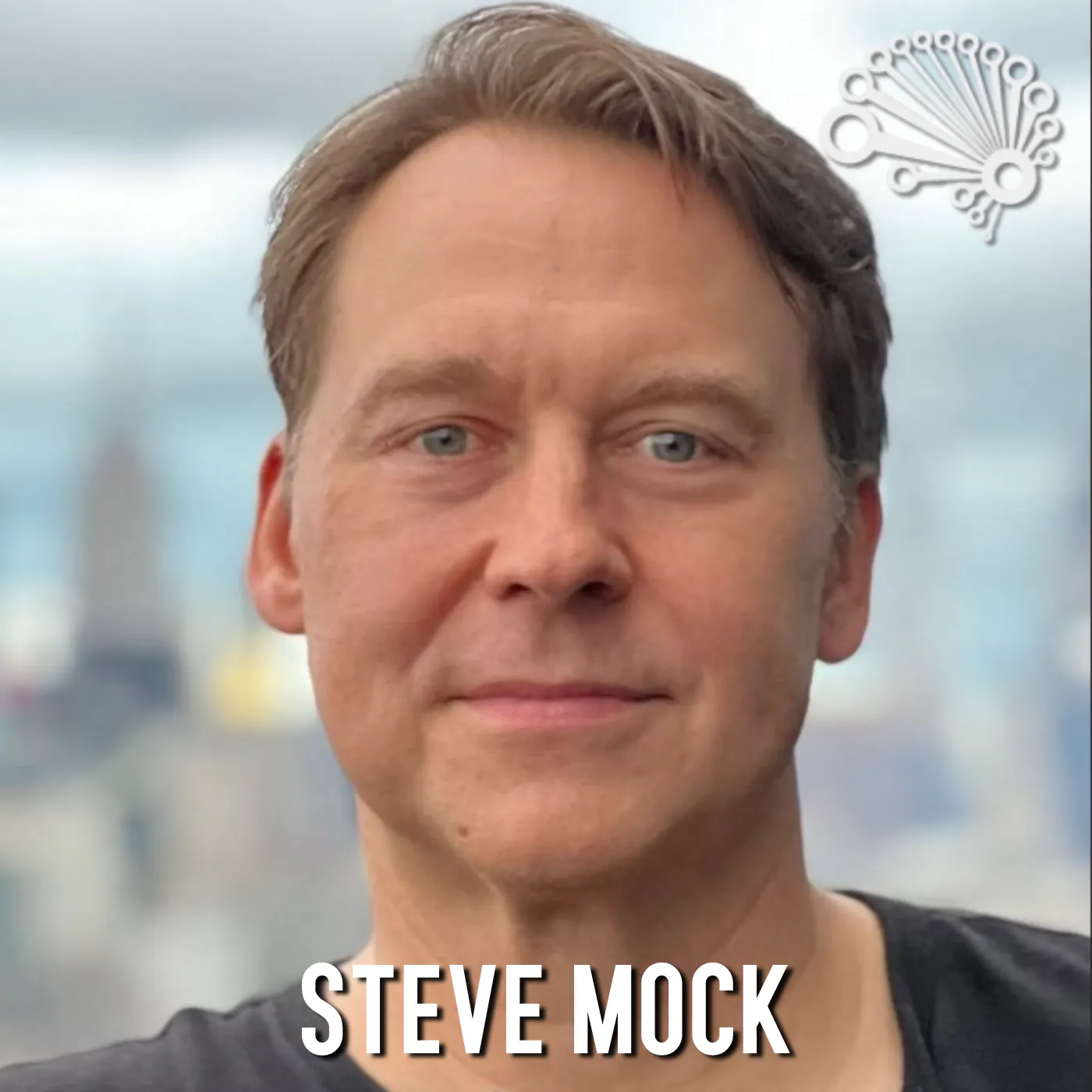
1009: How AI Is Quietly Saving Lives, with Steve Mock
4w ago01:07:17Tap to summarizeIn Episode #1009, Steve Mock (investor at Blumberg Capital, five-time entrepreneur and creator of aisavedme.org), joins Jon Krohn to explore the quiet layer of everyday AI adoption that rarely gets documented. After his 84-year-old father asked a deceptively simple question, “How does one use AI?”, Steve built a place for people to share how AI is actually helping them. The stories that came in surprised him: they’re rarely about the technology and almost always about human outcomes, caregiving, communication, learning, confidence and connection. Additional materials: https://www.superdatascience.com/1009 Interested in sponsoring a SuperDataScience Podcast episode? Email natalie@superdatascience.com for sponsorship information. In this episode you will learn: (02:02) Where “AI Saved Me” came from, an 84-year-old dad’s simple question (14:27) The healthcare pattern, using AI to become your own advocate (22:37) The education pattern, personalized study and simulated office hours (27:33) The fulfillment pattern, offloading grunt work to focus on what matters (43:07) Building the whole site as a non-programmer (50:14) The investor’s lens, vertical AI and the “data flywheel” moat
Transcribe →
1008: The AI-Native Startup Playbook
Jul 1000:15:33Tap to summarizeIn Episode #1008, Jon Krohn digs into Anthropic's 35-page Founder's Playbook and pulls out the practical guidance for each of its four startup stages: Idea, MVP, Launch and Scale. AI has erased the three bottlenecks that historically gated company-building — capital, headcount and technical skill — turning the founder from individual contributor into an "orchestrator of agents." Along the way, Jon covers the trap of mistaking building for validating, using AI as a structured devil's advocate against your own idea, the compounding danger of "agentic technical debt," two litmus tests for real product-market fit, and the three-layer moat that keeps a well-funded incumbent from copying you. His takeaway: this is classic lean-startup discipline, updated for an era where execution is cheap and judgment is the scarce resource. Additional materials: www.superdatascience.com/1008 Interested in sponsoring a SuperDataScience Podcast episode? Email natalie@superdatascience.com for sponsorship information.
Transcribe →
1007: How to Find Solid Career Ground in the AI Era, with 80,000 Hours Founder Ben Todd
Jul 701:36:08Tap to summarizeBenjamin Todd, co-founder and President of 80,000 Hours and author of the new Penguin Random House book 80,000 Hours: How to Have a Fulfilling Career That Does Good, joins Jon Krohn for a major update on career strategy in the AI era, his first appearance since before ChatGPT existed. Ben explains why “follow your passion” is backwards and why rare, valuable skills used to help others are what actually generate lasting fulfillment, the ABZ framework for planning under deep uncertainty, why the only durable move is to keep shifting onto whatever bottleneck AI can’t yet clear, and how a human-level digital worker becomes superhuman almost immediately. He and Jon also map the risk landscape, power-seeking AI, extreme power concentration, engineered pandemics, gradual disempowerment, and S-risks, before landing on a hopeful, actionable note: your career is a bigger lever than ever. Additional materials: https://www.superdatascience.com/1007 Interested in sponsoring a SuperDataScience Podcast episode? Email natalie@superdatascience.com for sponsorship information. In this episode you will learn: (06:44) The ABZ framework for career planning under deep uncertainty (14:30) Why “follow your passion” is backwards and what builds fulfillment instead (20:52) The moving bottleneck: how to stay valuable as AI keeps improving (29:54) Why a human-level digital worker becomes superhuman almost immediately (51:11) Power-seeking AI and extreme power concentration (1:16:11) Why your career is a bigger lever than ever
Transcribe →
1006: In Case You Missed It in June 2026
Jul 300:44:06Tap to summarizeIn this month's episode of ICYMI, hear from Chip Huyen, Andrey Kurenkov, Frank Basso and Gilbert Eijkelenboom, discussing why moats are shifting toward physical systems and accumulated product intuition, how Astrocade built vibe coding before the term existed, what it's really like inside a deafeningly loud AI data center, why only 15% of people are technically self-aware and whether AGI requires anything like consciousness. Additional materials: www.superdatascience.com/1006 Interested in sponsoring a SuperDataScience Podcast episode? Email natalie@superdatascience.com for sponsorship information. In this episode you will learn: (00:00) The Cost of Building Software Is Going to Zero — Now What? (10:18) We Built Vibe Coding Before Anyone Called It That (21:08) AI Data Centers Are Louder Than a Rock Concert (28:39) Why 85% of Data Scientists Can't Communicate Their Work (33:46) Are Humans Also Just Predicting the Next Token?
Transcribe →