Podcast
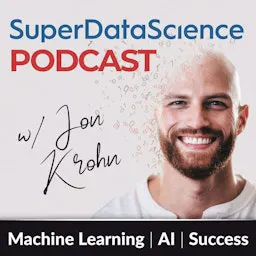
Super Data Science: ML & AI Podcast with Jon Krohn
Hosted by Jon Krohn · EN
The latest machine learning, A.I., and data career topics from across both academia and industry are brought to you by host Dr. Jon Krohn on the Super Data Science Podcast. As the quantity of data on our planet doubles every couple of years and with this trend set to continue for decades to come, there's an unprecedented opportunity for you to make a meaningful impact in your lifetime. In conversation with the biggest names in the data science industry, Jon cuts through hype to fuel that professional impact.
Whether you're curious about getting started in a data career or you're a deep technical expert, whether you'd like to understand what A.I. is or you'd like to integrate more data-driven processes into your business, we have inspiring guests and lighthearted conversation for you to enjoy.
We cover tools, techniques, and implementation tricks across data collection, databases, analytics, predictive modeling, visualization, software engineering, real-world applications, commercialization, and entrepreneurship − everything you need to crush it with data science.
55episodes
Episodes
Newest firstAll episodes

987: AI Infrastructure, Ray, and Why Nonlinear Careers Win, with Linda Haviv
Apr 2801:17:31Tap to summarizeLinda Haviv talks to Jon Krohn about staying current on AI matters, why open-source technology is narrowing the gap in its race with proprietary models, and how being a content creator in tech is key to career growth and longevity. She emphasizes that non-linear pathways to a career in tech can give applicants an edge, and stresses the importance of continuous upskilling to “stay relevant.” In her view, systems thinking is becoming more important than coding skills. Hear why in this episode. Additional materials: www.superdatascience.com/987 Interested in sponsoring a SuperDataScience Podcast episode? Email natalie@superdatascience.com for sponsorship information. In this episode you will learn: (03:43) Linda Haviv on AI education (13:16) The future of coding (27:00) Having a side hustle in today’s economy (31:01) On becoming a content creator for tech (1:00:14) How open source could disrupt the AI landscape
Transcribe →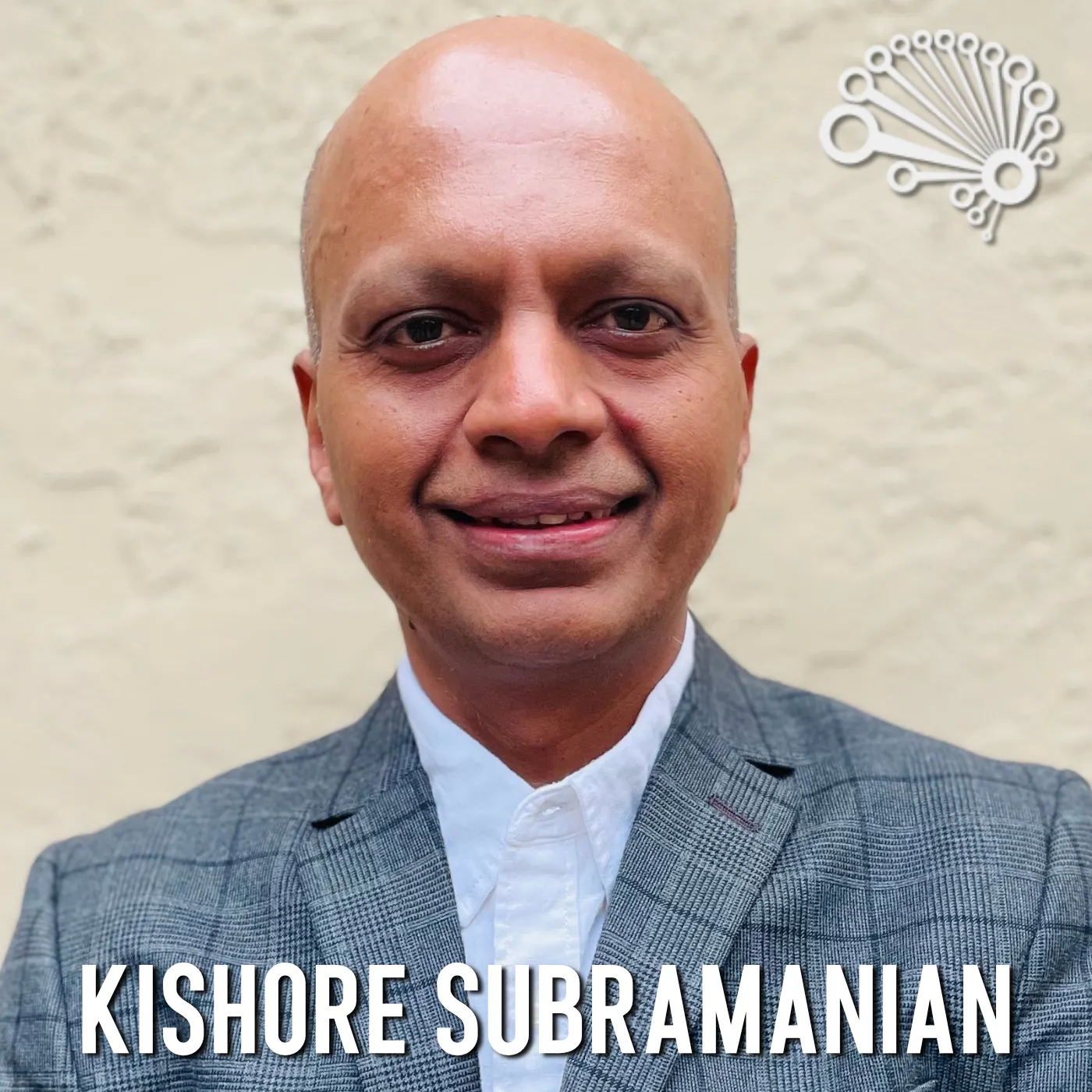
986: Building Hardware is Hard but AI Agents Help, with Kishore Subramanian
Apr 2400:29:43Tap to summarizeCTO of Propel Software Kishore Subramanian talks to Jon Krohn about how product lifecycle management (PLM) software and quality management systems (QMS) help ensure compliance, record management, and quality assurance. Listen to the episode to hear Kishore Subramanian talk about best practices for getting started with Agentforce 360, his top tips for deploying AI projects, and why yoga and meditation could make you better at building AI products! Additional materials: www.superdatascience.com/984 Interested in sponsoring a SuperDataScience Podcast episode? Email natalie@superdatascience.com for sponsorship information. In this episode you will learn: (05:21) How Propel Software meets its customers’ demands (07:57) About Propel One AI (13:31) A case study for Salesforce’s Agentforce 360 Platform (17:08) How to build an enterprise-ready agent with Agentforce 360 (19:21) How to get your AI tool into production
Transcribe →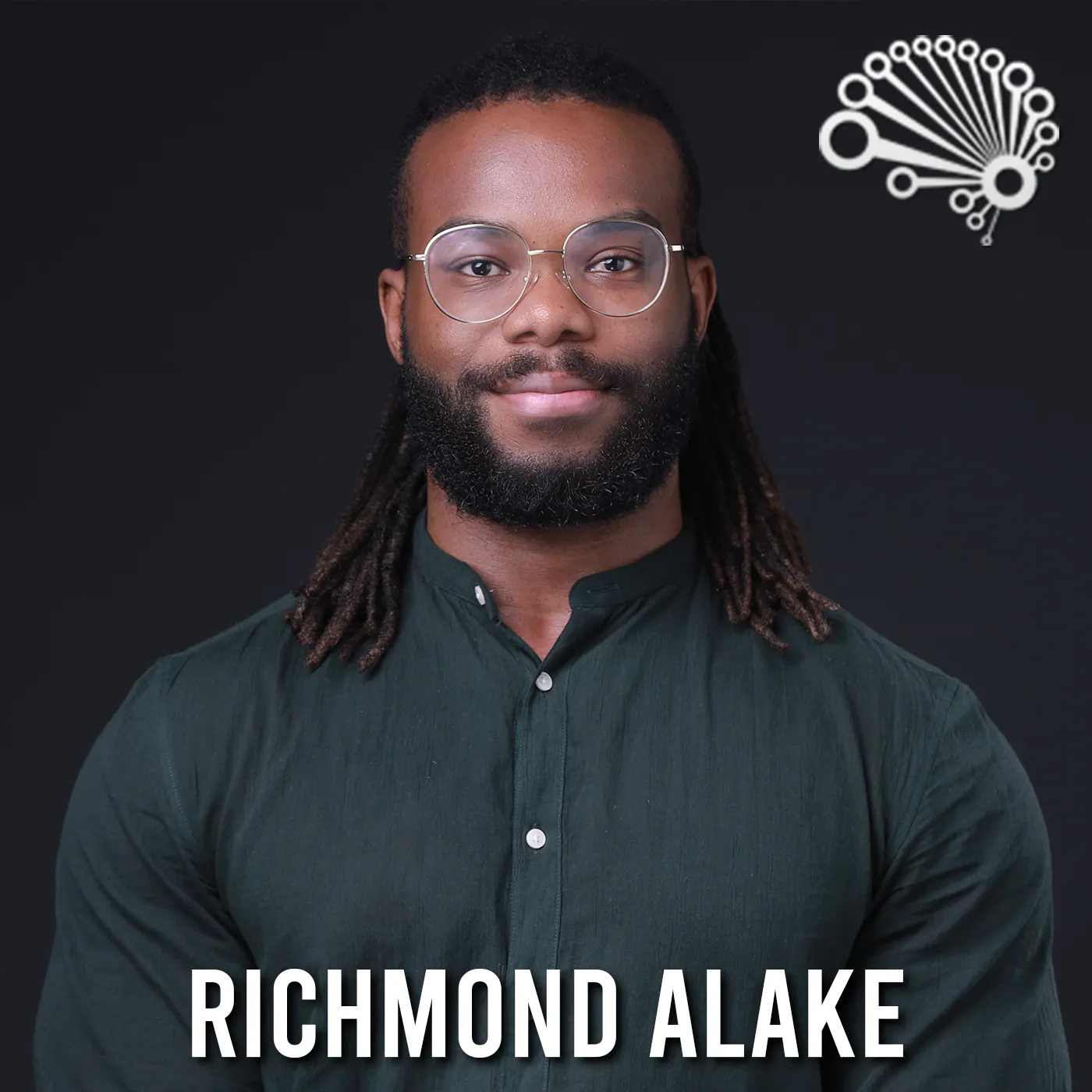
985: The Four Types of Memory Every AI Agent Needs, with Richmond Alake
Apr 2101:04:29Tap to summarizeOracle’s Director of AI Developer Experience Richmond Alake returns to the show to talk to Jon Krohn about agent memory; the network of systems, models, databases and LLMs that enable AI agents to learn and adapt over time. Listen to the episode to hear about Richmond’s “100 Days of Agent Memory” initiative, retrieval-augmented generation’s (RAG) limitations with AI agents, the layers of the AI agent stack, and what makes the Oracle AI database so useful to developers. Additional materials: www.superdatascience.com/985 Interested in sponsoring a SuperDataScience Podcast episode? Email natalie@superdatascience.com for sponsorship information. In this episode you will learn: (03:15) What agent memory is and why it’s important (28:28) RAG’s limitations for AI agents (35:19) What matters in the AI agent stack beyond memory (41:34) Why memory was undervalued in the AI agent stack
Transcribe →
984: Building AI Agents Where 99.9% Accuracy Isn't Good Enough, with Raju Malhotra
Apr 1700:29:18Tap to summarizeRaju Malhotra, Chief Product and Technology Officer at Certinia, talks to Jon Krohn about the so-called SaaSpocalypse and how agentic AI is proving the doomsayers wrong. Listen to the episode to hear more about Certinia’s work with Salesforce and building with Agentforce 360, the three elements required for enterprise-grade agents, how AI agents have benefitted Certinia’s customers, and how to keep your work portfolio fresh and interesting to recruiters. Additional materials: www.superdatascience.com/984 Interested in sponsoring a SuperDataScience Podcast episode? Email natalie@superdatascience.com for sponsorship information. In this episode you will learn: (01:24) What Certinia does for professional services companies (08:45) Why the "SaaSpocalypse" is wrong (13:19) Agentforce 360 and how Certinia builds on it (15:06) The three elements required for enterprise-grade agents (18:02) How AI agents have impacted Certinia's customers
Transcribe →
983: AI in the Classroom: How a Top Elementary School Is Doing It Right, with Principal Traci Walker Griffith
Apr 1401:12:36Tap to summarizeMy guest today took a public school that was about to be shut down and turned it into the number one school in Boston, and AI is her latest secret weapon. In a long-overdue episode on AI for supporting children’s education, hear directly from Principal Traci Walker Griffith how her teachers have been experimenting with AI in classrooms, what works, what doesn’t work, and what’s next for kids as LLMs continue to improve. Additional materials: www.superdatascience.com/983 Interested in sponsoring a SuperDataScience Podcast episode? Email natalie@superdatascience.com for sponsorship information. In this episode you will learn: (03:38) The Eliot School’s transformation from closure list to number one in Boston (08:54) How the school began using Claude for AI-assisted writing feedback (18:14) How younger students benefit from AI behind the scenes (23:46) How older students interact with AI directly (41:11) Three prompt engineering failure modes and how to fix them (55:29) Responding to the Brookings report on AI risks in education
Transcribe →
982: In Case You Missed It in March 2026
Apr 1000:44:18Tap to summarizeJon Krohn rounds up March’s interviews in this ICYMI episode. Hear from AI and data science experts across the fields of education and business in this wide-ranging series of clips that take listeners from the Renaissance to the near future. Guests include Lin Quiao (Episode 971), Chris Fregly (Episode 973), Zack Kass (Episode 975), Kyunghyun Cho (Episode 977), and Rohit Choudhary (Episode 979). Additional materials: www.superdatascience.com/982 Interested in sponsoring a SuperDataScience Podcast episode? Email natalie@superdatascience.com for sponsorship information.
Transcribe →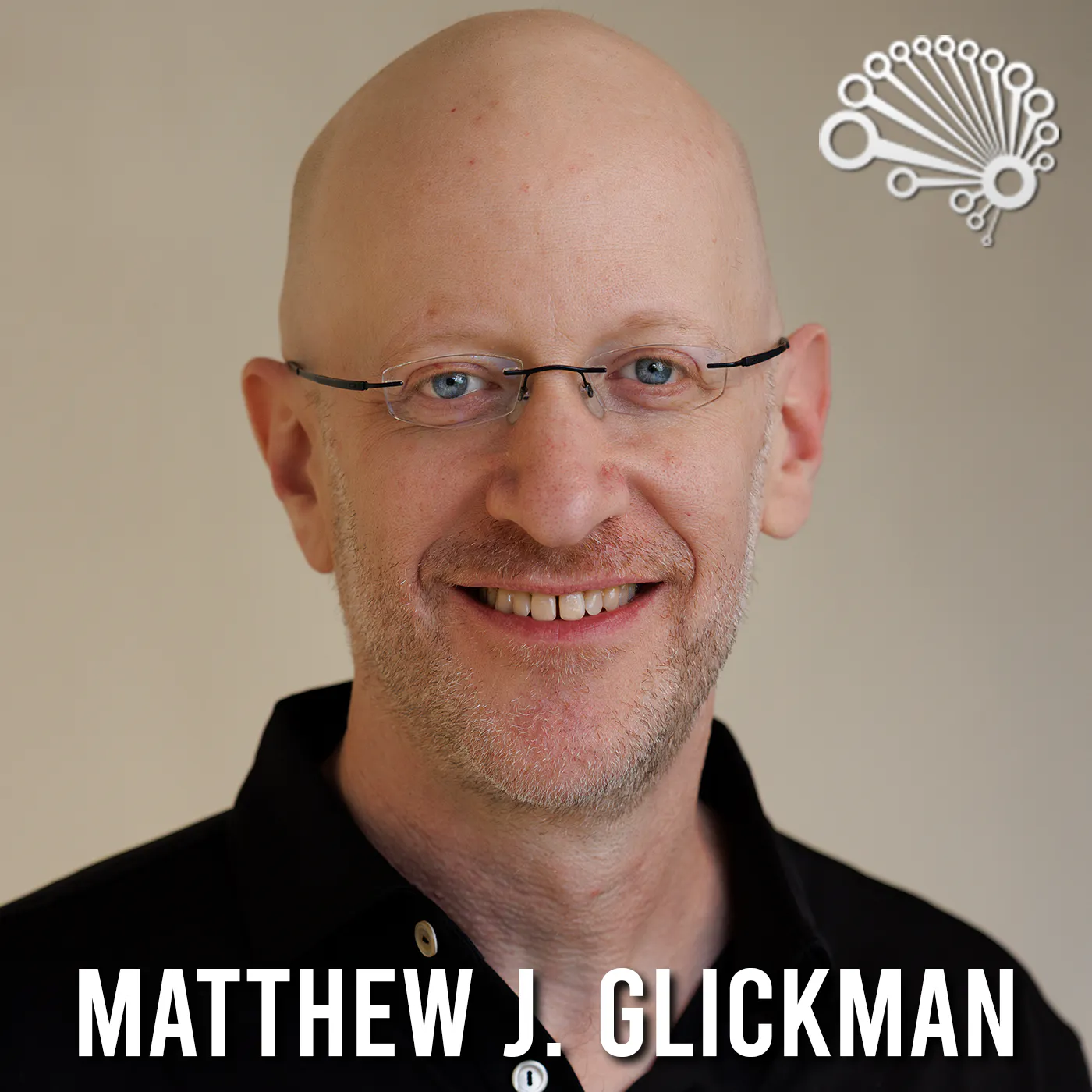
981: How Data Engineers Are “10x’ing” Themselves With Agents, feat. Matt Glickman
Apr 701:14:35Tap to summarizeMatt Glickman talks to Jon Krohn about co-founding the agentic-platform startup, Genesis Computing, how his experience at Goldman Sachs paved the way for developing AI agents, and where he thinks agentic AI has just as much value as a company’s human employees. This February, Genesis Computing revealed how its platform can offer the guardrails so crucial to businesses, alongside increased capabilities that help execute entire workflows from research to deployment. Additional materials: www.superdatascience.com/981 Interested in sponsoring a SuperDataScience Podcast episode? Email natalie@superdatascience.com for sponsorship information. In this episode you will learn: (12:56) Cloud adoption in finance and healthcare (18:28) How Genesis Computing uses AI agents (31:05) AI agents replacing humans in the workplace (56:25) An argument for encouraging enterprises to use AI
Transcribe →
980: AI Making Theoretical Physics Breakthroughs
Apr 300:09:49Tap to summarizeA team of theoretical physicists from Harvard, Cambridge, the Institute for Advanced Study, and Vanderbilt used OpenAI’s models not just as a tool, but as a collaborator, cracking a problem in particle physics that had stymied them for months. In this Five-Minute Friday, Jon Krohn walks through how GPT-5.2 Pro simplified a 32-variable mathematical expression into a single line, proposed what it called the “obvious generalization” for any number of gluons, and how a more powerful internal model then produced a formal proof after 12 hours of autonomous reasoning. Find out why this may be a template for AI-assisted scientific discovery and what it means for the future of research. Additional materials: www.superdatascience.com/980 Interested in sponsoring a SuperDataScience Podcast episode? Email natalie@superdatascience.com for sponsorship information.
Transcribe →
979: Agentic Data Management and the Future of Enterprise AI, with Rohit Choudhary
Mar 3101:05:07Tap to summarizeFor years, Jon has been quoting the stat that the world's data is roughly doubling every year. His guest today says that’s way too conservative, he’s seeing enterprise data soon growing at close to 10x per year. And most organizations are nowhere near ready for what that means. In this episode, Rohit Choudhary, founder and CEO of Acceldata, explains how the agentic data management platform his team has built helps enterprises make their increasingly vast amounts of data self-aware, self-optimizing, and AI-ready. He breaks down why governance needs to be operational and real-time rather than a one-time compliance exercise, and shares his view on why the most valuable professionals in the age of AI won’t be the best programmers, they’ll be the ones with the clearest thinking and the deepest domain expertise. Additional materials: www.superdatascience.com/979 Interested in sponsoring a SuperDataScience Podcast episode? Email natalie@superdatascience.com for sponsorship information. In this episode you will learn: (03:26) How Rohit coined the term “data observability” (06:04) Agentic data management use cases (12:46) Why fixing data at the point of consumption is 1000x more expensive (30:49) Career paths and skills for the age of AI (42:38) Why enterprise data will soon grow at nearly 10x per year
Transcribe →
978: A Post-Transformer Architecture Crushes Sudoku (Transformers Solve ~0%)
Mar 2700:10:39Tap to summarizeA game millions of people solve over morning coffee is exposing a fundamental weakness in today’s most powerful AI models. In this Five-Minute Friday, Jon Krohn breaks down Pathway’s new Sudoku Extreme benchmark, roughly 250,000 of the hardest Sudoku puzzles available and why leading LLMs like o3-mini, DeepSeek-R1, and Claude 3.7 Sonnet scored effectively zero percent, while Pathway’s post-transformer BDH architecture achieved 97.4% accuracy at a fraction of the cost. Listen to the episode to find out what BDH is doing differently, why Sudoku performance matters far beyond puzzles, and what this means for the future of AI reasoning. Additional materials: www.superdatascience.com/978 Interested in sponsoring a SuperDataScience Podcast episode? Email natalie@superdatascience.com for sponsorship information.
Transcribe →