← Surrounded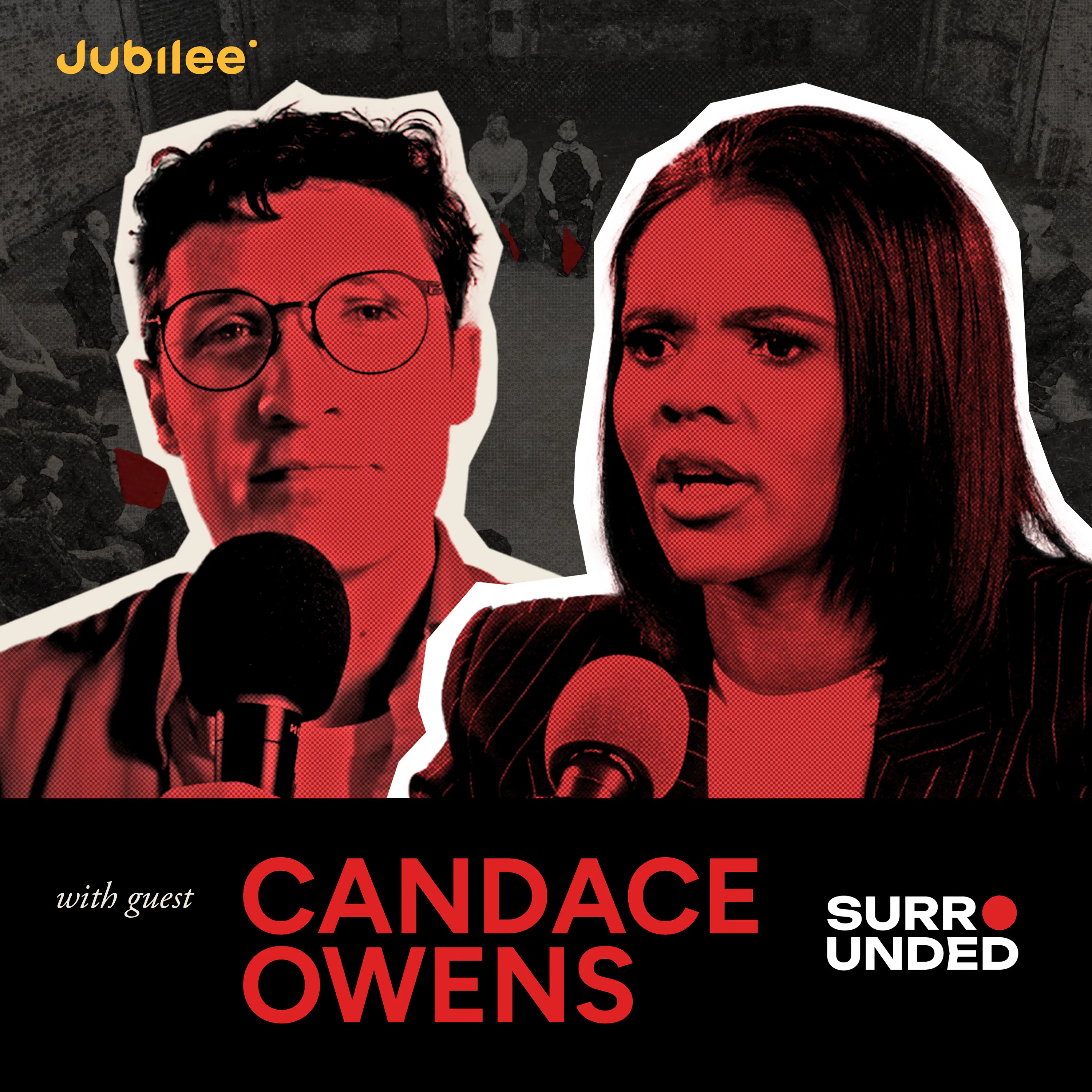
Loading summary
Transcript68 lines
- [00:00]
Candace Owens
Women are more emotional than men. And I think that it's been one of those things that has been hijacked in the political world that you can make an emotional argument for women to get behind pieces of legislation. And women will do it because they feel bad. But when it's hijacked, it becomes a weakness.
- [00:19]
John Ricolato
From Jubilee Media, this is the Surrounded podcast. I'm John Ricolato. Today's guest is once again Candice Owens. And we will be having a follow up discussion reacting to last week's episode where she debated 20 feminists. And she left the Daily Wire roughly one year ago to go independent. And since then she has become one of the most influential cultural figures in politics. So without further ado, here's my discussion with Candice. This episode is brought to you by Polestar. There's only one true way to experience the all electric luxury SUV Polestar 3, and that's to take a test drive. It can go from 0 to 60 in as little as 4.8 seconds with the dynamic handling of a sports car. But to truly understand how it commands the road, you need to be behind the wheel up to 350 miles of range. The 3D surround sound system by Bowers and Wilkins. It's all something you have to experience to believe. So book your Test drive for Polestar 3 today@Polestar.com 16 years from today, Greg.
- [01:17]
Candace Owens
Gerstner will finally land the perfect cannonball. Epic splash, unsuspecting friends, a work of art. Only possible because Greg is already meeting all these same people at AARP volunteer and community events that keep him active and involved and help make sure his happiness lives as long as he does. That's why the younger you are, the more you need AARP. Learn more at aarp.org local.
- [01:48]
John Ricolato
Welcome to Jubilee Surrounded follow up.
- [01:51]
Candace Owens
Thank you so much.
- [01:52]
John Ricolato
Yeah. It's obviously a huge privilege to have you on the show. It was a privilege to have you do an episode. I just, you know, you're a big name right now, so thank you.
- [02:02]
Candace Owens
Thank you. It's very fun, very fun to be nine months pregnant and surrounded by 20 feminists.
- [02:09]
John Ricolato
Yeah. No, and that's actually where I wanted to start because I think that's really interesting and it kind of folds into the theme that we're going to talk about today. You know, when we filmed, it was in May, I believe, and you were pregnant with your fourth child. And since then that baby's been born. So congratulations.
- [02:28]
Candace Owens
Thank you so much.
- [02:30]
John Ricolato
And you know, I don't have four kids, but my daughter Tess she's actually about to turn four in a couple weeks. So I can relate to the parenting perspective to some degree, for sure. I want to be respectful of your time. I know you have an infant that you're taking care of, so, you know, you're a big name in independent media right now. I would be tempted to ask you questions about what's going on in Israel and Iran and Gaza, and, you know, your podcast about Brigitte Macron? There's. There's a million directions we could go, but your episode of Surrounded was focused on feminism, and you debated 20 feminists. And so that's going to be the focus of this podcast and our discussion, and just kind of want to set that expectation for listeners, even though we could talk for hours about many, many things. And so I want to dig right into the conflict. One of the cast members, there was a moment where she said, like, I think you're devaluing yourself, or a lot of what you do devalues yourself. And she pointed to, you know, the title of your book, Make Him a Sandwich.
- [03:31]
Candace Owens
You also devalue education for women. And I think that's very interesting because you're also a very educated woman. And in a lot of ways, this is just like an observation you. Do you devalue yourself a lot. I definitely do not feel like I'm devaluing myself. Make Him a Sandwich. Yeah. Yes. Which is the title of my book.
- [03:51]
John Ricolato
Is your goal really to flip the script on, you know, the negative connotations of that phrase specifically?
- [03:59]
Candace Owens
Yeah. I think it's interesting that that's always the insult, and that's why we named the book that is like, Make Him a Sandwich. Like, there could be nothing more demeaning than the idea of a woman in a kitchen making a sandwich. And actually, it is one of the great joys of motherhood. One of the great joys of becoming a wife is taking care of your family. Like, these things that you can do that genuinely bring home, like, bring warmth to your home. And it's one of my fonder memories growing up. My grandmother always cooked, and there was always just, like, a warm meal. My grandfather would make us breakfast in the morning, but my grandmother would make dinner. And so I think what's happened is that feminists have won this very wrong idea, that to be in service of people necessarily means that you are a slave or that you're enslaved and you're not happy and you're not free. And it's. It's actually quite the opposite. I love cooking. I love being able to be removed from being able to use, like, on your phone or typing, you know, cooking involved. You kind of have to be focused. You gotta have to be in the moment. And so I. I wanted. I want women to understand that. That you are diluted against something that you've never done and that you're opposed to simply because somebody told you that, like, this was kind of the ultimate victimhood as a woman is to be making a sandwich.
- [05:16]
John Ricolato
I see. I see. Okay, well, are you ready to react to the first clip from the episode?
- [05:23]
Candace Owens
Yeah, let's.
- [05:24]
John Ricolato
Your first claim was, no career will give women as much fulfillment as raising children. This first clip is with the cast member's name is Cecy.
- [05:33]
Candace Owens
Do you have children? No. Okay. You have a career, I presume? Yeah. Okay. What do you work? What field do you work in? I do hair. Okay, wonderful. So I have both children and a career, as somebody pointed out. And so the fact that I'm saying that you will be infinitely more fulfilled at the end of the day but by raising your children than you will be if you come home and you say, wow, I really crushed it dyeing somebody's hair today. What is it exactly that makes you angry about hearing that? Like, that's what I'm. I'm actually trying. Nothing makes sense. I'm trying to get to know what's the implicit revolution thing is that no one is angry when someone mentions children. No, see, no one's angry when you mention children. I get angry, I guess when you mention that someone should have a children, or you're trying to impose a lifestyle onto people that you wanna live, which I think is kind of funny, because as someone who's anti feminism, you practice more than most women do. I mean, every time you get on your podcast, every time you collect a check, you're practicing feminism. Okay, that's what you think.
- [06:31]
John Ricolato
So when you hear Ceci say you're practicing feminism, what do you take issue with?
- [06:38]
Candace Owens
So, first and foremost, the thing that. And I try. I think I did a good job of explaining this. But you will see that throughout that entire debate, they keep saying, candace, we just want to have what you have. Right? And this is what happens, as feminists will have you chasing what is a remarkable, remarkable exception. A remarkable exception is for me to be able. You and I are having this conversation. They. So Candace is working. I'm at home. My kids are upstairs running around me. I'm with my infant, my three kids, and I'm doing something that I genuinely love, which is what women are good at. When you see, women excel in their careers. If you think about Oprah, Taylor Swift, if you're thinking about maybe in. On the political side, you might say, Candace Owens, what is the actual field that we're all in? Communications. Even when you see a woman who will be held up as an icon of feminism and, oh, look at what she's doing, you will see that she excelled in something that women are biologically more predisposed to, which is communication, you know, talking amongst your girlfriends. And so when they come in and they say, well, we want to have what you have, and you get an entire society of women that are shaping in their minds that they can become the exception and not the rule. And the rule is that the majority of people are going to end up out of college, in debt, and in working behind maybe a 9 to 5, a 9 to 6. If you're in New York City, not making enough money to be able to pay your bills, that's just not. That's not realistic whatsoever.
- [08:05]
John Ricolato
So your goal is to set a more realistic expectation for women or. Or in the culture around women.
- [08:14]
Candace Owens
Right. It's just that the majority of you are going to be absolutely miserable chasing what you believe is a feminist dream that you're going to be able to achieve. And that's just the reality, you know, and this kind of gets into what I was saying when I. When I did my first book about, you know, BLM and people shaping the idea that every black kid's gonna become a LeBron James. You know, it's. It's like, that is, you have a 0% chance, actually of becoming a LeBron James, but you have a 100% chance of, like, becoming a doctor or a lawyer if you stay in school. And so it's all about people chasing what is not the reality, and it's because of some form of indoctrination.
- [08:54]
John Ricolato
Yeah. And let's. Let's actually double click on that because, you know, for a listener who maybe isn't familiar with you or doesn't know the root of your opinion around feminism, why do you take issue with. When Ceci says, you're practicing feminism and you say, well, that's what you think. What is your resistance to that label?
- [09:13]
Candace Owens
My answer is, I'm not. That's the point. I'm at home, and I am at home. I am not going to an office and working a 9 to 6 or trying to, you know, become the CEO of a company. This. This idea, like, there's not enough women that are in the roles of a CEO, because why Would you want that role? But they were sold the idea that doing so would make them. Fundamentally, the feminist argument was that being able to do those things would render a woman happier than if she was at home. I am working. My podcast is 45 minutes a day, and I do it from home. So a little bit different here.
- [09:49]
John Ricolato
Yeah, no, and it's. It's obviously an exception to the norm. Do you feel empowered? I mean, you're probably, I don't know, like, top five most influential podcasters right now. You're really at the top of the list. Do you feel empowered by that status that you have in culture right now?
- [10:05]
Candace Owens
What do you mean when you say empowered? Just so I can answer this correctly.
- [10:08]
John Ricolato
I guess, emphasis on the power. Do you feel a lot of power, kind of in the position and influence that you have, even though, you know it's only 45 minutes a day as you described?
- [10:19]
Candace Owens
Look, I understand that I have a lot of influence, but my ultimate goal is to not have people see me as a powerful person. Right? I want people to see me as myself. Like, this is actually who I am. This is why I say that I'm so happy, because I get to wake up in the morning, I get to be with my kids. Like, this morning I woke up and we put together water guns and like, this. This water table for my kids. We went outside. Water tables are the best. They are the best. They are absolutely the best. For toddlers. Went outside and was shooting water guns. I mean, we're talking about 9, 15, right? And so that. That is just not the reality of what women are going to have. And so I don't want people to see me as powerful. I've never been, like, competing for power. I want people to see me as a happy person and to listen to me when I tell them. Hopefully they listen to me before they make any mistakes when I tell them actually what it is that makes me feel fulfilled, especially because I used to be one of them. Right. I used to believe in feminism, and I'm so grateful that I kind of woke up to that.
- [11:22]
John Ricolato
I see. I want to pull in the next clip. So this is Jasmine.
- [11:26]
Candace Owens
Tell me how the women who are working and getting educated, why are they faring off better in all of these? I am telling you that I do not believe they are faring off better in all of these. And I do not believe that because. Because of what I am telling you that we are looking at totally opposite statistics. Like, so you're sitting here telling me that the statistics show that women who are Working are producing better children. But I am saying that women that grow up in a, A two family home where the mother stays at home are faring off better than the children who are being raised in an environment where the women are working, where both of the parents are away from the home. I do get to work from home. No, no, no. But that's the eye of the. I've watched your show. You talk about all the nannies you hire and it's so hard to find a baby. Talked about all of the nannies I hired. Yeah, you have. I spoke about how difficult it was to find a babysitter who knew how to cook a meal. And that's because you don't need a babysitter. You're already. You could retire right now. Let people respond to you when they're, when they're speaking. You don't want to. To, to respond to you. No, you don't want to. You want to be working, which is great. You're telling me what I want now and then accusing me of telling you. Wait, are you. Do. You don't want to work. Can you just let me finish? Because you've said so many words.
- [12:28]
John Ricolato
Okay, so a lot is happening there. What, what's your reaction when you, when you watch that?
- [12:34]
Candace Owens
Yeah, she. Unfortunately, I, I wish that she had allowed me to answer anything she was saying. I remember she was the person that was cutting me off the most, and I, I just sensed in her tremendous insecurity. Because if you really think that you have this argument and you're about to land a point, just let the other person respond to it. But what, what she's.
- [12:52]
John Ricolato
I actually cut that off short. It kind of continues for like, I think another minute or two afterwards.
- [12:59]
Candace Owens
She gets increasingly more. Just cutting me off and not answering and moving the goalposts and making allegations about my personal life that you're actually asking right now that I just was able to answer more fully about. Actually, I'm not living this feminist idea of going to the office at home. And I did not do what I, I stopped listening to what feminists said would fulfill me. It was not a paycheck that fulfilled me. It was, you know, finding a husband and building a happy home. And I genuinely went there interested in having a conversation with them because I don't view myself as better than them. I'm just further along than them is. How is how I would put it? Like I told you, I began as a feminist. Like I was in college and I would have been like, yeah, feminism, totally. This is just about equal rights. And so I hope that I'm able to sort of diminish a lot of the illusions surrounding modern feminists. And I want to have a productive conversation. But I think if your mentality when you get in there is, I just want to beat her. I just want to, like, you know, slab her because she's Candace Owens, I don't think it's productive or fruitful. And truly, when I watched it back, I just was like, these women just sound so unhappy and miserable, unfortunately, kind of leaning into a stereotype about women that I don't. I don't think is great. Like, you, like, again, what you're just saying, while women. And we've proven they're rational. Well, let me tell you that those two hours have done nothing to dispel the idea that women are completely irrational. They're just upset and whining and complaining and yelling. And I'm going, okay, well, I'm trying to have a conversation. But, yeah, most. I think most of it just comes from, like, media caricatures of me, like, getting to a point that I couldn't respond to. I actually don't have to do a podcast today. I could just not do that. It's fine. I could just stop doing, like. Like, I. I decided a couple weeks ago I kind of want to do Friday podcasts. I want to just have the full day with my kids. So I just stopped doing Friday podcast. They don't have the ability to do that. You can't go into your employer and say, you know what? I just decided that Fridays are gonna be for the kids, so I'm not coming in anymore. I'm gonna decide not to come in on Wednesday. And not. That is not the reality. Again, that. And so for so many people to be chasing and saying, candace, I wanna live like you, but not listen to me when I tell you about how I'm living just seems foolish.
- [15:11]
John Ricolato
I think something I heard from her that I kind of want to hear more from you on is, you know, she says, but why. Why don't you quit? Why. Why are you still working? I assume to some degree you still are motivated and it's still important to you to do the work you do. Even though it's in a smaller portion of your life and even though it's a lower priority than your family life, it's not even.
- [15:35]
Candace Owens
Like, I wouldn't consider it work. Like, who's the bot? When you say quit, quit? Where? Like, quit. Walk into Candace Owens and say, I'm done. Like, you know what this to me, is more like a social activity. And I love it. I love being able to connect with so many people. What a blessing. What an amazing blessing that I get to go out and just speak to people. And I even describe that on my podcast. I feel like I'm just, like, talking to my friends on the phone. Right? And truly, if you're telling me that modern feminism means that women can find what they absolutely love to do and be surrounded by their family and their husbands upstairs and, and they can have. And they can have that great. Like. But that. We all know that that's not what modern feminism is. They're telling you to go be like men, to turn yourself into robots effectively, to. To stave off having children, to stave off trying to get married. Because the first thing you should want to do is to establish yourself as a career woman. That's the reality. If she's being honest or if anybody's being honest, that is the reality of what feminism is telling women to do. What kind of set the. To this. This idea of a woman being able to have it all, the career and then waiting until she's 40 to decide who she wants to marry and maybe not even having kids, was the cultural phenomenon of sex in the city, which sold promiscuity and having it all. And the millennials, like, we grew up with that. And I loved Carrie Bradshaw, like, I'm going to go and I'm going to write and, And. And then meet people in the city.
- [17:04]
John Ricolato
And smoke a cigarette.
- [17:05]
Candace Owens
Yeah, they smoke a cigarette. That would be fine. The absurdity also of just, like, having your own apartment and all you're doing is writing in New York City, like, I'm sorry, who's your dad? Who's funding this lifestyle? So again, wrongly shaping these feminist principles, because this is not. That's not a reality for any person. Take it from me, I lived in New York City. She would have a couple of roommates. Okay.
- [17:26]
John Ricolato
Right. No, I totally agree with you. Something I'm curious, though, is, you know, hearing how you view your career and, you know, you say it's like a social hobby. That's. That's how you kind of see your podcast and, and your work. I. I do wonder if there's, like, a nuance, middle place between where you're coming from and where Jasmine's coming from, where, like, even if having a kid is going to be the most impactful thing you probably do, and I, I would think that 100% of parents would agree with that. Is there still probably room for a nuanced argument that, yes, we should advocate for many women to become mothers because of the meaning that they will get from that experience, but also it is important for them to have. Have room in their lives for other pursuits. Doesn't have to be, of course.
- [18:14]
Candace Owens
And I have more hobbies, by the way. Like, I absolutely love working out, right? If I could just be myself and just, like, put up my workout routines, then someone's like, oh, you know, you could actually turn this into a business. You could, like, you know, charge 5.99 and we'll film you. Great. Amazing. I'm already doing what I love to do. Nobody's dictating when I have to do it, it's on my own terms. And you, of course, need time to yourself. You like human beings, you kind of need to kind of carve out some time to yourself. I just don't want women to believe that what you should prioritize is trying to climb the top to the top of the corporate ladder because you think that once you're established, your life is going to be more fulfilling. When you look back, if you do make that decision to not have children or not to have a marriage, what it's. What it's going to look like in. When you can reflect upon it is a lot of, I think, loneliness and wondering what it was all for. Like, I did it for the man, like the boss at work or the woman at work.
- [19:12]
John Ricolato
You know, what I heard from Ceci and a little bit from some of the other women is there's this impression that what you're saying with your book and even with this claim is that women should be in the home with children and that all women should be. Is that what you're saying?
- [19:28]
Candace Owens
I am saying that all women at the end of their lives, the things that is going to make them happier, just like I said in that, right? Is what you did in the home, like your marriage and. Or your children, that is going to add more value and happiness to your life than chasing a career. Without question, they will replace you so fast at work. Think about people who have done the most in terms of their careers. And if they est. Even if they established a business and that person died, how quickly do they replace the CEO? Nobody cares. But what your children will say about you when you pass, right? Like, I still cry about losing my grandfather a couple of years ago. Like, that's how much he meant to me, right? The. The values and the principles that my grandparents instilled in me growing up in their home. Like, that's your legacy, not what you do at work. This message is sponsored by Greenlight. With school out, summer is the perfect time to teach our kids real world money skills they'll use forever. Greenlight is a debit card and the one family finance and safety app used by millions of families helping kids learn how to save, invest and spend wisely. Parents can send their kids money and track their spending and saving while kids build money, confidence and skills in fun ways. Start your risk free Greenlight trial today@greenlight.com Spotify that's greenlight.com Spotify this episode is.
- [20:51]
John Ricolato
Brought to you by Progressive Insurance. Do you ever find yourself playing the budgeting game? Well, with the name your price tool from Progressive, you can find options that fit your budget and potentially lower your bills. Try it@progressive.com Progressive Casualty Insurance Company and affiliates Price and coverage match limited by state law. Not available in all states. Thank you. I want to move on to your second claim because there's an interesting clip you had with Evan and your second claim. Just to recap. This was we live under a matriarchy, not a patriarchy, and this is you talking to Evan. It used to be the case in, for example, a few hundred years ago that a lot of primary philosophers like Immanuel Kant, Hegel didn't even believe women could be reasonable. Now here you are today doing a debate with me where we're using logic and reason to get to these and nobody here would dismiss the claim that you can't, you can't be rational or logical or be, for example, a great lawyer because you're a woman.
- [21:53]
Candace Owens
Right. So I totally agree with you that women, but I think they have actually entered into the workforce, I mean, entered into college under this external pressure of feeling that if you don't go to college, you're going to be a failure.
- [22:04]
John Ricolato
So you admit that pressures are a part of the way interests work.
- [22:07]
Candace Owens
Yes, but we're disagreeing on where the pressure is coming from. I think that now the pressure is that if a woman doesn't enter the force, there's no longer this idea that, okay, we're going to, to come together as a family. Whereas there was this reality that there was this understanding that you would have a partner. People were getting married when they were 18, 19 years old, our grandparents. Now it's because of feminism. And I'm saying this is actually, this is the downside of feminism. Women no longer have that sense.
- [22:31]
John Ricolato
Okay. So we're kind of digging into and kind of reiterating what you've been arguing, like at the end of the day family, that's where a lot more meaning is going to be drawn from. Something that Evan kind of points out that I wanted to hear more from you about is if we rewind time, we can kind of get to these places where there are some pretty absurd claims about what women are and aren't capable of, such as reason. And so there has been observable progress in those views. What would you attribute that progress to? You know, if we're not calling it feminism, I guess I'm, I'm curious. How do you see that change?
- [23:11]
Candace Owens
Yeah, I mean, look, if somebody somewhere had an opinion that women weren't capable of reason, I don't think that we can say that everyone everywhere thought that women were capable of reason. I mean, if men truly felt that women were unreasonable and were not capable of reason, why would you leave them at home with your children? Like, just off the bat, like, okay, would you ever leave somebody who was completely irrational and unreasonable to watch your kids? Probably not. So, you know, him drawing upon one person who believed this or thought that, I don't, I don't, you know, I don't. I don't take that all the way to the bank and go, yes, well, women were just perceived as completely irrational and crazy all the time. You know, I think that something that was noted in the, in the history to speaking to what he's saying is that women and men have biological differences. And a lot of women's natural biological proclivities are better to serve children. Women are fighting against their nature. Right? Literally our nature. What our body comes online to do, thinking that nature has condemned us. You know, we are the people that carry the children birth. The children can then feed the children without needing to go out and buy, you know, buy powdered milk. And you're never going to win against Mother Nature, no matter how long you can suspend it forever. Your ideas can convince you. You know, hey, I'm. If you're believe in the trans arguments, I'm a man, I'm a woman. Whatever it is, at the end of the day, Mother Nature wins.
- [24:37]
John Ricolato
Yeah, and I, I can see how that's a, A very strong argument. What I think Evan's pointing at is there has been progress in the past or, or change that we can observe women being allowed to own property or vote. Do you think those are positive things in history?
- [24:53]
Candace Owens
You know, on the topic of women voting, I will say that first and foremost, speaking to our biological differences, women are more emotional than men, hence the reason that we're better at communication, we with children, we're better at understanding children. And I think that it's been one of those things that has been hijacked in the political world that you can make an emotional argument for women to get behind pieces of legislation, and women will do it because they feel bad. Like, our hypersensitivity is actually something that I think is a strength, but when it's hijacked, it becomes a weakness. And so things that have been ushered in since women have been allowed to vote, like, when you think of things that are now problematic for women, going back to first wave feminism versus fourth wave feminism, like, we need to be on par with men. And now fourth wave feminism is including transgenderism. So, like, somehow if a man says he's a woman, then he can compete in sports. So that's really interesting. Right. But here's what I want to say.
- [25:46]
John Ricolato
I lost. I lost the plot, though. I'm sorry. I just want to get clarity. Do you. Do you think it's a good thing that women were allowed to vote?
- [25:55]
Candace Owens
I'm trying to answer your question.
- [25:57]
John Ricolato
Okay.
- [25:57]
Candace Owens
Yeah. That's literally what I'm trying to answer. So first wave feminism was like. Like, women have to be allowed to vote because we need to be able to vote in women's interests. Like, we are. We can, you know, we can go to work. We can be just like men, and we need to be able to have a voice in this society. Right. And what I'm saying to you is that women are naturally more emotional than men. We are. And that is a good thing in the home. And when you apply politics to it, the result can be fourth wave feminism is now saying that we need to respect men that say that they are women. And what this has led to is it is fighting everything that first wave feminism fought for. Right. So now we're talking about the sports agenda. Men are literally competing with women. But who ushered in that transgenderism? Right. Who ushered in. We need to feel bad for men that say that they're women? Well, it wasn't men. It wasn't the patriarchy. Right. It was women. It was women feeling bad that ushered in what is actually stripping away what you would call years of female progress. So, on the voting issue, do I think it is a good thing? Well, um, I'm not going to use my platform to. To say we need to remove women's rights to vote, but I am saying that women should be clued into that. That now everything that you were literally just running into ourselves, like first wave feminism is running into fourth Wave feminism. Because what we're discounting here is that women and men have differences. And, yes, we are more emotional and more impacted by emotional arguments, which. Which I believe does not serve in the political realm.
- [27:22]
John Ricolato
Right. Well, and I. I can see that. You know, I can see how you can make an argument like, look, we've overcorrected, and maybe you could make an argument that women's influence on society has maybe steered into an unproductive form of feminism that dissolves important boundaries in our culture and society. I could follow that argument, but I am trying to kind of just get a clear sense. Do you think it's still just a good thing that women can vote? If we could just say, okay, women can vote in their best interest and just kind of stop it there? That's a good thing. Right? A net positive.
- [27:57]
Candace Owens
Listen, I think I'm most comfortable saying that I vote, and I wouldn't use my platform to say that we should be putting the genie back into the bottle. But I. I do think that emotional women, like, basically, like, if I had to give up my vote so that the 20 women that were sitting around me couldn't vote, I probably would be like, okay, cool. Like, you know, because I don't think women that are that emotional. Right. Are capable of you telling me that, like, they're going to remove themselves from that emotion when they get to the ballot box. And when emotion can get hijacked, it's not a good thing. It's not a good thing when emotion can get hijacked. More emotional than men, Plain and simple.
- [28:34]
John Ricolato
Got it. Got it. I want to paraphrase what one of the other cast members says to you. This was with Jenny. And Jenny was the cast member that you invited back to the center.
- [28:45]
Candace Owens
Yep.
- [28:46]
John Ricolato
And it seemed like you guys had pretty good. A pretty productive conversation.
- [28:50]
Candace Owens
I do think that there are some aspects of sex work or onlyfans or whatnot that maybe men are definitely the huge consumers of. But. But if we are so concerned with women putting that out for free, it's not. It's charged. Right. They're making money off of it, then why are we not putting the onus more on men for being the one that is in control of that demand? Right. So we can take away the supply or, you know, condemn it all we want, but if there's no onus on men to be the consumers of said products, then wouldn't you think that would solve the issue that you're bringing? Yeah, I actually agree with you on that, and I really get to that. I Want to be very clear, when I say that I'm anti feminist, this does not mean that I do not also criticize men. I think that's something that people get very wrong.
- [29:36]
John Ricolato
Okay. And she asks you the question, you know, if men are demanding this product or the consumers of it, why are we not as critical of them as we are of women? And you respond saying, look, there's a misconception that I'm not critical of men and that I'm only critical of women. Why do you think there's that misconception? And. And what do you think are like, good examples of you calling out men for their accountability in the sexualization of our culture?
- [30:04]
Candace Owens
I think the misconception always comes from when you stake what is an unpopular opinion, period. So if we go back to, like, I was anti Black Lives Matter, so there became this perception that I never critique white people. Right. Because whenever I would say something about a black person doing something wrong, it would go viral because it', like, oh, my God, there she is again, speaking against black people. And this is why she's anti blm, perhaps, because that serves a media narrative. And you get clicks by being like, look at this person. And they're not with us. We're not. They're not with the pack, and what they're doing is harmful to the pack or whatever, I think. And then when people started watching my show and kind of the BLM narrative dissipated a bit, they were going, oh, wait a second, she critiques white people way more. Yeah, if you watch my show, you know, I'm kind of like, I will critique anybody. I'm. I'm an equal. I like, I say I like, I'm an equal offender. You know, I really do believe in offending people equally, equally. And if you're doing something ridiculous, I'm going to call you out whether you're black, white, Hispanic, male or female. Like, for example, yesterday, and I think last week I was going after Dave Portnoy for the way that he spoke to his employee like he was a slave owner. Right. And so it's just really. Is just what people. If you want to listen to what I'm doing or not listen to what I'm doing, you're going to take out what you want to hear. And so since I have said which I am, I am anti feminist, they then think that my entire podcast is spent with me denigrating women, which makes no sense because my podcast listeners are majority women. So if they were majority women, like, why would you listen to a podcast? If I'M just dunking on women all the time, you know?
- [31:34]
John Ricolato
Right, yeah. One quick last question because I know we got just one minute. Do you ever worry as a content creator, though, that you're being too provocative? Maybe you're, you're provoking more of a negative sentiment more than you intend to.
- [31:47]
Candace Owens
You know, when I reflect on maybe sort of my earlier years, and I would say definitely, probably in like year two of a Daily Wire, I look back in the content, I don't think it was as like, light hearted as I actually am. Like, I love to have fun and joke around. And I think part of that was because, as is the case, if you're ever working for a company in a corporation, which is why I go back to saying I like, you know, what makes you actually happy, you are necessarily kind of going to be edited, like, you know what I mean? In a way that I think was, for me was very frustrating. Like I. Having to go through legal. Cause you're kind of part of this, like, big team. What does this person think and what does that person think? And for me, at my core, I'm a creative and I. And I thrive when I can be myself. And so when I look back at some of that content, I think that I was more angry or maybe just less happy there in general. You know, like, again, not a shot at Daily Wire at all. I think that just kind of comes with working for the man, so to speak, but not in this new environment which is home. Like, I am the happiest I've ever been. And I think that that's why the podcast has exploded, is because someone said yesterday, I love to come listen to your podcast when things like feel crazy and don't make sense. Because I know that even when you're covering these topics, you'll be super optimistic and funny about it. And I think that kind of also comes with my faith and kind of taking the Christ pill. And really my perspective is just, just, everything's gonna be okay. You know, it's crazy. Everybody's nuts. We all hate each other and I hate you and you hate me, but everything's gonna be fine. Yeah.
- [33:26]
John Ricolato
Yeah. And we'll leave it at that. Everything's gonna be okay. I think it's great that you're happy. And once again, I want to just say congratulations on the new baby and just like having a rich and fulfilling family, family life, I think that's, that's a great thing and I'm glad you found your way to that place in life. And thank you again for your time.
- [33:44]
Candace Owens
Candace thank you so much and you know blessings to you and your wife and your four year old girl. Girls are so funny and they are just their minds are always working. They're always working.
- [33:53]
John Ricolato
No it's a it's amazing to see. Well I hope it's not the last time we we ever talk but have a great day Candice and thanks for being unsurrounded.
- [34:03]
Candace Owens
You as well. Have a good time. Day.
- [34:06]
John Ricolato
To hear more follow up episodes of Surrounded. Be sure to subscribe wherever you get your podcasts to see video versions of the main episodes as well as many other popular formats. Subscribe to Jubilee on YouTube if you want to engage more with me you can find me on X or YouTube. John Regalato send me a message let me know what you think. Let's keep the conversation going. Thanks so much for listening. Remember you could be wrong so could I. Keep your mind open until next time.