
Podcast
Sustainable Times - Profit Meets Purpose
Hosted by Sustainable Times · EN
Welcome to Profit Meets Purpose, a podcast brought to you by Sustainable Times. Here, we connect a dynamic community of founders and investors who believe in redefining how business is done. Join us as we dive into a world of sustainable investments, where profit and purpose go hand in hand. Each episode, we’ll bring you inspiring conversations with visionary founders, savvy investors, and industry leaders, uncovering fresh insights and actionable ideas on how to build a better, more sustainable future through business.
14episodes
Episodes
Newest firstAll episodes
Foreva Farmers: Profitable in 2 Years, Zero External Funding
Jun 2500:33:30Tap to summarizeMost drinks brands take ten years to reach profitability. Foreva Farmers is on track to do it in two — and without raising a penny of external capital.In this episode of Profit Meets Purpose, host Harvey Knight talks to the Layton brothers, founders of Foreva Farmers and winners of the Sustainable Times RISE Awards 2025 Consumer Product Category.The Laytons have built something rare: a vertically integrated consumer brand where they own the water, the energy, the food-grade CO2 carbonating the drinks, and the canning line itself. The result is a unit cost that matches established producers running fifty times their volume — and a business that's reaching profitability bootstrapped.In this conversation:The vertical-integration model that lets a Herefordshire farm match incumbent unit costs at fifty times the scale.How an existing renewable energy business is funding the launch of a consumer drinks brand from cash flow.Why their anaerobic digester is technically carbon-negative — and why no third party currently certifies that claim.The hardest founder lesson: pricing too low to match competitors instead of pricing to reflect the product.Why "story comes second" is the standard drinks-brand mistake — and how the Laytons built theirs differently.— Connect with Foreva Farmers:Website: forevafarmers.com/pages/our-farmInstagram: @forevafarmersLinkedIn: linkedin.com/company/foreva-farmersCharlie Layton: linkedin.com/in/charlesoscarlayton— About the show:Profit Meets Purpose is the official podcast of Sustainable Times — the UK platform connecting sustainable founders with institutional and HNW investors. New episodes monthly.Sustainable Times website: sustainabletimes.co.ukSustainable Times LinkedIn: linkedin.com/company/the-sustainable-timesSustainable Times Instagram: @sustainablenew— Connect with Harvey Knight:LinkedIn: linkedin.com/in/harvey-knight-38aa91a9— Our partner — Sustainable Wealth Group:Sustainable Wealth Group is the wealth management firm helping investors access sustainability-led EIS and private market opportunities.Website: sustainablewealthgroup.comLinkedIn: linkedin.com/company/sustainablewealthgroupInstagram: @sustainablewealthgroup
Transcribe →
The £200 Billion Problem That Algae Might Solve | HutanBio Founders
May 800:46:20Tap to summarizeSix years of continuous algae cultivation. Zero crop failures. A world first.In this episode of the Sustainable Times Podcast, we sit down with HutanBio CEO Manshu Agarwal and Founder & Chief Scientific Officer Dr John Archer — the Cambridge-based biotech quietly building one of the most credible answers to the hard-to-abate fuel problem.Where ExxonMobil walked away from algae biofuel and competitors like Viridos spent years on genetically-modified strains, HutanBio took a fundamentally different path. Their proprietary marine microalgae strain, Sphaerica — discovered through a multi-year bioprospecting programme in extreme tropical marine habitats — delivers up to 10x the yield of previous algae and oil crops. No genetic modification. No fresh water. No competition with arable land. Grown on seawater, in desert environments, using only CO₂ and sunlight.The result: HBx Bio Oil — a net-negative carbon biofuel designed for the sectors fossil fuels still own. Maritime. Aviation. Heavy land transport.What we cover:— The two-decade scientific journey from Cambridge and KAUST to commercial deployment— Why the algae biofuel market has failed before, and what HutanBio is doing differently— The Sphaerica discovery and what makes it commercially defensible— Building a high-yield, modular production platform engineered for desert deployment— The £2.25m Clean Growth Fund investment and what scaling looks like next— The IMO 2030 emissions mandate and why maritime is the beachhead market— What investors should understand about the hard-to-abate fuel opportunity in 2026—GUESTSManshu Agarwal — CEO, HutanBiolinkedin.com/in/manshuagarwalDr John Archer — Founder & Chief Scientific Officer, HutanBiolinkedin.com/in/john-archer-b551569Harvey Knight — CEO & Founder, Sustainable Grouplinkedin.com/in/harvey-knight-38aa91a9—ABOUT HUTANBIOFounded in 2019 by Dr John Archer (Cambridge), Dr Noor Azlin Mokhtar, and Suhaiza Jamhor, HutanBio is a UK-based climate biotech developing scalable, net-negative carbon biofuels from proprietary marine microalgae. Manshu Agarwal joined as CEO in late 2025. The company is backed by Clean Growth Fund and based in Cambridge with operations in Malaysia.hutanbio.com—SPONSORED BY SUSTAINABLE WEALTH GROUPSustainable Wealth Group (SWG) connects investors with private market opportunities designed to deliver both financial returns and positive environmental and social impact. With a network of 24,000+ impact-focused investors and a disciplined, ESG-led diligence approach, SWG receives over 1,200 founder applications annually and presents fewer than 1% to its investor community.sustainablewealthgroup.com—ABOUT SUSTAINABLE TIMESSustainable Times is a UK publication and podcast covering sustainable finance, climate-tech, and the founder–investor conversations shaping how capital gets deployed.Find more episodes and written research at sustainabletimes.co.uk—REGULATORY DISCLAIMERThis content is for informational purposes only and does not constitute investment advice or a recommendation. The content of this promotion has not been approved by an authorised person within the meaning of the Financial Services and Markets Act 2000. Sustainable Wealth Group Ltd is not authorised or regulated by the Financial Conduct Authority.
Transcribe →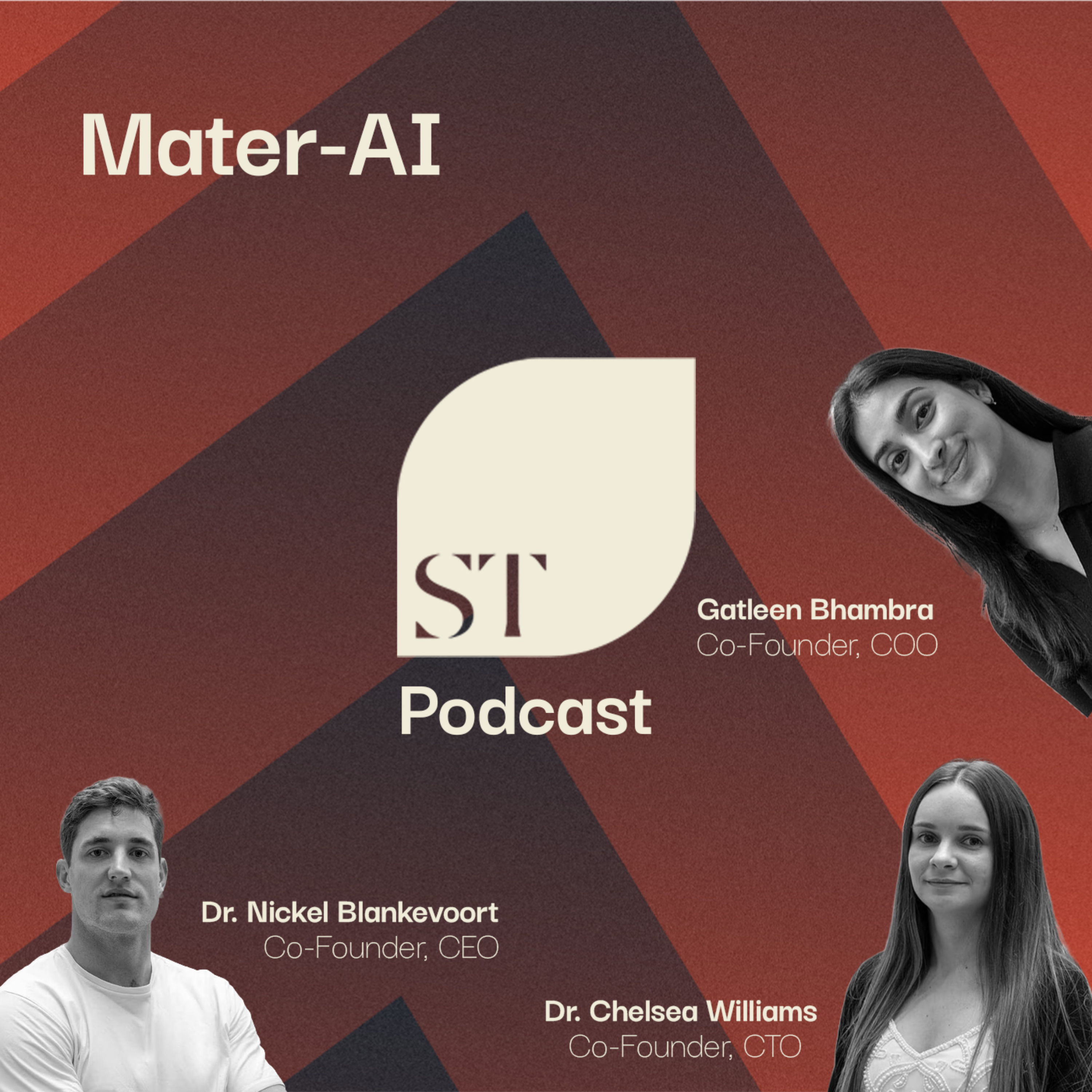
How Mater-AI Is Reinventing Clean Energy With AI
Apr 1400:34:16Tap to summarizeOn this episode of the Sustainable Times Podcast, we’re joined by Mater-AI founders Dr. Nickel Blankevoort, Dr. Chelsea Williams, and Gatleen Bhambra to discuss how AI-driven materials discovery could transform clean energy and thermal management.Mater-AI is building novel thermoelectric materials designed for greater efficiency and new applications in power generation and solid-state cooling. Sponsored by Sustainable Wealth Group. LinksMater-AI: https://mater-ai.comNickel: https://www.linkedin.com/in/nickel-blankevoort-phd-5b2a9598/Gatleen: https://www.linkedin.com/in/gatleenbhambra/Chelsea: https://www.linkedin.com/in/chelseaanitawilliams/Sustainable Wealth Group: https://sustainablewealthgroup.comSustainable Times: https://www.sustainabletimes.co.uk
Transcribe →
Sustainable Times Investor Series — Robin Grenfell Cowan: What Really Drives Early-Stage Investment Decisions
Nov 2000:24:54Tap to summarizeHost: Stuart Hall, Managing Director, Sustainable Media GroupGuest: Robin Grenfell Cowan, High-Net-Worth InvestorEpisode OverviewIn the first episode of the Sustainable Times Investor Series, Stuart sits down with HNW investor Robin Grenfell Cowan to explore how early-stage investment decisions are really made in private markets. Robin has backed multiple pre-seed and seed-stage companies and brings a candid view on founders, deal flow, due diligence and sustainability-led innovation.This episode focuses on what makes an opportunity stand out, what makes investors walk away, and how honesty, humility and long-term thinking shape investment outcomes.• Why people matter more than anything• Due diligence beyond the numbers• The biggest red flags• Pitch decks: what works and what doesn’t• Why he doesn’t require revenue• EIS/SEIS and the awareness gap• Where the next wave of innovation will come from• Advice for foundersThis conversation cuts through the noise. It’s a grounded look at how investors actually think, something both founders and early-stage investors will find useful as the market resets for 2026.
Transcribe →
Ep.35 Claire Tange, Joanna Invests
Nov 500:35:13Tap to summarize“When you change who invests, you change what gets built.”This week on Profit Meets Purpose Claire Tange, Co-Founder of Joanna Invests, discusses the community of female investors and founders she has built since 2022.Claire saw the problem of gender inequality first-hand while working in both investment banking and startups. “We need to be smarter with our money,” she says. “Once we have it, we need to invest.” Even for willing investors, Claire says, deal flow is hard to access without an established network and harder still when focusing on female founders.Since the first deal in 2022, into tech platform ‘We Are Eves', described as TripAdvisor for beauty products, Joanna Invests has backed ten female-founded companies across sustainability, fintech, health, and sport.Joanna Invests has placed great emphasis on the value of community. Before investment, founders host webinars with potential investors. Afterwards, Joanna Invests arranges small “investor dinners” at the founders’ offices, where women meet the people behind the products they’re backing. “Those evenings are incredibly energising,” she says. “Women ask different questions; they're more interested in understanding how the business really works, not just what the numbers say”.Ultimately, Claire wants Joanna Invests to complete the loop by funding female founders who later become investors themselves. “That’s the goal,” she says. “You invest in them, they build something successful, they exit and then they come back and invest in the next generation.”Listen to the episode for the full conversation with Claire and learn how Joanna Invests is empowering a generation of female investors.ST Website: www.sustainabletimes.co.ukJoanna Invests Website: https://www.joannainvests.com/Contact: daisy.moll@sustainabletimes.co.uk
Transcribe →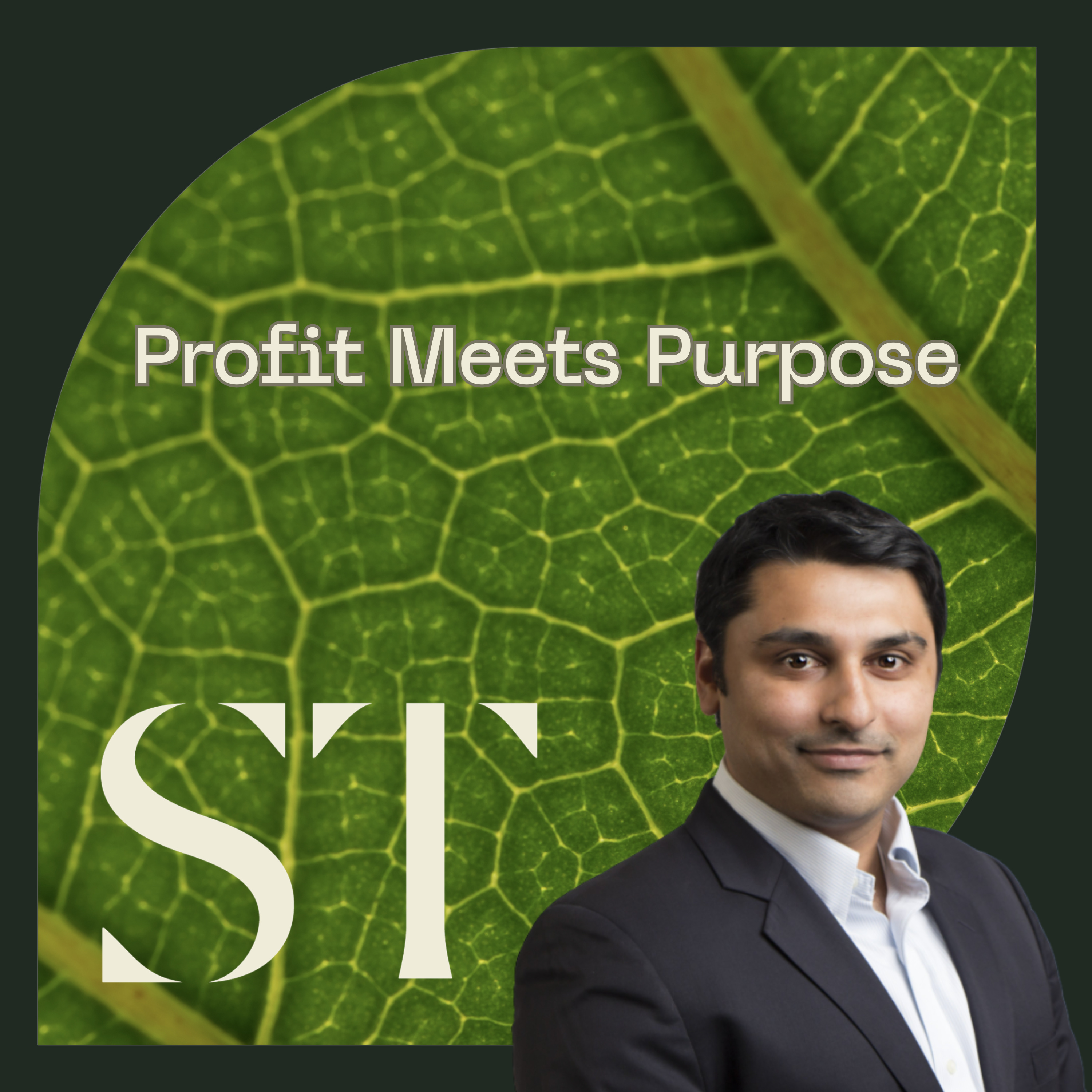
Ep.34 Karan Chopra, Kevin Vranes, Earthena AI and Worldly
Oct 2900:35:58Tap to summarize"Resilience through intelligence." On this week’s Profit Meets Purpose, Sustainable Times explores how artificial intelligence is reshaping business resilience. Daisy Moll speaks with Karan Chopra, Co-founder of Earthena AI, and Kevin Vranes, Chief Product Officer at Worldly, about how AI is helping companies manage risk, improve efficiency, and uncover opportunity in an age defined by climate uncertainty.Founded in 2023, Earthena AI offers “decision intelligence for resilience,” an AI-reasoning engine that helps organisations turn complexity into action - translating data into insight and insight into strategy. Their partnership with Worldly, a leader in supply-chain intelligence, fuses global datasets with proprietary supplier data to identify risks, model returns, and surface investment opportunities with unprecedented precision.For investors and founders alike, the conversation reveals how AI can accelerate transformation, from decarbonisation to supply-chain optimisation, turning sustainability from a compliance exercise into a driver of competitive advantage. Chopra and Vranes also reflect on the responsibility that comes with innovation, and how intent, not technology, determines impact.Website: www.sustainabletimes.co.ukEarthena AI: https://www.earthena.ai/Wordly: https://worldly.io/Contact: daisy.moll@sustainabletimes.co.uk
Transcribe →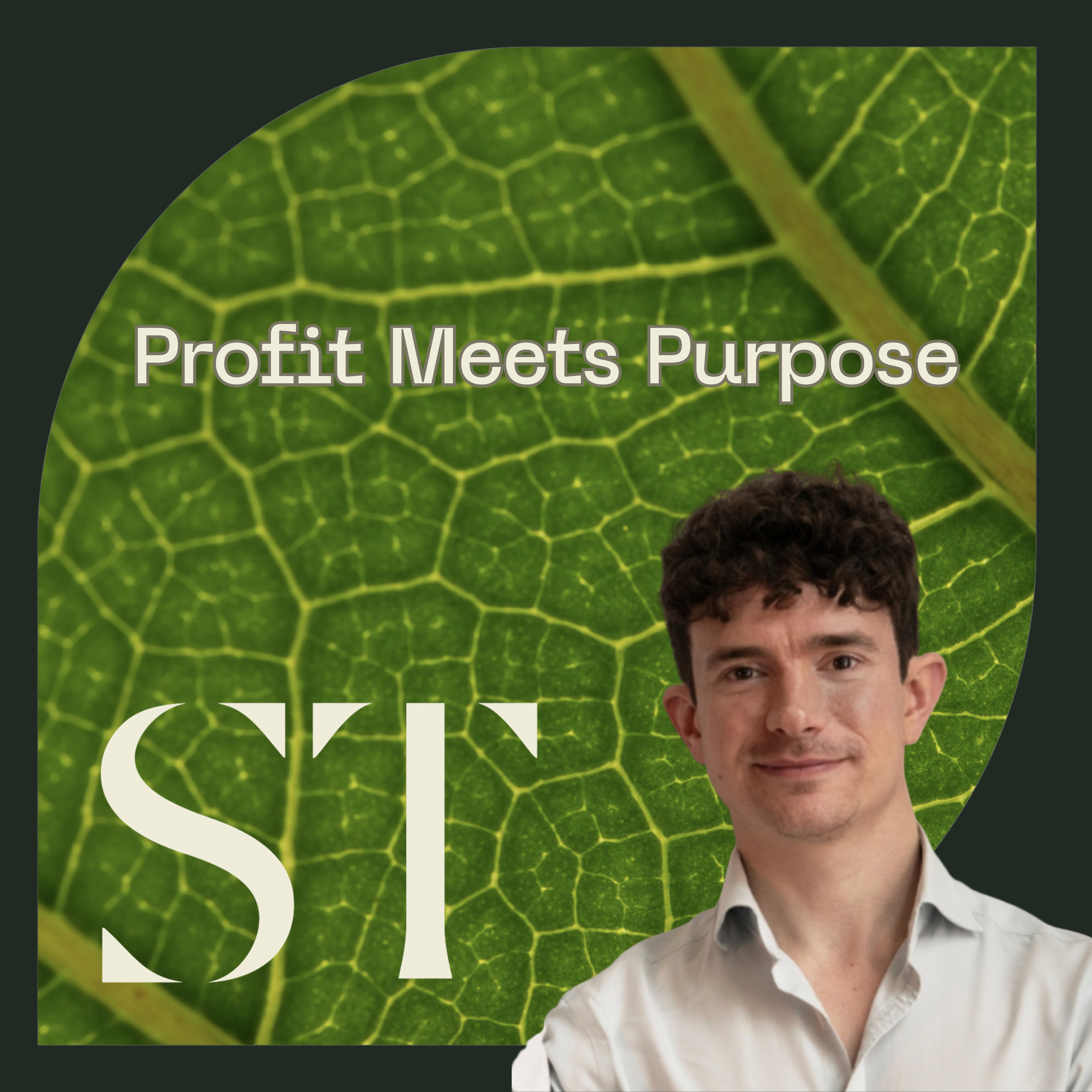
Ep.33 TJ Mitchell, ARDA Biomaterials
Oct 2200:38:36Tap to summarize“Imagine a Guinness X Gucci leather jacket!”This week on Profit Meets Purpose, TJ Mitchell, Co-founder and Chief Technology Officer of ARDA Biomaterials, explains how they are turning beer waste into a scalable, plastic-free leather alternative.After completing a PhD in supramolecular chemistry at Oxford, Mitchell joined the startup accelerator Entrepreneur First, where he met his co-founder Brett Cotten. Leveraging Mitchell’s chemistry expertise, ARDA transforms proteins from waste grain from breweries into a material as strong and flexible as leather that is bio-based and plastic-free.From making two-litre samples in Mitchell’s kitchen to partnering with Beavertown Brewery on a limited run of cardholders, ARDA has scaled fast. The company raised £1.1m in seed funding led by Clean Growth Fund and secured an £800k Innovate UK grant, followed by a £4m round led by Oyster Bay, early investors in Oatly.Now part of AB InBev’s 100+ Accelerator, ARDA is running a paid pilot using waste grain from major global beer brands. The company envisions decentralised facilities co-located with breweries, turning local waste into local materials.Arda’s goal is to reach price parity with plastic leather, then undercut animal leather which would achieve circularity at industrial scale. “The first half of our process looks like a brewery, the second like a plastics plant,” he says. “That means we can scale fast without reinventing the system.”Website: https://arda.bio/ST Website: www.sustainabletimes.co.ukContact: daisy.moll@sustainabletimes.co.uk
Transcribe →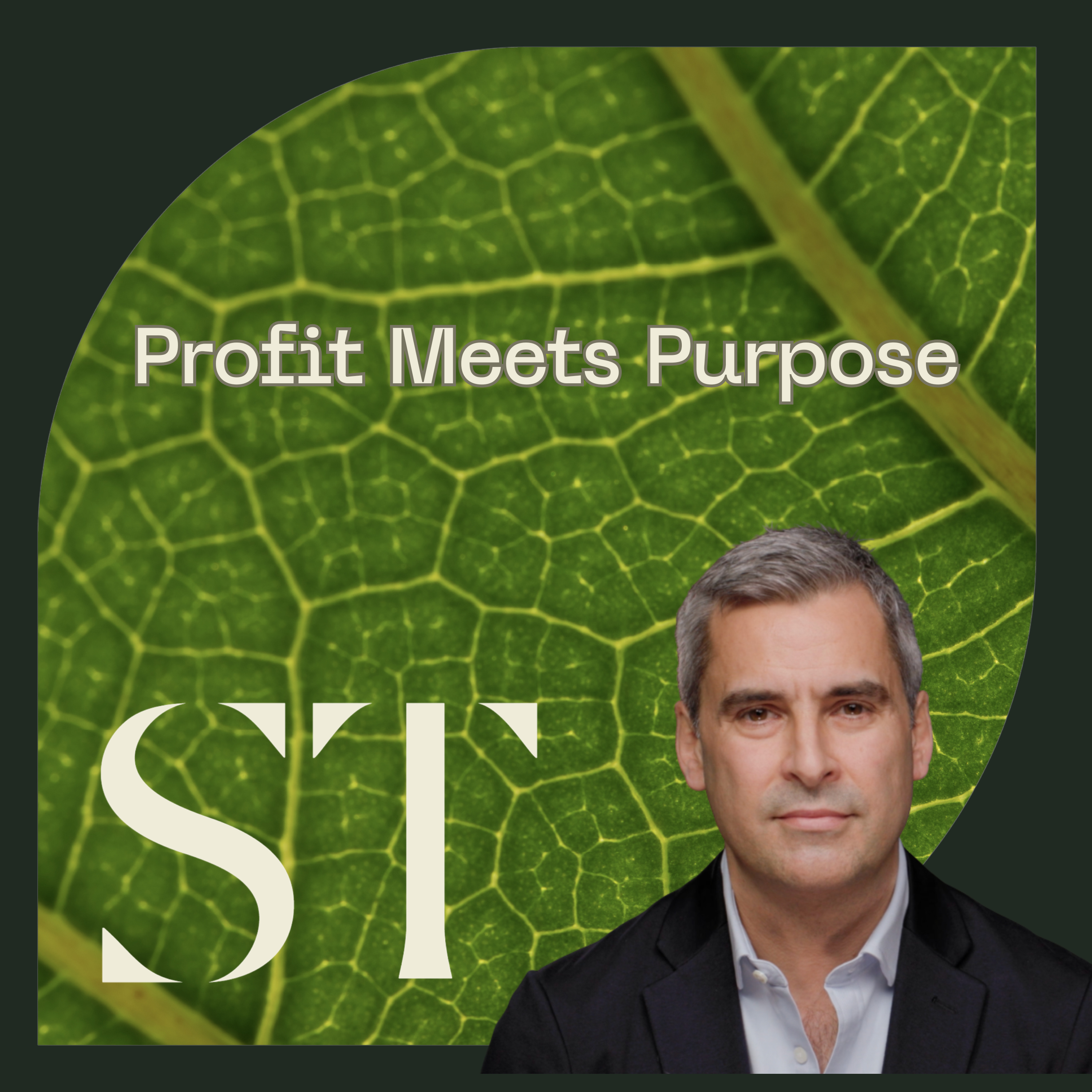
Ep.32 Christophe Williams, Naked Energy
Oct 800:42:10Tap to summarize“I call it the Cinderella of solar”This week on Profit Meets Purpose, Daisy Moll sits down with Christophe Williams, Founder and CEO of Naked Energy, to explore why solar thermal is the forgotten Cinderella in the clean energy story…Williams doesn’t come from the typical engineering mould. Before launching his clean tech venture, he led award-winning ad campaigns for Sony, Microsoft and BMW — even earning a Guinness World Record for a Toshiba commercial. But a chance conversation in 2009 opened his eyes to “the big heat problem” the fact that half the world’s energy goes into producing heat and led to the creation of Naked Energy.Today, Naked Energy is redefining solar with Virtu, a hybrid technology that combines photovoltaic and thermal technology to generate both electricity and heat, delivering up to four times the carbon savings of standard panels. With 24 patents, TÜV certification, and £30 million raised, the company has already completed more than 150 projects across 10 countries, from luxury hotels to the British Library and even Wimbledon.But scaling clean tech isn’t just about engineering. Williams talks candidly about navigating the “valley of death” between innovation and mass adoption and why education, policy, and patient capital are key to unlocking solar heat’s potential.He also shares how Naked Energy’s new software platforms, Clarity 24/7 and Clarity 360, are turning data into design, slashing project timelines and helping organisations that, as he puts it, “want to decarbonise but don’t know where to start.”From the challenges of grid electrification to the opportunities of heat decarbonisation, this episode dives into what it takes to scale climate innovation and why Williams believes solar thermal is finally ready for its moment in the sun.Website: www.sustainabletimes.co.ukNaked Energy: https://nakedenergy.com/Contact: daisy.moll@sustainabletimes.co.uk
Transcribe →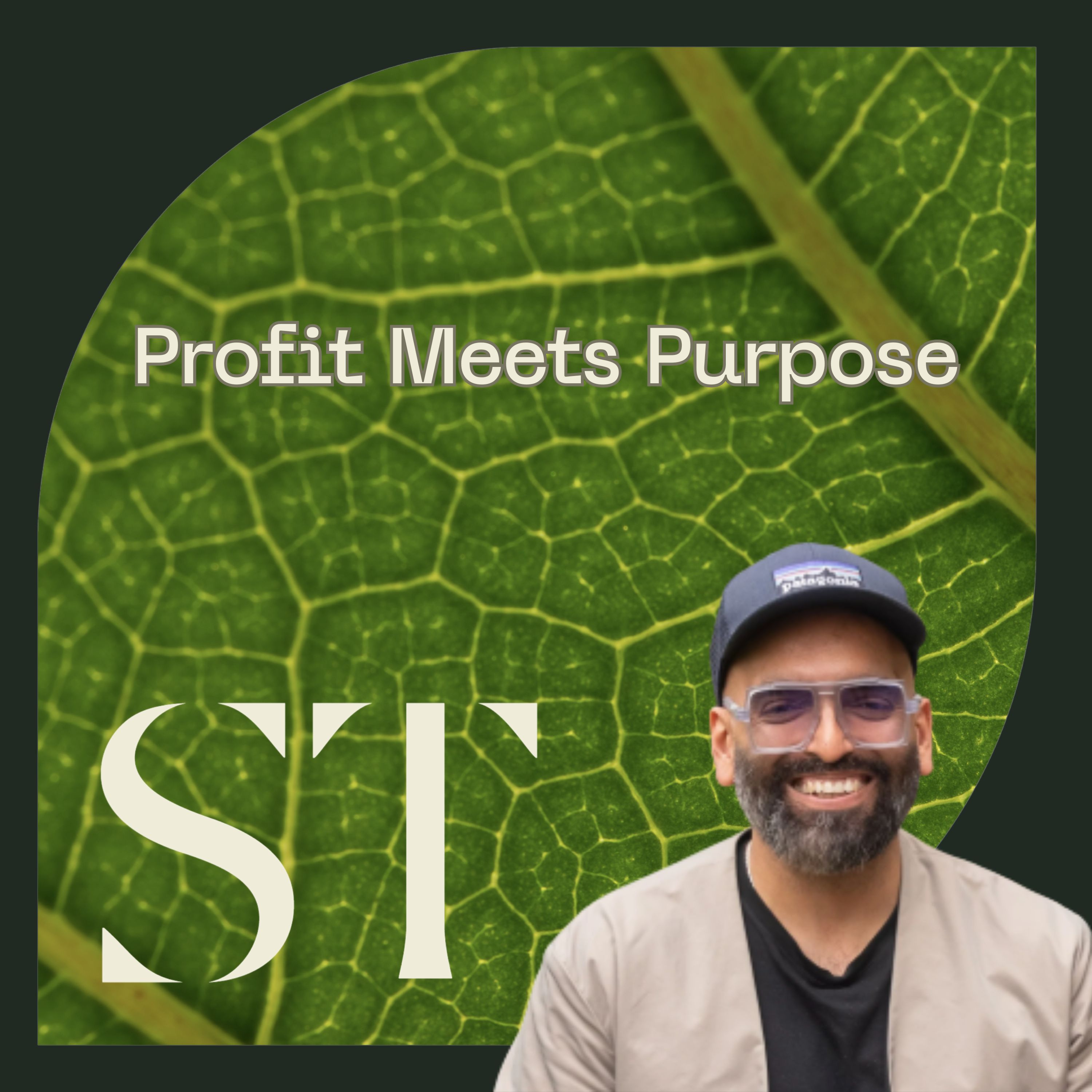
Ep.31 Asad Hamir, Klyk
Oct 100:46:34Tap to summarize“E-waste is the world’s fastest-growing waste stream.”Entrepreneur Asad Hamir is tackling the growing e-waste crisis with his fourth venture Klyk, a circular IT company helping SMEs cut costs, extend the life of technology, and unlock the hidden value in discarded devices.Asad explains how Klyk’s model replaces new purchases with refurbished ones, manages those assets in life, and then collects, repurposes, or donates them at end-of-life. This approach not only reduces waste but monetising every stage of a device’s lifecycle. With target customers among fast-growing SMEs, Klyk helps founders save money, stretch limited runways, and adopt IT that’s both affordable and sustainable. Their strength also lies in customer support, positioning themselves as an outsourced IT team for their clients.Klyk’s growth comes at a time when right-to-repair laws and digital product passports are reshaping the tech industry, but Asad argues big manufacturers are still holding back true circularity by controlling parts and limiting accessibility. To counter this, Klyk has built out its IT services arm to reduce reliance on hardware sales and create sustainable recurring revenue.Bootstrapped with £1 million of his own capital, Asad has kept operations lean and prioritising services over hardware margins. He shares lessons for both founders and investors: stay focused, build on your strengths, and recognise that circular models represent one of the most profitable opportunities in business today.Klyk Website: https://helloklyk.comSustainable Times Website: www.sustainabletimes.co.uk Contact: daisy.moll@sustainabletimes.co.ukRise Awards: https://riseawards2025.awardstage.com/#!/home
Transcribe →
Ep.30 Matthew Journee, Levistor
Sep 2400:41:28Tap to summarizeOn this week’s episode of Profit Meets Purpose, we are joined by Matthew Journee, CEO of Levistor. He shares how a capital-light scaling model and breakthrough “shatterproof” flywheel technology could reshape the future of energy storage.“Energy storage is one of the cornerstone technologies we need for electrification. The difference between when we generate power and when we use it is now becoming critical and you have to make up that difference with storage,” explains Matthew. Levistor, founded in 2021, has already demonstrated its flywheel technology with National Highways and is now raising a seed round to move into commercial expansion. Unlike lithium-ion batteries, which wear out after around 1,000 charge cycles, Levistor’s flywheels can achieve more than a million cycles making them well suited to high-intensity applications such as EV charging, rail, and data centers.From modular design to a “recipe-based” manufacturing approach, Levistor’s strategy avoids the burden of building factories, focusing instead on mass production to bring the cost down. Matthew emphasises the magnitude of the shift to electrification. “We have built our entire civilisational energy infrastructure on fossil fuels. And now we have to change it to electricity in 10 years. The size of that problem is enormous.”If Levistor can mass-produce flywheels at scale, it could become a defining player in the transition to net zero.This episode is sponsored by Sustainable Wealth Group.Levistor Website: https://levistor.com/Sustainable Wealth Group: https://sustainablewealthgroup.com/Sustainable Times: https://www.sustainabletimes.co.uk/Contact: daisy.moll@sustainabletimes.co.uk
Transcribe →