
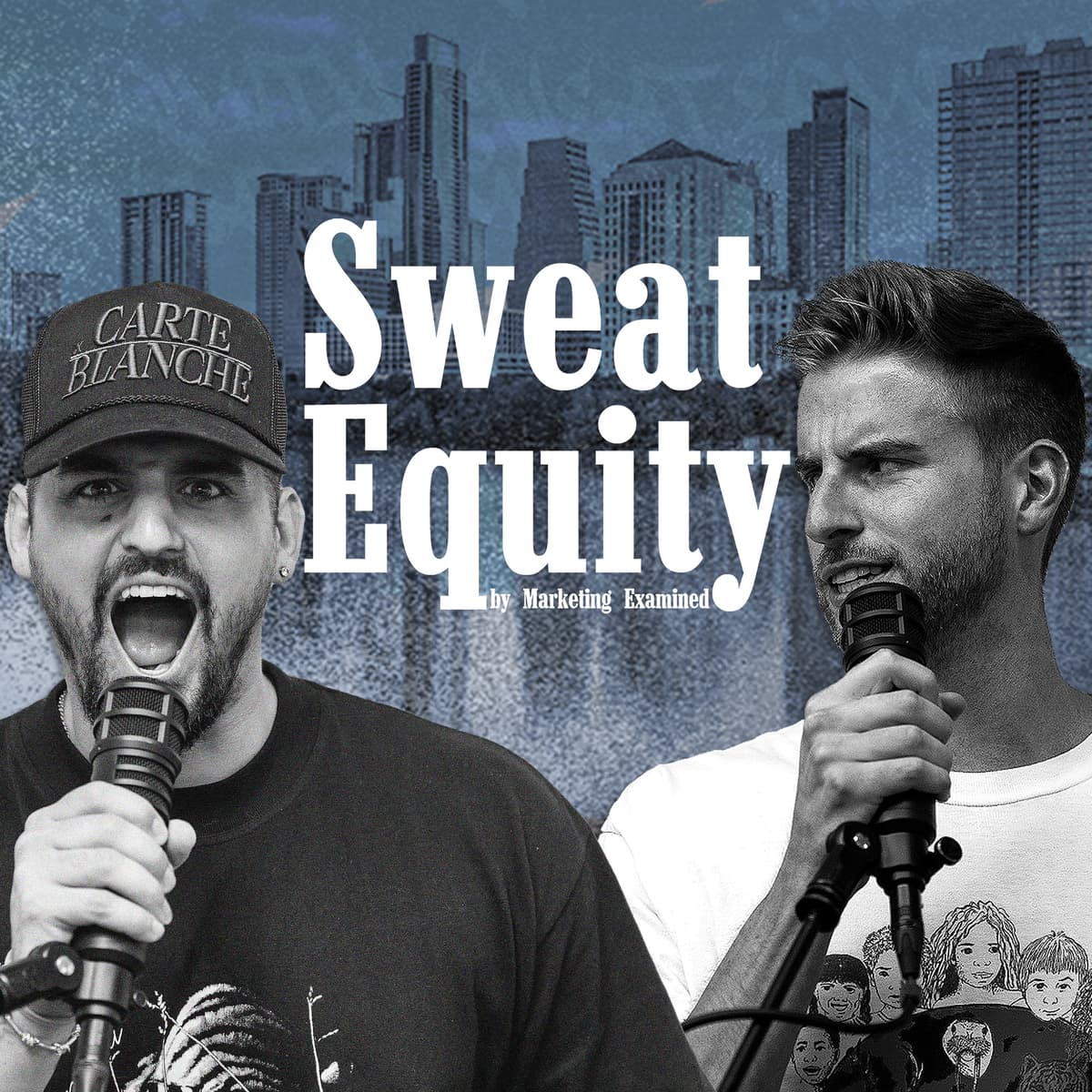

Podcast Summary: Sweat Equity
Episode: The Art Direction Playbook for Brands (From A to Z)
Hosts: Alex Garcia (A) & Brian Blum (B)
Date: November 11, 2025
Main Theme & Purpose
This episode dives deep into the essential role of art direction and world building in modern brand marketing. Alex and Brian explore how brands can leverage art direction not as superficial aesthetics, but as a strategic tool to evoke emotion, foster recognition, and differentiate in saturated markets. Drawing from real-world brand executions, creative campaign breakdowns, and industry trends, the hosts chart a “playbook” for making art direction a cornerstone of lasting, immersive brand experiences.
Key Discussion Points & Insights
1. What Is Art Direction?
- Art vs. Creative Direction: Alex opens by stating the irony that while brands obsess over visual elements, they often neglect the underlying creative direction. (00:00)
- World Building: Effective art direction is about more than looks—it's about placing audiences inside a carefully crafted “world.” Examples include evoking luxury, nostalgia, or a specific subculture. (00:45)
2. Three Approaches to Art Direction in Branding
Alex outlines three primary frameworks:
- Brand-Wide Consistency:
- E.g., Late Checkout and Sporty & Rich, whose content always, “feels like it takes place in the Grand Budapest Hotel… so inspired by Wes Anderson” (A, 04:01–04:02).
- Campaign-Driven Worlds:
- Micro-environments for product launches or events, e.g., Bandit Running’s dystopian take on the NYC Marathon. (01:40)
- Series/Show-Based Direction:
- Ongoing series using art direction to evoke nostalgia, futurism, or a subculture (Brooklyn Coffee Shop as the “snobby hipster” meeting hub). (03:00)
3. Rise of Cinematic Branding & The Power Shift
- Cinema Invades Social:
- "Cinema is making its way into social from an art direction lens" (A, 04:56).
- Increasingly, brands are adopting the production techniques, narrative depth, and compositional rigor of film and TV. (05:54)
- Equal Footing with Creators:
- “Every brand has an equal opportunity to show up on someone’s feed like a creator does.” (B, 04:24)
- Tech Shifts:
- AI tools like MidJourney have democratized creative capabilities—future talent from film/TV may flow into brands. (B, 05:07–05:54)
4. The Brand-Content-Event Triangulation
- Branded ‘Mini-Films’:
- Hypothesizing a future where brands host 90+ minute films as "events" for their communities—akin to product drops or sports. (A, 06:10)
- Innovative Partnerships:
- Example: Dick’s Sporting Goods combining NFL themes, an influencer (IShowSpeed), and a nostalgia-inducing narrator—“the triangulation… is so innovative.” (B, 07:19)
5. Four Strategic Reasons to Prioritize Art Direction
Alex names four pillars underpinning a strategic art direction:
- Defining How the World Feels
- Apple as an obvious example: “Minimalistic but futuristic…that implies creativity, precision, innovation.” (A, 09:19)
- Bandit Running: "Art direction…this intersection between functional and fashion forward." (A, 11:15)
- Recognition & Familiarity
- Importance of visual grooves: House of Errors’ mid-century set pieces as instant brand signifiers. (A, 15:09–16:20)
- “You need elements of your world that people recognize.” (A, 15:09)
- Communicating Tone & Emotion
- Color, lighting, shot selection set emotional tone: e.g., Ozark’s blue, moody tones or Drink Salt’s “lime green…for energy.” (A, 18:40–19:54)
- Worldbuilding & Character Support
- Every art decision should be meaningful: “If you are just copying… your decisions are ornamental… great art direction makes something feel like it needs to be there.” (A, 22:45)
- Example: Tier’s “obsessive, maniacal scientist” campaign, with color and camera work amplifying character and emotion. (A, 20:45–22:15)
6. Challenges of Growth and Staying Fresh
- Brand Lifecycle Issues:
- As brands grow (“20–50 million is an art project… post-100M it’s a challenge”), maintaining distinctiveness and innovation gets harder. (A, 14:28)
- “Your core demographic will be looking for the next Bandit.” (B, 13:02)
7. Practical Playbooks and Personalization
- Avoid “Cool for Cool’s Sake”:
- “Don’t just do it because it’s hot—have a vision for your world and obsessively shape it.” (A, 24:00)
- Familiarity Breeds Imitation:
- “Make something so familiar…that if someone else does it, you get called out for it.” (A, 17:36)
- Look Within for Inspiration:
- “You gotta look within…and you’re gonna think your first idea is stupid or is not gonna appeal to anyone…but there’s power in those associations.” (B, 24:58)
Notable Quotes & Memorable Moments
-
On copycat branding:
“If anybody copied their world, it'd be obvious that they copied their world—from where it takes place to the characters… how they talk, all of those elements.”
— Alex (23:57) -
On the importance of world building:
“There’s not a top grossing series or movie that doesn’t obsess over world-building—Star Wars, Harry Potter, Lord of the Rings, The Godfather… these all obsess over the idea of building a world.”
— Alex (26:10) -
On founder focus:
“A lot of founders get really lost in the revenue side… you're really talking about love of the game type thing.”
— Brian (24:08) -
On the role of creativity over trends:
“My plea for 2026 is not to be hyper-focused on art direction from a ‘we need to be cool’ layer. Art direction from a ‘I have this dream and a vision for how this world exists.’”
— Alex (23:48)
Timestamps for Important Segments
- Defining art direction & world building: 00:00–02:39
- Three approaches to art direction (brand, campaign, series): 02:39–04:19
- Wes Anderson/Grand Budapest inspiration: 04:01–04:19
- Cinema and creators’ convergence: 04:56–06:10
- Brand-created mini-films & new event strategies: 06:10–07:41
- Dick’s Sporting Goods case study: 07:06–08:55
- Four strategic pillars of art direction: 09:19–24:00
- Apple, Bandit, House of Errors breakdowns: 09:19–17:26
- Color, tone, and emotional resonance: 18:39–20:45
- The art direction “plea” for 2026: 22:45–24:05
- Brand growth challenges: 14:28–15:09 and 13:02–13:15
- Personal inspiration and authenticity: 24:58–26:10
- Closing remarks/world building in top media: 26:10–27:22
Tone & Style
- The hosts keep the discussion energetic, jargon-light, and pragmatic, peppering insightful examples with friendly banter and cultural references (e.g., Power Rangers, Ozark, TikTok slang).
- The episode blends anecdotal observations with actionable frameworks, both critiquing superficial trends and advocating for deeper creative rigor.
For Listeners: Key Takeaways
- Treat art direction as strategic—let it serve your story, world, and desired emotion, not trend chasing.
- Consistency breeds recognition: build repeatable visual elements into your brand DNA.
- Use references intentionally; copying without context is always obvious.
- Don’t fear creative ideas rooted in your own lived experience, even if they seem niche.
- Challenge yourself to make every creative choice meaningful—think “needs to be there,” not “nice to have.”
This episode serves as a practical manifesto for marketers and founders who want their brands to transcend the feed and construct memorable, immersive worlds—one meticulously crafted visual at a time.