
Podcast
Swisspreneur Show
Hosted by Swisspreneur · EN
The Swisspreneur Show is a podcast series of in-depth, candid conversations with some of Switzerland’s most successful founders, business leaders and innovators. By getting to the heart of these leaders’ stories - their successes, their failures, their must-have advice and greatest regrets - we hope to both inspire and guide the next generation of Swiss entrepreneurs. Each episode deconstructs and showcases one person’s personal and professional background and provides advice and recommendations for existing and aspiring entrepreneurs in Switzerland.
37episodes
Episodes
Newest firstAll episodes
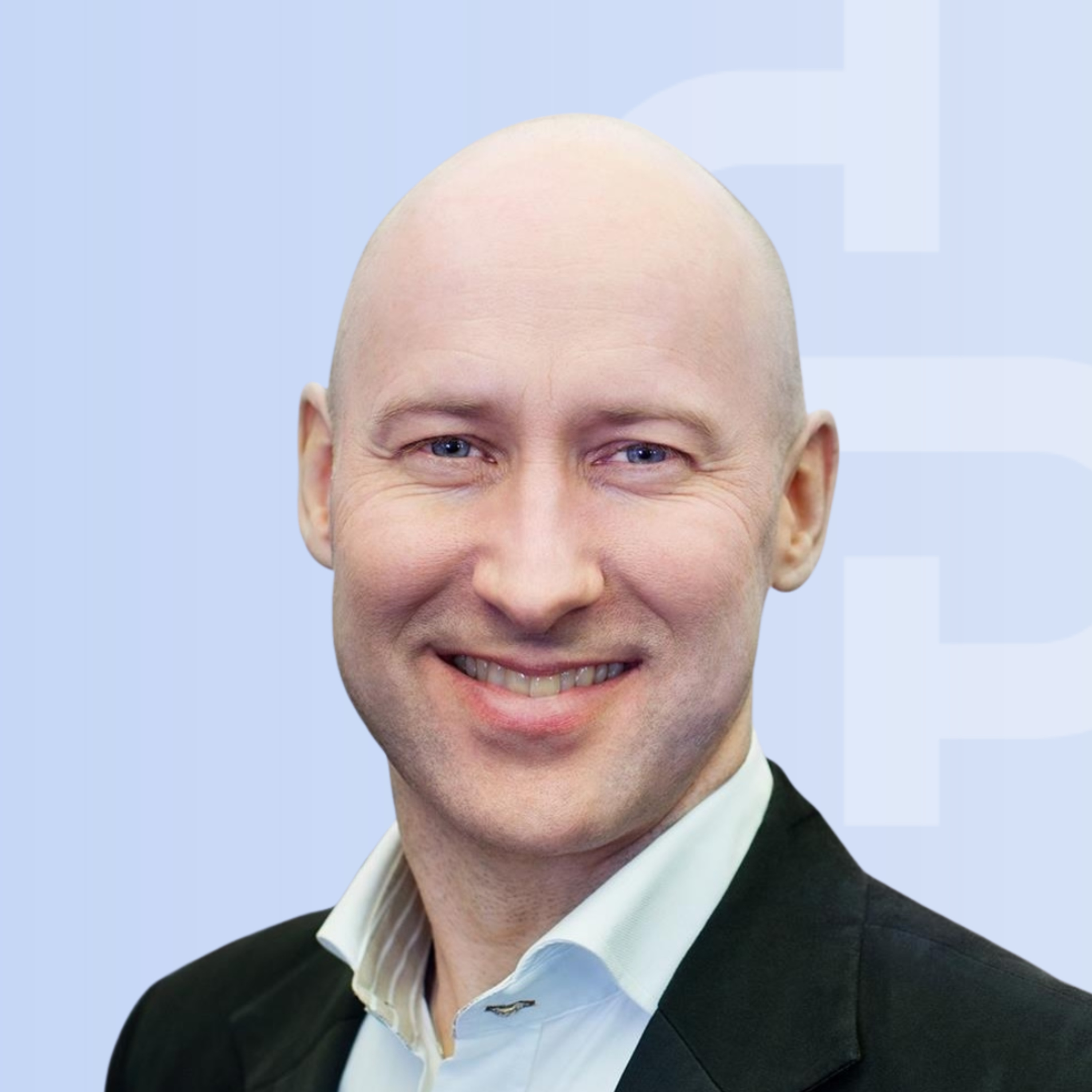
Why European Founders Need to Think Bigger: Petter Made, EWOR (EP#571)
6d ago01:02:17Tap to summarizeTimestamps:00:45 – Petter’s Journey Into Startups14:29 – Bringing More Founder Energy to Europe24:26 – Europe’s Next Big Opportunity39:24 – The Cost of Founder ObsessionEpisode description:Petter Made is a founder, operator and partner at EWOR. He has spent more than 25 years in payments, fintech and company building, including as part of the founding team behind SumUp. There, he helped build a simple idea into a global payments company used by millions of small businesses. Today, he is back at the very beginning of the founder journey, working with early-stage entrepreneurs at EWOR and helping them avoid some of the mistakes he made himself.In this episode, Petter looks back at the early days of SumUp and explains why the first three years can shape so much of what comes after. He talks about why zero to one is still his favourite stage, why speed mattered so much at SumUp, and what it cost him personally to run at that pace. One of his biggest reflections is also one of the least glamorous: they might have built the company faster if they had slept more.The conversation also turns to Europe’s place in the global startup race. Petter shares why he thinks European founders need to build with a bigger ambition from the start, and why American investors can sometimes create the kind of pressure the ecosystem needs. He also talks about why obsession can be such a powerful signal and what it will take for more global companies to be built from Europe.Don’t forget to give us a follow on Instagram, Linkedin, TikTok, and Youtube so you can always stay up to date with our latest initiatives. That way, there’s no excuse for missing out on live shows, weekly giveaways or founders' dinners.
Transcribe →
Making Living Nature Bankable: Rahel Guggenbühl, reilo (EP#570)
2w ago00:29:51Tap to summarizeTimestamps:02:12 – Rahel’s Journey to Reilo05:09 – Why Farmers Need Finance07:53 – How Reilo Works17:08 – Building Across Different MarketsEpisode description:Rahel Guggenbühl is the Founder and CEO of reilo, a Swiss climate fintech working at the intersection of smallholder finance, nature-based solutions and carbon markets. Her path into entrepreneurship started on the ground, first in Kenya and Tanzania, where she saw how many smallholder farmers were locked out of financial systems despite owning land and stewarding forests with real ecological value.In this episode, Rahel explains how reilo is trying to make living nature bankable. The company works with farmer groups in places like Tanzania and Brazil, turning future revenue from nature-based carbon projects into collateral that banks can understand. In Brazil, that means working with açaí farmers to turn bio-waste into biochar, creating new revenue potential while strengthening the position of local cooperatives.The conversation also gets into what it means to build in markets that work very differently from Switzerland. Rahel explains why trust has to be earned before the solution can work, and why the way you explain an idea can shape the whole project. That becomes especially clear when she talks about Tanzania, where even a word like “biodiversity” does not translate directly. For her, building reilo is as much about listening and adapting as it is about creating the financial infrastructure behind it.This episode is presented in partnership with Swissnex in Brazil. Swissnex connects Switzerland with some of the world’s leading innovation hubs and helps Swiss startups expand internationally. In Brazil, Swissnex helps ventures identify opportunities, build strategic collaborations, and engage with Latin America's vibrant innovation landscape, with a focus on climate, nature-based solutions, the bioeconomy, clean energy, and beyond. Explore their work through the link above.Don’t forget to give us a follow on Instagram, Linkedin, TikTok, and Youtube so you can always stay up to date with our latest initiatives. That way, there’s no excuse for missing out on live shows, weekly giveaways or founders' dinners.
Transcribe →
The Success Formula Behind 20 Years of Entrepreneurship: Jann Tadorian, Entrepreneur & Investor (EP#569)
3w ago00:45:48Tap to summarizeTimestamps:02:24 – Becoming an entrepreneur07:02 – Are founders born or made?17:05 – Lessons from football28:48 – Why domain expertise matters35:05 – Luck, timing and successThis episode was co-produced by EO Zürich. Check out their upcoming event, Entrepreneurs Summit 2026.Jann Tadorian is an entrepreneur, investor, board member, Founder and CEO of Inplenion, Co-Founder of Solantic Group, and President and Co-Founder of CPM Partners. Over more than 20 years, he has built companies across markets, most recently helping grow CPM Partners internationally before DPE acquired a majority stake in the company in 2025.In this episode, Jann breaks down what actually makes entrepreneurship work, and it’s not one big trait. It starts with knowing your field well. Then comes the harder part: staying in the game long enough to get good, learning constantly, and accepting that timing can still shape the outcome. He also talks about what separates good founders from exceptional ones, and why perseverance only really means something when success is far from guaranteed.We also get into the shift from founder to leader and what it takes to build a company that doesn’t depend on you for every decision. Jann brings in lessons from professional football, including how one weak performance can affect an entire team. He also talks about what changes after an exit, once money is no longer the main reason to keep going.Don’t forget to give us a follow on Instagram, Linkedin, TikTok, and Youtube so you can always stay up to date with our latest initiatives. That way, there’s no excuse for missing out on live shows, weekly giveaways or founders' dinners.
Transcribe →
Underwater Robots From a Country Without a Sea: Jonas Wüst, Tethys Robotics (EP#568)
4w ago00:44:39Tap to summarizeTimestamps: 07:09 – Building a Startup With Seven Co-Founders19:02 – Where Underwater Robots Create Value26:16 – Why Zurich Works for Robotics 39:57 – Scaling Tethys Beyond SwitzerlandEpisode description:Jonas Wüst is the CEO and Co-founder of Tethys Robotics, an ETH Zurich spin-off building robots for difficult underwater environments. The company started as a student project and has since grown into a startup working on missions where visibility is poor, currents are strong, and sending people underwater can be risky or expensive.In this episode, Jonas shares what it was like to build the company with six other co-founders who had already worked together for years. He talks about why that unusual setup became a strength, how his role changed when he became CEO, and why Tethys decided to put more intelligence directly into the robot instead of using it only as a tool for collecting data.We also get into what it takes to build a robotics company from Switzerland. Jonas explains how grants helped the team get through the early stages, why investor relationships need to start well before a funding round, and where the financing gets harder as deeptech companies grow. He also shares why Zurich still makes sense as a base, even without direct access to the sea.Don’t forget to give us a follow on Instagram, Linkedin, TikTok, and Youtube so you can always stay up to date with our latest initiatives. That way, there’s no excuse for missing out on live shows, weekly giveaways or founders' dinners.
Transcribe →
From Launch to a Landmark Exit to Mistral in 18 Months: Dennis Just, Emmi AI (EP#567)
Jul 201:10:24Tap to summarizeTimestamps:09:16 - How Emmi AI Reached an Exit in 18 Months18:01 - Why They Raised €15M After Becoming Profitable25:25 - Why Mistral Was the Right Buyer46:49 - Can Europe Win in Industrial AI?Episode description:Dennis Just co-founded Emmi AI and served as its CEO, building an industrial AI company focused on complex engineering problems. Around 18 months after launch, Emmi AI was acquired by Mistral AI, where Dennis now serves as VP Manufacturing Solutions. Before Emmi AI, he had already founded several companies, including Knip and Smallpdf, and was closely involved in the Swiss startup ecosystem.In this episode, Dennis explains how the company grew around research rather than a traditional sales setup. Publishing strong technical work brought major industrial companies to them, while the €15 million seed round gave the team room to keep investing in the technology without making every decision around runway. He also takes us behind the acquisition and shares why Emmi AI chose Mistral despite having other offers on the table.The conversation then zooms out to Europe’s place in the AI race. Dennis explains why he sees industrial AI as one of the continent’s strongest opportunities, what Europe still needs to get right, and why this deal feels more like the start of a new chapter than the end of the journey.The cover portrait was edited by www.smartportrait.io.Don’t forget to give us a follow on Instagram, Linkedin, TikTok, and Youtube so you can always stay up to date with our latest initiatives. That way, there’s no excuse for missing out on live shows, weekly giveaways or founders' dinners.
Transcribe →
Can Switzerland Stay Relevant in the AI Race?: Laurent Decrue & Sophie Lamparter (EP #566)
Jun 2800:51:14Tap to summarizeIn this Swisspreneur Briefing, Sophie Lamparter, Founding Partner at Vitamin°C, and Laurent Decrue, Co-Founder and Co-CEO of Holycode, join Silvan to discuss what the latest developments in AI and funding mean for Swiss founders.They look at Europe’s dependence on American and Chinese AI models, why investors are becoming more cautious, and what falling seed investment could mean for the next generation of startups. The conversation also explores whether Switzerland could use its strengths in data security, deep tech, and infrastructure to build a more relevant position in the AI economy.The episode comes back to a familiar challenge: Switzerland has the talent, research, capital, and technology. What it still struggles with is turning that potential into companies that grow at global scale.The cover portrait was edited by www.smartportrait.io.Don’t forget to give us a follow on Instagram, Linkedin, TikTok, and Youtube so you can always stay up to date with our latest initiatives. That way, there’s no excuse for missing out on live shows, weekly giveaways or founders' dinners.
Transcribe →
Fixing DNA Like a Typo: Vincent Forster, Nerai (EP#565)
Jun 2400:34:32Tap to summarizeTimestamps: 1:44 - Why Founders Build Again4:20 - Turning Tech Into a Product14:58 - How Founders Choose Focus21:16 - From Hype to Real ExecutionThis episode was co-produced with KickFund, a VC fund investing in the most promising Swiss deeptech startups.Episode description:Vincent Forster is the CEO and Co-founder of Nerai, a Swiss biotech developing a new generation of more precise and scalable genome-editing tools for rare genetic diseases. Before starting Nerai, Vincent founded and led Versantis, which was acquired by GENFIT in 2022. Now a second-time founder, he is applying what he learned from turning scientific innovation into real medical products to a new mission: making sure no genetic disease is considered too rare to treat.In this episode, we discuss why a breakthrough technology is only the beginning, and why execution and translation are what ultimately turn science into patient impact. Vincent explains how Nerai is building a platform rather than a single treatment, using AI and high-throughput protein engineering to create genome editors that can be adapted across multiple rare diseases. We also explore how biotech founders can manage long development timelines, choose where to focus when their technology has many potential applications, and build a capital-efficient model around partnerships, reusable technology, and regulatory alignment.Don’t forget to give us a follow on Instagram, Linkedin, TikTok, and Youtube so you can always stay up to date with our latest initiatives. That way, there’s no excuse for missing out on live shows, weekly giveaways or founders' dinners.
Transcribe →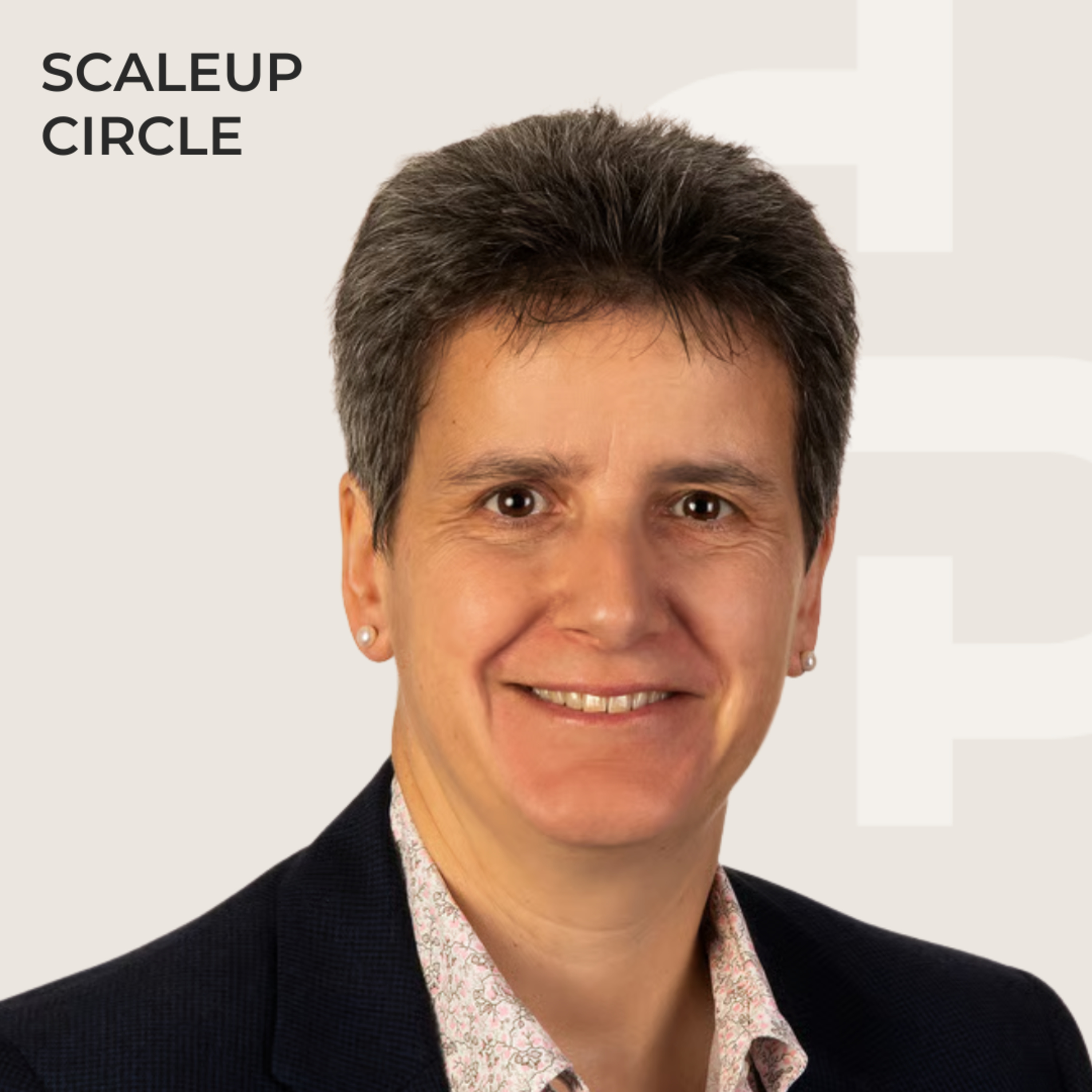
Swiss Startups Need to Think Bigger: Amberg Loglay CEO Yvette Körber (EP#564)
Jun 1800:42:06Tap to summarizeTimestamps:5:22 - The opportunity identification17:49 - Transitioning into a Scale-up24:31 - How AI is impacting logistics35-14 - The Swiss scalling problemThis episode is part of the Swisspreneur Scale-up Circle content, our curated community of Swiss Series A + founders and operators where you can get operator grade insight. Episode summary:Yvette Körber is the CEO and Co-Founder of Amberg Loglay, a Swiss construction logistics technology company helping some of the country's largest construction projects become more efficient through planning, software, data analytics and AI. Amberg Loglay supports complex projects such as hospitals, laboratories and large-scale developments, while expanding from a services business into a scalable software and data platform.In this episode, Yvette shares why some of the biggest startup opportunities are hidden inside traditional industries, how founders can use consulting and services to bootstrap and validate software businesses, and why Swiss startups need to think more internationally if they want to become global category leaders. She also discusses building a company in a market that first needed to be educated, the challenge of scaling from services to software, and how AI is reshaping construction and enterprise workflows.Beyond business, the conversation explores the mindset shift from corporate leader to entrepreneur, the realities of driving change in an industry resistant to transformation, and what Switzerland can learn from more internationally connected startup ecosystems. Yvette reflects on the importance of international networks, confidence in global markets, and why entrepreneurship remains one of Switzerland's most important tools for maintaining its competitiveness in the future.The cover portrait was edited by www.smartportrait.io.Don’t forget to give us a follow on Instagram, Linkedin, TikTok, and Youtube so you can always stay up to date with our latest initiatives. That way, there’s no excuse for missing out on live shows, weekly giveaways or founders' dinners.
Transcribe →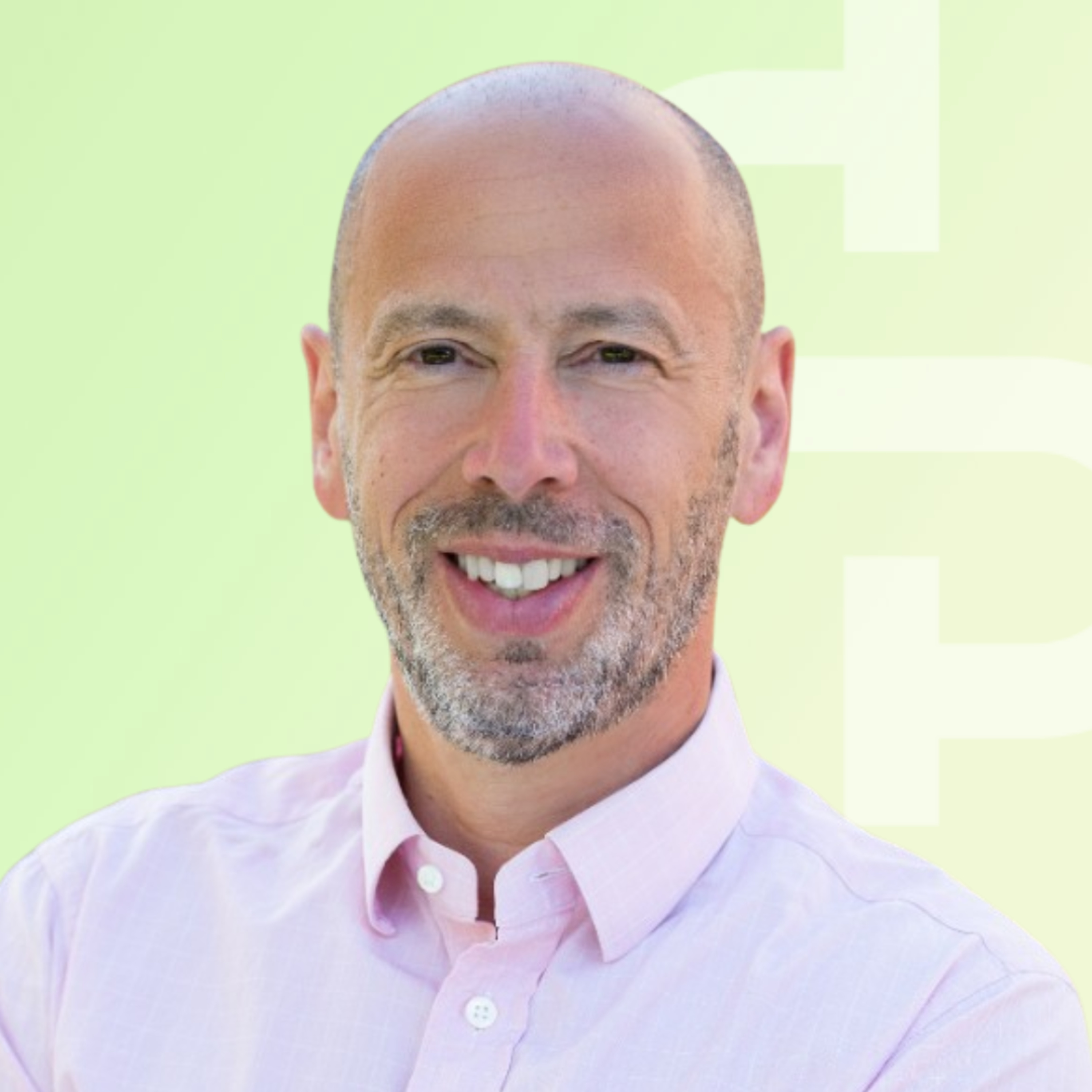
How Founders Build Boards That Work: Marc Stöckli (EP#563)
Jun 1001:01:18Tap to summarizeTimestamps:08:55 - When to Form a Board14:53 - Choosing the Right Board Members20:46 - Working Effectively with Your Board46:52 - Scaling the Board with Company GrowthEpisode description:Marc Stockli is an entrepreneur, investor, board member, and author of Make Boards Work. Over the course of his career, he has built companies, advised founders, invested in startups, and served on numerous boards across Europe. In this episode, he shares what separates boards that create real value from those that become a mere governance exercise, drawing on decades of experience helping founders, investors, and executives navigate growth, fundraising, and leadership.We discuss how founders should think about building their board from day one, why the best investors advocate for independent board chairs earlier than most founders expect, and how boards can provide meaningful support and challenge rather than simply oversee management. Mark also explains why board composition should evolve as startups scale, how to choose the right people for each stage of growth, and why shorter board tenures can often lead to better outcomes.Beyond governance, we explore the human side of effective boards. Mark shares why trust functions like a bank account that must be built before a crisis, how a simple icebreaker exercise helped prevent a boardroom conflict from escalating, and what founders can learn about leadership from his experiences in the Swiss Army. We also discuss ego in the boardroom, psychological safety, and why the best board discussions are often the most uncomfortable ones.The cover portrait was edited by www.smartportrait.io.Don’t forget to give us a follow on Instagram, Linkedin, TikTok, and Youtube so you can always stay up to date with our latest initiatives. That way, there’s no excuse for missing out on live shows, weekly giveaways or founders' dinners.
Transcribe →
Why Europe Needs Its Own Cloud Infrastructure: Exoscale CEO Mathias Nöbauer (EP#562)
Jun 300:27:21Tap to summarizeTimestamps:07:20 - Building a European Alternative in Cloud Services14:02 - Leadership Style and Team Dynamics18:01 - Navigating the Fast-Paced Cloud Industry21:30 - Switzerland's Role in Europe's Digital SovereigntyThis episode was co-produced with Innovaud, the innovation and investment promotion agency for the canton of Vaud. Episode description:Mathias Nöbauer is the CEO of Exoscale, a European sovereign cloud provider helping organizations run applications and infrastructure under European jurisdiction. With more than 25 years of experience across software development, today, he is focused on building a European alternative to the dominant US cloud providers while helping organizations navigate an increasingly complex technology landscape.In this episode, we discuss why digital sovereignty is moving from a legal and compliance concern to a strategic business priority, how Europe's dependence on foreign technology infrastructure creates new risks for companies and governments, and why Europe needs to invest more boldly in its own technology ecosystem. Mathias also shares how Exoscale competes against hyperscalers like AWS, Microsoft Azure, and Google Cloud, and why he believes sovereign cloud infrastructure will become increasingly important for Europe's future prosperity.We also explore how to build trust in critical infrastructure businesses, the leadership lessons Mathias has learned from scaling an engineering-led company, and Switzerland's unique position as a trusted hub that could help shape Europe's digital future. Along the way, we discuss talent development, risk-taking in European entrepreneurship, and why innovation, sovereignty, and prosperity are more connected than many people realize.The cover portrait was edited by www.smartportrait.io.Don’t forget to give us a follow on Instagram, Linkedin, TikTok, and Youtube so you can always stay up to date with our latest initiatives. That way, there’s no excuse for missing out on live shows, weekly giveaways or founders' dinners.
Transcribe →