← Sword and Scale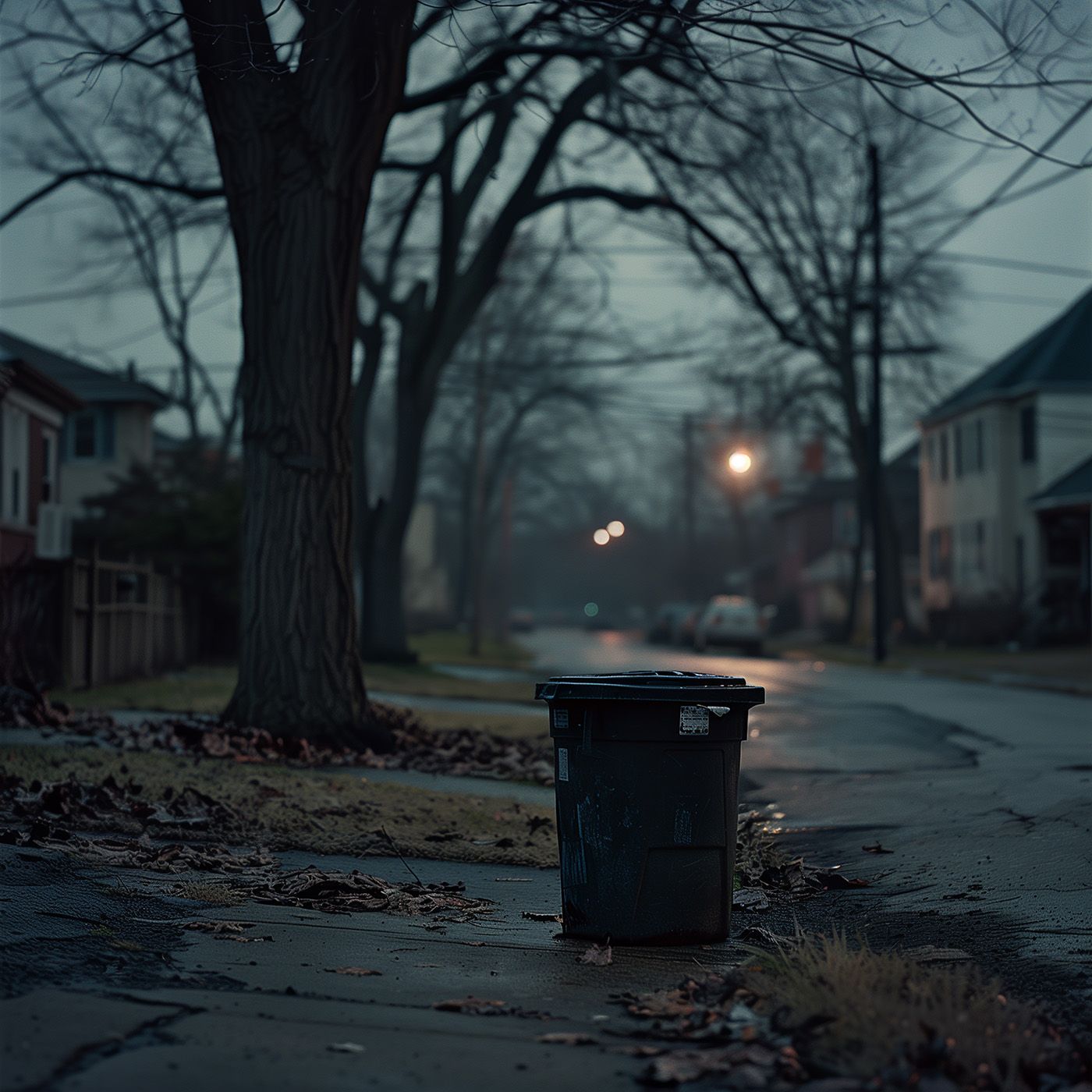
Sword and Scale
Episode 327
00:58:01
When Kajavia Globe disappeared, her family’s worst fears came true in a city hardened by loss. As frustration with police mounted, the community - neighbors, a sanitation worker, a mother who refused to give up - kept pushing forward. In the end,...
Loading summary
Transcript119 lines
- [00:00]
Narrator
Sword and Scale contains adult themes and violence and is not intended for all audiences.
- [00:06]
Interviewee
Listener discretion is advised. This man has came in and tore my foundation down. What I have built, I feel like it should be an eye for an eye. And a lot of things will change in this world.
- [00:34]
Narrator
On Friday, December 11, 2015, Kajay via Globe got up and immediately started getting ready for work. She was nervous but confident. That day was her interview for a new position at work. She could barely hold in her anxiety, so she called her sister.
- [00:53]
Interviewee
Friday morning around 7:20, she FaceTimed me. We was discussing her hair. She just got it done that night. It was fresh new.
- [01:04]
Narrator
They talked for a bit and it helped. Then she headed to work. At the start of the interview, she was still a little nervous but forced a smile. By the end, when her boss offered her the position, she couldn't have smiled any bigger. Her hard work had paid off. All of her co workers threw her a going away party and bought her balloons. At the end of the day, she wrote a little message to her work friends on the desk. She wrote goodbye. After work, Kajavia was dying to share the news. So she visited her aunt before going home. No one saw her again.
- [01:43]
Interviewee
About 12am, her live in boyfriend called me to let me know that she was missing. Now is this rare that she would not return home for the night? No, she always come home. Did you try calling her on the phone? Yes. Did Ms. Globe return her call? No. And is that unusual? Very.
- [02:05]
Narrator
Kadavia lived with her boyfriend John Black in his house in Lakewood Village. When she didn't come home, he was worried and called her sister to let her know. It was the early morning hours of Saturday, December 12th. She hadn't been missing for long enough to report her.
- [02:21]
Interviewee
I got the call she was missing around 12am I knew I had to call the police about 1 o' clock in the morning, but it wasn't long enough. I knew you guys were gonna turn me around because it wasn't long enough. The police station was gonna turn me around because she wasn't gone long enough. In other words, they weren't gonna act on it if she was only gone for an hour is what you said. Yes. And you knew that? Yes.
- [02:46]
Narrator
Kijavia's sister walked into the Detroit Police Department at noon the very next day and reported Kijavia and her car missing. She'd been missing for less than 24 hours, but her family had already waited long enough. Kijavia's sister insisted that she wouldn't just leave. Someone must have Done something to her. The police filed a report and even reached out to the news media to spread the word. The nightly news that Saturday was filled with pictures of kjavia and her 2003 gold Chevy Impala.
- [03:19]
Interviewee
And if anybody has any information on missing Kajavia Globe, please call Detroit police. You can remain anonymous and we'll have much more on this family and their.
- [03:28]
Narrator
Search coming up on action news at 5 o'.
- [03:30]
Interviewee
Clock.
- [03:30]
Narrator
After filling the missing person's report, her family sprang into action. They called relatives and friends. They went out to hand out flyers and search the streets for themselves because they feared that if they didn't look for her, no one else would. But they weren't the only ones looking. Early on December 14th, two days after reporting Kjavia missing, someone called 911.
- [03:57]
Interviewee
Detroit 911. What is the address of the emergency? Well, I don't know. I listened to the news. They said young ladies missing. There's been a car on my block, a Keeler and Finko. It's been there for like all day yesterday. And I'm the only one live on the block that says guy on the corner. He could have company. But it looks kind of suspicious. I don't know if this is suspicious or not, but I think the police should come and check this vehicle out. Okay. Ma', am, is this an abandoned vehicle or have you seen the missing person that you saw in the news? I seen a girl missing or something and I did notice this car just appeared from nowhere. And I don't know if related or not, but I'm thinking maybe the police can find out.
- [04:38]
Narrator
The caller couldn't have been any clearer. She saw a suspicious car resembling the one from all the news reports about the missing woman. It had been sitting at the end of her block for over a day. She just wanted the police to come and check it out, but the dispatcher acted like she didn't understand.
- [04:57]
Interviewee
Okay, I can see on the corner Keeler and Finkel. And I know this young lady came up missing off Telegraph. I don't know what kind of car it is, but. Ma', am, Ma', Am, I understand that you said there's an abandoned vehicle at the corner of your block. My question to you is, what does that have to do with the missing young lady? I don't know. It just looks suspicious to me that that car is there and I've never seen it before. That's fine. The abandoned vehicle we requested for that. But I'm trying to understand where does the young lady come in at? I don't know you said. Because I didn't want to go up close to it, but they say she has some kind of Impala, some gold, and the car looks like it's like a tannish. Okay? Goldish color. So what, you're saying it looks like the car that they described on television? I'm kind of ignorant when it comes to cars, but I know it's tannish gold, and it just appeared there. And I know, I know. I live near Telegraph, and I'm just kind of like, you know, I don't want to walk around a car and bring no attention to myself. Ma', am, take a deep breath for me.
- [06:01]
Narrator
I mean, talk about hating your job. I get it. A lot of people don't like their job, but you're kind of doing something important, lady. Maybe a career in the DMV or the local post office would be more appropriate, better suited for this Black Karen than a job where actual human beings are physically at risk. Maybe only people who have actual empathy should be hired for these jobs, but who the hell am I to say? The caller had done the math. A gold car, an empty block, and a missing woman. You didn't have to be Elon Musk to figure it out. I mean, maybe these things are related, but maybe they're not. Either way, it's the cop's job to figure it out, not the person reporting it. But somehow the dispatcher couldn't or wouldn't connect the dots.
- [06:54]
Interviewee
Huh? Take a deep breath for me, because you're talking really fast, speaking in fragments, and I'm trying to understand what you're saying.
- [07:03]
Narrator
Apparently, that seems to be a challenge.
- [07:05]
Interviewee
So what you're saying is that you heard this on the news, you looked outside yesterday, you saw this vehicle, and it matches the vehicle that you heard on the news. I didn't look outside. I mean, it's just like I was outside in the morning. Like I'm outside every Sunday, and I noticed this car that's been there all day, and I looked out the window today, and it's still there, and I have no idea. You looked out, you looked outside and you saw the vehicle that you believe has something to do with what you heard on the news. Is that what I'm understanding? Is that what I'm understanding you to say, ma'? Am? It could be because it's in front of an abandoned house, and it's all abandoned homes with my block, and there's only one resident, and I know that's not his car. So that's what I'm saying. It's like this there. And there's no homes here occupied other than mine and the guy who's down on the corner unless he has company. Ma', Am, you're going a mile a minute again. Okay, I'm sorry for wasting your time. You're not wasting my time. But what? You're right, lady. Whatever happens happen at this point, Ma'. Am. That's why people don't like to call me. I'm trying to understand. It don't matter now. Okay? What happens happen? We in Detroit and happens all the time in Detroit.
- [08:10]
Narrator
Shit does happen all the time. That is true in 2015. Detroit's citizens had been battling urban decay for decades. It was a vicious cycle where fewer people meant less money. Less money meant fewer businesses invested in the neighborhood. With fewer businesses, there were fewer jobs. So more people would move away, taking their money with them, so on and so forth. Abandoned buildings and homes were everywhere, especially on the west side. There were whole streets of empty homes with sagging porches and boarded up windows. With over 100,000 abandoned structures, the city couldn't keep up. And those that remained in these neighborhoods paid the price. Brightmoor, where the car was found, was one of the hardest hit with something like 30% of all structures. Abandoned. Vacant lots became illegal dumping grounds and unoccupied homes became hubs for criminal activity. Two years earlier, the city filed for bankruptcy and lost nearly 40% of the police force. Now neighborhoods on the west side had high poverty and crime rates with little police presence and slow response times, this led to rampant crime. Of course, the good people left in the community rarely talked to the cops because of distrust for authorities and fear of criminal retaliation. And even when they did, even when someone tried to help, the system was stretched so thin that the police didn't realize they had already gotten a 911 call about Kjavia's car the day before.
- [09:50]
Interviewee
I just saw that. News reports about the young. Pardon me, what is the street name? Chatham. C H A T H A m. Chatham. Yeah. And Fino. Yep. One block north of Point Finkel. The. The young lady that was missing. Okay. Is 03 golden fella. You said the young lady that was missing? Yeah, I just saw a news report. I saw the car earlier today. I'm doing a job on that street and it's parked on the. That would be the west side of Chatham. And you know, everything is faking on that side. So it was odd. And then I just saw the news report. So I rode by to check the license plate on the car and that's the car AFF926. Okay, now, I'm not familiar with what's going on, so. No, no, no, no. I hear what you're talking about, but what is this incident about? A young lady's missing they looking for. Man, what's this car got to do with it? This was the car she was last seen driving. Okay? So I need to know the exact location of it. There. Okay. Shadow, one block north of Finkel. It's right there, like, near the corner. Oh. Anyway, I'm. Put this request in. Okay. All right, thank you.
- [11:16]
Narrator
The caller had to explain it three times. Is it me or do you not need a basic GED to get a job as a dispatcher in Detroit? Is every dispatcher in Detroit completely fucking retarded? Seems like that's the case. Then the dispatcher submits a request. This is a report about finding a missing woman's car. This shouldn't be a request. It should be a priority. You should get off your ass. This call wasn't being taken seriously at all. It's unclear why this call didn't get any attention. Maybe it was a shift change. Maybe it somehow just got lost in the shuffle. Maybe they didn't have an officer to send. Or maybe they just didn't give a fuck. Kijavia's family didn't know a call had already been ignored. But they didn't have to. In their neighborhood, they learned not to count on help that may never come. Their loved one had been gone for too long. And they weren't gonna wait for police to find her.
- [12:19]
Interviewee
We gonna be out here every day until we find her. And whoever got our sister your best bet. If you believe in God or if you love yourself. Send our sister home. Send our sister home. Cause God ain't sleep. And please believe it. Ain't none of us got no sleep either. And we ain't getting none till she come home.
- [13:14]
Narrator
Kajavia Globe was last seen on the afternoon of Friday, December 11th. She had just gotten a promotion at work, celebrated with balloons and goodbyes. After work, she visited her aunt to share the news. That night. She never came home. Her car was spotted two days later on Sunday night, but police never responded. Monday morning, another call came in. This time officers were dispatched, but weren't prepared for what they would find. Officers finally arrived at the corner of Chatham and Fenkel on the morning of Monday, December 14, with no real sense of urgency. It was an hour after the 911 call. Put it that way, Dispatch never even mentioned the possible connection To a missing woman.
- [14:00]
Interviewee
The area where this vehicle was located, what kind of area is it? It's a lot of. It's a large field, a lot of vacant homes. There's probably a handful of occupied homes in that area.
- [14:14]
Narrator
The gold car was parked at the end of the block in front of a vacant house. The street was filled with empty lots and unoccupied homes in disrepair. Only a couple of families actually lived on the street. The officer arrived and followed procedure, running the plate number through the system.
- [14:32]
Interviewee
The license plate was Adam Frank Frank 926aff926.
- [14:40]
Narrator
Kajavia's plate number. Just like the ignored 911 call said. The first caller had already given them the plate number. They'd had a chance to find her and missed it. While waiting for the license plate search to come back, he walked up to the car and looked inside.
- [14:58]
Interviewee
I looked in through the window. I observed a purse on the front passenger seat. Balloons were in the back seat. I observed red, dry smears that appeared to be blood in the center console cuff.
- [15:11]
Narrator
Her purse was still on the seat. The balloons from her promotion party hovered silently in the back. It was Kajavia's car, and there was no sign of her. But the blood in the car made the situation a much higher priority.
- [15:29]
Interviewee
As we recovered the vehicle, there was evidence of foul play.
- [15:33]
Narrator
It proved something had happened to her. Kajavia could be somewhere hurt or worse. This was no longer just a missing persons case.
- [15:44]
Interviewee
So many loved ones out here for Kajavia, who again, many call Nusi, including her sister here, Tracy. Tracy, let me ask you, first of all, what are police telling you at this point? Pretty much they're telling us that they're just searching. Yeah, they're searching for, you know, we all came out to do our search, but they have the state police coming out. They have other Detroit police coming out. They also have the K9 unit coming out as well. So we don't want to, you know, mess up their investigation, so they want to get theirs done first. And then they said, we're more than welcome to, you know, begin our search. So. And that's what you guys are going to do. You see, we waiting. This is a really rough area, and somewhere we must. Me, my sister would never come. So a lot of wooded areas. There's a lot of outside areas. We just want to look and make sure nothing. No blood. Blood, no. No stone unturned.
- [16:32]
Narrator
The police started searching the immediate area. They searched in all directions for blocks. They even searched the banks of the rouge river. Meanwhile, a sanitation manager got an unusual report a few miles away.
- [16:47]
Interviewee
Now were you alerted to something by one of your drivers? Yes, ma'. Am. Okay, and do you know about what time that was? Maybe about 9:30am and what were you allergic to, sir? That there was a body in one of the containers that we service.
- [17:06]
Narrator
He'd never gotten a report like that before. He immediately drove over to Fielding street between Kipford and seven Mile.
- [17:14]
Interviewee
I went and researched the information I got, checked all the cans to make sure there was no body.
- [17:21]
Narrator
He walked up and down the street checking every trash can on the curb. He didn't find anything. But as a city employee he wasn't allowed on private property. So if the trash can was next to the house, he couldn't check it.
- [17:36]
Interviewee
You know, it kind of stuck with me. And a few hours later one of my drivers got sick and went home. So I got on his truck. And finished what? Finished his route. And with it still on my mind, I saw the police over on Chatham and I happened to stop and talk to one of the officers and tell them about the ordeal I just went through.
- [18:06]
Narrator
The sanitation manager stumbled upon a large police presence and relayed the report of a body in a trash can with evidence of foul play in Kjavia's car. Officers and detectives were sent to Fielding street to look around. Fielding street looked a lot like Chatham. The few homes on the block were run down and most were unfit to live in. Yards were full of rotting leaves and fallen branches. There were only a handful of families left on the block. There was one house in particular that stood out. 18541 Fielding street was an abandoned home long since boarded up. But behind it was a city issued trash can.
- [18:51]
Interviewee
We got directed to the backyard by Detective Shea, works on homicide section. We get back there, as I indicated earlier, backyard is heavily laden with fallen leaves, debris.
- [19:05]
Narrator
Behind the little yellow house was a one car garage that somehow seemed in better shape than the house. Next to the garage was a large pine tree. At the foot of that tree, covered in branches was a trash can.
- [19:20]
Interviewee
We got pointed to a city of Detroit Corville dumpster, which is the dumpster that you put in front of your house with your weekly trash. In front of the dumpster there was a pile of branches, tree branches that did not follow that they were placed there.
- [19:37]
Narrator
He called it a dumpster, but really it was your typical 55 gallon trash can with a lid, a handle and wheels.
- [19:44]
Interviewee
Inside the dumpster was the body of a black female. She appeared to have on a red or Orange type sweater. Around her neck was a red or orange, different color red or orange rope. And she appeared to be nude from the waist down. There was a pair of tan boots inside the dumpster. I couldn't tell if they were on her feet or just next to her feet.
- [20:10]
Narrator
Inside the trash can was the body of a young woman. She was nude from the waist down. She was put in the trash can, knees first, with her legs folded behind her. On top of her was a bag of trash.
- [20:26]
Interviewee
Top of the body there was a plastic bag which appeared to contain some fiber filled material. On the outside of the lip of the dumpster, there was a small quantity of what appeared to be human hair.
- [20:40]
Narrator
The missing person's case became a homicide investigation and detectives quickly drew some connections between Kajavia's history and and the location where her body was found. When her family reported her missing, they gave the police a list of names. Some were friends, some were family, but one was her ex and his name was Maxwell Brack. The police interviewed him early on and he answered all their questions. He wasn't evasive, he never asked for a lawyer, and he seemed to be helpful. He admitted to having sex with Kajavia just days before she disappeared. Even helped her family hand out missing flyers. He seemed genuinely concerned about her. That is, until the police found a body across the street from his current girlfriend's house. So they got permission from her to search it.
- [21:37]
Interviewee
Well, there was plastic bags. Clear, clear plastic bag similar to what was in the dumpster. In the basement. There was, I guess, a fiber material that was similar to what appeared to be a plastic bag. Inside the dumpster, there was some article of clothing that we collected and collected plastic bags, fiber material that we saw in the basement. Latex gloves, some clothing.
- [22:05]
Narrator
In the trash can on top of Kjavia, detectives found fibrous material like the stuffing of a pillow. On the rim of the trash can were what looked like human hairs. Across the street, they found what seemed to be the same kind of stuffing. Along with dog's hair. They also found some similar trash bags and suspicious latex gloves. In the time since Kijavi had gone missing, Maxwell appeared helpful and concerned. But just the day before the police found her body, he moved out of his girlfriend's house. Other detectives were digging into Kajavia's financial records. Now that it was a homicide case. Her debit card was used at an ATM after her last known sighting. When detectives viewed the camera footage from the atm, the case took a bizarre turn.
- [22:56]
Interviewee
See a mask of a skeleton? Basically it's very unique, and we're hoping that someone in the public can identify or know someone who has that mask. This is a heinous crime, and we want to get this suspect in custody.
- [23:09]
Narrator
A man driving Kajavia's car and wearing a Halloween mask of a skull used her debit card and PIN to withdraw $500 the night she went missing. In the ATM photo released to the public, you can see the Mylar balloon still in the back of her car. There's something eerie and haunting about that. The body and the evidence found in Maxwell's girlfriend's house pointed directly to him. But the police didn't name him a suspect just yet. It didn't matter to Kajavia's family. They were already convinced he did it.
- [23:48]
Interviewee
He was destruction from the jump. And I told my daughter this and that bank transaction, everything just had its name written all over it. If they had a death penalty, I want it, I'm gonna ask for it. Because if you go to prison, you gonna eat every day, you gonna breathe every day. You're gonna still live your life, and you shouldn't live anymore. It should be an eye for an eye.
- [24:15]
Narrator
Kajavia's family could see the light at the end of the tunnel. Soon, justice would be served, but the police still had to prove Maxwell Brack was responsible for her death. They processed the scene throughout the night, and the next day they brought in Emily Shepard, Maxwell's current girlfriend, for questioning. It was the morning of December 15th, just a day after Kadavia's body was found. She sat at a table in a well lit room at police headquarters out.
- [24:47]
Interviewee
On the Fielding earlier today. And I'm following up on a investigation. A person that was living at your house, this Maxwell guy, that's your boyfriend, right? Could possibly be involved in that. How long y' all been dating? October, last year, November. You and him have had fights. Is it usually him or usually you initiate him? Well, you got a high temper or something? Yeah. From 1 to 10, what would you say it's like a 10.
- [25:19]
Narrator
Maxwell Brack met Kajavia in high school in 2005. He wasn't very tall, only about 5 7, but he had an undeniable charm. They started dating on and off for the next six years until Maxwell was arrested for weapons charges and sent to prison for two years. As soon as he got out in 2013, he and Kjavia rekindled their relationship. Emily had been dating Maxwell for about a year since October 2014. He lived with her for most of 2015, staying over at least a few nights a week. But Emily didn't know that Maxwell was dating multiple women. Five women, in fact, Including Emily and kajavia. Well, she didn't know until recently.
- [26:09]
Interviewee
So she texted you that she's inside your house. Mm. And where were you at the time? I was at work. The date you said Monday the 7th. So that would have been a week from now. Mm.
- [26:23]
Narrator
The Monday before her disappearance, on December 7, Kjavia sent Emily a text. The text read, I'm in your house. Then she sent a picture of her living room with a caption.
- [26:37]
Interviewee
Second. When she said, nice house, I said, I know, right? And she responded back by sending me the video.
- [26:46]
Narrator
When kijavia sent emily the picture of her living room while she was at work, she didn't let it get to her. Her response was the exact opposite reaction that kijavia was looking for. So then she sent Emily a video. A video of kajavia and Maxwell having sex in Emily's bed. Emily played it cool. She wasn't about to give Maxwell's ex girlfriend the satisfaction of pissing her off.
- [27:17]
Interviewee
She was just like, bitch this. And, you know, I guess she got mad. Cause I didn't give her the reaction that she was hoping. So she. She was doing texting me miscellaneous bullcrap, like, that's why he eating my pussy. You know, little have fun. And that was that. Was she trying to break y' all up or something? Or what was the whole. Your guess is as good as mine.
- [27:41]
Narrator
But they wouldn't break up stupidly. What kind of a woman dates a man that goes around philandering like that? Have a little bit of self respect, ladies. When emily went home on her lunch break and confronted Maxwell about the video, he said he knew he was being recorded, but he had no idea the video had been sent to her. He apologized and explained he was just being petty because he and emily hadn't had sex in a while. He promised her that it would be the last time and that he would never see her again. Blah, blah, blah, blah, blah. She was still upset, but somehow she forgave him and went back to work. I don't get that. Anyway, that night, she stayed out rather than going home, probably to get even. Probably spread it out a little bit, you know? She wouldn't see Maxwell again until early Saturday morning After Kijavia's sister started looking for her and reached out to him. Emily was as casual as could be during her interview. Only when the detective left the room did she whisper to herself that this whole situation was Fucked up. It didn't look good. Her interview cast more suspicion on Maxwell, but also on her. The love hexagon aside, the police knew the murder had to have happened in her home. I mean, the body was found across the street. So I guess there was only one question left to ask.
- [29:09]
Interviewee
What garbage pick up Monday. He had to take the garbage out this morning because I ain't touched the garbage out. I ain't touched the garbage out. In the last couple weeks, they'd been sitting on the side of the house.
- [29:19]
Narrator
Even after all the information Emily provided, there were still no charges against Maxwell. Kajavia went missing on December 11th. Her family filed a report on the 12th. The first 911 call came in late on the 13th. The 911 call that actually got a police response was early on the 14th. By the evening of the 14th, the police had found her body across from the home of one of Maxwell's girlfriends. There was a lot of circumstantial evidence already pointing to Maxwell, but when they talked to Emily, she provided a potential motive. On the 7th, so four days before Kijavia went missing, she had sex with Maxwell in Emily's house and recorded it. Kijavia, in an act of defiant jealousy. Send a clip to Emily. Maybe Maxwell killed Kijavia because she upset his delicate balance of multiple girlfriends and grifting off of them, something which seems to be celebrated in black culture. At least that's what the police were thinking. Kijavia's family and the community could only feel let down. A week would go by after Kijevia's body was found, and still no charges were filed, no arrests were made. It seemed all too obvious who killed their loved one. And they just couldn't understand what was taking so long. So they took to the streets again, this time in protest.
- [30:53]
Interviewee
Stand up. Stand up. Speak up. Speak up. You are not going to forget about us. You are not just going to leave us here to fend for ourselves. You are. If we have to, we're gonna get out here and do it ourselves. You can run, but you can't hide. You can run, but you can't hide. I've lost brothers in the city of Detroit. And I'm tired of it. I'm tired of it. I have children. How could I not do something about this?
- [31:20]
Narrator
They marched not just for Kajavia, but for all the missing and murdered women across the country. The community was frustrated. They felt betrayed, let down by the system. Once again, to them, there could be no justice without an arrest. By far, Kijavia's mother, Lashonda, was the angriest person in the room.
- [31:42]
Interviewee
I feel like life is damn near doomed for me and my family. This man has came in and tore my foundation down. What I have built. I feel like it should be an eye for an eye. And a lot of things will change in this world. World.
- [31:56]
Narrator
This wasn't just Kajavia's family. This was a community. Over 100 Detroit citizens from the west side and a city council woman marched and chanted. Kjavia had been murdered. And everyone knew Maxwell Brack was responsible. They just couldn't understand why he hadn't been held accountable yet. Why wasn't Maxwell in jail? Well, that's where the story of the death of Kajavia Globe takes yet another turn. The medical examiner couldn't tell exactly how she died.
- [32:33]
Interviewee
Ms. Globe's body was brought into our office within or inside a garbage bin. She was placed knees first into the bin. That was how she was placed in, because that's how her body was removed from within the bin.
- [32:49]
Narrator
To conserve any forensic evidence, the police took the entire trash can to the medical examiner. Other than the fact she was dead, there were no other substantial injuries.
- [33:00]
Interviewee
There was a laceration or a tear.
- [33:02]
Narrator
In the skin on the left outer.
- [33:05]
Interviewee
Surface of the eye. And also there was bruising to the labia minora.
- [33:09]
Narrator
The cut on her left eye was small and superficial. It obviously happened postmortem because it didn't bleed at all. And her bruised labia minora most likely came from consensual sex. She did have broken fingernails, indicating a struggle. And her freshly stitched in weave had been ripped half off.
- [33:30]
Interviewee
There were no injuries to any of the organs within the body. What about the toxicology? Did you find anything of note in the toxicology? There was nothing that contributed to her death. Were you able to determine a cause of death? No.
- [33:45]
Narrator
Kajavia appeared totally normal inside and out. All the medical examiner could do was say what didn't kill her.
- [33:53]
Interviewee
Yes, I was able to rule out any injury to the body. I ruled out any natural disease processes within her body. And were you able to detect determine a manner of death? Yes. And what was that? Manner is classified as homicide.
- [34:09]
Narrator
But how can you rule a death a homicide if you can't tell how they died?
- [34:13]
Interviewee
First, there was objective suspicious nature of the death. In this case, the body was hidden from view. Second, there was no anatomic causes of death. Third, there were no toxicologic causes of death. Fourth, there was no reported environmental causes that would have resulted in death, such as toxic gases or extreme temperature changes. And then the last or fifth criteria is that there is no other reasonable cause of death.
- [34:44]
Narrator
I guess that answers that question. You can't put yourself in a trash can after your death. But with no gunshot or stab wounds, no blunt force trauma, drugs or toxins, and no ligature marks, prosecutors couldn't point to Maxwell and say, hey, he shot her, he strangled her, etc. And without that, they couldn't prove anything at all. They needed more than motive, opportunity, and suspicious behavior. Charging Maxwell with open murder with a case built entirely on circumstantial evidence was a big ask. So while the police tried to strengthen their case, the public only saw inaction. The case would stall for weeks as Kjavia's family waited for news. Details of the autopsy reached the media.
- [35:35]
Interviewee
There's no doubt. I know she was murdered. We're getting calls about her toxicology report. We didn't even know anything about it. It's on the news, it's on Facebook, and we just sitting here like sitting ducks. We never was notified by the medical examiner office or homicide. No one called me. No one's ever said, this is where we at with this case. Nothing from nothing has been. Nothing. I've been on their head. I went down there and filed a complaint against the service.
- [36:04]
Narrator
Lashonda was demanding answers. She filed a complaint about the lack of transparency and communication from the police department. Still, she waited. It took a month for the medical examiner to release a final autopsy report. Manner of death, homicide, cause of death undetermined. That didn't answer the question about the hair.
- [36:29]
Interviewee
How does your hair come off your.
- [36:30]
Narrator
Head if it's sewn completely down or the broken fingernails?
- [36:36]
Interviewee
It was all like she was fighting. They was all not cut, chipped like you fighting. You got somebody out here thinking they done got away with murder. Is there any doubt in your mind who's behind that mask? No, it's not. Not at.
- [37:21]
Narrator
When the body of Kajavia Globe was discovered in a trash can across the street from Maxwell Brack's current girlfriend's house, the case of her disappearance and murder seemed all but solved. Maxwell had motive, opportunity, and a disturbing pattern for using women. All the circumstantial evidence pointed directly to him. But it wasn't enough. The medical examiner couldn't say exactly how Kijavia died. She had no wounds, no toxins or drugs in her system, Just a dead body hidden in a trash can. But investigators knew that some methods, like asphyxiation or smothering, couldn't take a life without leaving Any signs? Because there was no clear cause of death, prosecutors hesitated, and the police were forced to press on to the family and the community. The case stalled, and weeks passed as the family waited for justice. But then a woman spoke up.
- [38:23]
Interviewee
What are we doing here? We actually come down. We're really trying to bring some closure to this case, and. And I want some close to this case, but this is just terrible. It is. You know, it gets to the point that you just hate to look at. Don't turn the TV on. It's so awful, right? And where we are is. I mean, we've had a lot in this case. We've been working, you know, a lot of hours, table drama. And we've done a lot. You know, we kind of got idea the direction that we're going with everything, but we just need a little bit of help. And the fact is, we just haven't been getting. That's why we came back and saying that. That's why we came back out today, just to kind of see if there's anything that we missed. And when we talked to your husband, he expressed it. There was some information that you may have. You think you can help us? I might be able to help you guys.
- [39:20]
Narrator
Tina Morell was one of the few residents living on Fielding Street. She had seen the neighborhood in its heyday and watched its entire decline.
- [39:30]
Interviewee
And I'm gonna just tell you about my neighbors. I hate my neighbors. Which ones? I don't even know them. I know the ones on the right. I know I hate going on the right. I hate the ones on the left. I deal with the ones across the street. People are just strange to me these days. It's not like the old days. Not like the old days. We just had a family get together and we were sitting there talking how we used to know every family on the block, how many kids they had, went to school. We don't know everybody now. Doesn't happen. It's a shame. I'm scared of young people. Just, you know.
- [40:14]
Narrator
Yeah.
- [40:16]
Interviewee
It'S terrible. Scared young people. Yeah. Especially when they don't have the same values you do. You don't know what they're thinking. They don't think and they don't care. And this. It's a shame. It's something I tell my husband. I said, well, I need to look at the news because I need to know where criminals are. That's terrible. And I mean, it's like you have to know where they are. Be on the lookout. Like I said, I have nieces and nephews. Nieces, especially in our families, mostly girls. And I'm always telling them, you have to be on your P's and Q's. You got to know what's going on in your neighborhood. You need to know where this rapist is or what's going on here. You have to know these things because you guys gonna have to look out because you young, young girls in your victims. It's almost like if everybody had your values, where you work, your husband work, you're raising a family there, when everyone around you has that same mentality. It's, it's. You find yourself, it's a little easier to be social with people. But when you don't know what people's motives are and yet, or you do know because you see what's going on, it makes you just want to disconnect. You know what I mean?
- [41:32]
Narrator
As she watched her neighborhood deteriorate, she became more isolated. She didn't socialize with most of her neighbors because she disapproved of their lifestyles. She feared the younger generations because they didn't act right and didn't seem to care about anything. She sat on her porch in front of her picture window and just watched her once great neighborhood become overrun with crime and violence. That is, until she saw something that she could not keep quiet about.
- [42:05]
Interviewee
What time was it that something that drew your attention? It was, it was during the day, about 1, 2 o' clock in the afternoon. What was it that drew your attention? Well, it was this guy taking this garbage can across to a vacant house. It was Henny set it in front of the house where some people take their garbage place, put it on the opposite side of the street.
- [42:27]
Narrator
Right.
- [42:28]
Interviewee
But he kept going back and forth and that's what grew your. Was he dragging the garbage can over there with it? What was when you said he was going back and forth? Yeah, he was. He. Because whatever house he was coming out of, I didn't see what house he came out of. And he took the garbage can and he dragged it across the street with, you know, the first time. And you know, like I said, this is garbage can pick up day. Sunday you take garbage out because they come Monday. But then I sit on my couch right there because I got a picture window there on. And I sit there in the garbage. I would say, so I'm sitting on the couch and I'll just look out. And he came back out and he stood there on the phone. And usually if you go on the phone, you just kind of notice people be on their phones and stuff. When he came back out, did he go back to that can or. Yeah, he stood there next to the can.
- [43:20]
Narrator
Yeah.
- [43:21]
Interviewee
Okay. Then, you know, I started doing something else, and I. Doing something in the house. A little bit later, maybe an hour or so later, he took the garbage can in the backyard across the street. But then the garbage can was back on the curb. And like I said, the next day, that's when everything kind of came together. And it was like, wow.
- [43:43]
Narrator
Tina didn't realize what the man with the trash can was doing until the police swarmed the next day. Still, she said nothing. Her first reaction was to mind her own business. She didn't want to get involved. She had seen the others testify in court, only to be retaliated against later. She held her tongue, hoping someone else would speak up or the police would just solve the case without her. But when the police recanvassed the neighborhood over five weeks later, her husband convinced her otherwise.
- [44:18]
Interviewee
Thank my husband. Because he said, look, you got four sisters. If it was your family member. And I said, it is terrible. We've been talking. And I was like, I can't sleep. Yeah. And. But that was awful.
- [44:33]
Narrator
Yeah.
- [44:34]
Interviewee
Well, I'm glad you came here and talked to us, because, you know, this is. Like I said, this could be anybody's family member, and people should step up. People should want to step up and do the right thing. When something like this happens to someone, she didn't deserve what she got, but people are now so scared to say anything. And he's like, look, you can't be scared. This is supposedly your neighborhood. How you gonna take your neighbor bed.
- [44:57]
Narrator
So that you can't be scared if you want to take your neighborhood back? Tina Morell's reluctance to come forward nearly let Maxwell escape justice. But in the end, she found the courage, the kind that communities depend on when the system fails. They asked her to look at this photo lineup, and she picked out Maxwell. In seconds, her testimony transformed the case, taking it from circumstantial evidence to direct evidence. In a city worn down by neglect, it was the people who stepped up, one neighbor at a time, with enormous courage to bring the truth to light. On February 6, 2016, Wayne county prosecutors finally charged Maxwell with open murder. Under the Michigan law, the jury could consider first or second degree murder or manslaughter, depending on what the evidence showed. They also charged him with felony murder tied to the killing happening during the commission of another felony, specifically larceny, since he stole Kijavia's debit card. Additional charges included use of a Financial transaction device without consent for withdrawing the money from an atm and mutilation of a dead body because of how he disposed of Kajavia in the trash can. When the news broke that an arrest had been made, Lashonda was well, I'll let her tell you.
- [46:33]
Interviewee
So much right now. I'm just so happy. Feel like I'm gonna have a nervous breakdown. Thank you, Jesus. Thank you, Detroit. Thank you, everybody that's helping. Thank you so much. Thank you. And they got the right person. He didn't have nowhere to do with that body. He wanted that garbage truck to pick up my baby. And she would have been missing forever. You will pay every day, baby.
- [47:03]
Narrator
Of course, she said. She always knew it was him from the very start.
- [47:07]
Interviewee
When I went in and did the missing report from the jump, he was the number one suspect, baby. I knew this straight up from the jump. When I did a missing. His name was the first name.
- [47:22]
Narrator
Lashonda was relieved. She would seek justice for her daughter, Kjavia. But she would still have to sit through a trial. The case against Maxwell Brack was strong now, thanks to months of investigation and crucial testimony from Tina Morell. They had all the circumstantial evidence. The body was found across the street from his girlfriend's house. The same girlfriend that Kijavia was battling for his affection. But the forensic lab would provide even more evidence in the time it would take to get to trial. Turns out the smeared red substance on her car wasn't blood at all. But that didn't matter, because both the fibrous material and hair found in and on the trash can matched the fibers and dog hair at Emily's house. But most damning of all was the DNA found under Kajavia's fingernails. And just in case you were still suspicious about John Black or Emily, their DNA was not a match. Only Maxwell Brack was. Then there was the digital evidence. Like when Maxwell's cell phone went dark right after Kijavia's body was found. The trial of Maxwell Brack started in late August 2016. For over a week, prosecutors laid out the Kajavia's last known movements, the tangled web of relationships, the surveillance footage at the ATM, the DNA under her fingernails, etc. The defense pushed back, of course, arguing the case was built on assumptions and circumstantial threads. They pointed to the lack of clear cause of death, suggested alternative explanations for the DNA, and questioned the credibility of witnesses like Emily, implying jealousy and chaos in the relationships. Maxwell even took the stand, but he just came off as trying to win sympathy. On August 31, 2016, after less than a full day of deliberation, the jury returned their verdict. Guilty of the lesser charge of second degree murder.
- [49:31]
Interviewee
We as a jury find him guilty of the lesser offense of second degree murder. Okay. All members of the jury, please rise and raise your right hand. Listen to your verdict as reported by the court. You say upon your oath that you find the defendant guilty of the lesser off of second degree murder. So say you, Mr. Fordperson. And so say you all members of the jury. Yes.
- [50:01]
Narrator
After the verdict was read, Maxwell smiled. At sentencing, Lashonda was finally able to address the court. And Maxwell.
- [50:09]
Interviewee
He was abusive, he broke her nose. He was taking her down, he was destroying her life. When she decided to say goodbye to Maxwell, he took her life because she was on a road to success. She was gonna drop that zero cause she hadn't found her hero. He took advantage. He don't care. He ain't show no remorse. He don't care. He killed my baby. And she was so dumb. She loved this monster. You took my baby from me. Max and I have told you, leave each other alone. Because one day, one of y' all could hurt each other. He was jealous. I told Kajav, he's jealous of you, Ma. You just don't like him. I said, baby, he don't like you. And look where we at today. This man has destroyed my family. My daughter was gonna go to the Navy August, August 3rd. Her mind ain't even right. He just destroyed. Destroyed it. Do you understand? Don't care. He don't care. That was him at the bank. I said it from day one. Cause he had on that mask. I didn't care. Her nusi phone was sitting right in his lap. A lot of stuff at the trial was not mentioned. And I am a highly pissed off. I'm highly upset about that too. Some facts that I felt should have been brought out. And I thank you. Cause you caught it a couple of times. Well, I was like, how could Sarah say it? But you felt it like, let's get serious with this. Because a lot of people got on that stand, was a joke. They didn't bring nothing to the table for this. Because he would have got first degree. Do you understand? If it would have been ran right, he would have gotten first degree murder. Because Max know he did it. That's why he got some flies and didn't pass them out. I hate this man. This man has destroyed my family. This man has took something from me that he can never give it back. Never. And I asked You, Marcy, get his man. Life. What was he doing out here in society? Nothing. He was doing nothing. Nothing.
- [52:15]
Narrator
Lashonda was still so angry that she wanted to go on and on, but the judge made her stop. Even with Maxwell convicted, she hadn't let go of the bitterness, not just at him, but at the system that had failed her daughter so many times before the courtroom doors ever opened. She had wanted the police to act sooner, the community to protect her better, and the whole process to work faster. For Lashonda, no sentence could erase that feeling that they had been left to fight alone. The judge then addressed Maxwell.
- [52:53]
Interviewee
There were all kinds of demands that you were making, demands that at times, I found really just despicable. During this trial, I didn't like a lot of the things that your defense attorney was saying. I didn't like a lot of the interaction between the two of you at that table. I thought it was disrespectful. But I knew. Knew that that defense attorney was doing exactly what you were asking him to do. And that was put on a shelf.
- [53:28]
Narrator
She went on to sentence Maxwell to a minimum of 70 years in prison, with a maximum of a hundred years. And she made sure to let him know that she tacked on the last 10 years of that 70, just for that smile. Just to let him know he's a piece of. For that smugness he showed in the cross courtroom, Kadavia Globe's family erupted in applause, and Lashonda raised her arms and thanked God. And justice finally served in Detroit. They had learned the hard way, help doesn't always come. And when it does, it can take a while. The system stalls. The police miss calls, somebody doesn't get the memo. And sometimes justice just stays locked behind closed doors. But not this time. It wasn't the detectives who found Kijavia's car. It wasn't the police who brought her home. It was a sister who refused to wait, a sanitation worker who wouldn't ignore a report, a neighbor who stopped watching from behind the glass and spoke up. Justice didn't arrive with sirens. It was dragged forward by a community that refused to be ignored. By people who made noise when the system stayed quiet, by a mother who vowed her daughter's name would never be forgotten. And in that courtroom, when Lashonda raised her arms, it wasn't just her family's victory. It was a triumph for everyone who refused to look away. It was a triumph for justice. Before I leave you here, I just wanted to take a moment to say thank you to everyone that's reached out. Some of You've sent me private messages saying, hey, Mike, you seem a little angry lately. You okay? And you know, 12 years of dealing with the worst of the worst on the planet will do that to you. But yeah, I'm fine. Thank you very much guys. I really appreciate it. It's really nice of you. It's really nice some of you to just reach out and you know, know that there's a human behind this whole apparatus. At least the human that you do see. Thanks again to my team of very talented producers and writers. This one was written by Evan Ziegelman, one of our longtime senior producers here at Sword and Scale. So we hope you liked it and we'll see you next time. Stay safe. A reminder that if you do like true crime, there's a whole lot more of it on our website, sortscale.com or our app available on iOS and Android devices. Go get it and check out the latest episode named wreckage, about a 19 year old farmer from Utah named Dylan Rounds. It's. It's going to make you cry. I'll put it that way. It's going to make you cry a lot. If you like that sort of thing. What do you think makes the perfect snack?
- [58:03]
Interviewee
Hmm, it's gotta be when I'm really craving it and it's convenient.
- [58:07]
Narrator
Could you be more specific? When it's cravinient.
- [58:09]
Interviewee
Okay. Like a freshly baked cookie made with real butter, available right down the street at a.m. p. M. Or a savory breakfast sandwich I can grab in just a second at a.m. p.m. I'm seeing a pattern here. Well yeah, we're talking about what I.
- [58:20]
Narrator
Crave, which is anything from ampm.
- [58:22]
Interviewee
What more could you want? Stop by AMPM where the snacks and drinks are perfectly craveable and convenient. That's cravenience. Ampm.
- [58:30]
Narrator
Too much good stuff.