← T-Minus: Space-Cyber Briefing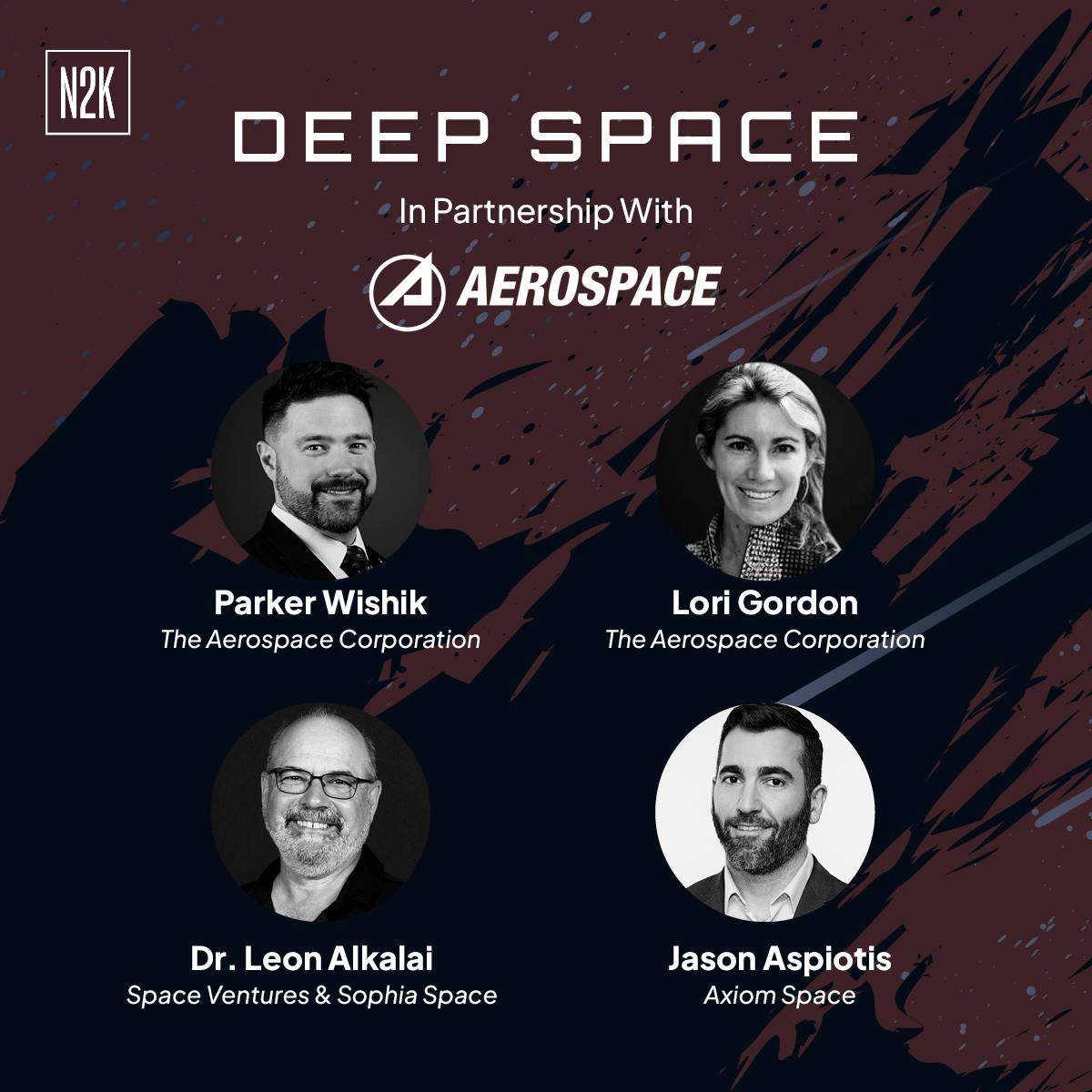
T-Minus: Space-Cyber Briefing
What’s the future of orbital data centers?
00:39:11
The Aerospace Corporation discusses the future of Orbital Data Centers, or ODCs, with partners from Axiom Space, Mandala Space Ventures, and Sophia Space.
Loading summary
Transcript55 lines
- [00:02]
A
You're listening to the Cyberwire Network, powered by N2K.
- [00:11]
B
The world moves fast. Your workday even faster. Pitching products, drafting reports, analyzing data. Microsoft 365 Copilot is your AI assistant for work built into Word, Excel, PowerPoint and other Microsoft 365 apps you use, helping you quickly write, analyze, create and summarize so you can cut through clutter and clear a path to your best work. Learn more@Microsoft.com M365 copilot Orbital data centers.
- [00:42]
A
Are everywhere in the press at the moment, but what is the reality of the future of orbital Data centers, or as they're often commonly called, ODCs? Well, find out in the Nexus with the Aerospace Corporation.
- [01:18]
B
And you're here in the Nexus, courtesy of the T. Mina Space Daily Podcast. My name is Parker Wyschek with the Aerospace Corporation. We've been really excited to get to what might seem like a new hot breaking topic in space, but in reality it's been in the works for quite a while and that's Orbital Data Centers. You'll hear us use ODC fees as shorthand. A number of space companies have talked about wanting to do this. We've got a couple that are doing it and as always, an aerospace colleague of mine joining a talk technical so we'll go in order with introductions. First, we have Jason Aspiodis, Global Director of Inspace Data and Security at Axiom Space, we have Dr. Leon Alkali, founder and CTO of Sofia Space and CEO of Mandala Space Ventures. And from Aerospace we have Lori Gordon on our Space Enterprise Evolution team, which helps seed new ideas in the space enterprise. We're going to come to Jason first, would love to understand first a little bit about how Axiom is working on this topic and what you most recently put into space.
- [02:22]
C
Yeah, thanks for having me Parker, and glad to talk about this very hot topic, as you said. So Axiom quite frankly has been at this for about five years since I joined the company, so we're one of the originals talking about and developing ODCs, as you call them. The past five years we've focused mostly on technology maturation on the compute side, so we've actually leveraged the International Space Station with a few compute deployments and demonstrations. We've also focused on the what will we do with this compute once it's in orbit. So part of what we've done in the ISS is deployed software capabilities and AI capabilities that are relevant to supporting in space operations. And if you notice I delineated right. I said in Space operations, that's our primary focus. Whereas there's a lot of work and buzz around ODC or AI satellites some companies are calling them, which is point towards AI being the primary use case in the advent of explosive AI demand the ground. What we and others, and I believe so Fiat Space too are looking at is mostly about how does this compute infrastructure first serve in space operations with near real time storage, analytics sense making in the context of national security, civil and commercial use cases? Last but not least, yes, we have launched two programs, prototype ODC nodes as we call them, and that was in collaboration with Kepler Communications and those went up in January. And we are extremely excited to start deploying initial capabilities and running government and commercial workloads on those prototypes. And the intent there was to start showcasing what it means to operate commercial cloud computing capabilities in space that supports national security, civil and commercial users.
- [04:24]
B
Excellent, thanks and we'll welcome you weaving in details as you can on what's going on with ODC nodes 1 and 2. Leon, over to you. And you're kind of dual headed in this conversation, at least from the Sofia space perspective. What are you doing in this technology area? And then I'll come back to you later from the venture standpoint of what draws your interest into this area. And it's a very broad area. So Sophia, first please.
- [04:51]
D
Thank you. Thank you Parker, for inviting me and thank you to Aerospace Corporation. Yes, Sophia, Space. Like Jason mentioned, we've been at it for about five years. It's really an idea that came out of a joint effort between jpl, Caltech and Mandela Space Ventures. So it really was born as an incubated company in our studio, Mandela Space Ventures. And it started off building on the work that Caltech has been doing on the space solar power project. That was a large donation by the Bren Foundation. Donald Bren donated $100 million to Caltech some years ago and we started working with that group on how to leverage the work that was done on large deployable structures, microelectronics, to say, what if we launch a system or build a system that can deploy large scale structures and then embed computing into those structures? And then rather than beaming down energy, you beam down data. So the orbiting data center idea on our end came from that kind of vision. You need large area to collect energy from the sun. You need large energy to radiate heat into deep space and cool it. So you have two key elements of any data center. Free energy from the sun. You need large area for that, to collect that energy and cooling into deep space, which requires large area as well. So given that those are two key problems on Earth for data centers, we said, well, space seems to be a natural habitat for data centers. Infinite source of power if you can harness it. An infinite source of cooling if you can radiate into it. So our strategy from the beginning was to design these data centers the technology that would be strictly applicable to space. Not taking Earth technology and putting it in space, but designing for space. So we decided to take a technology route. We have initiated IP development in this area with Caltech exclusively licensed to Sofia. So we are going deep into technology development focused primarily on scalability and thermal management. So it takes longer to get into the business if you're developing new technologies. But that's our mission. We think we're solving the problem that everybody will face. How do you get large energies in and how do you cool the thing down?
- [07:36]
B
Leon, from your experience from JPL is undoubtedly helping you in that area. And you touched on one of the technical problems. We'll get back to that. Radiating and cooling. I know you've written about this. I do think you all have touched on maybe the nuance that the general public probably isn't expecting. They hear data centers. We all know what a boom on our terrestrial data centers are at this time. And I think there's a natural gravitation toward that. But you've clearly defined some of the in space and space to space use cases. Laurie, what are some other use cases for this growing area of focus that we haven't touched on yet?
- [08:19]
E
Absolutely. So there's many. Space is the limit for this. But really on orbit data processing, when you think about Earth observation, AI, ML, inferencing, compression, isr, weather, climate, disaster response, there's also Lunar Mars comms really in processing. So there's a lot of use cases that we can see here that are critical to think through going forward. And I think that we need to better understand some of the avenues that we can push forward for those. And in doing so, we need to think about some of the technical feasibility studies that need to be done as well for each of those use cases, perhaps. And then also sort of the economic market modeling, you know, how do we push forward those into the future? In addition, we want to make sure that we have interoperability between each of the nodes, between companies as well. So what does that look like? I think the government's thinking about that as well. So, you know, aerospace is looking at some of these feasibility models. And how can we help, you know, better clarify for both commercial and government, what this landscape looks like going forward next five years, 10 years and help you know, push forward this model.
- [09:40]
B
I'm not going to ask you do that market analysis on the fly here but to all of you, is this hype? I don't think so. I don't think you think so. Tell our listeners why this is not hype.
- [09:52]
C
This is not hype. I mean you go back to the beginnings of Satcom which goes back decades, people used to say that's hype. But now you fast forward today, Satcom is a multi double digit billion dollar industry. It's not hype because we know for a fact that we're producing data in space that is always amounts of more than what we can handle and not know what to do with. And that applies to military, civil and commercial users. And yeah, even though I personally believe the in space AI for Earth, I'll quantify as that use case is a bit further out. I mean that is a true use case and it's not a matter of when are we going to do that, it's a matter of when does it become economical to go do that. And lastly there is reports out there, there's a public analysis actually back in 2023 from the Boston Consulting Group that I've been referencing quite a bit in that report they talk about, even with old assumptions, they would talk about multi billion dollar total adjustable market by 2030 for in space compute services. So definitely not a hype and backed by both empirical end market evidence that this is a real need with a real market potential.
- [11:15]
E
Yeah, I think also on that it's about giving space a digital backbone. So where else can we do that? This is the opportunity here, Leon.
- [11:26]
B
Investors tread carefully when hype is concerned. Let's hear your perspective.
- [11:30]
D
Yeah, I also am a strong believer that this is more of an inevitability. This is just not even a question whether it's going to happen. It's just I see it more philosophically. Perhaps humanity is progressing towards more of a space economy that is just a natural evolution of humanity. So more and more industries will be going from Earth into space. Jeff Bezos has talked about that for years, but many others and you know there's a long term the notion of a Dyson sphere and many others out there. So to me it's just happening and it's enabled by real capabilities, you know, up mass, reduced cost of launch and many, many of the other factors. We're learning more and more how to operate in a space environment which is not Easy. So things are just happening. It's kind of a confluence of developments that are just like the Internet are going to just kind of spark a revolution. So for me it is just inevitable. And I think the timing is now because more and more it's going to start with more pervasive edge computing, putting more capabilities on existing satellites, constellations, and then you'll need more and more services. And just like Jason mentioned and Laurie, there is a key use case here for not competing with data centers on Earth, but providing value added to data originating in space. So this is now clear advantage of lower reduced latency of information based on data that was obtained in space to start with. And so that is the, I would say for dual use, whether you're in a fire hazard zone, a tsunami, earthquake, floods, or if you're in a battlefield, data originating from space, getting stored and processed and giving life saving information to consumers or the warfighter. That is a critically enabling capability.
- [13:44]
C
If I may just one last thing. I mean, 10 years ago space based Internet was a hype and look where we are now. Five years ago or so dread the device was a hype and look where we are now. So again there's this plenty of empirical evidence to show that this is not a hype, this is a real market.
- [14:04]
B
Absolutely. And then maybe this is a speculative question. When does it make sense for us to kind of take that next step from the edge compute piece deeper into the, I guess the depth of the architectures.
- [14:17]
D
I can just volunteer that I believe the right approach, like in any new industry, whether it's the self driving cars or electric cars, it's a transition period. We're starting small, simple and building confidence with the public, with investors, with technology. It's not going to happen, in my opinion very fast. It's going to happen in stages. It's going to happen with some failures, some successes, some ups and downs. But we're not giving up. This is a long term field and long term direction. And you know, whether it's Axiom, Sophia or Star Cloud or anybody else, we're taking small steps first and then building and building larger, larger systems.
- [15:06]
E
If I can just add, you know, there's so much more data and infrastructure in space and it's going to grow exponentially. And so this is the foundational and to borrow Leon's word, it's enabling infrastructure. It's enabling all of the infrastructure to be able to better compute, do analytics for the purposes it's intended to. So this is the enabling architecture infrastructure that is needed because as we grow and do more on orbit InSys, lunar, lunar, even beyond that. So this is the enabling infrastructure.
- [15:50]
B
We do have a kind of cool story to tell for once on this segment. And that's the origin of an informal ODC working group that the three of y' all are essentially the founders of. I think about a year ago at the Ground Systems Architecture workshop, no less the ground Architecture workshop, the three of y' all were discussing on orbit data centers. So tell us about how that kind of came about and what's come of that interaction.
- [16:21]
C
There's actually a pre origin story to the origin story.
- [16:23]
F
Oh, great.
- [16:24]
B
New material.
- [16:25]
C
It's how Leon and I met actually, which was. I keep forgetting. I think it's like May of 2024 ish, Leon. And it was actually in the UK outside a conference talk about in space servicing and selling manufacturing isam. And just through casual conversation we realized that we're both developing ODC concepts. And since then we've been super close and friendly in our common aspirations to go build out this market. And then yes, there's the origin story of how the three of us started working on this working group, which I'll hand over to Leon and Laurie to talk about.
- [17:06]
D
Lori, why don't you start next?
- [17:09]
E
Absolutely. So we convened a ground Systems Architecture working group. Leon came over, we had a great conversation. It was the initial conversation from aerospace standpoint. And then what I love about this group is that everyone is so open to bring in every other ODC organization. So we brought in Leo, Cloud Star, Cloud, spacebuilt, aws, Lone Star. We brought in everyone. So that is how true maturation happens and how technology matures. When you are leaning on your peers and you are understanding their technology and you're leveraging each other. So that's sort of the truth and the success, I think, and how this is all working and how we can make it happen.
- [17:57]
D
And I will just then add that this is, I think, a very important part of this industry. We have to build a community, a community of technology people, staffing, investors, U.S. government entities, national laboratories. It just takes community building to build this whole industry. It's not going to be one company, it's not going to be one individual. And there are plenty of examples of this in many other industries. Whether it's E Mobility or a lot of other industries. It takes a whole broad effort to build this industry.
- [18:48]
A
We will be right back.
- [18:55]
F
Cyber threats strike in minutes. Your analysis can't take weeks. That's where Velox Reverser from Booz Allen comes in. It's an autonomous malware, reverse engineering and threat intelligence product that turns weeks of painstaking manual analysis into minutes of AI powered insights. With Velox Reverser security teams can perform deep analysis to learn how malware works and how to stop it. It's an advanced product that works at machine speed. If you need to outpace evolving adversaries and strengthen your defense at scale, request a demo or start your 30 day free trial of Velux Reverser today at boozallen.com reverser. Most security conferences Talk about Zero Trust Zero Trust World puts you inside this is a hands on cybersecurity event designed for practitioners who want real skills, not just theory. You'll take part in live hacking labs where you'll attack real environments, see how modern threats actually work, and learn how to stop them before they turn into incidents. But Zero Trust World is more than labs. You'll also experience expert LED sessions, practical case studies and technical deep dives focused on real world implementation. Whether your blue team, red team or responsible for securing an entire organization, the content is built to be immediately useful. You'll earn CPE credits, connect with peers across the industry and leave with strategies you can put into action right away. Join us March 4th through the 6th in Orlando, Florida. Register now@ZTW.com and take your Zero Trust strategy from theory to execution.
- [21:04]
B
I Sam comes to mind as one of those I participate in the Cosmic Consortium. I believe a couple of the companies Lori mentioned have partners in that consortium and this is certainly a use case for servicing and even assembly. Talk about Lori mentioned interoperability. This is one way to do it, work together at the kind of entry point of a market. In the course of answering the question about what some of the activities have been for this group, talk a little bit about some of the technical challenges that are needing to be addressed in this area.
- [21:40]
C
Yeah, I like to talk about them in terms of not necessarily technical challenges, but techno economic challenges, because there's no piece of the puzzle that we actually haven't not done yet. We know how to build large spacecraft and infrastructure, think the ISS and similar things. We know how to do solar, we know how to do radiators, we know how to protect compute and equipment from radiation. So every piece of the puzzle we've already done to a certain level already as an industry. So the question the remaining challenge is not whether it will work, it's whether you can scale it economically, whether it's the solar, whether it's the radiators, the spacecraft that's hosting the compute and other components. So I see as a techno economic challenge that again, I don't think is a showstopper. If something we've learned the past 20 years with SpaceX, launching rock, innovating and launching rockets, they've brought down the price of launch. Well, 50x down. And that's just by merit of increasing the cadence and accelerating the learning associated with launching rockets. The same thing with ODCs, the more of them we build and launch and operate, that will drive additional future tranches, which will drive additional cost reductions, which will drive additional future tranches and feedback acceleration thereof. So I don't think there's a show stop, a technical challenge per se. I just think it's a matter of techno economics and that's the matter of time.
- [23:19]
D
Yeah. So I will add to that. I agree with it 100%. In fact, when we started working on this task with JPL and Caltech, we more or less came to that conclusion. We normally at JPL would say on any project you're not allowed to have more than one miracle and two miracles are you're out. Three miracles we don't even talk to. One miracle, you're allowed. We came to the same conclusion as Jason. There's deployable structures, they will scale, there's this and that, microelectronics in space, there are solutions. And so we focused on, let's say that one allowed miracle and that is thermal management. Energy and thermal management. Not to say that it hasn't been done Space station and many others. But we think when it comes to scalability, that is where we wanted to focus on energy management and thermal management. But I couldn't agree with Jason more. I will just add to that optical communications between. It's used on Starlink, it's used in other areas. So having a constellation of nodes connected with optical communication, that's just moving forward year after year. Launch vehicle costs are coming down larger up mass with Starship and New Glenn and so on. So a lot of factors are all coming together. And from Sophia's point of view, scalability, building large scalable structures, thermal management is where we're focused.
- [24:50]
E
And Jason, you're thinking 2027 for optical communication between your nodes. I think that was part of your OV1. We built an OV1 as part of the ODC group. And so we were thinking through that.
- [25:02]
C
So the first two have optical comms. Yeah. Okay, so we're ready to jam when it comes to optical comms.
- [25:08]
E
Okay. All right, you're ahead of schedule.
- [25:13]
B
So Laurie, are there other Technical challenges that, you know, Jason and Leon didn't touch on, that you keep an eye on.
- [25:19]
E
We talked about thermal a lot. Probably the top one, I mean, you know, red hard processors, some of the cybersecurity, you know, sometimes it looks different, you know, on orbit, you know, software orchestration across domains and then just that interoperability, like standard interfaces. So those are some of the technical challenges that we, you know, aerospace is thinking about and you know, it's providing some solutions too. So we'll think through that.
- [25:54]
B
Yeah, the data piece of this has me thinking in that security context. I know that's one of the questions that I've been thinking is does a. If we were talking about a proper large data center that was kind of the. On prem storage and enterprise kind of nexus for Nexus for a company, wouldn't that be a rich target in a competitive domain? And so I keep thinking about that, not necessarily just from a cyber perspective, but from a resiliency perspective and then certainly in kind of a competitive environment. I don't want to make anybody answer questions on that unless you have a phone.
- [26:34]
E
Jason did a great job at Cybersat answering some of the cyber questions that I had when we entertained that panel. So Jason, any, any key takeaways from, you know, that discussion?
- [26:46]
C
Well, I was going to look, I was going to talk about it in terms of the big juicy target. That's feedback I've gotten quite a bit the past five years around war. How do you put David's ODCs? And the answer really is, well, we're not building giant ODCs. I mean, I know there's been concepts out there for multi megawatt gigawatt class ODCs which sound great, it's nice to talk about and aspire to, but it's not realistic. Not that we couldn't do it someday, but you just don't want to do it. The only reason you build giant data centers on the ground is because you're trying to maximize the real estate you have permits for as a function of proximity to power and utilities and cooling, as a function of proximity to networking and data generation or cloud services consumption. And that Venn diagram drives you to go build the biggest thing you can at that specific location. We don't have that limitation or boundary conditions in space.
- [27:45]
D
And.
- [27:47]
C
I love what Leon says. Right. It's natural habitat. Well, another aspect of natural habitat is given space and the dynamic nature of orbiting things in space, you can build a distributed mesh of ODCs which act as one very large data set. On the ground, but split in thousands or tens of thousands or maybe as long as there's millions of nodes. So that's my answer to we're not building one giant target, we're building a distributed federated network of many, many, many compute nodes in space.
- [28:22]
D
Excellent. Just to add to that, I, I we've given this topic a lot of time at Sophia Space at from the beginning because we were always asked that question and, and it's interesting how people think that it's easier to penetrate a asset in space than an asset, let's say in Virginia, you know, where you have a lot of human factors that are the main threat to cybersecurity or at a military base or anywhere else on earth. So being remote, being in space actually is part of security. It increases security. Now it does provide for certain vulnerabilities that both NASA, Air Force, Space Force have been addressing for many years and that needs to be built into any edge computing or ODC future is to build both through optical comm and through maybe some physical devices to provide cybersecurity. So to me that's a very important field. It's an important field on earth. Cybersecurity companies just in the last couple of years have been getting huge valuations and a lot of M and A going on in cybersecurity on Earth. So I believe there will be, and we are from a venture point of view looking at cybersecurity in space companies. I think they will be essential for the space economy. So there are things that are different in space that we need to address. But certain things are far better in space than they are on earth from a cybersecurity point of view.
- [30:06]
B
Couple more questions. Someone mentioned permitting, Laurie, from a policy perspective, you know, all the technical pieces aside, what are some of the policy discussions that you are having in this group and maybe put in a quick plug for the group actually when you finish answering that question.
- [30:23]
E
Yeah, absolutely. So you know, thinking about like, you know, licensing, you know, multi tenant challenges, you know, when there's international participants, you know, on an ODC or participating in odc, Export Control, Data Sovereignty, we've talked a lot about dual use, things like that. They all need clarity, so maybe even gaps in like procurement models and what that looks like. You know, governments still buy satellites, they don't buy services, honor but services. So that's another thing here we're trying to better understand. So I think we're trying to figure out, you know, how do we engage policymakers early so that regulation evolves alongside the Capability, not after the fact. I mean that's just a truism. We always try to say you got to do technology and policy at the same time. So that's kind of where we're looking.
- [31:22]
D
Yeah, I can just say that I think we have to be aware of the changing geopolitics in the world and that changing geopolitics I think both Jason and I have discussed recently between us it's kind of moving more towards sovereign systems. So so you know the days of of having a US orbiting data center that's going to store a critical data and processing for another sovereign country may be less likely today than it was maybe some years ago and that's going to drive a lot of sovereign policies whether it's Japan or the Middle east and so on and we see that happening in the Constellation world and so I think that's going to make for an interesting dynamics in this world of us versus other sovereign systems. So it could be good for the business. I don't know for sure but it's an evolving geopolitics that is going to reflect on this field as well.
- [32:34]
C
I completely agree with Leon and Laurie. I want to add a different color to this question. We talked about some of the things we have to go solve as far as regulations et cetera but I want to also present the opportunity of there's some things we don't have to change like how you actually go buy and use cloud services and the contracting thereof to bring those services to government, commercial and eventually retail and consumer type customers and existing cloud providers do long term commit structures and contracts to pre purchase certain amount of capacity which drives their future capex planning. I believe it should be the same thing for what we do with ODCs. There's power purchase agreements which are pretty commonplace for energy developers and providers and actually one company in the work group StyleCloud already has a power purchasing PPA and that's public knowledge with Crusoe AI. So I think there's a lot of opportunity to leverage existing contracting frameworks to allow for customers whether government, whether enterprise, whether eventually consumers to have the option I can buy terrestrial cloud if I need it or I could buy space cloud if I need it and it provides a better service so those things should be preserved and will only drive more market adoption from my perspective.
- [34:06]
B
We'll close out here Jason, Leon and Lori just at the end what do you want to see come next from the space community in this area of work? And maybe it's your own company. What would you like to see. Jason Good question.
- [34:22]
D
I.
- [34:23]
C
Well, it's. I'm laughing because, you know, a year ago it was still a partial struggle having the conversation of ODCs and how they could be used, etc. So now that I believe a large majority of people, or maybe the majority, are thinking about ecs, we are starting a conversation about how we use them, how you integrate them into your current or future plans for satellite operations, et cetera. So, yeah, just eager to have a little more conversations that are focused less on the why do we need them and more about how do we use them.
- [35:03]
D
Leon yeah, I'd like to take the opportunity here that we have aerospace on this podcast and organizing it and so on. Aerospace actually plays a big role in the adoption of new systems and technologies by the Department of War. And so I see the US Government being a leader in adopting and promoting this technology and systems, and this is not new. DARPA has always been at the forefront of technology development for both commercial and military applications. So I think there's a real opportunity for the US Government, whether it's NASA or other agencies and the Defense Department to really set out some competitive bids, some procurements, some adoption of these technologies. So I think that will be a major driver for this industry.
- [36:11]
B
And Lori, final thoughts?
- [36:13]
E
Absolutely. Thank you, Parker. This has been a fantastic discussion. So, you know, open standards are critical here, you know, beyond, you know, the technology development and maturation, but also real operational demonstrations. Early policy engagement is critical. We also need to make sure we treat honorable COMPUTE as shared infrastructure, not just like experimental payloads. And then we also want to let everyone know that Aerospace is doing some physics and technical reviews going forward on ODC so we can have sort of a common baseline of what the technology looks like. And then also we would love everyone to join our Orbital Data center group and I can share more about how to engage with us. We meet about every other month, but we have continuing discussion throughout, so it's asynchronous discussion too. So really appreciate everyone's thinking on this and onward.
- [37:12]
B
Thank you Lori. Thank you, Jason. Thank you, Leon. Thank you T minus. Thank you listeners for tuning in on what we think is not hype is a real, very real trend on orbital data centers and hopefully more to come on this topic in future episodes and others. And we'll see you again next time in the Nexus.
- [37:44]
A
That's T minus Deep Space brought to you by N2K CyberWire thank you to our partners at the Aerospace Space Corporation. We'd love to know what you think of this podcast Your feedback ensures we deliver the insights that keep you a step ahead in the rapidly changing space industry. If you like the show, please share a rating and review in your podcast app or you can send an email to space2k.com we are proud that N2K Cyberwire is part of the daily routine of the most influential leaders and operators in the public and private sector. From the Fortune 500 to many the of the world's preeminent intelligence and law enforcement agencies, N2K helps space and cybersecurity professionals grow, learn and stay informed. As the nexus for discovery and connection, we bring you the people, the technology and the ideas shaping the future of secure innovation. Learn how@n2k.com N2K's senior producer is Alice Carruth. Our producer is Liz Stokes. We are mixed by Elliot Peltzman and Trey Hester with original music by Elliot Peltzman. Our Executive producer is Jennifer Ivan. Pierre Kilpe is our publisher and I am your host, Maria Varmazes. Thank you for listening. We'll see you next time.
- [39:33]
F
If you only attend one cybersecurity conference this year, make it RSAC 2020 26. It's happening March 23rd through the 26th in San Francisco, bringing together the global security community for four days of expert insights, hands on learning and real innovation. I'll say this plainly, I never miss this conference. The ideas and conversations stay with me all year. Join thousands of practitioners and leaders tackling today's toughest challenges and shaping what comes next. Register today@rsaconference.com cyberwire26 I'll see you in San Francisco. Ever wished you could rebuild your network from scratch to make it more secure, scalable and simple? Meet Meter, the company reimagining enterprise networking from the ground up. Meter builds full stack zero trust networks including hardware, firmware and software, all designed to work seamlessly together. The result? Fast, reliable and secure connectivity without the constant patching, vendor juggling or hidden costs. From wired and wireless to routing, switching, firewalls, DNS security and vpn, every layer is integrated and continuously protected in one unified platform. And since it's delivered as one predictable monthly service, you skip the heavy capital costs and endless upgrade cycles. Meter even buys back your old infrastructure to make switching effortless, transform complexity into simplicity and give your team time to focus on what really matters, helping your business and customers thrive. Learn more and book your demo@meter.com cyberwire that's M E T E R.com cyberwire.