← Take Command: A Leadership Podcast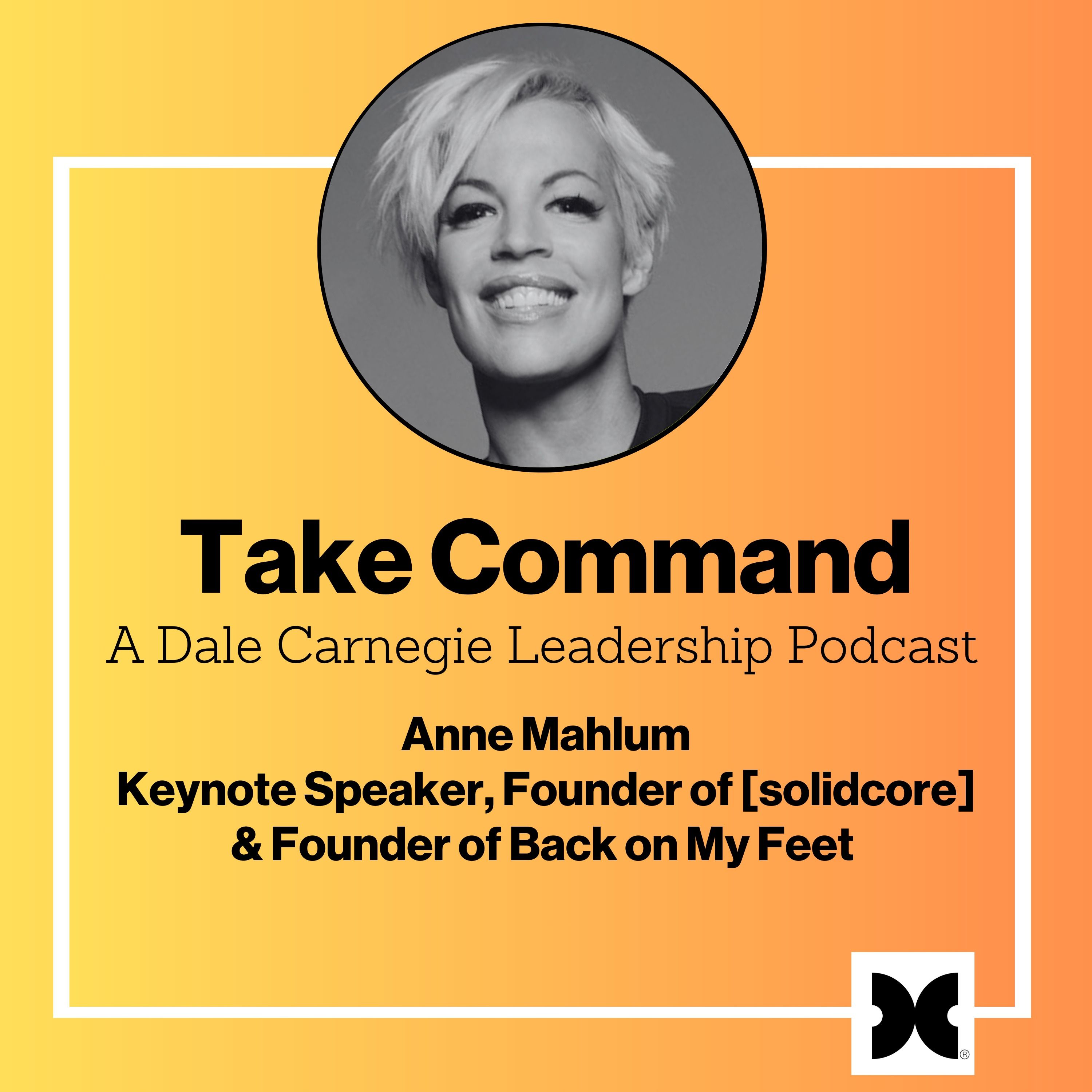
Take Command: A Leadership Podcast
Bold Moves, Solid Wins: Overcoming Fear, Leading with Authenticity, and Growing
00:42:34
Anne Mahlum is not just an entrepreneur—she’s a force of nature. From using running to help people experiencing homelessness to scaling one of the fastest-growing boutique fitness brands in the country, she’s built businesses that change lives. But Anne’s story is more than just success—it’s about taking risks, embracing reinvention, and refusing to play by the rules. “We don’t have to live life the way other people expect us to,” she says. Tune in to hear how she built Back on My Feet and [solidcore], why she shared millions from her company’s sale with employees, and what’s next for her in business and life.
Loading summary
Transcript54 lines
- [00:00]
Ann Mahlum
A lot of us get the advice to be fearless, you know, which I just think is garbage. Like, I feel fear. Even though I've done a lot of courageous things in my life, I still feel fear. And the best way to interact with fear is to greet it with gratitude. I found that fear is just growth showing up in, trying to trick me because I'm really not in danger, right? For 99% of the time, if not 100, I can't even think of a time where I have felt in real danger. Fear feels the same as growth, and it's up to us to decipher that.
- [00:39]
Joe Hart
Welcome to Take Command, a Dale Carnegie Podcast. I'm Joe Hart, CEO of Dale Carnegie and if you don't want to miss a moment of transformation, follow Take command now and unlock the power of leadership. With every episode today, our guest shares how she built and scaled groundbreaking organizations that challenged conventional thinking. She opens up about taking risks and about why we don't have to live life the way others expect us to. A self made entrepreneur, investor and philanthropist, she founded a nonprofit using using running to combat homelessness before launching a nationwide boutique Fitness brand with 100 locations and high profile clients. After raising $210 million in private equity, she exited the company sharing millions from the sale with her employees. Her impact has been recognized as a CNN hero and as a Women who Mean business honoree by the Washington Business Journal. Please welcome keynote speaker, founder of Back on My Feet, and founder of Solid Core, Ann Mallam. Anne, welcome to the Dale Carnegie Take Command Podcast.
- [01:59]
Ann Mahlum
Thanks Joe. Excited to be here.
- [02:01]
Joe Hart
Excited to have you. I mean, this is the Take Command podcast and you're someone who spent your entire life taking Command. You created from nothing a fabulously successful business, Solid Core Pilates, which you sold for about $90 million. Before that, you started a nonprofit which is still in existence, Back on my feet helping homeless people. You recently were featured in a viral video that talked about your favorite book you've ever read, the most influential book, and you said it was Dale Carnegie's how to Win Friends and Influence People. So we'll definitely talk about that. But so much of your life has been up at Taking Command. Tell us a little bit about kind of where you started, what led you to do some of the things that you did in your life and who were the people who were influences to you?
- [02:45]
Ann Mahlum
Yeah, I think the trajectory of my life really changed when I was a teenager. That's when my family life got disrupted pretty suddenly. I remember the day really clearly. My dad came home from work early and asked me and my younger brother, older sister, if we could leave so we could talk to our mom. And we just knew that there was something up and something wrong. And. And that's the day that my dad had to confess that, you know, he had a pretty severe gambling addiction. As anybody listening, if they're familiar with addiction, that disease thrives in the dark. And my dad owed a lot of money to a lot of people, and it was time to collect, and he had no choice but to come clean with his family. And so for my mom, who, unfortunately, that was not her first introduction to my dad's addictive tendencies. He went through drug and alcohol recovery when I was really young. I don't remember that, but. But for her, it was just like, I can't go through this again. And my mom was a public school teacher, and my dad just didn't make a lot of money in his career. So my mom was really vigilant about saving and knowing where every dollar, you know, was going. So she just couldn't deal with the fact that he violated their finances in that way. So she kicked my dad out of the house. And I spent the next three years being mad at my mom, trying to fix my dad. And that's when I became a runner and got pretty obsessed with how metaphorical the lessons were with running and taking things one step at a time, pushing forward. And it really set the tone for my life and getting through challenges and, I think, preparing me for my future self. So, yeah, I went to college, went to grad school in D.C. found myself in Philly, totally unhappy from 24 to 26, and I end up starting this running club for a homeless shelter that was very close to my house, that I had literally passed Joe, like, I don't know, thousands, because I had to go buy it to get to work. And it took me a long time to take notice. And when I did, the idea struck immediately that I should start a running club for the people I was seeing outside the shelter. Took some convincing, but was able to get nine people to join the running club. And then over those next few weeks, it became really apparent and obvious to me that this was what I was supposed to do with my life. I saw this vision that if you could use running as a vehicle to change someone's identity, which it did for me, right? It made me feel invincible, empowered that I could get through hard things. And I like the association of being hardworking, disciplined, waking up early to do this, that if I could get these guys to see themselves in that Same way then we could actually get them jobs and get them homes.
- [05:24]
Joe Hart
But.
- [05:24]
Ann Mahlum
But if we don't start with their emotional well being and how they feel about themselves, like they don't stand a chance. So that vision was there and against everybody else's advice about like this being a good idea or not. I just knew I had to go all in because it was making my personal life make sense. Finally had some reasons that my dad had to have all those addictions and it turned into me helping a lot of people. So there's so much more to the story, but I'll stop there and see if you have any questions about that.
- [05:51]
Joe Hart
I definitely want to ask you about back on my feet because you left a job to start this nonprofit, which, which again, probably so many people told you you're crazy, what are you doing? And so forth. But just to go back to really that defining moment that you had when your mom is talking to you and your siblings about your father. So many times we face these just horrible things in our lives that just change us. Tell us a little bit how you faced that challenge. Because you're a hugely resilient person, you're a courageous person. We know that you face your fears, but so many people can struggle. People can all struggle with those kinds of challenges. How are you feeling at that time? How did you address that? What advice would you have for our listeners about really dealing with some of those tough moments?
- [06:32]
Ann Mahlum
Yeah, I mean, listen, I was mad. I was mad at my mom because she took my dad away. And my dad, regardless of all of the challenges and mistakes my dad has made in his life, we had a really close relationship based off of sports and playfulness. And my dad showed up for me. He was at every basketball game that I ever played and was my coach for my traveling basketball team and would shoot baskets with me. And so I was really angry that my mom wasn't willing to support my dad through what I felt, you know, a time in his life where he needed help. I obviously didn't have all the history and I didn't know what it was like to be married to my father. Very different relationship of being somebody's husband versus being somebody's dad. So, yeah, I was angry. And I also remember feeling if I choose to act out and respond negatively to this, the only person that's going to lose is me. Right? If I don't do well in school, you know, whether drugs or alcohol or run with the wrong crowd or start misbehaving, not following rules and whatnot, I don't know, I was smart enough at that point to realize that I'm going to have a deficit to crawl out of. And I just wasn't willing to do that, which is why running was so powerful to me. I kind of channeled it into something positive and I decided, you know, I remember telling my mom and anybody who would listen that I'm going to be somebody someday, that I'm. I'm not going to let my parents divorce and my dad's addictions define who I am and what I'm capable of. And frankly, I wanted it even more because I felt like I had something to prove.
- [07:59]
Joe Hart
Well, you also took that whole experience and that was really part of what led you to Found back on my feet. Right, because you saw something in those homeless people that you'd seen in your father and you really connected the dots and were able to build off of that learning.
- [08:16]
Ann Mahlum
Yeah, I mean, listen, if my dad wasn't who he was, I wouldn't have cared about those guys. Right. So I think my dad probably would have found himself in a homeless shelter if it wasn't for marrying my mom. And I love my dad, but I do also financially, you know, support him. I just saw him in them and I'm like, these guys need some positivity. They need a positive activity. They need community. And I just felt running again has this special power. And so when this thing was brewing, the most important thing that set the tone for this whole thing to work, Joe, was not the fact that I gave these guys new shoes, shirts, shorts or socks or anything like that. It was that I asked them to sign a dedication contract. And it said if you want to be part of the running club, you got to show up three times a week, every Monday, Wednesday, Friday. And I'm going to track your attendance. You have to be on time. I'm going to track that too. And you have to come with a positive attitude. And you need to be willing to respect and support your teammates. And in that moment, I mean, I still can see these guys. I was in this chapel with them and it felt like they were waiting for somebody to expect excellence out of them. I felt them sit up a little taller, you know, they were nodding with me and they were willing to make a commitment. But the problem was, you know, they were in a shelter in an environment where they were being reminded of their mistakes. They were being reminded that they were 40, 50, some 60 year old men who found themselves in a homeless shelter. And I think a lot of people took advantage of low emotional state and I wanted to lift them up and I wanted them to know that, you know, their mistakes do not define their past, that they have a new day, that they can start to make better decisions for themselves, the people around them, their health, their decisions, their actions. Again, if you start your day that way, it's like any one of us. If we start our day making a positive decision, it's more probable that the next decision that comes our way is going to also be positive. But if you wake up and you have donuts and a, you know, frappuccino for breakfast, my guess is you're going to have a crappy lunch because you've already convinced yourself the day is gone anyway. So there was really something to that. And again, I read this book and just How Criticizing People Doesn't Work. And I also knew that I responded that way when someone was giving me respect and dignity and pointing out the things that I was doing. I remember I also had a pretty horrible boss when I was 21 and like, all she did was point out all the things that I wasn't doing right. And I just remember feeling so small and so scared to do anything. And that like, was never going to be an environment that I was successful in. So having a little bit of that experience, I created this environment where we celebrated people's actions, right? So we had a team member of the month that everybody nominated based off of that person's personality and the extra mile, literally and figuratively. I guess I tracked their miles to show that they were making progress, right? So like cumulatively from the days before and over the course of the month, they might have ran 30 some miles. And we celebrated that and starting to use these guys names. Of course, greeting them in the morning, giving them hugs was just something that they weren't used to. And then we started taking photos and like, you know, building up social media and these guys would be like, you want to take a photo of me? Like, it felt really easy because they didn't have this sort of appropriation and appreciation in their life. And once we started giving that to them, they just wanted more of it.
- [11:39]
Joe Hart
One thing I got to say I really admire about you and is Dale Carney. You believe that every single person has inherent greatness. And a lot of times we might see people in our lives, whether it's in that situation or just even people around us, people who work with people in our families, we may miss the goodness, we may miss the potential, but you saw in these people, you know, really something special and you wanted to do something about It. And there's that opportunity for us too, if we're willing to do the same thing, right? To help people really discover their greatness, to give them that value, to give them that respect. And you did that in a very significant way. I mean, you left a job, you left a career, you did this. And it still exists. I mean, this organization is still out there.
- [12:19]
Ann Mahlum
Yeah, it still exists. And we just actually put a new CEO in three weeks ago now, which needed to happen. And I'm getting back involved in a bigger way just because the vision of the organization is back, the leadership is back, and I'm really excited to see what's going to happen over the next 12 months here.
- [12:34]
Joe Hart
Awesome. Well, you've told me, and you've told others too, how Dale Carnegie has had a huge influence on your mindset, your thinking and so forth. And how did you first become familiar with Dale Carnegie? And how did how to Win Friends and Influence People shape you both kind of early on when you first were exposed to how to Win Friends as well as in other experiences?
- [12:56]
Ann Mahlum
Yeah, my mom had that book around the house, and I picked it up as a teenager and read it for the first time. As you know, it's an easy read. And when you read that book, you're like, this is so obvious. And then you realize how many people actually don't behave this way. Life gets busy and we're short with people, and I mean, I've obviously done that too. We've all, you know, made those mistakes and you realize it just doesn't get you anywhere. So that was my first introduction when I was a teenager and I read the book every few years. I read it again in college because it works and it's true. And when you take an interest in people and asking questions and you realize people love to talk about themselves and you're being interested in what they're saying, you know, being obviously sincere in that. And then the two biggest lessons for me in there were like seeking to understand before seeking to be understood. That one is the hardest one, because when we feel a certain way, you know, we've already made up our mind and we make these assumptions. So that one I found was the most valuable for me to constantly check my myself of, you know, am I asking the right questions here? Am I getting all the information before I'm having a reaction or making a decision? And then the names piece, I mean, I applied the whole name thing to both Back on My Feet and Solid Core when I was training our coaches. And I know we'll get to that part of the story. But when I was training our coaches, it was like, you have to learn every single client's name. Not like, hey, try your best. It was part of their evaluation. We started off with the first studio where there was 10 machines so 10 clients could take. I'm like, I don't care how you do it. I don't care if you got a cheat and write it down on a little. Post it. But everybody needs to hear their name in class, and they need to hear a positive association with their name. Whether it's, you know, Ann's doing a great job, or if you're confused, take a look at Ann's on her third rep. Something that ties their name to something they're doing well, or something that they're doing right. Because subconsciously, again, we love hearing our name. And if you can tie it to something positive, people leave that environment being like, God, I had a really good time, or, I really like that place. I'm not really, really sure why. Even though the workout's hard, but they form a positive association with that experience. And that makes building the business and building culture easier.
- [15:04]
Joe Hart
Yeah, I mean, it's interesting that you basically hardwired that Dale Carnegie principle into your operating system. It's also about building relationship and building rapport. And it's such a sign of respect to show someone that you know their name. You can pronounce their name. As you said in the TikTok video that you were interviewed in, a person's name is the sweetest sound in any language. Right. So to be able to say their name. So going from back on my feet, you had this experience. 2013, you go to California, you experience Pilates for the first time. You think to yourself, I've never had a workout like this before. And you decide to go all in and to start your own business. You take $175,000, your entire life savings. You create Solid Core. You open your First Studio, Washington, D.C. tell us about that story. You took everything you had and you put it into that. I mean, what was going through your mind at that time, Ann? Was there any fear? What was your mindset and what's your advice really, for people as you tell the story?
- [16:05]
Ann Mahlum
Yeah, of course. And I mean, listen, I ran back on my feet and grew it across the country with an incredible team for six and a half years. And it was unexpected, Joe. Like, I didn't expect for there to become a time when I'm like, okay, I'm ready to do something else. I truly thought like all of us do when we find our purpose, that, like, oh, this is what I'll do with the rest of my life. So I was frustrated and annoyed that, like, this feeling kept rising back up that it was time to do something new. Because I was like, wait, what? Against everybody's advice, Back on my feet worked, and it was growing and super successful. I get to help people discover their potential. I'm changing the way that people see this issue of homelessness, and I'm helping people, like, get out of homeless shelters and get them employed in jobs. Like, it was a super amazing, fulfilling time in my life. Why do I want to move on? I was confused, but I felt that it was time for me to grow. I put the organization in a great spot, infrastructure, all of those things. And I learned to accept that back of my feet was going to be a chapter in my book, but not my whole story. And that I can't tell these guys to push and to grow if I'm not willing to do the same. So the thing I learned about fear is a lot of us get the advice to be fearless, you know, which I just think is garbage. Like, I feel fear. Even though I've done a lot of courageous things in my life, I still feel fear. And the best way to interact with fear is to greet it with gratitude. I found that fear is just growth showing up in trying to trick me because I'm really not in danger, right? For 99% of the time, if not 100, I can't even think of a time where I have felt in real danger. Fear feels the same as growth, and it's up to us to decipher that. So when I'm fearful of rejection, fearful of failure, fearful of embarrassment of something not working out, you know, I have to work against my brain and be like, thanks for bringing this opportunity to me. This is probably growth. And I have a decision to make here. So that's what actually gave me the courage to say, okay, it's time to move on. And so, yeah, I was in la, opening the Back of My Feet chapter there. Walked by this studio, I didn't even know what Pilates was. And I'm like, oh, how cute. You know, I'm an athlete. I'm a runner. Like, I'll go do this LA workout. And it was so hard. I actually didn't even know you could work out like that. We were moving so slowly, and I thought you had to jump, beat up, pound on your body in order to be fit. Like, being injured was a rite of passage. So I was very curious about this. And the next day I was so sore everywhere. And I'm like, this is unbelievable. I went back to New York, I continued to take pilates there and was blown away on how I was feeling and how my body was changing and the muscle that I was, you know, starting to see in different parts of my body. So I'm like, this is my next thing. It's my next thing for a couple reasons. One, if I didn't know about this and I'm the workout queen, that means that nobody else knows about it. Two, it's highly effective. And three, I know how to build a high quality branded in person experience with an incredible community. Even though people think back on my feet and Solidcore, very different, they were very similar to me and I felt like it was a game that I could win in being the founder and, you know, building something that I really wanted to scale. I took everything I had. I'd saved 175k over those 6 years of running back on my feet and public speaking. And I put all of my chips on the table to get the first studio open. And I was nervous because it was literally everything. And there was a back of my feet board member who's still a close friend of mine today, and he offered me 75k for 30% stake in solid Core before I even opened the doors on the first location. So back then, 75k even today is a lot of money. And there was a part of me that thought, wow, and maybe you should take that, be responsible. That way you can park 75k of your own money in case this doesn't work out. And this was the part, you know, again, another big learning moment for me, Joe, where it was this click of a and if you take this money, all you're going to do when things get hard is you're going to lean into that 75k and you're going to continue to doubt yourself and say, gosh, you know what, I'm so glad I didn't put all my money in or say, you know, and maybe this was a bad idea. Like you weren't the right person for this. And I didn't want any of those outs. I didn't want a 5% doubt bucket that I had for a security blanket when things got hard. I needed to be all in when things got hard to be able to figure out the problems that were going to come because I knew they were going to come. Right. My first year of business, I got evicted from my first location because we couldn't attenuate the sound. I got sued by an ex boyfriend, and then I got sued by the guy who was making the machines I was using. So I'll tell you what, if I had a little bit of a nest egg, I probably would have been like, screw this. This is too hard. I'm gonna just, like, close the thing down and figure out something else. So, yeah, that was a really important moment in my life too.
- [21:02]
Joe Hart
Yeah, it's interesting. You know, you talk about this burn the boats kind of mindset, right? Which is you could kind of hedge a little bit because you went all in, you took it to the mat, and you won because ultimately you built solidcore into something that you sold and I believe made about $90 million, which is pretty extraordinary. What are some of the qualities that you'd say enabled you to build Solid core? Some of the attributes. I mean, clearly you've got this tenacity and this mindset, and also, I mean, going back to Dale Carnegie and you talk about reading this book, both your attributes and also the things from Dale Carnegie that may have helped you along the way.
- [21:39]
Ann Mahlum
Yeah. Culture is everything in this type of business. Right. Because everything is in person. So it's not just my team that I'm building culture with. It's our clients. And our clients are coming into this space every single day. So making sure that that culture remains something where people felt celebrated was really, really important. And as a leader, you know, I think that everybody wants, like, what's the secret to success? Just, like, there's a lot of different ways to make money, right, Joe? There's a lot of different ways fit. Right. There's a lot of different workouts. There's a lot of different options. So being authentic in your leadership style and figuring out what your values are is really, really important. So my values are transparency. I constantly was telling the team, you know, what our vision, what our goals are, what the numbers are, are we on track? Are we not? I wanted them to be bought into what we were building. And people can't buy into something if they don't have the information and they don't know where you're going. So I was very clear early on that, you know, we're going 100 locations, and, you know, I'm going to sell the business at some point. Everybody needs to be prepared for that. And what do we need to do to get there? The second one for me was authenticity. So I think you could go ask any private equity partner at a firm or one of the members of Back on my feet to, like, tell you who Ann Malam is, and I think they'd give you the same answer. That was really important to me, that I never felt like I was jeopardizing or sacrificing who I was as a person and being somebody I'm not to build a business. I think that feels a little bit gross and icky, and I just wasn't willing to do that. And then the third one is winning. And a lot of people might think that that's not an admirable value. And I'm like, that's my value. If I'm going to do something, I want to win the game. So when Covid showed up unexpectedly and we had to shut everything down pretty much overnight and pivot and plan, I remember telling my hundreds of employees over Zoom that it is my number one goal to make sure that you all have a company to come back to work to. We are laying everybody off. It is going to be bumpy. You're going to have to fend for yourselves for, you know, the foreseeable future. We are going to let you know what's going on. We're going to have a call every week if you want to join. But if there's a crisis, one person you want on your team is me. Like, I will figure this out. There is no way that this pandemic is going to take this company from any of us. And I promise you, every decision I make is not going to be about making it smooth right now, but it is going to be about reopening our doors. And you can trust that that is how I'm going to be making decisions to get us through this. Those are my values for me, and that really worked. And I stayed very aligned with them when things got tough.
- [24:23]
Joe Hart
Well, I mean, it's clear how you were bringing in that transparency and the authenticity to those discussions. I mean, those must have been very tough, gut wrenching discussions because you built a culture, you cared about each of those people, and at the same time, winning meant surviving. You had to make sure that you survived making tough decisions. I saw in an interview where you were talking about a mindset, though this is fascinating because many people look at Covid, had all kinds of different thoughts. You had the rise of these digital companies, digital fitness companies, and everyone thought, well, this is going to be the future. You had a different point of view. You. You thought, hey, well, after nine, 11 people said no one was going to fly. People's memories are short. They came back and they fly. You doubled down during COVID you invested in growth. Tell us what you did.
- [25:08]
Ann Mahlum
Looking around at our team, a lot of people were pivoting to sort of this digital platform marketing. And again, it was like, if we do that, we're going to lose our workout because we have this machine is not a workout that you can do at home. And it was like, like even saying that out loud, that means that people will crave and they'll come back to it because you cannot replicate it at home. It's not like you can get a spinning bike. It's a complicated workout. You're doing, you know, 30, 40 different types of moves. And because it's so challenging, doing it with the community is what people prefer, including myself. So knowing that this was not going to be something that is an at home workout. And nobody wants this pandemic. We want it all to be over. Everybody wanted to get back to their life. And so we raised money at the end of 2020. 2020, we started that process and then we closed a $50 million deal on February 1 of 21. And we opened 11 new studios that year. And this was the important part, Joe. We opened them in red states. The rules and regulations were different. Every state, sometimes every city. And so we obviously saw that the blue states were being way more assertive and really conservative with reopening and the rules and the red states were allowing people to kind of get back to some normalcy. So we opened in Florida, we opened in Georgia. We opened in places where we knew we wouldn't have a lot of restrictions. And it really, really worked well for us.
- [26:33]
Joe Hart
It did. And it's just interesting though, especially with hindsight, that's the benefit we have right now. But I think trusting our intuition, you were trusting your judgment. When you talk about transparency and authenticity, it's like, what's our judgment? What's our gut? What's our gut telling us? And you know, of course you had logic behind it, but at that time, that was a contrarian kind of a decision. Even in 2022. And the fact that you were also able to attract investment capital, again, just using Dale Carnegie, because you had brought that up originally, how has that helped you in your influence and your ability to connect with other people, for example, the way you did when you raised money.
- [27:08]
Ann Mahlum
Yeah, listen, a lot of Dale Carnegie is about being sincere. I think we do that in spades. And we made it really easy for people to trust us, even with our landlords. Joe, in the beginning, you know, I was like, what's important to them? Right? Because if you're negotiating. And even though Dale Carnegie's book is not targeted as a negotiation book, it's a negotiation book. And, you know, when you sit there and say what's important to the other person across the table, and then how do I communicate what's important to me and how do we find middle ground there? A lot of these landlords wanted me to put down really hefty security deposits, and they didn't want to give me a lot of rent abatement, you know, in the beginning months. And they didn't want to give me as much tenant improvement dollars as I needed. And I needed those things in order to be successful because it was just me in those beginning times. I needed the cash flow. What I was able to do with those landlords is say, okay, listen, I'm going to actually pay you more rent than you're asking me, but I'm going to do it in year six, seven and eight. I need you to lower my rent and actually give me free rent and give me more tenant improvement. So the total financial deal is actually going to be more than you're asking for. But I need a little bit of help up front here. And I would sit in person, I would go meet these landlords face to face. I would not let the brokers communicate my story. And I would get them to like me. I would get them to be like, I want to see her succeed. You're rooting for my success and I'm committing to you and telling you, like, I'm going to be around for 10 years in order to be that tenant for you. I need some help in the first six months here to get me open. That was like Dale Carnegie, one on one, right? What's important to the other person. And then, same thing with private equity. A lot of times I see private equity, when people talk about having poor relationships or not liking that relationship, it's because expectations are not in line. And private equity is in your company to make money. And I was always fully aware of that. And we were always channeling and going toward the same North Star. So when we would have conversations about money that we wanted in the company or the deal that we're doing, it was like, great. This is the plan with the money, right? So here's another opportunity to build trust of what we're able to do with this, where we're going to spend it, and here's the return that we think we're going to be able to provide for you. And everybody's, you know, driving toward those metrics. Now, how we do that, I don't really want private equity, you know, involved. And I always kept them at bay as minority partners because I wanted the ability to control my business. But obviously they were a partner, so I always let them see and if they had suggestions or ideas, because we all wanted the same thing. In the end, all of that is just relationship building. And when you have improper expectations for what the other person on the other side wants, I think that's when relationships go south.
- [29:44]
Joe Hart
Absolutely. And people can actually look at that as a breach of trust, even though it might be a breach of understanding, really, or lack of understanding. So taking the time to understand what's important to the other person, trying to see it from their perspective, talking, their interest and that type of thing definitely is critical. I'm curious, Ann, because so much of your career has been about fitness. I know fitness and health are just super important to you. What are some routines or things that you do to help ensure that you are fit? Both. I mean, mentally, physically? Are there any kind of tips or hacks or tricks or things like that that you'd want to share with our audience?
- [30:19]
Ann Mahlum
Listen, I want to feel amazing every single day. Like, ironically, I'm a great sleeper. For whatever reason, I didn't sleep great last night, and I feel it today. And I'm like, gosh, what did I do differently yesterday? What's going on? So I need to figure that out. But I want to feel great every single day. And I know what that looks like for me, so that means moving my body. I prioritize my health before everything else. There is a window of time that I work during the day that I'm willing to sit down in front of a computer because I work so much professionally for, you know, 17, 18 years, even though it was around movement and fitness, that for me to commit to phone calls and meetings over zoom and things like that really has to be limited. Right now, my prioritization is beach volleyball. So I play pretty much every day, six days a week, sometimes seven, you know, for two, two and a half hours. And I'm also at the gym for 60 to 90 minutes, five days a week or so, going on walks. I sauna every single day. I cold plunge four days a week, week. These things are really key to me. I'm drinking one and a half to two of these every single day. And for me, Joe, my husband and I, like, we eat the same thing. I think it's easy to think, you know, oh, my God, an soldier business for 90 million and actually got another 10 million in November. So it was over 100 million. And that we're like gallivanting and going around and that just doesn't make us feel good. Like we very rarely go out to dinner. We like to cook our own food. We eat the same things for breakfast and for lunch. We have like three meals that we rotate at night. And those decisions make me feel optimal. They allow me to be very cognitively sharp all the time. They allow my body to perform, you know, in the ways that I want and need it to as a 44 year old woman. We do testing like every two years, like really intense full body executive testing. I'm really proud that I put on 10 pounds of muscle in the last two years, which is like a little bit unheard of as you're aging, putting on muscle.
- [32:16]
Joe Hart
Terrific.
- [32:17]
Ann Mahlum
Yeah, it was awesome. And like my bone health is even better. I'm aging even slower than I was two years ago. So these things are key. Like I want my quality of life and for me, quality of life really is about physical activity and movement and I want that for as long as possible. So every single day is an opportunity to make that investment in my future self.
- [32:37]
Joe Hart
Can you just very briefly tell us what some of those kind of core things are that you eat that give you such energy and, you know, yeah, no problem.
- [32:44]
Ann Mahlum
After in the mornings, an almond butter smoothie, chia seeds, banana with collagen spinach. And then lunch is a pretty large yogurt bowl, Greek yogurt with chia seeds, walnuts, cashews, goji berries, some protein based granola, blueberries and raspberries. And then for dinner we rotate between chicken, ground turkey and beef. And we'll either do, you know, a bunch of bell peppers, the red, the orange and the yellow with onions and rice, or we'll do, you know, asparagus or broccoli and sweet potatoes and that's it. Now listen, there'll be maybe some like, you know, dessert once in a while in there too. But that's like the consistency in what we eat. And I'll tell you a really good trick too. Taking the decision making out of your food helps you just simplify your life. And I think people get into trouble when it's like, what are we going to eat tonight? Because then you can be like, oh, I feel like Ty when you don't have those guardrails. We'll allow ourselves guardrails two nights a week on Friday night and Saturday night if we want them. Usually it's not both of them. It's one of them. And we can eat whatever we want. Know for dinner that night, whether we go out or we decide to order in because the guardrails are there. I don't have to be like, what do I want for lunch? And when you do that, you're more inclined to make a bad decision. So the decision's already been made. I crave it. My body craves it. I don't have to wonder if I'm going to have a stomach ache or any of those kinds of things. So the simplicity and the consistency in food is a superpower.
- [34:11]
Joe Hart
If you can execute it well, you are certainly intentional. Taking command is being intentional, and it's a good lesson for all of us. And it's funny, someone came up to me recently because I work out a lot. It's running, it's lifting, it's trying to eat well. And someone said, you're running a company. Where do you find time to do this? It's like, how could I not find time to do this? I would not be nearly as effective. In fact, if I miss a workout, you're probably the same. If you miss a workout, you probably don't miss a workout. But if I ever miss a workout, it's just not the same. It's about really planning ahead and scheduling it and having. Having a routine. Right. That makes it easier.
- [34:46]
Ann Mahlum
It's not just that, you know, someone was asking me, oh, my God, Ann, how did you, you know, get so much done? I'm like, it's doing less. So you have to pick the things that are important to you. And everything else is a no. You know, your ROI on your personal life, your health life, your family life, your professional life. I'm sure you have to do the same thing, Joe, on what meetings you're a part of, you know, at the company. Right. You know, what your outputs need to look like and where you can be spending your time to have the biggest financial output for the business. Business. And I love that game of efficiency and trying to figure out, where do I get joy, how do I feel good and show up for my husband in the best way I can for these podcasts. And if I'm not playing volleyball in the morning, like, my day didn't start as great as it can be. So not only is the whole experience of volleyball enjoyable, I'm in such a better state of mind and mood afterward to then do these kinds of things. It's not about trying to do a thousand things in a day. It's like, what are the priorities and what's important to me. And then what are the activities that support those priorities?
- [35:46]
Joe Hart
This is something I've learned over time. And it wasn't an easy lesson because in the beginning you might say, I'm going to do these 10 things we can try to do too much and then we fail and we get discouraged and so forth. But to say, what's the one or two most important things I have to focus on are, like you said, the meetings. What meetings do I really need to be in? Because we could be in everything and.
- [36:05]
Ann Mahlum
It'S going to drain you if you go to all those meetings. It's like you don't actually have the energy for the meeting you really need.
- [36:09]
Joe Hart
To be in 100%. And it doesn't empower other people. Right. I mean, because when you're talking about culture, so much of what we need to do as leaders is to develop other people so that they can grow and thrive. What's next for you, Ann? As you look at kind of the future ahead, I mean, you've got a bright future. What excites you about what's next?
- [36:27]
Ann Mahlum
Yeah, well, I am in my empowerment phase doing these podcasts like for one. Thanks for creating this platform for people like me to come on because I hope that somebody hearing all this stuff today learns something and can take it away from them. So I try to share as much of my experiences, my tips, my lessons that I possibly, possibly can through doing things like this. I also public speak a lot. I love keynoting. It's the same sort of environment where I hopefully people leave that 45 to 60 minute speech empowered about what their capabilities are and how to make real change in their life to get the life that they say that they want. I'm doing some investing which is really fun for me to find some founders and some companies that are contributing in ways that are making people's lives happier and healthier. And then beach volleyball and we are starting to do some family planning on our end. I just got married about a year ago, so that's been a fun new chapter in my life too.
- [37:20]
Joe Hart
That's awesome. Well, congratulations on all the amazing things that you are doing. One question I've started asking in these podcasts and I'm just curious about this because AI is something that everyone's talking about. I use AI every single day chatgpt primarily, but others things as well. I'm curious what's the most interesting way that you are using it today?
- [37:40]
Ann Mahlum
That's a great question. And I haven't been using AI too much personally, but Everybody around me is so like, I'm an investor in this company called Oxfit and Oxford is investing heavy in AI for programming on. It's like an at home, you know, weight and fitness product and it's really, really smart on the back end. So I think from a fitness perspective, you know, there's so much guesswork, Joe, that people apply to fitness right now and like, oh, I'm just working out and like they're not seeing results. I think we are going to continue to see people get really personalized plans based off of their metabolic health, their blood work and what they should be doing in order to reach their goals. So I see that happening in the fitness world and then yeah, my friends who are working full time, they're using ChatGPT and some of the more elevated work all of the time, you know, to help them put together presentations and asking ChatGPT anything and everything, ideas, strategies, you know, what markets to go into and why. It's unbelievable. And it felt like, you know, we've been talking about AI for years and all of a sudden it's like last year, you know, did you feel that too?
- [38:46]
Joe Hart
Yeah, 100%. Yeah, yeah.
- [38:48]
Ann Mahlum
And we're executing and implementing. So I'll be very curious to see the next few years and how much advancement and frankly, every single sector with AI, from, you know, healthcare to financial advisors to architectural design, I mean, I feel like it's going to permeate everything.
- [39:05]
Joe Hart
It is. And I think it's going to come in faster than most people think. I mean, I've talked to so many people who really know a lot about AI. Even in the next 12 months, when you talk about agentic AI and some of the things that it'll be able to do for us. Interestingly, I mean, you talked about health. I used ChatGPT heavily for my Tokyo marathon training recently, even to the point where there was one day I was going out in a Michigan winter. I know you're from North Dakota to, you know, the cold I'm talking about to run around a lake and it's 10 degrees, I'm like, oh, I really don't want to do this. I don't want to run 15 miles around the lake. And chatgpt, what advice do you have about being mentally strong? And it comes out with these things. It's like, oh my gosh, this is great advice.
- [39:40]
Ann Mahlum
Yeah.
- [39:40]
Joe Hart
You know, so training plans, recovery plans, all kinds of things. And that's just one example.
- [39:46]
Ann Mahlum
Even my health test that I did, everything was AI based this time it's like they were able to find so many more things on a granular level by using AI. So it's definitely happening for me. I'm super curious about kids coming out of college now and the job, jobs that are going to evolve and change and the knowledge you need to have around that space to be successful.
- [40:05]
Joe Hart
Well, Ann, this has been fantastic to talk with you. Really appreciate you being on the show. Any final pieces of advice for our audience?
- [40:12]
Ann Mahlum
I think, you know, based off the theme of the show and I'm an entrepreneur and I want everybody to be entrepreneurs and do their own thing and it's like I think everybody thinks that, oh, I don't have the leg up or the circumstance and you have to figure out how to use everything. You got to get everything you want. And I do believe that everybody has a special set of circumstances. You just got to figure out how to apply it to be successful personally and professionally. So, you know, talking to yourself in positive manners, that worked for me as a 16 year old kid again for 10 years telling myself I'm supposed to be somebody. So that when that moment came, with back on my feet Joe, like I was mentally prepared for that. I'm like, this is what I asked for. I'm prepared. I'm going to step into this regardless of all the doubts sitting around me. So that positive self talk, even though people think it sounds woo woo is really, really powerful.
- [41:00]
Joe Hart
It is. And it's something again, I mean Dale Carnegie talked about that. Is it a bad thing to give yourself a pep talk? It's like, no. I mean we have thoughts and they can be negative thoughts or positive thoughts, but I mean we need to be able to take command of those thoughts. If people wanted to get in touch with you, if they wanted to hire you to speak, how would they learn more about you?
- [41:16]
Ann Mahlum
Instagram is probably the place I am most active at for putting out content. Content and then LinkedIn as well. If you reach out either one of those places, you'll get a response.
- [41:23]
Joe Hart
Awesome. I think you've got a website too, right?
- [41:26]
Ann Mahlum
I do, yeah. You can go there if you want to learn more and see some videos and you can reach out through the web form there too.
- [41:32]
Joe Hart
And that website would be.
- [41:33]
Ann Mahlum
It's just my name. Annmallum.com a a n n e and then last name is Malum M a h l u m dot com.
- [41:40]
Joe Hart
Awesome. Ann, well, thank you so much for being here and wonderful talking with you and getting to know you better here and just really appreciate, appreciate you.
- [41:48]
Ann Mahlum
Thank you very much. I appreciate you and thanks for having me.
- [41:51]
Joe Hart
Thanks. I hope you enjoyed this edition of Take Command, a Dale Carnegie Podcast. Check out our resources at www.dalecarnegie.com for more research, insight and tools that will support your success and help you take command of your leadership potential. Potential. If you enjoyed this episode, please consider rating it and following us on Apple Podcasts and Spotify. For more exclusive content, subscribe to our Dale Carnegie YouTube channel and follow us on social media. As always, thank you for listening and we're looking forward to you joining us for the next episode of Take Command, a Dale Carnegie Podcast.