← Take Command: A Leadership Podcast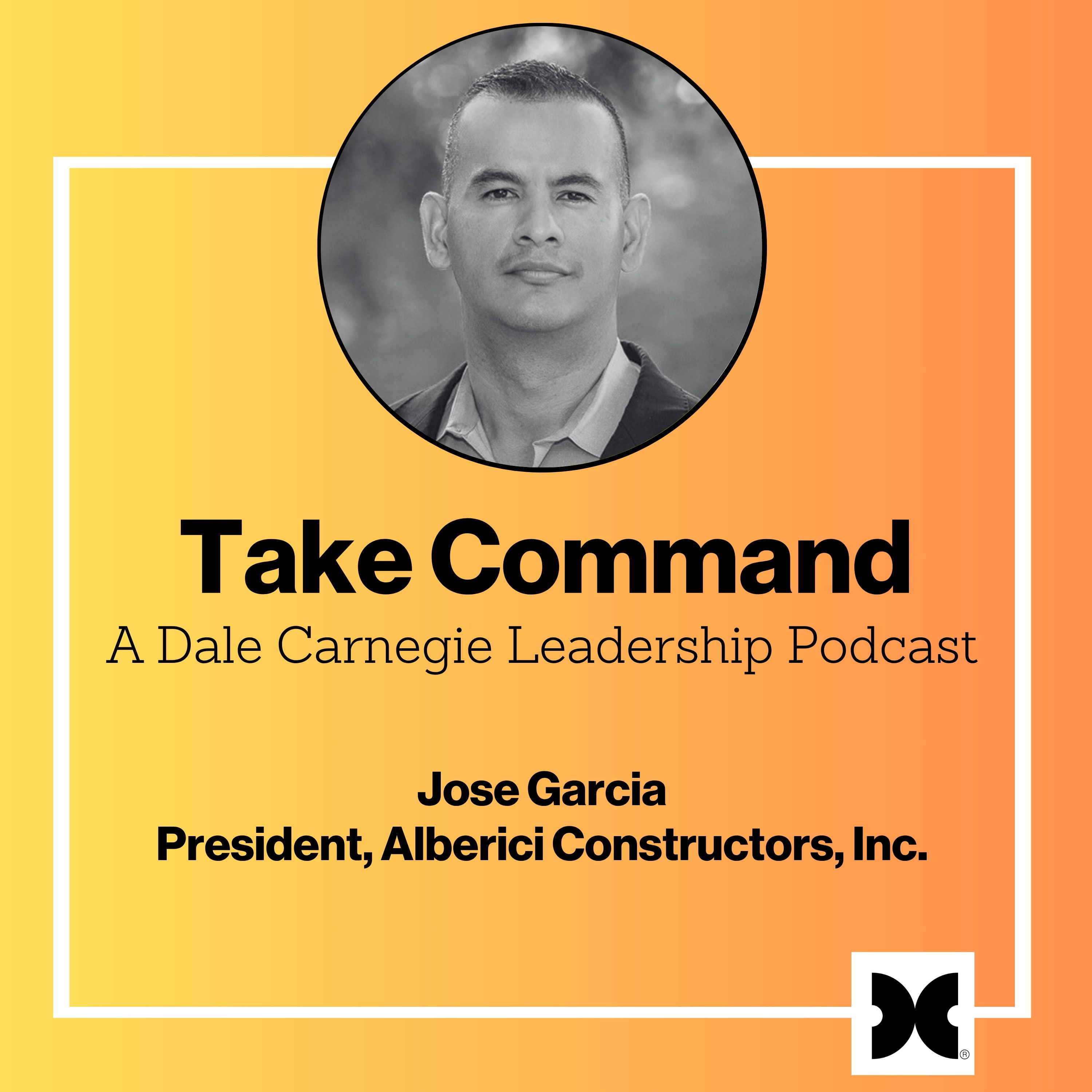
Take Command: A Leadership Podcast
Climbing Higher: Leadership Lessons from Adversity to Impact
00:39:50
From war-torn Nicaragua to the summit of Mount Kilimanjaro, this episode is a masterclass in resilience, leadership, and purpose. Jose shares how growing up as a refugee shaped his mindset, how West Point taught him the value of followership, and how feedback—given with care and conviction—became the cornerstone of his leadership style. He says, “Making it clear when you're giving the feedback that it is your job and your responsibility as the leader to make that person successful.” This episode is packed with insights on leading through adversity, building trust, and creating environments where people thrive. You’ll hear how a mentor’s tough love led to Dale Carnegie training, and how a single half-marathon sparked a nonprofit that’s changing lives in Nicaragua. Tune in to learn how grit, gratitude, and growth mindset fuel one leader’s journey—and why feedback, humility, and optimism are essential tools for anyone who wants to lead with impact.
Loading summary
Transcript36 lines
- [00:00]
A
I can confidently say that I wouldn't be where I'm at if it wasn't because of all the lessons and all the coaching that I've gotten from Del Carnegie at Albaric. You know, we're also leveraging that, right? We are using Del Carnegie to help her people be more successful, to have the benefit that I had in my career so we can accomplish more, have fun, you know, doing it together, and really should have better relationships because I think when you have better relationships. 360, life gets better, Life gets fun. So I'm personally grateful for what Dale Carnegie has done for me professionally and personally through my career. And this is kind of a full circle moment for me to be able to go from that young construction kid who needed to go to a Dell Carnegie course to get better at what he was doing, to now be here sharing with you my journey and what I've learned through it all. So thank you, Joe, for what you do and for what Dale Carnegie does.
- [01:11]
B
Welcome to Take Command, a Dale Carnegie podcast. I'm Joe Hart, CEO of Dale Carnegie. And before we dive in, don't forget to follow Take Command, where every episode gives you the tools to lead with confidence. Today's guest has built a career, turning complex challenges into opportunities for growth and excellence. He leads one of North America's top diversified construction firms with projects spanning the United States, Canada and Mexico. Originally from Nicaragua, he brings together entrepreneurial vision and a deep commitment to service. A graduate of both Stanford and mit, he's active in leadership circles like the Lean Construction Institute and ypo. And through his nonprofit, he gives back by organizing athletic events that raise funds for orphaned children. Please welcome the president of Alberici Constructors, Jose Garcia. Jose, welcome to the Dale Carnegie Take Command podcast.
- [02:16]
A
Thanks for having me.
- [02:17]
B
I'm excited to have you. And we've gotten to know each other a little bit. I had the honor of seeing you speak as one of our keynotes at our convention this past year in San Antonio. I know you've got a great story to tell about your climb of Mount Kilimanjaro. You're also a first generation immigrant from Nicaragua to the United States. West Point, Stanford, MIT graduate and president now of Alberici Constructors, which is one of the top construction companies in the US So a lot to share with our audience, a lot to learn from you. Tell us a little bit about your journey, Jose. I mean, even going back to how did you go from Nicaragua to the United States and the career path that you're on.
- [02:54]
A
Yeah, absolutely. So born and raised in Nicaragua. I was actually a kid in the 1980s when there was a time of civil war. Actually at the time, a war torn country, it was an economic embargo. And I can tell you from my childhood, you know, a lot of financial difficulty. Some of you may remember from the 1980s, really, this goes back to the Cold War era. Nicaragua became really a pro communist country set against the backdrop of US USSR global conflict. So for me, I think as a kid, what I remember was just growing in that scarcity environment. There was financial difficulties, There was also immigration displacement. So we were refugees growing up. We lived in Guatemala for a couple of years because of the threat of war and, and everything that was associated with that. However, when I think about my childhood, what I'm grateful for was what my parents taught me. We grew up poor, you know, really humble beginnings, didn't really have any political connections or any connections to power. And growing up in a third world country, really, it's more about not meritocracy, but really about who you know. My parents, however, were educated. So both of them were civil engineers, went to college. And so they always taught us the importance of education. And so I remember that even though we grew up poor, right, we always had the principle of self improvement, continuous learning. And there was also a lot of lessons about life. I remember one time my mom asked me and my brother to run an errand to go buy something for food. And I went to a nearby store and didn't find what I needed to get. And I went back home and I said, mom, they didn't have it. And then she said, well, did you go to this other store? And I said no. And then I remember she saying, knock and will be open to you. Seek and you will find. Ask and you will receive. And this was the idea of like grit and perseverance. Even as a kid, I understood from the lessons that my parents gave us. It's this idea that, you know, you gotta persevere, you gotta look for the yes when the answer is no. There was also lessons about integrity. Again, this idea of my mom asked us to go get something at the store and I went in and bought, I think it was eggs. It was half a dozen eggs. And I got my change back from the money I had paid and I didn't check that I had gotten the right amount. I actually got more than it was due to me. And I went back home and I just gave the change back to my mom. And when she did the math, she said, why did you take more money? Than you were due, go back, apologize to the store owner, and return the balance of the money. And so it's just a huge lesson. Of course, this was more of an oversight, but really the lesson learned for me was this idea of integrity and character. Not only do you have to work hard, right? But you also have to have that honesty and integrity. Lessons like that, unbeknownst to me at the time, would really shape me in terms of who I would become as a young man, as a leader throughout my journey. I'm grateful for that. When I look at the adversities that we had growing up, that was kind of the motivation to try to get ahead. The other thing that I would kind of reflect upon is even though we grew up in hard times, there was never a lack of optimism. There was one saying in my family. We used to tell each other, which is, one day will be day. And that this idea that, yeah, right now things are not going well, but it'll be a day that the sun will shine. And this optimism and hope, I think would carry, and it still carries right through today as I look at the challenges of leadership, right? This kind of hope and optimism that would shape my leadership style. So here I am now. I'm a kid in high school. I have applied myself academically, always did well at school. A friend from school randomly mentions to me while in Nicaragua that I could apply to West Point for scholarship. And I always wanted to be in construction. Even as a kid. We didn't grow up with a lot of toys, but we would play with mud and little wooden sticks and build homes. You know, construction was kind of not only my DNA, but it was kind of my passion growing up, and I wanted to come to America. That was my dream, right? If I could do it. Of course, my. My family didn't have the means, and we couldn't afford it. And all of a sudden, this comment is made to me by a buddy from school, and he says, you should apply to West Point. I didn't know what West Point was. As a matter of fact, I went home that day and I asked my mom, what's West Point? Nicaragua actually had a dictator in the 1960s who was a West Point grad. So everyone knew about West Point and Nicaragua and the reputation as a premier military academy. Maybe not in the best context, but obviously there was a lot of admiration. And so I went ahead and applied and, you know, really not thinking much of it, didn't think that it was going to be possible. I almost forgot. Six months later, I got a call through the American Embassy, the military, at a Shea, telling me that I had gotten into West Point and I was the first Nicaraguan in over 20 years to be admitted into West Point and ended up being the seventh Nicaraguan citizen graduating from West Point. So that was obviously a pivotal point in my life and my professional journey. Here I am now showing up for what they call our day, which is reception day at West Point, ready to start basic training. And it's my first time in America, my first time in an all English environment, and my first time in the military.
- [08:42]
B
Yeah, what a shock that must have been, right? I mean, so different. I can't help but think though, Jose, just going back, you think about the adversity that you'd experienced even to get to that day, all the things, things that you had to overcome to do that, and just the impact that your parents had on that mindset. Right. I mean, because so much of life is what we focus on. We can focus on the things that are going on around us that aren't going well, that hold us back and all the reasons why we can't do something or we can focus on, you know, where is the opportunity, where are the values that we're going to live by. I can only imagine that as you're standing there on that first day, you had to be thinking about just your parents and the influence and all the other things that they had done to help you shape who you were to be there.
- [09:24]
A
Absolutely. And really, for the first time, I was in a place where my last name didn't matter, who I knew, didn't matter what my accent was like, didn't matter. All it mattered was yourself, what you brought to the table, your performance, your effort, your character. And you know, West Point is known for being the ultimate meritocracy, Right. Everyone who shows up at West Point, they've been the valedictorians of the high schools, captain teams of their sports. Right? So everyone's kind of this high achieving, but you show up there and that doesn't matter anymore. We're all the same. And all that matters is how you perform and you show up at West Point. Right. And I loved it. It was definitely the most challenging experience in my life at that time, but one that I welcomed because I felt very fortunate to be there.
- [10:15]
B
What were the greatest challenges that you felt in that experience? I mean, you're here, you've arrived, you're with all these other high performers and you excelled at West Point and then went on to Stanford and mit. But what were some of the Things that you'd say, gosh, that was a challenge. And here's how I overcame that.
- [10:30]
A
There's actually four dimensions of your experience at West Point. There's the academic portion of it, which for me was probably the easiest. Right. There's the physical experience right through physical training. Then on top of that is the military training. And then a fourth element of West Point is the ethical training. The honor code at West Point is the big deal of your West Point experience. None of them individually necessarily was a challenge, but when you stack them together in a period of 24 hours, in 48 months, right. The pressure of managing to all the demands and being efficient and managing priorities and really trying to do well in all of them, but realizing that just the time was not there, I think for me was the pressure test. How do you handle stress? How do you handle competing priorities? And how do you just optimize what's being offered to you? I think for me, the way I looked at it, maybe it had a different perspective. Coming from a place of adversity. I actually just saw this as like, it's incredible. I can't believe that I have all these opportunities. And so, yeah, I probably overdid it in terms of, you know, I would stay late at night, get up early, try to do my best. But there's also the system there was set up to support you as an individual, as a cadet leader. It's a well set up program. This idea of different competing priorities and how do you prioritize that? How does that shape you as a person, as a leader, as a peer? I would probably say that was the biggest challenges. You just didn't have enough time to do everything. Whether it was actually having shiny boots in the morning that would get inspected every day, or submitting that final project for your structural analysis class, it was all expected of you. But it was also a place of incredible opportunities. I got to meet incredible classmates, instructors. I had a chance to go to Japan to do an internship with Corps of Engineers. I went to Germany on a military internship to work with a mechanized combat unit. I went to airborne school. So I got to jump out of an airplane, got to, you know, throw a land grenade, fire a tank. There was just so many things that I think at the end of the day, it was for me just the best place to be at the right time where I could thrive.
- [12:51]
B
Let me ask you, you talked about something that sticks out in my mind, about systems of support. You said, look, it was rigorous. If you stack all these things together, it's A lot. But there were systems of support. This is a podcast. It's about leaders. What did you learn about the systems of support you had there that you actually bring into how you develop people today? I mean, just jumping ahead, even to your leadership, you're leading a major company, one of the largest construction companies in the United States. What were some of the things in West Point that you learned about leadership? And that maybe would be interesting to our audience as we think about how we can become even more effective leaders?
- [13:25]
A
Two lessons jump to mine. The first one is, in order to lead, you need to learn how to follow. First, be a follower, be a part of a team, be able to get behind a mission and really be part of something greater. You know, that's kind of the mode of infantry, right? Follow me. And so the importance of understanding that as a leader you also have a role. And sometimes that role is to be the follower, right? Sometimes the ideas come from somewhere else. It's about doing not what you think it's right, but what is actually right. And there's a difference. And so I think the idea of followership to me and being a good follower is an idea of self awareness, understanding what you're good at, you know, understanding your areas of growth, your blind spots. And so at West Point, the first year you're there, you're a first year cadet, you're a plebe, you're really a follower, right? But then when you go to the second year, now you become that mentor as a second year cadet, now you get assigned a first year cadet that you're able to mentor and coach. And that's the other lesson that I learned at West Point, the importance of mentorship and coaching. I can tell you, even after I finished all my schooling and I showed up in the real world in that construction company, the difference that those people made in my life, not just professional, but personally, who actually were not just my supervisors, people I reported to, but they were my mentors and my coaches. They were actually my champions. And they told me what I needed to hear, not what I wanted to hear. And they showing me something at the time, I didn't see it myself. So they believed in me, they chanted me. And I think it's the power of mentorship. I think something that regardless of the industry, whether it's construction or business or technology, right, that will never go away. The importance of understanding that we as leaders, we need to be mentored and we need to mentor. That never stops. I always tell to my teams, regardless of what role you have within the organization. We all have strengths, but we also all have blind spots. It's the human experience, having that self awareness. Later on in my career, what I came to appreciate is the power of feedback. I really think that feedback is kind and I actually think when we don't give feedback, I think it's cruel.
- [15:45]
B
Talk about this some more. You know, feedback is a tough thing for people, for any of us. It can be difficult sometimes to receive feedback or it can also be hard sometimes to give feedback. I don't know about you, Jose. I remember early in my career I had a hard time giving people feedback. I'd be concerned someone would be defensive or I didn't want to hurt someone's feelings. But like you and I now also agree it's like it's a responsibility of leadership. If we sign up to be leaders, we owe it. We have a stewardship, a responsibility to give people feedback. And at the same time that can be challenging. Right. So what is your thought about that and how to give feedback to people effectively?
- [16:19]
A
Well, let me tell you a story of how I learned about the power of feedback. And it was with one of my mentors who I worked for. And it was on my first large construction job that I was assigned in my late 20s. I get this large company project and I'm managing my team the best I knew. Now you got to put into perspective military training, engineer training, outcomes driven, you know, maybe at the timeless focus driven. And I remember he coming into the job site, we sat together and he said, Jose, I really believe in you. I think you're going to do great and I am for you. And the only limit to how far you're going to go is yourself. And so he set the context. He said, I believe in you, I got you, I got your back. So what follows, what I'm going to tell you, it's really for you, it's in your best interest. And he said it in a way that was not only authentic, it was heartfelt. And then he proceeded to tell me, you need to work on your soft skills. You need to improve, you know, how you interact with your team. I'm going to send you to a Dale Carnegie course. It almost was like a reward. Like, listen, there's this great training that's going to help you be successful. We only do with our successful people. It is my job as a leader to make sure that the person that I'm giving that feedback to is successful. And my experience has been when it's communicated in that way, the reaction is overwhelmingly Positive. I mean, it's well received. And that was kind of my introduction to my own journey with Dell Carnegie. Remember, the first class I took was how to win friends and influence people in business. And that was one of many that I, over the years I've taken. I can confidently say that I wouldn't be where I'm at if it wasn't because of all the lessons and all the coaching that I've gotten from Del Carnegie at Alberizino. We're also leveraging that, right? We are using Dale Carnegie to help her people be more successful, to have the benefit that I had in my career so we can accomplish more, have fun, you know, doing it together. And really you have better relationships because I think when you have better relationships360, life gets better, life gets fun. So I'm personally grateful for what Dell Carnegie has done for me professionally and personally through my career. And this is kind of a full circle moment for me to be able to go from that young construction kid who needed to go to a Dell Carnegie course to get better at what he was doing, to now be here sharing with you my journey and what I've learned through it all. So thank you, Joe, for what you do and for what Della Cardigan does.
- [19:09]
B
Well, thank you, Jose. Thank you for trusting us with Albarisi. You're a great partner. And you know, the kind of thing you just described is really what fuels us as Dale Carnegie. I mean, I also am a product of the Dale Carnegie training and just there's so many thousands and millions of people who are. And it just means a lot to hear the impact that it's had on you. So thank you so much.
- [19:28]
A
Thank you. The other part of it about self awareness is I think sometimes it's false perception that you have to be perfect to give feedback. No one is. We all have areas of growth, weaknesses. We all also have strengths. So what I often do is also be vulnerable about my own journey. And so I tend to go back to just telling that story that I just told you. There was a moment where I received difficult feedback and it was fine, it was okay. It wasn't the end of the world. The self awareness component, we as a leader sometimes pull back because of this unrealistic expectation that to give feedback you gotta be perfect. No one is get over it, embrace it. Because it's really feedback and making mistakes that helps us go to the next level.
- [20:14]
B
It's interesting though, Jose, if we go back to that person who had that conversation with you, I mean, it strikes me that Number one, that person built trust. I mean, a couple things I think we'd say in Dale Carnegie. One is you have to have that trust as a foundation. And when you do, you can almost say anything if you say it the right way, right? I mean, the way he said it, he kind of come at it, Jose, let me tell you what you're doing wrong, right? Or we want you to take this course. And then you might say, well, what's wrong with me? You know, on the other hand. But the way he explained it and which is the way I think it is, it's a high potential course. We want to invest in you, but you know, when we have that relationship with, when we take the time to get to know someone, when we demonstrate that level of caring and so forth. And also you talked about something which is critical for leadership, which is humility. I mean, as leaders, we don't have all the answers. And there's this perception that sometimes, well, if I'm the leader, I can't look bad. That's just not true, right?
- [21:08]
A
I often tell my team that I don't care to be right. I do care to do what's right. And there's a difference because sometimes and often that answer, that best approach, that response doesn't come from me, it comes from the team, it comes from others. When I think about leadership, there's also three dimensions that come to mind. And now you know where I'm at right now in terms of my role, there's three dimensions that I usually focus on. Self awareness, self discipline and self confidence. So self discipline is probably the easiest part of it, right? Most people succeed by working hard, they start single contributors, and as they move up in levels of responsibility and leadership, the self discipline is the easiest part. The confidence comes from success, right? When you try something and you do well, I say those effort driven strategies, they build self confidence because you're able to prove to yourself that you can accomplish things. But self confidence can come across as arrogance if it's not informed by self awareness. But when it is informed by self awareness, self confidence comes across as a humble servant leader.
- [22:22]
B
So unpack that a little bit, talk more about that connection. I mean, what is the self awareness role and the self confidence role? What does that mean as a practical.
- [22:29]
A
Matter for our audience, as a practical framework? As a leader, we should always be asking for feedback. We should make it safe for others to tell us what we did wrong, Actually embrace it, welcome it, make it clear, not this hypothetical, but like in every interaction that we have in our One on ones, right. Make it clear to people that it's okay for them to give you feedback, to have a different thought, that you embrace it, that you welcome it. It's incredible the amount of times that you actually have to repeat it before actually people feel comfortable to do that, but once they do, you unpack the power of feedback and it actually goes both ways. It is kind of a currency, right. Because now you're vulnerable to receive feedback, hear different ideas, to listen to what others are saying. You actually get the benefit of you doing the same with them. I think for me, self awareness is again just having this really realistic view of who you are. Know your strengths, know your areas of weakness, you can work on those things that you know that you're not good at or within your team, build a team that's going to supplement those areas. Right. Because as leaders, our job is to build teams and to put people in the right place, in the right role at the right time. So understanding that no one will have everything covered, but it is your job to have all the different areas of the business cover. And then when you don't surround yourself with the people that will help you get there. For me, self awareness is the number one predictor of success as a growing leader. If I were able to go to my younger self and say, what would I tell to myself now maybe 20 years before is actually seek that feedback and be okay with it. Because you are correct. It's sometimes it is hard to accept, but it is so invaluable, you know, when you receive it and when you act on it, it really goes back to that. What my mentor told me at that time, the only limit to how far you can go is yourself and our willingness to be challenged and to be disrupted. I think it's a journey. And I tell you what this is, whether it's personal or professional, whether you're in a not for profit, in a for profit. I think these principles do apply and extend beyond our professional lives. Much like a lot of the principles that you learn at Dale Carnegie. Right. They're not just business related, they have an application there. And so I think the other concept that comes to mind with that, maybe one of the books that has been most influential in my personal journey is Carol D. Mindset. Right, right. And I was talking to an industry peer who was describing to me an organization that wasn't doing well. Right. From a cultural perspective. And we were talking about what was different. Right. At Albarisi, one of the things that we always talk about is culture and I came to this conclusion of the mindset that we have towards others. I think as leaders, if we see other people, as people that can grow, that might not be there yet, but with the right support, coaching, training, they can grow themselves. Your leadership style will be different than if you have a fixed mindset. If you see people as fully baked, you're either these or you're that. It will impact how you view the world, it will impact how you treat people, it will impact how you lead. And so I think for myself, having that growth mindset, that expectation that when people are giving clear instructions, alignment, supported and trained, they will thrive.
- [26:03]
B
Yeah, for sure. And it's interesting that mindset underlies everything, right? We talk in Dale Carnegie about the importance of attitude. That's one of the core things about the Dale Carnegie course is getting people to have that level of self awareness and that desire to want to change. But even going back to what you were saying, we could be our own worst enemies, especially around this topic of feedback. If we are so fragile that we are afraid to receive feedback, that we think that we're perfect or need to be perfect, we are never going to.
- [26:31]
A
Be able to grow.
- [26:32]
B
On the other hand, if we're constantly seeking that feedback with the recognition that we're always going to be growing, life is about personal growth. That's where the opportunity is. Right? Doesn't it all come back to mindset and to the attitude?
- [26:44]
A
I think it does. And you reminded me of when I was in grad school. I went to Stanford. I had finished West Point and I was a civil engineer with a focus on structural design. So I was good at the design part of industry, the numbers. I can get this done. And then I had to make a choice of what do I want to do next. Do I want to be the best designer I can be or do I want to go into management, construction management? It was very clear to me that at that point the management of people and teams was the area I wanted to grow. And I decided to pursue that construction management degree. So I showed up to Stanford and I remember this class, the name of the class I'll never forget, Failing your way to Success. So up to that point in my life it was all about getting it right, getting the right answer, and it was about not failing. So I was intrigued by this class because it really actually talked about the importance of seeing failing as a way of learning. And I'm not talking about failing due to negligence, dereliction of duty or just. I'm talking about the failing that comes from really doing the best you can, taking risks, making mistakes. And it really shifted my mindset about failure. It taught me to embrace it. And as I go through my life and different places where I've been, it's really at those points of failure that I've learned the most and I've grown the most.
- [28:11]
B
Jose, do you have, or I should say, what are your daily practices or what are the practices that you have to kind of continue to develop your mindset or to keep yourself sharp or to grow? Whether it's around that professional side or how you're seeing things, what are some of the things that you do on a regular basis, consistent basis to be your best.
- [28:34]
A
There's two things that I'm very intentional about doing every day when I wake up. Those first thoughts that you have as you start your day can definitely shape at least the perception of how your day goes. And so the first one is an attitude of gratitude to give thanks. Every time we wake up and we're alive, we're breathing, we've won. The discipline of giving thanks just puts you in a mind frame. I think of positive thinking and optimistic. Now, I'm not talking about Polyana. Like, don't pretend that there's no challenges, no issues, no threats and no fears. But you don't control a lot of those things. What you control is how you feel about it. Again, very intentional every day about attitude and gratitude. And that makes a difference in terms of how I show up as a leader on a day to day basis. The other one is I think every day we can make choice. I think leadership is a choice, right? To decide whether you're going to have a great day or not. You know, I do my best every day to say today is going to be a great day and create that expectation of something good is going to happen. Because you know what, the day will bring its challenges and that won't change, right? But having that mindset of gratitude and of success helps deal with those challenges. You know, we go back to that mindset, right? Can I grow out of it? Can I learn? Can I get better? And I believe we can. When I look at our company, Alvarezi, the caliber, the character, the commitment of our people, it's really second to none. It's what makes me show up and enjoy what I do. It doesn't mean it's easy, doesn't mean that we don't have challenges, but I have complete confidence and conviction that together we are going to thrive. So to me, at the end of the day, leadership is about creating Space, a workplace, an environment where people thrive.
- [30:25]
B
Going back to what you said about Alberici, it's not by accident, right, that you've created that culture or that people have that success. It is very intentional. And that even goes back to what you said about just, we need to have part of our day sometime of our day, like you and me. I like to do it in the morning as well. I feel like, you know, it's like warming up before working out. But we work out, hopefully work out to take care of our bodies. We do different kinds of things. But what about our minds? What about our attitudes, our mindsets, and ready to perform when we take that time? By the way, you know, when you said leadership is important, a choice, that got me thinking about our mutual friend Liz Haberger, who is spectacular in so many ways. And part of what she talks about is that leadership is a choice, right. And once we assume the stewardship, the responsibility of leadership, we've also chosen to set aside hopefully, some of the negative ways of thinking about people, trying to assume positive intent, trying to bring out the best in other people, try to drive that positive culture. So great point, sir, if I can.
- [31:23]
A
Elaborate on that, because I was just thinking about this and reflecting on the topic of leadership. Right. It's easy to go to the head, the brain, and get kind of that academic definition of leadership. And I really had to go back to specific moments in my life where I chose to do something because it mattered to me. I didn't have to. I could have just sat back and done anything about it. And I realized that to me, leadership is making that choice to act when you see the opportunity to make a difference, to face a challenge or solve a problem. And to me, what's important about that is the intersection of passion, what we're passionate about, competence. Not only don't we have to be passionate about something, we have to be able to actually make a difference. And then character. When those intersections on any topic or subject or area that moves you, then I think leadership can flourish. I remember when I was in my late 20s, I got into long distance running. First half marathon I did was the Boston Half Marathon. And, you know, at West Point, I was. I was a runner. I was part of the orienteering team, which is land navigation. And so we did a lot of running and cross country running and running in the really on the mountains and the hills. I always enjoyed cardio activity. But when I did my first half marathon, I was hooked. You know, I did 12 half marathons in my first year. It Was just something that I enjoyed. And so I was doing my 12th half marathon that year. That was my goal, you know, one half marathon every month for the first year. And then I get to thinking, why am I doing this? I'm just doing it for my own selfish reasons. I want to be in shape, I want to improve my pace and hit new records. And I also realized I was passionate at the time about orphans. And so I asked, how can I channel this? How can I leverage this passion that I have to actually make a difference in something else that matters to me? You know, again, halfway through, the marathon just became evident I need to do these and tie it back to orphans in the third world, which has been a passion of mine. I remember that first year, and when I raised, it wasn't that much. It was like $5,000. And I went to an orphanage in Nicaragua with friends and family. We made a donation and I realized, you know, that's not a lot of money. I tell you what, those $5,000 was a lot of money for them. And it was the beginning of a journey and a passion for giving back to really where I come from, my homeland, in a way that was meaningful to me. But then again, going back to what happened, there was the intersection of passion and the acknowledgement that I could do something no matter how little I can make a difference. And I think that's when the magic happens. Recognizing those moments where we have an opportunity, we have the passion, and then we have the capability to do it.
- [34:18]
B
You did do that, and you started an organization, Strong to Serve, which is helping children in Nicaragua. You combined all of those things, that passion, that competence, the character to help other people. If our audience wanted to learn more about that charity or contribute to it, how would they do that?
- [34:36]
A
StrongToServe.org is our website. I appreciate the plugin. I think for me, it was also as I did that right, Pulling friends and family, sharing your vision and your passion, and then the community. We started organizing half marathons in upstate New York. Some of our events have had thousands of runners looked for partnerships with different businesses. And it is this idea of there's only so much we can do, but when you surround yourself with others, we can do extendedly more. And that's just an example of me professionally, right. We've talked about this idea of creating places where people thrive. And I think at Albarizi, you know, we've been around for 107 years. John S. Alberisi, who is an immigrant himself, came to America in 1918 and then came to St. Louis to build a local bank. Due to the quality of the work that he did, he was asked to stay here and start his own company. And what I love about that story is really the American dream. You come to a new land, right? You really come with nothing. And now you're starting things, you're leading, you're making a difference. And so for me, it's a true honor, privilege, and responsibility to continue that legacy that was here when I came here. Right? Albarisi has been a place where people thrive. And I think the challenge for me and the rest of the leadership team is how do we live it better when we leave? So it's actually not the same, but better because we've made all the right decisions. We've built the team, the people, so that the company can continue to thrive into the future. And I think that's what excites me, this idea of get something that's great and make it even greater. That's the challenge that makes me get up every day along with the people, right? We would build a team of people that share values and a mission that when you had that team of people that you just. You can go to the trench at any time with, that's where the magic happens.
- [36:40]
B
You enjoy your work, you enjoy what you're doing. You leave it better than you started. You bring out the best in the other people. I know we're about to close. I have to ask you just briefly about your experience climbing Mount Kilimanjaro. That was something you talked about at our Dale Carnegie convention. It was really an exciting kind of story to talk about that just briefly. What led you to do that? And if there's one takeaway you had from that experience, what would you share with our audience?
- [37:09]
A
So what led me to go there was actually friends, right? They were a group of friends that wanted to take on that challenge together. And again, relationships, right? It's all about people. And so I got invited to be a part of a group of friends and took on the challenge. I would probably say, from a leadership perspective. I remember when we started that climb and we got our guide, and he taught us the word pole, pole poly, which in Swahili means slow, one step at a time. And he was explaining to us that when we get close to the summit, you really have to do one step, one breath, in order to make it to the top. The oxygen level as you near the top is about 50% of the oxygen that you get at the surface level. You know, I was in pretty good shape I felt pretty confident at the time about my ability to finish the climb. When I got there, it was one step, one breath, you know, so really the importance of listening and paying attention to the people that have been there before because they want you to be successful, right. That they listen to the feedback and we get to the top as a team, to me, is this kind of a reminder that you never stop learning. There's always something new, something that's going to challenge your assumption of what you can do or what you should do. Nonetheless, it's just another opportunity to continue to grow. And we had a great time. We summited, celebrated that as a team, created great memories. But it comes back to people and it comes back to listening to others, especially when you don't have the answer, which is 99% of the time in a world of ambiguity. One of my key takeaways from that trip.
- [38:47]
B
That's awesome. I love the one step, one breath, right? It's one step, one breath. Keep moving forward. You know, sometimes it'll be slow, but if we do it and we're consistent and we persevere, we get to the top. Jose, thank you so much for being on the Dale Carnegie Take Command podcast. It's been awesome talking with you today.
- [39:04]
A
Thanks for having me.
- [39:05]
B
Bye.
- [39:05]
A
Bye.
- [39:13]
B
I hope you enjoyed this edition of Take Command, a Dale Carnegie Podcast. Check out our resources at www.dalecarnegie.com for more research, insight and tools that will support your success and help you take command of your leadership potential. If you enjoyed this episode, please consider rating it and following us on Apple Podcasts and Spotify. For more exclusive content, subscribe to our Dale Carnegie YouTube channel and follow us on social media. As always, thank you for listening and we're looking forward to you joining us for the next episode of Take Command, a Dale Carnegie Podcast.