← Take Command: A Leadership Podcast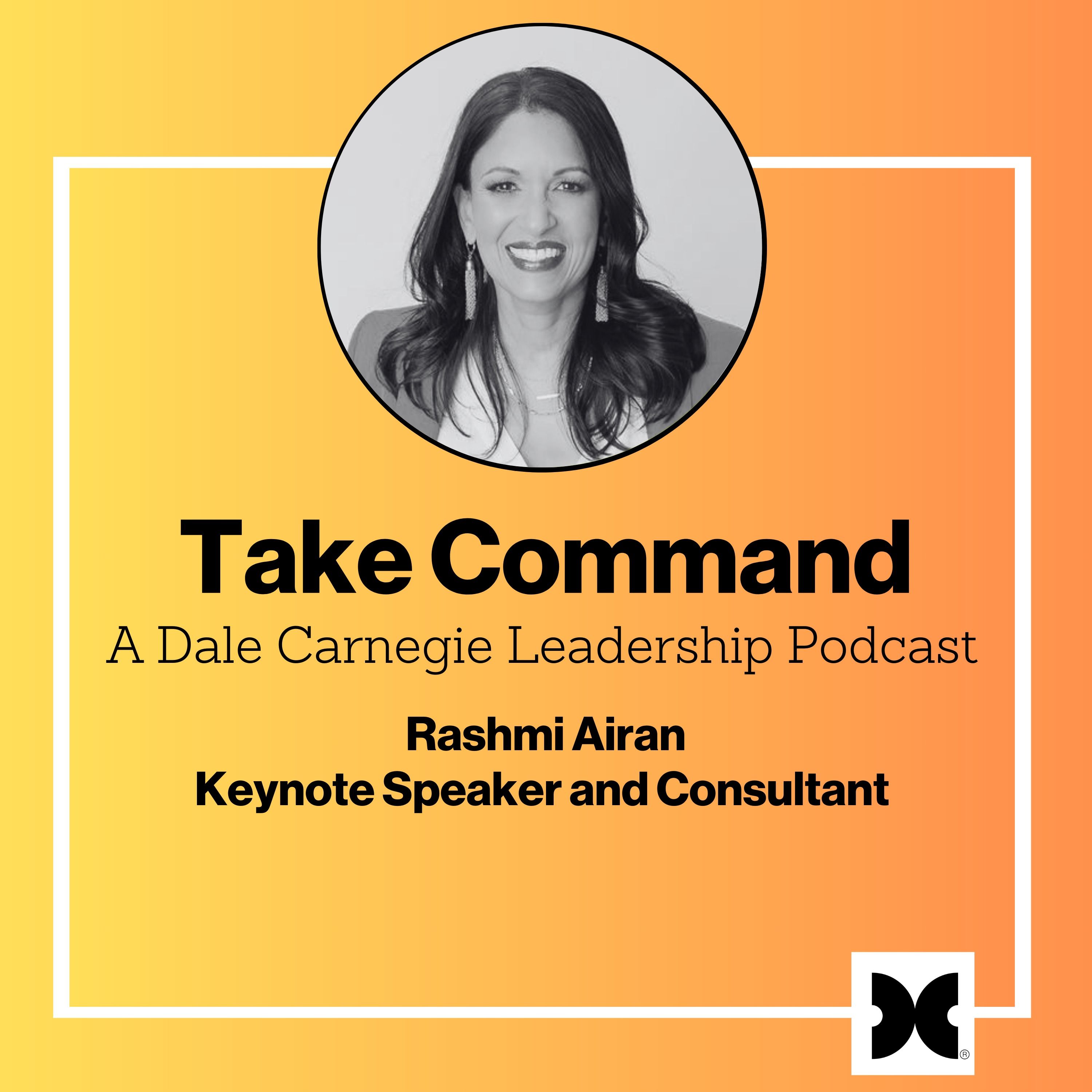
Take Command: A Leadership Podcast
Convicted, Not Defeated: A Real Talk on Ethics and Redemption
00:30:31
Rashmi Airan’s story is one of grit, grace, and radical accountability. A former attorney turned ethics advocate, Rashmi shares how a series of missteps led to a federal prison sentence—and how that experience became the foundation for her life’s mission. She says, “I had to lose my freedom to gain freedom,” and her journey is a masterclass in how to rise through struggle with courage and clarity. In this episode, Rashmi introduces her four-step RISE framework—Reframe, Identify, Surrender, and Evolve—and explains how each step helped her rebuild her life and career. She also reflects on the power of vulnerability, the trap of ego, and the importance of surrounding yourself with truth-tellers. One of her most powerful insights: “People are very forgiving of our humanity when we give them the opportunity to see their humanity in us.”
Loading summary
Transcript56 lines
- [00:00]
A
People are very forgiving of our humanity when we give them the opportunity to see their humanity in us. Right. One of my friends said, rashmi, you stood naked and exposed for all of us to judge you. And we did. And we got to see ourselves in you and teach our kids about you. And that lesson for me, that people love me for me and not just my achievements, it was life changing for me. You know, Dale Carnegie is like the entire principle of when you can take responsibility and be a role model for others. It's so hard. But man, when you do it, I say, I had to lose my freedom to gain freedom. And that's exactly how I feel.
- [00:48]
B
Welcome to Take Command, a Dale Carnegie Podcast. I'm Joe Hart, CEO of Dale Carnegie. And before we dive in, don't forget to follow Take Command, where every episode gives you the tools to lead with confidence. Today's guest turned a prison sentence into a launchpad for personal transformation and ethical leadership. What started as a single career misstep during the housing boom could have defined her, but instead she emerged stronger, bolder, and more authentic than ever. A first generation American, raised by parents who immigrated from India, she brings 30 years of experience as a finance and legal professional. She now partners with leading organizations like Coca Cola, Merck and Comcast, sparking conversations about decision making and the hidden pressures that shape human behavior. Her story has been featured on abc, the Washington Post, and the Wall Street Journal. Please welcome keynote speaker and consultant Rashmi Aron. Rashmi, welcome to the Dale Carnegie Take Command podcast.
- [01:57]
A
Thank you so much. I am so excited to be here.
- [01:59]
B
Well, I'm excited to have you. And also, I don't always get the opportunity to have a Dale Carnegie grad here. So you are a Dale Carnegie grad. We'll definitely talk about that. I know you took our program at 16 and it really has played an important role in who you are in your life and so forth. You also have really had an impressive career and really a pretty significant setback that really has defined what you're doing right now. We'll talk about, you know, kind of the trajectory you were on and your super successful career and then going to prison for something that you didn't necessarily see coming. But before we get to that, tell us a little about your story. What led you to the earlier parts of your career and to who you are today?
- [02:37]
A
Yeah. Thank you, Joe. So I grew up in Miami. I am a daughter of Indian immigrants, born in North Carolina, but first generation American. And so by all accounts, I was always trying to be the perfect Little Indian girl. I think many of us feel that pressure to achieve and make our parents proud and our family proud and our community proud. And also there was like a self imposed expectation of myself to achieve all the things I will say. You know, one of my biggest lessons that I've come out of this with is the understanding that so many of us root ourselves in achievement and all of our self worth and self love and self awareness, everything esteem is rooted in achievement. So I was totally that kid. And by all accounts I did that. So I went to UNC Chapel Hill, won all the awards, got inducted into the honorary societies, all the things went onto Wall street and I worked at Morgan Stanley and then I went to Columbia Law School again. I did very well. And by way of California, I ended up back in Miami, worked for a firm, I worked for the government and then eventually started my own practice. So I started my own practice in 2004 and it was around real estate. So it was real estate transactions. And so, yeah, that kind of brings us to, I think, the crux of the story, so.
- [03:43]
B
Well, that's right. I mean, so you'd had the success, things are going really well, and then what happened next?
- [03:49]
A
Yeah. So to give it some context, at this point, it's 2007. I was married to a firefighter. My kids were 2 and 3 at the time. I was definitely the major breadwinner. And so I was like hustling and running around and going to every possible networking event and selling my services at the gym. And you know, I was like, anything I could do to bring a client in because I was running my own business. And so I think when you're an entrepreneur and we wear so many hats, there's all this like pressure. And like, what I believe is that I created this like self imposed prison of glass walls, of always trying to keep up with appearances. And Miami is no stranger to going to those expensive dinners when you really can't afford it. And so I was definitely caught up in that. And in this context of the pressure and the, you know, burnout and stress and overwhelm, I had the chance to meet a real estate developer. So it's 2007 before the crash, and I'm thinking to myself, okay, I have this small little business and I'm hustling for clients. If I can get one big client, that means more time with my kids, financial stability, you know. So like that was my motivation. And to be clear, what happened was when I went in to go meet with him, actually he sat in a separate Room. It was his two operations guys. They were essentially doing buyer incentives. Right. Which is kind of what every other developer was doing.
- [05:00]
B
What exactly does that mean? Because I know that also applies to the story, and maybe people don't know exactly what.
- [05:05]
A
Yeah. So what he would do is the seller would say, joe, if you buy my condo unit, I will give you two years of rental guarantee. I have a management company. They'll make sure your property's rented. We'll manage it. We'll get collect rent for you. You'll get it. You can cover your mortgage payments for two years. So it was essentially a financial benefit to the buyer that was not being disclosed to the buyer's lender. What happened in my mind was I thought, okay, that feels creative, but it's not going through my escrow account. And, like, what I'm disclosing is exactly what's going through my escrow account. That should be enough. And so where I went wrong, and it's obvious now to me at the time, I think I just shut down. My inner voice was that my inner voice was screaming. It didn't feel right, but I didn't want to listen. And I think, as I've now done this work over the last decade, understanding what the heck went wrong, I realize, I think we all get caught up in trying to get to the next thing, trying to impress the client, trying to make the money, all the things that it's very easy for us to shut down. I don't want to say easy, because that diminishes my responsibility, but it's almost like you can convince yourself by rationalizing and justifying and making assumptions that, well, it's just this one time, and, like, shut up. You don't know anything. Like, to your inner voice. And that's what I did, and it's not okay. I always take full responsibility for having made some bad decisions and not listening to my inner voice and not asking the questions I should have, because as an attorney, I had a fiduciary duty and I didn't.
- [06:29]
B
So your inner voice is telling you whether you should have disclosed these or you should have spoken up about it.
- [06:33]
A
And.
- [06:34]
B
But again, that temptation, it sounds like. Because, I mean, it was a slippery slope. Right. It started small, and then it got significant. And then what happened? I mean, because there really was an awakening at one point, right. When it was kind of hit the proverbial fan.
- [06:46]
A
Yeah, the slippery slope is an interesting concept. Right. Because it's like, you do this one thing, and it feels okay, and then you do it Again, and it feels okay. And then before you know it, you've fallen down the slippery slope and you can't come back up. You know, in my case, I did about 15 months of closings for this developer, about 200 closings. And then I actually stopped working with him. Merged my practice with my father's, who's also an attorney, as well as my mom. Now we weren't even doing transactional work. I grew our practice by 200%. 1200%. Sorry. We were growing, and the FBI knocked on my door four years later. You've probably never dealt with the FBI. Most of your listeners have not, thank goodness. But it was. It was really scary. I didn't know better. I didn't know that I could say, hey, can I take a card? And I'll call you back when I have my attorney with me. And. And the FBI operates off that fear and intimidation, right? They know that most people are going to talk to them without their attorney present. And I should know better. Like, I went to a decent law school. I should actually have known better, but I didn't. So I let them in, and for four hours, they grilled me. Like, I used to have the circular table, you know, by my desk in the office. And they sat there and just showed me pictures and documents and emails and attachments. And I'm like, yes, no. Yes. No answering questions. As if I could remember exactly who I had met and seen and what email I had opened four years earlier. And then they left two years later, I got a grand jury subpoena for documents. So now it's six years after I met the developer, four years after I stopped working with him. And I quickly learned after about three months that they were after me and I was a target. To be honest, I didn't even know what that meant. My attorney had to explain it to me, and I was really scared. This was my whole life, right? This was like everything I had worked my entire life for. And all I could think about was, I'm disgracing my parents and my kids. And I sit on a lot of boards in Miami. Here. I'm very involved philanthropically. So I thought, okay, all these boards are gonna be affected because of me. And definitely ego took over. Like, what are people gonna say? What will happen to me? It was hard.
- [08:48]
B
Now, at some point, you decided to plead guilty and to own it and to come clean. What was the thought process that led to that? You could have fought it.
- [08:57]
A
You.
- [08:57]
B
You could have denied it. One of the things Dale Carnegie talks about is that People often won't accept responsibility. They don't want to be criticized. They don't want to say that they did something wrong. Although one of our principals to admit it when you do. So what was that process like and what advice would you have for our listeners about? Again, this goes back to the inner voice, because it sounds like you were really guided by that, maybe at the second time through.
- [09:19]
A
So what happened was after I got indicted, I went through the discovery and saw a lot of documents and things that were happening outside of my closing file, things that the seller was doing that I did not know of. And when I saw the entire picture of what was happening, my attorney kind of sat me down. He's a very dear friend. He said to me, rashmi, I know you didn't walk into this planning a crime, but here's the thing. You knew enough. Not doing something is still doing something wrong. My parents were in that meeting with me. I mean, I can tell you that my dad walked out six times to go to the bathroom, but really, he would come back with his eyes just a little redder, you know, it was the hardest moment of my life up until that point. What my attorney said to me was, you're going to have to look that dragon in the eye. You're going to have to have a coming to Jesus moment. Which is funny because he's Jewish and I'm Hindu. But, you know, we had this moment. I was crying, my dad was crying. My mom, by the way, doesn't cry. She's like, hard as nails. And it was when I realized I had to take off my fighting hat and just take on ownership. And I will tell you, Joe, that once I did, it was like freedom. I kept pushing and fighting back so hard, but internally, I knew that I had done something. And I was just so scared of admitting it because exactly like what you said, right? We're so worried all the time, of course, what's going to happen to us and our reputation and our lives, but also what will people think about us? And I think ego is a trap, and it takes over. What I found, though, is once I took ownership and accountability, I called like 200 people in my life, meaning politicians in Miami, managing partners of law firms in Miami, executive directors of nonprofits. And then, like, my friends and high school friends and college friends, like, 200 people that knew my history and character. And one by one, I told them what I did. And this is, by the way, before I got sentenced. So I had no idea what was the outcome. I'm here sitting Talking to you almost 10 years later, I have a very different mindset, obviously. But what I did know was I didn't want anybody to talk about it. I didn't want them to read a newspaper release about it, press release. I didn't want people to gossip about it. I knew they had to hear it from me. I was so sure they were all going to hang up on me. No one was going to stand up for me. No one was going to be my friend anymore. And I've lost their confidence. And instead, what I learned is that people are very forgiving of our humanity when we give them the opportunity to see their humanity in us. Right? One of my friends said, rashmi, you stood naked and exposed for all of us to judge you. And we did. And we got to see ourselves in you and teach our kids about you. And that lesson for me, that people love me, for me and not just my achievements, it was life changing for me. You know, Dale Carney is like the entire principle of when you can take responsibility and be a role model for others, it's so hard. But man, when you do it, I say I had to lose my freedom to gain freedom. And that's exactly how I feel.
- [12:10]
B
Well, it's incredible though, because what you're saying is 100% true. And we know that people want to deal with other people who are transparent and vulnerable and honest and authentic. And your situation is an extreme one because of the other end of what you were dealing with was going to jail, which we'll talk about, because I know you grew and now you're providing a great service to people from what you've learned. But even right now, we all have these different fears about different things. We're afraid sometimes about what people are going to think and so forth. But the reality is that you found freedom in that transparency. We find great leaders often, you know, it's like, who am I? Am I trying to be somebody I'm not? Or can I just be authentic? And often that really is what people respect and connect to.
- [12:52]
A
The whole concept of leadership over the last, I would say decade has definitely shifted. You know, like when I was a kid, you would look to leaders to kind of know it all and be the hard ones and like the bossy ones and delegate. I think the world has evolved and we've seen so many examples of this globally with huge corporations and governments. Right. There is this deeper understanding that actually true leadership is recognizing when we've messed up. It's recognizing that we need help. It's recognizing there's other people that are smarter than us. And having the humility to step into that type of leadership is so much more human and powerful. And that, I think, is where the world is headed. And certainly I think why I know I'm getting a lot of traction, because obviously there's a really cautionary tale, but it's also the recognition, like, none of us are perfect, you know, and how can we grow from whatever we go through, from whatever decisions we make, to become better versions of ourselves? Right. Like, that's, I think, the purpose of our human existence.
- [13:48]
B
No, a hundred percent. So you plead guilty, you're sentenced to prison. What happens next? And what are the things that kind of led to who you are today and what you're doing now?
- [13:59]
A
Yeah. So I got sentenced to a year and a day in prison, and I had 60 days to surrender. I told my kids very honestly what happened and where I was going, and the kids were 9 and 10 at the time. And it was really important for me that I honored my kids with the truth. I think that's. As parents, one of the best gifts we can give our children is understand and recognize that they also will grow and learn through this. You know, I think all kids are resilient. Definitely. My kids have gone through a lot. Ultimately, I spent about six months in prison. While I was there, I was asked to testify in another case in tampa. I served 23 days in a county jail. So I got out early. So when I got home, I didn't have to go to halfway house. I didn't have to go to house arrest, which is a total gift. I began to think about, like, how can I pay it forward? I really had no idea what I was doing. I mean, like, I. I emailed the head of the criminal law section at Columbia Law School. I was like, I graduated Kent Scholar, which is like, the highest honor at Columbia. This is what happened to me. Can I come and speak to your class? He taught a class on white collar crime, black letter law. And he was like, what do you want from me? I was like, nothing. I just want to give. If I can help one person in this case, a law student, never go through what I went through. That's worth it to me. So that's how I started. I really had no idea what I was doing. Like, I hadn't gone deep yet. I was just like, I want to share my story. So from there, word began to spread. I did a TEDx talk, which is all around the slippery slope concept. And I did that for about seven years. I got A lot of traction around ethics and compliance and, you know, accountability. So I can still do that talk. But about two years ago, there was a deeper calling inside of me and I kept getting asked the question. Cause I was a Q and A on stage and I kept getting asked the question, and how can you stand up there looking strong and smiling, having gone through this really life changing experience where you lost everything, Right? I lost all my money, my freedom, my bar license, my marriage. I lost arguably a lot. But I also gained so much. And so I began to research that. And through that I came up with my mission and why now, which is helping people rise through struggle. And what does that look like? Because I believe the universal truth is we will all struggle. Right. It's not if, it's when. And it just looks differently for all of us on different days. So how do we get through those moments when it's so easy to fall down to our knees or feel the fear or uncertainty, which. God, the world is definitely feeling it right now. So when we go through those moments, how do we keep going? How do we keep rising?
- [16:19]
B
What is the mind shift that people need to have to do that? Because often there's momentum in emotion, right? We're down and things aren't working out. Everything looks so bleak. And what's that catalyst, that thing that for you started to turn it around? Around where you'd say, I don't have to live with this past. I can move forward, I can do something different. I can give back. What does that mindset shift for you and what would your advice be to someone else who maybe is nowhere near in the kind of situation that you were dealing with, but is struggling with something that's a life change or a business change or a family issue or whatever it would be?
- [16:51]
A
Yeah. So I actually believe there's four parts to this question, which is of course, what I talk about. It's my process. I think the first step is we have to learn to reframe whatever it is we're going through. Right. Turning a negative into a positive. But I don't think it's easy. It's not like you decide and then it happens. I really believe that it takes us owning it, accepting the truth, no matter the pain. And, you know, look, I've gone through grief. I lost my sister six years ago to mental health. So thank you. So I've gone through many versions of struggle in my life. And what I know for sure is that we have to allow ourselves to feel and embrace the pain. Like, feel it in your Bones. Until you can't go on anymore. And then you make a choice to keep going right in the face of all of that. You accept it, you feel the pain, and that's when you can reframe it for me. I believe we have to identify the people around us. I call them my constellation of stars who lift us and ground us, but also put up the mirror and show us the truth about ourselves that we need to see. Because it's easy to find, yes, people that are always championing us, but it's much harder, much more important for us to find the people in our world that will, yes, lift us, but also tell us the truth about ourselves that we need to hear. Right. So like my attorney in my case and my best friend in my case and my parents were those people in my life. Right. I needed to hear that I messed up. I needed to hear that. So we need people around us that will be the real friends that we need in those moments.
- [18:19]
B
Be honest with us, because sometimes those are the people who really care. They'll tell us the truth.
- [18:24]
A
Yeah. Whether it's in our relationships, it's how we're parenting, how we're showing up in the world. Right. There's so many things then. The third step for me, I believe, is to surrender. Now, clearly, I had to physically surrender to prison. But surrendering to me means letting go. Like letting go of the ego. Right. Really allowing ourselves to root into. Why am I trapped in ego? How do I let go of it? Because when we let go of ego, we get enlightenment that otherwise we can't find. I also believe we have to let go of control. My ex husband will tell you I'm a control freak. This was not easy for me. I was entering prison where I had zero control over anything. What I was going to eat, where I was going to sleep, who I was going to be next to what job I was going to have. Like, I had no control over my schedule. Nothing. Going through that level of uncertainty and not having control and just learning to let go, I believe is a choice. And we all are trying to, like, hold on to something, the outcome of something, you know, how somebody behaves in a specific way or what people will think about us. And I think when we let go of having to control. And you and I were talking a little bit earlier about pronoia, just like, having the fate to understand, like, whatever happens in the world, it's in our favor. So when we can let go, we finally then step into the fourth step, which is that's when we Evolve. And evolution is our opportunity to become better versions of ourselves every single day. The human existence. I think that's why we're here, to keep growing and iterating and becoming just that much more in tune with our purpose. So my why, my mission is to help others through my story, through this process. Everyone else has their own why. And we only get there by going through all of these moments of struggle.
- [19:59]
B
Well, that's right. And we've got to take time to really think about and explore what that why is for us, what is it that drives us. But I can't help but think, Rashmi, that, you know, I think about your fourth step, which is the rise, reframe, identify, surrender, and evolve that you went through. I mean, so much of that also. And I know you're a Dale Carnegie person. You took a Dale Carnegie course and you were young. You know, I think about what Dale Carnegie teaches about cooperate with the inevitable or think about the worst and consider work backwards and so forth. So much of what we need to do is this is the Take Command podcast that take command of. Even just how we frame things, how we see things, we have choice. You could have taken a completely different approach. You could have had a woe is me. Maybe you didn't have a woe is me approach for a period of time, but you decided to flip that around. I think what's inspiring about your story is you went through a very serious, intense, traumatic experience that no one would want to go through. Of course, as you said, you owned it, but so many other of us go through all kinds of things and how do we learn from that and reframe and so forth. I think it's a great story. Let me ask you what you've done since that time, because now you are all over the world. You're meeting with top companies, people, stages everywhere, and really trying to bring out the best in other people. We'd love to hear a little bit more about how that's going and what insights, what you've learned along the way that might be valuable for our audience.
- [21:15]
A
Can I stop for a second and also just talk to the one point that you just brought up about my experience with Dale Carnegie?
- [21:19]
B
Sure, please.
- [21:20]
A
Since we're on the Take Command podcast.
- [21:22]
B
Yeah, I was going to get to that, but this is great. Let's do it.
- [21:24]
A
Okay.
- [21:25]
B
Well.
- [21:25]
A
Okay, we're going to do it now. You know, when my dad came in 1967, married, my mom, came back with her in 1970. And early on, when we moved to Miami, he took The Dale Carnegie class. He was running his own engineering consulting firm and he got so much strength and confidence and like, meaning and how he was running his business. He then became. They call it coaches or.
- [21:44]
B
Yeah, like a graduate coach.
- [21:45]
A
Graduate coach, yeah. So then he became a graduate coach and somewhere along the way he got my mom to take the course. And this is back when it was like a 16 week course. And my mom at the time was incredibly timid and shy and quiet, brilliant, but not really outgoing in any setting. And so she took the course. And I can tell you my mom never looked back. Like, she is the person who never takes no for an answer, always speaks her mind. She is always out there and she's always fighting for what she believes is right. So when I was 16, then my family put me in Dale Carnegie and, you know, to be a sophomore in high school. And I was like a cheerleader and I was busy and super involved, you know, and of course I was trying to get all the A's and I was going to this course. And I'll never forget, I don't even know if you guys still do this, but you know, when you have to get on to the little platform and you have to do, I know people in the ranks who will stay in the ranks. Like, I still remember that feeling of finally coming into my body and confidence and commanding the room. Right. No pun intended for your podcast, but like really coming into it at 16. And so, like, I have so much respect and value that I give to Dale Carnegie from reading his books from that course because it definitely set the stage for my whole life. And so much of how I run my business, as you have noted, is really rooted in those principles that I learned as a young teenager. You know, I'm 53 today, and how I live my life, how I build relationships, how I find mentors in my life, how I've created opportunities for me in my business. So much of it comes from the principles that I learned in Dale Carnegie. So, like, I have like this invaluable, like, love for Dale Carnegie.
- [23:23]
B
Thank you for sharing that, both about your dad and your mom and also your experience. I know so many people who've had similar experiences. It really is a testament to that. We can change our mindset. We can develop the skills and the things that we need to do to thrive. I mean, you thrived and you are thriving now. And a lot of it has to do with the foundation and the investment that you made in yourself. And the same thing with your mom. I mean, as you said, Your mom was a certain way. One of the things we talk about in Dale Carnegie is who am I now, but who do I want to be, what ways I need to act to be the person I want to be. That's an opportunity for all of us to think about. We can take command of ourselves, take command of our futures, develop the lives that we want, the careers that we want, the relationships that we want. But it does involve work on our.
- [24:06]
A
Side and it is a choice. Right? Like I'm going to go off script a little bit and tell you that my parents in 1989 arguably had made it. We lived in like the nicest neighborhood in Miami. And my dad came with $8, right? He had nothing. And we made it. And we're very successful. My parents were in real estate and in 1989, my parents lost everything to the market. Everything. Like they had to file bankruptcy. We lost a home to foreclosure. I was a senior in high school. One of the greatest gifts my parents gave me as we went through this really hard moment in our lives, right, we had to move out of the house into a small rental home near my high school, is that my parents never lost hope, they never lost faith, and they never felt like, oh no, what was me never. It was always like, okay, it happened. Where do we go from here? And they told my sisters and I the truth. And so we were surrounded by love and hope and never questioning. And I know that all came from that courage and confidence that they got from, I'm sure, Dale Carnegie and just their faith. But so like, it was almost like a foregone conclusion that this is how I was going to react in my own life, I mean, where I've gone since, the impact I'm making in the world, whether it's corporations or associations or non profits or universities, whatever I'm doing is really to help shift the mindset to a place where we can understand that no matter what struggle we're going through, we can every single day, for me, I say apply the four step rise process iteratively, keep growing and evolving into better versions of ourselves. And it feels hard, but once it becomes a foundation of who you are, it becomes second nature. I found gratitude and joy and presence with my children. And like all the things that matter, that's the biggest gift of this, is me being able to empower others to do the same through their hard moments.
- [25:46]
B
So what inspires you, Rashmi? What types of things are you seeing that inspire you to want to be better or to grow?
- [25:53]
A
Oh, gosh, My parents always inspire me. My parents have just lived a life that most people would say, oh, my gosh, right, they have a daughter that went to prison, they have a daughter that passed, and they continue to give back to their community. They started a nonprofit in honor of my sister in the mental health space. And everything they do is with the eye toward how can we impact and leave a legacy for others and give back. What inspires me is the belief, never ending belief that there's good in others that inspires me. I mean, my kids inspire me. They're now 19 and 20, and what they have endured and experienced in their young lives is no one wishes for their own children. But my kids are so strong and so loving and empathic in a way that I think they wouldn't have been but for my experience. So. And I read a lot. I like reading all sorts of, I guess you would call them empowering books, you know, whether it's spiritual. And I do pray. I pray a fair amount. I had a spiritual awakening through this experience of mine. And I don't talk about any one faith or the other. I was definitely raised in a faith, but I read everything. I'm open to learning from everything. And so people inspire me.
- [27:01]
B
Awesome. So what are you most excited about as you think about the future and what you're doing?
- [27:07]
A
Well, I can tell you tactically, I just finished writing my book. It's been submitted to the publisher. The title is All Rise. And so I'm excited about the book launch, which will be in the spring of 2026. Actually, just before this podcast, I had a meeting with my documentary producer. So there is a documentary that's being produced about my story, and it's really going to be kind of an angle of accountability. I mean, you know, very much to Dale Carnegie's principles and the market back then and how it applies today. We are hoping to sell my life rights or my family's life rights. So future film in the works. At some point, if you have the chop off. You're listening. We want you. You know, that's kind of like the future. You know, I'm excited about watching my kids graduate from college and, you know, do all the things, get married, have grandkids, you know, I'd love to find a partner. My dating life is still ongoing, so.
- [27:55]
B
Okay. Anyone watching the podcast, you know that.
- [27:57]
A
I'm single and in Miami and can travel.
- [28:00]
B
Okay, sounds good. I'll just tell you from a different point of life. You mentioned kids and grandkids. I've now got two Grandkids. It's pretty cool. Yeah, like a young grandfather. But you've got good things to look forward to in that area.
- [28:12]
A
I can't wait. I can't wait.
- [28:13]
B
Yeah, it's a lot of fun. So any closing pieces of advice for our audience? Rashmi.
- [28:18]
A
Oh, gosh. Look, I think that we all have these moments in our lives where we would rather just shut down or the easy escape is to shut down and not do anything, stay down on our knees. What I hope people get from the story and from my life is the power and inspiration that no matter what you were going through, we can rise through it. One of the things that I try to help others understand is the world tells us, rise above, move on, and keep going. And I think that that's not the answer, because when we rise above, we're really not growing and learning from what we're going through, the struggle. And I believe struggle is here for us to learn from. So don't just rise above. Rise by going through it back to those four steps. Right. But you have to, like, feel the pain. I'm not telling you guys something that's easy. This is something that takes work. But when we commit to that, we become higher, better versions of ourselves, which is what I keep enjoying watching people do.
- [29:09]
B
So awesome. If people want to learn more about you, how can they do that?
- [29:13]
A
Yeah, thanks for asking. So my website is my name, it's rushmearin.com R A S H M I A I R A n dot com. You know, most of the channels, I would say Instagram, Facebook, LinkedIn, YouTube, and now TikTok, because of my kids.
- [29:27]
B
Okay, awesome. You'll be TikTok famous soon, right?
- [29:30]
A
Trying.
- [29:32]
B
And when is the book coming out?
- [29:33]
A
So the book is coming out in spring 2026. So we're like, in the process of graphic design for the COVID and typesetting, cop setting, all that stuff. So, yeah.
- [29:41]
B
All right, well, we'll look forward to seeing that when it comes out. Thanks again for being with me today.
- [29:45]
A
Thank you so much, Joe. So fun.
- [29:54]
B
I hope you enjoyed this edition of Take Command, a Dale Carnegie podcast. Check out our resources at www.dalecarnegie.com for more research, insight, and tools that will support your success and help you take command of your leadership potential. If you enjoyed this episode, please consider rating it and following us on Apple podcasts and Spotify. For more exclusive content, subscribe to our Dale Carnegie YouTube channel and follow us on social media. As always, thank you for listening and we're looking forward to you joining us for the next episode of Take Command, a Dale Carnegie podcast.