← Take Command: A Leadership Podcast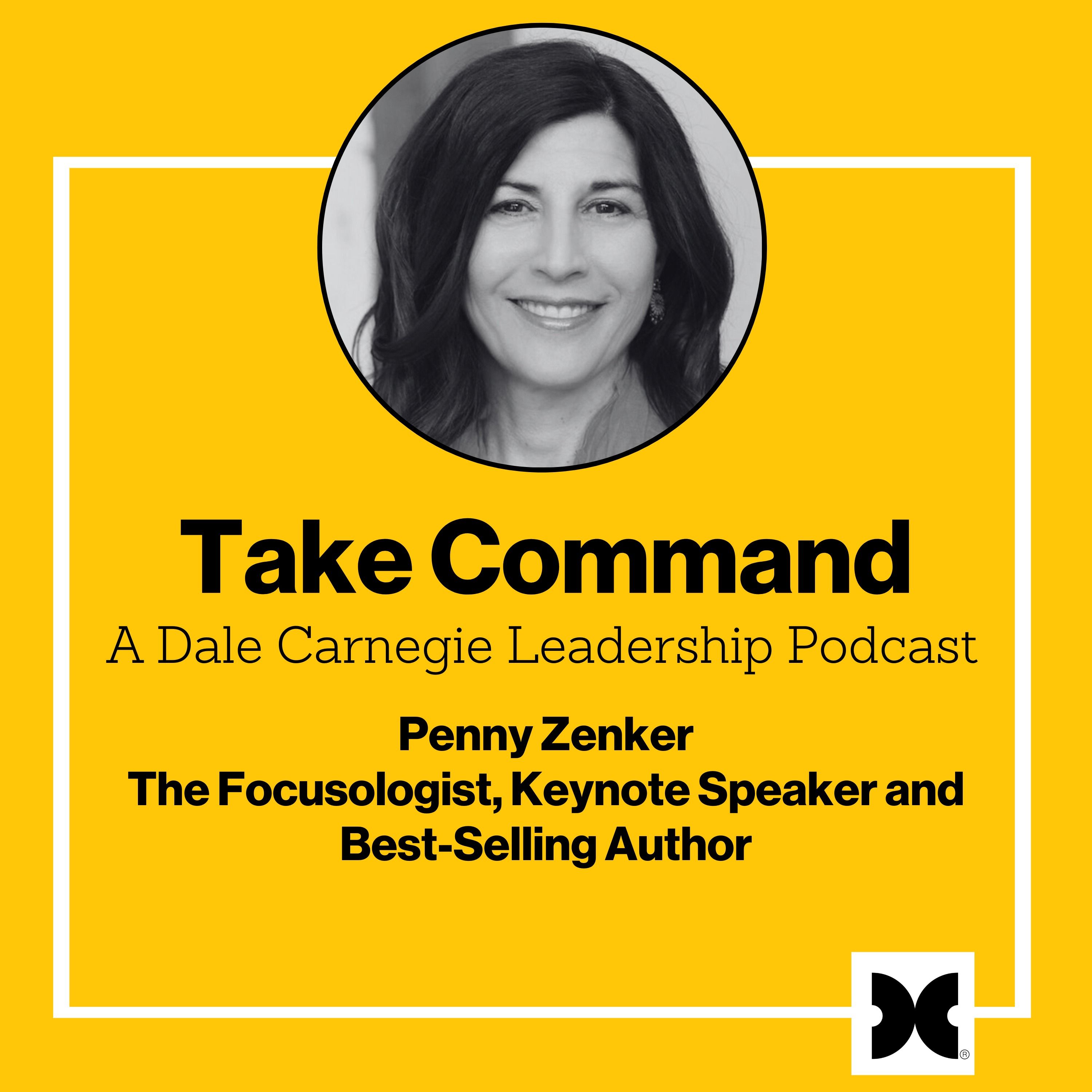
Take Command: A Leadership Podcast
From Distraction to Focus: The Reset Mindset Journey
00:35:35
On this episode of the Take Command podcast, Joe hosts Penny Zenker—a TEDx and keynote speaker, bestselling author twice over, and a self-proclaimed “focusologist.” What does that mean? To Penny, it means being present and conscious in the moment. “I believe that we've lost connection, and so we need to relearn and recommit to focus,” she says. But we’re living in a world where everything is “pushed” toward us and wants immediate attention. She says, “Let's move and be intentional to pull it when we want it. If we leave it where we're in the push world, then we're at the mercy and the interruptions of anything and everything.” Penny also walks listeners through four critical questions from her new book The Reset Mindset that will help them regain focus. Catch this episode to learn all about why we should ask ourselves “What’s next?”, what the gatekeepers are that help protect our focus, and what an -ologist really is.
Loading summary
Transcript41 lines
- [00:00]
Joe Hart
Foreign. Welcome to Take Command, a Dale Carnegie podcast. I'm Joe Hart, CEO of Dale Carnegie and if you don't want to miss a moment of transformation, follow. Take command now and unlock the power of leadership with every episode. Take today. Our guest shares her insights on regaining focus and intention in a world full of distractions. She emphasizes the importance of asking the right questions to navigate life's challenges and she discusses how being intentional can help us reclaim our attention in a push driven environment. She is a keynote speaker and best selling author. Her TEDx talk the Energy of Thought, which has over a million views on YouTube, showcases her impactful insights into maximizing personal and professional results. With her latest book, the Reset Mindset, she continues to inspire others to reach their full potential. Please welcome the focusologist, Penny Zenker. Penny, welcome to the Dale Carnegie Take a Man podcast.
- [01:14]
Penny Zenker
Thanks for having me, Joe. It's great to be here.
- [01:17]
Joe Hart
It's great to be with you. It's a great opportunity to talk to someone who is so aligned to what we do in Dale Carnegie, you've recently written a book called the Reset Mindset. You've written books also kind of on focus on being intentional and really having the right mindset. So really looking forward to our conversation. You describe yourself as a focusologist. Tell us what that is and how did you come up with that term?
- [01:41]
Penny Zenker
Okay, I'd love to. You know, it's funny because people misinterpret it a little bit as they think, oh, that means that you are the focus guru. Like, oh, holy focused one. And I'd say yes and no, right. I'm human squirrel and we live in a world of distraction. And really the reason I created it was for me and for everyone else to be more present and conscious to controlling and directing our focus and what that really means as a daily practice. Right. An ologist is someone who practices and I believe that we've lost connection and so that we kind of need to relearn and recommit to focus. So that's kind of why I created this. But at the same time, it's also been a common thread through my entire life that I come back to what I call focus, which is bringing together attention and intention and giving it direction. I don't feel that focus is just about attention because we can give our attention to the wrong things. It's about how do we give our attention to the things that matter. And that's why intention and direction come into play.
- [02:53]
Joe Hart
It's a great distinction because often we could focus on things that are time Wasters. My kids and I have this expression we joke around about doom scrolling. You know, this doom scrolling, you could be focused on social media or Twitter or Instagram or whatever it might be. But that intentionality of saying, hey, you know, where should I be focused? Do I want to be doing this right now? Because a lot of these things really can be attractive in a way, but.
- [03:15]
Penny Zenker
Totally time wasters, you know, they set off our dopamine, they challenge our brain to go, ooh, something new, something exciting. And every time you scroll right, it's that video or watching yet another episode because they leave you on that cliffhanger, right? It's harder than ever to really stay intentional about where we put our attention and our focus. So I think that that is the name of the game, is how to be more intentional in a time where everybody is vying for our attention.
- [03:47]
Joe Hart
Yeah, totally. It can be a competitive advantage, frankly, for us when we can be intentional and can be focused on the right things. Before we get into some of what you are writing and some of the insights that you have, tell us about you. How did you even come into this body of study and of this life's work?
- [04:04]
Penny Zenker
Wow. It was a crazy old maze, let me tell you. I think that's the best way that we come to where we end up is that it's all over the place. Because I believe that it's those connections that we make in things that are seemingly unrelated. That's where the richness is. So, like, I started out in accounting and finance. Like, who would have thought that I would then create an IT company, build that up to a multi million dollar business and sell it, and then become a public speaker and executive coach. Like, just didn't see any of that coming. Especially even though I'm an extrovert, getting up and speaking in front of people and having that kind of attention and maybe even the realm of potential judgment doesn't really thrill me. So I had to work through a lot of my own insecurities and I'm still working through them in order to perform there at the highest level.
- [04:58]
Joe Hart
So what was it that led you to this area though? I've studied your background. You talked about the coaching and also you were an executive in a very large global company and ultimately left that for a variety of reasons. But you could have gone into a gazillion different directions, but you've kind of honed into this area. And I know you had some experiences, maybe even in your life when you were younger that kind of led you to asking questions Right. And asking questions. It'd be helpful to understand a little bit for our audience about what some of those were.
- [05:25]
Penny Zenker
Yeah, for sure. You know, if I take the stream of how I came to sort of the reset mindset and the intentionality through everything that I do, I think that one of my greatest lessons, and I share this in my book, was when my father died, you know, suddenly in an accident when I was 19. These big moments in our lives, they really have us come very into clarity as to what matters most in life and what really doesn't matter. This was something that happened for me as I became more observant. Looking at what am I thinking? Is this serving me? You know, as I was in all of this pain? And I started to ask, you know, why me? You know, why does this happen? And I think we can get into that spiral of thinking. And somehow I just had this shift. I needed to get away from my life, and so I took a semester overseas. And I think sometimes they say you have to travel a million miles in order to find yourself. There's something to that. It's just because we can detach from our day to day, and it just helps us to be more an observer. And I think it's that observation that helps us to be more intentional. And I realized that was totally the wrong question. Why me? There's no answer. That's a rabbit hole I'll never get out of. And I started to ask a question like, what does this mean? You know, what else does this mean? And I started to open up my way to be more conscious of my words and my questions that I ask myself and what I really want. You know, I also could have gone towards fear. And because it was an accident, you know, I could live my life very cautiously, like anything could happen at any time. I took the opposite approach, which I was like, we've got one life to live. Let's go for it and let's again, be intentional, put those dreams out there and then do whatever we can to go after them.
- [07:16]
Joe Hart
And what happened when you did that? How did your life change? Because you were in this horrible situation, losing your father and going through this period of mourning. We can all go in different directions, right? Because, I mean, there are very bad things that happen in life. And part of what I hear you saying is, you know, we can choose our thoughts, we can choose our direction. We need to be intentional. So once you started to do that, what happened and what was different for you?
- [07:38]
Penny Zenker
The world just opens up. Because instead of living with fear, you live with excitement, with hope, with potential. And that's just a completely different place. You experience things differently. And I think that's the key to those choices. When we open ourselves up, we can live such a happier, more fulfilled life. And it also brought me. And I think this has also been something that I've better understood, inner peace. I, through this process, was able to find that inner peace despite what was going on around me. And I can't tell you how many times that served me in business and personally when another storm would come up, the storms of our life and the storms of market changes and, you know, people leaving or not showing up for the day or whatever it might be. I'm able to navigate those challenges much easier. Not easy, but easier as a result of finding that early in my life.
- [08:41]
Joe Hart
I mean, it's such an important insight. And I regret that sometimes it's easy for any of us to kind of lose sight of that, right? We get caught up in a moment, something bad happens, and we can get drawn into it. But when we really can look at things from a different perspective, and this is one of the things you talk about in the reset mindset, you know, which is really trying to have that different perspective, taking a step back, looking at things differently. What are some things that you found have been important to shift mindset? Because sometimes we're in a bad place. Right. So how have you. And what are some things maybe you advocate in the book about how to shift mindset?
- [09:18]
Penny Zenker
Well, I think the first thing is that awareness, right, is to allow yourself what I call reset moments. They're those big ones like the one where my father passed away, but they're present every single day if we just pay attention. So if we take moments to stop and reflect, like noticing how we're feeling and feeling agitated, feeling frustrated, wanting to wring somebody's neck, you know, just feeling that and recognizing the feeling and knowing that that feeling means that I need to reflect on this, what happened, that I feel like this? Did somebody say something that triggered me? Did I go back to a past experience because of something that was said or that I experienced? And I think the more that we understand what's showing up. Did someone yell at me? And I took it personally. The first step is to be aware of those triggers and those signals so that we can respond versus react, right? That gives us that space when we recognize it and become aware. And it can happen just like that to say, okay, what's really happening here? Maybe this person has had a bad day and this isn't about me. Also important to note is we don't always recognize it in the moment. People are like, yeah, well, that sounds great, but I always discover it afterwards. And I talk about, well, that's okay at first. When you're practicing being aware, you're going to recognize it afterwards. And the more you practice it and recognize it afterwards and then look to see how you can learn from that and apply it so that maybe it doesn't happen again, you'll then recognize it while it's happening and be able to potentially correct it while it's happening. And then, of course, you have. When you become a master at this, and this is just a part of who you are. Very often, not always we're human, but often you may recognize it before it even happens so that you avoid a burnout or a breakdown of some sort.
- [11:15]
Joe Hart
Yeah, it can almost become automatic. Right. Once we develop that habit. But that first step is even creating that space. I mean, Dale Carnegie talked about almost the biggest problem that we all have is choosing the right thoughts. Right. You could have two people in the exact same situation. One person sees opportunity, the other person sees dread. It's really about choosing the right thought. But as you said, we have to even pull back and to ask ourselves, well, wait a second, so what happened? Because it's so easy just to go right into an emotion or a fight or flight or an anger or whatever it is.
- [11:47]
Penny Zenker
Right. It's that awareness. Step back, and then that gives us perspective to realign around how we want to show up the words that are going to bring down the intensity. Right. We can use language to help us to do that. You mentioned the person who sees opportunity and dread. I think we can all relate. If you have a sibling, if you've ever, like, gone back to a particular memory that you've had, and then you go, what were you at the same event that I was. They remember it completely differently. And it just goes to show you that the meaning that we attach to the interactions, that then forms the story in our head as to what happened. Right. Versus that fly on the wall might tell a different story than all of the siblings.
- [12:31]
Joe Hart
Completely. It's just the way things are. Right? I mean, that there are different points of view that people have and people see things differently and so forth. This approach that you've talked about, I want to go back to kind of when you were focused in your business. You know, whether it was in building the business that you built and sold or whether it was working for a large company. When was a time where you'd say that you can look back and you say, that was really a defining time for me where I was able to apply these three ideas.
- [12:56]
Penny Zenker
I applied them often because the ideas, it's like a mental model, right? And so it's a way of thinking and lots of different frameworks can come into this thinking. I think one instance that I can reflect upon, we had the opportunity to. At my software company, we were growing like Matt, and we were seeing a lot of growth locally. This is when I was living and working in Zurich, Switzerland, and we had this opportunity to go abroad. Had I done this practice sooner and really reflected on stepping back and asking some really relevant questions, you know, would this have an impact on our local success? Do we have the capacity to handle this? And so on. But I was very young in my career, just a couple years into my own technology business, and I didn't really have a mentor at the time, so I didn't ask those questions. I didn't get perspective in that moment until later, and I didn't realign. We had a very difficult time because we did go overseas and it almost killed our business because we weren't ready for it. We didn't have the capacity, we didn't have the experience. So we ran into a lot of problems that took all of our effort and our manpower that was then put on these problems. And then we weren't able to effectively handle our existing client load and we weren't able to gear up with more staff that quickly. So, you know, everybody was burning themselves out, trying to bail out the boat. And so after the fact, right? When you have a project that doesn't work the way that it's supposed to, we did what a lot of people should do and don't always do. We took the time to say what worked and what didn't work here and how and what will we do differently in the future. And that in itself, that debrief is a practice of stepping back, getting perspective, and then taking the lessons to realign for future. You can call it also a SWOT analysis. Looking at the strengths, the weaknesses, the opportunities and threats. Any of those types of practices can be a reset practice. So we learned a lot and luckily put that into practice so that going forward, we really asked better questions. We took more time to step back and to ask those questions before we took on a challenging or risky project. And then we also took the time for the second step, which many people don't take. They might step back and get some awareness, but then they jump right into the first possible idea or solution. And we took more time to ideate, to say, okay, well, this is one way. Let's look at three other ways that we might approach this so that we have more confidence that we're choosing the best way. Because the first way is not always the best way. We learned that the hard way. And so, you know, taking more time to really look at your options and digging a little broader and deeper can help you really find the best solutions.
- [15:56]
Joe Hart
Yeah, 100%. I mean, sometimes we are so prone to action. We want to be agile and fast, and those things are all great. And at the same time, what I've seen, I mean, the most effective leaders and people and CEOs and companies are when people can take a step back and make sure that they're learning. How do we make sure we're a learning organization or a learning individual and so forth. What have I learned from this? Which kind of reminds me of another kind of area, which is we're talking about. Your book is Reset Mindset. We've been talking about, certainly for a long time, the growth mindset. And Carol Dweck has been out there for a long time. One of the things we talk about in Dale Carnegie is the idea that people want performance change. We can tell them all the skills or all the things to do, but until they got the mindset to want to do something, nothing's really going to change. I'm curious because, you know, you've got this reset mindset. How does that differ from growth mindset? What are the things that are similar? What are the things we can take away that maybe are a little bit different?
- [16:51]
Penny Zenker
Yeah, absolutely. Well, I think that, you know, in 2006, when Carol Dweck brought that to the marketplace, and there were a lot of studies done in both education and in business that showed there's no doubt that productivity is higher and results are greater when we activate a growth mindset. A growth mindset's foundation is on learning, right. And learning through effort and persistence. Where the nuance starts in the foundation is that the foundation of a reset mindset is on dynamic reassessment. So we are learning. Both of them are founded on learning and growing. And that is the important part of being able to gain that productivity and growth. But we're coming from a different basis because if we look at effort and persistence, this is where I think we're also finding ourselves in burnout is because we're putting that effort and persistence, but we are not shortening the learning curve enough. And that's the Idea of the reset mindset and dynamic reassessment is to take shorter learning cycles, is to learn now, right? Is to say, okay, what did we just learn from what happened today, from this interaction with the client so that we can apply it to the next interaction with the client or what's happening with our staff today. It's not enough anymore to review people on a yearly basis or even on a twice a year basis. We need to be more dynamic in the way that we work. One other very different foundation is that the reset mindset. Basically there's three different pillars there. It's to be value based. So we're looking at creating that growth, but not for an individual purpose. It could be individual, but it's really, it's how do we add value to the whole system, to the marketplace, to the client, to the employee? So we're looking at it not from a purely growth basis. And I know these are nuances, by the way, but I think those nuances, they can make a difference in a shift in perspective. And that's why I'm making them the second point. So it's the value creation, it's the dynamically reassess. So shorten those learning cycles. And then the last point is the willingness to reinvent. We can get caught up in our own success and experience and say, oh, well, that's the way we've always done it and we've been successful, so therefore we'll continue to be successful in a way. You could also see that as a way for us to go back to the fixed mindset because now we're not challenging or exploring, we flip flop. We can be in the growth mindset and build ourselves in our business and our team and then because we're successful, get caught up in the fixed mindset. And the way out is to be dynamic, right? Is to be dynamically reassessing and always be ready and willing to, to throw away what we did yesterday in benefit of value for the future.
- [19:52]
Joe Hart
So Penny, what advice would you have to people who maybe are stuck, they're not thinking about reassessing or we can get so caught up in our own biases, right? The way we see things, the way we think things, just the way it is. So what advice would you give to people who maybe are stuck to kind of move to that reset mindset?
- [20:10]
Penny Zenker
I think the easiest way is just to ask new questions. So step back and say to yourself, take an inventory. Where am I? And where do I want to be? And get some clarity on the gap and then to ask Ourselves new questions, like, what am I missing? You know, what are my options here? Like, what else? So sometimes, again, we don't go into the depth. We just, oh, I'm stuck. I've looked at this a thousand times. Well, what if you turned it backwards? What would it look like then? One of my favorites, too, that I love to do is because when we are ourselves, we're still thinking like ourselves. So to play the game, it's kind of like the mentors table, where you go and ask other people, if I was a visionary like Richard Branson, let me put on Richard Branson's hat and say, how would I view this situation? How would I look at it differently? And what would I do differently next to get to the end place? Or if I were to scrap everything that we have and am going to create, let's say, this business new, what would I do from the very beginning? Right. If the slate was completely clean, how might I approach this to get to our goal? So there's so many different ways that we can challenge ourselves if we step back. Right. So that we can get that perspective and then find the best way forward.
- [21:30]
Joe Hart
Yeah. And just having that willingness to step back because, I mean, sometimes again, we can get so caught up in whatever's happening, we get afraid or whatever the thought might be. One of the things we always say in Dale Carnegie is, in what ways can we. It's not can I, it's in what ways can I? Because, I mean, even just asking the right question. You talk about this in the book. Asking the right questions can frame the mind towards searching for better answers. I just want to switch for a second because, you know, a lot of what you focus on is also on productivity. And personally, I mean, productivity can be a game changer. Or when we are not productive, that could completely limit us in our careers and our work and all that we're doing. We started this conversation by talking about distractions. Distractions are everywhere. Notifications are, oh, that's very interesting. You know, or different thoughts or whatnot. There's a great video, you've probably seen it. A TED Talk by Tim Urban where he talks about procrastination and all the things that can lead to procrastination and so forth. But how do you recommend, based on all of your research and work, that people stay focused on their goals or stay focused or eliminate some of those distractions that can completely derail us?
- [22:31]
Penny Zenker
Well, there's different levels of this answer. So the first thing we come back to, intentionality. The reason we're Distracted is because we're disconnected. Because when you're connected to something, you can block things out easily. Most people can. Because you can be more intentional. Then you're like, okay, this matters. And now I'm going to put my energy into this. So being more intentional is. Turn off your notifications. My daughter, just this weekend, she was home from school and I'm holding her hand and my hands on her arm and her watch, it keeps buzzing and I'm like, doesn't that bother you? She's like, yeah, I should really take my watch off. So this is her, she's going to take the watch off. And I said, why don't you just turn it on? Do not disturb. So I think the biggest thing that we can do is move from a push society where everything is pushed to us. Right? The emails are pushed to us and trying to get our attention. Everything that's pushed wants our immediate att. Let's move and be intentional to pull it when we want it. I can go and get my email when I want it. I don't have to be notified every time one comes in. I can go and pull my text messages when I want them. And so I live in a pull world where I can be in control and be uninterrupted if I want to be and make that choice. But if we leave it where we're in the push world, then we're at the mercy and the interruptions of anything and everything.
- [23:58]
Joe Hart
Yeah, completely. And it's so easy to. If we're not intentional, we could be checking emails all day long and responding to emails all day long. I've often thought to myself it'd be kind of like if you're driving your car and just stopping at every gas station to put a little more gas in every time you're down a little bit. It's like this reflexive kind of a thing. I don't know if you've ever tried this, but I actually have. This is old fashioned technology, but it's an hourglass. And honestly, when I need to focus, I do exactly what you said, which is do not disturb. Turn off inbound, outbound email and just focus for a period of time, 30 minutes or whatever it might be. But to your point, it's about being intentional.
- [24:34]
Penny Zenker
Oh, totally. I mean, it's a learned helplessness. I have to say I believe that we're addicted to distraction. In the book, I tell you, it's like sugar, right? Every time we have more sugar, we want more sugar. So when we distract ourselves, we want to Distract ourselves more because it does stimulate dopamine with each distraction. So it is actually an addiction. But we can also detoxify ourselves from that addiction. And the less we do it, the less we will want it.
- [25:01]
Joe Hart
Easier said than done though, right? As our whole society struggles with this, what other tips or strategies might you recommend to break that addiction? To be more intentional? What have you seen to be effective?
- [25:13]
Penny Zenker
With the phone, for instance, you know, you can put it on grayscale. They say that that helps you to be less visually attracted to your phone. Turn off notifications, close all the extra windows that you don't need. You know, that's part of the clutter. If it's not the clutter on your desk, it's the clutter on your desktop. You know, some people have two monitors that can be productive and that's awesome. But if your email is one of the screens that is up, then it becomes a distraction. I have four questions that I believe and I recommend that people ask themselves in the book. And that's what's your biggest distractor? Let's step back and identify these things, get perspective as to what it's costing us and then do something about it. So what's our biggest distractor? What takes the most time, what wastes the most time and what creates the most stress? And believe it or not, they're simple questions. And it might even be one thing that goes across the board that just tells you how important that would be for you to take action instead of allowing this to be learned. Helplessness. Identify two or three things that you can do and that can make all the difference. So I have something that I call gatekeepers that'll help us to protect and direct our focus. And so they're in three categories, right? So the first one is rules. We can set rules for ourselves that help us to stay within the, if you want to call it the guardrails, right? If you're on a street and there's a big hill that drops off and that's your attention, what keeps you on track are things like rules. It might be, maybe you do time blocking and you've identified, you know, 45 minute blocks that you're going to work on. And that can be a rule that you focus for 45 minutes and then you give yourself 15 minutes to check your email, go to the bathroom, get ready for the next block, right? Whatever. A rule could also be, I don't eat after 7:00 because I want to sleep better. And then that way I'm not dealing with digestive issues. And also it helps me to eat less calories during the day and not get into those binge late hours. So those simple rules that we can create for ourselves or for our teams can help us to stay focused. The second area is filters. You know, the whole idea of where the gatekeepers came from is that if you want to get to a decision maker, very often you have to go through a person who holds their calendar and they call that person a gatekeeper. So they're just a filter to block out distractions. Right. So if you're in the CC of an email, have that immediately with a formula, put it into a folder so that it's not in your inbox. Right. It's one less distractor. So where can we remove these distractions with creating different types of filters? And then the last one is our environment. How can we enforce compliance? Whatever's accessible. For instance, if your phone is there face up on the table, you're going to be distracted by it, so put it away. If you have a glass of water, right. That accessibility is going to be a benefit because you're going to drink more by noticing it on the table and then remembering that you're thirsty and have a drink and helps you to stay hydrated and feed your brain. So those three areas can be something that you can look at also to help to set yourself up for success.
- [28:33]
Joe Hart
Yeah, I love it. Those are three great things. I might add a couple other things that just come to mind. Accountability. Because I mean all those three things, and sometimes I have asked others to hold me accountable on certain things I'm trying to do. Whether it's my daughter. I said to her, if you see me on my phone after 9:00, you have my permission to come and take it away. Because I want to be completely off my phone. No Twitter, no nothing by 9:00. So sometimes having people accountable. The other thing I found is journaling can be a great way to kind of chronicle exactly when you're talking about like, you know, rules and filters and some of these environments that we're creating, how do we do, you know, did I do well today? What would I change? And so forth. But love those three things.
- [29:13]
Penny Zenker
Thank you. Yeah. And within those, you can have lots of different strategies that can apply. I actually call if you use all three of them, I call it the rule of three. And it helps you to hold yourself accountable. So like, for instance, you know, if you used each one of those to be less in your email, what would that look like? What kind of Rules could you set? What would you change with your environment? And what kind of filters can you put into place?
- [29:38]
Joe Hart
Yep, sounds good. So all of what we're talking about is about individual leadership. I think ultimately, you know, we talk about leading teams or leading others. We can't lead anyone else until we can effectively lead ourselves. And I'm curious what your observation is around. Is there a person you've seen or someone you'd look at? You say, well, this person is my model or this person is an example of someone who really puts these into place. And this person is also a great leader.
- [30:03]
Penny Zenker
Absolutely. My old boss, Peter, he for me set the example for so many different reasons and in so many different ways. Like he started out, he was one of those traditional, started out as a hole puncher in this market research company and you know, worked his way to the CEO space and he was in that role for 15 plus years. And when I came in, he had been CEO for already like 10 years. I thought, ah, you know, he's probably going to be more fixed mindset, he's going to have done this. And I was really pleasantly surprised at his approach. So you know, when I say willingness to reinvent, he was always looking at what was happening not just in the industry, but what was happening in other industries. He would attend conferences in other industries so that he could catch the latest trends and things that were happening elsewhere so that we could use those to reinvent in the research and direct marketing industry. So that was always eye opening to me. He was someone who would ask really powerful questions. He wouldn't fix it. I wish he would fix it many times, but he would challenge me and ask questions and make me rethink things and have me challenge other people. And I think that became then a habit of challenging what I'm thinking, the way that we're doing things and really looking for other possible solutions. He was also a great listener and I think that that is important to listen to your team, to listen to your customers. So he was a big proponent when we were kind of going sideways in the business. We organized a workshop with the clients so that we could hear what's changing in the way that they're working. What does their leadership want from them now that maybe they didn't want in the past that might change the way that they currently operating on a day to day basis that could affect the way we're reporting to them. And we found out some incredibly eye opening things that gave us a competitive advantage in the marketplace because we listened, right? We were observers and in asking and looking for that feedback, that was also dynamic reassessment. Right. That we could take that in and then we could apply that. So he was a perfect example of a great leader in all aspects of being relevant, relatable, and still visionary.
- [32:32]
Joe Hart
Yeah. And the impact that he had on you or the impact that we as leaders have on others, I think back about even these principles that you and I talked about, whether it's around mindset, you know, and trying to help other people have really the right mindset to give them space to reset, to really encourage people around positive productivity and those kinds of things, that our role as a leader can be, you know, really just hugely impactful. I wanted to ask you, Penny, one of the things I've been doing recently in the podcast is I've been going to ChatGPT, and right before the podcast, I went to ChatGPT, so I'm interviewing Penny Zenker, and she's the author of Reset Mindset. And if there's only one question you could ask Penny, what would that question be? So I'm going to give you that question right now.
- [33:11]
Penny Zenker
Okay.
- [33:12]
Joe Hart
What is one mindset shift or strategy that has the power to immediately change the trajectory of someone's life? Especially for those feeling overwhelmed or stuck in their career or personal life, the.
- [33:29]
Penny Zenker
First thing that comes to my mind is something that gets us stuck because we're emotional. Right. It's not overload. There's a difference between overwhelm and overload. It's also where we just can't see the future. We can't see the next thing. So instead of trying to put it all together, let's say we have a really complex situation and there's a lot of uncertainty. So if we remove all of that, we can just say, what's next? What's the very next thing that I can do? Because we can handle that. Right. Even when we're overwhelmed, we can see, okay, if I just took this next step, what would that look like? I liken that to the hot cold game, the kids game, you know, where something's hidden in the room and as.
- [34:10]
Joe Hart
You move around, getting warmer, getting warmer, getting colder.
- [34:13]
Penny Zenker
Yeah, yeah, exactly. Right? And really isn't life and all the challenges that we deal with, isn't it just a giant game of hot cold where we get that dynamic feedback? If we listen and we allow it just to determine what's next and tell us whether we're hotter or colder, then we know whether we take another step forward or we need to take a step to the side, and if we just keep doing that, we can do that without the same level of stress.
- [34:43]
Joe Hart
That's great, Penny. Well, thank you so much for being on the show today. Really enjoyed our conversation, and I'm confident our listeners will too.
- [34:51]
Penny Zenker
Thanks, Joe. It's great being here.
- [34:57]
Joe Hart
I hope you enjoyed this edition of Take Command, a Dale Carnegie Podcast. Check out our resources at www.dalecarnegie.com for more research, insight, and tools that will support your success and help you take command of your leadership potential. If you enjoyed this episode, please consider rating it and following us on Apple Podcasts and Spotify. For more exclusive content, subscribe to our Deal Carnegie YouTube channel and follow us on social media. As always, thank you for listening and we're looking forward to you joining us for the next episode of Take Command, a Dale Carnegie Podcast.