← Take Command: A Leadership Podcast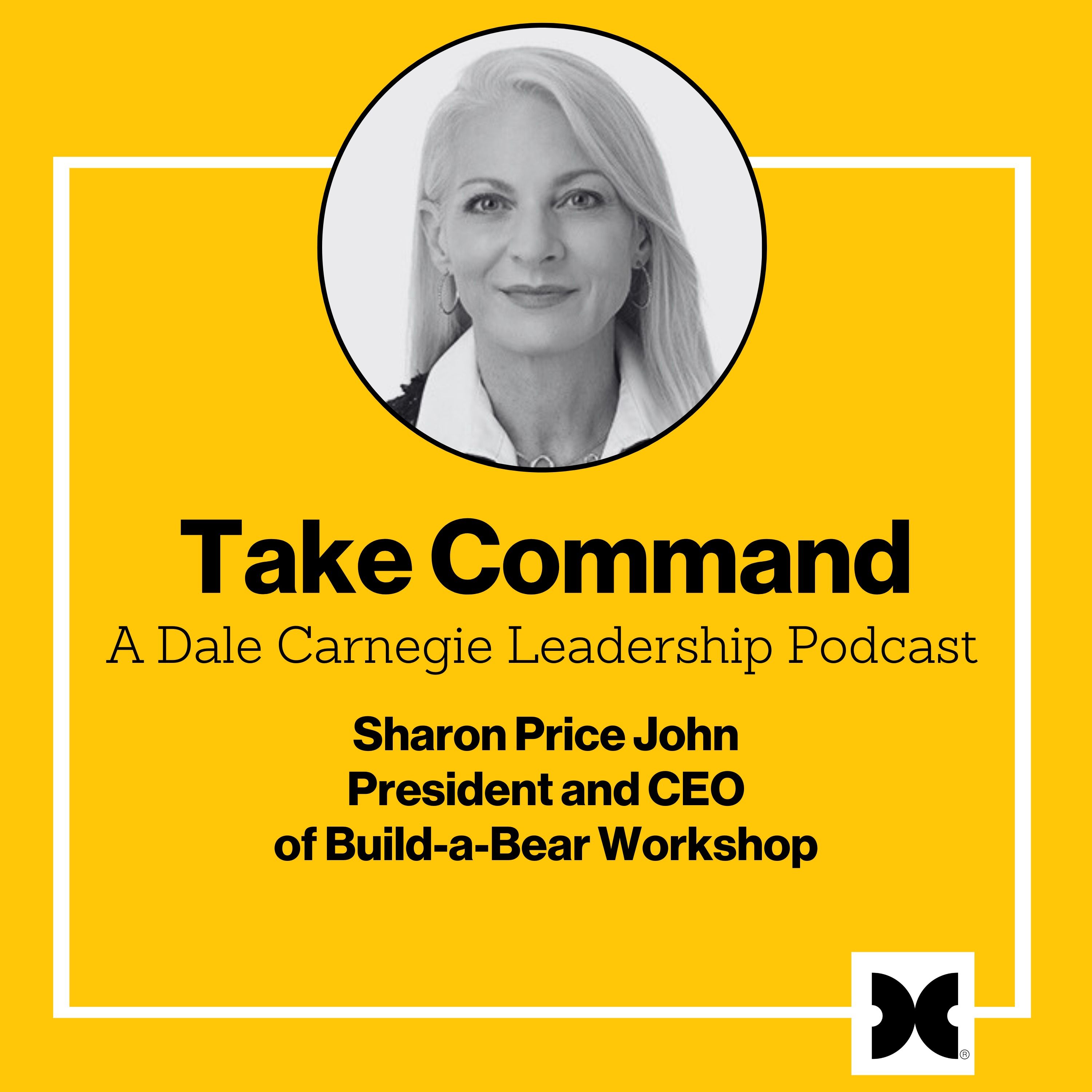
Take Command: A Leadership Podcast
From Setbacks to Success: Charting a Path Through Empathy
00:39:55
How often do we tell ourselves stories about ourselves or our lives that are just that—stories? Sharon Price John is here to show us a better way to the truth. Sharon grew up in a town where everyone knew everyone’s names. This upbringing taught her how to form lifelong relationships and truly connect with people. She says, “What you do in the moment matters in the long run, and you should hold yourself accountable.” This drives her actions and the advice she gives in this incredible episode of the Take Command podcast. In her insights, you will find advice on working for people (not just investors), gaining strategic trust from employees, and how to be malleable while sticking to the company’s ultimate mission. In the end, she tells us: “If you're dreaming of being a C-level individual, I advise anyone to learn how to be a change agent.” Sharon has not sat back and watched her life go by. She has grabbed at every opportunity and used them to learn and grow. Don’t miss out on her ...
Loading summary
Transcript39 lines
- [00:00]
Joe Hart
Ready to elevate your leadership. Follow Take Command, a Dale Carnegie Podcast. Now transform inspirations into actions. Hit follow and lead with impact. Welcome to Take Command, a Dale Carnegie Podcast, the show where we seek to uncover what leadership means in today's world. I'm Joe Hart, CEO of Dale Carnegie, and we will be talking to diverse leaders with stories to tell across various industries to help unlock your potential for success. We will be sharing real life insights into leadership, which in turn can help spark the next level of your growth as a leader. Our guest today is a transformative leader renowned for guiding companies through digital transformations and financial turnarounds. With a stellar career at Hasbro, Mattel and more, she brings decades of marketing, product development and change management expertise. Her remarkable journey and leadership philosophy are captured in her best selling book, Stories and Heart. She has received numerous accolades including the Heilman Award and the Torchbearer Award from the University of Tennessee, Knoxville, recognizing her as one of the top 100 graduates of the last 100 years. Please welcome President and CEO of Build a Bear Workshop, Sharon Price. John. Sharon, welcome to the Dale Carnegie Take Command Podcast.
- [01:35]
Sharon Price John
Thanks, Joe. Happy to be here.
- [01:37]
Joe Hart
Well, it's great to have you here and as I mentioned when we were getting ready, I feel like I know you really well because not only did I have a chance to read your book Stories and Hearts, I've also had a chance to listen to it on Audible. And you are a powerful storyteller. You're the CEO of Build a Bear. You've had a really incredible career in a variety of different areas. Patel, Hasbro, Stride.
- [02:01]
Sharon Price John
Right.
- [02:01]
Joe Hart
You've turned around businesses, including Build a Bear. So excited to have you on the show. It's funny though, and you'll appreciate this. You know, reading your book, you really created an image, I think, about how you start the book with climbing a tree and your analogy of tree to life and so forth. Talk a little bit about what it was like to grow up in a small town in Tennessee and how did that early experience in that environment really shape you and your ambitions and your career path?
- [02:28]
Sharon Price John
That's a really great story to tell, as you say, and I like to tell stories. And some of that, I think is part and parcel with being from a small town. And in some ways I think that's woven into sort of the southern tradition. And I did grow up in the South. The impact of the myriad of characters, if you will, in a community like mine where we had a town square and, you know, everybody sort of went to the same schools and you knew multiple generations of families. And your dad and mom often went to school with their other friends, dads and moms. This idea that we all raised each other is a really powerful idea. You know, it's a powerful concept. And what evolves from that is a level of responsibility, not just to yourself, but to your community. And you don't have anywhere to hide. You can't just change jobs, and people don't know that you didn't do the right thing at that job, or you can't quote, unquote, get away with basically anything. And that's not a bad thing. There's something so valuable of having a cadre of friends that I've known since we were five years old and still being friends with those people. It says a lot about how to create a lifelong relationship. And I think that having that long view has done a lot for me. From a tenacity perspective and a vision perspective, what you do in the moment matters in the long run, and you hold yourself accountable.
- [04:13]
Joe Hart
Well, it's true. And you definitely think about those to whom you're connected and how do you help other people grow. And I know that's certainly been a blast of yours throughout your leadership journey. And at the same time, you know, one of the things we talk about, Dale Carnegie, is defining moments. And I think about you made the decision to leave this small town to go to college. You're the first person in your family to do that. You were in college and you almost quit. You kind of came back home for a period of time, then went back, and you've had a number of defining moments. What were some of those that you'd like to share with the audience? And maybe a couple of examples.
- [04:50]
Sharon Price John
It's kind of a fascinating remembrance when you try to put it all back together about the why and the what. And what I mean by that is, in the beginning, I left that small town because I felt constricted. But I didn't really start growing until I made peace with the value that the small town experience had created for me, that it was not a negative, that it was a positive, that it enabled me to think differently about the world, that it gave me incredible roots to allow me to just grow higher. I think one of the most important things is I learned to communicate kind of up and down, all sorts of socioeconomic strata, all sorts of educational strata. In a company like Build a Bear, where the myriad of people that you're managing, it's really important to find and tune your communication skills and your messaging in a way that it allows the listener to hear you. That's your responsibility, not their responsibility. And all of that helped, but that idea, that was a real click for me to keep moving forward is. It's very rare in life that you unleash your potential. If you keep running from something versus running toward something. It's hard to get somewhere when all you know is what you don't think you want versus identifying what you want. And that shift in energy is extremely important for people to reach larger goals. That dichotomy of first believing that I just wanted to not be in a small town versus knowing what I wanted, but then coming to peace with the value of the small town actually catapulted me faster toward what I did want.
- [06:45]
Joe Hart
That's great. Thank you. And I'm curious then, because I think many people can relate to what you said. You talked about the shift in energy. So you're running away from something, running to something. But how did that shift in energy occur? And how did you make peace with that prior part of yourself that was running away?
- [07:00]
Sharon Price John
So much of that often is the kind of work that people don't want to do. It's the internal work versus the external work. And part of that internal work was recognizing we all have our own journeys, we all have our own stories, we all have our own struggles, we all have our own strengths. So everybody has to figure this path out and these epiphanies out often on their own. But for me, it was that just because I came from a small town doesn't mean that I have to stay in a small town. And there's something about that environment where it kind of wants you to stay there. And that's not a bad thing. There's nothing wrong with that. But you have to find who you are. This emotional step by step understanding that where you're from doesn't define where you're going or it doesn't have to. So many times in life, we allow what's around us or where we came from, or who our parents were, or what our parents did or didn't do, or what our grandparents did or didn't do, or what your parents taught you. You create all of these parameters that it's just a complete mess. That's the critical part. Because until you get the pieces around you that are mythology versus reality, very little is actually reality. Most of it is mythology. It's the stories that you keep telling yourself. Thus, the subtitle of the book, Unlock the Power of Personal Stories. To create a life you love, you need to recognize that these stories are empowering or disempowering you, and you're making up the story, our whole history. They're not even real. They didn't even happen. So you might as well create a story that's empowering. You've got to dismantle all of that before you can even begin to decide what you want to be, because you're, by definition, creating that vision in some subset of what's possible.
- [09:00]
Joe Hart
Thank you, Sharon. And really, I appreciate the authentic nature of the conversation. I really got this from your book because you go into this, and I think everyone who's listening to this can relate to the fact that we will often have negative thoughts, negative ideas, things we create for ourselves that hold us back. And in fact, in the book, you talk about this on the one level. You are acting in a courageous way. You're demonstrating courage. You talk in the book, for example, about going to New York and giving yourself one week to go out and to find a job and interview and so forth. And you ultimately get a job. Or when you went to Columbia to get your MBA after you had this phenomenal job, you have these voices telling you, I shouldn't be here. This is a mistake, and so forth. So I think many people can relate to kind of this pull that we have right where we want something, but we've got this negative story. But you've overcome this. Those. And what are some strategies that you would share with our listeners about ways that they can overcome those limiting thoughts, the things that hold them back?
- [10:02]
Sharon Price John
I can't say that I have as a definitive past tense, overcome those. That's every day, you know, because if that's not creeping into your head, you're probably not pushing yourself. It's totally natural to go, can I do this? I don't know if I can do this now. I'm over my head. Oh, look at that. Now you've gone too far, right? What the important piece is, that's the unlock, is to recognize that you do have these two things that are happening in your head. That's the big aha. There's a voice in your head of your passion and your dreams that you have to nurture and hopefully feed. And then there's this voice in your head that is the voice of concern and this voice of caution that trying to just keep you alive. And that secondary voice is really the core of thousands of years of evolution. Right. The primary voice, and I'm calling it a primary voice, is really your prefrontal cortex. The crowning achievement of being Human that allows us to imagine scenarios. There's not another creature that can do that. What we have to be conscious of is that secondary, the one that's evolved over time. The core part often imagines the worst case scenarios because it's just trying to keep you alive. Your consciousness has to say, yeah, you know, I hear what you're saying. The odds of that are actually really, really low of whatever it is that it's imagining, that it's like, why it's a bad idea. And I go through all of that in the book about there's an entire chapter of just testing the negative side saying, really, what is the worst thing that could happen? Let's just get it all out. Really. What's in that particular case? It was, well, I don't get a job in a week and I go back to this job I had. Well, that's terrible. That's not even bad. We imagine things so much worse than their likelihood. And I think it's a quote from Seneca that is we imagine a much worse life than anyone ever actually lives. But that's only if you allow that to be.
- [12:18]
Joe Hart
Yeah, I mean, this is the Take Command podcast and this is exactly what we say, is that we need to take charge of our thoughts and our emotions. And it's interesting. One of the things that Dale Carnegie used to say about himself is that the single biggest problem he had was the management of Dale Carnegie. And that's probably true for all of us, right? I mean, because we have to take command of our thoughts, of our emotions, how we perceive things. Again, there's so much in the book that we won't be able to get to now. But I encourage everyone who's listening to this, get the book, read the book, listen to the book again. Listening to the book is a lot of fun because you get to hear Sharon tell it for a story. You had a pretty incredible career. You still have an incredible career leading Build a Bear. Give our audience a little sense of what that journey looked like. You went from advertising to Mattel, ultimately to Hasbro. You started a company, Don Dahls, or you bought a company that didn't work out. So sometimes people would look at you and just think, there's a perfect vertical line of success. But you had successes, you had some setbacks. Speak about some of those, if you would.
- [13:22]
Sharon Price John
Yeah, that's always the case. You're rarely going to find that linear journey. And one of the things that I trying to do in the book and what I do when I'm in speaking to groups of successful people is to be willing to share the circuitous route that we all took, the scenic route every now and then. No one gets the free path. Pretty rare, if at all. And the reason it's important to share that is I think that the younger generation are people that are trying to make some choices where they really want to advance themselves. They believe, sort of the way we've written our CDs, that if it doesn't look like that, then they must be failing. When the truth is everybody's journey has ups and downs and sidesteps and disappointments. And it's part of it. It's not that you have those, it's what you do with them. The same thing with life and everything that happens. It's how you define it. Nothing is anything until you define it. And then you tell a story about it. And that's how we live our lives. So, yeah, I did start in advertising, and I did go to New York. And I think that one of the reasons I got that job in a week is because I didn't know better. I didn't have all of those voices about how the odds of that were actually nearly impossible. So without knowledge of those odds, I actually beat the odds. And because you think you can, sometimes you do. But the advertising industry was really perfect for me at the time. And I did have a client that I worked on MMRs back in the day on the Snickers account, and he suggested that I get an mba, which is why I ended up going to Columbia. I never would have dreamed that I actually had to have somebody else make a suggestion of something that would otherwise have been beyond my dream for me to even think about it. And, you know, now I still, after filling out all the applications and doing it over and over again, I didn't have the courage to even take the application to the school. And I finally did on the last day of the last round and did get accepted. But sometimes people talk to me about that and they're like, it's an act of arrogance that you did that. I think deep down I was trying to create a story around why I didn't get in as an emotional safety net, just a fait accompli, that there's no way I'm going to get into this Ivy League school. But then I did get in. So that led me in a much different direction. Exposure to a broader scope of business. And I liked it and I was good at it. And I found out that I was good at some things that I thought I wasn't good at. And I also found out there was a lot of value in things that I was good at that I didn't think had a lot of value. So just sometimes putting yourself in a different environment around different people with different skill sets and getting a different kind of reflection even on what you are or who you are or who you think you are, can change your own perception. And that was really mind expanding for me. That's how I ended up going on what in the ad business we would have called the client side and had a great experience at Mattel, worked on Barbie, worked my way up, and then eventually over to Hasbro, where I became the head of the U.S. toy Division. And you're right, that kind of change agency became something that I would do, whether it's on brands or business units. And eventually a company of Build a Bear. And I've said since then, if you want to be a CEO, if you're dreaming of being a C level individual, I advise anyone to learn how to be a change agent, learn how to be a turnaround expert. Because the truth of the matter is those roles rarely open up when everything's going great. You know, usually they're looking for someone new because things aren't working out well. So if you can create a successful reputation of being the person that the fixer, then you're increasing your odds of being a candidate for a C level position. Does that make sense?
- [17:34]
Joe Hart
It makes complete sense. And certainly what clearly attracted the leadership at Build a Bear to you, you'd had experience at stride, right? Certainly turning around that brand and working on some others. Let me ask you a little bit about Build a Bear. You're leading this iconic company, this company really, that has increased tremendously since you took over. But when you took over, the company was very much in trouble in some ways. And you describe in the book kind of the experience that first meeting you have with the team, but how we relate to people, how we interact with people, how we lead is so critical. What did you do going into that meeting and what has been a key learning point from you as you have worked to turn around build a parent to where it is today, which appears to be better than it's ever been.
- [18:24]
Sharon Price John
That was a more difficult situation for a number of reasons. One, I'd never been a CEO. I'd been a president of a division, but not a CEO. I'd certainly never been a CEO of a publicly traded company. So that's another level of complexity and specificity and skill set that I needed to hone the third is that it was a founder led company that I would be taking over from the founder. So that adds yet another layer of interesting dynamic. While the company was financially below par, I knew that I had to bring the people in the organization along with me on this journey. And I could not, nor would I have a tendency to. It's not really my style, but it's not uncommon, I'll say, for change leadership to come in. And one of the first rules of engagement is to vilify the previous leadership because that creates a definition of here's where we're going in the wrong direction, here's everything they did wrong and here's how we can do it better or different, right? And that's pretty typical. When you look at a lot of very fast change agency from politics to business, that's usually what's going on. And it's easier for people to understand what you're doing. That is going to put you in a different trajectory versus what was being done. That was not a part of this agenda. One, because the truth be told, in most cases, no matter what they're weaving together as a story, not everything that was being done was wrong. That's just rarely the truth. A lot of times the new leader doesn't want to acknowledge that, but that's rarely the truth. There was a lot that was good at Build a Bear and they were put in a very difficult situation with the recession and it was hard to move forward. And the company was trapped in a classic scenario of trying to repeat what they had been doing when they were very successful, down to the detail, but in a world that no longer existed. It doesn't matter how precise you're following the playbook, everything around you changed. Right. So that was the reality that I had to get them to understand.
- [20:47]
Joe Hart
How did you inspire them, Sharon?
- [20:49]
Sharon Price John
Well, the first thing I had to do was get some strategic trust here. And the best way to get strategic trust with this organization was to get them to believe me when I said that I'm not here to rip the heart out of this company. But if we can't change the way we operate and the processes that we go through and work toward becoming a more profitable growth entity, that the company's not going to be around whether it has heart or doesn't have heart. We're not going to be here to make teddy bears for people. They did not really have a sense of the dire situation that Build a Bear had been in, had been contracting for eight years in a row, and the previous year was a $49 million loss. This is a serious situation and they needed to have some more transparency to what was actually happening from a financial perspective. The thing in the book where I had this big epiphany of how to bring the organization along with me and worked with the team, got some counsel on where we think the big opportunities were, create, drafted a strategy. It was all based in the monetizing, the enormous equity and power of this brand across numerous revenue streams with the first goal of returning to profitability. And because I'd been at stride right. With a similar situation, I knew a lot of levers to pull immediately and had a really strong checkbook of approach and toolbox approach that we could take. That worked for the most part. By the way, the last day that I'm preparing to do this presentation to the entire organization, I realized that I needed to turn the entire presentation on its head and start with the shining city on the hill, if you will. Like, start with the big vision of how we've not yet been able to allow Build a Bear to be the amazing global brand that it was originally envisioned to be and have no reason why it can't be that with 90% US brand awareness and affinity numbers akin to big entertainment companies. But we have to build the infrastructure to be able to do that. We're not going to be able to build that infrastructure until we first return to profitability. Is everybody excited about the future of Build a Bear and making, you know, teddy bears and bringing a little more heart to life around the world? The kids, you know, for the next generation, that was the opening, not the closing. And then people could get behind the hard work because they were sold on the vision first versus the other way around.
- [23:19]
Joe Hart
Yeah. You know, your book is about stories at heart. And certainly the essence of Build a Bear often is the heart. And what I'm hearing you saying is that your approach, which certainly is one that resonates, I think with me and so many others, is you have to start with the heart. You really have to have that vision that reaches people where they are and really gets them excited. And you did that. Let me ask Sharon, because this really comes down to leadership. Whether it's a turnaround or that type of inspiring moment. How do you define leadership? What does leadership mean to you?
- [23:52]
Sharon Price John
I've been in so many interesting situations now, whether it's climbing the ladder, mid level leadership and now guiding a company through a turnaround. And for us through Brexit, which was very difficult. The retail apocalypse where mall traffic fell by 50% in a matter of five years. And then Covid, I may have a little bit of a different answer than you might expect, but the edges of leadership have to be flexible. You have to be malleable. And like recognizing that the vision and the goal can change with the environment to some degree, but the mission doesn't. As long as that mission is big enough and bigger than you and bigger than the company, it's really an in the moment situation. And that in the moment situation is not just environmental, not just business, but even all the way back to what I learned in that small town. With your leadership team and with all the individuals on your team that you're interacting, there's a part of me that wants to say the burden is on you to make sure that you're finding the way to motivate each one of these individuals in the way that they can hear it best. But I don't look at it as really a burden. That's your opportunity to master a leadership style that again, can flex to the needs to get the most and the best out of the populace. And whether that's one on one or in a crowd, some of that has to do with what we're talking about today. How do you get people to get engaged and emotionally connected to this bigger idea and then cascading that in a passionate way that resonates versus quote, unquote, just doing my job, just checking a box, just coming to work, just opening the cash wrap, just following these rules. That ability, if you can do it, it raises not only the level of all the key metrics that your investment community might be looking at, but also the other metrics of people wanting to work at your company and wanting to bring those ideas forward and improvement of retention. And it's just a happier place to be. And I think that all works together. That's kind of a stakeholder mentality. Understanding your impact, both the macro and the micro, and having a consciousness of that is not easy, but certainly rewarding.
- [26:31]
Joe Hart
It certainly is. And as you said, it's an opportunity, it's a responsibility. I think the ability you're talking about to connect with people, to inspire people, it seems to me that underlying component and what you had to do even in that first meeting and what you had to do in leading Build a Bear and what so many amazing CEOs have told me on this show is empathy. In Dale Carnegie, we have principle, which is try honestly to see things from another person's point of view. And until we can do that, we really don't have the ability to Lead until we really understand where people are coming from. You had a very interesting experience in 2016. You were in Undercover Boss, and that gave you kind of an inside view, maybe of empathy. And I would be interested in having you share how that experience impacted your perspective and your view of your company and your leadership.
- [27:25]
Sharon Price John
Oh, wow. That was so much fun. They definitely trying to exhaust you. I would tell you that we had just made some changes where the service model as we were rolling out a new store format. And one of the things that I think is important for leaders to recognize is that sometimes it's hard to get the truth, because it's not that people are lying to you. Everything gets scrubbed up and repackaged sometimes before it gets to you. Unless you're willing to go out and sit in the cafeteria and, you know, pull up a chair with folks or walk around. The classic NBWA management by walking around and kind of like scare people and look over a cube and ask about their kids, then you get the truth. This opportunity was truth on steroids, because it's especially hard to get the truth out in the field when you're a retailer. They know who you are, and so they're on their best behavior, and they don't want to be upsetting or make anybody angry. And they don't know you. You know, they don't ever really see you that much in action. So to have that moment to speak to people in a disguise and hear their stories was wonderful and a great reminder of the different walks of life, particularly a retail environment. You know, I came from a middle class background. You still lose touch sometimes. And it's important to remember that people have struggles, you know, real life struggles, and this is their livelihood. And it's interesting that that experience was actually running through my mind when we shut down for Covid that, yes, I have to keep this company going, Yes, I have to keep it going for investors, Yes, I have to keep it going for this leadership team. But we have 3,000, 4,000 direct employees, that this is their livelihood. And we make a difference in millions of people's lives every year. We're impacting people around the world who are suppliers. I was hearing these stories when we were making some of these very difficult choices. My leadership team and I, we just got absolutely dedicated to failure is not an option. That was a big driver for me, knowing that we have to reopen these stores because it's so much more than the company. It's a collection of people, it's a collection of souls all trying to do what we do every day with a shared goal. That's why it's called an organization. Right. It's back to that stakeholder value, having that broad sensibility and pulling those strings that really make you operate at the best level that you can. Which has been surprising and heartwarming to see people follow suit.
- [30:09]
Joe Hart
It's awesome to kind of see that from your story. Anyone who's listening to this, you know, we're connected to people, and so much of the joy or the not joy in life depends on our connection with other people and the impact that we have. But to take that moment, to really try to understand and to see things from another person's point of view and to recognize the things that are important to them or fearful to them and so forth, that's ultimately the essence of, I think, interpersonal skills and relationship and connection. Just a couple other questions for you. One is, you have a lot of wisdom in your book. If you were to go back in time and talk to Sharon Price, John graduating from college, what one thing would you tell her that you've learned along the way is an important lesson?
- [30:57]
Sharon Price John
Well, let's take it back to Seneca. I remember the total quote now. It's that we suffer more in our imagination than reality. I needed to chill out. It's all going to be okay. Like, I think if somebody could have just whispered, you're going to be fine. It's all fine. There's going to be good, there's going to be bad. Even the disappointments. If you can get your head wrapped around it and put enough time between you in that moment, you will look back on it and you will understand the why. That's a Steve Jobs quote, right? Is you cannot connect the dots looking forward. You can only connect them looking backwards. But you've got to allow the universe that much grace. If you can just not label whatever it is that's happening to you that you think is negative in the moment. And I try to avoid the discussions about things that are so acute. I'm talking about the center ground of the types of things that happen to most people. Just don't label it. Just say, I believe that I don't know enough of what this moment means right now. So I'm going to avoid labeling this awful, terrible, the worst thing that's ever happened. And the way you're able to do that, and if you can do it, it's really powerful, is by just admitting there are things that already have happened in your life that you thought were terrible, awful. And it upended you for a moment in time, whether that was a day, a week, a month, or years. And if you just hadn't labeled it, you wouldn't have been so offended. But now, years later, you literally in some cases go, thank God that happened. So if you can just not label the things that you think are happening right now that are terrible, let it be. It is just a thing until you label it and give yourself some time before you decide to label it. The world's working for you more than it's working against you most of the time.
- [33:03]
Joe Hart
It's a great lesson for a younger version of yourself or myself or really even for any of us today, because I think we could all get caught in this loop of labeling things and saying, oh, this is horrible, or whatever, but if we could just refrain from doing that, we might see it with a different perspective and frankly, even with opportunity. Because sometimes we'll say something is negative, but maybe there's opportunity. I've got one final question, Sharon. I've been going to ChatGPT, which I find to be an extraordinary tool, saying something like, hey, I'm interviewing Sharon Price John, today CEO of Build a Bear. If you could ask Sharon only one question, what would that one question be? And that question is, how did you balance the need for innovation and digital transformation with maintaining Build a Bear's core values and unique customer experience, especially during times of crisis like the COVID 19 pandemic?
- [33:56]
Sharon Price John
You got that out of ChatGPT?
- [33:58]
Joe Hart
I did get that out of ChatGPT.
- [34:01]
Sharon Price John
That's mind blowing.
- [34:03]
Joe Hart
Isn't that incredible?
- [34:05]
Sharon Price John
Yes. That's crazy.
- [34:08]
Joe Hart
I wish I could take credit for that one. That's probably the best question I've asked yet.
- [34:12]
Sharon Price John
I mean, I love that. That's so fun. It's even more fun that you shared where you got it. Build a Bear. Of course. Maxine is brilliant, and she was a genius at this idea of experiential retail. And she faced so many naysayers and difficulties and just knew in her heart, she truly followed her heart, that allowing a kid to make their own special furry friend could change the world. And sometimes it's that simple. And that's what's happened. When I took over, we had to participate in the digital economy. I mean, look at the impact that the digital economy is having on us. I mean, right here you're asking me a question that was generated by the digital economy. And there were a lot of naysayers about that. That would have been my generation of naysayers. You can't take it as spiritual retailer and expect it to thrive online. But what we recognize is while that will never be the exact visceral experience, memorable experience that now lives for generations and in the hearts and stories of 250 million people who have now made furry friends across the globe over the last 25 plus years, we recognize that it was right around the 20 year mark when we started to drive toward the digital solution, if you will. That 20 years puts us in the multi generational brand place. And in the toy industry, not necessarily retail industry, but in the toy industry, when you kind of hit that mark, you either flywheel yourself into you're spanning two generations like we did with Transformers and My Little Pony and some other brands with entertainment at Hasbro, or you're starting to be on the decline because you start to be less and less relevant for the next generation. So we put together a strategy to not only remind the kids who were part of Build a Bear's original launch, who now had children that were the age, go to Build a Bear, bring their children back to Build a Bear. Because people love to repeat what they did when they were kids that they loved with their own kids. And if you can get that going, that's a good thing. But we also saw a collector and affinity opportunity and that's where we aimed the majority of our website efforts. Not for people to go online and buy stuff to then give to a kid. We want you to go in and have the experience. That's how we create this rich equity. But to be of service to long distance gifters, grandma, et cetera, affinity and collectors, that spawned an entirely new business for us. We even created a micro site called the Bear Cave where you have to be age gated to get in. And so we could do licenses with things like Matrix Bear, Deadpool Bear. And now because of all of these efforts, 40% of our sales are to teens, tweens and adults. This started an entire initiative and all of it's still relevant. All of it's with consumer centric, brand building, data driven approach, which is part of what we do. But it just expanded our addressable market and the reasons why you come to Build a Bear or participate in Build a Bear. So that started a much larger strategy of an expansion of a consumer base, an expansion of the places that you can purchase, whether that's online, in store, off mall, around the globe. And then eventually we're expanding by product base beyond our core competency with licensing and now entertainment. So we're platformed and put in entirely new infrastructure to really monetize that brand beyond specialty vertical retail, which was the original Insight.
- [38:02]
Joe Hart
Yeah, it's incredible what you've done. I mean, truly to go from that starting point and then to look at how these kind of macro effects, whether it was Covid or the decline of mall traffic, increase in electronic commerce, I mean, it's completely changed your business. Where today it strikes me a lot of what you're doing is akin to Lego, these licensing, these different brands and things that you're doing. So that's kind of a proposal, perpetual opportunity to continue to grow. Sharon, fabulous. Thank you so much for being with me today. Really so enjoyed having you on the show.
- [38:32]
Sharon Price John
Well, thank you. And we really got off in some sort of deep things there, but I think that it does all lead back to telling stories and doing it with heart. And I appreciate you definitely provided an interview with heart and even that AI question had a lot of heart in it. So great job, Joe.
- [38:49]
Joe Hart
Well, thank you. And just for any of our listeners who would like to learn more about stories and heart, where can they buy the book? Where can they learn more?
- [38:56]
Sharon Price John
Well, it's available on Amazon and then it's got this, as you mentioned, the audiobook as well, but you can also download the digital version, hard copy or again, audio.
- [39:07]
Joe Hart
Awesome. Thank you, Sharon.
- [39:09]
Sharon Price John
Thank you.
- [39:16]
Joe Hart
I hope you enjoyed this edition of Take Command Adele Carnegie Podcast. Check out our resources at www.dalecarnegie.com for more research, insight and tools that will support your success and help you take command of your leadership potential. If you enjoyed this episode, please consider rating it and following us on Apple Podcasts and Spotify. For more exclusive content, subscribe to our Dale Carnegie YouTube channel and follow us on social media. As always. Anyways, thank you for listening and we're looking forward to you joining us for the next episode of Take Command, a Dale Carnegie Podcast.