← Take Command: A Leadership Podcast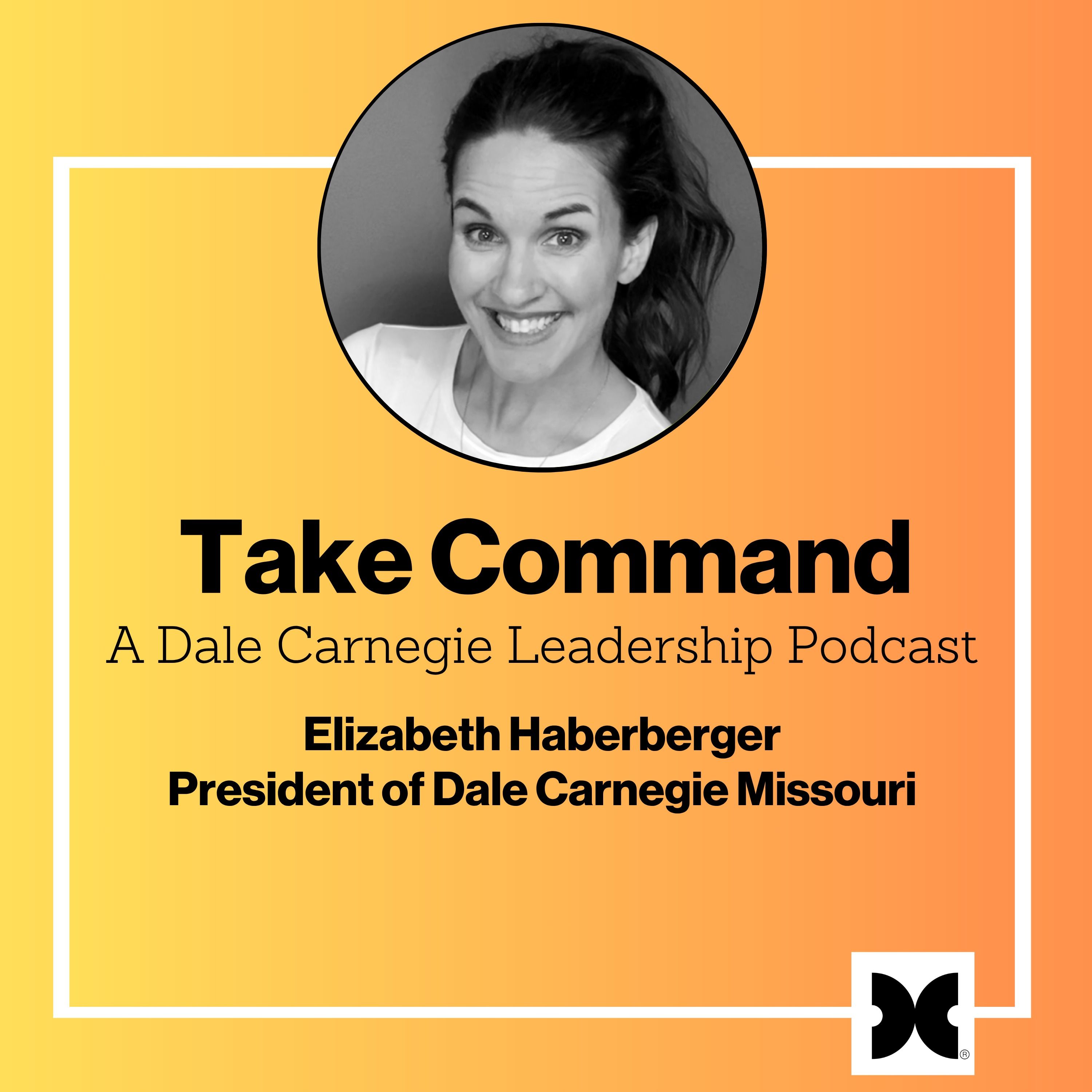
Take Command: A Leadership Podcast
Lead Like You Mean It: Purpose, Positivity, and Performance
00:46:48
Some leaders walk into a room and instantly change the energy—and Liz Haberberger is absolutely one of them. Liz is president of Dale Carnegie Missouri, a high-impact leadership coach, and a keynote speaker with a contagious blend of confidence, authenticity, and grit. Her superpower? Helping people see what's possible and empowering them to show up as the best version of themselves. She lives by the belief that “When you said yes to being a leader, you gave up the right to have a bad attitude.” In this episode, Liz shares how that mindset informs her approach to leadership, culture, and performance—and how anyone can build the emotional discipline to lead with intention. Whether she's guiding a Fortune 500 executive or a frontline manager, Liz brings clarity and candor. You'll also hear how her commitment to gratitude journaling and mindset training has helped her “train [her] brain to just look for what’s right instead of what’s wrong.”
Loading summary
Transcript62 lines
- [00:00]
Elizabeth Haberberger
One of my Dale Carnegie trainers at one point has said something that has stuck with me for probably nine years. And what she said was, when you said yes to being a leader, you gave up the right to have a bad attitude. And I think it's true. If you said yes to being a leader and nobody drug you kicking and screaming into being a leader, like at some point you said yes to the gig, you gave up the right to have a bad attitude. Take five minutes in your car before you walk in. But when you show up, you've got to show up with the right attitude, because it's not just for you, it's for them.
- [00:41]
Joe Hart
Welcome to Take Command, a Dale Carnegie podcast. I'm Joe Hart, CEO of Dale Carnegie, and if you don't want to miss a moment of transformation, follow. Take command now and unlock the power of leadership with every episode. Today's guest shows us why the most successful transformation put people first. She explains how understanding the emotional side of change helps leaders build trust, reduce resistance, and inspire real commitment. A bold entrepreneur and dynamic speaker, she joined Dale Carnegie St. Louis in 2015, purchased the territory just four years later, expanded into Kansas City, and today leads one of the top performing Dale Carnegie operations in the world. She partners with organizations from Fortune 500s to family businesses, and trains for American Ninja Warrior in her spare time, bringing the same energy and grit to every challenge. Please welcome president of Dale Carnegie, Missouri, Elizabeth Haberberger. So, Liz, welcome to the Dale Carnegie Take man podcast.
- [01:49]
Elizabeth Haberberger
Thank you, Joe. I'm excited to be here.
- [01:52]
Joe Hart
Well, I'm excited to have you here. You've got such an incredible story and many times when I have people on the podcast, I'm meeting them sometimes even for the first time. I've had really the pleasure to get to know you over about 10 years. I think you joined Dale Carnegie about the same time I did. Right?
- [02:06]
Elizabeth Haberberger
2015. 2015.
- [02:08]
Joe Hart
And you are the president of Dale Carnegie St. Louis, also Dale Carnegie Kansas City. I think it's really important to talk about that. You've taken two territories and really last year you finished our year as number four in the world out of 166 franchise territories. Number two in North America. Absolutely spectacular. And it wasn't like you walked into these territories and they were in that. In fact, this is an example of where, you know, you came in and really developed them and leadership really, really does matter. You've been a fantastic leader in a business, so I know our audience is going to enjoy hearing about, you know, how you built your team and how you've Led and with energy and enthusiasm and success. Tell us a little bit about you, Liz. What led you to Dale Carnegie to begin with? And tell us a little bit about who Liz Haberberger is.
- [02:58]
Elizabeth Haberberger
First and foremost, I'm mom wife. But I got into Carnegie a little bit by accident. I remember in college, I was a marketing major, and I was sitting in a marketing class, Marketing 350. And we had a guest speaker who came in and was talking to people about, you know, his role. I don't even remember what he did, but he finished. And I remember he started asking people what they wanted to do, and all these hands went up, and people started saying, well, I want to work, you know, in social media marketing, and I want to open my own consulting firm. And I just remember sitting there thinking, please, God, don't ask me. I don't know. I have zero answer. And so I left that class and realized, okay, maybe I'm not supposed to be in marketing, but what do I really want to do? And I coached competitive gymnastics at the time, and I loved that. Like, I loved getting to work with these kids, help them unlock new skills, skills, overcome some of their mental stuff. That's not really a college degree, though. So I thought, well, teaching is the closest thing I could go do that with kids. And so I did. I graduated and I taught fourth grade for four years. I got into it, and I wanted to help kids with that same kind of, how do they unlock, you know, some of their barriers, get past things, learn more. But I found there was a lot of red tape, things that made it kind of difficult in the education realm. Teachers are incredible people. I don't know how they do what they do all day long, but I thought, okay, well, this is not quite it. I'm like, I love being up in front of people. I love helping them with things. And so I left teaching, but I didn't know what I wanted to do. I'd never really been in the business world before.
- [04:44]
Joe Hart
You left teaching without anything lined up. You basically said, I want to take a break. Or is that so?
- [04:49]
Elizabeth Haberberger
Teaching's a little different, you know, in business, you can quit on Friday and you can get a new job in two weeks teaching, you know, as soon as you kind of decide you're done. They actually go through a whole process in December where you have to say, are you coming back next year or not? And if you say, I'm not coming back, there's no, like, plan B. You're gone. You have to leave. So I had to tell them in December I'm not coming back. But you also can't find a new job until at least May. And so yes, I had to say I'm done, but didn't really know where I was going to go or what I was going to do. We had my son at the time, Jack, we knew we were going to have another one. And so I kind of thought, well, maybe I want to be a part time stay at home mom. Like while my kids are little. My mom did it for us. So I was like, okay, I need a part time job, but I don't know what skills I bring outside of teaching. So I just started connecting with people, right? Like I would talk to friends, family, and sure enough, through, you know, my husband's neighbors, brothers, friend. It was a guy that worked at Dale Carnegie and I talked to him and he said, well, it's kind of like teaching, but it's for adults and it's all like human soft skills. And I said, I don't really know what that means, but sure I'd be interested. And then he said, he goes, the only thing is we only have a part time role. And I thought this could be perfect. So I interviewed, got the job and I still remember, I'm sure you do too, Joe. Sitting in my first Dale Carnegie course, going through and watching my trainer up in front of the room within five minutes. I'd never seen an adult capture an entire room of people the way he did. And then, you know, you go through this experience in over eight weeks, you're watching people have these aha moments and they're unlocking, you know, they're getting past these things. And I thought, oh my God, that's it, like that's what I want to do. And I fell in love with the business in that moment.
- [06:54]
Joe Hart
I got to know you a little bit. I think I remember visiting St. Louis around 2016 or so and you were still kind of new to the business and that type of thing. And you were a trainer, you just started getting into sales. And at that time the franchisee, John Sedgwick was leading it and some really, really good things were happening. And I remember when he told me that he wanted to sell the business, he had some other things he wanted to do. But don't worry, he's like, I've got this superstar who we really want to have take over. And you really have lived up to his fine reputation that he gave you.
- [07:26]
Elizabeth Haberberger
Joe. I tried to say no, like many times. So I had been in the business about three years, I had taken over Kind of leadership of the territory. And I owned a piece of the business. But I had always thought, I don't know anything about running a business. Like, I'm not capable of doing that. I don't have a business degree. This is the only, you know, real job, quote unquote, I've ever had. So the only reason I even owned a piece of it was because John was there. And I thought, well, he's the one who knows what he's doing. And when he started talking to me about, you know, buying the whole thing, I said, no. I said no to him probably five or six times. And I still remember one night I had coffee with him the next day, and I knew he was going to ask me again. And I was like, I'm telling him for the final time, no, I'm out. I can't do this. I don't have the skill set to do it. And so I went to coffee with him the next morning. I told my husband, like I'm telling him, no, I'm not thinking about it anymore. I've made my decision. And we sat down and John looks across the table at me. You know, we're talking for a little. And he said, liz, he goes, you know what I'm going to ask you? You know what we're going to talk about? He goes, there's two options here. He said, option one is that you buy the business. Option two is that we sell the business to someone else. And he said, if we sell the business to someone else, they're not going to get rid of you because you're really valuable. You do good work here, they're not going to get rid of you. He said, but what I can't guarantee is that that person isn't going to look at you and say, hey, I need your butt in that chair at 8am Monday through Friday, and you get two weeks of vacation, but you have to ask me when you want to use them. And here's your quotas. And this is exactly what I need from you, and you can't do this anymore. And it was like in that moment, it just switched. And I thought, oh, no, that's not going to happen. I would rather try it myself and fail than let someone else dictate how I was going to work and how I was going to be successful. So then I had to go home and tell my husband. I said, I know I was going to tell him no, but I changed my mind. We're going to buy it. And we did.
- [09:35]
Joe Hart
Well, let me ask you about this Because I think a lot of times, you know, you've talked about fear. I know some of the posts you've had on LinkedIn. You're very prolific on sharing and be very authentic. You know, some of the fear that maybe you had. I mean, we all have fear, right? So you'd never run a business before. You're taking over all the financial responsibility you're paying people. You're ultimately buck stops with you, so to speak. What are some things that you have done in that situation or in the past or current, and advice you'd give people about how to overcome fear and face challenges.
- [10:08]
Elizabeth Haberberger
So one of my very good mentors, he tells me all the time, he's like, liz, Nike. Nike. The first time he said it, I said, I'm sorry, what? And he goes, nike. You just do it. There's a movie called We Bought a Zoo, and in the movie Matt Damon, he's the character, and he says, in life, sometimes you just need 20 seconds of insane courage. Like, embarrassing brave courage. And if you can just get started, like, take that 20 seconds to start drafting the email to start the conversation, whatever it is. Sometimes you just say, okay, Let me just. 20 seconds. Give me 20 seconds. You get started, and then you often find, oh, it's not as bad as you think. A second thing I'll use from a fear standpoint is what would I tell someone else, right? If I had one of my best friends or if I had someone that I really admired saying to me what I'm asking, you know, to someone, I'm like, what would I say to them? Because we talk very differently to ourselves than we do to other people. And so that has really helped me too, is when I just try to get outside of my own head and say, what would I say to someone else who is asking me the same thing or bringing the same thing to me? And then I follow that advice versus the stuff I'm saying to me.
- [11:24]
Joe Hart
So those are two good tips. I want to push a little further, though, because, I mean, the reality is you have been very, very successful. It might have gone a different way. In fact, I was just talking to a young person I know who had a job opportunity. One which is a kind of conventional, go down the same area you've been, or the other is a very different one. And this person was saying, what if I make him a stake? What if I go down this path and it just doesn't work out? And it's almost like a catastrophic kind of view around that. What role does mindset play in this. And what kind of advice would you give to someone who says, look, I don't want to fail.
- [12:01]
Elizabeth Haberberger
I don't know anyone who's ever gone through life and has had the option of not failing. Maybe you've met that person, Joe, but I have not met the person who has the option of not failing. And you can do all the reading, right? I'm a avid reader. I'll read all the books. They talk about failing forward, right? Learning from your mistakes. It's a lot easier to read that stuff than it is to actually do those things. One concept I try to live by is two way doors and one way doors. And I try to remind myself that in life there are very few one way doors. Meaning once you walk through that door, you can't walk back out like there's no other options. Most things in life are two way doors where you say, okay, listen, this is the decision I'm going to make. And just reminding myself, you know what, if I fail, then I'm going to try xyz. If this doesn't work the way I thought it was, then I can, you know, do this direction instead of that direction. So sometimes to me we put this finality around decisions where, well, once I make this decision, that's just the way it's going to be forever. And most of the time it's not. But if we just almost think ahead, you know, use those if thens, well, if this happens, then I could go this direction. Or if this doesn't work the way I thought, then I'll go here. And it helps to say, you know what, okay, so maybe this isn't a one way door, it's a two way door. And if I want to come back out, I can come back out.
- [13:31]
Joe Hart
What I love about that is the mindset that it's continuous. Right? Because I think what happens is sometimes we think about these binary terms like success or failure. It's either this happens as I want it to happen or. Or it doesn't. And if it doesn't, then that's failure. And the reality is that life is movement. We move and we just have new decisions to make at different points in time. So the comment I made to the person continuing the job is let's just pretend that this doesn't work and you realize it in three months. What would be wrong with going back and doing something different? I think we tend to think in terms of catastrophe and things that are unrecoverable in reality. Very few things truly are like that.
- [14:10]
Elizabeth Haberberger
Yeah, I said it in Our team meeting this morning, I'm like, there's very rarely a training emergency. The idea of success, right, you hit on that is something I've been thinking a lot about and even trying to just reframe my definition of what does that mean for me? I have always been a very high achiever. Like, I want to be the best at whatever I'm doing. If you're not first, you're last. If you've ever seen the movie Talladega.
- [14:38]
Joe Hart
Nights, you're quoting Ferrell here.
- [14:40]
Elizabeth Haberberger
You gotta throw a little Will Ferrell quote in there. Then if I don't win, if I'm not number one, then does that mean I'm not successful? So some of it has also been, I think, trying to reframe success. You talked about growth and learning. You know, looking at some of Carol Dweck's work on mindset and growth mindset and just trying to reframe what is success is successful only if I get the outcome that I want or can I still have success if I learn along the way, if I'm growing along the way, if I figure something out, if I unlock a next level. Might not be exactly what I wanted in the end, but I've been trying to do that a lot of reframing. What does success look like? And it might not be exactly what you initially thought it was, but you can always find some success. You know, there's something in whatever decision you make. You. You learned, you grew, you figured something out, you made a new connection. And all of that is just as valuable as the win or the be number one, whatever that is. The fear that you have to try.
- [15:44]
Joe Hart
To get over it is so absolutely true. One of the nice things about getting a little older is at any age, 30s, 40s, 50s, whatever, we get a perspective, and I think we can look backwards and we can see things that we were terrified about. And all of a sudden we're like, yeah, that wasn't so bad. And there are times that we've done something really well and it gives us confidence, that helps us in everything else that we do. I do want to ask you a little bit about your strategy on team building and relationships and so forth, because the reality is that when you took over the St. Louis market, collectively you've got St. Louis and Kansas City, which are number four in the world. Last year. Those markets were probably in the lower half of our 166 markets when you took them over. I think this is important because I've never once heard you complain or give reasons or whatever. I mean, I think you've had pretty much all great years, but some years are better than others. But, you know, leadership really does matter, and your mindset matters. And what would you share about some of the things that have helped you grow these territories from where they were to where they are and to where they may yet go?
- [16:54]
Elizabeth Haberberger
So I definitely am very lucky to be in the Dale Carnegie business because I'm surrounded by the Dale Carnegie principles all the time. I'm constantly trying to implement the things that Dale Carnegie wrote in how to win friends and influence people. I think first and foremost, you surround yourself with good people. Like, I truly believe that people are good and that people want to do well, that people want to work hard, and they don't need me to tell them what to do. I just get to be the one saying, hey, I think here's where we could go. You tell me how we're going to get there. I'm definitely not perfect at it, but one thing I try to do a lot is Principle 17, which is to try, honestly to see things from the other person's point of view. I'm constantly trying to think, you know, if I were in Jen spot, or if I were in a trainer spot or on these sales calls, my clients, what is it from their perspective? What do they need from us? How can we best support them? Doing a lot of listening, asking a lot of questions. My ideas are, I'd like to think, good, but they're probably not the best ones out there. So I want to hear from other people. I think another thing that's really helped us is I do a lot of things to show the team that we appreciate them, that I appreciate them, and I'll do it in fun ways. I mean, some, like, simple things is I'll write people handwritten notes or I'll send them emails. Like, every year we do an award show and we call it the Coneys because it's literally like one of those orange little soccer cones and it's all decorated with our values. And I dress up in ball gowns and I'll sing an intro song. And we just try to do things that are unique, right? We take the team on a trip every year when we hit our goal, or we'll do, you know, a team day of fun where we go do things together. I try to keep the people together and listen to what they want. I'm a big believer that people will tell you what they want, and then they're willing to work hard to go get it. You just have to listen.
- [18:58]
Joe Hart
Well, there's no question that culture is an important part of what you've done. You feel strongly that if it's not fun, it's not worth doing. It's like sometimes people will think business has to be buttoned up and serious and formal and so forth. But I mean, this is our life, right? Why not have fun at what we're doing? And as Dale Carnegie said, people rarely succeed unless they have fun. Fun at what they're doing. That's clearly a part of your strategy. What else? I mean, because again, the growth that you had has come about for a reason. I'd like to make sure their audience, they could be salespeople, they could be CEOs, they could be leaders. What's another singular piece of advice that you found really valuable? You say, hey, this has been a critical part of our going from here to here.
- [19:40]
Elizabeth Haberberger
So this is going to sound like it has nothing to do with business growth, but I'm a big believer that there's a connection. Now, you know this about me, but I train for American Ninja Warrior. So I am at the Ninja gym several times a week. I will swing around on monkey bars and run up walls. And I realize, like I said, that seemingly has nothing to do with business, but I think it has so much to do with business from a leadership standpoint. I mean, I'm in the gym constantly being reminded that you have to keep working hard. You can't just relax and rest on your laurels. I'm reminded constantly that you fail. Right. I try this obstacle once. It doesn't work, and then I have to get creative and say, hmm, what else can I do? What are some other ways that I might be able to solve this problem? Right. Or figure out this obstacle? You're on a team, you're there with other people. And I get so excited watching other people get new moves and they get just as excited watching me. I truly think that what I do physically, whether it's ninja, whether it's doing Spartan races, all of those things, they've really helped me be a better leader because I'm constantly practicing, I'm constantly feeling those same things. I'm getting in those reps physically and mentally. And then I get to come into the team, I get to do those same things. This didn't work well. We're not going to sit around and say, oh, boo hoo. We're saying, okay, what else can we do? Let's figure out if there's a different way. So I know it seems really different, but There's a huge connection in my mind between, like, your physical health and working in the gym and then being able to come in and lead a team really well.
- [21:23]
Joe Hart
Well, you and I both agree 100% on the importance of physical health and taking care of ourselves and certainly having an outlet for all the other kind of stress and so forth, and really the importance of being healthy and modeling that. I wonder, though, Liz, whether there might be something else, just knowing you, that you have a mindset. You're a very competitive person. Like you said, you know, if you're not first, your last, you want to be the very best at what you do. Whether it's being a Dale Carnegie franchise owner, whether it's being an American Ninja Warrior, whether it's being a mom or a wife, whether it's being whatever it is in the community. It feels like you're bringing that game to whatever it is that you do. And so I wonder if the opportunity for. For all of us listening to this is just challenging ourselves. You know, what is our mindset is our mindset really. I'm going to push really hard. Even if it's uncomfortable, I'm going to push hard whether it's physically in the gym, whether it's in the office, whether it's. Be the best spouse or parent I could be in that type of thing.
- [22:20]
Elizabeth Haberberger
Yeah, I have an attitude of unwavering optimism. I think I've had that my whole life. I truly think that all people are good, that people want to work hard, that even if someone's being difficult. Right. For one reason or another, that's okay. Let them. Mel Robbins, that's her new book, right? Let them. I'm going to show up, I'm going to say, hey, I think today's a good day. I'm going to figure out what I need to do. How can we, you know, get where we're trying to go? How can I help somebody else get where they're trying to go? And I think it's all gonna work out. I think there's a lot of gray in life. There's not a lot of black and white. And you've gotta be okay navigating in that gray, especially as a leader. And to me, the only way you navigate that gray is with optimism.
- [23:09]
Joe Hart
How do you cultivate that unwavering spirit of optimism? Do you have a routine or is it just something you do? And what advice would you have for others?
- [23:18]
Elizabeth Haberberger
I keep a gratitude journal every single night. I will write down three things that I'm grateful for, and I will do it with my K kids, my husband, if I'm out to dinner with other people. I was actually with a group maybe two weeks ago, about eight other colleagues of mine, and just in the middle of dinner, there was kind of a lull, and I said, okay, I've got an idea. And I just had everybody go around and took a picture of us. So that's one thing. I'll write down three things I'm grateful for every single day. I think the second one is that I've almost trained my brain to just look for what's right instead of what's wrong. So there's a concept called the gap in the gain. And the gap is basically saying, okay, if I'm 80% there of where I want to go, most people look at the gap and they're like, but I still haven't done X, Y and Z. I will first look at the gain and say, gosh, but look at the 80%. Like, look what we've just done. Look at all the things that we've already done. And now let's use that to help us with the last 20% to get where we want to go. I've almost trained my brain to, like, I'm going to look at the good first. I don't want to talk about the problems. I don't want to talk about what's wrong, what are the things that are going really well that we can be grateful for, that we can be proud of accomplishing, and then, like, let's leverage that to go forward. The third thing I would say is consistency and discipline. I'm going to show up at the gym good day or bad day, I'm going to show up for my team in that team meeting. Good day or bad day. And the more you just say, I've got the discipline, that this is the attitude I'm going to have, this is the consistent way that I'm going to show up for my team, you start to do it.
- [25:01]
Joe Hart
Absolutely. You also give that to your team. I happen to think that as a leader, if I come into a meeting, if I come into a room, if I'm down about something you project that it's contagious. On the other hand, when we as leaders are positive and optimistic and confident. Confident. And we give that confidence to our team members that enables them to grow and them to thrive and them to know, hey, this is the culture we have here. We're not going to have a culture that's pointing outside of us and complaining about things. That kind of a mindset is something that's cultivated by leaders and teams.
- [25:32]
Elizabeth Haberberger
Yeah. One of my Dale Carnegie trainers at one point said something that has stuck with me for probably nine years. And what she said was, when you said yes to being a leader, you gave up the right to have a bad attitude. And I think it's true. If you said yes to being a leader and nobody drug you kicking and screaming into being a leader, like at some point you said yes to the gig. You gave up the right to have a bad attitude. Take five minutes in your car before you walk in. But when you show up, you've got to show up with the right attitude, because it's not just for you, it's for them.
- [26:05]
Joe Hart
I love the way you frame that, too. It's a responsibility of leadership. Do we want to be the kind of leaders that are going in and just complaining or nitpicking or putting people down? I mean, this is something you and I have talked about with Al Mulally, one of the greatest leaders of our time. And he's always said, look, the leaders have to set the stage. We are responsible for cultures. You can't put people down. You got to build people up. I see that in your leadership. To go back for people hearing this, you've had great success in our business. You're going to continue have great success. Part of it is just who you are. You talked about this unwavering optimism. You've also overcome really incredible adversity. And I want to be very delicate about this topic, but I know you've written about it in your post. You've been very authentic about who you are. You had the tragedy of losing your beloved sister Dolo in just an absolutely tragic accident. And if you're willing to share a little bit of that with our audience about what happened and how did you manage through that. And again, I think it's especially important so many of us look around. We all face challenges, we all face tragedies. So it would be great just to learn a little bit from how you handled that. Liz?
- [27:12]
Elizabeth Haberberger
Yes. So I'm one of seven girls. All girls. I know you know, Joe, about having big families.
- [27:19]
Joe Hart
Only four girls on my side and two.
- [27:21]
Elizabeth Haberberger
I know, but you have six total, which is a lot of kids.
- [27:24]
Joe Hart
That's true.
- [27:25]
Elizabeth Haberberger
But yeah, I'm one of seven. I'm the oldest and my sister Dolo, she was the sixth. So we were 10 years apart. May 24, 2022. I got a call in the morning from my dad, 6:30, and it was one of those where, you know, as soon as I heard his voice, you knew there was something wrong. And I thought for sure he was going to say something about grandma or you know, maybe my mom. Not in a million years did I ever think that he would say that. Dolo was gone. My 23 year old firefighter, paramedic, like super strong, vibrant sister. I mean, it's like a huge gut punch. It's one of those things that until you lose someone that's that close to you, you don't understand. One thing that I have found though is that there's a lot of people who do understand. There are so many people who have lost a sister, a brother, a mom, a spouse. One thing that I quickly learned by talking about it and by sharing her story is that there are so many other people who are in the same boat. And there were so many people who cared and like, showed up in ways that I wasn't really expecting. Other people too. I do remember because obviously it was really hard losing her. My team was incredible. There was not even a second of, hey, well, we need you for this. My whole team just said, go, just be with your family. We've got this. And they did. And I think part of that helped, you know, just having a team. But when I finally got back into work, you know, I speak to a lot of groups and part of what a good facilitator or speaker does is they bring in stories. And I remember maybe six months after my sister had passed away, and I was thinking that I wanted to tell this story about her because she had taken a Dale Carnegie course. She would come into my office every week and she'd like, mess stuff up, you know, she'd turn my things upside down, she'd do these things. But she wrote me a note one day on a post. It and it just said, hi, sister, have a spectacular day. And she stuck it to my computer monitor and I kept it on there for about five months before she died. And then as soon as she passed away, I took it and I've got it framed now in my office. I wanted to kind of use this story to make the point. Write down those little things, say the little things because you don't know when you'll get to say them again. But I felt really bad almost talking about that to other people. And I thought, well, gosh, it feels weird. And I asked someone, I said, well, hey, what do you think? And they said, well, what would she tell you? I was like, well, if she were here, she would say, absolutely, tell the story. That's going to Help you make the point. And so I started asking myself that more and more often. Like, what would she want me to do right now? Like, what would she say to me? And that has helped in so many situations because I can sit here and feel sad. I can feel like this is hard. But then I'm like, gosh, what would she do? What would she want me to do? And it totally changes the way that I will act or the way that I will talk or what I'll say in given situations if I just think about it from that perspective versus my own.
- [30:40]
Joe Hart
Well, thank you for sharing that, Liz. I remember you going through that and just what an incredibly difficult time that it was. You really did focus on your own resilience and your own strength and relying on other people to help you. And at the same time, I can't help but think that there was a very intentional part. You talked a little about it right now just of saying to think about Dolo and also to think about where you wanted to go. Because I think in the face of any challenge, we have choice. We can choose to remain a certain way and maybe can be justified in feeling that way, or we can say, you know, in what ways can I move forward? And that's really what I saw you do. You said, I want to move forward. She would want me to move forward. And you did. You powered yourself forward through that very difficult situation.
- [31:29]
Elizabeth Haberberger
Yeah, I'm like, what's the alternative? Right. So she had done this thing called 75 hard, which if you haven't heard of it, it's 75 days and you do two 45 minute workouts and you follow a diet and you have to do all these things. She did it at the beginning of 2022, and it inspired me to do it. So I was actually in the middle of it. I was on day 56 of my 75 hard. And I remember driving out to my parents that morning, the morning that she had passed away, and I thought, oh, my God, I've got to do two workouts today. Like, I'm supposed to do two workouts and I'm supposed to read 10 pages. And I thought, this is stupid. I'm not doing that. Like, my sister just died. And then there was something where I was like, but you know what? Why not? What's my choice? I quit and I give up or I just do it sad and I do it even though I'm feeling grief. What's the alternative? Sit and be sad, Sit and be angry or move forward? And you can do both at the same time, you can be sad and move forward. You can be angry and move forward. You can be frustrated and move forward. And I think sometimes people forget that you can do both. And then it's easy to just get stuck in one. And then it makes it even harder to start moving again.
- [32:45]
Joe Hart
You know, it's interesting that Dale Carnegie talked about the importance of taking action, and that's really what you were talking about earlier. Even facing the fear of, like, gosh, you know, should I do this? But if you start, even in a small way, you start. Just starting can be the most important thing that we can do ultimately to get moving. So maybe that's the piece of advice for all of us, is just take that first step and start going.
- [33:07]
Elizabeth Haberberger
Yeah, well, it goes back to, you know, one of the things we talk about a lot, Joe and Dale Carnegie, you know, is your vision. Like, who do you want to be? How do you want to show up? How do you want people to perceive you? And I have spent a lot of time, I've reworked my vision. You know, I'll sit down twice a year and really rework my vision. But I've had four words that I want people to say about me. I'm tenacious, capable, bold and radiant. I've had those for the last six years. Like, I have them literally painted on rocks. And so I'll go back all the time. And I'm like, what do I want to do right now? It's like, okay, well, I want to just sit here and I want to be upset or I want to have a bad attitude or I want to whatever. And then I say, okay, but who do I want to be? Well, I want to be tenacious, capable, bold and radiant. Does that align? And if it doesn't align, then I'm like, but this is who I want to be. And then it'll change the action. But if you don't clearly know who you want to be, then it's easier, I think, to get stuck in some of those things.
- [34:05]
Joe Hart
It so is. And the other thing is, I mean, we think about if we've got a destination. It's that proverbial thing about, you know, if you don't know where you're going, how are you going to get there? You know, to have those clear, those north stars. Let me ask you about your own routine, because I think this is something we talk about in Dale Carnegie a lot. Dale Carnegie course talk about it in Take Command. This concept of how often do we create time for ourselves to think about these things, because Right. Days turn to weeks to months, and now years have gone by. What practices have you put in place for yourself to make sure that you're giving yourself the time to think about the person that you want to be.
- [34:39]
Elizabeth Haberberger
So every morning, I will get up and either go to the gym or go for a run. I do something every morning that's some kind of, like, physical movement. Then when I get in the car to drive into the office, I will listen to two things. One is my vision. So I just have it, like, recorded, and I'll listen to it every morning. It's like three minutes. But it reminds me of those things. I'm tenacious, capable, bold, radiant. It talks about my attitude. Right. I wake up optimistic each day and excited about the day ahead. So I listen to that. And then I listen to a podcast on the way into work. So I'm constantly trying to learn whether it's something leadership related, whether it's something health related, whether it's something parenting related, you know, relationship related. But I'm listening to podcasts in on the way to work. And then I'll work. I try to do some reading at night. I don't always get to it, but I do some type of reading. Hopefully at night. I do my gratitude journal. I will do that every night. That gives me some time to then just sit and reflect. And then I also have. This comes from Marshall Goldsmith. I ask myself four questions every night. I did my best to be happy today. Like, on a scale of one to six, did I do my best to be successful today? On a scale of 1 to 6, what was the best part of my day? What was the most stressful part of my day? And I write those out every night. And that just helps me to, like, reflect and think. And then I can go back and I can, like, look at all my patterns and see if there's, like, different things that were going on that were impacting me.
- [36:10]
Joe Hart
You're doing it online?
- [36:12]
Elizabeth Haberberger
Yeah, I literally. I made a form online. Marshall Goldsmith talks about these active questions, like the did I do my best to not just say, was I happy today? But did I do my best to be happy today? So I just made a form. It emails it to me every single night. So I get an auto email, and then I click the form and I fill it out. But it's a great reminder for me. And then I actually do it because it's in my email.
- [36:34]
Joe Hart
I love that attribution to Marshall Goldsmith. The Earned Life is the book that he talks about that in. And I love that as well. I guess I'm a little more old school because I write my things down in the journal. But the point is, whether it's on our phone or online or on paper, to go through that exercise, right, to be reflective and you know, it's so easy to think about how we start our day. We pick up our phone, we go to social media, check email, but how do we really give ourselves some period of time to be focused? You are prolific on social media. I mean, you're very authentic. Whether it's about Ninja, whether it's about your family, whether it's about your work. What inspires you to take the time? Because I mean, being a content creator, so to speak, it takes time. And putting yourself out there and being vulnerable also is not always easy. What inspires you to do that?
- [37:23]
Elizabeth Haberberger
I think part of it came from after my sister had passed away. Like I said, until you've experienced it, you don't really get it. And it's easy to look around and say, okay, nobody gets it. But once I started telling some of those stories and I was like, oh wait, not only do people get it, it's helpful to other people sometimes to know they're not alone. And then people are also coming to me. And that was helpful to me. And I think I found that in most areas of life, we all often feel like we're the only one. I'm the only one dealing with this thing, I'm the only one thinking about this thing. And it's usually not true. The more that I put out there on some of these little life things, I will hear people back say like, oh my gosh, yes. And here's what I've done to get through that, or hey, how have you done this? It's really been a way, I think, for me to connect to a lot of people versus, you know, just having one on one conversations. You know, you can share it with your whole network and then you build closer connections, you find more ways that you can help other people. And then in turn, sometimes other people have been able to come help me with different things that I'm going through. So yeah, I try to be really just authentic and genuine. To your point, I don't have an MBA or a big business degree. I just try to share, like, here's the stuff that I've got going in my life, personal, professional, and here's the lesson I'm learning from that.
- [38:45]
Joe Hart
Well, it seems like that's what people really appreciate though, right? I mean, you know, we can put out a false Image all the things that are going really well or whatnot. But people see through that. And it seems like what the world really craves from you, from me, from all of us, is authentic leadership. People who are human, people who make mistakes, people who don't have all the answers, people who learn along the way and are willing to talk about what their learnings are.
- [39:08]
Elizabeth Haberberger
Yeah, well. And I think now in today's age, where you can leverage AI, you know, for so many things. Write me a post on leadership. There's value in just having your own voice and your own energy, your own, you know, enthusiasm that you put into things because you're right, people can feel it. If it's, like, resonates with one or two people, great. I'm happy to do it, but it's really not even for them. It also just helps me process and think through and, you know, to your point, give you some of that, like, reflecting time. What are these things in my life trying to teach me? What are these things showing me and how can I be better because of them, not in spite of them?
- [39:46]
Joe Hart
Absolutely right. I do feel a obligation to our audience to tell them something truthful here because, you know, the reality is that they could look at your authentic posts and so forth and see the things that you're doing in ninja. And it was about two years ago, almost to this very day, Liz, that you invited me to join you in ninja. Now, so anyone who's looked at Liz's LinkedIn sees her doing these incredible things. I mean, these trapeze moves or these, like, you're in the air going seven feet and grabbing onto, like, a ball, you know, you make it look so easy. So I don't want anyone in our audience to have the impression that ninja is easy because you invited me two years ago. You said, hey, if you're coming to St. Louis, we got to go do this. And I went with you to do it. And, you know, look, I'm still getting physical therapy for my left shoulder. It's getting better. They don't think it's going to need surgery. But trying to keep up with Liz Haber Berger is not a good idea. For anyone who sees you on social media and thinks, oh, I can easily.
- [40:45]
Elizabeth Haberberger
Do that on the NINJA course now, you could take me down. You took me down in that half marathon. See, everybody's got their strengths. NINJA running, it's all good.
- [40:56]
Joe Hart
At the end of the day, it is all good. And I do give you credit. I challenge you to join for a half marathon in San Antonio when We were down there for our Millennium club weekend honoring our time top franchisees around the world. And you did, and Matt Norman and your husband. And we had a really great run. That was a lot of fun. So Liz, one thing I learned about you in the process of preparing for this podcast. I had no idea that you are related to Abraham Lincoln.
- [41:21]
Elizabeth Haberberger
I am related to Abraham Lincoln. That used to be my fun fact growing up. It's on my dad's side. He's like my great, great, great, great uncle. I don't know exactly where he is, but one of my uncles on that side. He's very into family history and genealogy. And so I have a whole family tree of like where he's from. So my great, great, great, great great grandpa, however many times up, was named Abraham and Abraham Lincoln was named after his grandfather, who's my direct grandfather.
- [41:56]
Joe Hart
So yes, fascinating fact. I'm curious. I mean, Dale Carnegie himself was a huge admirer of Abraham Lincoln. Clearly wrote an entire book about Abraham Lincoln. How has that connection to Abraham Lincoln inspired you or affected the way you lead one?
- [42:12]
Elizabeth Haberberger
Getting to go to Springfield, Illinois. I've been to Springfield, Illinois and kind of toured his house. You know, you learn a little bit more about him and you just realize how forward thinking he was for where the world was, where America was at that time, and the vision that he had, the way that he thought about things in ways that nobody else did. I think as a leader, you know, every once in a while I'll kind of think I'm like, okay, maybe that's where I got a little bit of that from that ability to like, look forward, see things that other people maybe don't see, and then work to make those happen. Maybe I got that from my great uncle.
- [42:47]
Joe Hart
Now you know where it came from.
- [42:48]
Elizabeth Haberberger
Yep.
- [42:50]
Joe Hart
So, Liz, I did go to chatgpt prior to this interview and I let it know that I was interviewing you and I said, if you could ask Liz Haber Berger only one question, what would that one question be? And the question is, what is the most powerful lesson you've learned about yourself from living and teaching the Dale Carnegie principles? And how has that lesson shaped the way you lead today?
- [43:15]
Elizabeth Haberberger
So I think the most powerful lesson that I've learned about myself from teaching these principles is that when I think of myself less and think of other people more, I become more successful. I think for the longest time, when I first got into this business, you know, it was kind of like, okay, well, what do I need to do? How can I be more successful? What do I need to do. And through all the Dale Carnegie principles, you kind of learn. It's not really about you. It's about other people. And so I think the most powerful insight that I got for myself was that it's not about me. And if I can try to help as many other people, ask them good questions, make them look good at the end of the day, that's really helped us to grow this business. Because I say all the time, like, this is not about me. I have an incredible team. We have incredible clients. We're just helping them solve their problems. It's not me, it's them. They're the ones that we're helping. They're the ones doing all the hard work. So I think that insight of just make it less about me and more.
- [44:21]
Joe Hart
About them, it's a great point, and it's a point often that's learned over time. I've seen you live that point, Liz. Clearly you own a business, so you have the financial responsibilities of a business and payroll and all those kinds of things, and yet just how much you care about your clients, and it really is about helping other people succeed. Same thing with your teams. But I remember walking in with you to a client and meeting with the CEO of a very, very large company who basically said, you know, Liz is my favorite person on the planet. She's the most enthusiastic person. She brings out the best in me and in our team. And you've made such a huge contribution to that company. And really, the lesson for maybe all of us is when we apply our Dale Carnegie principles, they really are about other people. It's like, how do we show people respect? How do we listen? How do we talk about things that are important to them, not try to bore them with things that we're interested in, you know, but you really are about empowering other people, whether it's your team or your clients or your family or people just in the community. Liz, anything else that you would like to share with our audience by way of inspiration or advice as we prepare to close?
- [45:28]
Elizabeth Haberberger
Oh, Joe, I think we've hit on a lot here. You took one of my favorite Dale Carnegie quotes. People rarely succeed unless they have fun in what they're doing. But another one that I love from him is he just says, take a chance. All of life is a chance. The person who goes the farthest is usually the one who's willing to do and dare. You've got to take chances. We've got to do and dare. And the more we do and dare, the more we often get back.
- [45:55]
Joe Hart
Well, there you have it and a great way to end. So we need to do endear it. We need to take a chance. Liz, thank you so much for being with me today on the Dale Carnegie Take Command Podcast.
- [46:03]
Elizabeth Haberberger
Thank you for having me, Joe.
- [46:11]
Joe Hart
I hope you enjoyed this edition of Take Command, a Dale Carnegie Podcast. Check out our resources at www.dale card carnegie.com for more research, insight and tools that will support your success and help you take command of your leadership potential. If you enjoyed this episode, please consider rating it and following us on Apple Podcasts and Spotify. For more exclusive content, subscribe to our Dale Carnegie YouTube channel and follow us on social media. As always, thank you for listening and we're looking forward to you joining us for the next episode of Take Command, a Dale Carnegie Podcast.