← Take Command: A Leadership Podcast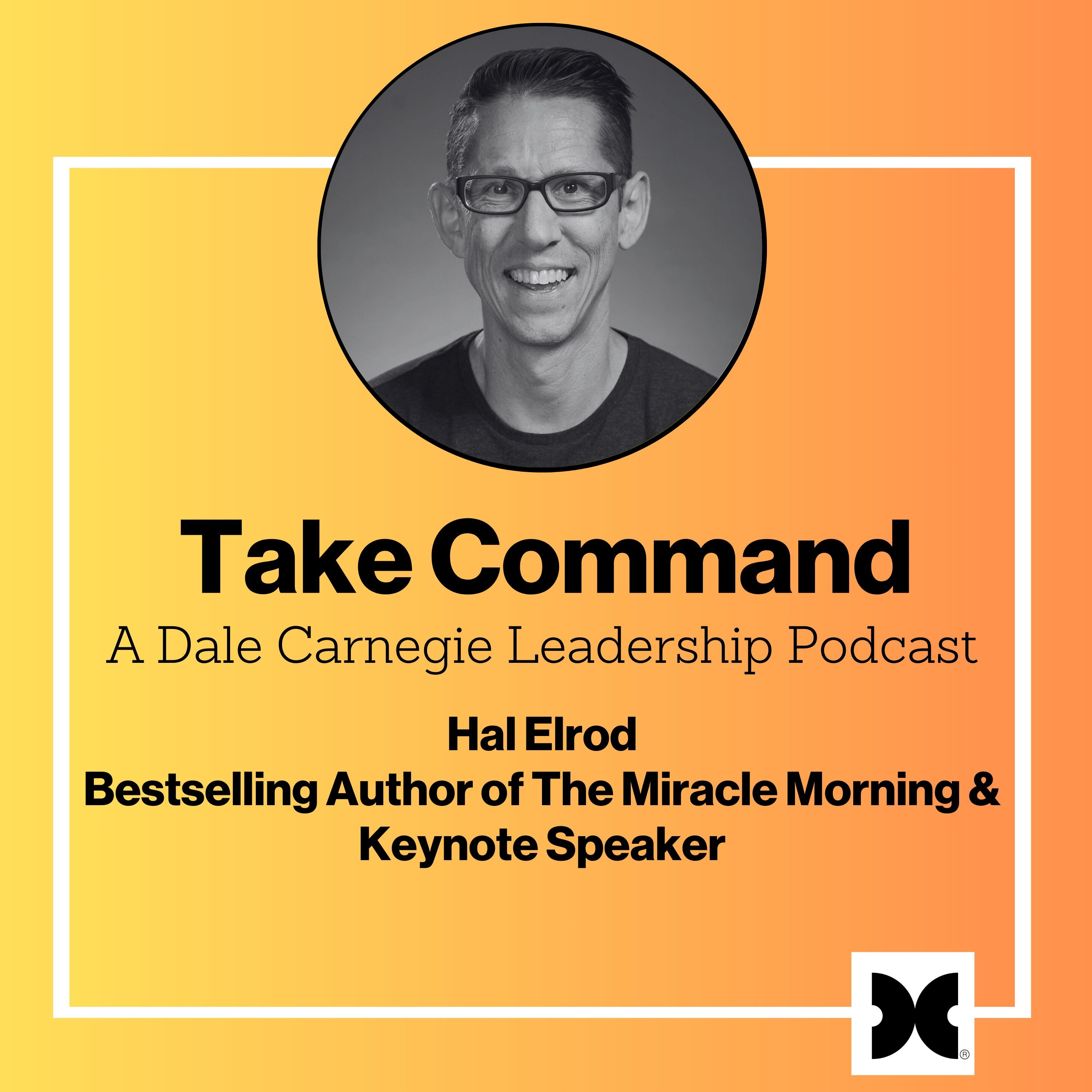
Take Command: A Leadership Podcast
Miracle Morning: The Way to Take Command of Your Day
00:42:26
Hal Elrod’s story is nothing short of miraculous. At 20, he died for six minutes after a car accident, broke 11 bones, and was told he would never walk again. But Hal didn’t just survive—he thrived. After overcoming incredible odds, including a battle with a rare form of cancer, he now helps others transform their lives through the power of mindset. As Hal says, "I will take 100% ownership for my health and healing for my life, and I will relentlessly research every holistic practice known to man, and I will implement all of them." Now, Hal shares his journey and his framework for success in his bestselling book The Miracle Morning. His approach has helped millions start their days with intention and clarity, and he continues to inspire others to take command of their lives. "The difference between successful and unsuccessful people," Hal says, "is not that they don’t face fear or insecurity. It’s whether they allow those mental and emotional roadblocks to stop them, or push forwa...
Loading summary
Transcript34 lines
- [00:00]
Hal Elrod
One of my co authors in the Miracle Morning series said. Hal, the miracle Morning is not about waking up early. It's about waking up better. I go, I love that. That's the simplest way that you could put it.
- [00:20]
Joe Hart
Welcome to Take Command, a Dale Carnegie podcast. I'm Joe Hart, CEO of Dale Carnegie and if you're ready to grow your leadership skills, follow Take Command and never miss an episode that could transform your career. Today's guest shares his remarkable journey of overcoming life's toughest challenges and how he turned adversity into a story of resilience and inspiration. He reflects on the role of mindset and the daily habits that helped him defy the odds. A globally recognized leader, he's the international best selling author of one of the highest rated books in the world with over 3 million copies sold and millions of lives changed. He's a hall of fame business achiever and has been featured in Forbes and Fast Company for his groundbreaking work. Please welcome keynote speaker and author of the Miracle Morning, Hal Elrod. Hal, welcome to the Dale Carnegie Take Command podcast.
- [01:22]
Hal Elrod
Joe, it is an honor. As we were talking about before we started recording, the first personal development book I ever read, like probably millions of people was how to win friends and influence people.
- [01:33]
Joe Hart
And it's so cool when you said that. It's like so many people. It's like this book was published 88 years ago. It's been a bestselling book every year. And just to know that it's had an influence on you and so many people and you've had an incredible career so far. And I know you got so much in front of you. I'm looking forward to sharing that with our audience. Hal, you have really overcome incredible adversity. I'd say you've had two near death experiences, but actually one of them was a death experience. You died for six minutes after being hit by a drunk driver. We're going to ask you about that. Then built a business and that business cratered in 0809. You built it back up and then you were diagnosed with a very aggressive form of cancer, which you had a very slim chance of surviving. And you did. And you've written multiple bestselling books, millions of copies sold. The Miracle Morning is the one we'll talk about today. So many really cool things that I'm looking forward to kind of unpacking with you. Hal, tell us a little about you. Some of the things that kind of led you to where you are today.
- [02:36]
Hal Elrod
Yeah, where I am today. I'll just start there as A father first and foremost. I have two kids in my life. I try to revolve around them, take them to school every day, pick them up, spend a lot of time with my family. And the cancer really led me to realize I was a workaholic and I needed to change that. What led me into this work? When I was 15 years old, I started a DJ business. A friend of mine, his older brother was a DJ in our small town of Oakhurst, you know, 30,000 people, and he got sick one night. So his brother, my best friend, we DJed the dance and we loved it. I was working at a grocery store at the time. I financed DJ equipment. And all of a sudden I went from making $4.25 an hour at the grocery store, which was minimum wage back then. When I was, you know, 15, my first DJ gig, I got a hundred dollars for four hours of playing music. Wasn't even work for me. And my mind started to expand and I went, this is incredible. And then within a matter of months, I had flyers all over town that I made on my computer, black and white. And I was getting $100 an hour to DJ. And so that opened my mind to like, wow, A, you can earn significantly more income than is normal, and B, you can do it doing something that you love, right? Something you enjoy. So that really, thank God, at 15, it really set me on a path. And then at 19 years old, I was working for Cutco and that's when the car accident happened. I was head on by a drunk driver at 70 miles per hour. As you mentioned, my heart stopped for six minutes. I was in a coma for six days. I broke 11 bones, told I would never walk again when I came out of the coma. And I had learned something in my cut toe sales training a year and a half prior. That's called the five minute rule. And it says when something goes wrong, there's no point in feeling sorry for yourself. Set your timer on your phone for five minutes and give yourself five minutes to pardon my French, bitch, moan, complain, cry. And when the timer goes off, you say three very liberating words. Can't change it. Acknowledging I can't change what happened five minutes ago. So right now my choice is to accept it, be at peace with it, because it's my reality, and focus 100% of my energy on what I can change. And so thank God I learned that lesson, because it was a year and a half later when I came out of the coma being told I'd never walk again, that I went, wait a Minute, the five minute rule, even though I learned it in the context of sales rejection and failure, you know, really relatively minor compared to my current circumstances at the moment I thought this applies. I can't change that. I was in a car accident. So the only choice I have is to be the happiest and most grateful I've ever been, the most optimistic I've ever been. To pray, to visualize, to put all my energy into walking again. And the last thing I'll say on this is the doctors thought I was in denial, Joe. They thought I was delusional. And two weeks later they came back with X rays and they said, we don't know how to explain this, Hal, but your body is healing so quickly that we're going to let you take your first step in therapy today. And the rest is kind of history, as they say.
- [05:34]
Joe Hart
So Hal, when you hear something like this, I don't say you make it sound easy. I mean, here you're facing the most catastrophic thing that ever happened to you. You follow this five minute rule. As an aside, we were talking before we started about just some of dale Carnegie principles. 1 Dale Carnegie's principles is accept the inevitable. That's the same kind of idea. And ask what's the worst that can happen. You were faced with that situation. On the one hand, it could sound easy, right? I'm going to apply this five minute rule. I can't change it. But we know that sometimes it's so hard to really in practice in the day, to day overcome those things and to be resilient. What would you say to somebody who said hell, that sounds easy, but it's not.
- [06:12]
Hal Elrod
I'm glad you pushed back and asked for clarity here because to be fair, the five minute rule turned into the five day rule. And I know even that sounds fast, but meaning it wasn't like I set the timer for five minutes and I was able to completely process what the consequences of me having a broken femur, broken pelvis, never walking again. It took days, maybe a week. But here's what happened A I realized the principle is the same. The five minute rule applies, meaning I can't change what happened to me. So there is no value in me wishing it didn't happen. That's number one. Something I learned when I learned the five minute rule is that every painful emotion that we experience in our lives is self created. It is self created by our resistance to reality. In other words, it's our wishing and wanting that something were different than it actually is in reality or that we could Change something that we cannot change. Very often it's the past. Whether it's five minutes, five months, or five decades, people continue to perpetuate suffering because they go, gosh, I wish that didn't happen. It was supposed to be different. That's not what I wanted. It's not what I planned for. I didn't expect, right? And we're resisting reality, and we are blaming the thing outside of us as to why we're so emotionally distraught. When I learned, thank God, at 19 years old, no, no, no, no, no. It's never the thing that causes your emotional pain. It's your resistance to the thing. And to the degree that you resist reality determines the emotional pain you experience. If you resist it at a low level, like, gosh darn it, I wish that didn't happen. There's a little bit of annoyance. But if you're like, God, no, I don't deserve this. The amount of resistance determines the amount of pain that you create for yourself.
- [07:55]
Joe Hart
So in the midst of the struggle, all kinds of things can happen. People can lose jobs, People could become sick. People could lose someone they care about. I mean, hor happen. And I know from reading your book, it's not about denying that or denying the emotion. We have the emotion around that. It is about determining how we want to feel in moving forward. So just want to frame this because when people are struggling. And again, this is something we teach in Dale Carnegie. So I'm interested in your perspective on this. Is there one thing that you've learned that you think can help people overcome that resistance? Like, hey, I want to move on. I just can't. That dissonance, so to speak, is so significant between what I wanted, what happened, that I just can't let it go.
- [08:36]
Hal Elrod
I'll answer that in a few different ways. One is just what I already mentioned, which is no one told us unless you've been Dale Carnegie trained, right? We never learned in school that resistance is what creates emotional pain. No one taught us that. So that awareness alone, you go, oh, I have a choice. Either I continue to resist reality, which is my choice, and I continue to create tension, anger, frustration, fear. Right? Like, okay. And then you have to ask yourself, like, that's one option. Do I see value in that choice? And for most of us, you go, well, no, there's no value in wishing I could undo something that's already done or change the unchangeable. Okay, okay, so I at least start there. That's number one. And then it's, what do I want? All Things considered, the reality considered, not what do I want Based in fantasy land, which is part of the resistance, right? This fantasy of, no, no, no, it shouldn't be this way. It's like, no, no, no, it is this way. Oh, okay. What do I want? And so for me, I went, worst case scenario, I was in a car accident. I've got 11 broken bones, I have permanent brain damage. That's reality. Okay, I can't change that. What do I want? Well, yes, I want to walk again. Okay, but what's the worst case scenario? As Dale talks about, right? I might be in a wheelchair the rest of my life. I may never walk again. Okay, take a breath. If that is my reality and how did you say Dale says it? Accept the worst case scenario, actually.
- [10:00]
Joe Hart
So there's two pieces of this. One is cooperate with the inevitable, which is one part of that. And the other part is ask yourself, what's the worst that can happen? You start there and you work backwards.
- [10:09]
Hal Elrod
And so for me, it's, I'm in a wheelchair the rest of my life. And then I went, okay, if I'm in a wheelchair the rest of my life, how do I get to be in that wheelchair? I can either continue to suffer by wishing it didn't happen, blaming the drunk driver, having my heart filled with hate and resentment, right? Or I can be the happiest, most grateful human being that anyone has ever seen in a wheelchair. Those are my two choices. Which shall I choose? And it was the latter. And I remember when the doctors thought I was in denial, they called my parents in and they had this talk with them and they said, hal's always smiling and laughing and joking. And that's not normal for a 20 year old young man that's being told he's never going to walk again. They go, we need you to get through to him and get him to face reality. And my dad comes in and he shares the doctor's concerns. I said, dad, I lived my life by the five minute rule. It's been almost two weeks since the car accident, and I've decided if I'm in a wheelchair the rest of my life, I will be the happiest, most grateful person you've ever seen in a wheelchair. That's the only logical choice that makes sense. So the point is, the five minute rule works for, like, traffic and like, no sales and canceled orders, little stuff if it's monumental. If you lose a loved one, if you're dealing with death, if you get a cancer diagnosis, which I got right, the time becomes a Little arbitrary and you go, okay, I might need five hours or five day. Right. But it's the understanding that how long do I want to perpetuate this emotional pain? Is it forever because I'm blaming outside forces that I have no control over, so therefore I'm giving away my power? Or do I want to take control? Do I want to decide to accept what I can't change, focus on what I want, what I can change between now and then. That was how I close that gap. And the last thing I'll say very quickly, Joe and I know we're going to talk about this, but if I didn't have my miracle morning practice nowadays and for the last 15 years, that is my daily mindset optimization, my mental and emotional optimization ritual that enables me to process things quickly, deal with the stresses from yesterday so I don't carry them into today, put myself in a peak physical, mental and emotional state so that I can show up at my best for my family, for my team, so on and so forth.
- [12:22]
Joe Hart
Yeah. What I love about the miracle morning, it resonated with me because it really is about starting and taking command of your day, so to speak. It is about, you know, what's the state I want to be in and being grateful and a whole range of other things that we'll let you explain to our audience. It was interesting to me where you kind of started to come up with this framework because even just going back, you're in this catastrophic situation. The doctors think you're delusional. You're not, you're intentional, you're basically, and you're moving on. You get out of that situation, you start to build a business. The 0809 collapse comes, if you will, this economic terrible time. Your business is in free fall at that point. One thing I thought was interesting in your book is you talked about how depressed you were at that point. You've got the five minute rule. You've been through this life changing experience, you're grateful to be alive and yet your business is in free fall and you're struggling. Talk about that. It is a constant challenge, isn't it?
- [13:16]
Hal Elrod
Right.
- [13:16]
Joe Hart
I mean, we know what we need to do and then sometimes struggle to do it.
- [13:20]
Hal Elrod
Yeah. And it's an interesting like conundrum in terms of, well, wait, you use the five minute rule to deal with this catastrophic car accident, but then you had a financial crash and your 5 minute rule didn't work for you. I couldn't handle it. And I've analyzed. I'm like, what is the difference My analysis is that when I had my car accident, it was this horrific experience. I come out of a coma. I found out I have 11 broken bones, permanent brain damage, and I may never walk again. Right. I basically had hit rock bottom. I could not change any of what happened. I could only focus on my life moving forward and what was in my control, which started with that mental and emotional well being. And then I didn't know the physical reality to come, right. But I hit rock bottom. Where 2008 was different is when I lost my first coaching client, which was my first client I think I'd ever had quit. And it was because they were struggling financially from the economy. I went, oh man, I feel bad. I lost a client. One client didn't hurt my finances at that point, which is the sense of loss, that I fail that person and I'm second guessing myself. I go, all right, you know, five minute rule, can't change it, move on. Then I lost another client and I was like, whoa, okay. Then I lost another. And a five minute rule, five minute rule, five minute rule. Then I lost another. Then all of a sudden the mortgage comes and I don't have enough money to pay it. So it's like this downward spiral. I'm doing five minute after five minute timer. But I was in so much fear of the unknown. It was a new experience. I had hit rock bottom, but I had never hit this gradual decline that I didn't know where the bottom was. And so that's where the miracle morning. It was actually a Jim Rohn quote. He said, you, level of success will seldom exceed your level of personal development. And when I heard that quote, it was the epiphany. The light bulb went off and I went, wait a minute. And this was six months after the downward spiral. My house is being foreclosed on. I've got $50,000 in personal credit card debt from zero previous to 50,000. My body fat percentage has tripled. I'm not exercising. I've canceled the gym membership. I am in survival mode. And I hear this Jim Rohn quote, your level of success will seldom exceed your level of personal development. And I translate it immediately and I go on a scale of 1 to 10. I want level 10 success, but my level of personal development is like at a 2 or a 3. And I believe this is the disconnect for 95 plus percent of our society is everyone wants to be as happy and healthy and financially secure as they possibly can be. But a very small percentage of people have a daily personal development ritual that Enables them to learn, grow, improve, evolve, develop skills, habits, capabilities that enable them to become the level 10 version of themselves to create that success. And so I just studied what do the world's most successful people do for personal development. I assembled six of the most timeless, proven practices, you know, hundreds and hundreds of years old. And countless people have used these to be successful, including yourself, including, you know, Del Carnegie. And within two months of doing this morning practice, doing these six practices every morning, my income doubled. More than doubled. And this is at the height of the Great Recession. So the economy got worse, Joe, but I got better and better and better. And my results paralleled, as Jim Rohn would say, my level of personal development. And within two months, I doubled my income. And I signed on two coaching clients one afternoon and that officially put me over doubling my previous income. Two months prior, before the economy crashed, I went to find my wife. She was in the other room. I said, sweetheart, we signed on two coaching clients today. She goes, congratulations, you know, okay, good, I'm glad. I said, no, no, no, you don't understand. This is monumental. Since I started that morning ritual two months ago, I've doubled our income in the last two months as of today. It feels like a miracle. And without skipping a beat, she goes, sweetheart, it's your miracle morning. And I go, I like that miracle morning. It wasn't a book idea. It was just my morning routine. And I started writing in my schedule of days, miracle morning. Then I started teaching it to my coaching clients at the time and it transformed their lives. And that's when I went, wait a minute, if this worked for me. And I wasn't a morning person, neither were most of my clients. And we're all starting our day in this optimal way. I have a responsibility to share this with the world. And took me three years of writing. I'm very slow writer and self published the book initially and the rest is.
- [17:39]
Joe Hart
History and it's taken off. I think you mentioned it's in a hundred countries, translated into so many different languages, millions of copies sold. It makes an incredible amount of sense. I mean, just going back to what you were talking about with the timeless approach. One of Dale Carnegie's favorite books was the autobiography of Ben Franklin. And Ben Franklin talked about what his approach was and having kind of a ritual and daily ritual and so forth. If we don't have that, I mean, my experience is a lot like yours. I find myself, I could be lost. But for decades now, I've had this going to spend the first 30, 45 minutes, maybe 60 minutes a day. What worked well from yesterday? What am I grateful for? Meditating. Prayer is a part of that for me too. Planning. What are the key things I have to get done today. You've kind of built a framework that's an easy way for people to understand. You can check these things off. Anyone can do it. Maybe we should get to that. Right? Because I know one of the biggest objections that probably you get is I'm not a morning person or why do I need a routine? But why don't you just give us an overview of the savers, the S A V E R s, the six step kind of approach. Cover that kind of briefly, and then we can talk a little bit about barriers to putting that into place.
- [18:48]
Hal Elrod
So the six practices, when I initially wrote them down in 2008, the day before I did my first miracle morning, although it didn't have that name, I wrote all six practices based on this Google search where I'm looking for what are the most effective personal development practices that the world's most successful people do. And I was looking for, I want the number one. I'm gonna do the number one. And this list of six, I go, none of these is better than the other. It depends on who you ask. It was meditation, affirmations, visualization exercise, reading and journaling. And then when I was writing the book, I had these six practices, but there was no rhyme or reason. And my wife said, why don't you get a thesaurus and swap out some of the words with synonyms and make an acronym that people can remember. And I gave her a kiss. She's my muse. And I, you know, thank you, baby. And meditation became silence. That's the first S in Savers. And I'm glad that it did, because it does open it up to prayer, to contemplation, to breath work, to reflection, right? Starting your day in peaceful, purposeful silence so you can calm your nervous system and gain clarity to move forward. The A in Savers is for affirmations and not the goofy way that they've been taught by many self help gurus, which is we've been taught to either affirm something that is not true as if it were true, such as if you're struggling financially, just say, I am wealthy. But if you affirm something that's not true, you're creating an internal conflict and the truth kind of will always prevail. Right? The other challenge with affirmations, the way they've been taught, is we've been taught to use almost like a flowery Passive language that produces a magical result independent of our effort. So stop me if you've heard this one, right? It's I am a money magnet. Money flows to me effortlessly and in abundance. And that's why people are disenfranchised with affirmations. Because either they're lying to themselves, saying they are something that they're not, or they're delusionally affirming that something is magically going to change in their life because they're a money magnet, right? So with affirmations, three steps that I walk people through in the book to design their own affirmations. Specifically, one set of affirmations for every single one of your goals. For me, I have 10 areas of my life, right? Health and fitness. I've got parenting, I've got marriage, I've got business, finances, on and on and on. And I've got an affirmation that follows. These three steps for each of the categories takes up about a page, you know, on a Word document. Step one, affirm what you're committed to. Don't say, I'm wealthy. Say I'm committed to generating X amount of dollars in income this year or increasing my income by this much or reaching this many new customers or whatever. Keep it measurable and affirm the commitment so that you remind yourself every day, I am committed to achieving this no matter what, whether I feel like it or not. Number two, affirm why it is a must for you. So for me, there's usually three to five reasons of why is this so important for me? Why is this a must for my wife? Like, why am I committed to do whatever it takes to serve her? How about for my kids? How about for my community? How about for humanity, right? So I have three to five compelling reasons that when I don't feel like doing the things I need to do today, I read those and I'm like, oh, yeah, it doesn't matter if I feel like it, because number one, I am committed to this no matter what. There's no other option. And the third step is affirming which actions you will take and when you will take them so that you're not just affirming that you're committed, you're not just blowing smoke, you're not reminding yourself why it's important without actually clarifying exactly what you're going to do, which actions and when you'll take them.
- [22:22]
Joe Hart
So I definitely want to go on to some of the other things, but just unpack us a little bit more. I can imagine the objection that you might get would be an understandable one. For people who don't have a morning routine, who've never done this before, and they're listening to you saying, I've got 10 areas and all these different things underneath it, it could be almost overwhelming. Where would you start? I'm sure that you've built this up over time. You didn't start with 10 things. Is it maybe identifying some of those top three most important areas and then kind of adding on, or what would you say about that?
- [22:53]
Hal Elrod
Thank you for this. Having done the miracle morning for 15 years, sometimes I forget that I'm talking to people that may not have done it before. Back in 2008, I had one goal, and it was to double my income. I was thinking it would take a year, at least six months because that's how long it took me to lose my income. So I was thinking it'd take me at least a year to double my income. I focused all six of my savers on that one outcome. And this is, to me, one of the most important distinctions around how to use the miracle morning. If everything's great in your life, then it could be just a general personal development ritual to start the day in a peak state. That's great if you want to transform your marriage or. When I had cancer, as you can imagine, Joe, I only had one goal. It was to beat cancer. So all six of my savers were focused on beating cancer. So back to 2008. Start with the s. Silence. I meditated every day in a state of calm to calm my nervous system to get out of fight or flight. And so that I could be in a state where I could move forward through the rest of the savers, my affirmations. I had those three steps. I affirmed what I was committed to, which was doubling my income as soon as humanly possible. And it was really in the course of a year. Number two, why it was a must for me. Because I want to provide financial security for my wife, Ursula. Because I was tired of living in stress and fear. And because for me to make the biggest impact, I needed to be in a good financial place right then. I had the specific actions I would take and win. I would visualize myself being back in that state. And maybe most importantly, I would mentally rehearse myself doing the things today that I had just affirmed the actions I was going to take. I would mentally rehearse doing those things, and I would get myself into a peak state so that things that I might resist. I'm scared to make the cold calls. I'm nervous to do this. I mentally rehearse through visualization doing those things with energy and enthusiasm and joy so that when it's time to pick up the phone, it wasn't out of fear. It was I've already been there in my mind and my spirit. The exercise piece was to generate the energy I needed. But one of the most important parts was was the R in savers, which is for reading. The first thing I did was I ordered a book on how to get more coaching clients. I wasn't going to figure this out on my own because I had tried that for six months. It hadn't worked. So that was the linchpin had I not gotten the book. And the book, by the way, was called Book Yourself Solid by Michael Port for service based businesses on how to book clients. I bought the book. I would take the things I learned in the book, I would add them to my affirmations. I would visualize and then the final S and save or describing, which is journaling. And similar to what you said, I would look at all my to do's, I'd write what I was grateful for. But then I look at my to do list and go, okay, I got 20 things I could do today. What's the number one most leveraged activity that will move the needle toward my number one goal? The most I will commit in writing to do that first, and then I'll look at the number two and the number three priority. So yeah, to your point, this wasn't looking at 10 areas of my life at that time. It was looking at one singular area and then using six of the most timeless, proven personal development practices known as the savers to accelerate my ability to achieve that goal.
- [26:11]
Joe Hart
That's really great. I love the way you framed it for our audience too. So you've now covered all six, Right? So it was silence, affirmations, visualization, which you talked about getting in that peak state exercise, reading and describing or journaling. We were talking beforehand that even though I personally hadn't read your book before this interview, I have now, but I've been doing this for decades. I just want to confirm what you're saying is true. This is my journal. I will write down things in here. I'll often highlight things in different colors and what are the insights, what are the actions, what are the things I need to do, what are the things I'm grateful for? And just having even that written record and be able to go back, people will talk about journaling. It doesn't have to be complicated. People say what do I write down? Write down what you feel like writing it down. Write down a sentence. I think the key about what you're saying is first of all making the decision. And this is being intentional. I'm going to have a morning routine. I'm going to start my day out right. I'm going to take command of my day and of my actions. And if we don't do that, this is what we were saying too. It's like, you know, we all have a routine. It just might be that our routine is getting up, checking the cell phone, getting on email, grabbing a coffee. I say that without judgment. It's just, what do we want for our day? Right. It's gotta be starting with an intention.
- [27:26]
Hal Elrod
Yeah. And I want to say I realized that on that note that you said we all have a routine. But here's the thing. I want people to understand this. And again, it's no judgment because I've been guilty of it. But if you grab your phone, you're reacting to what is on your phone, notifications, text messages, emails, and understand that that puts your nervous system in a reactive state. So now you're starting the day not in a proactive, thoughtful, conscious, peaceful, intentional state. You are starting it in a reactive state. And if you actually pause and you ask yourself, take inventory, how often do I feel like I'm in a reactive state throughout my day? And it's like, well, I'm reacting to the demands of other people. And so the miracle morning, that's part of it, is you are taking control of your mental, emotional, physical and spiritual well being first thing in the morning. You're being proactive about it. And the other thing I wanted to say is you asked something earlier and I realized that we went in another direction and it was about, what if you're not a morning person? That was my biggest fear. Joe, writing the Miracle morning book was, okay, this is all great, it makes sense. But if someone's lived the story, they've maintained the narrative. I'm not a morning person. I've tried. I don't like waking up in the morning. I hit the snooze button three times. How am I going to help them overcome that narrative? Thank goodness I was paranoid about it because kind of the miracle morning book, the entire thing holds someone's hand from not a morning person, hate the mornings, don't think I could do this. And then it holds their hand to a 30 day miracle morning challenge that sets them up for success. You know, I speak all over mostly the US but the World a little bit. The Miracle Morning is my flagship keynote for companies. And when I'm talking, I always end it with the miracle morning 30 day challenge is wake up 15 to 30 minutes earlier. It's not the 5am club. If you're getting up at 6 or 7 and 5am is a stretch. Could you do 15 minutes earlier? I think anybody says, yeah, I could do 15 if the benefits there for sure. Great. And do one of the savers. So for a lot of people, if they've never read the Miracle Morning, they'll order the book or download the Kindle or get the audiobook and they'll wake up 15 minutes earlier and they'll just brush their teeth and then they'll read for 10 minutes. And after a week they get to the chapter on silence and then they go, oh, now I have some specific techniques to integrate silence into my day. So tomorrow I might get up 15 minutes earlier, do 5 minutes of silence, 10 minutes of reading. And so it's like you build your Miracle Morning over time. You don't have to jump off the cliff with both wings. And the last thing I want to say is this. If you're thinking, I'm not a morning person, I don't know if this would work for me. My response to that is join the club. We have over 1.2 million people that have joined the Miracle Morning email list. And of those 1.2 million people we survey regularly a few times a year, 72% have identified. I never thought I could become a morning person before I read the Miracle Morning. I was not a morning person. I didn't want to be a morning person. Right. But so it's like the majority of people, part of it is not just, hey, do a morning routine. It's, here's how you move through the psychology of going from not being a morning person to making this a lifelong practice.
- [30:39]
Joe Hart
Yeah. I mean, what you're saying is so true. And it also creates a level of confidence. Right. If we have a belief, I can't do something, we see this constantly in our Dale Carnegie program. Someone says, I can never give a speech, I can never do this. I can never have this difficult conversation. And then we do it. It's that kind of proverbial, do the thing you fear, and the death of fear is certain.
- [30:58]
Hal Elrod
And.
- [30:58]
Joe Hart
And then all of a sudden we've got confidence. So I could never get up in the morning, I could never do this. But it does create a little bit of movement, something. Because habits are something we want to develop and build over Time, I think, for our audience who might be hearing this, looking at you and saying, oh my gosh, look at where Hal is. And Hal's been doing this. Or look what Joe's talking about. It's starting someplace, starting simple. And things can evolve and build over time. We can gain confidence when we start to do that. It starts with the intention. Right, Hal?
- [31:29]
Hal Elrod
Yeah, it absolutely starts with the intention. Right. It goes from intention to commitment to action. Right. You know, so the intention is like, I want to do this. It makes sense to me. I don't know if I can. Right. Intention usually starts with fear and doubt. And I call it rear view mirror syndrome, where you're checked, you're like, I've never done this. I've never been a morning person. You know, it's just you're dipping your toe in the water and the commitment is like, I'm going to set my alarm for 15 minutes earlier tomorrow and I'm going to do one of the savers. And a little bonus tip. There's an entire chapter in the Miracle Morning book dedicated to beating the snooze button and becoming a morning person. But one of the most important tips is to keep your alarm clock across the room. And the reason is if you can reach over and turn it off while you're still drowsy and half asleep, the odds are you're going to the snooze button. For me, it's on my bathroom counter next to where I brush my teeth. So when you have to get out of bed and now you're standing up and you're walking, you're five to ten times more alert and awake than you were when you were laying in bed, reaching over your bedside table. So little bonus tip is to keep that alarm clock across the room, if possible.
- [32:34]
Joe Hart
Yeah, I mean, it does set ourselves up for success, so to speak. We gotta get up, you know, just to go back to your life, you had the near death experience with the car. You're paralyzed, you're walking. You have this issue with your business now. You start the miracle morning, then you are diagnosed with a very aggressive form of cancer that has a 10 to 30% chance of survival. How did you face that situation? How did you dig deep from a resilience standpoint? And what lesson would you say you'd want to impart to our audience from that experience? Because you clearly, thank God, have survived and thrived. You're moving forward.
- [33:17]
Hal Elrod
Yeah. I was 37 years old. My wife, our two kids and I had just moved to Texas, and one night I struggled to breathe, and I went into the ER and they misdiagnosed me with pneumonia. But they said if the antibiotics don't work, go get a second opinion. A day and a half later, my lungs full again, and I'm draining 2 liters of fluid from my lung. And so this is happening every other day for, I think it was 11 days. And I'm going to different hospitals, and they can't figure out what's wrong. Finally, St. David's Hospital in Austin, Texas, discovered. They said, it looks like you have a rare, aggressive form of blood cancer. It's called acute lymphoblastic leukemia. But we want you to go get a second opinion from one of the best cancer hospitals in the world, which is in Austin, Texas. MD Anderson. So I go get an opinion. We're doing the research, we find out, yeah, it was, I think, a 20 to 30% survival rate on this cancer. And so my wife's terrified. I'm concerned. But I will tell you this, and I'm not exaggerating and also not bragging, but you know when you learn the five minute rule, when you first learn it, you're like, well, just because my timer goes off after five minutes, I'm not going to get over it. Because we've been conditioned to stay upset for long periods of time, right? So at first you, the five minute rule, you go, five minutes isn't enough. I'm still mad. But when you do it a few times, you're now becoming conscious of, oh, I eventually have to shift from resistance to acceptance. Whether it takes me five minutes or five hours, eventually I get there. And that level of consciousness allows you to all of a sudden go, timer goes off. Maybe I could just choose to accept it now. Okay, so when you practice something for at that point, what, 15, 20 years, when I was diagnosed with cancer, immediately in the doctor's office, I go, well, I can't change it. I have cancer. The survival rate's not very good. There's no point in me feeling sorry for myself. There's no point in wishing it didn't happen. There's no point in resisting a reality. The only choice I have is how am I going to make the best of this and beat this. So that literally, interestingly enough, that was like a five minute thing. Now I had to think through, what do I need to do. I need to make sure my affairs are in order. And I'll say that was probably the hardest part. Joe is maintaining unwavering faith and optimism that I was going to beat cancer. And doing everything in my power holistically and in terms of allopathic Western medicine, combining the best of both worlds, which I did. And I'll talk more about that in a second. The hard part, emotionally and psychologically, was maintaining that faith. While as a father and a husband, it was my responsibility to prepare for my death. I had to make sure that all my affairs were in order, as if I were going to die. So I'm not going to lie and say that that wasn't a real conundrum. But I ultimately decided I'm going to do everything in my power to be cancer. I'm going to be at peace. What I can't change and all the lessons we've talked about through the entire podcast. The Miracle morning I went I'm going to focus my savers on beating cancer and I'm going to real quick. I think it's worth it to give you a real life example. I'm going to recite my affirmations from the cancer journey because I was scared for sure. There were times where I was sick from chemo. I did over 700 hours of chemotherapy. There were times where I was sick and I was scared and I was depressed and I felt horrible and I didn't want to do it anymore. And my affirmations were the anchor. They were my lifeline. And it was, number one, affirm what you're committed to. I said, I'm committed to beating cancer and living to be 100 plus years old alongside Ursula and the kids, no matter what. There is no other option. And Joe, one thing I haven't said yet that I believe is that what you affirm repeatedly becomes your internal reality. So I went from being afraid of what if I die to no, no, no, no, no. I'm not even entertaining that option anymore. I'm committed to beating cancer no matter what. There's no other option. Step two, affirm why it's a must for you. I had five reasons for Ursula because I promised her forever, and a day for my daughter and son because they need their daddy's love, guidance and leadership. I'm committed to watching them grow up for my mom and dad because they already lost one child when my baby sister Amory died and they don't deserve to lose another one. Number four, for myself, because I deserve to live a long, happy, healthy life as much as any other person on the planet. And number five, for the millions of people who are themselves battling cancer or some other disease and may not have the knowledge or the resources that I have and it is my responsibility to beat this so I can help them on their healing journey. Those five reasons, I read those every single day, as well as the commitment to beating cancer. And I affirmed my highest hopes and aspirations. And those reasons were so compelling that when I didn't feel like it again, I went, it doesn't matter if I feel like it. It's not just about me. I'm doing it for me, but I'm doing it for my wife, I'm doing it for my kids, I'm doing it for my parents. I'm doing it for humanity. I have to rise above my fears, my doubts, my exhaustion, my fatigue, and do whatever it takes. And then the third and last step. And I won't go into a lot of detail, but I had a list of, I'll do chemotherapy because I've been told that is the only option by even the best holistic doctors in America that I reached out to. But I will also take 100% ownership for my health and healing for my life. And I will relentlessly research every holistic practice known to man, and I will implement all of them. And I was doing three coffee enemas a week. I was taking 70 supplements every single day. I was juicing organic fruits and vegetables. I was doing lymphatic massage, ozone sauna. And all of my meditation was meditating in a state of healing, visualizing walking my daughter down the aisle and my son from college. All of my savers were focused on one outcome. And it was the hardest time in my life. But I'm here seven years, eight years later, and it worked.
- [39:07]
Joe Hart
Well, thank God that you are and that you have all of this wisdom to share with our audience and people around the world. It goes back to, I think, maybe the foundation that you set that we can all set for ourselves. I mean, really, the question is, do we take time to be intentional? Do we take time to think about our mindset? Do we take time to think about our thoughts? So much of what you're talking about is a framework that Dale Carnegie talks about and how to stop worrying and start living and how to win friends and influence people. We've got to take command of our own lives and be responsible and to address the fears and the concerns that we have the best that we can. But it's a multifaceted kind of thing. And I think your story is one that really highlights what is possible when we have the right mindset, when we've got the right routines, when we are willing, we've got a strong enough why to power through any adversity. We can do it. It really depends on are we willing to do it, are we willing to do the things around it.
- [40:02]
Hal Elrod
You're absolutely right. And I think it's important to know that I'm afraid every day. I'm insecure all the time, right. Like we're all human beings. The difference is, do you allow the roadblocks, the mental and emotional roadblocks? Either you allow them to stop you and you go, oh, I feel afraid, so I won't do it. I feel insecure, so I won't attempt it. Or the only difference between successful people and unsuccessful people, right? And that's a really vague success is how you define it. But it's that we all feel the same limitations and emotions and obstacles. It's just that people that go on with life go, oh, well, I feel that. But I'm going to do the thing anyway. And in doing so, you gain courage and you gain clarity and you become a better version of yourself. And for me, that Miracle Morning is like, how do I every morning take the fears and the insecurities, write them down, get them out and read my affirmations and get re centered so that I can show up at my best every single day? And to me, one of my co authors in the Miracle Morning series said, hal, the miracle Morning is not about waking up early. It's about waking up better. I go, I love that. That's the simplest way that you could put it.
- [41:10]
Joe Hart
Awesome. Hal. Well, thank you so much for being with me today. If people want to learn about the Miracle Morning, where do they go?
- [41:16]
Hal Elrod
MiracleMorning.com that's the hub. You can watch the Miracle Morning documentary there, there's an app, there's books. I mean, all the things. Yeah, MiracleMorning.com is the hub for everything Miracle Morning related.
- [41:27]
Joe Hart
Awesome. Well, thank you so much again. I mean, you're a kindred spirit, certainly for who we are at Dale Carnegie and for what we teach. And you know, I think we're all working toward the same objective, which is really helping people be their very best. So thank you for being with us today.
- [41:40]
Hal Elrod
Thank you, Joe. It's an honor.
- [41:49]
Joe Hart
I hope you enjoyed this edition of Take Command, a Dale Carnegie podcast. Check out our resources at www.dalecarnegie.com for more recent insight and tools that will support your success and help you take command of your leadership potential. If you enjoyed this episode, please consider rating it and following us on Apple podcasts and Spotify. For more exclusive content, subscribe to our Dale Carnegie YouTube channel and follow us on social media. As always, thank you for listening, and we're looking forward to you joining us for the next episode of Take Command, a Dale Carnegie podcast.