← Take Command: A Leadership Podcast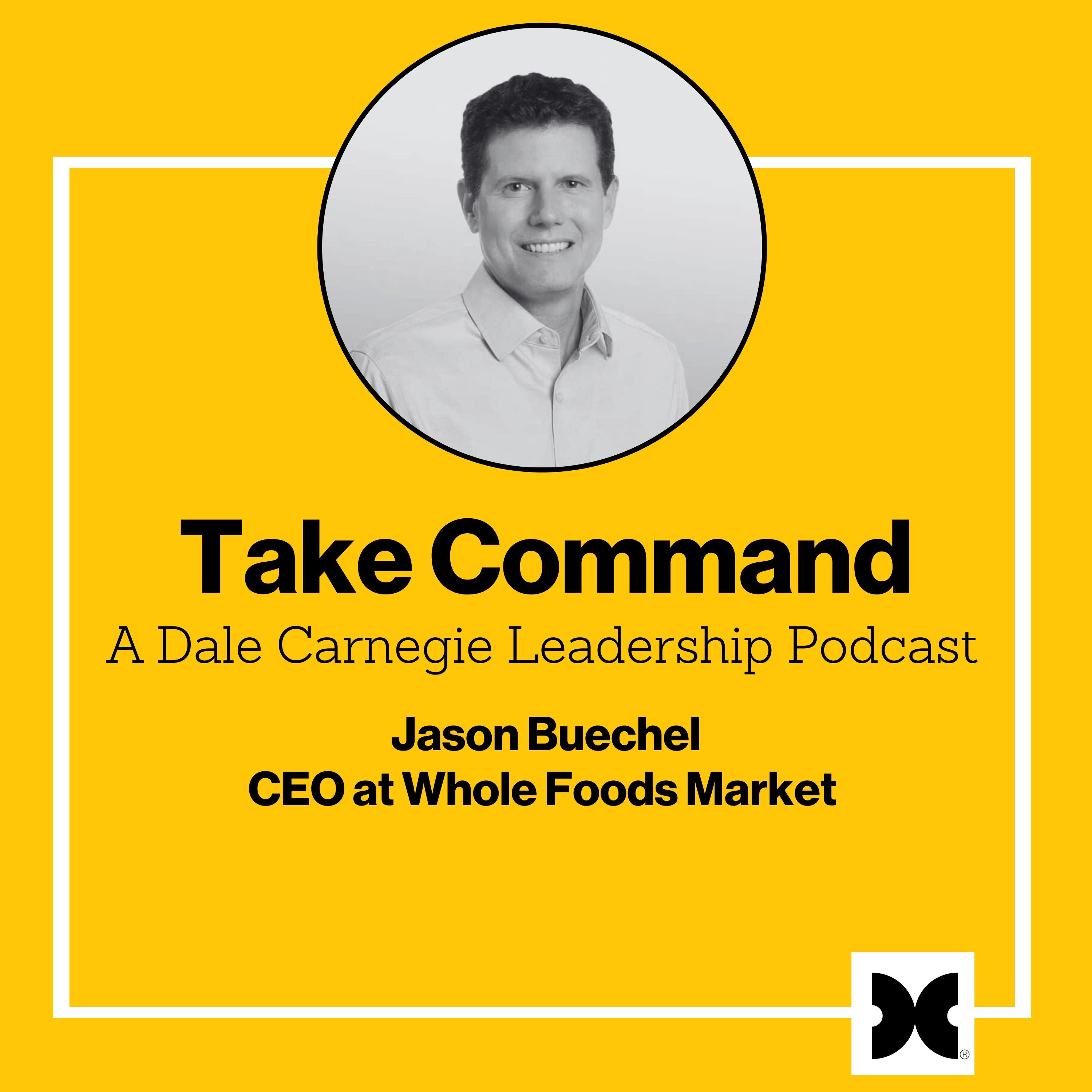
Take Command: A Leadership Podcast
Nourishing People: Sowing the Seeds of Leadership
00:41:17
Jason Buechel had a big task ahead of him when he started at Whole Foods: Consolidate thirteen distinct regions of teams into a system where individualization remained but could be scaled efficiently. His successes led him from the CTO/CIO position to COO in 2017 (when Amazon acquired Whole Foods), and now he leads as CEO. This journey has come with plenty of lessons. In this episode of the Take Command podcast, Jason discusses his style of servant leadership and what he’s learned while leading his teams through major changes. Everything he does is motivated by the idea that “our goal is ultimately not just how do we serve customers today, tomorrow, five years, ten years from now? But we want to change this entire industry so we can make sure that this is protected for future generations.” Tune in to hear why you shouldn’t dismiss things that you may not fully understand, why getting real-time feedback after you put solutions out there is important, and why you should always put y...
Loading summary
Transcript44 lines
- [00:00]
Jason Biechle
Foreign.
- [00:10]
Joe Hart
Welcome to Take Command a Dale Carnegie podcast. I'm Joe Hart, CEO of Dale Carnegie and before we dive in, don't forget to follow Take Command where every episode gives you the tools to lead with confidence. In today's episode, our guest shares his journey leading a major food industry brand through transformative change with a servant leadership approach. He discusses the importance of staying mission driven and gathering real time feedback. In the beginning of his career, Fortune magazine recognized his leadership by naming him one of the 40 most influential young people in business today. He continues to drive innovation with a strong focus on sustainability and and delivering exceptional customer experiences. Please welcome the CEO of Whole Foods Market, Jason Biechle. Jason, welcome to the Dale Carnegie Ticketman podcast.
- [01:07]
Jason Biechle
Hey Joe, so glad to be here.
- [01:09]
Joe Hart
It's great to see you. You are the CEO of Whole Foods. So much I'm really looking forward to talking to you about. I mean, you took over from an iconic CEO who started Whole Foods, led it. You've also led Whole Foods amidst the transition from Amazon. Certainly you're doing many great things. I also know you prioritize personally physical and mental wellbeing, which I think is really important to our listeners. So I want to talk to you about that. But Jason, if you would share something about yourself that maybe is a little known, you know, your journey and your leadership and part of how you lead.
- [01:43]
Jason Biechle
I've had a deep connection to our food system since I was very young. And while I never would have imagined ending up in the role that I'm in right now, I have this sort of unique perspective. Both of my parents grew up on dairy farms. My dad was a cheese maker. For me, I, after going to college, went into consulting and really had a passion for retail where I spent my entire 13 years in consulting, working with retailers and, and I have this interesting connection now where I can tie back to being part of work on my grandparents farm, to gardening at a young age, having that perspective of what it takes to produce, to farm. And ultimately I'm in a major stakeholder role right now in how we protect our food systems for the future. And so while I never would have imagined this path, it's an interesting intersection that I play at in retail, technology and our food systems in connecting my very young childhood to my entire professional career sort of leading up to this point.
- [02:52]
Joe Hart
Yeah, it's interesting, isn't it? Sometimes how certain things that happen, we may not think about them at the time, but you look backwards and all of a sudden the dots connect.
- [03:00]
Jason Biechle
It's really interesting and just, you know, Chatting with so many people I've known throughout my life, when they sort of see this, they're like, it sort of like was all meant to be when you sort of look at a bunch of the experiences I was having. So I feel so fortunate to be able to lead a company that I've known and love, not just working here as a team member, but, you know, I was a loyal customer for 12 years before joining Whole Foods Market.
- [03:22]
Joe Hart
Well, interestingly too, I understand that you worked when you were at Accenture with Whole Foods as a client and in fact they had come to you at one point looking for a potential Chief Technology Officer, Chief Information Officer. You gave them some names and your name wasn't on the list. Ultimately you came into that role. How did that happen?
- [03:41]
Jason Biechle
Yeah, so while I wasn't doing direct day to day work, I did have some team members of mine and my previous employer which, you know, once in a while I would do sort of the check in on a monthly and quarterly basis with some of the senior leaders and got to know the co CEO Walter Raab and the former CFO Glenda Flanagan pretty well through some of those conversations. And they had come to me and said, you know, we're looking to fill this position. Do you have some ideas of who might be a good fit? And I did give some other names, some clients of mine who I thought would be great fits. And for a variety of reasons, those, those didn't work out. And a few months later Linda came back and said, why wasn't your name on that list? And I sort of explained, you know, why this wasn't the right opportunity for me at this time for various reasons. And what she convinced me in that call was it made sense for me to come spend a little bit more time in Austin to get to know the company before I said no. And you know, to be honest, I had put together the script of why this wasn't going to be a good fit that I'd almost rehearsed going into the time I spent here in Austin with the team. And it was after the first day where I was like, maybe I do need to reconsider this, maybe some of my priorities as far as what I think the next steps for me aren't what I thought they were going to be. And one of the things that I left really connected to was like, wow, this company has both a purpose and core values that are not just words on a wall. I mean, that just was like from every discussion I was having with team members in that first day. And I would say the second day. By the end of the day, I was like, okay, you know, I'm in. Throw my name in the hat. What are the next steps? And of course, then it was like, well, we've got some other candidates and there's a process. You know, curb your enthusiasm a little bit. But for me, it was really amazing to have sort of those two days where I got to know the company a lot better. And I immediately was going to sort of dismiss this at first blush without doing the right diligence. And one of the things that I really give folks advice on is don't dismiss things that you may not fully understand. Take a look deeply at the opportunities that come your way, because you might feel like, I'm on the current trajectory, that's the right thing for me, or this is the straight line that I think I can continue to follow to get to my career aspirations or goals. And in some cases, the these alternatives that may come might actually be a better fit for you longer term. But if you sort of have your blinders on, you're not taking a full look and holistic perspective, a panoramic view, if you will, you might miss out on those. And I absolutely would have had I not gotten sort of the push from Glenda to say, come spend a little bit time with us before you say no. And, you know, not everyone's gonna have the opportunity where somebody's actually like, really pushing you to say, like, think outside of your current boundaries. From that perspective, I'm forever grateful. And I constantly remind Glenda she would have been a great executive recruiter as well.
- [06:24]
Joe Hart
Well, she got you to at least check it out, right? I mean, so that was maybe that first step. But it's interesting because I think a lot of people do have that mindset. We have a vision for ourselves and we can close ourselves off. Or maybe it doesn't sound like there was any kind of a fear on your part. I mean, you had kind of a vision for yourself. It was just different than that, right?
- [06:41]
Jason Biechle
Yeah, it was different. I was happy doing what I was doing. I saw opportunities to continue to grow in the existing career. I wouldn't have had to move. One of the things that I saw in the perspective in the work that I did was being in a CTO or CIO role, especially in the retail space, is difficult. Like, the turnover is really high. It's tough being in sort of what's known as a shared services role. You know, at that point, I was in the fortune of within my responsibilities. I had A P and L. I had a business that I was responsible for and I liked that. And it's one of the things I took into the feedback early on in my conversations before accepting the role is like, what are ways that I can be better connected to the business? Like, I didn't grow up and dream like, oh, I want to be a CTO or cio. I really love being close to the business and I liked having P and L ownership. And it actually led to my first role here was not just being the CTO cio, but it was helping lead our digital businesses. What we currently know as E commerce, the delivery and pickup business, at the time, we didn't really have one, but they're like, we want to grow one, we want to build one. Walter especially had the foresight that our customers were going to be early adopters in this space and we needed to lead the way. And so that was one area where we were able to come up with sort of a win win solution of I could help lead the technology work at the same time, stand up this new E commerce business for us.
- [07:57]
Joe Hart
So what were the challenges involved with that? I say that because we look at Whole Foods as such a tech savvy kind of a store. The integration of technology, particularly over the last several years, and I knew you're doing some interesting things with biometrics and some other kinds of things, but what was that like to undertake that work and how did you go about leading change in the organization?
- [08:18]
Jason Biechle
Yeah, so when I first joined the organization, we were highly decentralized and that was across all businesses. And quite frankly, it was some of the keys to our success. Being able to be decentralized, focused geographically, you know, within our regions and serving our customers really was what allowed us to thrive as a retailer. At the same time, as competition becomes more and more difficult, being able to have the efficiencies and scale that we needed to became of a friction point. And so when I joined, in essence, we had 13 different technology teams. We had one for each of our 12 regions at the time, and we had one here based in Austin. And so a big part of my initial responsibility was figuring out how do we bring those teams together so we could best serve the organization. You know, I often talk with folks around what were my first two assignments in joining the company. One of them was get us to one point of sale. So at the time, we had multiple different point of sale solutions because of all these different teams and to get us in the E commerce delivery and pickup space in a meaningful way. And so those were sort of the first two areas to tackle. And on the first point, it was about how do we work together as a collective group of technology teams, form one tech team and choose solutions that allow us to move quickly in serving our customers and at the same time ultimately find ways that we can help bring efficiencies for the organization so we can be more competitive.
- [09:42]
Joe Hart
So, Jason, there's clearly a technical piece of what you're talking about and then there's a people piece and this is what we're really interested in. Dale Carnegie.
- [09:49]
Jason Biechle
Right.
- [09:50]
Joe Hart
There's the influence, the relationship piece. The fact that you're talking to people who are used to seeing things a certain way and you're talking about change. What did you learn about navigating that kind of a change initiative, especially being a newer person in the organization? I would imagine some people might have been defensive or protective of their territory. How do you navigate that?
- [10:11]
Jason Biechle
It's a great question. The first mistake I think I made and learned quickly from is when going through such a massive change and journey, it just can't be a tops down dictation of where we need to go. And I'll say the reality of where we need to go. I knew it. Some of my key leaders who worked with me knew it. You could have drawn out my first two, three days of work. What is the right answer? And we could have said go, and just started to push it. And in some cases, I did start down that path a little ways and came into some of the obstacles around. We had to make sure that all stakeholders within the organization that were going to be impacted by some of the changes had an understanding of why we were doing the work that we were doing and making sure that we could seek their input as well as get their alignment and so we could get their support. And even though in some cases that work sometimes seems like it takes longer, it probably ends up saving you time over the long haul. And that was some of the early things that I quickly learned is I'd worked with organizations before where there was some decentralization, but here where you had so many different pockets in different groups, it was about making sure you understood where everybody was at on sort of the change curve and ultimately what is the best path by which we can bring everyone together in unison. And so there were some early lessons learned around. Part of it is leading with influence, being able to have a vision, but a vision that isn't just a topsound. We're making sure that stakeholders have a voice into the process and what we did have is we had unique needs. Take something like the point of sale system. We have stores that are highly urban and have certain ways that they need to serve customers because they're having a lot of really small baskets and ultimately a lot of transactions in the day, and then more of a suburban, which is a bigger basket mix. And so some of the functionality and ways that we need to put in the solution are different. So a big part of it was making sure we could understand where all of our stakeholders were at, what they needed, and how did we build sort of that path that we could bring everyone along together.
- [12:14]
Joe Hart
So the listening and really understanding seems like it was a really critical part of that for you. I can see how sometimes for all of us, when we're dealing with change, often we might think we got the answer, but it really is about challenging our assumptions and listening to other people and valuing and listening to others and giving them that idea that people support a world they help create. Sounds like that's something that you really did very successfully in that initiative.
- [12:38]
Jason Biechle
Yeah, and a big part of it was also working with my team. One of the benefits I had before going into the role is I worked really closely with a lot of business stakeholders, with my clients to understand, okay, as we bring in this technology, how do we make sure that we can enhance the business operations, we can figure out where we're at today, how do we make it better, make it a better experience, and especially as we're implementing technology that supports our team members and customers, how to make sure we're not going backwards, we're actually going forward. And so for me, it was helping make sure that my team understood the importance of us connecting with our business partners, especially those in operations who are going to be using a lot of this technology and will be connecting directly with our customers on it. And whether that was the point of sale system to the work in our e commerce space, that was a really important part. And what I loved about it was it gave me an opportunity. I wasn't just playing sort of in the tech space. I was helping work with the business on how do we make the business more connected and more competitive to what we can do to better serve our customers and create better team member experiences. And that's where actually I think the fun part gets out there, is that you know that you can have a greater impact in some of the work that you're doing when you can see the real time feedback after you put solutions out there that are actually creating better experiences for your Stakeholders. Yeah.
- [13:54]
Joe Hart
It must have been very gratifying for you to be able to actually walk into a store and see the fruit of all of that coming together. I know you've traveled clearly all over the place, country, looking at different stores and understanding the needs, I think about this theme of change. You came and there was this change around technology. You became the chief operating officer. In 2017, Amazon acquires whole Foods. I can only imagine that being a company that started, that was privately held, that was growing, all of a sudden it's acquired by Amazon. That must have been seismic for the people and the culture. Could you talk a little bit about what that was like and how you helped lead during that time, during that transition in the role that you had and ultimately becoming the CEO?
- [14:36]
Jason Biechle
Yeah. So in 2017, when we were acquired by Amazon, so at the time we were a public company, became part of Amazon. I had sort of two responsibilities at the time. I was leading technology and some of our other we would call global support functions at that time, like our team member services, which is hr. But I also picked up our strategic integration team, which was really put together to help make sure that we could bring together the best of Whole Foods and Amazon to best serve the business and all of our stakeholders, including our customers and our team members. And so that was a really rewarding experience because it was a lot of fun work that allowed us to tackle many of the things that we couldn't do as a public company. Like we wanted to be able to reduce our prices and that allowed us the Runway to be able to do that really quickly, introduce a loyalty program, which we obviously picked up prime as part of that, and then began to move down, sort of our next iteration of our technology journey and becoming part of Amazon, being able to leverage some of those solutions, becoming part of Amazon's broader grocery delivery program, which was something that we did in the early stages and was really an amazing offering that we had for our customers throughout the pandemic. And as I was able to do a lot of that work, it gave me an opportunity to work more closely with our core business. I'd already spent a lot of time with our operations team, helped develop our first, what we'd call global support operations team a few years before that. And that's what led me to step into the COO role in 2019. For me, it was a great opportunity to take a lot of the lessons learned I had and how to help bring together all of our teams and better supporting our technology, our team member services functions, helping stand up Better processes for sort of our global support operations. And then you know, ultimately being a place that we could holistically serve all aspects of operations in a better way. And whether it was supply chain to the work we're doing around real estate and distribution, how do we bring some of those pieces together and in harmony, try to leverage the best of Amazon and in ways where we as Whole Foods could help support some of our Amazon businesses as well. And it was a lot of that work, especially the work that we did over the pandemic, which was, quite frankly, really tough. Our team members were heroes throughout the entire pandemic. They were frontline workers, ensuring that all of our customers in the communities and the three countries that we serve, we could continue to make sure that food was available through those difficult times. And it was a lot of the work, I think, through those efforts that allowed me to sort of prove I was ready to help take on more responsibilities, which John Mackey, our co founder and former CEO, helped give me some of those responsibilities throughout that time and coming out of the pandemic. And when he decided to retire in 2022, had made the decision, I was the next person to help take the step up and support with the Amazon leadership. I'm privileged to be, you know, leading a company that not only I love, but ultimately I'm so honored to be able to help support our next iteration of what we're going to do in helping nourish people on the planet, which is our higher purpose.
- [17:44]
Joe Hart
You've talked about many things. I want to talk about purpose because that's something that drove you from the very beginning of your career and drives you personally. You took over from John Mackey, CEO for over 40 years. I know even from having taken over my role here as a CEO, when people are leading for a period of time before someone new comes in, and you were internal. So that maybe gave you an advantage to knowing people and knowing the culture and so forth. But whenever there's a change in leadership, people can get nervous. People worry about culture. I mean, it's just a natural tendency that people have about what the future holds with change. What were some of the things that you did when you became the CEO that helped you navigate that? Really continue to build on the culture? Because I know that your culture has continued to be very, very strong. And certainly Whole Foods has a reputation for having a strong culture.
- [18:31]
Jason Biechle
Yeah, I'll even share some things that I did before stepping in the role and some great lessons learned that I got through this process. So I had a Privilege have basically an 11 month transition period which most folks don't have the opportunity. And so not only did I have a chance to work with John for so many years before being announced that I'd be stepping in the role, but, you know, I had an 11 month period where him and I could work really side by side with the organization and hopefully being at a point where everyone was ready for that baton handoff, if you will. And so one of the things that I put together something called the whole Conversations Tour, where my goal was to go out and connect with each one of our regions at the time and be able to have a better understanding of where our team members were at. I wanted to use this as an opportunity to help get input from around the company across all of our stakeholders as I was going to work on creating our vision, you know, after I stepped into the role. And so we sort of put together this sort of very elaborate process and we had within each regional visit the opportunity for every single one of our stores to have two members come and represent that store. A member of leadership and one of our team members, which is one of our culture champions. And a big part of that was making sure that for those of the team members who didn't know me very well, even though I was in the CEO role, there's a lot of the questions of like, where are we going as a company and what's going to change with John retiring. And my goal was to use that as a way to sort of myth bus, you know, some of the things that people might have had out there and to use it as an opportunity to help solicit input and help bridge some of the confidence. So I was really confident that, you know, doing all of this work, which was a lot of traveling over the course of nine months and doing all these different visits that that would help support the transition. And we have something called our annual Culture Compass survey, which is sort of our annual engagement survey, if you will, or satisfaction survey that some companies would do amongst your team members, understanding where your morale and stuff is. And one of the things that took place is just before stepped into the role, we got the results and one of the questions was, I have confidence where Whole Foods Market is going as a company. And we actually had a decline. I took it really personally and I'm like, wow, I did all this work. And I remember scrubbing through all the commentary related to that question. So there's the actual question themselves. And then team members can do freeform. And there were so many comments that were so concerned about with John retiring or, you know, I remember reading comments like Jason's going to turn us into Amazon and replace us with robots and automate everything. It was just a lot of assumptions that ultimately I was really surprised to read. But what I realized was all the work that I'd done in advance, it wasn't enough to fully actually connect with team members. They needed to see it in action. At the time I was just talking, I wasn't doing the walking yet. And so a big part of coming out of that was I'd already had the plans of bringing all of our feedback together and helping co create this vision. But one of the things that we needed to do was make sure that our team members saw the action in place. And so it actually led to something we called our growing with purpose roadshow that we launched last January when we sort of kicked off. Our new vision is every single one of our stores, facilities and primary offices. Myself or one of our E team members visited our stores to talk about the vision, to connect with our team members, to share the actions that we've already taken, some of the things that are coming up and it was so valuable last year in doing that. And I will tell you, that score of the confidence where our team members are right now, it's gone up, it's higher than where it was before. And I think a big part of it is we were able to as a leadership team show we weren't just talking, we were actually walking the talk. And we've actually decided to continue the same roadshow this year. We've expanded the group to a larger audience of our senior leadership team. But for me, a big part of it was not just making sure I have the plan and I can talk about the plan, but how do we actualize it and make sure that our team members are part of it. And that was such a big learning in pulling together. That roadshow is making sure that our team members understand where we're going as a company, how their role connects to it and ultimately how we're going to work together to achieve it.
- [22:47]
Joe Hart
And then like you said, they need to see that over a period of time because it's a truism, I think, that you can't build a reputation based on what you say you're going to do. People actually need to then see that come into action and then realize that there's that reliability, that truthfulness, integrity and so forth. And clearly those two things together for you, that listening and then also by the delivering and following through, it's great that it's really helped your scores like that. Going back for a second to John, I mean, I know he's a very distinctive leader, very well known leader. What are some things that you've learned from him that you say? Part of what I saw in working with John, this is something that's been a distinctive lesson or trait for me that I've integrated into my leadership.
- [23:26]
Jason Biechle
There's so many things that I've learned from John. You know, one of the very first lessons I had with him and where I utilized him and his support so often was helping solve an issue or a challenge with finding a win, win, win solution. One of the things he did very early in my tenure at Whole Foods was sort of open my eyes to a stakeholder model and making sure you don't just think about one singular stakeholder. You're taking a broad perspective and making sure that as you make decisions, even if you have to lean and there are always certain stakeholders are going to have a greater weight. For us, our customers are supreme. We're customer obsessed. And making sure we make decisions that are right for our customers is paramount. But it's also important that we think about our team members, we think about our suppliers, we think about our communities in the environment, we think about our parent company, Amazon, as we make many of our decisions. And he really helped bring to light the importance of looking at that and having that panoramic view. And I remember having an early challenge where I really struggled with some things and him really pushing and challenging some of the ideas that I had around how to solve it and really driving to a win win or sometimes a win, win, win outcome, depending upon how many stakeholders you're looking at. And I can't even count how many times. And it's kind of funny because the room I'm in right now is his former office. We've made it sort of a conference room. I didn't want to have anybody else take it over as the office, but how many times I would come here in this room and sort of debate with him and process something I was thinking through. And for him, he was really good at always pushing back and making sure I was thinking about how do I get to this win win, how do I think about all of the stakeholders in the best way possible? And so oftentimes as I'm still thinking about wrestling with a tough decision or something where we've got a lot of angst between two stakeholder groups, I'll think like, how would John help process this? And so for Me, that's one of the key things. But there's so many countless examples. I could probably spend an entire hour explaining all the things I've been able to learn from John.
- [25:33]
Joe Hart
Well, even that one, I think is a really important one because I mean, what it goes to is mindset. Because ultimately there's different kinds of leadership mindsets, right. And someone could be how do I get the most out of someone or out of something? It could be an extraction kind of mindset. But what I hear you saying that you learn from John are certainly took from John is how do I bring the best out in other people? How do I get the best result by working with others for these different groups. And that's really ultimately the job of a truly high integrity, inspiring leader is to be able to do that versus just trying to maximize at the expense of other people.
- [26:06]
Jason Biechle
Yeah, exactly.
- [26:08]
Joe Hart
What do you see, Jason, as if you look ahead for Whole Foods. What are some things that you're really excited about in terms of your leadership and the future of the business?
- [26:17]
Jason Biechle
Yeah, one of the things that I'm really excited about is how Whole Foods Market is going to be able to achieve our higher purpose in nourishing people on the planet. And one of the things that we are really focused on is how do we protect our food systems for the future. And one of the areas I think that a lot of consumers are not aware of is the ways by which we have been farming at this point for decades are really detrimental to our entire ecosystem and ultimately how we can continue to produce the foods that we know and love today. And so one of the things that I'm proud of is for the last 44 years, we've led in climate friendly agriculture practices like organic regenerative, where we've put a really big stake in the ground and helping lead the way across our industry. But our goal is ultimately not just in how do we serve customers today, tomorrow, five years, ten years from now. But we want to change this entire industry so we can make sure that this is protected for future generations. And the reality is we're losing nutrient density every single year, every year that we have a new set of crops. And our goal is to make sure that there's broader awareness amongst our customers and that we're working with suppliers and finding ways to help improve our food system so our future generations can know the products that we know and love today. And I think that's going to be one of the things as a company, our legacy is going to help connect and really help drive our broader retail, grocery and food systems across this country, and hopefully many others as well. The same way that we've helped lead organic over the last 44 years, I think bringing awareness in this space and helping drive further change is a responsibility that we all feel.
- [28:07]
Joe Hart
It's interesting that you are proactively doing that. You can imagine other models were simply purchasing product and selling product and so forth. But what you're actually saying is fundamentally you really want to help. Even in the example you gave, how do you agriculturally grow nutrient dense food? How do you deal with some of these challenges that have occurred over the decades from farming or industrialization or different processes and stuff, but you're actively taking a role and leading that.
- [28:35]
Jason Biechle
Yeah. And for us, it's trying to connect with a broad set of stakeholders in this space. You know, first and foremost working with our suppliers, who at the heart of helping drive this change. And for us, it's understanding what are some of the challenges they have in being able to adopt to some of these new practices. You know, I mentioned earlier some of the work that we're doing in the regenerative space. We have three different certifications that we support today so we can help meet suppliers where they're at. One of the things that we don't want to do is try to make this sort of an inclusive or exclusive space. Most consumers don't realize that it's only about 1% of the entire acreage in this country is organic today. And our goal is to help improve practices holistically. And that barrier is really tough to get to that level. We obviously, you know, are one of the strongest proponents of organic. But a big part is we need to meet suppliers and farmers where they're at today so we can graduate them up in being able to help support these practices. And at the same time, we're working with our customers to help ensure they have an understanding of why we're helping support this work and helping make some of the change and also working with other stakeholders like our communities, different government officials, NGOs, and making sure that we can get the right support, support in protecting our food systems in the future.
- [29:51]
Joe Hart
Well, you're also working, I believe, to reduce the cost of some of this food because certainly there's been a perception among people over time that Whole Foods is certainly more expensive. And I know you've introduced a number of lines of products to make organic and healthier foods more accessible to people. That also connects into your purpose and your why.
- [30:10]
Jason Biechle
Absolutely. And for us, bringing value to customers is so important. So obviously we've had the highest quality standards in grocery for the last 44 years. And our goal is in addition to having quality, we want to make sure that our customers also have value. And one of the things that I'm really proud of, you know, since the beginning of this calendar year, on average, each of our stores, about 25% of their items have seen a price reduction. We've increased the number of promotions. We are adding more365 products, which is a lot of our opening price point and entry level products in the stores. You know, amongst those items alone, we've reduced prices on 880 of those. And so for us, it's getting that balance of how do we ensure that we continue to have the highest quality and at the same time bringing great value for customers. As we can do that, we're going to bring more customers into Whole Foods and ultimately we're going to bring a greater awareness amongst the consumer population of why it's important to make some of the choices that are helping support protecting our food systems.
- [31:11]
Joe Hart
That's terrific. Jason, let me ask a little bit about you because I know you take the contribution that you're making to society very seriously. The need for mental health and physical health. You value that very highly. And on a personal level, I mean, you're someone who really actively makes time for physical and mental health. You've got a routine. Your routine was profiled in Fortune not long ago. Got to look at the way you go about your day and I know we'll spend at least once or twice a day either exercising or spending time on meditation, but you prioritize that. Share a little bit about your routine with our listeners, if you would.
- [31:45]
Jason Biechle
Yeah. The first thing I want to start off was this is an area I also had a lot of personal growth in. I wasn't always getting enough sleep, wasn't always prioritizing. I've been running for decades and it's one of my passion things. It allows me to disconnect. But I wasn't always prioritizing taking care of myself. And that's something that I think is so important as a leader. You not only need to do it for yourself, but you also need to help lead by example. And so whether it's each day making sure that you can have the right time to unplug or taking time for pto, I think a big part is making sure that you take care of yourself. If you can't take care of yourself, you're unable to take care of your team members in the organization. And so for me, I just can't stress that enough in being a lesson learned that I sometimes didn't always prioritize that. And, you know, for me, I always try to find at least two points a day where I can truly disconnect and be able to take care of me. And sometimes it might mean two different workouts. It might be a walk and a workout. It might be going to meditate. I've got sort of this protocol I do for recovery that involves cold plunge, hot plunge, infrared sauna. But these are all ways by which I can help mentally and physically sort of rejuvenate my body. And I also find this as a great opportunity to just use this time for brainstorming, disconnecting from how you might sort of typically go about your business day and working, and use this as a way for spending time for myself and replenishing my mind and my body at the same time. And a big part of that is also, I know it sounds probably cliche here, but eating healthy as well and making sure what you put in your body is helping replenish yourself. For me, making sure I make time to eat healthy meals throughout the day is important step as well.
- [33:25]
Joe Hart
It really is true. And probably for you also to walk the walk, I find the same thing. It's all connected, though. And personally, I try to work out at least once a day, sometimes twice a day, or like you're saying, doing something different, trying to eat healthy. And I find that when I don't, I'm just not the same. I mean, physically, psychologically, I'm not the same. And I can't bring the best that I have to other people if I'm not doing things to take care of myself.
- [33:49]
Jason Biechle
Absolutely. And that's one of the areas where I've done a good job of sort of journaling. When are the times where you just aren't feeling the best? What are the things that you need to pull out of your diet? One of the things that I was doing over time was I was over training some things, and it forced me to adjust my running schedule and realizing, like, I wasn't getting enough recovery in. And a couple of things, and I think a big part of it is making sure you're listening to your body at the same time and making those adjustments. Everybody's a little bit different. And I think figuring out, you know, one of the things that I encourage folks who ask questions on the side, it's not about a formulated thing of go do what I did. It's figuring out what works best for you? For me, when I have a really tough business problem to solve, the best thing for me to go is go do a long hike. I've got two, three hours, and it's not like I'm spending the entire time thinking about it. First bit of time is just disconnecting, connecting with nature and then using that time to sort of process. And some people like to just, you know, sit down in front of a computer and type things out. So I think a big part is understanding what works for you and how do you build those parameters in. A big thing that I like to do is making sure I can time block every single day. Where I sort of look at my calendar, my schedule changes, what city I'm going to be in, when I have to fly, and it's figuring out when am I going to have those points of the day where I'm able to disconnect. This morning I had a run. First thing in the morning after work, I'm going to be going and doing the recovery protocol that I just mentioned to you a little bit. That's my schedule for today. Well, tomorrow I'm traveling. My schedule is going to be a little bit different. So figuring out over the course of the next week, how do you time block and plan for these? If you wait until the day before or the day of, the likelihood that you're going to get it in. And this was the big mistake I always made was you're ultimately probably not going to get it in there. And so planning in advance and making sure that you're preserving time for this is really important. And some days for me it's just walking over lunch, or in some cases it might be taking one of my meetings and deciding we're going to go for a walk, we're going to go downstairs in the store and walk around the store. I'm going to go get some extra steps in today that way. So a big part is like figuring out with your schedule what's going to work with you and ultimately make sure that you can balance those things.
- [35:59]
Joe Hart
But it starts with prioritizing it. That's what I hear you saying and being really intentional because honestly, so many times people can say, I don't have any time, I don't have time, I can't find time. But we can find time for the things that we prioritize. And like you said, especially in my view is, you know, your health is your most valuable asset. Right. Prioritizing that. It's actually part of my work day. I'm going to be better at work. I'm going to bring more to the people I'm around. If I'm working out, eating well, making some time to do the things you're talking about. Jason, last question I have is, you know, I've had this habit lately for the podcast of going to ChatGPT, and I went to ChatGPT before this podcast and I said, chatgpt, I'm going to be interviewing Jason from Whole Foods. And I said, if you could ask Jason only one question, what would that question be? And the question from ChatGPT for you is, as the CEO of Whole Foods, what has been the most significant leadership lesson you've learned and how has it shaped the way you lead and inspire others in both your personal and professional life?
- [36:55]
Jason Biechle
That's a great question. Am I allowed to use ChatGPT to answer the question as well?
- [37:01]
Joe Hart
At some point, my CHAT GPT advertising, we'll talk to yours and that will be the interview, you know.
- [37:07]
Jason Biechle
Yeah. Well, the good part is, hopefully, my guess is ChatGPT would come back with the same answer I did. The number one lesson that I learned is the importance of being a servant leader. And this wasn't something that I was in my early days as a leader. Sometimes I refer to those days as when I was a manager and not a leader because of what I was focused on. But I learned so many great lessons from so many mentors since I've been here with Whole Foods. You know, I talked a little bit about John a little bit earlier, but our co CEO Walter Raab, was one of the first leaders that I reported to. I co reported to him and Glenda Flanagan when I first joined. And his biggest imprint on me was really having a deep understanding of the important work that takes place at the store level in serving our customers and the role that our team members play. And we spent so many times visiting stores. And I get a greater sense of the important responsibility that we have as leaders to fully understand how all of our different stores and facilities and offices operate each and every day. One of the things that he had me do even before I started my first day of work was go work in stores, which something I wanted to do was something I was able to do in my past career and learn things from. But you know, ultimately I think as a leader, if you can be better connected to the connection points of your most important stakeholders. And for us, it's our customers and our team members, ultimately that's the key to success in figuring out what you need to do in creating the vision and the strategy and the plan that's ultimately going to allow you to achieve. For us, it's our purpose, but for some organizations it might be their mission or their goals or financial results. But if you can't be connected to those stakeholders and have a better understanding of the opportunities and the challenges that they're facing, I think it's hard to actually be a leader who can fully connect and motivate an organization. You might be able to generate short term and interim results and sort of pushing down and just asking for results to be delivered. But I think it's being that servant leader that's there to help support the organization and bridge it to the next opportunity and ultimately help work through what those challenges are. And for me, that I think is the importance of being connected and when you are the opportunities that you're able to unlock. I was in, I think roughly 10 stores last week. What I was able to learn in the experiences that I could bring back to our team and what's going to help make us a better organization, it was probably 100 couple things that I was able to bring back from that. And what's great is sometimes it's just one little point of feedback that you get in a store of a friction they're dealing with that you unlock and say, I've got over 500 stores that have this same challenge. And so for me, making sure that I can stay connected to all of our stakeholders in some form or fashion on a regular basis, I think is a really important part. And my job as a servant leader is ultimately to make sure that we can all be successful in connecting our team members together to ultimately achieve our purpose. And for us, it's nourishing people on the planet.
- [40:22]
Joe Hart
Awesome. Jason, well, thank you so much for being with me today. Thank you so much for these valuable insights and lessons. I know that our audience is going to love it.
- [40:29]
Jason Biechle
Thanks Joe. I had a really good conversation and thanks for having me.
- [40:33]
Joe Hart
Thank you. I hope you enjoyed this edition of Take Command, a Dale Carnegie Podcast. Check out our resources at www.dalecarnegie.com for more research, insight and tools that will support your success and help you take command of your leadership potential. If you enjoyed this episode, please consider rating it and following us on Apple Podcasts and Spotify for more exclusive content such subscribe to our Dale Carnegie YouTube channel and follow us on social media. As always, thank you for listening and we're looking forward to you joining us for the next episode of Take Command, a Dale Carnegie Podcast.