← Take Command: A Leadership Podcast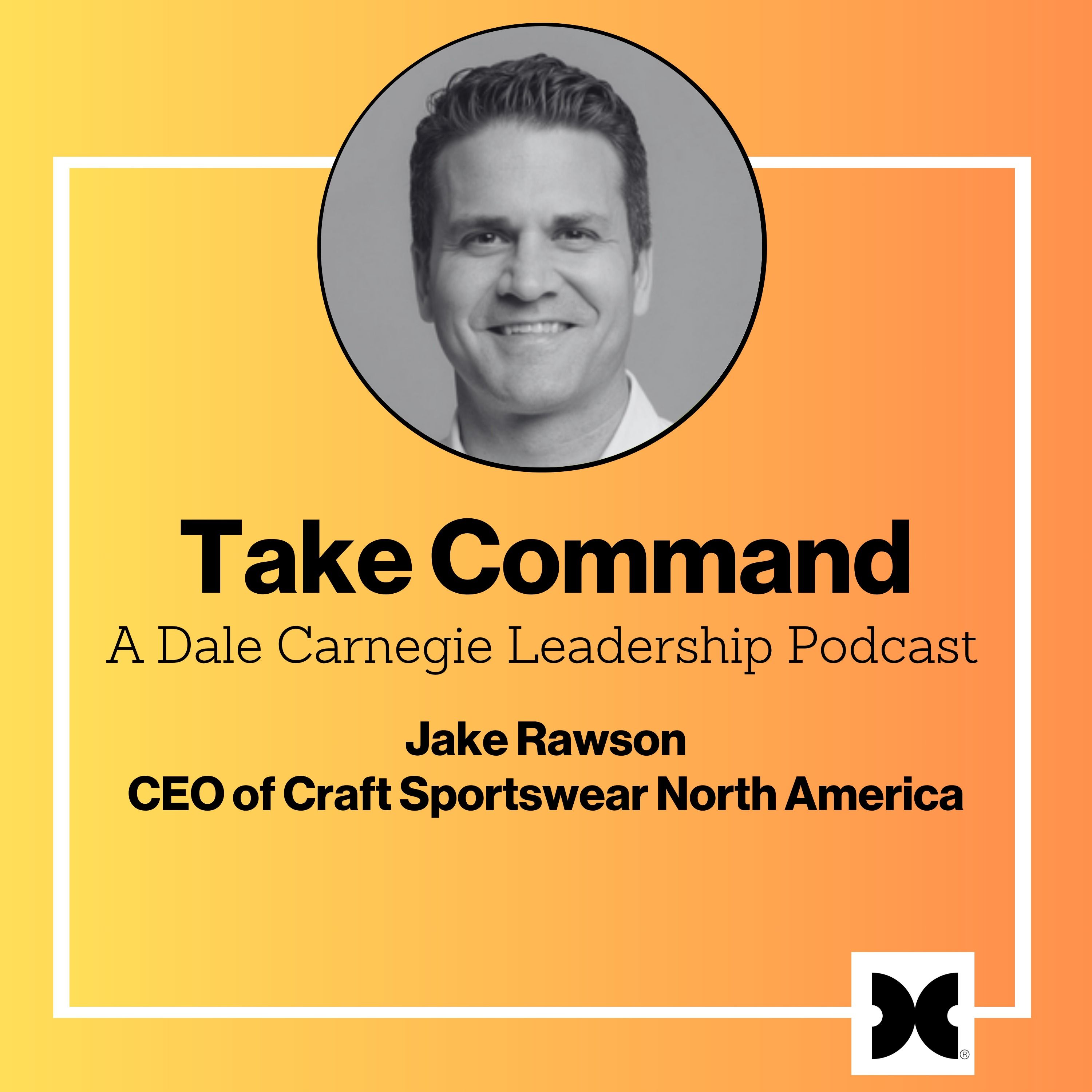
Take Command: A Leadership Podcast
Running the Long Game: Small Steps, Big Impact.
00:31:30
Jake Rawson, CEO of Craft Sportswear North America, thinks of business like an endurance race. “It’s not one moment… it’s the stacking of goals… incremental gains,” he says. In this episode, Jake shares how patience, consistency, and a long-term mindset have shaped both his leadership and his life. From mentoring teams to coaching his kids, he emphasizes positive reinforcement, embracing opportunities, and applying lessons from Dale Carnegie to create lasting impact. Tune in for practical insights on building confidence, fostering growth, and running the long game—on and off the track.
Loading summary
Transcript48 lines
- [00:00]
A
Right at the top is don't criticize, condemn or complain. And we have to teach that positive mindset, positive attitude, extremely important. And if you can take those things and, you know, think about giving honest and sincere appreciation, people that matter, it makes a big difference in their lives. And you can see it every single day in the way that they show up and then the way that you show up as a parent as well.
- [00:30]
B
Welcome to Take Command, a Dale Carnegie podcast. I'm Joe Hart, CEO of Dale Carnegie and if you're ready to grow your leadership skills, follow Take command now and never miss an episode that could transform your career. Today's guest has built a career step by step, turning curiosity and a passion for learning into long term leadership success. He now leads the North American business of a global endurance sports brand, helping drive its growth in one of the most competitive markets in the world. Across more than 25 years. In apparel and footwear, he's built a career spanning product marketing, sales and operations, helping grow brands from the ground up. He spent over two decades at Cutter and Buck, working his way from an entry level role to executive leadership. Please welcome the CEO of Craft Sportswear North America, Jake Rawson. Jake, welcome to the Dale Carnegie Take Command podcast.
- [01:35]
A
Thank you, Joe. Thank you for having me today.
- [01:37]
B
Well, I'm excited to have you. You are leading. You're the CEO of a really cool brand, international brand, craft sports, where based in the Nordics, came out of Sweden. And innovation I know is the hallmark of what your brand is all about. And certainly getting some insights from you about innovation is really important. You're an endur sport, so there's a lot about just persistence and there's been a persistent growth in your brand since it was founded in 1973. So looking forward to talking about a lot of different things, give our audience a little bit of sense of who Jake Rossin is and what your journey to become CEO of this tremendous sports brand was like.
- [02:17]
A
Yeah. Thank you, Joe. Thank you for having me today. Thank you for the introduction. I'm the CEO of Craft Sportswear North America. We are the North American entity of Craft Sportswear which is based in burros Sweden. 50 year old endurance sports brand. And I'm a lifelong learner, I am a parent, I'm a husband, I'm a community member and I love what I do here at Kraft. I'm involved in many facets of the business here in North America and excited to tell you a little bit about my background and a little bit about the company and how I ended up here. So again, thank you for having me.
- [02:53]
B
Where are you from, Jake?
- [02:53]
A
Originally, I grew up in a very beautiful place. I grew up in Park City, Utah, which I'm very proud to share. Was just a awesome place to grow up, surrounded by outdoor activity. Just a really beautiful place, but also a very ideal community to grow up in. A small town, but saw a lot of different cultures, different people come into town throughout the ski season, throughout the summer. Was just a picturesque place to grow up as a youth. And then past that. I've lived in Seattle for about the past 25 years.
- [03:26]
B
There's a connection clearly between Park City and the brand that you're involved with right now. Such an iconic city, relative, just outdoor sports and skiing and, you know, summertime. It's beautiful and that type of thing. So before you came to Kraft, you were with Cutter and Buck. One thing that's interesting to me is you really worked your way up from the ground level as a sales and marketing person all the way to the CEO. I mean, cutterbuck and Kraft are owned by a common parent company. So you were clearly select to go into that role. But, you know, it's not always common that someone spends that much time at one company. Was your vision to ultimately go from that level to the top or what was that like for you?
- [04:07]
A
Yeah, I think I dreamt of it. I joined Cutter and Buck when I was 18 years old and I had a family connection into the company. My mother had worked there and I graduated high school from Park City High School, moved to Seattle to spend time with her, and I was planning to enroll in college, you know, that fall semester. And what I did was I began working at Cutter and buck at 18 as a sales and marketing assistant. It was meant to be a short term thing to help me get my feet on the ground, to put a little money in my pocket before enrolling in college. And before I knew it, I was working there for many years. I put college on pause at that time and really got into the work. I had no idea what I was doing at the time. It was a short term thing. And it turned into 1 year, 2 years, 5 years, 10 years, 15 years, 20 years, 25 years. Lots of different experiences, lots of different roles, but I was so grateful for it. It was something that I was really hungry for at the time, once I got settled in. And it was just a really great environment for me to learn and to develop as a professional, as a person. And was really just blessed to work with some great people at Cutter and Buck, many of which I talk to regularly still today. So it was kind of an alignment of perfect place, perfect time for what I was doing at that time in my life. And I'd never would have expected that it could have lasted 25 years. But really, really proud of my time there at Cutter and Buck.
- [05:29]
B
Well, it's a great story. And, you know, you mentioned earlier that you're a lifelong learner. What are some of the things you learned about leadership as you moved up the ladder at Cutter and Buck?
- [05:39]
A
Really great question. We were blessed with really great executives, really great leaders at Cutter and buck throughout the 25 years that I was there. And I think what really I appreciated most was their willingness to share their journey, their willingness to share their expertise, their willingness to help mentor me and coach me along the way. Just really benefited from that firsthand experience and, you know, definitely was, you know, exposed to things that were well above where I was at that point in my professional career. And, you know, they helped coach me to get me the experience to really help me develop. And it was just a wonderful experience for me working at Cutter and Buck throughout that entire journey.
- [06:22]
B
Yeah, I think about the culture that they must have created, I mean, to have someone stay as long as you did. Right. We talk about engagement, the things that cause people leave. They feel underappreciated or undervalued or they don't have a good connection with their supervisor. Certainly, I think there's a lot that we can probably learn from a place that creates an environment. You know, you look at a greenhouse being an environment that is really conducive to growing plants. A great culture can be conducive to growing great people. What are one or two things that stood out to you? Were there any points at which you thought about leaving and maybe you realized that that wouldn't have been the right direction? What was on your mind there?
- [06:56]
A
Not really. I mean, the company invested in me, so I mentioned that I had put college on pause. They had a program, you know, at that time that they offered scholarships to their employees to continue their learning. So as I began to settle into my role in really thought about my professional career and my roadmap, I recognized that college was going to be important for me to eventually take on and get a degree. And the company invested in me. And from a very early point at Cutter and Buck, I felt valued as an employee, valued as a person in the room, and that really helped solidify that it was the right place for me to be. Secondly, it was a lot of fun. So I was involved in the Golf business. I was a golfer at heart, not a great golfer, but I loved playing golf and I loved being around the business. And we were working at major championships. We would go to the US Open, to the PGA Championship, to the Ryder Cup. So I felt like I was always exactly where I was supposed to be at whatever point in my career. And then, you know, shortly after that, that involved international travel, and I got to see places around the world that I never dreamt that I would be at. And it was just a wonderful, wonderful experience the entire time.
- [08:05]
B
Any lessons that you would share with others or if you were to think back about, even when you started there, something you'd have wanted to say to yourself when you were young, younger, I
- [08:14]
A
would say say yes to the opportunities that come to you. You know, you can often talk yourself out of something or think that you're not qualified to do something, but you have to take a leap. You have to believe in yourself, and you have to say yes. And you can do a lot more than maybe you expect that you can. You have to have that confidence and the belief that you're the right person for the job. And when you're starting your career, that's really important because you start at a certain level and you eventually get more and more responsibility and learn more about the business and get exposed to different things. And it can intimidating and it can be a hard thing to do, but you do get settled in and it ends up being worth it at the end of the day.
- [08:51]
B
It's funny because you said something earlier about you really weren't sure early on what you were doing. I just remember being in my 20s and even early 30s and thinking that I didn't know that much. It's like, you'll learn as you get along. But that whole point of having confidence right in who we are, because a lot of times we're capable, we're so much more competent than we are confident. We don't have that kind of confidence, but we have it inside of us from everything else that led us to that point. We just have to kind of trust in our openness and our ability to learn and to do something and just kind of give things a chance a little bit, right?
- [09:27]
A
Yeah. I was super hungry to learn exactly what you hit on. And I asked a lot of questions. I probably asked a lot of silly questions. I probably made a lot of silly mistakes. But I had people that, you know, were approachable, people that wanted to help me understand the bigger picture. And I asked a ton of questions, and I still do Today, I really value subject matter experts and people who have that expertise. I seek that, you know, I want to find people who can help me make informed decisions. And when I joined that company, I didn't know much. You know, I was, again, fresh out of high school. And they really helped me build that professional experience that was so valuable. And, you know, lessons that I still take today that I learned 25 years ago at that time were extremely valuable. So asking questions is really important to me.
- [10:15]
B
It's funny, because curiosity is something that constantly comes up as a theme in the Take a Man podcast. When we talk to great leaders, great CEOs, you know, one of the defining qualities is, hey, are you curious? Because it seems like that is something that can drive innovation, opportunity. Another thing I'm hearing you talk about is coaching. I think about myself when I'm interviewing someone. It's like, what can I remind myself of? And part of it is, as a leader, we have the responsibility to coach, to bring out the best in other people.
- [10:44]
A
Yeah, exactly. I think I learned something. I have two teenage boys, and I coach them as little kids, and it made me a better professional. Coaching, you know, six, seven, eight year olds, getting their attention, helping them understand something new, a new sport. It really helped me in the workplace to be a i9 coach, to be a volunteer. I still volunteer in our community today with athletics, and that helped me work with our team, that helped me work with our salespeople. That really helped me bring in some things that I never really considered from a professional standpoint of what I could get out of this. But it was super beneficial to me. And, you know, it's something that I really valued and really enjoyed at the time as a parent. And then, yeah, I never thought it would transition into something at the professional level, but it definitely did.
- [11:31]
B
It goes both ways. Like, you know, you're talking about things you learned in parenting or in coaching that helped you in work. I think about things I've learned in work that have helped me, I think, to be a better parent. Just in terms of ask questions. These are Dale Carnegie principles, right? Asking questions, trying to get the facts, giving honest and sincere appreciation. Some of these things that we know we need to do in work, sometimes we can forget we get into our own homes, right? It's like, hey, look at your room. It's a mess again. But just even to engage our kids with a little bit of the kind of leadership that we want to have in the workplace.
- [12:07]
A
Exactly. Yeah. And I think kids are so impressionable. And my oldest son has been a participant in the teenage course for Dale Carnegie. We've seen that boost his confidence. It does take some reminders as a parent from time to time of how to be a good parent, how to be a good partner, how to be a good friend to, you know, the people that matter most to you. And I think right at the top is don't criticize, condemn, or complain. And we have to teach that positive mindset, positive attitude, extremely important. And if you can take those things and, you know, think about giving honest and sincere appreciation, people that matter, it makes a big difference in their lives. And you can see it every single day in the way that they show up and then the way that you show up as a parent as well.
- [12:47]
B
So, Jake, you have 25 years at Cutter and Buck. You're given the opportunity now to become the CEO of Kraft. Now, Craft for people who are familiar with the brand, know that it's a brand around innovation and endurance. A lot of serious athletes, I mean, major ultra marathoners, you know, people are very serious. Really love your gear. And by the way, thank you. You were kind enough to gift me a pair of shoes. Two pairs of shoes, one of which I've worn. Love them. Fantastic shoes. But you're at this point where you've got the opportunity to take over as CEO. What's going through your mind? I mean, you're finally, at this point, the pinnacle, so to speak. What are you thinking? Was there any hesitation, or do you just say, I'm going to seize this?
- [13:28]
A
All the above, yeah. I vividly remember the conversation. I had just finished a project in Toronto as the interim CEO of the Canadian business for Cutter and Buck. And the opportunity to join Kraft was presented to me shortly after that project finished. And it was a immediate yes. It was a, I need to run this by my partner. I need to run this by my wife and make sure that, you know, I'm agreeing to something that we're aligned with. But she felt the same way, and I really jumped in with two feet. Craft has been a brand that I've been familiar with and really appreciated and loved, you know, great potential for it in the US Market. And I was really honored to take it on. We had a great CEO before me at Kraft, and he really developed the brand well here in the US and, you know, it was such a cool thing for me to do. I also love shoes. You know, I've been a sneakerhead my entire life. So to be able to work for a footwear brand, all of a sudden, like, my passion Aligned perfectly with what I wanted to do as a career. It was an easy yes, Joe. Yeah.
- [14:31]
B
So an easy yes. And yet you get into the work, right? You're trying to develop a brand in a market like the United States, in one of the most competitive sectors that there are. I mean, there's so many shoe brands, for example. And I know, of course, that Kraft is known for things other than shoes, but this is the area that you're really focused on. How are you going about doing that? I think the relevance partly for our audience is, you know, we're all trying to do something to differentiate ourselves, to grow. And you've got a marketing background. So what is the thinking about how you're doing that and the opportunities ahead?
- [15:03]
A
Craft has really been about building products to help athletes. Our MO Is for world champions and everyday heroes. And I think when you get serious into athletics, you expect a lot out of your gear. So I knew that as someone that lived in Park City, Utah, that skied 100 days a year, your gear really matters. I knew that from being in the golf business. You know, golfers were really specific about their clubs, and if they were off by one degree, they could tell right away. And runners are the exact same way. So it is extremely important how they perform. Everybody is pushing for those incremental gains from their products. And Craft has really taken a serious look at how we bring products to market. The level of design, the level of detail that go into every single one of our products, it's just amazing. I didn't appreciate it before I got here. I loved shoes, but I didn't know much about them technically. But what goes into footwear design is unbelievable. You know, you're designing sports cars for your feet, and it's so cool to see the entire process, from start to finish, to understand what the designers do and what they bring to market. It's just really remarkable.
- [16:16]
B
It's funny you said it's like sports cars for your feet. I know these days, given the cost of these shoes, it feels like it's sports cars for your feet. They're pretty expensive shoes. Like you said, it's a competitive market. So what are some of the takeaways you have then about if I'm an individual and I want to differentiate myself, if I am a company and I want to differentiate myself, what are a couple of the key things that people can do to really stand out?
- [16:41]
A
Yeah, I think number one is listen to your customers. So oftentimes, your customers, whether it's a consumer or a retailer, they're Happy to share with you their experience with your brand or their experience with other brands. So the market is changing rapidly. You know, no matter what sector you're in, technology is getting faster and faster. And you see that show up in all of our products today. You know, what's gone into footwear design over the past five to 10 years is changing rapidly. Every year someone is making something sharper, something fast, or something better. And you really have to challenge yourself to rise to the occasion, because everybody makes good products now, no matter what industry you're in, competition has really raised itself, and people make great stuff. And you have to be able to stick out in the market for the right reasons and create a compelling value to your customers, tell a really, really good brand story. And I think that's how you're going to stand out and how you're going to build trust. And then ultimately, trust drives performance. And that shows up, you know, at retail and that shows up in your business every single day.
- [17:49]
B
It's interesting. Trust is something I talk to my kids about this, right. It's very difficult to build trust. It's very easy to lose trust. And trust applies in brands just like it does in interpersonal relationships. How do you make sure that you are constantly building trust with your customers? Let's just say that you have an issue. I mean, how do you deal with a situation where you've got an unhappy customer and you've got to make things right?
- [18:13]
A
Yeah, it definitely happens. And we pride ourselves on being very easy to work with. Extremely important. And this is a message I tell everyone I encounter is we want to be frictionless. And, you know, that comes back to maybe a runner's mindset. You want to remove friction from whatever pain point you're experiencing. You want to move quicker to resolution faster. You want to get to. Yes. Faster. You want to keep moving forward. And when issues happen, you know, deal with trying to fix them as cleanly and efficiently as possible and really working in the best interest of the customer and the consumer. Because once you've lost that trust, it's really hard to regain it back because again, the competition is so fierce, the market is so strong, that you really have to build that trust and keep that trust at all costs whenever possible.
- [19:05]
B
Yeah, it's harder than ever because like you said, there's so many good products, competitive products, and great advertising and marketing and just give us a try and so forth. So a brand challenge for sure. Jake, as you think about, you've got a team that you lead, you're innovating. You're doing a whole range of different kinds of things. What are some of the key qualities you look for in people when you're hiring or promoting? What are one or two things that really stand out as being defining things that you look for?
- [19:34]
A
It's interesting today. So we have, you know, a relatively small team. We have a group of folks here in the Pacific Northwest that we work closely as a team. We have team members in the Northeast, we have salespeople all across the country. So we're rarely in the same room at the same time. So, you know, being a strong communicator is super important. Being clear with your communication. We do a lot through virtual sessions like we're doing today. But really being transparent with your team members, I think is really important today because you can definitely hide behind the screen. We have very few meetings where cameras are turned off. You know, I think everybody is excited to see each other, to embrace one another. So I really like that. And I think we have a respectful culture, you know, and I think culture is really important no matter what team you're on, what type of team. This could be a volunteer board. This could be your workplace. But building a culture of trust, transparency and communication I think is key to the type of people that we try to recruit here at Kraft.
- [20:35]
B
Is there one or two things, you know, you talk about transparency and trust, one or two things that you'd say are non negotiables or things that you do to make sure that you, as the leaders, the CEO, are maintaining that transparency with people. How do you lead with transparency?
- [20:53]
A
We have a weekly check in with our executive team and it's a roundtable alignment call. And this is a practice that we did regularly at Cutter and Buck, and we implemented it at craft. It's just a quick update from each person. You know, it might be a 10 minute update per department lead, but it's really important that the people within your organization are aware of what the cross collaborators are doing within the organization. Because there's often times where the work overlaps and you may not even realize it, but you don't want anybody to keep their cards too close to their chest or to not be able to share exactly what they're working on at that time. Because it all is relative to the group success at the end of the day. So we have a hour long standing call on Tuesdays. It's an opportunity for everybody to get aligned. And I think what we try to work toward is alignment every single day to make sure that we're all pushing in the same direction that we're all working toward the same goals. When you deviate from that, that's when things can quickly go off the rails. And we just want to always try to bring it back to alignment at the end of the day.
- [22:03]
B
I know in practice that alignment is harder sometimes to ensure that it exists throughout the organization. In fact, we've got new Dale Carnegie Global Research the state of Organizational Health. This is looking at countries and companies all over the world. And one of the things that the data shows is that you've got that senior level directors and up and they've got middle managers and then you've got individual contributors and consistently the senior leaders all think things are better than they are, that there's more psychological safety, there's more AI adoption, there's more engagement, there's all these different things. And as you go to different levels of the organization, there are major gaps. I don't know if you've seen this or how you combat this. How do you ensure that really everyone in the organization is, is feeling that level of alignment and connection?
- [22:52]
A
We try to set clear objectives of what our top priorities are for the company at a annual level, at a five year level, and then down to the, you know, quarterly or weekly level. So we really think in different time capacities. So we think about the right now, the tomorrow, the quarter ahead. But we're also thinking pretty far down the line. And in a business like apparel development or footwear development, you're often working a year or two in advance to develop those products. So you're constantly thinking in different dimensions of time. And that's really important to share with the organization as well. As we're right here today at the end of March and we're thinking about Q2 now and we're also thinking about 26 and 27 and 28 really far down the road. So you have to be able to flex between those different periods and keep things clear to everybody that's involved.
- [23:44]
B
That makes sense. I'm curious because you're dealing with endurance sports and you've got very, very demanding customers. Many of us in our business have very demanding customers and people have the right to be demanding. So I'm curious how you incorporate that level of customer responsiveness into your alignment process internally, how you're innovating. How are you being that connected to your customers so that you're bringing that in so that you do have that consistency, that alignment, that innovation so you can compete effectively in the marketplace?
- [24:16]
A
Joe, it's a great question and it might Sound too good to be true. But we really try to think of our business as a endurance athlete. And endurance athlete is a term that I use loosely because I'm not referring to myself as an endurance athlete at all. But we Whether you're running your first 5k or you might be an ultra marathon runner getting ready for UTMB, and UTMB, for those that don't know, that's a 170 kilometer race that starts in France, goes through Italy and Switzerland, and you run around Mont Blanc, and it's the pinnacle of trail running. And we think of an endurance athlete's mindset. And if you were any type of endurance athlete, you're often working on small improvements that can compound a better result. And I think we pull that into our business every single day. So it's not one moment you don't sprint out of the block. It's not a short burst. It's the stacking of goals. It's the removing friction. It's really working left foot in front of your right foot over and over and over until you reach whatever goal you're doing, whether that's 170km or it might be a business goal, we think of that how we approach the market, how we work with our customers, how we work with our employees, that these are incremental gains. And if we get enough incremental gains, we're going to get where we want to go.
- [25:36]
B
I love that it actually aligns with your career, right? One step in front of the next and so forth. And there's a patience, a matter of focus, and just keeping your eye on the goal and you keep on persisting. And that persistence is certainly something that we all need in business. Speaking of persistence and really, even the concept of rest, I mean, we talk about mental health, physical health, and so forth. How do you invest in yourself, Jason? You're running this company. You've got a lot of pressure, a lot of demands. What are some things you do, even on a daily basis? Do you have any kind of daily tips or hacks or things or strategies to help you stay physically, mentally, emotionally, spiritually healthy?
- [26:17]
A
I love to work. I put in a good workday. I think, you know, being in the Pacific Northwest, coffee is our friend here. I enjoy walking. I enjoy being outside. I take a long walk every Saturday. It's my alone time. It's my minute to catch up, to refill my mental health bank. I'll turn on a podcast, I'll put on your podcast. I'll listen to a new album, but it's my Moment to kind of digest the week, to refresh, to come back to my house locked and ready to go. My family also keeps me busy, keeps me inspired. I recently got reinvested in golf last year with my youngest son and played more golf than I had in the past, you know, 15 years put together. So I think it's just really getting the most out of every single day. You know, no matter what you're doing, whether you're out for a run or again for that long walk or walking nine holes, just really connecting with the people around you is what I get the most benefit out of every single day.
- [27:23]
B
It sounds like you took up golf again for relationship with your son. When I had Dr. Sanjay Gupta on this show, I mean, it was interesting. One of the things he talked about just is the importance of walking, being outside, even to the point of physiologically. You can develop new neurons in your brain and brain cells and that type of thing. I've found that for me, one of the best parts of my day. I have a dog who I take for a walk at least once or twice a day. And just being outside and having that time to think. I also like to run and train pretty hard. But the walk is certainly a way to get centered. Before this interview went to ChatGPT and I said to ChatGPT, this is something I've been doing for the show. I know you've listened to the podcast. I. You ask this question from time to time and ask ChatGPT what to ask Jake Ross, if there's only one question you could ask. And the question it gave me was this one. Jake, you spent decades building expertise before becoming CEO. What did that long preparation season give you that now makes you a better leader than if success had come earlier?
- [28:24]
A
That's a good question. I think what I loved most and what I learned from most over the past 30 years is working with a diverse group of people. Again, I joined the workforce very early. I was working with different generations. I was working with people from all walks of life. Later in my career, I began working with people from other countries, from different cultures, and really being curious about people to get to meet them and really connect with them. You know, to be able to do that in a factory in Asia or developing a supply chain in Africa, like, those are things that you get so much value from as a professional. The experience is irreplaceable. That couldn't have come early. That had to come through development from being ready to do it professionally. Those are the things that I remember every single day.
- [29:18]
B
It's interesting too, because sometimes we want things to happen quickly. We can be impatient and certain things just have to happen over time. And I look back at my own career and there are things that happened. Some of them were tough or I didn't like or whatnot. But then you get to a certain point and you connect all the dots and you're like, this prepared me for this very moment. And you know, that's part of what I'm hearing you saying. It's like, hey, look, you could have tried to speed up your career or whatnot, but there was that kind of gratitude you had in the things that you were learning along the way. That's great. If people want to learn more about craft or if they want to buy your shoes, where do they go?
- [29:52]
A
Yeah, we'd love to, you know, introduce them to a key retailer in their city or state. They can go to our website, Craft Sports and locate our retailer. We're also in, you know, major chains like Rei, Nordstrom, Marathon Sports, and then also from our website at Craftsports us
- [30:09]
B
I'll just say you were kind enough to send me a pair of shoes that I've worn. I've had the same brand shoes that I've been wearing for 12 years. Your brand was the first one I've worn other than that and I really, really enjoyed it. I'm looking forward to wearing it again and wearing more of it. Them just a really great feel on my feet when I was running.
- [30:27]
A
So yeah, we appreciate it, Joe. It's a beautiful product. I don't want to say it's guaranteed to make you faster, but you're going to enjoy your runs when you're wearing craft shoes. For sure.
- [30:35]
B
I felt faster and it felt comfortable and it was just a different kind of feel than other shoes I've worn. So I'll be wearing them again. Jake, thanks again for being on the Dale Carnegie Take man podcast.
- [30:47]
A
Thank you, Joe. Appreciate it.
- [30:53]
B
I hope you enjoyed this edition of Take Command, a Dale Carnegie Podcast. Check out our resources at www.dalecarnegie.com for more research, insight and tools that will support your success and help you take command of your leadership potential. If you enjoyed this episode, please consider rating it and following us on Apple Podcasts and Spotify for more exclusive content. Subscribe to our Dale Carnegie YouTube channel and follow us on social media. As always, thank you for listening and we're looking forward to you joining us for the next episode of Take Command, a Dale Carnegie Podcast.