← Take Command: A Leadership Podcast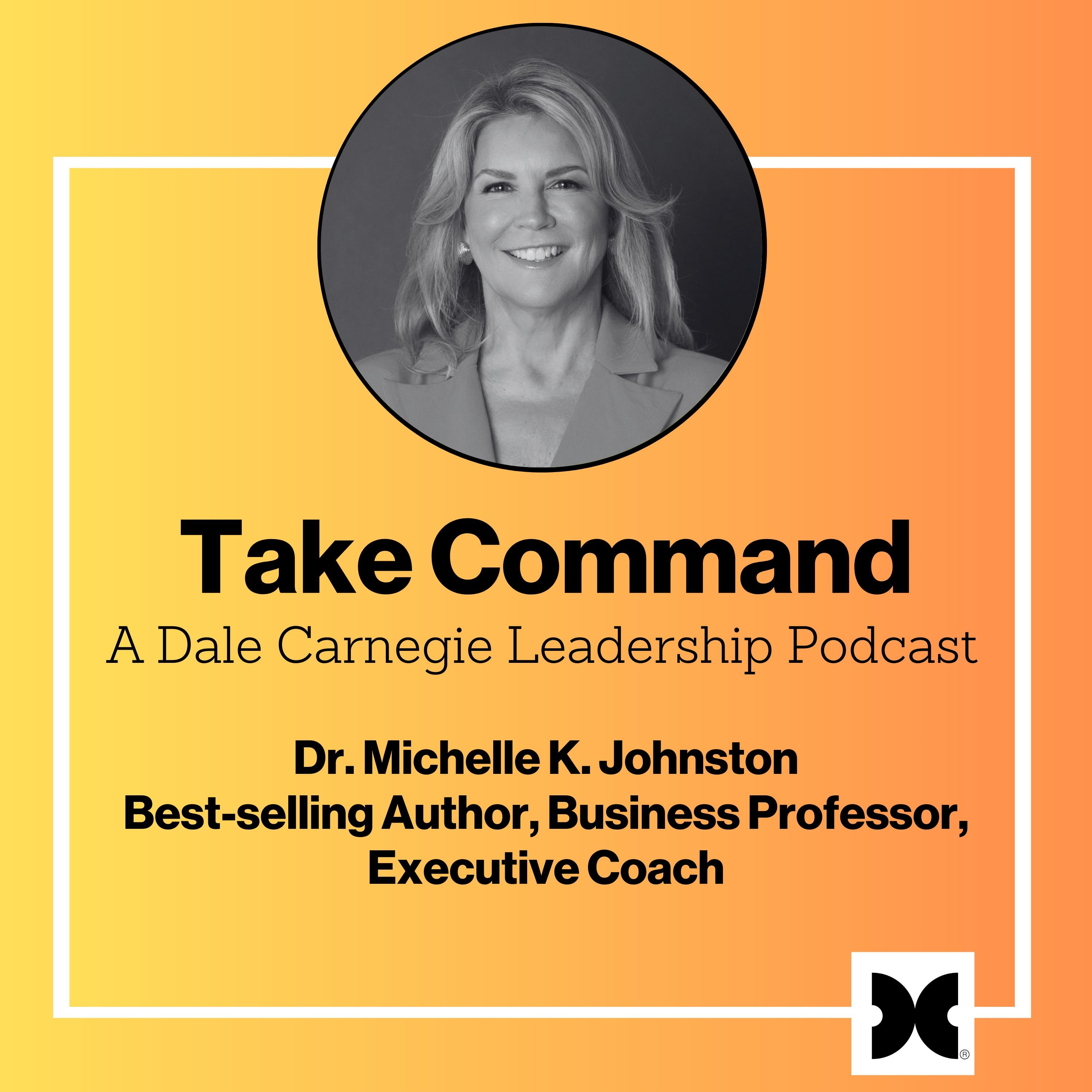
Take Command: A Leadership Podcast
Seismic Shift in the Age of AI: Building Teams That Feel Seen, Heard, and Valued
00:38:53
What happens when productivity keeps rising, but people feel more disconnected than ever? In this episode, Michelle K. Johnston, Ph.D., challenges leaders to make a seismic shift back to genuine human connection in an age of AI, nonstop notifications, and relentless busyness. Michelle shares her powerful insight, “Productivity without connection equals emptiness,” and explains why checking boxes without meaningful relationships leaves leaders and teams drained rather than fulfilled. This conversation is packed with practical leadership moments, from why real connection means feeling seen, heard, valued, respected, and appreciated, to how your calendar quietly reveals what you truly prioritize. You’ll also hear simple but impactful practices, like removing the word “but” from feedback and asking people how they prefer to connect. Drawing from her work with Marshall Goldsmith and decades of executive coaching, Michelle offers ideas you can use immediately to lead with greater impact,...
Loading summary
Transcript44 lines
- [00:00]
A
So many leaders that you and I coach. Tell us. Oh my gosh, our days are packed. I barely can keep up. I'm after one call after another. Racing here, racing there. I don't have time for connection. You don't have time not to connect. If you are dismissing connection, then I believe you are leading ineffectively.
- [00:29]
B
Welcome to Take Command, a Dale Carnegie Podcast podcast. I'm Joe Hart, CEO of Dale Carnegie, and if you're ready to grow your leadership skills, follow. Take command now and never miss an episode that can transform your career. Today's guest shows how connection driven leadership fights the loneliness epidemic and AI era disconnection. She shares practical shifts to build authentic relationships that boost engagement and results. Named a woman of the year, a top 10 executive coach and a top 500 business leader, she has guided executives from some of the largest organizations in the world. Her podcast ranks in the top 10% globally and features leaders who are transforming culture through meaningful relationships. Her newest book, the Seismic Shift in youn, outlines seven powerful shifts for greater impact and connection. Please welcome bestselling author, executive coach and business professor, Dr. Michelle Johnston. Michelle, welcome to the Dale Carnegie Take Command podcast.
- [01:38]
A
Oh, Joe, thank you so much for having me. I'm really excited about our conversation.
- [01:42]
B
Well, me too. And especially in your own right. You're a professor, you're a best selling author, executive coach, you've got a great podcast and also we know each other through the Marshall Goldsmith 100 coaches program. And I know that you're a tremendous insightful thinker and leader. So welcome to the show. It's great to have you here.
- [02:00]
A
Oh, thank you so much. Yeah, I hope we get to go back to Nashville at some point. That's where we first met, at a 100 coaches meeting. What a love experience.
- [02:08]
B
I keep wondering, when are they going to do another one?
- [02:10]
A
I'm on him about that. We'll go offline and we'll talk more about that because we'll make that happen.
- [02:15]
B
Well, you've got an inside track with Marshall Goldsmith, right? I mean, and you co authored your latest book, Seismic Shift with him. So I'm sure that if you reach out to him, we'll probably have an event scheduled in no time, which would be great.
- [02:28]
A
Oh, absolutely.
- [02:29]
B
Definitely want to talk to you about Seismic Shift, a great book. It's so aligned with Dale Carnegie's principles, the ethos of it, all the ideas around connection. So we'll talk about that. But before we do, tell us a little bit about you, Michelle, and what led you to co author this book with Marshall.
- [02:45]
A
So let's go back to me as a little kid sitting in my dad's study when I was probably about 8, 9 years old with gold shag carpeting. And I always wanted to be around my dad. He's still alive. He just spent a week with me over Christmas. He's 80 years old, one of the most positive, connected, caring people I've ever been around in my life. And I'm in his study and he's going to night school, and so I just like being around him. So I'm in his study and he's studying and I take off a book and he said, yeah, you might like that. And it was Dale Carnegie's how to Win Friends and Influence People. And I start reading the story about Dale's dog named Tippy, and how after Tippy died, he realized that that dog made him feel seen and heard and valued and loved and cared about and respected and all the things you want to feel right? And he said that dog did such an amazing job of making me feel those positive emotions. And so I wrote about that in my first book, the Seismic Shift in you, because I truly believe that this seismic shift that's happening. So that first book right here, talking about Dale Carnegie and then the second book I just wrote with Marshall and then my podcast. I'm passionate about this topic, Joe, that I believe the seismic shift has to be about connection. Whether you're in corporate leadership, whether you're leading your family, it really has to be about connection. And so that story and Dale Carnegie and that book, how to Win Friends, Influence People. I just want to thank you and the work that you do, because that has influenced my work tremendously.
- [04:29]
B
Well, thank you for sharing that and for the story. It's amazing how many people Dale Carnegie has touched. I mean, frankly, if we hadn't had that conversation. I know you talked about it in your book, but, you know, you share that. But so many people are touched by Dale Carnegie's just brilliant insights. And a book that's been a best selling book for over 87 years, which is pretty incredible. I know as authors, you and I would love to be able to have something like that.
- [04:52]
A
That's exactly what's going through my mind of, oh, can you imagine still being on the bestseller list? Yes, you understand, as an author. So speaking of which, you had also asked how I got to the point where I co authored with Marshall Goldsmiths. So that first book I did by myself. And that's when Marshall was assembling his 100 coaches group. And I had been in his audience. I was coaching a number of executives at a healthcare system and he was the keynote speaker. And at that speech he made the announcement that he was ready to pay it forward and he would like to mentor. If you wanted to be mentored by me, send me an email. And I sent him an email and he said he was surprised by how flooded his inbox box was, but to follow back up with him. And so I followed back up when I had the seismic shift in leadership book written and I asked for him to write the forward. So that was the beginning of our relationship. And then I got to meet fabulous people like you and going to Thinkers50. So two years ago at Thinkers50, which is our Oscars of management thinking, the top thinkers in the world in our field. And I was with them in London and we were listening to all of the top thinkers talk about how in the world are we going to compete with AI? How are we going to do it as leaders, as coaches, as authors, as thought leaders. And every single speaker, from Kirsten Ferguson in Australia to Dori Clark, Ruth Gotian, they all talked about the necessity of leaning in with more heart and humanity. And that just jumped out at me. And I looked over at Marshall and we were drinking some Vous Clicquot, his favorite champagne, at the bar after the full day of events. And I said, marshall, we need to write a book about this. I said, because the first book that I wrote planted the seed about how we need to shift towards connection for leaders, right? I said, this is bigger than that. This is a seismic shift in how to show up as human and how we need to lean in more with our humanity. And I looked at him and I said, would you be my co author? And he said, yes. So Joe, we just went back to London this past November and threw a big book launch party and launched the seismic shift in you into the world.
- [07:12]
B
It's an exciting book and it certainly is a book that is appropriate for the times. And it's interesting, as you said too, Michelle, that so many people, we talk about AI. What's the impact that AI will have on the future and on jobs and so many of the things, and certainly all of our Dale Carnegie research and so much research focuses on the importance of human connection. And you talk in your book about disconnection, right? So what is the effect of disconnection in our modern world? Whether it's young people or adults or people in work environments, et cetera, Disconnection leads to loneliness, isolation, ineffectiveness, a whole range of other Kinds of things. So certainly we look back 20 or 30 years and the impact that society has had on affecting that. And also moving forward, connection and relationship are absolutely critical and will become even more so. You want to speak a little bit about how you refer to that in your book?
- [08:01]
A
Oh, absolutely. So I remember I got a chance to listen to Dr. Vivek Murthy, who was our former US Surgeon General, and he's the first Surgeon General to look and study the effects of our phones, thinking that we're connecting and we're not. Many of us are not even using our phones to talk. Right. And so we have this false sense of connection, and it's actually leading us to. To more loneliness and emptiness. And so he wrote a book called Together and I just saw him last year Talk, and he keeps going back and doing more and more studies. He called it a loneliness epidemic. And this was before the pandemic. So he was realizing what technology was doing to us from a physical and a health perspective, and he identified it as an epidemic. So it's very bad. He said it's as bad as. As smoking 15 cigarettes a day. Why? Because it causes premature death. So there's a 60% increase in premature death. And so I have this new quote based on all of my research and all the books that I read leading up to writing my book with Marshall. My new quote is productivity without connection equals emptiness. And I feel like that's the path that we're on. We're in this transaction, transaction, transaction, do more. More. More automation, more efficiency, more reliant, more addiction on the technology in our phones. And so at the end of the day, we think we're going to feel so good because we've checked, check, checked all of the things, all of the transactions. And yet at the end of the day, we feel empty inside because what we're not prioritizing is connection anymore. I will say that after the holidays, some people might be thinking, oh, I've had plenty of connection, right. I wanted my relatives to go away. Right. And so we do get little bits and spurts. But what I'm seeing is the trend is not good. Joe and I believe that we're going down a very dark path that is absolutely negatively affecting our health. So we need to pivot.
- [10:06]
B
So let's talk about what you mean by connection. The word connection is a subjective, abstract kind of a word. So what exactly do you mean when you talk about we need more connection?
- [10:16]
A
Yeah, So I define connection is do you feel seen, heard, valued, respected, and appreciated? And if you are communicating. If you go back to the Dale Carnegie story of Tippi, what is an interaction where you feel seen, heard, valued, respected and appreciated? So our phones are not making us feel seen, heard, valued, respected and appreciated. Typically it is face to face interaction. Now the zoom calls and the virtual calls and the team calls in the work environment are doing its job of getting work done. But we're also finding that it's not making you feel seen, heard, valued, respected and appreciated. So connection is actually showing up and having a presence and an interest and asking questions and listening and showing that you Joe matter. And if you can figure out as a human and as a leader how to make your people feel that they matter, boom, you're a beautiful leader, you're a successful leader, you're an effective leader. All the metrics show if you can attract that workforce that you need, engage them, retain them, they're more satisfied, then you have more financial performance. So all of these links, people think of connection as soft and it is your most powerful skill skill that you have right now because it will drive financial performance.
- [11:47]
B
I mean, it's interesting because when you talk about this or empathy is something, I mean, certainly we've got a major white paper that Dale Carnegie's is coming out with on empathy. And often the number one thing people will say is, well, empathy feels really soft and empathy is a cornerstone for connection. Right. We really can't connect with people unless we are trying to see things from their point of view. We understand them, we're listening all the different things that we teach and at the same time, people will say it's soft or what does this mean? I have to spend a whole bunch of time just asking questions about people's cats. I mean, whatever it is. So I'm curious, in your research, what are some examples you've given or you would give about how leaders connect effectively? Because again, there's this balance. Also about time you talk about this in the book. What are some examples you'd share?
- [12:31]
A
Yes. So the number one complaint I hear, and I'm sure you do too, in people's work days is meetings. People don't like meetings. Why don't they like meetings? Because they feel that they're being talked at. And again, not a whole lot of connection. So one of the things that leaders can do to more meaningfully connect with their people is create better meetings. I think one of the mistakes we've made as humans is coming out of the pandemic five years now after lockdown. We're now on so many Virtual calls, but we're treating them the same, like we were in person. And so the leader shows up and says, oh, here's the agenda. I hope you read it. Any questions? No? Okay, on. And they turn it off. And then they show up for their next meeting. And people are like, this is a waste of time. So we've got to figure out. And I believe that there are many things that you can do in a meeting, whether it's virtual and in person. You have to embed time for connection. And so begin with a connection question and it can be relevant to the topic you're discussing. Say your topic is innovation. Tell us about Joe. A time when you came up with your best idea and go around and share and all of a sudden you're getting deeper with trust. You're laughing, you're creating, you're ideating, and it's on topic. So a lot of people think, oh, I don't want to do an icebreaker. It doesn't feel right. Well, then go deeper. And that's the real shift towards connection. Leaders need to go deeper with connection. This surface level and talking at people does not work anymore. You have to figure out how to engage and create an environment where people want to talk and speak up. You know when people want to talk and speak up, when they feel seen and heard and that you care about them and they're not just a cog in the wheel or a number in the bottom line.
- [14:21]
B
Totally true. And to create an environment where people do feel safe speaking up, so they're seen and they're heard and they know that their voice matters. And this is where I'd love to talk to you about blind spots and leadership. Blind spots. Spots. Because I think you could talk to a lot of leaders. I know you and I Both talk to CEOs and others who will say, I'm connected to my people. And this conception of connection is. Well, we had a zoom meeting. I saw him or her yesterday. We're in that meeting. But they're not necessarily connected. So how do you coach people even to see their own blind spots? Right. Let's think about our audience or myself or you. We all have blind spots. We shouldn't be embarrassed about that. But how do we assess? Assess the degree to which we're truly effective at connection with others?
- [15:05]
A
Yeah. I'll give you a great example. One of my former clients who I coached, an executive, she thought she was doing a good job connecting. And then she realized that the way she was doing it was through one on one meetings and the way she was doing one on one meetings is at the end of the year, she would just drop into their calendars every two weeks a 30 minute Zoom call. And that to her was connection, that one on one Zoom call. And then she thought, wait a second, this might not be the way they want to connect. Right? So she did an experiment. She asked all 10 of her direct reports, how do you want to connect with me in the new year? And every single one of them had a different ask. So one of them is an extreme extrovert now they're remote. And she said, we live in the same city. Is there any way I'll just take once a month, can we meet at a coffee shop? Another one is an extreme introvert and is like, we just need to have a telephone conversation. I don't even need to do video. Can we once a month have an hour telephone conversation? We can go through all of my tasks. Every single one of them had a different request of how they preferred connection. And so that really got my attention is we talk about servant leadership a lot. We talk about the best leaders are so in tune with their people that their job is developing them, making sure they're coaching them so they're growing. But do you ever ask, how do you prefer to be connected?
- [16:33]
B
That alone is a great takeaway for all of us. And then coming out of this podcast, each person is different. We all learn differently, think differently, have different values. To even take the time to ask that question, that's a form of connection, that's a form of respect. Just even to ask, I mean, to say, I value you and I want to make sure I'm connecting with you in the most effective way for you. So what does that look like?
- [16:56]
A
Yes, yes and yes. And I've learned that one of the simpler things, one of the most simple things you can do as a leader, as a human, as anybody, is just to ask the question, how are you doing, comma, really? How are you doing really? And going deeper. And Mark Gholston, Dr. Mark Goldston. I profile him in my new book, he passed away. He was a member of 100 coaches, and he passed away right after my interview with him on my podcast. He was a brilliant man and he developed a methodology called Surgical Empathy. He developed a methodology called whova for asking deeper questions. And he said, you know what, Michelle? If the leader really wants to get to know his or her people, schedule a one on one call at the beginning of the year. This is perfect for the beginning of 2026. And say, you know, What? I want to get to know you better as a person. I want to know really what makes you tick. Who are you? I don't even know if I know where you grew up, what your birth order is. I want to get to know you more. And he said in Ask 5 reallys, how are you doing? Really, how's this project going? Really, really, really. And so he thought the more reallys you ask, the deeper you could go when it comes to connection. And I totally agree. I think that we are so many leaders that you and I coach, tell us, oh my gosh, our days are packed. I barely can keep up. I'm after one call, after another, racing here, racing there. I don't have time for connection. You don't have time not to connect. If you are dismissing connection, then I believe you are leading ineffectively.
- [18:40]
B
So let me ask, there's other shifts you talk about in the book that I want to make sure that we get to. And at the same time, in Dale Carnegie we have the magic for formula, right? You give a two minute talk. The action I want you to take is this and the benefit is this. For our audience, let's just say that we do the things that you're saying. From a leadership standpoint, you've got people who are managers or vice presidents or CEOs or individual contributors. If they do the kinds of things you're recommending, what will the benefit be to them?
- [19:06]
A
You know what's beautiful about all this, Joe, is it not only makes your people feel seen, heard, valued, respected, appreciated. Those five dimensions, you can hit on every one of those dimensions just by asking, how are you doing, comma, really, or giving feedback. You did an excellent job on that project last week. You delivered it in timely way. The customers were thrilled. Thank you. So just by giving a compliment, asking a question, you can reach that connection. And what's beautiful about connection is it absolutely drives financial performance of a team. And ultimately you as the leader also feel better. So your people feel seen, heard, valued, respected, appreciated. Right. So they feel connected, they feel that their work matters. You're driving financial performance and you feel better. It is a win win for every single constituent and stakeholder you talk about in the book.
- [19:59]
B
I mean, it's about productivity, it's about effectiveness, it's about engagement. Right? So if we want to have truly engaged teams, you know, there's a great quote that people don't care what you know until they know that you care. And we also know that one of the number one reasons for disengagement is People who are disconnected from their supervisor. My supervisor doesn't care about me, or they don't have my back and so forth. So clearly, this is something that can help all of us be even more effective leaders. One of the things you talk about in the book that really resonated for me, particularly around this time of the year. It's January, right? It was around prioritization, management of the calendar and so forth. Because often, you know, we can become victims to our calendars. We think we're affected because we're doing the things in our calendars. We've got calendars that are packed with different kinds of things. You talked a little bit about kind of reversing that and making sure that we are not just doing the things, but prioritizing the right things. What advice do you have for people to think about the things that we should be prioritizing as leaders, and how do we take command of our calendars?
- [20:58]
A
Great question, Joe. I think we're doing it all wrong. I think we're focusing on what, and I think we should be focusing on who. It's that transactional mindset is doing a disservice to you as a leader and to your people. So I believe we need to shift from what to who. So my quote is, show me your calendar, and I will show your priorities. And it might make you really uncomfortable because you might say, the most important people in my life are my family, and then my team. Your family doesn't show up on your calendar. They get the breadcrumbs. And if I did a360, your team tells me that you cancel their one on ones more than you keep them. So the way that you can communicate that you care about your people is making sure that the most important people show up on your calendar. Now let me back up. This is even more important. The most important who is you. So what I'm also seeing, and I know you are too, is that the executives that I coach are telling me that they're so burned out by the end of the day, they don't have energy left. They're exhausted, and all they're doing is just showing up, not even at their best selves because their calendars are packed full of meetings. If you don't prioritize yourself and make sure that you are number one on the calendar, do you have time to exercise? Do you have time for a lunch break? How many executives tell us, I don't even have time to eat lunch. I don't have time for a bio break. Sitting is also the New smoking. I'm advocating go on connection walks. Tell your team to put in their earbuds and get out and walk around and go through the agenda. And each person gets an opportunity to describe where they're walking in and what they're seeing. Because steps actually help, Right? So the most important who is you. Make sure that you're on your calendar, that you're exercising, you're giving yourself time to eat and eat healthy so that by the end of the day you still have energy for the most important part, which you say is family, right? So the most important who is you. And then switch from what to who. So I coach this amazing leader. His name is Pete November, and he is the CEO of our largest healthcare system in the state of Louisiana. Last time we had a coaching meeting, he said, michelle, I don't even look anymore as my day as what I need to accomplish. I think, who do I get to work with? And that's the mindset that I'm advocating. It's not okay, check, check, check, goal, goal, goal, task, task. It's who do I get to interact with to make a difference? Because that's what drives me change.
- [23:29]
B
And you have a great question. I may be phrasing this incorrectly. You'll correct me, I'm sure, about the two hours and the things that I want to focus on each week that will empower me and the two things I want to take off my plate that disempower me. Share that with our audience a little bit. In terms of just what's the question? How do you frame it? And also, Michelle, what about people who don't have complete control of their calendars? You and I have control over our calendars, but a lot of people will say, gosh, you know, I've got all these things. People are inviting me to meetings or putting things on my calendar. So bring those concepts together for share them and bring them together for us, please.
- [24:04]
A
So I just was a part of a big meeting in California for a different healthcare system and we had this exact conversation. So these are the top leaders in the healthcare system. And we're sitting around on a Friday afternoon before Christmas and they're telling me that they feel like they don't have control. They look at their calendar and all of these meetings pop up. And here's what I ask them. In this particular scenario, these are high level executives. So they do have EAs, they have executive assistants. And I said, are the executive assistants in control of your calendar or are you? And the majority of them admitted that their executive Assistants were in control. I said, okay, do you give them parameters? Do you say, I need an hour in the morning to strategically think, please don't fill my calendar from 10 to 11? They said, no, but they're going to. I said, okay, those 7:00am meetings that keep dropping on your calendar and you don't know how to say no, but it's keeping you from eating breakfast with your kids or going to exercise, what can you do about that? Oh, I guess I could say, let's move it to a different time. So here's what I'm finding, Joe, is a lot of leaders don't feel like they have control of their calendar. Some of them have three meetings per time slot. And so they'll pop into one and pop into another. They're not showing up at their best at all. And then at the end of the day, they're feeling resentful. Why are they feeling resentful? Because they allowed everybody else to control their calendar. So my answer to that question is if you can have control and parameters, at the end of the day, your boss wants you to accomplish whatever the goal's set up to do with the people. And as long as you do that and you're effective, then you're in charge. You need to be in charge of how that structure of your day looks. And so I want the message to be take control of your calendars, because if you don't, somebody else will and you're going to end up resentful.
- [25:57]
B
Well, that's right. I mean, this is the Take Command podcast, and part of what we teach in Dale Carnegie is about intentionality. What are the things that I can affect and impact? So certainly even an individual contributor could have a conversation with their boss, or could I have a conversation with somebody else who's putting things on their calendars. And, you know, hopefully people are reasonable. You know, we talk in terms of other people's interests. This is burning me out and so forth. I want to be bring my best and be effective. I think also as leaders, we can encourage others. I'm trying to encourage people on our own team. Pretend you have a glass, okay? And that glass is full. You can't put any more in it. And for you, full means no more than four hours of meetings a day, an eight hour day. Do not schedule more than four hours of meetings. You need some other time to do work. What happens, I think a lot of times is people will have meetings all day long. If they get to the end of the day and they're doing email and getting Caught up into work and then it's late, they get burned out and so forth forth. So I'm with you 100%. And the questions that you had talked about in the book, tell us about those two questions. If you had two extra hours a day, and if you had two hours, you had to cancel from your day.
- [26:57]
A
Yeah, that's from Marshall. And so Marshall said that that was one of his biggest lessons of working with one of his CEOs. He said, look at each week and think about if you had an extra two hours, how would you choose to spend it? Because this goes back to self awareness from a leadership perspective. What fuels you, what excites you, what fires you up, what doesn't feel like work? Well, that's when you're at your best. So if you look at your week and you think, if I had an extra two hours, what would I choose to do? Then make sure more of that is embedded into your rhythm. If you had to cut out, what would you cut out? And I went through this exercise with an NFL performance coach that I talk about in my book. He used to be with the San Francisco 49ers. His name is Taylor Johnson. I got to the point, Joe, where I was so burned out after my first book because I thought that in order to be successful, I had to say after my book was published and it was number one, actually it was number three. It wasn't number one. It was number three on Amazon best seller status. And I had all these opportunities around the world, so I felt that it was my obligation and my mission to say yes because then I could help so many people. And I said yes non stop for two years and ended up so empty that I hired a performance coach, Taylor Johnson. I said, help me. I said, I have become the pinball in the pinball machine and everybody else is operating it and I'm just bouncing. I said, this is not good for me. So he was able to work with me. And that's how now I know. And I'm so much better at calendar management because I'm in charge of my calendar, right? I don't schedule face to face interview. You're my first face to face today, right? Because my whole morning I'm better at administrative tasks, making sure that I exercise. My daughter's still home from college. This is her last week. I want to have breakfast with her. So I took control of my calendar. So that exercise, which is called at my Best, really looked at what fuels me, what depletes me. And building my Day, he calls it Stacked. He stacked my day. So that only Tuesdays I do podcasts. So today is Tuesday, I only do podcasts. Wednesday I only do executive coaching. Thursday I only do this. Friday is just for reflection. Wrap up Appreciation Mondays for preparation. So now I have this incredible structure that works for me when I'm at my best, that makes sure to prioritize the things that fuel me, the relationships that fuel me. I'll end with this quote on this chapter. It was my daughter who was in college last year. She came home for college. She was home a week. She said, mom, I've been home a week and I have barely seen you. What is going on? And it took her saying that to me for me, literally, Joe, to lift my head up and said, oh, my gosh. I didn't even take control of my calendar. I forgot. I'm so sorry. I will make it better. My point is, I know this and I even get stuck in it. So it's not easy, but you can do it.
- [30:05]
B
When I read that story, it's funny because I've got two kids from college now. I have been prioritizing, trying to spend time with my kids. They're the ones who are so busy going out and doing other kinds of things. Hey, you know, make time for dad. But, you know, I read that story about your daughter, Elizabeth. I called one of my daughters and I said, look, before you go back to college, you gotta make some time for your dad. We're gonna go out to dinner tomorrow night.
- [30:27]
A
So that just brought a tear to my eye. Joe, you just brought a tear to my eye on this podcast. Thank you for sharing. That is beautiful.
- [30:36]
B
It was great. I literally stopped reading the book and I called her. I get when kids are home from college, they wanna spend time with their friends or boyfriends or girlfriends or whatever else. But, hey, you know, I mean, as parents, we need some time too.
- [30:49]
A
We do. And going back to that meeting that I referred to in California right before Christmas with all these high leaders, and we are really trying to reinvent calendar management at this company and take more ownership. I asked for personal best practices for calendar management. And a lot of them work from 7 until 7. And they have families at home and they have commutes and they have designated nights with each one of their kids, which I thought was such a great best practice. So a Monday nighter, it might be once a month, I don't know. But they have Monday pizza with dad with my middle child. They have Tuesday shopping with my younger child. So they allow. They said, how do you Want once a month, I want one special night with me and you. How do you want to spend it? And each kid wanted to spend it in a different way. I want pizza, I want ice cream, I want to go shopping. And I love those times of how you prioritize the most important relationships and put them on the calendar. Because often when you don't put them on the calendar, everything else takes precedence.
- [31:50]
B
But all of this starts with mindset. This is something and you talk about in the book we talk about in Dale Carnegie. The mindset has to be, you know, what is my role in this? Right? Because I can be a victim. Also, I could say, oh, I've got so much going on, I'm so busy, or this. But we need to take command and initiate these kinds of things and recognize we do have control over our calendars, or certainly we have control over the boundaries we place on our calendars. Just a couple of their questions. One is, you know, you've worked with Marshall Goldsmith, and for our audience who may not know who Marshall. Marshall Goldsmith is probably the number one executive coach in the world, what, 10 or 12 time New York Times best selling author, brilliant person. What are some things you learned? One or two things you learned collaborating with Marshall, and where do your perspectives on leadership most strongly intersect?
- [32:35]
A
Oh, those are good questions. So one of the things I learned about Marshall, I actually learned from Michael Bungay Stainer, mbs, who's also in our group. He wrote a book, how to Work with Almost Anyone. And so I had him on my podcast and we were talking about this book and I said, well, what is one of your best practices of how to work with almost anyone? He said, well, you have to have a keystone conversation whenever you begin working with somebody. I said, oh, tell me, what's a keystone conversation? He said, you got to sit down and say, okay, we're about to embark on a project. How are you at your best? Here's how I'm at my worst. Here's what success looks like. You gotta have the frickin conversation. And a light bulb moment went off, Joe. And I said, oh my gosh, Michael, I have not had that conversation with Marshall. And I had been banging my head against the wall trying to get on his calendar because I took an entire sabbatical from Loyola to write the book. And I'm thinking, yes, I get to write with Marshall Goldsmith. And I couldn't get on his calendar. I mean, I flew up to Nashville, you know, so we had these things. But in my mind, without communicating with Marshall, I Assumed we would be meeting once a week. And then when I finally got to him, I said, marshall, I am so sorry. You have written 50 something books. You have a process. What is your process? He goes, oh, yeah, no, no, no, no. Write the book, Michelle, and then I'll come back and I will insert all of my stories and my perspectives. But this is your work. He said, at this point in my life, I'm supporting you, your work, your brand, your material. So my lesson learned of working with Marshall is you got to have that frickin keystone conversation with anybody you're about to embark on a project with to figure out what does the process look like and when are you at your best so that I'm not annoying the heck out of you.
- [34:24]
B
He is a foremost thinker on leadership. You also teach leadership at Loyola University. I was just curious, kind of, where do your perspectives on leadership intersect? And I would say in a way that would be meaningful for our audience because I think a lot of people in our audience are looking for, what are the takeaways, the insights, the hacks, the things that I can use coming out of this podcast?
- [34:46]
A
Okay, I'm going to give the listeners three things they can do to be better with connection. Number one, don't cancel all of the meetings with your employees through your assistant without a reason why, because they'll assume that it has something to do with them. Number two, lesson always if you can respond to text messages. So if you text your direct report, hey, how's that project going? And they send you the project, right? A draft of the project and you never respond, they think that their work is shoddy. Number three, delete the word but. And that's the number one thing that I learned from Marshall. And I learned it when I flew out to California when he was living in La Jolla and he was vetting me to be a part of 100 coaches and we took a 10,000 step walk along the Pacific Ocean while he was getting to know me. And I used the word but way too many times and he said, delete but from your vocabulary because it discounts up everything that came before it. And that's one of the best lessons for connection. If you sit down with your employee and you say, that was a fantastic job you did last week in the meeting, but I think that you could have been more efficient with your time. They don't hear the good, they only hear what follows the but. And it's usually a negative. So answer emails. Don't cancel your meetings through an EA without some sort of very sweet, compassionate. I'm so sorry to have to cancel this meeting. We're going to reschedule and don't use but. And those are three ways that each listener who's tuning in today can do a better job with connection.
- [36:33]
B
Awesome. Thank you, Michelle. Those are great takeaways. One thing I've been doing as a part of this podcast is going to ChatGPT and saying, hey, I've got an interview with Michelle Johnston today. If you could ask Michelle only one question, ChatGPT, what would it be? I'm gonna give you the question, Michelle. If leadership today rises or falls on connection, what is the single most important shift a leader must make personally to become someone others truly want to follow?
- [37:00]
A
I think that the amount of minutes we have spent on this particular topic today shows how important it is for leadership, which is taking ownership of your calendar. If you don't embed 15 minutes before a big meeting that you're deliver wavering and you show up frazzled, you're not connecting. If you don't make sure that you prioritize connection with your family, you're not at your best. If you're not exercising and eating well, you're not at your best. So I don't believe that leaders are even given the opportunity to show up at their best unless they're first connecting with themselves. What fuels you, what depletes you when it's your best, and owning the calendar so that they can be the best connectors they can be. I think that that is the number one shift. Shift your calendar. And the most important who is you.
- [37:51]
B
Yeah. If it is to be, it is up to me and a perfect time of the year for that advice. As we start a new year thinking about our calendar and the people who are important in our lives and how we can be effective in our work and our leadership. Michelle Johnson, thank you so much for being with me today.
- [38:05]
A
Thank you, Joe, you were a fabulous host. No surprise there. Thank you.
- [38:09]
B
Thank you. I hope you enjoyed this edition of Take A Dale Carnegie Podcast. Check out our resources at www.dalecarnegie.com for more research, insight and tools that will support your success and help you take command of your leadership potential. If you enjoyed this episode, please consider rating it and following us on Apple Podcasts and Spotify for more exclusive content. Subscribe to our Dale Carnegie YouTube channel and follow us on social media. As always, thank you for listening and we're looking forward to you joining us for the next episode of Take Command, a Dale Carnegie Podcast.