← Takin' A Walk - Music History with Buzz Knight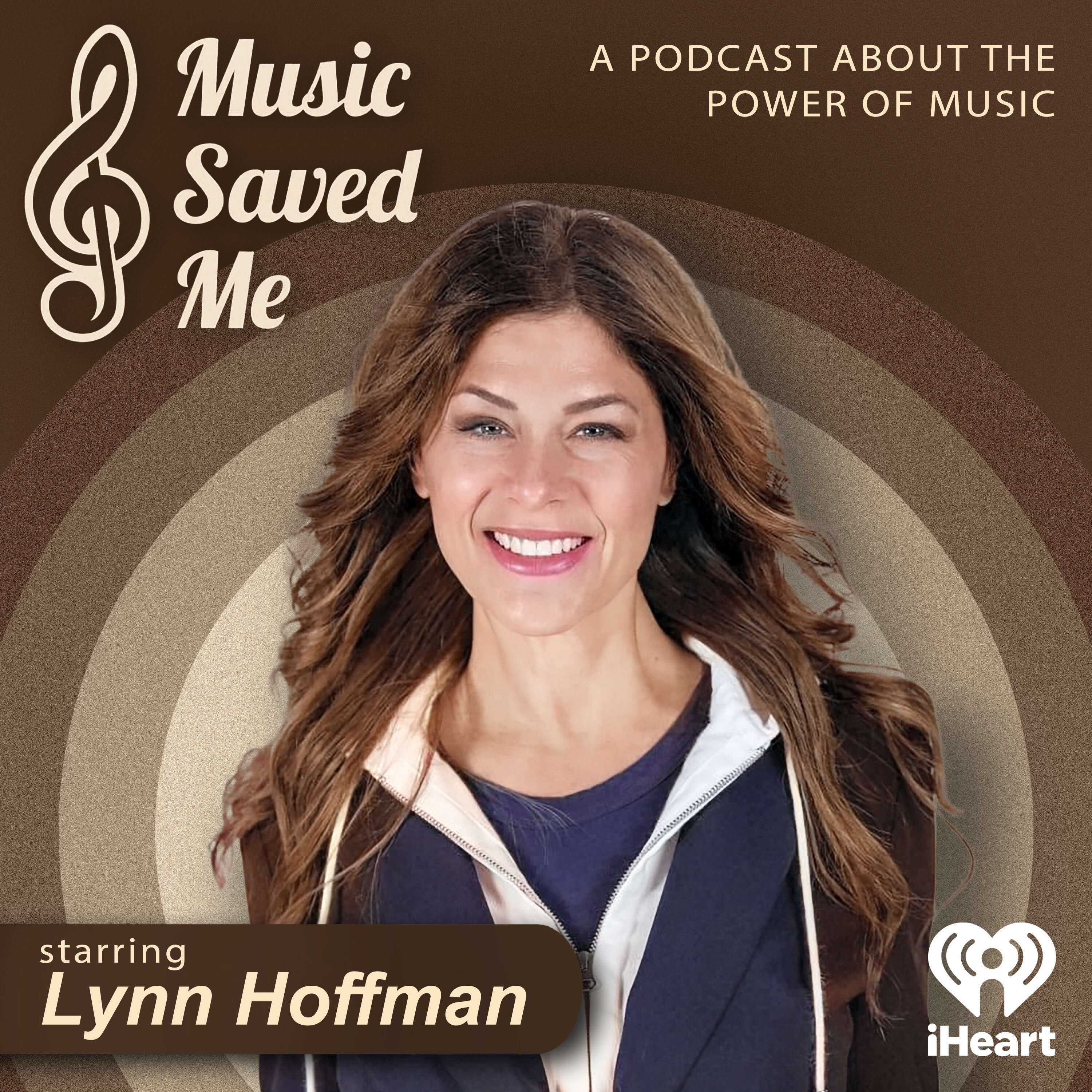
Loading summary
Transcript43 lines
- [00:01]
Lynne Hoffman
Music Saved Me.
- [00:02]
Jelly Roll
I believe music's therapeutic. I've always said it. And what I call what I do is therapeutic music. And I think music is probably the closest thing to therapy I got until I was in my 30s, it was the closest thing to a healing thing I could do. And music I thought was meant to. I always say it this way. Some music's meant to be heard and some music's meant to be felt. And when I was young, I got hyper focused on the feeling of music and how music made people feel and how constant present it always was in our lives.
- [00:31]
Lynne Hoffman
This podcast is called Music Saved Me. And on each episode we'll look at a musician. We'll delve into their story, their deep connection to music. We'll talk with their fans, everyday people with their own story to tell about how music has saved them in challenging times. I'm Lynne Hoffman, your host for the Music Saved Me podcast. Today we are so lucky to have one of music's fastest rising stars on Music Saved Me. His music defies categorization, running the gambit from rap to rap rock. But his big break has come from the country music world. He was born and bred in Nashville and his name is Jelly Roll. Jelly Roll, welcome to the show. Tell everyone who you are and how music has saved you.
- [01:18]
Jelly Roll
Well, you know, my name is Jelly Roll. I'm Jason Deforder from Nashville, Tennessee. Music saved me two or three times over. The first time I seen music have a real impact at all was in my household. We none of us played music, but everybody loved music, and music was the language of the house. So every bedroom would blare different music. And my mother, who struggled with drugs and struggled with a lot of mental health stuff, she didn't leave her room very much, but when she would, she would come down to the kitchen and she would play records and the whole house would just flock to the kitchen, all six, seven of us, you know, And I just remember that's the only time we've seen her in a different light, you know, one of the. I mean, kind of one of the few times we've seen her at all. But I just remember how impactful the music was and how much it meant back then, you know, And I think that was the beginning of music starting to save my life.
- [02:14]
Lynne Hoffman
Now, do you believe music has sort of supernatural healing powers, you know, for mental, physical, or maybe even emotional problems?
- [02:22]
Jelly Roll
I believe music is therapeutic. I've always said it, and what I call what I do is therapeutic music. And I think music is probably the closest Thing to therapy I got until I was in my 30s. It was the closest thing to a healing thing I could do. And music I thought was meant to. I always say it this way. Some music's meant to be heard, and some music's meant to be felt. And when I was young, I got hyper focused on the feeling of music and how music made people feel and how constant and present it always was in our lives.
- [02:57]
Lynne Hoffman
Okay, describe to me how it feels when you know that your music is really impacting a fan.
- [03:03]
Jelly Roll
I would think that I would hope my mission statement for my music is to hope that it helps in some sort of way. That's how I got into music. Right. I wanted music to help people the way it helped my mother. I wanted to be a vessel of helping people the way I watch music help the people around me so much, you know? And I just wanted to write songs for the people that I feel like nobody writes songs for, you know? And I lived in a certain culture. Drugs. There were a lot of drugs. There was a lot of. A lot of addiction, a lot of alcoholism, a lot of poverty, a lot of real middle class, just kind of check to check stuff. And I feel like nobody was really writing songs for those people. My people, Our people.
- [03:46]
Lynne Hoffman
All right, I'm going to quote you now. You've said, and I quote, I make music for people, not money. Can you please elaborate on that?
- [03:54]
Jelly Roll
Yeah. Well, the first. The biggest joke I make is if I was making music for Money, I quit 20 years ago. You know, I sure didn't get any until two years ago. So I had an intimate time to quit. To me, music was purpose. And as long as my music's doing something for somebody, I'll always make it. And even then, I'll probably still make it because my music's always done something for me. My intention from day one was to try to help people the way that music helped me.
- [04:21]
Lynne Hoffman
That is such a beautiful sentiment. What is it about music that gives people hope, do you think?
- [04:27]
Jelly Roll
I think music vocalizes what we often cannot. And there's also a thing where music makes us. It's a comforting thing. It's a. It's a moment of not feeling alone. Right?
- [04:41]
Lynne Hoffman
Yeah.
- [04:43]
Jelly Roll
When Adele said. They said time's supposed to heal you, but I ain't done much healing in the song hello. I still get goosebumps on my legs just saying that lyric.
- [04:53]
Lynne Hoffman
I have goosebumps hearing you say that lyric.
- [04:56]
Jelly Roll
You know, it's these moments of that you. That music just feels all over you. I mean, I Literally got goosebumps on my arm just thinking about lyrics.
- [05:07]
Lynne Hoffman
It really is incredible. It's. It's physical, the reaction. Now this is something really amazing. You've paid respects to families in person who have family members who have passed away in a. In a tragic death. What is that experience like for you?
- [05:22]
Jelly Roll
It's. It's a. It's a double edged sword. You know, I'm very. I'm an empath, so I feel. I feel the pain of people and that. That weighs on me at times. But it's also a blessing because God put me in a situation to bring a little bit of light to really dark situations. And I feel like that's a great responsibility that God's given me and I take it real serious and I'll never complain. The joke I make about the music business, period, is I'll never. I got every problem I ever prayed for, you know, and I love it.
- [05:58]
Lynne Hoffman
So expand on this for me, how music fused with religion, why it's such a powerful combination.
- [06:05]
Jelly Roll
Yeah, I think it's hopeful, right?
- [06:08]
Lynne Hoffman
Absolutely.
- [06:09]
Jelly Roll
So I think that one, I think music, me personally, music allows me an opportunity to speak about my faith in a way that's more open and honest than I probably could in a building that was labeled some sort of a denominational thing. So I think that music has a healing power all by itself. And when you let God in it, you know, it's undeniable. Right. When anytime you let the spirit get into the music and there's all. There's. There's a lot of people who believe that even in the Christian faith, that the Holy Spirit was music driven. Which is why in the early days in Southern Baptist churches, the Holy Spirit would come on when the music and the hands started clapping, you know, that's when people would receive the spirit.
- [06:55]
Lynne Hoffman
What do you feel that people really need to understand? You know, those of us who live in the real world, about those who are serving time in prison, I think.
- [07:04]
Jelly Roll
The biggest thing they need to understand is that those people need help. I think that we get so caught up on discipline and the idea of discipline that we have somewhere along the way forgot the idea of rehabilitation, you know, and these people in jail, they need voices, they need encouragement, you know, I think that's a reason, ironically, to go back to the Bible. Jesus's commands were so simple. Love your neighbor, go visit people in jail, feed the poor. Like even that far back in time, there was an understanding of that people in jail needed to be loved. You know what I mean?
- [07:47]
Lynne Hoffman
Yeah.
- [07:48]
Jelly Roll
So I Just try to carry that message to people today is, you know, go. Go the places people aren't. You know, it's real easy to go to a. A function and donate money. And that helps a lot. You know, it does. But I would encourage people to go in there and talk to some of these guys and make a presence.
- [08:06]
Lynne Hoffman
We live today in such a divided world. How can music minimize that dividedness? Is that even a word?
- [08:15]
Jelly Roll
I tell you this, man, music brings everybody together. It always has and it always will. Music is the. It's like dinner. It's like a supper table thing, right? It's what brings everybody around. It's a. I have seen hardcore conservatives and hardcore Democrats crying in each other's arms at concerts.
- [08:38]
Lynne Hoffman
Wow.
- [08:38]
Jelly Roll
You know, it just. Just. It's pains an international language. And I think music speaks to pain more than it does anything. At least my particular music. And when you're going through something like that in life, you start to realize how much that other don't matter, you know, and it's just a real clear understanding. And I think music brings that to a surface level with people. And it goes back to the common bond theory, you know what I mean? It's. My brother's a big UT Vols fan, and if you're a UT Vols fan, that's all he needs to know about you to at least initially like you. You know what I'm saying? You know what I mean? You got a foot in the door just being a Vols fan alone.
- [09:16]
Lynne Hoffman
Totally get what you're saying.
- [09:18]
Jelly Roll
So it's like, I think it's cool when you see cultures connect through music. Like, whenever I see a guy that I don't think would be a Deadhead, and he's a Deadhead, and it just tickles me pink.
- [09:29]
Lynne Hoffman
I love it.
- [09:30]
Jelly Roll
You know what I mean? Because I'm like, really? And he's like, dude, I went to the Chicago Dead and company show. Did it. Do it last year. And, you know, it's like, it's awesome, man. Music. Does it. Think about how many times we find those moments, right, where you're just like, oh, my God, I would have never guessed you were a fish fan. That's so cool. You know what I mean?
- [09:47]
Lynne Hoffman
Never judge a book by its cover. What would you say would be your proudest accomplishment in music or what you're most proud of that your music has done?
- [09:58]
Jelly Roll
I think the thing I'm the most proud of is believing that my music is helping people. Believing that the music helps and the music can always be there to help. I Think that's something else I'm proud of, is that I'm proud that I was lucky enough to come in the streaming era, where the music will live there for infinity. You know what I mean? And that. That I love that I'm alive during the streaming era and I don't have to go rebuy the Bob Seger and the Bullet Band Silver Bullet Band album for the 30th time because I've scratched the other 29 or lost them switching cars, you know, I'm glad that I can just go listen to Beautiful Loser whenever I want to, you know?
- [10:39]
Lynne Hoffman
That is so true. You can take it with you everywhere now. You don't have to worry about anything. Let's hear from Jelly Roll's fans. Certainly has a lot of them.
- [10:48]
Jelly Roll
Jelly Roll seems to be able to hit a lot of different emotional places and. And I think that he speaks to the common person. Thankfully, he's, as an artist, has really come forward and gone upward. But I think people recognize that he puts his heart into it and he says what he needs to say, and he's. He's real, he's genuine.
- [11:16]
Lynne Hoffman
For me, personally, I think it's a great collaboration of a couple of different kinds of music. And it can reach, like, it touches different kinds of music that I've liked through the years. Everything that he's been through holds so many stigmas in the public eye. And opening up in music is a great way for so many different audiences and people to connect together and understand what he's going through. Now, you've done a lot of different music in your time. Do you remember the first time you rapped?
- [11:50]
Jelly Roll
Oh, absolutely. My mother struggled with, like, mental health and addiction stuff, right? And she'd come to the kitchen and the whole house would come. We'd listen to music. And when I realized that music was affecting her addiction, I was like, oh, this makes mom happy. I should go write music, right? So I went upstairs and I. And I wrote a rap because hip hop was super influential in our culture. And. And I was. I went downstairs with my little sheet of paper, and she had all of her friends at the kitchen table. I called them a golden girl. Like six or seven of them, they'd all come to the kitchen table together. They just chained, smoke cigarettes. And I came down. She turned the record off and said, what you got? I said, listen to this. And I held my little sheet of paper up and I was shaking the whole time. And I wrapped her a little rap. And I was probably 12 years old, 11 years old I don't like. I just remember that feeling of everybody cheering me on and telling me to go write another one and in hindsight they were just trying to get rid of me. That's how we do kids. Yeah, great. Go write another one of those.
- [12:54]
Lynne Hoffman
That is so cool. Thank you so much. This has been just an amazing few minutes to spend with an amazing artist and person. We have just heard the authentic story of an incredible storyteller and someone who truly honors the impact of music in all of our lives. Jelly Roll is on a mission to spread the good words of his music and make a real difference in the world. And I think he's doing just that. I'm Lynne Hoffman and thank you so much for listening to this episode of Music Saved. Every business has an ambition. PayPal open is the platform designed to help you grow into yours with business loans so you can expand and access to hundreds of millions of PayPal customers worldwide. And your customers can pay all the ways they want with PayPal, Venmo pay later and all major cards so you can focus on scaling up when it's time to get growing. There's one platform for all business PayPal open grow today at paypalopen.com loans subject to approval in available locations hey, it's me, Earhart. Mind if I pick the next song? Listen, Even though we're eating better, people who've had one heart attack are at higher risk of another. But Repatha Evolocumab plus a statin lowers LDL C, our bad cholesterol and our heart attack risk. So let's talk to our doctor about Repatha. Do not take Repatha if you're allergic to it. Serious allergic reactions can occur. Get medical help right away if you have trouble breathing or swallowing, swelling of the face, lips, tongue, throat or arms. Common side effects include runny nose, sore throat, common cold symptoms, flu or flu like symptoms, back pain, high blood sugar and redness, pain or bruising at the injection site. View the important safety information in our banner. Listen to your heart. Ask your doctor about Repatha.
- [14:44]
Danielle Fishel
This is Danielle Fishel from Pod Meats World. Parents, quick question. When is the last time you won snack time? The other day I handed my son a perfectly portioned Pinterest level snack and he traded it for a Mott's Applesauce pouch. I'm not mad, just impressed. And that's why Mott's no Sugar Added Applesauce pouches are perfect to keep on hand. They're made with real apples packed in a super easy pouch. Perfect for tossing in a lunchbox, keeping in the car, or grabbing as you're running out the door. Plus, they're a good source of vitamin C, and kids love them. Win, win. Make sure your kid wins. Snack time with Motts. Real apples make real good applesauce. Learn more at motts.
- [15:27]
Lynne Hoffman
Com this is an iHeart podcast.