← Takin' A Walk - Music History with Buzz Knight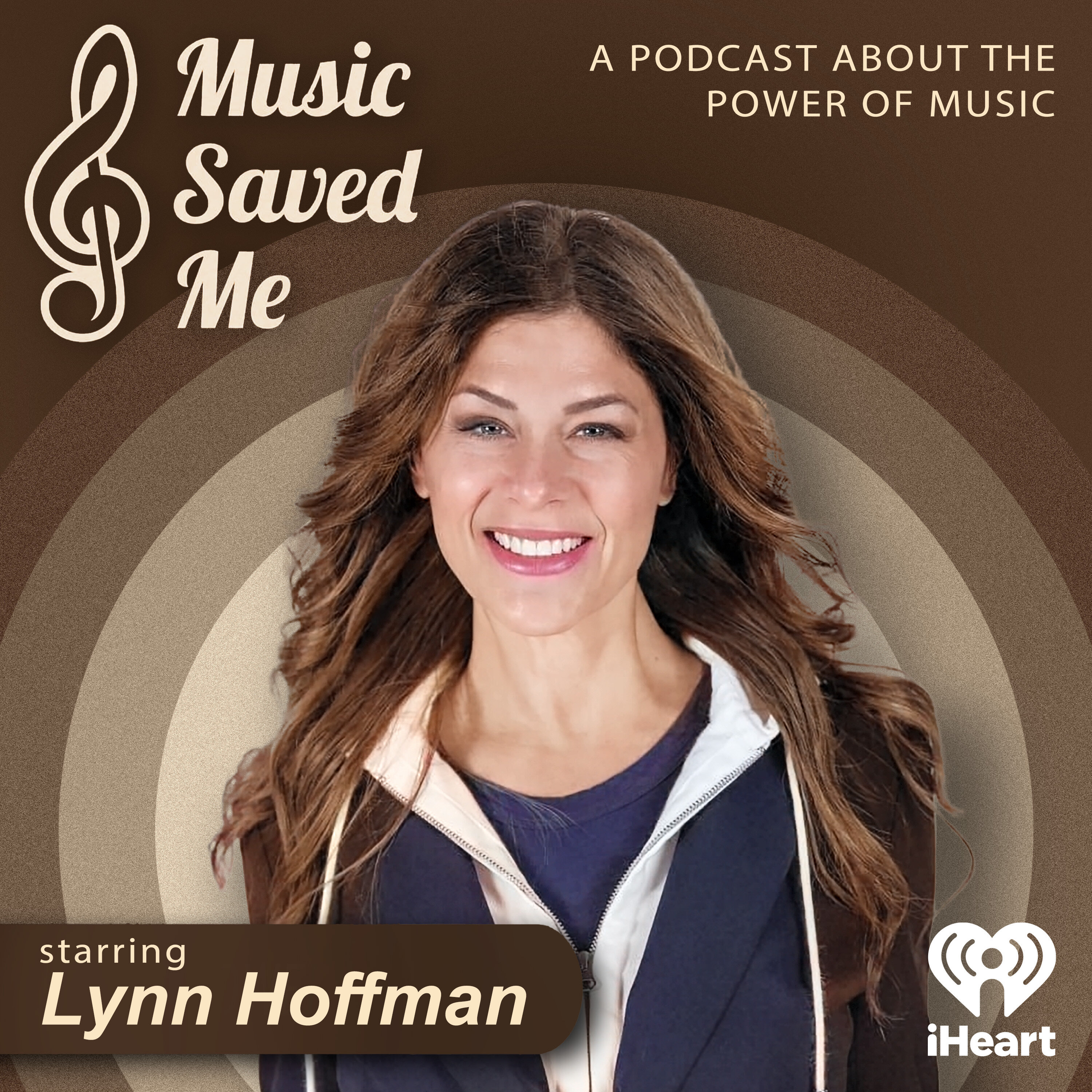
Takin' A Walk - Music History with Buzz Knight
Classic Music Saved Me with William Fitzsimmons
00:23:45
Loading summary
Transcript73 lines
- [00:00]
Amy Robach
You're listening to an iHeart podcast. Amy Robach and TJ Holmes here, Diddy's former protege, television personality Danity King. Alum Aubrey O' Day joins us to provide a unique perspective on the trial that has captivated the attention of the nation. It wasn't all bad, but I don't know that any of the good was real. I went through things there. Listen to Amy and TJ presents Aubrey O' Day covering the Diddy trial on the iHeartRadio app, Apple Podcasts or wherever you get your podcasts. The Made for this Mountain podcast exists to empower listeners to rise above their inner struggles and face the mountain in front of them. So during Mental Health Awareness Month, tune into the podcast, focus on your emotional well being and then climb that mountain.
- [00:50]
William Fitzsimmons
You will never be able to change or grow through the thing that you refuse to identify. The thing that you refuse to say. Hey, this is my mountain. This is the struggle.
- [00:58]
Amy Robach
Listen to Made for this mountain on the iHeartRadio app, Apple Podcasts or wherever you get your podcasts. What happens when we come face to face with death?
- [01:08]
William Fitzsimmons
My truck was blown up by a 20 pound anti tank mine. My parachute did not deploy.
- [01:13]
Amy Robach
I was kidnapped by a drug cartel.
- [01:16]
William Fitzsimmons
When we step beyond the edge of what we know, I clinically died.
- [01:19]
Amy Robach
The heart stopped beating, which I was dead for 11.5 minutes.
- [01:23]
William Fitzsimmons
In return, it was It's a miracle I was brought back Alive again. A podcast about the strength of the human spirit. Listen to Alive Again on the iHeartRadio app, Apple Podcasts or wherever you listen to your favorite shows. Why is a soap opera western like Yellowstone so wildly successful? The American west with Dan Flores is the latest show from the Meat Eater Podcast Network. So join me starting Tuesday, May 6th where we'll delve into stories of the west and come to understand how it helps inform the ways in which we experience the region today. Listen to the American west with Dan.
- [01:59]
Amy Robach
Flores on the iHeartRadio app, Apple Podcasts or wherever you get your podcasts.
- [02:05]
William Fitzsimmons
I always had to be so good. No one could ignore me. Carve my path with data and drive. But some people only see who I am on paper. The paper ceiling the limitations from degree screens to stereotypes that are holding back over 70 million stars. Workers skilled through alternative routes rather than a bachelor's degree. It's time for skills to speak for themselves. Find resources for breaking through barriers@taylorpapercealing.org brought to you by opportunity at work and.
- [02:34]
Amy Robach
The ad council music saved me to.
- [02:36]
William Fitzsimmons
Be this is just this is Neurology. You know, somebody can tell me it's okay that you're going through a season of depression right now, and that that can be powerful if I hear someone telling me that. But there's also beautiful music that's happening at the same time. It sort of puts it on steroids, for lack of a better term.
- [02:56]
Amy Robach
I'm Lynne Hoffman, and welcome to the Music Save Me podcast. The podcast where we talk with musicians about their personal stories that transform into their powerful music. Music Save Me is also a proud supporter of musicians on call. On this episode, we are so happy to have singer, songwriter William Fitzsimmons, who definitely knows a thing or two about the healing and transform powers of music. He has some great new music out that we'll get to as well as talk about how music affected him and in essence, transformed his life. William Fitzsimmons, welcome to Music Saved Me. It's so great to have you here.
- [03:33]
William Fitzsimmons
It's wonderful to be here. Thanks, Lynn.
- [03:35]
Amy Robach
Well, you're not only an incredible, talented musician and songwriter and engineer and producer, but you also have, which I find so incredibly interesting, a master's degree in mental health therapy. And prior to your successful career in music, you worked as a men mental health therapist. So that makes you just about the most perfect guest for this show that I could get. So my first question to you is, do you believe that music has healing powers?
- [04:03]
William Fitzsimmons
It'd be crazy if I said no right now. Right. And then, well, see you guys later. I really do. Yeah. And I never. I was not a music therapist. I worked with. With music therapist. I did inpatient for about five years in Camden, New Jersey, and we would occasionally have music therapists that would come in, and I thought it was fascinating, but at that point, I had never put the two together in anything more than just an experiential way. Music my entire life was a healing force. But, yeah, I didn't know it in a professional manner, but I always knew that in my personal life it was wildly transformative.
- [04:52]
Amy Robach
When did you realize that it was a huge part of your calling in life? And did your unique childhood upbringing have anything to do with it?
- [05:00]
William Fitzsimmons
Yeah. Yeah, of course. I think so. My parents are both blind. I'm supposed to say visually disabled, but they stay blind. So I feel like I can probably stay blind, too. And the thing that I realized, being a peripheral part of that community of watching my parents and the organizations they were part of and their friends, is that music, it was like a leveling force where my dad is an amazing organist, wonderful organ Player. He just doesn't need his eyes. It would be lovely if he could. When he's learning a new Bach piece or something. If he could sight read it, that'd be great. But to. To actually experience, to. To play music, to sing a song with somebody else, you. You just don't need to see to do that. And so in our family, that was one of the very few things that we could fully connect on and be in the same level. So I think even as a kid, you know, not, like, not being able to have eye contact with my mom as, like, a toddler, which you. You don't know it when you're three or four, but you feel it, you know? But she would sing, like, John Denver songs to me, and I would start singing them with her. And so there was no disconnect at that point. So I had the understanding of how, at the very least, how connecting music can be. And it's cheesy, but it actually brings people together. It's one of the few things that can do that in a really powerful way.
- [06:33]
Amy Robach
I don't think that's cheesy at all. I think it's incredible. And what a skill to be given to you at such a young age and you didn't even realize the extent of.
- [06:41]
William Fitzsimmons
No idea. Yeah, it was just something really special. That's why I didn't think of it as a job. You know, I was like, well, no, of course I'm gonna play music. That's what. You know, I'm gonna be that annoying. The guy with the acoustic guitar on college campus, like, singing Wonderwall, like, trying to get all the girls to come over and listen to him, you know.
- [06:59]
Amy Robach
With the puppy in the guitar case.
- [07:04]
William Fitzsimmons
Maybe that's why I didn't work that well. That would have been a.
- [07:07]
Amy Robach
Well, you know, I read that you'd once said about your job description as a musician that pretty much you have to write about the hard shit and nothing's off limits in your private life. What allows you to be so profoundly open about the personal aspects of your life?
- [07:26]
William Fitzsimmons
It's how my mom has always been, where nothing really was off limits and, like, even to an uncomfortable level. So I had that education pretty young, where, you know, she. When. When my parents split up and we stayed, my mom had full custody. She's a very open, emotional person, and for better or worse, that was kind of the. That was the experience that I. That was the modal experience that I had of encountering emotions, was being fully free to talk about, like, I'm angry I'm sad. You know, it was that and. And frankly, just the training for being a therapist. If. If you're unwilling to sit in a room with somebody and then literally describe, like, the darkest, most difficult stuff, you're never going to make it. So it's really sink or swim. Like the. You know, it's one thing when you're doing. You're in grad school and you're practicing with your. Your peers and they're making up problems they have. And then all of a sudden you're in your internship and someone is weeping and they're talking about a parent that died. Like, you have to. You either can show up and sit with them in that pain, or it's time to find a new job. So it really. I don't give myself much credit for it. That's just the experiences that I had, and I was ready when I started writing my own songs. Like, I. I don't want to talk about, you know, boring, ineffectual stuff. To me, the fun's not the right word. I wanted to talk about the really hard stuff because that's where I saw the most change and the most reward for everybody in the room.
- [09:08]
Amy Robach
I mean, to some degree, we all sort of struggle in our own ways with so many similar things, but nobody really ever talks about it. So combine talking about it with music, I would imagine that would probably be like the pinnacle of. Yeah, just laying it all out there and connecting with people.
- [09:28]
William Fitzsimmons
Yeah. Well, there's. There's gestalt. Right. The. The whole is greater than the sum of its parts. And that's, you know, music, film, like any multimodal kind of art form. I think the more modes that you have in there, the better you're able to bypass the frontal lobe, because to me, this is neurology. Somebody can tell me it's okay that you're going through a season of depression right now. And that can be powerful, if I hear someone telling me that. But there's also beautiful music that's happening at the same time. I think it sort of puts it on steroids, for lack of a better term. And I just think it goes right in. And your. Your defense mechanisms have a lot of difficulty fighting it because you just, you know, you listen to a song and you start crying. Right. And you have no idea why. That.
- [10:27]
Amy Robach
That.
- [10:27]
William Fitzsimmons
That, to me, that's the strength that music has. I think it can get deeper quicker.
- [10:34]
Amy Robach
Well, let's talk about your new project, Incidental Contact, and in particular, your stepmom, who, I'm sorry, To hear passed away. How did that impact you and your music?
- [10:47]
William Fitzsimmons
I mean, I. It's. You have to be careful with some of these things that you write about. I remember there was one. I did a piece a long time ago, like a long form interview about my third record that was about my first divorce. I have to count on my fingers which one it is. And I'm just kidding, kind of. And like, everything was overwhelmingly positive. There was great feedback on it. But there was one comment which that. That's why I learned never to read Internet comments where a guy was like, what a. What a disgrace to. To make money off of this, you know, this. This painful, like, experience. And I'm old enough now where I can look at that and be like, oh, that I see that person's point and that's the reaction they had. And for some reason they were put off by it. And that's okay. Like, I have room for that. I felt like my intentions were pretty pure, so I wasn't overly bothered by it, but for a day or two. But all that to say, when Vicky, when my stepmom died, it was a really big surprise. And writing is just. That tends to be the tool that I've developed to figure stuff out. It's really very similar to journaling, which I do on and off as well, that my therapist got me into that years ago, but I'd already been doing that with writing songs. It just. It just helped me get stuff out that maybe I was having trouble figuring out, like, what. What am I actually feeling right now? Am I angry? You know, am I guilty for maybe things that were left unsaid or undone? And so writing those songs really was just about, okay, the. We're in grief right now. Let's start. Let's start walking through it. What do we do? Let's. Let's sit at the piano and see what comes out. It was really that it was that simple and it didn't fix everything. But I think it got me to the next stage where I could start figuring out what was next.
- [12:48]
Amy Robach
So many people are not fortunate enough to have people in their lives to talk to. So having that skill is huge.
- [12:58]
William Fitzsimmons
It'd be nice if mental health was not something that we had to pay exorbitant fees for. That's a different conversation. But.
- [13:06]
Amy Robach
But something that you said right before, what you just said too. I mean, it hits me even, you know, where we're sitting here trying to figure out, you know, what is it about music that helps people so much and also helps the people who create it, not just the people who consume it or listen to it. And where do you draw that line of feeling like you're capitalizing for a better word off of someone's pain when it actually is. Is really coming from your heart. Like you're not. You don't do it for other reasons other than to help those listening and yourself.
- [13:41]
William Fitzsimmons
Nolan. I'm just trying to buy a boat. I figured the best way to make money in music and buy a boat is writing really, really sad folk music. And I nailed it. You know, the feedback that I got really early on, when I wasn't even doing this, you know, as a career, I was, I, I just bought a really cheap winter guitar center. I had a little bit of money from like Christmases and birthdays saved up when I was in grad school. And I went and bought this little, little recording box and a really cheap microphone because that I had always wanted to record music. I used to do a thing where my parents had the, the hi fi system and you would, my mom had a little Radio Shack mic and you could record yourself singing. And then you'd put that tape in the, in the stereo, put a new tape in the recorder and you would. You were multi tracking, right? I was so fast and I was like, this is the coolest thing ever. But the feedback that I got really early on from those songs was really, really powerful stuff. Literally, people were like, you know, this, this, I'm going through a divorce right now, or a lot of like, death. Death was a big topic because I wrote about that early on. You know, I, my, my father died a year ago and this song really helped me. Oh, I never really, I never looked back after that. I was like, well, clearly, even if other people are put off by it, the great majority of people that are talking to me are saying that's helping them. So if it's helping me get stuff out, if it's helping them feel less alone, then that's just a win, right?
- [15:25]
Amy Robach
100%. Your music is described as inward looking, of course. What we're talking about. Can you tell us how you feel when you visually see and feel people reacting in a positive way to your music? How does, how does it make you feel?
- [15:43]
William Fitzsimmons
It's great. It's. It's so great. You have to like, you have to check your ego, you know, And I really do like performing. It's. It's wonderful. It's one. I feel so happy and comfortable on a stage. And part of that is just we like the things that we believe we're good at. And I think I'm halfway decent at doing that. But, no, it's really. I mean, I've seen people sing along and cry and go through a whole host of emotions, and that's. I mean, that's. It's incredible. But I also had to temper that early on, too, because you really do. You start to feel like you're real important. I can help people go through emotion. That's a dangerous. Even as a therapist, you have to recognize it's not you. You know, you. You're. You're essentially just reflecting back what they're going through and helping them move a little forward. There's no. You know, I'm not a magician or something, so I do love it, I'm not gonna lie. But I always, like. I always like the grounding experience of, like, having somebody that's just looking at their phone while I'm singing about, like, the biggest heartbreak of my life, and they could give two craps about what's happening. That's actually kind of beautiful, too, because you're like, dude, you're just a dude up here with the guitar, man. Calm down.
- [17:00]
Amy Robach
You know, keeping it real.
- [17:01]
William Fitzsimmons
That's.
- [17:02]
Amy Robach
Yeah, that's very important. But, you know, and speaking of that, though, why. Why do you think it is so hard for people to look inward and, you know, and a better way of putting it is why do you think it's so hard for people to be able to laugh at themselves?
- [17:17]
William Fitzsimmons
It hurts. It's scary. There's a lot more fun stuff, you know what I mean? Like, there's really funny TV shows, you know, and there's like. There's calzones. You know what I mean? And those things are so much more fun.
- [17:32]
Amy Robach
Did you say calzones?
- [17:33]
William Fitzsimmons
Yeah, that's my favorite food.
- [17:35]
Amy Robach
I was gonna say.
- [17:37]
William Fitzsimmons
Yeah, that's my. That's on my bingo card. It's not fun. Nobody wants to. Even for me, which I really like. I enjoy being emotional. Like, ask my wife, you know, it's one of my favorite things. Oh, here's another deep conversation. It's. It's just because it's hard. It doesn't. It doesn't feel good, you know, it's. It's like listening to. I would say, like, more challenging me, like a Radiohead record. It feels amazing, but it's so good and it's complicated that it doesn't always feel like candy on the first listen. Right? It's like a really good meal that it takes a lot of time to digest. So, yeah, I Don't fault anybody. I tend to think the people that are, like, really put off by my music are, you know, they might just not be ready to experience or they just hate it, but that's fine too. You know, people have a different preparedness, different readiness. You know, I would never recommend, for example, somebody do therapy if they're not ready for it. You know, that's just gonna be a waste of time and. And money. There has to be, like a little spark of, okay, this thing happened. I'm ready to start thinking about it.
- [18:52]
Amy Robach
Well, you know, it's interesting. If I look back across your career, you've been making people feel, even before you became a known musician, just doing scores for television shows and creating that emotional transition for things that we were seeing on television.
- [19:08]
William Fitzsimmons
Yeah, yeah.
- [19:09]
Amy Robach
Like little shows like, what was it, Grey's Anatomy. And you've been around doing stuff even behind the scenes that people wouldn't even know, besides helping them therapeutically. And now with your music, which is pretty incredible stuff.
- [19:24]
William Fitzsimmons
Yeah. And like I mentioned before, I always loved. You know, I'm a big Wes Anderson fan, so. Royal Tenenbaums, Rushmore, Grand Budapest Hotel. And what an absolute genius at using music to really highlight what's happening emotionally. And there's a scene in Royal Tenenbaums when Gwyneth Paltrow's character is walking off a bus. And it's a Jackson Brown song these days, but it was covered by. I believe it was Nico that covered it. And she's walking off the bus in slow motion. And the. I just remember seeing that, like. Oh, like, that's the. I understand exactly what Richie. What Luke Wilson's character is feeling. And that song with, like, if you change the song or if you put no music on there, it just doesn't hit the same way. So I always love when my music is. Even when it's on, like, Jersey Shore or something like that, which has happened before. It's cool. It's. It's helping to convey something that would be difficult to do just with. With words or visuals alone, I think.
- [20:41]
Amy Robach
Oh, yeah. I think all picture is nothing without the music. I mean, picture can be powerful, but the music really just. Just takes to that next level.
- [20:50]
William Fitzsimmons
I agree. Yeah, Yeah, I agree with you.
- [20:53]
Amy Robach
It can be a snob, but.
- [20:54]
William Fitzsimmons
And not to say that. Not to say that there aren't, you know, wildly powerful images that stand completely on their own. Of course, like, you know, it doesn't have to be a musical. There's plays that are just life changing. But for me, you know, I always like when there's music happening, too.
- [21:13]
Amy Robach
What do you. What songs in particular during those challenging times? Depression, divorce, death. We've talked about all of it. When you were going through those things in your life, do you remember specific artists or bands that you turn to? And on the flip side of that, how would you suggest others utilize more music to help them through challenging times?
- [21:35]
William Fitzsimmons
Yeah, it's got. It's been different at different stages. I remember David Wilcox, who not never got, like, huge, which is a great injustice. He's an American singer, songwriter, incredible guitar player, and really upfront sentimental. I think that's one of the reasons why maybe he never, you know, completely blew up is because for some reason, sentimentality in music is. It hasn't been in vogue for a long time, like in the. You know, I was thinking of, like, John Denver, who's one of my favorites of Annie's song. You fill up my senses like night in the forest. Like, you can't. You can't say that anymore. You can, but I think people are like, ugh, it's cringy or something. You know, that's fine. But yet David Wilcox was one very early on in. In high school, a friend shared his music with me, and I was. I had a real rough go in high school. I developed an eating disorder. I was really depressed. And it was. It was. It was a rough, rough patch. And there was one song in particular, it was called Hold it up to the Light. And it's about spirituality, and we don't have to go in on that, but there was something about it that just made me feel like regardless of what's happening right now, things are going to be okay later. Wilcox has always been like a. A go to if there's a hard moment. Another. Another big one for my last Divorce record that I don't know if I would have got through without it. It was Mental Illness by Amy Mann that's going. Which. Which I think she. She finally won her first Grammy for. And that record is. That's a hard one to listen to, but she's got a song on there called you'd Never Love Me. And that. Just, that chorus, that. That hook helped me feel like it was okay to be angry about what was happening. So, no, I've got like a Rolodex. It's not that large, but of artists that kind of depending on what I'm feeling, it's like, okay, here's the prescription, here's the pill, you know, And I mean, honestly, I. As far as how People get it. There's a million different ways. But for me, I like to ask friends, what are they listening to? What's something that's been really meaningful to you that you've heard in the last year or something? Those are great conversations. And that's how I wouldn't have found David Wilcox. I probably wouldn't have found Nick Drake, Sufjan Stevens, artists that become my just lifetime favorites.
- [24:14]
Amy Robach
What would you say if you ever got to meet them?
- [24:18]
William Fitzsimmons
I mean, I've gotten to meet a couple folks that I would. I would say are heroes. And I kept it real chill. I just said very point, like when I met. I met Ben Gibbard, Death Cab for Cutie, and I'm a really big fan of his. And I just. I walked up and I said, ben, I don't want to bother you. I just wanted you to know that Plans is a really, really important record for me. Thank you for. Thanks for making that. And he said, thanks, and I walked away. I don't want to bug anybody. He's probably heard that a few million times, but I think I would just say thank you.
- [24:57]
Amy Robach
I think it's interesting for people to hear that because it takes a lot to walk up to somebody that you look up to like that, especially someone who's famous or that you listen to their music and. And it's nice to know that you do that, too, with other people in your industry and for people to hear that, because we are all human. It's important. And especially if someone's helping you to heal, why wouldn't you want to take that opportunity to thank them and tell them.
- [25:24]
William Fitzsimmons
I mean, the day that I stopped being a fan of music, I probably have no business writing songs anymore, because then what am I doing? Yeah, no, I. God, no. There have been a lot of artists. I mean, Sufjan Stevens, like I said, he's probably my favorite ever, I think, at this point. And his music's gotten me through a lot of stuff.
- [25:48]
Amy Robach
Well, William Fitzsimmons, you have to keep. I could talk to you for hours. Just keep making that incredible medicine called music that you do. And thank you for all of that powerful music that you put. Put out there. And I hope everyone takes a listen. William Fitzsimmons, your new album is Incidental Contact, and it's out now. And thank you so much for being on Music Save Me and helping us try to figure out what it is exactly about music that helps us all so much. And I hope you come back again soon.
- [26:17]
William Fitzsimmons
I would love to.
- [26:18]
Amy Robach
Thank you so much Amy Robach and T.J. holmes. Here, Diddy's former protege, television personality Danity King alumni Aubrey O' Day joins us to provide a unique perspective on the trial that has captivated the attention of the nation. It wasn't all bad, but I don't know that any of the good was real. I went through things there. Listen to Amy and TJ presents Aubrey O' Day covering the Diddy trial on the iHeartRadio app, Apple Podcasts or wherever you get your podcasts. The Made for this Mountain podcast exists to empower listeners to rise above their inner struggles and face the mountain in front of them. So during Mental Health Awareness Month, tune into the podcast, focus on your emotional well being and then climb that mountain.
- [27:05]
William Fitzsimmons
You will never be able to change or grow through the thing that you refuse to identify. The thing that you refuse to say. Hey, this is my mountain. This is the struggle.
- [27:13]
Amy Robach
Listen to Made for this mountain on the iHeartRadio app, Apple Podcasts or wherever you get your podcasts. What happens when we come face to face with death?
- [27:23]
William Fitzsimmons
My truck was blown up by a 20 pound anti tank mine. My parachute did not deploy.
- [27:27]
Amy Robach
I was kidnapped by a drug cartel.
- [27:31]
William Fitzsimmons
When we stepped beyond the edge of what we know, I clinically died. The heart stopped beating, which I was.
- [27:36]
Amy Robach
Dead for 11.5 minutes.
- [27:38]
William Fitzsimmons
In return, it's a miracle I was brought back Alive again. A podcast about the strength of the human spirit. Listen to Alive Again on the iHeartRadio app, Apple Podcasts or wherever you listen to your favorite shows. Why is a soap opera western like Yellowstone so wildly successful? The American west with Dan Flores is the latest show from the Meat Eater Podcast Network. So join me starting Tuesday, May 6th where we'll delve into stories of the west and come to understand how it helps inform the ways in which we experience the region today. Listen to the American west with Dan.
- [28:14]
Amy Robach
Flores on the iHeartRadio app, Apple Podcasts or wherever you get your podcasts.
- [28:20]
William Fitzsimmons
Sometimes as dads I think we're too hard on ourselves. We get down on ourselves on not being able to, you know, we're the provider, but we also have to learn to take care of ourselves or app away. You gotta pray for yourself as well as for everybody else. But never forget yourself. Self love made me a better dad because I realized my worth. Never stop being a dad. That's dedication.
- [28:43]
Amy Robach
Find out more@fatherhood.gov brought to you by.
- [28:46]
William Fitzsimmons
The U.S. department of Health and Human Services and the Ad Council.
- [28:49]
Amy Robach
You're listening to an iHeart podcast.