← Takin' A Walk - Music History with Buzz Knight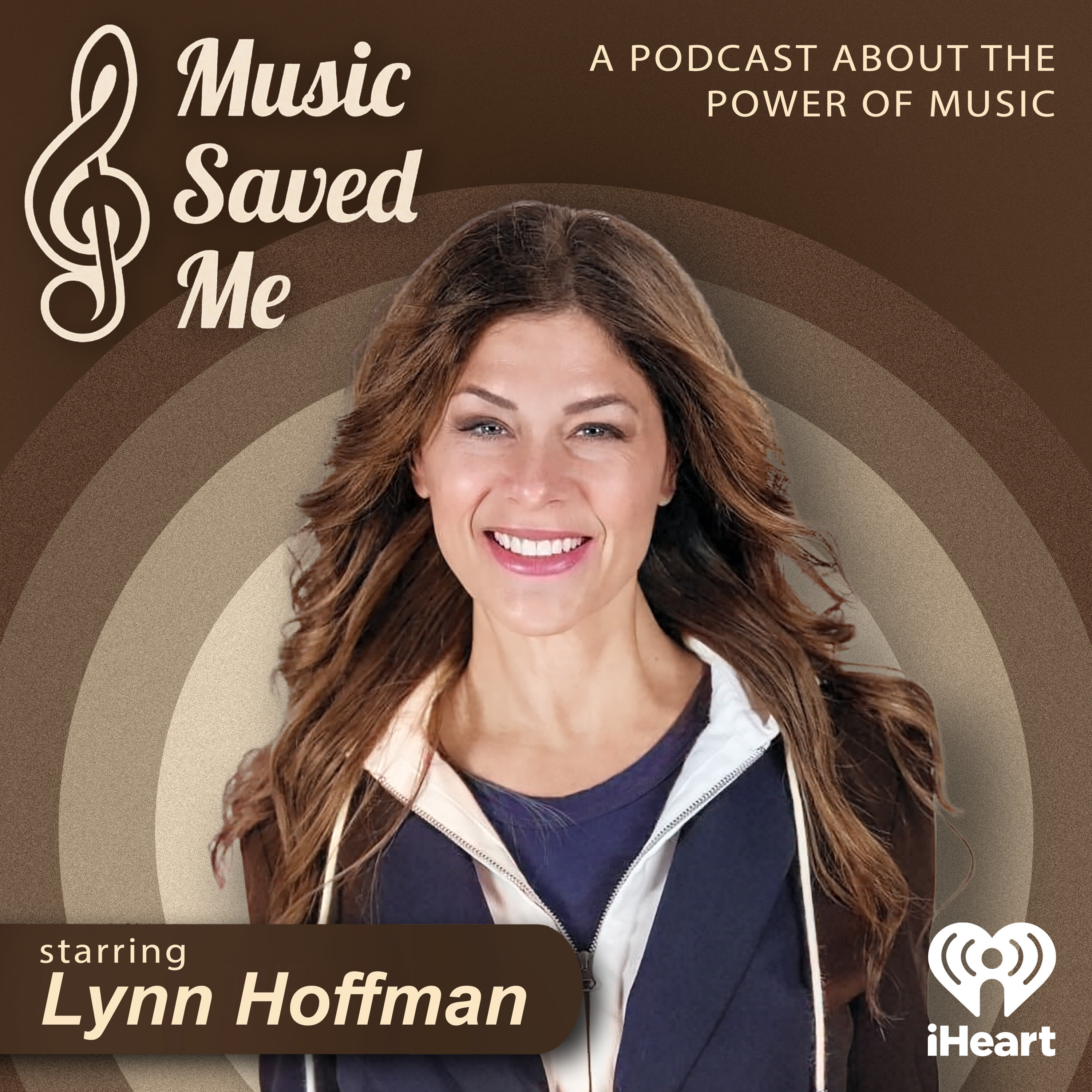
Loading summary
Transcript39 lines
- [00:00]
A
This is an iHeart podcast.
- [00:05]
B
Millions of people have turned to Claude, the AI assistant from Anthropic because it just feels different. Where other AIs often sound a little robotic, Clawd has been designed with special research that informs its character, meaning that Claude just gets it when it comes to empathy and emotional intelligence. That's why Claude has become the if you know, you know choice for dating advice, career coaching, gathering your thoughts for those important life decisions, and more. Give Claude a try for free at Claude.com that's C-L-A-U--E.com and let us know how you feel the difference.
- [00:42]
A
Music Saved Me Musicians On Call is a charity that is perfectly aligned with the mission of this podcast, delivering the healing power of music. Since 1999, why not become a volunteer or a supporter by going to musiciansoncall.org.
- [00:58]
C
We had no neighbors, we had no TV, no telephone. If it hadn't been for the guitar, I honestly don't know what I would have done with my life. And it saved me.
- [01:07]
A
This podcast is called Music Saved Me and on each episode we'll look at a musician. We'll delve into their story, their deep connection to music. We'll talk with their fans, everyday people with their own story to tell about how music has saved them in challenging times. I'm Lynne Hoffman, your host for the Music Saved Me podcast. I'm honored to take you on the journey of musicians and their fans who can say that music saved them. On this episode of Music Saved Me, our guest is one of the most respected and awarded musicians in music. She has had 19 number one singles, including those of the Judds, making her one of the best selling country artists of all time. Now, when you can reduce a person's name to just one word that tells you something of their stature, you'll learn more of the character and resilience of Winona. Thank you so much for coming on the show. Let's get right into it. Tell us, why is music so important to you?
- [02:09]
C
Wow, that is quite a question right out of the gate.
- [02:14]
A
Thanks.
- [02:15]
C
My name is Wynonna Ellen Judd. I was born Christina Claire Seminella in 1964 and I started playing guitar when I was eight years old. I think out of loneliness and feeling very different in my family. I didn't feel like I belonged anywhere. I was a misfit and I think music saved my life in so many ways that I still feel that today. I started playing music because we lived in the middle of nowhere. My mother had a thing about Living out in the country, we had no neighbors, we had no tv, no telephone. If it hadn't been for the guitar, I honestly don't know what I would have done with my life. And it saved me.
- [02:51]
A
So it sounds like you really knew at a young age why music was so important to you.
- [02:57]
C
Yes, it was. Joni Mitchell.
- [02:59]
B
Yes.
- [03:00]
C
19. Somewhere around 1971 or 1972, I discovered Joni Mitchell. And I learned every word, I learned every note. I played the guitar, and people would ask me to play music at parties and family get togethers, and I became known as the girl with the guitar.
- [03:21]
A
So why did Joni Mitchell's music speak to you, do you think?
- [03:25]
C
I think because I was so lonesome and her voice was so comforting to me. It was like someone in my family speaking to me. I felt. I just felt this personal connection with it. And to this day, Joni is one of my favorite sheroes of all time. And I met her recently and we became bonded for life. And she literally saved my life. I. I don't know, again, what. What would have happened to me if it hadn't been for music. I would have either probably been incarcerated or not. I was a bit of a wild child in terms of spirit, not doing illegal activity, but I was definitely the emotional one in the family. And I had. I really felt like I had nowhere to go because I didn't feel understood and I didn't feel like I fit in anywhere. And music gave me a place to belong.
- [04:16]
A
Yes, a sense of belonging is so important, especially when you're young. Were there any other musicians or artists that really resonated with you at that time?
- [04:26]
C
Yes. Bonnie Raitt and Linda Ronstadt and Emmylou Harris. Any woman who had been through hell and sang about it, I was drawn to them. Aretha's voice is one of the first voices that I remember being attached to in a primal way. I was taken by her voice. It just took me somewhere not of this world. And the women really spoke to me, more so than anyone because of the fact that I was so young and becoming a young woman myself, I was drawn to Linda Ronstadt. She was beautiful. The way she sang her songs, it was like power.
- [05:04]
A
Of course, for you, especially someone growing up so isolated. I mean, this had to have deepened your appreciation even further for music, to.
- [05:12]
C
The point where I didn't know what I was going to do with my life if I wasn't going to be in music. I didn't want to be here. And it was that deep. I was. I did really well, in school, and I was a good kid, I just felt again, I was so spiritually defined by the music. And the music swept me away and took me. It took me. I was 14 years old in Marin county, outside of San Francisco, where I discovered Bonnie Raitt. And I just went way, way deep into Bonnie and she saved my life.
- [05:47]
A
So as you further developed your career and became a songwriter, how did that deepen your love of music?
- [05:55]
C
I think when you're born poor and you have so little, you dream really big. And I would. I would literally be in the wilderness. We had no tv, no telephone. And I would literally sit on the front porch and play my guitar. And I would. Will be watching, for instance, the sun go down. And I wrote a song called Lazy Country Evening. And I would just sit there and strum the guitar. Something to do. And if it wasn't for that, I don't know what would have happened. Again, because I was so defined by the notes that I was singing as well as the notes I was playing, that it gave me an identity. And songwriting became a. A way out of the reality of being with a single parent on welfare. We're talking food stamps. We had so little. We raised a garden and we wrote songs about our pets. I remember writing a song about one of our cats and thinking, what? I thought it was a natural progression.
- [06:56]
A
Well, as a cat lover. Thank you. So writing songs is a very personal thing. Did you keep, you know, with everything going on in your life at that time too, did you keep writing those songs in private or did you share it with the world?
- [07:13]
C
Oh, I never thought of sharing it with the world. It was such a personal thing. It's almost like if you keep a diary, you know, you think about that and you have a lock on the diary. I remember having a diary with the lock.
- [07:24]
A
Yeah.
- [07:24]
C
It was very personal. It was just a way for me to vent. My mother is very high spirited. She's a perfectionist. She's very strict. Ashley and I are very, very different. Even when I was little, I knew that we were very different from each other. And I felt very lonely. And I was a girl that had a lot of spirit and I didn't know what to do with that spirit. So I wrote songs, but the songs to me were so personal that I wasn't going to share my diary with anybody.
- [07:53]
A
I know that's got to be one of the hardest things to do as a songwriter, is to share your songs. Why have you chosen to be so transparent about the trials and tribulations in your Life.
- [08:05]
C
That is a great question. I think it's who I am. I've been this way my whole life. My mom said I was not a good liar, and she said that I always told on myself. And I think it's because of my grandmother. My grandmother raised me with a sense of, you know, the whole thing of grandparents have a way of guilting and shaming you into the reality of telling on yourself and getting right with God. And I think it had to do with that. And I think I've been this way my whole life. And Look, I was 18 years old when I made it, and the fans were my family then, and they are today. I spend more time with the fans than I do most of my family. And I think they allowed me to be who I am in such a way that it gave me permission to tell the truth.
- [08:47]
A
You see, it's that honesty and authenticity that connects Wynonna so beautifully with all her fans. Check this out. She has that inspirational voice and her relationships and brings that out in the songs. And the way she sings, you know, you can tell it comes from the soul. So, Wynonna, music has always been a huge force that has guided you through your life. Besides music, what else guides you in life?
- [09:24]
C
Wow. I'm currently looking at my baby girl. I have a granddaughter. Her name is Kalia. And she looks at me and she looks right through me. You know how kids look right through you? Yes. And they give you a sense of hope. She's definitely very high on my list of priorities and the things I think about the most and how to be a good grandmother. That's one my animals. They keep me honest because they don't give a crap. Or sometimes they do give a crap, and you have to clean it up. I have animals. I have 40 animals here on the farm. We raise a garden that's about as real as it gets. The dirt keeps me honest, and the farm keeps me hoping. Because when you grow things on the farm, it gives you perspective that you don't get in the city.
- [10:09]
A
That is true. What is your view on the power of music and religion or the power of music fused with spirituality?
- [10:18]
C
Well, to me, it's spirituality. I think I was raised with a religion, and I ran from it when I was 18 years old. I was raised very strict Baptist, and I. I don't know that God is that strict in terms of the religion part of it. So to me, it's spirituality. There's religion and then spirituality. I think the spirituality comes from opening yourself up so deeply. To the music, and it just brings out something that you can't get anywhere else. You know, you can't buy this stuff. I know that show business, the youth of today, think that it's a lot more, you know, available. But sometimes you have to get really humble to do your best work. I think the best work comes from this tour, for instance, because it breaks me. It literally opens me wide open when I'm on stage and I'm singing to thousands of fans who are singing back to me so loudly that I literally have to take a physical step backwards because it knocks me over. And something happens in that moment because it's so much bigger than yourself. You know, you can't take credit for it because it's happening in spite of yourself. You might be the starter of it, but it certainly goes somewhere that you're not in control of, and it just makes you go, whoa, I am not in control after all. I thought I was, but I'm not. That's pretty humbling.
- [11:33]
A
Yep, it sure is. Do you visualize your fans and particular struggles that, you know, they may be.
- [11:40]
C
Dealing with more so than ever before? I've always been a visionary. I was born with a gifting that has allowed me to visualize. And I take very, very. I take it very seriously. If it wasn't for visualization, I don't know that I would be here today, because there are times when I feel absolutely like I can't do something, and I will close my eyes. I did it on the airplane the other day back from Mexico. I was doing a show with Brandy Carlisle, and I was on the airplane, and I was thinking about this tour, and I was thinking about how vulnerable I feel. And sometimes I don't feel like I'm my best. I'll be honest. I wake up, and I don't know that I'm feeling as secure or as capable. And all of a sudden, I'll just visualize myself on stage being very capable. And you have to do that. It's what carries you through all the insecurities. Because this business is not an easy business. It takes you away from really who you are at times. You know, the professional part of it and the success part of it, you know, that's not really who I am, authentically. I'm a farmer. You know, I'm a farmer at home, and then I get my clothes packed, and I put on my undergarments, and I spray my hair with sparkles, and I go out there and I'm the ambassador, and I have to visualize Otherwise, I don't think that I would be able to make it on my own.
- [12:56]
A
It's such a powerful tool. Well, here's another of Wynonna's fans to prove that amazing connection between artist and fan.
- [13:05]
C
Winona's music. I grew up, my mom listened to it on the radio, so her music takes me to. Back to, like, road trips, and, I don't know, it's just something we would sing along to their song. I know where I'm going. Like, I don't know. Graduating high school, I definitely thought I did. I still have no idea what I'm doing.
- [13:24]
A
I love that. Oh, I can't believe the time goes so fast, Wynonna. But in closing, this is specifically talking to the musicians and songwriters and future superstars listening to you right now on how to stay on their path no matter what the challenge. What advice would you give to them, especially when it comes to music, saving their life?
- [13:46]
C
I think one of the things that I do that helps me is I stay away from social media, and I don't compare myself to other people, because that's really easy to do. And when I compare myself to other people, I get very, very, very discouraged. I would say also, too, that if you play an instrument, which always helps me, playing guitar is literally part of my body. I've been doing it for 50 years. I've been playing guitar for 50 years. I would say write songs, because that's really about as honest as you can get. I would say get really honest with yourself and ask yourself, what is it that you want? You know, do you want to be famous? And if it's. If it's that, that's going to be quite a struggle, because that changes like the weather, you know, the fame part comes and goes. I would say find somewhere authentic, whether it's church or singing in clubs, if you want to get a band together and just play music and play wherever you can, whether it's a county fair or, you know, on your street. I always tell people, sing and play as much as possible and show up. That's one of my biggest things, is showing up even at the worst day as I show up, and I just go from where my gut takes me. I would say also following your gut, that's a huge thing for me. I say yes and no. I go into a room and I literally close my eyes and I sit down and I ask myself, is this something that you really want to do? Does it make sense? And I would say, listen to your gut more and don't let the world define you. Never let anyone tell you who you are.
- [15:22]
A
Gosh, that is so true. Never. My mom always used to say, don't ever let anyone make you question your own integrity. Kind of close, but not exactly what you said, but similar. Wynonna, thank you so much. It's been such a pleasure having you. If there's a takeaway here for you mute musicians out there, remember, show up, Play, play, play, and listen to your gut. Wynonna Judd, a portrait in resilience, authenticity, transparency, sharing her bond with her audience on this episode of Music Saved Me. Thanks for joining us. I'm Lynne Hoffman.
- [15:58]
B
Every business has an ambition. PayPal open is the platform designed to help you grow into yours with business loans so you can expand and access to hundreds of millions of PayPal customers world and your customers can pay all the ways they want with PayPal, Venmo, pay later and all major cards so you can focus on scaling up when it's time to get growing. There's one platform for all business PayPal open grow today at paypalopen.com loans subject to approval in available locations.
- [16:28]
C
This is an iHeart podcast.