← Takin' A Walk - Music History with Buzz Knight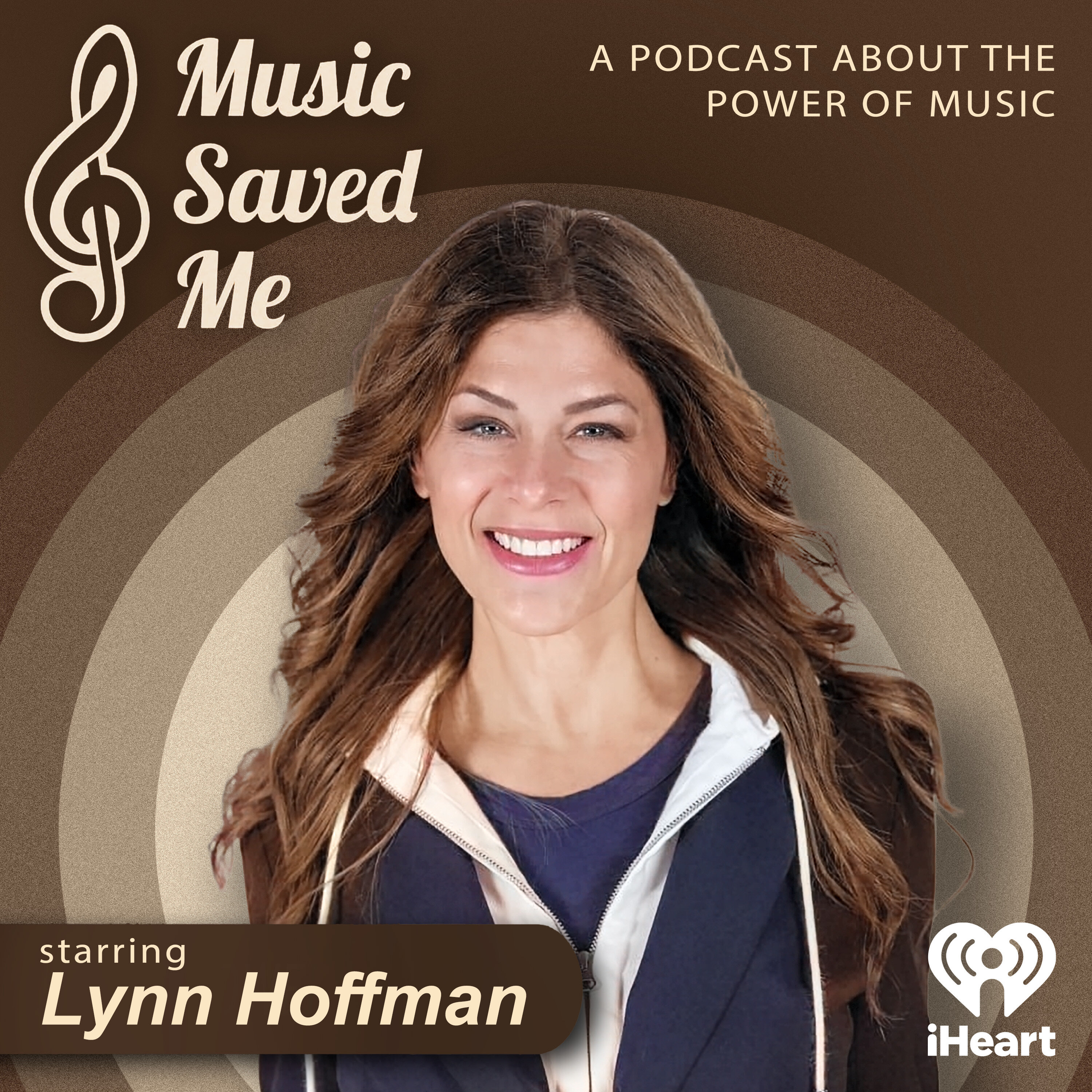
Takin' A Walk - Music History with Buzz Knight
Classic Replay Music Saved Me with Brian Harris-CEO of MedRhythms
00:22:39
Loading summary
Transcript60 lines
- [00:00]
Lynn Hoffman
This is an iHeart podcast.
- [00:04]
Ryan Seacrest
Ryan Seacrest here. When you have a busy schedule, it's important to maximize your downtime. One of the best ways to do that is by going to chumbacasino.com Chumba Casino has all your favorite social casino games like spin slots, bingo and solitaire that you can play for free for a chance to redeem some serious prizes. So hop on to chumbacasino.com now and live the Chumba Life sponsored by Chumba Casino.
- [00:29]
Brian Harris
No purchase necessary. VGW Group Void. We're prohibited by law 24/ terms and conditions apply.
- [00:34]
Jana Kramer
This is Jana Kramer from Wind down with Jana Kramer. When we were deciding on our appliances for the house, Samsung was at the top of our list. And I love my Samsung appliances, especially because they're so reliable. And with my busy schedule, having reliable appliances has been a game changer. It's no wonder Samsung is the number one brand for customer satisfaction. That's why I'm excited to tell you all about Samsung's new line of smart appliances featuring their brand new Bespoke AI Laundry combo. This incredible magic machine washes and dries in one machine. One load. No transfers, no timers, no rewashing needed. New Bespoke AI appliances. This is home living made simple. For more information visit samsung.com bespoke 68.
- [01:20]
N/A
Minute cycle based on 27 inch combos based on using a super speed cycle only with a 10 pound doe load cotton 50% plus polyester 50%. Individual results may vary based on actual load content.
- [01:29]
This message comes from Greenlight. Ready to start talking to your kids about financial literacy? Meet Greenlight, the debit card and money app that teaches kids and teens how to earn, save, spend wisely and invest. With your guardrails in place with Greenlight, you can send money to kids quickly, set up chores, automate allowance and keep an eye on what your kids are spending with real time notifications. Join millions of parents and kids building healthy financial habits together on Greenlight. Get started risk free@greenlight.com iheart.
- [02:02]
Brian Harris
Clorox Sandiva smells like lavender.
- [02:07]
N/A
Cleans like Clorox and feels like hmm.
- [02:18]
Alright, that could go on for a while. Experience the long lasting freshness of Clorox Scentiva. Available in Clorox Scentiva Lavender Scented Bleach Use as directed.
- [02:30]
Every day our world gets a little more connected, but a little further apart. But then there are moments that remind us to be more human.
- [02:43]
Lynn Hoffman
Thank you for calling Ameca Insurance.
- [02:45]
Brian Harris
Hey, I was just in an accident.
- [02:47]
Lynn Hoffman
Don't worry, we'll get you taken care of.
- [02:49]
N/A
At Ameca, we understand that looking out for each other isn't new or groundbreaking. It's human. Emeca. Empathy is our best policy.
- [02:59]
Brian Harris
Music Saved Me we're understanding in a much more objective way the power of music on the human brain, that we know that it activates our brain like nothing else on earth. You know that when you just listen to music, the parts of your brain that are responsible for movement, language, attention, memory, emotion, all of these things are activated when we just listen to music. And there's nothing else on earth that activates our brain like music does.
- [03:23]
Lynn Hoffman
I'm Lynn Hoffman and welcome and thank you so much for joining us for another episode of the Music Saved Me podcast, the podcast where we discuss the healing powers of music with artists and musicians. Now, if you like this podcast, we think you'll like our companion podcast called Taking a Walk, hosted by awesome Buzz Knight. Now, today we're taking a slightly different angle with our discussion because today we get to talk about the actual scientific connection of music's healing powers with one get this, of only 250 music therapy fellows in the world and the creator of the first ever FDA approved prescription music product for stroke victims, Mr. Brian Harris, who is also the CEO of Med Rhythms, a company he founded after carving out a quite remarkable career as a neurological music music therapist. Brian Harris, welcome to Music Saved Me.
- [04:16]
Brian Harris
Well, thank you so much. It's really an honor to be here.
- [04:18]
Lynn Hoffman
Well, this is fascinating stuff because everyone understands that music can be very powerful as a tool. But it would seem that you have proven beyond a shadow of a doubt that the healing power of music is really far bigger than anyone could have ever imagined. Am I right?
- [04:33]
Brian Harris
Yeah, it's really incredible. I think all of us as humans have the experience where music has changed us in some way. It's made us feel emotions, happy, sad, et cetera. But now, through the advancements of neurotechnology, neuroimaging neuroscience, we can begin to understand music in a completely different way. And that way is really through the objective power that it has to impact our brain, which is much bigger than, I think, what we expected or what we've known to date. And it's really an exciting time to be doing this work.
- [05:03]
Lynn Hoffman
It sure is. Now, I've read I'm going to go a little out of order here because usually I like to start at the beginning, like, where were you when things first began? But I read something so powerful yesterday that I have to share it with our audience. You said you believe that right now, what you and your colleagues know about the power of music through the lens of neuroscience. And what you're seeing in real clinical practice is that music will change the future of global healthcare. Can you explain to us exactly what that means? Because it sounds so exciting and promising?
- [05:35]
Brian Harris
Yeah, it is very exciting. And I think when we think about that very statement that I make in a lot of my presentations, when I talk about the sciences, I believe to my core that it will change the future landscape of global health care. Because, number one, we're understanding in a much more objective way the power of music on the human brain. That we know that it activates our brain like nothing else on earth. You know that when you just listen to music, the parts of your brain that are responsible for movement, language, attention, memory, emotion, all of these things are activated when we just listen to music. And there's nothing else on earth that activates our brain like music does. But it's also been shown that when you engage in music, so when we actually provide these interventions to our patients that have diagnoses across the board from stroke, Parkinson's disease, multiple sclerosis, whatever it might be, that we can actually improve those functions that I just mentioned so we can help somebody to walk better with the power of music. We can help somebody speak better with the power of music. And this is through objective science that we can see these outcomes. And so when you think about the broad applicability of how music impacts our brain and literally how it can be applied to our patients across the board with a number of disease states, the power is there to change the landscape of health care. We just have to implement it the right way.
- [06:52]
Lynn Hoffman
So if we could rewind, because that's just incredible news, and I'm sure a lot of people are very perked up right now to think about the application. Do you remember? And we're going to get to that, by the way. I want to talk about all of this stuff, but first I want to know when. When your first personal connection with music was and how it impacted you and made you really get interested in it.
- [07:13]
Brian Harris
Yeah, I've always been a musician. I've loved to play. I grew up as a violist first and then learned to play the drums and became a drum set player and just really loved that. And for me, when I think about the moment, there was a singular moment that actually changed my life when I witnessed the power of music, that really threw me onto this trajectory to try to answer these questions and try to bring this to people. And. And that moment was when I was in my undergrad, I went to the University of Maine and I took an online course in music therapy that at the time was taught by the only private practicing music therapist in the state of Maine. So there was very, very few people that were doing this work. And I had an opportunity to intern with him one summer and he was working with children and adults with severe developmental delays. And the very first time I ever witnessed music therapy in the presence of one of his clients, he was working with an 18 year old that was physically and cognitively functioning at about a one year old level. So he was wheelchair bound, couldn't speak, really had limited interactions with his environment at all. And this music therapist was not trained at the time in the neuroscience of music, but began to do live music with this boy. And within about 10 minutes of him being in the presence of this music, he began to cognitively function at a higher level than what anybody in his life had seen before. So literally, his family and the people that worked with him every day came in the room and they were in tears because they couldn't believe how this boy was functioning. And it was at that moment in time that literally changed my life because I said a, I need to be using music in this way. This is my calling in life. And number two, if we can understand how this happened and while witnessing this in real time was really a magical thing to witness. Right?
- [09:06]
Lynn Hoffman
I bet.
- [09:06]
Brian Harris
But I said there must be a reason why his brain allowed himself to respond this way to music. And if we can answer that question, that's when we can really harness the power of music and then replicate it to help a lot of people. So not trying to take the feeling out, but take the magic out and put the science in so that we replicate it with more people.
- [09:27]
Lynn Hoffman
Well, how did your career path after that happened take you to Spalding Rehabilitation Hospital in Boston, which really was the genesis of med rhythms, right?
- [09:36]
Brian Harris
Yeah, absolutely. I, after that moment, I decided that I was going to get a master's degree in music therapy to become a board certified music therapist and really focus all of my energy on understanding the neuroscience of music, but more specifically than just the neuroscience of music, but really understanding how it can be clinically applied, which is through a sector of the field that's called neurologic music, music therapy that does just that. And so I spent a lot of time and energy learning and focusing on that, and then went to Spalding and I was very fortunate enough to get an internship there. And then they turned that internship into a full time role and it was in that role of building their music therapy program. I was working primarily with stroke and brain injury patients, and after I started their program there, what we were seeing was that patients were getting better, faster with greater results. And we now have the neuroscience to not only explain how it was possible, but also how we could standardize and replicate it. We could tell you, here's why this patient's able to walk better, faster, et cetera, when we do this intervention, and here's how we can replicate this intervention with different patients. We would see these replicable outcomes very quickly. After I started that program, the demand for the services within the hospital from doctors who were asking me to see their patients, but also from patients and their family members who were saying, brian, you helped my dad walk again. How do I get more of this when I leave the hospital? At the time when I was delivering this care in the hospital, the answer was, there's nothing you can do. Really, as a clinician, that was really an awful conversation they have with patients and their family members on a regular basis. It was really based upon those results that we were seeing in the clinic and the demand that we were seeing that we started med Rhythms really around that fundamental mission of how can we bring this important care from inside the hospital to patients around the world that we believe not only need it, but really fundamentally deserve to have access to it? And that was really the genesis of the company.
- [11:34]
Lynn Hoffman
Yeah. Yeah. Well, first of all, I don't know how many of us even hearing you talk right now, knew that there was anything like music therapy that was offered, let alone all the way up the chain into neuroscience and what you're doing. So congratulations on bringing it to the forefront. I want to talk about med rhythms and how neuroscience and music intersects, intersect, specifically intersect to heal, because it's fascinating, and I'm guessing it's like, in your company name. Rhythm has a lot to do with it. Is that correct?
- [12:07]
Brian Harris
Yeah, rhythm has a lot to do with it. And rhythm is a primary driver of the brain functions in terms of how we see outcomes. It's a really important cue for the human brain that allows it to function more efficiently and activates parts of the brain that other things can't.
- [12:25]
Lynn Hoffman
Can you give it? I heard you speak about things like live preferred music and neuroplasticity, and I know that's very scientific for people listening right now. They're like, oh, wait a minute, what are you talking about? But, I mean, a specific example maybe of what you've witnessed beyond what we just talked about in Terms of using your product, which we're going to get to exactly what it is, but rhythms, meaning like people walking on a rhythm or how certain things connect in the brain to make you understand that you need to do more with your speech or your movement after suffering from a stroke.
- [13:00]
Brian Harris
Yeah. So what's really amazing about the power of music, and if we think about rhythm specifically, what the research shows, is that when we as humans, and this is objective neuroscience, so regardless of age or culture or ability or disability, everybody's brain objectively responds the same to music. And when we think about rhythm, what's really exciting about that is what the research shows, is that when we hear an external rhythm in our environment, like the rhythm of music, that it activates the auditory system of the human brain. So the part of your brain that's responsible for hearing, because you hear the rhythm, but that the auditory system and the motor system, so the part of your brain that's responsible for movement are actually richly connected at both what we call the conscious and the subconscious levels in the brain, such that you can use an external rhythm to activate the motor system or the part of your brain that's responsible for movement.
- [13:53]
Lynn Hoffman
Can you give me an example of that? Like, yeah.
- [13:56]
Brian Harris
And so what this means for, typically for people who are neurologically healthy, is that that's the reason why when we listen to music that has a strong beat to it, we want to tap our feet, we want to move our bodies, we want to tap our fingers. That's not an emotional reaction to music. That's the rhythm literally telling our motor system to fire. And if you ever wanted to actually test this out, I would encourage you to either, you know, listen to music that has a strong beat to it, try to tap along to the beat of the music. You'll be able to do that very easily and quickly. And then if you try to do the same thing, but not tap along to the beat of the music, it's nearly impossible for you to not entrain what we call entrainment, which is like moving to the beat of the music. It's nearly impossible because the rhythm is literally giving your motor system a signal to fire. And in order for you to not move along to the rhythm, you actually have to come up with some sort of strategy cognitively to not listen to what's in your environment. So what's amazing about that is that that also applies to those who have damage to the motor system. Stroke, Parkinson's disease, et cetera. We can use an external rhythm to engage the part of the Brain that's responsible for movement. And when we do that, it improves their walking ability, it improves their clinical outcomes.
- [15:15]
Lynn Hoffman
And what about with speech? Because I do know that stroke sufferers do have a really hard time expressing what they're thinking in their mind, getting it out of their mouth. And that's gotta be extremely frustrating for people who are still in the prime of their lives trying to get through it. This is going to be a game changer for people. Yeah.
- [15:34]
Brian Harris
And as we think specifically about language, what's really fascinating is that these patients who have. It's called aphasia as a clinical term that we use, which is the inability to speak language. But we've noticed that many times people who can't speak can sing, so they have no expressive language, but they could sing lines of songs. And the reason why that is is because, as I mentioned earlier, music really activates the entire brain, and the speech center of the brain is localized to one very specific area. So if there's damage to that speech center, we can use music to activate the rest of the brain to help improve the language outcomes and essentially teach the brain to use the undamaged parts of the brain to speak language. So we teach people to speak again through what looks like singing.
- [16:27]
Lynn Hoffman
That's incredible. Absolutely incredible. You and your team, as I mentioned up front in the intro, created the first product for this. I can't even believe I'm saying it, but you created the first product for stroke survivors listed with the fda. Can you tell us about the world's first prescription music product? Now there's a prescription I would like.
- [16:48]
Brian Harris
Yeah. It's certainly an exciting moment for us, especially as a music therapist, to be bringing the science, but also bringing this application into the world. The product that we've built is a product that's called. Our first product for chronic stroke survivors, is called in tandem, and it essentially uses rhythm to help patients improve their walking who have had a stroke. And it uses an intervention that's called rhythmic auditory stimulation. So we're using rhythm activate the auditory system, which activates the part of the brain that's responsible for movement, to improve those outcomes. As we were building the product, we did multiple successful clinical trials. So we believe that it worked. I saw that it would work in clinic when I was doing it with live music treating patients in the hospital. And essentially, I taught the product how to think like a clinician because we wanted it to be able to be delivered autonomously in the home setting without the need of a clinician to be present. So we built A product that has sensors that connect to the shoe. They collect clinical grade data about how patients are walking. That data feeds into an algorithm that's based upon a mobile device. And then we deliver music via headphones. And the core being these algorithms where essentially I taught the algorithm. When you see X data from the walking, do Y with the music. When you see Y data come in, do Z with the music. Because of that, it can be an autonomous system where every patient gets a customized intervention based upon how they're walking in that moment. But we had to go through multiple successful clinical trials, really in a clinically rigorous way, because if we're going to claims about the product or we want it to be used with patients, it's really important for us that we believe that it can work and that we prove that it can work. And so we did multiple successful clinical trials there. And then we were able to list it with the FDA as a Class 2 prescription medical device. And then, you know, now on our way to actually bringing it, you know, to patients who need it. And that's a very long process. I said it in about 30 seconds. That's a very long years long process to get through that, to demonstrate its efficacy. And now we're at a point where we can begin to bring it to the patients who need it.
- [18:59]
Lynn Hoffman
Yeah. Brian, I watched a video from 2018 where you showed someone who had survived a stroke walking with a lot of help, doing therapy, and minutes after you did a test with them with that rhythm, the therapy that you were talking about, this is back in 2018, and they showed him walking totally different, like immediate. It was almost immediate. So after seeing that, I was. I just can't even describe to you what I was thinking. You know, here we are, 20, 25 and you're like on the cusp of everything exploding in such a fantastic way. Another thing that gets me excited is you have a collaboration with a number of partners, including Universal Music, which is incredible too. Can you tell us about that? I'm like, I'm tearing up here because I'm just thinking about the applications and how many people you're going to help, and it's phenomenal.
- [19:49]
Brian Harris
Well, I appreciate the comment. It's exciting for us too. And our partnership with Universal Music Group has been amazing. And we use music obviously as we deliver the intervention. And what the research shows shows is that if you can do rhythmic auditory stimulation, so this intervention with music that people like, it actually enhances the clinical outcomes. But also in addition to enhancing the clinical outcomes, we want people to do this on their own in their home. So we want it to be engaging and we want it to be motivating. And so we worked with Universal Music Group to actually get access to their catalog of music. So, you know, a number of different artists that patients can choose from, so they get to choose the music that they love. And then our algorithms essentially make it therapeutically valuable for them. And it's really been an honor to work, I mean, for me, coming up from a musician's background, becoming a clinician, to have the music industry engage what we're doing in. What we're doing in such a profound and exciting way. UMG has just been amazing partners to us. I mean, they've made it very clear that they care about our patients, which is what I care about the most, but that they're supporting us across the board. And that's really been an amazing partnership from us because we're also, as we build the product, right, you know, we have to demonstrate the music aspect. We have to demonstrate the clinical efficacy. You know, this is not just here's a random playlist for you to listen to while you walk. Because we know that doesn't work to yield outcomes. We have to pair the user experience and the music with our own clinical algorithms to show that we can actually make a clinical change in these patients lives. And. And UMG has been a really important part of that.
- [21:28]
Lynn Hoffman
It certainly is. And it's such exciting stuff to look forward to. Can I. What does it look like, the device? I know that sounds like an odd question, but I'm trying to envision what this is. Is it just like an earpiece or.
- [21:40]
Brian Harris
Yeah. So the kit has three components.
- [21:43]
Lynn Hoffman
Okay.
- [21:44]
Brian Harris
There's two biomechanical footwarm sensors. So they actually are small sensors that are, I guess about the size of two thumbs together in your shoe that clip onto any shoe. So a patient can wear any shoe that they want as long as a safe shoe for them to wear. Clip the sensor on, then there's a mobile device, so a small mobile device that has just our application on it. And then there's a set of headphones. All of that is Bluetooth connected before a patient gets it. So all they have to do is open the product and put it on. So they connect the sensor, one to each shoe, they start the program on the mobile device, and then they put the headphones on, they begin to walk. As they begin to walk, the sensors are collecting the data about how they're walking, which is all the things that I would be looking at. As a clinician, if I was treating a patient, that data is feeding into the algorithm and then the music that they hear is changing based upon how they're walking. And throughout a real 30 minute session, the music's changing to actually drive them to walk faster with better quality. So it's pushing them again, it's not just a random playlist, it's actually modifying what they're hearing such that it's pushing them to improve their walking speed and their walking quality.
- [23:02]
Lynn Hoffman
Now, not just stroke victims, Brian's helping with, with auditory issues and mobile issues, but also I read something about the potential breakthroughs in Parkinson's. Do you see that on the horizon?
- [23:14]
Brian Harris
Yeah, it's an exciting time as we think about what the real power here is of music. And as I mentioned, we've seen it practically as we're treating patients clinically across a number of diagnoses that this can be really help helpful for them. At Med Rhythms, we've developed a product that does rhythmic auditory stimulation for walking. And we've done two successful clinical trials thus far in Parkinson's disease and are working through what the next steps may look like for that product as well. So it's exciting as we continue to expand across these diagnosis to really understand what the power of this could be.
- [23:50]
Lynn Hoffman
Wow. The power of this is just exponential. And the world, and we're right on the precipice right now with AI exploding in ways that we haven't even begun to realize that are going to be so incredibly helpful to us. And we shouldn't be scared of it. We should, we should embrace it. It's only going to help us. It's like taking a vitamin supplement. This is just going to supplement all the things that we do to the hundredth power. And you're doing it. You're living proof, which is incredible. So first, I'm not worthy to even have you on the show. I mean, I feel like I'm humbled by what you're doing and I'm so excited for you and your team in the future and if there's any way that we can help, help move that needle with you in the future by any means, we'd love to partner with you on that. And thank you for the amazing work of Med Rhythms and for coming on. Music saved me to talk about it. How can our listeners learn more before I let you go?
- [24:44]
Brian Harris
Well, I appreciate that and I just want to say it's an honor for me to be here and it's an honor for me to do this work every day I get excited and I feel privileged that I have the opportunity to be using music in this way and more importantly doing what we can to make an impact in the lives of people who need it. And if people want to learn more about the company, they can go to www.medrhythms.com and we also have our first product is called In Tandem. They can also go to intandomrx.com as well to learn more about that specific product.
- [25:13]
Lynn Hoffman
And I also want to let everyone know that you're not paying to be on this show. This is not a commercial for your product. This is really collaborative. People who want to help help the greater good coming together to share, to hopefully change lives for the better. And so I thank you for that as well.
- [25:32]
Brian Harris
Yeah, thank you. It's certainly an honor and a privilege. So thank you very much.
- [25:35]
Lynn Hoffman
Nice to meet you.
- [25:36]
N/A
Brian.
- [25:38]
Are you still quoting 30 year old movies? Have you said cool beans in the past 90 days? Do you think Discover isn't widely accepted? If this sounds like you, you're stuck in the past. Discover is accepted at 99% of places that take credit cards nationwide and every time you make a purchase with your card, you automatically earn cash back. Welcome to the now it pays to Discover. Learn more@discover.com credit card based on the February 2024 Nielsen report here at the.
- [26:09]
Lynn Hoffman
Almond Joy Factory, where tropical vibes abound, we use soft, fresh tasting coconut, the.
- [26:15]
N/A
Crunchiest almonds, and delicious chocolate candy.
- [26:18]
Lynn Hoffman
Ah, but do you know what our most important ingredient? Sometimes you feel like a nut, sometimes you don't. Almond Joy's got nuts and something even way better than that. Yes, Almond Joy is made with almonds and Johor.
- [26:37]
N/A
It's summer time to enjoy long days, lazy nights and great food because Uber Eats has deals all summer long. So when hunger strikes, don't sweat it. Delicious deals are just a tap away on Uber Eats. Enjoy all your favorite grocery items delivered straight to you. Get ice cream soda and snacks from your favorite stores like Wegmans and cvs and make the most of every moment. Now that sounds like a good summer order. Now on UberEats Terms apply. Product availability varies by region. See app for details.
- [27:07]
Jana Kramer
This is Jana Kramer from Wind down with Jana Kramer. When we were deciding on our appliances for the house, Samsung was at the top of our list. And I love my Samsung appliances, especially because they're so reliable. And with my busy schedule, having reliable appliances has been a game changer. It's no wonder Samsung is the number one brand for customer satisfaction. That's why I'm excited to tell you all about Samsung's new line of smart appliances featuring their brand new Bespoke AI laundry combo. This incredible magic machine washes and dries in one machine, one load, no transfers, no timers, no rewashing needed. New Bespoke AI appliances. This is home living made simple. For more information visit samsung.com bespoke 68.
- [27:53]
N/A
Minute cycle based on 27 inch combos based on using a super speed cycle only with a 10 pound doe load cotton 50% plus polyester 50%. Individual results may vary based on actual load content.
- [28:02]
Does Friendly have a taste? If it does, it's probably like hello's Peppermint flavored Anti plaque and Whitening toothpaste. Brush away plaque, show tartar who's boss and remove surface stains to naturally whiten. Hello's thoughtful and flavor forward products make brushing your teeth feel like a confetti filled bathroom dance party. So say hello to hello with the always cruelty free never tested on animals toothpaste that's made to spread smiles. Visit helloproducts.com and let hello add some everyday yay into your life.
- [28:35]
Lynn Hoffman
This is an I Heart podcast.