← Takin' A Walk - Music History with Buzz Knight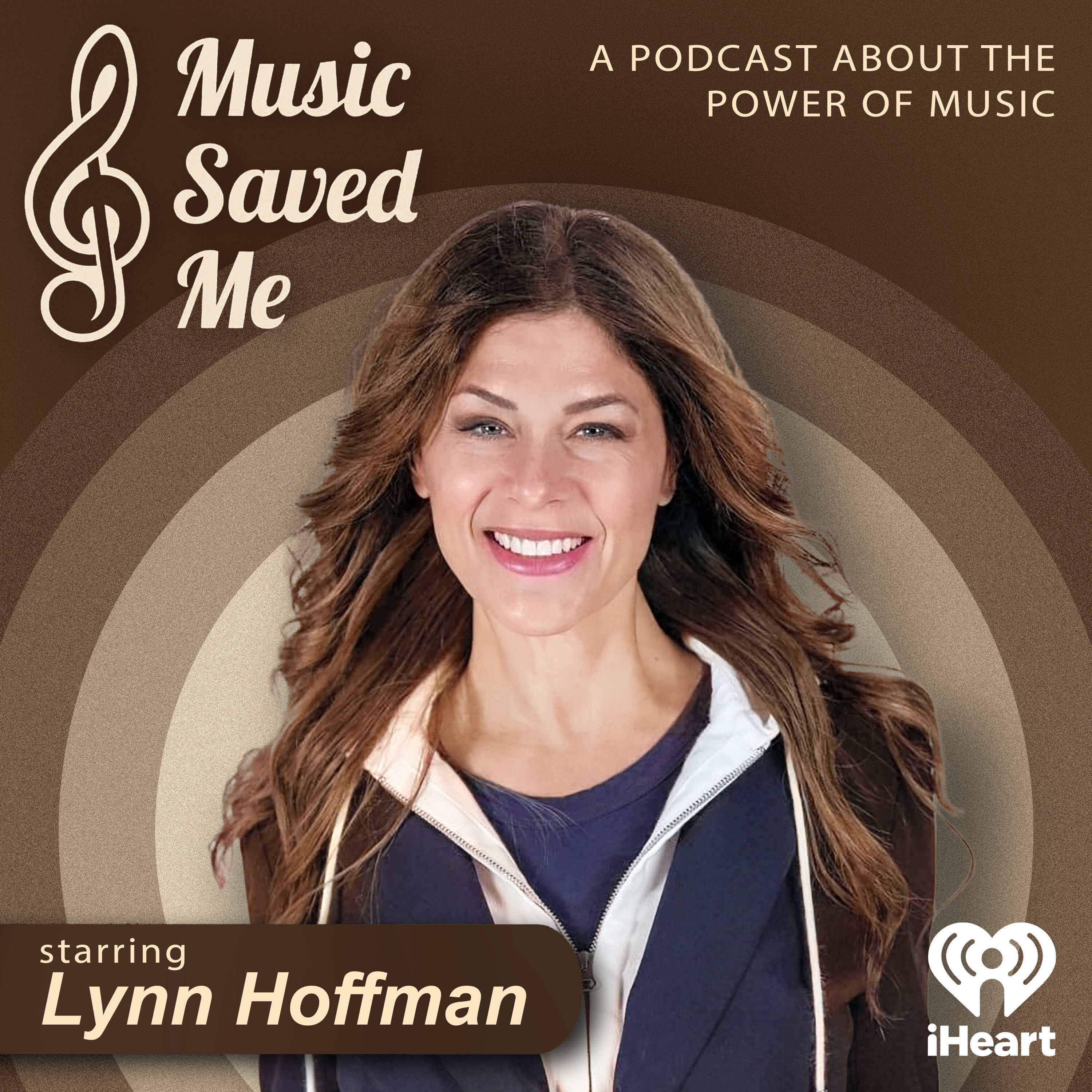
Takin' A Walk - Music History with Buzz Knight
"Music Saved Me : Kalie Schorr on Healing and Identity"
00:28:46
Loading summary
Transcript112 lines
- [00:01]
Kaylee Shore
Music saved me.
- [00:02]
Lynne Hoffman
Kaylee, I'm so grateful that you're here and I'm also glad that you are back on the scene. I'm glad that the last few years didn't keep you from coming back because I've done some research into you and your story is pretty amazing. And so I'm grateful that you would come on and share it, even if it meant just helping one person cope with life.
- [00:23]
Kaylee Shore
Thank you. That means a lot. I was having a conversation with my manager about that today, just about how most people probably would have called it quits around the time that they had to to go be a bottle girl at a club. And I did it. And I'm really thankful because, you know, I'm back doing what I love every day. And you know, that's not something anyone should ever take for granted.
- [00:46]
Lynne Hoffman
No, that is for sure. Well, you know, I feel like we've already started chatting and if you wouldn't mind, we take a quick break and then we're going to come back and we're going to get right into it with Kaylee Shore, the amazing Kaylee Shore, right after this.
- [01:00]
Dr. Joy Hardin Bradford
This is an iHeart podcast. If you're looking for another heavy podcast about trauma, this ain't it. This is for the ones who had to survive and still show up as brilliant, loud, soft and whole. The Unwanted Sorority is where Black women, femmes and gender expansive survivors of sexual violence rewrite the rules on healing, support and what happens after. And I'm your host and co president of this organization, Dr. Lea Trittate. Listen to the Unwanted Sorority. New episodes every Thursday on the iHeartRadio app, Apple Podcasts, or wherever you get your podcasts.
- [01:37]
John Hope Bryant
It's Black Business Month and Money and wealth podcast with John Hope Bryant is tapping in. I'm breaking down how to build wealth, create opportunities, and move from surviving to thriving. It's time to talk about ownership, equity and everything in between. Black and brown communities have historically been last in line. The Let me just say this AI is moving faster than civil rights legislation ever did. Listen to Money and Wealth from the Black Effect podcast network on iHeartRadio app, Apple Podcasts, or wherever you get your podcasts.
- [02:07]
Bob Crawford
I'm Bob Crawford, host of American History Hotline, a different type of podcast. You, the listener, ask the questions, did.
- [02:16]
Kaylee Shore
George Washington really cut down a cherry tree? Were JFK and Marilyn Monroe having an affair?
- [02:20]
Bob Crawford
And I find the answers. I am so glad you asked me this question.
- [02:24]
Lynne Hoffman
This is such a ridiculous.
- [02:26]
Bob Crawford
You can listen to American History Hotline on the iHeartRadio app, Apple Podcasts, or wherever you get your podcasts.
- [02:37]
Honey German
Hi, it's Honey German and I'm back with season two of my podcast, Gracias. Come again. We got you. When it comes to the latest in music and entertainment with interviews with some of your favorite Latin artists and celebrities. You didn't have to audition.
- [02:49]
Will Lucas
No, I didn't audition. I haven't auditioned in, like over 25 years.
- [02:53]
Honey German
Oh, wow. That's a real G talk right there. Oh, yeah, we'll talk about all that's vi and trending with a little bit of Cheeseman and a whole lot of laughs. And of course, the great Bibras you've come to expect. Listen to the new season of Gracias. Come again on the iHeartRadio app, Apple Podcasts, or wherever you get your podcast.
- [03:14]
Will Lucas
It's Black Business Month and black tech green money is tapping in. I'm Will Lucas, spotlighting black founders, investors and innovators building the future one idea at a time. Let's talk legacy tech and generational wealth.
- [03:27]
Janae (Cheekies)
I had the skill and I had the talent. I didn't the opportunity. Yeah, we all know, right? Genius is evenly distributed. Opportunity is not.
- [03:37]
Will Lucas
To hear this and more on the power of black innovation and ownership, listen to black tech green money from the Black Effect podcast Network on the iHeartRadio app, Apple Podcasts, or wherever you get your podcasts.
- [03:50]
Lynne Hoffman
Music Saved Me. Have you ever felt caught between heartbreak and hope, where a single song becomes your lifeline? Or. Well, welcome to Music Save Me, the podcast where we discuss just how that perfect melody can truly save us. I'm your host, Lynne Hoffman, and if you love the show, thank you and be sure to check out our companion podcast, which is Comedy Saved Me, available wherever you get your podcasts. Now. Today, I'm so excited. We are joined by the authentic and incredibly talented recording artist, singer, songwriter Kaylee Shore, who has turned her personal struggles into anthems and her pain into power. And oh my God, does she have power. Her new ep, My Type has been hailed by Variety as a stunning return of one of the very best of the post Avril generation of alternative pop singers. Join us as we explore the moments where music wasn't just her passion, it was her survival. And may I also add, Kaley's performed on stage with people like, oh, Stevie Nicks and Leann Rimes, Sarah Evans. There's quite a long list. Welcome, Kaylee Shore, to Music Saved Me. You've been doing this quite a while, even though you're still, dare I say, in your 20s?
- [05:05]
Kaylee Shore
Not quite. I just turned 31, but I do still feel like 25. And I think that given that. Given that I lost three years of my 20s to Covid, I think that that should be subtracted. So emotionally 28.
- [05:19]
Lynne Hoffman
Oh, I like that. Wait, that's it. We're going to take three years off for Covid?
- [05:24]
Kaylee Shore
Yeah. If you can't leave the house. Are you even in your 20s? 20s, you know. Yeah.
- [05:28]
Lynne Hoffman
So that's like taking £3 off when you're on the scale, if you're fully clothed.
- [05:34]
Kaylee Shore
Yes, it's. Yes. You get it, you get it. It's the exact same thing. Yeah, it's. It's been quite the journey. I've been doing music full time for 11 years. I've been a, you know, professional recording artist for 10. My first single, fight Like a Girl, came out almost exactly 10 years ago, so I'm gonna have to figure out how I celebrate that. But, yeah, it's been quite the journey.
- [05:58]
Lynne Hoffman
It has. Well, welcome to Music Saved me. And I. I want to start with you first. Kind of like go back to when you were young. Do you remember when you were first introduced to music? And was there a particular artist or an album that always felt sort of like a safe place for you when you were growing up?
- [06:18]
Kaylee Shore
Yeah, absolutely. I think I always loved the Chicks. That was one of the first albums I remember being fully sentient and processing the lyrics of. There's a song on there called Cold Day in July, actually released a covers project, so you can hear my cover of that anywhere you stream music, but it's a song about somebody leaving on a beautiful day. And I think that that's really relatable because, you know the world. And I have a song called the World Keeps Spinning about that same phenomenon where, you know, you're having one of the most heartbreaking days of your life and you look outside and the sun's shining and you're like, well, this doesn't match. And my grandfather had passed away when I was 7, and I remember listening to that song and really creating my own meaning out of it. And that's probably one of the first times I remember using music as a way to process something really difficult. And then from there, as my emotions got angstier and, you know, just that teen angst rage. I loved Alanis Morissette. I still do. I've been lucky enough to see her play live, see her musical on Broadway, and she's just always been a safe space. And then naturally, as most girls my age will say, Taylor Swift, for sure.
- [07:32]
Lynne Hoffman
Of course. Of course. When did you know that? You're like, okay, wait, music can actually heal me or heal people? Do you remember?
- [07:43]
Kaylee Shore
Yeah. I mean, probably around that time. And that was around the time that I started writing songs for the first time as well. And they were all very, you know, very six, seven years old at the time. They were about, like, stealing soda from the fridge at a sleepover and very rebellious. But, you know, I mean, that's just something that's continually proven to be true over my entire life with loss both, like, losing family members and going through breakups and body image. I mean, it's. That's a lesson that's showed itself to me probably every year of my life. But, I mean, that probably seven years old is around the time. I mean, I loved lyrics as long as I can remember. And that was always something that was really important to me.
- [08:27]
Lynne Hoffman
Did you know that you always wanted to sing or write or perform, entertain? That kind of.
- [08:33]
Kaylee Shore
Literally, as long as I can remember. And I. At the time, I thought it was a curse. Now I know it was a blessing. But I never had stage parents, and they really were dead set on me taking my time with doing it. So I was never pushed into anything. But at the same time, you know, the one thing I always wanted to do is pick up my guitar. So if I was getting grounded and they were like, okay, well, no tv, I'd be like, okay, I don't care. Or like, oh, you can't go over to your friend's house and be like, oh, no.
- [09:00]
Lynne Hoffman
But then they are.
- [09:01]
Kaylee Shore
And I'd be like, oh, my gosh. So, you know, it was always something that I just wanted to do. And I feel like not having stage parents really helped me foster that love for it, because it was a space that was just for me. No one was forcing me to do it. There were definitely other things I considered doing because mostly I felt the pressure in school when someone would say, what do you want to be when you grow up? I knew I sounded stupid saying pop star. I was, like, embarrassed to say it. So I'd usually say, like, lawyer or investigative journalist. And, you know, I still feel like I love the skills that come with those, and I bring those into my personal life. Like, you can't lie to me. It's impossible. Don't even try. But, yeah, music. I mean, as long as I can remember.
- [09:47]
Lynne Hoffman
So I love that you said that. I have to tell you that I felt the same way when I wanted. I knew when I was seven that I wanted to do entertainment entertaining of some sort. Because I was in a theater production and when I made people smile, it was like I was hooked. Yeah, but you're so right, because if you're going to be in a business like this, I guess you have to have a certain amount of an ego to a healthy ego, so to speak. But you didn't want to seem show offy in front of your friends or people that you cared about because of their view of the industry. So I used to tell people, I sell shoes, I want to sell shoes for a living and open a shoe store. You know, I never would say I want to be in television, radio and broadcasting or anything like that. So. So kudos to you for.
- [10:35]
Kaylee Shore
Yeah, I mean, it's, it's like, it's definitely. You don't want to be show offy. And especially like anything that makes you stand out as a kid is detrimental to your social standing, but it's also going to be exactly what makes you cooler as you get older. And I always tell kids that when I go visit music classes, whenever I'm on tour, I usually try to make time to go to the local high school and talk to the music classes and, you know, share my experience as somebody who's been able to make a living out of my passion. And there's always like one or two kids at the end of every class who I could just tell they've just been locked in the whole time. Like, the kids all seem to have fun. They're like, wow, there's a musician here. But there's always one or two. And I look at them and I see myself in them. And they'll have like questions afterwards that are just really thoughtful. And I'm like, you might actually do this. And you know, I try to really put some extra time into those kids.
- [11:27]
Lynne Hoffman
That's so good of you to do that and to be able to give back. I mean, I think that's the biggest thing when you get a platform is, you know, know, do you give back or not? And that will really, you know, that shows who you are as a person, I think especially I'm sure, as you know very well in this industry, you know, there's a lot of people out there that talk a lot and they don't all really mean what they say.
- [11:51]
Kaylee Shore
Yeah, and what a useless thing to do, right? Like, why would I wait? Like, I just feel like I only have so many few. I've only have so many hours in the day. I'm like, why would I waste it saying something I don't mean or I'm not going to follow through on, like, that's just I could be doing something else. So.
- [12:07]
Lynne Hoffman
Plus, these kids really, I mean, even you to a certain degree. I didn't have to deal with social media or any of that, or cell phones and all of this. So, I mean, it's certainly a much more difficult mountain to climb to be involved in an industry that is so public.
- [12:26]
Kaylee Shore
Definitely. And that was something I experienced from a super young age. And part of what I do for my side hustles now as I do social media consulting for other artists and brands, which doesn't feel so much like a self. Like a side hustle. But I have been working with this teenage girl who's getting over the fear of putting herself out there on the Internet for fear of being ridiculed by her classmates. And I can walk her through that because I had my first viral video at 16. And that's. I always tell people, because there's a psychology to it. There's psychology to fame, to going viral, to doing music. And that's arguably the most important part of it, because if you can't keep your brain in the right place, you're not going to be able to do it. You can't fulfill your obligations and follow your dreams. So I'm always telling her and my other clients, like, you know, the human brain has not evolved to fully process fame or the Internet. We're only really equipped to know and remember about 300 people in our lifetime because that was the size of a village that our ancestors lived in. And our knowledge and innov innovation as humans has evolved past our own capabilities. And now we have AI, which is this whole other thing I want to get into. But you have to, like, really, really try super hard to even fathom what's going on when you go viral. And so the fact that I was doing that without a prefrontal cortex still blows my mind.
- [13:55]
Lynne Hoffman
I love that you know that too. And by the way, just so you know, girls develop it sooner than boys, which explains so much. But we have to be equipped because we bir the babies. Okay, enough of that. I don't want to make the men all turn it off. Is there one song? And I. I ask you this with almost kind of knowing the answer, but for our audience who may not know who you are, I also want to let let them know that, that you started off in country. You have a full, solid eight years of country music under your belt, and now you're relaunching as an alternative Artist, your voice is. Forget it. It's just amazing. So you could sing anything and make it sound incredible. But was there one song throughout your career so far that you can say definitively changed your life? And I might be able to guess this, but I'm not quite sure if I'm gonna be right or not. So I'm gonna let you answer first.
- [14:51]
Kaylee Shore
No, I feel like we're on the same page. But definitely my first single, fight Like a Girl was. I mean, I. I don't want to say I took it for granted at the time, but there is definitely, despite me being fully funded, growing up in the projects, raised by a single mom, all of the difficulties that came with that. I was incredibly privileged that my first single connected so well. And I was immediately off to the races. And looking back, I'm like, wow, that is not something everybody gets. And not only was that song huge for the trajectory of my career, it also really said something and I feel really lucky for that that I don't have to perform this song 10 years later, that I wouldn't stand behind or even like, even like it was about an ex boyfriend or something. Like, I don't. Sometimes I get bored of my songs if I'm like over the situation. But that's something that I'll never get over. That's why I think it's important to sing about yourself. Because the people you date will never be the most interesting thing about you. Your perspective will be. And so the fact that at 20 years old when I wrote that that was the case, I'm very thankful for. And I'm very thankful that it's resonated with people on so much of a deeper level than what I even wrote the song about. I think that's the beautiful thing about music. The, you know, my favorite chick song, Cold Day in July was written about a breakup, but I took it to help me through grieving my grandfather. So fight like a girl. I remember distinctly when it was on SiriusXM the highway. I went in to do a. To co host one of the shows and they played me before I went on air a voicemail that they got from a female soldier in Afghanistan who said that she listened to the song every day. I'm going to get teary eyed. This happened like 10 years ago every day before she like started her day and she'd listen to it in her headphones in her bunk in Afghanistan to like give her the resolve to get through the day. And I heard from so many people who'd survived cancer and domestic violence and all these different things. And I was like, wow, I wrote this about the music industry being sexist towards women, and you've just made it so much bigger. So many people have it tattooed on them, like my handwriting or the lyrics or one girl has a full back tattoo. And it's just crazy to me that something I wrote when I was so young could resonate that much. But it's also a song that I've had to come back to and remind myself of as I've gone through more and more difficult things in my personal life and the industry. So I'm like, I see why people needed that song because I ended up needing it down the road as well.
- [17:29]
Lynne Hoffman
Yeah. I mean, it's amazing when you do something for yourself and then you realize how much it resonates with other people. It just breathes new life into even yourself all over again, like you just said.
- [17:41]
Kaylee Shore
We'll be right back with more of the Music Safety podcast.
- [17:47]
Bob Crawford
American history is full of wise people.
- [17:51]
Lynne Hoffman
Walt Whitman said something like, you know, 99.99% of war is diarrhea and 1% is glory.
- [17:57]
Kaylee Shore
Those Founding Fathers were gossipy AF, and they love to cut each other down.
- [18:03]
Bob Crawford
I'm Bob Crawford, host of American History Hotline, the show where you send us your questions about American history. And I find the answers, including the nuggets of wisdom our history has to offer. Hamilton pauses, and then he says, the greatest man that ever lived was Julius Caesar. And Jefferson writes in his diary, this proves that Hamilton is for a dictator based on corruption.
- [18:29]
Lynne Hoffman
My favorite line was what Neil Armstrong said. It would have been harder to fake it than to do it.
- [18:35]
Bob Crawford
Listen to American History Hotline on the iHeartRadio app, Apple Podcasts, or wherever you get your podcasts.
- [18:46]
Janae (Cheekies)
Hi, I'm Jenica Lopez, and in the new season of the Overcomer podcast, I'm taking you on an exciting journey of self reflection. Am I ready to enter this new part of my life? Like, am I ready to be in a relationship? Am I ready to have kids and to really just devote myself and my time? I wanted to be successful on my own, not just because of who my mom is. Like, I felt like I needed to be better or work twice as hard as she did. Join me for conversations about healing and growth. Life is freaking hard, and growth doesn't happen in comfort. It happens in motion, even when you're hurting. All from one of my favorite spaces, the kitchen. Honestly, these are going to come out so freaking amazing. Be a part of my new chapter and listen to the New season of the Overcome for podcast as part of the Michael Tura Podcast Network on the iHeartRadio app, Apple Podcasts, or wherever you get your podcast.
- [19:42]
Honey German
Hola, it's Honey German. And my podcast, Gracias Come Again is back. This season we're going even deeper into the world of music and entertainment with raw and honest conversations with some of your favorite Latin artists and celebrities. You didn't have to audition.
- [19:55]
Will Lucas
No, I didn't audition. I haven't auditioned in, like, over 25 years.
- [19:59]
Honey German
Oh, wow. That's a real G talk right there.
- [20:01]
Will Lucas
Oh, yeah.
- [20:02]
Honey German
We've got some of the biggest actors, musicians, content creators and culture shifters sharing their real stories, stories of failure and success. You were destined to be a star. We talk all about what's viral and trending with a little bit of Cheeseman, a lot of laughs, and those amazing vivras you've come to expect. And of course, we'll explore deeper topics dealing with identity struggles and all the issues affecting our Latin community. You feel like you get a little whitewashed because you have to do the code switching.
- [20:33]
Will Lucas
I won't say whitewashed because at the end of the day, you know, I'm me.
- [20:35]
Kaylee Shore
Yeah.
- [20:36]
Will Lucas
But the whole pretending and coat, you know, it takes a toll on you.
- [20:39]
Honey German
Listen to the new season of Grass has come again as part of Michael Tura Podcast Network on the iHeartRadio app, Apple Podcast, or wherever you get your podcast.
- [20:48]
Dr. Joy Hardin Bradford
I'm Dr. Joy Hardin Bradford, and in session 421 of Therapy for Black Girls, I sit down with Dr. Afia and Billy Shaka to explore how our hair connects to our identity, mental health and the ways we heal.
- [21:01]
Kaylee Shore
Because I think think hair is a complex language system, right. In terms of it can tell how old you are, your marital status, where.
- [21:08]
Janae (Cheekies)
You'Re from, your spiritual belief.
- [21:10]
Kaylee Shore
But I think with social media, there's like a hyper fixation and observation of our hair, right? That this is sometimes the first thing someone sees when we make a post or a reel is how our hair is styled.
- [21:23]
Dr. Joy Hardin Bradford
We talk about the important role hairstylists play in our communities, the pressure to always look put together, and how breaking up with perfection can actually free us. Plus, if you're someone who gets anxious about flying, don't miss session 418 with Dr. Angela Neal Barnett, where we dive into managing flight anxiety. Listen to Therapy for black Girls on the iHeartRadio app, Apple Podcasts, or wherever you get your podcasts.
- [21:49]
Will Lucas
I always had to be so good, no one could ignore me, carve my path with data and drive. But some people only see who I am on paper. The paper ceiling the limitations from degree.
- [22:01]
Kaylee Shore
Screens to stereotypes that are holding back.
- [22:03]
Will Lucas
Over 70 million stars workers skilled through.
- [22:06]
Kaylee Shore
Alternative routes rather than a bachelor's degree.
- [22:09]
Will Lucas
It's time for skills to speak for themselves.
- [22:12]
Kaylee Shore
Find resources for breaking through barriers@taylorpaperceiling.org brought.
- [22:16]
Will Lucas
To you by OpportunityAtWork and the Ad Council.
- [22:21]
Kaylee Shore
Welcome back to the Music Saved Me podcast.
- [22:25]
Lynne Hoffman
And speaking of being personal, your lyrics are unabashedly personal, raw, and very honest, which I love. Is there a line or a song of yours that you felt especially vulnerable to write and record or share? I should say absolutely.
- [22:44]
Kaylee Shore
I mean, I think that the songs that scare me when I go to release them are usually means that there's something to the song. I think my song Escape is still one of my favorites I've ever written. I wrote it about the addiction I saw growing up with my family, and it covers a lot of different bases. And I try really hard because my lyrics are so personal. And no matter what, you're going to be singing about other people and their decisions and what they've done. And I try really hard to have a like, really rigid value system when it comes to that. Because you're singing about other people's stories now. If someone cheats on me, they shouldn't have cheated on me. I'm gonna write a song about it. You now made that my story. But when it comes to more sensitive topics, I remember playing it for my family before it came out, and I was so nervous because it talks about my sister's opioid addiction, my family's kind of toxic relationship with religion and my brother's alcoholism, as well as my own eating disorder, which is a lot for one song. Like, so trigger warning if you go to listen to it.
- [23:55]
Lynne Hoffman
Wow.
- [23:56]
Kaylee Shore
The thing that scared me most wasn't necessarily admitting my part of the story, but was putting other people's out there. But you can't deny that those things would affect me so much. But it's other people's stories that I try to be the most careful with. But that was definitely a difficult song. But it also sums up pretty much all the struggles of my childhood. And it felt so cathartic to write and then to release and now to sing and have other people take their own meaning from it.
- [24:26]
Lynne Hoffman
Yeah. And you know when you say that, though, you just referenced, you know, you're telling your story, but you're also telling other people's stories. Does it ever come into your head that while you're Telling your story that someone else. For example, I was when I was on Twitter. I'm not on anymore. I would write these. Just if I was going to be on a public platform, it was only going to be positivity. That's it. I don't want to put anything else out there because I don't need to add to the worsening of society. Somebody got upset with me because, well, I'm not that strong. How can you write that? Because that's not, you know, it doesn't work for me. So when you're writing songs that are extremely personal and you're transforming that personal pain or struggle into something anthemic and relatable, do you ever think, how can you possibly please everyone?
- [25:15]
Kaylee Shore
Oh, for sure. I mean, that's the thing about the Internet is you're getting feedback in real time. People used to have to wait for album reviews to come out or, you know, hear. I mean, you just. You didn't have to deal with all the noise. People would have to say things about you in, like, a tabloid or whatever, which has happened to me. And that's also very upsetting. But, yeah, you're getting all this feedback in real time. And when a song is exploding, like my single Amy, I wrote that about a friend who started dating my abusive ex boyfriend a month after we broke up.
- [25:50]
Lynne Hoffman
Was she really a friend?
- [25:52]
Kaylee Shore
Well, yeah, looking back, no. But that song, and I had her name in it, and I thought about it really carefully before I released it from a here's my excuse perspective. I only did that because she had put other people's names in the song that I was responding to. So I was like, okay, well, these are the rules, so I'm gonna play by them. And I wouldn't really change anything because that was something that ended up. I ended up hearing from so many people who'd gone through that, and just like the invalidation and the gaslighting of having someone you cared about just completely not care that somebody hurt you to that degree. But I have had to be really thoughtful with how I went about that. And just be careful to not put in any details that don't need to be there just for the sake of being vengeful, that's something I really hope nobody feels about me. So when I see comments like that that are like, oh, you're just trying to get revenge, or you're being vindictive, like, those are my. That's the worst way I can feel misunderstood. So that noise does get to me. But I do have this after going viral. So Many times for music and just sharing my story, I do have a way to kind of switch it off and just understand that, like, you know, overall, I do believe that people are good. And overall, I've never had a video that's gotten more negative reactions than positive because I am so careful. So you just kind of have to really tune out that and remember that we're dealing with numbers and percentages, and if you break it down and 5% of people are angry about that, 5% of people, like, hate ice cream and like music. Like, have you ever met somebody who's like, I don't listen to music. There's people with bad opinions. So if they have bad opinions, why do I care that they don't like my music or my video?
- [27:46]
Lynne Hoffman
Right. And I always say, what other people think of you is none of your business.
- [27:50]
Kaylee Shore
Yes. Taylor Swift said something like that on the podcast she did yesterday where she was like, even if the headline has my name in it, it doesn't mean it's my business. And I'm like, that is get. I'm gonna put that on my wall or something. Oh, gosh. Yeah.
- [28:02]
Lynne Hoffman
And there's nobody, I think, better suited than you recently to understand that headlines are that they're to sell things. They're not necessarily who you are. And I do believe that when you were writing something about your dad telling you to. To be real, when it comes to talking about things that are personal, for example, like the story of your sister passing horribly from an accidental overdose, and then having to go on stage and then. And sing a song about that. It's wonderful that you're able to do that. And also, I read about you, that you're bipolar, and you speak of that as well. And I wanted our listeners to also know that, you know, I look this up, like, 1, 2 in 3 people out of every hundred suffer from bipolar disorder. Like, if you want to put that into perspective, one out of 10,000 has multiple sclerosis. So, I mean, there's a lot of people who have a lot of issues processing things, and we're dancing around all of that with all of this. And it seems that music is always the thing that helps people the most.
- [29:11]
Kaylee Shore
Yeah.
- [29:11]
Lynne Hoffman
To bring us all together, the thing that we all have in common.
- [29:15]
Kaylee Shore
Absolutely. And, yeah, I mean, that was something I didn't want to talk about for a really long time as far as, like, you know, I talk about everything, but it took me a long time. And the person who actually got me out of my shell with talking about that was somebody who's a huge mental health advocate. Jewel, who's also one of my favorite singer songwriters. I love her. She had asked me to participate in a, like, a challenge she was doing with her charity that was like talking about mental health and destigmatizing it. And I was like, ok, well, if Jules gonna ask me to do this, then, like, I'm not gonna. I'm not gonna say no.
- [29:49]
Lynne Hoffman
You know, how do you say no to her? No.
- [29:51]
Kaylee Shore
How do you say no to her? And I was like, you know what? I read the. About the initiative that she wanted me to participate in. And I was like, yeah, okay, this is time. And it was so scary to put myself out there. And that's also something I'm insecure about. Cause people really do love to take anyone with any sort of mental illness and act like they're every emotion they have is a product of that. But, like, things still go wrong for bipolar people. People still do hurtful things to bipolar people. I still have, like, my emotions are grounded in reality. I'm also really medicated and I take care of that. And that's something that I want people to feel comfortable doing. But you can only get to the point where you're taking care of yourself if you talk about it.
- [30:32]
Lynne Hoffman
Yeah. It doesn't define who you are.
- [30:34]
Kaylee Shore
It does not define who I am. Yeah. Especially because, I mean, it is only sometimes. Like, most of the time I'm like, the this. And that's good. I prefer to be like this. Yeah. So that's definitely, you know, I'm. I'm thankful to have, like you said, my dad be really supportive in me being outspoken. And he said something to me one time that really stuck with me where he was like, there's two types of artists that are really important and they're equally important to each other. There's artists that help you confront and there's artists that help you escape. And sometimes I really just need to put on my post yoga happy and relaxed playlist where there is nothing negative talked about. It is only purely happy vibes. But then sometimes I need to listen to Alanis Morissette and, like, really examine how I might be contributing to my own turmoil. And that's something she's great at. And I admire that because it's hard to admit your place in those things. So those are two different playlists, but we need both of them equally. But he was like, I feel like you were put here to be a confrontational artist. And I'm like, thanks, Dad. I feel really seen and being seen by your parents is a beautiful feeling.
- [31:39]
Lynne Hoffman
It is a huge thing. What. Speaking of that, what advice would you specifically give young women in music who are sort of trying to find their authentic voice? Because I gotta compare you. I saw you compared in Variety to Avril Lavigne. I've had the pleasure of interviewing her. And back in 2007, she released an album, and Clive Davis gave her the opportunity to do whatever she wanted and whatever format, whatever sound, edited, however she wanted. And that never happens to anyone. And she was right. Around your age. You're doing that now. That's pretty incredible.
- [32:15]
Kaylee Shore
Thank you. Thank you. Yeah, I mean, being independent is a huge, freeing thing. Collaboration is important to me. So I do really listen carefully to my team because there's a reason why they're professionals and they've been doing this and they've, you know, helped a lot of artists. So I'm like, I don't always think I'm right, but I do feel like having the ability to discern what your anxiety is versus your intuition is important. And so having just a clear. Recognizing when that voice inside your head is using a tone that's like, no, this is real, is super important. And that's kind of how I've gotten to that place.
- [32:53]
Lynne Hoffman
Before I let you go, is there anything that you would like to talk about that you haven't had a chance to. Because I know you're an advocate. You're big into advocacy for. For a few things that are very important besides humans, animals, all kinds of things. And I just think that it's important because we all know you're your own best advocate. But when someone like you comes along and you have a voice, you can advocate for many people.
- [33:20]
Kaylee Shore
Exactly.
- [33:20]
Lynne Hoffman
So I wanted to just sort of give you the floor to promote anything that's important to you.
- [33:25]
Kaylee Shore
Yeah, well, one of my. I have two new songs that are coming out late this year, early next year, that are important to me. One is called Evolution, and one is called Everybody Dies. And Evolution is about, you know, deconstructing toxic religious principles and growing up very evangelical. And it's my own battle with the hypocrisy that kind of comes with that. It does end on a cathartic. It's not just a purely negative thing or pointing the finger at anybody, but it's like the process of unlearning that. So that's something that I feel like I hear from fans about a lot. And I'm very. It's very close to my heart. And then Everybody Dies is about losing both My older sister and my high school best friend to overdoses and realizing that, like, no matter what is between you and a person, especially with addiction, you kind of. They're not the person you love anymore. They're you. They are. They're the person you love, but they're not acting like them, and they become a totally different because their addiction takes over. And I had this moment right before my sister died, about a month before. We hadn't spoken in about a year because of that, and I just had this moment. I was on tour, and I was like, I need to text all seven of my siblings right now and tell them that I love them. I just had this feeling, and I did, and her and I talked for the first time. And the last thing she ever said to me was that she was proud of me and she loved me. And if I hadn't gotten over my own grudges and resentment for valid things but things that were out of her control, I would have never gotten to say goodbye to her, and that would have made everything so much more difficult. So the song is about, like, it sounds really depressing, but it's like everybody dies to say I love you while you still have the chance. And those two songs, I feel like, are going to be really important for my growth as an artist and just the message I want to put out there. So definitely mental health, addiction recovery, harm reduction, and, you know, just unlearning the hatred you may have been taught growing up.
- [35:37]
Lynne Hoffman
Wow. Kaylee Shore, thank you so much for coming on and sharing your words of wisdom. You're still just at the beginning of your career. And let's think. I love that we get to subtract three years off of our lives from COVID Start all over again. Keep rocking, keep doing everything you're doing. And I can't wait to just continue to watch your star rise. You're just a breath of fresh air, and I really appreciate you coming on the show today and sharing your story.
- [36:02]
Kaylee Shore
Thank you so much. This was a blast.
- [36:06]
Honey German
Hi, it's Honey German, and I'm back with season two of my podcast. Gracias. Come again. We got you when it comes to the latest in music and entertainment, with interviews with some of your favorite Latin artists and celebrities. You didn't have to audition.
- [36:18]
Will Lucas
No, I didn't audition. I haven't auditioned in, like, over 25 years.
- [36:22]
Honey German
Oh, wow. That's a real G talk right there.
- [36:24]
Will Lucas
Oh, yeah.
- [36:25]
Honey German
We'll talk about all that's viral and trending with a little bit of Cheeseman and a whole lot of laughs. And of course, the great bibdas you've come to expect. Listen to the new season of Dashes. Come again on the iHeartRadio app, Apple Podcasts, or wherever you get your podcast.
- [36:43]
Bob Crawford
I'm Bob Crawford, host of American History Hotline, a different type of podcast. You, the listener, ask the questions.
- [36:52]
Kaylee Shore
Did George Washington really cut down a cherry tree? Were JFK and Marilyn Monroe having an affair?
- [36:56]
Bob Crawford
And I find the answers. I am so glad you asked me this question.
- [37:00]
Kaylee Shore
This is such a ridiculous story.
- [37:02]
Bob Crawford
You can listen to American History Hotline on the iHeartRadio app, Apple Podcasts, or wherever you get your podcasts.
- [37:13]
John Hope Bryant
It's Black Business Month and Money and wealth podcast with John Hope Bryant is tapping in. I'm breaking down how to build wealth, create opportunities, and move from surviving to thriving. It's time to talk about ownership, equity, and everything in between. Black and brown communities have historically been last in line. Let me just say this AI is moving faster than civil rights legislation ever did. Listen to money and wealth from the Black Effect podcast network on iHeartRadio app, Apple Podcasts or wherever you get your podcasts.
- [37:43]
Will Lucas
It's Black Business Month and Black tech green money is tapping in. I'm Will Lucas spotlighting black founders, investors and innovators building the future one d at a time. Let's talk legacy tech and generational wealth.
- [37:56]
Janae (Cheekies)
I had the skill and I had the talent. I didn't have the opportunity. Yeah, we all know, right? Genius is evenly distributed. Opportunity is not.
- [38:06]
Will Lucas
To hear this and more on the power of black innovation and ownership, listen to Black Tech Green Money from the Black Effect Podcast Network on the iHeartRadio app, Apple Podcasts or wherever you get your podcasts.
- [38:17]
Janae (Cheekies)
Hey guys, it's Janae AKA Cheekies from Cheekies and Chill Podcast and I'm bringing you an all new mini PODC series called Sincerely Janae. Sure, I'm a singer, author, businesswoman and podcaster, but at the end of the day, I am human and that's why I'm sharing my ups and downs with you in real time and on the go. Listen to chickies and chill on the iHeartRadio app, Apple Podcasts, or wherever you get your podcasts.
- [38:45]
Dr. Joy Hardin Bradford
This is an iHeart podcast.