← Takin' A Walk - Music History with Buzz Knight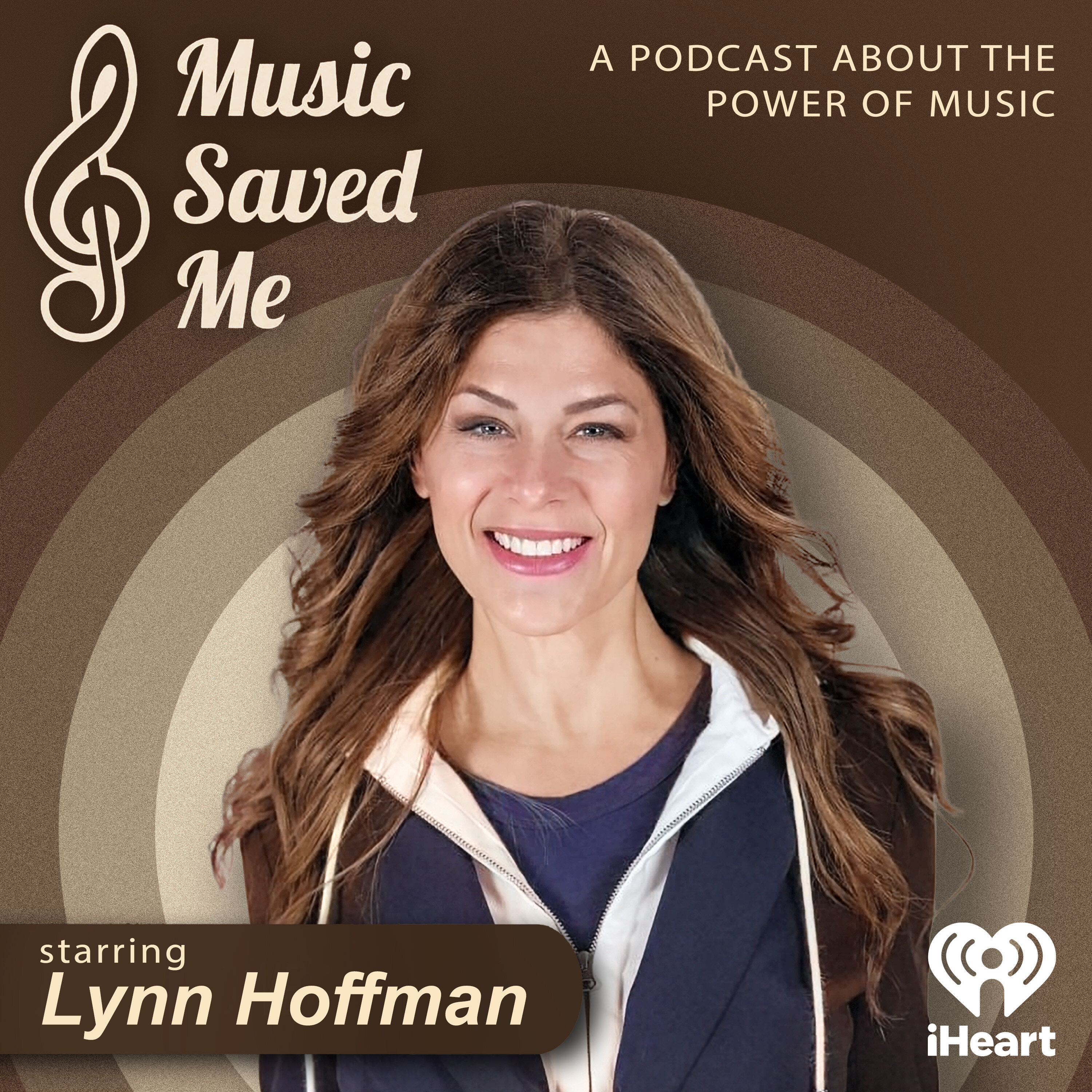
Takin' A Walk - Music History with Buzz Knight
The Inspiring Story of Jennie Smythe on Music Saved Me
00:28:28
Loading summary
Transcript177 lines
- [00:00]
iHeart Country Festival Announcer
Tickets are on sale now y'all, for our 2025 I Heart Country Festival presented by Capital One happening Saturday, May 3rd at the Moody center in Austin, Texas. Don't miss your chance to see Brooks and Dunn, Thomas Rhett, Rascal Flatt, Cole Swindell, Sam Hunt, Megan Maroney, Bailey Zimmerman, Nate Smith. Tickets are on sale now@ticketmaster.com I'm ready to fight.
- [00:31]
Lynne Hoffman
Oh, this is Fighting Words. Okay, I'll put the hammer back.
- [00:34]
George M. Johnson
Hi, I'm George M. Johnson, a best selling author with the second most banned book in America. Now more than ever, we need to use our voices to fight back.
- [00:44]
Taylor Gray
Part of the power of black queer creativity is the fact that we got us.
- [00:48]
Lynne Hoffman
You know, we are the greatest culture makers in world history.
- [00:54]
George M. Johnson
Listen to Fighting words on the iHeartRadio app, Apple Podcasts or wherever you get your podcasts.
- [01:03]
Bob Pittman
Hi, I'm Bob Pippman, chairman and CEO of iHeartMedia. I'm excited to introduce a brand new season of my podcast Math and stories from the frontiers of Marketing. I'm having conversations with some folks across a wide range of industries to hear how they reach the top of their fields and the lessons they learned along the way that everyone can use. I'll be joined by innovative leaders like chairman and CEO of Elf Beauty, Tarang Amin, legendary singer, songwriter and philanthropist Jewel.
- [01:30]
Taylor Gray
Being a rock star is very fun, but helping people is way more fun.
- [01:33]
Bob Pittman
And Damian Maldonado, CEO of American Financing.
- [01:37]
Taylor Gray
I figured out the formula. I just have to work hard then that's magic.
- [01:40]
Bob Pittman
Join me as we uncover innovations in data and analytics, the math and the ever important creative spark, the magic. Listen to math and Magic on the iHeartRadio app, Apple Podcasts or wherever you get your podcast.
- [01:52]
Brendan Patrick Hughes
My name is Brendan Patrick Hughes, host of Divine Intervention. This is a story about radical nuns in combat bo, wild haired priests trading blows with J. Edgar Hoover in a hell bent effort to sabotage a war.
- [02:06]
Lynne Hoffman
J. Edgar Hoover was furious. He was out of his mind and he wanted to bring the Catholic left to its knees.
- [02:15]
Brendan Patrick Hughes
Listen to Divine intervention on the iHeartRadio app, Apple Podcasts or wherever you get your podcasts.
- [02:22]
Vanessa Marshall
Welcome to Pod of Rebellion, our new Star Wars Rebels Rewatch podcast. I'm Vanessa Marshall, voice of Harrison Doula Spector 2. I'm T. Zirkar. Sabine Wren, Spectre 5.
- [02:33]
Taylor Gray
I'm Taylor Gray. Ezra Bridger, Spectre 6.
- [02:35]
Jon Lee Brody
And I'm Jon Lee Brody, the Ghost Crew Stowaway moderator.
- [02:38]
Vanessa Marshall
Each week we're gonna rewatch and discuss an episode from the series and share some fun behind the scenes stories.
- [02:43]
Jon Lee Brody
Sometimes we'll be visited by special guests like Steve blume voices Zabarelio Spectre 4 or Dante Bosco voice of Jaquell and many others.
- [02:51]
Vanessa Marshall
So hang on because it's gonna be a fun ride.
- [02:53]
Taylor Gray
Cue the music.
- [03:00]
Jon Lee Brody
Listen to Potter Rebellion on the iHeartRadio app, Apple Podcasts, or wherever you get your podcasts.
- [03:05]
Taylor Gray
Music Saved Me when we sit down with people in this office, I'm constantly like, yeah, but what do you want people to feel when they see this? Like, that's, you know, what do you want them to do with this information? Do you want them to take action? Do you want them to absorb? Do you want them to cry? Do you want them to laugh? Like, like, what does that look like? And I, and I think that when you can approach it like that, it does provide more of a human component to something that is very non human, which is digital media.
- [03:39]
Lynne Hoffman
I'm Lynne Hoffman and welcome to the Music Saved Me podcast. The podcast where we discuss the healing power of music and bring you the inside stories from musicians to insiders, inventors, and even authors. And I think our guest today can certainly speak from pretty much every aspect of all the topics and so much more that I just listed. She is an inspiring figure in the world world of music, entertainment and leadership. Jenny Smythe is a renowned entrepreneur and the founder and CEO of Guerrilla Marketing in Nashville, spelled G I R Guerilla. Her career spans over two decades, starting in the music industry at companies like Elektra, Disney's Hollywood Records, Yahoo Music, Clear Channel. There's so many more I the whole time would be over listing all your incredible accomplishments. Jenny is also the author of a new book. It's a beautiful, inspiring memoir called Becoming Gorilla. And I'm thrilled to welcome her to Music Saved Me. Jenny Smythe, welcome to the show. It's so great to have you here in person.
- [04:45]
Taylor Gray
Thank you so much for having me.
- [04:47]
Lynne Hoffman
All right, let's start off with your personal connection to music. Since it sort of was sort of in the beginning, in the foundation of your world, can you share a moment when music profoundly impacted your life or maybe helped you through a challenging time?
- [05:02]
Taylor Gray
I 100% like I MTV, MTV was a game changer for me. I was a typical Gen X latchkey kid. I, you know, had two working parents, two divorced parents. So I, for many hours after school, I would go home and be by myself, you know, and I had an older sister, but she was six years older than me. And so she and I often joke that my parents had Two only children. And we really didn't intersect until we were like 30 years old, you know, I mean, she was an awesome big sister, but she was like, too cool to hang out with me, you know. But MTV was the staple. And I don't. A lot of people tell their stories about MTV about when it came on air. I don't actually remember when it came on air. I just remember that after school, that is what went on my TV downstairs. And then, you know, I would bring my homework down there, I would bring my snacks down there. We had a TV that you had to, you know, change the dial and. And then eventually VH1 came and so did BET. And so that became the way that I consumed music. And not only consumed it from, you know, listening to the radio, but like watching music videos and then seeing those Chirons on the TV of like, what label it was, what the video director was, all of that. I was like, hey, like, what is this? You know, what's a record label? What's a. You know, what's a video director? Like, what does all of this mean? And I think generationally, we were all sort of blown away by seeing our music.
- [06:57]
Lynne Hoffman
Absolutely. I did the same thing. I mean, we couldn't get home fast enough when there was a new, you know, Michael Jackson music video or, you know, whatever it was that they were playing on there. It was a very formative. Although I. I find it interesting that you were looking at the labels and the. And that. That information where I was like, I want to be the host of the show, you know.
- [07:21]
Taylor Gray
Well, I mean, we ended up where we were supposed to be, you know.
- [07:25]
Lynne Hoffman
Like, I know, right?
- [07:26]
Taylor Gray
I. And we didn't have the Internet, right. So I, I have no, I have no idea like why that was so interesting to me. But it was. And then I kept seeing repetitive names, you know, like, what's Sony Music? What's Warner Music? I mean, I think like, I remember seeing a Madonna video and figuring out Sire Records and then going to the record store and asking, how do I know what other records Desire Records have? And the.
- [08:03]
Lynne Hoffman
The guy must have looked at you like, what?
- [08:05]
Taylor Gray
Who is this kid? You know, So I remember doing things like that that were probably just like very oddball behavior. But, you know, it was, it was just in. It was, it was. It interest me.
- [08:19]
Lynne Hoffman
You were inquisitive and you. And you wanted to ask questions and more. Yeah, well, it was. That's how you had to be back then, because you said there was. There was no Internet. So how else do we know Unless we asked.
- [08:29]
Taylor Gray
Right, exactly.
- [08:31]
Lynne Hoffman
Or went to the library, which I was really bad at not doing.
- [08:35]
Taylor Gray
I was not going to go to the library. Like.
- [08:37]
Lynne Hoffman
No, no. How do you. During that time where there's specific artists or songs that really resonated with you, maybe say during pivotal moments in your life?
- [08:47]
Taylor Gray
Oh, my gosh. Just entire movements of music. Right. Like, it was kind of. We were in that age where people started to siphon themselves off into groups based on the kind of music they listened to. So you were like a rocker, like, you were a stoner, you were an alt kid, you know, you. Yeah, and I actually liked everything. And so. Yeah, and so, like, I, I didn't. I didn't try to own that. I didn't try to, you know, I mean, I certainly leaned more rock than anything else, but, man, I loved. I mean, the pop that was coming out, you know, the Madonna's, the Cyndi Laupers, the, you know, some of the Blondie videos, the, you know, I mean, just, they were, they were rock too. They just were massive global image icons, you know?
- [09:44]
Lynne Hoffman
Yes.
- [09:45]
Taylor Gray
I mean, you just couldn't get it. You couldn't get off the channel without seeing a strong, individual woman.
- [09:54]
Lynne Hoffman
How, how would you say your relationship with music has evolved over the years?
- [10:00]
Taylor Gray
I still get really excited. Like, I mean, it's the best part of my job, you know, Like, I'll always. It doesn't matter the, the types of clients I have. Like, when I hear a good song, it's. It. It takes me right back to that place in my heart where I get thrilled to be excited to be part of a team that can launch something like that.
- [10:22]
Lynne Hoffman
Interesting that you say being a part of a team, I feel like that's my whole journey in life, was to just work with a really great team. But you don't always get that right out of the gate, do you?
- [10:35]
Taylor Gray
No, you don't. Sometimes you have to build it.
- [10:39]
Lynne Hoffman
But when can you build the team if you're still just starting out, you know, trying to make your way.
- [10:45]
Taylor Gray
Like, I mean, that's the thing, right, is like, you have to recognize what you. What collaboration you need to be successful. And you're right. Like when you start thinking about it in a linear fashion, like if, if it's a money hurdle or it's a time hurdle or, you know, all of the things that we deal with of being entrepreneurs. But at the heart of it, my job is so uniquely collaborative that I just, I have to find ways to work with people and get it done. So even if it's A trade, you know, like. And sometimes that just comes in advice. Like, I have competitors that I speak to on the regular, you know, about what we're doing and in our area of the business and over the years, that's certainly served me really well that.
- [11:41]
Lynne Hoffman
To be just for the. For the. For those listening. You were very integral in terms of digital marketing or musical artists. Is that correct? Would that be?
- [11:53]
Taylor Gray
I mean, I would. I don't know if I would say that about myself, but I. I was at the. I. I personally was part of the generation that came online. And professionally, I feel like I have been a good usher, a good bridge between what has happened generationally.
- [12:16]
Lynne Hoffman
Yes, it's big. I mean, especially the last 20 years.
- [12:20]
Taylor Gray
Oh yeah.
- [12:22]
Lynne Hoffman
When I moved to New York and got my first job in television, it was a VH1 classic, which was a part of the very beginning of the launch of digital television, which I had. I had no idea what it was. I was just thrilled to be there. It didn't matter.
- [12:36]
Taylor Gray
Still, it was like one of the best things I've ever seen on television, which.
- [12:40]
Lynne Hoffman
A classic.
- [12:42]
Taylor Gray
The pop up videos that VH1 did.
- [12:45]
Lynne Hoffman
Oh, yes, yes.
- [12:46]
Taylor Gray
Best programming ever.
- [12:47]
Lynne Hoffman
Yeah. And they should. They should still have that on the air today because there's still so much being done about it. But yeah, that. That really is. It's an exciting time and interesting that it's taken so long. It seems like it was yesterday, but now it's really the thing that's driving everything. Yeah, it is. So adapting to that must have been interesting, an interesting time for you.
- [13:11]
Taylor Gray
It was fun, right? Because we in. And we're not in a dissimilar time right now. No, because at the time, we still had tv, we had radio, we had touring, you know, we had magazines, we had newspapers, we had critics, we had all of that. But we didn't really have a way to talk directly to our fans. So we were speaking through third parties, which is. Can be a benefit, you know, it can be.
- [13:40]
Lynne Hoffman
You're right. We don't want to discount them. They're very important and they're very important.
- [13:46]
Taylor Gray
We didn't have to do nearly as much damage control, you know, as we often find ourselves in positions of having to administer. But conversely, as we grew and, you know, digital and the fan became the gatekeeper instead of a lot of other sources, it. The volume of releases became a lot. And some of these other mediums, unfortunately have either dissipated or decreased. So it's not. It is a new opportunity. But every sort of evolution comes you know, there's a, there's, there's death challenge.
- [14:33]
Lynne Hoffman
Yeah.
- [14:33]
Taylor Gray
Yeah.
- [14:33]
Lynne Hoffman
Yep. So absolutely.
- [14:35]
Taylor Gray
It's not, it's not always like just growth. Like sometimes it's a little bit of, it's a flat line.
- [14:43]
Lynne Hoffman
It's just a stagnating, just. Yeah, it's weird because you would have thought we would have jumped to where we are now a long time ago, but it, like you said, it's taken almost two decades to get to the point.
- [14:54]
Taylor Gray
I mean, from your perspective being in tv, I mean, we, they're going, they're, they're, they're behind us. You know, the music business has always kind of been the stepchild to the movies and the, and the TV business, but we went through this evolution, you know, painfully and publicly, you know, with Napster and all of that.
- [15:17]
Lynne Hoffman
Yes.
- [15:18]
Taylor Gray
And so I think everybody in the, in the entertainment space had the benefit of seeing some of our, our profound mistakes in that. So.
- [15:29]
Lynne Hoffman
But it's, that's for sure.
- [15:30]
Taylor Gray
But there's still a lot. I mean, how many times do you talk to people a week where they're like, have you seen this show? And you're like, what, Where? I don't. What network is that? And people are like, you know, it's something, something plus whatever. And you're just like, I don't know, you know, like, I'm old now. I have like the networks that I like to watch and we move on, you know.
- [15:49]
Lynne Hoffman
No, you're. But, but, but you're right. And what you just said though, about radio is the same thing. And radio was really the place where you would go to hear that new song that everyone was listening to. And now they are starting to.
- [16:02]
Taylor Gray
And you wait for them to play it, you know?
- [16:05]
Lynne Hoffman
Yes. Yeah. In, in heavy rotation, hopefully. Now, regarding creative creativity and inspiration, you were talking about, you work a lot with, with musicians and bands and, and groups that we had mentioned earlier, creative groups. That's not always easy in the music world to work as a team because there's so many elements in the, from the people who wrote the music to, you know, touring and decision making and things like that. Have you ever had to sort of deal in that world where you're helping the bands to get along in their own groups?
- [16:43]
Taylor Gray
Yeah, I mean, everybody has a different perception of what success might look like to them, you know.
- [16:50]
Lynne Hoffman
Right.
- [16:50]
Taylor Gray
And also, I mean, being in a collaborative environment is. I, I have said this analogy a thousand times, but I'm like, when you grow up with divorced parents, you learn very quickly which parent to go to to get the answer that you want, you know, like yes, or you learn that there are certain things that you might run by somebody versus somebody else just based on how you think the, the, the news might fall on their, on, on their heart, you know, but for the most part, the way that we have chosen to operate, even though it might be more painful, is to just be fully transparent on, you know, our job isn't to tell somebody what to do really. Most artists that we work with come to the table with a strong vision of how they want the world to perceive their music. And every artist know once it's out, you can't actually control that at all. People hold on to things that you weren't even thinking that they would think would be a big deal. You know, favorite songs or singles as it were, is still a very opinion based gut instinct business. And even though digital marketing has slapped some analytics on it that make it a little less risky to, you know, potentially choose one song over another, the, the, the, really the heart of it is that some person, a human being on a team, whether it's the artist or a trusted confidant within the circle, somebody has made the decision. And at some point we all just have to get behind that decision and do the best we can. But yes, by making one person happy, ultimately, when you're dealing with teams, you're making another person potentially unhappy. You know, so yeah, it's a balance. It's. And then, you know, there's, there's a starter, there's a sub. I mean, it's just, it's the reality.
- [19:10]
Lynne Hoffman
We'll be right back with more of the Music Saved Me podcast. And by the way, if you like this podcast, you are going to love our companion podcast called Taking a Walk. It's hosted by my dear friend Buzz Knight, and you can find it wherever you get your podcasts.
- [19:25]
Vanessa Marshall
Welcome to Pod of Rebellion, our new Star Wars Rebels Rewatch podcast. I'm Vanessa Marshall. Hi, I'm Tia Sircar.
- [19:33]
Taylor Gray
I'm Taylor Gray.
- [19:34]
Jon Lee Brody
And I'm John Lee Brody.
- [19:35]
Vanessa Marshall
But you may also know us as Harrison Dula's Spectre 2, Sabine Wren, Specter.
- [19:39]
Taylor Gray
5 and Ezra Bridger Specter 6 from Star Wars Rebels.
- [19:43]
Jon Lee Brody
Wait, I wasn't on Star Wars Rebels. Am I in the right place?
- [19:46]
Vanessa Marshall
Absolutely. Each week we're going to rewatch and discuss an episode from the series and.
- [19:51]
Taylor Gray
Share some fun behind the scenes stories.
- [19:53]
Jon Lee Brody
Sometimes we'll be visited by special guests like Steve bloom voices Zabarelio's Spectre 4 or Dante Bosco voices Jai, Kel, and many others.
- [20:01]
Vanessa Marshall
Sometimes we'll even have a lively debate.
- [20:03]
Taylor Gray
And we'll have plenty of other fun surprises and trivia too.
- [20:05]
Jon Lee Brody
Oh, and me. Well, I'm the lucky ghost crew Stowaway, who gets to help moderate and guide the discussion each week. Kinda like how Kanan guided Ezra in the ways of the Force. You see what I did there?
- [20:16]
Vanessa Marshall
Nicely done, John.
- [20:17]
Bob Pittman
Thanks, Tia.
- [20:18]
Vanessa Marshall
So hang on because it's going to be a fun ride.
- [20:22]
Taylor Gray
Cue the music.
- [20:29]
Jon Lee Brody
Listen to Potter Rebellion on the iHeartRadio app, Apple Podcasts, or wherever you get your podcasts.
- [20:34]
Bob Pittman
Hi, I'm Bob Pittman, chairman and CEO of iHeartMedia. I'm excited to introduce a brand new season of my podcast, Math and Stories from the Frontiers of Marketing. I'm having conversations with some interesting folks across a wide range of industries to hear how they reach the top of their fields and the lessons they learned along the way that everyone can use. I'll be joined by innovative leaders like chairman and CEO of Health Beauty, Tarang Amin.
- [21:00]
Brendan Patrick Hughes
The way I approach risk is constantly try things and actually make it okay to fail.
- [21:05]
Bob Pittman
I'm sitting down with legendary singer, songwriter and philanthropist Jewel.
- [21:09]
Taylor Gray
I wanted a way to do something that I loved for the rest of my life.
- [21:13]
Bob Pittman
We're also hearing how leaders brought their businesses out of unprecedented times, like Stephane Bonsell, CEO of Moderna.
- [21:21]
Taylor Gray
It becomes a human decision to decide to throw by the window your business.
- [21:25]
Bob Pittman
Strategy and to do what you think.
- [21:27]
Taylor Gray
Is the right thing for the world.
- [21:28]
Bob Pittman
Join me as we uncover innovations in data and analytics, the math, and the ever important creative spark, the magic. Listen to math and magic stories from the frontiers of Marketing on the iHeartRadio app, Apple Podcasts, or wherever you get your podcast.
- [21:43]
Brendan Patrick Hughes
My name is Brendan Patrick Hughes, host of Divine Intervention. This is a story about radical nuns in combat boots and wild haired priests trading blows with J. Edgar Hoover in a hell bent effort to sabotage a war.
- [21:57]
Lynne Hoffman
J. Edgar Hoover was furious. Somebody violated the FBI and he wanted to bring the Catholic left to itself. The FBI went around to all their.
- [22:08]
Brendan Patrick Hughes
Neighbors and said to them, do you think these people are good Americans? It's got heists, tragedy, a trial of the century, and the God damnedest love story you've ever heard.
- [22:19]
Taylor Gray
I picked up the phone and my.
- [22:21]
Vanessa Marshall
Thought was, this is the most important.
- [22:23]
Taylor Gray
Phone call I'll ever make in my life.
- [22:25]
Lynne Hoffman
I couldn't believe it.
- [22:26]
Vanessa Marshall
I mean, Brendan, it was Divine intervention.
- [22:31]
Brendan Patrick Hughes
Listen to Divine intervention on the iHeartRadio app, Apple Podcasts or wherever you get your podcasts.
- [22:44]
Lynne Hoffman
We ready to fight I'm ready to fight. Is that what I thought it was? Oh, this is Fighting Words. Okay, I'll put the hammer back.
- [22:53]
George M. Johnson
Hi, I'm George M. Johnson, a best selling author with the second most banned book in America. Now more than ever, we need to use our voices to fight back. And that's what we are doing on Fighting Words. We're not going to let anyone silence us.
- [23:10]
Taylor Gray
That's the reason why they're banning books like yours, George.
- [23:12]
Lynne Hoffman
That's the reason why they're trying to stop the teaching of black history, queer.
- [23:16]
Taylor Gray
History, any history that challenges the whitewashed.
- [23:18]
George M. Johnson
Norm or put us in a box.
- [23:21]
Lynne Hoffman
Black people have never ever depended on the so called mainstream to support us. That's why we are great. We are the greatest culture makers in world history.
- [23:33]
George M. Johnson
Listen to Fighting Words on the iHeartRadio app, Apple Podcasts, or wherever you get your podcasts.
- [23:43]
Taylor Gray
We asked parents who adopted teens to share their journey.
- [23:47]
Lynne Hoffman
We just kind of knew from the beginning that we were family.
- [23:50]
Taylor Gray
They showcased a sense of love that I never had.
- [23:54]
Jon Lee Brody
I mean, he's not only my parent, like he's like my best friend.
- [23:57]
Lynne Hoffman
At the end of the day, it's all been worth it. I wouldn't change thing about our lives.
- [24:02]
Taylor Gray
Learn about adopting a teen from foster care. Visit adoptuskids.org to learn more. Brought to you by Adopt Us Kids, the U.S. department of Health and Human Services and the Ad Council.
- [24:17]
Lynne Hoffman
Welcome back to the Music Saved Me podcast. The podcast where we discuss the healing powers of music with some of the biggest names in music as well as up and comers. Many artists talk about music coming to them in moments of inspiration, as I'm sure you've discussed many times. Have you personally experienced this in your creative work? Have you ever been inspired by music or songs?
- [24:42]
Taylor Gray
I'm inspired by everybody. I mean, I see the world in words and when people are speaking to me, I will glob on to one saying or something. A lot of times it's something in passing. So I am the annoying person who could be at a dinner and my friend could be just saying something in passing about whatever her day is and she'll say something and I'm like, oh, I gotta write that down. You know, like I'll text myself so I don't forget it. Or when I'm listening to something and I try to really listen. Like I try to get the music and before I make any offers of ideas or, you know, any suggestions on what I would do in terms of strategy, I try to listen and I think that's pretty rare these days. You know, I think, I think a lot of people will look at the numbers associated with a particular person or a particular piece of media and then talk about how they were going to, you know, deploy it as opposed to what we are deploying. And the bigger point is, like, when we sit down with people in this office, I'm constantly like, yeah, but what do you want people to feel when they see this? Yeah, like that's, you know, what do you want them to do with this information? Do you want them to take action? Do you want them to absorb? Do you want them to cry? Do you want them to laugh? Like, like what does that look like? And I, and I think that when you can approach it like that, it does provide a little bit more of a human component to something that is very non human, which is digital media, you know, But I mean, yes, that's just, it's harder.
- [26:41]
Lynne Hoffman
It is. And gone are the old fashioned rating systems too. So you really are in the dark in terms of.
- [26:47]
Taylor Gray
That's right.
- [26:48]
Lynne Hoffman
Although the algorithms are a little scary these days because they can really, you know, you can advertise one to one now, which is amazing, especially when you're putting out good stuff like music that helps to deal with the, the massive, I think, mental health crisis that we have going on in the world today. And music, I'm pretty certain that it's been scientifically proven now, especially through some great interviews that I've had with some scientists, that it does heal, which explains a lot about the business as a whole and why it's still here today, stronger than ever before and even more of it, more kinds. Do you think music has the power to heal and transform yourself and, and if so, have you seen this in your own life?
- [27:38]
Taylor Gray
Oh, not even. Aside from the very obvious mental health everything that you just referenced, the idea we've, in my family, my, we have. My mom is suffering from dementia from Alzheimer's, so we've seen the benefit on that. There's things that she remembers deep and deep in her and you know, certainly people that's well documented in sources that have actual scientific reference. Not me. The idea that you can play somebody a song from a really, you know, prolific time in their life and they can reconnect to those feelings that they know where they were when they first heard that song, or they think about the car that they used to drive and what did that car smell like? You know, like, was it raining? Who was in the car? Yeah, you know, like you remember all of these Things and, and now I'm like, oh, I sometimes can't remember what I did on Tuesday. But like, I listen to a song that I loved in high school and I could tell you everything that was happening at that time, you know, so to. Even, even if there was no scientific reference to the benefit of music, I know in my heart that and every person that I talk to that also loves music, which is really hard to find a person on the planet who doesn't like music. Right. But the idea that you can connect emotionally your memory, your smell, your sight, like all of those things just by listening to a song, it's incredible. We are incredible.
- [29:24]
Lynne Hoffman
You're right. You're absolutely right. I think that we don't give ourselves as humans enough credit for how powerful we are and the things that we're able to do without plugging into a wall.
- [29:35]
Taylor Gray
That's right.
- [29:35]
Lynne Hoffman
I. For a lack of a better way to explain it, I've always wondered that, you know, if there's electricity in us, how come we don't have to charge?
- [29:42]
Taylor Gray
Yeah. I mean, even when you see like, you know, my kids grow up with that, the apps, you know, like abide or, you know, whatever, and they use those to go to sleep and they use, sometimes they use the noise frequencies and just the idea that that is so calming to our nervous system that we can bring ourselves down to a place where we can have a restful sleep no matter what is going on in our lives. Minus menopause, by the way. Let's just.
- [30:14]
Lynne Hoffman
Oh, nice to meet you. But I just broke out into a sweat when you said that.
- [30:22]
Taylor Gray
I'm sorry.
- [30:22]
Lynne Hoffman
Sorry, guys. If you're listening. I know. Guys hate that.
- [30:25]
Taylor Gray
The idea that, you know, my 8 year old knows if he's. If he wants to listen to meditation at night. That's incredible.
- [30:36]
Lynne Hoffman
That's great. Yeah, it really is. You know, it's funny. When we were kids, we didn't have that stuff. Obviously we were kids. Now all of a sudden, I sound.
- [30:44]
Taylor Gray
Like we had to open the window and listen to crickets.
- [30:47]
Lynne Hoffman
We ate rocks and we liked it. No, we. I used to listen to talk radio. I didn't listen to talk radio. I would just put on talk radio and I could fall asleep. Ye to the tone of, of the voice just lulling me my sleep.
- [31:02]
Taylor Gray
So my dad used to joke that if we ever. He ever wanted me to go to sleep, that he would just put golf on.
- [31:08]
Lynne Hoffman
Yes, done.
- [31:10]
Taylor Gray
Yeah, just out, out, out on the couch.
- [31:13]
Lynne Hoffman
That quiet clap. Well, before I let you go, you are an Incredible person. You've gone through so much in your short career, and you've experienced things in life that most of us do, you know, love and loss and growth and. But to levels that most people don't really get to go to, you know, like president of Country Music association or, you know, things like that. So with that said, and also you sit on the board of a special organization called Music Health alliance. What would you give for. I guess just something for inspiring words to a young person today who's starting out into a completely different world than we came through in terms of adapting and adopting and. And persevering.
- [32:05]
Taylor Gray
I think the biggest piece of advice that I have for somebody is when you feel yourself saying, but I don't know what's going to happen into the. In the future, and you have a negative spin on that. I want to remind people that when I was in college, this didn't exist. So I look at it like, yeah, but we don't know what's going to happen as not a. Yeah, we don't know what's going to happen. That's so scary. What are you going to do? You got to have a plan. I'm like, hey, yeah, you're right. I don't know what's going to happen. Amazing opportunities may come your way with just a little patience and hard work. And so you can't even imagine what the world is going to look like and the opportunities that are going to come your way. So you've got to change your mindset on that. I, at this age, with this experience, still have no idea some days when I walk into the office what I'm going to have to deal with. And that is not what stresses me out. What stresses me out is actually thinking about living the kind of life that I do something the same way every single day until it's time to clock out. That is not interesting to me. So when. Especially when kids are in college and they're asked that awful question, what do you want to be when you grow up? You know, like your job, in your twenties and even. Even past that, is to try a bunch of things and figure out what doesn't work for you, you know? And I. I think that pressure that we put on ourselves to have all the answers and to have the plan is just a gigantic disservice, because sometimes you just got to get in there and figure it out. And for me, historically speaking, when there's confusion and there's chaos, that's been when I've been the most successful. So it's it's. You got to look for opportunities.
- [34:15]
Lynne Hoffman
Great advice. Oh, and one more thing. I lied about the last question. Becoming Gorilla, which is your new memoir out. Can you explain why you named it Gorilla? G I R L I L L.
- [34:30]
Taylor Gray
A so guerrilla marketing is the name of my company and it was originally a play off of guerrilla warfare, you know, meaning like underground sort of, you.
- [34:42]
Lynne Hoffman
Know, on the, on the down and dirty.
- [34:44]
Taylor Gray
That's right. And why I named the book Becoming Gorilla is because for 15 years I've been hearing, you know, you can't, you, you can't, you gotta have life, work, balance. You gotta, you know, you gotta keep your work life separate from your home life, separate from your whatevers. And about five years ago, I just came to the realization that I am my job in a way. I am. I am what I do. And that's good because I'm super passionate about it. And I don't put a face on or a uniform on for eight hours to do this and then go be somebody else the rest of the day. So for me, it was more of a reunion of just saying, like, it's, this is who I am and it happens to coincide with what I do. But. And I really wanted people to see themselves in my story. And my hope was that when they were reading it that they would have moments where they would laugh or laugh at me, you know, just, just identifying with the story themselves.
- [35:56]
Lynne Hoffman
Well, it's a beautiful book and I think everyone should go out and grab a copy of it right now. And I want to thank you so much for being on Music Save Me, because I know you don't have a lot of time, but I know you're a good plate juggler after everything I've read. So, Jenny Smythe, thank you so much for being on Music Save Me. And good luck with everything.
- [36:17]
Taylor Gray
Thank you so much.
- [36:21]
iHeart Country Festival Announcer
Tickets are on sale now, y'all, for our 2025 I Heart country festival presented by Capital one, happening Saturday, May 3rd at the Moody center in Austin, Texas. Don't miss your chance to see Brooks and Dunn, Thomas Rhett, Rascal Flash, Cole Swindell, Sam Hutt, Megan Maroney, Bailey Zimmerman, Nate Smith. Tickets are on Sale now@ticketmaster.com I'm ready to fight.
- [36:53]
Lynne Hoffman
Oh, this is fighting worse. Okay, I'll put the hammer back.
- [36:56]
George M. Johnson
Hi, I'm George M. Johnson, a best selling author with the second most banned book in America. Now more than ever, we need to use our voices to fight back.
- [37:05]
Taylor Gray
Part of the power of black queer creativity is the fact that we Got us.
- [37:10]
Lynne Hoffman
You know we are the greatest culture makers in world history.
- [37:15]
George M. Johnson
Listen to fighting words on the iHeartRadio app, Apple Podcasts or wherever you get your podcasts.
- [37:25]
Bob Pittman
Hi, I'm Bob Pittman, chairman and CEO of iHeartMedia. I'm excited to introduce a brand new season of my podcast Math and Stories from the Frontiers of Marketing. I'm having conversations with some folks across a wide range of industries to hear how they reach the top of their fields and the lessons they learned along the way that everyone can use. I'll be joined by innovative leaders like Chairman and CEO of Elf Beauty Tarang Amin, legendary singer, songwriter and philanthropist Jewel.
- [37:51]
Taylor Gray
Being a rock star is very fun, but helping people is way more fun.
- [37:55]
Bob Pittman
And Damian Maldonado, CEO of American Financing.
- [37:58]
Taylor Gray
I figured out the formula. I just have to work hard then that's magic.
- [38:01]
Bob Pittman
Join me as we uncovered innovations in data and analytics, the math and the ever important creative spark, the magic. Listen to math and Magic on the iHeartRadio app, Apple podcast or wherever you get your podcast.
- [38:13]
Brendan Patrick Hughes
My name is Brendan Patrick Hughes, host of Divine Intervention. This is a story about radical nuns in combat boots and wild haired priests trading blows with J. Edgar Hoover in a hell bent effort to sabotage a war.
- [38:27]
Lynne Hoffman
J. Edgar Hoover was furious. He was out of his mind and he wanted to bring the Catholic left to.
- [38:36]
Brendan Patrick Hughes
Listen to Divine intervention on the iHeartRadio app, Apple Podcasts or wherever you get your podcasts.
- [38:43]
Vanessa Marshall
Welcome to Pod of Rebellion, our new Star Wars Rebels Rewatch podcast. I'm Vanessa Marshall, voice of Harrison Doula Specter 2. I'm Tia Sirkar, Sabine Wren, Spectre 5.
- [38:54]
Taylor Gray
I'm Taylor Gray, Ezra Bridger, Spectre 6.
- [38:56]
Jon Lee Brody
And I'm Jon Lee Brody, the Ghost Crew Stowaway moderator.
- [38:59]
Vanessa Marshall
Each week we're gonna rewatch and discuss an episode from the series and share some fun behind the scenes stories.
- [39:05]
Jon Lee Brody
Sometimes we'll be visited by special guests like Steve bloom voices Zabarelio's Spectre 4 or Dante Bosco voiced Jaquel and many others.
- [39:12]
Vanessa Marshall
So hang on because it's gonna be a fun ride.
- [39:15]
Taylor Gray
Cue the music.
- [39:22]
Jon Lee Brody
Listen to Potter Rebellion on the iHeartRadio app, Apple Podcasts or wherever you get your podcasts.