
Podcast
Tank Talks By Ripple Ventures
Hosted by Ripple Ventures · EN
Join your host, Matt Cohen, Founder & Managing Partner at Ripple Ventures for weekly conversations with leaders in the startup ecosystem discussing the truth about investing, building and running startups.
tanktalks.substack.com
tanktalks.substack.com
48episodes
Episodes
Newest firstAll episodes
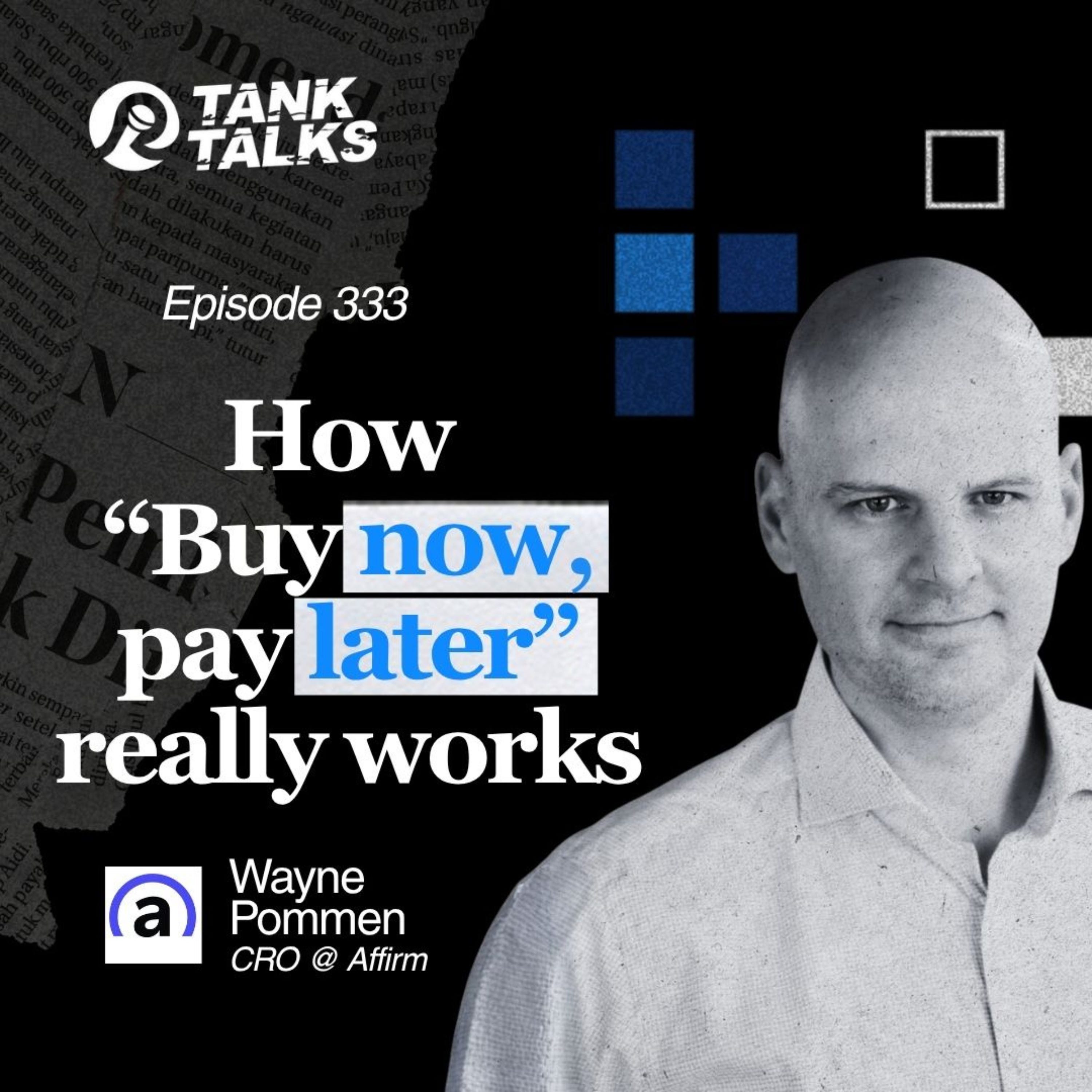
CRO of Affirm on How “Buy now, pay later” Makes Money
1w ago00:53:19Tap to summarizeIn this episode of Tank Talks, host Matt Cohen sits down with Wayne Pommen, Chief Revenue Officer at Affirm and founder of PayBright, Canada’s first e-commerce buy now, pay later platform. Wayne shares his unlikely journey from competitive rowing, including the Oxford-Cambridge Boat Race, to a PhD in international relations, Bain Consulting, and private equity at TorQuest, where a failed deal set him on the path to building a fintech unicorn.Wayne pulls back the curtain on PayBright’s early days, from spinning out a tiny 5-person division called HealthSmart Financial Services to pivoting into e-commerce and landing Casper and Endy as launch partners. He offers a practical breakdown of running a successful M&A process, sharing the dos and don’ts that led to Affirm’s acquisition of PayBright in 2020.Now a senior executive at a public fintech giant, Wayne reflects on what he’s learned from working alongside Max Levchin, why Affirm refuses to charge late fees or deferred interest, and how AI is transforming everything from underwriting to go-to-market. He also shares his views on agentic commerce, the Canadian consumer credit landscape, and why “don’t quit” is his favorite life lesson.Whether you’re a founder navigating a pivot, an operator scaling through acquisition, or just curious about the future of payments and AI, Wayne Pommen delivers the kind of straight talk that comes from building and scaling one of Canada’s most successful fintech stories.–A big thanks to our sponsor, Moomoo CanadaThis is the kind of tooling that used to live on a Bloomberg terminal, but now it is on your phone, just a few taps away. They offer real-time data, full options chains, and an AI assistant that actually explains trading strategies.Moomoo is the perfect place for people who want to take their money seriously. Open an account today at moomoo.caFrom Cambridge to Bain to Private Equity (03:10)* The Oxford-Cambridge Boat Race, a broken wrist, and a comeback story* Why he chose Bain over academia and how consulting shaped his career* Joining TorQuest and zeroing in on non-bank financial servicesFinding the Kernel: HealthSmart Financial Services (05:18)* The summer of 2013, losing a deal but falling in love with the point-of-sale lending model* Why banks ignored this niche and how technology was changing the game* Spinning out a tiny five-person division with no CEOThe Pivot to E-Commerce (10:14)* Doubling the health business in 2016 and realizing it would take forever* The epiphany: Canada had no point-of-sale financing for e-commerce* Mapping out the user experience over Christmas 2016 and pre-selling Casper and EndyBuilding PayBright: Scrappy, Fast, and Capital Efficient (15:00)* Running a “double-headed monster,” healthcare and e-commerce side by side* Advice for founders navigating platform shifts, from legacy platforms to AI-native products* The economics of buy now, pay later, merchant fees, interest rates, and cost of riskThe Affirm Acquisition (21:02)* Growing annual loan volume from $6 million to $220 million in five years* The COVID boom and inbound interest from Klarna, RBC, TD, and Affirm* Running a mini process, dos and don’ts for foundersStaying On: Becoming CRO at Affirm (27:34)* Why he stayed past the earnout and has now been there for more than three years* Lessons from Max Levchin and the “dog on a bone” approach to going deeper* How to stay focused across multiple products and jurisdictionsAgentic Commerce and the Future of Shopping (33:09)* What agentic commerce really means and what it doesn’t* Why agents will read the fine print and guide consumers to better choices* The partnerships with Google, Stripe, and ShopifyBanning Deferred Interest and Late Fees (36:04)* Why deferred interest is “borderline abusive” and hard to defend* Affirm’s no-late-fee, no-compounding, transaction-level underwriting model* Aligning lender and consumer interests, the Max Levchin insightFrom Private to Public: Lessons in Discipline (40:32)* How being public forces discipline without over-dictating the quarter* Advice for CROs on timing the public markets* Why Stripe staying private proves there’s no one-size-fits-all pathAI at Affirm: Supercharging Revenue and Underwriting (44:11)* The proliferation of AI tools internally and the excitement of experimentation* How transformer-based models are improving underwriting* The future of work, querying Slack for tribal knowledge in secondsAbout Wayne PommenWayne Pommen is Chief Revenue Officer at Affirm, where he oversees the company’s revenue-generating teams and products. He joined Affirm in January 2021 through its acquisition of PayBright, Canada’s leading buy now, pay later provider, which he founded and led as President and CEO starting in 2015, growing it from 5 to 250 employees with retail partners including Apple, Hudson’s Bay, Wayfair, Samsung, and Sephora. Before PayBright, Wayne was a Principal at TorQuest Partners and a consultant at Bain & Company. A former competitive rower for Canada’s national team, he holds a degree from Harvard and a PhD from Cambridge.Connect with Wayne Pommen on LinkedIn: https://www.linkedin.com/in/wayne-pommen-8844021/Visit Affirm’s website: https://www.affirm.com/Connect with Matt Cohen on LinkedIn: https://ca.linkedin.com/in/matt-cohen1Visit the Ripple Ventures website: https://www.rippleventures.com/ This is a public episode. If you would like to discuss this with other subscribers or get access to bonus episodes, visit tanktalks.substack.com
Transcribe →
The Money Behind Money in VC | Julia Maltby
2w ago00:45:36Tap to summarizeIn this episode of Tank Talks, host Matt Cohen sits down with Julia Maltby, a Principal at Fengate Asset Management who has lived the full venture capital lifecycle. Julia started as the first employee at Plum Alley Investments, ran partnerships at WeWork during its hyper-growth phase, spent over five years rising from Associate to Principal at Flybridge Capital, and even ran her own seed fund, Deco Ventures, before moving to the LP side at Fengate in 2025. Today, she invests in early-stage VC funds and direct opportunities across North America.Julia offers a brutally honest perspective on what she wishes every emerging manager knew about fundraising. She explains why LPs value process over outputs, why founder references from failed companies are more valuable than those from winners, and how GPs can stop leaving first meetings as a “polite maybe” and start qualifying LPs like a sales funnel. She also pulls back the curtain on LP-to-LP communication (which she says is 10X stronger than GP gossip), shares tactical advice on building data rooms that actually get read, and reveals how Fengate pre-approves co-investments to move at startup speed.Whether you’re a GP in the middle of a raise, an LP sorting through an endless stack of emerging manager pitches, or just curious what venture looks like from every seat at the table, this episode is for you.From Liberal Arts to Venture Capital (02:07)* Julia’s unconventional path from studying architecture and social inequality to becoming one of venture’s most respected emerging investors.* How a cold LinkedIn message landed her first job in venture capital.* Why having no finance background became an advantage instead of a limitation.Learning Venture from the Ground Up (04:13)* Building crowdfunding platforms and SPVs before venture became mainstream.* Why early-stage investing means wearing product, operations, and fundraising hats.* Lessons learned from saying “yes” before knowing exactly how to do the work.Inside WeWork’s Hypergrowth Machine (05:11)* Joining WeWork during its explosive expansion and learning from one of startup history’s fastest growth stories.* What Adam Neumann got exceptionally right about building mission-driven teams.* The leadership lessons worth keeping and the scaling mistakes worth avoiding.The Flybridge Investing Framework (10:39)* Why durable venture investing starts with disciplined systems rather than intuition alone.* The importance of pricing integrity and staying focused on core business strengths.* How evaluating customer urgency shaped Julia’s investment philosophy.Becoming a Solo GP (14:14)* Launching Deco Ventures with Flybridge’s support.* The challenges of making investment decisions without partners.* Why every solo GP needs trusted people whose job is to challenge—not validate—their thinking.What Makes a Venture Manager Truly Different? (18:00)* Why there isn’t just one formula for becoming a successful GP.* Understanding your competitive advantage instead of copying other managers.* How LPs think about portfolio fit beyond fund performance.The Data Room Mistakes GPs Keep Making (23:18)* Why withholding information often slows fundraising rather than helping it.* Julia’s advice: send everything instead of drip-feeding documents.* How GPs should reference-check LPs before sharing sensitive materials.Looking Beyond Markups and Valuations (27:16)* Why portfolio KPIs matter more than inflated funding rounds.* How disciplined reserve strategies separate thoughtful investors from reactive ones.* Using follow-on decisions as a measure of investment discipline.The Power of Great References (31:45)* Why founders from failed companies often provide the strongest references.* How LP references reveal governance, transparency, and communication quality.* Why perfect references can actually make LPs more skeptical.Stop Leaving Meetings as a “Maybe” (34:35)* The questions every GP should ask before ending a fundraising meeting.* Understanding the difference between genuine interest and structural misalignment.* How qualifying LPs like a sales pipeline saves months of wasted fundraising.Building Better Co-Investment Relationships (37:06)* How proactive communication makes co-investments move faster.* Why LPs build internal pipelines long before deals officially launch.* The importance of giving institutional investors time to prepare.The Future of Early-Stage Venture (39:27)* Why Julia remains optimistic despite today’s challenging fundraising environment.* The growing divide between mega-funds and smaller venture firms.* Why smaller funds continue delivering meaningful returns that often go unnoticed.Using AI to Build Better LP Portfolios (41:17)* How Fengate uses AI to understand portfolio exposure across hundreds of startups.* Moving beyond broad fund branding into detailed market analysis.* Why better portfolio intelligence leads to better future investment decisions.About Julia MaltbyJulia Maltby is a Principal at Fengate Asset Management, where she invests in early-stage VC funds and direct opportunities across North America. She has lived the full VC lifecycle: she was the first employee at Plum Alley Investments, ran partnerships at WeWork, spent 5+ years rising from Associate to Principal at Flybridge Capital, and founded her own seed fund, Deco Ventures. She holds an MBA from Harvard Business School and writes about her LP experiences on her Substack, Julia’s Field Notes.Connect with Julia Maltby on LinkedIn: linkedin.com/in/juliamaltbyLearn more about Fengate Asset Management: https://fengate.com/Read Julia’s Field Notes:Connect with Matt Cohen on LinkedIn: https://ca.linkedin.com/in/matt-cohen1Visit the Ripple Ventures website: https://www.rippleventures.com/ This is a public episode. If you would like to discuss this with other subscribers or get access to bonus episodes, visit tanktalks.substack.com
Transcribe →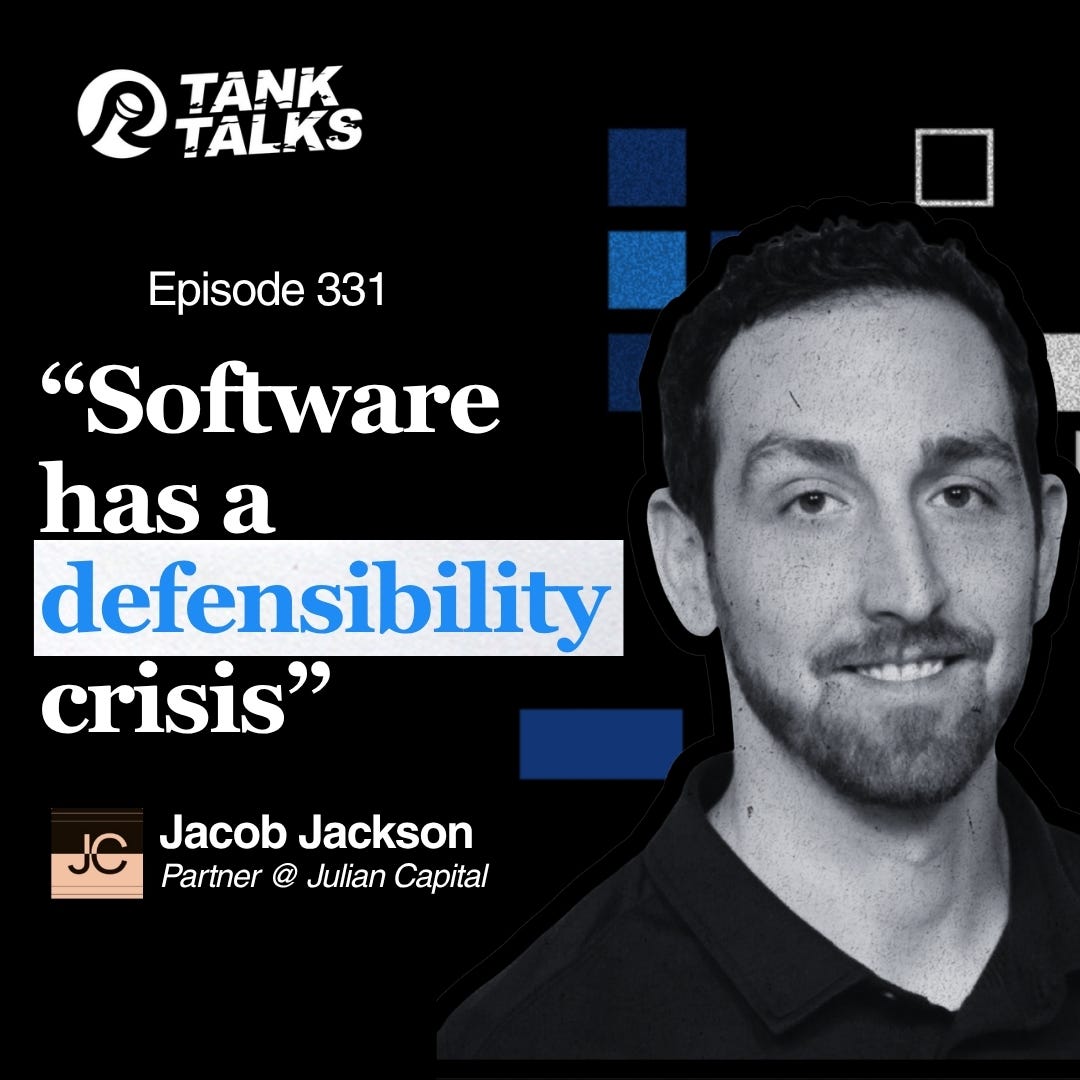
Why Software Lost Its Moat and Deep Tech Is Winning with Jacob Jackson of Julian Capital
3w ago00:44:44Tap to summarizeEveryone Has the Same AI Tools Now. So where’s the Moat?In this episode of Tank Talks, host Matt Cohen sits down with Jacob Jackson, partner at Julian Capital and founder of Deep Checks. A physicist turned SaaS founder turned deep tech investor, Jacob brings a unique perspective on the shifting landscape of venture capital. He shares his personal journey from developing MRI techniques at UBC to founding MedStack, and why he made the full-circle pivot back to backing companies building real, hard technology.Jacob offers a frank assessment of the defensibility crisis in software, explains why AI is democratizing superpowers across every industry, and makes the case that deep tech offers faster exits and higher unicorn density than its reputation suggests. He also breaks down how Julian Capital supports founders with growth and go-to-market muscle, and why the team behind the idea matters more than ever in today’s market.Whether you’re a founder building hardware, an investor looking for the next generation of venture returns, or just trying to understand where technology is headed, Jacob Jackson delivers the kind of straight talk that cuts through the hype.Why Software’s Moat Is Gone (04:00)* Jacob’s firsthand experience building MedStack, where Amazon, Google, and Azure built competing products almost overnight* Why the defensibility crisis in SaaS is making it harder than ever for new companies to get off the ground* The shift from competing on product to competing on capital and go-to-marketRedefining Deep Tech: What Everyone Gets Wrong (06:44)* The biggest misconception: that deep tech requires 20-year fund cycles* How SpaceX-style private market liquidity proves milestone-based exits work* Why the hottest sector of the year is never where the biggest company gets seededHow AI Accelerates Hardware Development (08:23)* AI as a democratizing force that makes everything faster and more competitive* From CAD design to patent strategy: how AI is becoming a founder’s essential tool* The commoditization of vertical robotics and what it means for defensibilityBuilding Moat in Deep Tech: Talent, Networks, and Network Effects (10:30)* Why network effects and talent density matter more than patents alone* How to pull the “ladder up” behind you as you scale* Incumbents vs. upstarts: why everyone has access to the same tools nowThe Rise of Deep Checks (18:01)* How Deep Checks became the world’s largest network of deep tech founders and VCs* The platform that helps founders run a tight, accelerated fundraising process* Over $100 million deployed and 5,000+ founders submitted in just two yearsWhat Jacob Looks for in Founders (24:50)* The 50/50 split between team and idea* Why obsession and speed matter more than business experience* How to spot the founders who will learn to sell, recruit, and negotiateFrontier Tech vs. Deep Tech (29:20)* Why Julian Capital backs “picks and shovels” companies in spaces like fusion and quantum* The importance of market pull and meaningful near-term milestones* Why a 20-year fund cycle makes financial math nearly impossibleThe Data That Surprised Everyone (32:58)* Deep tech exits are 25% faster with more unicorns per dollar invested* Why historical data shows deep tech outperforming software* The role of capital flooding and dilution in venture returnsAbout Jacob JacksonJacob Jackson is a partner at Julian Capital and the founder of Deep Checks, the world’s largest network of deep tech founders and VCs. A physicist by training, Jacob pivoted from academic research to founding MedStack, a privacy and security SaaS platform, before returning to his engineering roots as an investor. He now backs founders building hardware and tackling the world’s hardest problems. Jacob is known for his data-driven approach, obsession with team quality, and candid takes on the future of venture capital.Connect with Jacob Jackson on LinkedIn: https://www.linkedin.com/in/jonlovekingsett?originalSubdomain=caVisit Julian Capital’s website: https://www.julian.capital/Submit to Deep Checks: https://www.deepchecks.vc/Connect with Matt Cohen on LinkedIn: https://ca.linkedin.com/in/matt-cohen1Visit the Ripple Ventures website: https://www.rippleventures.com/ This is a public episode. If you would like to discuss this with other subscribers or get access to bonus episodes, visit tanktalks.substack.com
Transcribe →
The Rundown 7/20/26: TouchBistro’s Collapse, Meta’s $13B AI Bet, and Canada’s Defence Boom
4w ago00:26:54Tap to summarizeMatt Cohen is joined by John Ruffolo for another hard-hitting Tank Talks: The Rundown, covering the biggest stories shaping Canadian technology, venture capital, defence, and artificial intelligence. They break down TouchBistro’s dramatic fall from Canadian tech darling to a roughly $100 million exit, examining how inflated valuations, founder transitions, and restrictive financing can leave a company with nowhere to go.The conversation also explores Dominion Dynamics’ major defence technology funding round, Meta’s $13 billion AI data centre investment in Alberta, and the growing open-weight AI movement that could threaten the business models and valuations of OpenAI, Anthropic, and other leading AI companies. John explains why foreign-owned infrastructure alone will not create true AI sovereignty or lasting economic value for Canada.Finally, Matt and John discuss Mark Carney’s efforts to attract Saudi investment and whether renewed international interest in Canada will translate into real capital and economic growth. Listen to the full episode of Tank Talks: The Rundown for candid insights on startup valuations, Canadian defence technology, AI infrastructure, venture capital risk, and the decisions founders and investors must make before the market forces their hand.TouchBistro’s $100M Exit: When Valuation Becomes a Trap (01:57)John breaks down how TouchBistro went from a promising Canadian tech company to a sale far below its expected value. He explains how inflated valuations, founder changes, and restrictive financing can leave a business with no room to recover.Canada’s Defence Technology Gold Rush (10:06)Dominion Dynamics’ major Series A signals growing investor interest in Canadian defence technology. John warns that the sector requires deep expertise, trusted government relationships, and strategic investors, not just capital chasing the latest trend.Meta’s $13B Alberta AI Bet: Infrastructure or Sovereignty? (14:24)Meta’s massive Alberta data centre could bring billions in investment, jobs, and energy demand to Canada. But John argues that the highest-value assets, the models, chips, data, and intellectual property, will still be owned outside the country.Open-Weight AI Could Change the Entire Market (18:14)Powerful open-weight AI models are giving startups alternatives to expensive closed platforms. Matt and John discuss whether this shift could weaken the business models of OpenAI, Anthropic, and other frontier AI companies.The AI Valuation Reckoning Is Getting Closer (20:32)John argues that many leading AI and technology companies are priced far ahead of their current economics. A public market correction could quickly drag down private startup valuations and force founders to accept difficult resets.Carney’s Saudi Capital Push: Interest Is Not Investment (24:01)Mark Carney is working to attract Saudi and international investment into Canada. John believes Canada’s global credibility has improved, but warns that meetings and interest mean little until they produce actual deals and committed capital.Connect with John Ruffolo on LinkedIn: https://ca.linkedin.com/in/joruffoloConnect with Matt Cohen on LinkedIn: https://ca.linkedin.com/in/matt-cohen1Visit the Ripple Ventures website: https://www.rippleventures.com/ This is a public episode. If you would like to discuss this with other subscribers or get access to bonus episodes, visit tanktalks.substack.com
Transcribe →
Paul Ziadé: Why Canada’s Defence Complacency Ends with North Vector Dynamics
4w ago00:38:06Tap to summarizeIn this episode of Tank Talks, host Matt Cohen sits down with Paul Ziadé, CEO and co-founder of North Vector Dynamics, a Calgary-based company building full-spectrum precision missile systems for Canada and its allies. A former tenured professor at the University of Calgary turned defence entrepreneur, Paul brings a deeply personal and historically literate perspective to the Canadian defence landscape. He shares his family’s story of displacement from Lebanon and Armenia, and how that legacy of resilience informs his mission to build a sovereign missile capability for Canada.Paul offers a frank assessment of Canada’s defence complacency, arguing that the culture of risk-aversion is “upstream of everything.” He explains why the obsession with “dual-use” investing is holding the country back, why pure-play defence innovation is critical, and how startups like his can deliver capability faster than the traditional 10-year procurement cycle. He also breaks down the massive opportunity presented by the Golden Dome NORAD modernization and why Canada must participate not just as a buyer, but as an active builder.Whether you’re a defence founder navigating the Canadian ecosystem, an investor trying to understand the shift in risk capital, or a policy wonk watching the Arctic heat up, Paul Ziade delivers the kind of straight talk that cuts through the noise.From Civil War to Canadian Soil (00:01:20)* Paul’s upbringing as the child of Lebanese-Armenian immigrants who fled civil war and genocide.* How his parents’ appreciation for Canada’s peace and rule of law instilled a deep sense of responsibility.* The household rule: “Laziness was never an option” , competitive soccer, piano, student government, and French schooling.The Kennedy Space Center Spark (00:04:00)* How a grade 10 family trip to the Kennedy Space Center “lit the fuse” for his obsession with rocketry.* Touching the Saturn V and realizing what human ingenuity could achieve.* Why he needed a strong goal to anchor his focus and drive.Academia to Entrepreneurship (00:05:38)* Why he left a tenured professorship after 10 years at the University of Calgary.* The mindset shift: moving from committee-driven, overthinking academic life to the velocity and action-mentality of startups.* How academia trained him to be a better communicator, but startup life gave him instant feedback on every decision.The North Vector Vision (00:08:53)* The mission: precision missile systems on every continent protecting allies and Canada.* Full-spectrum air defence , from low-and-slow drones to hypersonic threats.* Assembling the “Avengers” team from his university labs, including co-founders Craig (aerospace research chair) and Colin (former TA).The Supply Chain Blind Spot (00:10:36)* Canada’s massive gap in energetics , from solid rocket motors to warheads, and upstream chemical synthesis (RDX, HMX, C4 propellants).* Why “vertically integrated” doesn’t always mean what people think.* The need for government signals to encourage private companies to take the risk and spool up.Defence Investing: Then vs. Now (00:14:48)* In 2022, no one wanted to look at North Vector , squeamishness around defence was rampant.* The gap between the narrative and reality on the ground in Canada.* Why most Canadian investors are still obsessed with “dual-use” investing, which Paul argues is historically misguided.The Dual-Use Delusion (00:29:31)* The problem with forcing every defence tech to have a civilian application.* Historical examples: GPS (missile guidance), duct tape (waterproof ammunition sealing).* The parallel to basic science , pure math and quantum mechanics funded with no immediate application, yet yielding enormous real-world benefits.Canada vs. The U.S. (00:18:43)* Honest admission: it’s easier to build defence tech south of the border.* Why North Vector chose to stay in Canada despite the friction.* Canada as a “frontier market” , a massive opportunity for those willing to build.* The debt of gratitude to the country that gave his family refuge.ACDC & The 70% Target (00:21:20)* Paul co-chairs the Alliance of Canadian Defence Companies (ACDC) , now nearly 200 members.* The goal: champion Canadian-owned, Canadian-controlled companies and advocate for fast contracts.* Holding the government accountable to the Defence Industrial Strategy (DIS) without displacing primes.In-Q-Tel & The Culture Shift (00:23:16)* What a Canadian version of In-Q-Tel would need to get right.* The critical need: give delegated authorities permission to take risks and accept failure as part of the process.* Moving money out the door faster to small, scrappy startups that could win big.The Golden Dome Opportunity (00:27:13)* Canada’s lack of commitment to NORAD modernization and the Golden Dome.* The upside: a $500B–$1.2T opportunity.* Paul’s proposed win-win: “Give Trump the $61B win, but ensure $40B goes to Canadian firms.”* How Canada can participate as an active builder, not just a buyer.About Paul ZiadéPaul Ziadé is the CEO and co-founder of North Vector Dynamics, a Calgary-based company building full-spectrum precision missile systems for Canada and its allies. A former tenured professor at the University of Calgary, Paul holds deep expertise in high-speed propulsion and aerodynamics, having spent over a decade in academia before pivoting to the startup world. He is also the co-chair of the Alliance of Canadian Defence Companies (ACDC) , advocating for Canadian-owned, Canadian-controlled defence firms. A first-generation Canadian with roots in Lebanon and Armenia, Paul brings a historically literate perspective to national security and the urgent need for Canada to build sovereign defence capability.Connect with Paul Ziadé on LinkedIn: https://www.linkedin.com/in/paul-ziade/Visit North Vector Dynamics’ website: https://www.northvectordynamics.com/Learn more about ACDC: https://www.alliancecanada.com/Connect with Matt Cohen on LinkedIn: https://ca.linkedin.com/in/matt-cohen1Visit the Ripple Ventures website: https://www.rippleventures.com/ This is a public episode. If you would like to discuss this with other subscribers or get access to bonus episodes, visit tanktalks.substack.com
Transcribe →
The 4.3 Trillion Dollar Problem: Why Venture’s Liquidity Crisis Is Here to Stay with John Rikhtegar and Peter Walker
Jul 1300:45:29Tap to summarizeIn this special episode of Tank Talks, recorded live during Toronto Tech Week at Moomoo Canada’s flagship store in Yorkville, Matt Cohen sits down with two of venture’s sharpest data and investment minds for an unfiltered conversation on the state of private markets.Peter Walker, Senior Director of Insights at Carta, brings the hard numbers from 60,000+ companies and 3,000+ US venture funds, revealing the stark reality behind valuation markups, unicorn deterioration, and the widening dispersion between top-tier and median deals.John Rikhtegar, Vice President at Northleaf Capital Partners and former RBC investor, offers the LP perspective on why trust matters more than ever, why emerging managers are bearing the brunt of capital allocation challenges, and how disciplined pacing and vintage diversification separate winning funds from the rest.Together, they tackle the 4.3 trillion-dollar NAV overhang, the brutal graduation rates for 2021 vintage funds, whether valuations have permanently shifted, and why the ATM analogy might be the best way to understand AI’s impact on venture careers.If you’re a GP raising capital, an LP sorting through manager pitches, or just trying to make sense of where venture is headed, this episode is a must-listen.The Great LP Reset: Trust Over Performance (08:05)* Why LPs are letting go of newer relationships while sticking with 15-year partners.* The COVID furlough analogy: why junior and newer team members are the first to go.* How trust became the ultimate table stakes in today’s fundraising environment.The 4.3 Trillion Dollar NAV Problem (12:33)* Why SpaceX’s IPO would return only 10% of capital deployed over the last decade.* The staggering number of unicorns still sitting on stale marks from 2021.* What happens when 50% of unicorn down rounds become the new normal.Valuation Dispersion Is Breaking the Model (17:38)* Seed valuations jumped from $15M post-money (2022) to $24M (2025).* Series A went from $46M to nearly $80M in the same period.* Why the gap between the top decile and the median has never been wider.* How GPs must adapt ownership expectations or get priced out of deals.The Unicorn Graveyard: Stale Marks and Deteriorating Assets (19:28)* December 2021: 640 unicorns on Carta; 85% of current US unicorns.* 30% have raised new up-rounds; of the rest, half raised down rounds of 50% or more.* How GPs are forced to tell LPs that their “trophy assets” are no longer real.Pacing, Reserves, and Portfolio Construction (22:53)* Why disciplined 3-4 year deployment beats 18-month “firehose” strategies.* The 80/20 reserve debate: why leading rounds can become a net negative.* How “deal 13” is just as likely to succeed as “deal 12”, and why slightly larger portfolios make sense.LP Diligence: It’s Not About the Marks (31:55)* Why TDPI and DPI are just 2 of 100 mosaic factors in LP decision-making.* How LPs now go company-by-company, not fund-by-fund.* The importance of founder references, especially from failed companies.Canada vs. The US: A Fractal Problem (40:44)* Why every market (Toronto, Sydney, London, Seattle) faces the same “Silicon Valley problem.”* The importance of domestic liquidity and secondary markets over chasing US LPs.* Why returns, not international capital, will ultimately scale Canadian firms.AI and the Future of Venture Careers (44:44)* The ATM analogy: AI will eliminate tasks, not jobs.* Why the role of the investor becomes more important as noise and froth increase.* How family offices are shifting their mix between fund investing and direct deals.Retail Access to Private Markets: Feature or Bug? (53:27)* Why illiquidity in private markets is a feature, not a bug.* The absurdity of allowing crypto “shitcoins” but blocking friends from investing in startups.* Why “401k-entrance” to private equity is a bigger story than retail venture access.About the GuestsPeter Walker is the Senior Director of Insights at Carta, where he leads the team responsible for analyzing data from over 60,000 companies and 3,000+ venture funds. His work on valuations, liquidity, and fundraising trends is widely cited across the venture ecosystem. He is a regular speaker at industry events and writes extensively on LinkedIn about the intersection of data and venture capital.Connect with Peter Walker on LinkedIn: linkedin.com/in/peterjameswalkerLearn more about Carta: carta.comJohn Rikhtegar is a Vice President at Northleaf Capital Partners, joining in early 2026 after a distinguished career at RBC and as an operator at Shopify and in the UK. He brings a unique blend of LP and operational perspectives, with deep expertise in due diligence, portfolio construction, and the dynamics of emerging manager investing.Connect with John Rikhtegar on LinkedIn: https://www.linkedin.com/in/johnrikhtegar/Learn more about Northleaf Capital Partners: https://www.northleafcapital.com/Connect with Matt Cohen on LinkedIn: https://ca.linkedin.com/in/matt-cohen1Visit the Ripple Ventures website: https://www.rippleventures.com/ This is a public episode. If you would like to discuss this with other subscribers or get access to bonus episodes, visit tanktalks.substack.com
Transcribe →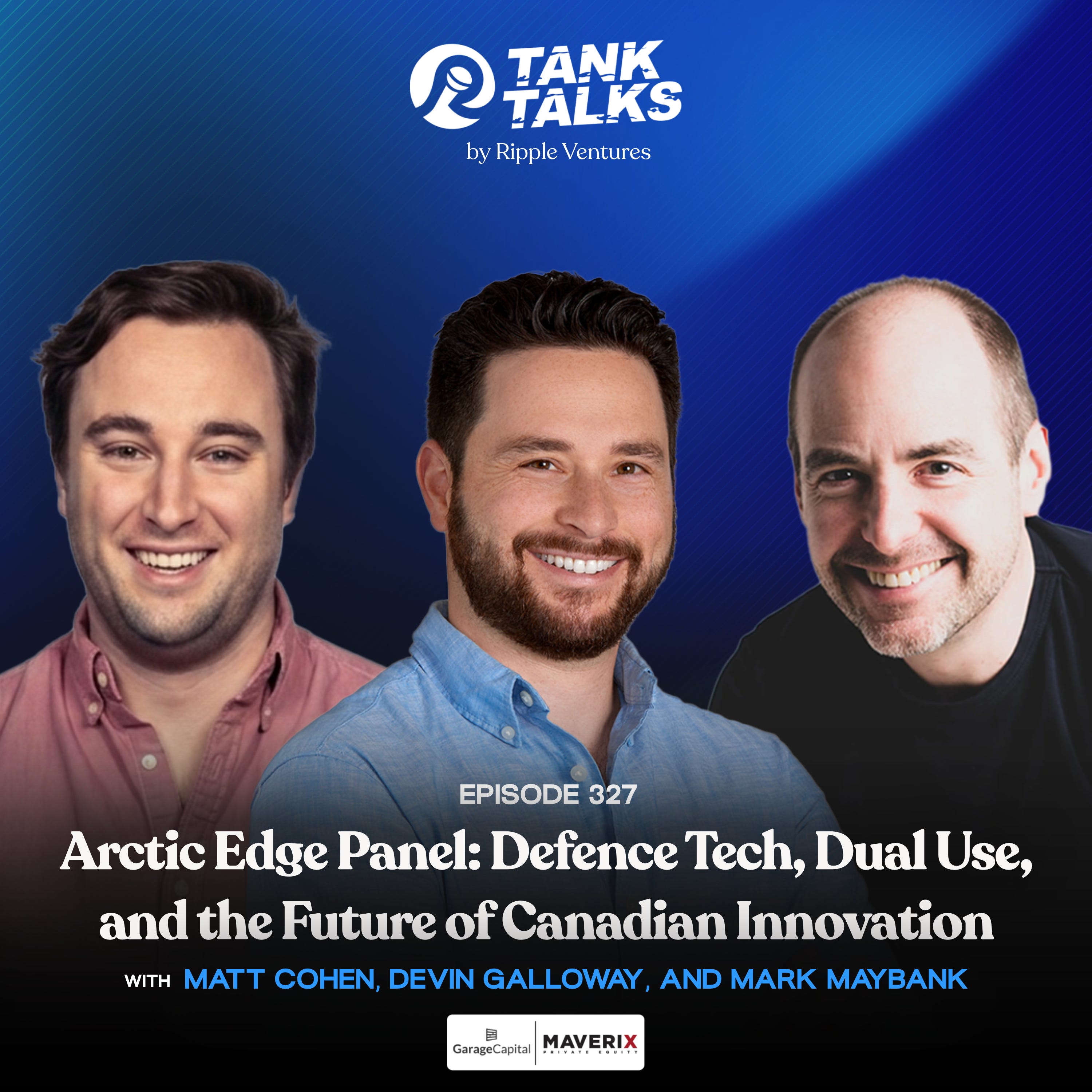
Arctic Edge Panel: Defence Tech, Dual-Use, and the Future of Canadian Innovation
Jul 200:45:31Tap to summarizeCanada is entering one of the most important moments in its innovation history. As global tensions rise and national security becomes a growing priority, founders, investors, and governments are being forced to rethink how Canadian defence technology is built, funded, and scaled.In this special episode of Tank Talks, host Matt Cohen steps into the guest seat as part of a live panel recording from the Arctic Edge event, held during Toronto Tech Week on May 26th, 2026. Against the backdrop of escalating Arctic sovereignty concerns and a new era of national security, this panel, aptly named “The Backers,” brings together leading Canadian investors to dissect the burgeoning defence technology sector in Canada.Moderated by Matthew Lombardi of The Icebreaker, the discussion features Matt Cohen (Ripple Ventures), Devin Galloway (Garage Capital), and Mark Maybank (Maverix Private Equity). Together, they explore the seismic shift in Canadian capital markets, from the historical reluctance to fund defence to the current “cultural permission” that is finally opening doors. They tackle the complexities of dual-use technology, the harsh realities of government procurement, the critical “Series A gap” for sovereign-interest companies, and what it truly takes to build a world-beating defence company from Canada.Whether you’re a founder navigating the defence landscape, an investor looking for the next frontier, or simply interested in the future of Canadian sovereignty, this episode offers a raw, unfiltered look at the challenges and immense opportunities ahead.Why Defence Investing is Finally Changing in Canada (02:48)* Why Canadian defence technology has become a national priority after years of limited investment* How changes to venture fund mandates and government policy are opening new opportunities for founders* Why investors believe Canada is only at the beginning of its defence innovation journeyDefence vs. Dual Use: The Debate Every Founder Should Understand (04:08)* Why some investors believe dual-use businesses reduce risk while others see them as a distraction* The challenges of serving both commercial and government customers at the same time* Why simply having the conversation around defence represents major cultural progress for CanadaWhy Procurement Still Matters More Than Capital (10:00)* The encouraging signs that Canadian procurement is beginning to move faster* Why government demand signals remain one of the biggest barriers to investment* How procurement reform could unlock the next generation of defence startupsThe Hottest Trends and Biggest Mistakes in Defence Tech (12:06)* Why AI, robotics, drones, and autonomous systems are attracting enormous investor attention* How experienced operators separate themselves from founders chasing hype* Why understanding military procurement is just as important as building great technologyWhat Great Defence Founders Do Differently (15:33)* Why credibility, patience, and long-term relationship building matter more than moving fast* The importance of recruiting exceptional talent around a mission that inspires people* Why fundraising skills are critical for capital-intensive defence businessesBuilding Companies for Decades, Not Years (17:44)* Why defence investing requires a completely different timeline than traditional software startups* How venture firms are adapting to longer company-building cycles* Why patient capital is essential for creating world-changing businessesExpanding the Definition of Defence (21:00)* Why protecting critical infrastructure is becoming just as important as military applications* How ports, utilities, emergency services, and cities fit into the modern defence landscape* Why startups should think beyond government procurement when building go-to-market strategiesHelping Startups Win Beyond Writing the First Check (25:11)* How strategic corporate relationships can accelerate growth alongside government contracts* Why investors are building networks of executives who actively support portfolio companies* The growing momentum behind procurement reform across Canadian institutionsAdvice for Founders Building Canada’s Next Great Defence Company (27:20)* Why founders should spend time with customers before perfecting the product* The importance of building relationships in Ottawa long before contracts arrive* Why the ambition should be to build a company that leads the world, not just CanadaThe Funding Gap Threatening Canadian Innovation (34:18)* Why Canada still struggles to fund companies through critical growth stages* How government matching funds and institutional investors could help close the gap* Why keeping Canada’s best companies at home will require larger pools of patient capitalValuations, Venture Math, and Keeping Canadian Founders in Canada (39:29)* Why Canadian and American venture markets operate under very different economic realities* The dangers of raising oversized rounds before a company is ready* Why solving Canada’s capital challenges is essential for keeping world-class entrepreneurs at homeAbout the PanelMatt Cohen is the Founder and Managing Partner of Ripple Ventures, an early-stage venture capital firm investing in exceptional founders across Canada and the United States. Ripple has expanded from its roots in B2B software into frontier technologies, including defence and dual-use innovation.Mark Maybank is the Co-Founder and Managing Partner of Maverix Private Equity. Maverix focuses on growth-stage investments across North America, with defence and dual-use technologies forming a core part of its investment strategy.Devin Galloway is a General Partner at Garage Capital, one of Canada’s leading early-stage venture funds. Since 2014, Garage has backed founders building category-defining companies across software, deep technology, and defence.Connect with Devin Galloway on LinkedIn: https://www.linkedin.com/in/devongallowayVisit the Garage Capital website: https://www.garage.vc/Connect with Mark Maybank on LinkedIn: https://www.linkedin.com/in/mark-maybankVisit the Maverix Private Equity website: https://www.maverixpe.com/Connect with Matt Cohen on LinkedIn: https://ca.linkedin.com/in/matt-cohen1Visit the Ripple Ventures website: https://www.rippleventures.com/ This is a public episode. If you would like to discuss this with other subscribers or get access to bonus episodes, visit tanktalks.substack.com
Transcribe →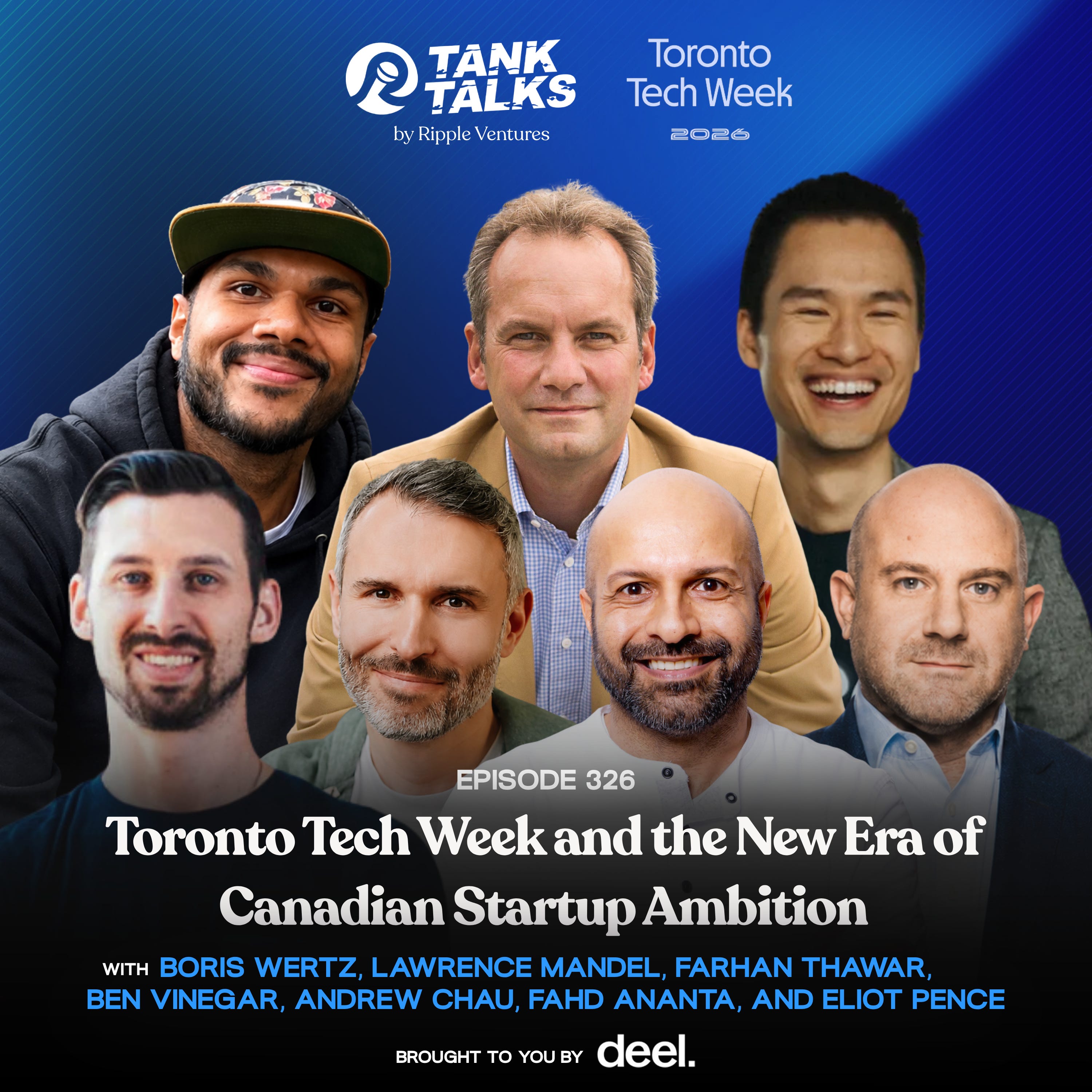
Toronto Tech Week and the New Era of Canadian Startup Ambition
Jun 2601:18:26Tap to summarizeIn this special episode of Tank Talks, Matt Cohen brings listeners inside Toronto Tech Week with a live podcast studio recorded at the Toronto Homecoming event. This episode captures a fast-moving snapshot of the Canadian tech ecosystem through candid conversations with Boris Wertz of Version One, Lawrence Mandel and Farhan Thawar of Shopify, Ben Vinegar of Modem, Andrew Chau of Neo Financial, Fahd Ananta of Opendoor, and Eliot Pence of Dominion Dynamics. Across venture capital, AI-native engineering, product management, fintech, defense tech, and startup turnarounds, the episode explores why Toronto Tech Week feels like a real inflection point for Canadian founders, operators, investors, and returning global talent.Matt and the guests dig into the biggest questions shaping startups in 2026: how AI is changing the speed of company-building, why “AI wrappers” are becoming harder to defend, how Shopify is rethinking engineering culture around AI, what agentic coding still gets wrong, why Neo Financial is taking on Canada’s banking oligopoly, what Opendoor’s turnaround reveals about velocity, and how Dominion Dynamics is building sovereign Canadian defense technology for the Arctic. The recurring theme is clear: Canada has talent, capital, technical depth, and ambition, but the ecosystem needs to move faster, take bigger risks, and stop hiding its best builders under a very polite rain jacket.Whether you’re a Canadian founder, venture capitalist, AI operator, fintech builder, defense tech investor, or someone trying to understand why Toronto Tech Week has become such a high-energy gathering for the startup community, this episode is packed with sharp insights from leaders building at the edge of what comes next.Boris Wertz on Early-Stage Investing in a No-Playbook AI Market (02:16)Boris Wertz of Version One Ventures compares Toronto Tech Week to other tech gatherings and explains why today’s early-stage investing environment is unlike anything he has seen before. He discusses the faster pace of innovation, why founders need to be nearly perfect from the start, and how AI-native companies require a different mindset than traditional SaaS startups.Lawrence Mandel on Shopify’s AI-Native Engineering Culture (07:13)Lawrence Mandel shares how Shopify’s engineering organization is building for merchants, APIs, analytics, and the third-party ecosystem while operating with a mostly remote team. He explains how Shopify’s intern program, engineering culture, and AI-first mindset are shaping the next generation of Canadian technical talent.Farhan Thawar on Remote Work, Bursts, and Shopify’s Meeting Armageddon (16:46)Farhan Thawar shares a blunt view on Shopify’s remote-first culture, saying most companies should not simply copy it unless they are deeply intentional. He explains Shopify’s “bursts,” company-wide summits, hackathons, and Meeting Armageddon, where recurring meetings are deleted so teams can rebuild their calendars from first principles.Ben Vinegar on Modem and AI Product Management (31:52)Ben Vinegar introduces Modem as an AI product management platform focused on the non-coding work behind software development. He explains why user conversations, product feedback, and customer experience are harder to understand deterministically, and why LLMs create a new way to analyze human signals at scale.Andrew Chau on SkipTheDishes, Neo Financial, and Taking on Canadian Banking (45:23)Andrew Chau shares the origin story of SkipTheDishes and how that experience led him to build Neo Financial. He explains why Neo chose one of the hardest and most regulated industries in Canada, and why the big five banking oligopoly creates a massive opportunity for a better consumer banking experience.Fahd Ananta on Opendoor, Turnarounds, and Speed (59:20)Fahd Ananta shares how he joined Opendoor during its turnaround after reconnecting with Kaz from Shopify. He explains how a simple congratulatory message turned into a strategic document, a fast offer, and a move into one of the most closely watched public-company turnaround stories in tech.Eliot Pence on Returning to Canada to Build Dominion Dynamics (01:04:34)Eliot Pence shares why he is moving back to Canada after years abroad and why he believes this is a unique moment for Canadian ambition. He explains that Dominion Dynamics is being built in Canada because the customer is here and because Canada is reinvesting in defense.About Boris WertzBoris Wertz is the founder of Version One Ventures, an early-stage venture capital firm known for backing ambitious technology companies across emerging markets and frontier categories. A longtime investor in the Canadian and global startup ecosystem, Boris brings a clear-eyed perspective on how venture has changed in the AI era, why founders now need to move with more speed and precision than ever, and what separates truly defensible companies from short-lived AI wrappers.Connect with Boris Wertz on LinkedIn: https://www.linkedin.com/in/bwertz/Visit the Version One website: https://versionone.vc/About Lawrence MandelLawrence Mandel is a VP of Engineering at Shopify, where he helps lead major parts of Shopify’s core technical infrastructure, including merchant-facing systems, analytics, API layers, and the third-party developer ecosystem. With more than eight years at Shopify and a team of hundreds of engineers, Lawrence has been closely involved in how one of Canada’s most important technology companies builds, hires, trains, and adapts in an AI-native world.Connect with Lawrence Mandel on LinkedIn: https://www.linkedin.com/in/lmandel/Visit the Shopify website: https://www.shopify.com/About Farhan ThawarFarhan Thawar is a senior engineering leader at Shopify and one of the most distinctive voices in Canadian tech on AI, software development, and engineering culture. Known for his practical, high-conviction thinking, Farhan has helped shape how Shopify approaches remote work, engineering velocity, AI tooling, internal systems, and company-wide habits like Meeting Armageddon and Delete Code Club. His perspective blends deep technical experience with a founder-style obsession for speed, leverage, and better systems.Connect with Farhan Thawar on LinkedIn: https://www.linkedin.com/in/fnthawar/Visit the Shopify website: https://www.shopify.com/About Ben VinegarBen Vinegar is the founder and CEO of Modem, an AI product management platform built to help teams understand users, product feedback, and the non-coding work behind building great software. Before starting Modem, Ben was VP of Engineering at Sentry, where he spent years working on developer tools, engineering productivity, and software observability. His work now sits at the intersection of AI, product development, user insight, and the future of agentic software workflows.Connect with Ben Vinegar on LinkedIn: https://www.linkedin.com/in/benvinegar/Visit the Modem website: https://modem.dev/About Andrew ChauAndrew Chau is the co-founder and CEO of Neo Financial, one of Canada’s most prominent fintech companies, and a co-founder of SkipTheDishes. After helping build and exit one of Canada’s breakout consumer technology companies, Andrew turned his attention to one of the hardest markets in the country: banking. Through Neo, he is focused on giving Canadians a modern alternative to legacy financial institutions, with digital-first products spanning credit cards, savings, checking, mortgages, rewards, and major brand partnerships.Connect with Andrew Chau on LinkedIn: https://www.linkedin.com/in/andrew-chau-1046749/Visit the Neo Financial website: https://www.neofinancial.com/About Fahd AnantaFahd Ananta is an operator and investor with experience across Shopify, Opendoor, and Roach Capital. He recently joined Opendoor during a major turnaround period, bringing with him the systems-driven operating mindset shaped by his time around Shopify’s culture of speed, abstraction, and company-building discipline. Fahd represents a new kind of Canadian tech operator: globally experienced, deeply technical, quietly intense, and focused on helping large, complex companies move faster.Connect with Fahd Ananta on LinkedIn: https://www.linkedin.com/in/fananta/Visit the Opendoor website: https://www.opendoor.com/About Eliot PenceEliot Pence is the founder of Dominion Dynamics, a Canadian defense technology company focused on sovereign capability, Arctic security, and dual-use technology. A former leader at Anduril, Eliot returned to Canada to build a defense company designed for speed, risk-taking, and real-world deployment. His work is centered on helping Canada rebuild ambition in national security, defense procurement, Arctic infrastructure, and the ki...
Transcribe →
The Rundown 6/23/26: The AI Hype Machine, Canada’s Capital Gap, and the Return of Hard Tech
Jun 2300:52:58Tap to summarizeIn this episode of Tank Talks, recorded live at the Global Startups Conference, Matt Cohen and John Ruffolo take the stage for a wide-ranging conversation on the future of Canada’s innovation economy, the AI infrastructure race, and why this moment feels different, even if John still refuses to fully believe “this time is different.” The conversation opens with SpaceX’s historic IPO, massive valuation hype, and the question of whether public market demand can support a new wave of AI and frontier tech giants like OpenAI and Anthropic.Matt and John then dig into one of the biggest strategic questions facing founders today: should startups build on top of frontier AI models, or will those platforms eventually come for their margins? John draws a sharp comparison to Hootsuite’s dependence on social media APIs, warning founders not to build businesses where a monopolistic platform can eventually “come calling.” From LLM unit economics and inference costs to local models, edge compute, AI sovereignty, and Canada’s weak position in the full AI stack, this episode breaks down why real moats may come from deep tech, defense, energy, chips, space infrastructure, and hard-to-build businesses.The discussion also tackles Canada’s AI strategy, the tension between innovation and regulation, the rise of dual-use defense startups, the shortage of domestic growth capital, and whether Canada is becoming a farm team for U.S. acquirers. John and Matt close with a candid look at family offices, immigrant founders, Canadian ambition, and what actually separates fundable founders from the noise: purpose, focus, and the ability to build something hard when everyone else is chasing the latest shiny object.SpaceX’s IPO and the return of the hype machine (02:48)Matt and John open with the massive SpaceX IPO, its soaring valuation, and whether the market is being driven by fundamentals or pure scarcity-fueled hype. John argues that discounted cash flows still matter, even when investors are caught up in the next great frontier tech story.Satya Nadella’s warning to AI founders (05:56)Matt brings up Satya Nadella’s warning about relying too heavily on frontier models. The discussion explores why businesses built on top of OpenAI, Anthropic, or other LLM platforms may eventually face direct competition from the very infrastructure they depend on.Canada’s AI strategy: long overdue, but too unfocused? (16:14)Matt and John assess the government’s AI strategy and the promise that Canadian AI adoption could add massive GDP growth. John says the strategy contains useful objectives, but risks becoming a laundry list without a clear answer to the question: which pedal are we actually pressing?Building trust in AI without creating regulatory capture (21:46)The audience asks how Canada can build trust in AI adoption. John argues for clear guardrails, but warns that large AI players may eventually welcome heavy regulation because it protects incumbents and locks out smaller competitors.Defense tech is hot again, but not every startup is real (25:19)Matt and John discuss the surge of interest in dual-use defense technology. John warns that when government money appears, everyone suddenly claims to be a defense company, making it harder to separate serious builders from PowerPoint tourists.Is building in Canada patriotic or financially irrational? (33:19)Matt asks the blunt question: in 2026, is staying in Canada a patriotic endeavor or a financial mistake? John argues Canada has the talent, ecosystem, and raw materials, but lacks confidence and ambition at the capital layer.Why Canada needs real growth capital, not just early-stage funding (37:34)John explains why he created Mavericks to address the gap in Canadian growth equity. The issue is not founder ambition, but the lack of domestic capital willing to write meaningful checks once companies need to scale past the early stage.Family offices, education gaps, and Canada’s missing innovation capital (43:56)Matt explains why many Canadian family offices are still learning how venture and startup investing work. Unlike real estate or private equity, venture requires patience, a tolerance for the J curve, and a different understanding of risk and return.Canada’s AI edge may be hiding in resources, minerals, and chip substrates (49:43)The episode closes with a discussion of Canada’s possible edge in AI infrastructure through natural gas, rare earth materials, zinc byproducts, indium phosphide, and semiconductor supply chains. Matt and John argue that Canada’s issue is not a lack of resources, but a lack of permission, capital, and long-term conviction to build around them.Connect with John Ruffolo on LinkedIn: https://ca.linkedin.com/in/joruffoloConnect with Matt Cohen on LinkedIn: https://ca.linkedin.com/in/matt-cohen1Visit the Ripple Ventures website: https://www.rippleventures.com/ This is a public episode. If you would like to discuss this with other subscribers or get access to bonus episodes, visit tanktalks.substack.com
Transcribe →
Why Canada’s Trading Market is Ready for Disruption with Michael Arbus of moomoo Canada
Jun 1700:53:16Tap to summarizeIn this episode of Tank Talks, Matt Cohen sits down with Michael Arbus, CEO of moomoo Canada, for a wide-ranging conversation on Wall Street trading floors, Canadian fintech, crypto regulation, AI-powered investing, and what it really takes to build and scale financial technology companies. Michael’s career has taken him from the chaos of Bay Street and Wall Street desks at firms like RBC Capital Markets, TD, UBS, and Merrill Lynch to operating industrial businesses, helping scale Bitbuy into a regulated Canadian crypto marketplace, and now leading moomoo Canada as it pushes into self-directed retail trading, AI tools, options education, and investor communities.Michael shares the lessons he learned from covering major hedge funds, why one trade during the financial crisis made him rethink his role as an advisor, how spreadsheet-driven decision-making helped him turn around operating businesses, and why retail investors in Canada are ready for better tools than the legacy banking platforms have historically offered. They also dive into moomoo’s AI-native product strategy, agentic investing, algorithmic trading in natural language, Canada’s loyalty to big banks, the rise of retail options trading, and the founder advice Michael wishes more entrepreneurs would hear before wasting years on a business that cannot support them.Whether you’re a fintech founder, startup operator, retail investor, trader, or Canadian tech ecosystem builder, this episode is packed with sharp, practical insights on the future of investing, AI, and financial platforms.From Trading Floor Chaos to Wall Street Scar Tissue (03:30)Michael describes life on massive institutional trading floors as a “casino with pumped oxygen and insanity.” The early mornings, morning meetings, nonstop client calls, and constant pressure to be relevant. Why the trading desk taught him how to process information quickly and turn noise into action.Investing in Businesses vs. Investing in Stocks (12:12)Matt and Michael break down the difference between knowing a ticker and understanding the actual company underneath it. Why some good businesses can be bad stocks, and some bad businesses can still become great trades.Scaling Bitbuy and Learning the Reality of Regulation (22:33)Michael shares how he joined Bitbuy when the business was growing but still needed operational structure. The shift from institutional finance to B2C financial services. Why serving retail customers creates a much deeper sense of accountability, especially when people are trusting a platform with their hard-earned money.What moomoo Actually Is and Why Canada Matters (27:41)Michael explains moomoo’s global footprint across markets like Hong Kong, Singapore, Australia, the U.S., and Canada. The scale of Futu Holdings, the role of product and R&D, and why joining a 4,000-person global fintech machine was very different from building Bitbuy from a smaller startup team.Canada’s Loyalty Problem With Big Banks (29:44)Why Canadian retail investors are deeply loyal to legacy banking brands. Michael explains how trust, safety, and brand recognition are baked into Canadian financial behavior, and why moomoo believes a regulated challenger brand can win by offering a product Canadian investors have not seen before.AI Trading Inside the moomoo App (35:55)How moomoo became one of Canada’s first AI brokerage platforms. Why its AI tools are different from generic public LLMs because they are connected to paid, live market data behind the platform’s firewall. How this changes the quality of answers retail investors can access.Can moomoo Challenge Canada’s Banking Giants? (41:24)Michael explains who moomoo is built for and who it is not built for. Why the next generation of investors may care more about control, education, and outperformance than branch loyalty. How AI, job market uncertainty, and personal financial pressure could make self-directed investing more important.Canada’s Top Trader and the Nasdaq Partnership (43:20)Michael shares moomoo Canada’s trading competition, including real prize money, a $100,000 top prize, and partnership with Nasdaq. Why the initiative is designed to bring retail investors into the market in a more systematic, educated way.Can Your Startup Actually Pay for Your Life? (47:42)Michael explains why founders need to calculate their personal take-home pay before committing years to a venture. The danger of getting caught in a self-fulfilling story that feels exciting but cannot support the builder behind it.The Leadership Lesson That Still Matters Most (51:32)Michael closes with a simple but powerful lesson: kindness goes a long way. After scaling multiple teams from small groups to dozens or more than 100 people, he explains why intelligence is common, but kindness is what compounds in leadership, hiring, and company building.About Michael ArbusMichael Arbus is the CEO of moomoo Canada, a global self-directed investing and trading platform under Futu Holdings focused on retail investors, trading tools, market data, options education, and AI-powered investing experiences. Before joining moomoo, Michael built a diverse career across institutional finance, entrepreneurship, industrial operations, crypto, and fintech. He spent years on Bay Street and Wall Street trading desks at firms including RBC Capital Markets, TD, UBS, and Merrill Lynch, working with global hedge funds and covering M&A event-driven situations, mining, and energy stocks. He later moved into operating businesses, including oil, scrap metal, industrial recycling, and crypto mining, before helping scale Bitbuy into one of Canada’s leading regulated crypto marketplaces. Today, Michael is focused on expanding moomoo Canada, bringing institutional-grade tools to retail traders, and helping Canadian investors understand the future of AI, options trading, and self-directed financial platforms.Connect with Michael Arbus on LinkedIn: https://www.linkedin.com/in/michael-arbus-cfa-mba-299a49/Visit the moomoo Canada website: https://www.moomoo.com/caConnect with Matt Cohen on LinkedIn: https://ca.linkedin.com/in/matt-cohen1Visit the Ripple Ventures website: https://www.rippleventures.com/ This is a public episode. If you would like to discuss this with other subscribers or get access to bonus episodes, visit tanktalks.substack.com
Transcribe →