Podcast
Tax Smart Real Estate Investors Podcast
Hosted by Hall CPA · EN
The Tax Smart Real Estate Investors Podcast is a show that focuses on tax, accounting, and finance tips for real estate investors and business owners. We bring on guests to talk through complex topics and we break it down into bite-sized chunks of knowledge for our listeners.
Our episodes generally run 30-60 minutes of no-nonsense, hard-hitting information. We know your time is valuable so our goal is to save you thousands of dollars per episode.
Hall CPA, PLLC is a CPA firm that exclusively serves real estate investors and real estate business owners. We work with syndicators and developers closing multi-million dollar deals, as well as small investors building a portfolio from scratch.
Check us out at www.TheRealEstateCPA.com/Podcast for more free content and information.
Enjoy!
The Tax Smart Real Estate Investors podcast is for general information purposes only and is not intended to provide, and should not be relied on for, tax, legal, or accounting advice. Information on the podcast may not constitute the most up-to-date legal or other information. No reader, user, or listener of this podcast should act or refrain from acting on the basis of information on this podcast without first seeking legal and tax advice from counsel in the relevant jurisdiction. Only your individual attorney and tax advisor can provide assurances that the information contained herein – and your interpretation of it – is applicable or appropriate to your particular situation. Use of, and access to, this podcast or any of the links or resources contained or mentioned within the podcast show and show notes do not create a relationship between the reader, user, or listener and podcast hosts, contributors, or guests. Any mention of third-party vendors, products, or services does not constitute an endorsement or recommendation. You should conduct your own due diligence before engaging with any vendor
207episodes
Episodes
Newest firstAll episodes
389. Don't Sell Your Land Until You Know This IRS Rule (It Could Cost You 6 Figures)
2d ago00:33:45Summary readyMany real estate investors assume that holding land for several years automatically qualifies them for favorable capital gains treatment. Unfortunately, that's not always true. In this episode, we break down one of the most misunderstood areas of real estate taxation: dealer status. You'll learn how the IRS determines whether your land is an investment or inventory, why intent alone isn't enough, and how seemingly small decisions before a sale can dramatically impact your tax bill. We discuss the seven factors courts use to evaluate dealer status, real-world tax court cases, why 1031 exchanges and installment sales may no longer apply if you're classified as a dealer, and how entity structuring may help strengthen your position. Whether you're land banking, flipping properties, developing real estate, or simply planning your next investment, understanding these rules could save you hundreds of thousands of dollars in unnecessary taxes. Request a consultation from Hall CPA at go.therealestatecpa.com/3KSEev6 Register for FREE access to the 2026 Hall CPA Tax Strategy Summit: www.taxandlegalsummit.com/2026signup Join the Hall CPA Team: www.therealestatecpa.com/careers/ Submit your question for Tom & Nathan: go.therealestatecpa.com/question The Tax Smart Real Estate Investors podcast is for general information purposes only and is not intended to provide, and should not be relied on for, tax, legal, or accounting advice. Information on the podcast may not constitute the most up-to-date legal or other information. No reader, user, or listener of this podcast should act or refrain from acting on the basis of information on this podcast without first seeking legal and tax advice from counsel in the relevant jurisdiction. Only your individual attorney and tax advisor can provide assurances that the information contained herein – and your interpretation of it – is applicable or appropriate to your particular situation. Use of, and access to, this podcast or any of the links or resources contained or mentioned within the podcast show and show notes do not create a relationship between the reader, user, or listener and podcast hosts, contributors, or guests. Any mention of third-party vendors, products, or services does not constitute an endorsement or recommendation. You should conduct your own due diligence before engaging with any vendor.
Summary
Too Big for REPS? The Tax Question Every Real Estate Operator Should Ask
1w ago00:27:10Summary readyMany real estate investors assume that as their business grows, qualifying for Real Estate Professional Status becomes automatic. The reality is much more complicated. In this episode, Nate and Tom tackle the question: Can you become too big for REPS? They break down what actually qualifies as material participation, whether capital raising counts toward REPS, how delegation changes the analysis, and why large syndicators and fund managers need to understand the difference between running a real estate business and simply owning one. The discussion also covers notable tax court cases, President Trump's publicly discussed tax returns, common REPS misconceptions, and planning considerations as your portfolio grows. In this episode, you'll learn: - What Real Estate Professional Status actually requires. - Whether CEOs, fund managers, and syndicators can still qualify. - Why scaling your business may or may not affect your tax benefits. - The IRS's position on material participation. - Common REPS myths that continue circulating in the industry. Request a free discovery meeting: go.therealestatecpa.com/mlre Register for FREE access to the 2026 Hall CPA Tax Strategy Summit: www.taxandlegalsummit.com/2026signup Join the Hall CPA Team: www.therealestatecpa.com/careers/ Get the Ultimate Guide for Real Estate Syndications: go.therealestatecpa.com/mlreultimateguide Submit your questions to: go.therealestatecpa.com/question The Major League Real Estate podcast is for general information purposes only and is not intended to provide, and should not be relied on for, tax, legal, investing, financial, or accounting advice. Information on the podcast may not constitute the most up-to-date legal or other information. No reader, user, or listener of this podcast should act or refrain from acting on the basis of information on this podcast without first seeking legal and tax advice from counsel in the relevant jurisdiction. Only your individual attorney and tax advisor can provide assurances that the information contained herein – and your interpretation of it – is applicable or appropriate to your particular situation. Use of, and access to, this podcast or any of the links or resources contained or mentioned within the podcast show and show notes do not create a relationship between the reader, user, or listener and podcast hosts, contributors, or guests. Any mention of third-party vendors, products, or services does not constitute an endorsement or recommendation. You should conduct your own due diligence before engaging with any vendor.
Summary
388. Trump Accounts: What You Need to Know Now That They're Live with Jacob Orr
1w ago00:42:06Summary readyTrump Accounts are now live, giving parents and grandparents another option for saving and investing on behalf of their children. In this episode of the Tax Smart REI Podcast, Thomas Castelli, Jacob Orr, and Nate Sosa discuss how Trump Accounts work, who qualifies, how the government's $1,000 contribution is claimed, and where these accounts fit alongside strategies like 529 plans, Roth IRAs, and hiring your children in your business. In this episode, you'll learn: - Who qualifies for the $1,000 government contribution - Annual contribution limits - How contributions and withdrawals are taxed - How Trump Accounts compare to 529 plans - When a Roth conversion may make sense Request a consultation from Hall CPA at go.therealestatecpa.com/3KSEev6 Register for FREE access to the 2026 Hall CPA Tax Strategy Summit: www.taxandlegalsummit.com/2026signup Join the Hall CPA Team: www.therealestatecpa.com/careers/ Connect with Eckard Enterprises: eckardenterprises.com/taxsmartrei/?u…copy_hyperlink Submit your question for Tom & Nathan: go.therealestatecpa.com/question The Tax Smart Real Estate Investors podcast is for general information purposes only and is not intended to provide, and should not be relied on for, tax, legal, or accounting advice. Information on the podcast may not constitute the most up-to-date legal or other information. No reader, user, or listener of this podcast should act or refrain from acting on the basis of information on this podcast without first seeking legal and tax advice from counsel in the relevant jurisdiction. Only your individual attorney and tax advisor can provide assurances that the information contained herein – and your interpretation of it – is applicable or appropriate to your particular situation. Use of, and access to, this podcast or any of the links or resources contained or mentioned within the podcast show and show notes do not create a relationship between the reader, user, or listener and podcast hosts, contributors, or guests. Any mention of third-party vendors, products, or services does not constitute an endorsement or recommendation. You should conduct your own due diligence before engaging with any vendor.
Summary
What's Next for Commercial Real Estate? According to a Broker Behind $10 Billion in Deals
2w ago00:34:27Summary readyCommercial real estate is changing, and the smartest investors are already adapting. In this episode, Nate Sosa and Thomas Castelli sit down with Mark Sinnett, Head of Capital Markets for Quebec at Avison Young. After closing more than 800 commercial real estate transactions totaling over $10 billion, Mark shares what institutional investors are seeing before everyone else. They discuss: - Why retail may be the biggest opportunity today - Whether office buildings are making a comeback - What's really happening in multifamily housing - How sale-leaseback transactions create massive liquidity - The role AI will play in commercial real estate - Why every investor needs multiple exit strategies If you invest in commercial real estate or want to understand where institutional capital is moving, this episode is important for you. Request a free discovery meeting: go.therealestatecpa.com/mlre Register for FREE access to the 2026 Hall CPA Tax Strategy Summit: www.taxandlegalsummit.com/2026signup Join the Hall CPA Team: www.therealestatecpa.com/careers/ Get the Ultimate Guide for Real Estate Syndications: go.therealestatecpa.com/mlreultimateguide Submit your questions to: go.therealestatecpa.com/question The Major League Real Estate podcast is for general information purposes only and is not intended to provide, and should not be relied on for, tax, legal, investing, financial, or accounting advice. Information on the podcast may not constitute the most up-to-date legal or other information. No reader, user, or listener of this podcast should act or refrain from acting on the basis of information on this podcast without first seeking legal and tax advice from counsel in the relevant jurisdiction. Only your individual attorney and tax advisor can provide assurances that the information contained herein – and your interpretation of it – is applicable or appropriate to your particular situation. Use of, and access to, this podcast or any of the links or resources contained or mentioned within the podcast show and show notes do not create a relationship between the reader, user, or listener and podcast hosts, contributors, or guests. Any mention of third-party vendors, products, or services does not constitute an endorsement or recommendation. You should conduct your own due diligence before engaging with any vendor.
Summary
387. How a Pizza Guy Acquired 2,000 Apartment Units & $400M in Assets With Gino Barbaro
2w ago00:44:39Summary readyHow does someone go from working in their family's Italian restaurant to building a $400 million multifamily real estate portfolio? In this episode, Gino Barbaro shares the lessons that transformed his life, from losing money in his first investment to building over 2,000 apartment units with his partner Jake Stenziano. We discuss: - Why today's multifamily market looks surprisingly similar to 2013 - How to build a buy box that helps you avoid bad deals - Why seller financing is making a comeback - What most investors misunderstand about market cycles This conversation combines practical investing advice with the mindset shifts that make success possible. Request a consultation from Hall CPA at go.therealestatecpa.com/3KSEev6 Register for FREE access to the 2026 Hall CPA Tax Strategy Summit: www.taxandlegalsummit.com/2026signup Join the Hall CPA Team: www.therealestatecpa.com/careers/ Connect with Eckard Enterprises: eckardenterprises.com/taxsmartrei/?u…copy_hyperlink Submit your question for Tom & Nathan: go.therealestatecpa.com/question The Tax Smart Real Estate Investors podcast is for general information purposes only and is not intended to provide, and should not be relied on for, tax, legal, or accounting advice. Information on the podcast may not constitute the most up-to-date legal or other information. No reader, user, or listener of this podcast should act or refrain from acting on the basis of information on this podcast without first seeking legal and tax advice from counsel in the relevant jurisdiction. Only your individual attorney and tax advisor can provide assurances that the information contained herein – and your interpretation of it – is applicable or appropriate to your particular situation. Use of, and access to, this podcast or any of the links or resources contained or mentioned within the podcast show and show notes do not create a relationship between the reader, user, or listener and podcast hosts, contributors, or guests. Any mention of third-party vendors, products, or services does not constitute an endorsement or recommendation. You should conduct your own due diligence before engaging with any vendor.
Summary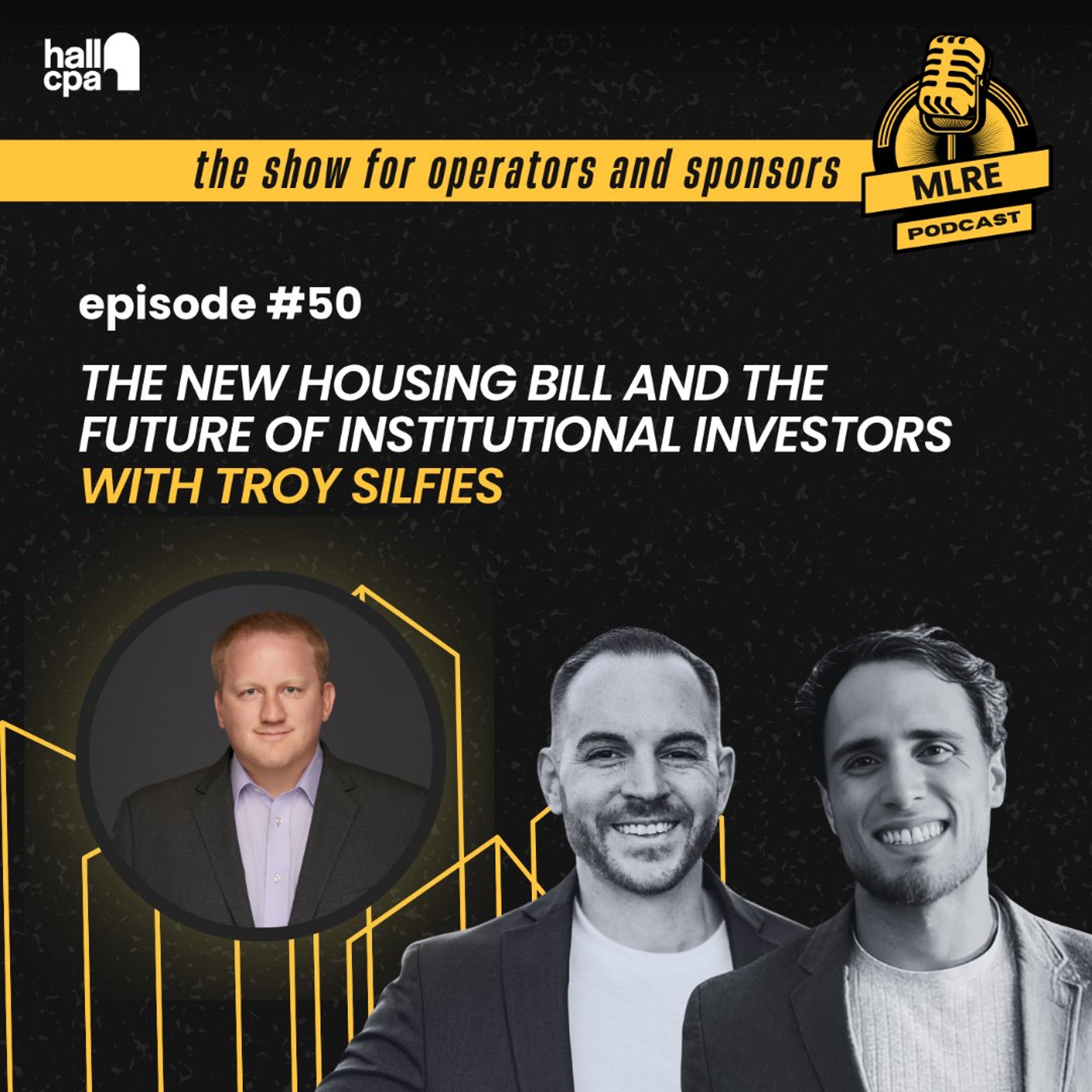
The New Housing Bill and the Future of Institutional Investors with Troy Silfies
3w ago00:43:39Summary readyUpdate: The 21st Century ROAD to Housing Act became law on July 11, 2026, after President Trump neither signed nor vetoed the bill within the constitutional deadline. In this episode, Nathan sits down with Troy Silfies, VP of Tax at Hall CPA, to discuss the new 21st Century Housing Bill and what it could mean for investors, builders, landlords, lenders, and prospective homebuyers. Together, they examine the proposed 350-home threshold for large institutional investors, the bill's key exceptions, build-to-rent developments, rent-to-own programs, manufactured housing, and other provisions that could influence housing supply and real estate investment. If you invest in real estate, this conversation will help you understand what's changing, what could happen next, and how the legislation may affect the market. Request a free discovery meeting: go.therealestatecpa.com/mlre Register for FREE access to the 2026 Hall CPA Tax Strategy Summit: www.taxandlegalsummit.com/2026signup Join the Hall CPA Team: www.therealestatecpa.com/careers/ Get the Ultimate Guide for Real Estate Syndications: go.therealestatecpa.com/mlreultimateguide Submit your questions to: go.therealestatecpa.com/question The Major League Real Estate podcast is for general information purposes only and is not intended to provide, and should not be relied on for, tax, legal, investing, financial, or accounting advice. Information on the podcast may not constitute the most up-to-date legal or other information. No reader, user, or listener of this podcast should act or refrain from acting on the basis of information on this podcast without first seeking legal and tax advice from counsel in the relevant jurisdiction. Only your individual attorney and tax advisor can provide assurances that the information contained herein – and your interpretation of it – is applicable or appropriate to your particular situation. Use of, and access to, this podcast or any of the links or resources contained or mentioned within the podcast show and show notes do not create a relationship between the reader, user, or listener and podcast hosts, contributors, or guests. Any mention of third-party vendors, products, or services does not constitute an endorsement or recommendation. You should conduct your own due diligence before engaging with any vendor.
Summary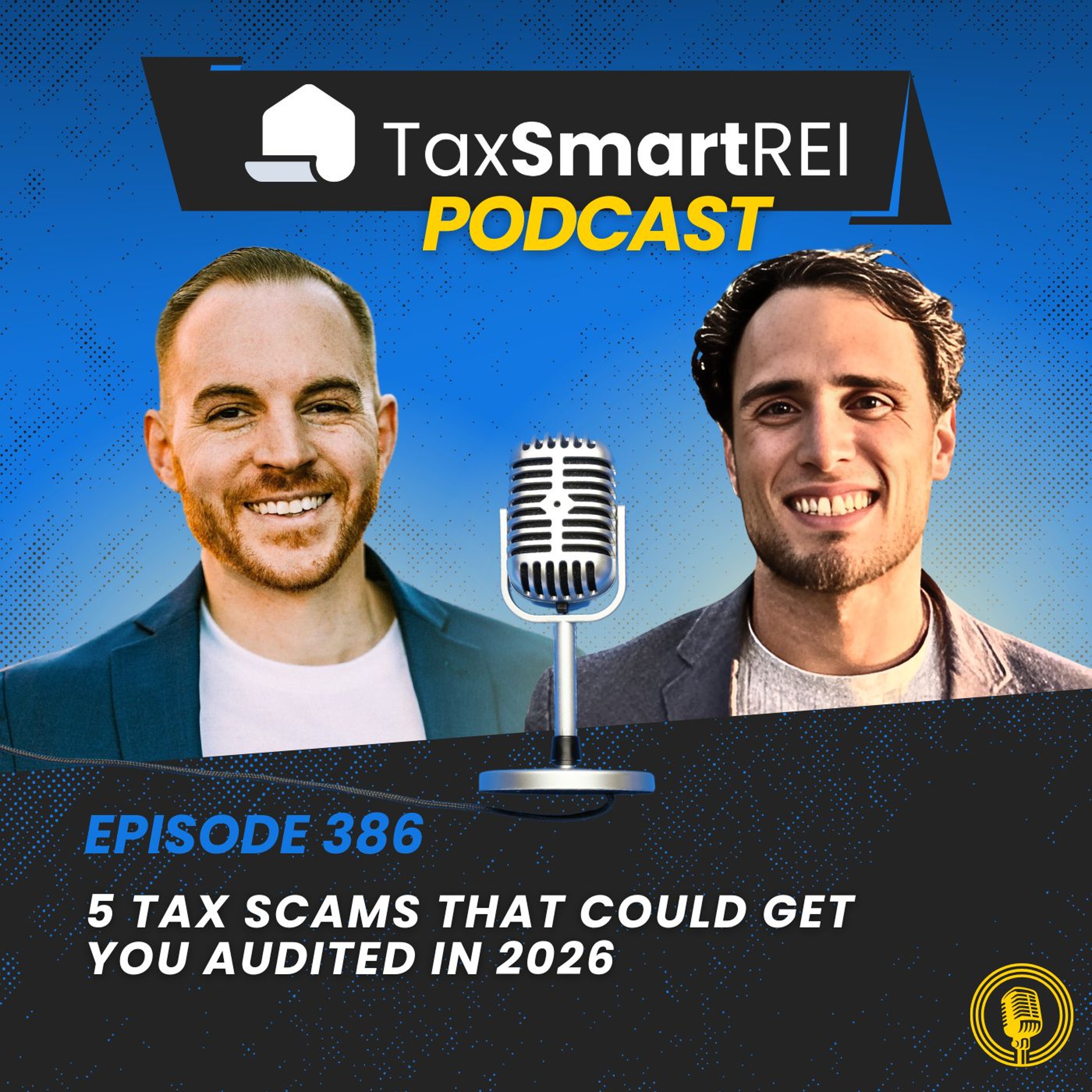
386. 5 Tax Scams That Could Get You Audited in 2026
3w ago00:35:07Summary readyEvery year, real estate investors are pitched "exclusive" tax strategies that promise massive deductions, tax-free sales, or unbelievable savings. The problem? Many of these strategies collapse under IRS scrutiny and taxpayers are left paying the price. In this episode, Nate Sosa and Justin Shore break down some of the most heavily promoted tax strategies that they do not recommend, including: - Syndicated Conservation Easements - Monetized Installment Sales - Deferred Sales Trusts - Discounted IRA Rollovers - Equipment Leasing Schemes They explain how these strategies work, why promoters continue selling them, what the IRS has already said about them, and the penalties investors could face if they participate. Most importantly, they discuss why legitimate tax planning almost always beats chasing "secret" tax loopholes. Request a consultation from Hall CPA at go.therealestatecpa.com/3KSEev6 Register for FREE access to the 2026 Hall CPA Tax Strategy Summit: www.taxandlegalsummit.com/2026signup Join the Hall CPA Team: www.therealestatecpa.com/careers/ Connect with Eckard Enterprises: eckardenterprises.com/taxsmartrei/?u…copy_hyperlink Submit your question for Tom & Nathan: go.therealestatecpa.com/question The Tax Smart Real Estate Investors podcast is for general information purposes only and is not intended to provide, and should not be relied on for, tax, legal, or accounting advice. Information on the podcast may not constitute the most up-to-date legal or other information. No reader, user, or listener of this podcast should act or refrain from acting on the basis of information on this podcast without first seeking legal and tax advice from counsel in the relevant jurisdiction. Only your individual attorney and tax advisor can provide assurances that the information contained herein – and your interpretation of it – is applicable or appropriate to your particular situation. Use of, and access to, this podcast or any of the links or resources contained or mentioned within the podcast show and show notes do not create a relationship between the reader, user, or listener and podcast hosts, contributors, or guests. Any mention of third-party vendors, products, or services does not constitute an endorsement or recommendation. You should conduct your own due diligence before engaging with any vendor.
Summary
Opportunity Zones 2.0: The Biggest Changes Coming in 2027
4w ago00:30:41Summary readyQualified Opportunity Zones are back, and they're better than ever. With Opportunity Zones 2.0 becoming permanent under the new tax law, investors and real estate operators have a rare opportunity to reduce capital gains taxes while building long-term wealth. But the rules have changed. In this episode, Nate Sosa and Tom break down: - What Opportunity Zones actually are - The biggest changes in Opportunity Zones 2.0 - The new rolling 5-year tax benefit - Rural Opportunity Zones and the new 30% tax reduction - The upcoming Opportunity Zone maps - Why 2026 and 2027 are critical planning years - Opportunity Zones vs. 1031 Exchanges - Common mistakes investors make If you're selling a business, real estate, stocks, cryptocurrency, or have large capital gains, this episode could save you significant taxes. Request a free discovery meeting: go.therealestatecpa.com/mlre Register for FREE access to the 2026 Hall CPA Tax Strategy Summit: www.taxandlegalsummit.com/2026signup Join the Hall CPA Team: www.therealestatecpa.com/careers/ Get the Ultimate Guide for Real Estate Syndications: go.therealestatecpa.com/mlreultimateguide Submit your questions to: go.therealestatecpa.com/question The Major League Real Estate podcast is for general information purposes only and is not intended to provide, and should not be relied on for, tax, legal, investing, financial, or accounting advice. Information on the podcast may not constitute the most up-to-date legal or other information. No reader, user, or listener of this podcast should act or refrain from acting on the basis of information on this podcast without first seeking legal and tax advice from counsel in the relevant jurisdiction. Only your individual attorney and tax advisor can provide assurances that the information contained herein – and your interpretation of it – is applicable or appropriate to your particular situation. Use of, and access to, this podcast or any of the links or resources contained or mentioned within the podcast show and show notes do not create a relationship between the reader, user, or listener and podcast hosts, contributors, or guests. Any mention of third-party vendors, products, or services does not constitute an endorsement or recommendation. You should conduct your own due diligence before engaging with any vendor.
Summary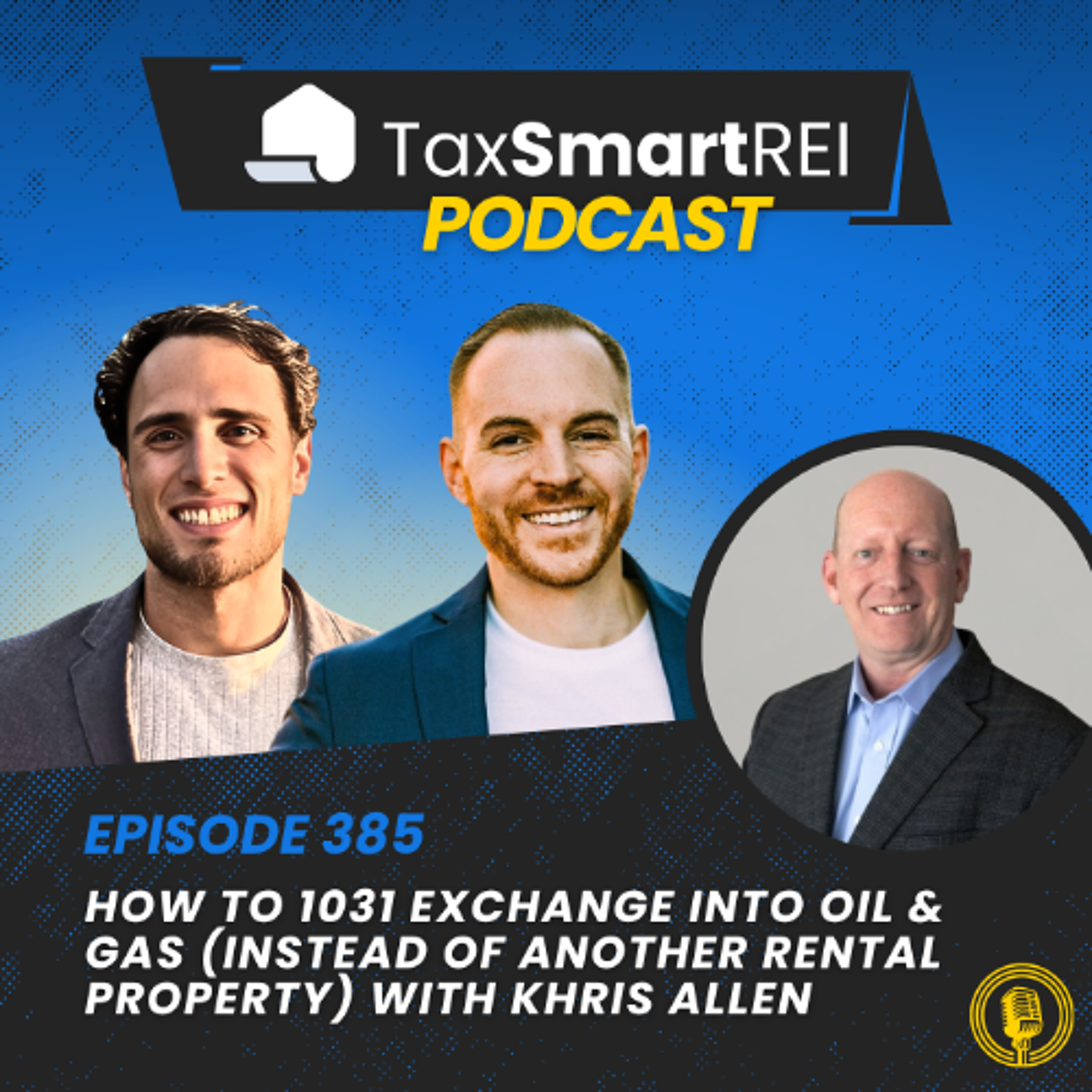
385. How To 1031 Exchange Into Oil & Gas (Instead of Another Rental Property) with Khris Allen
Jul 700:38:21Summary readyMost investors think a 1031 exchange only means selling one property to buy another. But what if there was another option? In this episode, we're joined by Khris Allen, Director of 1031 Exchange Services at Eckard Enterprises, to discuss how investors can use a 1031 exchange to acquire oil, gas, and mineral rights instead of another rental property. We cover how mineral rights qualify as like-kind property, how royalty income works, the potential tax advantages, and why some investors are using this strategy to reduce landlord responsibilities while continuing to defer capital gains taxes. You'll also learn: - How mineral rights qualify for a 1031 exchange - The difference between mineral rights and working interests - Why some investors view royalty income as a passive alternative to rentals - Common mistakes investors make when considering oil & gas investments - How the 45-day identification period works when exchanging into mineral rights - Who this strategy may (and may not) be right for - Tax planning considerations every investor should understand Request a consultation from Hall CPA at go.therealestatecpa.com/3KSEev6 Register for FREE access to the 2026 Hall CPA Tax Strategy Summit: www.taxandlegalsummit.com/2026signup Join the Hall CPA Team: www.therealestatecpa.com/careers/ Connect with Eckard Enterprises: https://eckardenterprises.com/taxsmartrei/?utm_source=taxsmartrei&utm_medium=podcast_ad&utm_campaign=taxsmartrei_podcast_2026&utm_content=podcast_ad_copy_hyperlink Submit your question for Tom & Nathan: go.therealestatecpa.com/question The Tax Smart Real Estate Investors podcast is for general information purposes only and is not intended to provide, and should not be relied on for, tax, legal, or accounting advice. Information on the podcast may not constitute the most up-to-date legal or other information. No reader, user, or listener of this podcast should act or refrain from acting on the basis of information on this podcast without first seeking legal and tax advice from counsel in the relevant jurisdiction. Only your individual attorney and tax advisor can provide assurances that the information contained herein – and your interpretation of it – is applicable or appropriate to your particular situation. Use of, and access to, this podcast or any of the links or resources contained or mentioned within the podcast show and show notes do not create a relationship between the reader, user, or listener and podcast hosts, contributors, or guests. Any mention of third-party vendors, products, or services does not constitute an endorsement or recommendation. You should conduct your own due diligence before engaging with any vendor.
Summary
The Case for Manufactured Housing: America's Most Durable Real Estate Asset with "Ali" Nasir Ali
Jul 200:37:04Summary readyToday's manufactured housing communities are becoming one of the strongest-performing real estate asset classes available. In this episode of the Major League Real Estate Podcast, Nate Sosa and Thomas Castelli sit down with Ali, Managing Director and Co-Founder of Rise360 Ventures, whose family has spent more than 44 years investing in manufactured housing. Ali shares how growing up in the business shaped his investing philosophy, why manufactured housing consistently outperforms many traditional real estate asset classes, and how investors can benefit from stable cash flow, lower operating costs, tenant-owned homes, and powerful tax advantages. They also discuss: - Why tenant-owned homes create a better business model - How manufactured housing compares to multifamily investing - The tax benefits of cost segregation and bonus depreciation - Building generational wealth through 1031 exchanges - Why manufactured housing may help solve America's housing shortage - How AI is changing real estate investing and operations Request a free discovery meeting: go.therealestatecpa.com/mlre Register for FREE access to the 2026 Hall CPA Tax Strategy Summit: www.taxandlegalsummit.com/2026signup Join the Hall CPA Team: www.therealestatecpa.com/careers/ Get the Ultimate Guide for Real Estate Syndications: go.therealestatecpa.com/mlreultimateguide Submit your questions to: go.therealestatecpa.com/question Connect with Ali: rise360ventures.com The Major League Real Estate podcast is for general information purposes only and is not intended to provide, and should not be relied on for, tax, legal, investing, financial, or accounting advice. Information on the podcast may not constitute the most up-to-date legal or other information. No reader, user, or listener of this podcast should act or refrain from acting on the basis of information on this podcast without first seeking legal and tax advice from counsel in the relevant jurisdiction. Only your individual attorney and tax advisor can provide assurances that the information contained herein – and your interpretation of it – is applicable or appropriate to your particular situation. Use of, and access to, this podcast or any of the links or resources contained or mentioned within the podcast show and show notes do not create a relationship between the reader, user, or listener and podcast hosts, contributors, or guests. Any mention of third-party vendors, products, or services does not constitute an endorsement or recommendation. You should conduct your own due diligence before engaging with any vendor.
Summary