Loading summary
Transcript156 lines
- [00:00]
Host
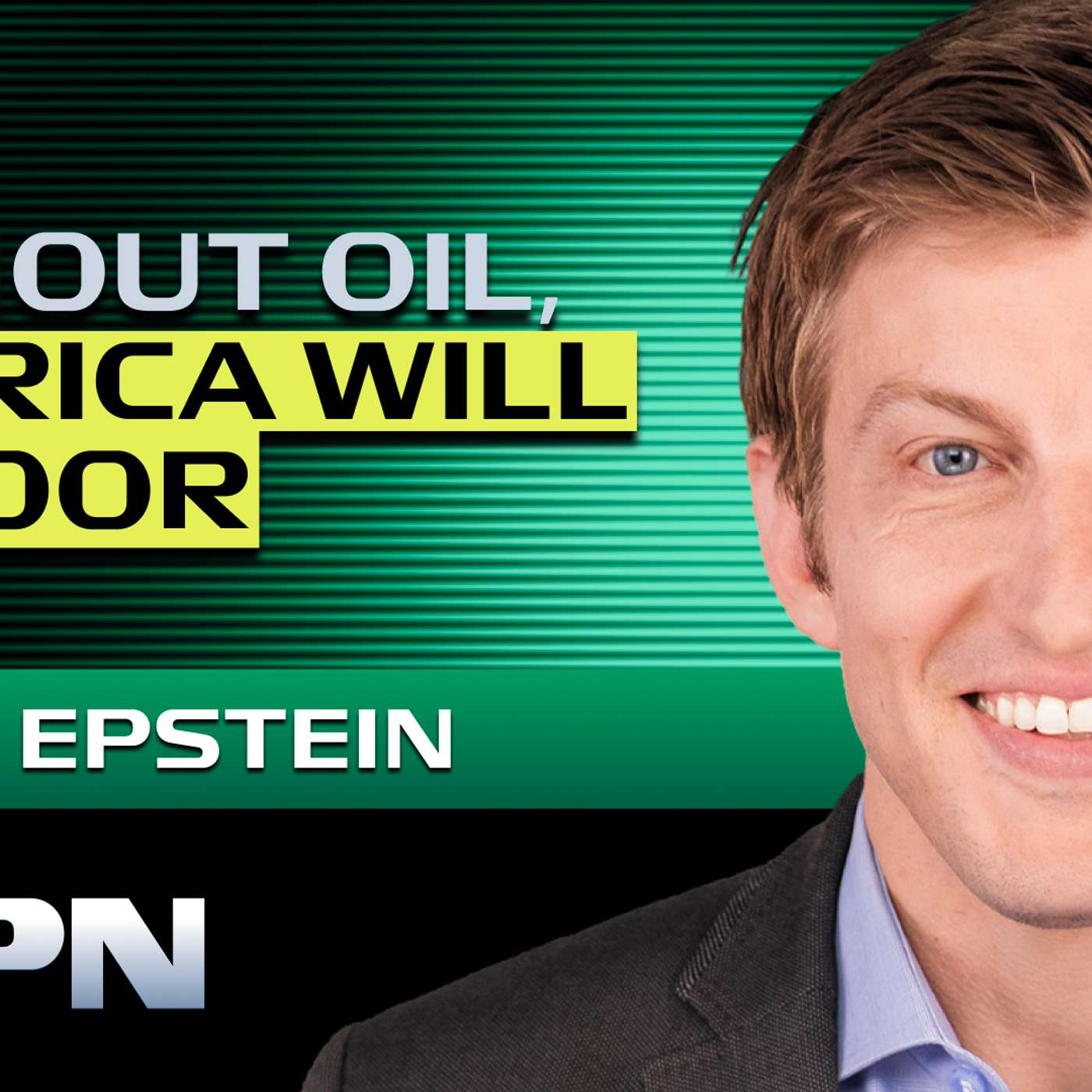
We have Alex Epstein, he's the author of Fossil Future Live in the TVPN Ultradome. Welcome to the show.
- [00:06]
Alex Epstein
Good to see you.
- [00:07]
Host
Thank you so much for coming down on short notice.
- [00:11]
Co-host
What are your texts been like the last 48 hours.
- [00:13]
Host
Is it over?
- [00:14]
Co-host
Because you're John and I were thinking who's our oil guy? We had one.
- [00:22]
Alex Epstein
Yeah. And I'm local too. Yeah. If I'm in town, it's great. I always like coming in person versus
- [00:27]
Host
thank you so much, so much.
- [00:28]
Alex Epstein
The other stuff.
- [00:28]
Host
Yeah, appreciate it.
- [00:30]
Alex Epstein
I mean there's so much in energy. But I'm happy to help you lead
- [00:34]
Host
the conversation however you think it should go. What are, what's going on? How should we even be thinking about oil prices right now? The impact of the war in Iran? How should we be processing this news?
- [00:50]
Alex Epstein
Okay, so we did this. So there's a million things to comment on. So I'm going to try to segment what I comment on. But we did get involved militarily in Iran, which I would just say in my non area of expertise in general, that is a good idea. I think it's a better idea to have Congress involved if you can get them involved. And I think it's a good idea to have a lot of expertise on international oil markets being brought to bear when you do this. And I think this administration does a lot of good stuff on energy, but I think it's pretty clear at this point that there was not maximum expertise brought in on this. And so the standard issue when you're
- [01:29]
Co-host
talking indicators there would be like the Strategic Petroleum Reserve hadn't been refilled.
- [01:34]
Alex Epstein
I mean, we can talk about that. So let's make sure to get back to that one. But the main thing is just rough numbers. Straight of Hormuz, which Iran has control over, is 20% of the world's oil production is flowing through that every day. And so whether you're looking backward or looking forward, there is no replacement whatsoever for opening that straight and keeping it open. And one of the things we've heard from different people is, oh, we have a lot of options on the table. Like there's a lot of things that we can do. There are definite things that you can do, but none of them is 20 million. Right. So it's just, I mean that's, that's more than U.S. oil production just flowing through that one place. So yeah, we can talk about the other things. But I think the first thing people need to recognize is if you do not get that thing open, then you have dramatically Higher oil prices. And then the other thing to get is oil prices really matters.
- [02:30]
Host
Dumb question. Can't you just go around?
- [02:34]
Alex Epstein
I mean, you can, you can try to some extent, but there's a reason why 20 million a day are being
- [02:40]
Host
routed through because it actually comes out of there as well. Right?
- [02:43]
Alex Epstein
Yeah, there's just, I mean, all of these things are very, very optimized. One of the thing about just understanding the energy industry is like things are just very optimized in terms of where the infrastructure is doing all of these things. So it's. There are other. And we'll talk about this. I mean, there are certain pipelines you can pipe more oil through. There are alternate routes. But we're talking about in the millions a day. Maybe most of our other options are sort of in the 1 to 2 million barrels a day. Sure. And just so people know, barrel is 42 gallons, so you're talking about almost 100 million gallons a day for this stuff. But yeah, so. So you don't have a lot of great options. And I guess that's very important for. I'm going to give some options and. But the number one option is keep that thing open. And there are basically two ways to do that. One is you just win the war, if you want to call it that a lot more quickly. Like if you get some form of surrender and you have friendly people controlling it, then guess what, it can open. That's one thing. So I'm not an expert on how to do that, but schematically doing that is very effective. The other thing, which is a little bit.
- [03:44]
Co-host
But game, game theory for Iran is they actually benefit from global markets being in turmoil because it gives them some leverage over, over any type of negotiation.
- [03:58]
Alex Epstein
This is the biggest damage that they can do. I mean, clearly we've seen. They're not going to do. They're not going to send missiles to Israel and get rid of Israel, let alone do anything to the U.S. sure. But they have this incredible control of the, one of the centers of the world economy and they have a bunch of stuff going on there. So let's talk about that. So option one is you get a surrender and they don't use all of their options. But then let's talk about their options. So they have mines in this thing, so they can blow up mines. They have missiles. Maybe the worst thing they have. And this is a change in recent years. And you've had Palmer on here and Ethan on here. The drone thing is just a total game changer because you can have a small Vehicle, you can launch one of these shah heads out of the back of a truck. They can go really far. And that's a lot harder to deal with than a fixed installation.
- [04:47]
Host
Yeah.
- [04:47]
Co-host
They have something like 500 miles of range on a typical.
- [04:51]
Alex Epstein
Yeah. Depending on. Yeah, Right.
- [04:52]
Host
So truck drives up to a beach, drone launches. As soon as it finds that cargo tanker that has a bunch of oil on it, it hits it.
- [04:59]
Alex Epstein
Yeah. And then. And then there's the. You're. You're worried about that. Sure. So you're not going to go as you're going through. So you have to think about. Those are the kinds of threats you face. So how do you deal with that? I mean, basically, you need the US to lead some sort of convoy where people have sufficient security and economic assurances that will go through. So what's involved in that? Well, one thing is, if possible, you want to get allies involved. And it's even possible you get unconventional allies like China who has. Well, they depend on this. Now they have a bunch of. Unlike us, you want to go back to spr, They've been filling up their reserves. So they have more reserves relative to their imports than we do relative to ours. If you think about ours, we have about 400 in the SPR and we can release about 4 million a day. So we don't have as much. But still they really care about this. And a protracted thing is bad. So. But for sure, Japan, South Korea, India. So one thing is just at a high level, if you're doing this convoy, can we get these countries that are aligned economically, maybe China, but definitely these others, can we get them involved? Because then it's an addition. They have military presence there. That's an additional threat to Iran if they attack one of their ships. So, but that's a macro thing, is just, can you do this alone or can you do it with allies? I think ideally you would do it with allies. Then there's a question of what you do about these. These various things. And I think the biggest. I mean, the other macro thing you can do is just in some way credibly threaten Iran and say, hey, if you. And I can't give the details of how to do it, but if you attack us, if you attack in the Strait of Hormuz, it's going to be very, very bad for you. So just at a high level, can you make that threat? So they understand this is going to be very, very. No. You've wiped out a couple layers of leadership. So they might be taking these things seriously after that I think the biggest thing from what I've heard from military experts is just these drones. Like, what do you do about these drones? How do you give any kinds of assurances? And as far as I can tell, we don't have any one perfect solution. But you can do a certain amount of stuff for from the air, you can do a certain amount of stuff from the ground, although it's very, very expensive. And then most cost effective where you can do it is you can take out certain stockpiles and facilities with the proviso these things are decentralized and of course, I have no specific knowledge about where they are.
- [07:17]
Host
But in theory, if there's the suicide drone, the shahed, that's there's a factory, and you take out that factory, you have reduced that.
- [07:24]
Alex Epstein
Right. So that's gonna be it. And you know, I know you guys had on Ethan Thornton, who I'm friends with, and you know, he talks about this a lot as just this cost asymmetry issue is you just want to be doing things even if you're way wealthier. You do not want to be spending $3 million to take out $30,000, which
- [07:40]
Host
might be what's happening with a Patriot missile battery.
- [07:43]
Alex Epstein
Yeah, that's the kind of thing that happens. So you need a combination of those kinds of things. And then the other thing, so that's all the security stuff, so you get the allies involved, you take these actions specifically against drones. I think the. What was I going to say about the. The other thing you can do? I'm just make sure there's still just,
- [08:01]
Co-host
well, like the other big thing.
- [08:02]
Alex Epstein
Oh, the insurance.
- [08:03]
Co-host
Okay, insurance.
- [08:04]
Alex Epstein
Yeah, the insurance. So. And this has been floated by the President, and it's a reasonable idea, but my understanding is the insurance vehicle we have, the development corporation, does not have enough funding, so you might need to go to Congress. But basically you want to be able to say, hey, we're going to lead this as the United States. We're going to lead it with allies. If Iran does anything, it's big trouble for them and we can counter their specific attacks. And if something goes wrong, you're in trouble. Sure. You're trying to create that confidence to get enough people going through, and then you get a certain amount of stability, and then you start to get closer to your 20 million barrels a day. Either that or you just defeat them really quickly, or both.
- [08:42]
Co-host
So the other factor is just the loss of production, disruption to production, plants shutting down, plants being damaged. How does that factor in? Refineries get brought back and I'm talking about an allied. Allied country.
- [09:02]
Alex Epstein
You mean just the trend over time or what?
- [09:04]
Co-host
Yeah, generally. I mean, just seeing, seeing the videos coming out. You've seen places, I think, like Qatar, Kuwait, places like. Yeah. Basically just saying, like, yeah, we're gonna pause production because we don't even have a place to store this. And. Or they're suffering damages and it doesn't make sense to keep, you know, refineries online.
- [09:24]
Alex Epstein
This is all. But this is all just downstream of. Do you have the root open?
- [09:28]
Host
Got it.
- [09:28]
Alex Epstein
Like, if you have the route open, then you're good. It solves everything if you don't. The way to think of the other things. So we do have some other interesting options. We have to think of them as. These are temporary stopgaps. None. Like, if anyone says, I mean, you hear some crazy things, people are like, oh, Venezuela, like we talked about, Venezuela is less than a million. It's just. I mean, it's beyond crazy. It's just impossible. It's not like Venezuela has the ability to just increase their oil production by any significant amount in the near future. I mean, we're talking about companies considering going in harm's way to get some incremental boosts. Venezuela's essentially useless.
- [10:02]
Host
So best case scenario, in the next year, Venezuela goes from under a million to 2 million.
- [10:06]
Alex Epstein
No, I mean, 2 million would be. I mean, if we made it our entire goal in life. I don't know. But. But why would you.
- [10:13]
Host
For that, Venezuela was at like 3 million, like.
- [10:15]
Alex Epstein
Yeah, yeah, yeah. Some years ago. Yeah, yeah, right. But. But so many.
- [10:20]
Host
But there's a lot there. It's not gonna happen.
- [10:22]
Alex Epstein
It's just. So. Yeah. So Venezuela, I would not even. That's just in the category of it's not even a bad idea. It's just not an idea. There's nothing. There's nothing. There's nothing there.
- [10:31]
Host
No, no, that's right.
- [10:32]
Alex Epstein
So the bad ideas, by the way, are. The worst idea imaginable is ban oil exports from the United States, which I have heard floating in conversation, seems somewhat reasonable.
- [10:42]
Host
I want the oil.
- [10:43]
Alex Epstein
Yeah, of course, because we have oil, so we don't want to sell. So, I mean, so many different things, but one obvious, one, not obvious one, but it's obvious, if you know how these things work, is the refiners in the US do not match up well to the oil produced in the United States. The refineries in the United States are based on heavier crude. Like crude is rated in terms of weight and sourness. And so our refineries are mostly for heavier crude. It's actually one reason why Venezuela has some appeal. Canada has a lot of appeal because
- [11:12]
Host
they have heavier crude.
- [11:13]
Alex Epstein
Yeah. And we're going to talk about Canada.
- [11:13]
Host
We're good at refining it, but we produce a lighter crude.
- [11:16]
Alex Epstein
Yes. Because the shale revolution was just this dramatic shift very quickly in oil production. So our refineries are not primarily equipped. That's why when we ended the crude export oil ban, I Forget it was 2014 or something like that. It was just this huge unlock because it allows the global market. It allows us to produce for a global market.
- [11:34]
Host
You can't look at American oil production as a monolith.
- [11:37]
Alex Epstein
Yeah, it's not fun.
- [11:38]
Host
Import heavy crude and export light crude. Is that roughly correct?
- [11:42]
Alex Epstein
That's roughly correct, yeah. So that's one thing. It's just insane to do that. But in general, think about it. What is the value of higher prices is it stimulates production. We're going to talk about all these different ways where we want to unlock oil. So you want to tell American oil producers, hey, we're going to actually totally screw you over. It's actually worse for you maybe than it was before because you don't even have a market. Yeah. So you're just strand all this oil. That's terrible. There's also this financial manipulation idea which has been floated, which I think is terrible of hey, let's manipulate the financial markets basically in a way that we're. You're selling futures short on a certain time period and then you're buying them. What you're trying to do is lower the near term price. Oh, like Fed policy or Treasury.
- [12:21]
Co-host
Yeah, Very American way to solve the world problem.
- [12:26]
Host
People like that.
- [12:27]
Alex Epstein
The only solutions involve unlocking oil in one way or another. You do not want to screw up the markets so that people are less inclined to unlock oil. Nor do you want to screw up the markets to destroy information. So again, the main unlock is reopen that straight. There's no way around that. But then we can talk about other things. So one, one category is what you call spare or emergency capacity.
- [12:50]
Host
Okay.
- [12:51]
Alex Epstein
And this, this is. There's some uncertainty here, but quickly.
- [12:54]
Host
This is separate from the strategic reserve.
- [12:56]
Alex Epstein
Yeah, yeah. So, well, emergency capacity is the strategic reserve.
- [12:59]
Host
Oh, it is.
- [12:59]
Alex Epstein
So spare means you could be, you could pretty easily be producing more per day, but you're not because you're not happy with the price. And this is mainly. Saudi Arabia is considered exhibit A in terms of amount of this. Now there's debate among experts about how much they have but some people estimate they have 1, 2, 3 million barrels a day of spare capacity that could ramp up on some kind of.
- [13:21]
Host
And do they know how much capacity they have and they're just not sharing it, or does no one know?
- [13:26]
Co-host
I mean, that's always been the story. That's been the story of the Gulf. Right. They're not going to. If they just flooded the market with every single barrel that they could possibly produce, they would be getting a worse, much worse price.
- [13:36]
Alex Epstein
Yeah. And there's this cartel arrangement that does. I mean, in a sense, everyone has this on different timescales. You think about U.S. shale producers. If, if, if prices were sustained at $100, guess what, there's a whole bunch of shale deposits that they could produce at $75 a barrel and make a fortune on that they're not going to do four weeks ago and it was around $60 a barrel. But, but in terms of the thing about the Saudi oil is it's produced at a much lower cost. So this is them saying, hey, we have some of this on the table. And then the question is you need to be able to produce it and then you need to be able to transport it. So you have estimates around maybe you could get 1 to 2 million barrels a day. So that's one of them. In terms of emergency, if you look around the world, you don't have a lot of immediate spare capacity besides that. So we have what's called emergency capacity or Strategic Petroleum Reserve. Jordy mentioned that we didn't fill up our Strategic Petroleum Reserve. I think this is unequivocally a mistake. I mean, if you look at the whole thing of the Strategic Petroleum Reserve is you want it for when you need it and the best possible time to fill it up is when prices are low.
- [14:40]
Host
And is that physically a place with a bunch of barrels that we.
- [14:44]
Alex Epstein
There's a bunch of different knocks of oil. Well, there's multiple different places. But you can think of hash the
- [14:51]
Host
physical oil in America somewhere. We own it or can access it and it's sitting there going unused until we're.
- [14:58]
Alex Epstein
Yeah. Now there's issues of Biden. Biden definitely misused it. So they, they used it to basically have lower gasoline prices during midterm elections. Even though parenthetically their entire policy goal was get rid of fossil fuels means you want the price to go up so people can't afford it. Yeah, it's a very cynical kind of move. They did it in a way that degraded the facilities. So let's say we're at about 4 million barrels a day we can get out of the thing. We have 400 million in there. We should have over 700 million. We could have easily filled it up. I mean, it was a perfect time. When you're talking about $50 barrel oil, $60 a barrel oil now, and can
- [15:33]
Host
I do the basic arithmetic of 4 million a day? 400 million in the reserve, 100 days of oil. But that's not actually. If we're talking about, like relieving price pressure, you could trickle it out over a year and have 1/20 or 1/4 of the effect.
- [15:51]
Alex Epstein
But just think about $100 million a day. 100 million barrels a day is roughly the global market.
- [15:55]
Host
Okay, okay, so.
- [15:56]
Alex Epstein
So 4 million is just. That's its maximum throughput capacity.
- [15:59]
Host
Got it.
- [15:59]
Alex Epstein
It's kind of an analogy to batteries.
- [16:01]
Host
Sure.
- [16:01]
Alex Epstein
There's a certain amount, like with a battery, if you hear there's a four gig, there's a one gigawatt battery installation, that means. That's the. Usually means there's one gigawatt for four hours.
- [16:11]
Host
Sure.
- [16:12]
Alex Epstein
But if you wanted to do half a gigawatt, then you could do eight hours, right? Yeah, it's the same deal. But keep in mind, this is not 100 days of US oil demand. And by the way, for the refinery reasons, we can't just supply it all with our SPR. It's just the maximum output is. But 4 million barrels a day is something. We're tired. That's one fifth of what's flowing through the Strait of Hormuz. Yeah, it's a thing. But yeah, you can think of. Yeah, maybe we'd be willing to do 1 to 2 million barrels a day from ours. Now, interestingly, the International Energy Agency. We are part of the International Energy Agency reserve program. So we have about 400, but they have about 1.4. 400 million. They have 1.4 billion. So we have allies around the world that can also release this oil. So maybe we could get 1 to 2 million from that. Now, last. At least, last I checked the news, they hadn't agreed to do this because they don't think it's an emergency. Sure. But that's what it's there for.
- [17:04]
Host
Yeah.
- [17:05]
Alex Epstein
So notice the pattern is.
- [17:06]
Co-host
What point would they think it's an emergency?
- [17:09]
Alex Epstein
I don't know. I mean, and we, you know, we can put pressure on them. I think some of these determinations have to be made in conjunction with the military determinations. You can't make them in isolation because if you think about what's the military objective how close are we to that? Or how close are we at least to opening this up via high security and financially backed convoys? Then you can think about the timetable here. If you think about, well, the Strait of Hormuz is going to be closed for five years. Let's just get used to being poor.
- [17:40]
Host
Black bill.
- [17:41]
Alex Epstein
No, I mean this is. People don't get oil like oil is. There's a reason why I focus a lot of my life on oil. There is nothing more. There's no material in the world of energy that is more valuable than oil because oil is just so unique in terms of it has this very high energy density and portability and there's nothing like, I mean nuclear has plutonium. Yeah, yeah. Five years portability, we're going to be rich.
- [18:06]
Host
Energy too cheap to meter in five years.
- [18:08]
Alex Epstein
Yeah.
- [18:08]
Host
I talked to a lot of nuclear founders.
- [18:10]
Alex Epstein
Well look, I love nuclear as much as. Anyway, they don't, they don't even have a portability solution though for the near future. Unless you're talking about aircraft carrier or an icebreaker or something like that. So I'm just saying the world runs on mobility and oil is ideal for mobility.
- [18:23]
Host
So you're going to ability in the sense of like using nuclear to actually power trade and commerce and moving ships around.
- [18:29]
Alex Epstein
Yeah, yeah.
- [18:29]
Host
I mean even if you can power the grid, you will be poor because you will not be able to trade.
- [18:35]
Alex Epstein
Yeah, trade is really important.
- [18:36]
Host
Trade is really important.
- [18:37]
Alex Epstein
Trade is trade and. Well, and also it's within the country too. We don't have the nuclear trucks to move things around. Sure, sure, sure. Obviously you want super cheap electricity and you want super cheap transport fuel and for. And we want to see if we can electrify some of this stuff. If you can do it cost effectively.
- [18:53]
Host
It's just some people working on like electric bulldozers for example. It's very hard.
- [18:57]
Alex Epstein
And by the way, guess what? You need a lot of oil to even get that whole supply chain started because you need the mine. Yep. Bottom line. Yes. I meant that thing about we can all be poor. Very seriously, very seriously. So we have, if you look at the spare capacity, I think that's all of them. So we have the ie, the rest of the iea, we have ours and then to my knowledge we have Saudi/UAE them using spare capacity and then piping it where they can. So maybe combined we're talking about 6 million a day. If you use all of those, I mean somebody could imagine 10 million and all of these have time, particularly the emergency reserve things. These all like at least the Saudi one is you're sort of. You have a deposit, a big deposit here. It's just you have a small reserve. So you can't do this forever. And of course there's a risk of if you deplete the spr more. What if you really, really need it in the future. And then there's a bunch of nearer term stuff that you can do and some of which I like just because it could be done anyway. So number one to piss a whole bunch of people off is let's stop using this Jones Act. Do you know what this Jones act thing is?
- [20:00]
Host
I've heard of it, but explain.
- [20:02]
Alex Epstein
So the Jones act is a set of restrictions that say that you can only transport things among ports in the United States. If you have. Everything is basically American. So it's owned by an American. It's run, I don't know all the. It is all.
- [20:16]
Co-host
Yeah. It's basically American ship, American crew.
- [20:19]
Alex Epstein
Yes, yes. So it's, it's, it leads to all these crazy, crazy things. Like we end up importing things. Like instead of importing it from one part of the country to another, you end up importing it from some really far away place. It leads to that kind of thing. But in this case, in particular, this, this, as Californians we should all recognize this. We don't have oil being piped into California.
- [20:40]
Host
Yeah.
- [20:41]
Alex Epstein
So we want very efficient maritime transportation. And if you suspend the Jones act, then you can get more efficient transportation, which means we can at least have lower prices here and we can have less of a price shock. But in general, I want people to get used to having no Jones act because I want there to be no Jones Act. So that's a good thing to do. My favorite idea here.
- [21:03]
Co-host
And I imagine there's a bunch of powerful lobbies that will fight and for the Jones act because there's.
- [21:10]
Alex Epstein
Correct.
- [21:11]
Co-host
Higher industry built around.
- [21:13]
Alex Epstein
Yeah. The idea that we can only have a good shipbuilding industry. I don't know what people think is happening with our shipping. Like our ship building industry is not
- [21:21]
Co-host
going as well as other people. It didn't exactly work.
- [21:24]
Host
Yeah.
- [21:25]
Alex Epstein
I mean it worked to protect certain people.
- [21:27]
Co-host
I'm just saying if you look at American shipbuilding, it's. It certainly has allowed us to be competitive on, on a global state.
- [21:34]
Host
The shipbuilders would say we're early, but I take your point.
- [21:38]
Co-host
Early but you've seen. But I'm just saying, like, like how many decades of declines.
- [21:42]
Alex Epstein
Yeah. Okay.
- [21:43]
Co-host
Well, you need.
- [21:44]
Alex Epstein
I think, John, we're still early.
- [21:47]
Host
It's like a smiling curve, like churn. It goes down and then goes back up.
- [21:50]
Alex Epstein
So that's the bull case. That's. That's the. All right. Well, yes, it's definitely not going to help us. So here's the most interesting thing which I. Is a pet issue of mine because we're were like this administration, I should say, does a lot of good stuff on energy. I say that I'm in a fortunate position where I get a lot of people ask for advice and stuff like that. I feel like one of my jobs is to tell people things they're not doing, a lot of things they'll just do right on their own. But Canada is not one of those things. Right now, we are just absolutely sleeping on Canada as an opportunity. So Canada has no people and infinite resources and is really friendly. So they have these oil sands. You know what these things are? So they're just like these deposits of oil, like nature basically committed an oil spill. Yeah, is the way to think of it. Okay. So all these oil sands, for years, they were not very useful.
- [22:41]
Host
They weren't viable. Because it's not just you drill down. Black gold comes up. It's like buried in the sands.
- [22:47]
Alex Epstein
Need to be. There are different kinds of things. So you can mine it out directly or you can do what's called in situ, which is you heat it up underground.
- [22:53]
Host
Oh, and it liquefies.
- [22:55]
Alex Epstein
In any case, we. They have just this unbelievable oil seep. They have way more oil deposits than we do, way more oil reserves. But they have on the order of a third of the production. And in part because they have absolutely terrible policies which are their fault. But in part, we have had terrible policies, including getting rid of the Keystone XL pipeline and this kind of thing. So. But if you just think of Canada, it's just we should be. So they have water. I mean, again, no people, one tenth the population, infinite raw materials. They got everything. They got timber, they got natural gas, they got oil. Like, and we're talking about Venezuela. They're a friendly country. Right. They got smart people there. They haven't been driven out of the country because they're afraid of getting killed by Chavez or Maduro or whatever. So this is an opportunity to say, hey, Canada, let's work. Let's have a task force. You guys are at a low in terms of. We don't have pipelines, but we can do rail at least. We could do rail, maybe trucks, but at least rail. Rail transport from Canada are really low right now. So let's have an initiative where Maybe you bring a couple hundred thousand, depending on your expectations, maybe we can add a couple hundred thousand barrels a day. So that's one that excites me because I, I want to be like the US Canada superpower thing is this huge opportunity that we're sleeping on because of the idea of, oh, we should only be doing it in, quote, America. But this is just by the unbelievable. I think they have the best uranium in the world. Yeah, it's maple syrups up there. Yeah. I don't have a Canadian personality, but I love that place.
- [24:24]
Host
No, strategically.
- [24:25]
Alex Epstein
Strategically. And they're very friendly. Yes, they're very friendly.
- [24:28]
Host
Maybe we should be friendlier.
- [24:29]
Alex Epstein
Yes, you know, we should. And we have trade agreements coming up. Yes. The other thing is we have some, you know, we can increase capacity here, as I mentioned, depending on prices going up. Yeah. So there's that. But that might be a couple hundred thousand barrels a day. But so high level open the Strait of Hormuz. That's the only thing that really works. Then you can talk about Saudi Mideast, spare capacity, our emergency capacity and IEA emergency capacity. And then below that you have Canada Jones act and US. That's great production.
- [25:00]
Host
That's a really, really thorough list. Thank you. I appreciate that. Anything else?
- [25:04]
Co-host
Jordy, what are you, what are you going to be paying attention to most closely?
- [25:08]
Host
Do you watch the price chart? Is that important to you?
- [25:11]
Alex Epstein
Well, it's important. I mean, it's weird. I work with, I run like a kind of a network of energy executives, but I'm focused on the policy side of things. So I'm often laughably out of touch. I mean, I know in general within $10 usually what it is. Yeah. But as a policy, I don't, I don't invest in.
- [25:30]
Host
Because you're looking at longer term 5.
- [25:33]
Alex Epstein
But, but also, like I'm deliberately avoiding exposure to the commercial part of it.
- [25:37]
Host
Of course.
- [25:37]
Alex Epstein
Of course.
- [25:38]
Host
You want to be independent.
- [25:38]
Alex Epstein
Yeah, I want to be independent. So, yeah, I'm not. But at the moment, yes, I am looking, I am looking at the prices. But, but I'm, I don't do predictions. But I'm just saying I think there's a service right now in just laying out the options for people because even in the government, I mean, you know, not everyone has a lot of expertise in oil. And this is the kind of thing where. Yeah, it's kind of why I think you texted me this morning. I mean, sometimes you need to know, sometimes you need to know about oil today and sometimes you don't. But when you need to know, you need to. You really need to know.
- [26:08]
Host
Yeah. Well, it seems like whether you're in the business community or just, you know, humanitarian, everyone should be rooting for a swift and peaceful resolution.
- [26:18]
Co-host
Yeah. Do you have any insight. This might be totally out of your wheelhouse, but insight into how, how people running businesses that are most impacted by fluctuations in oil prices, like, are they. Were they. Have they been actively hedging over the last couple of weeks? Are they doing. Like, how do you run your business when your input costs can go up dramatically, potentially at a much higher rate than you can adjust your own prices?
- [26:45]
Alex Epstein
I mean, just in general, these guys are sophisticated. I think within the bounds of doing it, I don't think you can hedge indefinitely for this big a price kind of differential. Like somebody is going to say, I mean, but it's also, you think about there's on the consumer side, but on the production side is even more dramatic if you just look at the margins of these guys. I mean, the oil industry is just fascinating. I just remember anecdotally when I came out with my first major book, the Moral Case for fossil fuels in 2014, even I could see speaking engagements correlated to these prices because you had a big price crash around them.
- [27:22]
Co-host
And then you think, wow, like, we don't need Alex.
- [27:25]
Alex Epstein
Yeah, variable.
- [27:27]
Host
Yeah.
- [27:27]
Alex Epstein
It might be nice to keep the troops motivated, but, you know, they'd probably rather be employed. But it's a hard business. And one of these things is you just. The people who survive have a very strong constitution and they can manage the risk very, very well. I was talking with a bunch of these guys, and actually some people we know in common and like, some of the better ones, some of the two of the young superstars in the industry, they're just saying, like, we love the chaos because we can just. No, we can handle it. Like, when the prices go down. Sure. Because that's. You think about what they've been dealing with over the last year. They've increased, production prices have gone down. And you look at this administration is very focused, I would say too much focused on having prices go low. This is. This is one of the variables here is, although the administration, I don't think was fully. Was not fully prepared for this situation, in general, they are maniacal about prices going low. Like Trump, in his mind, has a very strong focus on $50 a barrel, which I think he feels like that's always the perfect price for oil. Sure. And the people in the oil industry say, wait a second, like, we had inflation of everything else, why does our one product have to stay at $50? And that's part of the appeal of Venezuela, rightly or wrongly, because it's not going to make a big difference soon. But it's like, how do we keep oil prices low? But that's, that's hard to be in that industry as a consumer, as a producer, rather, and it's hard as a consumer. So they have financial instruments. But the main thing is you just, you need to, you need to just have the flexibility in your business, in your business model. And it's, it's. Oil is, again, it's the most valuable material in the world of energy, which is why everyone uses it, but it's also why it's so inelastic and you have these price fluctuations. So you just need to come to terms with that or somebody needs to figure out something better. But it's really hard. And of course, policy wise, we can have better policy to make it more stable, but it's still that thing where it's so valuable that, guess what, you get a little extra demand, a little less supply, price goes up a lot. It's different than other things which you can substitute for much more rapidly.
- [29:39]
Host
You're out of a job when we build the Dyson Sphere.
- [29:42]
Alex Epstein
Oh, man. I'm working on this AI thought leader thing we talked about last time. So I got, I got plenty to do.
- [29:48]
Host
We'll cross that bridge.
- [29:49]
Alex Epstein
I got plenty to do with my time.
- [29:50]
Host
Thank you.
- [29:51]
Co-host
As long as we need energy, you'll be doing just fine.
- [29:54]
Alex Epstein
All right, guys, thank you so much
- [29:56]
Host
for coming on the show.