← TBTL: Too Beautiful To Live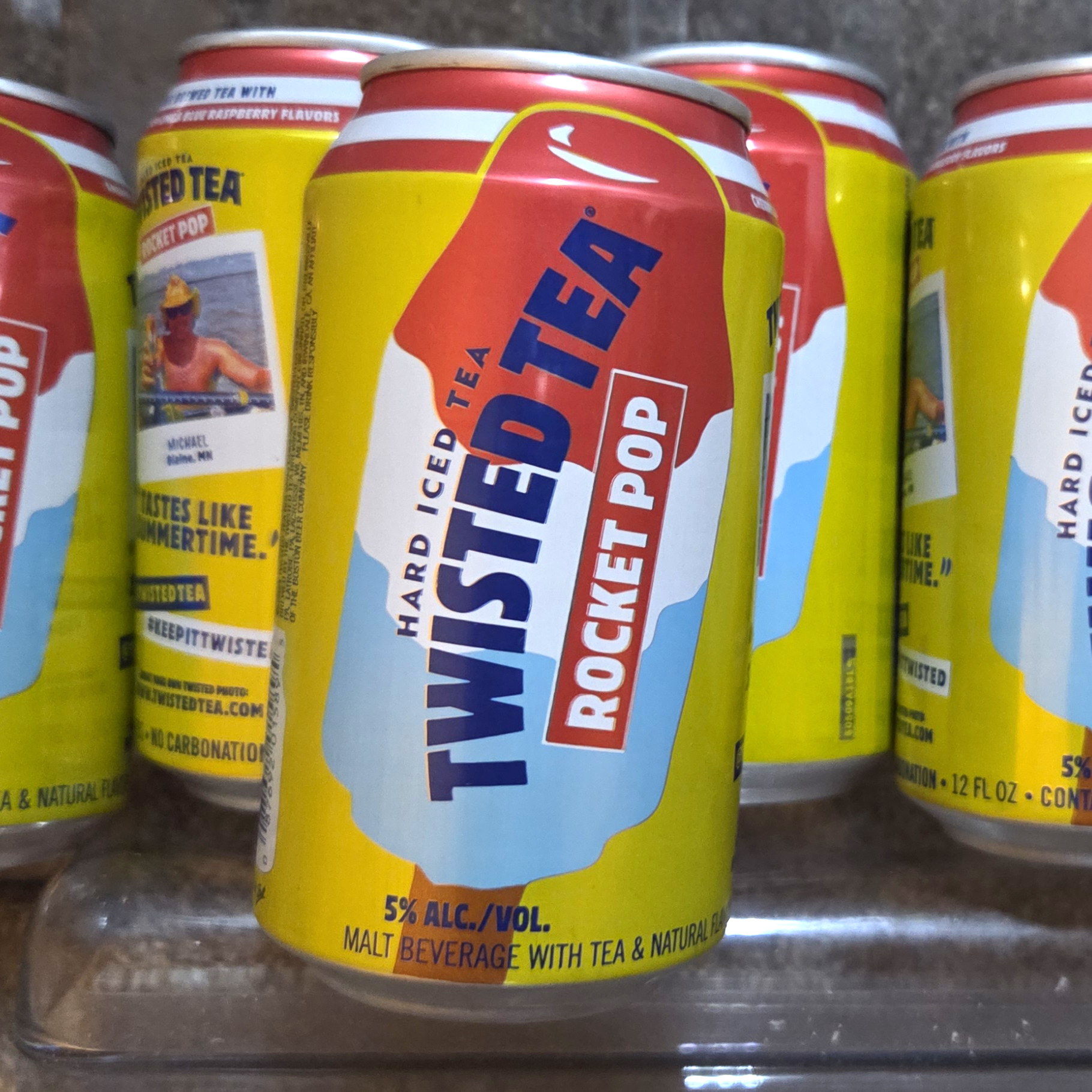
TBTL: Too Beautiful To Live
#4544 Gordon Geico
00:45:13
A short conversation about Andrew’s fantasy draft turns into a long conversation about the cruelty of late-stage capitalism. In other words, a perfect Labor Day show! Luke and Andrew also discuss Twisted Tea, Hawaiian vacations, and some Labor...
Loading summary
Transcript210 lines
- [00:00]
A
I love my job. Oh, my God, I want to do it forever. Especially because this is the kind of job that I've gotten better at every year. And it's also the kind of job that you need to be fast on your feet. You need to be quick, and you need to sort of. I don't even know what the word is.
- [00:17]
B
Tbtl. So look, why don't you download my blog? It's free. Of course, we do appreciate donations.
- [00:31]
A
This person has something amazing. You know, maybe you're not as you see. Yeah, you know, it's a little bit beyond your comprehension at this moment, but there's something great about that person. It's not that I'm lazy.
- [00:43]
B
It's that I just don't care. You know what I care about? Artistry. And you and my kids and polar bear couches. You're a messy little person, ain't ya? Look, man, you know your stuff, but you're like a crazy volcano. You'd have to show me you can bring it down a notch. I'll bring it down a thousand notches if I have to.
- [01:01]
A
All right. Hello, good morning and welcome, everyone, to a Monday edition of tbtl, the show that just might be too beautiful to live.
- [01:08]
B
This party is going to be off the hook.
- [01:11]
A
My name is Luke Burbank. I'm your host.
- [01:13]
B
Boping them gums, telling them lies.
- [01:16]
A
Coming to you from the Madrona Hill studio perched high above the mighty Columbia, where it is Labor Day.
- [01:26]
B
I don't want to work. I want to get bonkered off the yoinky.
- [01:30]
A
At least as you are all hearing this episode, it is a special Labor Day edition of the show. That's right. The day that we celebrate all the hard workers in this country and that we hopefully, anyway, get to take the day off and enjoy a much deserved break. Of course, that's not how it works over here in podcast land, not at least at tbtl. Where we are. Here we are working. We are available for y' all five days a week, 52 weeks a year.
- [01:59]
B
It's working. It's working.
- [02:03]
A
So here we are with episode 4544 in a collector series. Let the fun begin. Looking up fun facts about Labor Day.
- [02:11]
B
The facts are your friends.
- [02:13]
A
I went to multiple websites today looking for fun facts about Labor Day. And it's not that Labor Day isn't a fun holiday. I mean, it's a good holiday. It should exist. Again, it supports the idea of labor in this country and hard working folks, but. Well, I'll read you some of the Fun facts later. And we can decide if there are enough fun facts about Labor Day together. Speaking of hard workers, this guy. This guy, the longest running cobra of the show.
- [02:38]
B
You are to me when you're working, an innocent champion of honesty.
- [02:42]
A
He sure is also known for his drawings of the tall ships. His name's Andrew Walsh. She's joining me right now. Good morning, my friend.
- [02:48]
B
Good morning, Luke. Here's a fun Labor Day fact for you. Tonight is my. This gets us off a little bit on a sports talk footing. It's not going to be super sporty, I hope, but also, as you like to say, we're not even supposed to be here today.
- [03:02]
A
We're.
- [03:02]
B
We're. We're. We're doing the. We're doing the work. We're putting in the hours. So if I could have a little bit of. If, if the audience could extend me a little bit of grace as I ask for your help with something. Because tonight is my fantasy football draft fantasy. And you know what I woke up thinking about today? I can name three NFL quarterbacks off the top of my head. That sounds high when I start. Mahomes.
- [03:31]
A
Okay.
- [03:32]
B
Right.
- [03:32]
A
And that's only one name. That's not two names.
- [03:34]
B
Ma Holmes. That doesn't count as two. Oh, I'm already involved.
- [03:38]
A
That's two of my three quarterbacks I can name.
- [03:40]
B
Okay. Mahomes. And then you know the guy who's the. Oh, my God. Who's. Who's like the best quarterback that would play for the Bills. Who's the Bills quarterback?
- [03:50]
A
Josh Allen.
- [03:50]
B
Josh Allen. So I don't even know if I get a point for that. And then the Seahawks guy, Sam darnold.
- [03:58]
A
Mononucleosis.
- [03:59]
B
Mononucleosis.
- [04:00]
A
Dr. Mono.
- [04:01]
B
Is that it?
- [04:02]
A
Oh, wait.
- [04:03]
B
Is Russell Wilson starting anywhere? Is he?
- [04:05]
A
I don't think he's starting, but he is. He's in the league. I believe he's a New York Giant.
- [04:11]
B
Maybe a. Oh, yeah, he might be. He might be. Oh, quick. Oh, of course. Geno Smith, our old quarterback, is now starting in Las Vegas. But like, literally, that's it. And like, those are the quarterbacks. Like, I started playing this fantasy football league when I was following football a lot more. This is like kind of. I think I started to get a little sense of this last season, but now I'm like, oh, my God, I am out of the football loop. What am I doing here? I don't know any of the. Who should I draft first? That's the rest of the show. You're going to tell me round by round, every scenario, whom I should draft and what my backup should be. Does that sound like what the audience is here for today on this Labor Day?
- [04:50]
A
I mean, if you liked me botching some guys from a Mariners and Washington Huskies playing card or collecting card decks, if you liked that. If you like that kind of error prone sports analysis, wait till you hear me talking about who you should have backing up Saquon Barkley at running back. Running back is such a weird position too, right? It's just considered very. In real football, it's considered very undervalued these days. Right? Like, they don't.
- [05:20]
B
Yeah, they don't, they don't.
- [05:21]
A
They don't pay running backs a lot as much as they used to. They don't sign them to big contracts. It's. It's weird. It's like running backs are considered kind of like just a sort of a utility player now. Just somebody who comes in and does a job and then you get a different one to do it later.
- [05:33]
B
They're.
- [05:34]
A
They're not considered like quarterbacks or real high end receivers.
- [05:36]
B
I think, oh, I did Lamar Jackson dirty by not mentioning him. He. I just did a really quick Google. I'm like, who's the first like quarterback that will go.
- [05:45]
A
And it looks like still Lamar Jackson. That's pretty cool.
- [05:48]
B
So that's pretty cool. I guess if I can get him.
- [05:49]
A
He's a stat monster.
- [05:51]
B
You know, I'm not really trying to turn the show into this. I. The, the point really was that I, I didn't realize how out of the loop I am on, on just football goings on and because back in the day I, I just feel like I was following enough to know who the legacy names are, but they're all these new gu. Who I. The way. I still consider new Adventures in Lo Fi to be a new R.E.M album, even though it came out in the 90s. I consider like all of the quarterbacks to be new almost.
- [06:21]
A
Yeah. I wonder how much of that is just turnover in the league. Like the natural amount of turnover. And if you're not and you have been, other than, I guess doing your fantasy football thing, you have not been like, you know, a sort of super careful NFL observer, I think in the last few years because you've been doing your volunteer work on Sundays and just generally like you. You kind of distanced yourself from the Cleveland Browns organization. Although how do you feel about them starting Joe Flacco? That's an interesting development.
- [06:53]
B
I mean, honestly, when I stopped following the Browns out of, out of anger and moral indignation, which I will. Which I stand by. My biggest concern was the problem is they signed this awful human being to be a quarterback, but I know he's going to take them to the next level. This is years ago. Right. And they're going to be so good. And now I have to stop following them because he. It turns my stomach to know that they, that they signed him for this huge amount of money to cover all of his legal bills because he is going around assaulting every woman, basically, that he was in contact with. At least that's the way I'm going to describe it. And I was like, it's going to be so difficult. And now here it is, the year 2025, like what, three, four seasons after that. And like they're getting Joe Flacco literally out of the retirement home. I don't mean out of retirement, I mean literally out of a retirement home to start.
- [07:46]
A
And they've got to have him back by four and they have to have.
- [07:49]
B
Him back for supper. And it is really an. It is just amazing.
- [07:56]
A
It's kind of hilariously fun. Like if, if, if somehow they hadn't had that. Regrettable. And the problem is the stench of them choosing what they thought was going to be winning games over any kind of moral compass.
- [08:10]
B
Yeah.
- [08:10]
A
That stench doesn't go away just because their terrible Faustian bargain also failed.
- [08:15]
B
Yes. But that's just because otherwise it would.
- [08:17]
A
Be so fun to watch a 62 year old Joe Flacco, like, I don't know, maybe have a kind of like surprisingly hot start to the season. And just like, you know, I mean, it's, it's, it's all. It's just a novelty to have somebody who's as advanced in age as he is. And the fact that he was of course, a Baltimore Raven for years. And, and, and so there's that big rivalry, of course, with the Browns. Okay, all this is to say, let's try to get this.
- [08:39]
B
Can I just try to get this. Can I just say one other thing about the Browns? Cause I don't know if you know about this, but also there's this. It's. I. Everybody always knew that the Browns ownership were real trash balls anyway. I mean they had legal problems and just like their stances on things, but like, I'm pretty sure that they're. It's a husband and wife ownership team and I think they're like has. Exactly. And they're full maga. And like there's the idea that they, that they ended up drafting Shador Sanders. Way late in the. In the draft, they finally did it because Trump tweeted out that these owners aren't strong enough to draft Shador. And so they draft like there's all this just stench around them anyway. And then the big story this year also is they're moving the stadium out of Cleveland.
- [09:21]
A
Oh, come on.
- [09:22]
B
They literally. Let me just get. Let me. I'm sorry. Let me just foam this off quickly. And again, this isn't about sports. This is about moral indignation and also where Andrew grew up and about where I grew up.
- [09:31]
A
This is about urban spaces.
- [09:32]
B
This is about ripping my heart out and stomping on it. Cleveland, this is for you. This is my understanding. When the Browns ownership took the Browns out of Cleveland in 1995, took them down to Baltimore, stole the team essentially from the city and made them the Baltimore Ravens. And then Cleveland did not have a football team for five years.
- [09:54]
A
Terrible.
- [09:55]
B
Don't be mean to Cleveland. When they brought the Browns back as an expansion team. There's literally a law on the books now whether or not this should have been or not in the. In, I believe, the state. In the State House that said, like, the Browns have to always be in Cleveland. There was. I don't know how you enforce that or whatever, but it was like a way of, like, basically the. The people elected by the people of Ohio said, we won't let this happen again, and we're going to actually make it so that if we get another team, ownership can't let greed take them out of the city again. Well, what's happening now is the Haslams don't like. They don't like the stadium they're in now, right in the heart, like, right on the water of Lake Erie in Cleveland. They're moving it out of Cleveland to Brook park, which is like a suburb of Cleveland. And he actually used all of his influence, Haslam did, to go down to the statehouse and have them, I think, pass some sort of exemption to the actual law, because now they're not even playing in Cleveland anymore. The idea was for them not to go to another major city. I understand. But basically, he had to actually use all of his. And, you know, the State House there is run by a bunch of Republicans, and they're happy to do that for him or whatever. So, yeah, so I'm calling them the Brook Park Browns from now on because they're no longer the Cleveland Browns. And I'm just disgusted by the whole thing. And I will say this to the. To the fans who've done nothing wrong. I feel bad about it. And if you're listening and you kind of like this vitriol makes you wince a little bit, I think you understand where it's coming from. If you're listening to this show and still have any feelings about this stuff. I do feel bad for the die hard Cleveland fans that they're getting jerked around by this. By these jerks.
- [11:32]
A
Yeah, what a bummer. It's like because. And then we can move back on to Labor Day. Fun facts. Yes, because I feel like. Because also football games are so expensive to attend. The entire. The sort of like, even the people that go to football games anymore tend to come from a certain part of a geography. So in other words, you know, you have a lot of people from suburban and exurban areas that will come into Seattle to go to the games and stuff. It may not be. I mean, Seattle is still a very, I think, a very wealthy city. There's a lot of people in the city of Seattle that have resources. But I could see in a place like Cleveland where it's like, well, most of the people that are actually coming down into Cleveland proper to see the game are actually from, I don't know, Geauga County. I'll just try to throw out my. That's probably a bad example, but, you know, yeah, whatever. Medina, right? Probably more Medina than anywhere. And then again, I'm generalizing fastly and furiously here and I apologize. But also, there are a lot of people now, sadly, that live in suburban and exurban in America who have been tricked into thinking that real cities of America are dangerous for them, are crime ridden, are bad places, or you don't want to go their places, which is so, so untrue and such a bummer. But this idea that like, because of this kind of combination of things, they can just like they're gonna take the team and take them out of the city that they're in and put them somewhere way out in, you know, the, the suburbs where they'll just be like parking for miles and like. And then everyone can be like, well, oh, I didn't even like going into Cleveland again. I'm assuming a lot there about how people talk about and think about the city of Cleveland. But I just feel like this is something that I'm seeing not just on the football scale, but like, have you seen all the Fred Meyers that are leaving everywhere?
- [13:22]
B
Yes. I mean, do you want to get it? I saw a headline in the GD Seattle Times that was like, Fred Meyer closing two Washington Locations because of. I know this for a fact because I was so angry about it. It didn't say claiming higher crime and I think new regulations. It said because of high crime, like, you know, lost. You know, like basically shoplifting or whatever. And I read that. I'm like, just because the company is saying that why they're making these moves does not make it true. And the Times headline writers just decided to run with that as if it were a fact. And literally the next day there was an announcement. Maybe it was two days later, but like, literally within the same news cycle, there was another announcement for another Fred Meyer closure. And finally people saying, wait, this. The loss rates at these stores are not there. There are not the numbers to back up that you're closing, closing these stores at because of high crime or anything like that. It's just them being able to, like, sort of piggyback on this idea of cities being scary. It is disgusting.
- [14:25]
A
Well, and this was a crazy moment last week. There was the number one article in the Seattle Times was basically an op ed piece, a letter from somebody who lives in Lake City who was like, if this Fred Meyer goes away, we're screwed in Lake City because there's nothing else. You can't walk to anything. And people rely on this place. And the number one story in the Oregonian, Andrew, was if they take this Fred Meyer out of Gateway, we're all screwed over here. It's a different. It's a neighborhood outside of Portland that also has a Fred Meyer that's leaving. That Fred Meyer has been anchoring the area. And there was something about the sort of symmetry of that that just struck me. You mean.
- [15:05]
B
Because it's pretty clear that this company has made bad business decisions and through all of this consolidation and just trying to squeeze more and more profit with less and less and certainly less and less employees, like, they're doing everything they can to kind of just gobble everything up. So there can be one big grocery store chain and they don't have to answer to anybody, and there's no competition. But then when they close things, they have to say, oh, it's because of. There's so much crime in Seattle. We can't compete with that kind of loss in the stores. And then you look at the numbers and it's like, oh, those numbers are not there. It's like the theft numbers were way down over the past five years or something like that. They're just. And I'm really. I am more and more disappointed in the Seattle Times these days. Like, they used to the. I used to hate, used to be on the editorial side of things. But man, I feel like in a lot of cases that is leaking into, if not the articles themselves, certainly the headlines. And headlines are important. It's how people get sort of like.
- [16:00]
A
It or read the news. You know, I'm not going below the.
- [16:04]
B
Headline, certainly not past the byline, you know, right or wrong, it does influence how, what, what, what mindset you're going into that story with. It is a kind of important bias. And boy, the Seattle Times is really, really leaning into that in a way. Me worried about journalism.
- [16:22]
A
Well, the thing is, I believe that Fred Meyer is losing money at these locations or that they are forecasting that they will be losing money. They're not closing these places down because they're doing well. But I don't think that it can be attributed solely to, yeah, crime. It's like it's Amazon, it's a million other things. It's the fact that like people just get their stuff online now in a lot of cases. And that like, it's like you're just not, your business is not thriving because habits are changing and people are getting their stuff from other places and you're not making fred meyer.com I don't know, competitive or you've just decided that, yeah, we want to like close our, our brick and mortar stores so that we can focus on online sales because it's cheaper to keep everything in a giant ass warehouse and then underpay someone to go fetch it, you know, but, but don't, don't make it seem like it's, it's shoplifting related when it's just, you're just not. Your business model's not working. And you can say that, you can say it doesn't make any sense for us to keep these stores open because they're not turning a profit anymore. Fine, Be honest about it. But it just, I don't know, there was something weird about or just something about. It felt like it was more than just an isolated incident when and for some reason the fact that it was the top story. And again, it wasn't even a write up of the fact that these stores were closing. It was a person who lived in the neighborhood writing a letter. The one in Seattle was tremendously well reasoned, by the way. I would recommend everyone go take a look at it. It was a person in Lake City and she was talking about how like in New York, I know it's never going to happen, but like Mamdani is talking about like basically subsidizing grocery stores so that you don't end up with areas that do not have access to food. And it's like, for all the stuff that the government does, and I don't want to get into the federal government, maybe the idea of it being seen as a responsibility of a city or county to make sure that there are services like pharmacies and like groceries available to people in neighborhoods, why not make that part of what the county does or the city does, you know, and.
- [18:24]
B
What they're doing on the corporate level. And again, I do think that the gobbling up, the consolidation of these businesses and the lack of competition does lead into, like, we saw the same thing with the drugstores as well. Like, it was Rite Aid that bought up all the Bartelle drugs and all the local Bartel drugs are closing. Like, it's like they've made these terrible business decisions. And then to say, hey, we're closing this in your neighborhood because it's basically blaming the victim. It's basically taking away this grocery store that you couldn't manage, that you couldn't make profitable because of all kinds of decisions going up and down the corporate ladder. But you're saying, well, there's just too much. There's just too much crime in the neighborhood. You guys, it's almost like you don't deserve this grocery store. And we're closing it down. It is such a slap in the face. I am, man. Luke, we used to talk about this way. I cringe a little bit because I remember when I first started doing the show with you, I would talk about how we need regulation, but I would always refer to myself. I'd be like, I still believe in free market capitalism. I don't think I do anymore. Because in the stage of capitalism that we're living in, hey, I think we just brought it back to Labor Day, my friend.
- [19:28]
A
I was gonna tell you. I was waiting for you to take a breath. I was gonna say, congratulations, we did it. We are having a Labor Day conversation.
- [19:39]
B
Anyway, I don't need to finish that thought. You know what I was going to say, it's just like what we're seeing in this day and age in this version of capitalism, it seems like. It seems like the experiment is failing in real time now when. When there isn't any kind of regulation to make sure that you have, like, you know, anti monopolistic, you know, regulations.
- [19:59]
A
Or whatever that definitely allowing, you know, industries to become owned by one or two companies is super bad. There's also this private equity piece to it. And whether it's literally private equity or just companies thinking like private equity firms, the hollowing out of so many of these large chains, which by the way, what a weird world in which I'm like bummed that Red Lobster is having trouble or Joanne Fabrics or even Rite Aid, which I didn't have any particular affinity for. But a lot of these large chains, what they really were were massive real estate holes buildings. They were. Because what would often happen is the company would own the real estate that the restaurant or the store was on and then the franchisee would own the location, but then they would be paying rent to the company that owned the real estate or the company just owned the real estate and the store on it. But the value in a lot of these companies is the land they're sitting on, at least theoretically. Although if everything closes down in a 10 block radius, is the land worth that much? But in other words, you have so. Because it's like, well, why would a company acquire a number, a different company and then just shut it all down? It's like, well, because they were never planning on running that company. They were planning on stripping out the asset which was the real estate, the land that the stuff was that the store was sitting on. And then they're going to either sell the whole portfolio to somebody else or they're going to sell it off piece by piece. But it's just like, it's just so gross. And you're right, it's like unchecked capitalism, it just is such an absolutely pernicious force and it seeks its own benefit at all times and it just grinds down anyone who gets in the way of that. And at the end of every single day, it will only seek to enrich itself versus ever improve somebody's experience or take into consideration if we should have a pharmacy that's located within walking distance to where thousands of senior citizens who need to go to the pharmacy live.
- [22:02]
B
It's almost like you're saying, and hear me out, greed isn't good.
- [22:08]
A
That's right. Despite what the Geico Gecko said.
- [22:13]
B
Despite what Gordon Geico said.
- [22:20]
A
Can we work Gordon Geico into today's show title here on this Labor Day? Hey, Andrew, speaking of unique business models, maybe we thank some donors. Andrew, what is the opposite of unchecked capitalism? Is it highly controlled begging?
- [22:46]
B
I would say it's unchecked generosity.
- [22:51]
A
And that's what we're dealing with here in TBTB land. We're dealing with the incredible generosity of our supporters, our donors who donate their own money to this show month in and month out. And it's how it can be. My job and your job and John Sklaroff's job. And it's a minor miracle. And it's thanks to folks like Bri Kempa in Lone Tree, Colorado. Wasn't. It just feels like it was a year ago. We were thanking Bri Kempa in Lone Tree, Colorado.
- [23:18]
B
Probably was around that.
- [23:19]
A
Maybe to the day.
- [23:20]
B
Maybe to the day could be.
- [23:23]
A
Thanks, Bri. Thanks to Laura Pyles of Shoreline, Washington, as well.
- [23:28]
B
Right. I mean, I. That's where I. That's where I go to the transfer station.
- [23:32]
A
That is true. You know who could probably have you arrested for that. I don't know if he can do it anymore. Is our friend Nigel.
- [23:39]
B
Oh, man.
- [23:40]
A
But he's one of our government. He's one of our elected official supporters. And, you know, I don't. Again, I don't know if that even fell under his purview back when he was in his elected official capacity, but I don't. I don't want to. Here's the thing. I don't want to throw Nigel under the bus, and I don't want to say that he probably would let you slide on dropping your garbage off in Shoreline, but I think he will because he loves you, Andrew. He loves the show. He's a good guy.
- [24:07]
B
As the mayor of Kenmore, you're wondering if he might have jurisdiction over the shoreline transfer, and then if he.
- [24:14]
A
And then if he would ignore his responsibility of enforcing that by letting you do it because he likes your podcast.
- [24:23]
B
Do you think that there is like, do you think that he knows the mayor of Shoreline? I'm looking up who the mayor. Should they get together for? I know he knows. Like, do they get together for, like, mayor days or anything?
- [24:32]
A
I think they do. I think that the mayor. It's the mayor of Shoreline, the mayor of Bothell, the mayor of Kenmore, the mayor. We'll throw Mayor Gregerson in for Mukilteo.
- [24:44]
B
Sure. My mayor.
- [24:45]
A
Yeah. I don't know if there's a mayor of. Of Lake Forest park, but we'll. They might be in there as well.
- [24:54]
B
What about Pawtucket anyway? What about mayor of Pawtucket? Would they be in there?
- [24:59]
A
I mean, possibly. That seems kind of far away. Isn't that in Rhode Island? It is.
- [25:02]
B
And that's also where Kelly Sweatt is.
- [25:05]
A
Oh, I see. Kelly, what is your elected status right now?
- [25:09]
B
Yes. You're mayor of my heart, Kelly.
- [25:12]
A
And can I dump something in Pawtucket? And will you let me get away with this is the question.
- [25:15]
B
That's right.
- [25:16]
A
Thank you. Thanks also to our pal Ariel Deardorf in Seattle, Washington.
- [25:23]
B
I will soon be the mayor of Seattle if all goes according to plan. I just have to.
- [25:27]
A
You wouldn't. I mean, here's the thing. I already think I know your answer to this, which is, of course, you have no appetite for this kind of stuff or trying to be the mayor of Seattle. But you are a keen observer of local politics, of the politics in Seattle, of probably the politics in your neighborhood, as much as those are sort of covered in the local media. Because I think you really care about the places that you live and you really care about people. That's the thing that I admire about you, whether or not I even agree with, whether you and I are even in the same place on everything. What I never question is, like, your motivation. Like, I think you just want people to be taken care of. And you want. You want this. You want the people who really need help to get the help that they need. And you want the people that are kind of on top of the pyramid to have a little empathy and share things a little bit, which I think is all a very, very good way to look at the world. All that is to say, would you ever even run for, like, a very hyper local thing in your neighborhood that could kind of maybe make a difference of being on a. I don't know, a council or a board or something where you could just kind of, you know, put some of that into action?
- [26:30]
B
I don't think so. I don't. It. I don't think I'd be necessarily good at that kind of thing. I like you say, I don't have much of an appetite for it, but I try to do my best as a voter to. To, you know, try to get the people.
- [26:43]
A
Because I'm running for mayor of Longview.
- [26:44]
B
Oh, really? Okay.
- [26:46]
A
Texas.
- [26:47]
B
I was gonna say that's. I thought.
- [26:48]
A
Oh, I can't run in Washington state.
- [26:50]
B
Oh, God, no. There's a lot of.
- [26:51]
A
No, no, no. Not till the various legal matters are resolved, but.
- [26:54]
B
Right.
- [26:56]
A
Bettina Ackerman, our friend Bettina Ackerman in Key. Hey, Hawaii.
- [27:02]
B
Nice. I will be. I need to be sending you my dates. I'm going out to that area.
- [27:08]
A
Are you going to be in Kihei again?
- [27:09]
B
I think around Kihei, we always. If we don't stay in Kihei, we always visit Kihei. I think we might be staying in Kihei this time. I'm not sure. That won't be until March, but I want. I want to get those dates to you when I'm going to be ooo, as they say, out of office.
- [27:23]
A
Yeah, yeah, maybe, maybe. I mean, I'm not gonna. We're not gonna come to Kihei, but maybe Becca and I should go over there too or something at some point, get some. A little warm up in the middle of the winter. We were there, I don't know, a year ago and had booked an Airbnb in a different part of that island, the island that I can't ever remember what the name is. And Becca's brother and his wife were staying down more in Kihei. And I just kind of thought, oh, these are like right next to each other. But they were like, it's also like Hawaii miles on the coast, so maybe even 30 miles. It's just so windy and kind of like they were basically. We were staying an hour and a half away from them and it was like.
- [28:03]
B
I remember mapping it out as you were talking.
- [28:05]
A
Yeah, like, that was not. I did not think this through. And the whole thing was we were going to be like getting dinner together and, you know, maybe having a few drinks or whatever. Nobody wanted to be an hour and a half from where they were staying and then like having a few Mai Tais or whatever. So we ended up. We stayed out there for a couple days. It was lovely, actually. I think I did the show from there a couple days, but out where we were way out in the hinterlands and then we got a hotel room in Kihei, I think for like the last. It was like, I forget it was a Marriott. This seems to happen a lot when Becca and I are on trips and if something falls through or is not ideal with our initial lodging, that's when I jump on that Bonvoy Life and I just go like, well, what can I get for 50,000 points around here? I forget what the hotel was in Kihei, but it was the nicest of this kind of. I think it might have been like a. It was not like a Weston or a W or even a Marriott. It was like a kind of a. A level of Marriott hotel that in any normal circumstances was pretty kind of like maybe a lower tier kind of place you might stay when you're working travel. Like it's not where you go for vacation. But it was like I was out of money and I was like, we just, we're gonna have to stay here tonight because this is what it is. We get there. It was luxurious. It had an amazing swimming pool. I'm not being very helpful here because I'm not remembering what, what hotel this was in Kihei, but it was the fanciest of the low rent Marriott properties I've ever been to in my life.
- [29:30]
B
Well, I'll tell you what, I was just checking our notes. We are definitely staying in Kihei again. I'll be honest with you, I sometimes get Lahaina and Kihei confused because we always Kihei but we always take a day or two to just kind of hang out in Lahaina. And Lahaina is where the banyan tree was, right? Was heavily, that whole area was part of the area that was heavily damaged by fires a couple of years ago. And it's just, that's one of those things where it's like I kind of felt like even though I'm so much, you know, I don't claim any, any kind of personal, you know, kind of, for lack of a better word, ownership over that area. When you know a place so well and then you read about a tragedy in the news and you can picture all of the places it hits home in a certain way, you know that it otherw would seem a little bit more kind of distant to you. But yeah, we are staying right in the drag. Right in like kind of the main drag of Kihei again, which is where we've stayed several times. And I think I've said to you like that's one of my favorite things about vacations. And it's very, it's a very boring way to some people to live your life. But like I love returning to places that bring me happiness. I don't have that wanderlust of wanting to check off all kinds of boxes and seeing as many places before I die as possible. I love feeling like, oh, I know where we're going back. We're going to back to that place where I know where this little tiki bar is and, and this good little food truck is. And so I'm very much looking forward to this.
- [30:48]
A
By the way, it was the AC Hotel by Marriott and it was not quite in Kihei, it was in Wailea.
- [30:54]
B
Okay.
- [30:55]
A
It's like one neighborhood over. But if you're, if you're in that part of the world and you're looking for a place to stay and you're a fellow bon voyer like I am. Ooh, that gets really weird when you, when you add voyeur on the end of it.
- [31:07]
B
Oh yeah, yeah, be careful. Yeah, yeah.
- [31:11]
A
Do check that out. Do you guys. I don't want to get overly personal. Do you guys stay at a timeshare do you guys do.
- [31:15]
B
No, I don't measure on timeshares, but this is.
- [31:18]
A
It's usually my mom's got some advice on how to get some free. Some free points.
- [31:22]
B
That was so fun having your mom on the show last week. But I know Genevieve always finds, like, some sort of an Airbnb. This time it does look like it's. We're staying at a place that I recognize because it's got this big, beautiful sign outside of it. I've taken photos of birds, the sign. So when she told me. So it is like a, you know, probably like, you would call it a condominium building. And then. And then we get it probably via Airbnb or something along those lines.
- [31:45]
A
Verbo. Or one of those.
- [31:46]
B
Yeah. Genevieve always handles all of that stuff, and I think she enjoys it. I tell myself that that part of the fun for her is the planning, because otherwise, if it were up to me, unfortunately, we would have a lot of staycations with a lot of Twisted Tea and a lot of darts and a lot of Scottish and the hi Fi.
- [32:05]
A
How do you feel about the fact that I am now compelled to take photos of any twisted Tea?
- [32:09]
B
Oh, yeah.
- [32:10]
A
You see grocery store end caps. I actually, like. I stifled the urge yesterday. I had to run down to get some dinner fixin's, and I was in a real small grocery store that's in the closer town to me, and they had a whole twisted tea set up, and I was gonna take a picture of it and send it to you, but I had just done that a few days previous. I said, andrew doesn't need this in his life. Andrew doesn't have to come up with a response every time I see twisted Tea, but. But I cannot tell you how strong. Now, I associate that with your brand.
- [32:41]
B
But there's something going on. Right. I mentioned this on the show recently. Like, they have made a push and they have broken through into another level of. And I do think it's because people are drinking less beer. This is a story that's been going on for five or 10 years now. It's kind of. Younger generations started drinking less beer and more cocktails. So you started to get a lot more cocktails in a can or whatever. But I don't know what it is. But this summer, like Genevieve said, she went to a barbecue and there was twisted tea there. And this was not like some, like, you know, these were. The barbecue is not in the back of the a.m. p.m. Where I get my tall boy. Yeah. And so in other words, she's kind of like, it's just. We're just seeing it. It's like the Summer of Twisted Tea.
- [33:20]
A
Yeah. It's big on Tick Tock. Although I would say, okay, oh yeah. But it's big with younger people.
- [33:25]
B
What I feel like.
- [33:26]
A
Actually, here's what I would say. It seems like maybe last summer I felt like I heard or I would see a Tick Tock video or post where some young person would be, you know, maybe sitting by a pool or they would be talking about like a night that they had had that was maybe too wild or whatever. And somehow Twisted T kept coming up. And I just kept thinking, I can't believe that the folks are subjecting themselves to this. So probably, like a lot of things, it's kind of burbled back up into maybe one generation north, which would be maybe more who we're hanging out with or something. Somehow. It's. You're right, though.
- [33:58]
B
It is.
- [33:59]
A
It's. It's kind of. I think it maybe was ironically having a moment and now it's kind of unironically having a moment.
- [34:04]
B
Yeah. I don't know. I mean, it was quasi ironic with me when I was telling you how I got one of the tall boys on the. On a whim at the store and then just started walking around the neighborhood with it. But like, Genevieve got some for a gathering she had recently. And like, I. She got like a whole 24 pack of it. And I didn't realize until the days and weeks went on that I think I was the only one drinking it because we had so much left over. The problem is it came in. It comes in different flavors. And we're just doing this. We got. She got a 24 pack and like.
- [34:32]
A
It'S Labor Day, bro.
- [34:32]
B
I don't know how it divided up, but like, some of them were the original flavor, which I like. Some of them were what they call half and half. But basically it's an Arnold Palmer. Right. It's like half lemonade flavor, half iced tea. And I think that's actually my favorite now. But then it also had peach, which I was like, yeah, it's okay. The peach flavor wasn't overwhelming. It still mostly tasted like the twisted tea that you grew up with that your grandma used to make. But then there's the fourth flavor. The fourth. The fourth Horseman of the Twisted Tea. Pollux Pollack. Exactly. I promise, you barely got out of that.
- [35:08]
A
A Hard Rain is Going to Fall.
- [35:11]
B
Is bomb pop flavored. And we have a bunch.
- [35:15]
A
I've seen those in the store, have.
- [35:18]
B
Not so that's all that's left in our refrigerator right now because I kind of drank them in the order that I liked them.
- [35:24]
A
Remind people what that is. That's like the rainbow Popsicle, right?
- [35:27]
B
Yes, that's the big ass popsicle with ridges. That's, you know, we used to get as kids, and they still sell them. And it's three colors. Red, white, and blue. And the white is. I just looked this up recently. Is the white line. Are you looking this up as we speak, or do you want me to? We should look it up. It's like, is it pineapple flavored or is it lime flavored? I want to say lime. Right. Bomb Pop flavors. Let's do this here.
- [35:55]
A
Oh. See, the problem is, Andrew, we live in a world where things have gone absolutely off the rails. Like, because there's so many weird Bomb Pop flavors now.
- [36:06]
B
And Rocket Pop, I called it a bomb Pop. I think Twisted T calls theirs Rocket Pop.
- [36:11]
A
I think they do, too.
- [36:12]
B
I think you're absolutely right. Okay, so. But if I go to official Bomb Pop, will it say what the flavors are?
- [36:18]
A
It says cherry, lemon, lime, blue, raspberry.
- [36:21]
B
In red, white, and blue layers. Yeah, that sounds like the original one. That sounds like what we grew up with. And for me, it was that lemon lime in the middle is that white part that I love. The red was the most boring.
- [36:32]
A
It's fine, though. You know, your rocket pop, your firecracker pop. Leave those flavors for the popsicles. Don't. Don't jam them down my throat in.
- [36:41]
B
My twisted, twisted tea. Yeah. I don't know.
- [36:43]
A
I want my twisted tea the way that my forefathers had it and their forefathers before them. Okay. I need all this new weird shit going on.
- [36:52]
B
I have a friend who listens to the show and will almost certainly hear this. She sent me a photo of twist of a 12 pack or a case of twisted tea the other day as well. Because this is all of. Yeah, no, you're not the only one. And she works at a food pantry. And the reason she sent me this photo was because somebody donated, like, a rack or a half a rack of twisted tea to the food pantry. I'm like, I don't think you can give that away at a food pantry. And she said, I mean, I think.
- [37:18]
A
This raises a very interesting question. And we don't have time for it because this is a holiday show.
- [37:23]
B
Yeah, we've already gone.
- [37:24]
A
We're not gonna. We shan't be here forever. In fact, we're not even gonna get to any Labor Day. Fun facts. Let me hit you with one. Okay, here's a fun fact about Labor Day. Let's see here. Oregon was the first state to declare Labor Day as an official holiday in 1887. That is the most fun fact about Labor Day, Andrew.
- [37:45]
B
Wow, we're just blowing through nap time, aren't we?
- [37:49]
A
Here's another fun fact. On June 28, 1894, Congress passed an act making the first Monday in September of each year a legal holiday in the District of Columbia and the territories.
- [38:00]
B
Now that is fun. But it might just be the way it was written that made it so fun.
- [38:03]
A
It's punchy. Here's another fun fact about labor day. The first U.S. labor Day was celebrated on Tuesday, Sept. 5, 1882 in New York City. Planned by the Central Labor Union, the Labor Day parade of about. About 10,000 workers took unpaid leave and marched from City hall past Union square uptown to 42nd street and ended in Wendell's Elm park at 92nd street and 9th Avenue for a concert, speeches, and a picnic.
- [38:32]
B
Ooh, I wonder who played the concert. I wonder if there's any fun facts in that. I will say I find it somewhat interesting that they were celebrating Labor Day on a Tuesday. That seems odd, you know, because I'm so used to it being a Monday. That's sort of fun.
- [38:45]
A
This is kind of a. You know what, I'm gonna be honest. This is a sort of a fun fact. For real. The first Waffle House opened on labor day. It was 1955 in Avondale Estates, Georgia. The very first Waffle House opened its doors to the public, which of course indicates a certain anti labor practice on the part of Waffle House.
- [39:03]
B
I guess.
- [39:04]
A
So day one, you're working on a holiday.
- [39:08]
B
I'm looking to see who actually played in that very first Labor Day concert.
- [39:13]
A
Concert.
- [39:14]
B
And it might be the.
- [39:16]
A
Was it the Limelighters?
- [39:18]
B
It was the Limelighters and the Jeweler. The. It's so hard for me to say the word jeweler. Jeweler. Jeweler. Am I jeweler? I can't say that word. I've had too much twisted tea of Newark Marching Band. So the union had its marching band and I think that maybe they played in the parade and then maybe also played at the concert.
- [39:41]
A
Huh. Okay. Yeah, I was, I was wondering who would have shown up to. To play that for that initial concert.
- [39:47]
B
Oh, and Bruce Springsteen. It says Bruce Springsteen as well.
- [39:50]
A
Yes, definitely. He did not have the Easter eat Band yet, though.
- [39:53]
B
Oh my God. Have you seen the trailer for that? I didn't. Oh my God. Man, it is. So if you like me, I'm talking to the audience here. If you like me thought a movie or a trailer for the Bob Dylan documentary was self serious and over the top. I mean, I hate biopics anyway, but you should see this one for Bruce Springsteen. I was like barfing during the entire trailer. That's what I hate about biopics. They're always so self serious. And it's what I loved about the Pavement send up of this kind of shit for their little fake mockumentary thing. It was, it is, it's. It's coming to theaters near you, but my God, you will not see me in the seat.
- [40:30]
A
It's funny because I think you've sort of put your evil inside me on this whole topic because I think I wasn't rushing out to see all these, but like I saw like I saw that Johnny Cash one, you know, with Joaquin Phoenix, and I think I found myself entertained. I enjoyed it. If people to ask me, what do you think? I would have said it's a good movie or I enjoyed it as a movie or something. But ever since, and in fact, when I heard about no Direction Home being made, I thought, well, that's kind of interesting. I mean, I'm a little. Personally, I guess I'm a little intrigued by like, just think of it purely as an impression. Not as a move, like as a moving film experience, but just like a boy. How actually close can they get this person to looking like the person that we're thinking of? Yeah, like, I actually find that like an interesting challenge or something.
- [41:17]
B
I would find it more interesting if Rich Little played all of the main characters in these movies. If they passed a law that said Rich Little, is he still with us? Let's assume Rich Little is still with us. He has to play the main role for any of these. Because if you like impressions, why we already have our guy.
- [41:34]
A
I mean, is he still with us? He's still working. Rich Carruthers Little is a Canadian American comedian, impressionist and voice actor. Sometimes known as the man of a Thousand Voices, Little has recorded nine comedy albums and made numerous television appearances, including three HBO specials.
- [41:51]
B
Nice. He's 511 still. We thank you. He's like, are you going to mention the fact.
- [41:57]
A
Some fun Rich little facts. He's 511 according to the Internet. I wonder like who the. I'm just looking at. I'm trying to figure out who Rich Little's, like, who his number one impression was. I think it was Nixon.
- [42:13]
B
Right? That sounds about right. I'm A little bit out over my skis on this. And the Wikipedia page for Rich Little, the photos, him doing a Jack Benny impression in 2015, which I think is interesting because, like, I wouldn't know a Jack Benny impression if it bit me in my tuchus.
- [42:32]
A
I would. Here's how I would know as a Jack Benny impression. He would be wearing a suit and swinging an imaginary golf club or a real golf club. I think that was Jack. Jack Benny's.
- [42:41]
B
Didn't Jack Benny host a talk show?
- [42:44]
A
Yeah, the Jack Benny Show.
- [42:45]
B
Yeah. Okay. I honestly was kind of like. I assume that he just like. I picture a black and white TV with Jack Benny. It was like a variety show probably something like that. Right.
- [42:55]
A
Jack Benny was a real modern day Bob Hoskins. After, After. After seeing Rich Little's imitation of him, Jack Benny sent Rich Little a gold money clip. And it was inscribed with Bob Hope doing my walk and you doing my voice. I can be a star and do nothing.
- [43:13]
B
Oh, that's pretty. Yeah. Getting out of work. You're right. That are some. What are shades of Hoskins.
- [43:23]
A
All right, well, Andrew, what do you think? What do you think? What do you say?
- [43:27]
B
I think we're good. We got to some. We got to some good Labor Day. We did.
- [43:31]
A
We got.
- [43:31]
B
We.
- [43:31]
A
We got into some real, you know, like, this land is your land. Some songs of protest.
- [43:36]
B
When you call fascists.
- [43:38]
A
When you called for the. For abolishing capitalism, I think that was pretty on brand. Although I don't even know if that's technically the message of the labor movement. I think it's just more like, how about we share. How about we have the workers receive a fair share of the. Of the output that they're creating?
- [43:54]
B
What is it? Who had the guitar? Was that. I'm looking this up. That was Guthrie. Have a guitar.
- [43:59]
A
Woody Guthrie had the guitar that kills fascists.
- [44:02]
B
I believe I was gonna name the show that, but maybe that's a little bit. Maybe that's a little dark. This podcast kills fascists in this day and age. That could literally get me on a government list. I could see that.
- [44:11]
A
Yeah. Seriously. I mean, I don't know. Have we used Twisted Tea lately?
- [44:15]
B
I have. I used it this morning. How do you think. How do you think I got here, dude, labor pains. Let's get out of here. I also have a. I also have Gordon Geico written down.
- [44:27]
A
Oh, yeah. Gordon Geico is the way to go.
- [44:29]
B
All right. Sounds good.
- [44:30]
A
Yeah.
- [44:31]
B
All right.
- [44:32]
A
Thanks for listening, everybody. That was fun. This show is like jogging for me right before it starts. I'm absolutely miserable and convinced it was a bad decision. And then when it's done, I'm so happy it's over.
- [44:44]
B
That makes me sad. I love you too.
- [44:47]
A
That is not true. We are so lucky that this is our job. Speaking of jobs. And thanks to all the TVTL listeners and supporters for making that the case. And I do mean that. Very real and true. Okay, we'll be back here tomorrow with more imaginary radio for you all. In the meantime, have a great Monday. Take care of yourselves. And please remember, no mountain too tall.
- [45:03]
B
And good luck to all. Power out.