Loading summary
Transcript338 lines
- [00:01]
A
We must get him out before daybreak.
- [00:03]
B
Well, and that's the thing with these night walkers here, isn't it? You know, a little bit of sunlight, poof, they go up in flames.
- [00:11]
A
I've never gone poof.
- [00:12]
B
But it's okay, not yet.
- [00:14]
A
The vampires are always like, oh, I'm a vampire.
- [00:17]
B
I'm immortal.
- [00:19]
A
I'm whatever. Well, okay, how about you go be immortal at brunch?
- [00:25]
B
TBTL. Is the length, the shagginess, the anything can happen, but frequently nothing does. Nature of a lot of popular podcasts. Is that a bug or a feature? All right, this guy ran with Thaddeus Spinks.
- [00:42]
A
He was one of the eight balls in Mookie Kramer in the eight ball. I don't know. This doesn't sound like anything.
- [00:46]
B
He played the alto sax with the kink in it. She was a shake dancer.
- [00:49]
A
She did the hoochie kutch.
- [00:51]
B
And right on you, midnight cowboys. That's not a thing. All right.
- [01:01]
A
Hello, good morning and welcome, everyone, to a Thursday edition of tbtl, the show that just might be too beautiful to live.
- [01:07]
B
You don't need us telling you that it's bad.
- [01:10]
A
My name is Luke Burbank. I am your host.
- [01:13]
B
Everything you're about to see is my real voice.
- [01:15]
A
Coming to you once again from Washington, District of Columbia, in the shadow of the White House, the Smithsonian, and importantly for our purposes, the Kaiser Family Foundation. What a fun, sexy time for you, where I once again am gimme stewarding a bunch of people who are just at their job and have absolutely no idea some podcaster is over here doing his job. Which, by the way, brings us to episode 4602 in a collector series. Let the fun begin. I'm a big documentary fan. You know, I love. I love stories. I'm a storyteller.
- [01:50]
B
From my point of view, it's a beautiful story.
- [01:53]
A
I love your story and therefore I am a fan of documentary film. And I read an article in the New York Times the other day about the unique threat to documentary film that is presented by AI we're always talking about AI on the show these days and all the things that it's threatening. Documentary film specifically, though, could be really in the crosshairs. We'll talk about that. Also, it's a Thursday, AKA Blurs day. Do some Blurs Day messages, and we are going to talk to this guy. He's a soulful rocker from New Hampshire, possibly best known for his depictions of the tall ships. He's also the longest running cobra of the program. And add this to his Resume number one cat saver in the podcast game. He's Andrew Walsh, and he's joining me right now. Good morning, my friend.
- [02:41]
B
Good morning, Luke. Can we start the show with a little bit of math? Because something is driving me bananas in Seattle in today's Seattle Times.
- [02:51]
A
Okay.
- [02:51]
B
And it's a sentence I've read to myself a million times over. And the thing is, I am so dumb and bad when it comes to anything related to math.
- [03:00]
A
That which I find really surprising because I wear glasses. Yeah. But when you take them off, God.
- [03:08]
B
I'm sexy and dumb.
- [03:11]
A
Because there are so many ways in which our personalities are. Well, not so many ways. There are some ways in which our personalities are similar, but a lot of ways in which we are dissimilar. And I am terrible at math. Somehow it seems to me that in this sort of conservation of the universe and for every person like me who's bad at math, there needs to be a person who's good at math. I thought you were gonna be the one who's good at math in this relationship.
- [03:35]
B
No. And I think we're both kind of bad at directions, which isn't good. We're also.
- [03:39]
A
Oh, I am, you know, awful.
- [03:41]
B
Yeah.
- [03:42]
A
I could not find the hotel after my jog today. And by the way, it's on Pennsylvania Avenue. It's like one of the main avenues.
- [03:49]
B
Here in D.C. you found yourself in Pennsylvania. You're like, I was in. I was in Harrisburg. I don't. Nothing makes sense. I'm reading the signs. So here's the. Here's the story in the Seattle Times. It's about rate changes for parking around the city. And it says, city code requires transportation department.
- [04:07]
A
Welcome to Communist Seattle.
- [04:08]
B
That's right. That. The headline is that, like, one place in Seattle is going up to $8 an hour. And that's Pine Corridor, I believe. I don't really mind. I take the bus. If I. If I'm going to Pike Pine, I better not have a car in tow.
- [04:21]
A
Because that would be. I think that would be a deal breaker for you. Like, you could. It could be the most fun thing ever for you. But if somehow you were required to drive your car down there and park it, I think you'd be like, I'm going to skip it.
- [04:34]
B
Yeah, I'll skip it. And it's like. But if you go, you get a million dollars. What is my. Let's see here. What. My cutoff. I'd probably go for a million dollars. I'd find parking on Capitol Hill for a million dollars. But Anyway, here's the sentence that's driving me bananas about what this is a direct quote from the Seattle Times. And again, I want to say this is a typo, but I think I gotta look inward on this and I must not be understanding this right. About one third of the city's parking rates increased by $0.50. Another third of the rates decreased, while 71% saw no change. So we have three stats there. We have a 30, 100%. That's. That's what I mean. Doesn't that just leave. Wouldn't it just leave about 30% left about 1/3. About 1/3. While 71% saw no change. First of all, we're going from fractions to percentages in the same sentence, which I don't think is like kind of ideal there.
- [05:30]
A
I think you should not element of my style.
- [05:33]
B
I think you should. I think you should do percentages or fractions, but like in the same sentence, essentially. I guess this is two short sentences. But you, you're comparing. But fractionally, a one third would be about 33%. Right. And then the other third would be about 33%. How does that leave 71%?
- [05:51]
A
Like I'm 71% cannot be unchanged if 33% has been.
- [05:56]
B
And you and I are right about this. We're not just like the max that.
- [05:58]
A
Could be unchanged would be 67. Well, it's more because there's another stat in there, but definitely can't be 70. Whatever percentage.
- [06:06]
B
Yeah. Because it's a third, a third and 71%. That's like 150%, I think. But anyway, you're at least with me. Even though we've both said we're not good at math and it's a weird way to start the show.
- [06:17]
A
We'll both be learning later that we're wrong about somehow we're wrong together.
- [06:20]
B
That's the important thing. I checked the comments section. There are no comments on this article yet, which I'm surprised. Just a story about, you know, some parking rates going up. How. How are they not. Oh, here we go. This thing must have just posted because now we got three comments here. Here it is, Here it is. I just looked at this.
- [06:38]
A
I love this real time rapid response podcasting we're doing.
- [06:42]
B
Luke. I read this article maybe about 20min and there were no comments on it at all. And I kept reading that sentence over and over and again, totally distrusting my reading of it. You know, like.
- [06:54]
A
No, I assume that there's an explanation for it that I'm not grasping.
- [06:57]
B
Okay. Yeah. So Here. User. Okay, this is an interesting username. It's user 1-747-671-88643.
- [07:06]
A
Sounds like a math person.
- [07:09]
B
23 minutes ago wrote I know my math is rusty, but. And then just quotes that sentence I just read. And then somebody else wrote same comment. Was this written by chatgpt? Okay, so this will be fixed probably by the end of the show if we can remember. Let me check this article. I'll bet you it'll be fixed by the end of the show.
- [07:28]
A
But also how did it end up in the paper? Because it's a critical element of the article. Like I understand a factual error that's just kind of like a little throwaway thing or something that they didn't double check or research. But like that's, that's a crux point of the article, which is what are the cost changes and how much of the parking in Seattle is affected. How could you just put that in so wrong, so wrongly?
- [07:57]
B
Yeah, and I don't, I don't think it was written by Chat GPT, but I, as the, as the commenter accuses. But I do think it is, you know, it's not a world changing mistake in an article. Right. Like you can look at that, you can say okay, somebody made a mistake. But the thing, thing is like there just used to be so many layers of editing and editors and it, it's just a small example of how like editors do matter and having just a robust newsroom where you just don't have like one person writing something and maybe somebody else scanning it, you know, but like real editors.
- [08:29]
A
I was talking to Susan Orlean recently for the, for Livewire, but for the Portland Book Festival. And she said that when she was writing at the Willamette week in the 1970s, she learned the best piece of advice for being a journalist from her editor at the Willamette Week, which is that there's basically three phases of doing it. There's the reporting, which is the like finding out the stuff and then thinking about it and then writing and we have totally collapsed. We've collapsed the thinking about it time and also the editor time. So almost none of those things that she mentioned really exist in most places anymore.
- [09:06]
B
Yeah, yeah. And again, you know, her type of reporting isn't, you know, I doubt it's. Did she have a background in just sort of beat reporting or like newspaper reporting? I've always thought of her as just like writing the sort of the grand profiles article in the article.
- [09:22]
A
Yeah. So she was, she has this great book Out. It's called Joyride and it's just about. It's a memoir, but it's really about her career. And she graduated from college in Michigan and was going to go to law school, but basically went out to Portland, Oregon to do like a year before law school. And this is, this is a thing that, you know, was different about the media landscape in the late 1970s was there were jobs at newspapers that you could potentially get or you could pitch, you know, freelance stories or whatever. So she goes, starts writing stuff for the Willamette Week. There are actually the Willamette Week is an interesting thing to me because they are somehow doing really good journalism and putting out a meaningful newspaper in Portland, Oregon on an absolute shoestring budget. So shout out to them. But yeah, she just basically kind of was writing pieces and sort of got a job and then kept doing those stories. This was the thing I thought was really fascinating about her career and such a ballsy moment. So she's writing for newspapers and then she, I think Vogue magazine. No, it wasn't Vogue. Maybe it was gq. I think GQ was doing this. They're doing a whole issue that was called the American Man. And the idea was we're going to have profiles written of different American men at different ages. First of all, thank God, we're finally documenting the man. This is the first thing I would say about it.
- [10:45]
B
This is good.
- [10:47]
A
But she was, they said, we want to Write about a 10 year old boy and we're going to have you interview Macaulay Culkin. And she said, I don't think that's an interesting interview. He has the least normal experience of any 10 year old. If we're trying to document the American man, whatever that means, like we need to talk to a regular 10 year old. And so she just interviewed, she just did a whole profile of this random 10 year old somewhere who did not like her very much initially. But I thought that was like such a, like such a moment of sort of, I don't know, clarity on her part. Because if I had been 26 years old and actually I think it was Esquire, I'll get there eventually. I'll just keep naming magazines. And if Esquire came to me at their height and said, we want you to do a profile of Macaulay Culkin, of course I'd be like, absolutely. Would never occur to me to say, no, that's not a good idea.
- [11:37]
B
When Maxim came to me and asked me to do a story, I said nothing. That, that reminds me by the way this is, I think I'm having a first.
- [11:45]
A
They came for him's magazine. They know. I don't think they have a magazine, but I wouldn't be surprised.
- [11:53]
B
They came for Mel magazine, your favorite public rip.
- [11:57]
A
I did love that.
- [11:59]
B
By the way. I did not realize this until I started talking to you. I am having some sort of weird attention disorder today. And I don't usually say that about myself, but boy, am I having problems sticking with one thought. I'm just sort of bouncing around and having trouble paying, staying focused. But talking about the American man or whatever you're just mentioning reminded me of like why I thought it was so funny yesterday when you started a story that ended up being about how you were underdressed for a jogging adventure in like 30 degree weather or whatever it was. I didn't know that was the point of the story. When you told me that you were just on the elevator getting ready to go for a jog, a real man and a guy said that now there's a real man. And I thought that's where the story ended. Like when you first said, like, I didn't know that there was more to it. And I think that that's why I thought it was so funny. Like, that somebody would just be like. Because you did. Somebody said, you mentioned to him something, I'm going for a jog. And then he said, now there's a real man.
- [12:57]
A
He observed, I was in running clothes. And he said, are you going for a run? And I said, yeah, like, and, and I said, I, I was trying to make conversation. And so I for some weird reason said, I work with a company on the West Coast. My company is on the West Coast. That's what describe you.
- [13:13]
B
Yeah, yeah, exactly.
- [13:14]
A
West coast based company. And therefore I've got some. I've got a few hours here to kill or whatever.
- [13:18]
B
We have a satellite in between cities we should mention.
- [13:21]
A
Yeah, he circles back to his, his, his real point, which was that it's very cold. What he wanted to say was, dude, it's too cold for the outfit you're wearing. But then. Yeah, so that was how.
- [13:31]
B
That. But isn't it more interesting if, if he. If you're on the elevator with a man and it's that weird elevator with no buttons, so it's already kind of weird. And he just says to you, going for a run? And you said, yes. And then he said, now there's a real man. And then just lifted his newspaper back up and started reading it. And that's the story that Would have.
- [13:47]
A
Been such a power move.
- [13:49]
B
That would have been so great.
- [13:50]
A
And you do know that guy would be reading a newspaper.
- [13:52]
B
Yeah, I know. Why does he have a newspaper? The newspaper is actually from 2002.
- [13:56]
A
He's just been carrying closely.
- [13:59]
B
Yeah, it's just.
- [13:59]
A
How do I get out of this elevator?
- [14:01]
B
It's this guy's.
- [14:03]
A
This guy's reading the. The Washington Times. This guy's reading the Christian science monitor from 2002.
- [14:11]
B
That's right.
- [14:12]
A
Are they still making that?
- [14:13]
B
I believe so. Yeah. That we used to. Man, we used to rely on. Yeah, they used to have good. Monitor a lot in. Yeah, good guess. And also we would use, like, their newspaper reporters and stuff on the talk shows that I'd produce because they have a. They have a New Hampshire connection. Right. Mary Baker. Eddie. Do I have that name?
- [14:28]
A
Eddie? Was she a New Hampshire person?
- [14:29]
B
Did I have that right, by the way? Did I just nail Mary Baker?
- [14:32]
A
You nailed Mary Bake.
- [14:33]
B
All right, good. Yeah. I thought that there was a connection to that part of the country, but I could be wrong.
- [14:38]
A
Yeah, I remember because. Okay. Because I grew up in this branch of evangelical Christianity where a lot of the religion was deciding all the other people who weren't allowed into heaven.
- [14:50]
B
Yeah, that's.
- [14:51]
A
You know, what's that?
- [14:52]
B
That's the fun part, right, where you just get to judge.
- [14:56]
A
Yes, exactly. And so there was a long list of people who were basically in what we decided were cults or what I was told were cults. And by the way, that includes, like, Catholicism. To this day, when I hear someone say, like, I'm a Christian, but what they mean is, I'm a Catholic, I'm like, well, you're not really a Christian. You're a Catholic, which is the silliest thing ever.
- [15:15]
B
Such a different perspective than I had growing up Catholic, where I just thought that I was a kid, you know, and I was just like, I don't know. I just thought they were the same thing.
- [15:24]
A
Well, for all intents and purposes, they should be. I mean, it's like. Like Catholics are worshippers of Christ. Like, they should absolutely be able to call themselves Christian. It's just so weird.
- [15:33]
B
Their New Testament stands the rules around.
- [15:36]
A
You know, the stuff when I was a kid. But one of the many things that was on the lake. Well, that's definitely not Christian. Was Christian Scientists again, a group of people calling themselves Christians who are not doing it the way we're doing it at Gospel Outreach Christian Fellowship. And so I carried that around with me to the point where I remember Being a booker on some public radio show and somebody saying, well, we'll get that guy from the Christian Science Monitor.
- [16:00]
B
I thought the cult paper, the Heathens. What I would.
- [16:03]
A
Heathens, they're going to hell.
- [16:05]
B
This is so confusing because also the science part is really confusing because they're pretty anti science. Yeah, I was going to say, forgive me if I'm wrong about this. But the other thing, I think, after I think of the Christian Science fusion people, I thought that they have an aversion to a lot of modern medicine and the science behind modern medicine. But I again, don't have the details on it and I don't impugn a whole bunch of people, but that's my understanding of it. So, I mean, not to go all 1990s SNL coffee talk with Mike Myers.
- [16:37]
A
Can we talk?
- [16:38]
B
But Christian Science is neither Christianity nor science. Discuss. Now is it true? Now, what are their beliefs, though? You're saying that your interpretation as a child was that there was no question, like Christianity as you thought about it or as you thought of it in Christian Science, but their belief system must be based on the teaching.
- [16:55]
A
I'm sure it's very similar. Like, that's the thing. It was like I didn't even know what their belief system was. I just knew that they didn't go to our church. And essentially anyone not going to our church was going to hell. That was the messaging, which is, you know, I think pretty good for a kid to learn early.
- [17:09]
B
Yeah, right.
- [17:10]
A
Everyone's going to hell except you.
- [17:12]
B
Well, I'm thinking about the. I guess maybe I'm remembering the story that you mentioned the other day about how you were playing ping pong for your souls or something?
- [17:21]
A
Oh, sure. Foosball and ping pong both.
- [17:25]
B
Right. And I do wonder, did you kind of. Was there a period of your life where you were kind of quietly? I'm hoping quietly, but maybe even not so quietly, kind of judging your classmates in your head and just be like, going to hell. Going to hell. Going to hell.
- [17:39]
A
I mean, yes, it was. I just assumed everyone who was not part of our extremely specific sect was gonna be burning in hell forever and ever. And the weird part is I don't think I had a huge thought about it. It was just like, well, yeah, sorry, Andy Angstrom.
- [17:55]
B
Yeah.
- [17:56]
A
So you weren't like stuck in the lake of fire?
- [17:58]
B
You weren't sort of sitting in class, like with the forefront on your mind, like feeling superior in some way. It was just sort of an understanding that you had.
- [18:05]
A
Yeah, I don't remember it feeling to me like I'm better than anyone else. I just wasn't going to be in the lake of fire the way they were. Yeah, but. But, yeah. So the. Yeah, the Christian Science Monitor. I don't even know if they're printing that anymore.
- [18:18]
B
But.
- [18:20]
A
But if they do, this would be a place to get it. I feel like DC is. For some reason, I have the sense that DC is still. I mean, that's where it was based out of.
- [18:27]
B
Right. I. I feel like it. I mean, I feel like they had a great, like, kind of capital coverage. There's still. That was this. And I don't know if they're. You said you don't know if they're publishing. I don't know if you meant in. In print, but I mean, they definitely are still. They news website here. And so I'm looking at it now, but I'll close it because I don't want to get distracted for the rest of the show. But they seem to have robust newsroom.
- [18:49]
A
Speaking of distractions, by the way, yesterday we had basically one job, which was to follow up on your playing D and D. Oh, yeah. And we never did.
- [18:59]
B
Yeah, we didn't.
- [19:01]
A
So let's follow up on that. It's called. What is it called again?
- [19:07]
B
Baldur's Gate 3.
- [19:09]
A
And I did, until I saw the spelling of it. I was like, it's too close to Balderdash. Which we had a listener. Listener calls it Balderdash, right?
- [19:16]
B
Yeah, exactly. Was that Caroline, I want to say, off my memory, calls it Bald Mary Baker, Eddie.
- [19:22]
A
And now Caroline. What? Look, I remember.
- [19:24]
B
Look at me. Look at me. What I'm doing here is. And this is just. Okay, I'm just going to do something. So me and my friend Libby have been texting back and forth a lot about this game. Now, Libby is deep in this game. She's the reason I downloaded it. She loves this game. And it's very much a story, Luke. Like, you open it, it starts with, like, this movie where you're on this alien ship. It's a really gross alien ship. It's like it's got tentacles and it's kind of like you're in its organs. It's like you're going through its butt or something like that. It's really gross, actually. It's a very organic spaceship. I don't like that. I call it like.
- [19:57]
A
It took an hour to download this game, Right. It's very immersive.
- [20:00]
B
Huge. And then I didn't know what I was doing. I'm not going to. I'm going to try not to recap my entire experience like I did at the end of the other show. But, you know, I download this because I thought, I've never played Dungeons and Dragons. I know nothing about it, but I've always had a curiosity about it. And it seems like this is the game to play if you want a video game version of it for some people. I've heard from other people who are into D and D, but not this game and whatever. It's not for everybody. But my friend Libby also happens to love this game and was telling me about it years ago. So recently I was like, okay, I'll give it a shot. But Libby is very. Libby is a real gamer. She grew up playing games like this or the evolution of games like this, and is also more into fantasy than I am. And so it was kind of a tough sell for me. And then when I started playing, I didn't really watch any videos or read anything about it. I'm like, I don't know, I'll just move my little character around and just walk into walls until I learn not to walk into walls or whatever. But, like, the learning curve was really tough and it wasn't very satisfying for me. And I put it down for a while. I did my travels and I came back and I was like, you know what? Maybe I'll just give Libby a call and just see if maybe she can kind of talk me past a certain part of this game. And then I don't. I think I just needed talk. I didn't think about it at the time, but in hindsight, it's what I needed. Just, I needed another human being to talk to who would know the language of the game a little bit. And I think just by hearing somebody say it then I'm like, okay, well, now I can search for this answer online. Like, I wouldn't even know. It was so complicated. You know, I got a. I got a note from a listener who was curious when he heard me talking about some D and D games. Said, are you playing that Balderdash game, that Baldur's Gate?
- [21:39]
A
That's what I'm saying. I know it's not spelled like B A L, it's B A U, L or something. Or B A, U, L, B A.
- [21:47]
B
L, D, U, R, Baldur.
- [21:50]
A
And that is. Is that itself a D and D reference?
- [21:52]
B
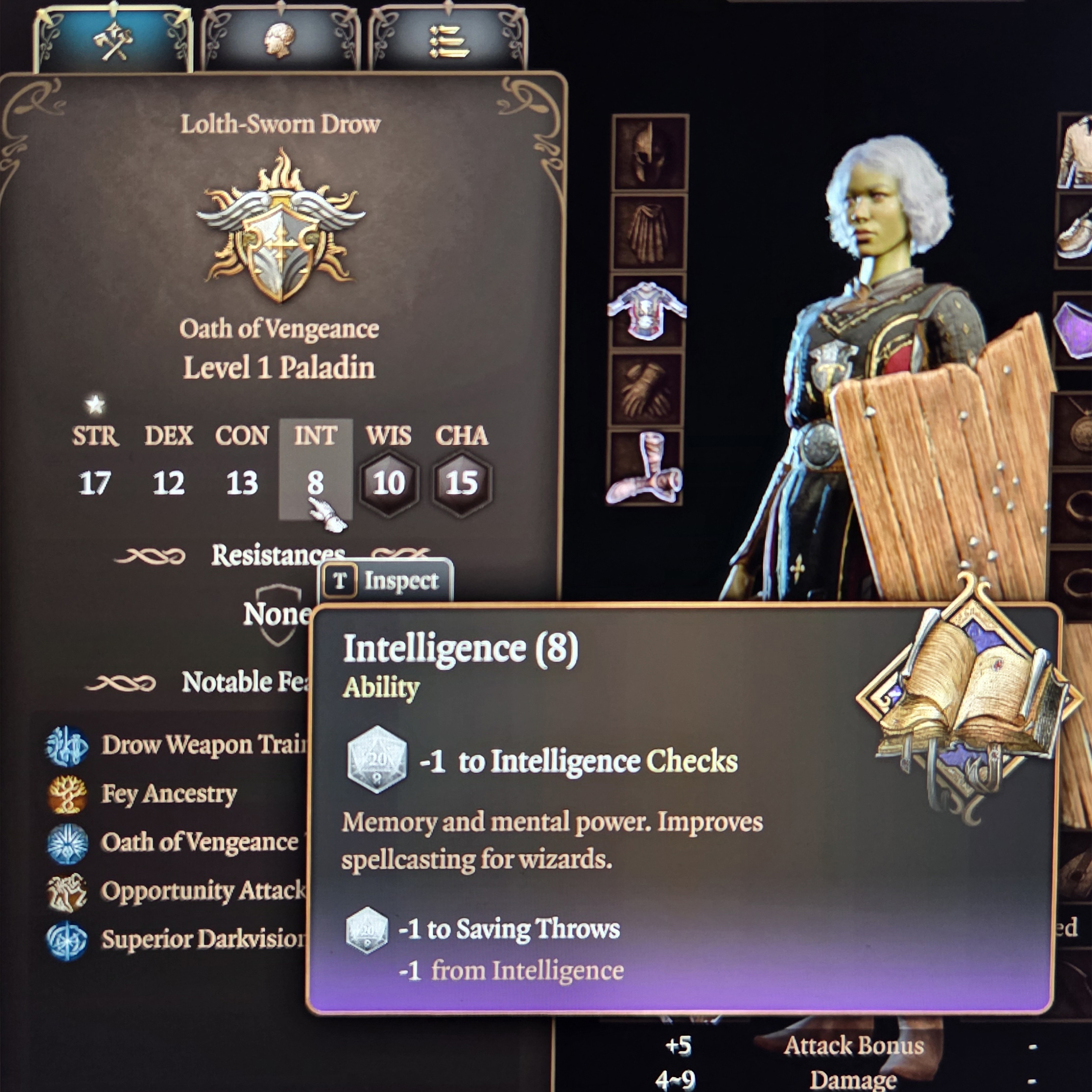
I don't know. I think it's a place. It seems like my characters are trying to get there. Steven wrote in a couple of days ago, and said, are you playing that Baldur's gate game? I was like, well he's like, I tried but I couldn't get into it, but I want to be into it. And I wrote back like I'm just trying to be patient with it. And then he wrote back, I told my friend that starting the game felt like I was filling out a very important spreadsheet, but it was all in Turkish. And I was like, yeah, that's a, that's a pretty good. That's how it felt going into this game. But I was just wondering if maybe, maybe to give you an understanding of where I am with this game I can. And I didn't even check with her, but I'm going to read to you directly my conversation with Libby yesterday. So she, she talked me through some stuff on Sunday night and then I was hitting her up with a bunch of follow up questions. But then I think I tried to give her a day off. There was like a day that I was or is an evening I was playing and I wanted to ask her questions but I was like maybe she, she loves this game and I think she loves sharing the love of her of the game. I think she loves sharing her love of the game with me. But I didn't want to bug her too much, right? She's got a real job, she's an important person. But then yesterday it looks like around 3:30 in the afternoon she just sent me a text that says how's saving Pharaon going now? I don't even know what Pharaon is. I am not far enough in the game to even understand that question bias, but I assumed it had something to do with Baldur's gate. It would be weird to receive this text out of the blue and have it not have to do with Baldur's gate. Ferron. It's F A E R U with a little spike over it. N so she sends me that and I wrote thing. I'm not even sure if this is interesting, but I just want to give you an insight into where my brain is that is unvarnished for TBTL because sometimes I feel like I'm too varnished. I wrote. Thanks for asking. I restarted the game again for a couple of reasons. I wanted to see if I could get my intelligence higher than 8 but it does seem like that's not unusual. So I have a new green lady. I made a. My avatar is a green lady. I also restarted because I was super proud of finding a key on a dead dude and going back to a Previous room to unlock a chest I had found. I was proud of that, but forgot to do it last time. And that ticked me off. So I restarted. See, I'm keeping it clean. Ticked me off.
- [24:10]
A
When you. When you say restarted, like, are you starting over?
- [24:13]
B
I started over in the game about three or four times because the first time I had no idea what I was doing. And then I talking to Libby, I learned a little bit more. And then, like, each time I restarted, I understood even more what was going on. And then I saw I was. I had been missing so many hidden chests and things. Like, I didn't even know how to move around the universe when I started. And so when you start a game, I started a game, I'm always, like, panicky. I feel like the clock is ticking even though there is no clock on this game. You can take all the time you want to to roll the dice. But, like, I just. I didn't see anything. I didn't see the things I was supposed to be seeing the first time. So by the fourth time I restarted, I was like, okay, now I can kind of understand what's going on, and I understand the plot better. I was just, like, zoning out during the, like, action cartoon parts because I was like, I don't care. But now I realize I sort of have to care Anyway. I go on to say, now I can't remember where the hell I left off, because she was texting me in the afternoon and I hadn't played and, you know, since the previous evening. I think I'm trying to explore the church ruins, the ones Shadow Heart is knocking on the door of. I've been enjoying camping and inventory management now that I have a better feel for the game. And she said, yes. It's so soothing to move stuff around and to look into different bags, Find a tunic with one extra armor class in a barrel in a gross old basement. Basically, it's dumpster diving with magic elves. And I wrote, I found a cape or a cloak or something. I couldn't figure out what to do with it. And that's when I accidentally saw my character naked for the first time. It was surprising. And Libby says, they can go through the whole game in their birthday suits if you're extremely confident, I guess. And I wrote, I am not. And then about five hours later, when I was playing the game, I said, I found Lizelle again. I lost her during the crash. And Libby said, nice, nice. She's a bruiser. Then I said, I hope this will give you an insight into my world, Luke. So Now I got the wizard Gale again. He was in a wormhole in the side of the mountain and I swear I met him differently last time. And Shadowheart and Lizelle, I haven't found the white haired guy again, but I'm also exploring a heck ton more now that I know what I'm doing a little bit. I'm definitely having fun. I'm in the basement of the chapel now and I didn't bust through the ceiling this time. So anyway, that just gives you. It goes on from there, but I realize it's getting a little bit tedious, but that just gives you a sense of the world that I am in. We were talking wizards, we were talking about portals in, in the sides of mountains. I don't know what anything is called. I call him the white haired guy, which I think annoys Libby. She corrected me and called him Ariel or something like that at one point. But I swear I've called Shadowheart 17 different name throughout my playing of this. But I gotta say, when I turned it off last night, I was kinda like, ooh, I'm excited to fire it up again tomorrow. See what's in this grove.
- [27:00]
A
So you didn't know your character was naked? So.
- [27:06]
B
You can choose a character. There's like five main characters. And I made the mistake of choosing one of the five main characters to be my character. And it turns out you're not really supposed to do that. You're supposed to keep those characters and you'll meet them in the game later. It's best just to create your own character. You kind of roll the dice and it kind of gives you a bunch of options and then you can choose. You just keep rolling until you see a character you like. But then once you see a character you like, you can go in and change all of their features. Can do anything that you want. I mean, skin color from purple to green. My. I told you I made a green lady. And there's all, you know, eye color, all scars on the face. There are a million choices you can make. A lot of video games do that. Now. There was a podcast called Monster Factory where the guys only played the part of the video game where they created their hideous characters. At the beginning, I think it was a YouTube series, so that's not uncommon in these kinds of games. And, and I do think maybe I noticed you can choose genitals at one point, like different kinds of genitals. And. But she was wearing it. Like I didn't see any changes because she was wearing a robe or something. Like, you're like, you know, like armor or something. So I wasn't really. I just wasn't paying that much attention. I just wanted to play the game anyway. But then later on in the character is.
- [28:18]
A
Is female.
- [28:19]
B
Yeah, I made a green lady.
- [28:21]
A
Oh, okay. I didn't know that was. I just made continuously your character. Every time you started over, you got a new.
- [28:26]
B
Yeah, no, I made a green lady, but then I killed her and I made another green lady.
- [28:30]
A
I'm just a naked green lady.
- [28:31]
B
No, I made a. No, just. I made a green lady and I didn't know you could see her naked. And then later on in the game, I found some other piece of clothing and I was like, oh, where can I put this on? And it didn't fit in any slots. And then I was like, oh, maybe I have to take this other thing off. And also I took it off and then I saw that she was in her underwear and I was like, whoa. And then I realized, you can take that underwear off too. And then she's just right there in her full birthday suit like Libby said. And then I quickly clothed her again and I apologized and I said, this isn't a panty raid from those 80s movies that you and I grew up with. We respect green ladies around here. But Libby does say that this game really earns the rated M for mature label. She says it's very smutty and there's a lot of what I take to be a lot of sex scenes. I don't know for sure which she. In fact, I shared Caroline's voicemail with her and she said, oh, I wonder how Caroline and her son sort of navigate those scenes. And I said, really? I thought you were exaggerating. She's like, no, it gets real steamy in this game. So I don't know how mothers and sons.
- [29:35]
A
Are there characters that you, like, have to get have sex with for the purpose of the game or is that just purely we have to have sex for the game's own enjoyment?
- [29:43]
B
That's what I keep saying. You have to have sex for the game. It's a storyline. I don't know. Like, I haven't gotten to that part yet. And so, like, I don't know, but I'm assuming that it's a story. It's both a storyline. But then you can talk to the characters. But it's not like you type in. Hey, it's not like AI. Where I can type in. Type in on behalf of the green lady. Hey, white haired guy, how are you doing now? Right, Like It's. It gives you a choice of five different kind of dialogue lines. You can. It's like a choose your own adventure book. It's actually a lot like a choose your own adventure book, Luke, because you can choose how you interact with characters. You can choose whether or not you save them. You can choose whether or not you let them just turn your back on them or attack them. There's a. Not infinite, but a lot of different decisions you can make make that will affect your journey. But it is a specific journey, if I understand it correctly. There are beats to the story that you will have to go through. And so I'm still at the beginning of that. So that's.
- [30:38]
A
Are there other people in this game that you're in?
- [30:40]
B
No.
- [30:41]
A
Like other humans.
- [30:41]
B
No. And I don't like that kind. I don't think I've ever played. There's some car crash them up game that I play that you have to play with other people, but for the most part, no, I don't like games where I'm interacting with other real people at the end of the computer line.
- [30:55]
A
I would not trust myself with that. I mean, the closest I've gotten to that was when I used to play online poker a lot. And I would just get. So I would be so mean to people in the comment section.
- [31:06]
B
Oh yeah.
- [31:07]
A
Because I would be losing money and drunk, which is a bad combination for me. And so like, I don't trust myself being in a competitive environment online with people I can't see. Like, I feel like I would. I would be prone to be being like, mean in a way that I wouldn't be in. In normal life.
- [31:24]
B
Yeah.
- [31:25]
A
To somebody's face.
- [31:26]
B
Yeah. So, yeah, that would be.
- [31:28]
A
That'd be a bad situation for me and everyone involved. I'd be a real Leroy Jenkins kind of situation.
- [31:33]
B
Right. In that video game that I told you about a long time ago, I said a car crash mop game. And there's some game that came free with my Xbox. I was obsessed with it about two years ago and I told you about it.
- [31:43]
A
Like you hit soccer balls. Yeah.
- [31:45]
B
You're like basically RV little cars and you're hitting a soccer ball around. But the scale of the game makes it seem like you're more like a real sized car and you're hitting a huge ball around an arena. Right. Well, the only way to play that game is to play with other live players. And I don't. I'm not enough of a gamer. Like, I don't have a gaming headset or I've never done anything where you interact or have any of those microphones set up so you can talk to other people. I don't understand how it works and I don't really care. But I always had the volume down when I was playing that game. And I was so bad at it. Like I'm just not good at video games. But I would zone out, I'd listen to my comedy, bang, bang, whatever, play this video game. And then one time I turned the volume up and like these, these people are just owning me. And in my head I'm just picturing like these kind of tough looking guys just owning me. Right. And one time I accidentally turned the volume up or something. Just two children. Just two of the youngest children. And I was like, this is who I've been playing with at the lowest levels are just kids. Of course it is. It's a kids game. What did I think? But it was so shocking.
- [32:46]
A
Yeah, that would be unsettling for me. And by the way, there should be some rules around that probably.
- [32:50]
B
Right?
- [32:50]
A
Like it's a good point. Is that the one kind of. I mean, I guess the Internet is effectively unregulated too, but I feel like we try to discourage situations where children and adults are interacting in a kind of an unsupervised way like that.
- [33:04]
B
Well, remember that server that we had on our trip to Wisconsin and John got her phone number? Yeah, that's not entirely true. John got her like gaming tag or something like that. Do you remember how she was talking about how she got kicked off of a server because she was saying some.
- [33:22]
A
Really kid to go like you or something?
- [33:25]
B
Yeah, I think worse than that. I think worse than that she was. Said some pretty angrily graphic things to a child. And then she's giving John her new gaming id. She says he had to change it because they had kicked me off. So she's just going around creating new alternate identities so that she can bully kids online?
- [33:43]
A
Guess. Yeah, she was a. She was a character. She was over at that kind of like the local pizza lodge.
- [33:50]
B
That and Polish in Polish food.
- [33:54]
A
And Polish food.
- [33:55]
B
Bizarre. Yeah. God, that was good.
- [33:58]
A
Anyway, I, I was. I keep talking about this movie her, which I rewatched on the plane the other day but obviously made a big impression on me. But there's. There are all these scenes where Joaquin Phoenix's character is playing this video game, but it's. I don't know why. It was weirdly compelling to me. It's. He is this character that's trying to walk up a snowy hill.
- [34:17]
B
Oh, yeah, he does, but he doesn't have.
- [34:19]
A
He doesn't have a controller. He's doing this little thing. He's basically, like, using his fingers, like a little, you know, as if your fingers were the legs of a character. And he's doing this little walking motion with his fingers, which kind of helps the character try to do this thing. And it's just all projected kind of three dimensionally into his living room. And I thought it looked actually kind of weirdly fun. Like, I was like, I could see unwinding with that. It's probably the first time I've thought that about a video game in a long time. I don't think it's a real game. And then, of course, he also meets this character that's just this little blob. We think it's a child because it has a young voice and it just keeps saying F you to him.
- [34:55]
B
Right, right. It's super rude to him now.
- [35:00]
A
It's super mean.
- [35:02]
B
Yeah. Are you into the game where you. You're an egg and you got to get all the eggs into the egg's mind?
- [35:07]
A
I don't know. I've never been this far before. We made it. I don't know. How far. How far are we into the show before our first Tim Robbins.
- [35:16]
B
Let me see here. We got 35 minutes in. That's not bad.
- [35:19]
A
Hey, not bad. All right, let's. We've done a good job. Let's thank the donors.
- [35:31]
B
Thank you, baby.
- [35:34]
A
All right, let's thank those donors now. These amazing people are supporting TBTL with a financial donation. It's how this thing is a job for the three of us. 100% listener supported podcasting. Thanks to folks like Jill Rand of Kirkland, Washington.
- [35:50]
B
Thanks, Jill. Sorry about all the me reading texts about a fantasy video game. That's probably not the best way to address that topic.
- [35:57]
A
No. And Andrew was helpful. I'm in. I'm in. I assume Jill's position of knowing nothing about the game, and I needed an explainer, and that actually really took me into the world of how incredibly sort of baroque it is. Can I use baroque in that way?
- [36:14]
B
Do you mean sort of rich? I always think layered, and I guess.
- [36:18]
A
I just meant complicated.
- [36:19]
B
Complicated. No, Maybe that's. Maybe. Yeah. I don't think. Yeah, I think baroque works there.
- [36:24]
A
Baroque is.
- [36:25]
B
Is a.
- [36:25]
A
Is a. Is a period of class. It's a style of classical music, right? Yes, that's. And it was a period of time. Right. The baroque period.
- [36:33]
B
That sounds right, but I don't know.
- [36:36]
A
I learned about It. Because I learned it was. The style of classical music that I liked is called baroque music. Yeah, it's very like, you know, Tchaikovsky kind of stuff.
- [36:45]
B
Is Tchaikovsky baroque? Now that I would.
- [36:49]
A
Well, I wasn't rich, so.
- [36:50]
B
Well, that's what I was going to say. I'm baroque as a jerk. Joke. Was that a sh.
- [36:55]
A
Possible show title? Baroque as a joke.
- [36:58]
B
But I thought. I thought baroque was like. Because I used to help a little baroque orchestra, small orchestra. And I thought it was more like they were called Apollo's Fire. And I think they're still kicking around the Akron area for whatever that's worse. But I thought they had. I thought baroque music was. It has the. It has the keyboard that is clangy. What am I talking.
- [37:22]
A
Oh, like the harpsichord.
- [37:24]
B
Yeah, I think it was harpsichord music, but maybe I'm wrong.
- [37:27]
A
Interesting. Well, I got this from my buddy Peter Williams, who is a cellist, by the way. Corner office guy is back and he is. Looks really happy. It is so weird to observe someone. This is getting a little stalkerish. It's weird to observe someone who does not realize they are being observed. Yeah. Little nose pick and nothing, nothing, nothing strange is happening, thankfully. But, like, he literally got up from his desk and he walked out of his office, like, with literal pep in his step, like he was. And his door was closed at the time. So he wasn't doing this performatively for anyone else. He jumped up to walk out of his office and he just looked so happy while he was doing it.
- [38:07]
B
I'm happy for him.
- [38:08]
A
Interesting. I always. So Peter told me, because, you know, he played a variety of classical styles of classical music in his time growing up. And when I'd go to his concerts and stuff and I. And I would tell him the stuff that I liked versus the stuff I didn't like, he was like, yeah, you like baroque music. So that's as far as the research has gone. For me. I always assumed that meant lush strings, things like Vivaldi's Four Seasons or Edvard Grieg and stuff like that. That's all in my mind. I classify it as baroque, but I could be totally wrong. It could be much more harpsichord. I don't go crazy for the harpsichord stuff. The harpsichord stuff makes me think a guy is going to show up in a wig and it's going to be weird.
- [38:51]
B
Well, I'm the one who called the harpsichord the keyboard that's kind of clangy. So I'm not going to get over that.
- [38:56]
A
So we're obviously both experts.
- [38:57]
B
I'm not going to get over that.
- [38:58]
A
Bobby Pape when we need him.
- [39:00]
B
I don't think that Tchaikovsky was baroque, though. He was a Russian composer of the Romantic period. He was born. It looks like he was born in the 1800s. And Baroque is more 1600-1750.
- [39:13]
A
Well, then I guess I don't love baroque. I guess I've been. Maybe I like romantic.
- [39:17]
B
Maybe. Yeah. What is Vivaldi? All right, I like the way I'm explaining this to you, but all I'm doing is googling and looking up people's Wikipedia pages. I feel like.
- [39:29]
A
You know who else appreciates it? Sean Marie Hegman, who's in Pawtucket, Rhode Island.
- [39:35]
B
Hey, Vivaldi is baroque music, Luke. So. So good job on that. So you like Vivaldi. That's baroque.
- [39:42]
A
So Vivaldi is baroque, but Tchaikovsky is not.
- [39:45]
B
Tchaikovsky is too. Too much later, I think. And he's Russian.
- [39:52]
A
Oh, wait. So the country of origin matters too? As far as the designation, that would be.
- [39:56]
B
Okay. Baroque music.
- [39:58]
A
Maggie Lewis Stevenson told me in Milton, Delaware, by the way, we're getting a really solid east coast representation. Sean Marie is in Potato. Maggie is in Milton, Delaware.
- [40:09]
B
I like that. I like that.
- [40:12]
A
Molly Jamison is down in Tallahassee, Florida. Thank you, Molly. I'm sorry. Keep going.
- [40:15]
B
I was just gonna say. Yes. So it does say baroque music refers to the period or dominant style of Western classical music composed from 1600 to 1750. So Tchaikovsky would be the wrong period and the wrong part of the world. But you're right about that. He was Baroque as a joke. But then Vivaldi, though. I'm just gonna keep saying that until it gets funnier.
- [40:36]
A
I'm trying to work it to two Baroque girls reference.
- [40:41]
B
Yeah. It might be better than Baroque as a joke. Honestly, I think I might go with that one. Yeah. So, yeah. Do you like Vivaldi? Are we getting. I do.
- [40:49]
A
I love Vivaldi because I'm a basic.
- [40:51]
B
B. Yeah, but Vivaldi is wearing a wig. Does that. Didn't you say you are against wigs?
- [40:55]
A
Oh, I didn't know he had a wig on. I mean, in this. I'm reconsidering it now.
- [40:59]
B
In this portrait. Yes.
- [41:00]
A
No.
- [41:01]
B
I find no videos of Vivaldi. You can't find a video of Aaliyah Antonio Vivaldi anywhere.
- [41:06]
A
Are you previewing our top story today?
- [41:08]
B
Yes.
- [41:09]
A
Thanks also, by the way, to Jeff McKee, who's in Linwood, Washington, and then keeping it in the Northwest. We also have to thank David Short of Seattle, Washington. Thank you so much to all of our donors for making TBTL possible. We would not be here doing this, I would not be talking into this computer from Washington D.C. on this Thursday if not for the support of the listeners. So thank you very, very much. We do appreciate it.
- [41:41]
B
Hello and welcome to Top Story.
- [41:45]
A
So the top Story today that I wanted to talk about is an article in the. Well, it's almost an opinion piece by Alyssa Wilkinson in the New York Times talking about documentary filmmaking and AI. The headline is can you believe the documentary you're watching? And for all the conversation around AI and art and the way that it's, you know, impacting how music is made and films are made. I didn't think about this aspect of it, Andrew, which is because I'm a huge documentary film fan and basically like we, there are, there's a lot of stuff that you would put in a documentary list, particularly something historical circle if you had it, but you don't have it. You kind of made a joke about like, well, that's. What's the Some Guy Mark. Is that the name of that guy that we love?
- [42:30]
B
It's literally his handle on TikTok and Instagram is at Some Guy Mark. And I can't remember his, his actual legal name right now, but he does, he does that video that we quote all the time where he's pretending to be like a, a conspiracy minded kind of a rogue. Yeah.
- [42:47]
A
And he's saying there's no footage of Abraham Lincoln. There's no film of Abraham Lincoln. Lincoln. Well, with AI, you can now create film of Abraham Lincoln. And you know, you could kind of, in a way you could sort of, you could feed in a lot of information about what Lincoln was like and how he looked and you know, based on photos and maybe how he sounded, et cetera. And like you could actually create some footage. And this is a temptation in documentary filmmaking because you need footage of things and you often don't have it. And where's the line for using AI to sort of fill in those gaps? And in fact the, a lot of documentary filmmakers have now organized into a sort of a, not a union per se, but basically a group that is trying to get more rules around like what we can call a documentary film based on if it's going to, if they use AI or not. And, and the thing that I've always been interested about, well, disappointed in about the documentary film scene of late is I feel like, like documentary films used to be, they felt to me to be a little bit sort of like underappreciated in the general Culture. Like, I was always a fan of documentary films, and then you had some documentary films that really made a splash. And then all of a sudden Netflix was like, oh, we're going to make a shitload of doc. We're going to call them documentaries, but they're just going to be like two people talking and, you know, we're going to do two main interviews for it and then use a bunch of existing footage and. And just call that a documentary. I feel like the quality overall of documentaries has gone down precipitously because they're making them more slap dash and more quickly and they're doing less research on them than they used to. But, yeah, now they can, you know, augment it with AI and the problem is, of course, that this is going to make people not trust documentary film anymore. And there's this thing, I think it's called the liar's incentive that she writes about in this article, which is basically the. The liar's dividend. It's a term coined by two law professors in 2019. The idea is simple. We're becoming more aware of how easy it is to create convincing fake videos, which means people who claim real videos are fake are becoming more persuasive. If they're caught on video but claim the video is AI, we're more likely to believe them, or at least we might feel. Feel pangs of doubt. And this is, I think, a real thing and a real problem is that you can just like, particularly if you're somebody like Donald Trump, you can. And they actually quote this crazy thing that he said. Remember when somebody was throwing a garbage bag out of the White House? Do you remember this footage?
- [45:18]
B
No.
- [45:20]
A
Somebody was throwing, like, black garbage bags out of, like, the third story of the White House at some point. And people were like, what's going on with that? And Trump, in typical Trump fashion, who I don't think had any idea about the garbage bags being thrown out, didn't miss the chance to riff on it. And he basically said, it's AI it was like, it was not AI. The White House later explained there was construction going on, but he basically said, I don't have the quote right in front of me. But he basically said, like, again, in very Trumpian fashion. Okay, here's what he said. In September, a clip surfaced in which a black garbage bag was apparently tossed from the White House window. Window. The White House press office said a contractor was doing routine maintenance, but President Trump falsely declared the clip was AI Anyway, quote, one of the problems we have with AI it's both good and bad. He said if something happens really bad, just blame AI. But also they create things. You know, it works both ways.
- [46:16]
B
Wow.
- [46:17]
A
So that was illuminating. As a. Thanks President.
- [46:21]
B
I that remind. I don't know, I don't want to sidetrack us because I don't have the details of the story to sidetrack us anyway. But I heard one of my first examples of something that I've been waiting to hear for a while, which is just purely dismissing recorded evidence of something as AI to a party that doesn't wanna be. Doesn't wanna admit they got caught with their pants down. And have you been following Pablo Torre's investigation of Phil Mickelson and some insider trading scandal?
- [46:50]
A
I just saw a clip of that yesterday and I was intrigued. I'm here for all things Phil Mickelson related.
- [46:56]
B
The last episode that dropped yesterday was more of a backgrounder in Phil Mickelson. That's very, very interesting. With his. With the person who wrote a biography about him and has known him for a long, long time. I found that one even more interesting. But the one that was more investigative, and it's not Pablo's investigation, it's another investigative news service that Pablo had on to like, kind of talk about the reporting. But Pablo is also doing reporting on it now. Anyway, like I said, I don't want to get deep into the weeds of what the scandal is about, but essentially a bunch of guys, guys who were basically caught insider trading on a phone call like that. I think Pablo played the tape on the podcast, but the official response from the people who were kind of caught on tape was just like, that's AI. That's AI. It's not real. But then later on they were caught discussing it and clearly they were not talking about it, you know, in private. In private, they were not discussing it as if it were some fake AI thing. It's not fake AI, but they can just say that. And this is what's always been the biggest threat to me is just there's going to be so much confusion, just so much confusion that any. I'm already really, really frustrated that it feels like people that I care about are not maybe seeing the news that I think is really, really important because everybody's choosing what they see. But now when you're like fully choosing what is reality and what is not and just you can't believe anything, there's no arguing anything. There's no arguing for the truth at all. When people are just like, well, I don't believe that, because it could Be AI.
- [48:21]
A
I mean, it makes me wonder, I don't want to be alarmist, but it makes me wonder as this gets better and better. And you've got this Sora app, kind of like AI, you know, filmmaking that we've talked about that, you know, you can literally just tell it to make any kind of a short video clip you want. It's got a tiny watermark, but that thing kind of moves around. And also apparently they figured out, people have figured out how to take the watermark off and it's already pretty close. We were talking about like the Mr. Rogers talking to Tupac style stuff. Like, I mean, what's going to happen in, in three years, three years? What's going to happen in three months when it's so much better than it is now? And it just, they, you know, anyone can make any clip of anybody doing anything and they just want to like, let's say AOC runs for president, which I hope happens. And then somebody just makes a clip of her doing something totally insane and it's not real. Then she comes out and says, that wasn't me. But then people will say, well, her saying it wasn't me is AI. Like, because we all just want to. I was talking about this the other day on the show. Mostly we just want to confirm our prior suspicion about everything. So if I don't want to believe, if I don't like what's happening in a video, it's easy for me to just go, it's AI. And then I don't have to believe it or deal with it.
- [49:33]
B
One thing, I did not read this article that you're talking about because reading is for chumps. But I've always said, hearing you just, I appreciate that you have the ability to read so you can tell me stories on the show like this one. But obviously I'm very concerned about this AI situation, about blurring the lines between what is real, what is not, what is true, what is not. Having said that, I could see the arguments of a filmmaker who is into AI. By the way, I'm not co signing this, but it's just, it was an interesting, while you were talking, I was doing a little interesting sort of comparison or just kind of soul searching on this. Because if you're doing a documentary about a figure, a person who is around before video or even before photography, what, you know, the classic Ken Burns style of filmmaking, you're going to show maybe portraits of them, right? Paintings of them, Paintings and portraits. Later on it'll be, it'll be photos, but Then also one thing, and I never liked this, and I don't think you would either. Even though some of the great documentary filmmakers did do this was reenactments, right? Yeah, like, they kind of subtle reenactments, but it's like, maybe not. Not even with dialogue. Not like the really corny ones that you would see on American America's Most Wanted or whatever shows did that. But still, that always seemed like a very clunky thing to me. But that was another option that filmmakers had. Well, we can do reenactments, and you might put on the screen at some point, like, this is a reenactment, but it's also pretty obvious it's a reenactment. But I could just sort of see some filmmaker that doesn't have an issue with using AI saying, hey, listen, in the past, we used other depictions of these characters, of these real life characters to bring the audience along with us. And the painting. Why is there truth in a painting of somebody? Because that's an objective version. Is a painting not literally an objective version of some artist's reality, even if it's very, you know, realistic looking? And so I could just sort of see that argument as saying, like, well, now we have better technology that can tell the story even better in a. And bring the audience into the story more. Why would we not use that? And the reason is, is because. Because it just muddies the. Because it could be. It could look so real that I think the argument against it is, well, a painting is obviously a painting. A reenactment is usually pretty obviously a reenactment. And I do think that you have an ethical obligation to label it as such. And with AI, you'd have to. You have to have that same obligation to label it as such.
- [52:01]
A
Yeah. One of the things that this writer talks about in the article is there's a concern that basically, if somebody makes an AI video right now of. I'll just keep going with, for some reason, Alexandria Ocasio Cortez. If someone made a. A fake video of AOC and they didn't have the SORA watermark on there, they got rid of it or whatever. And then that's just on the Internet and it's not tagged as fake. Years from now, somebody making a documentary could go back and find that and think, oh, this is real footage. And then it becomes kind of of part. Part even more so of the, like, official record of life. Like, if we're creating a bunch of AI faux things, will the future generations know what is the real Stuff from our life. And what is the fake stuff?
- [52:48]
B
And also you and I. I mean, in. In the most tbtly unimportant way possible. I feel like we've even come up against this without AI Just like things becoming canon that were actual jokes. Oh, you know what a good example is and very, very specific to us. But for the longest time, we thought we had tape of our friend, television's Chris Hayes, doing a scat impression of Kenny Strauss, the Yo yo guy, who is a character. You know, it's like the layers on that story alone are so deep. But basically, one time on the show we had Chris on. He was joining us via phone, and he played a drop, literally from our show, a drop that we had played before, but he played it back over the phone line. You and I completely forgot about the fact that he was playing that over the phone in our heads. It had just become, Chris Hayes is doing an imitation of the scat. It got to the point where I lined up his version and the original version, and they lined up perfectly. That's when we started to realize, wait a second. Go back to the original tape. He wasn't scatting. He was playing tape of our scatting guy. But for years, or at least a year, I think we just had misremembered that. And same with that foamer guy, the train foamer. We think of him as being the huge train fan, and he is. But we later learned that he was recreating that moment. He was doing a bit of a parody. And I don't think that is. Again, it doesn't matter. But just in our universe, we don't think of it. We don't remember that this guy was doing a parody. We just picture the guy who was really enthusiastic about trains.
- [54:30]
A
Yeah. I mean, again, I'm not saying anything novel here, but I mean, I found this article to be a very fascinating read, and I would recommend it to folks. But I also found it to just be deeply depressing because I really do think that the toothpaste is out of the tube on this, and we are going down a road that we. I just don't think we are. I mean, some people are probably like, you're talking about AI too much on the show. And also, Luke, you know, nothing about it. Both things are true. But I just feel like we're in a way, not talking about it enough. Because everything is gonna. When we. When we literally cannot believe our eyes, we. What are we gonna do? How are we gonna have any kind of an agreement about even, like, who Literally is the president.
- [55:13]
B
You know, our eyes and ears, I think too, you know?
- [55:16]
A
Yeah, yeah, throw ears on the list.
- [55:19]
B
Throw ears.
- [55:19]
A
Oh, your ears are always throwing up about something.
- [55:22]
B
Never go to one of Luke's barbecues when he says things like, yeah, throw ears on the list.
- [55:27]
A
Yeah. It's like, that's the only meat that I eat these days. I'm on an all ear diet. But you know what I mean, it's just like, I feel like this. And then you, like, just read about these companies. Like, I don't think that this SORA too should exist. Like. Like, I think it's a really bad idea because it just. I just feel like, are people in Silicon Valley, like, are they this greedy like that, that they would, like, unleash this thing that is going to potentially just like, ruin life on this planet even more? Because what, they want to make a little bit more money or something? Like, it. I mean, it feels to me almost nuclear. Like, it feels like it's like it's just handing a nuclear bomb to people and just trusting them to use it appropriately. Like, I know that seems, like, extreme, but I just mean once we can no longer believe what we see and hear, I mean, what are we going to do? Like, what is going to happen to this society? There's like the tiniest. Like, again, right now, if there was a crazy video of somebody doing something, I think we're still in the last phases of the time where that person could go on CNN and say, I didn't do that, and there would at least be some amount of consensus around they didn't do that or whatever. But, like, pretty soon it's just. It's going to be indistinguishable and. And the only thing we'll ever be able to believe is literally something that we watched with our own eyes in the same room. Because everything else will just be kind of, like, up for debate. And it just seems like it's going to be so destabilized.
- [57:02]
B
It's like Shaggy's wet dream.
- [57:07]
A
I don't know that reference.
- [57:09]
B
Please tell me I got the artist right. Didn't he do the It Wasn't Me song?
- [57:13]
A
Oh, yes. You were talking about Shaggy from Scooby Doo. And I thought you were getting access to a much more adult version of Scooby Doo than I was. Zoink, Scoo.
- [57:23]
B
Unfortunately, everywhere soaked. Unfortunately, that is a dark part of this that we. There's just a big headline that I think broke yesterday talking about. And of course, I mean. I mean, it's I don't want to linger on this much but you know, using the porno, the pornographic implications of this, where people are taking photos of real people, that this being advertised like that I saw in the screen grab of. I, I can't remember the news outlet, I saw it kind of being shared. I think Chris shared it and some other people were sharing it on Blue sky. This very scary article about how like it's basically being advertised as un know that girl you fantasize about on your ig. You can, on your Instagram you can take a photo and then I can fill in the rest and then.
- [58:06]
A
So violating.
- [58:07]
B
So violating. It's so. That's right. And I think Mina Kimes reposted it as well. And so I just think it's. This article is, is making the rounds as we speak and, and, and it's worrying. It's obviously more than worrying. So. But there is a, there is a lighter side of this conversation that doesn't have to do with AI, but has to do with scatting that I forgot to tell you. And it really bothers me.
- [58:30]
A
Not scat.
- [58:31]
B
Not scat. No. This is above board. The only that's not above board about this is the fact that this happened to me on. Let's see here. When was I traveling? Not this week. I was traveling last week. Right. So I was in the airport last Monday evening in Cleveland. Luke. There is a local brewery called Great Lakes Brewing Co. That was even there when I was in high school. And when I go back to Cleveland, I try to have like maybe one IPA from Great Lakes and they had switched over to their Christmas only brew or whatever. So I had trouble finding a regular great, like a can or a bottle of regular Great Lakes beer when I was at home. No big deal. Didn't think much about it until I'm in the airport two and a half hours before my flight. And I see that they have one of those in airport bars that is Great Lakes Brewing Company. I'm like, well this is, is a good place for me to spend about 90 minutes. So I sat down and there were only a few people there. The airport was very, very dead. I had an IPA and the bartender was sort of bopping around to some dance station that she had on. And what song do you think came on the algorithm?
- [59:46]
A
It's a dance station.
- [59:48]
B
It's a dance station.
- [59:50]
A
I don't even know what that means.
- [59:51]
B
Well, dance music. It's music, okay? It's not iron.
- [59:55]
A
What era? 80s, 90s, 2000s?
- [59:57]
B
Today, I want to say very late 90s, early 2000s.
- [60:06]
A
And this song is significant for a reason. It's something that we referenced a lot on the show.
- [60:09]
B
Oh, yeah, buddy.
- [60:12]
A
But it's not Donovan, because that's really the only music I can imagine you listening to. Was it on the mixtape that you made for our drive. Drive to Minnesota?
- [60:21]
B
No.
- [60:22]
A
Okay. Dance music that is relevant. Oh, scatting.
- [60:28]
B
Ah.
- [60:30]
A
Was it a Scatman's World?
- [60:35]
B
Scatman's World. By the way, I don't think I'd ever heard it in the wild before. I was blown away.
- [60:44]
A
Did I tell you that Becky totally knew about Scatman? She's like, yeah. What do you mean? He's like, yeah, everybody knows about Scat.
- [60:49]
B
I think people just slightly younger than us just. We're just like, generational. Yeah, Scatman was just something like, you know, my buddy Nick Jarin, he was like, oh, yeah, Scatman's World.
- [60:58]
A
Absolutely.
- [61:03]
B
For us, it was just like a novelty that we came across in our. In our late 40s.
- [61:07]
A
I literally thought we discovered it. Like, I thought we were the only people other than Scatman who knew about him. Him. No, that also, I probably bring this up all the time. Speaking of, I don't know if it's baroque or not, Andrew, but I believe that he's kind of like utilizing Pachelbel's canon in that song.
- [61:22]
B
Oh, you're right.
- [61:24]
A
It's kind of a funky, reworked way or one of those songs. Like, I feel like it has a kind of a. It's using kind of a melody from a classical music song that I remember. But that song is actually kind of good, is the thing. Like, if I hear that, if that were to come on the radio or if I were to be somewhere and hear it, I would not. I would unironically not be mad about it because it's pretty catchy.
- [61:47]
B
Well, you know what I always say to Scatman John? You baro it, you bought it. You're not confusing that with. There's that graduation song.
- [61:58]
A
No, but that one definitely uses Pal can by Vitamin C. Vitamin C, that's who it is.
- [62:03]
B
Right?
- [62:04]
A
As we go on, we remember something. Something. Pachelbel's Canon.
- [62:11]
B
Oh, that's it. No, that's it. You nailed it.
- [62:13]
A
Yeah, that was good. There's a right way to rock and.
- [62:17]
B
A wrong way to roll. You can't just listen to your soul. Just remember that life is number one.
- [62:28]
A
You can be having so much fun.
- [62:31]
B
Just remember. Pal, best known composition and one of the most widely performed pieces of baroque music is Pa Bell's canon. Luke Burbank look at you. You were about to say something. I cut you off though. What were you about to say?
- [63:02]
A
Oh, I was gonna say somebody wants me to stop singing Vitamin C. So they activated the blursday music.
- [63:08]
B
I thought we're all on the same page. All right, we do have some blurs days to get through today. If you want to wish somebody, including yourself, a happy birthday, email me andrewbtl.net, put Blursday in the subject line. Got this note from our musician friends. Happy blursday to Brian from Joe over the years Brian and I have shared many spreadsheet together. Hey, you might like Baldur's Gate 3 and traded music back and forth on USB flash drives we found in parking lots. Brian is currently time banding right now. Somewhere back in October I think. So I'm not sure when you'll hear this Brian, but I hope it was a great blursday. Happy Blursday Brian Hey, Joseph in the Bronx says I am turning 46 on the 2026, the day before my birthday. I've been listening to TBT. Oh, that's also Lenny Samoski's birthday by.
- [64:01]
A
The way of the Samaski's Pizza fortune.
- [64:04]
B
I think there's some connection there, but it's not his pizza shop. He was my best friend growing up, Lenny and we had birthdays literally one day apart. And so Joseph shares that I sometimes do wonder like does Lenny Samoski exist somewhere in Ohio knowing that there are tens of listeners?
- [64:20]
A
He looms so large in our lore.
- [64:22]
B
They know his birthday might freak him out a little bit. Everybody leave Lenny alone. Joseph in the Bronx says I'm turning 46 on November 26th. I've been listening to TBTL since my actual 20s and I have somehow ended up here firmly in middle age. Happy blurs a Joseph welcome to the club. Justin says Happy Blurs day to Erica Erica Erica Erica is a TBTL Army Recruiting Angel Angel Ballard Chapter celebrating her birthday on Tuesday. This is her 11 Justin dropping a blursday boop with her. There's no mountain too tall and I'll use a little blurs day boop.
- [65:03]
A
Yes. Wonder if my I'm busy looking up Scatman's World and if it uses Pachelbel's.
- [65:09]
B
Canon or not does it so far it's jury still out on science?
- [65:13]
A
No. Well here's one thing. AI says the song Scatman's World is not based on a pre existing song but it was created by Scatman John to be the title track and a key part of his album of the same name. The song itself, along with others on the album, was inspired by Scatman John's personal life, including his stutter and his message of self acceptance.
- [65:31]
B
It is. That song is very much about self acceptance. Adam says happy 14th birthday to Sean. I know you'll be busy on stage in the final performance of A Midsummer Night's Dream for your birthday, but you probably have some homework due on Monday, so no excuses. In all seriousness, you're a pretty great kid, despite what your older siblings say. We love you. Happy Blurs day, Sean.
- [65:56]
A
Happy blurs.
- [65:57]
B
Yeah. Congrats on the stage production. Hope it's going well. Break a leg. That's what the great bard said. What do they call. What do they call Macbeth when you're not allowed to say the name of Macbeth or whatever? What is it? The. Well, there's some.
- [66:18]
A
There's a term that you're supposed to use. You're not supposed to say Macbeth in the theater. It's bad luck or something.
- [66:24]
B
Yeah, right. So I'm looking. Yeah.
- [66:27]
A
What do they call him?
- [66:29]
B
What do they call it? The great play. The Scottish play. Scottish.
- [66:33]
A
Ah, yes, the Scottish play.
- [66:37]
B
Gotta find my tab. Here's my Blur state tab. Looking things up. Matt says I want to wish a very happy Blurs day to Wisconten listener Annie. You are truly a remarkable person and partner. I love you. Our adventures and every day in between. I hope you have a wonderful birthday. Love, Matt. And your amazing TBTL harmonica. Sing along, Dog Brewer. Oh, that's right. We saw that video. I think we even played it on the show, right. Of Annie's dog singing along to her harmonica tune. Love it. Happy Blursday, Andy.
- [67:11]
A
Now, I'm reading about the critical reception of the song Scatman's World on YouTube.
- [67:15]
B
Was it well received by TBT?
- [67:17]
A
Not great. In his weekly UK chart commentary for Dot Music, James Masterson said, now he's back with the follow up in pretty much the same vein without the novelty value of the first hit. It will be interesting to see if this manages to top the number three peak of its predecessor.
- [67:34]
B
Wait, wait, wait, wait, wait, wait, wait. Scatman's World wasn't the first hit.
- [67:39]
A
No, the Scatman was the first hit. The ski bop bop bada bop one.
- [67:44]
B
The one that we play. That was his biggest hit ever, right?
- [67:48]
A
That was his biggest hit in 1994. And that one is called Scatman. Parenthetically, Ski bob bop bada Bop. And then he did a song in 1995 called Scatman's World.
- [67:59]
B
Well, the song we play is Scatman's World. He literally says it at the beginning. Scatman's World. No.
- [68:05]
A
Right.
- [68:06]
B
Yeah.
- [68:06]
A
But then in 1995, he also put out Song of Scatland.
- [68:10]
B
Oh, Song of Scatland. Stay away from Scatland. Clean your shoes. Walk around Scatland all day.
- [68:17]
A
Or just throw them out.
- [68:18]
B
Yeah, probably.
- [68:19]
A
Scatman's World has the most insane art on it. I love it so much. It's that 1950s mic that we always talk about with a fedora on it.
- [68:28]
B
Yeah, he's got. He loves his fedora. And the video.
- [68:30]
A
Video.
- [68:30]
B
He's, like, dancing around in black and white. Right? Or something. Where were we? Dana in Lexington, Kentucky, says, I'd like to send a happy blurs day to me. I'm joining the legions of tens who can kick, stretch, and kick. Because I'm gonna be 50 years old. I was just making sure. Is it kick, stretch, and kick? I was just making sure that I didn't misread that. Is that what the Sally o' Malley kick? Stretch and kick.
- [68:57]
A
Because I kick and I stretch and.
- [68:58]
B
I kick the fish.
- [68:59]
A
Famous SNL character, right?
- [69:01]
B
My brother and I cracked on my dad about becoming an antique when he turned 50, and now here I am. It's been a challenging year for me, health wise, but here's hoping the next year is happy and healthy. Indeed. Dana?
- [69:12]
A
Yeah.
- [69:13]
B
Hope you're feeling better. Happy blur.
- [69:15]
A
Yeah. Tell me how it is being 50, because I'm gonna be doing that soon myself.
- [69:18]
B
Knocking on that door. It is really your May. Your May 9th. Are you May 9th? May 8th? God.
- [69:27]
A
I mean, listen, I continually forget that your birthday is on Thanksgiving, so.
- [69:30]
B
Well, it only happens every Sunday.
- [69:32]
A
No Judgment day. You know what I've noticed? I was. We were doing a TV shoot earlier today, and Nate Bargetzi has a bit about this where he just basically says, like, at one point, you're like, the young person in the room, and then one day, everyone's just younger than you. It's crazy. And, like, everyone associated pretty much with this shoot was younger than me, including the people at the place we were filming. Filming. And I said some kind of a joke to the guy I was interviewing about, you know, well, at my age or something. And I've used that. I've overused that as a device, you know, when I maybe wasn't that old. I was in my 30s, and people even kind of get on me. Certainly Becca gets on me about, like, not talking about being old in a negative way when I'm not old or whatever. But now when I say something, like, about, well, at my age, people just buy it. Like, people just go with it. Like, they're like, yeah, that's a good point. At your age, that you are older than the rest of us. And also, you know, like. Like, it's. It's weird. It's like I've been used. I've been leaning on that as a kind of a comedic premise for so long because it was not really true. I was 30 or 35. Now when I just say, well, like, you know, if you're my age, it's like, no, it's. Now, that's just an accurate way to describe things, if that makes any sense.
- [70:40]
B
Yeah, absolutely. You're. You're hoping for an iu. Oh, you kinda.
- [70:44]
A
I mean, I must be subconsciously hoping for a little bit of, like, you're not that old. And it's like, no, you're. You're significantly older than everyone in this room. And that's fine.
- [70:57]
B
This one, I got a little trigger warning on. It uses some pretty raw language. Rose Win says, happy birthday to my dad. Chris, thanks so much for not being a total turd sandwich this year. Have fun at comedy without me. Tootle love, Rosewin.
- [71:15]
A
Aw.
- [71:17]
B
But it was nice. He was not a total turd sandwich, which is so. It's a compliment. Happy blursay.
- [71:23]
A
Chris, what do you put on the turd sandwich? I mean, is there any. There's just no saving that, right? It does not matter how much cheese, lettuce, tomato. Yeah, but you're gonna taste the turd.
- [71:33]
B
You are. But you gotta try to mask it a little bit. Maybe some barbecue sauce and some sriracha. Just washing that out of my mind. And then finally, Lindsay here in Westfield, Indiana, says happy Blurs day to my favorite 10, Brian. I'm so glad we got to celebrate your second time turning 22. Watching our oldest five crush it on the basketball court while our younger five cheered him on from the sidelines. Happy 44th Blurs Day. We love you. From Lindsay, Noah, Ella, and Binks, the kids cat.
- [72:07]
A
A cute.
- [72:08]
B
Absolutely. Oops. I almost pulled out our microphones. We're not. We. We're not that far into the show. Got to still keep the mics up here for a second while we close.
- [72:16]
A
Out as we wrap things up on this Thursday. Happy Blurs day to everybody. And yeah, if you want to celebrate your blurs or someone else's, go ahead and email Andrew for that. We're all done for today, but guess what? We're coming right back at you tomorrow. Tomorrow with more imaginary radio. So if you can tune in for that. In the meantime, have a great Thursday. Take care of yourselves, and please remember, no mountain too tall.
- [72:41]
B
And good luck to all. Power out.