
Podcast
Tech Life
Hosted by BBC World Service · EN
Tech Life discovers and explains the ways technology is changing our lives, wherever we are in the world. We meet the people with bright ideas for rethinking the way we work, learn and play, and get hands-on with the products they dream up. We hold tech giants to account for their huge power to affect our lives, and ask who wins, and who loses, in the technology transformation. Tech Life is your guide to a future being made, and remade, at lightning speed in front of our eyes.
36episodes
Episodes
Newest firstAll episodes
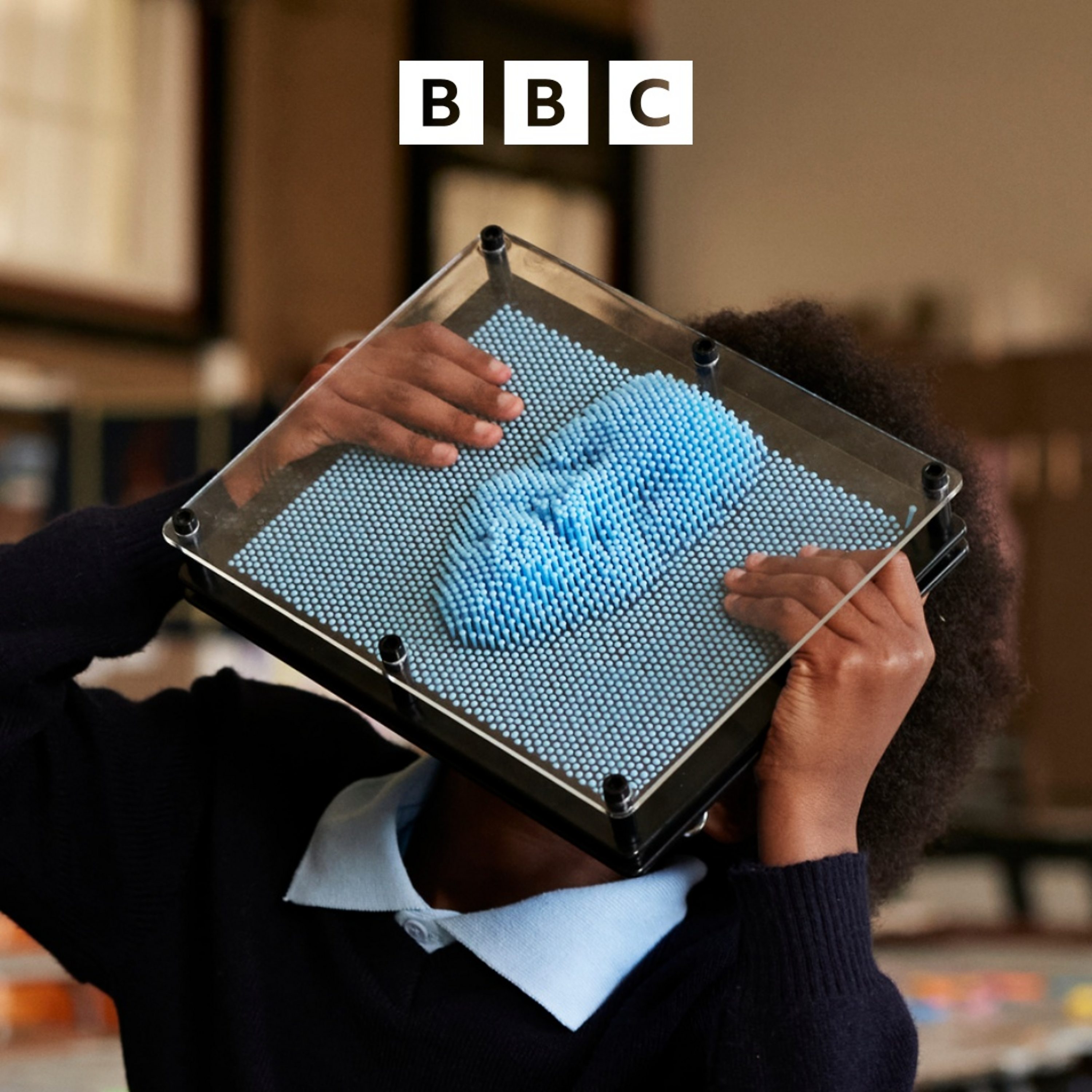
School deepfake ransoms
6d ago00:26:38Tap to summarizeFor many schools, it’s normal to post pictures of their own pupils online, either celebrating events or for marketing. But these photos could also be taken by criminals and used to make distressing deepfake AI images. We speak to the founder of a company which says it has a solution. Also on the programme, the incredible ways graphene can augment our senses – including to smell for diseases. And the student with dyslexia who invented his own tech to help him through his course.Presenter: Chris Vallance Producer: Imran Rahman-Jones(Image: A child places a metal pin impression toy over their face, so they cannot be identified. Credit: Getty Images)
Transcribe →
The future of flying?
2w ago00:26:29Tap to summarizeThe transition from petrol to electric cars is well underway. But why are most aircraft in the skies still burning jet fuel? We look at new developments in electric aviation. Also this week: keeping children safe online - a leading international child charity talks to Tech Life.Presenter: Shiona McCallum Producer: Tom Quinn(Photo: An all-electric CX300 aircraft from BETA Technologies takes part in a demonstration flight in Scotland. It is a small white aircraft, flying at low altitude. The propeller can be seen at the rear of the fuselage. Credit: Loganair/BETA Technologies)
Transcribe →
Understanding AI Agents
3w ago00:26:29Tap to summarizeAI agents carry out tasks autonomously on behalf of users. But what are they capable of, and what do we need to know about them? With AI agents in the news, we speak to an expert.Also this week: can AI make the process of recruiting employees better? And we find out about the campaign to teach AI how to represent people with limb loss.Presenter: Chris Vallance Producer: Tom Quinn(Image: In the foreground, a hand holds a smartphone. The screen displays an AI Agent, with various task options available. The background is blurry and coloured blue. Credit: Getty Images)
Transcribe →
Smell the future
4w ago00:26:29Tap to summarizeThe nose of a dog is incredibly sensitive. And odour contains information. With the help of AI, electronic 'noses' are being used to sniff out complex odours, including diseases. Chris Vallance visits a company developing the technology.Also this week: Shiona McCallum is in Paris to see the tech that can help us understand sleep. And Liv McMahon accompanies Chris on a walk in a park. There, they try one of many bird identification apps that are proving a hit, especially with younger users.Presenter: Chris Vallance Producer: Tom Quinn(Image: A photo of a cute mixed breed dog with black fur. It is sitting down, looking up at the camera. Its nose is prominent in the foreground. Credit: Getty Images)
Transcribe →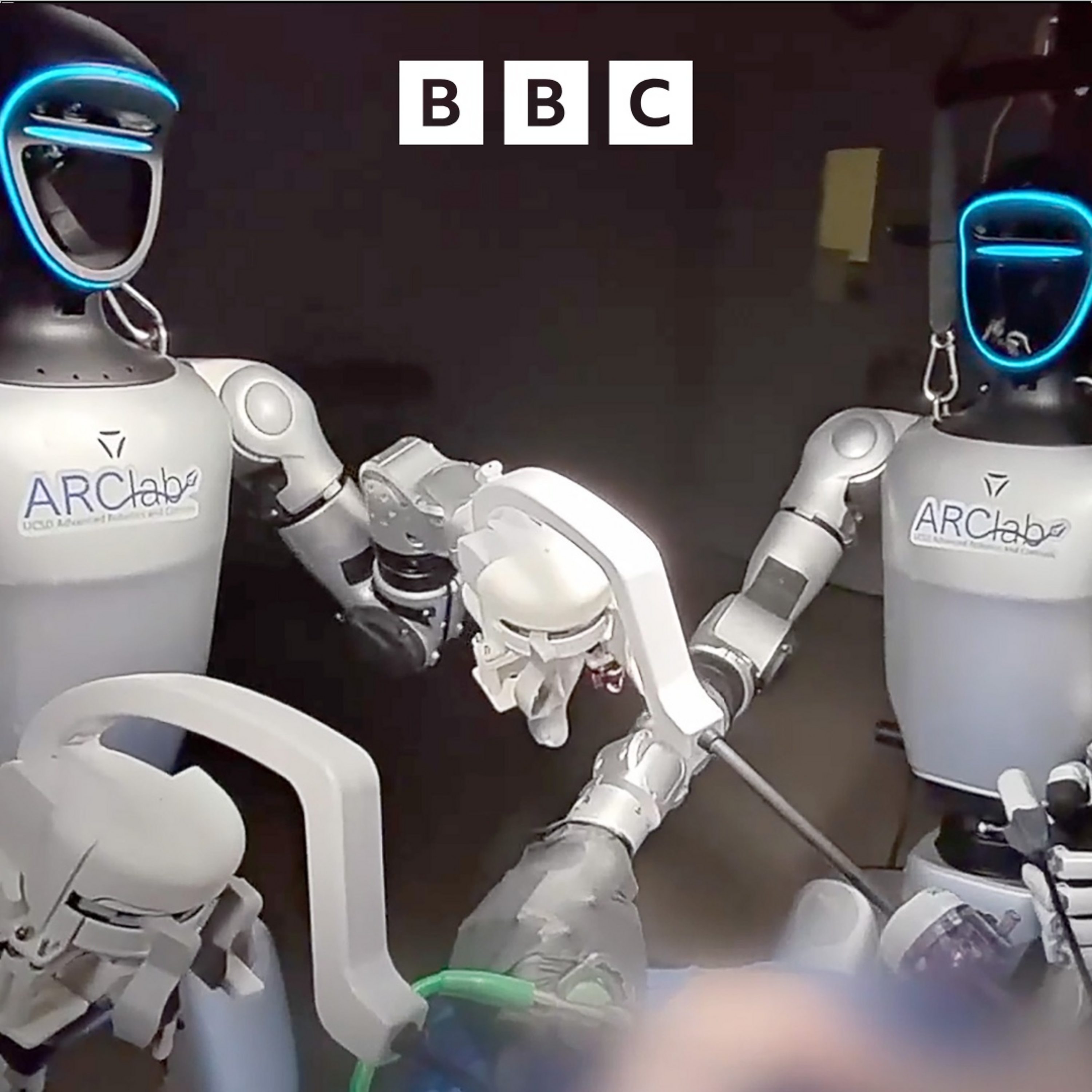
Meet the humanoid robots performing surgery
Jul 1400:26:28Tap to summarizeHumanoid robots have successfully performed surgery in an operating theatre for the first time. They were remotely controlled by surgeons. An expert involved talks to Tech Life.Also this week: the man who invented the infinite scroll tells us his latest thoughts on social media. And how do you stop big cargo ships pumping greenhouse gases into the air, as they move our goods around the world? We hear about a carbon capture solution.Presenter: Shiona McCallum Producer: Tom Quinn(Photo: Two human-shaped robots stand holding equipment, and perform surgery in an operating theatre. Credit: University of California San Diego)
Transcribe →
Too young to scroll?
Jul 700:26:29Tap to summarizeWhat is a good age to give a child a smartphone? A community in Ireland might have the answer. In Greystones there's a voluntary agreement to wait until secondary school age. We hear from the school principal who leads the "It Takes A Village" initiative, and a local parent.Also this week: a woman tells Shiona McCallum how surviving a late-night attack inspired her to develop a wearable safety device. And AI was let loose to run a cafe in Sweden. Find out what happened next.Presenter: Shiona McCallum Producer: Tom Quinn(Photo: A small group of boys and girls look at their smartphones. Credit: Getty Images)
Transcribe →
What happens when health information is shadow banned?
Jun 3000:26:28Tap to summarizeWe look at an issue known as shadow banning. What is it? How does it work? And could it be affecting health education messages for women and young girls?Also this week: we're feeling nostalgic about the discs that hold our favourite video games. And Shiona McCallum speaks to the founder of the Global Gaming League.Presenter: Shiona McCallum Producer: Tom Quinn(Photo: A young sports woman relaxes after a workout. She is lying on a yoga mat, looking at her smartphone. Credit: Getty Images)
Transcribe →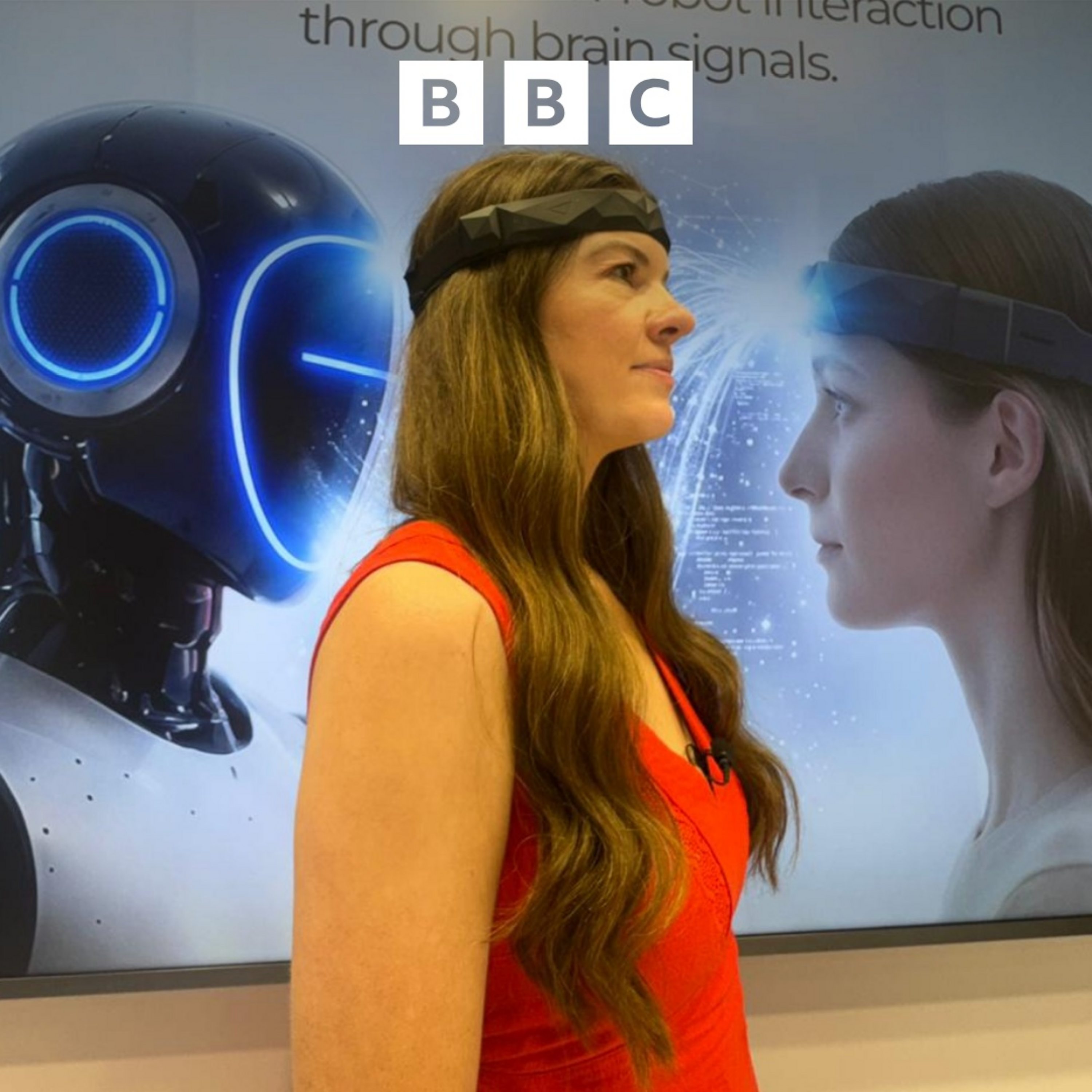
Viva technology!
Jun 2300:26:29Tap to summarizeShiona McCallum visits a huge technology show in Paris. There, she finds some of the latest kit that could be in your home or workplace before too long. And we're talking about data centres. They are central to our modern online lives. But not everyone thinks they are great. Shiona speaks to the head of a big global data centre company about some of the challenges facing the industry.Presenter: Shiona McCallum Producer: Tom Quinn(Photo: Shiona McCallum tries on some wearable tech at VivaTech in Paris. Credit: BBC)
Transcribe →
ChatGPT prompt generates disturbing images
Jun 1600:26:30Tap to summarizeA group of cybersecurity researchers found a prompt which gets past ChatGPT’s guardrails and causes it to generate some disturbing images. We unpack what this tells us about the way AI is trained, and how it could be exploited. Also on the show, after a recent episode about potholes, we were contacted by the UK’s ministry of transport. We speak to their chief scientific adviser about potholes and the future of transport. And what is a quantum diamond magnetometer? We speak to the company which has just put one into space – in order to measure where magnetic north really is.Presenter: Chris Vallance Producer: Imran Rahman-Jones(Image: A phone with the white and black ChatGPT logo on it. In the background is green Matrix-style code. Credit: Getty Images)
Transcribe →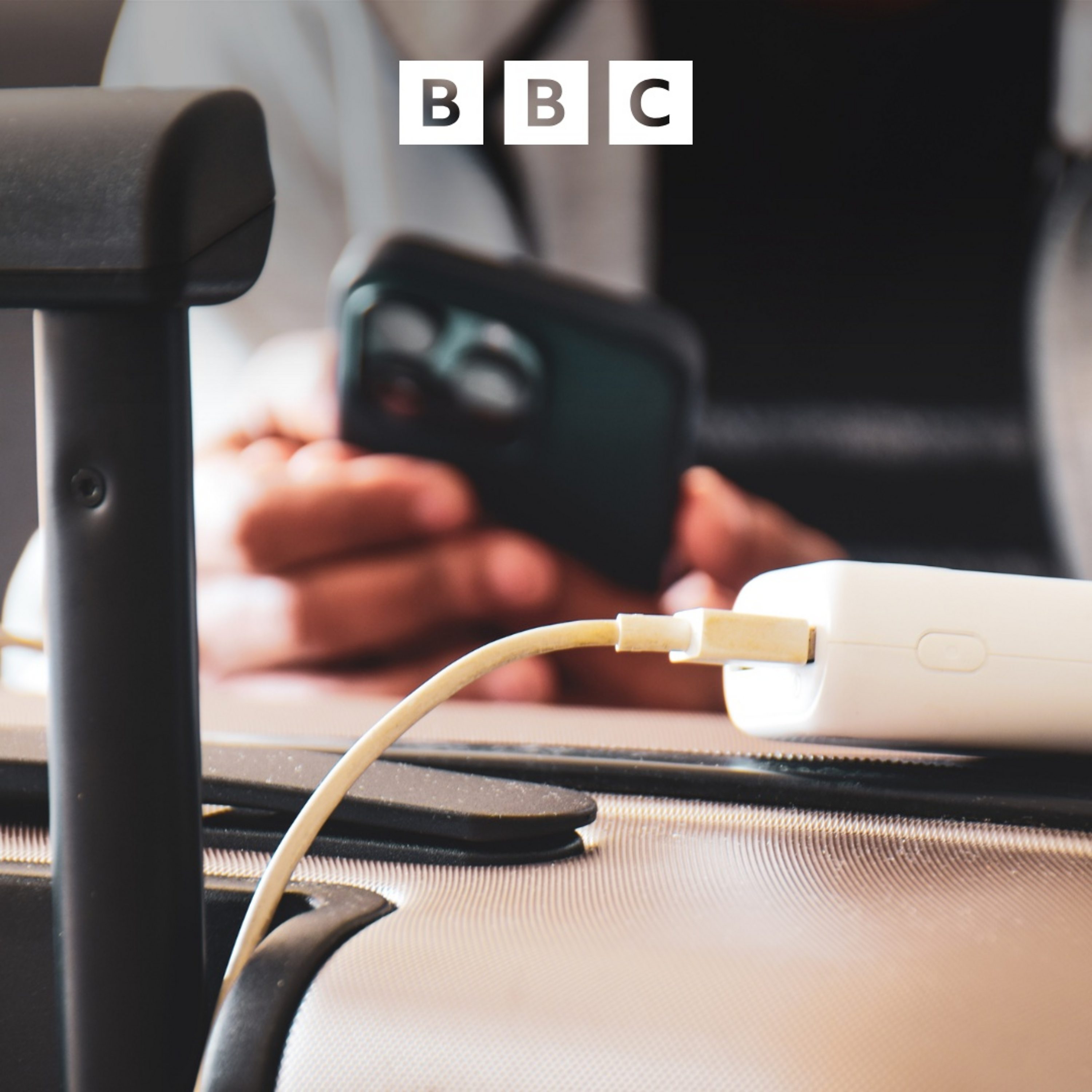
Tackling lithium battery fires on planes
Jun 900:26:29Tap to summarizeWhen we fly we love to take our gadgets with us. But the lithium batteries that power them can catch fire. We find out about a new campaign urging us to pack with safety in mind.Also this week: the BBC's Lily Jamali visits an international competition for new AI applications in San Francisco. And protecting Africa's endangered wildlife is an increasingly high-tech business - a new scheme aims to give conservation workers the latest skills.Presenter: Chris Vallance Producer: Tom Quinn(Photo: A man is in an airport lounge. He is charging his smartphone with a portable charger, which is resting on a suitcase. Credit: Getty Images)
Transcribe →