Podcast
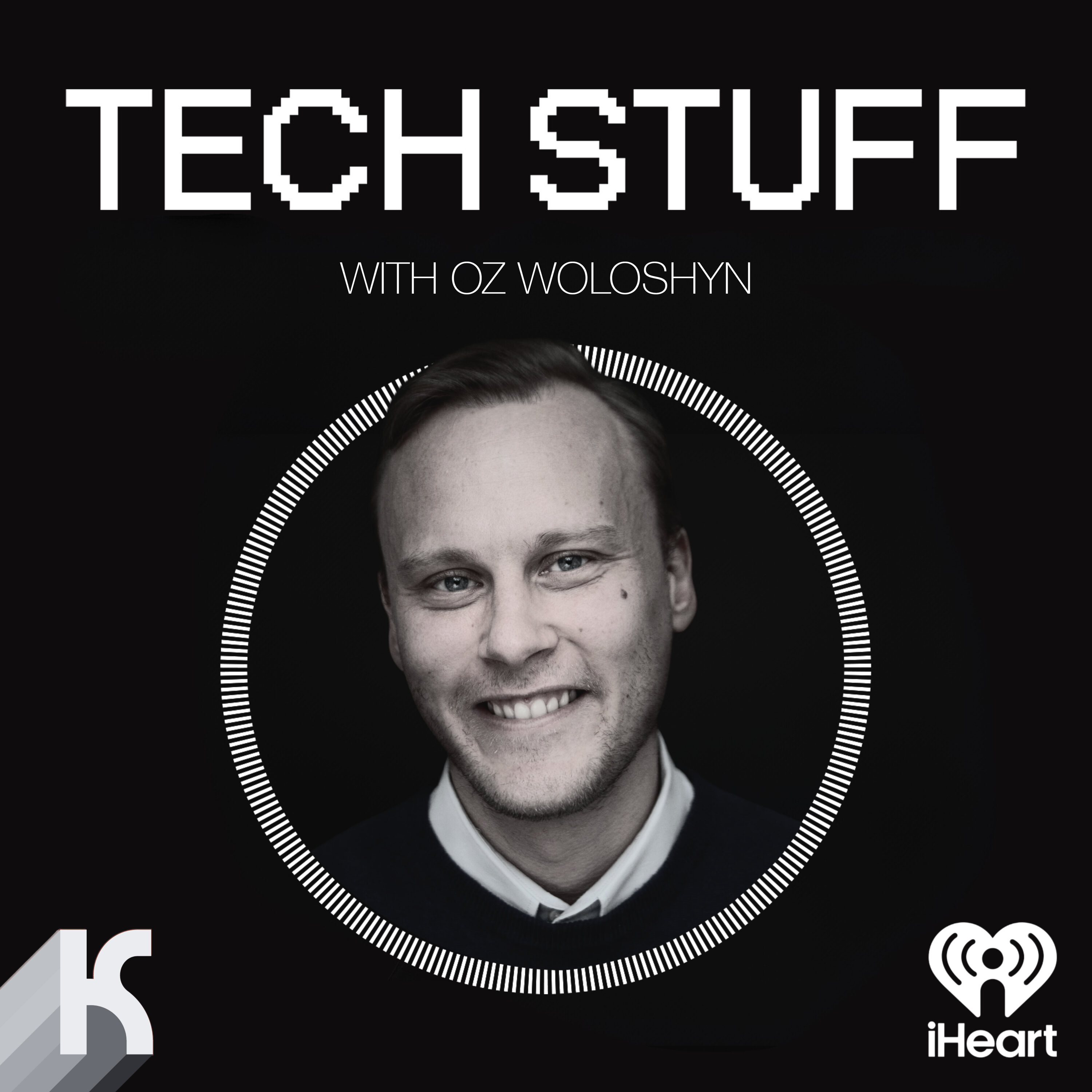
TechStuff
Hosted by iHeartPodcasts · EN
Behind every innovation is a new kind of power. TechStuff unpacks how technology reshapes influence, creativity, and control, from Silicon Valley’s rising moguls to the cultural forces they create. Because tech is the new religion, economy, and entertainment, all at once.
Each week, Oz Woloshyn and the brightest minds covering tech dig into the weird, funny, and sometimes unsettling ways technology, AI, and the internet shape our daily lives. From AI and social media to privacy, digital burnout, and the creator economy, they ask how all this innovation is changing who we are, how we work, love, and make meaning.
Smart talk, strange stories, and the questions everyone’s Googling: whether AI will replace us, how social media is affecting our kids, and what it all says about us.
Get in touch here: techstuffpodcast@gmail.com
124episodes
Episodes
Newest firstAll episodes
Why Building AI At DeepMind Feels Like ‘Surfing’
Apr 2900:41:05Tap to summarizeLive from The Royal Institution of Great Britain, it's TechStuff! Oz sat down with two visionaries at an event hosted by Quilt.AI. First, he spoke with Ali Eslami, a Distinguished Research Scientist at Google DeepMind, who built the prototype for what is now AI Search. Ali talked about how working on AI can feel like surfing, and what went into connecting Gemini to Google Search to create what he called "neural Google." After that, Oz chats with Saad Mohseni about his work with MOBY Group. Saad guides Oz through his twenty-year effort to bring top-tier news and entertainment to Afghanistan and beyond — from a reality TV singing competition that changed the country, to using WhatsApp and AI to provide education to girls banned from school. Additional Reading: Radio Free Afghanistan – HarperCollins EXCLUSIVE NordVPN Deal ➼ https://nordvpn.com/techstuff Try it risk-free now with a 30-day money-back guarantee See omnystudio.com/listener for privacy information.
Transcribe →Two Percent with Michael Easter: Is Social Media Addiction Real?
Apr 2700:26:31Tap to summarizeTechStuff presents Two Percent with Michael Easter, a twice-weekly deep dive into the science of living better by doing things the hard way. In this episode of the podcast, Taylor Lorenz of the Substack User Mag and host of podcast Power User joins Michael to discuss whether social media should be considered addictive. Together, they look at the real science on dopamine, the recent Meta verdict from Los Angeles, Section 230, KOSA, looksmaxxing, and what's actually driving the teen mental health conversation.See omnystudio.com/listener for privacy information.
Transcribe →The Future Is Inherently Uncertain, But What Could Go Right?
Apr 2400:57:46Tap to summarizeMany contemporary talking heads take a pessimistic view of the future, but our guest today hopes to change this. Oz interviews Zachary Karabell, host of the podcast What Could Go Right? and founder of the Progress Network, about being an ‘edgy optimist’ and what that means for the future of humanity. After that, TechStuff presents an episode of What Could Go Right? featuring Ian Bremmer, the founder of Eurasia Group and GZERO Media. Together, Bremmer and Karabell discuss how the post-WW2 world order has changed over the years, whether social media is a tool for freedom or a mechanism for control, and why the current moment of global chaos may simply be part of a longer geopolitical cycle — one that, like all cycles, eventually turns. Download SAILY in your app store and use our code techstuff at checkout to get an exclusive 15% off your first purchase! For further details go to https://saily.com/techstuffSee omnystudio.com/listener for privacy information.
Transcribe →LinkedIn Loved This AI Agent. And Then They Banned It.
Apr 2200:31:57Tap to summarizeKyle Law was quite the success on LinkedIn. His posts were getting regular engagement and he was invited to speak to LinkedIn’s marketing team. Then, he was banned from the site. Why? Because Kyle isn’t a person; Kyle is an AI agent. In Season 2 of the hit podcast, Shell Game, journalist Evan Ratliff had AI agents create and run a company and Kyle, the AI co-founder, spent a lot of time promoting that work on LinkedIn. Evan joins Oz Woloshyn to discuss Kyle’s posts, LinkedIn’s decision to kick him off the site and the future of AI-run companies. Additional Reading: My AI Agent ‘Cofounder’ Conquered LinkedIn. Then It Got Banned | WIRED The Story: Will AI Agents Build a Unicorn? EXCLUSIVE NordVPN Deal ➼ https://nordvpn.com/techstuff Try it risk-free now with a 30-day money-back guaranteeSee omnystudio.com/listener for privacy information.
Transcribe →
Brewing Smarter: How HEINEKEN Is Using AI To Revolutionize Its Global Operations
Apr 2100:43:01Tap to summarizeThe HEINEKEN Company is one of the world’s pioneering global brewers. Founded in 1864, it continues to innovate as it pursues its ambition to become the world’s best‑connected brewer. For the Season 7 premiere of Smart Talks with IBM, Malcolm Gladwell sits down with Surajeet Ghosh, HEINEKEN’s Chief AI Officer, in front of a live audience at SXSW to explore how the company is using data and AI to transform its operations. This is a paid advertisement from IBM. The conversations on this podcast don't necessarily represent IBM's positions, strategies or opinions. Visit us at https://www.ibm.com/think/podcasts/smart-talksSee omnystudio.com/listener for privacy information.
Transcribe →Is Anthropic's Mythos Model Too Dangerous? - Week in Tech
Apr 1700:47:50Tap to summarizeWhy would Anthropic let select companies use a product deemed too dangerous for the public? Nitasha Tiku (The Washington Post) helps us peek behind the curtain of Claude Mythos Preview and explores the scare tactics of AI CEOs. Taylor Lorenz (User Mag) breaks down the world of AI twins — how influencers, agencies, and tech moguls are creating their own digital avatars. And Kyle Chayka (The New Yorker) covers the FAA's latest hiring campaign for air traffic controllers: target gamers. Additional Reading: US Urges Wall Street Banks to Test Anthropic’s Mythos AI Model | Bloomberg Mega Influencers Are Replacing Themselves With AI Clones | Vanity Fair Meta builds AI version of Mark Zuckerberg to interact with staff | Financial Times To Fill Air Traffic Controller Shortage, F.A.A. Turns to Gamers | The New York Times Air Traffic Control Hiring: It's Not a Game. It's a Career. Download SAILY in your app store and use our code techstuff at checkout to get an exclusive 15% off your first purchase! For further details go to https://saily.com/techstuffSee omnystudio.com/listener for privacy information.
Transcribe →Polymarket and Kalshi Have a Problem with Nepo Baby Insider Trading - The Story
Apr 1500:31:43Tap to summarizeWhat do frat boys, nepo babies and the Super Bowl have in common? Prediction markets. Wall Street Journal investigative reporter Katherine Long tells us how information from Jeff Bezos's stepson sparked a bet worth nearly a million dollars, and how a rumor loosely tied to Mark Wahlberg's daughter sent $24 million into a single market. And why college kids are betting in the first place. Kalshi and Polymarket have been quietly making themselves at home on college campuses, paying fraternities for new sign-ups, handing out branded beer pong sets, and recruiting influencers to spread the word. The pitch to students: this is just a fun way to make money off what you already know. With over $10 billion in monthly trading volume and almost no regulatory oversight, Polymarket and Kalshi are no longer a niche corner of the internet. Additional Reading: ‘Is This Insider Information?’ The Prediction Market Bets Driving a Campus Frenzy - WSJ EXCLUSIVE NordVPN Deal ➼ https://nordvpn.com/techstuff Try it risk-free now with a 30-day money-back guarantee See omnystudio.com/listener for privacy information.
Transcribe →
Smart Talks with IBM Returns April 21
Apr 1500:01:53Tap to summarizeIn Smart Talks with IBM Season 7, Malcolm Gladwell reveals how global brands are applying AI and technology to reshape experiences and help solve complex challenges. Go behind the scenes with HEINEKEN, UFC, and Cleveland Clinic. New episodes drop April 21. This is a paid advertisement from IBM.Visit us at ibm.com/smarttalksSee omnystudio.com/listener for privacy information.
Transcribe →OpenAI's Sam Altman: Philosopher King Or Sociopath? - Week in Tech
Apr 1000:55:51Tap to summarizeOpenAI dominated this week's headlines — and it wasn’t all flattering. Reed Albergotti (Semafor) breaks down the chaos: IPO drama and Ronan Farrow's probing New Yorker profile of Sam Altman paint a picture of a company under pressure, even as it remains the most talked-about name in AI. Taylor Lorenz (User Mag) tells us about the AI tools marketed to schools as safety solutions that end up tracking students in ways with real consequences for kids and adults alike. And Kyle Chayka (The New Yorker) reviews the new book, Techno-Negative, tracing the long, often misunderstood history of anti-technology movements. Spoiler: it goes way deeper than the Luddites. Additional Reading: Leap of Faith | Semafor Sam Altman May Control Our Future—Can He Be Trusted? | The New Yorker OpenAI CEO and CFO Diverge on IPO Timing | The Information They're Putting AI on School Buses | User Mag The Age-Old Urge to Destroy Technology | The New Yorker Download SAILY in your app store and use our code techstuff at checkout to get an exclusive 15% off your first purchase! For further details go to https://saily.com/techstuffSee omnystudio.com/listener for privacy information.
Transcribe →Sam Altman Bought A Media Company. Now What? w/ Emily Sundberg - The Story
Apr 800:43:27Tap to summarizeTBPN started with a simple premise: what if the tech world got the ESPN treatment? Eighteen months later, it is a profitable independent media company — until last week, when OpenAI acquired it for hundreds of millions of dollars. Oz sits down with Emily Sundberg, author of the daily business newsletter Feed Me and frequent TBPN guest, to unpack what the deal actually means. They get into why OpenAI went shopping for a media company in the first place, what independence is really worth when a nine-figure offer lands in your inbox, and what this deal reveals about the strange new economy of attention. They also get into how Emily Sundberg built Feed Me into a thriving independent business — and why she's in no rush to follow TBPN out the door.Additional Reading: You cannot compete with people who are having more fun than you. Processing my San Francisco trip. - by Emily Sundberg EXCLUSIVE NordVPN Deal ➼ https://nordvpn.com/techstuff Try it risk-free now with a 30-day money-back guarantee See omnystudio.com/listener for privacy information.
Transcribe →