Loading summary
Transcript135 lines
- [00:01]
Dr. Dhruv Kullar
This message comes from US Bank Simplify how you do business with business essentials. A powerful combination of no monthly maintenance fee, checking and card payment processing. Deposit products are offered by US bank national association member fdic.
- [00:16]
Minouche Zamorodi
This is the TED Radio Hour each week groundbreaking TED Talks.
- [00:23]
Eric Zimmer
Our job now is to dream big.
- [00:24]
Minouche Zamorodi
Delivered at TED conferences to bring about
- [00:26]
Dr. Dhruv Kullar
the future we want to see around
- [00:28]
Minouche Zamorodi
the world to understand who we are. From those talks we bring you speakers and ideas that will surprise you.
- [00:36]
Eric Zimmer
You just don't know what you're going
- [00:37]
Minouche Zamorodi
to find challenge you.
- [00:39]
Dr. Dhruv Kullar
We truly have to ask ourselves, like
- [00:40]
Minouche Zamorodi
why is it noteworthy and even change you. I literally feel like I'm a different person. Yes.
- [00:46]
Naima Raza
Do you feel that way?
- [00:47]
Minouche Zamorodi
Ideas worth spreading From TED and npr. I'm Minouche Zamarodi. Today on the show, ideas about addiction and moderation.
- [01:01]
Dr. Dhruv Kullar
I think moderation is so important. There are so many things in life that we want a little of, maybe quite a bit of, but not too much of. And you know, Aristotle obviously had this insight many centuries ago.
- [01:15]
Minouche Zamorodi
This is Dhruv Kullar. He is a physician at Weill Cornell Medical College. And he would love his patients to live by Aristotle's famous words. It is best to rise from life as from a banquet, not neither thirsty nor drunken. But in the modern era, our world
- [01:34]
Dr. Dhruv Kullar
is kind of designed for too much. These days. It's just inundated with content and food and desire and all sorts of things.
- [01:45]
Minouche Zamorodi
For some people, just having access to all these earthly delights makes moderation impossible. Take a woman named Mary for example.
- [01:55]
Dr. Dhruv Kullar
I met Mary last year. She's a middle aged woman and she has been struggling, struggling with alcohol addiction for decades. She told me that she started drinking when she was 18 years old and soon after she could drink something like 18 beers in the sitting and barely even seem buzzed. And Mary tried all sorts of things to try to cut back on her drinking. She entered Alcoholics Anonymous. She used a medication called Antabuse. She tried alcohol rehab, but none of them were effective. And she struggled with alcohol and it started to really take a toll on many aspects of her life.
- [02:31]
Minouche Zamorodi
Then about a year ago, she was at a bar with a friend who usually also liked to drink a lot.
- [02:36]
Dr. Dhruv Kullar
But that evening, Mary noticed that her friend had barely touched her drink. And her friend told her that she started taking Ozempic and now she could barely bring herself to drink more than two beers at a time. And Mary was really interested in this. She'd always thought of Ozempic as kind of a obesity medicine or a diabetes medicine and she was wondering, you know, what. What did it have to do with drinking? And as it happened the next day, she saw this advertisement on Facebook that there was a clinical trial nearby that was studying whether ozempic or semaglutide could help people with alcohol addiction. So Mary enrolls in the trial, and every week, the researchers blindfold her, and they inject her with the medication. It's either placebo or it's semaglutide or Ozempic. And within weeks, she notices that she doesn't really like to drink beer anymore. And this is something that she's been doing for decades. She switches to white wine, and then after that, she just stops drinking altogether. And what she told me was that Ozempic really got rid of not just the food noise in her head, which is what a lot of people describe, but what happened for her was it took out alcohol noise. And so she had been ruminating about alcohol for most of her life. You know, where to drink, how much to drink, how not to drink. And all of a sudden, that seemed to vanish. And she told me that she could finally start to think about other things in her life because alcohol wasn't really an issue anymore. And she made a lot of changes. She started exercising. She really improved her diet. She'd been having marital problems for years and always kind of thought about whether to end that relationship, and suddenly did. When she started on Ozempic, during this trial, you know, in Mary's case, she also experienced pretty significant reduction in her appetite. And so there were days where she was eating, you know, 3, 4, 500 calories a day, and she lost 55 pounds in just five months.
- [04:32]
Minouche Zamorodi
Oh, my gosh.
- [04:32]
Dr. Dhruv Kullar
And she ended up having to come off the medication because she lost so much weight so quickly. But, you know, she was able to maintain her sobriety afterwards. So even after she came off the medication, really, she's had a much healthier relationship with alcohol, and she's maintained her lower weight, and she's maintained her healthier lifestyle. For her, it's been a really positive experience.
- [04:59]
Minouche Zamorodi
I mean, she must feel like she's a completely different person. In some ways, she does.
- [05:03]
Dr. Dhruv Kullar
I mean, it seems like I don't think she realized how much alcohol was driving a lot of her behavior and her thinking. And she was really able to, in a way, reinvent herself after she started on Ozempic.
- [05:15]
Minouche Zamorodi
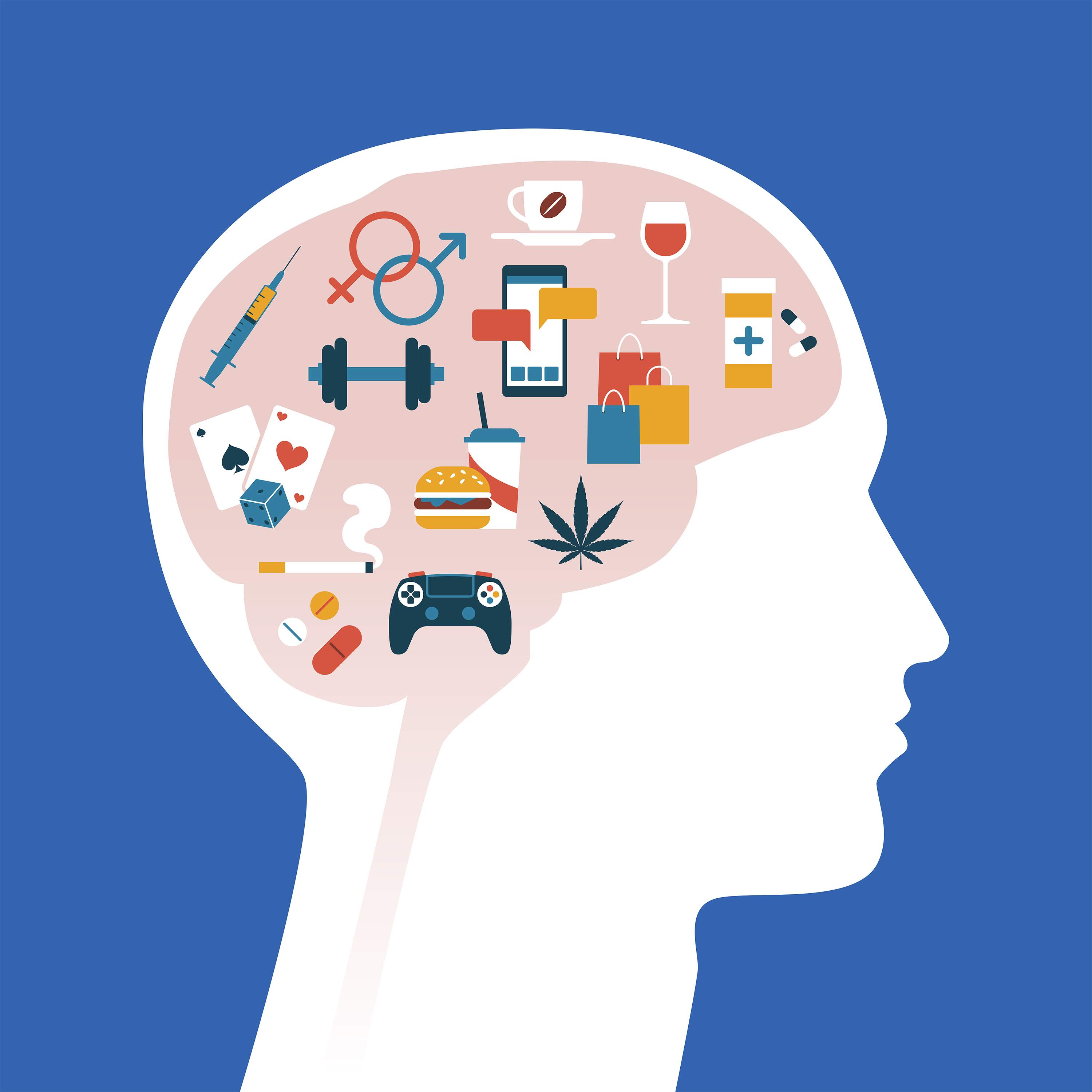
Nearly one in six Americans age 12 or older has a substance use disorder. We know addiction can be genetic, and yet shame still shapes how we talk about it now. A class of drugs, GLP1s promises to change how we understand and treat addiction. But is it really a silver bullet? Today on the show, ideas about the brain, addiction and empathy. How medical breakthroughs are revealing more about how the mind responds to the modern world, but also why human traits like compassion still play an important role in helping yourself or others who may be struggling with addiction. So back to Dr. Dhruv Kullar, who points out that it has been more than 20 years since the FDA last approved a medication for alcohol use disorder. GLP1s give him, and many physicians hope that a new era in treatment is just beginning.
- [06:18]
Dr. Dhruv Kullar
Stories like Neri's have led scientists to consider whether these medications could be helpful for all sorts of addictions, from alcohol and cocaine to gambling and compulsive shopping.
- [06:30]
Minouche Zamorodi
Here's dhruv on the TED stage.
- [06:32]
Dr. Dhruv Kullar
Research has found that GLP1s might help people stop smoking, reduce their cravings for opioids, lead them to consume fewer drinks. As one neuroscientist put it, GLP1s might be telling us that there is some type of universal pathology when it comes to addiction and that they are part of how we fix it. Now, that is a tantalizing prospect, that there's a general purpose key that unlocks the path to moderation. But that's what GLP1 seem like. They could be moderation molecules. They don't extinguish our desires, but they help us keep them in check. And no one knows exactly why. One possibility is that they modulate what's called the brain's mesolimbic pathway, sometimes referred to as the reward system. Alcohol, nicotine, cocaine, social media, they all increase dopamine release in that pathway. And GLP1s, they might be limiting the spikes of dopamine. So mice that are on the medications and given cocaine, they have smaller surges of dopamine, but they otherwise seem to maintain adequate amounts of the neurotransmitter. GLP1s could be calming the water without draining the pool.
- [07:51]
Minouche Zamorodi
I mean, I think for normal people hearing that, get a shot of Ozempic and you can turn your life around. That seems amazing. But as a physician, what was it about these stories connecting GLP1 medication to addiction that struck you as so, I mean, I guess, strange and unprecedented?
- [08:13]
Dr. Dhruv Kullar
Well, I think you have to think back about the history of Ozempic. And it was first discovered many years ago. And glucagon, like peptide 1, which is a naturally occurring hormone, I mean, that was discovered nearly half a century ago now, and it was Always thought to have effects for diabetes and then later weight loss. But the idea that it could modulate the way that people were experiencing the rewards of drugs and other types of behaviors, that is a much more recent discovery. And so this kind of came about because there were just so many stories of people saying that they wanted to drink alcohol less, they didn't want to smoke as much. People who had been taking opioids weren't having the same types of cravings that they had in the past. And. And some of that you take as anecdotal evidence. You're not sure exactly what to make of it. But over the past year or two, there has been a good amount of trial work that has shown and is increasingly showing that there are pretty substantial effects here. And it may be that this class of medications will be an important adjunct to people who are struggling with addiction.
- [09:20]
Minouche Zamorodi
But we knew that addiction was biological. Right? I remember the shift in thinking, like in the 90s, a flip that happened in terms of not blaming people who have addictions, but blaming sort of the way their brains work. What is different about this? And was that wrong?
- [09:38]
Dr. Dhruv Kullar
Well, I think, you know, there is still a lot of stigma around addiction. And so people who are struggling with addiction, I think there is a growing recognition that a lot of this is biological, that it's happening even unconsciously, and that people really struggle in ways that, you know, they shouldn't be blamed for what's happening here. But I think there's still a lot of stigma that's preventing people from coming forward when they have an addiction. We have, as you said, made a lot of strides towards recognizing how much of a biological process addiction is. And so we've known that for many decades now. What's interesting here is that GLP1s, they seem to work for many types of addictions, or at least there's the promise that it's working across various types of addiction. So if you think about the medications we've traditionally had to treat opioid use disorder or alcohol use disorder or nicotine use disorder, those are all separate medications. And we think that there's a particular mechanism or pathway through which they're operating here, GLP1s, they seem to be acting across these different types of addictions, which is quite novel and interesting. And the prior thinking had been that they are modulating mostly our desire for food and creating a sense of satiety. And now the thinking is that maybe these effects are much broader than we previously thought.
- [11:03]
Minouche Zamorodi
So, in addition, Dhruv, to being a doctor who sees patients, you do research and you write for the New Yorker magazine. And for that, you talk to scientists who are developing these drugs. Do they know exactly how they work?
- [11:16]
Dr. Dhruv Kullar
Some of the ways in which these medications are actually operating are still mysterious. And so, you know, one of the interesting things I came across in my reporting is that it's still kind of a question mark how exactly these medications are even affecting the brain. So, you know, as the medications have become these longer lasting, more powerful medications, it's not even clear exactly how or if they get into the brain. They're supposed to be, you know, in theory, too big to cross the blood brain barrier, which kind of protects the brain from toxins or drugs or other substances. But what we're seeing from trials that are being published not only on addiction but on other types of disorders, they seem to have a number of positive effects.
- [12:01]
Minouche Zamorodi
Yeah, I was just seeing that there's research into, like, the relationship between the gut and the brain as well, that it's not just the brain that these drugs affect when it comes to eating and addiction, but the conversation that's going on between the intestines and the brain.
- [12:19]
Dr. Dhruv Kullar
Yeah, I mean, for a long time, GLP1s were thought to affect primarily the gut. You know, they have their receptors all over the body, their receptors in the pancreas and the gastrointestinal tract. The brain, of course, GLP1s, they stimulate the release of insulin, they slow the passage of food through the stomach. They're signaling to the brain that we are full. So there's a lot of crosstalk between the gut and the brain. And there's some thought that maybe some of what we're seeing, both in terms of addiction but also other types of conditions, is related to the ways in which the medications are affecting both the gut as well as the brain.
- [12:59]
Minouche Zamorodi
In a minute, more with Dr. Dhruv Kullar on GLP1s. How they're changing our ideas about addiction and why they don't work for everyone. Today on the show, the Brain, addiction and empathy. I'm Minouche Zamarodi, and you're listening to the TED Radio Hour from npr. We'll be right back.
- [13:29]
Podcast Advertiser/Announcer
Support for this podcast and the following message come from Wayfair. Your space should feel like you. And if it doesn't yet, that's probably not a taste problem. It's a budget problem. Wayfair fixes that. Seating, grills, appliances, storage, lighting, rugs, decor, one place, everything you need. And with over 20 million five star reviews, you're not buying blind. Ready to upgrade your home for way less? Head to Wayfair.com right now to shop all things home and get your space ready for less. That's W A Y f a I r.com support for this podcast and the following message come from Strawberry Me. Be honest. Are you happy with your job? Are you stuck in a job you've outgrown or never wanted in the first place? Are your reasons for staying really just excuses for not leaving? Let a career coach from Strawberry Me help you get unstuck. Discover the benefits of having a dedicated career coach in your Corner and get 50% off your first coaching session at Strawberry Me. This message comes from BetterHelp. People talk about mental health more openly now, but asking for help can still feel hard. BetterHelp's 2026 State of Stigma report surveyed 2,000Americans and found that 85% believe getting support is wise, yet 74% say society discourages people from doing so. Don't let stigma stand in the way of support. Start therapy with BetterHelp. Visit betterhelp.com NPR the last time Antonio
- [15:04]
Minouche Zamorodi
Mays Sr. Heard from his son, it was in a note the 16 year
- [15:09]
Eric Zimmer
old left in the family's garage.
- [15:11]
Dr. Dhruv Kullar
He told me he was going to make me proud.
- [15:13]
Eric Zimmer
Antonio Jr. Left home to join a protest in Seattle. A week later he was shot and killed there.
- [15:20]
Naima Raza
I need some arrests made.
- [15:21]
Dr. Dhruv Kullar
Justice for my son.
- [15:23]
Minouche Zamorodi
Listen to We Keep Us Safe on
- [15:25]
Eric Zimmer
the embedded podcast from npr.
- [15:28]
Minouche Zamorodi
If you're looking for more NPR in your life, thank you. But also check out our catalog of newsletters you can get daily, weekly or periodic newsletters delivered right to your inbox, touching on everything you could possibly want. Politics, money, music. I even write one myself, the Body Electric newsletter, which will change the way you think about your body and your screen habits. Check it out. Sign up@npr.org newsletters it's the TED Radio Hour from NPR. I'm Minouche Zamarodi. Today on the show, the brain, addiction and empathy. And if there's one class of drugs that has dominated the cultural conversation in the past few years, it's GLP1s.
- [16:14]
Naima Raza
There's a lot of buzz about weight loss drugs.
- [16:16]
Dr. Dhruv Kullar
What do you think about all the Ozempic and all that stuff?
- [16:19]
Naima Raza
Oh, I love it.
- [16:20]
Eric Zimmer
Let them know you've already tried diet and exercise.
- [16:22]
Naima Raza
I didn't want to show up at another party and see all of my friends 20 pounds thinner and just be resentful.
- [16:29]
Minouche Zamorodi
Ozempic, Wegovy, Mounjaro. These are the brand names for Drugs that were first approved to treat type 2 diabetes, but are also being prescribed for weight loss. And now researchers are studying if they're effective in other unexpected ways.
- [16:44]
Dr. Dhruv Kullar
They lower the incidence of cardiac events
- [16:47]
Eric Zimmer
even in people without diabetes.
- [16:49]
Dr. Dhruv Kullar
Brain health benefits of Quagovy and Ozempics
- [16:51]
Eric Zimmer
can lower the risk of kidney failure, heart problems, stroke and.
- [16:56]
Minouche Zamorodi
And as we heard earlier, one of the most promising uses for GLP1s is treatment of addiction. But many physicians, including Dr. Dhruv Kullar, warn that it isn't necessarily a cure for all.
- [17:09]
Dr. Dhruv Kullar
Like any drug, GLP1s won't work for everyone. In fact, for some people, these so called moderation molecules, they could have an alter ego as a desire dampener maybe. Some people lose interest in drugs or alcohol or food because they lose interest in pretty much everything, a condition known as anhedonia. It's also true that addiction is often a lifelong battle. But many people who start on a GLP1, they come off it within months, whether because of side effects or costs or access. And even people who do manage to stay on the medications might ultimately develop a tolerance to them such that their cravings for a drug ultimately return. And yet it is hard not to get excited about the potential for GLP1s to treat addiction when you consider how little progress we have made.
- [18:05]
Minouche Zamorodi
I mean, that's what's so like, kind of bizarre to me is that I feel like everyone was like, well, let's wait and see, like a year ago, two years ago, and now largely the medical community has come around. But let's talk about like, you know, everything has downsides. What are the downsides for GLP1s as far as we know now?
- [18:29]
Dr. Dhruv Kullar
That's right. So I think the first is that it can be hard for a lot of people to stay on these medications. And that's going to be a problem whether you're taking this for diabetes or obesity or addiction. Of course drugs only work if you take them. But at least in some studies, half or more of people come off these medications within a year of starting to take them. And so of course that is going to limit how effective they can be if people aren't able to stay on them. It's also possible that some people experience psychological side effects. There have been reports, not a lot of great research yet, but at least reports that people feel kind of a blunted mood or even anhedonia. They're not interested in doing the things that they used to do. You know, the cost is still a huge issue. And so, you know, there are A lot of efforts underway to make these, these drugs more accessible, more available to people, either through insurance or other programs that are going to mitigate the cost. But at least the sticker price can still be $1,000 or $1,300 a month. And so, as you can imagine, not a lot of people are going to be able to, to afford that. And finally, I would say, you know, side effects, in terms of GI side effects in clinical trials, they seem to be pretty well tolerated. So maybe 5 or 10% of people have significant enough GI side effects to come off them, but that is potentially higher in the real world. And one reason that people are coming off the medications.
- [19:59]
Minouche Zamorodi
And what about long term? We just don't know, right? Some of the side effects may not show up for five years, a decade, 20 years.
- [20:08]
Dr. Dhruv Kullar
That's possible. These medications have kind of blown up on social media and elsewhere over the past few years, but they have versions of these medications have been around for two decades now. So the first GLP1 medication came out in 2005, 2006, axenatide, and that had to be taken twice a day. And it didn't have as powerful effects on weight loss. And so it wasn't kind of the phenomenon that these newer GLP1s have become. But there have been medications or versions of GLP1s for two decades, and we haven't seen those really concerning signs, side effects that have sometimes cropped up with other medications over the course of five or ten years. And so I think that's not to say that these specific formulations couldn't have other types of side effects, but it does give me some confidence that what we're seeing here is likely to be a more positive story.
- [20:59]
Minouche Zamorodi
I mean, that is reassuring in some ways. Like, part of me is like, put me on it now, coach. You know what I mean? Like, why not, if it's gonna prevent, you know, all the things that come with, you know, aging, right, Those inflammation based chronic diseases. But also, like, I heard something recently that gave me pause. So I was at an American Heart association meeting and some researchers were Talking about using GLP1s preventively in populations of kids where they don't get enough exercise or eat proper food, or just this idea that obesity and diabetes are hitting younger people at younger and younger ages, school age children, that maybe if diabetes type 2 is rampant in a population, that this should be used preventively. And that kind of freaked me out. I mean, it was just an idea that was presented, but it sort of made me think like, oh man, Are we once again going for the quick fix without trying to change and create better lives for people generally?
- [22:01]
Dr. Dhruv Kullar
I think that's a really important point, especially when it comes to children or adolescence. I mean, you know, it's one thing to commit someone who is in their 50s or 60s to a medication that they're going to need to take for the rest of their life. It's quite different when someone is 10 or 15 or 20 years old. And so I do think it raises a really important set of questions about the treatment model here. You know, is it really the case that people are going to be have to be on these medications for the long term, or is there a way to use these GLP1 medications as a bridge to other types of interventions? You know, I think the other thing that this raises for me is that of course, as you're saying, when a medication is so powerful, it becomes tempting to use it and to kind of not continue to push on the more societal factors that are creating these extremes epidemic that we're in. You know, we're not potentially addressing or we're not addressing the root causes of obesity and diabetes and addiction. But it's also the case that we have been trying to do that for decades and not made a lot of progress. And so, you know, in the short term, we should consider how to get it to as many people as possible who could really benefit from them.
- [23:27]
Minouche Zamorodi
Where does the conversation for personal responsibility and modulation and finding your own sort of balance between extremes, where does that fit into this conversation?
- [23:41]
Dr. Dhruv Kullar
A lot of the challenges that we have, whether it's around our mental health or our physical health, is trying to bring ourselves into greater harmony with our environment. And for some people that will require medications, for some people that'll require social supports, therapy. But I think getting to this place where we recognize that moderation is important, but that the modern world is one that facilitates too much, is a really important kind of frame shift just to think about how we should be engaging with all the delights around us.
- [24:16]
Minouche Zamorodi
I mean, with all of this, as you point out in your talk, it makes, it makes us rethink sort of assumptions we've made about people's morals or their personality for centuries. That someone is weak willed or has no, you know, has no discipline, that they can't stop themselves from whatever, drinking, smoking, etc. Do you think that we're being set up for a new chapter, a new like way of thinking about addiction and the way we talk about or treat people who struggle?
- [24:52]
Dr. Dhruv Kullar
I think so. I mean, I think because these medications are so widely used. I mean, some of the estimates are that one in every seven, one in every eight people in the United States have been on a GLP1 medication at some point. So these are millions, tens of millions of people who are using these. These medications and are seeing the effects of them in their lives. You know, so I think there's going to be a different relationship both towards obesity as well as addiction. And for me, some of this really came home during my reporting for this piece. You know, I underwent an MRI scan. They were showing me photographs of all sorts of things, whether it's Big Macs or, you know, mountains or alcohol like beer, wine, whiskey. And they were basically seeing how my brain reacted to these various images. And afterwards they showed me, you know, in response to photographs of alcohol, there was very little activity in kind of the relevant centers of my brain. And they compared them to people who are struggling with alcohol use disorder. And those areas just lit up in those people. And for me, it kind of drove home this point that so much of our behaviors downstream of these processes that are happening inside of our brains and before we even have an opportunity to make a kind of reasoned decision about what we're going to do. And so I don't want to say that our behavior, our will, has no role in these conditions. Of course, we need to encourage and help people make decisions that are in line with their health. But I think that needs to be paired with an understanding that a lot of these processes are neurobiological. And shaming people because they have these conditions is not going to be a productive way to go about it.
- [26:34]
Minouche Zamorodi
That was Dr. Dhruv Kullar. He is a physician at Weill Cornell Medicine in New York City, a health policy researcher, and a writer for the New Yorker magazine. You can see his full talk@ted.com. So what about those who have experience either being addicted themselves or helping people rebuild their lives after addiction? What do they think about GLP and their potential to help treat this serious problem?
- [27:07]
Eric Zimmer
Some people tend to take something like that and just run it out to the end. This is going to be the cure of addiction. I'm always like, well, settle down. Like, it's a useful tool. I think GLP1s hold an enormous amount of promise, but I do not think that there is a silver bullet for addiction, nor will there be one.
- [27:29]
Minouche Zamorodi
This is Eric Zimmer. He's the host of the podcast the One youe Feed and author of the book How a Little Becomes a the Art of Small Changes for a More meaningful life. Thirty years ago, Eric was addicted to heroin, and he warns us of looking for quick fixes because while GLP1s may reduce cravings, addiction, he says, it contains multitudes.
- [27:55]
Eric Zimmer
You see a lot of people who are depressed have addiction, and vice versa. My experience with addiction or my battles with depression is that it's a bunch of different tools put together. In the right combination, the right puzzle gets aligned. That is what allows us to get over addiction, to deal with depression better, to make changes in our lives. All of those things I think of as a puzzle. And a puzzle isn't one piece. It's a lot of pieces.
- [28:23]
Minouche Zamorodi
Today, Eric coaches people to rebuild their lives in ways that can make it easier for them to be in recovery. And much of his credibility in this community is built on his openness in discussing his own experience with addiction.
- [28:38]
Eric Zimmer
Like many people, I started experimenting with drugs and alcohol as a teenager, and it was great for a while. I mean, I loved was a real answer to the things that troubled me and bothered me. And as we know, with addiction, as that goes on, that ratio starts to change. The enjoyment to problem ratio starts to change. And that's where most people who aren't an addict start to get off the train because they're like, all right, this really isn't worth it. For some reason, the addicts, that reward calculation doesn't seem to update very well. And for me, it led into alcohol, to marijuana, to occasional cocaine, to eventually being a full time heroin addict.
- [29:25]
Minouche Zamorodi
What were you like when you were addicted? Were you? I don't know. Who were you then? Tell me a little more about what it was like for you.
- [29:34]
Eric Zimmer
I was a shifting person, like many of us are, although. But the sands of addiction are a shift more than the average. I mean, in the beginning, my alcohol and drug use, like, connected me to the world, and it made the world seem interesting. And I became more creative, and I became more fun to be around, and I liked people more and all of that. Now, as time went on, what happened with me and my addiction is it just kept shrinking my world until at the end, there was just one thing. It was heroin. That was it. My entire life oriented around that simple thing. And by the time it ended, I was not much of a person. I weighed 100 pounds. I was jaundiced and yellow from hepatitis c. I had just been arrested, and I was sleeping in the back of a van. The prosecutor said I might be going to prison for 50 years. I was broken. I mean, I was completely a shell of a person. And I wandered into treatment again. It wasn't my first time, but at that point this one stuck and it began my journey out of that sort of addiction.
- [30:49]
Minouche Zamorodi
Why did this time stick as it were? Like, what was different this time that finally ended this sort of multi year rollercoaster?
- [30:59]
Eric Zimmer
I mean, I'd love to point it down to like one thing. Certainly my consequences were worse than they had been, right? I was getting worse as time went on. We get to this point where we really don't want to give it up, because who wants to give up the thing that basically is the most important thing in your life? But then there's another part of you that recognizes that it's necessary and that's part of what we need to learn and negotiate. Now, in my case, that felt like my soul being torn apart because one part of me is screaming that I have to get high, and another part of me is screaming, you cannot do it. And that internal tension and turmoil was really awful. I went into a detox center, which I had done multiple times, basically because I didn't know what to do. So I went to detox. I was like, they'll just at least make me comfortable for a few days, get somewhere to sleep and I can sort of gather myself. And when I was there, they suggested that I go to long term treatment, at which I first answered, well, no, thank you, which still makes me laugh to this day.
- [32:02]
Podcast Advertiser/Announcer
But.
- [32:02]
Eric Zimmer
But after a little bit, I did say, okay, I will go to your treatment. And so for the first, probably 40 days, I was in an inpatient treatment program. And that was really, really valuable for me because all I really had to do was not leave. That was a. Just don't walk out the door.
- [32:22]
Minouche Zamorodi
What did they tell you when you were in treatment then? How did they explain to you why you had become an addict? What was the thinking around addiction that
- [32:31]
Eric Zimmer
must have been in the 90s, mid-90s. The thinking around addiction then was primarily oriented around 12 step recovery and 12 step recovery. And the model of addiction at that point said that it was a disease. But the inconsistent part of that was you're treating that disease with a program of, I would call psychological and spiritual action. So I think we were in a middle place between the old model of it's a moral failing, there's something wrong with you, into a more modern understanding of like, all right, something's malfunctioning, there's a physical and neurochemical aspect of this that's important. And the treatment, though, was still largely a 12 step treatment.
- [33:17]
Minouche Zamorodi
And you found that very effective, right?
- [33:19]
Eric Zimmer
Oh, yeah. It saved my life. And eight years after I got sober that time, I went back out and started drinking again and that did not go well. And I ended up back in recovery in a 12 step program and it saved my life again. So, yes, those programs saved my life twice. I also think they're not for everyone. There is no the right way for everyone to deal with their addiction because they're all different. I mean, addiction is sort of a multifactorial thing, right? There's so many things that cause it. There's so many elements in it that you can't narrow it down and go, well, if we just solve that, then you've solved the addiction. I don't think it works that way. I don't think it'll ever work that way.
- [34:03]
Minouche Zamorodi
In a minute, more from Eric Zimmer on how he transitioned from being a student of recovery to being a teacher for others on the show today, the brain, addiction and empathy. I'm Minouche Zamorodi and you're listening to the TED Radio Hour from npr. We'll be right back.
- [34:31]
Podcast Advertiser/Announcer
This message comes from Instacart. Instacart knows not all bananas are created equal. Some want them green, some ripe, some want them ready. Right now with Instacart's preference Picker, available at most retailers, you can choose preferences like avocado ripeness or deli thickness before your shopper starts. So instead of hoping for the best, you get groceries picked the way you would pick them, download the app and get bananas just how you like. With Instacart.
- [34:58]
Dr. Dhruv Kullar
The NPR Network has always been powered by the people it serves, not by shareholders or special interests, but by people like you and me who believe in a free and independent press. We just passed the one year mark since Congress eliminated federal funding for public media. Please show your support before the end of the month. Visit plus.NPR.org
- [35:21]
Minouche Zamorodi
this week on the NPR
- [35:22]
Naima Raza
Politics Podcast, we uncover a pattern in political ad spending.
- [35:27]
Minouche Zamorodi
As the midterms get closer, Republicans are leaning into an issue they've won on immigration. We look at their message and also what Democrats are saying on the issue in a very different way.
- [35:40]
Naima Raza
Listen now on the NPR Politics Podcast.
- [35:44]
Minouche Zamorodi
From the light bulb to the Internet, human history has been driven by innovation, and Shortwave is exploring how the technology of tomorrow will transform our future. Would you ride in a flying taxi? Will AI models fight wars? Hear about the technological frontier Every Monday on TechCamp, the new series from Shortwave. Listen on the NPR app or wherever you get your podcasts it's the TED Radio Hour from npr. I'm Minouche Zumarodi. Today on the show, the Brain, Addiction and Empathy. We were just talking to writer and behavioral coach Eric Zimmer. Thirty years ago, Eric was addicted to heroin. He's been clean for decades now, but he still clearly remembers a moment early on when he realized how complicated recovery can be.
- [36:36]
Eric Zimmer
I think about a story of me about three years into recovery, and I bumped into one of my old drug dealers, this guy named Joe. And I would go to Joe's house, and I would buy from him. I would get high at his house, and we would hang out and we would talk. Joe was incredibly intelligent, one of the smartest people I knew. Interesting, fascinating. And we would mostly spend our time talking about what we were gonna do once we got off heroin. So three years into my recovery, I bump into Joe, and I see him, and he looks largely the same to me. I say, joe, how you doing? And he says, I'm doing better, man. I've been on methadone for a couple years, you know, so I'm not dealing drugs anymore. I'm not shooting up, which is great. I mean, that's a real improvement. But I was three years into recovery, and I'd put on about £40. I was in a new career that was interesting and challenging. I had all sorts of new friends. I'd been working on the sort of demons inside my brain that had haunted me. And Joe hadn't done any of that stuff. So they took away what you would think of as the problem, which is shooting up drugs, put him on methadone, which is like a form of an opiate, similar to Suboxone in its way today. Now, I don't want to say that what was right for Joe, I have no idea what was right for Joe, but I unquestionably know what was right for me. And it was a recovery that looked at all aspects of my life. It looked at my emotions, my thoughts, my career, my physical health, my social life. It took all of that into account. My experience in, you know, I've been around recovery for 30 years, is that if we don't sort of work out a lot of what's going on inside of us, our addictions get very subtle and they get very shifty. Right? You know, first you're. You're snorting crystal meth off a knife in a dive bar bathroom, and now you're drinking two glasses of wine or three glasses of wine, and you know the name of the vineyard, and it seems Better. And then, you know, then it moves on to shopping. And I, you know, I nearly bankrupted myself buying books from Amazon once. What's the now? The buy now button came into effect. Right. They shift over time.
- [38:55]
Minouche Zamorodi
So you went from being a student of recovery to being a teacher. And today you work with people to help them understand not just their addictions, but all the sorts of puzzle pieces of who they are as a person. And it seems like there is a growing realization by the experts in this space that actually they need to talk to people who have lived experience, that people who know exactly what it's like are crucial to these medical, scientific, technological conversations on how to move treatment forward.
- [39:30]
Eric Zimmer
I think undoubtedly so we see a lot more peer based support in all areas. Right. Peer based mental health support has become a big thing where people who have the lived experience are trained in how to support others and they support each other. I think that we see it in a lot of patient groups around medical conditions more and more where there is peer support built into everything else that's happening. So I do think there is a role for medical experts and specialists. There's a role for medicines, and there is a role for people who understand each other, supporting each other. And all of those, again, make up, you know, the, the puzzle of what it is.
- [40:16]
Minouche Zamorodi
One of the key things you say is that changing your behavior is a skill. It is something you can learn. What have you learned from putting that into practice and what have people told you works for them?
- [40:28]
Eric Zimmer
Well, the foundational part of that is that we think when we don't make a change, when we fail at making a change, we think there is something wrong with us. So I was in a call on my community this weekend. We have a monthly meeting and it's a group of people organized around my podcast, my book, my teachings. And a woman started talking and then she got very emotional and she started crying. She said, I have gained and lost weight so many times, it just breaks my heart. And then she went on to sort of say the things that I hear people say. There's just something wrong with me. I guess I'm just not the kind of person that can stick with something. I'm broken. And that way of thinking is really, really detrimental. And so I work really hard with people. And it was the first thing I would do with a coaching client who's trying to change something is we want to change that idea and paint this as, you're not broken. There's not a trait within you that's wrong. You simply haven't learned how to make the change that you want to make or you haven't learned how to make it stick. The way we talk to ourself actually really does matter around these things. And I would see this again and again with clients is they would be going along really well, and then something would happen. They would make a mistake, they would miss a couple days. They would. Whatever the thing is. And that's when their brain would start going, see, I knew you couldn't do it. You know, you never stick with it.
- [42:00]
Minouche Zamorodi
It's so sad.
- [42:01]
Eric Zimmer
It is so sad. And what happens? One of the key things we know about motivation is that it goes up when we feel good about ourselves and our chances of success, and it goes down when we feel bad about ourselves and our chances of success. So we have to move from seeing it as something fundamentally wrong with us. As I've said before, a puzzle to be solved.
- [42:26]
Minouche Zamorodi
I mean, it reminds me of the aa, I guess, trick, which is like counting the days that you're sober. It's a productive, it's a positive thing. It's small. One thing at a time. How do they catch you, though? What do you tell the people if they do screw up?
- [42:42]
Eric Zimmer
So one of the foundational things I'm teaching people as we're learning to change is self compassion. I mean, a self compassion is a great thing to do. It's just great to be in a brain that's nice. But it's also really foundational because part of learning any skill. I just used the word is to. You have to learn. And when we are really, really hard on ourselves and we're really down on ourselves, we don't learn right. We end up with like, I'm such a piece of whatever and I'm awful and I'm lazy, and I never do. Instead of what we want to do is go, huh, I wonder what happened there. Why was I doing great for three weeks, but this week has completely fallen apart? What happened? What might I do different? That's just something I, you know, it doesn't happen overnight, but it is a matter of trying again and again to kind of go, okay, I. I'm not broken. I can do this, right? I just need to learn how. Too much guilt and shame doesn't do any good. I mean, shame and guilt is one of the driving factors of addiction. It's part of the downward spiral. Because what happens is when I don't like how I feel, I use. And then when I use, I do something that I don't feel good about, which causes Guilt and shame, which is a more uncomfortable emotion. So what do I do with uncomfortable emotions? Well, I use again and down, down this spiral goes.
- [44:12]
Minouche Zamorodi
We've talked about where attitudes towards addiction have been, how they've changed over the years, and now let's just talk about, where do you think they're going?
- [44:22]
Eric Zimmer
I think we continue to move towards less and less stigma. And I think we more and more recognize, oh, there's a lot going on here. Right. One of the big things that we've learned over the last probably 20 years is that trauma is a huge driver of addiction. There's a standardized test called the adverse childhood experiences test. The higher you score on that, the likelihood of being an addict goes up dramatically. So we're starting to see the bigger picture, I think, of addiction, and I think that's where ideally the field continues to go. Meaning I'm looking at the biology and I'm dealing with that. And that includes not only medicines I might take, the ways in which addiction has shaped my brain, but also the biological things that make me feel better in my body. Movement, sleep, eating. Right. Then we go into the, you know, the psychological, where we realize, oh, trauma is a real issue. So if you start to heal trauma, that should help. Learning to deal with difficult thoughts, learning to ride out cravings, learning to feel better about ourselves, that's all valuable. And then there's the social element of it, which I think has been 12 step program's greatest contribution is is that done in a community or a group, you have a much better chance of succeeding at anything.
- [45:45]
Minouche Zamorodi
Do you still struggle with addiction?
- [45:48]
Eric Zimmer
I don't think so, no. I tell a story in the book of I'm going to a pharmacy and I'm picking. Picking up prescriptions for my mom and I'm bringing them to her every week. And it's only about a month into doing that that I realize that I'm bringing opiates to her. Oh, gosh, 30 years ago, I might have robbed you at gunpoint for what's in that bottle. Now today, not only am I able to not use it, I don't even think about it really. And I don't say that to brag. I say that as a way. Like what? Whoa. Profound change is really, really possible. I would still refer to myself as an alcoholic or addict because what I believe is that if I were to pick any of those substances up, it would not go well. I also am very active in what I would sort of consider a program of recovery. Not necessarily that I'm talking about addiction. But I take care of my physical health, I take care of my psychological health. I take care of my social needs. I try and connect with people. I'm doing all these things that build this meaningful life that is both wonderful on its own. It helps my depression and it keeps addiction way out of the picture.
- [47:08]
Minouche Zamorodi
That was Eric Zimmer. He is the host of the podcast the one you feed and he is the author of the book how a little becomes a lot, the art of small changes for a more meaningful life. You can see his talk@ted.NPR.org. We want to close our show with some ideas about a different kind of addiction. Screen Addiction is actually not an official medical diagnosis, but many people use the word addicted to describe how they feel about their phone. Journalist Naima Raza gets it. But she says there are easy steps we can take to make spending time online less alluring.
- [47:55]
Naima Raza
I ask questions for a living to people like Mark Cuban, Neil DeGrasse Tyson, Esther Perel, Bill Nye, these masters of their field. And the most surprising answer I heard this year was from two 11 year olds named Sophie and Dylan. They too are experts in being kids these days. So I asked them, how does time with people on screens feel different than real life?
- [48:25]
Dr. Dhruv Kullar
It just makes you feel more like with them when you're on FaceTime even
- [48:29]
Naima Raza
more than real life.
- [48:30]
Dr. Dhruv Kullar
Yeah, because you're like doing stuff together, like playing Roblox together. Because now in days when you're with
- [48:38]
Naima Raza
them, everyone's just on their phones. Sophie's pointing out a profound paradox. When we are together physically, we are each alone on our phones. But when we're in our phones, that's when we can be together. The best way to not be distracted by your device, just get inside of it. Now, these 11 year olds are not talking about some distant, anxious generation. They're talking about each of us. They're definitely talking about me and about a world that's increasingly driven by machines. So I stumbled upon an extreme metaphor for what this could look like. And it's this guy who's locked in a Waymo and it's driving him in circles. So he calls customer service and finds out he's not the only one trapped,
- [49:26]
Dr. Dhruv Kullar
working with the situation of the vehicle.
- [49:28]
Minouche Zamorodi
If you have your app pulled up,
- [49:29]
Eric Zimmer
I need you to top of my
- [49:30]
Minouche Zamorodi
trip in the lower left corner of your app.
- [49:33]
Dr. Dhruv Kullar
Can't you just do it?
- [49:34]
Minouche Zamorodi
You should be able to handle it.
- [49:35]
Dr. Dhruv Kullar
Take over the car.
- [49:36]
Minouche Zamorodi
You don't need my phone. I don't have an option.
- [49:41]
Naima Raza
It is sexy to think that the Tech apocalypse is Arnold Schwarzenegger and the Terminator. But it could be so much more mundane than that. Just us driven in circles, held hostage by dropdown menus, with gadgets disintermediating us from each other, from our own bodies and from our curiosities. Because nowadays, when we have a question, we don't wait and phone a friend, we friend our phones. And that feels so empowering to have all of this knowledge at our fingertips. Yet early research from MIT tells us it's making us lazier and less smart. And it is definitely making us less connected. This is not what our parents and grandparents were sold when they saw this relic of an ad from AT&T which says reach out and touch someone. And yes, for all kinds of reasons, it would not go down well today. But it is oddly prescient because we have never been more connected and more out of touch. Now I'm not anti tech, I actually cover it as a journalist. I have every gadget under the sun, and most days I think I'm in a relationship with my ChatGPT, or as I like to call him, Chat Daddy. I am pro human. And as we progress into an AI world that you've read 471.5 articles about today alone, I want to make a case for old habits. Three of them, and tell you how I learned them the hard way. The first is to pause, to take just one second when you feel that urge to reach for your digital pacifier. This, by the way, is a second. Studies show waiting that long before taking action lets your brain work better. The second is to wonder. Watch a movie without googling who that actor is and what else is he in and how old is he in? Is he single? You can float in your own curiosity instead of drown in information. And the third is to ask a question out loud again, have that fight at a dinner party. Instead of playing footsie with your phone, ask something to someone you thought you couldn't learn from, or someone you think you know everything about, because the dumbest thing we can be is know it alls. A few years ago my father passed, and in the days leading up to it, I was glued to devices. They had all these the number to his hospice nurse, how often to give them morphine, the signs to look out for his heartbeat. But when he passed on a Sunday, a day before the data and the vitals suggested he would, that's when it hit me. The old habits were what mattered. Those seconds of pause that added up to minutes more, that weird and scary wonder about our own finite lives and the little questions people asked me, like how can I be there for you? Sophie was onto something. But we're grown ups and we remember when presence and curiosity and connection were possible outside of technology. We have to practice these old habits if we hope to pass them on to a new generation, if we want to teach them how to be together when we are together. Right? Chat Daddy thank you.
- [53:02]
Minouche Zamorodi
Naima Raza is the creator and host of the podcast Smart Girl, Dumb Questions. You can see her full talk@ted.com thank you so much for listening to our show today. This episode was produced by Katie Monteleone, Rachel Faulkner White, Avery Keatley, and TED Talks Daily's Lucy Little. It was edited by Sanaz Meshkinpour and me. Our production staff at NPR also includes Matthew Cloutier Fiot Giran Harsha Nahada, and James Delahusy. Our executive producer is Irene Noguchi. Our audio engineer was Robert Rodriguez. Our theme music was written by Ramtin Arablouei. Our partners at TED are sal Khan, Logan McClure, Davda, Helen Walters, Roxanne Hilasch, and Daniela Ballarazzo. I'm Minouche Zamorodi and you have been listening to the TED Radio Hour from npr.
- [53:56]
Podcast Advertiser/Announcer
This message comes from Capella University. That spark you feel, that's your drive for more. Capella University's flexpath learning format lets you earn your degree at your pace without putting life on pause. Learn more@capella.edu.
- [54:12]
Eric Zimmer
the midterms are coming, and if you
- [54:14]
Dr. Dhruv Kullar
think the news cycle feels intense now, just wait until the fall. That's why summer is a perfect time
- [54:20]
Eric Zimmer
to make sure your news diet is calibrated.
- [54:22]
Dr. Dhruv Kullar
I'm Ian Martinez. On up first, we unpack the three three biggest stories every morning so you
- [54:27]
Eric Zimmer
can stay informed and get on with
- [54:29]
Minouche Zamorodi
your day in fewer than 15 minutes.
- [54:31]
Dr. Dhruv Kullar
Follow or subscribe up first today wherever you get podcasts.
- [54:36]
Naima Raza
Oh, hey there. I'm Brittany Luce, and I don't know,
- [54:39]
Dr. Dhruv Kullar
maybe this is a little out of
- [54:40]
Naima Raza
pocket to say, but I think you
- [54:42]
Dr. Dhruv Kullar
should listen to my podcast. It's called It's Been a Minute and I love it. And I think you will, too. Over the past couple months, over 100,000
- [54:52]
Minouche Zamorodi
new listeners started tuning in.
- [54:55]
Dr. Dhruv Kullar
Find out why. Listen to the It's Been a Minute podcast from NPR today.