Loading summary
Transcript157 lines
- [00:00]
Jerry (Advertiser)
This message comes from Jerry. Are you tired of your car insurance rate going up even with a clean driving record? That's why there's Jerry, your proactive insurance assistant. Jerry compares rates side by side from over 50 top insurers and helps you switch with ease. Jerry even tracks market rates and alerts you when it's best to shop. No spam calls, no hidden fees. Drivers who save with a Jerry could save over $1,300 a year. Switch with confidence. Download the Jerry app or visit Jerry ainpr.
- [00:34]
Minouche Zamorodi
Today, this is the TED Radio Hour. Each week, groundbreaking TED talks.
- [00:42]
Laurel Brateman (Younger Self or Narrator)
Our job now is to dream big.
- [00:43]
Minouche Zamorodi
Delivered at TED conferences to bring about
- [00:46]
Laurel Brateman
the future we want to see around the world.
- [00:48]
Laurel Brateman (Younger Self or Narrator)
To understand who we are.
- [00:50]
Minouche Zamorodi
From those talks, we bring you speakers and ideas that will surprise you.
- [00:55]
Laurel Brateman
You just don't know what you're gonna find challenge you.
- [00:58]
Jerry (Advertiser)
We truly have to ask ourselves, like, why is it?
- [01:00]
Minouche Zamorodi
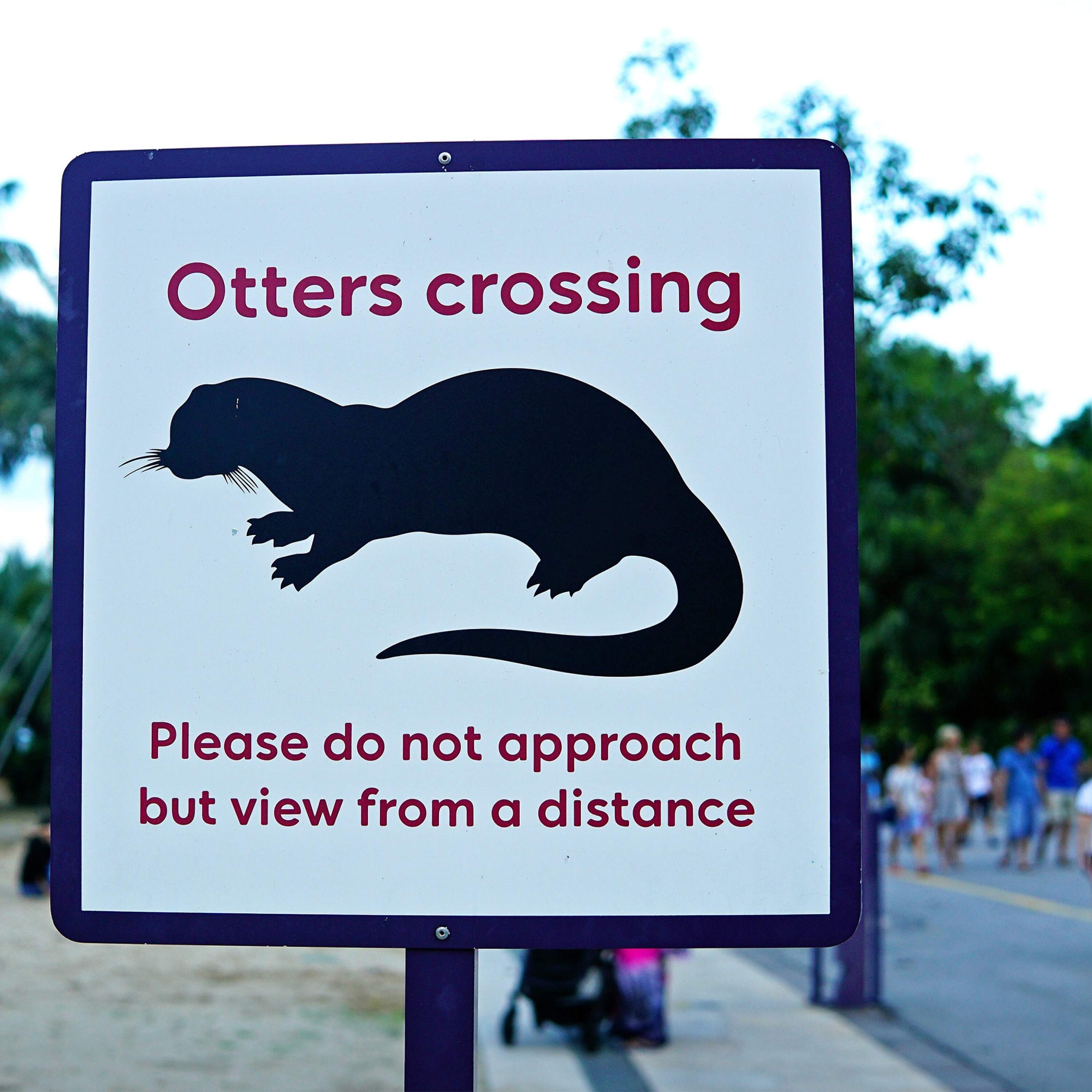
And even change you. I literally feel like I'm a different person. Yes. Do you feel that way? Ideas worth spreading From TED and npr. I'm Minouche Zamorodi. These are the sounds of a family of otters. They're in a river. Some adults with their pups check chattering and playing. And then they start to form sort of a line, a chain of otters corralling the small fish swimming amongst them.
- [01:38]
Philip Johns
They herd fish with their pups. They technically corral them because they're often corralling them against a fixed surface like the side of a canal.
- [01:45]
Minouche Zamorodi
This is Philip Johns. He's a biologist and geneticist who studies animal behavior like those in these otters.
- [01:54]
Philip Johns
And I think what's going on is the pups are following really simple rules that might go swim next to mom. If there's a fish in front of me, eat it. And the adults are coordinating things through their vocalizations. So, you know, there's one vocalization that somebody's saying that's like, okay, dive, you know, here we go. And they all dive together. That's really cool.
- [02:20]
Minouche Zamorodi
Otter behavior is, of course, fascinating. But what's more surprising, perhaps, is where exactly these otters are not off the Pacific coast or in North American rivers. These otters are living and thriving in the middle of one of the busiest, most modern cities in the world, Singapore.
- [02:44]
Philip Johns
It's got this crazy, enormous architecture. And it is kind of a city
- [02:48]
Minouche Zamorodi
in a jungle, a city state, home to 6 million people and all kinds of high tech companies, all surrounded by trees and waterways. And because of this geography, the city is a mix of steel and glass skyscrapers.
- [03:04]
Philip Johns
And wildlife, some of that wildlife is extremely charismatic. We have pied hornbills, these, these birds with really, really large bills. We have things like flying lizards. They're in the genus Draco. We have Colugos, which is one of my favorite, these strange nocturnal gliding mammals. And then there are tons of snakes in Singapore. Some of them are quite beautiful. I remember when one of my early outings, somebody said, oh yeah, when you walk over there, just keep your eyes open because there's a cobra that hangs out around there. Yesterday I was walking home, and I walk home between these brand new giant condos. They're over 30 floors high, they're glass and steel. And I look up and there's a white bellied sea eagle, you know, this very large bird circling one of the condos. And it's just incredible because it's kind of like the juxtaposition of nature and modernity.
- [04:00]
Minouche Zamorodi
Which brings us back to the otters that live here too. The Asian small clawed otter and the more common and larger smooth coated otter.
- [04:11]
Philip Johns (continued or additional commentary)
This is a really social species of otter.
- [04:13]
Philip Johns
They have multiple broods that live with the dominant pair, the matriarch and the patriarch. And so you might have a family of 20 animals and this might be, you know, three successive broods of offspring that are still living with the parents.
- [04:27]
Minouche Zamorodi
Harmonious large families of otters sound lovely, but here's the problem with all these otter families prospering side by side.
- [04:37]
Philip Johns
They defend territories, they defend them violently. They fight, and the fights are injurious. You know, otters get hurt sometimes, otters get killed. It's not pleasant to watch.
- [04:49]
Minouche Zamorodi
Philip remembers one particular beef between two otter families that played out downtown.
- [04:55]
Philip Johns
And by right downtown, I mean right downtown at rush hour, the otters would
- [05:01]
Philip Johns (continued or additional commentary)
swim toward each other, and they're screaming
- [05:03]
Philip Johns
at each other and they're swimming around,
- [05:04]
Philip Johns (continued or additional commentary)
they're biting, and the water is beat to a froth.
- [05:06]
Philip Johns
And you look on the banks and there are literally thousands, tens of thousands of people who are on their way to work, you know, walking along the banks of the rivers and it's just incredibly dramatic.
- [05:19]
Minouche Zamorodi
Every day we hear about nations, different groups of people struggling to get along. Humanity seems unable to overcome its differences. But what can we learn from more unusual examples of strange bedfellows? How are different species or provocative scientific ideas, maybe even conflicting emotions, finding ways to live in harmony? Well, today on the show, coexistence ideas about what we can do to adapt, make peace with, maybe even find pleasure in conflict. When biologist Philip Johns first arrived in Singapore, he learned that this wasn't the first time that rowdy families of otters had made their home there.
- [06:08]
Philip Johns (continued or additional commentary)
All of this was just incredible to me.
- [06:10]
Minouche Zamorodi
Here he is on the TED stage.
- [06:13]
Philip Johns
And part of the reason it was
- [06:14]
Philip Johns (continued or additional commentary)
incredible to everybody is that the otters were returning after a long absence. So we know that there were otters in Singapore in sometime before the mid 20th century. But then Singapore started to change. It modernized, it started to industrialize. And all of a sudden the waterways got filthy. What happened was they started to fill with sludge, industrial pollution, and dead animals to the point where they stank. And otters live in water. They eat fish in water, and they couldn't eat and live in waterways that were that dirty. So they left. But things changed again. Singapore enacted policies to clean up their waterways, and they were really, really successful. So all of a sudden, instead of having waterways that were filled with filth, we had waterways that were filled with fish. And from the otter's point of view, they were feeding troughs. So they came back and now we have lots of otters all over Singapore.
- [07:12]
Minouche Zamorodi
How many otters are we talking here? Are we talking, like, you turn a corner and you look at water and there's an otter there?
- [07:18]
Philip Johns
Yeah. The otters live in the waterways, and the waterways typically have some kind of park around them. I think they're probably 20 families. And if you're an otter, being an otter is pretty cool in Singapore because, you know, you wake up, you fish, you roll around in the dirt, you play, and then you go back to sleep and it's. I mean, it's kind of awesome. And so I can be on one side of the river looking across the river, watching a family of otters do its thing through binoculars or a camera. And they're absolutely unfazed.
- [07:51]
Minouche Zamorodi
So they don't take any mind of you. But I have to ask you, like, if you put in the words otter and Singapore, there's some crazy headlines that come up.
- [08:02]
Philip Johns
Yeah. So not all the interactions have been benign. There have been very few incidences where the otters have bitten people. And I think all of those were cases where either somebody was behaving unwisely or where the otters had pups. And when otters have young pups, they become defensive. They're less likely to be sort of sanguine about people getting close to them.
- [08:28]
Minouche Zamorodi
Yeah. Because I have to say, like, the. Especially the British press seems to love picking up stories like this one. Fearing for his life, man attacked by pack of otters in a Singapore park said he thought he was going to die.
- [08:41]
Philip Johns (continued or additional commentary)
26 wounds on his buttocks, legs and fingers while on his usual 6am walk in Singapore.
- [08:47]
Philip Johns
That case, as I understand it, was a case where the man was very close to a group of otters and it was a big family, and another man jogged directly through the group of otters. And in this case the guy who got bit, it was kind of an innocent bystander, but the otters got confused. You know, it's hard to think of a situation where running through a group of wild animals is acceptable. And the otters aren't small, they can hurt somebody. So that's been one issue and it has been an issue. And otters also have eaten a lot
- [09:23]
Laurel Brateman
of fish in a private home and
- [09:26]
Minouche Zamorodi
killed more than 50 fish.
- [09:28]
Philip Johns
People keep fish in Singapore. People keep koi. And these koi are large, they're expensive, they're long lived, they're pets, have been
- [09:37]
Avi Loeb (Narration or personal reflection)
with us for over 20 plus years.
- [09:39]
Philip Johns
You know, and when I say expensive, I mean the koi pond might have tens of thousands of dollars of koi in it. You know, those kinds of human wildlife conflicts are things that we can't kind of sweep away. We have to be realistic about them. But within that context, I think there's room for people and animals to coexist, even in some place that's as urban as Singapore.
- [10:03]
Philip Johns (continued or additional commentary)
And so people who might start otter watching because they want to get photographs of cute pups might continue to do other things because they've formed a connection with nature. And we see this all the time, that people care about nature when they form some connection to nature, whether that connection is to otters or to a pair of hornbills on campus, or to a bird that visits them on their balcony. We need these personal connections and we see them all over the place. Singapore has enacted a lot of policies that make these kinds of connections a lot easier. There are over 300 parks and nature reserves. Singapore has a plan that no one should be more than 10 minutes away from some kind of park. One of the effects of this is that people will have more chances to interact with with nature and they'll have more chances to care. I think we're trying to get away from something where nature is over there on the other side of a fence or a wall or something like that. Nature is something that's around us and above us and beside us. And that's true in lots of places, including in cities. So I think this also raises other questions, such as can cities be wildlife refuges? Is this something that we can Protect and maybe foster and grow as cities
- [11:20]
Minouche Zamorodi
grow and there are more humans on the planet and we spread and take more space. What are some of the lessons that other city dwellers or urban planners can take from how humans and otters are figuring out ways to coexist?
- [11:40]
Philip Johns
We have to be realistic that we can accommodate all wildlife. I think, having said that, we can be remarkably accepting of a lot of wildlife. You know, one of the most amazing things to me was the mountain lion that lived in Griffith park in Los Angeles for years. And, you know, not everybody is thrilled about it. And there's good reason to be concerned about having a large wild cat living inside the city of Los Angeles. But I think for the most part, people were kind of proud of it. If you go to social media sites of people who have things like camera traps in their backyard, a lot of people are thrilled that they have bought cats periodically in their backyard or that they're coyotes that come and visit in their backyard. And again, there is the potential for human wildlife conflict. Coyotes eat a lot of cats and dogs. You know, we have to be clear eyed about that. But I think in many cases we can make some very modest concessions. And when we do, coexistence is certainly possible. And it's maybe something that can be encouraged. So, you know, that's my hope. It really is kind of wonderful to do things like walk to work and
- [12:51]
Philip Johns (continued or additional commentary)
see gliding lizards, seeing lizards that are
- [12:53]
Philip Johns
literally gliding from tree to tree. Right. Just amazing things like this, or to see eagles flying among the skyscrapers. Just crazy things like that. If familiarity breeds empathy, then I think it helps us to have more familiarity.
- [13:14]
Minouche Zamorodi
That was Philip Johns. He is a biologist and associate professor at the Yale National University of Singapore College. You can watch his full talk@ted.com on the show today. Ideas about coexistence. I'm Minouche Zamarodi and you're listening to the TED Radio Hour from npr. We'll be right back.
- [13:38]
Philip Johns
Foreign.
- [13:48]
Jerry (Advertiser)
This message comes from Grainger. Grainger knows that if you're a school custodian, cleanliness is your top priority. That's why you can rely on Grainger for a range of cleaning products and equipment, from disinfectants to floor scrubbers. Granger for the ones who get it done,
- [14:08]
Minouche Zamorodi
it's the TED Radio Hour from NPR.
- [14:10]
Avi Loeb
1, 2, 3, 4, 5. Can you hear me?
- [14:13]
Minouche Zamorodi
I'm Minouche Zamorodi. Hi, Avi.
- [14:16]
Avi Loeb
Hi. Good to speak with you.
- [14:17]
Alexa (Advertiser)
Manoosh.
- [14:17]
Minouche Zamorodi
And you, and you. Today on the show Coexistence, it sounds like it's clicking in and out a little bit.
- [14:23]
Avi Loeb
Okay, let me see.
- [14:24]
Minouche Zamorodi
Maybe the connection here with other humans, animals, and whatever is out there in space. Would you mind just introducing yourself, tell us your name and what you do.
- [14:38]
Avi Loeb
My name is Avi Loeb, and I have the privilege of being a scientist, meaning that I can follow my childhood curiosity without pretending to be the adult in the room.
- [14:50]
Minouche Zamorodi
If you know a lot about astrophysics, then you know who Avi Loeb is. For the past four decades, he has been a leader in the field.
- [15:00]
Avi Loeb
I'm a 10 year old professor at Harvard University and I was also chair of the astronomy department at Harvard for nine years.
- [15:07]
Minouche Zamorodi
AVI has published over 1,000 scientific papers on black holes and how the first stars and galaxies formed.
- [15:15]
Avi Loeb
I've been the director of the Institute for Theory and Computation at Harvard. I was the founding director of Harvard's Black Hole Initiative.
- [15:23]
Minouche Zamorodi
He's written nine books.
- [15:25]
Avi Loeb
I chaired the Board of Physics and Astronomy of the National Academy. I chaired the advisory board for the Breakthrough Starshot Initiative, which is the first.
- [15:33]
Minouche Zamorodi
He's a big deal. But over the last decade or so, he has put that reputation in jeopardy by searching for something else in the cosmos.
- [15:44]
Avi Loeb
I think it will be the biggest discovery in science ever made in terms of its impact on the future of humanity.
- [15:53]
Minouche Zamorodi
Signs of life.
- [15:55]
Avi Loeb
We are searching for artifacts that may have been manufactured by extraterrestrial civilizations.
- [16:02]
Minouche Zamorodi
That's right. Avi is looking for aliens.
- [16:06]
Avi Loeb
Yes, that's my latest hobby.
- [16:09]
Minouche Zamorodi
But why? Why go on a quest that, to some of his fellow scientists, sounds ridiculous?
- [16:17]
Avi Loeb
You know, one reason I search for higher intelligence in interstellar space is because I don't often find it here on Earth.
- [16:25]
Minouche Zamorodi
As far as Avi is concerned, the scientific method requires us to ask questions and seek answ. So why is he doing this? He says, why not? But exploring the possibility of extraterrestrial life has created a huge rift between him and many of his colleagues. They are questioning whether his ideas should even exist within their scientific community. Just as Avi wonders whether we humans coexist with other life forms.
- [17:00]
Avi Loeb
Space is vast. It's measured in tens of thousands of light years just within the Milky Way galaxy alone. So to imagine, you know, there are other beings like us on similar rocks far away is very natural.
- [17:15]
Minouche Zamorodi
I mean, you're right, everyone. We love to watch movies about other beings that might be out there in the universe. We love to think about this idea that we might not be alone. It is fascinating to people. And you are saying, well, you know, let's use the science to see if there is a way that it might be sure.
- [17:40]
Avi Loeb
Exactly. Let's use the scientific method, which is basically, let's not imagine anything the way Hollywood does. Let's not assume anything. To make progress, we need to collect data, and, you know, new knowledge does not fall into our lap. And so you have to put effort, money, time in order to design instruments that will detect those very challenging signals.
- [18:10]
Minouche Zamorodi
Here's Avi Loeb on the TED stage.
- [18:13]
Avi Loeb (Narration or personal reflection)
I'm just a curious farm boy and I wonder about the world around me. And I hate to behave like the adults in the room because they often pretend to know more than we actually know. And that bothered me since I was a young kid. And so I decided to become a scientist and answer the questions based on evidence, not based on prejudice. And for 70 years, we've been searching for radio signals. This is equivalent to to staying at home and waiting for a phone call that may never come because nobody cares that we are lonely. A much better approach is to check if there is any object in our backyard that may have arrived from a neighbor's yard, like a tennis ball, that may tell us that the neighbor plays tennis. People often say extraordinary claims require extraordinary evidence, but they are not seeking the evidence. So let's just look around.
- [19:32]
Minouche Zamorodi
To understand why Avi began his search for alien life, we need to go back to 2017, when scientists spotted a strange object in the sky.
- [19:43]
Avi Loeb
This was an object called Oumuamua, which means a scout in the Hawaiian language. It was discovered by a telescope named the Pan stars in Hawaii on Mount Haleakala.
- [19:54]
Minouche Zamorodi
Oumuamua was unlike anything Avi and other astrophysicists had ever seen before. And it raised a lot of questions, namely, what was it and where did it come from?
- [20:06]
Avi Loeb
At first, you know, we just knew that this is an object from outside the solar system because it moved too fast to be bound by gravity to the sun. And so it was clear beyond any doubt that it came from outside the solar system. So everyone assumed that it must be an asteroid or a comet. The type of objects we find within the solar system, rocks or icy rocks, but there was no cometary tail.
- [20:35]
Minouche Zamorodi
Even more perplexing was the way that the object moved through space.
- [20:40]
Avi Loeb
The object showed a push away from the sun by some mysterious force. And so it's as if there was something pushing it away from the sun. It's a non gravitational acceleration. But there was no cometary evaporation, no gas or dust around it. So the question was, what is exerting this force on the object?
- [21:01]
Minouche Zamorodi
Scientists looked for an explanation, any explanation.
- [21:05]
Avi Loeb
You know, some of my colleagues argued, maybe you can explain these anomalies by imagining a hydrogen iceberg, a chunk of frozen hydrogen. So then someone has said, well, maybe it's a nitrogen iceberg. And then someone else said, well, maybe it's a dust bunny.
- [21:19]
Minouche Zamorodi
But Avi wasn't convinced. He suggested another hypothesis, that perhaps Oumuamua was not naturally occurring. Perhaps it was produced by something or someone from another planet. Perhaps it was alien technology.
- [21:37]
Avi Loeb
And just the suggestion that it might be artificial got me into trouble because I was not supposed to consider that possibility. How dare you even think about that? It's a rock of a type that we've never seen before, period.
- [21:53]
Minouche Zamorodi
Avi published a paper about his hypothesis, which launched a slew of criticism from his colleagues, who said that he was leaping to the conclusion that Oumuamua was proof of aliens and without exhausting every other possibility.
- [22:08]
Avi Loeb
All of the alternative explanations had issues. And I just said, let's keep the artificial origin on the table because we are producing space trash. Another civilization might have done the same.
- [22:22]
Minouche Zamorodi
Then, in 2023, two scientists published a paper in Nature with a new explanation for Oumuamua, that it was simply a comet with no tail. Scientists now call this a dark comet, an object that moves like a comet but looks like an asteroid. The explanation does not satisfy Avi because
- [22:46]
Avi Loeb
the only way you define a comet is by detecting its cometary tail. That's what a comet is. So if you say that an elephant is an unstriped zebra, you know, that sounds strange because it's not the same animal, okay? And so my point is, when you don't see a cometary tail, don't call it a comet.
- [23:08]
Minouche Zamorodi
In 2024, researchers found more objects that move like comets but look more like asteroids, calling them dark comets. By now, most scientists have moved on from the Oumuamua debate, but the public has not. Ever since his suggestion that Oumuamua could be a sign of alien life, Avi has gotten more attention and funding from people outside the world of astrophysics. He may have lost favor with his colleagues, but he's gained a whole new audience.
- [23:40]
Avi Loeb
Yes, on the one hand, the public really was extremely fascinated by this possibility. And I got a huge amount of attention from the media, something that I was not familiar with before. And I was also contacted by a literary agent to write a book, which ended up being extraterrestrial, became bestseller, and I participated in about 3,500 podcast interviews. Netflix is producing a documentary thanks to all this attention.
- [24:12]
Minouche Zamorodi
In 2021, Avi Co founded the Galileo Project at Harvard, a research program dedicated to searching for alien technology on and near Earth. Avi and his team have received millions of dollars in private funding from a long list of uber wealthy donors.
- [24:31]
Avi Loeb
We built an observatory at Harvard University. It's a unique observatory. Usually astronomical observatories are focusing on a small portion of the sky and looking at very distant sources. But here we are looking at the entire sky all the time. And in particular searching for objects near Earth that are just overhead. And we are using infrared cameras, optical cameras, radio sensors, audio sensors, and analyzing the data with machine learning software, using state of the art algorithms to figure out if there are any objects that are not familiar. I'm not trying to imagine what might be out there. I'm just saying we know about birds, we know about airplanes, leaves, clouds, satellites, balloons, drones. These are things we know about. And is there anything else? And if we find an object that is maneuvering in ways that does not mimic the flight characteristics of known objects, we will write a paper about it and share it with the scientific community. And for me, having more data is really a bliss because once you have a lot of it will become clear whether we're dealing with a rock of a type that we've never seen before or maybe some artificial object. And at some point it would be impossible to ignore it.
- [26:04]
Minouche Zamorodi
There are probably going to be people listening who are saying why? And these are scientists on Earth right now who would say why are you giving Avi Loeb the mic? You have become a bit of a pariah in your field. I want to quote one astrophysicist, Steve Desch, who said, people are sick of hearing about Avi Loeb's wild claims it's polluting good science, conflating the good science we do with this ridiculous sensationalism and sucking all the oxygen out of the room. There's a lot of ire towards you, a field that embraced you for the longest time, and now what's it like having them call you names?
- [26:46]
Avi Loeb
Yeah, I really don't like that. But one thing I learned is that, you know, if you don't want to get dirty, don't mud wrestle. So I don't respond to those. I am still the director of the Institute for Theory and Computation. I work with students, I work with postdocs. I just gave a lecture at the Black Hole Initiative about primordial black holes. Holes. So I continue to work on other subjects as well. And the people who know me, you know, are very Supportive because they know that I'm doing it. Not out of any other reason than advocating for something I believe in that should be studied. And, you know, I borrowed the approach from the research on dark matter that I worked on early on in my career. You know, we don't know what 85% of the matter in the universe is. So billions of dollars are spent on the searches for dark matter. Specific types of particles that were proposed by theorists like myself were very much rewarded by attention and so forth. So I have that experience, and for me, it's no different. But for some reason, this particular subject is making some people very upset. And those are people who are upset about the public attention that I'm getting. You know, when I gave my class at Harvard, in the opening lecture, I asked the students, what is the strongest force in academia? Is it gravity? Is it electromagnetism? They were quiet. And then I answered the question myself. I said, no, it's jealousy.
- [28:31]
Minouche Zamorodi
Can I ask you, how would you know? You've given us several examples of all the data and, and specimens that you're collecting and sort of sifting through all of this. How will you know for sure? What would be the moment where you could tell the rest of the world, yes, we are not alone. We are coexisting with something else that is alive.
- [28:57]
Avi Loeb
Well, that's relatively straightforward if you have good enough data. For example, if we had an image of an interstellar object, and you see bolts and screws, and you see that it looks like a technological object, there is no doubt that it's not a rock. That would be clear evidence.
- [29:17]
Minouche Zamorodi
Let's say this did happen. How would it change things for us? You must have imagined this scenario in your mind.
- [29:28]
Avi Loeb
Yes, I think it will change our perspective because, you know, when you find a partner, it changes the meaning of your existence. We know that from our personal lives. And here I'm just talking about finding a partner in the global scheme of the cosmos. These are all the Earth sun systems, you know, there are hundred billions of them in the Milky Way galaxy alone. We see so many houses like our own. And to me, it's very natural to imagine that there are residents that we can learn from. So just paying attention to our cosmic neighborhood, you know, will allow us to mature and realize that what we usually care about is not as important as the bigger scheme of things. And we could do better by paying attention to our neighbors.
- [30:21]
Avi Loeb (Narration or personal reflection)
When I look up at the sky at night, I see 100 billion stars of the Milky Way galaxy. They look like lights in cabins of a giant spaceship, the Milky Way, sailing through space. And I wonder if there are other passengers in those cabins. There are 100 billion of them, comparable to the number of people who ever lived on Earth. It would be arrogant to think otherwise, that we are alone, that we are unique and special, especially if you read the news every day. We are not the pinnacle of creation. There is room for improvement. And so the next Copernican revolution would be that we are not at the intellectual center of the universe. Not only that, we are not at the physical center of the universe, but actually, you know, we arrive to the play relatively late. We are not at the center of stage. The play is not about us. We should be modest. We keep thinking that it's about us, but it's not. And we better find other actors that will tell us what the play is about.
- [31:50]
Minouche Zamorodi
That was astrophysicist Avi Loeb. He is a professor of science at Harvard University's Department of Astronomy. Since we spoke, Avi has put out similar theories about another interstellar object called 3i Atlas, which was discovered in 2025. It is still being studied, but for now, NASA and the majority of the scientific community maintain that its origins are natural, not alien. You can see Avi Loeb's fulltalked.com on the show today. Coexistence. I'm Anoush Zamarodi, and you're listening to the TED Radio Hour from npr. Stay with us.
- [32:39]
Jerry (Advertiser)
This message comes from Granger. Grainger knows that if you're a school custodian, cleanliness is your top priority. That's why you can rely on Grainger for a range of cleaning products and equipment, from disinfectants to floor scrubbers. Grainger for the ones who get it done.
- [32:58]
Minouche Zamorodi
It's the TED RADIO Hour from npr. I'm Minouche Zamorodi. On the show today, we are exploring coexistence, and our next speaker tells us the story of her family, who A warning. We do talk about suicide.
- [33:14]
Laurel Brateman
We really can't have happiness without sadness. We can't have joy without pain. We also cannot have bravery without fear. Instead of being opposites, those things are teammates.
- [33:28]
Minouche Zamorodi
It took writer Laurel Brateman decades to understand this lesson, but the seeds were planted in her childhood, quite literally. She grew up on an avocado ranch outside of Los Angeles.
- [33:42]
Laurel Brateman
We are about 20 miles inland in a really gorgeous canyon that is lined with fruit orchards, so you can often smell avocados blooming or lemon trees blooming.
- [33:57]
Minouche Zamorodi
Her earliest memories are of her parents teaching her and her Brother how to work on the ranch, you know, pulling
- [34:03]
Laurel Brateman
out orchards that were failing and planting new orchards, rebuilding the main ranch house, restoring the corrals, and really just rehabbing the landscape in a lot of ways. We helped spread fertilizer and prune, and we would just kind of take breaks and play and then come back and help them.
- [34:22]
Minouche Zamorodi
Alongside those farming chores, Laurel's father also taught them some other life lessons.
- [34:29]
Laurel Brateman
But they were really specific skills to, like, what my dad cared about. So, like all the member nations of the UN, how the Dewey decimal system worked.
- [34:39]
Laurel Brateman (Younger Self or Narrator)
He really wanted me to, like, beat
- [34:41]
Laurel Brateman
men at things that were stereotypically male. That was, like, a thing, a point of pride. So he wanted me to be able to, like, outfish any guy who might dare underestimate me or repair a carburetor or be really good at pool.
- [34:56]
Minouche Zamorodi
These were skills he wanted to pass on. Because when Laurel was three years old, her father was diagnosed with bone cancer. It started in his knee, then metastasized and spread to other parts of his body.
- [35:11]
Laurel Brateman
And so from that day forward, we lived between scans. So sometimes we would get, you know, six months, sometimes we would have six weeks. The longest we ever had before he had a recurrence was about four and a half, five years.
- [35:25]
Minouche Zamorodi
Oh, wow.
- [35:26]
Laurel Brateman
So that was a great period of time, but that's how we lived. You know, we tried to fit as much life and memory making and togetherness into those periods of time between therapy or surgery or treatment or scan.
- [35:42]
Minouche Zamorodi
So for most of her childhood, Laurel grew up with a constant feeling of dread, knowing that every one of those lessons and memory making moments was her father's attempt to make the most of the time he had left.
- [36:00]
Laurel Brateman
So another thing my dad did was that he taught himself how to be a beekeeper. And he knew that ancient Egyptians had used honey to treat wounds and for other medical applications. It's a really good natural antibiotic. And because of that, honey that the Egyptians put away is still good, like, in some cases, thousands of years later. So he started putting away a lot of honey, like buckets and buckets of honey. And he knew that the honey would outlive him. And I think he hoped that, you know, we would stir it into our coffee or our tea long after he was gone, and we would think of him and we would know how much he loved us. He was so scared and heartbroken that he was going to have to leave us before we were ready, before he was ready. Amazingly, he lived 14 years with this disease. So he outlived his prognosis many, many times over. And, you know, he always used to tell us, like, when I can't enjoy life with you and your mom and your brother, I'm going to die. And then I was a junior in high school and I found a pill bottle and there was a little note tied around it. There was dosage instructions on the note and I kind of immediately knew what it was. Suddenly everything clicked into place and I realized my dad had a lethal prescription, you know, right to die medication was not legal in California though at the time. And so I knew I wasn't supposed to know about this. And so I just wrapped it up and I put it back in the cabinet. And then I never spoke of it again. And so that added another sort of dread layer, I'd say, to the everyday where I knew he had this, but I didn't know when he was going to take it and he didn't know when he was going to take it.
- [38:00]
Minouche Zamorodi
Tell us how it finally happened.
- [38:03]
Laurel Brateman
About six months later, he and I got into a terrible fight on the phone. I wasn't at home and I had called home and he was hassling me about my college applications, of all things. They were due in a few weeks and he was telling me I had to get them in. And, you know, I was a surly teenager, you know, and I yelled at him and I was like, I don't know why you're giving me such a hard time. Like I was so mad. And I hung up on him. And as I was hanging the phone back in the cradle, could hear him say strongly through the phone, I love you. And I was just like, I am not saying that back. He needs to know he's being unreasonable. And I slammed the phone down and unbeknownst to me, that was the last time we would talk. And the reason he was hassling with me was because he knew he was going to take his medical aid and dying medication and he knew I was going to be upset and not be able to apply to college and he wanted to make sure I did it. And by the time I got home a few hours later, he had taken his medication and he was unconscious. And I would never hear his voice again.
- [39:12]
Minouche Zamorodi
That was your senior year of high school?
- [39:15]
Laurel Brateman
Yeah, I was 17.
- [39:20]
Minouche Zamorodi
I mean, it's kind of amazing what happened next. You, at least on the face of it, absolutely thrived. You went to Cornell University, you played Division 1 sports after being an all American lacrosse player, you were class president, you were a summa cum laude, you wrote best selling books. Like you went to MIT for a PhD like you again, on the face of it, did your father proud.
- [39:50]
Laurel Brateman
Yeah, you know, I did. You know, in the wake of his death, I felt so guilty. I lived with a crushing sense of guilt that, you know, someone who was good would not have hung up on her dying father, would have said she loved him.
- [40:06]
Laurel Brateman (Younger Self or Narrator)
Here.
- [40:06]
Laurel Brateman
Here was somebody who had sacrificed everything for time to teach me things, you know, like how to beat a man at pool. I felt because of that that when it really mattered, I had let him down. And so I took his dreams from me. And rather than seeing them as like a parent's dreams for their child, like, I took them as a literal to do list and I went down the list and I was like, okay, he wanted this for me, I'm going to do this. He wanted that. He didn't get to see this place. I'm going to make sure I get to see this place. And I really approached his dreams for me as like marching orders.
- [40:47]
Laurel Brateman (Younger Self or Narrator)
I dealt with his death by doubling down on the things he wanted for me. And then in my mid-30s, I realized I was just completely exhausted.
- [40:58]
Minouche Zamorodi
Laurel Brateman Continues. From the Ted Stage I had been
- [41:02]
Laurel Brateman (Younger Self or Narrator)
living my entire adult life in a way that to prove to myself that I was good, I was using achievement and all of the shiny things that come along with it as a way of anesthetizing my own bad feelings of shame, regret, and fear.
- [41:22]
Laurel Brateman
Those feelings were so big, I worried
- [41:25]
Laurel Brateman (Younger Self or Narrator)
that if I let myself feel them for even a minute, I would never, ever feel anything else again. But you cannot kill negative feelings, sadly, with work and avoidance. And mine came back with a jolt. On the outside, I was successful and thriving, and on the inside, I was anxious, terrified, and questioning my worth. By avoiding all of the negative feelings, I was muting the fantastic ones, too. I was so scared about missing out
- [42:05]
Laurel Brateman
and losing more of the best things
- [42:07]
Laurel Brateman (Younger Self or Narrator)
in life, joy, awe, love, wonder that I couldn't even let myself experience them. I needed to find a new way to be. I wanted to find a new way to be.
- [42:20]
Laurel Brateman
I had learned that when a young person has a trauma, they can get stuck developmentally at that age, of whatever age you were when the hard thing happened. So I was kind of like, you know, a Pleistocene aunt in amber, but as a 17 year old. So I got sort of developmentally stuck in some ways at 17. And I felt like I needed some help moving past that and opening myself up to feeling everything.
- [42:48]
Minouche Zamorodi
I mean, how did you come to that realization? Because you say it took you years to understand that Your father expected himself to be superhuman and by extension, you too. How did you figure out that, like, I mean, that could be the end of the story. And my father died, and I took everything he taught me, and I had this amazing life.
- [43:08]
Laurel Brateman
But, you know, yeah, if only. I mean, what happened was a little bit harder to understand, and I reached the end of the list, and I wasn't happy immediately. You know, what I noticed kind of first was that it was getting really, really hard for me to be in relationships. And I really wanted to be in love, and I wanted partnership. And when I got close to people, I got really uncomfortable. I think I was just, you know, scared. To this day, I hate falling in love. You know, it's terrible to love anyone or anything because it can be taken from you.
- [43:50]
Laurel Brateman (Younger Self or Narrator)
So I did a bunch of stuff. I interviewed a ton of grief specialists and therapists. But what hit me the hardest was becoming a volunteer at a grief support organization for kids. So many of them thought they were bad, too. They'd been out of the room playing when their mom died, or they'd said something in anger to an ill parent that they regretted. And. And I could so clearly see that the painful things that happened to these kids were not their fault. For the first time, I was able to see that that was probably true for me, too. By blaming themselves, the kids were making their losses make sense. Even though it hurt to blame themselves, it gave them a reason for the terrible thing that happened. Like losing someone they love for no reason at all. Maybe some of you can relate. Often when we feel difficult things, we blame ourselves because it's easier than admitting we have no control.
- [45:05]
Laurel Brateman
That's what I had been doing for
- [45:07]
Laurel Brateman (Younger Self or Narrator)
the 25 years since my dad died. But just because you feel guilt and shame does not mean you did something wrong. Just because you feel regret does not necessarily mean you should have acted differently. It sounds very simple, and it is very hard to accept. Life is nothing except one long sushi
- [45:37]
Laurel Brateman
conveyor belt of things that are going
- [45:39]
Laurel Brateman (Younger Self or Narrator)
to test you and teach you at the same time.
- [45:44]
Minouche Zamorodi
What struck you about the way these kids were processing or dealing with losing someone in their life that was different from what you had gone through at
- [45:55]
Laurel Brateman
a center like this? The kids are around other kids who have had similar experiences and was a really powerful thing for me to watch. One activity we would do is, you know, draw your grief. And I remember sitting next to one child who was drawing a sneaker wave of grief, kind of like a tsunami. And I remember them getting pretty sad explaining it, and then Two seconds later, like they're on the jungle gym, you know, shrieking with joy. And watching that really affected me profoundly because I realized I could do the same for myself, that I, the hard things could live alongside my joy, that I could be working and I could take a beat and I could let myself have a moment and then I could get right back into it.
- [46:49]
Minouche Zamorodi
What did happy, sad, or this coexistence of two vastly different emotions, or we think of them as being vastly different? What did that look like for you?
- [46:59]
Laurel Brateman
I had to learn how to do it. I think I saw the depth of my despair and it scared me so much that I needed to bury it. And it really wasn't until I realized that that grief that I had tried to lock away and that was masquerading as self doubt and as shame and guilt was gonna keep me from what I wanted most in life, which is to love other people well and to be of service and to connect with people and places and things. But I will say it's like a daily practice and it comes up in the damnedest ways. So, like, I have this thing that I can't add someone to my favorites list of my phone or something terrible will happen to them. And so I finally, like, I think we'd been married for like a year. I like finally added my husband to my favorites list on my iPhone and was like, you can do this oral, it's going to be fine. And guess what? He is still with us. You know, I live in an area too, for example, where wildfires are now a constant threat. And I have to make peace with that, you know, so I was so scared that if I hung the things I loved on the wall that they would burn down, that I, you know, it would slow me down from grabbing them as I, as I left the house, you know, so I. This is a daily, daily practice where I have to live with the anxiety and the fear and somehow let my enjoyment and pleasure find a way in around it and through it.
- [48:37]
Minouche Zamorodi
That was bestselling author Laurel Brateman. Her latest book is called what Looks Like Bravery An Epic Journey Through Loss to Love. You can see her talks@ted.com by the way. In 2017, a wildfire did reach Laurel's childhood home. The ranch burned down and she lost many of the structures her father had built to pass on.
- [49:04]
Laurel Brateman
But miraculously, the chicken coop survived, which was incredible. And a few other things, including one small shed. And was going through it and we found a bucket of honey, like a five gallon bucket of honey. And it was fine. It wasn't even smoky, you know, even in the wake of, like the devastation of the wildfire, the million other kinds of losses that come for us and had come for me. The honey itself was just perfect, as if it had just been poured in the bucket yesterday. And so now, you know, I don't have any family photos left, or very few, but I have honey.
- [49:53]
Minouche Zamorodi
If you or someone you know may be considering suicide or is in Crisis, call or text 988-to reach the Suicide and Crisis Lifeline. Thank you so much for listening to our show today. This episode was produced by James Delahousy, Katie Monteleone and Harsha Nahada. It was edited by Sanaz Meshkinpour, Rachel Faulkner White and me. Our production staff at NPR also includes Fiona Guerin and Matthew Cloutier. Our executive producer is Irene Noguchi. Our audio engineers were Jimmy Keeley, Becky Brown and Zoe Vangenhoven. Our theme music was written by Ramtin Arablouei. Our partners at TED are Chris Anderson, Roxanne Hylash, Alejandra Salazar, and Daniela Belarrazzo. I'm Anoosh Zamarodi, and you have been listening to the TED Radio Hour from npr.
- [50:47]
Jerry (Advertiser)
This message comes from Jerry. Are you tired of your car insurance rate going up even with a clean driving record? That's why there's Jerry, your proactive insurance assistant. Jerry compares rates side by side from over 50 top insurers and helps you switch with ease. Jerry even tracks market rates and alerts you when it's best to shop. No spam calls, no hidden fees. Drivers who save with Jerry could save over $1,300 a year. Switch with confidence, Download the Jerry app or visit Jerry AI, NPR Today.
- [51:22]
Alexa (Advertiser)
Support for this podcast and the following message come from Alexa. Say hello to the all new Alexa. Need last minute concert tickets? Craving your favorite restaurant? Just sit back, relax and talk naturally. Alexa's on it. Alexa remembers what you love, anticipates what you need, and makes it all happen. Alexa brings thousands of possibilities to life, ready whenever inspiration strikes. And now Alexa is free with prime on your Amazon devices like echo and Fire TV. Amazon.com Alexa this message comes from Capella University. That spark you feel, that's your drive. For more Capella University's Flexpath learning format lets you earn your degree at your pace without putting life on pause. Learn more at Capella. Eduardo.