Loading summary
Transcript190 lines
- [00:00]
Minouche Zamarodi
This message comes from Raymond James, a firm focused on transforming lives, businesses and communities through tailored wealth management, banking and capital markets solutions. Disclosures@raymondjames.com this is the TED Radio Hour. Each week, groundbreaking TED talks.
- [00:19]
Machine Dazzle
Our job now is to dream big.
- [00:21]
Minouche Zamarodi
Delivered at TED conferences to bring about.
- [00:23]
Aparna Mehta
The future we want to see around.
- [00:25]
Minouche Zamarodi
The world to understand who we are. From those talks we we bring you speakers and ideas that will surprise you.
- [00:32]
Machine Dazzle
You just don't know what you're going.
- [00:34]
Minouche Zamarodi
To find challenge you.
- [00:35]
Cameron Russell
We truly have to ask ourselves, like, why is it noteworthy and even change you.
- [00:39]
Minouche Zamarodi
I literally feel like I'm a different person. Yes. Do you feel that way? Ideas worth spreading From TED and npr. I'm Minouche Zumarotti. Today on the show, the state of of fashion, what we wear and why we wear it. Over the last few years, minimalism has been in paring back a few simple, chic pieces, keep the look clean. The idea of dressing efficiently has always resonated with me. So I was a little terrified at the prospect of embracing the exact opposite, which is. Oh my lord. Maximalism.
- [01:27]
Machine Dazzle
This is my studio.
- [01:29]
Minouche Zamarodi
This is where the magic happens.
- [01:30]
Machine Dazzle
This is where the magic happens.
- [01:32]
Minouche Zamarodi
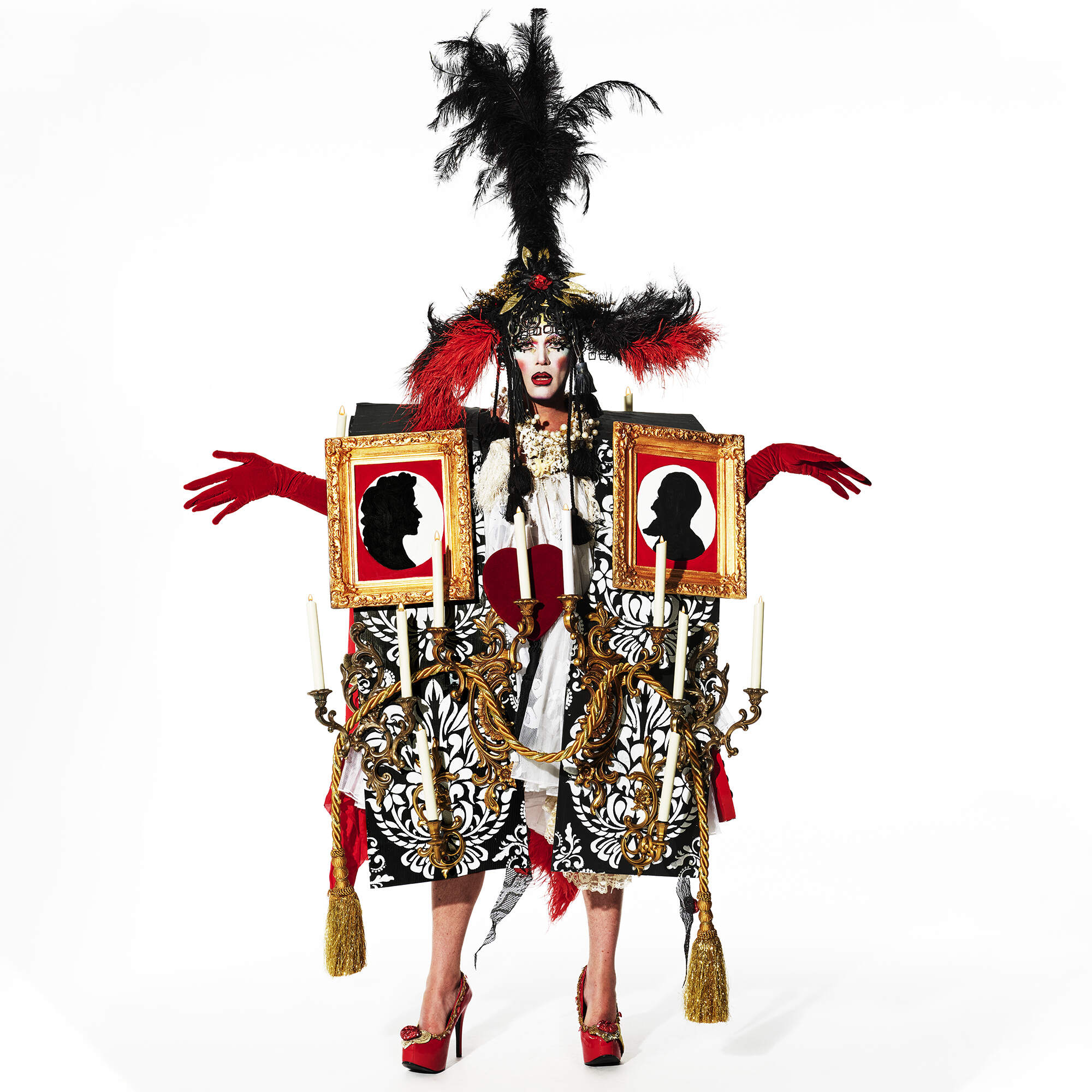
Little while back, I visited the artist and costume designer Machine Dazzle at his workshop in Jersey City for a maximalist makeover.
- [01:42]
Machine Dazzle
And as you can see, it's a large space, but it still could be bigger. You know what I mean?
- [01:47]
Minouche Zamarodi
It's like walking into the most glittering, dazzling closet I have ever seen in my entire life. There are mannequins dressed to the nines. There are reams of fabric, there are humongous. The 1500 square foot space is packed with supplies, wigs, a sewing machine, racks and racks of clothes.
- [02:12]
Machine Dazzle
Well, right now it's extra crazy, like you're here. But now that I have a photo shoot tomorrow, most people know me as a costume designer, but I'm also a fine artist, a photographer, sculptor.
- [02:24]
Minouche Zamarodi
Machine grew up all over the US then about 30 years ago, like many young people who feel out of step with mainstream America, he moved to New York.
- [02:36]
Machine Dazzle
I moved to New York so that I could actually start my life.
- [02:39]
Minouche Zamarodi
Over those past three decades, he has built a reputation for creating wild, whimsical and over the top outfits for the stage.
- [02:48]
Machine Dazzle
Maybe it's opera, maybe it's dance, maybe it's theater. Maybe it's me just walking on a street for the sake of something at that's a protest. I need a reason. There has to be a reason.
- [02:59]
Minouche Zamarodi
But it wasn't until 2022 when he had an exhibit at the Museum of Art and Design in New York that his style got a name thanks to the curator.
- [03:08]
Machine Dazzle
Yes, Elizabeth Author. When she curated my show, she decided to call it Queer Maximalism. I was aware of maximalism before, but I never called myself a maximalist. I mean. Yes. Am I maximal? Yes, but I'm so much more than that.
- [03:26]
Minouche Zamarodi
Of course you are.
- [03:27]
Machine Dazzle
Yeah. So, I mean, I change. I'm constantly changing. I go with the tone.
- [03:31]
Minouche Zamarodi
The museum chronicled how, as they put it, a closeted suburban kid from Upper Darby, Pennsylvania, turned into Machine Dazzle, the queer experimental theater genius. There was an apple pie headdress, a skirt made of candlesticks, a blouse that looked like giant typewriter keys. So while he may not exactly embrace the term, machine believes his take on maximalism promotes something very specific.
- [04:01]
Machine Dazzle
It's about sharing your vision. Queer space is about sharing. Yes, we're making space for ourselves, but we're also sharing ourselves. And we're inviting people into our circle. We're being generous. Maximalism is generous. It's everything. It's the cake, it's the flour, the eggs, the sugar. It's the oven, it's the heat. It's the love that was put into all of it. It's the mouth, it's the smile, it's the party. All of it. Because you can't have one without the other. Can I get an amen up in here?
- [04:42]
Minouche Zamarodi
Amen.
- [04:43]
Machine Dazzle
Or is that a gay man? Can I get a gay man up?
- [04:46]
Minouche Zamarodi
Oh. Depending on your perspective, fashion can be frivolous or make a big statement. It can bring out our creative side or our consumer side. But whether you love clothes or could care less, we all have to get dressed in the morning. So how can we do it better? On this episode, ideas about taking style to the extreme. The environmental impact of our shopping culture and. And how our obsession with beauty built an industry with an ugly underbelly. But first, back to Machine Dazzle. To get a better sense of what his maximalist outfits look like, it helps to Hear about the 2016 performance he did with the artist Taylor Mack.
- [05:34]
Machine Dazzle
We are about to venture into uncharted territory.
- [05:38]
Minouche Zamarodi
It was called A 24 Decade History of Power Popular Music. A spectacular queer take on American history that lasted for 24 hours, featuring 24 costume changes. Happy Days are Here Again. The HBO documentary about the performance won Machine an Emmy in costume design.
- [06:02]
Machine Dazzle
It starts in 1776 and goes to the present day.
- [06:06]
Minouche Zamarodi
Here's Machine Dazzle on the TED stage.
- [06:09]
Machine Dazzle
For every decade, I created a costume that is conceptually Adjacent, not historically accurate because traditional historical costume already exists. And I like to break traditions and invent new ones. So it's the top of the show in 1776, right after we freed ourselves from the British in the United States. And inspiration came when I was passing this laundromat. What were they doing? They were taking down these old plastic grand opening flags. And I noticed how weather worn and brittle and fragile they were. And I got to thinking about the end of the American Revolution and how tattered and torn and broken everything must have been. And then it hit me. This costume wants to tell a story.
- [07:03]
Minouche Zamarodi
The outfit feels like a sports uniform on acid. The headdress is made of cheerleaders, pom poms fashioned into a massive wig. There's a big 13 for the 13 colonies jersey number over. Metallic streamers. Sparklers are shooting off the back of the outfit like fireworks. The whole thing is one big party.
- [07:26]
Machine Dazzle
This is maximalism. Not only is it layer upon layer, aesthetically, it's idea on top of idea. Conceptually, it becomes its own story almost that you can almost read like a book.
- [07:41]
Minouche Zamarodi
Another particularly memorable outfit commemorates the Civil War era.
- [07:45]
Machine Dazzle
So when it came to the Civil War decade, I had read somewhere along the way that the American hot dog evolved out of this time by, you know, German immigrants selling their sausages on the streets. And so I wanted to include it in the costume.
- [08:03]
Minouche Zamarodi
To create the costume, Machine paired hot dogs with another invention from the 1860s, barbed wire.
- [08:11]
Machine Dazzle
I love what barbed wire kind of stands for. It's a barrier. And, you know, what we were doing in the Civil War was trying to break down those barriers.
- [08:20]
Minouche Zamarodi
So the costume features a huge barbed wire skirt adorned with hot dogs that almost looks like a cage, plus a headdress of hot dogs and a Civil War style soldier's jacket with red and yellow streamers flowing off of it like ketchup and mustard.
- [08:38]
Machine Dazzle
Then it's also almost grotesque. It's like, well, is it ketchup or is it blood that we're talking about the Civil War. Here on stage, we often deal with dark things, heavy subject matter. I will say that humor is good, humor is healing. So audience gets to decide what it is.
- [09:04]
Minouche Zamarodi
There was no audience back at Machine's workshop in Jersey City. Nonetheless, he was hard at work on my maximalist makeover, putting together quite an outfit for me.
- [09:17]
Machine Dazzle
Looks really good on you.
- [09:18]
Minouche Zamarodi
Thank you.
- [09:18]
Machine Dazzle
Yeah, these are good colors for you.
- [09:21]
Minouche Zamarodi
So right now I have a wig made of hair, red hair, but also plastic bags, yarn, flowers, all sorts of things. A bolero Jacket that's vintage with very poofy sleeves. And then the crinoline short skirt just pops out. And we're not even fully dressed yet.
- [09:40]
Machine Dazzle
And it's like this, you know, we're not even fully dressed yet. We haven't even really done accessories. And also, you're not in your heels.
- [09:47]
Minouche Zamarodi
I'm not in my 7 inch Prada heels yet.
- [09:49]
Machine Dazzle
No, you're not. And I might want to add a little.
- [09:51]
Minouche Zamarodi
By the time I got in my heels and rhinestone gloves, put on some copper lipstick with many dashes of glitter layered on top, it's just like a little something. Oh, plus some cat eye sunglasses. Something kind of transformed inside of me. I think we were headed at one point into a direction where it was like, too much, like, Halloweeny. But then you, like, took us in a different direction. And now I actually feel super chic.
- [10:19]
Machine Dazzle
All of a sudden because you're so outrageous. It's like you have a license to say almost anything and do almost anything.
- [10:28]
Minouche Zamarodi
But I never would have thought I could wear this many colors, this many accessories.
- [10:32]
Machine Dazzle
It's the way you put things together. There's sophistication involved, there's effort. I think there's a lot of minimalism that, you know, it's effortless. There's nothing to think about. And I understand why people do that. You know, we live in a crazy world. Life is stressful. I can't handle. I mean, I can handle it. I'm having fun. A miniature me running through the mountain that is your headdress. And then, like, your shoes are just, like, propping you up. It's like putting a painting on a wall.
- [11:04]
Minouche Zamarodi
I figured at this point, as we get ready to go out to get a coffee, that I would be embarrassed and terrified, but I don't. I feel like I need to. Need to be seen because I look amazing.
- [11:18]
Machine Dazzle
And now you're gonna wanna do this all the time. I have a feeling we'll be seeing a lot more of each other.
- [11:23]
Minouche Zamarodi
Can I buy you a coffee?
- [11:25]
Machine Dazzle
You sure can, babe. Let's go.
- [11:26]
Minouche Zamarodi
Let's do it. Okay. We took our outfits for a spin by going to the local cafe, and surprise, surprise, we turned some heads. Oh, they just said, you look amazing, and you just cheered me up.
- [11:39]
Machine Dazzle
See, I told you.
- [11:41]
Minouche Zamarodi
We look like a celebration of life, you and I. We do. I was finally embracing the maximalist mindset, and it felt good. And maybe machine is right. Maybe we're attracted to minimalism because it's a way of taming the madness of modern life. Whereas Machine's approach is to run joyfully towards the chaos.
- [12:07]
Machine Dazzle
I'm trying to give light to it, and sometimes a thing of beauty can be a hand that you hold through a dark time.
- [12:18]
Minouche Zamarodi
I feel like a walking piece of art. It's really special. It is a flash. It is a moment.
- [12:24]
Machine Dazzle
You are taking joy.
- [12:26]
Minouche Zamarodi
I really am.
- [12:29]
Machine Dazzle
Most people would not leave their homes wearing what I wear. It's an offering of changing the way people see the world, changing what is possible.
- [12:43]
Minouche Zamarodi
Machine Dazzle is a costume designer and performer. You can see his full talk@ted.com the HBO documentary featuring his incredible outfits is called Taylor Mac's 24 Decade History of Popular Music. You can also go to ted.npr.org and my Instagram to see photos of me and Machine all dressed up on the show today. The state of Fashion. I'm Minouche Zamarodi and you're listening to the TED Radio Hour from npr. We'll be right back. This message comes from NPR sponsor Viking, committed to exploring the world in comfort. Journey through the heart of Europe on an elegant Viking longship with thoughtful service, destination focused dining and cultural enrichment on board and onshore. And every Viking voyage is all inclusive with no children and no casinos. Discover more@viking.com this message comes from Capital.
- [13:52]
Cameron Russell
One with the Venture X card. Earn unlimited double miles on everything you buy, plus get premium benefits at a collection of hotels when booking through Capital One Travel. What's in your wallet? Terms apply details@capital1.com this message is sponsored by Audible. Can AI predict the source of the next global pandemic? Or at least help convince a Hollywood studio to buy a new screenplay from Scott Z. Burns, the writer of Contagion? Don't Miss what Could Go Wrong, a deeply thoughtful, occasionally frightening and often hilarious Audible original podcast that delves head and heart first into this burning question. Can humankind and AI actually work hand in hand? Listen to what Could Go Wrong now on audible@audible.com whatcouldgo wrong.
- [14:43]
Amanda Mull
This message comes from NPR sponsor UKG. Nothing feels as good as a great place to work. And a great place to work is very good for business. UKG is the only partner that delivers the hr, pay, time and culture solutions needed to create a great workplace which gives employees everything they need to succeed, no matter who they are, where, where they work or what they do. See what UKG can do for your business and your people@ukg.com Great UKG. Our purpose is people.
- [15:15]
Minouche Zamarodi
It's the TED Radio Hour from npr. I'm Anouche Zamorodi on the show today, the state of fashion, which of course includes shopping. And for many of us today, that means shopping online.
- [15:30]
Unknown Speaker
I have shopped for every single thing online. Anything and everything that I can purchase. I look at it online first.
- [15:39]
Minouche Zamarodi
This is Aparna Mehta. A few years ago, when she was a busy working mom, online shopping was a huge time saver, especially for buying clothes.
- [15:50]
Unknown Speaker
I work 12 to 16 hours a day. I don't have time during the week to go out and look for things.
- [15:56]
Minouche Zamarodi
So in the evenings, she'd scroll and shop.
- [16:01]
Unknown Speaker
My daughter's in bed. I'm relaxed. I'm watching tv. I start browsing. I'm like, hmm, you know, let's look at Nordstrom's today. Let's look at anthropology. What do they have there? I start seeing these things and I'm like, oh, that looks really good. And wherever I would go on any website, they would say, returns are free. I would intentionally buy the same item in a couple different colors, a couple different sizes, with the intent of keeping only one.
- [16:30]
Minouche Zamarodi
I mean, that's what I've been told as well, is like, you know, you're a busy person, you're a mom. Save time, just order it in various sizes, then ship back the ones you don't want, and that's perfectly fine. Is that what you understood as well?
- [16:45]
Aparna Mehta
Yes.
- [16:46]
Unknown Speaker
I mean, I would try on 6, 7, 5, 6, whatever, and then keep one if I liked it and return the rest.
- [16:53]
Minouche Zamarodi
At your peak, how many deliveries would you say you were getting of clothes per week?
- [16:59]
Unknown Speaker
Oh, per week, 12, 15.
- [17:03]
Minouche Zamarodi
Whoa.
- [17:04]
Unknown Speaker
Sorry.
- [17:06]
Minouche Zamarodi
You were serious.
- [17:06]
Unknown Speaker
But I didn't think I was doing anything wrong. Look, the store is making it possible for me to order as many as I want and return back what I don't want. Sometimes I would return all of them because you can't check the material when you're buying online. My daughter, she was a teenager at, at that time, and she said, mom, you have a real problem. And this is the daughter telling me. I'm supposed to be telling her, but it was instead her.
- [17:29]
Minouche Zamarodi
Aparna's shopping habit was definitely out of control. And she started to realize that it was a problem for the environment, too.
- [17:38]
Unknown Speaker
There were packages showing up at my doorstep almost every day. I have all these empty boxes. I mean, yeah, I recycle it, but oh, my God, so much cardboard.
- [17:47]
Minouche Zamarodi
And there's some irony here, because at the time, Aparna was a global solutions director for ups. Part of her job was to help retailers make their operations run more smoothly. So she knew a lot about how shipping works.
- [18:04]
Unknown Speaker
So think about supply chain design, supply chain optimization, carbon impact analysis. That's the kind of work I did.
- [18:13]
Minouche Zamarodi
But one day in a meeting with a client, she heard a statistic that put her shopping habit in perspective.
- [18:20]
Unknown Speaker
I was at a meeting with one of our largest retailers. You know, one of the key members from the customer side said, the largest opportunity we have right now is with returns. Last year, they had 7.5 million pieces of clothing returned to them.
- [18:37]
Aparna Mehta
Wow.
- [18:38]
Unknown Speaker
I just circled that number on my paper. I'm like, oh, my God. In one year, one retailer. This is not a small problem. This is a big one.
- [18:50]
The return situation online, it is a problem entirely of the Internet's making and of Internet retailers making.
- [18:56]
Minouche Zamarodi
Amanda Mull is a senior reporter at Bloomberg Businessweek, where she covers consumerism.
- [19:03]
Unknown Speaker
The idea that you go into a store and plan already to just return half of it, that is a behavior that before the Internet was considered, like, pretty maladaptive. Like, if you were doing that regularly, that would be sort of like characterized as like a compulsive shopping issue. But now that is just how the Internet has trained us to shop.
- [19:22]
Minouche Zamarodi
Amanda says that when people buy things online, they tend to return them at a very high rate.
- [19:29]
Unknown Speaker
On average, brick and mortar stores have like a single digit return rate online. It can range from usually 15 to 30%. And for certain types of products, especially during the holidays, it can get up to 50%. And that's because online shopping is not designed to produce good decisions in the people who are, who are making purchases. It's designed to make it as easy for you to buy things as possible.
- [19:54]
Minouche Zamarodi
This all began back in the early 2000s, when online shopping debuted and shoppers were skeptical.
- [20:01]
Unknown Speaker
People understood really well at the time that a lot of the goods that they wanted to buy just weren't ideal for online shopping. Things that you have to try on, things that have to fit your body, things that have to be comfortable in some way. Like there's all kinds of stuff that you just can't really know with full certainty online. And you still can't. You certainly couldn't in, you know, 2004. So early online retailers had to figure out some way to overcome these objections in order to encourage people to change their habits.
- [20:31]
Minouche Zamarodi
Enter Zappos, the online shoe store and the first online retailer to offer free returns.
- [20:38]
Unknown Speaker
Ending up with a pair of shoes that doesn't fit is like a big risk. So they made returns free. That is what got people to shop online. That is what created this set of habits in people. It also was really, really unprofitable for the companies doing it. Amazon, Zappos, a lot of early online retailers did not turn a profit for a very long time. Like they were investing money in creating habits in the American population that would in the long term be advantageous to them.
- [21:04]
Minouche Zamarodi
Has it worked, would you say?
- [21:06]
Unknown Speaker
Yeah, it's worked really, really well because it's created these behaviors that, you know, a lot of people have now, like buying a size up and a size down from what you'd normally buy or adding something random to your order to get past a free shipping threshold. They created a set of incentives for shoppers for people to buy stuff with the intent of returning it. Because if people didn't really start trusting this process and start seeing it as convenient, they were never going to peel off a considerable amount of like market share from in person retailers.
- [21:37]
Minouche Zamarodi
Shoppers came to rely on that online convenience exactly as retailers had hoped. But now as we buy and return, buy and return, the cost of processing all those packages is hurting retailers. Bottom line.
- [21:54]
Unknown Speaker
Last fall I went to visit a returns facility run by Inmar Intelligence, which is the largest returns processor in the United States. They process hundreds of millions of packages per year in their different facilities across the US. The one that I went to was one of their big ones. It's a few hours outside of New York City. It's a sort of a regional facility that collects a lot of returns from the sort of like New York City, Philadelphia metropolitan area.
- [22:21]
Minouche Zamarodi
So I've probably sent something back to this warehouse without even knowing it.
- [22:24]
Unknown Speaker
Oh, almost certainly.
- [22:26]
Minouche Zamarodi
Almost certainly this one facility processes about 100,000 packages a day.
- [22:34]
Unknown Speaker
It is just like a perpetual motion machine of taking stuff out of your taped up poly mailer and figuring out what's going on.
- [22:42]
Minouche Zamarodi
A real life person opens each package.
- [22:45]
Unknown Speaker
They try to ensure that what you've returned matches what it says on your order.
- [22:50]
Minouche Zamarodi
They check the product for defects, for.
- [22:53]
Unknown Speaker
Signs that it has been used.
- [22:54]
Minouche Zamarodi
They even have to do things that.
- [22:56]
Unknown Speaker
Are kind of gross, especially if it's apparel. They're supposed to sniff it.
- [23:00]
Minouche Zamarodi
Sniff it?
- [23:01]
Unknown Speaker
Yes.
- [23:01]
Minouche Zamarodi
Like smell?
- [23:02]
Unknown Speaker
Yes, to see if it smells like it's been worn. If you return a pair of pants, they check the pockets. The guy who was showing me around told me that the most common item to find with returned pants is somebody's underwear.
- [23:14]
Minouche Zamarodi
Oh no, not great. No, like that seems like pretty time consuming.
- [23:20]
Unknown Speaker
Oh yeah, it's really, really time consuming and labor intensive. And you know, they. Inmar and its competitors all have technologically advanced Systems that use whatever machine learning or AI capabilities they can. But, like, there is no replacement for human eyes and human noses and human hands after that.
- [23:40]
Minouche Zamarodi
Sometimes clothes do go back to the retailer and are resold. But Amanda says there's a very high bar for getting clothes back on the shelf.
- [23:49]
Unknown Speaker
Some retailers only take back things that are in perfect, like, new, unworn condition, sometimes in their original packaging.
- [23:57]
Minouche Zamarodi
Otherwise the item might go to an outlet like TJ Maxx.
- [24:01]
Unknown Speaker
But again, if there's any indication that something has been worn, it is very hard to resell anything like that in any channel.
- [24:09]
Minouche Zamarodi
So instead it might be donated or recycled.
- [24:13]
Unknown Speaker
But textile recycling is, like, pretty difficult. The more like embellishments, the more types of material there are on a garment, the less likely it is to be easily recyclable. So not everything can be recycled, not everything that's donated can be used. And pretty much everything that can't be slotted into one of those categories is destroyed in some way. It is incinerated, landfilled at every step. This process just sort of sheds waste.
- [24:41]
Minouche Zamarodi
It's funny, it's reminding me of a time that I tried to return something to Amazon and they were like, you know what, just keep it. We'll give you your money back.
- [24:49]
Unknown Speaker
Yes.
- [24:50]
Minouche Zamarodi
At that point, what's happening? They're making a calculation that it's not worth it for them.
- [24:54]
Unknown Speaker
Yes, absolutely. Returns on a, on a per return basis can cost retailers anywhere from like 5 to $25. Especially fast fashion has a really short shelf life. That becomes a real problem when taking returns because maybe it takes you a week or two weeks to actually drop it off at the post office. Maybe it takes a full month for you to drop it off at the post office. When a company takes that return. Like, your dress might not have been available for sale in any capacity on their website for two weeks by the time it gets back to them and gets processed. So there's no way for them to resell it. And they've had to pay a returns processor to look at it. They've had to pay the logistics service to bring it back to them. They have already just been leaking money, so the last thing they want to do is take a return.
- [25:41]
Minouche Zamarodi
So what would happen though, if each of us just returned a few fewer items per year?
- [25:47]
Unknown Speaker
Well, I mean, we're about to find out. A lot of retailers are trying to change the system ever so slightly to prevent us from returning so much stuff because it has started to eat into their bottom lines. And if they want to, you know, to the profit that they've spent so much time encouraging us to create, then they need us to return less stuff. Like they have set up a system that is not inherently profitable anymore. So this reintroduction of returns fees, of restocking fees, of shipping fees, of the concept of the final sale and you can't return something I think does make a meaningful difference in the amount of stuff that people return. The system is in like a state of flux right now. They are trying to figure out the correct combination of incentives and fees to institute in order to keep more products sold. You know, I have been writing about retail logistics and returns for a long time now. And every time get in a conversation with somebody about it, I see people have this feeling of horror that you've just discovered that you've been participating in something that you don't feel good about. You really start to think about like all the times that you procrastinated taking a package to ups. And I think sometimes people feel a little bit dumb for not thinking about it. But like the system is designed to ensure that they don't think about it as much as possible.
- [27:10]
Minouche Zamarodi
We've talked about, you know, the problems for these businesses, but what about the environmental impact? Is there any way to calculate just how bad the problem is?
- [27:21]
Unknown Speaker
So there is this EPA stat that gets thrown around a lot, which is that the average US consumer throws out approximately 81.5 pounds of clothes annually. That doesn't mean that like every single person is taking 81 pounds of clothing to the trash, but it means that for every American, the amount of textile waste that gets created within this country is about 81 pounds. That works out to a little bit over 11 million tons as a country. And it's like yes, returns create a real issue and a real waste in the process, but the much bigger waste is just the volume at which these companies manufacture clothing that nobody wants or needs and nobody buys. I think that's even more the case for the slightly older model fast fashion retailers where you're creating a lot more stuff up front to see if it sells. And that is the cost of doing business at that volume, at that scale. There are dumping grounds all over the world in poor countries where a lot of these, this cast off clothing tends to go in Ghana, in Chile in particular, just sort of like these trash mountains of clothing which just I think illustrates like the real overproduction problem that we have in these types of goods. You know, that much is thrown away every year as a country and we're not missing any of it.
- [28:42]
Minouche Zamarodi
I mean, as someone who's tracking this, you must have imagined what could be done systemically to make a difference. What would that look like?
- [28:51]
Unknown Speaker
I think it's regulatory. There is a real capacity for responsible regulation and responsible oversight to change the behaviors of these companies. But, you know, the companies that populate this industry are very, very powerful. They have very powerful lobbying arms. The Biden administration has made some important steps in the past few years, but it's hard to say exactly how much anybody is going to be willing to do.
- [29:18]
Minouche Zamarodi
All right, so I'd love to end our conversation with sort of best practices. Let's say someone is like, well, I am not going to be part of this online shopping machine that is hurting our planet. What are some of the things they can do?
- [29:37]
Unknown Speaker
I think one of the best things that you can do is, is when you decide you want or need something to try to buy it secondhand. I think that, like, if you're looking at a system where you've got just like this massive oversupply of consumer products, then it makes sense, both systemically and just like price wise for you to look for, you know, opportunities to buy something that is not brand new. But we live in a consumer economy and the system is set up to prompt us to buy as much as possible. That's the economy we have. And the amount of personal resilience you need to say no to that all the time is just enormous. Nobody can be expected to say no to these prompts. 100% of the time. You have been as a consumer sort of herded toward the least friction possible. If you can add some friction back in for yourself in whatever way makes sense for you and what you're looking for, then you're probably going to make better decisions. You're going to save money, you're going to be less wasteful, your house is going to be less cluttered. Like, you are just going to have an easier time of things in the long run.
- [30:50]
Minouche Zamarodi
Which brings us back to Aparna Mehta, the now retired UPS executive and former online shopaholic. As Aparna learned more and more about where her online returns were actually going, she knew she had to make a change.
- [31:07]
Unknown Speaker
Because I saw the wastage that happens in the supply chain. You think about the amount of fuel you consume, you're talking about labor. You know, every time you touch a package, it's a cost.
- [31:21]
Minouche Zamarodi
As a supply chain expert, Aparna focused on solutions to reduce this kind of waste. She worked with her retail clients to optimize their shipping routes, consolidate shipments and use less packaging and you start thinking.
- [31:35]
Unknown Speaker
About your supply chain in different ways.
- [31:37]
Minouche Zamarodi
In her own life, she joined a clothing reuse initiative within the Indian American community. But most of all, Aparna changed the way she shops.
- [31:48]
Unknown Speaker
Yes, significantly. It takes me a lot longer now to make a decision when I'm doing online shopping. I really think about it, I'll put the item in the cart. I'll go back the next day and see if I still want it. And I try, I try very hard to keep the returns to a minimum. I don't buy with the intent to return. So that's the number one change. I don't buy multiple items of the same item with the intent of only keeping one. That's like my way of saying I'm going to minimize this as much as I can.
- [32:22]
Minouche Zamarodi
I mean, there's also the question of fashion, right? That were you very sort of trendy previously? When you were shopping more often, were you more up on style? And have you decided to go, I don't know, more classic or go back into your closet?
- [32:37]
Unknown Speaker
No. So that part hasn't changed. Unfortunately, I still like trendy stuff. What I don't do is I don't buy fast fashion. So if I purchase stuff, it is to keep. I take some time to buy. My daughter and I, we have a phrase. She points to her heart and says, mom, does it hurt you here if you don't get that? And I say no, she goes, then don't buy it.
- [33:06]
Minouche Zamarodi
That was Aparna Mehta, former vice president of Global Customer Solutions at ups. You can see her talk at ted. We also heard from Amanda Mull, who writes for Bloomberg Business Week. And on our next TED Radio Hour plus episode, you can get more expert advice from Amanda on how to be an intentional consumer. She's got some great tips today on the show the State of Fashion. It's the TED Radio Hour. From npr. I'm Anoush Zamorodi. Stay with us.
- [33:49]
Amanda Mull
This message comes from the Hartford. Every day they create unique risk solutions for unique businesses. They understand the challenges businesses face today and are ready to anticipate the risks of tomorrow. Their teams know the ins and outs of specific industries, so the Hartford can help provide insurance solutions for midsize and large businesses. If a business needs it, chances are they've got it. And get it. Connect with your underwriter at the hartford.
- [34:14]
Cameron Russell
Or visit thehardford.com this message comes from BetterHelp. Workplace stress can be difficult to manage and a holiday can help. But it isn't a long term solution therapy can help you navigate whatever challenges the workday or any day might bring. Take the steps to care for yourself and relieve stress with BetterHelp, the largest online therapy provider in the world. Visit betterhelp.com NPR for 10% off your first month.
- [34:44]
Amanda Mull
This message comes from NPR sponsor Holiday Inn by IHG It's a new day for a new stay at Holiday Inn for business travelers. With modern spaces for meeting and working, plus delicious dining. From breakfast to happy hour and dinner, you have everything you need to get work done. Give your everyday business travel an upgrade. Book your next business trip at Holiday Inn by IHG. Visit holidayin.com to book your stay. This message comes from Thuma. Create your oasis with Thuma, a modern design company that specializes in furniture and home goods by stripping away everything but the essential. Thuma makes elevated beds with premium materials and intentional details with clean lines, subtle curves and minimalist style. The Thuma Bed collection is available in four signature finishes to match any design aesthetic. To get $100 towards your first bed purchase, go to T H U M A CO NPR.
- [35:41]
Minouche Zamarodi
It'S the TED Radio Hour from NPR. I'm Minouche Zumarodi. On the show today, the state of fashion and a warning. This next segment contains an offensive word and we talk about sexual misconduct. So we can't talk about fashion without including the perspective of a very select supermodels. Back in the 90s and 2000s, they were hot. Cindy, Linda, Kate. We knew them by their first names. They made modeling the goal of many a tween or teen, and shows like America's Next Top Model furthered the fantasy that it could happen for anyone. But it actually did happen for Cameron Russell.
- [36:28]
Aparna Mehta
I was scouted when I was 14 or 15. I was swimming in Maine and a talent scout saw me swimming and then gave me a card for an agent in New York City.
- [36:43]
Minouche Zamarodi
Eventually, Cameron ended up walking the runways of Versace, Prada, Louis Vuitton and Victoria Victoria's Secret. She appeared on the covers of countless magazines. Now, 20 years later, she's written a memoir documenting her experience.
- [36:59]
Aparna Mehta
I think that we have this sensibility that if you are a model, the life is very glamorous and you are famous. But of course, the job doesn't always look like that.
- [37:11]
Minouche Zamarodi
So models have written tell all memoirs before. But Cameron's book chronicles her life as she grows to understand the industry's seedy economic underpinnings, including labor conditions, the environmental impact and the exploitation of models themselves.
- [37:30]
Aparna Mehta
In some ways, this should not be a surprise it's an industry that relies on the exploitation of gender labor from top to bottom. So it would make sense that that extends to women at the very top.
- [37:41]
Minouche Zamarodi
And while she calls out a lot of people, Cameron also calls out herself. It all goes back to the very first gigs she booked. Because even though she grew up in a feminist household and had no interest in fashion, the opportunity was too good to pass up.
- [38:00]
Aparna Mehta
I was offered very quickly a couple thousand dollars for a single day of work. You know, any other job I'd had, I'd taught, like after school and been a babysitter for way less than minimum wage. You know, like. So on the eve of going to college and thinking about saving money and what am I going to do? That was a massive opportunity. And then I think there's this other piece of what fashion is. There are so few women with access to media. And so that idea of being able to access a large platform, a large audience. I, even at 16, was thinking, wow, this is so unique. And so I was thinking about that particular type of access.
- [38:44]
Minouche Zamarodi
There's a moment where you start to. Well, there's many moments in the book, which I will say is a gripping read, but also a very hard read because you are a girl. I'm the mother of a 14 year old, and the thought of my daughter being in these situations, really treated like an adult because you look like an adult, but with, you know, not a ton of emotional maturity. You look back on those years and feel what?
- [39:17]
Aparna Mehta
Yeah, I guess I. The way that I ended up writing this book is there was a word that I just couldn't get out of my head, which was the word tolerate. I thought it was so much more complicated than the word consent. And it also seemed to me more complex than complicity. So as I was thinking about how to write a book about working as a model, I started just making lists. And the first list that I made was just a list of things that I had tolerated. And the very first item on the list is a story of showing up at my first photo shoot and the stylist telling me to wear this bikini with a belt around my neck and telling me it's an S and M vibe. And when he says S and M, I think of like, you know, three letters, S, N, M. I didn't know what it stood for. I had just turned 16 on my second shoot. The makeup artist paints my lips red and they tell me that I have sucker lips. I've never heard this word before. It's so jarring. I'm trying to make sense of what that means. I talk about, you know, having a photographer that I shoot with for a couple months who is calling me sexy. And no one's ever called me sexy. Right. I'm a kid, and I was inside, you know, other people's fantasies that I had no understanding of. And I tolerated it. You know, I. I went along with it because I was thinking, well, this is a wild opportunity. And, you know, it's an industry where you are standing in a casting line with 400 other young women, and you just start thinking you can be replaced in an instant. And so figuring out what to do in this really competitive environment really was figuring out how to make myself agreeable to everyone that I encountered.
- [41:22]
Minouche Zamarodi
In 2012, after modeling for about a decade, she decided to be a little less agreeable. She gave a talk acknowledging some of the uncomfortable truths about her career. It was called looks aren't everything. Believe me, I'm a model.
- [41:39]
Aparna Mehta
I feel like there's an uncomfortable tension in the room right now because I should not have worn this dress.
- [41:45]
Minouche Zamarodi
Cameron walked out on stage looking like the quintessential supermodel. Short black dress, sky high heels.
- [41:53]
Aparna Mehta
But then, luckily, I brought an outfit change. This is the first outfit change on the TED stage, so you guys are pretty lucky to witness it.
- [42:01]
Minouche Zamarodi
I think she pulled on a long skirt, stepped out of her stilettos and into a pair of loafers.
- [42:08]
Aparna Mehta
These heels are very uncomfortable, so good thing I wasn't gonna wear them next.
- [42:12]
Minouche Zamarodi
On a comfy cardigan.
- [42:14]
Aparna Mehta
The worst part is putting this sweater over my head, because that's when you all laugh at me.
- [42:17]
Minouche Zamarodi
So at the time, this onstage costume change seemed revelatory. That a supermodel was willing to drop the glamour and look, well, average.
- [42:29]
Aparna Mehta
So why did I do that? That was awkward. Image is powerful, but also, image is superficial. I just totally transformed what you thought of me in six seconds. And of course, barring surgery or the fake tan that I got two days ago for work, there's very little that we can do to transform how we look. And how we look, though it is superficial and immutable, has a huge impact on our lives. I am on this stage because I am a model. I am on this stage because I am a pretty white woman. I won a genetic lottery, and I am the recipient of a legacy. And maybe you're wondering, what is a legacy? Well, for the past few centuries, we have defined beauty not just as health and youth and symmetry that we're biologically programmed to admire, but also as tall, slender figures and femininity and white skin. And this is a legacy that was built for me, and it's a legacy that I've been cashing out on.
- [43:40]
Minouche Zamarodi
So your talk ends up being and is still one of the most watched TED talks of all time, over 40 million views. But you say in the book afterwards, at the moment, you feel like you have power, like you are writing your own, except once you go off script, you say, I don't know what to say. So talk me through how you started to figure out what you wanted to say.
- [44:07]
Aparna Mehta
Yeah, you know, I think one of the things that was hard to figure out was how to talk about an industry that, particularly for me, was both privileging and oppressing. And I felt I just did not share, you know, what does it mean to be complicit and tolerant of an industry that is very exploitative? You know, both claiming responsibility and shame and blame for some of that, and then also, you know, not taking responsibility for everything. Right.
- [44:47]
Minouche Zamarodi
I mean, it's interesting because in the book, you really characterize your upbringing as the kind of household where you were steeped in issues about social justice, privilege, racism, labor rights. And you describe or you say that as your career grew, you became very aware of how the fashion industry makes those problems worse. There is a section that I think really sums up the sort of confusion that you were feeling at the time. It's the story you tell about a photo shoot you did on the grounds of a former plantation in Georgia. And I wonder if you could read it for us.
- [45:26]
Aparna Mehta
Yeah. An hour outside Atlanta for a job. We drive up to the location, and the production assistant points at some rubble in the woods and tells me that used to be slave housing. Then he points where we're headed and says, and the same white family still owns the big house. The woman who answers the door tells us this again. The plantation has been in my family for hundreds of years, she says. It's the first thing she tells us, and she says it with pride. I sit on the porch waiting for the team to set up. How different is what we're doing? Celebrating this place, celebrating my white face over and over, while women of color make, pack, ship, and sell the clothes for nothing close to a livable wage.
- [46:09]
Minouche Zamarodi
There are many scenes in the book where you are sort of at the center of a industrial system that wants to put a pretty face on it, but literally makes you sick. I'm remembering another scene where you describe reading the headlines about hundreds of Bangladeshi garment workers being killed in a fire in a factory and that you Excuse yourself to go to the bathroom and have diarrhea and describe yourself reading these stories on the can. And I almost feel like you're trying to say to the reader, it is ugly. I can be ugly. There's a visceralness that you go into in the book that sort of shocked me, and I think that's what you were trying to do.
- [47:02]
Aparna Mehta
Yeah, I guess I thought a lot about telling a story where, as you say, my body was being used to make this in many ways, really grotesque industry beautiful, enticing, aspirational. And I thought the way to begin to dismantle that is actually to return to the body just this really repulsive human experience of being sickened by what was happening.
- [47:41]
Minouche Zamarodi
There's a quote in the book where you say, each day I become less of a witness and more of an accomplice.
- [47:49]
H
Yeah, I think, you know, it's really hard not to be in an industry where 20 conglomerates own 97% of profits. The negative climate impacts, the negative impacts on labor. It's really hard to not work for companies that are doing those things. I think that there's, like, this sort of fantasy sometimes that feels like if you don't like it, then quit. But it's true in nearly every industry. And a solution, to me anyway, is not really to just live off the grid. It is to actually acknowledge I am and have been an accomplice to some really egregious things that this industry is doing. And I want to take responsibility and be part of a group of people that try as hard as we can to transform the industry. At the same time, to acknowledge that there are systems which have been in place that are so much bigger than us that we cannot shoulder responsibility for.
- [48:57]
Minouche Zamarodi
Cameron has spent the last decade organizing her fellow models and speaking out about the industry. Like in 2017, when the MeToo movement started, and Cameron was reminded of the early experiences she had in modeling.
- [49:11]
Aparna Mehta
I think we looked at that and said, wait, if this is unacceptable in Hollywood, why is it the norm over here in my industry? And so, of course, that led to this very different theory of change, which is just that we can't make change without each other.
- [49:27]
Minouche Zamarodi
She got hundreds of models to share their stories with her. Stories of abuse, of boundaries, crossed people telling them to just suck it up. She anonymized the stories and then posted them online together.
- [49:41]
H
I think the power of sharing them all out was really to introduce norms about what was acceptable and what was unacceptable. And what it broke was this expectation that this job is a fantasy And I think it also built this sort of camaraderie or solidarity across the supply chain and across women. 80% of the fashion industry is women, and most of those women don't make a livable wage. That actually includes models. Most models don't make a living wage. So I think it introduced this idea that actually that gendered exploitation is something that is happening across the supply chain. And it shouldn't surprise us that it's happening across the supply chain, because it's an industry that is really relying on exploiting women and using cheap labor to make profits.
- [50:42]
Minouche Zamarodi
To somebody listening who's saying, I feel confused by fashion, I get told that I should invest in pieces that are ridiculously expensive, but really I can only afford fast fashion, which I hear is destroying the planet. And I feel the need to connect with friends on social media that is also objectifying people. Like, I think people feel confused in some ways by fashion, and part of them just wants to enjoy it for the pure pleasure it can give people. But what do you think they need to keep in mind when they get dressed every morning?
- [51:21]
Aparna Mehta
I guess one piece that makes it simple for me is trying to pull apart fashion from industry, which in this particular moment is such a rampant, exploitative type of capitalism. And when we can pull those things apart, we just see fashion in a whole different way. I think fashion is familial. You know, when we take it apart from industry, it's long been the work of women where we really can access creativity and culture. And it's just always been in the home. It's been for people that we love.
- [52:02]
Minouche Zamarodi
Mm.
- [52:04]
H
And it is our responsibility as people who work in fashion, as people who consume fashion, who are excited by this industry, to try to hold those two things. Grief @ being an accomplice to the system, at working inside this and grounding in that and using that as motivation to turn towards and grasp onto the ways that fashion can be really beautiful and powerful.
- [52:35]
Minouche Zamarodi
That was Cameron Russell. Her book is called how to Make Herself Agreeable to Everyone. You can see her full talk@ted.com thank you so much for listening to our show this week. This episode was produced by Katie Monteleone, Rachel Faulkner White, Harsha Nehada and Fiona Guren. It was edited by Sanaz Meshkinpour, Rachel Faulkner White and me. Our production staff at NPR also includes Matthew Cloutier and James Delahousy. Irene Noguchi is our executive producer. Our audio engineers were Robert Rodriguez and Gilly Moon. Our theme music was written by Ramtin Arablouei. Our partners at TED are Chris Anderson, Roxanne Hilasch, Alejandra Salazar, and Daniela Bell Alreso. I'm Anoush Zamarodi, and you have been listening to the TED Radio Hour from npr. Support for this podcast and the following message come from Raymond James, a firm where financial advisors help you plan for every part of your life. No two lives are alike. That's why everyone deserves a financial plan as unique as they are. Backed by sophisticated resources and teams of specialists, a Raymond James Financial Advisor gets to know you, your passions and everything that makes your life uniquely complex. Because what inspires your goals matters, whether that's charitable endeavors, mapping out the future of a business, or building a legacy for your family. Raymond James Advisors use thoughtful planning and powerful tools to help people they serve embrace life and live it well. To learn more or connect with an advisor Today, go to raymondjames.com Raymond James & Associates, Inc. Member, New York Stock Exchange sit back.
- [54:22]
Amanda Mull
This message comes from NPR sponsor Viori featuring the performance jogger. Visit viori.com NPR for 20% off your first purchase on any US orders over $75 and free returns. Exclusions apply. Visit the website for full terms and conditions.
- [54:39]
Cameron Russell
This message comes from Square. Your favorite neighborhood spots are using Square to do everything from covering cash flow gaps to expanding to new locations. Wherever your business is growing, Square meets you there. Go to Square. Com Go NPR to learn more.