← TED Radio Hour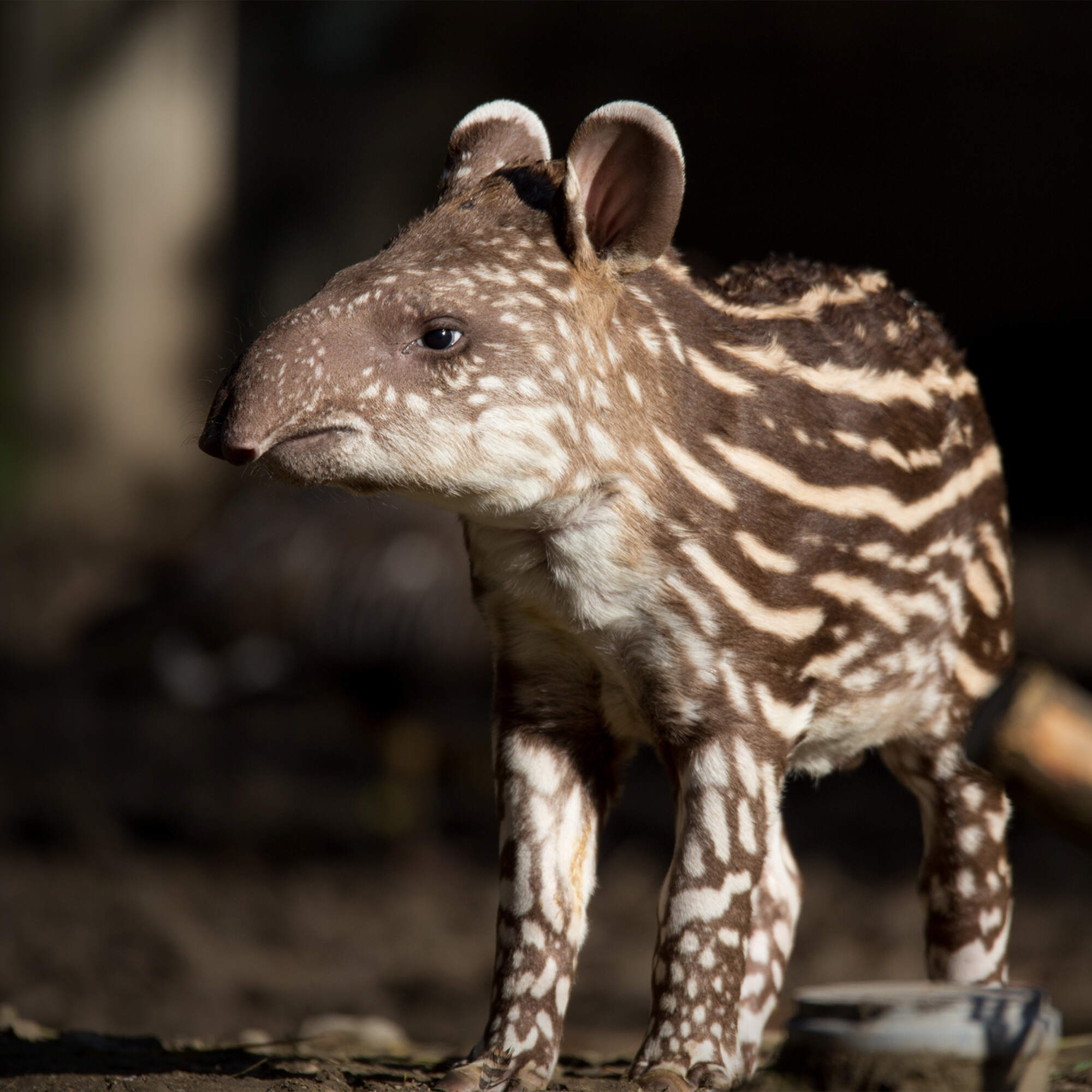
Loading summary
Transcript163 lines
- [00:00]
Advertiser 1
This message comes from Discover, accepted at 99% of places that take credit cards nationwide. If you don't think so, maybe it's time to face facts. You're stuck in the past. Based on the February 2024 Nielsen report. More@discover.com credit card this message is from Synchrony bank, who wants to remind you to stay flexible. Not the 10,000 steps before breakfast. Yoga, bending, circus, performing, wish I hadn't done that. Kind of flexible. It's about staying financially flexible. Like with our High Yield Savings Account, you'll earn a great rate without monthly fees or minimums that can slow your Progress. Go to Synchrony.com NPR Member FDIC.
- [00:41]
Minouche Zumarodi
This is the TED Radio Hour. Each week, groundbreaking TED Talks.
- [00:47]
Patricia Mejisi
Our job now is to dream big.
- [00:49]
Minouche Zumarodi
Delivered at TED Conferences to bring about the future we want to see around the world to understand who we are. From those talks, we bring you speakers and ideas that will surprise you. You just don't know what you're going to find challenge you.
- [01:03]
Gauri Shankar
We truly have to ask ourselves, like.
- [01:05]
Minouche Zumarodi
Why is it noteworthy and even change you. I literally feel like I'm a different person. Yes. Do you feel that way? Ideas worth spreading from TED and npr. I'm Anoush Zumarodi and we're going to start today's show by going back in time to meet a girl named Mary Anning.
- [01:27]
Dean Lomax
Where do I begin with Mary Anning? Let me tell you. So Mary Anning, this is way back in 1811, 1812.
- [01:36]
Minouche Zumarodi
This is Dean Lomax.
- [01:38]
Dean Lomax
She was just 1112 years old and walking on the beach with her older brother Joseph at a seaside town called Lyme Regis here in the uk Lyme.
- [01:51]
Minouche Zumarodi
Regis is known for its harbor, its fishing, its shipbuilding and its craggy beachside cliffs. And that is where Mary grew up.
- [02:00]
Dean Lomax
You imagine these really tall what today we would consider Jurassic cliffs that were just constantly crumbling away, being eroded and smashed by the waves. And as a result of that constant erosion, you'd have rocks falling down that would come contain fossils. And not only would you have the fossils preserved in the cliff face itself, you'd get them on the foreshore. So you'd have young Mary Anning and her family looking for these things. Often they'd find the remains of shellfish, like animals, like ammonites and bullet shaped belemnites. And it kind of was a case. It was kind of come rain or shine, whatever the weather, they would be out there collecting these things. It became for the family, it became massively important for their survival, important because.
- [02:48]
Minouche Zumarodi
Their father Richard had recently died.
- [02:51]
Dean Lomax
They were already quite a poverty stricken family. But the fact that Richard passed away when she was so young and left them in so much debt, they had to find another way to survive.
- [03:03]
Minouche Zumarodi
And so to make ends meet, Mary and her brother would dig out, carefully clean and sell fossils to, to gentlemen scientists visiting the coast.
- [03:13]
Dean Lomax
Because at this time paleontology was really in its infancy and people had began to question kind of what came before, you know, question the story of the Bible and things like that. And people had began to try to work out if animals were on the planet before was the age of the earth, a lot older than they thought. And one day, Mary and her older brother Joseph, they made a remarkable discovery that would change the world of paleontology and to a large extent, the world as we know it today. They found the remains. They found this gigantic skull over a meter long with a massive, what we call sclerotic ring, this giant ring of bone inside the eye socket of this animal, which we call an ichthyosaur.
- [04:02]
Minouche Zumarodi
Ichthyosaur, Greek for fish, lizard.
- [04:05]
Dean Lomax
Now ichthyosaurs are a curious group of animals.
- [04:08]
Minouche Zumarodi
For one thing, they look somewhere between a dolphin and a shark, but kind of reptilian.
- [04:14]
Dean Lomax
Some of them were the top of the food chain, predators in the oceans. They had these giant jaws, massive teeth, easily, some of them up to about 8 cm, 10 cm long. They're often misidentified as swimming dinosaurs, but they're not dinosaurs. They're an entirely different group. They lived entirely in the ocean whilst the dinosaurs were walking on land.
- [04:37]
Minouche Zumarodi
Prior to this discovery, people didn't know what ichthyosaurs were. There wasn't even an official name for them yet, which is what made Mary's finding so important. That skull four feet long was attached to a much, much longer skeleton that Mary discovered months later. It was the very first complete ichthyosaur skeleton ever unearthed.
- [05:02]
Dean Lomax
This discovery was that important and that complete and so different to anything else that it caught the attention of the gentlemanly scientists of the day who were really eager to study this fossil.
- [05:17]
Minouche Zumarodi
Mary Anning spent the rest of her life uncovering fossils. She discovered the first ever plesiosaur remains, the first pterosaur fossil found in England. She even pioneered the study of coprolites, basically fossilized poop.
- [05:34]
Dean Lomax
You know, today she's considered the mother of paleontology. And you know, it's quite amazing because in her lifetime, often many people, usually men, would never give it, give her the credit, you know, for what she discovered and the science that she was doing. At the time, you know, she really was a scientist. People traveled from far and wide to come and see her. And her little, as one person put it, her little dirty shop in Lyme Regis filled with fossils.
- [06:02]
Minouche Zumarodi
Centuries later, there are still so many biological mysteries yet to be solved. From better understanding those ancient reptiles that swam in prehistoric seas, to the anatomy of bugs living in our own backyards right now. So on this episode, animal enigmas. The chance findings, near death experiences, and long hours of observation that it takes to piece together nature's puzzles. For paleontologist Dean Lomax, Mary's discoveries had an especially significant impact.
- [06:41]
Dean Lomax
So Mary Anning was my real childhood hero growing up. I remember quoting that she'd found the ichthyosaurs and the plesiosaurs and really sparked the imagination of so many people at the time. And, and that's really what it did for me.
- [06:55]
Minouche Zumarodi
Today, Dean is maybe the go to ichthyosaur expert, sometimes studying the very fossils that Mary Anning first unearthed. And in 2021, Dean had his own big discovery. But it didn't happen in a museum or while walking on the beach. It started with an email. All right, Dean, so what was so special about this email?
- [07:17]
Dean Lomax
Yeah, so in 2021, I was sitting at my desk typing away, and I thought, oh, what could this be? Because, you know, I gotta be honest, Manouch, I get lots of emails and messages on social media from people who say, hey, we found this dinosaur, we found this fossil. And often it just turns out to be an odd shaped rock. And so I was like, okay, I had a quick read of this email. I was like, okay, interesting. And then scrolled down and then I was like, oh, okay, this changes things. So in the attachment was a couple of images of some fairly large sort of dinner plate sized vertebrae. So parts of the spine of what I immediately recognized as ichthyosaur vertebrae.
- [08:01]
Minouche Zumarodi
Dean Lomax continues his story from the TED stage.
- [08:04]
Mark Evans
After speaking to fellow marine reptile expert Dr. Mark Evans, we decided to visit the site in February, where the ground was literally frozen right beneath our feet. After spending so much time meticulously removing the Jurassic clay from around the skeleton, we were blown away because we revealed what appeared to be a gigantic skeleton unlike anything ever found in Britain before. Clearly this was a big deal, but we had to be very quick to contain our excitement because due to the damp wintery conditions and the fact that this was a super fragile skeleton, it meant it wasn't the right time to collect this ichthyosaur. So unfortunately, it might seem a little Bit counterintuitive, but we had to rebury the ichthyosaur. And then waiting for what felt like millions of years. In six months, we were back on site, but this time with a superb team of paleontologists. We spent 14 and a half days altogether, and this was also working very long hours, from sunrise to sunset, to remove the skeleton out of the ground.
- [09:20]
Minouche Zumarodi
Oh, my gosh. Waiting for six months, then digging for two weeks. After all that, what did you and your team uncover? What did this ichthyosaur look like?
- [09:31]
Dean Lomax
Well, what we managed to do at this point was reveal the entire thing. We have pretty much 90, probably 98, 99%, maybe even 100% when we can analyze it fully of the entire skeleton. And this animal is, you're talking 10 meters long, so over 30 foot, it represents the largest, most complete skeleton of any prehistoric reptile ever found here in the uk.
- [09:57]
Mark Evans
Of course, now, fully uncovered, it's time to literally get this Jurassic giant out of the ground. Much easier said than done when you're dealing with such a complete and very heavy fossil weighing several tons. The first port of call was to create a trench all the way around the skeleton. And the reason for that is that we needed to get right on underneath the skeleton so that we could begin the process of plaster jacketing. We use these protective plaster jackets that essentially care for and secure the bones and the surrounding matrix so that we can take them out of the field and and into the lab so that we can analyze the fossil and the matrix and work out what's going on. After various challenges on site, we finally managed to remove the entire skeleton after dissecting it into several more manageable blocks. And this was an interesting moment for the team because it's quite an emotional moment because we'd spent and invested so much time and energy into this ichthyosaur excavation that this moment captured that final piece where we're removing this from its final resting place 180 million years ago.
- [11:04]
Minouche Zumarodi
So what happens next? What do you do with a fossil like this?
- [11:08]
Dean Lomax
But once you got it out of the ground, the next thing then was for the entire skeleton to go to our colleague, Nigel Lark, into his lab. He'll be the person who will be cleaning the entire skeleton now. So. But what he'll have to do is flip the entire thing over and then we'll see the underside, because the underside should be, in theory, the best preserved side, because that's what was laying down in, in the seabed, so no animals could scavenge that, you know, and I really hope we're going to have an impressive, beautiful set of teeth with maybe a big eye sitting there staring back at us. I can't wait for that moment.
- [11:45]
Minouche Zumarodi
Yeah. When is that going to happen?
- [11:46]
Dean Lomax
We're hoping that the cleaning phase should be completed in somewhere between 18 to 24 months. So once it's fully cleaned, it allow me and my team to do all the, if you like, the CSI of this animal. Why did it die? How old was it? You know, do we have something in there, in the stomach contents? Is there its last meal? Is there any embryos in there? And, you know, things like that is what we're trying to work out. But above all, once it's fully cleaned, it's all been agreed that it will return to Rutland.
- [12:17]
Minouche Zumarodi
And we should say Rutland is nowhere near the coast. It is in the middle of England.
- [12:22]
Dean Lomax
Right, Exactly. We know 100%, not only because of our giant Rutland sea dragon, but we also have the remains of shellfish, like animals called ammonites and bits of corals and sea creatures called crinoids. All these types of animals we know that were living in a marine environment. And so this indicates that roughly 180 million years ago, this area was deep underwater.
- [12:48]
Minouche Zumarodi
What do you think Mary Anning would have made of this incredible find?
- [12:54]
Dean Lomax
I think Mary would have been quite, quite thrilled to have seen that a discovery of these creatures that she'd been collecting for so long had been made in somewhere quite unusual for Jurassic fossils like this in landlocked Rutland. For Mary, knowing full well that her kind of legacy that's so intertwined with ichthyosaurs continues right to this day, and we still can make such remarkable discoveries, she would be overwhelmed with that.
- [13:24]
Minouche Zumarodi
That's Dean Lomax. He's a paleontologist and visiting scientist at the University of Manchester. You can see his full talk@ted.com on the show today. Animal enigmas. I'm Minouche Zumarotti, and you're listening to the TED Radio Hour from npr. Stay with us. Support for this podcast and the following message come from Sierra Nevada Brewing Company. Raise a glass today and you'll taste more than just beer. You'll taste a trailblazing spirit. You'll taste pure ingredients, sustainable brewing and a commitment to community. And you'll taste a world of flavor, from the legendary pale ale to the citrusy and smooth hazy little thing. It. It's flavor that takes time. So you can make the most of yours. See for yourself where fine beer is sold. Sierra Nevada Taste what matters. Please drink responsibly.
- [14:27]
Advertiser 1
This message comes from Charles Schwab. When it comes to managing your wealth, Schwab gives you more choices like full service, wealth management and advice when you need it. You can also invest on your own and trade on thinkorswim. Visit schwab.com to learn more.
- [14:42]
Minouche Zumarodi
This message is from Spectrum Business. From independently owned storefronts just open for business to established professional services run from large offices, Spectrum is committed to delivering connectivity solutions for any size business. Create a plan made for your business with fast, reliable Internet, TV packages, phone, mobile services and more. All backed by the Spectrum commitment. From one employee to thousands, Spectrum keeps your business connected. The learn more@spectrum.com business this message comes from Capital One.
- [15:16]
Advertiser 1
Your business requires commercial banking solutions that prioritize your long term success with Capital One. Get a full suite of financial products and services tailored to meet your needs today and goals for tomorrow. Learn more@capitalone.com Commercial Member FDIC.
- [15:35]
Minouche Zumarodi
It'S the TED Radio Hour from NPR. I'm Minouche Zamarodi. And on the show today, Animal Enigmas. The quest to solve some of today's biological mysteries, including how insects pee.
- [15:53]
Saad Bamla
I have a beautiful backyard. You know, we could finally have like a nice house with a backyard for the kids and the dogs to play. And of course the Southeast because of its nice weather, has so many, so many different types of virus basically all year around.
- [16:10]
Minouche Zumarodi
Saad Bamla is a professor at Georgia Tech and he researches all kinds of insects, including those in his backyard.
- [16:19]
Saad Bamla
We have an old water fountain feature and every day as I walk out, my 3 year old son and I will kind of peek into it. We'll see tiny flies that are both flying in the air, but then they land on the water surface and skim and glide. We walk amongst the grass and see lots and lots of tiny insects that are hopping. And now it's spring, so we'll observe these carpenter bees and you can see these fine shavings of wood as these bees are digging in. I don't know, it just goes on and on.
- [16:58]
Minouche Zumarodi
We should point out, SOD is not your typical bug and animal researcher.
- [17:04]
Saad Bamla
Yeah, I'm trained as a chemical engineer. On paper, all my degrees are in chemical engineering. I didn't even know I loved bugs till my young adult life and I slowly started to look at them through this lens of physics and mathematics and engineering. I just realized there are so many puzzles.
- [17:23]
Minouche Zumarodi
It sounds like you see the world very differently than than most of us who would be worried about finding a tick between our toes or swatting at Mosquitoes. It's a wonderland. It's a lab for you just waiting for experimentation.
- [17:39]
Saad Bamla
Just what you said isn't. I feel so lucky because I had, like, wool in front of my eyes. And one day it struck me that the entire world is your lab. Like, the Amazon rainforest is your lab. The backyard is a lab. That's where science happens. And all you need is this perspective, and it changes everything. And you can do science 24.
- [17:59]
Minouche Zumarodi
7 Saad Bama continues from the TED stage.
- [18:05]
Saad Bamla
I love bugs. I think of them as nature's tiny engineers because they come up with the most extraordinary and incredible solutions to life's problems. And I just love observing them because they're so full of surprises and curiosities. Today, I'm going to tell you a story about one of nature's most extraordinary engineers that pushes the limits of fluid mechanics and bioengineering and arguably solves their number one problem, how insects pee. Sit back and relax. You're in for a treat. A few years ago, my student Eliot Chulida and I observed this tiny insect having a private moment in our own backyards in Atlanta. And we couldn't believe our eyes. This insect was peeing for hours, and we were blown away. We had never seen anything like this. So I observed this bug, and it was, you know, flecking droplets. It was very fast, so you could hardly see it, but you could feel it on your hands. And it would make you kind of question yourself whether it was just raining under a tree, if that makes sense.
- [19:22]
Minouche Zumarodi
So you were standing there in your yard looking at a tree, and you could see, like, even though it was really quick and really small, you could see it flicking something, right?
- [19:32]
Saad Bamla
Because we all carry a beautiful scientific instrument in our pocket. So I just had pulled up my iPhone, and you can do two great things. I can buy a $5 magnifying lens and put it in front of my camera. And so now you've got essentially a pretty decent microscope, especially for bugs. And the second feature is you can switch to slow motion. And this is remarkable, right? So I recorded a video, and I was like, hey, there's something happening. There's a droplet at its butt and it's flicking it. And, you know, I was like, all right, challenge accepted, Bug.
- [20:10]
Minouche Zumarodi
Saad needed to figure out how the insect peed, right?
- [20:15]
Saad Bamla
So this was a glassy winged sharpshooter, Homo L. Disca vitripanis. And these are SAP feeders. And it's, you know, a system. You have to think about feeding and excretion. What Goes in, must come out, hence.
- [20:29]
Minouche Zumarodi
The pee, which, of course, plenty of insects do.
- [20:32]
Saad Bamla
Lots of insects pee. And they do it in so many different forms. And they do it on the fly, they do it while sitting.
- [20:39]
Minouche Zumarodi
And most of them pee more or less like us, you know, in streams.
- [20:43]
Saad Bamla
Yeah, it's amazing.
- [20:45]
Minouche Zumarodi
But the glassy winged sharpshooter is the only one that flings little pee missiles. And Sod had a hunch that complex physics were involved. So he and his student Elio brought these sharpshooters into the lab.
- [21:01]
Saad Bamla
So we take our high speed cameras and we measure them. And then I tell Elio just to ask a simple question is how fast are these droplets moving? We realized that this insect forms a droplet of pee and then it flings them at extreme accelerations of 40g forces. That's 40 times faster than the sprint of a cheetah. These insects are really packing a punch from their butts. And we wanted to take a closer look at this flicker. So we took a look under a microscope at its business end. And this beautiful structure has a scientific name. It's called a butt flicker. And this is what we discovered. We realized that this insect had evolved springs and latches just like a catapult, so that it could efficiently hurl its droplets of pee repeatedly at these high accelerations. Now, we wanted to measure the speed at which this flicker was moving and the droplets. So we measured the speed of both the droplets and the flicker. And this is where we made a puzzling observation. The speed of the droplets in air was faster than the flicker. So if you take a ratio of that, we were expecting it to be 100%. But turns out that the speed of the droplets are about 150 to 200 percentage faster than the flicker itself.
- [22:22]
Minouche Zumarodi
Wait, wait, wait, wait. Why didn't it make any sense? What was puzzling you like? Personally, I would have said, wow, he has a butt flicker, as you call it, on his body. That's amazing enough. But then what was it that made you think, like, huh? There is a mystery to be solved here, right?
- [22:39]
Saad Bamla
So as a scientist, we're greedy because the butt flicker was great. Okay, so we know something about the anatomy and it's flicking it. Okay, that's great. But wouldn't it be amazing if we could unravel much more interesting physics? And so the speed mismatch was bothering us because if a Yankees pitcher throws a baseball and they'll say, oh, it's going at what, hundred miles an hour? At some point, the pitcher's fingers had to be traveling at 100 miles an hour. Because if I throw a baseball, let's say 30 or 40 miles an hour, and in midair, this baseball is now moving at 100 miles an hour faster than my fingers or arm. That doesn't make sense, because where does that extra energy come from? And we expect that energy balance to match. Things cannot move faster than the object.
- [23:36]
Minouche Zumarodi
That propels them unless, like it would say, has an extra bit of force added.
- [23:42]
Saad Bamla
Precisely. Or some storage of energy somewhere in that process. That was unclear to the eye at first glance. So to solve this puzzle, we went back and looked at our videos, and we realized that unlike a baseball that's rigid, these tiny droplets are squishy. And we had an aha moment. We were wondering if this insect is storing energy due to the surface tension just before launch. And to test this, we did naturally what any of us would do. We converted our kitchen tables into a lab. So now we're gonna place droplets on a speaker to squish them at high speeds. And this is what we discovered. We realized that water that flows in our faucets like a liquid at these tiny scales due to surface tension, with the right timing, can get a kick store energy. And if you time it just right, you can launch these off at extremely high speeds, just like a child on a trampoline.
- [24:39]
Minouche Zumarodi
Okay, so kids on a trampoline, and they're jumping, and if they get their timing just so they can catch a bigger bounce. And so with your analogy, the butt flicker is like a trampoline, and the kid is like the droplet of pee getting a turbocharge.
- [24:59]
Saad Bamla
Right. And so the droplets were actually acting like a liquid spring. And so maximizing this can allow us to really fly far off.
- [25:08]
Minouche Zumarodi
So explain how that's happening here. Saad, I think you need to walk us through the butt flick, as it were.
- [25:15]
Dean Lomax
Sure.
- [25:16]
Saad Bamla
So the droplet is rested and cradled in this gorgeous butt flicker. It's about 100 microns in diameter. It's the most beautiful bee you've seen.
- [25:28]
Gowri Shankar
Right.
- [25:28]
Saad Bamla
It's this gorgeous drop, perfectly spherical. And then it cocks its butt flicker because it's got this tiny resonance spring. And like a catapult it, maybe by 10 or 15 degrees more, it'll cock it, and then it starts to rotate. And as it rotates, you can observe the droplet squish because of surface tension. And the flicker will reach the end of its trajectory. And then the droplet takes off just like a tiny, tiny spherical elastic rocket. And this whole thing happens in 100 milliseconds oh, wow. Your blink of an eye is like maybe 200 milliseconds. So it's faster than the blink of an eye. The fact that it's doing all of this is baffling.
- [26:12]
Minouche Zumarodi
Yeah, but you solved the mystery. I guess the question is, though, what does this tell you about the evolution of this bug?
- [26:20]
Saad Bamla
That nature has had far more time to tinker than us. Oh, goodness. But there are two reasons. So these are xylem SAP feeders. You know, that's what this particular sharpshooter feeds on. And xylem is just 95% water. It just has a few minerals, so they have to glug, you know, 300 times their body weight. So the reason they're drinking so much is because they need energy, right?
- [26:50]
Minouche Zumarodi
Yeah.
- [26:51]
Saad Bamla
But they have to come up with an energy efficient way to excrete this. And if they made jets, it would be four to eight times more expensive energetically. And because they're living on this frugal diet, every. Every part of their energy extraction ways is trying to minimize how much energy they waste. These things are tiny. They're smaller than my pinky. In fact, surface tension that enables them to store energy in these droplets to launch is actually an impediment because gravity doesn't matter. And surface tension sticks these droplets to their bodies. So they actually have to flick these droplets away. It's actually very difficult for these tiny bugs to pee. And that's why I just love studying bugs. This tiny engineer has figured out how to survive on barely just water through the xylem fluid. And it's figured out to do so, it has to drink a lot and pee a lot. In that sense, it's not so different from other engineers I know on a Friday night at a bar. But to do so, it's figured out that this, it has to evolve this catapulting structure and fling these droplets at high speeds.
- [28:00]
Minouche Zumarodi
I'm just trying to get in the head of the listener here, Saad. But there will be people who think that's so great, Saad. Thank you so much for this illumination of how these bugs pee. But really, in the grand scheme of things, why should we care?
- [28:18]
Saad Bamla
Yeah, why should we care? So this is how I live my life, and maybe I'll change it in the future. But I have two halves to my life, and one is all about organisms. And the other half, I actually put on my engineer's hat and we build $1 hearing aids. We built a 20 cent paper centrifuge for malaria diagnostics. We've just spun out a company using barbecue lighters for MRNA vaccine delivery to make it accessible to 4 billion people who still don't have access to it. And that's the engineering part. I love it too. Right. I think it's important and I use taxpayer money and try to do good and we train to students how to do frugal science. But there is a joy on the other half where we just study bugs. And the application there is. It just makes. It's the joy of discovering things. The application is making other be able to appreciate nature. You know, holy smokes. You can look at insects and study fluid dynamics. To me we need more of that. That's a good enough application for me because if you solve a puzzle it's just such a great advance for humanity.
- [29:31]
Minouche Zumarodi
That's Saad Bamla. He's an assistant professor of biomolecular engineering at the Georgia Institute of Technology. His student Elio Cholita just officially got his PhD on the sharpshooter. To watch Saad's full talk go to ted.com on the show today, animal enigmas. Stories about elusive, mysterious and even dangerous species like the king cobra.
- [30:01]
Gowri Shankar
I've caught king cobras from the roof. You know, I climbed up the roof. I've carried like 2 meters, 3 meters. King Cobra caught king cobras from the wells.
- [30:10]
Minouche Zumarodi
This is Gauri Shankar from trees.
- [30:13]
Gowri Shankar
Climbed up the tree balancing.
- [30:16]
Minouche Zumarodi
I mean are you crazy? Gowry? This is what's going through my mind right now. What's going through yours?
- [30:25]
Gowri Shankar
I'm calm, I'm very calm.
- [30:27]
Minouche Zumarodi
In front of Kinkobliss Gowrie is calm because he's a herpetologist. He lives and works outside of Bangalore in India and clearly loves his job.
- [30:39]
Gowri Shankar
I live in the forest, my field station in Anagumbe. So the Internet is really bad.
- [30:44]
Minouche Zumarodi
And if you haven't guessed, his obsession is the majestic king cobra.
- [30:49]
Gowri Shankar
King cobra for me it's, it's a. It's a beautiful animal. One of the longest venomous snake in the world. King cobras can grow up to 5 meters. The maximum record is 6 meters 10 kilo snake with speed and an attitude. The king like size packed with venom. And the special thing about the king cobra, they specialize in eating other snakes. They don't eat rodents, they don't eat frogs, no mammals, nothing. They just specialize eating other reptiles, particularly snakes.
- [31:25]
Minouche Zumarodi
Meaning king cobras act as exterminators which is especially important in India because.
- [31:34]
Gowri Shankar
People die every year in India due to snake bites. Compared with these other venomous snakes. King Cobra bites are very, very, very low. They are not dangerous. They are as gentle as a puppy or a cat in your home because they don't want to bite you. Given a chance, they just move away from you.
- [31:53]
Minouche Zumarodi
But not everyone knows this. In many places, the king cobra sparks deep fear.
- [31:59]
Gowri Shankar
They just kill them with spears or even the knife. Or sometimes people have guns, they shoot them.
- [32:06]
Minouche Zumarodi
So Gowrie has made it his mission to study the behavior of king cobras and educate as many people as possible about when to leave the snake alone or to call someone like him to take it away.
- [32:21]
Gowri Shankar
Whenever there's a snake, when people call to check with them where exactly the snake is within the house or outside the house, if even about 100 meters from the house. We don't capture it if it's in the kitchen bathroom. Sometimes their snake will be twice the size of the room. So it's very dangerous for me. I need to gently bring him out, put him in a king cobra bag.
- [32:42]
Minouche Zumarodi
You don't pick up the snake by the end of its tail and shove it in there.
- [32:46]
Gowri Shankar
I do that.
- [32:46]
Minouche Zumarodi
Oh, do you?
- [32:47]
Gowri Shankar
Yes, yes. That's how I do. Just hold a snake by tail and I have a hook so I need to direct him towards a pipe or the bag where I place the bag and bag him.
- [32:59]
Minouche Zumarodi
Gotcha. And then you take your cobra in a bag out into where it usually lives.
- [33:05]
Gowri Shankar
Exactly, yeah. From the village we take them away about 2km or 3km and release the snake back into the wild.
- [33:12]
Minouche Zumarodi
So they are able to live peacefully with the king cobra.
- [33:15]
Gowri Shankar
Very peacefully. Very peacefully with this huge, so called dangerous snake in the world.
- [33:22]
Minouche Zumarodi
Amazing.
- [33:23]
Gowri Shankar
They coexist.
- [33:24]
Minouche Zumarodi
Gowry has successfully rescued about 400 king cobras.
- [33:28]
Gowri Shankar
About 400 times. I think no one in this world has done so many king cobra rescues.
- [33:33]
Minouche Zumarodi
But there was this one time when things went horribly wrong.
- [33:38]
Gowri Shankar
So I was shocked. How did I get bitten?
- [33:42]
Minouche Zumarodi
How a near death experience upended what people have assumed about the king Cobra for 185 years. On the show today, Animal Enigmas. I'm Anoush Zumarodi and you're listening to the TED Radio Hour from npr. Stick with us.
- [34:08]
Gauri Shankar
This message comes from REI Co Op. REI believes there are places within yourself you find only outside where you can defy your fears, find your grit and say I did that. REI has the gear, clothing, glasses and advice to help get you there. Visit your local REI co op or.
- [34:27]
Minouche Zumarodi
Rei.Com this message comes from NPR sponsor Informatica. Everybody's ready for AI except your data. Informatica offers the only end to end AI powered platform that connects, manages and unifies your data across virtually any multi cloud hybrid environment. Informatica accelerates your AI readiness and scale at a pace that allows you to pay for only what you use without compromise. Get your Data ready for AI@informatica.com AI Informatica where data and AI come to.
- [35:04]
Gauri Shankar
Life this message comes from Amica Insurance. As Amica says, empathy is our best policy. Whether you're seeking auto, home or life coverage, they'll work with you to choose the policy that best serves you and your family. Discover how Amica can help protect what matters most to you today. Go to ameca.com and get a quote today. This message is sponsored by Audible. Can AI predict the source of the next global pandemic? Or at least help convince a Hollywood studio to buy a new screenplay from Scott Z. Burns, the writer of Contagion? Don't miss what Could Go Wrong, A deeply thoughtful, occasionally frightening and often hilarious Audible original podcast that delves head and heart first into this burning question. Can humankind and AI actually work hand in hand? Listen to what Could Go Wrong now on audible@audible.com whatcouldgo wrong?
- [36:02]
Minouche Zumarodi
It's the TED Radio Hour from NPR. I'm Minouche Zumarodi. Today on the show Animal Enigmas and we were just talking to herpetologist Gauri Shankar about his mission to study and rescue king cobras.
- [36:17]
Gowri Shankar
You'll find very few people like me where there's a combination of both the scientific mentality and at the same time, be a good snake handler.
- [36:27]
Minouche Zumarodi
Mostly a good snake handler. About 15 years ago, there was an incident when Gowrie was called to a village to remove several snakes.
- [36:37]
Gowri Shankar
I had three king cobras in one place. This was happening right in the middle of the village. I wasn't prepared. Like I had one king cobra bag. The first two snakes I managed to put them in the bag and third one was in a small bag which is very, very tiny. So I tried to squeeze him in. That's when he bit me through the bag, through the bag, through the bag. He bit me.
- [36:59]
Minouche Zumarodi
Wait, so there is no. Like if you are bitten by a king cobra, that's that? Pretty much that's it.
- [37:06]
Gowri Shankar
King cobras have neurotoxic, so they'll shut down all your nervous system, your heart will eventually stop pumping blood and the whole system shut down.
- [37:16]
Minouche Zumarodi
The only hope Gowrie thought he might have was a vial of antivenom from Thailand that had never been known to work in India but he thought why.
- [37:26]
Gowri Shankar
Not try with that hope. I carried the Thai antivenom, went to the hospital. As a scientist I just wanted to record everything. I have that data with me every five minutes. I was studying what was happening in my body. It said, look, no one has this kind of a data of a king cobra bite in India. Please, in case if I die, try to publish this. You know, this is how it is, this is how it is, you know, and I was writing it down. That's what I was thinking as a scientist. If I'm alive.
- [37:58]
Minouche Zumarodi
Oh my gosh. So you were excited actually despite the terrible situation that you were in?
- [38:03]
Gowri Shankar
Yes, yes, yes.
- [38:06]
Minouche Zumarodi
The anti venom from Thailand seemed to do nothing. Gowry could feel the venom from the snake bite seeping throughout his body.
- [38:16]
Gowri Shankar
Complete swelling and lot of allergic reaction. Painful. When I say painful. So it was like that kind of a burning pain.
- [38:27]
Minouche Zumarodi
But despite being in agony, Gowry didn't die. It turns out that the cobra bag had sort of protected him by stopping the king cobra's fangs from completely sinking into his flesh.
- [38:40]
Gowri Shankar
He didn't inject enough venom to kill me there. Whatever venom was there that got into my body which put me off for three days in the hospital. But I survived.
- [38:54]
Minouche Zumarodi
In the haze of his pain Gowrie started thinking why didn't the anti venom from Thailand work? And why was developing an antivenom for king cobras in India so hard? For over 185 years it was assumed that there was only one king cobra species.
- [39:14]
Gowri Shankar
But maybe not the entire Southeast Asia. From India all the way to Philippines, it's one species. But the antivenom doesn't work so that means there should be different species. So that's when I came up with this thing. Okay, let me work on their genetic part. I need to figure out whether they're different species or one species.
- [39:33]
Minouche Zumarodi
Herpetologists had suspected there were different kinds of king cobra species because some have different stripes.
- [39:40]
Gowri Shankar
But no one proved it. So I took that as my PhD project and then started working on it. Collected over 200 samples across the distribution from India all the way to Philippines.
- [39:52]
Minouche Zumarodi
What did you do next?
- [39:53]
Gowri Shankar
To put it in a very simple way, I wanted to figure out how different these populations are for the general public to understand. What is this genetic variation?
- [40:03]
Minouche Zumarodi
After eight years of researching the genetic variation of king cobras, Gowrie proved there are four king cobra species.
- [40:12]
Gowri Shankar
So that's the difference. We found out where I declared to the world that it's four species, it's not one.
- [40:17]
Minouche Zumarodi
So you Set the snake world, snake studying scientist, world on fire. But why do you think that people living in your community throughout India, throughout Southeast Asia need to know about this? That there are four distinct species of king cobra?
- [40:33]
Gowri Shankar
That's a very good question. See, if people knew the different species, they could have come up with anti venom. Just imagine number of people in Southeast Asia. Every small island people are coexisting, are living with these dangerous snakes. They work in the paddy fields or the agricultural land. They do get bitten. So what if they think, okay, Thailand king cobra anti venom will work for us. No, it doesn't work in Borneo. It might not work in Sumatra, it might not work in Luzon. Right. So to mitigate human animal conflict, we have to understand whether they're different species or even if you want to conserve them or protect them, you have to know which species you're protecting. It's really important to understand how different these populations are.
- [41:21]
Minouche Zumarodi
Why do you think that the king cobra has remained such a mystery for so long?
- [41:28]
Gowri Shankar
It's a huge sized snake and people have so many stories or myths. They just want to keep away from the snake. Even the scientists, for example, the researchers, nobody wants to work on them because it's quite dangerous to, to work with them. Even the people who handle cobras and crates and other snakes, they are afraid of the species because of the sheer size and the venom and the attitude. But for me, I love them. I love the species. I love the way they behave and the way he moves. Is a majestic animal. If you, if I don't know it, Manish, you should come and see the king cobra in the wild. Then you will fall in love with this animal.
- [42:13]
Minouche Zumarodi
That was herpetologist Gauri Shankar. You can watch his talk@ted.com for our last story, we're heading to Brazil and the world's largest tropical wetlands, known as the Pantanal.
- [42:30]
Patricia Mejisi
Why do I keep coming back to the Pantanal? Wow, this is a wonderful question. First of all, because I love it here. It's a phenomenal place that everybody should get to see at least once in their lifetime.
- [42:46]
Minouche Zumarodi
This is Patricia Mejisi. She's a conservation biologist.
- [42:51]
Patricia Mejisi
You have to see this place. It's wildlife everywhere. You can probably hear the birds around me here. Hyacinth macaws all over the place. Jabiru storks and four species of deer, two species of peccaries. We have puma in this part of the Pantanao.
- [43:10]
Minouche Zumarodi
And there's another animal that keeps Patricia coming back to this region. It roams the flood Plains at night, covering vast distances, munching on leaves and fruit.
- [43:23]
Patricia Mejisi
It's a large animal, the largest terrestrial mammal in South America. It can weigh up to 250, 300 kilos. It's half the size of a horse. Looks a little bit like a rhino with proboscis, a bit of a flexible trunk. So they're big. They're big, big, big.
- [43:49]
Minouche Zumarodi
This big, brown, fuzzy mammal with a short trunk and long, long forehead is a tapir, Specifically the South American lowland tapir. And if you don't know what a tapir is, you're not alone.
- [44:04]
Patricia Mejisi
So some people think that they're related to elephants. Some people get confused when they see tapirs. They think they're giant anteaters. Some people think that they're pigs, that they're capybaras. So lots of people who still don't know what a tapir is, even the.
- [44:22]
Minouche Zumarodi
Noises the tapir makes can be mistaken for other animals.
- [44:26]
Patricia Mejisi
Yes, they have a very large repertoire of vocalizations. But it's funny, I always laugh because if you listen to their vocalizations, they sound almost like a bird. So it's little whistles and little clicks that the babies do if they want to make sure that they can locate their mom. It's just weird that such a large animal sounds almost like a little bird. This is tapir paradise. This is tapirs, as they should be. The Pantanao is an open lab for us.
- [45:12]
Minouche Zumarodi
Patrizia has dedicated her life to studying and protecting tapirs. But tapirs can be tricky to track down, and weather can make getting to the Pantanal difficult. So when Patricia had an opportunity to head back into the field recently, she was not available for an interview, but she recorded some audio postcards for us instead, because she really, really loves tapers.
- [45:40]
Patricia Mejisi
The moment that made me feel like tapirs were amazing was when I found out how important they are for the maintenance of biodiversity. They're herbivores, and 50% of their diet consists of fruit. And they eat the fruit, they swallow the seeds, and they're wide ranging animals, they move a lot, and when they do that, they defecate, of course, and they destroy, disperse those seeds through the habitat. So tapirs are known as the gardeners of the forest. And I think that's just really, really special. That's just incredible that an animal can have that kind of a role in shaping and maintaining diversity.
- [46:22]
Tapirs are mostly found in tropical forests such as the Amazon, and they absolutely need large patches of habitat in order to find all the resources they need to reproduce. And survive. But their habitat is being destroyed and they have been hunted out of several parts of their geographic distribution.
- [46:45]
Minouche Zumarodi
Here's Patricia Medici on the TED stage.
- [46:49]
Patricia Mejisi
If you think about it, the extinction of tapirs would seriously affect biodiversity as a whole. I started my Tapir work in 1996, still very young, fresh out of college, and it was a pioneer research and conservation program. At that point, we had nearly zero information about tapirs, mostly because they're so difficult to study. They're nocturnal, solitary, very, very elusive animals. And we got started getting very basic data about these animals. But what is it that a conservationist does? Well, first, we need data, we need field research, we need those long term data sets to support conservation action. And I told you, tapirs are very hard to study. So we have to rely on indirect methods to study them. We have to capture and anesthetize them so that we can install GPS collars around their necks and follow their movements, which is a technique used by many other conservationists around the world. And then we can gather information about how they use space, how they move through the landscape, what are their priority habitats, and so much more. Ultimately, we conservationists, we must be able to apply our data, to apply our accumulated knowledge to support actual conservation action. Right now, 2015, we expanded our tapir conservation efforts to the Brazilian cerrado, the open grasslands and shrub forests in the central part of Brazil. Today, this region is the very epicenter of economic development in my country, where natural habitat and wildlife populations are rapidly being eradicated by several different threats, including cattle ranching, large sugarcane and soybean plantations, poaching roadkill, just to name a few, and somehow tapirs are still there, which gives me a lot of hope. But I have to say that when you drive around and you find dead tapirs along the highways, and signs of tapirs wandering around in the middle of sugarcane plantations where they shouldn't be, and you talk to kids and they tell you that they know how tapir meat tastes because their families poach and eat them, it really breaks your heart. The situation in the cerrado gave me this sense of urgency. I am swimming against the tide. Made me realize that despite two decades of hard work trying to save these animals, we still have so much work to do if we are to prevent them from disappearing. We have to find ways to solve all these problems.
- [49:46]
What changed between 2015 and now is that instead of putting a lot, a lot, a lot of energy into studying the ecology of tapir and all these different sites, we decided to shift the focus and start applying that information into really, really trying to solve those problems. Talked a lot about tapir roadkill and the highways in the state of Mato Grosso do Su here in Brazil. And since then, we have been using all the data we collected during the monitoring of the highways to develop roadkill mitigation plans for the most critical highways in the state of Mato Grosso do Su. If we think hunting, which is another threat, we have been focusing on spreading the word about, you know, that hunting is illegal, it's a crime, you can go to jail, and so on and so on for the different threats.
- [50:50]
Minouche Zumarodi
But Patricia says she'll never stop studying tapirs. She's still gathering data, still has so many questions about them, which is why she keeps going back into the field.
- [51:03]
Patricia Mejisi
This is it. This is where we're going to get the data we're still missing. I like to say this is the place where we come to think. You know, we check traps in the morning, we collect samples, we monitor the animals. But we also spend quite a bit of time sitting in our lab, you know, crunching data and thinking and discussing and organizing what we have and what we're still missing. And so this is where we actually, we do good science. This is it. That's here in the Pantanal.
- [51:36]
I have a pact with tapirs. I know in my heart that tapir conservation is my cause. This is my passion. I'm not alone. I have this huge network of supporters behind me, and there's no way I'm ever going to stop. I will continue doing this, most probably for the rest of my life, and I'll keep doing this for Patricia, my namesake, one of the first tapirs we captured and monitored in the Atlantic Forest many, many years ago for Rita and her baby Vincent in the Pantanal. And I will keep doing this for the hundreds of tapirs I've had the pleasure to meet over the years and the many others I know I will encounter in the future. These animals deserve to be cared for. They need me. They need us. And, you know, we human beings deserve to live in a world where we can get out there and see and benefit from not only tapirs, but all the other beautiful species now and in the future. Thank you so much.
- [52:49]
Minouche Zumarodi
That was Patricia Medicine. She is a conservation biologist and founder of the Lowland Tapir Conservation Initiative. You can see her full talk@ted.com. thank you so much for listening to our episode on animal enigmas. This episode was produced by James Delahousy, Matthew Cloutier, Fiona Guerin, Harsha Nahada and Andrea Gutierrez. It was edited by Sanaz Meshkinpour and and me. Our production staff at NPR also includes Rachel Faulkner White, Katie Monteleone, and Lane Kaplan Levinson. Beth Donovan is our executive producer. Our audio engineers were Neil Tivolt, Kwesi Lee, and Gilly Moon. Our theme music was written by Ramtin Arablouei. Our partners at TED are Chris Anderson, Michelle Quint, Alejandra Salazar, and Daniela Belloreza. Hello, I'm Anoush Zamorodi, and you've been listening to the TED Radio Hour from npr.
- [53:51]
Gauri Shankar
This message comes from NPR sponsor Shopify. Shopify is the commerce platform behind millions of businesses around the world and 10% of all e commerce in the US from household names like Mattel and Gymshark. Get started with your own design studio. With hundreds of ready to use templates, Shopify helps you build a beautiful online store to match your brand style. If you're ready to sell, you're ready for Shopify. Sign up for your $1 per month trial and start selling today@shopify.com NPR support.
- [54:26]
Minouche Zumarodi
For this podcast and the following message come from Raymond James, a firm where financial advisors help you plan for every part of your life. No two lives are alike. That's why everyone deserves a financial plan as unique as they are. Backed by sophisticated resources and teams of specialists, a Raymond James Financial Advisor gets to know you, your passions and everything that makes your life uniquely complex. Because what inspires your goals matters, whether that's charitable endeavors, mapping out the future of a business, or building a legacy for your family. Raymond James Advisors use thoughtful planning and powerful tools to help people they serve in embrace life and live it well. To learn more or connect with an advisor Today, go to raymondjames.com Raymond James & Associates, Inc. Member New York Stock Exchange CIPAC.