
Podcast
Templeton Ideas Podcast
Hosted by John Templeton Foundation · EN
The Templeton Ideas Podcast is a show about the most awe-inspiring ideas in our world and the people who investigate them. We sit down with thinkers like Gretchen Rubin, Ethan Kross, and David Brooks to explore how their work has transformed their lives — and how it may transform yours. These thoughtful conversations will take listeners on a journey through psychology, philosophy, physics, and more.
The Templeton Ideas Podcast is a project of the John Templeton Foundation.
18episodes
Episodes
Newest firstAll episodes

Christof Koch (Cosmic Intelligence)
Jun 400:33:39Tap to summarizeChristof Koch is a neuroscientist at the Allen Institute for Brain Science and the Chief Scientist of the Tiny Blue Dot Foundation. As a professor for 25 years at Cal Tech, he pioneered research on the neural basis of consciousness, and he has advanced one of the leading theories of consciousness called Integrated Information Theory. Among his many publications, Christof's most recent book is entitled Then I Am Myself the World: What Consciousness Is and How to Expand It. In our mini-series on the nature of intelligence, we have talked with Simon Conway Morris about the evolution of intelligence, with Susan Schneider about the rise of artificial intelligence, and with Laszlo Barabasi about the structure of collective intelligence. Check our Templeton Ideas podcast feed to listen to these episodes. Follow us on social media: Twitter, Facebook, Instagram, LinkedIn, and YouTube.
Transcribe →
Albert-László Barabási (Collective Intelligence)
May 2100:37:51Tap to summarizeAlbert-László Barabási is a professor of network science and physics at Northeastern University. He has pioneered the study of complex networks, discovering that most systems are not randomly structured, but contain highly connected hubs. He has authored popular books such as Linked: The New Science of Networks; Bursts: The Hidden Pattern Behind Everything We Do; and most recently, The Science of Science. In our mini-series on the nature of intelligence, we have talked with Simon Conway Morris about the biological evolution of intelligence, and with Susan Schneider about the rapid pace of artificial intelligence. In our next episode, we'll talk to Christof Koch about the nature of consciousness, which is probably the biggest mystery in the universe. Check our Templeton Ideas podcast feed to listen to these episodes. Follow us on social media: Twitter, Facebook, Instagram, LinkedIn, and YouTube.
Transcribe →
Susan Schneider (Artificial Intelligence)
May 700:37:49Tap to summarizeSusan Schneider is a philosophy professor at Florida Atlantic University, and the founding director of the Center for the Future of AI, Mind, & Society. She has also worked at NASA as the chair of Astrobiology, Exploration, and Scientific Innovation. Susan's book, Artificial You: AI and the Future of Your Mind, explores whether advanced AI systems could become conscious, and how we might design ways to test whether they truly are. In our mini-series on the nature of intelligence, we have talked with Simon Conway Morris about how intelligence naturally arose from billions of years of evolution. In upcoming episodes, we will also talk with Lazslo Barabasi and Christof Koch about the nature of consciousness, and how networks of individuals can produce collective intelligence that vastly exceeds the sum of its parts. Check our Templeton Ideas feed for new episodes. Follow us on social media: Twitter, Facebook, Instagram, LinkedIn, and YouTube.
Transcribe →
Simon Conway Morris (Convergent Intelligence)
Apr 2300:36:36Tap to summarizeSimon Conway Morris is a paleontologist at the University of Cambridge. His research has illuminated the history of convergent evolution–the recurrence of similar biological features such as vision, wings, and even intelligence across vastly different evolutionary lineages. Through his popular books Life's Solution, The Runes of Evolution, and From Extra-terrestrials to Animal Minds, he makes the case that convergence is not merely a series of curious coincidences, but evidence of a deeper order to biology. Simon is a Fellow of the Royal Society and was just announced the winner of the 2026 Templeton Prize, a $1.4M dollar award for those who harness the power of the sciences to explore the deepest and most perplexing questions facing humankind. Watch the Templeton Prize video, which explains Simon's ideas, his biography, and the interesting parallels between cockroaches and dogs. Follow us on social media: Twitter, Facebook, Instagram, LinkedIn , and YouTube.
Transcribe →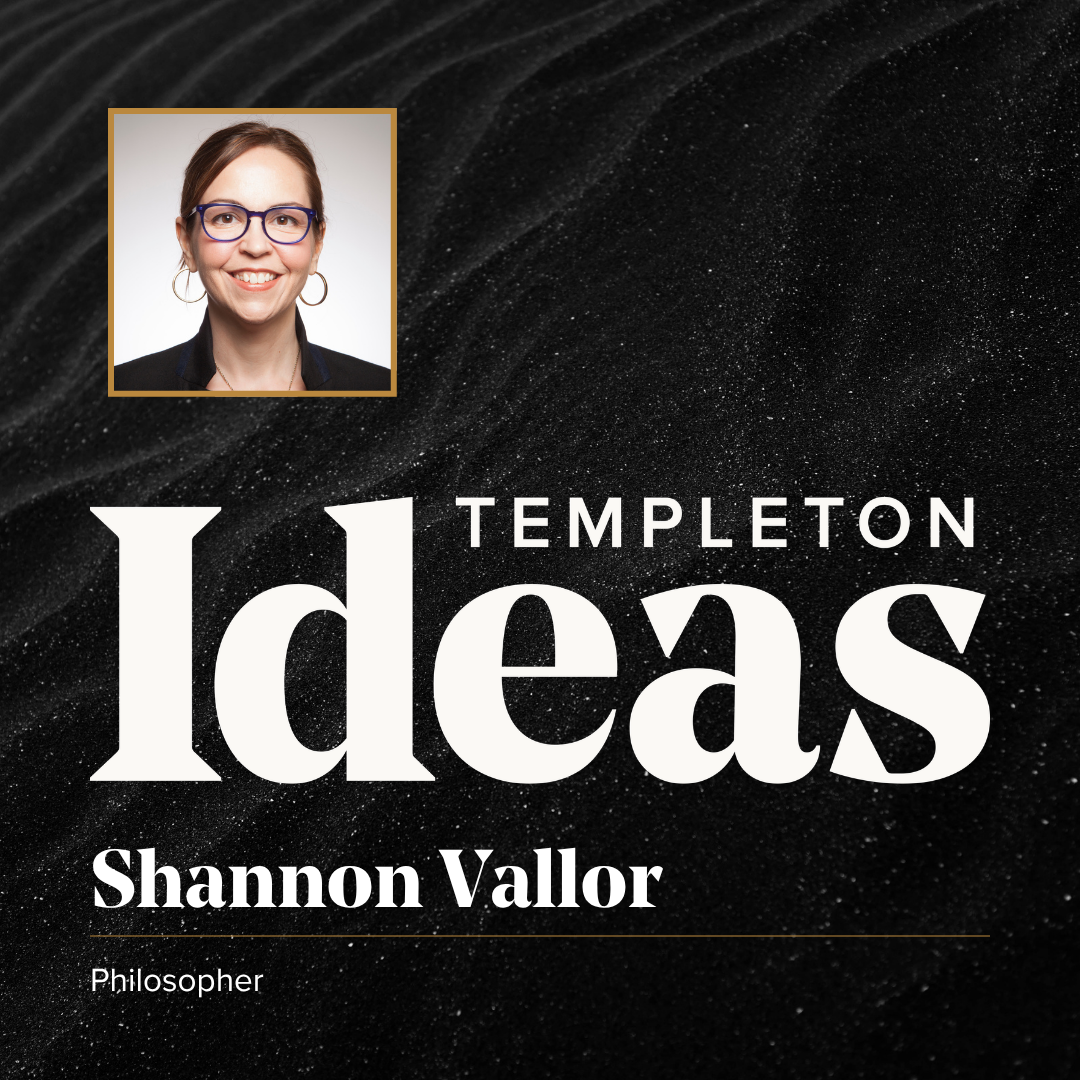
Shannon Vallor (Artificial Intelligence) | From the Archive
Apr 900:31:52Tap to summarizeDr. Shannon Vallor is a professor at the University of Edinburgh, where she serves as chair of the Ethics of Data and Artificial Intelligence at the Edinburgh Futures Institute. Her research explores how new technologies, especially AI, robotics, and data science, reshape human character, habits, and practices. She also advises policymakers and industry on the ethical design and use of AI. Her latest book, The AI Mirror: Reclaiming Our Humanity in an Age of Machine Thinking, argues that AI can be a tool to enhance our humanity, not replace it. Shannon joins the podcast to discuss artificial intelligence, both what it is and what it could be if we step back and rethink what technology is for. Are you curious about artificial intelligence? Don't miss out on our story "Predicting and Controlling Bad Actor Artificial Intelligence" by Alene Dawson on Templeton Ideas. Join our growing community of 200,000+ listeners and be notified of new episodes of Templeton Ideas. Subscribe today. Follow us on social media: Twitter, Facebook, Instagram, LinkedIn , and YouTube.
Transcribe →
Philip Goff (Consciousness) | From the Archive
Mar 2600:22:53Tap to summarizeDr. Philip Goff is an associate professor of philosophy at Durham University, who researches philosophy of mind and consciousness with a specific focus on how to integrate consciousness into a scientific worldview. His popular book, Galileo's Error, posits the theory of panpsychism as a plausible explanation for human consciousness. Philip joins the podcast to discuss his lifelong struggle with the problem of consciousness, the relationship between panpsychism and physics, and why he believes there is good philosophical reason to be optimistic about the future of our world. Join our growing community of 200,000+ listeners and be notified of new episodes of Templeton Ideas. Subscribe today. Follow us on social media: Twitter, Facebook, Instagram, LinkedIn , and YouTube.
Transcribe →
Jennifer Wallace (Mattering)
Mar 1200:30:59Tap to summarizeJennifer is an accomplished journalist and a best-selling author. Jennifer's first book, Never Enough: When Achievement Culture Becomes Toxic, sounded the alarm about a troubling trend in our society. She has followed up with a new book entitled Mattering: The Secret to a Life of Deep Connection and Purpose, which offers an alternative to precarious, achievement-based identities, and shows how to construct more meaningful lives. Jennifer joins the podcast today to discuss the concept of "mattering" and our core human needs. Do you feel exhausted by the hyper-competitive nature of our society? Job applications, college admissions, extracurriculars, even enrolling children in the right summer camp? If you haven't heard it yet, check out our first Templeton Ideas episode with Jennifer Wallace on Breaking the Cycle of Toxic Achievement Culture. Join our growing community of 200,000+ listeners and be notified of new episodes of Templeton Ideas. Subscribe today. Follow us on social media: Twitter, Facebook, Instagram, LinkedIn , and YouTube.
Transcribe →
Chris Duffy (Humor)
Feb 2600:34:39Tap to summarizeChris Duffy is an award-winning comedian, writer, and podcast host. He currently hosts the TED program How to Be a Better Human and gave a popular TED talk entitled, "How to Find Laughter Anywhere." Chris recently expanded his comedic repertoire by publishing a new book called Humor Me: How Laughing More Can Make You Present, Creative, Connected, and Happy. Chris is also a former fifth-grade teacher and a former fifth-grade student. Humor can be a good way of diffusing the tension around discerning who is right and who is wrong. Instead of furrowing our brows, sometimes it helps to step back and laugh about a situation, especially if we've made an error. To find out more, we invite you to watch the video The Joy of Being Wrong. Join our growing community of 200,000+ listeners and be notified of new episodes of Templeton Ideas. Subscribe today. Follow us on social media: Twitter, Facebook, Instagram, LinkedIn , and YouTube.
Transcribe →
Anil Seth (Consciousness) | From The Archive
Feb 1200:36:41Tap to summarizeDr. Seth is a Professor of Cognitive and Computational Neuroscience at the University of Sussex in the United Kingdom. The author of over 200 research papers, Anil integrates psychology, philosophy, computer science, and neuroscience to explore how our brains generate subjective experiences. Outside the laboratory, Anil has a knack for communication, too. His TED Talk has reached nearly 15 million viewers, and his bestselling book Being You: A New Science of Consciousness takes a baffling topic and makes it relatable and engaging for general readers. Anil joins the podcast to explain why animals may be conscious, but artificial intelligence is not, and why, despite the potential for technological dystopias, he is optimistic about the future. Are you curious about consciousness? Don't miss out on our intriguing story "Can Digital Computers Ever Achieve Consciousness?" by Marcus Arvan on Templeton Ideas. What did you think of this episode? Let us know with a rating and a review! Join the conversation on social media: Twitter, Facebook, Instagram, LinkedIn and YouTube.
Transcribe →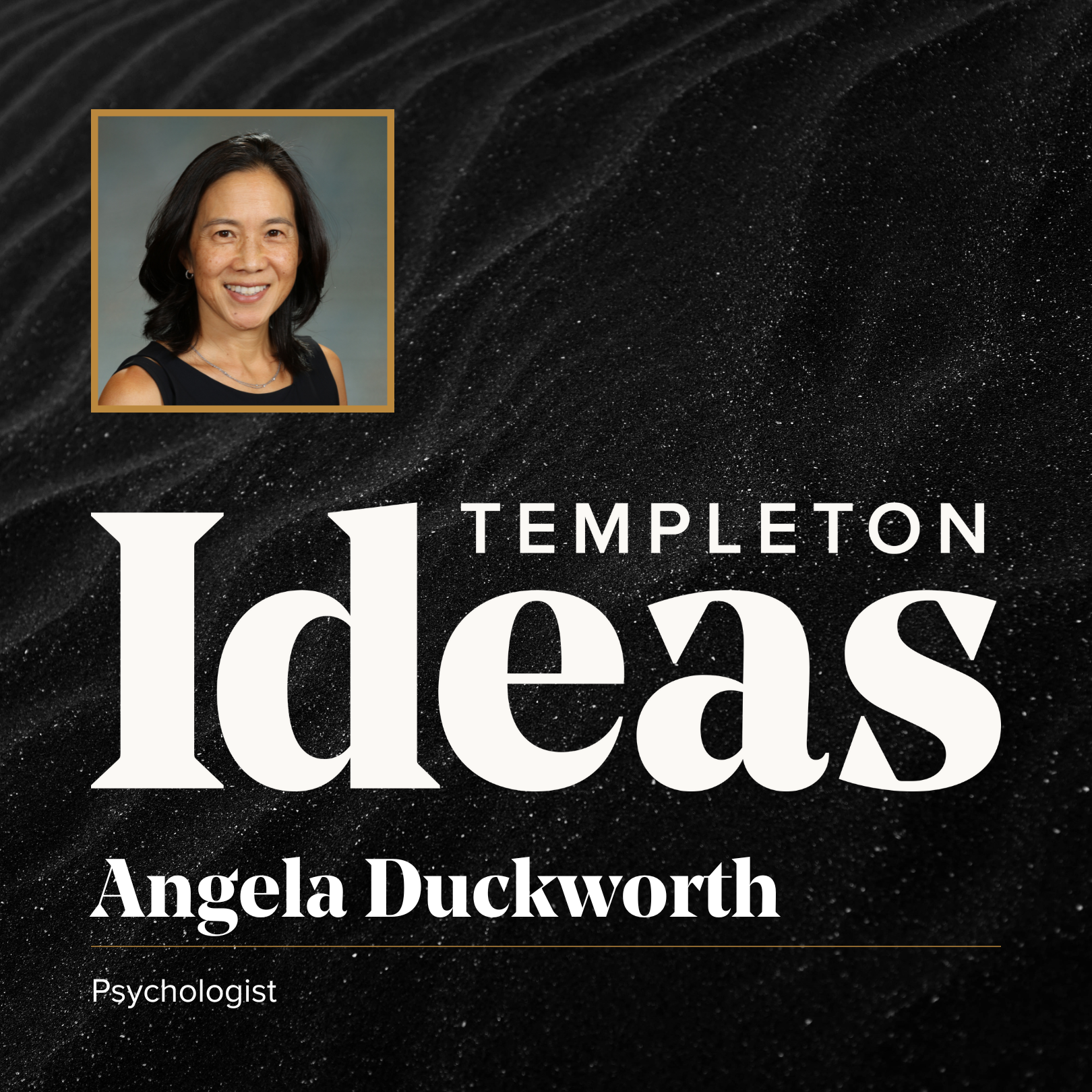
Angela Duckworth (Character Formation)
Jan 2900:32:27Tap to summarizeAngela Duckworth is a professor of psychology at the University of Pennsylvania, where she studies human character traits that lead to high achievement. She authored the bestselling book Grit: The Power of Passion and Perseverance, and her related TED Talk has been viewed over 37 million times. In 2013, Angela received the coveted MacArthur Genius Award. She is also the co-founder of Character Lab, an organization that advanced scientific insights to help children thrive for over a decade. Angela joins the podcast to discuss forming character through the heart, mind, and will. Grit is a virtue that helps us get things done and reach high achievements. But of the many different things that we could tenaciously pursue, what should we prioritize, and how do our individual goals fit into a bigger picture? To find out more, check out our Templeton Ideas essay, Hope and Grit: Companions on the Road to Change by journalist Annelise Jolley. Join our growing community of 200,000+ listeners and be notified of new episodes of Templeton Ideas. Subscribe today. Follow us on social media: Twitter, Facebook, Instagram, LinkedIn , and YouTube.
Transcribe →